by Fred W. Anson
January 2013-March 2014
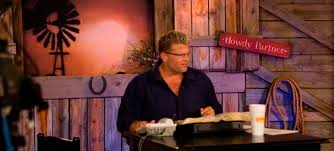
It’s been an interesting few weeks if you’re a Evangelical Christian in Mormon Studies! For those of you who don’t know well known Utah TV personality, and a former Latter-day Saint who is now a Born Again critic of Mormonism, Shawn McCraney has recently been denounced by many in the Evangelical Christian Mormon Studies community as a heretic and even a cult leader.

Here’s the short, cryptic version of what’s happened so far:

January 9, 2013
Shawn McCraney announces that his new emphasis will be the doctrine and culture of the American Evangelical church rather than Mormonism.
(HOTM #EVC 1: The Price of Truth; http://hotm.tv/episodes/evc/1-the-price-of-truth/ )

Throughout the year of 2013 Mr. McCraney critiques a number of non-essential doctrines such as worship styles, preaching styles, fund raising, etc. He also denounces the doctrines of eternal hell, and the Calvinistic theological system raising the hackles of mainstream orthodox Christians.

January 29, 2014
“Jed” a regular attendee (the group eschews “members” or “membership”) of Shawn McCraney CAMPUS ministry (see http://c-a-m-p-u-s.com/ ) calls into Jason Wallace’s Ancient Paths TV Show and presents a idyllic picture of their group of “Christian Anarchists”. In response Jason Wallace challenges Jed from the Bible and then critiques Shawn McCraney’s lack of accountability.
(The Ancient Paths – The Importance of the Visible Church; currently not internet posted)

February 4, 2014
Mr. McCraney responds to Jason Wallace’s public critique by renouncing all forms of ecclesiological accountability except in regard to finances. Shawn then proceeds to renounce the creedal basis of the doctrine of the Trinity calling it, among other things, “garbage” and derived by committee rather than God.
(HOTM Episode #380: God – Part 1; http://hotm.tv/episode-380-god-part-1/ )

A summation video of these two exchanges can be found here:
(“Wallace/McCraney TV Exchange on Accountability”; https://www.youtube.com/watch?v=0qYfBlQBUNw)

February 11, 2014
Mr. McCraney claims that the doctrine of the Trinity was developed from pagan sources. He then goes on to teach a form of non-sequential modalism and then denies that what he’s just taught is modalism.
(HOTM Episode #381: God – Part 2; http://hotm.tv/episode-381-god-part-2/ )

February 12, 2014
Presbyterian Pastor Jason Wallace gives an overview of Shawn McCraney’s unBiblical behavior and shift from historic Christianity orthodoxy since January 2013. Pastor Wallace explains that, per Shawn’s request, he won’t be addressing Shawn’s new view of God until Mr. McCraney gives the additional details and expands on his beliefs on the next HOTM show – as Shawn as has promised both on the air and in private communication.
(The Ancient Paths – Response to Shawn McCraney’s Teachings; http://www.youtube.com/watch?v=rkFNlhYI8PM )

February 17, 2014
Christian Apologist Rob Sivulka of Courageous Christians United publishes a blog article entitled, “Shawn McCraney is a Heretic and Needs Adult Supervision” becoming the first to formally and publicly label Shawn McCraney a heretic.
(see http://www.courageouschristiansunited.org/blog/Shawn-McCraney-is-a-Heretic-and-Needs-Adult-Supervision-48993 )

The “Heart of the Matter with Shawn McCraney” Facebook page purges all critics of Mr. McCraney from the page.  The page owner Derrick Webster (a key figure in Mr. McCraney’s Alathea Ministries) also blocks those critics  from his personal Facebook profile making communication with him via Facebook impossible (Note: Mr. McCraney doesn’t have a Facebook account).
[In the interest of full disclosure, it should be noted that this author was one of those who was purged from the page and blocked by Mr. Webster]

February 18, 2014
Instead of delivering “God – Part 3”, as previously stated and promised, Mr. McCraney remains silent for the entire show. The only voices are those of John updating the viewers on the Monson United Kingdom lawsuit, a few critics, and far more supporters praising Shawn for his “bold stand” in the face of adversity.
(HOTM Episode #382: Silence; http://hotm.tv/episode-382-silence/ )

February 19, 2014
Jason Wallace addresses Shawn McCraney’s behavior and lack of accountability to the visible Church. He also addresses the division that Mr. McCraney is creating in the church through his teachings and behavior. At 25-minutes into this show CAMPUS attendee “Jed” calls in again and is unable to respond cogently and Biblically to Pastor Wallace’s questions regarding how CAMPUS is structured, organized, and run relative to Biblical injunctions and models on church structure and practices.
(The Ancient Paths – Response to Shawn McCraney Part 2; https://www.youtube.com/watch?v=38DNcJLUjbI#t=00h24m59s)

February 20, 2014
Mr. McCraney hosts a meeting that he and his producers dub “Inquisition 2014” which is video streamed over the internet. Mr. McCraney’s critics are dubbed “Accusers”. Local Utah Pastors attending the event include Jason Wallace, Dale Finley, Bryan Hurlbutt, Cory Anderson, Chip Thompson, and others. Also in attendance was Christian Apologist Rob Sivulka and several others with Utah-based ministries.
(INQUISITION 2014 – The term “trinity”; http://www.youtube.com/watch?v=XS4YzzBjMzk)

The invitation for the February 21, 2014

The invitation for the February 21, 2014 “Open Forum” event at CAMPUS

This event was posted on the internet as an “Open Forum”, but the actual format was a largely passive audience merely observing a highly controlled, staged setting. For example, those that wanted to confront Shawn were told to sign up and sit at the front of the room. These “accusers” were given a combined total of 30 minutes to state their “case”. Further, they were told specifically to only address issues about the the trinity, and were forbidden to bring up any other concerns over any of Shawn’s other controversial teachings and statements (such as accountability, Calvinism, hell, etc). This came as a shock to many in attendance as the “invitation” did not specify such a format, nor limit the topics allowed.

February 21, 2014
Derrick Webster posts the following on the Heart of the Matter With Shawn McCraney Facebook page:

“Message from Shawn McCraney

Dear friends,

As a Christian Ministry dedicated to reflecting the ideals of the King, we want to reiterate that our Facebook page is here to share information relative to the LDS/ Christian debate. We would appreciate it if all the ad hominem attacks were entirely eliminated. When or if any of the comments become venomous or personal our administrator will remove you from participating in this forum. Please remember that we are not “warring against flesh and blood,” but against dark principalities in high places. Speak the truth, but please try to do it in love.”

This story is still unfolding and is far from over. As new developments occur I will add updates to this article as comments.
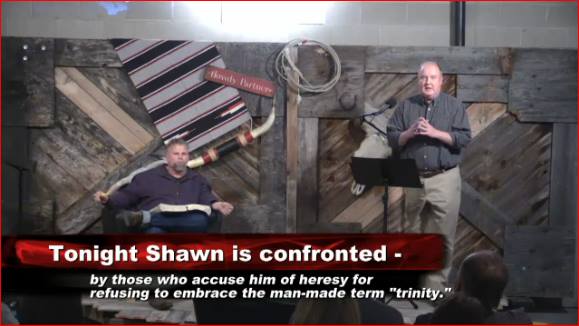
TonightShawnIsConfronted

Pastor Jason Wallace opens the February 20th “Inquisition 2014” event with a summation of the critic’s case against Shawn McCraney. Please note the “interesting” choice of words in the on-screen captioning.

Coming next: In Part 2 of this series I will present an analysis of the body of evidence as well as the criticism being leveled at Mr. McCraney and explain why I am of the opinion that the criticism and heretic label is justified. I will also present my prayerful hope that Shawn will turn from the heresy of modalism, his unBiblical “Christian Anarchy”, and be restored to a place in the body of Christ where his and his gifts can find their ultimate fulfillment and unique place in God’s purposes and will for this generation.

UPDATES:
February 25, 2014

After having long private discussions with Shawn McCraney, well known and respected Theologian Rob Bowman of the Institute of Religious Research (see http://irr.org/who-we-are ; also see https://irr.org/author/robert-m-bowman-jr ) appears on Heart of the Matter, gives a brief overview of the doctrine of the Trinity and answers questions from Mr. McCraney and his viewers.  The tone and timbre of the show is markedly different than the previous week’s shows.
(Episode 383: Robert M. Bowman Jr. – Director of Research, IRR; http://www.youtube.com/watch?v=nyvo1riNhZI )

February 26, 2014
Rob Bowman issues the following statement on his Facebook page regarding the week’s events:

As announced yesterday, last night I was a guest on Shawn McCraney’s TV program “Heart of the Matter” to discuss the doctrine of the Trinity. In this post I’m going to review what has happened and give my take on where things stand at the moment.

Shawn is a former Mormon who became “born again” while he was still in the LDS Church. He eventually came out, went to pastoral training school, and began a teaching and evangelistic ministry focused on reaching Mormons. That ministry evolved into an informal church that is rather out of the mainstream of evangelical church practice. He published a book entitled “Born Again Mormon” that was later retitled “I Was a Born Again Mormon.” By all accounts Shawn’s ministry has been unusually successful not merely in drawing people out of Mormonism but in leading them to trust in Jesus Christ alone for salvation and to experience the new birth in Christ.

During the past year or so, Shawn has offered up his own views on various doctrinal issues and spoken very critically of various evangelical doctrines and movements. This development came to a head a few weeks ago when he did a couple of programs disparaging the doctrine of the Trinity. Shawn referred to the doctrine as “garbage,” as a man-made doctrine defined as a way of controlling people, and argued that the doctrine is more likely to have originated in paganism from the triads of gods in ancient religions than from the Bible. His alternative explanation at least sounded like a form of modalism, although he insisted it was not.

After discussing the matter with my co-workers at the Institute for Religious Research, I emailed Shawn privately and expressed the desire to meet with him in order to get to know him personally and to discuss doctrine with him. Shawn responded very positively, welcomed the interaction, and we made arrangements. In the meantime, there were some swift and in some cases rather sharp responses to Shawn’s statements online, and this was followed up by a program last Thursday night in which Shawn and some of the local Christian ministry leaders who had criticized Shawn had an unfortunately vitriolic confrontation.

I flew from Grand Rapids to Salt Lake City on Monday and met with Shawn for four hours. We made a very good personal connection, frankly recognizing that we are in temperament and experience radically different kinds of men, and had a good, constructive first discussion of the doctrinal issues. Shawn invited me to be a guest on his program Tuesday night, which I did. We met again today for a few hours and talked some more. I was blessed to have an opportunity to present a solid if brief explanation of the biblical basis of the Trinity and to answer a number of Shawn’s objections in front of his audience. Afterwards I spoke with people in attendance for over an hour, and it appears that the event was helpful.

What was said on last night’s program is of course public knowledge. One thing I said at the end, in response to a caller’s question, is that I consider Shawn a brother in Christ. I stand by that statement, but I also don’t want to be misunderstood. Whether Shawn is a believer, and whether he is a sound teacher, are two different questions. Some of the things Shawn has been teaching are in error, and it is important that he come to see that and make the necessary corrections. As a teacher, he is answerable to God and is held to a stricter standard with regard to what he says than other believers (James 3:1). Some of the things he said can even be fairly labeled as heretical, though he has also said things that contradicted those seemingly heretical statements. My assessment is that Shawn’s theology is confused and otherwise lacking largely because he has never studied Christian theology at a serious level and because, probably in overreaction to the programmed instruction and extrabiblical texts imposed in Mormonism, he has tried to develop his understanding by reading only the Bible. Reading the Bible without studying works on Christian theology has certainly brought Shawn a lot closer to orthodox Christianity than he was as a Mormon, and it’s certainly a far better extreme. It is, however, an extreme that has kept him from benefiting from the wealth of Christian reflection and teaching on God’s word by those who have studied the Bible for centuries before Shawn or I came along. The result is that some of Shawn’s views are at least heterodox (other than the classical, orthodox Christian doctrines). That having been said, I consider him a brother in Christ because I see evidence that God dramatically changed his life, brought him out of Mormonism, and gave him a genuine appreciation of the grace freely bestowed through the gospel. While I don’t know definitively the state of anyone else’s soul, I am inclined to give someone the benefit of the doubt and to accept him as a brother unless forced to conclude otherwise. And I really do think Shawn is a Christian, saved by God’s grace, even though some of his doctrine is seriously flawed.

Theologically, Shawn’s thinking on the Trinity appears muddled. It is probably in flux, perhaps even more so after our discussions, which may be a step in the right direction. He has agreed that he needs to retract publicly and specifically some egregious critical remarks he made in recent weeks on the subject. His explanations at times seemed modalistic, but as we talked he backed away from those explanations, in particular his description of the Logos (Word) as one of many manifestations of God. Shawn rejects the eternal Sonship of Christ, preferring the formulation of the eternal Word. In this regard he is similar to Walter Martin, but unlike Martin, Shawn is uncomfortable designating the Word as a person. For that matter, he is uncomfortable using the term “persons” at all in reference to God, because of its association in Mormonism with physical human beings. Again, his own background and his focus on reaching Mormons have in his case led to some difficulty in coming to terms with orthodox Christian doctrine. This is a problem that I hope can be overcome as our dialogue continues. Meanwhile, at some point I do plan to make available in written form some responses to specific issues raised by Shawn regarding the Trinity, not to attack him personally but to provide substantive responses for the benefit of Shawn and others. I should mention that I have already told Shawn that I expected to do this, and he was supportive of me doing so.

I would appreciate the prayers of my fellow brothers and sisters in Christ for what follows. Please pray that Shawn will have constructive meetings with local Christian leaders, including some that have been legitimately concerned about his teachings, and that they will develop respect and trust. Please pray that future discussions between Shawn and me will be fruitful. Please also pray that Shawn will be successful going forward in acknowledging past errors and in developing a sound understanding of the theology of Scripture. All of this will be a process; it will not happen overnight. Please pray with me that everyone involved will listen to one another, be gracious and patient with one another, and be willing to learn and to change and even to repent where needed. And if you have some concerns or grievances with regards to anything I have said, please feel free to come to me with them.
(source: https://www.facebook.com/ApolojediMaster/posts/10202633850543390 )

March 4, 2014
Theologian James White weighs in on recent events surrounding the Shawn McCraney situation in general and Inquisition 2014 in particular. He also addresses the email from him that Shawn presented as an example of how other pastors are trying to threaten and control him on the February 11th Heart of the Matter “God Part 2” broadcast (see http://hotm.tv/episode-381-god-part-2/) presenting a very different version of the back story and context surrounding what was said and why it was said the way it was. This analysis starts at 38:00 into the show. (“Ukraine, Hyper-Calvinism, David Allen, Shawn McCraney, and More!”)

Shawn McCraney continues his discourse on the nature of God focusing on Christ as “Light”. He also addresses his recent meetings with Rob Bowman as well as some of the criticism that he had been receiving from local Pastors and others.

In response to the broadcast Rob Bowman issues the following statement immediately afterwards:

“This post and thread is for my fellow evangelical Christians. If you are not an evangelical, while I value your friendship, this thread is not for you.

Tonight on his TV program “Heart of the Matter” Shawn McCraney quoted a Facebook post of mine as follows:

“My assessment is that Shawn’s theology is confused and otherwise lacking largely because he has never studied Christian theology at a serious level and because, probably in overreaction to the programmed instruction and extrabiblical texts imposed in Mormonism, he has tried to develop his understanding by reading only the Bible.”

Shawn’s quotation stopped at that point, and his subsequent comments gave the impression that I was criticizing Shawn for not being open to what he characterizes as “man-made” doctrines or theology. But here is what I said next:

“Reading the Bible without studying works on Christian theology has certainly brought Shawn a lot closer to orthodox Christianity than he was as a Mormon, and it’s certainly a far better extreme. It is, however, an extreme that has kept him from benefiting from the wealth of Christian reflection and teaching on God’s word by those who have studied the Bible for centuries before Shawn or I came along.”

You see, the issue is not “man-made” doctrines versus the Bible as the sole authority; the issue is whether it is wise to ignore what can be learned about the Bible from teachers who have devoted their lives to pursuing its truth and sharing what they have found with the rest of the body of Christ. Christians in the twenty-first century are not meant to study the Bible in isolation from other believers, as if they were living on an island and the Bible was the only book available. The Bible itself says that God has given teachers to the church as a needed, important part of the body of Christ (1 Cor. 12:28; Eph. 4:11). To ignore those teachers, and even to dismiss them as irrelevant in one’s study of the Bible, is to go against the Bible itself.

Of course, all of us who are teachers are fallible and our doctrinal understandings can be mistaken. But this is just as true of Shawn as it is of anyone else. In this regard the choice is not between man-made doctrine and the pure doctrine of the word of God. Rather, it is a choice between the doctrine of one man who thinks he can do it on his own and the doctrine of many men who listen to and learn from each other and from those who have gone before them in the pursuit of understanding the word of God.

In a way, Shawn’s position is even less tenable, because he inconsistently appeals to theologians and intellectuals when it suits his purpose. He justifies his refusal to read serious works of Christian theology while seeing nothing wrong with citing the opinions and interpretations of Walter Martin or John MacArthur or even the Emphatic Diaglott if they happen to agree with his own views. In his attack on the Trinity a few weeks ago, Shawn read a string of quotations that I was able to determine he got from an online article published by a Watchtower splinter group that denies that Jesus is God. I privately challenged him for using that article. Tonight he claimed that he thinks it is fine to read books that critique Mormonism but not to read books that teach Christian theology. But is it all right to read articles that attack Christian theology? I was hoping he would understand the inconsistency of his stance on this question, but he seems to be further entrenched in that position.

I will post something separately on Shawn’s lecture on John 8:12 (I don’t know if that will be tonight or tomorrow). Here I simply need to make it clear that I do not see tonight’s program as representing a step in the right direction.

Shawn, I assume this post will be brought to your attention. I still appreciate your graciousness toward me last week, but I must also remind you that I gave you fair and friendly warning that I would be responding publicly to your teaching when I found it to be unsound—and you said you understood and respected that. Well, here we go. A little knowledge about the biblical languages and doctrinal subjects, garnered haphazardly from questionable sources, used inconsistently to support what you have already think you know, is not a good thing. It is not “loving the Lord your God with all your mind.” As a teacher, you, like I, will be held to a stricter judgment (James 3:1). Let some of us help you. Set aside your planned series of lectures on the nature of God for now. Pursue a sound, well-informed understanding of what Scripture teaches through the God-given ministry of other teachers. Refocus your ministry on what you do so well: reaching out to lost, confused Mormons with the wonderful gift of the new birth through faith in Jesus Christ alone.”
(source = https://www.facebook.com/ApolojediMaster/posts/10202669824562718 )
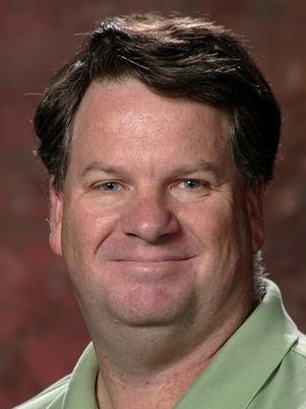
Rob Bowman, Director of Research, Institute for Religious Research

Rob Bowman, Director of Research, Institute for Religious Research

March 5, 2014
As promised, Rob Bowman directly addresses the points in Mr. McCraney’s previous night’s lecture on God via the following Facebook post:

“On March 4, 2014, Shawn McCraney gave a lecture (I’m not sure what else to call it) on his TV show Heart of the Matter on the “ontology” of God, apparently a continuation of a series of lectures he is doing giving his own alternative to the orthodox doctrine of the Trinity. I’d like to share a few observations in response to some things he said. There is more that could be said, but this is all I have time to address for now.

First, let’s be clear that when the Bible speaks of God as “light” or “fire,” this is symbolic language. I think Shawn would agree; at one point he acknowledged that God is not fire in the sense of the combustion of oxygen. It’s important to be clear on this point because sometimes Shawn uses this language as if it is somehow directly denotative of the “ontology” (his term) of God, a description of God’s being or nature. It isn’t. It is figurative language, used to express specific truths about God in his relation to us and our world. So when John says, “God is light, and in him is no darkness at all” (1 John 1:5), this is not a statement of ontology or metaphysical description of God, but an affirmation that God is morally perfect—pure holiness, goodness, truthfulness, and love—totally devoid of sin or evil. Read the next few verses and this becomes obvious: to “walk in darkness” means to live in lies and sin (1 John 1:6-7). The statement that “our God is a consuming fire” (Deut. 4:24, quoted in Heb. 12:29) was a warning that God, who had revealed himself in the wilderness and at Sinai in terrifying fire, would judge his people in righteous wrath if they chose to rebel against their covenant with him (see Deut. 5:24-26; Heb. 12:25-28).

Perhaps the closest the Bible comes to making a statement of the form “God is…” that describes his being per se is Jesus’ statement, “God is spirit” (John 4:24; “a spirit,” KJV). Although the derivation of _pneuma_ has to do with moving air (breath, wind, etc.), in the Bible it generally loses this physical sense and refers to nonphysical, incorporeal beings like angels (Heb. 1:7) and God. In context Jesus was saying that the time of God being known and worshiped through special, sacred places at specific locations was coming to an end: God would be worshiped “in spirit and truth.” (In this regard Mormonism, with its temples that are supposedly indispensable to fully experience God’s presence and blessing, are a step backwards spiritually and covenantally.)

Another “God is” statement that Shawn mentioned in passing, but set aside, was John’s affirmation that “God is love” (1 John 4:8, 16). It’s too bad he didn’t spend some time on this statement. Unlike the descriptions of God as light and fire, to say that God is love is not figurative or metaphorical. It tells us that love is absolutely essential to God’s being. As Christians have reflected on this idea, they have realized that this idea makes perfect sense in the context of the doctrine of the Trinity. The three persons love one another eternally, so that indeed love is very much of the essence of God. The Bible supports this understanding. For example, Jesus said in his long prayer in John 17 that the Father loved him “before the foundation of the world” (John 17:24). This cannot be fairly or plausibly interpreted as proleptic, i.e., as meaning that God anticipated loving Jesus before Jesus came to exist. We know this is not what Jesus means, because at the beginning of the prayer that he had lived in glory alongside the Father before the world was, and he asked the Father to restore him to that glory (17:5). Thus, the Father and the Son (or the Word; it doesn’t matter) have existed distinct from one another since before creation, and the Father has loved the Son all along.

Shawn spent most of the lecture developing verbal connections between Jesus’ statement in John 8:12, “I am the light of the world,” and various other texts, notably Genesis 1:1-5, John 1:1-5, and 2 Peter 1:19. To be frank, I’m not sure how his treatment of these passages clarified his view of the preincarnate Logos. Some of what he said was fine, some of it was not; in some instances I was unclear as to the significance he was deriving from these various texts.

Shawn made an interesting comment regarding John 8:12. He pointed out that the Jewish leaders did not react to Jesus’ statement as if it were blasphemous. Their criticism was that Jesus was testifying to himself and therefore they considered his claim invalid (v. 13). That’s a good observation, but what Shawn thought was the significance of this observation was unclear to me. Looking at the passage historically, Jesus’ statement probably could have been interpreted by the Jews as something less than a claim to deity; they might have thought that Jesus was simply claiming to be the Messiah as the instrument of God’s “light” to the world. For example, they might have understood Jesus to be claiming that he exercised the function of the Servant of the Lord in Isaiah; that Servant is described more than once as a “light to the nations” (Isa. 42:6; 49:6; cf. 51:4; 60:3). This is in fact correct; however, only upon reflection concerning all that Jesus said and did would it be understood that he was “the light” to the nations or the world because he was God incarnate.

To understand Jesus’ function as the light of the world to be an indication of his deity in no way resolves the question of whether God is triune. Jesus was not the divine light/fire corked in a bottle of flesh. He was the Son sent from the Father into the world to be the light of life and truth (John 5:23; 6:38-40; 8:12-18; 9:5; 12:46; 16:27-28; Rom. 8:3; Gal. 4:4; 1 John 4:14). Again, the language of light is figurative, indicating that Jesus’ mission was to bring the light of truth and life to the world. He could do this because he was himself God, perfect in truth, the source of all light and knowledge. The New Testament presents this truth in a consistent context of distinguishing Jesus Christ the Son of God from the one called God the Father.”
(source = https://www.facebook.com/ApolojediMaster/posts/10202675490424361?stream_ref=10 )

March 6, 2014
James White offers a lengthy deconstruction of Shawn McCraney’s teachings on the Trinity in general and the Athanasian Creed in particular.   Mr. White looking directly into the camera and addressing Shawn McCraney directly Mr. White states that Mr. McCraney is uninformed and ignorant on both.  This contents begins 5:24 into the broadcast. (“A Little About Brewton-Parker; the Athanasian Creed; the Flaming Toilet of Death”

March 11, 2014
On his Dividing Line broadcast (starting at 1:05:00) James White deconstructs, analyzes and exposes Shawn McCraney’s “God Part 3” lecture for what it is:  Modalism.  He also states that the reports that he’s getting from the pastors he’s contacted in Utah regarding the situation, “aren’t encouraging.”

On the Heart of the Matter broadcast Shawn McCraney suggests that the reason friction has arisen between he and his critics comes down to a difference of worldviews and personality. He suggests that the latter is manifested in his “Artistic” versus the critic’s “Linear” thinking and approach to the Bible. (Episode 385: Christian Artists)

March 12, 2014
Rob Bowman releases the following article in response to Shawn’s broadcast from the previous evening:

“Shawn McCraney is a former Mormon who became a “born-again” Christian and eventually left Mormonism, received some ministry training through Calvary Chapel, and launched his own ministry in Salt Lake City to evangelize Mormons. In the past few weeks Shawn has gone public on his television show denouncing the term Trinity as “garbage” and explaining his own doctrine of God in ways that have been confused at best. I flew out to Utah to meet with Shawn, had very friendly and enjoyable conversations with him, and appeared on Shawn’s show Heart of the Matter. I also posted a few messages on Facebook regarding the controversy.

On March 11, 2014, Shawn McCraney’s lecture on his TV show was a critical response to his critics, whom he characterized as scholars, theologians, and apologists who impose their exclusively “linear thinking” on the church to rule, control, and dominate. There is a “teachable moment” here because the issues that Shawn’s argument raises have relevance beyond the specific controversy over his teaching.

Shawn professes to value knowledge and the contributions of scholars, but he describes himself as a “Christian artist” who views Christianity in an artistic way that the linear-thinking scholars simply cannot appreciate. But if an “artistic” thinking person can appreciate the “linear” thinking of scholars, why cannot scholars likewise appreciate the “artistic” thinking of people like Shawn? I think they can. But just as people who profess to be scholars can and sometimes do make egregious mistakes, self-described artists who profess to see the world in a fresh and unpredictable way might be fooling themselves. The “Christian artist” label does not excuse Shawn or anyone else from the responsibility of speaking faithfully to the truth. The charge that someone is teaching erroneous doctrine cannot be answered by merely asserting artistic license.

Early in his lecture Shawn asked, “Just how different can a believer be in personality and worldview and still be considered a Christian?” By “worldview” Shawn apparently means the way in which a person views the world, either logically or artistically, although I didn’t catch a definition of the term. The answer to his question, if I understood it correctly, is that believers can be quite different in many ways and still be considered Christians. However, that isn’t the real question here, is it? No one is suggesting that people who are artistic or storytelling or relational or physical in their personal makeup and orientation rather than logical or scholarly cannot be Christians. Most Christians are not intellectually oriented. Believe it or not, we intellectuals noticed that a long time ago. One of the first Christian intellectuals himself commented on that fact, in a passage that Shawn quoted (1 Cor. 1:18-23). Really, we do understand this. That’s not the problem. No, the problem is the content of Shawn’s doctrinal teaching, which at best is unsound and at worst, in the estimation of at least some observers, is heretical. This concern about his teaching is either justified or it is not. How do we tell? Like it or not, we must try to think clearly about the question.

Shawn himself engages in “linear thinking” when he feels comfortable doing so. His lectures are just that, lectures. He has a point he wishes to make, and he presents reasons to support the conclusion he hopes his listeners will accept. Shawn cites the Hebrew and Greek texts of the Bible, appeals to biblical scholars and theologians when he thinks they support his views, and formulates objections to statements made by his critics. He is actually much more capable of engaging in such logical, rational thinking than perhaps people realize and engages in such reasoning far more often than his self-description as a Christian artist would suggest. The appeal to his supposed artistic personality is itself presented as an argument: the logicians are wrong because they overgeneralize from their own experience and preference and don’t recognize that there are different yet equally valid ways of thinking. Which reminds me of the famous observation that there are two kinds of people in the world—those who think there are two kinds of people in the world and those who don’t. (Sorry.) When Shawn argues, for example, that the Bible presents truth in a grand narrative rather than in a systematic theology, he is presenting an argument based on the very kind of logical, linear thinking he complains is being used against him. That argument is either a sound argument or it is not. The value of the argument can be judged only on the basis of its factual support and logical validity; its value is not aesthetic, creative, artistic, emotive, or relational.

It’s really a matter of the right tool for the job. If we want to stir people’s emotions, touch people’s feelings, or appeal to their intuitive sense, we use art – music, story, drama, soaring speech, visual displays, and so forth. If we want to inform people’s minds, then we present facts in a reasoned manner. If we want to explain a text of the Bible, then we use skills relevant to reading and interpreting texts. This doesn’t mean ignoring non-linear elements of biblical texts. It doesn’t mean running roughshod over symbolic language, emotive appeals by the biblical speakers and writers, or forcing the Bible into overly simplistic and rigid philosophical systems. Sound reading of the Bible appreciates the power of its narratives and the color of its poetry. But the Bible also presents didactic material that calls for careful, reasoned thinking about the subject matter. The epistle to the Romans is a theological treatise, not an Easter drama.

According to Shawn, logic and linear thinking came from the Greeks. I’ve heard this one before. Friends, logic came from God, not from the Greeks. Logic, order, rationality, reason, and coherence are all reflections of the nature of God, just as much as beauty, joy, creativity, and artistry. The Greeks did not invent logic; they came up with a formal system for recognizing and teaching logic.

Shawn emphasizes, fairly enough, that knowledge has value only in the context of love. “Knowledge puffs up, but love builds up” (1 Cor. 8:1b). Amen. Knowledge without love makes people prideful. A person who claims to know God but is devoid of love does not know God, because God is love (1 John 4:7-8). Shawn feels that some of his critics have been long on knowledge, or at least in claims to knowledge, but short on love. Perhaps he is right. Yet Shawn also seeks to refute his critics with arguments. Again, perhaps he is right. But there are two issues here: (1) Is Shawn’s doctrine biblically sound? (2) If it isn’t biblically sound, can this point be made in love? It would help if these two questions were kept distinct.

I wish Shawn would discuss whether the category of “heresy” is ever a valid category. If a teacher claims that Jesus did not rise from the dead, is it inappropriate to label this teaching as heresy? Are there any heretics? Shawn says, quite correctly, that Christians should tolerate different views on nonessentials. But what are the essentials and how does one know if something is an essential or not? This is a reasonable question and it requires a reasonable answer, grounded on the teaching of Scripture. Shawn insists that he believes the whole Bible, accepts everything it teaches, and that therefore he should be accepted as a Christian. I view Shawn as a Christian, albeit one whose doctrine is in serious question, but his reasoning here is quite flawed. Jehovah’s Witnesses also insist they believe the whole Bible, accept everything it teaches, and that they are Christians. Is that good enough? Shawn would say, I’m guessing, that they are not really Christians because they deny that Jesus Christ is God. If so, then Shawn is acknowledging the legitimacy of using doctrine to test the claims of those who present themselves as teachers of God’s word. And I assume that Shawn does not think he is being unloving for excluding Mormon teaching from his new television network. Why not? Obviously, he is “imposing” a doctrinal test here, and rightly so. Then is it necessarily unloving or wrong for Christians to express the opinion that Shawn’s denial of the doctrine of the Trinity might be heretical? The question is a valid one, however we answer it.”
(Bowman, Rob, “Shawn McCraney On The Linear Thinking of His Theological Critics”)

March 18, 2014
Drawing from the figure of the cross which somehow transforms into an “X”, which somehow transforms into 3 triangles, (the audio was off for a few minutes while he was developing this concept on the whiteboard) which then somehow comes to represents not just God (Father, Son, Holy Spirit) but man (body, soul, spirit). He then uses these figures to develop a new model of two sets of intersecting triangles (one  set for, and one set for man) that he claims represents how God has engaged Himself in the creation, salvation, and sanctification of human kind.  He claims that this Spirit and Bible revealed “artistic” model is just as valid and should be taken just as seriously as any systematic theology from scholars. (Episode 386: It All Starts With “X”)

As Rob Bowman points out in his post-broadcast response to Shawn, what Mr. McCraney has just taught is clearly heresy.  Here is that response:

“Once again I watched Shawn McCraney on his show “Heart of the Matter” tonight. His doctrinal explanation of the nature of God was very disappointing. The audio was off for a few minutes, but apparently Shawn compared God’s eternal nature of being God, his Logos (Word), and his Pneuma (Spirit) to man’s being body, soul, and spirit. Such an analogy is clearly monarchian: it characterizes God as a single person with three aspects of his being. According to Shawn, before the Fall, those three aspects were really difficult to distinguish from one another (even for God?), and likewise man’s three aspects were so fully integrated as one that they could hardly be distinguished. Before the Fall, there was no Father, Son, and Holy Spirit. When man fell, God, in order to save us, divided or splintered himself into three, becoming Father, Son, and Holy Spirit (apparently not right away, since on Shawn’s view there was no Son until the Incarnation). In this new, sharp threeness God acted to redeem us in order to restore us to full integration as body-soul-spirit beings in the new birth.

All of this sounds very much like monarchianism, but then Shawn threw in the comment that God, his Logos, and his Pneuma had relationships with each other before creation, though what those were Shawn said he doesn’t know. As he has done every time I have heard him, Shawn contradicted himself. God, the Logos, and the Pneuma cannot have relationships with one another if they are simply different aspects of the one God, like my body, soul, and spirit (or like they should be!).

In response to a caller, Shawn asserted that Jesus was not himself the “I am”; the “I am” was God fully indwelling him. Jesus is the flesh; God is the divine being dwelling in or housed in the flesh. Yet Shawn also wants to say that Jesus is God. This same incoherence is common in one wing of Oneness Pentecostal theology. Biblically and in orthodox Christian doctrine, Jesus is not simply the flesh; rather, Jesus is the *person* who is both God and man, the eternal Logos-Son who assumed full human nature. True, he was not called “Jesus” before the Incarnation, but that really misses the point: the person we call Jesus was in existence from eternity past, not as a separate entity or being (let alone one in a “spirit body” as Shawn described, perhaps conflating his criticisms of the Trinity and Mormon doctrine), but as a distinct person who was one God with the Father (and the Holy Spirit) (John 1:1-3; 13:1, 3; 16:28; 17:5, 24).

Shawn asserted that he doesn’t like the term Trinity and doesn’t like saying there were three persons before creation. Apparently saying there are three persons now is fine (at one point Shawn said this himself). If so, then the term “person” is not itself the problem; the problem is substantive, not merely semantic. But if God was once not three persons and now he is three persons, then the fundamental nature of God has changed. That implication creates all sorts of theological mischief. This is not comparable to God becoming a man, in which God’s nature remains the same but he assumes human nature (the union of two natures in the one person); Shawn’s idea amounts to God changing the divine nature.

I was hoping that Shawn would move closer to the position he continues to cite in his defense, the “eternal Word” form of Trinitarianism espoused by Walter Martin. That at least would still be orthodox. Instead, in my estimation he has if anything moved further away from it, though he continues to make statements that do not fit neatly into the monarchian or modalist system. Without making any judgment about Shawn as a believer or Christian, and with the hope that he may still change or correct what he has been teaching, I regretfully think that at present what he is articulating about the doctrine of God is heresy.

This isn’t the only problem. At the end, in response to another caller, Shawn affirmed universal reconciliation, a doctrine that is really a form of universalism under a different name. Although Shawn claimed this wasn’t universal salvation, he referred the caller to the website tentmaker.org, which clearly teaches universal salvation. “The Bible, correctly translated teaches Jesus Christ, the Chosen One of our heavenly Father will save the whole world.” The website also appears to endorse the idea that the devil and his fallen angels will also eventually be saved, but apparently not in this age. Shawn seemingly didn’t agree with that view, but he wasn’t completely clear on the issue. In any case, universal salvation is also heresy.”
(see https://www.facebook.com/ApolojediMaster/posts/10202754135350435?stream_ref=10)

March 25, 2014
Shawn begins what he promises will be a multi-part series on the Holy Spirit.  Without going into too much detail he claims that both the LdS Church and Trinitarian Churches are in error and not teaching what the Bible does regarding the Holy Spirit.  He promises to offer a truly Biblical perspective on the Holy Spirit in the coming weeks that the viewers may find completely new and different.

March  27, 2014
Theologian Rob Bowman issues two statements regarding the March 25th Heart of the Matter lecture. The first states:

“I was busy Tuesday night when Shawn McCraney did his weekly TV show “Heart of the Matter,” and this is my first opportunity to comment.

Shawn spent some time discussing Hebrews 13:8, arguing that it could not have been true about Christ until his resurrection. Before that, he was changing — becoming flesh, dying, and rising from the dead.  Makes sense, right?

Well. Hebrews 13:8 reads, “Jesus Christ is the same [hO AUTOS] yesterday and today and forever.” There is only *one* other verse in the New Testament in which someone is said to be hO AUTOS, “the same.” That’s Hebrews 1:12, part of a quotation in 1:10-12 from Psalm 102:25-27 (101:26-28 in the Greek Septuagint):

“And,
‘You, Lord, laid the foundation of the earth in the beginning,
and the heavens are the work of your hands;
they will perish, but you remain;
they will all wear out like a garment,
like a robe you will roll them up,
like a garment they will be changed.
But you are the same [hO AUTOS],
and your years will have no end.'”
(Heb. 1:10-12 ESV)

In the context of Hebrews 1, this is one of a series of OT [Old Testament] quotations that the author says show the Son (Jesus Christ) to be superior to the angels (vv. 4-13). Thus, Hebrews 1:12 is referring to the “Son” (v. 2) as being the one who is “the same” (hO AUTOS). And it does not mean that he is the same only now that he has died and risen from the dead, but that he is the one who made the world and who remains unchanged even as the universe itself wears out (vv. 10-11).

These two affirmations about the Son, Jesus Christ, come near the beginning and the end of the book of Hebrews. They function like a set of bookends. Once this is understood, Hebrews 13:8 clearly must be taken as an affirmation that Jesus Christ is the unchanging Creator, the one absolutely dependable and reliable Reality in a world of constant change and uncertainty. Notice that this is affirmed of the Son (1:1-2, 10-12) and of Jesus Christ (13:8). The Son is eternal, the Maker of all things. That’s who Jesus Christ is.”
(source = https://www.facebook.com/ApolojediMaster/posts/10202807297279450 )

And the second statement explains:

“On Tuesday night’s “Heart of the Matter,” Shawn McCraney claimed that “one of our modern-day theologians” told him that in Trinitarian theology the Father and the Son have the same kind of relationship as an earthly father and son.

I’m pretty sure he was referring to me. (Shawn hasn’t talked to a lot of theologians.)

For the record, what I told Shawn was that Trinitarian theology regards the designations “Father” and “Son” for the first two persons of the Trinity, given to us in the New Testament, as meaning that the relationship between the First and Second Persons is *analogous* to the relationship between an earthly father and son. I was quite clear that it was *not* the “same” relationship. Of course, I was also clear that God the Father did not sire or procreate God the Son, as in Mormonism. Trinitarianism denies that the Son owes his existence to a procreative or generative act of the Father. The Son is eternal, absolute deity. He never came into existence at all. He did not “become” the Father’s “Son” in the same way, or even a similar way, as an earthly son becomes his father’s son, because God the Son never “became” the Son. He has always been God the Son.

I confess to being rather unhappy to hear Shawn make this statement. This isn’t the first time he has appealed to something I said out of context for his own purposes (though in this instance he did not mention me by name). It makes it seem that he was listening for things he could find objectionable or for things he could use to defend his view, rather than listening in order to learn something.”
(source = https://www.facebook.com/ApolojediMaster/posts/10202807394081870 )

March 28, 2014
Rob Bowman issues the following general statement regarding Shawn McCraney’s continuing anti-Trinitarianism:

“Shawn McCraney constantly argues against the Trinitarian view of Jesus by pointing out that Jesus wasn’t called Jesus until he became a human being. Before that, Shawn argues, he wasn’t Jesus, or the Christ, or the Son; he was just God, the Word. But the NT refers to the preincarnate person in question by all three of those designations. It is true that the Word received the name Jesus in history at his birth, but the person called “Jesus” existed and was active in creation and history prior to his incarnation.

1. Jesus: The preincarnate Word is called Jesus in the best reading of Jude 5: “Now I desire to remind you, though you are fully informed, that Jesus [most versions say, “the Lord”], who once for all saved a people out of the land of Egypt, afterward destroyed those who did not believe.” Many of the earliest manuscripts actually say “Jesus” instead of “the Lord” in verse 5, and this is most likely the original reading. Ed Komoszewski and I give three reasons for this conclusion in our book  “Putting Jesus in His Place”, 98-99.

2. Christ: Paul referred to the preincarnate Word as “Christ” twice in 1 Corinthians 10: ““For they drank from the spiritual rock that followed them, and the rock was Christ…. We must not put Christ [many versions have “the Lord” here] to the test, as some of them did, and were destroyed by serpents” (1 Cor. 10:4, 9). In the first reference to Christ, there is no textual difficulty. In the second, there is significant debate, but the reading “Christ” is probably correct. See endnote 6 on page 312 of  “Putting Jesus in His Place”. For comments on the whole passage in context, see page 95.

3. Son: The preincarnate Word is called the “Son” in several passages of the NT, including Colossians 1:12-20 and Hebrews 1:1-3, both of which speak of the Son as active in the creation of the world. On this point, see especially chapter 15 of  “Putting Jesus in His Place”.’
(source = https://www.facebook.com/ApolojediMaster/posts/10202812378726483 )

This timeline of events is continued here
(please click on the word “here” above) 

by Adam Ford 
Introduction: On January 31st the Church of Jesus Christ of Latter-day Saints published a new Gospel Topics page on the official church website entitled “Book of Mormon and DNA Studies”.  For those unfamiliar with these articles, they are a series of brief essays on, as the website states,  “doctrinal subjects, history, and other information about people, places, teachings, and beliefs relating to the [LDS] Church and the [Mormon] gospel.”   We’re also told that these articles are vetted and approved by the church’s General Authorities prior to being published.* While traditionally these articles have shied away from taking apologetic stances on controversial issues, starting in December 2013 several articles have.  Here is Mormon author Adam Ford’s penetrating take on the most recent one. (the editors) 

DNA_cropped

It is our position that secular evidence can neither prove nor disprove the authenticity of the Book of Mormon.”
Mormon Apostle Dallin H. Oaks

Well it certainly could prove the authenticity of the book. Just find Zarahemla with King Mosiah’s inscribed tomb. Or find evidence of a highly literate American civilization that lasted about 1000 years and worshiped Jesus Christ, including a verbatim account of the Sermon on the Mount which they taught to their children and grandchildren in peace and prosperity for over 200 years. It would be very easy to prove the authenticity of the Book of Mormon via secular evidence if any secular evidence existed. Elder Oaks’ statement seems to admit that such secular evidence will never be found. I agree.

After hundreds of thousands of archeological digs in the Americas, from the Hudson Bay to Patagonia, from Bristol Bay to the Cape of Sao Roque there is not a single civilization that could be the Nephites. There was no literate civilization of millions of people who built major cities and had a developed written language including measurement system, currency system, legal system (with lawyers and judges), and a major proselytizing religion with a living scriptural tradition.

While we will certainly uncover a new ruin next year, a new grave, a new village or city even, it is inconceivable that in all our searching mankind has overlooked an overlooked entire civilization of the size and maturity of the Nephites.

The

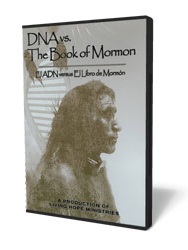
The “DNA vs. The Book of Mormon” documentary which discusses the Book of Mormon DNA issues in detail.
(click to watch)

Secular evidence will never prove the authenticity of the Book of Mormon, not because it couldn’t, but because it can’t. It didn’t happen.

Now the religious teachings are another story. Nothing would make me happier than to see Church leaders take seriously the teachings of King Benjamin in Mosiah chapter 4 or Moroni’s voice of warning set forth in Mormon chapter 8. I would like greater focus placed on the teachings of the book (in general), not less. I find the discussions of its historicity distract from its message.

The Book of Mormon is scripture. So is the book of Genesis. The world wasn’t created in 7 days and a flood never covered the entire earth. No guy named Lehi sailed with his family to the America’s and had half his kids cursed with a skin of blackness and no highly literate society spent 200 years studying and living and teaching the New Testament sermons of Jesus in the western hemisphere. Just like the vast majority of Mormons don’t have a problem appreciating Genesis while accepting it is nearly all fiction, the same should be true of the Book of Mormon. It is time for Mormonism to grow up and accept the reality of the situation.

Some of my greatest heros are fictional–Alyosha from the Brothers Karamazov, Hugo’s Jean Valjean, Steinbeck’s Tom Joad and Abraham and Joseph and Moses too. I have no problem adding Joseph Smith’s Alma the Younger and both Moronis to that illustrious list. No one should refuse to appreciate the Book of Mormon just because others believe the story literally happened–it would be like refusing to learn from Aslan of Narnia because some people believe there really are portal holes in the back of wardrobes into fantastic worlds of magic. Don’t reject the good because of other people’s mistaken beliefs.

Specifically about this DNA article:
1. Science is never done so reserve judgment.
This is true on its face, but inapplicable here. The fact that we don’t know everything doesn’t mean we don’t know some things. We know from the DNA that there wasn’t a population of millions of people in the Americas who came from Jerusalem in 600 BC. For sure. No question about it.

2. There were other migrations of populations from Asia.
Yes. Thanks for finally directly admitting it. My seminary teachers insisted that the “land bridge from Asia” theory was completely false and inspired by Satan to shake our faith. Really.

On this point, I lost all faith in any Church published book last year when I found that the book Articles of Faith by Apostle James E. Talmage had been significantly altered on this point sometime between the first printing and the 1989 edition that I had as part of my missionary library. Talmage was absolutely certain in 1901 that the Nephites and Lamanites filled the whole of North America from east coast to west coast. Pseudo-Talmage in 1989 only says that a traditional belief was that Nephites spread into some part of North America. The book contains no note/forward/appendix/introduction saying that significant passages had been completely rewritten. This is considered completely dishonest without question in the publishing industry. (I wrote a post about this a few months back with exact quotes and page numbers.)

3. There are some very few middle eastern DNA markers, and scientists don’t know when they were introduced.
Yes. This a factually true statement. But we do know that they were not introduced by a single group in 600 BC who came to number in the millions. Again, the Church uses a legitimate scientific uncertainty to suggest an uncertainty that doesn’t exist. No credible DNA scholar suggests that the trace amounts of middle eastern DNA found in native american populations could have been introduced as the Book of Mormon says they were introduced.

4. Scientists believe that small migrations probably happened from time to time.
Yes. It is almost certain that they did. But none of them created a highly educated and refined civilization numbering in the millions with highly advanced economic, legal, political, and religious structures. Citing a sole eskimo grave in Greenland hurts your argument, doesn’t support it.

5. The Founders Effect means that maybe we don’t find the DNA evidence because Lehi, Ishmael, Zoram and all the males among the Mulekites had male ancestors that didn’t come from the Middle East ala Perego’s long lost male ancestor from East Asia.

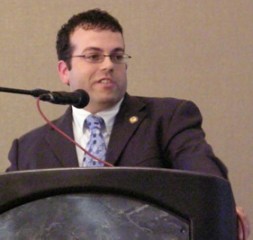
LdS Molecular Biologist Ugo A. Perego, PhD is cited extensively in the Gospel Topics article

LDS Molecular Biologist Ugo A. Perego, PhD is cited extensively in the Gospel Topics article

Not very likely. We are talking about at least a dozen men from Jerusalem here, some of them from the royal family. What are the odds that all of them, or even most of them, had a male founder with a different haplogroup than modern descendants from those Jerusalem people who stayed behind. This is silly.

Perego’s DNA shows he is European with a distant male ancestor from East Asia. The DNA of modern Native Americans show they are Native Americans with distant East Asian ancestors. Modern Jews have DNA different than either Perego or modern Native Americans.

So, yes, we don’t know the Founders DNA for the Nephite/Mulekite men with certainty because we haven’t found their graves. But for this argument to have any validity, we have to assume they were all, nor nearly all, from male lines that differed from the male lines of the Hebrews that stayed behind. This is really reaching for straws.

6. A population bottleneck could have eliminated the Hebrew DNA.
Yes it could have. But the scriptural record they say is historical doesn’t record such an event. In fact the Lamanites are so numerous they cover the land at the death of Moroni.

The massive deaths in the 15th Century just before and after European contact among native populations might have bottlenecked out Hebrew DNA evidence. But hundreds of genetic samples have been taken that pre-date the 15th Century population crash have been found and evaluated. They do not significantly alter the DNA picture we get from the living DNA. And none of them have come back Hebrew.

The illustration of population bottleneck from the Gospel Topics article. The caption states:

The Illustration of population bottleneck from the Gospel Topics article. The caption states: “Due to a dramatic reduction in population, some genetic profiles (represented here by the yellow, orange, green, and purple circles), are lost. Subsequent generations inherit only the DNA of the survivors.”

7. Genetic drift could have hidden any trace of Hebrew DNA.
The studies I have read say that the population with a dissapeared DNA trail must be very small for genetic drift to take it out. Notice the wording of the article: “When a small population mixes with a large one, combinations of autosomal markers typical of the smaller group become rapidly overwhelmed or swamped by those of the larger. The smaller group’s markers soon become rare in the combined population and may go extinct due to the effects of genetic drift and bottlenecks as described above.” They never say how small the population has to be. According to the scientists, the population has to be smaller than it ever was for the Nephites/Lamanites/Mulekites. There were millions of Nephites/Lamanites/Mulekites spread out over thousands of miles. Genetic drift would have taken over a million years to wipe them out of the DNA record. This isn’t a few dozen marbles in a jar we are talking about.

drift[1]

The illustration of genetic drift using colored marbles from the Gospel Topics article

Conclusion:
There are ambiguities in the DNA analysis. The ambiguities do not rise to the level where the Book of Mormon story is plausible as a history. No non-LDS DNA scientist is going to look at the data and conclude that the historicity of the book is likely. At best they will say it is difficult to prove the negative and by bad luck every male child of the Hebrew line might have died at childbirth in some generation and because they can’t prove this tragedy didn’t happen it is possible. But they won’t be joining the Church on that chance.

Elder Oaks’ fear that secular evidence will never prove the Book of Mormon is well founded. His hope that secular evidence will never disprove the book’s historicity is looking increasingly shaky every year as more and more data come in.

It will be nice when we finally move on from the endless debates about historical veracity and appreciate the beauty in the teachings, just like we do with the Bible. A hundred years ago you would be in very serious trouble if you were to try to say out loud in Mormondom that the Book of Genesis was fictional. Now you would be in the majority of educated Mormons, including the Brethren (although they would prefer the term “metaphorical” to “fictional”). Hopefully it doesn’t take us another hundred years to get to that point with the Book of Mormon.

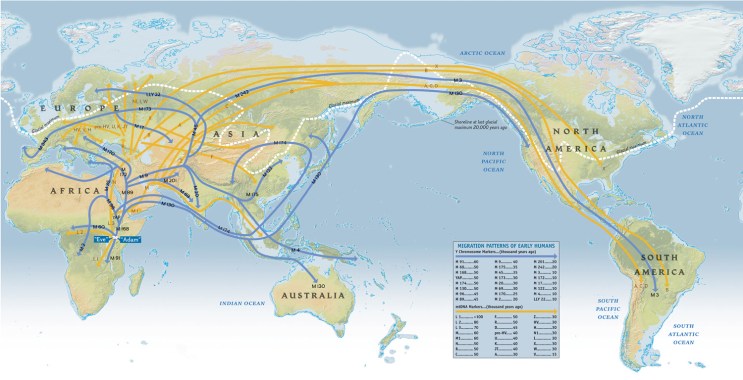
National Geographic Maps, Atlas of the Human Journey

National Geographic Maps: “Atlas of the Human Journey” which is based on the findings of the Genographic Project

About the Author:
Adam Ford is an attorney practicing law in New York and Utah. He is married with six children: Sariah, Hannah, Rachel, Willard, Heber, and Parley.

NOTES:
* In 2013 LDS Church historian Steven E. Snow verified that these articles have been vetted and approved by church leaders when he stated:

“Most who study our history well understand the context to these matters as far as time and place, but some members of the church, many really, are surprised by some of the things they learn in our history and we want them to be able go to a place where they can read accurate information and be able to seek to understand those historical chapters in the context of time and place and understand that those answers have been approved by the presiding brethren of the church. I think that will give many of our members confidence that they can rely on these answers.”
— Steven E. Snow, Church Historian, Understanding of Events in Church History “What about historical questions?” (video); https://www.lds.org/topics?lang=eng#media=11373505780672488714-eng

worshipIntroduction:
I’ve been a Christian a long time and this simple song of Christ’s mercy, grace, and unmerited forgiveness still reduces me to a grateful, humbled puddle of devoted tears everytime I sing or hear it. Even after all these years I still come empty handed and unworthy of the great gift that I’ve been freely given or the tender mercies I’m daily shown.
— Fred W. Anson 

Majesty (Here I Am)
Words & Music by Martin Smith and Stuart Garrard

Here I am
Humbled by your majesty
Covered by your grace so free

Here I am
Knowing I’m a sinful man
Covered by the blood of the lamb
Now I’ve found the greatest love of all is mine

Majesty
Majesty
You grace has found me just as I am
Empty handed, but alive in your hands


Here I am
Humbled by the love that you give
Forgiven so that I can forgive

Here I stand
Knowing I’m your desire
Sanctified by glory and fire

Now I’ve found the greatest love of all is mine
Since you laid down your life the greatest sacrifice

Majesty
Majesty
Your grace has found me just as I am
Empty handed, but alive in your hands

Singing
Majesty
Majesty

Forever I am changed by your love
In the presence of your majesty
Majesty

Singing
Majesty
Majesty

Your grace has found me just as I am
I’m nothing but alive in your hands

We’re singing
Majesty
Majesty

Forever
I am changed by your love
In the beauty of your majesty

Hillsong++Delirious+unified+praise

Video performance by Martin Smith with Delirious? and Hillsongs

Other inspiring performances of this classic praise chorus by Martin Smith

(Martin Smith with full orchestra)

(Martin Smith with Delirious? live at Willow Creek in 2006) 

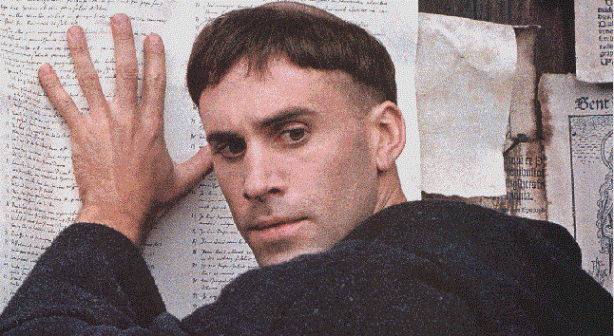
LutherMovie-CROPPEDTHE 95 LDS THESES
Introduction:
Today is October 31st, “Reformation Day”, 2013. It was on this day 496 years ago that Martin Luther nailed the “Disputation of Doctor Martin Luther on the Power and Efficacy of Indulgences” (commonly known as “The Ninety-Five Theses”) unto the door of The Castle Church in Wittenberg, Germany. “The Ninety-Five Theses” is widely regarded as the primary catalyst for the Protestant Reformation. So it is with a hopeful spirit for reformation in our lifetime that we offer these Ninety-Five Theses to a modern church that is badly in need of it.

And while we offer these theses to the public in general for discussion, debate, and consideration, we offer them even more specifically to the LDS Church and its members in light of Joseph Smith’s challenge …

“. . . call upon them [Mormon Critics] to meet you both in public and in private; and inasmuch as ye are faithful their shame shall be made manifest. Wherefore, let them bring forth their strong reasons against”
(Doctrine & Covenants 71:7)

… and in agreement with Mormon Apostle Orson Pratt who said:

“. . . convince us of our errors of doctrine, if we have any, by reason, by logical arguments, or by the word of God, and we will be ever grateful for the information, and you will ever have the pleasing reflection that you have been instruments in the hands of God of redeeming your fellow beings from the darkness which you may see enveloping their minds.”
(Orson Pratt, “The Seer”, pp. 15-16)

So without further ado we present . . .
The Disputation of Ninety-Five Theses on the Power and Efficacy of the Church of Jesus Christ of Latter-day Saints: Ninety-Five Theses for consideration, discussion, and action regarding a modern church badly in need of reform
(aka “The 95 LDS Theses”)

Question: What’s wrong with the Church of Jesus Christ of Latter-day Saints?
Answer:

BEHAVIOR CONTROL ISSUES
1. LDS President Spencer W. Kimball said, “Brothers and sisters, pray for the critics of the Church” (“Remember the Mission of the Church”, Ensign, May 1982, p.4) but today’s LDS Church is quick to label and denounce internal and external critics as “enemies out to destroy” even when they’re simply speaking the truth, seeking to gain understanding, and/or trying to make the church a better place.

2. The LDS Church focuses on the needs and interests of the institution over the needs and interests of the members. For example, on January 29, 2013, the LDS Church announced that the Benemerito De Las Americas private school in Mexico would be closed and converted into a Missionary Training Center leaving its more than 2,000 LDS students to the mercy of the vastly inferior Mexican public education system.

3. D&C 121:39 says: “We have learned by sad experience that it is the nature and disposition of almost all men, as soon as they get a little authority, as they suppose, they will immediately begin to exercise unrighteous dominion.” Yet the modern LDS Church tolerates abuse of ecclesiastical power by LDS church leaders through various means from refusing to directly answer troubling questions from its members up to and including excommunication of members who speak truth to power.

4. LDS President, John Taylor, said, “I for one want no association with things that cannot be talked about and will not bear investigation.” (Journal of Discourses, Vol. 20, p. 264) but today’s LDS leaders refuse to publicly address members concerns about difficult facts of Mormon History and suppresses loyal dissent from within its ranks via disciplinary action up to and including excommunication.

5. The LDS Church website says, “Those who are married should consider their union as their most cherished earthly relationship.” Never-the-less, due to the doctrine of Celestial Marriage members often feel pressured to choose between the potential to be exalted into the Celestial Kingdom and their apostate (or non-member in the case of a convert) spouse. Choosing the former all too often results in divorce.

6. LDS Church leaders denounce and scorn former members and encourage members to do the same. To cite one example, the chapter in the official church curriculum “Teachings of Presidents of the Church: Joseph Smith” entitled “Beware The Bitter Fruit of Apostasy” (pp. 315-326) is a demonstration of how church leaders do this.

7. It asserts in the strongest language that doctrinal differences, criticisms, or questions about LDS Church policies and/or leaders are sin, for the ‘prophet’ is always right. Those who engage in such behaviors – or refuse to comply with the status quo – are subject to discipline up to and including ex-communication. An example of this is the recent excommunication action taken against Denver Snuffer.

8. It drives a wedge between member and non-member family members. Ex-Mormon family members in particular are to be avoided but the LDS Church also encourages members to steer clear of “Never Mormon” family members who are openly critical of the LDS Church. For example, one Temple Recommend Question asks, “Do you support, affiliate with, or agree with any group or individual whose teachings or practices are contrary to or oppose those accepted by the Church of Jesus Christ of Latter-day Saints?” The wording of this question strongly implies that temple worthiness requires eschewing those with beliefs opposing the LDS church. This often includes former members and/or family members critical of the church.

9. The LDS Church is the largest sponsor of Boy Scout units with over 30,000 units nationwide. Conversely, the Young Women’s Personal Progress Program receives significantly less funding and attention and demonstrates pronounced gender inequality. Why, for example, aren’t there an equal number of church sponsored Girl Scout units for girls?

10. The culture that results from LDS doctrine pressures members to marry too quickly often resulting in marriage between incompatible strangers. For example, 12th LDS President Spencer W. Kimball taught, “It was never intended by the Lord that a large portion of one’s life should be spent in the unmarried state… Long-delayed marriages are certainly not approved of the Lord.” (“The Marriage Decision”, Ensign, Feb. 1975)

11. The Lord, it is claimed, said, “Verily I say, men should be anxiously engaged in a good cause, and do many things of their own free will, and bring to pass much righteousness.” (D&C 58:27) But today LDS Leaders use the Temple Recommend process as a subtle, barely discernible means of manipulative coercion rather than allowing members to engage their free will.

12. It puts its untrained clergy in a position where they must give counsel on vital life issues that they are not qualified or equipped to competently address. The result, all too often, is ecclesiastical malpractice.

13. The LDS churches places an inordinate amount of emphasis on a commandment that enriches itself financially – the tithe. It is the only commandment that requires a yearly meeting with the bishop and must be paid without regard to a person’s personal welfare: “If paying tithing means that you can’t pay for water or electricity, pay tithing. If paying tithing means that you can’t pay your rent, pay tithing. Even if paying tithing means that you don’t have enough money to feed your family, pay tithing.” (“Sacred Transformations”, Ensign, Dec 2012. p.38)

14. The original 1835 D&C 101 said, “all marriages in this church of Christ of Latter Day Saints, should be solemnized in a public meeting” but today’s church drives a wedge between friends and family members by compelling Latter-day Saints to get married in private Temple services that exclude not only all non-members and their families, but even non-Temple Recommend holding LDS family members in addition to all children below a certain age – Mormon and non-Mormon alike.

15. The Apostle Paul wrote “there is neither male nor female: for you are all one in Christ Jesus” (Galatians 3:28). Yet the LDS Church gives men an exalted status over women; refuses them the Priesthood; denies that women are co-equals; and chooses instead to subordinate them to men.

16. LDS church leaders replace “ye are free; ye are permitted to act for yourselves” (Helaman 14:30) with obedience to trivial and arbitrary rules. Things like ear piercings, movies, tattoos, and clothing choices have nothing to do with salvation – therefore, these are areas where individual Free Agency and the leading of the Spirit should prevail.

17. It imposes vague, scientifically discredited 19th Century dietary regulations on members via the “Word of Wisdom” (Doctrine & Covenants section 89). This isn’t a trivial matter since a lack of compliance to these standards can result in the loss of one’s temple recommend – per the Temple Recommend Worthiness Interview question which directly asks, “Do you keep the Word of Wisdom?”

18. It quells and compromises good scholarship within its rank by demonizing, disfellowshipping and excommunicating members who produce scholarly works discussing Mormon History, Theology, or culture that have scholastic integrity. The classic example of this are The September Six – the six esteemed, respected, and in some cases award winning, Latter-day Saint scholars who were excommunicated in September 1993 for producing such work.

19. D&C 58:27 states “men should be anxiously engaged in a good cause, and do many things of their own free will, and bring to pass much righteousness” and Joseph Smith stated “I teach them correct principles, and they govern themselves.” (“The Organization of the Church”, Millennial Star, Nov. 15, 1851, p. 339). However, the church often does exactly the opposite: Such as rewarding Paul H. Dunn with a General Authority position for his compliant use of “faith promoting” lies, but excommunicating D. Michael Quinn for continuing to tell the authentic truth despite being told by Mormon leaders to stop.

20. By requiring a full tithing to participate in the temple endowment ceremony, and thereby achieve exaltation, the LDS church disregards Moroni’s censure: “Yea, it shall come in a day when there shall be churches built up that shall say: Come unto me, and for your money you shall be forgiven of your sins.”(Mormon 8:32)

21. It uses employment in LDS Church and member owned institutions and businesses to coerce obedience to its dogma and leaders. An example of this is John P. Hatch being terminated from Deseret Book for simply expressing his opinion regarding, “the Church’s efforts to suppress access to honest history.” in a letter to the Salt Lake Tribune without warning or asking for clarification on the letter.

22. Its leaders and members use ad-hominems, insults, slurs, derogatories, labeling, and character assassination in their dealings with critics and apostates and then deny that they do so – often going so far as to claim that those who call them on this behavior are persecuting them.

23. It allows members to privately believe whatever they want – even if it’s atheistic or contradicts LDS orthodoxy – as long as they publicly “toe the party line” and continue to contribute their time and money to the LDS Church.

24. It privately judges and abandons members that have life problems rather than patiently, encouraging, undergirding, supporting, and attempting to restore them to a healthy, productive place. This while publicly declaring that the LDS Church treats all such cases with benevolent kindness.  For example, many prisoners are excommunicated in absentia once convicted of a crime. And while a small number of individual members may volunteer for a local prison-ministry in their area, there is currently no formal church sponsored outreach to prisoners.  The same can be said for those suffering from alcoholism, drug abuse, sexual addiction, gambling addiction, etc., etc., etc.  Further, many snared in these life situations simply experience church discipline in various forms are and told to repent – nothing more.

25. It tends to view any doubt, character flaw, or personal deficiency as “sin” rather than as a normal expression of the human condition and life experience. Thus it has created an implied and unstated expectation that members must always be perfect and/or “all together” or they’re in sin and unworthy of advancement within the organization.

26. It practices graceless, merciless, condemning, legalistic disciplinary extremes – far beyond Biblical standards – in regard to those who have engaged in sexual activity outside of marriage that, as been reported by many, often leads to a “no-win” double-bind spiral into hopeless despair.  Seventh LDS President Heber J. Grant articulated this extremsim well when he said, “There is no true Latter-day Saint who would not rather bury a son or a daughter than to have him or her lose his or her chastity – realizing that chastity is of more value than anything else in all the world.” (Heber J. Grant quoted in, Gospel Standards”, complied by G. Homer Durham, p. 55)

27. The Apostle Jude commanded “Be merciful to those who doubt” (Jude 1:22, NIV). Instead LDS leaders often demand blind compliance from those questioning and wavering. Failing at that they will expose, quarantine, isolate – and if necessary expel – doubters rather encouraging, supporting, and protecting them while they work through their doubt.

28. It preaches extreme, legalistic, and arbitrary sexual standards regarding masturbation that are not scripturally or scientifically supportable.

29. Via the Priesthood Correlation Program it tries to turn everyone into a Utah Mormon and every Chapel, Ward, and Stake into a Utah Chapel, Ward, and Stake rather than encouraging – even celebrating – each culture’s unique distinctives.

30. It has created a culture whereby fear of their family’s reaction puts pressure on disenchanted LDS Missionaries to continue with their missions whether they want to or not.

31. Women are inappropriately subordinate, not equals, with men in the LDS church. For example, in the Temple Endowment Ceremony women swear obedience to God and to her husband while the man swears obedience only to God. Additionally women may not act as a voice in prayer circles and instead must veil their faces.

 32. It claims to be “pro-family” while simultaneously creating a culture that breaks up both Mormon and non-Mormon families via the aforementioned.

33. It has a double standard for treating non-members with charitable benevolence (as a means of proselytizing and public relations) while exacting, high, often unattainable standards that members must meet to receive the same levels of attention, aid, and assistance.

34. Despite the fact that The Book of Mormon says, “For behold, ye do love money, and your substance, and your fine apparel, and the adorning of your churches, more than ye love the poor and the needy, the sick and the afflicted.” (Moroni 8:37) the First Presidency choices to invest billions in building ornate malls and temples rather than using that money to show love to the poor and the needy, the sick and the afflicted.

INFORMATION CONTROL ISSUES
35. Although the LDS church sates that “we believe in being honest” (13th Article of Faith), it regularly substitutes faith promoting “spin” to its members, the media, and investigators instead of telling the full truth regarding its history and theology.

36. The LDS Church has suppressed – and allegedly has even destroyed – church owned documents and artifacts that would expose the fact that it’s not telling the full truth regarding its history and theology. Examples of suppressed documents include: a) the contents of the First Presidency’s Vault; b) The Mark Hofmann forgeries that the church purchased from him, and; c) The Joseph Smith seer stones that were used to “translate” the Book of Mormon and receive many of the revelations in Doctrine & Covenants, and many others.

37. Since 1959 it has suppressed its financial records in the United States and other countries where churches aren’t required to publicly disclose such records, thus eliminating full accountability in terms of how member contributions are used.

38. I Nephi 13:9 warns, “for the praise of the world do they destroy the saints of God, and bring them down into captivity,” yet the behavior of today’s LDS Church would suggest its core unifying principle seems to be “Image over truth always and in all things.” Could today’s Latter-day Saints be captives destroyed by their quest for the praise of the world rather than a peculiar people?

39. It contrives man-created “revelations” and claims that they are of divine origin. Two examples of this are Official Declarations 1 and 2 – one (OD-1) of which is essentially a policy statement in the form of a press release that addresses, “To whom it may concern” and the other (OD-2) which hints at a revelation but fails to produce it in any form within the actual declaration.

40. Hymn #292, “O My Father” acknowledges the LDS doctrine of a heavenly mother. Mormon leaders throughout history have confirmed this doctrine. However, Heavenly Mother is rarely discussed, is demonstrative of male bias within the LDS Church, and is illustrative of how the church deceives investigators and others.

41. It allows unsubstantiated “faith promoting” stories to run unchecked. Examples include Three Nephite sightings, attribution of magic protective power to temple garments, and falsely implying that all the apostles have been personally visited by Jesus.

42. It restricts distribution of the LDS “Church Handbook of Instruction Book 1: Stake Presidents and Bishops” (aka “Handbook 1”) to only the Bishopric level and higher. This eliminates transparent “bottom up” accountability enabling ecclesiastical abuse because lay members can’t confront local leaders and/or report policy violations to higher authorities for rectification.

43. Gospel Principles explains, “Whenever we lead people in any way to believe something that is not true, we are not being honest.” (see Chapter 31) yet LDS Church leaders mandate that Mormon History must always be presented to members (even privately) in a manner that’s uplifting and only presents the LDS Church in a favorable light – even if the resulting narrative is not true.

44. It deceptively claims to be “Christian” when in reality it has taken Christian words, terms and forms and then changed the underlying meaning and content to an extent that they’re no longer congruent with historic, mainstream, Christian orthodoxy.

45. When it claims, “No tithing dollars were used for this building or project – the funds came from for-profit, church-owned entities” it ignores and/or obfuscates the fact that the seed, start-up, or acquisition funds logically and ultimately came from member tithes – a fact which negates the original claim.

46. It wavers on whether its ultimate authority for doctrine is the Bible, Mormon scriptures, statements of former Mormon prophets, statements of living Mormon prophets, and individual “revelation” even though these sources are often mutually contradictory.

47. It refuses to acknowledge and apologize for the role of high ranking church leaders in the massacre of 120 innocent people in 1857 at Mountain Meadows.

48. It makes extraordinary – even outrageous – truth claims that are easily discredited by science, history, and the Biblical record.  For example: The genomics project has a vast body of DNA evidence that conclusively demonstrates that the American aborigines were from Asia not the Middle East; Those aborigines had already migrated and were well established in the Americas thousands of years prior to the alleged arrival of the Book of Mormon people, and; The Bible plainly states that the gospel, with its inclusion of Gentiles, was not fully revealed until after Christ’s death (see Ephesians 3:3-7).

49. It excuses, rationalizes, justifies, and white washes the crimes of its founder, famous members, and past leaders.  To cite just one of many such examples, polygamy was never legal whenever and wherever it was practiced by Latter-day Saint leaders and members.

50. On August 17, 1949, the First Presidency of the LDS Church stated: “The attitude of the Church with reference to Negroes remains as it has always stood. It is not a matter of the declaration of a policy but of direct commandment from the Lord” Yet the LDS Church refuses to acknowledge and apologize for the fact that until 1978 – as a point of official doctrine (not folklore, opinion, or speculative theology) and policy – the church taught racism and excluded blacks from the priesthood and temple.

51. It has used home teachers and the “Strengthening Church Members Committee” as a means of surveillance on and control of members.

52. It hypocritically claims that polygamy has no place in the contemporary LDS Church even though Joseph Smith’s revelation on polygamy (Doctrine & Covenants 132) is still canonized scripture and “Celestial Polygamy” (being eternally married to at least one more woman after being widowed or divorced) is practiced. Currently, three widowed Mormon Apostles (Dallin H. Oaks, L. Tom Perry, and Russell M. Nelson) are Celestial Polygamists.

53. It claims that the LDS Church is patterned after the early church of Jesus’ apostles, but there are major differences. To cite just one of many examples, Christ only had 12-apostles but the LdS Church has 15.

54. It rationalizes and excuses the sin, bad behavior, errors of judgment, and disastrous decisions its prophets. They are buried, ignored, or ‘spun’ as “well-meaning human error with no need for apology or confession”.

55. It rationalizes away the revelations – even those that were fully canonized – of present or past “Living Prophets” that contradict contemporary LDS Church teachings and culture. The no-longer-in-vogue revelations are buried, ignored, or recast as “opinion not divine”. The “He was speaking as a man not a prophet” apologetic is typically used as the rationalization in these cases. Hence the critic’s couplet: “As heresy is, Mormon doctrine once was. As Mormon doctrine is, heresy will it become.”

56. It tolerates the chronic practice of eisegesis (injecting words and ideas into the text that the author did not intend, use or mean) by LDS Church Leaders as their standard hermeneutic in interpreting the Biblical, historical, and scientific record.

57. It rationalizes the failed prophecies of future events by past “Living Prophets” by burying, ignoring, or spin doctoring them as “just his opinion”, or as requiring more time for fulfillment.

58. It undermines intellectual integrity when, by following the example learned from LDS Church Leaders and Church Educational System (CES) curriculum  members engage in eisegesis as a lifestyle in all areas of life – not just scriptural interpretation but just about anything, and everything. Well known LDS Apologist Hugh Nibley is one of many examples of how this works: “…Nibley often uses his secondary sources the same way he uses his primary sources–taking phrases out of context to establish points with which those whom he quotes would likely not agree. I asked myself frequently what some authors would think if they knew that someone were using their words the way Nibley does…”
(Kent P. Jackson, “Review of Hugh Nibley, Old Testament and Related Studies,” BYU Studies 28 no. 4 (1988), pp.115-17; also see http://lds-mormon.com/nibley1.shtml)

59. It uses the term “official doctrine” as a means of silencing critics and dissents even though there is no formal, codified definition for what constitutes “official doctrine”.

60. It tolerates an untenable situation whereby the canonization process isn’t officially defined or codified yet is used to deny past publications, prophetic revelations, and other utterances from past Mormon Leaders that are no longer in vogue. For example, despite the fact that the twenty-six volume “Journal of Discourses” contains General Conference addresses from 1854-1886 that were vetted and approved by the General Authorities at the time, they are soundly now rejected as “unofficial”. This despite Brigham Young’s assertion that, “I say now, when they [his discourses] are copied and approved by me they are as good Scripture as is couched in this Bible . . . “ (“Journal of Discourses”, vol. 13, p. 264; see also p. 95)

61. Alma 41:8 says, “Now, the decrees of God are unalterable; therefore, the way is prepared that whosoever will may walk therein and be saved.” yet the LDS Church keeps changing its scripture. Examples include the 1921 removal of the “Lectures on Faith”; the “Santa Biblia: Reina Valera 2009” which deviates wildly from both the source 1909 edition and the English LDS Edition of the Bible; the 2013 changes to all the English editions of The Standard Works; and the changes to the Book of Mormon that have been ongoing since 1830 – such as the 1981, post OD-2 change of “white and delightsome” to “pure and delightsome” in 2 Nephi 30:6.

62. It has failed to officially, publicly, and directly address the ever mounting discrepancies between the claims of The Book of Mormon and the archaeological, historical, theological, and scientific body of evidence.

63. It has failed to explain the incriminating consistency between the claims of The Book of Mormon and the empirical 19th Century, political, literary, cultural and theological record. For example, the Book of Mormon was so infused with 19th Century Campbellite doctrine and ideas that primitive Mormonism was referred to as “Campbellism Improved” by outsiders.

64. It has failed to provide an adequate, rational explanation for how Joseph Smith could “translate” the Book of Abraham from a set of Egyptian Book of Breathings papyri.

65. It has failed to reasonably explain how Joseph Smith could, via The Joseph Smith Translation of the Bible, append the Bible with “translations” of entire new books and chapters that have utterly no manuscripts backing them while simultaneously purging words, verses – even entire books – that are substantially supported by the extant manuscript base.

66. D&C 42:71-73 commands paid clergy: Saying in part, “they are to receive a just remuneration for all their services”. And while in actual fact the LDS Church compensates leaders via employment in church owned businesses, generous honoraria, stipends, grants, scholarships, gifts, company cars, free travel and lodging, housing and other non-cash contributions, in public it deceptively claims that “The LDS Church has no paid clergy”.

67. It hypocritically denounces those who claim to bring forth new scripture and revelations using the same methods and means that Joseph Smith did because they fail to conform to established LDS Church orthodoxy. This, while simultaneously criticizing the mainstream Christian Church for rejecting Mormonism because the revelations and scripture of its founder and subsequent “prophets” fail to conform to established Christian orthodoxy. One such example of this is Christopher Nemelka’s “The Sealed Portion”.

68. It allows LDS Church leaders and the Church Educational System (CES), to distance themselves from the work of LDS Apologists so as – it is believed – to create a “plausible deniability” escape hatch should the work of said Apologists be discredited by more qualified, objective scholarship. Nevertheless, both cite from the work of LDS Apologists (albeit typically not credited) while allowing the LDS Church to quietly fund the work of said apologists through indirect cash flows.

69. It engages in political action via direct and indirect cash flows and privately exhorts members to organize and engage in particular causes and then publicly denies any involvement. California’s Propositions 22 (circa 2000) and 8 (circa 2008) are two cases in point.

70. It publicly (and loudly) trumpets its philanthropic work when compared to other churches its per capita outlay is less than what smaller, less wealthy, less organized religious organizations spend: A study co-written by Cragun and recently published in Free Inquiry estimates that the Mormon Church donates only about 0.7 percent of its annual income to charity; the United Methodist Church gives about 29 percent.
(Caroline Winter, “How The Mormons Make Money”, Business Week; July 18, 2012)

71. It has allowed LDS Church leaders to obfuscate, spin-doctor, and blatantly lie to the media rather than standing with integrity and bolding telling the world what the LDS Church really believes, teaches, and practices.  Such behavior should be denounced and condemned not tolerated, justified, or praised. One example of this Gordon B. Hinckley lying to journalists about the role and function of the Lorenzo Snow couplet within LDS Theology.

72. It fails to recognize the over sixty (60) active Latter Day Saint movement denominations (aka “splinter groups”) while hypocritically condemning the denominationalism of Christianity as a proof of apostasy and lack of divine legitimacy. This hypocrisy is even more pronounced when one considers that over the 180+ year history of the LDS movement there have been over 200 Latter Day Saint denominations in total with new ones forming at a rate will be eventually far exceed and outpace the total number of Christian denominations.

THOUGHT CONTROL ISSUES
73. It teaches an irrational and subjective epistemological system while simultaneously belittling epistemology based on reason, objectivity, and empiricism.

74. It employs circular logic.  For example, consider its core truth claim: “The only true church is The Church of Jesus Christ of Latter-day Saints because The Church of Jesus Christ of Latter-day Saints says it’s the only true church.”  Another poignant example of circular logic is the infamous Doctrine & Covenants 9:8 “burning in the bosom” truth test that (in the vernacular) goes something like this:  “If you don’t get it, you did something wrong. If you do, that proves the church is true.” Further, when taking this test, you don’t ask God if the church is true, but rather to show you that it is true: “I will cause that your bosom shall burn within you; therefore, you shall feel that it is right.”

75. LDS Church Missionary training and policies employs Mind Control techniques and tactics.

76. It keeps members so busy with LDS Church related activities that they don’t have time for personal reflection and self-autonomy. This is especially true of men as the demands of lay leadership tend to deprive them of real, regular, authentic family time.

77. It erroneously asserts that former members didn’t leave the LDS Church for any thoughtful or legitimate reasons but rather that they were thin skinned reactive, malcontents who left the LDS Church because they wanted to sin with impunity, or because of a perceived offense. Stated plainly, this is a hypocritical double standard: It’s OK to be troubled by, doubt, criticize, and even leave other churches, but this one can’t be questioned or left.

78. It discourages intellectual self-autonomy and self-responsibility and encourages dependency on LDS Church Leaders.

79. It engages in Mind Control tactics and techniques in recruiting, indoctrinating, and retaining members.

80. The LDS Church denies being man centered or exalting – claiming that it only lifts up Heavenly Father and Jesus Christ as worthy of its worship. Yet its Hymnal contains songs of praise and adoration that exalts both dead (#27 “Praise to the Man”) and living men (#19 “We Thank Thee O God For A Prophet”). 

81. It requires members to remain in a “snapped” psychological state in order to remain believing members. For example, when members encounter troubling facts about Mormon History and/or doctrine they’re either told to pray about it or “put it on the shelf”. This is called “Thought Stopping” and it’s a technique that Mind Control Cults use to avoid the rigors of logic, reason, and uncomfortable realities.

82. The Book of Mormon warns, “Wo unto them that call evil good, and good evil” (2 Nephi 15:20) yet the LDS Church requires members to adhere to moral relativism, loose ethics, and intellectual dishonesty in support of a belief system that lacks ethical congruity, consistency, and integrity. Some of the most obvious examples of this are: The practice of polygamy and the rationalization of that past polygamy today; A failure to acknowledge and apologize for its pre-1978 institutionalized racism, and finally; The practice known as “Lying for the Lord” throughout Mormon History.

83. It hypocritically rails against sound logic and reason as “the hollow and vain philosophies of men, not God” and then hypocritically attempts to (albeit poorly and inconsistently) employ logic and reason in its arguments and rhetoric.

84. It poisons members who leave the LDS Church against all other Theistic religions. This is best illustrated by the cliché used by both members and former members that goes something like this, “If the Mormon Church isn’t true then nothing is true.”

EMOTIONAL CONTROL ISSUES
85. It damages member psychology via the use of manipulative fear and unachievable standards of “worthiness”. Sadly, this lament is all too common: “Of course I do [have a testimony]! That’s what’s so terrible. I know the gospel’s true. I just can’t do it. I’ve tried and I’ve tried, but I can’t do it all, all of the time.” (Stephen E. Robinson, “Believing Christ”; Ensign, April 1992)

86. Whereas, Mormon Prophet Brigham Young preached, “A good man, is a good man, whether in this church, or out of it.” (“The Lions of the Lord: A Tale of the Old West” by Harry Leon Wilson, chap XXVIII, par 2) the modern LDS Church engenders arrogance and self-righteousness in members by telling them that they’re more enlightened and morally superior relative to the general population – including other good people of faith.

87. It uses guilt as a means of controlling members.

88. It “love bombs” investigators and new converts as a means of drawing them in.

89. It uses arbitrary, capricious, and ever changing criteria for Temple Recommend “worthiness”. For example Brigham Young’s 1856 worthiness questions (also see this ByteLine article)  are almost completely different than the current set of Temple Recommend Interview questions.

90. The Book of Mormon speaks of those who, “do walk in the pride of your hearts; and there are none save a few only who do not lift themselves up in the pride of their hearts …yea, even every one, have become polluted because of the pride of your hearts.” (Mormon 8: 36) Despite this the LDS Church culture engenders clannish, elitist, and pride in members via it a Temple, Priesthood, and oligarchical calling system that puffs member up rather encouraging and rewarding humility.

91. It encourages arrogant, condescending pride in members at all levels by telling them that they “have the whole and restored truth” that “apostates” only have in part and “gentiles” lack entirely.

92. It teaches that a rape victim has “lost her chastity” and that a woman should fight off her attacker or be killed in the attempt.  For example, Apostle Spencer W. Kimball, in his book “The Miracle of Forgiveness” said, “far-reaching is the effect of loss of chastity. Once given or taken or stolen it can never be regained. Even in a forced contact such as rape or incest, the injured one is greatly outraged. If she has not cooperated and contributed to the foul deed, she is of course in a more favorable position. There is no condemnation when there is no voluntary participation. It is better to die in defending one’s virtue than to live having lost it without a struggle.” (p. 196)  Thus, young Mormon women are taught that their chastity is more valuable than their life. The result is that a Mormon woman who survives a rape is made to feel guilty, and is thus victimized again, this time by her church.

93. It bestows the title “Elder” onto adolescent men (typically 18-years old) with little to no real life experience, thus puffing them up with arrogance and deluding them with prideful ignorance.

94. It hypocritically defines polemic arguments as “persecution” and then engages in polemics with its critics and those of other faiths. For example, consider how it trains its missionaries to speak of other churches:

“Without the Apostles, over time the doctrines were corrupted, and unauthorized changes were made in Church organization and priesthood ordinances, such as baptism and conferring the gift of the Holy Ghost. Without revelation and priesthood authority, people relied on human wisdom to interpret the scriptures and the principles and ordinances of the gospel of Jesus Christ.

False ideas were taught as truth. Much of the knowledge of the true character and nature of God the Father, His Son Jesus Christ, and the Holy Ghost was lost. The doctrines of faith in Jesus Christ, repentance, baptism, and the gift of the Holy Ghost became distorted or forgotten. The priesthood authority given to Christ’s Apostles was no longer present on the earth. This apostasy eventually led to the emergence of many churches.”
(“Preach My Gospel: A Guide to Missionary Service”; Official LDS Church Missionary Training curriculum, p.35)

95. It creates undue demands as well as mental, emotional, and spiritual stress and strain on members via all the above.

William Booth, founder of the Salvation Army published this hymn in the group’s “War Cry” hymnal in 1894.
This song delivers a passionate cry for God to send the fire of the Holy Spirit into our lives that we might transform the world through devotion to Christ expressed through courageous, self-sacrificial Christian service. 

William Booth (1829-1912)

William Booth (1829-1912)

Send The Fire
O God of burning cleansing flame
Send the fire
Your blood-bought gift today we claim
Send the fire today
Look down and see this waiting host
And send the promised Holy Ghost
We need another Pentecost
Send the fire today
Send the fire today

God of Elijah hear our cry
Send the fire
And make us fit to live or die
Send the fire today
To burn up every trace of sin
To bring the light and glory in
The revolution now begin
Send the fire today
Send the fire today

It’s fire we want for fire we plead
Send the fire
The fire will meet our every need
Send the fire today
For strength to always do what’s right
For grace to conquer in the fight
For power to walk the world in white
Send the fire today
Send the fire today

To make our weak hearts strong and brave
Send the fire
To live a dying world to save
Send the fire today
Oh see us on Your altar lay
We give our lives to You today
So crown the offering now we pray
Send the fire today
Send the fire today
Send the fire today

Video performance by Lindell Cooley and the Brownsville Worship team

(Video performance by Lindell Cooley and the Brownsville Worship team from the album “Send the Fire”)

by “Enigma”
Introduction:
This article was originally posted on the ExMormon.org (aka “RfM) discussion board back in 2005 and quickly went viral. It’s the autobiographical account of a Born-in-the-Covenant Mormon who is forced to remain an active Mormon to maintain his marriage. This is an unfortunately common phenomenom – so common in fact, that the term that’s developed over time for Mormons in this situation is “Shadown Mormons”.   It is our hope that this article will impact and enlighten you in the same way that it has thousands of others to the pain and quiet despair that Shadow Mormons must endure. 

6a00e54f900c8e8833017d3bf4762a970c-800wi

ORIGINS
I was born into the church by parents whose lineage goes back to the founding of the LDS church. While they had their faults and mistakes, I was raised in a loving home with a very dedicated mother and father. They were wonderful examples to me of faith and endurance in trying circumstances and they tried every day to center their family’s life on the principles of the LDS Gospel.

I was born with a membrane disease in my lungs that nearly took my life at birth. My parents, extended family and several members of their local LDS congregation fasted and prayed many times on my behalf. My parents had already endured the devastation of losing their first-born son two days after his birth and they begged God not to take me. By virtue of the fact that I am writing this, I am there miracle baby. I was spared.

I went through all of the LDS Church rites of passage: Baptism at 8, priesthood at 12, president of my priesthood quorums, Seminary graduate/scripture mastery, mission at 19, and marriage at 23 and two beautiful daughters by the age of 28. By all accounts I was on the highway to heaven. I was the good son with the ideal family, budding successful career, faithful service in church callings, and extensive understanding of the LDS gospel.

SHOCK
In January of 1995 I prepare to go through the temple for the first time in preparation for my mission. I have been taught through the years that I would learn all that was necessary to gain my salvation by going through the temple. I believe it to be the pinnacle of true worship. I have expectations of learning great things through the covenants and true order of prayer as these parts of the temple have been quietly intimated to me through the years by my parents and teachers.

My parents, grandparents, various uncles and aunts and I meet at the Idaho Falls Idaho temple on a bright clear Saturday morning. I am a little nervous about the unknown but tremendously excited that I have reached this point in my life. I have one older sister who had made some serious mistakes and fallen away from the faith during her teen years. I am the first of my parents children to “make it” to the temple and it is the healing balm for their souls to see their oldest son “staying the course”.

“Let me take you now through my first experience in the temple”

I get my temple clothing packet from the rental counter. The first two whispering questions surface to my conscious mind…

“What is this clothing for?”

“Why are there moneychangers in the temple?”

“No matter” I rationalize, I am here to receive enlightenment and make covenants in the House of the Lord. I go with my father to a small room that serves as some kind of office. There, the temple president explains to me the sacred nature of the Garment and the need to wear it from this point on as a shield and a protection. I go through the Washing and Anointing and New Name ceremony without much concern. I accept these ordinances based on references in the bible regarding the washing and anointing of priests and the periodic assignment of new names to various biblical patriarchs in the Old Testament.

I proceeded to the waiting chapel to sit and meditate until the time of the next session. The time has arrived and the company of people assembled in the chapel is ushered into the creation room (the Idaho Falls Temple still has separate creation, garden, telestial and terrestrial rooms with the video and audio segments appropriate for those parts of the ceremony queued up in succession). I sit and wait.

washington-mormon-temple18The company is seated.

The lights grow dim.

I sit silently in the darkness…

This is the beginning of the end.

“You will be required to take upon yourselves sacred obligations, the violation of which will bring upon you the judgment of God. For God will not be mocked.”

I feel fear in the darkness.

“If any of you wish to withdraw rather than receive these covenants of your own free will and choice, you may now make it know by raising your hand.”

I look around in the darkness.

I see my family silhouetted in the darkness.

I feel fear in the darkness.

I remain seated in the darkness.

I witness the creation and go into the garden room. The fruit is eaten. The fall has commenced.

“Take some fig leaves and make you aprons. Father will see your nakedness. Quick! Hide!”

“Brothers and Sisters put on your aprons.”

I obey Satan.

I make my first covenant to obey God’s law and keep his commandments. I see the sisters bow their heads in submission to their husband’s. I am now ready to receive the first token of the Aaronic Priesthood with its accompanying name and sign.

What is a token?

What will I do with it?

I receive the first token: A secret handshake.

A secret handshake?

I make the sign. I make the covenant. “I, Jesse, solemnly covenant before God, Angels, and these witnesses at this altar, that I will never reveal the first token of the Aaronic Priesthood with its accompanying name and sign”

A secret combination?

All my life I have been taught from the Book of Mormon that secret signs, oaths and societies are from the devil. They are responsible for the destruction of civilizations and untold misery.

I have joined a secret society?

I am now a part of a secret combination?

I feel fear.

Adam and Eve are cast out of the garden. I go into the telestial room.

This is the entire Mormon Temple Endowment Ceremony (with movie) that is in every temple in the world except the Manti, Utah and Salt Lake City, Utah temples. (Those two temples have temple workers act out the endowment ceremony instead of showing a movie in those two temples.)

Michael Ballam playing Satan in the 1990 Temple Endowment Movie

Satan is looking at me.

“I have a word to say concerning these people. If they do not walk up to every covenant that they make at these altars in this temple today, the will be in my power”

I feel terror.

Satan is cast out. I receive more tokens and signs. I put on strange clothing.

I look at my father.

His face a mask of concentration, staring resolutely ahead.

I look at my mother.

Her face devoid of emotion, following by rote.

I look around at all the other patrons following en masse. All dressed in strange ceremonial clothing. All bow their heads and say yes.

I am in a cult.

My mind whispers quietly: “Please God no!”

“Each of you bow your head and say yes.”

The company chants in unison: “YES”

I am trapped.

My mind screams: “PLEASE DEAR GOD NO!”

“EACH OF YOU BOW YOUR HEAD AND SAY YES.”

I bow my head.

I say “Yes.”

“Raise both hands high above the head and while lowering the hands, repeating three times the words: O God, hear the words of my mouth”

Everyone raises their hands.

I raise my hands.

Everyone repeats the chant.

I repeat the chant.

The sound of many voices as one has a numbing effect.

I am no longer an individual.

The True order of prayer is introduced. I feel relief. Finally a prayer to sooth my tortured mind. We gather in a circle around the altar. This sisters veil their faces. We do not pray. We make the signs of all the tokens of the priesthood. We each take the hand of the sister to our left in the patriarchal grip, raise our left arms to the square, and rest them on the shoulder of the person to our left.

LDS_TempleThe officiator kneels.

He begins to pray.

“Those in the circle will repeat the words of the prayer”

We repeat the words of the officiator.

Our words are a monotone chant.

I am in a séance.

The sound of many voices as one has a numbing effect.

I am no longer an individual.

I feel my mind growing numb.

I obey.

I accept.

I pass through the veil after receiving the name of the second token of the Melchizedek Priesthood and go into the celestial room. Family congratulating me in hushed and reverent tones surrounds me. I sit for a moment to ponder.

I am in a cult.

Dear God what have I done?

I am in shock.

I have learned nothing.

I visit the temple repeatedly to gain more insight. None comes. I just accept it all as I have been taught to do and eventually the questions and doubts are silenced as the euphoria of accomplishment enshrouds me.

I made it.

I am one of the elite.

This is the beginning of the end.

UNANSWERED QUESTIONS
After my first time through the temple, I learn from my mother that the ordinances have been changed recently. I simply nod in acknowledgement of here statement, still too shocked to really respond to this revelation. Looking back, it was the perfect time to broach the subject, as I would not give it another thought for 10 years.

While on my mission I become aware of the existence of the Masonic order. I learn that Joseph Smith was a Mason. I learn of the similarities between the Masonic and Temple ceremonies. I learned that the temple endowment ceremony was introduced within two months of Joseph Smith’s induction into the Masonic Order. I learned that Joseph restored the endowment to its full purity from its ancient and corrupted Masonic origins. I am too indoctrinated as a missionary to even entertain a concern about the whole situation. I accept it all.

question-markIn my second year of college in 1999 a fellow student, upon learning that I was a Mormon confides in me that he used to be a Mormon but that he left because of the Book of Abraham. As I listen, he explains to me that is was nothing more than a common Egyptian funerary text and that Joseph Smith’s translation was completely false. He tells me how everybody told him to “read this or read that” writing written by various apologists to explain away the problem but none of it made any sense. He summarizes by saying that maybe he doesn’t have enough faith. He cannot reconcile the glaring inconsistency. My faith was unwavering. I feel pity for him.

By the end of 2004 I am a traditional believing married Mormon Father of two with a home in the northern Utah suburbs and a college degree completed. I am in the elder’s quorum presidency, working in my field of interest and life is good. Over the last few years, I have encountered and “resolved” to my satisfaction a multitude of evidences and questions that would shed doubt upon the divinity and authenticity of the church. I am a stalwart member. In October of 2004 I get a job offer within my company for a position at the corporate headquarters in Atlanta, Georgia. My wife and I prayerfully consider and accept the offer. This is the first big move for us. My wife’s father works at the Bountiful Utah temple and he and his wife are preparing to serve a mission. We sell our home during the Christmas season and move to a small suburb north of Atlanta in January 2005. We are now on our own.

Shortly after our move to Georgia, my wife relates to me a phone conversation she had with her parents (they call usually once a week) in which her father mentioned in passing that the Initiatory ordinance had been changed. The comment passes and the conversation continues. All is well.

All is not well.

Deep inside my mind, a thought emerges.

COLLAPSE
It keeps gnawing at me.

I can’t seem to shake it.

I’ll get over it.

I take the time one day to peruse the junk mail and run across an Oprah mail order book club list. I am browsing through the titles when I come across the title: “Leaving the Saints: How I Lost the Mormons and Found My Faith” by Martha Beck. I am intrigued and I read the brief description. I am always interested in why people leave the church if only to reinforce the various arguments I have constructed to bolster my faith. I do a search online at work and find that this is the daughter of Hugh Nibley, the most renowned church apologist. I read a few excerpts online”

There is a crack in the foundation of my fortress of faith.

The Book of Abraham is back.

For reasons I know not, I cannot ignore it this time.

I begin to read. I read stories online about why people leave the LDS church. I read for two months. I collect their stories. I laugh with them, cry with them, I sympathize with them.

I am now in violation of question number six in the temple recommend interview: “Do you affiliate with any group or individual whose teachings or practices are contrary to or oppose those accepted by The Church of Jesus Christ of Latter-day Saints, or do you sympathize with the precepts of any such group or individual?”

I bow my head and say yes.

HOPE
I begin to think.

I begin to question.

I begin to doubt.

I begin to learn.

I begin to awaken.

I spend every available break time at work reading on the Internet. I revisit all of my concerns with an objective point of view. The evidence is devastating. It has been here all along and I have refused to see it in the light of rational thought. I have forcefully refused to use the brain that God gave me for over 10 years. I drink from the fountains of knowledge like a man dying of thirst. I have never felt so liberated. I ask God if what I am doing is right. I feel an incredible sense of peace and love envelope me and I know in my heart and mind that what I am doing is right.

I am an individual!

I am alive!

I am free!

“Alone in a Crowd” by Dennis Wells

I am married to a devout Mormon woman and I have two daughters. I am in the elder’s quorum presidency. I am in a large Mormon family that, with only 2 exceptions, is all devout believers. I start to think again. We are on our own now. Family is thousands of miles away. I begin to hope. If I make the information passively available, my wife will listen to the voice of reason. I share my concern of the changing temple ordinances with her. She is shocked but tries to understand and agrees that I need to prayerfully study my concerns to get the answers that I am seeking. I bring “By His Own Hand Upon Papyrus” by Charles Larson home to casually read.

I am reading more and more each day. Finding a special thrill in entertaining serious questions and using my reason and intellect along with inspiration to find the truth. I am learning to love absolute truth without loyalty to any organization. It has truly set me free. I can question anything! I can reach my own carefully thought out conclusions! No information is off limits! I can truly exercise my mind! It is incredibly intoxicating.

I know the truth now.

The Mormon Church is a man-made institution.

It has no claim to exclusive authority.

I know.

I am so happy.

By this time I have stopped paying tithing. I am getting a better handle on the family finances as a result. I am cultivating a more tolerant and loving worldview. I am less judgmental. I no longer view life through the confining prism of Mormonism.

The freedom is intoxicating.

I don’t tell my wife.

This is my fatal mistake.

Thursday, July 28th, 2005: we come to an emotional confrontation that lasts until four o’clock in the morning. Because I now hold the church in suspect, my wife tells me that our marriage is based on a lie. She tells me that she wishes that our children had never been born. She tells me that she does not want her daughters raised in a home with an unbeliever.

I read the writing on the wall.

TRAPPED
Friday, July 29th, 2005: I come home from work and my wife tells me she has come to some conclusions. We sit and talk. She has read “By His Own Hand Upon Papyrus”. She tells me that the truth is anti-Mormon. She has thrown away the book. She tells me that Satan is tempting me with the facts. She tells me her testimony is unshakable. She tells me that in order for her to support me in my journey, I must do things her way. I must study only the scriptures and approved church scripture study guides alone and with her. She tells me I must put aside the facts and the truth for now. If at the end I still feel that the church is not true, she does not know what she will do. She may go into therapy. She may leave me. She may take my children away. She has called her parents and my parents while I am at work. They have all agreed to open their homes to her immediately if necessary. She tells me that my parents are prepared to come to my home this weekend and if necessary, she will go back with them. She has set an appointment with the bishop for Sunday morning.

I am trapped.

DECISION
Saturday, July 30, 2005 its midnight: I cannot sleep. I go to the downstairs living room. I lay on the couch. I talk with God. I know the truth now. I love my family more than life itself. I would rather die than lose my children.

Truth is irrelevant.

Truth must be ignored once again.

Facts must be buried once again.

Freedom must be surrendered once again.

dying-church-1I put on the blindfold.

I put on the shackles.

I am a voluntary prisoner in my own mind.

I commit intellectual suicide tonight.

I commit spiritual suicide tonight.

I do this willingly, fully aware of the consequences, for the rest of my life.

Freedom and reason are buried under the crushing weight of the foundation of my prison.

I cry tonight.

My soul dies tonight.

I go to the bishop Sunday morning. I say what is necessary. I will conform. I talk to my parents that night. I will conform. Because I love my family more than life itself I will conform. This is the legacy of Mormonism: conformity. I voluntarily submit myself to the horrifically comforting mental conditioning once again. I close forever the covers of enlightening literature. I will read and understand only what is approved.

It is so easy.

It is so simple.

Yes.

I understand.

I bow my head and say yes.

But…

Buried in the recesses of my conscience, there will always be a bright spark of pure truth.

Lingering.

I know.

REMEMBER US!
To those of you on the outside reading this, I beg you, please do not forget us. Please remember the hundreds of thousands of unique, special, beautiful individuals that are currently serving life sentences in the prison of Mormonism. Please do not cease to pray; to whatever God you serve, for our deliverance. Some of us have no hope for redemption or liberation. For the greater good, we willingly sacrifice our souls upon the altar of conformity and orthodoxy. Our pain is real. Our sentence is absolute.

I will always hold out hope that one day, perhaps within my lifetime though not likely, that pure truth will prevail. I hope someday that the desire to understand the truth at all costs will override the desire to maintain tradition and conformity. Until that day I will try to find some grain of happiness somewhere, anywhere, in the spiritual abyss that I have willingly entered into.

I bid farewell to progress.

I bid farewell to truth.

I bid farewell to reason.

I bid farewell to freedom.

photo credit: Talena Sanders http://talenasanders.com/home.htmlTo those of you on the outside, I thank you. I thank you for your courage. I thank you for your wisdom and insight. I thank you for your compassion and understanding. I thank you for your stories. I thank you for showing me the truth and allowing me to bask in its warmth, even if for a small moment. I love you all. I hope that truth will ultimately prevail. I hope that you and I will live to see it.

Until that time, I go, quietly, shackled and blinded once more into the prison that awaits me. I bid you all farewell.

Remember me.

Remember us.

I feel myself submerge once again into the group.

I feel the darkness close around my mind.

Strange.

It feels so comfortable.

So familiar.

It doesn’t hurt very much anymore.

I feel my identity slipping quietly away.

I am no longer and individual.

I bow my head and say yes.

Postscript: 
A few years after this article was published, an award winning documentary on the plight of Shadow Mormons entitled, “Under the Shadow of the Temple” was released.  This documentary acts as an excellent companion piece to this article.  We give it our highest recommendation. 

InTheShadowOfTheTemple

Click on image to see trailer

(NOTE: you can read Enigma’s original RfM post here: http://www.exmormon.org/mormon/mormon413.htm )

2508440493_8357bedeaf_z-CROPPED

On Thursday, October 31, 2013 between the hours of 12:00AM-11:59PM in their local timezone, active members of the Church of Jesus Christ of Latter-day Saints, as well as disaffected members and other supporters will be posting a copy of the most current 95 LDS Theses in across the internet  and onto the doors of their local LDS church buildings to protest the church’s refusal to address its covered-up history as well as it’s scripturally incongruent and often harmful behavior. 

The 95 LDS Theses (English)
Las 95 Tesis SUD (Spanish)

The project is organized by Mormon Reformation, a protest movement which aims to follow protestant reformer Martin Luther, who in 1517 posted a list of Ninety-Five Theses for consideration, discussion, and possible action on the door of the Castle Church of Wittenberg. Within two weeks, printed copies were distributed by the press throughout Germany, exposing the corruption of the Catholic Church, and starting what came to be known as the Protestant Reformation. Now, modern protesters claim, it is time for a new, Mormon Reformation.

Why Does Mormon Reformation Feel a Protest Is Necessary?
The protest is intended to be a peaceful, non-confrontational, and anonymous way to achieve the following two objectives:

1) Educating the membership of the church on controversial, revised, and hidden aspects of church doctrine, history, fundamental claims, and practices.

2) Influencing church leaders to officially address topics, behaviors and institutional issues that they have dodged, dismissed, and covered up for too long.

Some Key Issues
In particular, the 95 LDS Theses addresses the church’s whitewashing and suppression of documented Mormon History, such as:

Whatever your personal desires for the LDS Church . . . 
“To make this event successful, we are enlisting the help of a wide variety of people,” explains group spokesman Fred W. Anson. The group of protesters consists mainly of progressive, temple recommend-carrying members of the Church of Jesus Christ of Latter-day Saints, as well as less active members, some members who have left the church, and still others who have never been members but have Mormon friends and family members who are concerned about the modern Mormon Church.

There are now well over 1,000 discussion forums, podcasts, and blogs which vary in focus and style from gently discussing pertinent issues to openly satirizing covered-up Mormon beliefs, and the modern church’s inauthenticity, as well as it’s institutionalized behavioral, information, thought, and emotional control.

In January, 2012, a Reuters article announced a statement by church historian and recorder Marlin K. Jensen’s that the church has never experienced such a profound loss of its membership since the Kirtland, Ohio, banking scandal in 1837.

According to Mr. Anson, “Some people wish for nothing short of the complete destruction of the church. For them, our efforts don’t go far enough. Others just want to tweak a thing or two about the church. Whatever your personal desires for the church, we hope that we can count on your support to achieve the above two objectives by sharing these 95 LDS Theses and our event through social media and/or posting them on the door of your local LDS Church building.”

Event information and a printable copy of the 95 LDS Theses can be found on MormonReformationDay2013.org as well as its Facebook event and discussion pages.

About Mormon Reformation 
Mormon Reformation is a group of active and disaffected Mormons – as well as their non Latter-day Saint friends and family members – who seek to create change within the church by petitioning LDS leadership to openly address its covered-up history, dishonest claims, and harmful behavior. The movement has grown out of and coalesced from previous Reformation Day efforts in 2011 and 2012 as well as a non-Reformation Day event on February 16&17, 2013.  

Word and Music by Martin Smithwith_arms_wide_open_by_taorax-d2yg1sr-CROPPED
Is it true today that when people pray
Cloudless skies will break
Kings and queens will shake
Yes it’s true and I believe it
I’m living for you

Is it true today that when people pray
We’ll see dead men rise
And the blind set free
Yes it’s true and I believe it
I’m living for you

(this performance by Lindell Cooley and the Brownsville Worship Team)

I’m gonna be a history maker in this land
I’m gonna be a speaker of truth to all mankind
I’m gonna stand, I’m gonna run
Into your arms, into your arms again

Well it’s true today that when people stand
With the fire of God, and the truth in hand
We’ll see miracles, we’ll see angels sing
We’ll see broken hearts making history
Yes it’s true and I believe it
We’re living for you

More inspiring performances of this history making song by the composer in performance with Delirious

IWasABornAgainMormon

I Was A Born-Again Mormon: Moving Toward Christian Authenticity
Written by Shawn McCraney
Printed by Alathea Press
Paperback
359 Pages
Available directly from the Born Again Mormon website

5-Stars for content
3-Stars for difficiencies

Review by Fred W. Anson
I am a supporter of Shawn McCraney and the Born Again Mormon movement. Both have great promise and tremendous new movement challenges all which are fully evident in this book. It’s my hope that by offering an honest, balanced, and relatively objective review of this book that I can play some small role in seeing those problems diminish and the potential fully emerge.

DESIGN DEFICIENCIES
First let me state that the book is, well written and I enjoyed reading it. I did NOT agree with everything that Shawn said but the author makes a compelling case and I learned a lot about Mormon Theology and Culture. Shawn McCraney writes and communicates well and every Mormon Studies Scholar would do well to consider adding this book to their book bag.

However the book is marred by many of the problems of self-published books. Let’s start with the interior layout and design – simply put, it’s ugly. The top and bottom margins are too large and the side and gutter margins are too small making the pages look and read erratically. The type is not top/bottom justified and often features hideous page break errors (see the bottom of page 123 where the italicized header for the body text that follows on page 124 has been orphaned – a mistake that a professional book designer would never have made!). Shawn is fond of long, verbose notes,  which means that they should be at the END of the chapter or book so as to not disrupt the flow of the main narrative – which they do as footnotes – constantly.

To make matters worse these short story length footnotes regularly trail across the bottom of multiple pages and occasionally consume entire narrative pages! The most extreme example can be found on pages 214 and 243 which are literally nothing BUT footnote!

The typesetting is just amateurish – using double spacing between paragraphs – as well as items in lists and tables. This is not only ugly but it unnecessarily adds pages to the book driving the unit cost up. Overall, this book has more the look of a college term paper than a retail product.

But that’s not all. There is no Table of Contents, no index, no glossary of terms, and most puzzling of all, no chapter breaks (he annoyingly refers to what others would call “sections”, “chapters” throughout the book). In fact, the reader might be surprised that the First Edition of this work didn’t even have page numbers! One can only hope that in the next edition the book is handled over to a book designer for a major rework.

In summary, in it’s current incarnation this book is ugly, it’s hard on the eyes, and often fragmented in flow by heavy, wordy footnoting.

EDITORIAL DEFICIENCIES
I also would hope that a professional editor or experienced publisher is engaged in the next edition to deal with the other deficiencies of this book. The most obvious poor editorial decision is that the book is too long! That’s because, in my opinion, three books were crammed into one a single imprint. Were I the editor I would suggest that the book be republished as the following three titles in a “Born Again Mormon” series of books:

1) “I Was a Born Again Mormon”
Shawn’s Exit Story from Mormonism and Born Again re-entry into Christianity. (pp. 1-117)

2) “The Born Again Mormon’s Guide to LDS Scripture”
Shawn’s analysis of the Joseph Smith story, The Book of Mormon, Doctrine & Covenants, and Pearl of Great Price from the Born Again perspective. (pp. 118-227)

3) “The Born Again Mormon’s Guide to Following Jesus”
Shawn’s guide to living daily as a Born Again Mormon. (pp. 228-359)

I believe that this decision would lead to three reasonably sized books (each around 120-pages) that are easily read and digested rather than a behemoth 3-course feast that overwhelms the reader’s mind and patience.

Further, with this format Shawn could expand on the “stickier” concepts in the book which might lead to a great understanding of his mission, calling, theology, and tactics. Perhaps this might result in diluting the criticism that the current incarnation of this work has garnered from well meaning Christians who use this book as their sole reference for the Born Again Mormon movement.

CONTENT OVERVIEW AND ISSUES
Those familiar with Shawn’s “Heart of the Matter” television show will be right at home with this book. Shawn writes pretty much as he speaks – but often with greater articulation and deeper thought. If you’ve digested all the archived shows from the web (well over 100-hours as this review was being written) you’ve already digested much of this book. However, you should probably still read the book because the “why’s” behind much of what Shawn says sand does on the TV show can be found here – and unlike the show they’re fully footnoted and source referenced too![1]

ShawnOnSet

Shawn McCraney on the set of his television show

I found value in the entire book but clearly the most powerful part of the book – and the one that I suspect is more memorable for most Mormon readers – is the first section “Born Again” which contains Shawn’s Exit Story from the LDS Church and Born Again testimony. Shawn’s story is moving AND, surprisingly, typical of many other ExMormon stories. This brings up a key point that must be made: A truer title for Shawn’s book and movement would be “Born Again New Order Mormon” because that’s REALLY what Shawn was – a New Order Mormon[2] – before he had his Born Again experience. This might seem too fine or nuanced a point for many of Shawn’s supporters and critics but it is the truth.

But this is an important, nuanced point given the fact that Shawn and the Born Again Mormon movement could be the solution to a BIG, BIG, BIG problem for (so-called) “Anti-Mormon” ministries. That problem is the fact that the majority of New Order Mormons – the most common estimate is 60% – become Agnostic or Atheist after leaving the LDS Church. By balancing II Corinthians 16:14-18[3] with I Corinthians 9:19-23[4] the Born Again Mormon approach appears to transition more ExMormons to a saving faith in Jesus Christ than traditional “Anti-Mormon” approaches have.

I know that the above statement will no doubt grate against those who prefer the traditional “Shock and Awe” approach to delivering Mormons from the jaws of the LDS Church[5] but we must be honest – Shawn is finding success in an area where our “Shock and Awe” techniques have not – a 60% FAILURE rate is nothing to be proud of! Clearly we have been doing something WRONG not RIGHT and we need to be humble enough to admit it. Shawn McCraney is onto something here and I believe that God is trying to show us something through Shawn as imperfect the message and messenger might be.

I also found Shawn’s deconstruction of the Book of Mormon through the 19th Century lens of Joseph Smith family history, as well as excellent context setting of the “Burned Over District” of the day, enlightening and a worthy addition to the ever growing body of Mormon History analysis and interpretation.

But easily the most controversial and most frequently criticized section of the book is the last section starting with “Practicum” and ending with the Appendices.

This is where Shawn presents the case that a Mormon can become Born Again and remain in the LDS Church until they feel lead by God to leave. This is where the natural tension between II Corinthians 16:14-18 and I Corinthians 9:19-23 is highest and where, in hindsight, Shawn would have wise to develop a fuller theological framework for the major paradigm shift that he has introduced to his widely mixed and diverse audience before he published a book, went on TV, and parachuted into the harsh religious battleground of the “Morridor”[6] with his bold, brash demeanor and provocative new ideas.[7]

Instead I found the theological foundation that he presented in this book theologically immature, theoretical, idealistic, and with the exception of his life story, not really fleshed in the real world over time and over a broad sampling of Mormons. In the end this section is problematic and, and it could have been predicted that it would become chum for criticism of Shawn and the movement.

In hindsight I wish that Shawn had slowed down and taken more time to fully develop the Born Again Mormon model and Theology before shooting it like a scud missile into the Morridor.

This was a situation where time was on his side! After all Shawn was voluntarily excommunicated from the LDS Church in 2003 yet after only two years he published a book and launched a Utah based television program. 5-years later he launched a Para-Church Bible Study and Fellowship. All this while juggling a secular “day job”, marriage, and family in Southern California!

Further, when we consider that Paul was prepared for 14-years from the Damascus road experience (Acts 9:1-31) until his first missionary journey (starting in Acts 13)[8], and Jesus was “prepared” for 30-years before he began His public ministry, the lack of wisdom of this “quick to market” ministry decision comes into focus.

Personally, after reading this book (as well as seeing some of Shawn’s lack of self-control on the TV Show) my biggest concern is that the ministry and movement may eventually implode, dissipate or be marred by some type of scandal. Again, this is just an outsider’s perspective based on nothing but observing the ministry over time and reading this book.

That’s why I regularly hope and pray that Shawn and his staff is accountable to older, wiser “battle proven” Morridor Christian Ministers and stays there! As it is, I consider the infant Born Again Mormon movement to be a rather fragile thing that could fracture at any time if it isn’t stewarded wisely and patiently. As this review is being written (October 2008) I feel that the movement is at a juncture and could go “bang” or “bust” depending on a great number of internal, external, known and unknown dynamics.

But either way watching the Born Again Mormon movement grow and mature is certainly proving to be a fascinating chapter of modern Church History. Were not so much at stake, I would even go so far as to say that it’s good “theater” or a wonderful case study for future ministries.

CLOSING THOUGHTS
As I said at the beginning of this review this book demonstrates both the potential and the problems of the Born Again Mormon movement. Shawn has been criticized for being strong willed and prone to not listen to wisdom and experience. The book’s poor design and editorial decision appear to be evidence of this. On the TV show when he explained that the title of the book had been changed to, “I WAS A Born Again Mormon”[9] and page numbers were added[10] his displeasure was evident even though BOTH choices made this latest edition a far better book than the first edition was!

Shawn McCraney

Shawn McCraney

The overwhelming size and content of the book is evidence of another – perhaps the biggest – problem that I see with the movement which is: Too much, too fast, too soon and far, far, far too aggressive.

Were I on the Born Again Mormon advisory board my biggest piece of advice would be this: SLOW DOWN! This is a ministry that got traction quickly, gained speed, and never slowed down. Well, in my opinion, it needs to.

That’s because I see symptoms that the movement has overwhelmed the slow moving, conservative, and resistant to change Morridor creating unnecessary friction, tension, and anger worldwide (when it comes to Mormonism if you threaten Salt Lake City you threaten the entire Mormon Principality – it’s like attacking the Queen Bee in a hive). In my opinion much of the criticism that this movement has suffered has been because in it’s haste it unintentionally runs over people and once they get up they act out their anger, hurt and frustration via very public, often unreasonably harsh and “over the top” criticism.

I think that if the movement would start moving in a slower, more deliberate, more organic, less forced manner these shrill voices will begin diminish over time AND the fruit will slowly mature as they start to RESPOND rather than REACT to the paradigm shift that Shawn and his movement have introduced. Yes, opportunity does indeed knock BUT if you’ve got something that it wants it will wait around or come back later!

In summary, my advice (for what it’s worth) is slow down, be patient, be strategic and think multi-generationally[11] rather than errantly unBiblically, tactically and impulsively. Resist the temptation (though it can be hard) to think, “If it’s to be or not to be, it’s up to me!” No, friends it’s up to God, it’s God’s work not ours. We’re stewards not owners.

The last problem and most important thing to address is ,of course, the theological sticking points that the Born Again Mormon movement has introduced. I’m sure that some would disagree with this but the biggest problem that I see with the Born Again Mormon movement is that the underlying theology wasn’t full formed before the book, TV show and movement was launched.

And, as hard I have pushed back on the critics who have Bible thumped Shawn with II Corinthians 6:14-18 I will also admit that they make a valid point – just not to the extreme, unBiblical way that they present it. And while I Corinthians 9:19-23 is a good starting point for developing a comprehensive theological framework for the movement, by itself it’s simply inadequate. In the end, both sides are right, both sides are wrong, and both sides need to work their differences out in private rather than continuing their public “Bible Thumping”.
(BTW, the True Believing Mormons love it when we publicly embarrass ourselves this way – we’re playing into their hand whenever we do!)

NOTE TO SHAWN’S CRITICS
However, I will address the critics directly when I say that your chronic disobedience relative to Matthew 18:15-17 discredits your case. Friends, by all means voice your concerns to Shawn but please do it Biblically (that means one-on-one and in private before going public) not carnally (that is, skipping the two “in private” steps and jumping straight to public denunciation and character assassination of Shawn). We will be far more inclined to listen to you if you act with integrity than if you don’t!

And finally I would remind you that just because you disagree with your Brother in Christ that doesn’t necessarily mean that they’re in sin – consider John Wesley and Jonathan Edwards for example, or better yet, Paul and Barnabas (see Acts 15:36-41). Sometimes men of mutual good will DO disagree – nothing more, nothing less. And when they do, publicly tearing into the other party not only hinders your witness to the world but makes you look the fool – in public. Adhere to Matthew 18:15-17 and you will avoid both parties this embarrassment.

CONCLUSION AND RECOMMENDATION
So in the end – and after many, many, many words – is this is a book that I recommend that you read? Sure, but if you can wait for the next edition and hope that it’s better (and A LOT shorter).

NOTES
[1] Another of my niggling complaints with the ministry are the cryptic and often inaccurate notes from the TV show that get posted on the web site but that kvetching is outside the scope of this review.

[2] The definition of a “New Order Mormon” according to the New Order Mormon website (http://www.newordermormon.org) is: “New Order Mormons are those who no longer believe some (or much) of the dogma or doctrines of the LDS Church, but who want to maintain membership for cultural, social, or even spiritual reasons . . . “

[3] Key II Corinthians 6:14-18 take away: “Therefore come out from them and be separate, says the Lord.”

[4] Key I Corinthians 9:19-23 takeaway  “I make myself a slave to everyone, to win as many as possible . . . I have become all things to all men so that by all possible means I might save some. I do all this for the sake of the gospel, that I may share in its blessings.”

[5] The “jaws” reference is a gloss of the following well known ExMormon quote:
“I cannot compare it to anything else than the reptile that enamors his prey, till it captivates it, paralyzes it, and it rushes into the jaws of death.”
–John D. Lee, March 8, 1877
(famous Mormon apostate, speaking of the Church on the day he was executed by the Mormons)

[6] “Morridor” is ExMormon slang for “Mormon Corridor” consisting (loosely) of the area of the Southwest United Stated which contains the most highly concentrated Mormon population in the world. Of if you prefer the “official” version from the PostMormon Wegsite: “Morridor – A fusion of the words “Mormon” and “Corridor”, referring to the Wasatch Front.”
(http://www.postmormon.org/exp_e/index.php/pomopedia/Glossary_of_Terms)

[7] These ideas and concepts really aren’t new at all. The Tanners remained in the LDS Church for at least 1-year after becoming Christians as did Ed Decker, James R. Spencer, Timothy Oliver and many other ExMormons who now minister to Mormons. Shawn simply attempted to build a formal, Theological framework around what is, in reality, very common. You could in fact say that all the above famous names were in fact “Born Again Mormons” during the time they remained in the LDS Church after having their Born Again experience.

[8] This long disciplining period is even more impacting when you consider that Paul was a disciple of one of the greatest Jewish Teachers of the day – Gamaliel (see Acts 5:33-39) before his conversion. However, he was STILL discipled for 14-years before being called to public ministry. Then think about Jesus’s 30-years of preparation and the wisdom of long term disciplining becomes even more apparent.

[9] The book title was changed due to pressure and theological challenges from other ministries working with Mormons who felt that the prior title, “Born Again Mormon” was creating Theological confusion within both Mormonism and Christianity.

[10] Page numbers were added due to pressure from book reviewers who almost universally complained about book numbers in their reviews. To this reviewer it boogles the mind that someone would object to page numbering in ANY book, let alone, a 359-page monster of a book!

[11] Thinking “Multi-Generationally” typically means setting 25-100 year goals and then developing strategies and tactics around them. Multi-Generation thinking indicates that we realize that our Movement is God’s not ours and, like Father Abraham, we may not see God’s promises fulfilled through our movement within our lifetime.

Originally published as a review on the Amazon website in 2008.
As of the date of publication the Amazon page for this book no longer exists.  

by Steve Taylor

Pope John Paul forgiving his assassin

Pope John Paul forgiving his assassin

Introduction
It all began with a simple magazine cover. I don’t recall ever being so moved by a photo as when I saw the image on the cover of Time Magazine of the Pope in a prison cell forgiving the man who tried to assassinate him. That single photo ended up being the inspiration for “To Forgive”.[1]

That one image really struck me, and it said so much to the world. It occurred to me that in many cases–I mean you’ve got this cycle of violence in Lebanon, in India, in northern Ireland, and when it comes down to it, the only possible solution for that is forgiveness, because otherwise the retribution and the cycle of revenge just keeps going. And here was a picture of the Pope shaking hands with a guy who tried to kill him. Regardless of who the Pope is–and some cynical people would say, you know, “well that’s his job” or something like that–it was a very, very powerful image.[2]

To Forgive
I saw a man
He was holding the hand
That had fired a gun at his heart
Oh, will we live
To forgive?

I saw the eyes
And the look of surprise
As he left an indelible mark
Oh, will we live
To forgive?

Come, find release
Go, make your peace

Follow his lead
Let the madness recede
When we shatter the cycle of pain
Oh, we will live
To forgive?

Come, find release
Go, make your peace

(The original version by Steve Taylor)

I saw a man
With a hole in His hand
Who could offer the miracle cure
Oh, He said live
I forgive

Oh, He said live
I forgive

(the cover by The Wayside that I prefer to the original version) 

I saw a man
With a hole in His hand
Who could offer the miracle cure
Oh, He said live
I forgive

Oh, He said live
I forgive

Oh, He said live
I forgive

Oh, He said live
To forgive
(words & music by Steve Taylor)

51eo+Ajf-GL._SL500_AA280_Original version from the album “On The Fritz”

51ITnXzdCFLCover version from the album “I Predict A Clone”

NOTES
[1] Clone Club News Flash Winter 1986
[2] Steve Taylor, Crosswalk Syndicated Radio Interview, 1985