An Appeal to Never Mormon and Ex-Mormon Christians
“Billy Sunday Preaching” by George Bellows (c.1915)
by Fred W. Anson and Jackie Davidson Q: What’s the quickest way to drive a transitioning Mormon into atheism? A: Christian infighting, dogmatism, and sectarianism. This isn’t theory, Atheist Ex-Mormon discussion boards are filled with stories about former members of the LdS Church who gave up on Christianity on their way out of the Mormon Church when the Christians that they encountered were just as fanatically sectarian and absolutist as the Mormons that they knew were. Their conclusion? “They’re just two sides of the same fanatical coin.”
The Core Problem It’s always good to remember what most Mormons think, and the LdS Church teaches: That all Christian churches other than theirs are a big ball of confusion. Consider this from the official LdS Church website:
During the Great Apostasy, people were without divine direction from living prophets. Many churches were established, but they did not have priesthood power to lead people to the true knowledge of God the Father and Jesus Christ. (Official LdS Church website, “Apostasy”)
This is a core doctrine in Mormonism. Public bickering on non-essential Christian doctrines in front of those who have ever been indoctrinated into Mormonism just validates and reinforces this stereotype and prejudice. And it doesn’t matter if that Mormon indoctrination took place last month or last century, the presumption of apostate corruption lingers on. So what does that have to do with Latter-day Saints becoming atheists due to Christian infighting, dogmatism, and sectarianism? Read on.
It Started On Facebook
Back in early 2015 we started an internet recovery group for Ex-Mormons who were trying to navigate the often difficult road into mainstream Christianity. We did this because we saw a crying need for such a group. At the time, while there were tons of Atheist Ex-Mormon Internet support groups, they all seemed to lacked a positive sense of direction. As a result they had deteriorated into a quagmire of complaints, bitterness and anger. From what we could tell, the only shared value in the groups was a hatred of theism in general and the LdS Church in particular. In some cases there were some who had been out for years, even decades, but had become so eaten up by bitterness that they had become downright mean and nasty – especially to Ex-Mormon Christians who wandered into their groups. We were sure that we could give these poor battered souls a safe and secure place to heal while they transitioned into mainstream Christianity. So we did.
However, it didn’t take very long for the Administrators of our group to quickly became hyper-sensitive to sectarian infighting between mature Christians in the group. We were stunned at the incredible damage that it was having on those who were either new to the process or who still had wounds healing. The very people that we were trying to help were leaving the group because they were so confused and turned off by these well meaning but unbelievably insensitive and – it must be said – self absorbed, self interested, agenda driven, sectarian Christians. Every time Christians started dogmatically bickered over a non-essential doctrine we would lose a few more. It became quickly apparent that we couldn’t tolerate this behavior from our tribe and would have to take whatever action was required to eliminate it – up to and including a permanent ban on chronic violators.
The result was some of the most embarrassing drama queening that we’ve ever seen on the Internet – and that was on just giving simple warnings to these folks! It got so bad that at times we thought that some of those that got tossed or banned were going to petition their Pope, Patriarch, or Pastor to call us to Church councils so we could be properly anathematized. We were called and accused of some of the most unbelievable things imaginable. It was stunning. To hear some of these Christians tell it, you would think that the Devil and his minions (rather than a bunch of fellow believers and brother and sisters in Christ) were running this quiet little cyberspace community and damning all of its souls to hell!
You’re Kidding Right? Now to be fair, coming from mainstream Christian culture ourselves we understand that they were just doing what comes naturally. After all, after two thousand or so years of rough and tumble in house debate about every bit of doctrinal or theological minutiae imaginable – we’re used to this type of “hard ball” collegial exchange. We love it! We relish and luxuriate in it like a Parisian at a free cheese and wine tasting. So what’s the big deal, right?
The problem is that Mormonism is as much a culture as it is a religion – in some ways more so. Further, we mainstream Christians also, usually unknowingly, have a religion that’s heavily infused with our own cultural distinctives. One of them is a casual, easy going, even enthusiastic attitude about debate, discussion, and disagreement that’s generally missing in Mormon culture. As Utah Pastor and Ex-Mormon Ross Anderson explains:
The distinctives of Mormon culture and church life make it very challenging for former Latter-day Saints to become fully integrated into a Christian church. Like immigrants leaving their homeland behind to come to a new world, they must negotiate a confusing journey into a new cultural setting. To establish a new identity with a new church body, the ex-Mormon must develop a new worldview, new roots, new stories, new assumptions, new perspectives, new values and new symbols. On a practical level, he or she must adapt to a myriad of perplexing new customs and practices in the life of the local church. (Ross Anderson, “Jesus Without Joseph: Following Christ After Leaving Mormonism”, Introduction)
And a big part of the “country” that Ex-Mormons are immigrating from puts a high value on conflict avoidance. As Michael J. Stevens, a Latter-day Saint researcher and Professor of organizational behavior at Weber State University notes:
I often observe that mainstream LDS Church members along the Wasatch Front have a difficult time confronting any form of disagreement, even when they are clearly uncomfortable or unhappy with what’s being discussed or decided. It’s as if they were conflating all forms of disagreement or conflict with contention. This would be consistent with an overly simplistic reading of 3 Nephi 11:29:
For verily, verily I say unto you, he that hath the spirit of contention is not of me, but is of the devil, who is the father of contention, and he stirreth up the hearts of men to contend with anger, one with another.
If all conflict is viewed as the functional equivalent of having the “spirit of contention,” what options are left to a person who disagrees, or sees things differently, or who has goals and interests different from the rest of the community? How can one raise objections or question and challenge others, or raise unpleasant topics, if doing so is tantamount to being in league with Beelzebub? If one’s view of all conflict is that it must be avoided so as to avoid contention, then there is no direct, healthy, constructive strategy available for resolving conflicts and disagreements. (Michael J. Stevens, “Passive-aggression among the Latter-day Saints”, Sunstone magazine, April 12, 2013)
Therefore, Christians that insensitively engage in overtly aggressive dogmatism on secondary or non-essential doctrines are unknowingly and needlessly “culture shocking” an immigrant who’s not equipped to emotionally process or intellectually understand the tank of “evil contention” that they’ve suddenly been dropped into. It doesn’t just make them uncomfortable, it freaks them out – we’ve seen it happen over and over and over again.
Are You Sure You’re Talking to the Right People?
Now if you’re a long term, full transitioned Ex-Mormon you may be wondering, “Why are you including us in this rant? Never Mormon Christians seems logical because they may not be able to empathize with transitioning Mormons having never been one. But I, on the other hand, was a transitioning Mormon back in the day – I get it!”
Unfortunately, our experience tells us that while long term Ex-Mormons may think that they “get it” in a lot of cases they’ve forgotten what it’s like to be tender, hurting, bleeding, broken, bitter, angry and confused after being leaving the Mormon Church. They’ve forgotten what it’s like to be an immigrant right off the boat.
In fact, we were shocked in the early days of our board to find out that some long term transitioned Ex-Mormons had the least amount of empathy for transitioning Mormons – they were our first, biggest problem group! And, nope, I’m not making this up – it’s all true folks.
So my dear Christians friends, if you really, really, really want to turn your transitioning Ex-Mormon friends into atheists, just keep it up! Fight, bicker, and spat over the smallest bits of theological and doctrinal lint you can find. Better yet, make sure you get incensed and indignant whenever an Arminian challenges your Calvinism, or an Ammillenialist questions your Rapturism. Swing those “convictions” like a sword, and never mind the collateral damage – as you watch the transitioning Mormons that you bump into while you’re tussling, fall into the nearest atheist pit.
The Solution
The solution is actually pretty simple:
Maintain unity on the essential doctrines of the Christian faith.
Extend liberty and grace on non-essential doctrines.
Or put another way:
“In essentials, unity; In non-essentials, liberty; In all things, charity.” (17th century Theologian Rupertus Meldenius)
In terms of what determines what the essential doctrines of the Christian faith are, theologian Matt Slick, explains:
The Bible itself reveals those doctrines that are essential to the Christian faith. They are 1) the Deity of Christ, 2) Salvation by Grace, 3) Resurrection of Christ, 4) the gospel, and 5) monotheism. These are the doctrines the Bible says are necessary. Though there are many other important doctrines, these five are the ones that are declared by Scripture to be essential. (Matt Slick, “Essential Doctrines of Christianity”, CARM website)
Again, the essential Doctrines of the Christian Faith are as follows:
1) The Deity of Jesus Christ. 2) Salvation by grace. 3) The resurrection of Jesus Christ. 4) The gospel of Jesus Christ, and 5) Monotheism.
A sampling of the non-essentials is as follows:
Eschatology (how and when the end times will unfold, the rapture, the millenium, the role of Israel today, etc.)
Earth Age (young v. old earth creationism, etc.)
Bible translation preferences (King James v. modern translations, word-for-word v. thought-for-thought, etc.)
Ecclesiology (church government models, the roles of clergy and laity, are Apostles and Prophets for today, etc.)
Soteriological Systems (Arminianism v. Calvinism, etc.)
Demonology (can a Christian have a demon or not, teachings on various kinds of spiritual warfare, etc.)
Sacrament practices (wine v. grape juice, leavened v. unleavened bread, who can administer, etc.)
Modes of baptism (sprinkling v. full immersion, infant baptism, etc.)
Worship styles (liturgical v. contemporary, hymns v. choruses, choirs, drums v. organs, etc.)
The gifts of the Holy Spirit (tongues v. no tongues, cessationism v. continuationism, etc.)
Worship observances (Sabbatarianism v. Sunday worship, observance of special holy days, tithing, etc.)
Food and drink (consumption of alcohol v. abstinence, kosher v. non-kosher food, etc.)
Various do’s and don’ts (tobacco consumption, playing cards, dancing, makeup, “acceptable” dress, movies, etc.)
Etc., etc., etc. This is far from an exhaustive or comprehensive list of Christian non-essentials – it seems endless at times!
How You Say it Matters
So when you’re in the presence of transitioning Ex-Mormons on the non-essentials of the faith qualify your words. In other words, use terms like, “In my opinion”, “Speaking as a Presbyterian/Methodist/Episcopalian/etc. we believe”, “From my perspective”, “As I see it in the Bible”, etc.
Further, on the non-essentials of the faith do not use absolutisms such as: “The Bible says”; “The truth is”; “Reality is”; “All orthodox Christians believe”, etc. Further, responding, “that’s not Biblical”, while perfectly fine in Christianese, will usually cause a visceral reaction because in Mormonese it means, “Take that back or I’ll beat you up with scripture!”
Additionally, words such as cult, brainwashing, deception, etc. should never be used. Even though the transitioning Mormon has come out of the LdS Church and come to Christ, these are “hot button fightin’ words.” To them, “cult” really is a four letter word. You might as well have said, “Yo’ Momma!” Want to see a person transitioning out of Mormonism flee your support group at full speed and never look back? Just use the “c-word” friend.
Finally, on the essentials of the Christian faith, absolutisms are perfectly acceptable – even encouraged. For example, if a Christian couldn’t sincerely say the following, I would have serious doubts if they’re a Christian at all: “The truth, in reality is, that the Bible says – and all orthodox Christians believe – that Jesus Christ died on the cross, was buried in a rich man’s grave, and rose from the dead on the third day.”
Next, allow others to disagree with you. Extend charity to them even if, in your mind, they’re dead wrong.
And finally, if you still feel like you absolutely, positively must straighten the other person out after that you have the following options:
a) Private Message the person via email, the Facebook messaging system, etc. Or better yet, set up a telephone call or a face to face meeting. Who knows, you may end up with a friend if you do this.
b) Take the discussion to one of the many, many, many good theological discussion and debate groups on Facebook and the Internet.
Overall the biggest guideline is this:
If what you’re about to say won’t help an Ex-Mormon who’s transitioning into Biblical Christianity, then don’t say it in their presence. And, stated plainly brothers and sisters, Christian infighting never helps transitioning Ex-Mormons.
Or put another way: “Curb your dogma”
Yeah, we get it. We really, really do!
In closing, please understand that the authors most certainly realize that just because something isn’t essential doesn’t make it unimportant. However, we have found that we Protestants are far too quick to try to turn non-essentials into essentials and then fight to the death over them. For example, is eschatology really worth dying on a hill over? After all and in the end, isn’t God going to do what God is going to do regardless of what you or I think, feel, and are convinced from scripture is going to happen? As Francis Schaeffer said so well all those many years ago:
“Among many of the youth, prophecy, rather than being a part of a larger whole of theology, has become the integration point of whatever theology they have. Eschatology has been blown out of proportion. Concentration on the second coming of Christ is falsely made an excuse for not accepting Christian responsibility for reformation in the church and in society. I hold very definite views on eschatology, but eschatology is not the integration point of my theology.” (Francis A. Schaeffer V, “The Complete Works of Francis A. Schaeffer: A Christian view of Spirituality”, “The New Super Spirituality”, c.1972, pp.395-396)
Regardless of what non-essential doctrine that you and the authors may hold to, many Transitioning Ex-Mormons simply aren’t ready for the kind of theological nuance and rough and tumble discussions that established Christians feel so comfortable moving through and around in. So brother or sister in Christ, whatever it is, if it ain’t in the list of essential doctrines of the Christian Faith then please let it go – hold it in your hand loosely!
Again, Remember the Immigrants
Also, please remember that transitioning Ex-Mormons are like immigrants, they may not know our culture or speak our language. As a result some of their questions may come across as naive, ignorant, abrasive, even rude. And they most certainly aren’t going to speak the “Christianese” that you and I so take for granted that we don’t even realize that we speak it any more. They may also be projecting their inner pain, anger, bitterness, and frustration into the question without realizing it – we all do this from time to time, don’t we? Ex-Mormon Janis Hutchinson in her book, “Out of the Cults and Into the Church” quotes from a former cultist describing how painful this “migration” process can be:
Even now, I sometimes defend the cult! When I give our pastor and his wife a trying time, I say to myself, Myra, you’re completely hopeless. You’re not going to make it in this church! “When I become dogmatic and headstrong, I get angry with myself – especially when I know the pastor and his wife are only trying to help. Much more of this, I keep saying , and I doubt I’ll survive. But I suppose those working with me probably wonder if they’ll survive! I’m sure they must be disgusted with me. If they are, I think it’s because they just expect too much too soon. (Janis Hutchinson, “Out of the Cults and Into the Church”, Kindle Locations 459-465)
So when you encounter such a question, comment, post, push back, or whatever from a transitioning Ex-Mormon we would ask you to take a deep breath, pray for wisdom and guidance, calm down and then respond in an even, non-threatening tone. In other words, be kind, gracious, and understanding rather than reactionary.
Finally, we know that you probably already know these Bible verses but we want to bring them to your attention again:
“Opponents must be gently instructed, in the hope that God will grant them repentance leading them to a knowledge of the truth.” — 2 Timothy 2:25 (NIV)
“Let your conversation be always full of grace, seasoned with salt, so that you may know how to answer everyone.” — Colossians 4:6 (NIV)
“But in your hearts revere Christ as Lord. Always be prepared to give an answer to everyone who asks you to give the reason for the hope that you have. But do this with gentleness and respect.” — 1 Peter 3:15 (NIV)
And, as always, may God guide our conversation as we try with love, humility, and the fear of the Lord to aid our transitioning Ex-Mormons friends in their journey out of Mormonism and into mainstream Biblical Christianity.
Q: How did the Mormon land the Atheist pit? A: He was bumped while two Christians were bickering over non-essentials.
RECOMMENDED RESOURCES
For further clarification on the essentials and non-essentials of the Christian faith we recommend the following resources:
While Mr. Slick’s article is an excellent short vernacular primer, C. Michael Patton’s “Essentials and Non-Essentials in a Nutshell” article is the better resource for those seeking a fuller, more nuanced understanding of the subject.
Finally for those who find Mr. Slick’s outline format a bit too cryptic and Mr. Patton’s article too long should consider this short but insightful “What are the essentials of the Christian faith?” article on the “Got Questions?” website instead.
“A Bruised Reed” by R.C. Sproul (click link to watch streaming video)
This sermon by offers a fantastic perspective on finding that oh so elusive balance between truth, love, integrity, and tolerance. Christian brothers and sisters you I both appeal to you to and challenge you to listen to this amazing sermon. Here’s the description from the Ligonier website:
We don’t have to look beyond our own churches to see Christians fighting amongst themselves over all kinds of issues. What is the proper way to respond to Christian brothers and sisters when we are in disagreement with them? Should we treat everyone in the church the same? In this message entitled “A Bruised Reed,” Dr. Sproul teaches us about the judgement of charity as we seek to maintain peace and unity within the church.
The authors are thankful for Wikipedia Commons and Internet Archive for the images of 20th early Century evangelist Billy Sunday preaching that appear throughout the first part of this article.
by Fred W. Anson Since I’m known in most circles for my strong Reformed theological stance, a lot of people are surprised to discover that I’m also full blown, tongues speaking non-cessationist Charismatic.
There’s a reason for that: I’m embarrassed. Yes folks, I’m embarrassed by so much of the insanity that goes on among my Charismatic/Pentecostal Brethren these days that I find myself wanting to distance myself from a movement that I once was proudly part of. If anyone has any doubts about why, just pick the latest copy of Charisma Magazine skip the editorial content (which is generally written by sane, reasonable people), and read the ads (which in many cases seem to written by people who are neither).1 If that doesn’t convince you, just flip to the Trinity Broadcasting Network (aka “TBN”) on your television and try to last for more than about 15-minutes – them folks is all nuts from what I can tell!
Yes, the lack of biblical theological, sound doctrine, discernment, and good old common sense that some of today’s Pentecostals and Charismatics engage in is embarrassing folks, truly embarrassing – and I’m saying this as someone who’s part of the tribe! The term that we thinking Charismatics use for these lunatic fringe nutballs is “Charismaniacs” – and trust me, they have legitimately earned the title! In fact, a few have even go so far off the rails that they openly embrace – and even promote – Mormon error. Let’s look at a couple of these.
Advertisement for a joint Paul Richardson, Lynn Ridenhour seminar. (click to zoom)
The Errors of Paul Richardson In previous articles2 Beggar’s Bread readers were introduced to Dr. Lynn Ridenhour, an allegedly ordained Baptist Minister who has a testimony of Joseph Smith as prophet due to being introduced to the Book of Mormon by one of his Reorganized Church of Jesus Christ of Latter Day Saints (RLDS)/Community of Christ neighbors in Missouri. Dr. Ridenhour merited his own article because he’s the most notorious personality in this regard. In fact, it was through Lynn Ridenhour’s Facebook page that I discovered Dr. Paul Richardson, of whom he wrote:
MEET A DEAR FRIEND. Meet Dr. Paul Richardson, Pentecostal minister who loves and preaches out of the Book of Mormon. A few years back we hosted a Book of Mormon seminar in Independence. Two protestant preachers—a Baptist and a Pentecostal—preaching out of the Book of Mormon. I remember the night. The place was packed! We had an LDS Bishop there, missionaries were there. RLDS brothers and sisters were there. A Catholic priest came.
I consider Dr. Paul and his lovely wife, Faye, the dearest of friends. What a John the Baptist they are! Forerunners ahead of their time—spreading the good news of the restoration gospel and the message of the precious Book of Mormon throughout the southern states of this nation. Dr. Richardson publishes his monthly newspaper and mails it out to Pentecostals, mostly pastors all over southern United States. He also gives away free “Record of the Nephites,” as he calls the Book of Mormon.
Dr. Richardson is the chancellor of Spirit of Truth Institute, a Bible School. His school has ordained over 430 Pentecostal ministers. What a friend!3
Now it should probably be noted here that Dr. Ridenour actually transitioned from being a cessationist Baptist to continuationist Pentecostal during the Charismatic Renewal of the 1970’s. So if you attended that seminar what you really got, despite Lynn Ridenhour’s spin doctored rhetoric, was not one, but two Pentecostals who have fallen into Mormon error. And Dr. Ridenhour isn’t joking about any of the stuff he said about Paul Richardson, let’s consider some “gems” from his website:
“The Pentecost” by El Greco
OUR DISTINCTIVE STAND We accept the Book of Mormon, which we also refer to as “The Record of the Nephites” or “The Nephite Record.” Why? Because …
It is a companion to and comparable to the traditional 66 books of our Holy Bible, as Sacred Writ
It is obviously inspired of God and from heaven.
It is in harmony with our Holy Bible, confirms and supports fundamental Christian teachings and is another powerful witness unto our Lord Jesus Christ.
It is a fascinating true account of ancient Israelites who migrated by ship to America about 600 B.C.
This authentic account was dug up, supernaturally translated by the power of the Holy Ghost, and first printed in 1830. Sadly, the Utah “Mormons” have made many little alterations in their version of it, but we still have copies that conform to the original manuscript.
It authoritatively corrects a number of old false teachings that have plagued the Church for generations.
It is theologically sound, full of spiritual light, and very edifying to the soul.
It is the first installment of much more extra-Biblical Revelation prophesied to come forth in this end time.4
And how does Paul Richardson support his claims that the Book of Mormon is an “authentic account”, “obviously inspired of God and from heaven”, and a “true account”? Archaeology? Science perhaps? Cross referencing the historic records? Evaluating the linguistics of the Book of Mormon relative to Native American linguistics maybe? Theological consensus perhaps?
Of course not! Rather, given the fact that it’s been soundly discredited archaeologically, scientifically, historically, linguistically, theologically, and just about every other way, he just does it the same way that all true believing Mormons do: He elevates his feelings and experience above all else. He simply ignores the fact that not only isn’t there a scrap of evidence to validate the Book of Mormon, there’s a mountain of evidence that discredits it. Here’s an example of the type of feellings driven, Mormon style, mental gymnastics that he engages in:
SOMEONE HAD TO WRITE THE BOOK OF MORMON
—It did not just drop down out of Heaven. There are only three possible origins: 1. God, 2. Man, or 3. the devil.
Joseph Smith, Jr. did not write the Book of Mormon. He only translated it. Then soon afterward his life became such a lie that the Book he translated was stigmatized causing the Christian church to rejected [sic] it.
What does the Book of Mormon do for me?
• Well, it inspires me to pray and to be loving and kind.
• It convicts me of any selfishness, fleshly disposition or worldly attitudes.
• It builds up my faith and gives me courage to trust the Lord.
• It puts me in a Heavenly frame of mind and kindles a strong desire in me to walk with God and to live holy for Him.
Each time you lay the Book of Mormon down and walk away, it feels just like you had a real good church service. Reading the Book of Mormon does all the same things for me as reading the Holy Bible does.5
But the fact of the matter is that objective evidence simply can’t be ignored. And if that evidence contradicts your emotional decision it still has to be dealt with somehow. Given that, consider how arbitrary and inconsistent he is in accepting the divine calling of Joseph Smith as inspired translator of the Book of Mormon while simultaneously throwing him under the bus as a fallen prophet:
Joseph Smith was a true prophet of God and a great Seer.
His gift was utterly supernatural!
He had an amazing gift from God to translate the ancient Nephite Record. His great contribution was incomparable, for which we are very grateful.
But not long after he translated the Book of Mormon, he clearly became deceived and misguided and no one should follow either his personal example or his false teachings, which clashed with both the Holy Bible and the Book of Mormon.
This is pretzel logic at it’s finest! This is like saying that Mohammed was a divinely inspired moralist when he received the Koran but lost the anointing when he started slaughtering infidels. Or that L. Ron Hubbard was an expert in human psychology when he wrote Dianetics but suddenly became a manipulative hack after it fell off the bestseller list. Neither narrative is true: The moral character of neither man changed before or after the these works were published, they remained the same. Likewise, the historical record demonstrates that Joseph Smith was a con-man and a shyster before, during, and after the creation of the Book of Mormon. In all cases, the only thing that really changed was the amount of power and influence that these men were able to consolidate to themselves as a result of the publication of their defining work. And once they had that power consolidation protecting them, their true nature manifested itself.
So apparently in Richardson’s mind the rationale goes something like this: “So what if Joseph Smith didn’t live a life that produced good fruit (per Matt 7:15-20)? So what if the rotten fruit he produced has resulted in a plethora of abusive Mind Control Cults that have followed him in engaging in the practice of polygamy? So what if he taught that the God of the Bible is just an exalted man who is just one of an infinite number of such gods throughout the cosmos (in violation of Deut 13:1-11)? So what if Joseph Smith destroyed fortunes and families through failed prophecies (in violation of Deut 18:18-22)? Brother, his book sure makes me feel like I’m in a really good church meeting when I read it, so it must be of God, right?”
Clearly Dr. Paul Richardson is failing to plumb line any of his beliefs against the absolute and objective standard of the Bible. I can say this emphatically because while the Book of Mormon is an interesting example of 19th Century American Protestant Restorationism, it simply isn’t fully “in harmony with our Holy Bible”. As Donna Morley noted in her analysis of similar claims by Lynn Ridenhour:
Here’s what Alma 13:13 actually says:
“And now, my brethren, I would that ye should humble yourselves before God, and bring forth fruit meet for repentance, that ye may also enter into that rest.”
(Alma 13:13, RLDS, bolding added)
Further, here’s something else Alma says in chapter 13:
“Now, as I said concerning the holy order, or this high priesthood, there were many who were ordained and became high priests of God; and it was on account of their exceeding faith and repentance, and their righteousness before God, they choosing to repent and work righteousness rather than to perish.” (Alma 13:10, RLDS, bolding added)
In the above, Alma stated that the high priests escaped damnation only by working righteousness. The righteousness is credited as “their righteousness.” This isn’t the unconditional grace that’s taught in the Bible this is conditional grace where one must perform good works in order to merit grace rather than it being a unilateral gift of unmerited favor and mercy from God Himself!
True Christianity isn’t based upon our righteousness. The prophet Isaiah says that our righteousness is as “filthy rags” (Isaiah 64:6, NASB). Because we don’t have righteousness of our own, true followers of Christ are given His righteousness:
“But now apart from the Law the righteousness of God has been manifested, being witnessed by the Law and the Prophets, even the righteousness of God through faith in Jesus Christ for all those who believe.”
(Romans 3:22, NASB)
“He made Him who knew no sin to be sin on our behalf, so that we might become the righteousness of God in Him.”
(2 Corinthians 5:21, NASB)7
“Pentecost 2” by William Grosvenor Congdon (1912-1998)
The Book of Mormon also contradicts with biblical theology on other key points as well. For example, it’s view of the Godhead is modalistic8 and it rejects salvation by grace alone through faith alone (that is unconditional grace) for Roman Catholic style conditional grace ( that is, salvation by grace plus works):
“For we labor diligently to write, to persuade our children, and also our brethren, to believe in Christ, and to be reconciled to God; for we know that it is by grace that we are saved, after all we can do.“
(2 Nephi 25:23 LDS bolding added for emphasis)
This is in direct contradiction with the Bible:
“For it is by faith you are saved through faith, not that of yourselves it is the gift of God”
(Ephesians 2:8-9, NASB bolding added for emphasis)
“But if it is by grace, it is no longer on the basis of works, otherwise grace is no longer grace.”
(Romans 11:6, NASB)
So it’s clear that Dr. Paul Richardson is in very grave error. He isn’t following the “pure Word of God” at all. I would respectfully suggest that he reconsider his feelings regarding the Book of Mormon in light of what the pure Word of God actually says regarding using feelings as the ultimate means of discerning truth:
“The heart is deceitful above all things, and desperately wicked: who can know it?”
(Jeremiah 17:9, KJV)
“He that trusteth in his own heart is a fool: but whoso walketh wisely, he shall be delivered.”
(Proverbs 28:26, KJV)
Dr. Paul Richardson pitches the “Record of the Nephites” without explicitly stating that it’s the Book of Mormon.
The Errors of Cal Fullerton While he’s not well known, probably the most interesting of the Charismatics who have been snared by the spirit of Mormonism is Cal Fullerton. Unlike Lynn Ridenhour and Paul Richardson, his justification for his stance isn’t quite as eye rollingly, face palmingly, ham fistedly inane, absurdist, and irrational. Rather, like non-Charismatic LdS Church advocates Richard J. Mouw and Roger E. Olson, he has been seduced into an odd form of theological liberalism and eyes wide shut ecumenicalism that’s rooted in feelings and experiences trumping both biblical orthodoxy and reality. One need go no further than the home page of his website to see this:
“Is the Church of Jesus Christ of Latter-day Saints (LDS) Christian?” This question and others about Christianity in the Mormon Church are reverberating worldwide.
The answers given are usually polarizing. Those who say no are primarily evangelical Christians. Those who say yes are primarily Mormons . . . but not all of them.
Respected evangelical leaders such as Joel Osteen have said yes.
The president of Fuller Theological Seminary, Dr. Richard Mouw, who has been recognized as an important voice among reform-oriented evangelicals, confessed that evangelicals have spread lies about LDS beliefs…
In order to do this completely and most effectively, there must be unity among us. Jesus prayed, “I have given them [my disciples] the glory that you gave me, that they may be one as we are one. . . . May they be brought to complete unity to let the world know that you sent me” (John 17:22-23 NIV).9
“Icon-Pentecost” by Phiddipus
So there you have it, an Evangelical Scholar whose work in Mormon Studies has been discredited and denounced by recognized and respected Evangelical Mormon Studies Scholars (Richard J. Mouw)10 and an ear tickling heretic (Joel Osteen)!11 I mean if these guys say it’s true, then it must be – right? I mean, with “evangelical leaders” like this who needs wolves, we have them right in the flock!
But, wait it gets, even better: Though it’s rarely mentioned in public, Cal Fullerton also bases his stance regarding the LdS Church on a prophecy from an errant Charismatic prophetess. Here’s how he relayed this incident on a Mormon/Evangelical discussion board:
I heard the prophecy (not a dream or vision) by the prophetess long after the Word of God—printed & living—revealed to me God’s perspective on the LDS.
Incidentally, the prophetess fell short of saying the LDS is Christian and should be accepted into the Christian fold. Rather, she rebuked the church of Christ for pointing fingers at Mormons. At one point she yelled, “THROW DOWN YOUR STONES!” I liked it so much that I asked permission to use her prophecy in something I was writing. She denied permission, which is why, for the sake of integrity, I’m not mentioning her name now. (She is well known and highly respected among charismatics.)12
And there you have it – classic Charismaniac error. When push comes to shove, Biblical absolutes get shoved to the side and are subordinated to feelings and experiences. This theme can be found again, again, and again on Mr. Fullerton’s website. Again one need go no further than his home page:
Helen [Cal Fullerton’s wife] and I are not taking this stand because we have another opinion– opinions are already too easy to find–it’s because the Spirit of the living God has revealed it to us. Have you ever noticed that virtually all non-Mormons who say the Mormon Church isn’t Christian, don’t say that God told them so? The reason is He didn’t!13
So it came as no surprise to me when Mr. Fullerton offered the same, “Pray about it my friend” defense of the Mormon Church in the aforementioned online discussion that one would expect from a Mormon. Here was my response:
[Your challenge that I pray about the Mormon Church] deserves special, detailed attention. With this statement you have demonstrated WHY some Charismatics/Pentecostals and nearly all Latter-day Saints fall into error.
Cal, I don’t HAVE to pray about whether Mormonism is Christian anymore than I have to pray about whether I should lie, cheat, steal, or commit adultery. Nowhere in the Bible are we told to told to pray about Biblical absolutes.
Rather, for a true Christian the Bible is his/her absolute authority – not feelings, not experiences, not relationships, and not . . . whatever. And in this case Joseph Smith failed to pass every Biblical test for a true prophet and he passed every test for a false one:
1) Deceiving God’s covenant people into following another God. (Deu 13:1-11) 2) Giving future predictions that failed to come to pass. (Deu 18:18-22) 3) A life that produces bad fruit. (Mat 7:15-20) 4) Denying that Jesus Christ was God eternal incarnated in human flesh. (1 John 4:1-3)
In addition we can add:
5) Use of Occult practices like scrying and Shamanism.
6) Incorporating Freemasonry into the LDS Temple ceremonies.
(Freemasonry is rooted in Kabbalah which is occultic)
As I’m sure you know occult practices are soundly condemned throughout both the Old and New Testament so I won’t bore you and the other readers with a list of proof texts on this. In regard to Joseph Smith’s involvement with these practices here’s a good write up by former Mormon, Janis Hutchinson that ends with this closing statement: “No individual, knowing the truth about the Mormon Church’s occult background, could possibly follow Joseph Smith as a prophet or embrace his teachings.” http://www.janishutchinson.com/joeoccult.html
So no Cal, there’s no need to pray about whether Mormonism is Christian anymore than I need to pray to determine if Branch Davidianism, Christian Spiritualism, Freemasonry, or Scientology are. Sure there are good, moral, admirable people in each of these religions but that doesn’t make them Christian any more than it makes their founders true prophets of the God of the Bible.
And, I must say it, suggesting that I – or any other Christian for that matter – disregard Biblical absolutes and pray about whether the false religion started and based on the teachings of the false prophet Joseph Smith simply demonstrates how flawed, errant, and unbiblical your theology has become.14
At this point, I’m not quite sure what to add in regard in regard the Errors of Cal Fullerton. One need only parse through his website to see error, after error, after error.
“Pentecost” (Unknown Artist)
Good Theology? We Don’t Need No Stinkin’ Good Theology! Lynn Ridenhour, Paul Richards, and Cal Fullerton represent the Charismaniac extremism that John MacArthur and his supporters pointed to with glee in their “Strange Fire” book and conferences in indicting Pentecostal/Charismatic Movement as a fountainhead of error. They’re easy targets since, unlike many Charismatics, they seem to lack any real theological depth. For example, consider this “gem” from Cal Fullerton:
It has been said that the Church of Jesus Christ of Latter-day Saints (LDS) is not a Christian organization because Mormonism denies one or more of the “essential” doctrines of the gospel. To determine if that statement is correct, we need to have a good grasp of what actually is essential. To correctly classify the LDS we need to be sure which doctrines of the Holy Bible are absolutely mandatory in order for someone to become a Christian and enter heaven. Roughly seventy percent of Mormon teachings agree with evangelical teachings. But that does not prove that the LDS is a Christian denomination. The tenets and members have to agree with the Bible’s essentials.
I have assembled these essentials into four.
Essential Number 1: Believe God Rewards…
Essential Number 2: Repent to Faith in Jesus…
Essential Number 3: Receive Jesus (the Holy Spirit) Into Your Heart (Be Born Again)…
Essential Number 4: Believe Jesus is the Son of God, the Christ…
According to the Bible, if the Church of Jesus Christ of Latter-day Saints teaches the four essentials I’ve listed above, we must classify it as a Christian denomination instead of an unchristian cult. That is because God has plainly promised that if you do the essential requirements I have outlined, he will accept you into his eternal family.
Back when I thought the Mormon Church wasn’t Christian, I didn’t pay much attention to whether each of their doctrines had to do with a mandatory requirement for entering heaven. That was one of the reasons I made a tragic mistake of judgment.15
I can hear the sound of palms hitting faces throughout cyberspace as those grounded in historic, biblical theology read that “masterpiece”. I know of no credible theologian who would accept that list as fundamentally sound criteria for soteriology, let alone mainstream Christian orthodoxy! He apparently has no clue that the Essential Doctrines of the Christian faith have recognized throughout Christian Church History as the following:16
“Pentecost 4” by William Grosvenor Congdon (1912 – 1998) (click to zoom)
The Essential Doctrines of the Christian Faith 1) The Deity of Jesus Christ. 2) Salvation by Grace. 3) The resurrection of Jesus Christ. 4) The gospel of Jesus Christ, and 5) Monotheism.
In the end Cal Fullerton only demonstrates his own ignorance and destroys his own case by doing a Mormon style “redefining the terms to fit the predetermined conclusion”. In fact, Mormonism doesn’t even get through the Judeo-Christian gate because of it’s rejection of monotheism in favor of henotheistic polytheism.
Likewise, as pointed out in a previous article, Lynn Ridenhour can’t even properly articulate the orthodox doctrine of the Trinity held by mainstream Christianity without speaking heretically. And he then one ups that heresy by concluding that Joseph Smith’s blasphemous tri-theistic view of the godhead is correct.17 Finally, as noted previously, Paul Richardson seems quite happy with the modalistic version of the Trinity presented in the Book of Mormon, as well as its denial of salvation by grace alone. Folks, if you’re looking for theological depth from these three, look elsewhere! The aforementioned John MacArthur could well have been writing specifically about them when he said:
We ought to begin with the Word of God, allowing a proper interpretation of the text to govern our experiences. A true work of the Spirit thrives on sound doctrine. It promotes biblical truth; it does not dismiss it or see it as a threat. Once experience is allowed to be the litmus test for truth, subjectivism becomes dominant and neither doctrine nor practice is defined by the divine standard of Scripture.
Charismatics downplay doctrine for the same reason they demean the Bible: they think any concern for timeless, objective truth stifles the work of the Spirit. They envision the Spirit’s ministry as something wholly free-flowing, infinitely pliable— so subjective as to defy definition. Creeds, confessions of faith, and systematic theology are seen as narrow, confining, not elastic enough for the Spirit to work within. Acknowledging this tendency within charismatic circles, one author wrote, “A college student once warned me of the ‘dangerous doctrine of demons’— his description of systematic theology. ‘The Lord has given us the Holy Spirit to interpret Scripture,’ he explained. ‘Teaching doctrine is Satan’s attempt to use our minds to understand the Bible rather than relying on the Holy Spirit.” (William E. Brown, “Making Sense of Your Faith”, Wheaton, IL: Victor, 1989, p.55)
That is a shocking statement. In reality, the only thing good theology stifles is error, which is why sound doctrine is the single greatest antidote to charismatic deviations. Remember, the Holy Spirit is the Spirit of truth (John 16: 13). Any work of His will elevate biblical truth and sound doctrine in the hearts and minds of His people.18
Pentecostal Charismaniacs: Mormons Gone Bad
But now it should be apparent that these men are more Mormon than Christian in their epistemology. This should come as no surprise since as noted in prior articles19 Mormonism was a byproduct of the same 19th Century American Restorationist Pentecostalism that birthed today’s modern Pentecostal and Charismatic Movements. That epistemology, in a nutshell, can be described thusly: Feelings, faith, facts – in that order. As Lutheran Pastor, Don Matzat (who has past involvement with the Charismatic Movement) observed well:
There is nothing wrong with Christians desiring feelings, emotions, and experience. In fact, the lack of any experience is in itself an experience. The lack of feeling is a feeling. The lack of emotion is an emotion. Any cursory reading of the New Testament demonstrates that love, joy, peace, hope, contentment are to be the Christian’s experience, feeling, and emotion…
Rather than coming against a feel-good faith, we should clearly teach that true Christian feelings, emotions, and Holy Spirit experience are the product of sound theology. Rather than confronting imbalance in the church by promoting the alternative and pushing the pendulum to the other side, we should begin with a balanced perspective which means recognizing that feelings will follow a faith that clings to the objective promises of God in Scripture. The person who believes and confesses that his sins are forgiven because Jesus died on the cross should feel guilt-free and experience the joy of having a cleansed conscience. Feelings and emotions. while not the cause of our faith, are the expression of our faith. Martin Luther writes, “We can mark our lack of faith by our lack of joy; for our joy must necessarily be as great as our faith.” Again he writes, “You have as much laughter as you have faith.” (Ewald Plass, What Luther Says, (St. Louis: Concordia Publishing House, 1959), Vol. 2, p. 692.)…
Hopefully the present conflict between sound doctrine and feel-good experience will lead to a balanced perspective on both sides. Those who minimize sound doctrine and promote feelings and experience must recognize that they are plotting a course for deception and disaster. Those who focus on sound doctrine must begin teaching people to apply those great truths of Scripture to their daily living so that the experience of God’s people matches what the Word of God commands.20
And Charisma magazine more directly and forcefully articulated the same sentiment in a web article by Joseph Mattera entitled, “10 Signs You Are a Charismaniac”. In fact, according to Mr. Mattera, this is the #1 characteristic of a Charismaniac:
1. You put prophecies and extra-biblical leadings on the same level as the written Word of God. Isaiah 8:20 says if we speak not according to the Scripture then we have no light. Second Timothy 3:16 teaches that all Scripture is inspired by God and profitable for teaching, reproof, correction and training in righteousness. The Scriptures are our rule for life and the highest standard for judging truth.
Unfortunately, some in the charismatic camp seem to be led more by personal prophecies and supernatural visions and dreams than by the Scriptures. I have known some people who would record personal prophecies by well-known “prophets” and—without praying about it or comparing it to Scripture or getting discerning counsel from more seasoned leaders in the kingdom—would just obey the prophecy as if it were as inspired as the Bible.21
“Pentecost” by Jean II Restout, (c.1732)
In other words, biblical epistemology is facts, faith, feelings – in that order. To see the contrast, just consider Paul Richardson’s “evidence” that the Book of Mormon must be true because, “Each time you lay the Book of Mormon down and walk away, it feels just like you had a real good church service.”22 Now compare this to his lack of any acknowledgement that the Book of Mormon does in fact contradict both the Bible and Christian orthodoxy. When you take that and then factor in the reality that there is absolutely no empirical evidence to support the historicity of the Book of Mormon – a glaring omission that somehow fails to be addressed on his website or in any of his articles – the work’s rejection as holy writ should be fait accompli. Instead, again, again, and again in his articles Mr. Richardson endorses the book as scripture equivalent to scripture based on subjective analysis that’s devoid of any objective evidence. As I said to Cal Fullerton regarding this same kind of lack of discernment and failure to plumb line such impressions against objective evidence:
I, a fellow Charismatic who believes in modern prophetic utterances and the other gifts of the Spirit say to you now as I did back on the [now defunct] Concerned Christians board [in 2010]: I don’t care WHO that prophetess was, I could care less what her reputation is among Charismatics or anyone else for matter, she gave a false prophecy – period.
When plumblined against the Bible it was a false prophecy. Period.
And most distressingly she validated a false prophet and a heretical non-Christian group in the name of (and allegedly in the voice of) God. She is, therefore, a false prophet and a deceiver. Period.23
This blatant disregard of objectivity (especially biblical objectivity) over personal subjectivity is very Mormon isn’t it? In fact, Chuck Smith, the founder of Calvary Chapel and a Charismatic with Pentecostal roots, could have been describing these men when he wrote:
It is of utmost importance that we allow the Bible to be the final authority for our faith and practice. Any time we begin to allow experiences to become the criteria for doctrine or belief, we have lost biblical authority, and the inevitable result is confusion. There are so many people today who witness of remarkable and exciting experiences. The Mormons, for example, “bear witness” to the experience of the truth of the Book of Mormon. They encourage people to pray in order to experience whether or not their Book of Mormon is true. One person says he has experienced that it is true, and another says he has experienced that it is false. Which one am I to believe? Each swears he has had a true experience from God; yet one has to be wrong. Whenever you open the door for experience to become the foundation or criterion for doctrinal truth, you are opening a Pandora’s box. The result is that the truth is lost in the conflicting experiences, and the inevitable consequence is total confusion. We know that God is not the Author of confusion.24
Further, didn’t Christ stress the importance of evidence throughout His sermons? And could Paul have been any clearer when he said that if our Christianity isn’t empirically true then “we are of all men the most pitiable”?
If Christ is not risen, then our preaching is empty and your faith is also empty. Yes, and we are found false witnesses of God, because we have testified of God that He raised up Christ, whom He did not raise up—if in fact the dead do not rise. For if the dead do not rise, then Christ is not risen. And if Christ is not risen, your faith is futile; you are still in your sins! Then also those who have fallen asleep in Christ have perished. If in this life only we have hope in Christ, we are of all men the most pitiable. (1 Corinthians 15:14-19, NKJV)
In summary and conclusion, this unbiblical, feeling affirming, evidence denying pattern can be seen plainly in the writings and public instruction of all three men – again, one need only spend some “quality time” on their websites to see this clearly. By embracing false scripture from a False Prophet – and even worse, encouraging others to do the same – these men have become false teachers themselves. And the Bible was quite clear what God’s people are to do when we encounter a false teacher, false prophet, false apostle, or false anything for that matter:
You shall not listen to the words of that prophet or that dreamer of dreams, for the Lord your God is testing you to know whether you love the Lord your God with all your heart and with all your soul.You shall walk after the Lord your God and fear Him, and keep His commandments and obey His voice; you shall serve Him and hold fast to Him. (Deuteronomy 13:3&4, NKJV) bolding added for emphasis
A primitive fresco of Pentecost.
NOTES 1 Full disclosure and clarification: I worked as a Music Reviewer for “Worship Leader Magazine”, which is also owned by Strang Publications, the publisher of Charisma Magazine, from 1992-1993. During that time I found John Strang and his staff to be reasonable, personable, and theologically sound. I think that’s why you will find the editorial content of Charisma Magazine to be generally sound.
That’s why I’ve specifically recommended that you just view the advertisements in the magazine instead – they’re an unvetted, raw picture of the current state of the Pentecostal/Charismatic Church at the grassroots level and, frankly, it’s scary. Whenever someone asks (or challenges) me about my (admittedly blunt) assessment of the modern Pentecostal/Charismatic Movement I just point them to there. After seeing them, nothing else need be said. For example, let’s look at a couple of them from the December 2015 issue of Charisma magazine:
“Blood Moons are not about the end – they are about the beginning.
For over 3,000 years God has used the blood moon tetrads on His feast days of Passover and Tabernacles as a sign of special revival coming to His people. The last great blood moon revival came in 1967, when God poured out His Spirit to begin the charismatic renewal. Today there are over 600 million charismatic Christians who are the fruit of this revival, including most of the readers of this magazine.
The blood moon tetrad of 2014-2015 occurred in troubled time, as have most the previous 14 blood moon tetrads. Yet we can see the beginning of a new revival coming based on unity in Christ in answer to Jesus’ prayer in John 17. Don’t miss it!
we invite you to study the Scriptures, the heavenly signs, and the history of the blood moon tetrads in our new book . . . ” (Charisma, December 2015, p.9)
But, wait folks, if blood moons aren’t enough, there’s more! Consider this “gem”:
“Discouraged?
Need a miracle?
Lack the faith to believe?
Desire to be empowered to heal?
– Receive step by step Biblical Instruction to activate God’s healing power in your life.
-Be encouraged as you read the amazing testimonies that are in this book.
Afraid?
Feel defeated?
– Tap into the supernatural potential of your faith.
– Unleash the power of God.
– Experience the impossible.
– Overcome in these Last Days. (Charisma, December 2015, p. 15)
Even more disturbing are the titles and subtitles of the latter books being advertised in the second advertisement: “Dare to Believe: The True Power of Faith to Walk in Divine Healing and Miracles” and “Greater Than Magic: The Supernatural Power of Faith”. Apparently, the Bible isn’t enough any more, now we need the equivalent of “How To” Charismatic cookbooks and computer manuals! Further, if one didn’t know in advance one might even assume from the title alone that these are books from pagans on how to cast spells or channel metaphysical powers and forces. Yet there they are, being advertised in the flagship periodical of American Pentecostals and Charismatics! And not only does no one seem to care, but judging by the reviews of these books on Amazon, my Pentecostal and Charismatic brothers and sisters seem to be delighted by it! It is any wonder that prudent and conservative continuationists distance themselves from such things?
My dear Pentecostal and Charismatic brothers and sisters we can do better than this! Brothers and sisters we must do better than this in the Name of, and for the cause of, Christ alone!
4 Paul Richardson, “Our Distinctive Stand”; “The Full Revelation Believers” website (now archived). The reader may also be interested in reading Dr. Richardson’s biography (which for or some unknown reason he calls a “News Release”) by clicking here.
And by the way, and for the record Mr. Fullerton, there are thousands of Christians who can subjectively claim that the Mormon Church is neither true or Christian because God told them so. I’m one of them:
I would like to bear my testimony . . .
I have diligently sought God regarding whether the Church of Jesus Christ of Latter Day Saints is true or not. To that end, I have studied the Bible as well as the Book of Mormon and I have prayed consistently for over 30-years. I have taken the “Moroni 10 Challenge” and I have felt an intense “burning in my bosom” many, many, many times in my life — in fact, I carry it with me everyday of my life.
… and my testimony is this:
I am utterly convinced that the Church of Jesus Christ of Latter Day Saints is a non-Christian cult, that Joseph Smith was a false prophet, as is Thomas S. Monson. Further, I am utterly convinced that the Book of Mormon is an uninspired, man created work of 19th Century fiction.
Here I stand before God and before men – I can do no other.
In the Name of Jesus Christ, our Lord and Savior, amen.
And if my testimony isn’t enough, I can provide similar testimony from other Christians with little to no effort at all. Further Mr. Fullerton, please note that -unlike your testimony of the LdS Church – the body of objective evidence, including the bible itself, supports and verifies our subjective testimony. So in the end where has all this subjective testimony bearing of contrary positions gotten either of us? Answer: Absolutely nowhere.
What I have said to countless Mormons, I will now say to Misters Ridenhour, Richardson, and Fullerton: That Mormon testimony of yours plus a buck fifty will get you a cup of coffee at Denny’s and that’s about it! And what’s true for you is just as true for my contra-Mormon testimony: Testimony bearing in and of itself proves nothing. Rather, let’s see the objective evidence that supports and verifies it – because in the end that’s all that really matters.
16 See Matt Slick, “Essential Doctrines of Christianity”, CARM website. While Mr. Slick’s article is an excellent short vernacular primer, C. Michael Patton’s “Essentials and Non-Essentials in a Nutshell” article is the better resource for those seeking a fuller, more nuanced understanding of the subject. Finally for those who find Mr. Slick’s outline format a bit too cryptic and Mr. Patton’s article too long should consider the short but insightful “What are the essentials of the Christian faith?” article on the “Got Questions?” website instead.
“The God of the Trinity wallows in modalism, stumbling to give its advice to new converts. Listen to Cyril of Jerusalem:
“…For there is one Salvation, one Power, one Faith; One God, the Father; One Lord, His only-begotten Son; One Holy Ghost; the Comforter. And it is enough for us to know these things; but inquire not curiously into His nature or substance: for had it been written, we would have spoken of it; what is not written, let us not venture on; it is sufficient for our salvation to know, that there is Father, and Son, and Holy Ghost.” –Catechetical Lectures 16:24
Enough.
What kind of Being is God?
Let Joseph answer. The Prophet preached that “…if you were to see [God] today, you would see him like a man in form,” and that “the Father has a body of flesh and bones as tangible as a man’s; the Son also; but the Holy Ghost has not a body of flesh and bones, but is a personage of Spirit” (D&C 130:22).
As I said in the beginning, this may be old hat to most, and not unlike the tour guide, some may be tempted to say “…O, we see it all the time…” and walk away, but for me—it’s like seeing the Niagara Falls for the very first time.”
In case you didn’t notice that a heretical definition of the Trinity followed by an endorsement of Joseph Smith’s blasphemous tri-theistic view of the godhead.
I would ask the reader to note that while I find much to soundly applaud in this work, overall I was disappointed by John MacArthur’s extremist stances, exaggerations, misrepresentations and generally ungracious, polemic attitude in both this book and the conferences that preceded it. Perhaps Dr. Timothy George, Dean of Beeson Divinity School of Samford University and general editor of the “Reformation Commentary on Scripture” as well as several other books said it best when he wrote:
“Within the worldwide charismatic movement, there are no doubt instances of weird, inappropriate, and outrageous phenomena, perhaps including some of the things MacArthur saw on TBN. Many Pentecostal leaders themselves acknowledge as much. But to discredit the entire charismatic movement as demon-inspired because of the frenzied excess into which some of its members have fallen is both myopic and irresponsible. It would be like condemning the entire Catholic Church because some of its priests are proven pedophiles, or like smearing all Baptist Christians because of the antics of the Westboro Baptist Church.
When told that his all-charismatics-are-outside-the-pale approach was damaging the Body of Christ because he was attacking his brothers and sisters in the Lord, MacArthur responded that he “wished he could affirm that.” This is a new version of extra ecclesiam nulla salus—except that the ecclesia here is not the one, holy, catholic, and apostolic church but rather an exclusively non-charismatic one.” (Timothy George, “Strange Friendly Fire”, First Things, November 4, 2013)
I also agree with Reformed Theologian John Piper who wrote:
‘On each point, it is surely misguided to single out charismatics, says Piper. “Charismatic doctrinal abuses, emotional abuses, discernment abuses, financial abuses, all have their mirror image in non-charismatic churches.” Of charismatics and non-charismatics alike, “we all stand under the word of God and we all need repentance.”
But those charismatic abuses remain. So how are these excesses best policed? How are Christians today protected from the abuses of the charismatic church? Is it through attack-centered books and conferences?
“I don’t go on a warpath against charismatics. I go on a crusade to spread truth. I am spreading gospel-centered, Christ-exalting, Bible-saturated, Calvinistic truth everywhere, and I am going to push it into the face of every charismatic I can find, because what I believe, if they embrace the biblical system of doctrine that is really there, it will bring all of their experiences into the right orbit around the sun of this truth.”’ (John Piper, “Piper Addresses Strange Fire and Charismatic Chaos”, Desiring God website)
I’m trying hard in this article to tread a fine line between being too polemic and too tolerant regarding Charismatic practices that I consider imbalanced or outright unbiblical. I will leave it to the reader’s judgment to determine if I’ve succeeded or not.
Dr. Lynn Ridenhour working his shtick for a Community of Christ audience in September 2015. (click to watch video)
by Fred W. Anson
Well it’s happened again! Every so often some Mormon will rediscover Dr. Lynn Ridenhour and think he’s “the bomb.” What you don’t know who Dr. Lynn Ridenhour is? Well, you’re not alone. Please take a seat…
Dr. Lynn Ridenhour is a former Liberty University professor and allegedly an ordained Southern Baptist Minister1 who, despite the fact that he has never been baptized into any Latter Day Saint church, has a Mormon-style testimony of the Book of Mormon and Joseph Smith. He has been warmly embraced by both Brighamite (that is members of the Salt Lake City, LdS church) and Josephite (that is members of the Reorganized Church of Latter Day Saints/Community of Christ, herein referred to as RLDS/CoC) churches as “a witness of the Restoration”. Consider this excerpt from a BYU article on Dr. Ridenhour:
Shortly thereafter, his new neighbor handed him a copy of the Book of Mormon. Lynn [Ridenhour] retorted, “Sir, that’s a Book of Mormon—I thought this was a Christian community.” Undeterred, the neighbor left the book, and Lynn decided to read it as a courtesy and with the intent of lifting his neighbor out of darkness. Lynn described what happened next: “I opened that precious book of the stick of Joseph, and I did not get out of the first page. When I read, ‘I, Nephi, having been born of goodly parents,’ I knew! From then on, I knew I was reading the divine word of God, I really did. That was in May of 1985, and I haven’t stopped. I tell my Baptist friends I have been born again—again!”2
Dr. Lynn Ridenhour bears testimony in a BYU TV interview (click to watch video)
So there you have it, according to BYU, Dr. Lynn Ridenhour is living proof of the veracity of Mormonism as well as the epitome of what a truly honest, spirit-led, and enlightened Protestant/Evangelical/Mainstream Christian looks like. Care to argue with the Church owned university? Further, Dr. Ridenhour’s article, “The Baptist Version of The Book of Mormon: Protestant Doctrines within the Book of Mormon” is typically cited or linked to as proof of Dr. Ridenhour’s great spiritual enlightenment. This is the circa 2001 article in which he claims that the following Baptist doctrines can found in the Book of Mormon: Born Again Experience, Plan of Salvation, Plan of Redemption, Salvation, The Lord Jesus Christ, Repentance, Faith, and Grace.
Lynn Ridenhour is right . . .
And, indeed, the Book of Mormon proof texts that Dr. Ridenhour cites in support of his thesis, if taken strictly at face value, do indeed appear to reflect modern mainstream Protestant doctrine. So Dr. Ridenhour is largely correct when he concludes:
The two go hand in hand, really–Protestant doctrine and the Book of Mormon. They’re not at odds.The Book of Mormon is filled with Protestant cardinal doctrines, believe it or not. In fact, I discovered, the Book of Mormon is more “Baptist” than the Baptist hymnal in places. I know that’s hard to believe, but it’s so. I read the Book from cover to cover and found as a Baptist minister, there is absolutely nothing in it that contradicts the Bible.
For example, the book uplifts the blood of Christ (Mosiah 1:118, RLDS), declares that salvation is only by God’s grace (2 Nephi 7:42, RLDS), defends the grand theme of salvation (Mosiah 1:108, RLDS), and proclaims that salvation comes only through faith on the Lord Jesus Christ (Mosiah 3:8,9, RLDS). Other themes such as repentance, atonement by Christ’s blood, redemption, and forgiveness run like a scarlet thread through the book as well (Alma 3:86, Helaman 2:71, Alma 13:13, Mosiah 2:3,4, all RLDS). Thus, our “tongue ‘n’ cheek” title, The Baptist Version of the Book of Mormon. I’m telling you, the grand themes of Protestantism are found recorded through and through. From cover to cover.3
In fact, I’ll do Dr. Ridenhour one better: The Book of Mormon is actually more Trinitarian than the Bible is.4 Yes, that’s right, the Book of Mormon explicitly, and repeatedly, states plainly that the one (and only one) God consists of the Father, Son and Holy Spirit:
Mormon 7:7, LDS And he hath brought to pass the redemption of the world, whereby he that is found guiltless before him at the judgment day hath it given unto him to dwell in the presence of God in his kingdom, to sing ceaseless praises with the choirs above, unto the Father, and unto the Son, and unto the Holy Ghost, which are one God, in a state of happiness which hath no end.
2 Nephi 31:21, LDS And now, behold, this is the doctrine of Christ, and the only and true doctrine ofthe Father, and of the Son, and of the Holy Ghost, which is one God, without end. Amen.
3 Nephi 11:27, LDS And after this manner shall ye baptize in my name; for behold, verily I say unto you, that the Father, and the Son, and the Holy Ghost are one; and I am in the Father, and the Father in me, and the Father and I are one.
2 Nephi 2:14, LDS And now, my sons, I speak unto you these things for your profit and learning; for there is a God [notice: singular not plural], and he hath created all things, both the heavens and the earth, and all things that in them are, both things to act and things to be acted upon.
The “three witnesses” to the Book of Mormon: Oliver Cowdrey, David Whitmer, and Martin Harris
Jacob 4:9, LDS For behold, by the power of his word man came upon the face of the earth, which earth was created by the power of his word. Wherefore, if God [again, notice: singular not plural] being able to speak and the world was, and to speak and man was created, O then, why not able to command the earth, or the workmanship of his hands upon the face of it, according to his will and pleasure?
Testimony of Three Witnesses, LDS And we know that if we are faithful in Christ, we shall rid our garments of the blood of all men, and be found spotless before the judgment-seat of Christ, and shall dwell with him eternally in the heavens. And the honor be to the Father, and to the Son, and to the Holy Ghost, which is one God. Amen.
So Lynn Ridenhour is right about the strong Protestant affirmation in the Book of Mormon. But does he really “get it” folks? Answer: No.
… but so what? While Dr. Ridenhour’s evidence is sound, his “leap of faith” conclusion that the book was divinely inspired and testifies of Joseph Smith’s legitimacy as a true prophet of God isn’t. After all isn’t this abundance of 19th Century Protestantism exactly what we would expect to find in the Book of Mormon given the sources that Joseph Smith synthesized, compiled, and plagiarized it from?5 Why is any of this astounding, surprising, or deserving of over-the-top hyperbolic gushing like . . .
What a book!
Perhaps the late [Mormon educator and writer] John Henry Evans(1872-1947) said it best when he penned an overview of the Prophet’s life with typical nineteenth century eloquence:
“…Here is a man,” says Evan, “who was born in the stark hills of Vermont; who was reared in the backwoods of New York; who never looked inside a college or high school; who lived in six States, no one of which would own him during his lifetime; who spent months in the vile prisons of the period; who, even when he has his freedom, was hounded like a fugitive; who was covered once with a coat of tar and feathers, and left for dead; who, with his following, was driven by irate neighbors from New York to Ohio, from Ohio to Missouri, and from Missouri to Illinois; and who, at the unripe age of thirty-eight, was shot to death by a mob with painted faces.
Yet this man became mayor of the biggest town in Illinois and the state’s most prominent citizen, the commander of the largest body of trained soldiers in the nation outside the Federal army, the founder of cities and of a university, and aspired to become President of the United States.
He wrote a book which has baffled the literary critics for a hundred years and which is today more widely read than any other volume save the Bible…”
—Joseph Smith, An American Prophet, 1933 preface
Joseph Smith “…wrote a book which has baffled the literary critics…” So true.6
Literary Critic, Harold Bloom
Really? Well, I don’t know of any scholars who are “baffled” by the Book of Mormon. I have no idea where John Henry Evans and Lynn Ridenhour are getting this from. For example, literary critic Harold Bloom (who devoted an entire chapter to Smith entitled, “The Religion-Making Imagination of Joseph Smith” in his book, “The American Religion”) certainly wasn’t baffled when he stated plainly:
With the Book of Mormon, we arrive at the center of Joseph Smith’s prophetic mission, but hardly at any center of Mormonism, because of Smith’s extraordinary capacity for speculative development in the fourteen years that remained to him after its publication. The Book of Mormon was not only his first work; it is the portrait of a self-educated, powerful mind at the untried age of twenty-four. It has bravura, but beyond question it is wholly tendentious and frequently tedious. If one compares it closely to Smith’s imaginings in the Pearl of Great Price and Doctrine and Covenants, it seems the work of some other writer, and I don’t mean Mormon or Moroni.7
Nor was Joseph Smith or the Book of Mormon “baffling” to Lutheran Pastor, Robert N. Hullinger in his award winning, and critically acclaimed book, “Mormon Answer to Skepticism: Why Joseph Smith Wrote the Book of Mormon”. Like Bloom, Hullinger is impressed with the religious creativity and dedication to Protestant fidelity in the Book of Mormon. However, unlike Ridenhour, he sees clear evidence of naturalistic inspiration behind the work:
In defense of God, Joseph Smith assailed the natural revelation of deism and the static revelation of traditional Christianity. To enable revealed religion to overcome natural religion, however, he supported the deistic attack upon the view that the present Bible is God’s complete and errorless revelation to mankind. Destruction of the traditional view left him free to preserve special revelation by his own means.8
Validation of Pastor Hullinger’s assertions can be seen in the fact that Joseph Smith and early Mormonism treated the Book of Mormon more like Joseph Smith’s prophetic credential than authoritative scripture. As Mormon Apologist Daniel C. Peterson notes:
Studies of Latter-day Saint sermons and curriculum from the earliest period of church history well into the 20th century demonstrate surprisingly little use of the Book of Mormon to establish doctrines or as a text from which to preach. Many Saints were converted by reading it, but, thereafter, they tended to overlook its specific content. Early members, mostly converts, knew the Bible well and used it extensively in their teaching and missionary efforts, but the Book of Mormon served mainly as a kind of talisman, its sheer existence pointing to Joseph Smith’s prophetic calling.
Even Joseph Smith used the Bible far more than he used the Book of Mormon in his sermons.”9
And last but not least, among his contemporaries neither Joseph Smith or the Book of Mormon were a mystery. In 1831, only a year after the Book of Mormon was published, in his pointed review of the Book of Mormon, renowned Christian leader Alexander Campbell noted (with a far amount of sarcasm) how closely aligned early Mormon doctrine was with the Protestant American Christianity of the time:
This prophet Smith, through his stone spectacles, wrote on the plates of Nephi, in his book of Mormon, every error and almost every truth discussed in N. York for the last ten years. He decides all the great controversies – infant baptism, ordination, the trinity, regeneration, repentance, justification, the fall of man, the atonement, transubstantiation, fasting, penance, church government, religious experience, the call to the ministry, the general resurrection, eternal punishment, who may baptize, and even the question of freemasonry, republican government, and the rights of man. All these topics are repeatedly alluded to. How much more benevolent and intelligent this American Apostle, than were the holy twelve, and Paul to assist them!!!10
Using Dr. Ridenhour’s criteria for Joseph Smith isn’t C.S. Lewis a prophet too?
So how and why would one conclude that because Joseph Smith was able to put together a 19th Century work of fiction (and one that’s merely a reflection of the Christianity of his time) that he was a prophet of God? Should we declare John Bunyan a prophet for writing “Pilgrim’s Progress”, or C.S. Lewis for writing “The Chronicles of Narnia”,“The Screwtape Letters”, or “The Space Trilogy”? After all, many moderns sense the same spark of the divine in those books that Mormons do in the Book of Mormon. So if the Book of Mormon is a legitimate prophetic credential for Joseph Smith why aren’t these works for these authors? With all due respect to Dr. Ridenhour, this is beyond an irrational leap of faith – it’s patently absurd!
This is especially true when one considers what Smith followed the Book of Mormon with. The Book of Moses, The Book of Commandments, Doctrine & Covenants, The Book of Abraham are filled with heresy of the type that any qualified ordained Southern Baptist minister would and could never endorse – let alone bear witness to someone who as a true prophet of God! Oh, and by the way, the Book of Mormon does indeed contradict the Bible repeatedly – on that point Dr. Ridenhour is simply wrong.11OK, but that said, even if I’m generous and go along with his premise that, “the grand themes of Protestantism are found recorded through and through from cover to cover” in the Book of Mormon . . .
So what? Modern Mormonism still can’t be found in it. So in the end Dr. Lynn Ridenhour is much ado about nothing! But wait, if that’s not enough, there’s more.
A “Heads Up!” To Our Latter-day Saint Mormon Friends Fellow Mormon Studies Scholar Bob Betts and I first engaged Dr. Ridenhour on a now defunct interfaith discussion board over a decade ago. By then he’d already been going with this “shtick” for several years. So this guy is nothing new. That said, here are some things that we discovered in regard to Dr. Ridenhour at the time that I think our Mormon friends should know:
Lynn Ridenhour speaking at Graceland University, the flagship university and seminary of the Community of Christ.
Lynn Ridenhour practices Pentecostal-style tongues speaking and thinks that all Latter Day Saint Restorationist should too. Which is why he considers himself more RLDS/CoC than LdS.12
Dr. Ridenhour has never been baptized into any Mormon church – be the LdS Church, the RLDS/CoC, or any other Latter Day Saint denomination. He has a small following with the RLDS/CoC folks and an on again, off again following with the LdS crowd but that’s about it. He is neither RLDS/CoC or LdS, he’s cobbled together his own form of Mormonism – much of which I suspect most LdS Mormons would disagree with strongly.13
One reason why Dr. Ridenhour has never been baptized into any Latter Day Saint group is because he (like us) has real concerns, issues, and differences with some of the things that Joseph Smith taught after the Book of Mormon. To my knowledge Dr. Ridenhour has never published anything in this regard but he has told several people (in one-on-one settings, never in a public group setting) this verbally. Therefore, Dr. Ridenhour is in reality more aligned with the RLDS/CoC stance that at some point Joseph Smith became a fallen prophet rather than the LdS stance that Smith was faithful and true to the end.14
And this is just the tip of the iceberg. I suspect that if our Mormon friends and family members will simply spend some “quality time” time on Dr. Ridenhour’s websites their enthusiasm for him will wane – it typically does. This is a case where knowledge really is power. Here are the links to them (yes, there are two):
These facts usually sober the Latter-day Saint crowd up in regard to his shtick. When all this “other stuff” starts coming up Mormons of all flavors tend to drop Dr. Ridenhour like a hot potato and then get some distance – quickly.
BYU Professor Robert Millet and Lynn Ridenhour at a joint speaking engagement that they did at the historic Stone Church in Independence, Missouri in June 2013.
NOTES: 1 Dr. Ridenhour’s claim of being an ordained Southern Baptist Minister has always been in dispute. He claims to have received this ordination in 1965 in a small Baptist church in Missouri but has never produced any verifiable evidence for it and the details that he has provided are cryptic and sketchy. For what it’s worth, Dr. Ridenhour’s open letter regarding these issues, entitled “Clearing up Baptist Background Controversy” (now archived) can be found here.
Unfortunately, due to the fact we’re talking about something that supposedly happened fifty-years ago and before the digital age, most of the principals involved are most likely dead now. So until Dr. Ridenhour produces some hard and verifiable evidence that he is indeed currently a Southern Baptist Minister in good standing, the qualifier “alleged” will remain regarding this claim.
Finally, please note that email and social media requests to Dr. Ridenhour for objective, verifiable evidence of his Southern Baptist ordination (such as a scan of his ordination certificate, letter of ordination, clerical license, etc.) have gone unanswered as of the date of publication.
4 It should be noted that the strong, explicit Trinitarianism of the Book of Mormon somehow gets overlooked in Dr. Ridenhour’s writing and in his presentations to Brighamite Latter-day Saints – who are Tri-Theistic, unlike their Trinitarian RLDS/CoC counterparts. One could very easily get the impression that this is deliberate.
It should also be noted that Dr. Ridenhour has written on the Trinity. However, his writing on the subject (which is sparse) demonstrates ignorance rather than mastery of Trinitarian orthodoxy. Candidly, he seems as confused on this doctrine as he does on most points of essential Christian orthodoxy. This general confusion on Dr. Ridenhour’s part raises even more questions about his claim to be an ordained Baptist minister. Specifically, it raises questions as to why a Baptist church (a denomination known for its unyielding commitment to sound doctrine and biblical fidelity) would ordain someone this theologically compromised.
11 As Marv Cowan notes in his open letter to Dr. Ridenhour:
“You said you found the Book of Mormon consistent with the Bible but there are some serious conflicts. II Nephi 25:23 [LDS] is often quoted by Mormons who reject salvation by God’s grace apart from our works. “It says “We know that it is by grace we are saved after all we can do.” Do you believe that? Or, do you believe Eph. 2:8-9 and Rom 5:6? It can’t be both ways…
You said the Book of Mormon is consistent with the Bible, but there is a problem in verse 2 of the first book. Lehi, who lived in Jerusalem, had the learning of the Jews and the language of the Egyptians in 600BC. Anyone speaking Egyptian in Jerusalem in 600 BC would probably have had a very short life. Do you know why and what the Bible says happened about that time? [Note: Mr. Cowan is referring to the Babylonian Exile here]
I Nephi 2:5-9 [LDS] says the River Laman runs continually into the Red Sea. Can you name a river that runs into the Red Sea? There never has been any! When it rains, which is seldom, the wadi’s run a little water down the dry washes to the sea, but that is all.“
(this letter is archived on the MormonInfo.org website)
12 See Lynn Ridenhour, “Those Crazy Charismatic Book of Mormon Lovers”, now archived. The reader will also note that all Book of Mormon and other references in Lynn Ridenhour’s work uses RLDS/CoC scripture rather than the equivalent LdS Church scripture.
14 While readily admitted the anecdotal nature of the evidence backing this claim, the fact remains that Dr. Ridenhour publicly expressed this in response to Bob Betts’ challenges regarding Joseph Smith’s polygamy, polyandry, and criminal activities on the now-defunct Concerned Christians discussion board back in 2006. He reiterated it to both Bob Betts and me on the same discussion board again in 2009 when we challenged him with the same historical facts.
Further, John Hamer, a historian for the Community of Christ and a former President of the John Whitmer society has confirmed that Dr. Ridenhour has said this to him in private email exchanges. Other Community of Christ/RLDS members have disclosed that he has said it in person before or after speaking in their congregations – however, never during his public addresses.
Not surprisingly, this is a detail that Dr. Ridenhour tends to overlook and leave unsaid when he’s interacting with Brighamite Latter-day Saints. In fact, he publicly denied that he believes that Joseph Smith was a fallen prophet in an article published in 1999:
“Many restoration saints who embrace the Book of Mormon also believe that Joseph Smith was a fallen prophet. To me, that’s like saying Andy Griffeth [sic] robbed the Mayberry Bank, or that Roy Rogers was a crook. It just doesn’t compute, add up.”
(Lynn Ridenhour, “Introduction to Lynn Ridenhour: Prologue”, now archived)
However, when his back is pressed against the wall regarding the overwhelming body of historical data regarding Joseph Smith’s late in life megalomania, sins, and crimes, Dr. Ridenhour will join us in reality (after all Andy Griffith and Roy Rogers were actors playing fictional characters on television. The real men were just men.) and acknowledge that things are far more nuanced regarding the Joseph Smith “prophet puzzle” than his standard, public shtick (which is also largely anecdotal) would indicate.
Despite Dr. Ridenhour’s claims the Bible and the Book of Mormon are not in harmony and do, in fact, contradict.
Appendix: Is the Book of Mormon Really “Baptist”? The following analysis is from Donna Morley a Christian author and Adjunct Faculty member in the Communications department at The Master’s College.
I believe Ridenhour was deceptive in his article, “The Baptist Version of the Book of Mormon”. Specifically, he understates and glosses over the very real contradictions and differences between how the gospel is presented in the Bible versus the Book of Mormon. Let’s consider just a few of the comments that he made:
The two go hand in hand, really– Protestant doctrine and the Book of Mormon. They’re not at odds. The Book of Mormon is filled with Protestant cardinal doctrines, believe it or not. In fact, I discovered, the Book of Mormon is more “Baptist” than the Baptist hymnal in places. I know that’s hard to believe, but it’s so. I read the Book from cover to cover and found as a Baptist minister, there is absolutely nothing in it that contradicts the Bible.
For example, the book uplifts the blood of Christ (Mosiah 1:118, RLDS), declares that salvation is only by God’s grace (2 Nephi 7:42, RLDS), defends the grand theme of salvation (Mosiah 1:108, RLDS), and proclaims that salvation comes only through faith on the Lord Jesus Christ (Mosiah 3:8,9, RLDS). Other themes such as repentance, atonement by Christ’s blood, redemption, and forgiveness run like a scarlet thread through the book as well (Alma 3:86, Helaman 2:71, Alma 13:13, Mosiah 2:3,4, all RLDS). Thus, our “tongue ‘n’ cheek” title, The Baptist Version of the Book of Mormon. I’m telling you, the grand themes of Protestantism are found recorded through and through. From cover to cover. (Lynn Ridenhour, “The Baptist Version of the Book of Mormon”, bolding and other formatting retained from source)
First, while there are obvious similarities between the Bible and the Book of Mormon (which are explained in Mr. Anson’s article above), there are areas where the Book of Mormon and the Bible contradict. And, it’s here where Ridenhour wasn’t being honest. Let’s look at the first Book of Mormon verse that Ridenhour gave:
“But men drink damnation to their own souls, except they humble themselves, and become as little children, and believe that salvation was, and is, and is to come, in and through the atoning blood of Christ, the Lord Omnipotent.”
(Mosiah 1:118, RLDS).
As we see, the Mosiah verse tells us that it’s “through the atoning blood of Christ, the Lord Omnipotent (Mosiah 1:118, RLDS). While the above sounds “biblical,” it’s far from it because the underlying meaning of the words have changed. The “atoning blood of Christ” (at least in Brighamite Mormonism) is defined as a means to an end rather than an end in itself. Consider this from the LdS Church owned Mormon.org website:
Jesus Christ did what only He could do in atoning for our sins. To make His Atonement fully effective in our individual lives, we must have faith in Christ, repent of our sins, be baptized and confirmed by one having authority, receive the gift of the Holy Ghost, obey God’s commandments, receive sacred ordinances, and strive to become like Him. As we do these things through His Atonement, we can return to live with Him and our Heavenly Father forever. (“Atonement of Christ”, Mormon.org website)
Christ did only what he could do? Apparently it was not enough, because a person must also do other things (such as receive “sacred ordinances”) for the atonement to be complete. And the official LDS Church website says as much:
“Because of His Atonement, all people will be resurrected, and those who obey His gospel will receive the gift of eternal life with God.” (“Atonement of Christ”, Official LdS Church website)
Second, Ridenhour wasn’t honest in regards to the Book of Mormon and God’s grace. Yes, he’s accurate in that 2 Nephi 7:42, RLDS “declares that salvation is only by God’s grace” yet, he skips what else Nephi said about grace: “… for we know that it is by grace that we are saved, after all we can do.” (2 Nephi 25:23, RLDS). Paul the apostle made it very clear: “But if it is by grace, it is no longer on the basis of works, otherwise grace is no longer grace” (Romans 11:6, NASB). He also said, in regards to salvation:
“For it is by faith you are saved through faith, not that of yourselves it is the gift of God”
(Ephesians 2:8-9, NASB; bolding added for emphasis)
“But wo, wo unto him who knoweth that he rebelleth against God; for salvation cometh to none such, except it be through repentance and faith on the Lord Jesus Christ.”
Unfortunately Mosiah later in the same discourse gets a bit confused about salvation:
“Therefore, I would that ye should be steadfast and immovable, always abounding in good works, that Christ, the Lord God Omnipotent, may seal you his, that you may be brought to heaven, that ye may have everlasting salvation and eternal life, through the wisdom, and power, and justice, and mercy of him, who created all things, in heaven and in earth, who is God above all. Amen.”
(Mosiah 3:21, RLDS)
According to Mosiah, without “good works,” Christ won’t seal you as His, nor will you be brought to heaven.
Ridenhour tells us the Book of Mormon proclaims of a salvation that comes only through faith on the Lord Jesus Christ (Mosiah 3:8,9, RLDS). Again, Ridenhour overlooks what Mosiah also said:
“ye shall be steadfast and immovable always abounding in good works, that Christ the Lord God Omnipotent, may seal you his, that you may be brought to heaven…”
(Mosiah 3:21, RLDS, bolding added).
“Yea, to preach unto all, both old and young, both bond and free; yea, I say unto you, the aged, and also the middle aged, and the rising generation; yea, to cry unto them that they must repent and be born again.”
Let’s get this straight. Alma the elder (to distinguish from his son, “the younger”) was born roughly in 174 B.C. In the Book of Mormon, he was a Nephite prophet. He was the one to establish the Church of Jesus Christ in the Americas. Here’s an obvious question, how is the Church of Christ established when Christ had not even been alive in 174 B.C.? Historically speaking, this just doesn’t add up. As we know Jesus preached about repentance (Matthew 4:17; Mark 1:14, 15). He told us we must be “born again” (John 3:1-21). You can find this in the New Testament teachings of Christ, NOT in a story that supposedly took place in the B.C. era.
While the message of repentance and being “born-again,” is a good message, so too is the story of Pilgrim’s Progress, yet we certainly can’t say, historically speaking, that the Pilgrim’s Progress is true. We just don’t have any evidence, just as there is not any evidence for the Book of Mormon story.
The next Ridenhour referenced verse to consider is Helaman 2:71 (RLDS) which says:
“O remember, remember, my sons, the words which King Benjamin spake unto his people; yea, remember that there is no other way nor means whereby man can be saved, only through the atoning blood of Jesus Christ, who shall come; yea, remember that he cometh to redeem the world.”
Notice the above words, “only through the atoning blood of Jesus Christ.” We’ve already discussed the Mormon atonement, so we won’t belabor the point any further, only to say that Ridenhour does not understand the Mormon view of Christ’s atonement. For him to believe it’s identical to the biblical view, is reckless on his part, since he claims to be a “Christian pastor” (which, as noted in footnote 1 of the main article is debatable).
Further problems emerge when you consider the next verse he uses as a proof text. Alma 13:13 (RLDS) actually says:
“And now, my brethren, I would that ye should humble yourselves before God, and bring forth fruit meet for repentance, that ye may also enter into that rest.”
(Alma 13:13, RLDS, bolding added)
Once again, Ridenhour doesn’t tell the entire story. Further, here’s something else Alma says in chapter 13:
“Now, as I said concerning the holy order, or this high priesthood, there were many who were ordained and became high priests of God; and it was on account of their exceeding faith and repentance, and their righteousness before God, they choosing to repent and work righteousness rather than to perish.” (Alma 13:10, RLDS, bolding added)
In the above, Alma stated that the high priests escaped damnation only by working righteousness. The righteousness is credited as “their righteousness.” This isn’t the unconditional grace that’s taught in the Bible. This is conditional grace where one must perform good works in order to merit grace rather than it being a unilateral gift of unmerited favor and mercy from God Himself!
True Christianity isn’t based upon our righteousness. The prophet Isaiah says that our righteousness is as “filthy rags” (Isaiah 64:6, NASB). Because we don’t have righteousness of our own, true followers of Christ are given His righteousness:
“But now apart from the Law the righteousness of God has been manifested, being witnessed by the Law and the Prophets, even the righteousness of God through faith in Jesus Christ for all those who believe.”
(Romans 3:22, NASB)
“He made Him who knew no sin to be sin on our behalf, so that we might become the righteousness of God in Him.”
(2 Corinthians 5:21, NASB)
This is the process that Protestant Theologians call “imputation”:
“Imputed righteousness therefore means that upon repentance and belief in Christ, individuals are forensically declared righteous. This righteousness is not the believer’s own, rather it is Christ’s own righteousness ‘imputed’ to the believer.”
(“Imputed Righteousness”, Theopedia website)
So despite the hyperbolic spin doctoring, what we see again and again in Lynn Ridenhour’s work is confirmation bias driven hermeneutics where he ignores context, and cherry picks proof texts that support his predetermined conclusions – while simultaneously ignoring those that don’t. This isn’t honest biblical scholarship, this is blatant manipulation. The vernacular term for this is “scripture twisting”. And without it, Lynn Ridenhour’s thesis that the Book of Mormon doesn’t contradict the Bible, teach another Christ, or preach another gospel, simply falls apart.
Therefore, and in conclusion, if Lynn Ridenhour thinks that the Book of Mormon offers “grand themes of Protestantism,” then he is either confused about Mormonism and the Book of Mormon, or he’s confused about Biblical Christianity and the Word of God—the Bible. One thing for sure, something is amiss in his thinking.
A modern Book of Mormon open to 1 Nephi 12
Also recommended: – MormonInfo.org has archived a series of open letters to Lynn Ridendour here. These letters were written after his article, “The Baptist Version of The Book of Mormon: Protestant Doctrines within the Book of Mormon” was originally published on his website. These letters are not only interesting from a historical perspective but contain some arguments and evidence that are outside the scope of this article.
– There are several excellent reference articles on the contradictions between the Bible and the Book of Mormon. First and foremost, I would recommend the late Luke P. Wilson’s, “Contradictions Between the Book of Mormon and the Bible” as a brief overview. Second, Sandra Tanner’s, “Bible and Book of Mormon Contradictions” provides a nice drill down with full source citations. Her companion article, “Contradictions in LDS Scriptures” also discusses the differences between the Book of Mormon and Joseph Smith’s other, later revelations. Finally, Marian Bodine’s, article for the Christian Research Institute, “The Book of Mormon Vs The Bible” is a long but rewarding tour of intra-book contradictions.
– Portions of this article were previously used in “Weak Arguments #7: ‘The Book of Mormon doesn’t have a trace of orthodox, mainstream Biblical Christianity in it.’”. Reading this article will give the reader the “big picture” view that Lynn Ridenhour is missing in his analysis of the Book of Mormon. It’s my opinion that if Dr. Ridenhour had considered the greater historical, social, theological, and cultural context surrounding the advent of the Book of Mormon he never would have stumbled into the error that he has.
– My article, “Weak Arguments #6: “Mormon doctrine was heretical from the very beginning.”’ explores how Mormonism started out largely aligned with mainstream 19th Century American orthodoxy only to slide into heresy and error down the road. Conspicuously absent in Dr. Ridenhour’s rhetoric is an acknowledgement that the modern Latter Day Saint Restorationist movement is buried under the heresies and blasphemies which emanate from the revelations of the false prophet Joseph Smith that came after the Book of Mormon was published. This is particularly true of the Brighamite Salt Lake City LdS Church but is also true to varying degrees of all the various Latter Day Saint splinter groups, denominations, and affiliates. This article demonstrates that the Book of Mormon is now in fact an incongruous relic of a Mormonism that simply no longer exists today.
by Fred W. Anson In 2009 a local newspaper in Provo, Utah ran a series of articles written by local people who were trying to persuade members of the Church of Jesus Christ of Latter-Day Saints (commonly known as the “Mormon Church”) to leave their church. In response to these highly critical and spirited articles, a true believing member of the Mormon Church wrote this rebuttal which has been kicking around the Internet ever since:1
Editor:
I have been thinking of quitting the Mormon Church. Yes, if I can, I am going to get even with that church. As soon as I can find another church that teaches about the Gathering of the House of Israel; the return of the Ten Tribes and their mission; the return of the Jews to Palestine and why, and how they are going to build the temple; the building of temples and what to do with them; the mission of Elias, the prophet, as predicted by Malachi; the method for the salvation of the people that died at the time of Noah in the flood; the origin of the American Indian; the complete explanation of why Jesus of Nazareth had to have a mortal mother but not a mortal father; the explanation of the three degrees of glory (three heavens) as mentioned by Paul; the complete explanation of why Elias and Moses did not die but had to be translated (since they both lived before the resurrection was introduced by Christ); the restoration of the gospel by modern revelation as promised by Peter and Paul and Jesus himself; the belief in eternal marriage and the family, and the knowledge and the place to seal for eternity; that teaches abstinence from all harmful drugs and foods; and that sells the best fire insurance policy on earth, for the last days, for only a 10th of my income.
(click to zoom)
Yes sir, as soon as I can find another church that teaches all that, or even half as much, I will say good-bye to this Mormon Church. The church that I am looking for must also be able to motivate 50,000+ youth, and adults, for the first, second or third time, to leave their homes for two years at their own expense and go to far-away places to teach and preach without salary. It must be able to call, on a frosty day, some 5 or 6 thousand professors, students, lawyers, doctors, judges, policemen, businessmen, housewives and children to go and pick apples at 6 am. It must be able to call meetings and get the attention for two hours of more than 150,000 men. Yes, it must also teach and show why salvation is assured for children who die before eight years of age.
Mr. Editor, could you help me find a church that teaches all that and more than hundreds of other doctrines and principles, which I have no room to mention here, and which brings solace and comfort to the soul; peace, hope, and salvation to mankind, and above all, that answers the key questions that all the great philosophers have asked; questions and answers that explain the meaning of life, the purpose of death, suffering and pain; the absolute need for a Redeemer and the marvelous plan conceived by our Father and executed by Jesus Christ the Savior? Yes, as soon as I find another church that teaches that, and also that has the organization and the powers to make that teaching effective, I am going to quit the Mormon Church. For I should not tolerate that “they” should change a few words in the Book of Mormon-even if those changes simply improve the grammar and the syntax of the verses-for, after all, don’t you think the Divine Church should employ angels as bookmakers, and clerks, to do all the chores on earth? Don’t you think, Mr. Editor that the Divine Church should also have prophets that don’t get sick and don’t get old and die, and certainly, that don’t make a goof here and there. No, sir! A Divine Church should be so divine that only perfect people should belong to it, and only perfect people should run it. As a matter of fact, the Church should be so perfect that it should not even be here on earth!
An example of the double standard – another form of confirmation bias. (click to zoom)
So, I repeat, if any one of the kind readers of this imperfect letter knows about another church that teaches and does as much for mankind as the Mormon Church, please let me know. And please do it soon, because my turn to go to the cannery is coming up. Also, “they” want my last son (the fifth one) to go away for two years and again, I have to pay for all that. And I also know that they expect me to go to the farm to prune trees, and I have heard that our ward is going to be divided again, and it is our side that must build the new chapel. And also, someone the other day had the gall of suggesting that my wife and I get ready to go on a second mission, and when you come back, they said, you can volunteer as a temple worker.
Boy, these Mormons don’t leave you alone for a minute. And what do I get for all that, I asked? “Well,” they said, “for one, you can look forward to a funeral service at no charge!”… Do you think you can help me to find another church?
Thomas D. Clark
This letter is usually presented by True Believing Mormons as proof of the superiority and veracity of the LdS Church. They tend to think that this letter represents one of the strongest, most convincing arguments for their church available. But outsiders see a problem with this perspective.
Stated plainly, this letter is about as fine a collection of logic fallacies as one could hope to find! I could write a very long article, deconstructing this letter point by point and identifying them. However, you wouldn’t want to read it, and frankly, I don’t want to write it.2 Rather, let’s just focus on the core fallacy used here by both the author of the letter and those who present it as compelling evidence for the Mormon Church: Confirmation Bias.
Wikipedia defines confirmation bias as follows: “Confirmation bias… is the tendency to search for, interpret, favor, and recall information in a way that confirms one’s beliefs or hypotheses, while giving disproportionately less consideration to alternative possibilities… People display this bias when they gather or remember information selectively, or when they interpret it in a biased way. The effect is stronger for emotionally charged issues and for deeply entrenched beliefs.”3
A simpler, more vernacular way to define it is, “You only count the hits and ignore the misses for your predetermined, favored position.” To illustrate how this works in Mormonism I wrote an article using the analogy of a Military Tank to paint a picture of how confirmation bias surrounds, runs through, and permeates the culture of the Mormon Church. Stretching the analogy a bit, fanatical confirmation bias is the fuel that runs the Mormon Tank.
To illustrate just how easy it is to create a confirmation bias driven equivalent to Thomas D. Clark’s arguments, here’s my version of his letter derived from my experiences, theology, ecclesiology, and preferred church culture.
Editor:
I have been thinking of quitting my church. Yes, if I can, I am going to get even with that church. As soon as I can find another church that teaches about the authority of scripture; the importance of the Reformation; the importance of confessing the creeds; spending money on people not things, that doesn’t teach that the gifts of the Spirit ceased with the death of the Apostles; that teaches that salvation is by grace alone through faith alone; that explains the human condition biblically; the complete explanation of why Jesus of Nazareth had to be sacrificed to atone for the sins of the elect; that has a fully formed theology of heaven; that still practices the gifts of the Holy Spirit as they appear in the Bible; that still believes in, acknowledges, and practices the 5-fold ministries that are taught in Ephesians 4:11; that is committed to strong marriages and families even over ministry, that teaches a Christianity that’s both head and heart not just one or the other; that helps captive addicts snared in bondage (like I was) get free; and that doesn’t demand at least a 10th of my income like authoritarian, legalistic churches do.
Yes sir, as soon as I can find another church that teaches all that, or even half as much, I will say good-bye to my church. The church that I am looking for must also be able to motivate youth, and adults, for the first, second or third time, to leave their homes for one or two years at their own expense and go to far-away places to teach and preach without salary – as so many in my church are doing and have done.
It must be able to call, on an inconvenient day, some 5 or 6 thousand professors, students, lawyers, doctors, judges, policemen, businessmen, housewives and children to volunteer and go serve their neighbors – whether that neighbor be next door or half way around the globe. It must be able to get the entire church to pitch in for a project as so often happens. It must be able to call meetings that get the attention of the men in the church and motivate them in love to be the best husbands, fathers, and Christians that they can be.
Mr. Editor, could you help me find a church that teaches all that and more than hundreds of other doctrines and principles, which I have no room to mention here, and which brings solace and comfort to the soul; peace, hope, and salvation to mankind, and above all, that answers the key questions that all the great philosophers have asked; questions and answers that explain the meaning of life, the purpose of death, suffering and pain; the absolute need for a Redeemer and the marvelous gift of eternal life that we have through the atonement of Jesus Christ my Savior? Yes, as soon as I find another church that teaches that, and also that has the organization and the powers to make that teaching effective, I am going to quit my church.
Further, I should not tolerate that “they” should insist on using the King James Bible alone when better modern translations that use the better, older manuscripts that weren’t available in the 17th Century are available.
And don’t you think, Mr. Editor that the Divine Church should also have imperfect, in process, clergy and laity that God works and speaks through despite their flaws? Yes sir, a Divine Church should be so divine that God’s grace and agape love flows through it in such a way that despite the fact that common, ordinary, broken, imperfect people fill and run it, the gates of hell will not and have not prevailed against it.
As a matter of fact, the Divine Church should be so imperfect that that the song, “Come Just As You Are” is the constant call to both those on the outside and inside of the Church. And in the Divine Church, while Christlike holiness is still the ideal and goal, all are worthy – by grace alone, through faith alone, in Christ alone, right here, right now – aren’t they? The Divine Church is one where God in Christ is given all the glory through the weak made strong. And through Christ’s glorious freedom church members can be 100% authentic 100% of the time – pretense is neither necessary or desirable in God’s true Church is it?
So, I repeat, if any one of the kind readers of this imperfect letter knows about another church that teaches and does as much for mankind as my Church, please let me know. So do you think you can help me to find another church?
Fred W. Anson
See how easy that was? All I did was copy Thomas D. Clark’s letter, take my own biases (the big one of course being to assume that my church is the only one that has these qualities), add a big scoop or two of how we do things in my church, and voilà: The perfect Church according to Fred W. Anson emerges. That was easy wasn’t it?
It was so easy in fact, that I would challenge you to go forth and do likewise: Post your own confirmation bias driven version of Thomas D. Clark’s great opus in the comments section. And when it’s all said and done what have you, I, and Thomas D. Clark proven? Answer: That we all know how to build “the perfect Church” in our own image from our own biases, preferences, self-inflicted blindness, and desires. In other words, we’ve proven nothing at all – except that we all can be closed minded, biased, and prone to use self validation as a means of smug self denial of reality, of course.
But enough of my yackin’ already! It’s time for you to get busy: Rev up that confirmation bias engine of yours and get started. I’m looking forward to seeing your version of Thomas D. Clark’s letter in the comments section soon!
NOTES: 1 I discovered this letter on the “My Life by Go Go Goff” blogsite. As a light homage to this source (and because I was feeling a little lazy when I wrote this article) I used some of his original prose in the introduction.
2 However, if you’re just dying to play “find the logical fallacy” on your own, here’s a good list of common logical fallacies (click here) that are used in public rhetoric. Just match the argument to the fallacy and have fun with it! By the way, pay special attention to “Circular reasoning” – for that one you’ll need a tally sheet Mr. Clark used it so often in his letter.
A Christmas piñata in the historic Mormon Tabernacle during the annual Latin Christmas program in December 2013.
by Fred W. Anson I cringe when I see it. It’s like watching a train wreck unfolding in slow motion. It’s never pretty but the result is always the same. It’s ugly and it’s painful. I’m talking about a Latter-day Saint publicly bearing testimony outside of the friendly confines of Mormon culture. Specifically, presenting their testimony as evidence for the veracity of Mormonism as if it were just as credible as dropping an apple as proof of gravity. They put it up like a bright and shiny new piñata and by the time outsiders are done whacking at it it’s nothing more than a broken mess on the floor.
How I pity the poor testimony bearing Mormon! After all within the comfortable confines of the Mormon Tank this simply doesn’t happen! Rather, in there, their testimony is greeted with smiles and tears from spouses, parents, and grandparents. I can see it now, grandma starts fumbling in her purse for a tissue whenever she hears a family member (especially a child) step up to the microphone and say:
“I know that God is our Heavenly Father and He loves us. I know that His Son, Jesus Christ, is our Savior and Redeemer. I know that Joseph Smith is a prophet of God. He restored the gospel of Jesus Christ to the earth and translated the Book of Mormon by the power of God. I know that The Church of Jesus Christ of Latter-day Saints is the Lord’s Church on the earth today. I know that this Church is led by a living prophet who receives revelation.”1
And, of course, this powerful emotional impact is just as our poor Latter-day Saint friend has been promised by their church:
A testimony is a spiritual witness and assurance given by the Holy Ghost. To bear testimony is to give a simple, direct declaration of belief—a feeling, an assurance, a conviction of gospel truth. Sharing your testimony often is one of the most powerful ways of inviting the Spirit and helping others feel the Spirit.2
Further, they have been promised that they should expect similar results when they bear their testimony outside of the Mormon Tank:
The power of the Holy Ghost. The witness that comes to sincere investigators before baptism comes through the power of the Holy Ghost. “The power [of the Holy Ghost] can come upon one before baptism, and is the convincing witness that the gospel is true. It gives one a testimony of Jesus Christ and of his work and the work of his servants upon the earth” (Bible Dictionary, “Holy Ghost,” 704). The Holy Ghost testifies of truth. All people can know the truthfulness of the Book of Mormon through the power of the Holy Ghost. “By the power of the Holy Ghost ye may know the truth of all things” (Moroni 10:5).3
Further, their church teaches them that their testimony is unassailable – like a Royal Flush in a game of poker, or a flamer thrower in a knife fight:
People may sometimes intellectually question what you teach, but it is difficult to question a sincere, heartfelt testimony. When you testify, pray that those you are teaching will feel the confirming witness of the Holy Ghost. When you testify, you help create an environment for investigators to feel the Holy Ghost confirming your witness of the truth.4
Finally, they have been assured by their church that if they can get outsiders to just follow the “Moroni 10 Formula” they will inevitably see the light and get the “right” answer. Here’s how the official, correlated LdS Church Missionary curriculum, “Preach My Gospel” instructs Mormon Missionaries to lead outsiders through this process:
Rely on the promise in Moroni 10:3–5. Every person who sincerely reads and prays about this book can know with certainty of its truthfulness by the power of the Holy Ghost. Do all you can to help investigators:
• Read the Book of Mormon and ponder its message concerning Jesus Christ.
• Pray to God with faith in Jesus Christ to receive a testimony that the Book of Mormon is true and that Joseph Smith is the prophet of the Restoration.
• Pray sincerely and have real intent, which means that they intend to act on the answer they receive from God.
You too should apply this promise regularly to strengthen and renew your own testimony of the Book of Mormon. This renewed testimony will help you maintain a firm confidence that anyone who applies this promise will receive the answer.5
So our poor, unsuspecting Mormon friends are ushered out of the Mormon Tank and into the real world with these tools and expectations. They’re filled with absolute certainty that’s fueled by religious zeal. After all, didn’t sixth LdS President Joseph F. Smith (1901–1918) commission Latter-day Saints plainly when he said:
“We have a mission in the world: each man, each woman, each child who has grown to understanding or to the years of accountability, ought . . . to be qualified to preach the truth, to bear testimony of the truth”
(Gospel Doctrine, 13th ed. [1968], 251–52; cited in “Preach My Gospel”, p.12)
Life Outside the Mormon Tank
But instead, and all too often, it’s … WHACK! Sadly what happens in the real world outside of the Mormon Tank is typically very different than the warm, cozy promises that they were given inside that tank. For example, millions of people have faithfully applied the “Moroni 10 Formula”, gotten very different results and are not only not afraid to talk about it but are eager to do so. I am one of those millions. I have faithfully applied this formula not once, not twice, but three times and each time I have gotten the same answer:
I would like to bear my testimony…
I have diligently sought God regarding whether the Church of Jesus Christ of Latter Day Saints is true or not. To that end, I have studied the Bible as well as the Book of Mormon and I have prayed consistently for over 30-years. I have taken the “Moroni 10 Challenge” and I have felt an intense “burning in my bosom” many, many, many times in my life — in fact, I carry it with me every day of my life.
… and my testimony is this:
I am utterly convinced that the Church of Jesus Christ of Latter Day Saints is a non-Christian cult, that Joseph Smith was a false prophet, as is Thomas S. Monson. Further, I am utterly convinced that the Book of Mormon is an uninspired, man created work of 19th Century fiction.
Here I stand before God and before men – I can do no other.
In the Name of Jesus Christ, our Lord and Savior, amen.
Of course the common Mormon response to this contra-testimony is, “You clearly didn’t do it right!” In other words, there’s only one right answer – the one that they got. Problem Mormon friends: I did. So did the millions of others who got a different answer than the “right one” that you did. Doubt me? Keep reading.
WHACK! Here’s hard reality: This type of spiritual experience is hardly unique. Please consider this post from a Muslim women on a Catholic discussion board:
“For me, I believe that Muhammad was a prophet because of the Qur’an–because I read it, and in my own estimation after reading it, reflecting on it, and praying about it, I found in myself an unwavering belief that the Qur’an is without a doubt revealed by the Lord of the Worlds, by the Almighty God.”6
Sound familiar? Just substitute “Joseph Smith” where it says, “Muhammad” and “Book of Mormon” where it says “Qur’an” and you have the archetypical Mormon Testimony which simply mirrors the “stock” Muslim Testimony known as the Shahada:
“I bear witness that there is no god but Allah, and I bear witness that Mohammed is the servant and Messenger of Allah.”
(the “Shahada”)
So, I’m sorry Mormon friends but the infamous “Mormon Testimony” – the one that so much Latter-day Saint corporate epistemology and cultural identity is based on – simply isn’t that unusual or unique. In fact, it’s common. There are millions of testimonies from those of other faiths that are very similar, and in some cases exactly like, those of Mormons. Please consider this sampling:7
“I felt a burning in my heart, and a great burden seemed to have left me.”
(Protestant)
“But what can I say? How can I describe an experience so profound and so beautiful? Shall I say that it was the most blessed experience of my life? Shall I say that [God] touched my heart and gave me a feeling of peace I had not known before? Shall I describe the tears that flowed freely from my eyes, affirming my . . . faith, as I . . . beg[ged] [God’s] blessings for myself and for those I love?”
(Islam)
“The sense I had of divine things, would often of a sudden kindle up, as it were, a sweet burning in my heart; an ardor of soul, that I know not how to express.”
(Protestant)
WHACK!
“As I read these books in a . . . bookstore, . . . I felt a burning in my heart that I should come and investigate.”
(Catholic)
“[Even as a child], [w]ithout understanding much about the complex [doctrine] . . . he was attracted to [church]. There he often felt a strong feeling of peace flowing through his body.”
(Hindu)
“I was praying . . . when I felt a burning shaft of . . . love come through my head and into my heart.”
(Catholic)
“I truly [sic] wanted to know [the truth]. After a few weeks, I stumbled onto [texts] which . . . answered my questions in a way that I had not heard of before. I read everything . . .and I even tried the experiment of asking [God] for . . . his divine love. After about 6 weeks, I felt a burning in my chest and a sensation that was unlike anything I had ever felt. It was pure happiness and peace. I knew then that [God] had sent His love to me.”
(New Age)
“A feeling of peace and certitude would tell me when I had found the answers and often after people would help me by pointing in the right direction.”
(Islam)
“We gave up a lot of things. What did I get in return? I received a feeling of peace, hope and security. I no longer lay awake at night worrying. I stopped cussing. I became much more honest in all aspects of my life. [God] has changed my heart and my life. My husband’s heart is changing also. We pray all the time and really feel [God’s] presence in our marriage. My perspective has changed. My view of life has changed about what is truly important.”
(Protestant)
“Many women described a feeling of euphoria after they committed to following [God] . . . . One woman described a feeling of peace; she said: ‘It is like you are born again and you can start all over again, free from sin.'”
(Islam)
“A feeling of peace seemed to flow into me with a sense of togetherness . . . . . I felt very peaceful from inside and also felt [warmth] . . . .”
(Hindu)
WHACK!
“I felt a burning sensation in my heart.”
(Protestant)
“That inner light, that we all have or had at some time in our existence, was nearly burnt out for me. But in the [church] . . . I found a feeling of peace, inner solitude and quietness that I’d also found in reading the [text] and pondering over its meaning and trying to practice what it tells us.”
(Islam)
“For the first time I not only felt accountable for my past sins but I had to fight back tears. I knew that I had let down [God] [and] my family . . . . However, I also knew I was forgiven! [It] gave me a feeling of peace that I have never felt it in my whole life. I felt like I had a huge weight lifted off of me and that I was finally home and free . . . . I felt like a new person.”
(Catholic)
“Every time I am there [at the church building], a feeling of peace overcomes me.”
(Buddhist)
“About 10 years ago, when Jenny and I decided to start a family, we began looking for a spiritual community for our kids. During my first service at [the church]. . . I was hooked. I recall the feeling of peace that I felt when I was attending [services].”
(Universal Unitarian)
“The power of [God] came into me then. I had this warm and overwhelming feeling of peace and security. It’s hard to explain. I had to . . . stop myself from falling backward.”
(Catholic)
“[The religious leader] looked into my eyes deeply for a moment, and I experienced a feeling of peace and love unlike anything I had ever experienced before.”
(Hindu)
“[After praying,] [i]mmediately I was flooded with a deep feeling of peace, comfort, and hope.”
(Protestant)
“I recently spent an afternoon on the northwestern shore of the Sea of Galilee, atop the mount where Jesus is believed to have preached his most famous sermon. . . . As I sat and gazed upon the surrounding hills gently sloping to an inland sea, a feeling of peace came over me. It soon grew to a blissful stillness that silenced my thoughts. In an instant, the sense of being a separate self—an “I” or a “me”—vanished. . . . The experience lasted just a few moments, but returned many times as I gazed out over the land where Jesus is believed to have walked, gathered his apostles, and worked many of his miracles.”
(Atheist)
Smashed donkey pinata on floor with candy
SPLAT! Down comes the The Mormon Piñata
When we examine, analyze, measure and observe the above data points what they tell us is this:
Because the results are so wide and varied this method of discerning “God” is clearly unreliable.
Likewise, and for the same reasons, this method of discerning “truth” is also unreliable.
This method of epistemology appears to be confirmation bias driven. That’s because the conclusions appear to be predetermined by the person’s presuppositions. That is, the person investigating Hinduism is just as likely to be persuaded that Vishnu, Brahma, Shiva, or Shakti is speaking to them as the person investigating Mormonism is convinced that the God of Mormon is.
In a similar vein, borne testimony tends to reinforce the presuppositions of the audience. Stated simply, those who already hold to the same presuppositions as the testimony bearer will enthusiastically support their testimony and those who don’t will either challenge or ignore it.
Therefore, objectively speaking, and in conclusion, testimony bearing ultimately proves nothing.
In short, it’s [that is, giving a counter testimony against Mormonism is] a weak argument because it is subjective and inconclusive. It doesn’t give any actual reasons for why Mormonism is false and orthodox Christianity is true. It’s a bad argument against Mormonism because it’s a bad argument, period – which makes it a bad argument even when the Mormon uses it…
Testimonies are not inherently bad things. Testimonies are used in a court of law as evidence. But testimonies are given regarding a certain event that somebody witnessed. You can’t rely on your own subjective experiences to convince somebody else of the truth of your beliefs. The major problem is that in the Mormon’s testimony, they don’t give us any reason to believe Mormonism is true. A subjective experience may give you a reason to believe but it doesn’t give anyone else a reason to accept your beliefs as true. Arguing that it is the correct church doesn’t help. I need to know why it is the correct church….
Finally, this testimony can be turned right back around on the Mormon (or on you). You can just reply with, “I know that the Church of Jesus Christ of Latter-Day Saints is a false church. I know that Joseph Smith was a false prophet,” etc. Then you’re left with the dilemma of whose testimony is correct, or even which is the more powerful testimony? This can be rhetorically effective, but it offers no grounding for the claim that your respective beliefs are true.8
The witness of the spirit while not great evidence for convincing others is a fine answer to: Why do you believe this? Also it is a good lead in to, ‘And you can receive the same witness.’
Mormons need to keep in mind however that a personal witness is not meant for convincing others, its personal and should be kept out of debate except in answer to the above question or proceeding the invitation. It should also be kept in mind that inviting someone to seek their own witness from God does not win the argument, as some Mormons seem to believe.9
Put the Piñata down! In other words my Mormon friends, put the Mormon Piñata down! Or as Clinton Wilcox said so well in his article:
Give reasons, not testimony.
He then goes on to explain:
We do not have to pray to test truth claims. We have the Scriptures given to us so that if we come across a particular idea, we can test it against Scripture to see if it holds up (1 Thessalonians 5:21). All over Scripture we are told to use our faculties of reason. If Mormonism is false, it stands or falls on its teachings, not on whether or not I believe it to be true. And more generally, Christianity, itself, is a religion that is based on evidence, not “blind faith,” as atheists tend to allege. We are told to “love the Lord your God with…all your mind” (Matthew 22:37, NASB). God told the Israelites “Come, let us reason together” (Isaiah 1:18, ESV, emphasis mine). And as C.S. Lewis, in his book Mere Christianity, has observed, “God is no fonder of intellectual slackers than he is of any other slackers.”10 The Christian life is one marked by reason and reflection. It is not based on feelings or emotion, which are not accurate guides for determining truth. We read in Scripture that “the heart is more deceitful than all else and is desperately sick. Who can understand it?”(Jeremiah 17:9, NASB).11
And, I will end with this paraphrased version of the closing paragraph of Mr. Wilcox’s classic article. Please note, that it has been modified to fit our context here:
If you believe the Mormon church to be true, you need to point out which doctrines are true and explain why they are true. If you believe Joseph Smith to be a true prophet, point out reasons why you believe so…. The bottom line is, if you want to be able to convince a non-Mormon of the truth of Mormonism, you need to give arguments for it.12
But whatever you do my Mormon friend: Put that Mormon Piñata down and don’t pick it back up! If you don’t, it will be just like you’re queuing it up for your thinking, bat toting non-Mormon friends like a piñata on a zip line.
“Wrecking Ball Piñata” shot in Salt Lake City at the Utah State Fairgrounds.
NOTES 1“Testimony Glove”, Friend magazine, October 2008 2 “Preach My Gospel” official, correlated LdS Church Missionary curriculum, p.198 3 Ibid, p.90 4 Ibid, p.199 5 Ibid, p.111 6 Sister Amy, “The Koran and the Book of Mormons”, Catholic Answers website, February 21, 2008 7 While this sample of testimonies was compiled from the Mormon Think website, an even fuller collection of indexed testimonies can be found on the Testimonies of Other Faiths website. 8 Clinton Wilcox, ‘Weak Arguments #8: “I testify that Mormonism is false and Joseph Smith was a false prophet.”‘ 9 Fred W. Anson, ‘Weak Arguments #15: “How to Make Weak Arguments for Mormonism – A Primer”’, footnote 4 10 C.S. Lewis, “Mere Christianity (C.S. Lewis Signature Classics)”, (p. 78, Kindle position 1071). HarperCollins. Kindle Edition. 11 Op cit, Wilcox. 12 Op cit, Wilcox. Please note that I have paraphrased from the original to fit the context of this article. The original was addressed to non-Mormon Christians and reads like this: “If you believe the Mormon church to be false, you need to point out which doctrines are false and explain why they are false. If you believe Joseph Smith to be a false prophet, point out reasons why you believe so. Show some prophecies which have failed to take place (the Bible in Deuteronomy 18:22 says that if even one prediction fails, that person is not a prophet of the Lord). The bottom line is, if you want to be able to convince a Mormon of the truth of orthodox Christianity, you need to give arguments for it.”
Again, I apologize to Mr. Wilcox for abusing his fine prose like this but, frankly, since I couldn’t top it I used it instead!
The story behind the animated GIF above – this is just fun!
by Fred W. Anson
Without question the loss of community is one of the things most quickly, and often most painfully, felt by Mormons transitioning out of the Church of Jesus Christ of Latter-day Saints. That’s why I believe that former Mormons can and should find encouragement and support by joining with others like themselves as soon as possible after exiting the Mormon Church. The stories of those who don’t are, all too often, heartbreaking.
However, sometimes the stories who do are even worse. That’s because all too often, Ex-Mormon support groups, that lack a positive sense of direction can deteriorate into a quagmire of complaints, bitterness and anger. As a result many former Latter-day Saints stay stuck in a negative attitude for the rest of their life after leaving the Mormon Church. And we all have stories of those who have gotten downright mean and nasty.
This need not be!
While I understand that most people in the healing process need a gracious place where those feelings can be vented I always encourage my Christian Ex-Mormon friends to press past the quagmire of angry bitterness and into health and happiness through a restored relationship with the God of the Bible and His covenant people.
This is possible but requires belief and trust that God’s word is true when it says:
‘God opposes the proud
but shows favor to the humble.’
Submit yourselves, then, to God. Resist the devil, and he will flee from you. Come near to God and he will come near to you. Wash your hands, you sinners, and purify your hearts, you double-minded. Grieve, mourn and wail. Change your laughter to mourning and your joy to gloom. Humble yourselves before the Lord, and he will lift you up.
— James 4:6-10 (NIV)
Simply put, I have found that all too often transitioning Mormons cut their own healing short and fail to gain the hard won wisdom that God is trying to impart to them by choosing to attack Mormonism rather than staying in the humble, reflective, broken place of learning spoken of in this passage. All too often it seems that they are trying to resurrect and exalt themselves by trying to kill and destroy their “Judas” rather than waiting for God to avenge, resurrect and lift them up as Christ did. As one Pastor said well of such God-given (but rarely welcome) lessons:
As soon as you pick up the sword the lesson ends.
— Pastor Kevin Davenport, Saddleback Covenant Church (Mission Viejo, CA)
Yes, transitioning Ex-Mormon, an injustice has been done: You have been betrayed – and now your betrayers are out to crucify you! We acknowledge and validate that fact. However, there will be time enough for the sword later. The Mormon Church isn’t going anywhere, and we know where to find it because it’s a stronghold. But as Jesus said of strongholds:
No one can enter a strong man’s house and plunder his goods, unless he first binds the strong man. And then he will plunder his house.
— Mark 3:37 (NKJV)
Binding the strong man and then plundering his house is going to take God given strength, wisdom and persistence! That’s why I encourage you to stay humble, submitted, and attentive to God’s lessons. You’ve been broken: Stay here for awhile, let others bind up your wounds then wait for them to heal. Be Christ not Peter. And always remember the words of Christ who not only said but also modeled:
Whoever exalts himself will be humbled, and he who humbles himself will be exalted.
— Matthew 23:12 (NKJV)
Gain strength and acquire wisdom. then, once you’re whole, strong, wise, and endowed with power from on high, you may1 hear this call: “Go forth and conquer in My Name!” If so, then pick up your sword and we’ll storm the gates of the LdS Church together!2
Amen?
Suffice to say, these folks probably shouldn’t be storming the gates of hell for a while.
NOTES 1 And you may not hear that call – which is absolutely fine too. Many Ex-Mormons after they’re whole, strong, wise, and endowed with God’s power simply close the chapter of their life called, “The Mormon Church” and walk the other direction never looking back. God calls who He will to what He will and not all are called to storm gates.
“And I also say to you that you are Peter, and on this rock I will build My church, and the gates of Hades shall not prevail against it.”
Credits and Acknowledgments
The core principles introduced in this article are expounded and expanded on more fully in Gene Edwards’ classic book, “A Tale of three Kings: A Study in Brokenness”. This book has been of great aid and comfortable to recovering ex-cultists for over three decades. It’s a riveting tale that can easily be read in one or two sittings (it’s only 105 pages long). You will find the Amazon page for Mr. Edward’s book here. I simply can NOT recommend this book highly enough. I know that’s it’s a cliche but this book truly is a lifechanger and a must read!
Portions of the above text are from the introduction of Ross Anderson’s, “Jesus Without Joseph”. Once again, this is another resource for Ex-Mormons that I can’t recommend highly enough.
“The Mormon Church isn’t going anywhere, and we know where to find it because it’s a stronghold.”
“The Lord will fight for you. You just keep still.” Exodus 14:14 (CEB)
by Fred W. Anson I grew up in Southern California and had Mormon friends and family members all my life.
But the big event was when a close family member converted in 1970. That was a watershed event the ripples of which are still resonating through my family.
I was Born Again in 1976 and lightly studied Mormonism starting around 1978 – mainly the Tanner’s material and Walter Martin. I dared not touch anything from the other side of the divide lest I get “contaminated” (typical ’70’s Jesus Movement ‘antiseptic Christian’ thinking no doubt).
Fast forward to the passing of Gordon B. Hinckley . . .
A Mormon family relative sent out a mass email praising Gordon B. Hinckley using “Fast and Testimony” language and expounding on the time that he met him and shook his hand. The “hook” that got me was when my normally rational, logical relative said, “When I looked into his eyes it was if I was he and I were the only people in the room – it was if I were looking into the eyes of Christ.”
That was wake up call #1.
Then a few months later Mitt Romney drops out of the Presidential race on the same week that the Wall Street Journal publishes an article revealing that most Americas consider Mormons “weird” and thus would have second thoughts about having one as President of the nation.
Apparently the Mormon General Authorities sent out some type of communique to the Wards about this article and Romney’s departure because that Sunday that same Mormon family member sent out another weepy “Fast and Testimony” email about how Mormons are just normal people and how we non-Mormons shouldn’t persecute them for their faith.
That was bad.
What was worse when someone else in my family (who’s not Mormon) immediately replied with words of comfort ending with, “… after all we all worship the same Christ.”
I sat there stunned and realized that I wasn’t equipped to reply intelligently to either of these bright, intelligent, well read family members.
So I dove into Mormon Studies with heart, mind and soul and to my shock and surprise discovered that: a) I love it! and; b) I’m pretty good at it.
I’m hooked.
My favorite Mormon Studies quote – and the one the epitomizes my Mormon Studies philosophy and experience – comes from LdS Scholar Kathleen Flake who said:
Superficially, one thinks of revealed religions as providing answers, and Smith provides as many questions as he does answers. Nobody is exempt from struggling with who he is. Whether you’re an insider or an outsider, thinking about Smith causes you to struggle, and that struggle brings as much of you into the question as it does Smith himself. He’s a bit of a religious Rorschach test.
— Kathleen Flake, Historian
(from the PBS Series “The Mormons”)
That quote matches my experience to a T! I have grown deeper and wider in my own faith by studying Joseph Smith than I ever thought possible – that was unexpected. Further, I seem to be helping others through my own involvement on Internet discussion boards (Concerned Christians and AnswerBag).
I have been labeled, “An enemy of the only true Church” and “A Child of the Devil” by Mormons which I take as feedback that I’m doing something right and I’m effective to some small degree.
Oh, and I’m ready for either of my relatives and their families should the door ever open there.
(As originally published on Facebook on May 10, 2010)
by Fred W. Anson
In the response to the infamous Mormon, “if you want to know about Fords, then you don’t ask a Chevrolet dealer,” argument I offer the following:
The callow chestnut of Mormonism that says if you want to know about Fords, then you don’t ask a Chevrolet dealer, and if you want to know about Mormonism, then don’t ask a non-Mormon, is both wrong and lacks critical judgment. Groups like Consumer Reports prove their maxim false. Some of the best information comes from outside investigation (like Ford’s exploding Pinto gas tank), which outside information can be life-saving. — Kurt Van Gorden, (as cited in “The Mormon Mirage” by Latayne Scott, p.19)
The Ford dealer’s version of the truth.
The Ford Pinto fuel tank controversy is really old news now but at the time it was a hot topic – I know I was 17-years old at the time and remember it well. It was common knowledge at the time that Ford and Ford dealers were mum about the problem and would deny it outright if customers asked about it. From the Wikipedia article on the subject:
Controversy followed the Pinto after 1977 allegations that the Pinto’s structural design allowed its fuel tank filler neck to break off and the fuel tank to be punctured in a rear-end collision, resulting in deadly fires from spilled fuel.
Critics alleged that the vehicle’s lack of reinforcing structure between the rear panel and the fuel tank meant the tank would be pushed forward and punctured by the protruding bolts of the differential — making the car less safe than its contemporaries.
According to a 1977 Mother Jones article by Mark Dowie, Ford allegedly was aware of the design flaw, refused to pay for a redesign, and decided it would be cheaper to pay off possible lawsuits. The magazine obtained a cost-benefit analysis that it said Ford had used to compare the cost of repairs (Ford estimated the cost to be $11 per car) against the cost of settlements for deaths, injuries, and vehicle burnouts . The document became known as the Ford Pinto Memo.
An example of a Pinto rear-end accident that led to a lawsuit was the 1972 accident resulted in the court case Grimshaw v. Ford Motor Co., in which the California Court of Appeal for the Fourth Appellate District upheld compensatory damages of $2.5 million and punitive damages of $3.5 million against Ford, partially because Ford had been aware of the design defects before production but had decided against changing the design.
The Chevrolet dealer’s version of the truth. (click to see video of a Ford Pinto crash test)
The National Highway Traffic Safety Administration (NHTSA) ultimately directed Ford to recall the Pinto. Initially, the NHTSA did not feel there was sufficient evidence to demand a recall due to incidents of fire. 27 deaths were attributed to Pinto fires (the same number of deaths attributed to a Pinto transmission problem) and in 1974 the NHTSA ruled that the Pinto had no “recallable” problem.
In 1978, Ford initiated a recall providing a plastic protective shield to be dealer-installed between the fuel tank and the differential bolts, another to deflect contact with the right-rear shock absorber, and a new fuel-tank filler neck that extended deeper into the tank and was more resistant to breaking off in a rear-end collision. (“Ford Pinto Fuel Tank Controversy” Wikipedia article)
The bottom line is this if you want to know about anything you need to consult outside sources as well as inside sources. And absolutely the best sources are former insiders that are now outsiders. That’s because they know the inside secrets and will share rather than hide them. That’s why in my article, “The Problem of the Mormon Tank (Revisited)” I stressed this key point:
Internal evidence that hasn’t been validated against external evidence can’t be completely trusted!
And what’s true of cars is true of churches too: If you’re going to make a decision where the stakes are high you would be wise to take your time, talk to insiders, outsiders, and former insiders – consider as much evidence as possible. The wise person always gathers facts and does their research before they make any major decision. And in the case of the Ford Pinto, it looks like this lady would have been a good source of information!
Title: Recovering Agency: The Price of Nice Author:John Bradshaw Publisher: John Bradshaw Media Group Genre: Non-fiction, psychology Year Published: 2008 Length: 100 minutes Binding: Audio CD ISBN10: 1573882259 ISBN13: 978-1573882255 Price:$70.00
Many of us remember John Bradshaw through his two PBS televised series on the family and “Inner Child” therapy (entitled “Bradshaw on the Family” and “Homecoming” respectively) with fondness. Some of us had an epiphany, others had fodder for new jokes, and still others had both. I was in the last category. At first I found in Bradshaw an endless mine for jokes (“My family was so out of control you could have used it for a wind chime”, “My inner child punched your inner child in the nose”, etc.) but many years and several family traumas later found it to be a rich well of wisdom . . . and some really silly “out there” New Agey junk. With Bradshaw one has to have one’s discernment filters up to separate the wheat from the chaff. Thankfully the audiobook being reviewed here is, in this reviewer’s estimation, mostly wheat.
Those familiar with those earlier Bradshaw works will remember that he repeatedly introduced the concept of the price of nice in them both. However, he didn’t go into much detail on it, nor did he give the antidote for the problem. “Problem?” the reader may be asking at this point, “How can being nice be a problem?” As the product description from Mr. Bradshaw’s website explains:
“The price is of nice is about your own life, and not really being connected with others,” says noted New York Times Best Selling Author John Bradshaw, “Nice people often finish last in many ways.”
In this powerful lecture, THE PRICE OF NICE, psychologist and Emmy nominated talk show host John Bradshaw, exposes the hidden and frequently destructive forces behind the façade of being the “nice guy”, a people pleaser and co-dependent. This lecture is for people who use “nice” as a disguise to cover shame. John Bradshaw uncovers the dishonestly, selfishness, and resentments that builds as a result. He explains how to heal from co-dependency.
From our earliest years, we learn that we are rewarded with acceptance for being “nice” at the expense of being denied the expression of our true feelings or being who we really are. Ultimately, we become the actor in a role of being the nice guy or sweetheart. John Bradshaw explains how such behavior can destroy relationships and intimacy by never being honestly connected with others. It creates an intimacy vacuum where the victim is the nice person
In its ultimate destructive form, it erupts into rage or spontaneous acts of violence or it can be internalized in the form of emotional or physical illness. John Bradshaw offers practical insights into how we can learn to be kind but firmly direct about how we feel and find that place in our lives where we can be who we are. This series provides excellent resources and will help the listener understand how toxic, and potentially dangerous, a person who is, on most levels, “too nice,” can be. Ministers, counselors, therapists and anyone in helping professions could gain much understanding from the material found in this series. The problem with being overly nice is that it is a mask for stored internal rage and it is at the same time rage producing.
And as he explains in the lecture, nice behavior eventually has a price for both the nice person and the people involved with him/her. It is alienating, indirectly hostile, and self destructive because:
1. The nice person tends to create an atmosphere such that others avoid giving honest, genuine feedback. This blocks emotional growth.
2. Nice behavior will ultimately be distrusted by others. That is,it generates a sense of uncertainty and lack of safety in others who can never be sure if they be supported by the nice person in a crisis situation that requires an aggressive confrontation with others.
3. Nice people stifle growth of others. They avoid giving others genuine feedback,and deprive others of a real person to assert against. This tends to force others in the relationship to turn their aggression against themselves. It also tends to generate guilt and depressed feelings in others who are intimately involved and dependent on them.
4. Because of chronic niceness others can never be certain if the relationship with a nice person can endure a conflict or sustain an angry confrontation. If it did occur spontaneously, This places great limits on the potential extent of intimacy in the relationship by placing others constantly on their guard.
5. Nice behavior is not reliable. Periodically the nice person explodes in unexpected rage and those involved are shocked and unprepared to cope with it.
6. The nice person by holding aggression in, may pay a physiological price in the form of psychosomatic problems and a psychological price in the form of alienation.
7. Nice behavior is emotionally unreal behavior. It puts severe limitations on all relationships and the ultimate victim is the nice person him/her self.
Mr. Bradshaw explains in the lecture that the antidote for nice behavior isn’t being mean, it’s being authentic. This can be a scary proposition for those of us who have become accustomed to using “nice” as a defense or coping mechanism. In particular, those recovering from a religious addiction may come to find that the “Be ye nice!” 11th Commandment of far too many of our faith communities has become so embedded in their theology and religious worldview that it’s painful to knead it slowly out of the tangled up knot that they’ve created. Very often from these individuals, we will hear the protest that to not be “nice” isn’t Christlike (or whatever religious terminology that’s used to justify using niceness as a hiding place and aggression suppressant). To those folks I offer this:
El Greco, “Christ Driving the Money Changers from the Temple” (circa 1600)
Jesus wasn’t Christ-like
Jesus was incredulous.
He was exasperated.
He was furious.
He insulted.
He ridiculed.
He told of coming judgment.
He exorcised demons.
He said he was God.
He said he had final authority given to him to judge the living and the dead.
He said he had power over life and death.
He scared people.
He confused people.
He repulsed people.
He wouldn’t answer questions asked by the local authorities.
He stayed away three days knowing Lazarus would die, and then wept when he showed up to his tomb.
He supplied the party wine.
He preached fire and brimstone.
He used satire and mockery.
He frustrated his mother.
He told his apostles they had new names when he met them.
He used frustratingly vague metaphors and parables to purposefully judge a stubborn people (fulfilling Isaiah), and then later told the hidden meanings to the apostles.
He chose a forerunner who looked and smelled like a crazy hobo, and who badgered the local mayor over sexual and marital ethics.
He healed people on the Sabbath just to tweak the religious elite.
He monitored financial giving and gave live commentary on it.
He said the world hated him and his followers.
He told people to eat his flesh and drink his blood and let them walk away misinterpreting.
He had incredibly awkward and blunt conversations about spiritual things 15 seconds into meeting a stranger.
He let a presumably sensual woman wipe his feet with her hair.
He told a female stranger that she had five husbands.
He went out to eat with creepy guys who preyed on families via financial extortion.
He went to the most significant religious structure local to him and said he would destroy and rebuild it, speaking of his own body and predicting the destruction to come.
He said he existed before Abraham.
What is “Christ-like” about any of that?[1]
Based on the example of Christ alone I would suggest that Bradshaw is onto something: Christ was always authentic even though He wasn’t always “nice”. I would propose to my fellow recovering religious addicts that it’s far better to be authentically genuine than inauthentically nice. Perhaps being truly Christlike, simply means being yourself – that is the new creation spoken of in 2 Corinthians 5:17 under the guidance and direction of the Holy Spirit. I can’t help but wonder if that was what Paul was really describing in Romans 8 and Galatians 5 when he wrote about “walking in the Spirit”. The incarnated Christ exemplified “walking in the Spirit” and showed the full range of human emotion and behavior – including aggression and directness in that walk.[2] Simply put, the price of nice is too high if it means compromising truly Christlike behavior isn’t it?
In the end, I found “The Price of Nice” to be an enlightening and liberating audiobook – and one with significant biblical support to boot.[3] I suspect that you will too.
John Bradshaw
NOTES: [1] Aaron Shafovaloff, “Jesus wasn’t Christ-like” And for those wondering this isn’t in the Bradshaw lecture, I’ve added it here to support my point.
[2] I tackled the subject of the biblical case for aggression in my review of Andy Stanley’s book “Enemies of the Heart: Breaking Free from the Four Emotions That Control You”entitled, “Three Hits and a ‘Whiff'”.
[3] For those who are unaware, John Bradshaw was raised Roman Catholic and has a Bachelor’s Degree in Sacred Theology. Due to the rather overt New Age and Post Modern nature of some of his teachings I’m uncertain what where he stands theologically today – though in my opinion, he seems to be leaning toward the old heresy of Christian Pantheism – though I could be wrong.
As I said in the introduction, one must always have one’s discernment filters up to separate the wheat from the chaff when it comes to Bradshaw. I always find an abundant of gems in his work but sometimes I have to push aside some pockets of New Age rubbish to get to it.
Room in the Johnson home where Joseph Smith worked on The Joseph Smith Translation of the Bible
by Fred W. Anson In their zeal to build their case against Joseph Smith many biblical Christians unintentionally abuse Revelation 22:18 to argue for biblical support of a closed canon. However, when read in context that passage is referring solely to itself – not the Bible in it’s entirety, and not to any other book of the Bible:
I Jesus have sent mine angel to testify unto you these things in the churches. I am the root and the offspring of David, and the bright and morning star.
And the Spirit and the bride say, Come. And let him that heareth say, Come. And let him that is athirst come. And whosoever will, let him take the water of life freely.
For I testify unto every man that heareth the words of the prophecy of this book, If any man shall add unto these things, God shall add unto him the plagues that are written in this book:
And if any man shall take away from the words of the book of this prophecy, God shall take away his part out of the book of life, and out of the holy city, and from the things which are written in this book.
He which testifieth these things saith, Surely I come quickly. Amen. Even so, come, Lord Jesus.
The grace of our Lord Jesus Christ be with you all. Amen. – Revelation 22:16-21 (KJV)
Notice the use of the terms, “the words of the prophecy of this book” and “the words of the book of this prophecy” limiting the conditions exclusively to “this book” and “this prophecy”. The language of the text itself limits the scope of these conditions to this book of prophecy – that is, the book that we now know as “The Book of Revelation”.
Because of this awkward misstep by their debating opponents, Latter-day Saints will often feel vindicated that Joseph Smith did not violate Christ’s explicit instructions to future generations in regard to the Book of Revelation. This too is in error. In actual fact, Joseph Smith in the Joseph Smith Translation of the Bible (JST), both took away from and added to the the words of the prophecy of the book. Let’s consider where and how he did this.
Joseph Smith’s additions to and deletions from the Book of Revelation
The changes from the King James Version (KJV) of the Bible are italicized in their JST equivalents.
Rev 1:1-8 John received a revelation from Jesus Christ and delivered it to the leaders over the seven churches in Asia rather than the book being a revelation of Jesus Christ.
JST
1 The Revelation of John, a servant of God, which was given unto him of Jesus Christ, to show unto his servants things which must shortly come to pass, that he sent and signified by his angel unto his servant John,
2 Who bore record of the word of God, and of the testimony of Jesus Christ, and of all things that he saw.
3 Blessed are they who read, and they who hear and understand the words of this prophecy, and keep those things which are written therein, for the time of the coming of the Lord draweth nigh.
4 Now this is the testimony of John to the seven servants who are over the seven churches in Asia. Grace unto you, and peace from him who is, and who was, and who is to come; who hath sent forth his angel from before his throne, to testify unto those who are the seven servants over the seven churches.
5 Therefore, I, John, the faithful witness, bear record of the things which were delivered me of the angel, and from Jesus Christ the first begotten of the dead, and the Prince of the kings of the earth.
6 And unto him who loved us, be glory; who washed us from our sins in his own blood, and hath made us kings and priests unto God, his Father. To him be glory and dominion, forever and ever. Amen.
7 For behold, he cometh in the clouds with ten thousands of his saints in the kingdom, clothed with the glory of his Father. And every eye shall see him; and they who pierced him, and all kindreds of the earth shall wail because of him. Even so, Amen.
8 For he saith, I am Alpha and Omega, the beginning and the ending, the Lord, who is, and who was, and who is to come, the Almighty.
KJV
1 The Revelation of Jesus Christ, which God gave unto him, to shew unto his servants things which must shortly come to pass; and he sent and signified it by his angel unto his servant John:
2 Who bare record of the word of God, and of the testimony of Jesus Christ, and of all things that he saw.
3 Blessed is he that readeth, and they that hear the words of this prophecy, and keep those things which are written therein: for the time is at hand.
4 John to the seven churches which are in Asia: Grace be unto you, and peace, from him which is, and which was, and which is to come; and from the seven Spirits which are before his throne;
5 And from Jesus Christ, who is the faithful witness, and the first begotten of the dead, and the prince of the kings of the earth. Unto him that loved us, and washed us from our sins in his own blood,
6 And hath made us kings and priests unto God and his Father; to him be glory and dominion for ever and ever. Amen.
7 Behold, he cometh with clouds; and every eye shall see him, and they also which pierced him: and all kindreds of the earth shall wail because of him. Even so, Amen.
8 I am Alpha and Omega, the beginning and the ending, saith the Lord, which is, and which was, and which is to come, the Almighty.
“Landscape with St John the Evangelist at Patmos” by Gillis Coignet (ca. 1542–1599) from the Hermitage Museum
Rev. 1:16, 20 The seven stars in the Savior’s hand are actually leaders of the seven churches rather than their angels.
JST
16 And he had in his right hand seven stars; and out of his mouth went a sharp two-edged sword; and his countenance was as the sun shining in his strength.
20 This is the mystery of the seven stars which thou sawest in my right hand, and the seven golden candlesticks. The seven stars are the servants of the seven churches; and the seven candlesticks which thou sawest are the seven churches.
KJV
16 And he had in his right hand seven stars: and out of his mouth went a sharp twoedged sword: and his countenance was as the sun shineth in his strength.
20 The mystery of the seven stars which thou sawest in my right hand, and the seven golden candlesticks. The seven stars are the angels of the seven churches: and the seven candlesticks which thou sawest are the seven churches.
Rev. 2: 22 Jezebel and the wicked will be cast into hell rather than into a bed.
JST
22 Behold, I will cast her into hell, and them that commit adultery with her into great tribulation, except they repent of their deeds.
KJV
22 Behold, I will cast her into a bed, and them that commit adultery with her into great tribulation, except they repent of their deeds.
Rev. 2:26–27 Several changes and additions made
JST 26 And to him who overcometh, and keepeth my commandments unto the end, will I give power over many kingdoms;
27 And he shall rule them with the word of God; and they shall be in his hands as the vessels of clay in the hands of a potter; and he shall govern them by faith, with equity and justice, even as I received of my Father.
KJV
26 And he that overcometh, and keepeth my works unto the end, to him will I give power over the nations:
27 And he shall rule them with a rod of iron; as the vessels of a potter shall they be broken to shivers: even as I received of my Father.
“The Apocalypse of Saint John the Evangelist on the Island of Patmos” by Jan Massis (ca. 1563)
Rev. 5:6 Twelve servants of God are sent to all the earth rather than seven Spirits of God.
JST
6 And I beheld, and, lo, in the midst of the throne and of the four beasts, and in the midst of the elders, stood a Lamb as it had been slain, having twelve horns and twelve eyes, which are the twelve servants of God, sent forth into all the earth.
KJV
6 And I beheld, and, lo, in the midst of the throne and of the four beasts, and in the midst of the elders, stood a Lamb as it had been slain, having seven horns and seven eyes, which are the seven Spirits of God sent forth into all the earth.
Rev. 12:1—17 Several changes and additions, including a reordering of verses. The woman and the man represent the kingdom of God and the Church of Jesus Christ.
JST 1 And there appeared a great sign in heaven, in the likeness of things on the earth; a woman clothed with the sun, and the moon under her feet, and upon her head a crown of twelve stars.
2 And the woman being with child, cried, travailing in birth, and pained to be delivered.
3 And she brought forth a man child, who was to rule all nations with a rod of iron; and her child was caught up unto God and his throne.
4 And there appeared another sign in heaven; and behold, a great red dragon, having seven heads and ten horns, and seven crowns upon his heads. And his tail drew the third part of the stars of heaven, and did cast them to the earth. And the dragon stood before the woman which was delivered, ready to devour her child after it was born.
5 And the woman fled into the wilderness, where she had a place prepared of God, that they should feed her there a thousand two hundred and threescore years.
6 And there was war in heaven; Michael and his angels fought against the dragon; and the dragon and his angels fought against Michael;
7 And the dragon prevailed not against Michael, neither the child, nor the woman which was the church of God, who had been delivered of her pains, and brought forth the kingdom of our God and his Christ.
8 Neither was there place found in heaven for the great dragon, who was cast out; that old serpent called the devil, and also called Satan, which deceiveth the whole world; he was cast out into the earth; and his angels were cast out with him.
9 And I heard a loud voice saying in heaven, Now is come salvation, and strength, and the kingdom of our God, and the power of his Christ;
10 For the accuser of our brethren is cast down, which accused them before our God day and night.
11 For they have overcome him by the blood of the Lamb, and by the word of their testimony; for they loved not their own lives, but kept the testimony even unto death. Therefore, rejoice O heavens, and ye that dwell in them.
12 And after these things I heard another voice saying, Woe to the inhabiters of the earth, yea, and they who dwell upon the islands of the sea! for the devil is come down unto you, having great wrath, because he knoweth that he hath but a short time.
13 For when the dragon saw that he was cast unto the earth, he persecuted the woman which brought forth the man-child.
14 Therefore, to the woman were given two wings of a great eagle, that she might flee into the wilderness, into her place, where she is nourished for a time, and times, and half a time, from the face of the serpent.
15 And the serpent casteth out of his mouth water as a flood after the woman, that he might cause her to be carried away of the flood.
16 And the earth helpeth the woman, and the earth openeth her mouth, and swalloweth up the flood which the dragon casteth out of his mouth.
17 Therefore, the dragon was wroth with the woman, and went to make war with the remnant of her seed, which keep the commandments of God, and have the testimony of Jesus Christ.
KJV 1 And there appeared a great wonder in heaven; a woman clothed with the sun, and the moon under her feet, and upon her head a crown of twelve stars:
2 And she being with child cried, travailing in birth, and pained to be delivered.
3 And there appeared another wonder in heaven; and behold a great red dragon, having seven heads and ten horns, and seven crowns upon his heads.
4 And his tail drew the third part of the stars of heaven, and did cast them to the earth: and the dragon stood before the woman which was ready to be delivered, for to devour her child as soon as it was born.
5 And she brought forth a man child, who was to rule all nations with a rod of iron: and her child was caught up unto God, and to his throne.
6 And the woman fled into the wilderness, where she hath a place prepared of God, that they should feed her there a thousand two hundred and threescore days.
7 And there was war in heaven: Michael and his angels fought against the dragon; and the dragon fought and his angels,
8 And prevailed not; neither was their place found any more in heaven.
9 And the great dragon was cast out, that old serpent, called the Devil, and Satan, which deceiveth the whole world: he was cast out into the earth, and his angels were cast out with him.
10 And I heard a loud voice saying in heaven, Now is come salvation, and strength, and the kingdom of our God, and the power of his Christ: for the accuser of our brethren is cast down, which accused them before our God day and night.
11 And they overcame him by the blood of the Lamb, and by the word of their testimony; and they loved not their lives unto the death.
12 Therefore rejoice, ye heavens, and ye that dwell in them. Woe to the inhabiters of the earth and of the sea! for the devil is come down unto you, having great wrath, because he knoweth that he hath but a short time.
13 And when the dragon saw that he was cast unto the earth, he persecuted the woman which brought forth the man child.
14 And to the woman were given two wings of a great eagle, that she might fly into the wilderness, into her place, where she is nourished for a time, and times, and half a time, from the face of the serpent.
15 And the serpent cast out of his mouth water as a flood after the woman, that he might cause her to be carried away of the flood.
16 And the earth helped the woman, and the earth opened her mouth, and swallowed up the flood which the dragon cast out of his mouth.
17 And the dragon was wroth with the woman, and went to make war with the remnant of her seed, which keep the commandments of God, and have the testimony of Jesus Christ.
“Great Day of His Wrath” by John Martin (ca.1851-1853)
Rev. 13:1 The beast of Revelation 13 is in “the likeness of the kingdoms of the earth.”
JST
1 And I saw another sign, in the likeness of the kingdoms of the earth; a beast rise up out of the sea, and he stood upon the sand of the sea, having seven heads and ten horns; and upon his horns ten crowns; and upon his heads the name of blasphemy.
KJV
1 And I stood upon the sand of the sea, and saw a beast rise up out of the sea, having seven heads and ten horns, and upon his horns ten crowns, and upon his heads the name of blasphemy.
Rev. 19: 15, 21 God uses the word of Christ rather than a sword to smite the nations.
JST
15 And out of his mouth proceedeth the word of god, and with it he will smite the nations; and he will rule them with the word of his mouth; and he treadeth the winepress in the fierceness and wrath of Almighty God.
21 And the remnant were slain with the word of him that sat upon the horse, which word proceeded out of his mouth; and all the fowls were filled with their flesh.
KJV
15 And out of his mouth goeth a sharp sword, that with it he should smite the nations: and he shall rule them with a rod of iron: and he treadeth the winepress of the fierceness and wrath of Almighty God.
21 And the remnant were slain with the sword of him that sat upon the horse, which sword proceeded out of his mouth: and all the fowls were filled with their flesh.
Additions via Doctrine & Covenants
And, finally, Doctrine & Covenants 77 is a wholesale addition to the Book of Revelation by claiming to be a divinely inspired interpretation of the book directly from God Himself. For example, the woman [the Church], the child [the kingdom of God], the rod of iron [the word of God], the dragon [Satan], and Michael are explained. The war in heaven is continued on the earth. These are all additions to the Book of Revelation text with no manuscript support to justify them.
An early copy of Doctrine & Covenants 77
Doctrine &Covenants 77 1 Q. What is the sea of glass spoken of by John, 4th chapter, and 6th verse of the Revelation?
A. It is the earth, in its sanctified, immortal, and eternal state.
2 Q. What are we to understand by the four beasts, spoken of in the same verse?
A. They are figurative expressions, used by the Revelator, John, in describing heaven, the paradise of God, the happiness of man, and of beasts, and of creeping things, and of the fowls of the air; that which is spiritual being in the likeness of that which is temporal; and that which is temporal in the likeness of that which is spiritual; the spirit of man in the likeness of his person, as also the spirit of the beast, and every other creature which God has created.
3 Q. Are the four beasts limited to individual beasts, or do they represent classes or orders?
A. They are limited to four individual beasts, which were shown to John, to represent the glory of the classes of beings in their destined order or sphere of creation, in the enjoyment of their eternal felicity.
4 Q. What are we to understand by the eyes and wings, which the beasts had?
A. Their eyes are a representation of light and knowledge, that is, they are full of knowledge; and their wings are a representation of power, to move, to act, etc.
5 Q. What are we to understand by the four and twenty elders, spoken of by John?
A. We are to understand that these elders whom John saw, were elders who had been faithful in the work of the ministry and were dead; who belonged to the seven churches, and were then in the paradise of God.
6 Q. What are we to understand by the book which John saw, which was sealed on the back with seven seals?
A. We are to understand that it contains the revealed will,mysteries, and the works of God; the hidden things of his economy concerning this earth during the seven thousand years of its continuance, or its temporal existence.
7 Q. What are we to understand by the seven seals with which it was sealed?
A. We are to understand that the first seal contains the things of the first thousand years, and the second also of the second thousand years, and so on until the seventh.
8 Q. What are we to understand by the four angels, spoken of in the 7th chapter and 1st verse of Revelation?
A. We are to understand that they are four angels sent forth from God, to whom is given power over the four parts of the earth, to save life and to destroy; these are they who have the everlasting gospel to commit to every nation, kindred, tongue, and people; having power to shut up the heavens, to seal up unto life, or to cast down to the regions of darkness.
9 Q. What are we to understand by the angel ascending from the east, Revelation 7th chapter and 2nd verse?
A. We are to understand that the angel ascending from the east is he to whom is given the seal of the living God over the twelve tribes of Israel; wherefore, he crieth unto the four angels having the everlasting gospel, saying: Hurt not the earth, neither the sea, nor the trees, till we have sealed the servants of our God in their foreheads. And, if you will receive it, this is Elias which was to come to gather together the tribes of Israel and restore all things.
10 Q. What time are the things spoken of in this chapter to be accomplished?
A. They are to be accomplished in the sixth thousand years, or the opening of the sixth seal.
11 Q. What are we to understand by sealing the one hundred and forty-four thousand, out of all the tribes of Israel—twelve thousand out of every tribe?
A. We are to understand that those who are sealed are high priests, ordained unto the holy order of God, to administer the everlasting gospel; for they are they who are ordained out of every nation, kindred, tongue, and people, by the angels to whom is given power over the nations of the earth, to bring as many as will come to the church of the Firstborn.
12 Q. What are we to understand by the sounding of the trumpets, mentioned in the 8th chapter of Revelation?
A. We are to understand that as God made the world in six days, and on the seventh day he finished his work, and sanctified it, and also formed man out of the dust of the earth, even so, in the beginning of the seventh thousand years will the Lord God sanctify the earth, and complete the salvation of man, and judge all things, and shall redeem all things, except that which he hath not put into his power, when he shall have sealed all things, unto the end of all things; and the sounding of the trumpets of the seven angels are the preparing and finishing of his work, in the beginning of the seventh thousand years—the preparing of the way before the time of his coming.
13 Q. When are the things to be accomplished, which are written in the 9th chapter of Revelation?A. They are to be accomplished after the opening of the seventh seal, before the coming of Christ.
14 Q. What are we to understand by the little book which was eaten by John, as mentioned in the 10th chapter of Revelation?
A. We are to understand that it was a mission, and an ordinance, for him to gather the tribes of Israel; behold, this is Elias, who, as it is written, must come and restore all things.
15 Q. What is to be understood by the two witnesses, in the eleventh chapter of Revelation?
A. They are two prophets that are to be raised up to the Jewish nation in the last days, at the time of the restoration, and to prophesy to the Jews after they are gathered and have built the city of Jerusalem in the land of their fathers.
Summary and conclusion
So there is it, Joseph Smith blatantly, overtly, boldly, and without any trace of concern, embarrassment, guilt, or remorse took away from and added to the very biblical book that Christ stated doing so would result in plagues and damnation. Yet, remarkably, the LdS Church not only doesn’t deny this fact, it actually boasts about it:
Acting by the spirit of prophecy and revelation, Joseph Smith corrected portions, but not all, of what is amiss in the King James Version of the Bible. In the book of Revelation corrections, for instance, the angels of the various earthly churches become the servants (presiding officers) of those units. The lamb with seven horns and seven eyes becomes a lamb with 12 eyes and 12 horns, thus perfecting the symbolism to identify Christ and his apostles. Chapter 12 is so revised as to identify the woman as the church of God and the child that she brought forth as the kingdom of our God and of his Christ. And so forth. – LdS Apostle Bruce R. McConkie, “Understanding the Book of Revelation”[1]
What Mr. McConkie failed to mention here is that Joseph Smith had absolutely no manuscript support – or verifiable support of any kind for that matter – for his changes while the King James translators remained faithful to the source manuscripts they translated from. In other words, Mr. McConkie’s arguments are fatally flawed and rooted in blatant confirmation bias – that is, Mr. McConkie comes to the conclusion first and then bends the facts to fit it.
Again, the evidence is clear that Joseph Smith very much disobeyed and violated the explicit instructions of Jesus Christ in Revelation 22:16-22 and one need go no further than official, correlated LdS Church sources to see it.[2]
NOTES [1] Bruce R. McConkie, “Understanding the Book of Revelation”, Ensign, September 1975. A fuller explanation and analysis of Joseph Smith’s translation of the Bible can be found on the Mormon Think (click here) and Mormon Research Ministry (click here) websites.
[2] In addition to the McConkie Ensign article referenced in the prior footnote, the reader can also cross reference the passages using the LDS.org website as noted throughout this article. For example this link provides a quick summary of some (but not all) of the changes that Joseph Smith made to the Book of Revelation: Scriptures: JST Revelation.
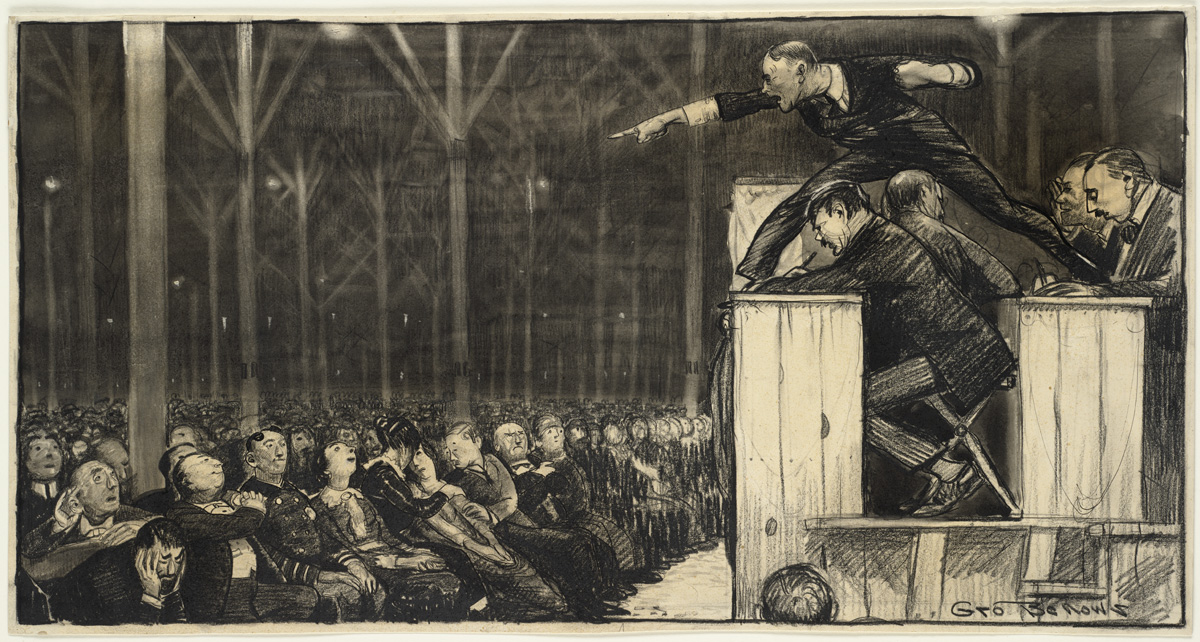
 The Solution
 How You Say it Matters
 Yeah, we get it. We really, really do!

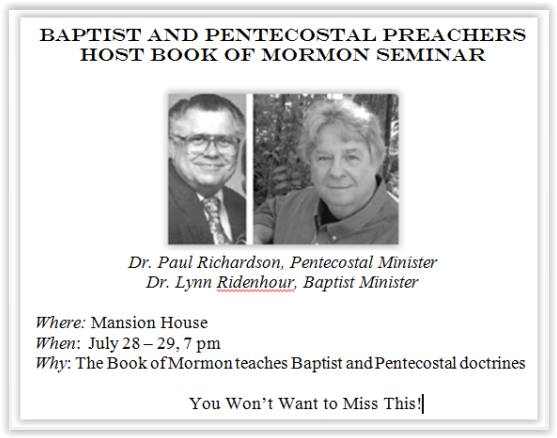
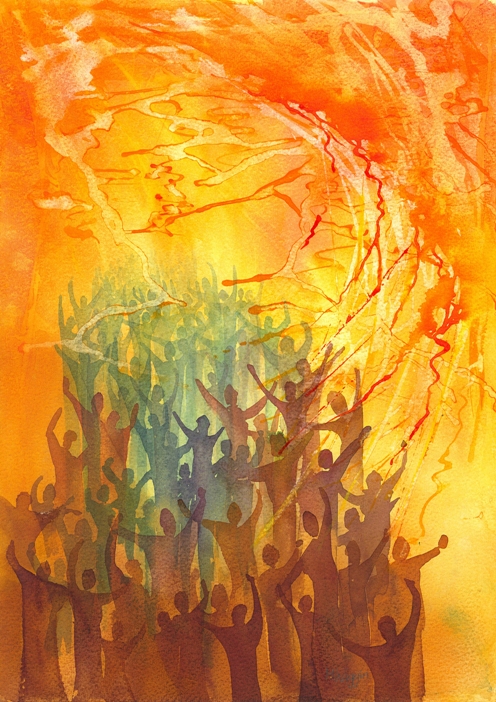
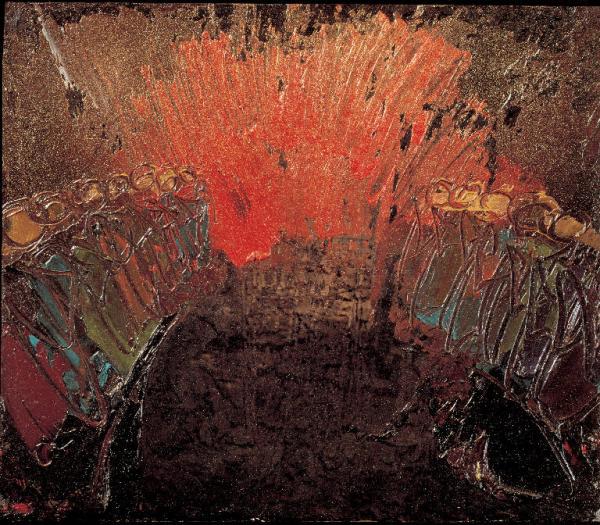
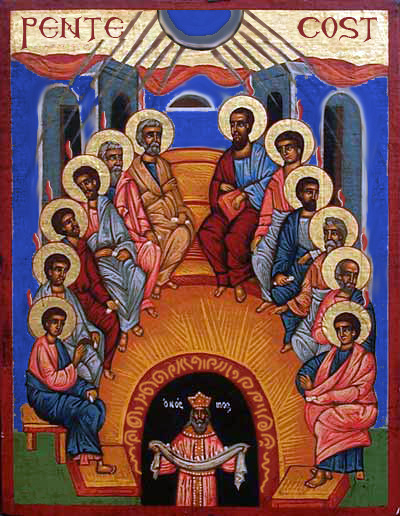
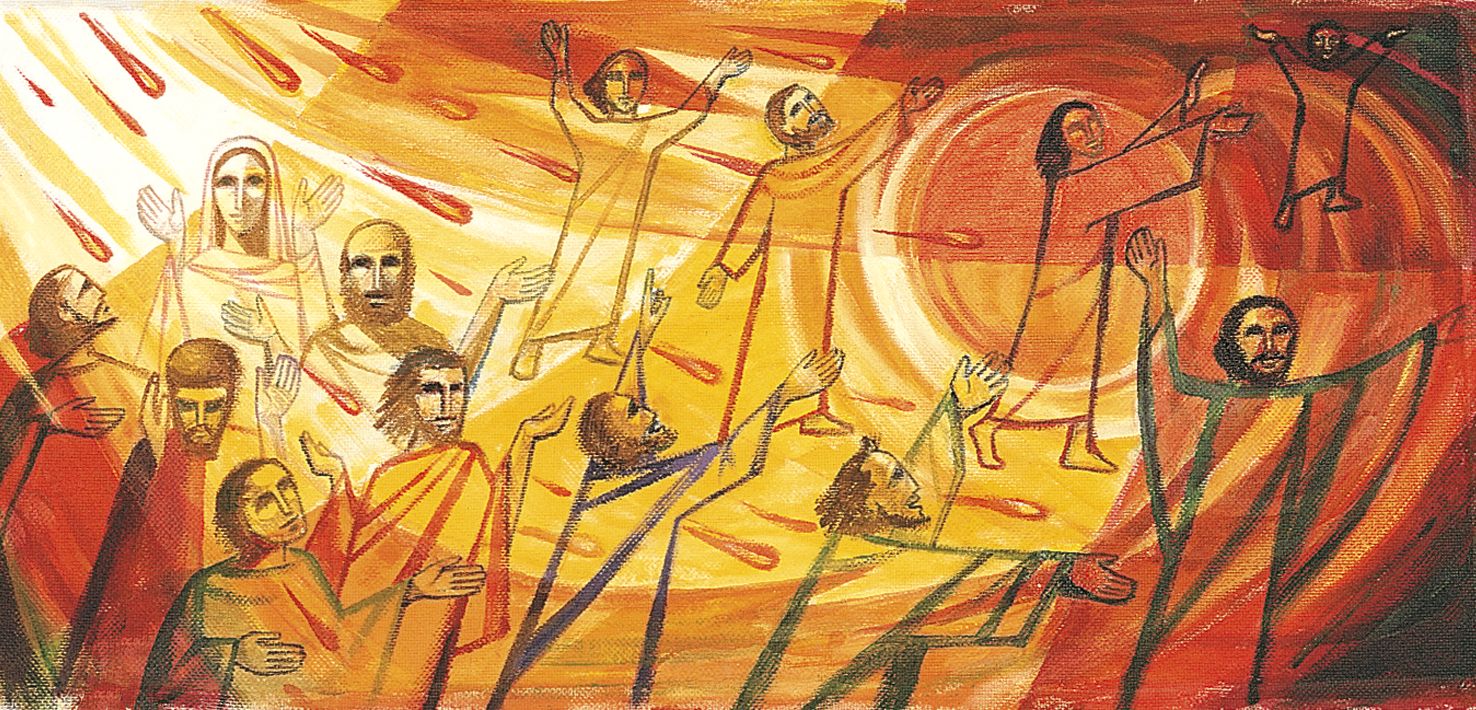
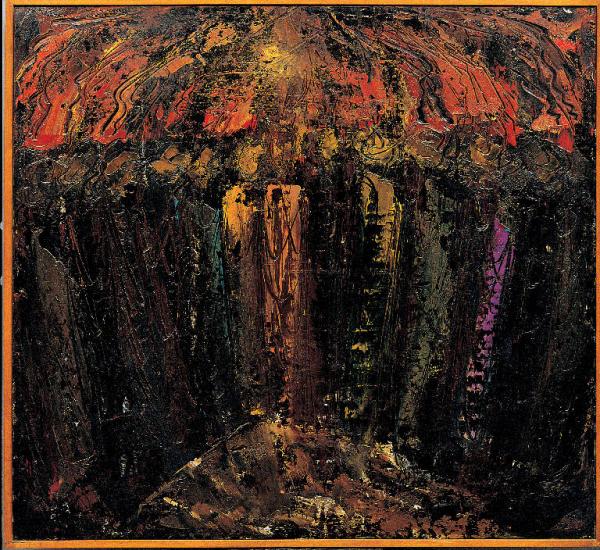
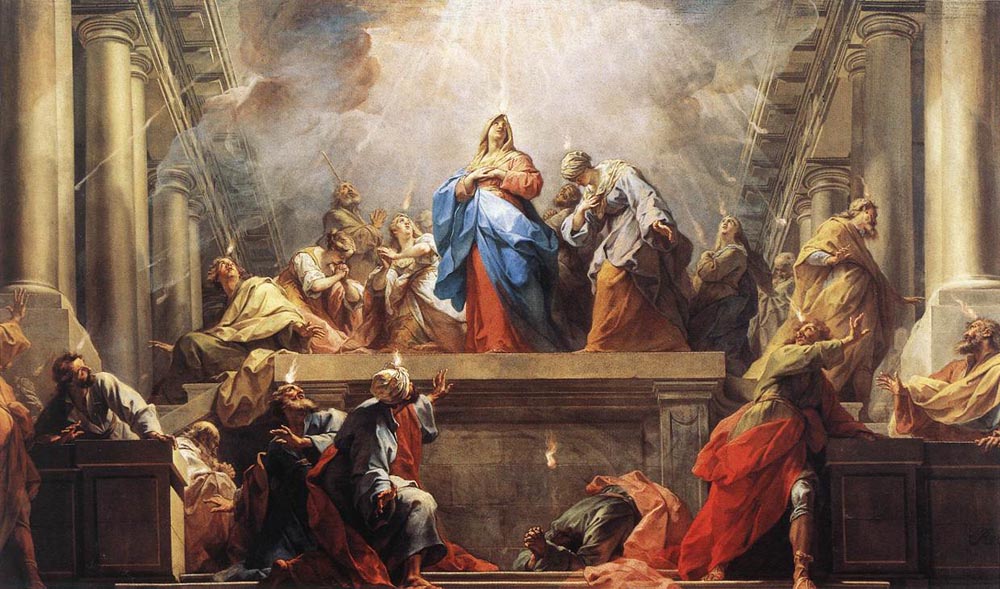
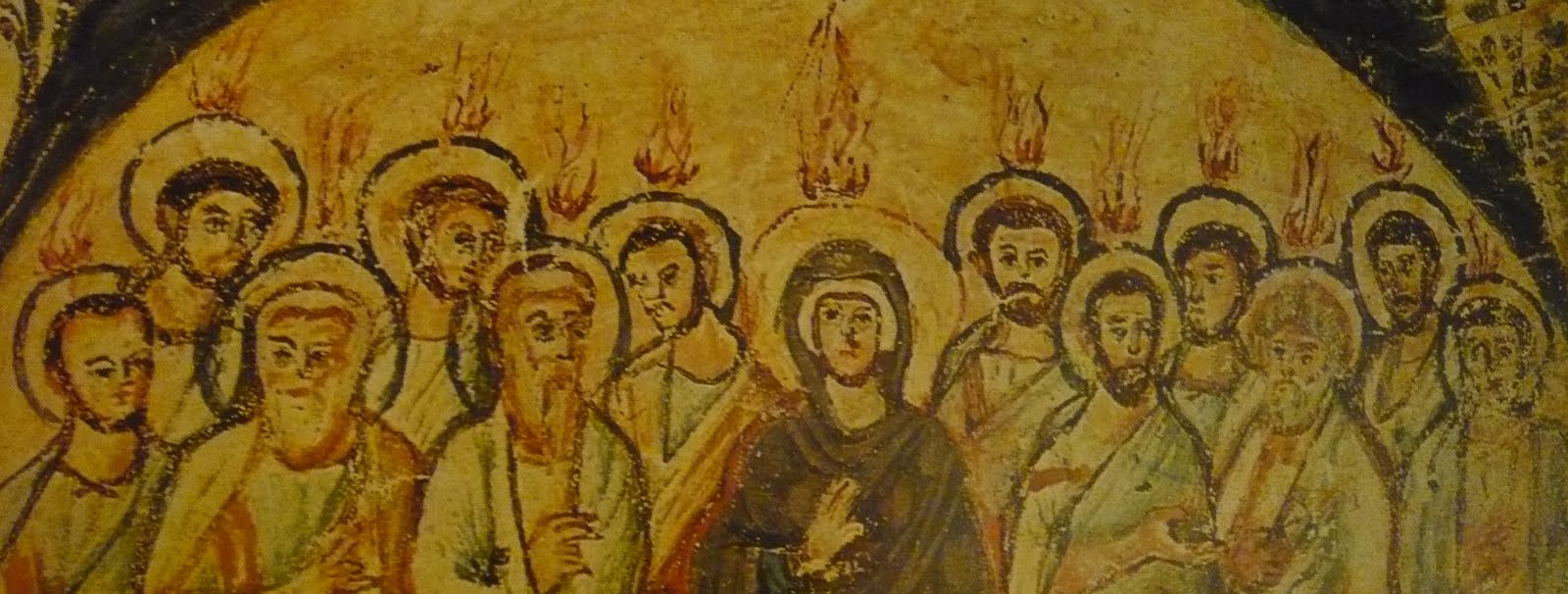
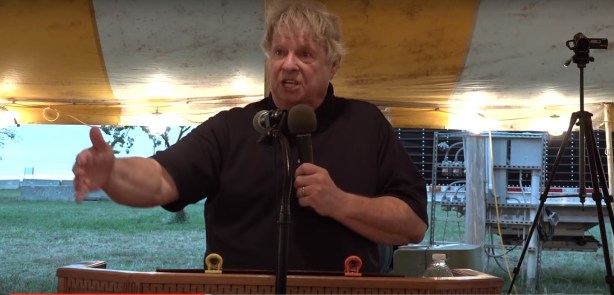
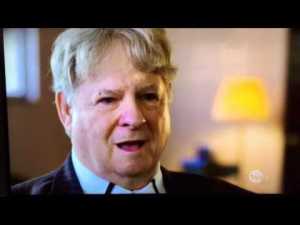

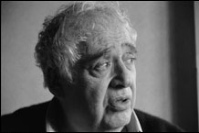
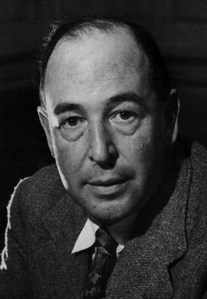
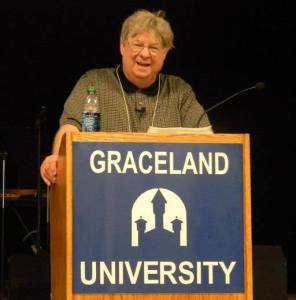
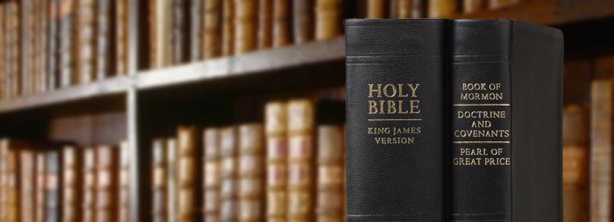



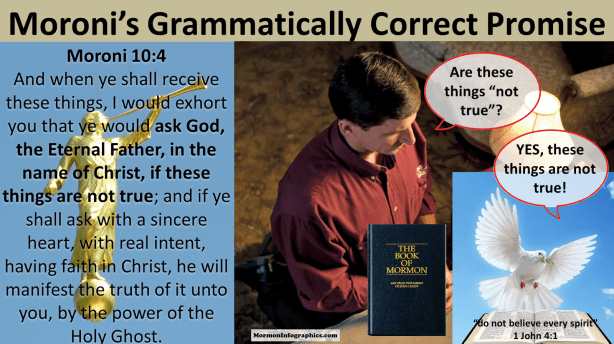













 Beggar's Bread