Archive for the ‘Authors’ Category

HerbertWArmstrong_edited

The eyes of Herbert W. Armstrong

by Fred W. Anson
Q: Can a Mind Control Cult reform itself?
It seems that just below the surface of every discussion of Mind Control Cults this question burns, simmers, and smokes like the proverbial ember seeking to spark into flame.

But can they?
Will they?

Thankfully, the answer (at least occasionally) is yes. Here are two case studies for your consideration.

THE SHEPHERDING MOVEMENT
The Shepherding Movement (the mind control cult that I was in) is one such group. Ron Enroth described how this happened in his classic book, “Churches that Abuse”:
“It is possible for authoritarian churches to change direction? There several fairly recent examples of leaders who have announced changes and confessed to error. One of the leaders of the discipleship/shepherding movement officially known as Christian Growth Ministries, Bob Mumford, made a dramatic about-face after issuing a public statement of repentance in November of 1989. Mumford, one of the “Ft. Lauderdale Five” (so named because of the five founders of Christian Growth Ministries of Ft. Lauderdale Don Basham, Ern Baxter, Bob Mumford, and Charles Simpson), acknowledged abuses that had occurred because of his teaching on submission. This emphasis resulted in ‘perverse and unbiblical odedience’ to leaders. He publicly repented with ‘with sorrow’ and asked for forgiveness. He also admitted that families had been severely disrupted and lives turned upside down.

“Churches That Abuse” by Ronald M. Enroth

In an interview with Christianity Today magazine, Mumford indicated that the abuse of spiritual authority lead to ‘injury, hurt, and in some cases, disaster.” Leaders, he said, were operating at a level where biblical limitations on their authority were not clear. ‘Part of the motivation of my public apology is realization that this wrong attitude is still present in hundreds of independent church groups who are answerable to no one.’[1]

S. David Moore, author of the definitive book on the movement[2] offered this perspective in a 2004 article:
“The Shepherding movement admittedly missed many of its ideals, and its extremes are well-known. In 1989, Bob Mumford offered a public apology to those hurt by the movement’s teachings and practices.

L to R: Bob Mumford, Don Basham, Charles Simpson, Derek Prince, Ern Baxter

L to R: Bob Mumford, Don Basham, Charles Simpson, Derek Prince, Ern Baxter

Charles Simpson, who leads a major segment of those who continue in the legacy of the movement, has said that human carnality won out all too often. While many were hurt as some leaders improperly exercised spiritual authority, mostly ignored are those who benefited from the movement and those who continue in its varied expressions today.

Both Mumford and Simpson believed they were catching and riding a wave of authentic spiritual renewal. Simpson commented that ‘the bigger the wave the more debris it can carry in.’
[3]

Today that ‘debris’ is largely gone. As S. David wrote in 2003:
“The Covenant movement’s leaders have dialogued extensively in recent years and seem to have ‘de-radicalized’ the earlier extremes. Dissent is now encouraged and idealism has given way to a chastened practicality, while the values of relationship, accountability, covenant, and pastoral care are still embraced.”[4]

THE WORLDWIDE CHURCH OF GOD
Another Mind Control Cult that reformed around the same time was the Worldwide Church of God (WCG).[5]

The 2004 documentary “Called To Be Free” summarized the change like this:
In the mid 1990s, the Worldwide Church of God, which began as a religious cult founded by Herbert W. Armstrong, underwent a massive upheaval. At great personal cost, but with an eye to even greater spiritual gain, they renounced their heretical teachings and embraced biblical, evangelical Christianity, and moved from the bondage of legalism to freedom in the grace of Jesus Christ.

Cover for the video documentary

Cover for the video documentary “Called To Be Free”

The leadership and the laypeople of the transformed Worldwide Church of God tell the incredible story in their own words.

Their moving narrative will bring deep encouragement to believers; and those in bondage to cults, legalism, and heretical movements will find hope and good news in this inspiring story.”[6]

Or if you prefer a more secular assessment, Wikipedia summarizes the group’s transformation like this:
“On January 16, 1986, Herbert Armstrong died in Pasadena, California. Shortly before his death, Armstrong named Joseph W. Tkach Sr. to succeed him as leader of the church.

As early as 1988, Joseph W. Tkach Sr. began to make doctrinal changes. Doctrinal revisions were made quietly and slowly at first, but then openly and radically in January 1995. They were presented as “new understandings” of Christmas and Easter, Babylon and the harlot, Anglo-Israelism, Saturday Sabbath, and other doctrines.

Herbert W. Armstrong

Herbert W. Armstrong

In general, Tkach Sr. directed the church theology towards mainstream evangelical Christian belief. This caused much disillusionment among the membership and another rise of splinter groups. During the tenure of Joseph Tkach Sr., the church’s membership declined by about 50 percent. His son, Joseph Tkach Jr., succeeded him after his death in 1995.

Eventually all of Herbert Armstrong’s writings were withdrawn from print by the Worldwide Church of God. In the 2004 video production Called To Be Free, Greg Albrecht, former dean of WCG’s Ambassador College, declared Herbert Armstrong to be both a false prophet (though Armstrong himself did not claim to be a prophet) and a heretic.”[7]

Today the group remains in transition: Some think that the organization has gone too far and have splintered and organized into groups that emulate the old WCG to varying degrees; still others don’t think that it’s gone far enough and have left for other churches, become inactive, or become atheist.[8]

In 2003 Cult Expert Rick Ross observed:
“It seems without its peculiar dogma that the religion lost its attraction. And many Worldwiders felt there was no longer much reason to belong and tithe to the church. Schisms and splintering have subsequently reduced Worldwide to about 60,000 adherents, though its annual revenue is still about $25 million dollars.

The modernization of Worldwide doesn’t seem to have included democratization and/or opened up the issue of meaningful financial accountability to the membership. A power elite still appears to run the organization without referendum and they recently decided to hold an auction.

Herbert W. Armstrong and Joseph W. Tkach Sr.

Herbert W. Armstrong and Joseph W. Tkach Sr.

In what can be seen as a symbolic liquidation they sold off some of the opulent residue that still remained from Armstrong’s glory days, reports The Pasadena Star News.

It appears that the ‘cult’ Herbert Armstrong built may gradually disappear without the man and idiosyncratic beliefs that made it so unique and compelling to its faithful.”[9]

So while the answer to the original question, “Can a Mind Control Cult reform itself?” may be yes, it is never easy, painless, or smooth – and there’s always fall out.

NOTES:
[1] Christianity Today, March 19, 1990 as cited in, “Churches That Abuse” by Ron M. Enroth; 1992; Zondervan Publishing House, Grand Rapids, Michigan

[2] S. David Moore, “The Shepherding Movement: Controversy and Charismatic Ecclessiology”; London: T & T Clark, 2003

[3] S. David Moore, “Cover Me”; Ministries Today, November/December 2004

[4] Op cit, Moore, “The Shepherding Movement: Controversy and Charismatic Ecclessiology”; p.188

[5] Of interest to those familiar with Mormonism may be the fact that the WCG believed that is was the God’s restored church and used this doctrine as a proselytizing point. Further, there are many other parallels as it appears that Armstrong borrowed some of his teachings from Mormonism. See “Between The Old Worldwide Church of God And The Latter-day Saints”;http://www.giveshare.org/churchhistory/mormons-worldwide-church-of-god.pdf

Some who have studied both organizations have even suggested that should the LdS Church ever reform it’s likely that it might follow a path similar to the WCG.

[6] Link to full video production on YouTube: http://www.youtube.com/watch?v=LWAtvE1xiRk

[7] “Death of Armstrong and doctrinal reform” from Wikipedia “Grace Communion International” article;http://en.wikipedia.org/wiki/Grace_Communion_International#Name_change_of_2009

[8] In addition to the aforementioned, “Called To Be Free” video which contains the stories of many who have stayed and seem to be genuinely pleased with and hopeful for the new church, Grace Communion International, many former members have posted their stories on the following websitehttp://www.exitsupportnetwork.com/recovery/testimony/testimon.htm and continue to speak out against Grace Communion International as well as the WCG splinter groups.

[9] Rick Ross, “Do cults collapse when leaders die and/or they give up the exclusive claims that define them?”; hhttp://www.cultnews.com/?p=1174

(Originally published on the Mormon Expression Blogs site where this article premiered on October 20, 2011)

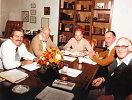
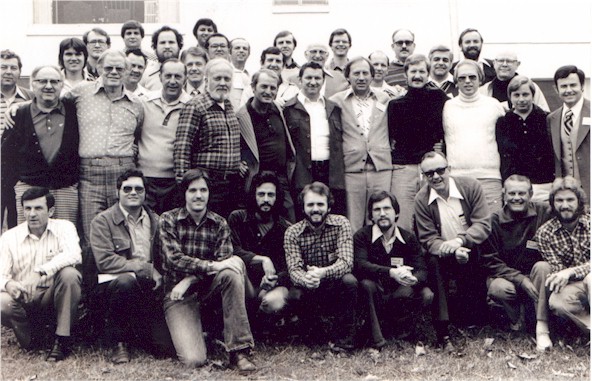
Shepherding Movement Leadership Conference (circa 1975-1976)

Shepherding Movement Leadership Conference (circa 1975-1976)

by Fred W. Anson
Since none of you have never been in a Mind Control Cult, and I have been, I thought it might be instructive to help you all understand what it’s like.

Now I know what some of you may be thinking so let me set the record straight right now:
Contrary to popular rumor, I am not now, nor have I ever been a member of The Church of Jesus Christ of Latter-day Saints.

Further, as Richard Packham said so well in his (very tongue in cheek) introduction of Cult Expert Steven Hassan at the 2008 ExMormon Foundation Conference

“Steve Hassan is a Cult Counselor and Mind Control Expert, a Nationally Certified Counselor and licensed Mental Health Counselor. He has a break through approach to helping loved ones to get their loved ones out of cult mind control.

Now by asking Steve to speak to us we’re not necessarily implying that Mormonism is a cult!

Steve Hassan

Cult Expert Steve Hassan

I mean, you ask any Mormon and they will tell you that the church isnot a cult. They recognize that the FLDS IS a cult, but not the LdS Church. President Monson would not run a cult. He is a Prophet of God. Other so-called Prophets run cults but not President Monson.

So we have cleared that up! . . . it’s now my great pleasure to introduce to you Steven Hassan.”[1]

Thank you Mr. Packham.  So for those of you that might have been thinking “those” thoughts . . . well now, you can just relax, take a deep breath, and “simmer down” can’t you? You see, though I was never a Mormon, I was a member of what has come to be known as The Shepherding Movement for 11-years (from 1978-1989).

Here’s how the overview reads in the Wikipedia article for our group:

“The Shepherding Movement (sometimes called the “Discipleship Movement”) was an influential and controversial movement within some British and American charismatic churches, emerging in the 1970s and early 1980s. The doctrine of the movement emphasized the “one another” passages of the New Testament, and the mentoring relationship described in 2 Timothy.

The movement gained a reputation for controlling and abusive behaviour, with a great deal of emphasis placed upon the importance of obedience to one’s own shepherd. In many cases, disobeying one’s shepherd was tantamount to disobeying God. A few of these criticisms were exaggerated, but many lives were damaged.”
[2]

Before I joined the Shepherding Movement I was pretty much your typical 1970′s anti-establishment “Jesus Freak” with long hair, a head band, and a belief in a Jesus that was pretty much a hippy just like me. I was flakey, irresponsible, politically liberal, a registered Democrat (an obvious sin if there ever was one!), and with a theology that was far more reflective of hippy culture than anything aligned with Biblical Christianity.

However, despite that self-admitted immature, theologically compromised mess I did have one thing going for me: I could think for myself – maybe not so well, but I could think independently none-the-less. After joining the group this all slowly began to change.

Of course, like the name implies Mind Control Cults are defined by tactics and techniques – be they intentional or not – that control the thinking of their adherents. For those of us who have come out of Mind Control Cults this can all be perplexing and painful to figure out. For years I beat myself up with questions like, “How could I am been so stupid?” and “How could I have not seen what was so obvious to those who were on the outside?”

That’s why when I discovered Steven Hassan’s BITE model (via the aforementioned ExMormon Foundation Conference address) I felt like the clouds had parted, the sun had finally broken through, and the fog had finally cleared.  I finally “got it”.

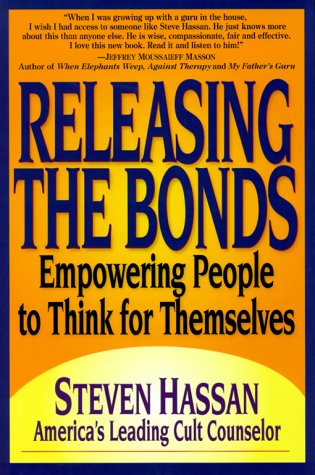
ReleasingTheBondsHassan introduced the BITE model in his book “Releasing the Bonds: Empowering People to Think for Themselves” , “BITE” stands for “Behavior, Information, Thought, and Emotional Control. The model is based on the Cult and Mind Control research of Clinical Psychologist Margaret Singer, the Thought Reform/Brain Washing research of Robert Lifton, the Cognitive Dissonance and Social Comparison theories of Leon Festinger, and Hassan’s own research and personal experience in Reverend Sun Myung Moon’s Unification Church.

Because the model is based on scientific empiricism it can be used to assess any group entity or social institution be it religious, business, political, or otherwise to determine if it’s behaving like a Mind Control Cult or not.  Further, it is non-sectarian as well as doctrinally and theologically neutral.

The components of the BITE model are:[3]

Behavior Control
o Regulation of individual’s physical reality
o Major time commitment required for indoctrination sessions and group rituals
o Need to ask permission for major decisions
o Need to report thoughts, feelings, and activities to superiors
o Rewards and punishments (behavior modification techniques positive and negative)
o Individualism discouraged; “group think” prevails
o Rigid rules and regulations
o Need for obedience and dependency

Information Control
o Use of deception
o Access to non cult sources of information minimized or discouraged
o Compartmentalization of information; Outsider vs. Insider doctrines
o Extensive use of cult generated information and propaganda
o Spying on other members is encouraged
o Unethical use of confession

Thought Control
o Need to internalize the group’s doctrine as “Truth”
o Use of “loaded” language (for example, “thought terminating clichés”). Words are the tools we use to think with. These “special” words constrict rather than expand understanding, and can even stop thoughts altogether. They function to reduce complexities of experience into trite, platitudinous “buzz words.”
o Only “good” and “proper” thoughts are encouraged.
o Use of hypnotic techniques to induce altered mental states
o Manipulation of memories and implantation of false memories
o Use of thought stopping techniques, which shut down “reality testing” by stopping “negative” thoughts and allowing only “good” thoughts
o Rejection of rational analysis, critical thinking, constructive criticism. No critical questions about leader, doctrine, or policy seen as legitimate.
o No alternative belief systems viewed as legitimate, good, or useful

Emotional Control
o Manipulate and narrow the range of a person’s feelings
o Make the person feel that if there are ever any problems, it is always their fault, never the leader’s or the group’s
o Excessive use of guilt
o Excessive use of fear
o Extremes of emotional highs and lows
o Ritual and often public confession of “sins”
o Phobia indoctrination: inculcating irrational fears about ever leaving the group or even questioning the leader’s authority. The person under mind control cannot visualize a positive, fulfilled future without being in the group.

And with that “milk” foundation now laid, in Part 2 I would like to use the BITE Model as a framework for walking you through the “meat” of what I and others experienced via the Mind Control tactics and techniques employed in The Shepherding Movement.

My hope is that by “putting myself out there”  like this you will come to understand how groups that use Mind Control tactics and techniques acquire, retain, and control their members so that, maybe, just maybe, you will never suffer the fate of becoming a mind control cultist like I once did.

NOTES
[1] Link to YouTube Video Playlist for Steve Hassan ‘Releasing The Bonds: Empowering People To Think For Themselves Link to portal page for AUDIO/VIDEO: Steve Hassan ‘Releasing The Bonds: Empowering People To Think For Themselves’
(Keynote Address from the 2008 ExMormon Foundation General Conference)

[2] Wikipedia article on the Shepherding Movement; retrieved 2011-06-25

[3] Sources: “Releasing the Bonds: Empowering People to Think for Themselves” by Steven Hassan; Ch. 2, Aitan Publishing Company, 2000 and Freedom of Mind Webpage on the BITE Model

(Originally published on the Mormon Expression Blogs site where this article premiered on August 22nd, 2011)

by Aaron Shafovaloff

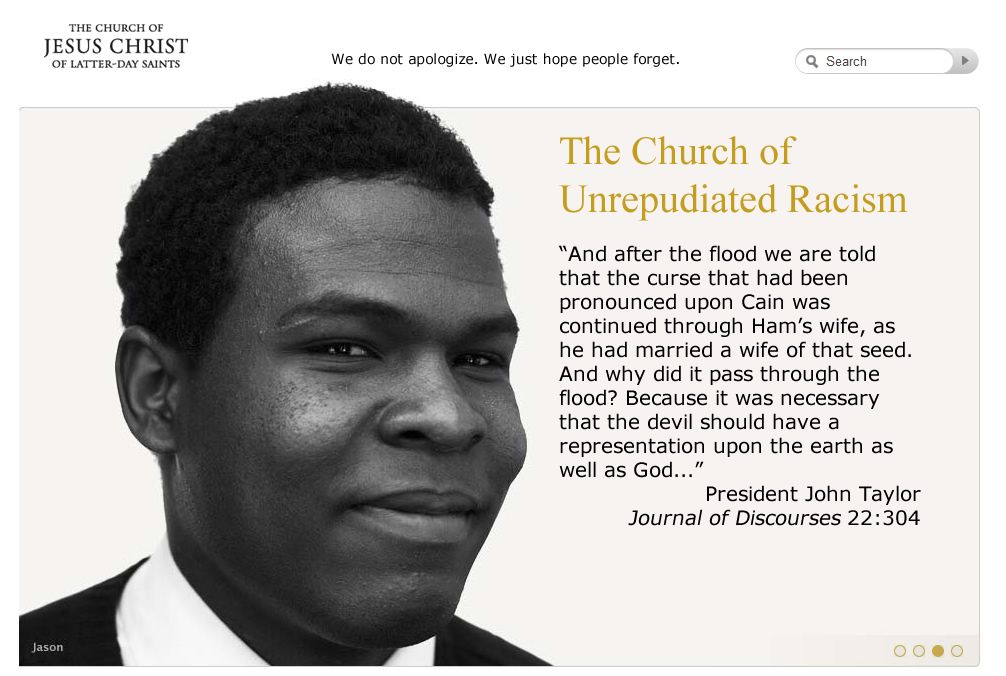
EDITOR’S NOTE: Five years ago on this day Mormon Researcher Aaron Shafovaloff published the following article entitled, “Shame, Shame, Shame: Thirty Years Later And Still No Apology”.  Well it’s now been thirty five years since June 8, 1978 and we’re still waiting. So with no further adieu . . .

church_of_unrepudiated_racism

Still Repairing Brigham’s Mess
Mormon apologist Blake Ostler once said, “I personally believe that [Brigham Young’s] theology was a disaster for the most part” (>>). We have multiple reasons to concur with Blake (more than he would agree with), as Mormonism has spent much of its post-Brigham history picking up the pieces from the catastrophic mess of theology he left behind. The 1916 First Presidency statement on divine investiture and Elohim/Jehovah identitieswas largely driven by an effort to repair Brigham Young’s damaging Adam-God teaching. Contrary to the notion that it died with Brigham, it had carried well on into the 20th century. Some Mormons today are deeply embarrassed over Young’s teaching that Jesus was physically conceived by a natural union between Mary and the Father (who, for Brigham, of course, was Adam). Many Mormons have tragically settled for an “I don’t know” answer to the question of whether sexual intercourse was involved in the conception of Christ. Along with Adam-God, Brigham’s teaching that God still progresses in knowledge and power was condemned as a deadly, damning heresy by apostle Bruce McConkie. Then there’s individual blood atonementmen living on the Sun, participation in polygamy being absolutely necessary for Celestial exaltation, and on, and on. Many Mormons quietly write off Brigham Young as a crazy old uncle who has said very stupid, very irresponsible, very embarrassing, very damaging things. The problem is that he happened to say most of these things from the Tabernacle pulpit in a position of influential leadership and self-claimed prophetic authority. Mormons today try to laugh it off. Stephen Robinson even suggested that Adam-God might have been a joke. But at the end of the day Christians aren’t laughing. We have a higher standard for prophets than Mormonism allows. For us, becoming a Mormon would mean drastically lowering the bar for men who claim to be God’s living spokesmen on earth.

Reversing a “Direct Commandment of the Lord” Based Upon a “Doctrine of the Church”
On June 8, 1978, Mormonism attempted to reverse yet another one of Brigham’s embarrassing doctrines, the ban on blacks from holding the Mormon priesthood. The dominant historical explanation given for the ban was an appeal to pre-mortal decisions or indecisions. Negros were not as valiant in the pre-existence, and were cursed with the mark of Cain, black skin. This explanation was taught and expressed by LDS prophets and apostles, from Conference pulpits to a First Presidency statement:

“The attitude of the Church with reference to the Negroes remains as it has always stood. It is not a matter of the declaration of a policy but of direct commandment from the Lord, on which is founded the doctrine of the Church from the days of its organization, to the effect that Negroes may become members of the Church but that they are not entitled to the Priesthood at the present time. The prophets of the Lord have made several statements as to the operation of the principle. President Brigham Young said, ‘Why are so many of the inhabitants of the earth cursed with a skin of blackness? It comes in consequence of their father’s rejecting the power of the Holy Priesthood, and the law of God.’ They will go down to death. And when all the rest of the children have received their blessings in the Holy Priesthood, then that curse will be removed from the seed of Cain, and receive all the blessings we are entitled to.’ President Wilford Woodruff made the following statement: ‘The day will come when all that race will be redeemed and possess all the blessings which we now have.’ The position of the Church regarding the Negro may be understood when another doctrine of the church is kept in mind, namely, that the conduct of spirits in the pre-mortal existence has some determining effect upon the conditions and circumstances under which these spirits take on mortality, and that while the details of this principle have not been made known, the principle itself indicates that the coming to this earth and taking on mortality is a privilege that is given to those who maintained their first estate; and that the worth of the privilege is so great that spirits are willing to come to earth and take on bodies no matter what the handicap may be as to the kind of bodies they are to secure; and that among the handicaps, failure of the right to enjoy in mortality the blessings of the priesthood is a handicap which spirits are willing to assume in order that they might come to earth. Under this principle there is no injustice whatsoever involved in this deprivation as to the holding of the priesthood by the Negroes.”
(Official First Presidency statement, August 17, 1951 [some sources date this to 1949], cf. John Lewis Lund, The Church and the Negro, p.89).

Mere Folklore or Institutionalized Racism?
In spite of this, Mormon leaders today continue to say things like,

“When you think about it, that’s just what it is — folklore. It’s never really been official doctrine… We have to keep in mind that it’s folklore and not doctrine… It’s never been recorded as such”
(LDS General Authority Sheldon F. Child, quoted in “LDS marking 30-year milestone”, by Carrie A. Moore, Deseret News, June 7, 2008).

“This folklore is not part of and never was taught as doctrine by the church”
(LDS spokesman Mark Tuttle, quoted in “Mormon and Black”, by Peggy Fletcher Stack, Salt Lake Tribune, June 7, 2008)

This gives the impression that the teaching and belief had a mere bottom-dwelling existence, only kept alive by the culture in a way not initiated by or acquiesced to by the overarching institution. In the dictionary, “folklore” is defined as unwritten lore that is passed down through tradition or anecdote. Calling the “curse of Cain” teaching mere folklore obscures the fact that it was institutionally promoted and institutionally perpetuated—publicly and explicitly and in writing. It was rooted in the teachings of men considered to be prophets and apostles, the conduits of prophetic counsel and the stream of continuing revelation.

No One Needs the Mormon Priesthood Anyway
As a Christian I find the reversal on one level insignificant. The Aaronic priesthood is, according to Hebrews, “useless”, “weak”, and “obsolete”, a shadow of the Messiah to come who would serve as our sufficient sacrifice and priest. The “Aaronic priesthood” of Mormonism today doesn’t remotely follow the functions of the priesthood as described by the Old Testament. In the New Testament, Melchizedek is held up as an analogy for Christ’s unique priestly role and identity, but there is never described an ordained Melchizedek priesthood that flows from Christ to male followers. Mormonism simply reads Joseph Smith’s imaginary priesthood structure into the Bible. And I am not at all interested in obeying Satan when he tells people, “See, you are naked. Take some fig leaves and make you aprons. Father will see your nakedness.” Christians don’t feel like any non-Mormon Christian is missing out from Mormon temples. In Christ “are hidden all the treasures of wisdom and knowledge” (Colossians 2:3). Our intensified experiences with God and his people come through, among other things, reading his word, serving, singing, loving,suffering, praying, communing with our brotherhood in Christ, being swallowed up in the bigness of God’s creation. We don’t have to step inside a building to experience the Holy Spirit in a deeper way. Christians have the permanently indwelling Holy Spirit, immediately accessible, received at conversion in the same way we received justification and the forgiveness of sins: by grace through faith apart from personal works or merit or earning or worthiness. It is Mormons, white and black, who are missing out by being led astray from having a two-way personal relationship with Jesus Christ, based on the foundation of freely received eternal life.

Prevented From Being Complete Followers and Servants of Jesus?
In his book In the Lord’s Due Time, the first black to receive the Mormon priesthood after the 1978 reversal, Joseph Freeman, tells of hearing about the priesthood announcement. He writes,

“As I hung up the phone, little beads of perspiration broke out on my forehead, and my knees began to shake uncontrollably. It was true! It was really true! I could hold the priesthood! My lifetime dream of becoming a complete follower and servant of Jesus had come true.”

Did you catch that? Mormonism had deceived Freeman into thinking that, because he was black and because he couldn’t enter into a man-made temple, he could not yet be a complete follower and servant of Christ. Let that sink in.

Withholding blessings of the New Testament church (whatever one deems those blessings to be) from people based on skin-color or ethnicity reflects a fundamental misunderstanding of the gospel. The promise and assurance of the fullness of eternal life is not for the religious elite, but for the brokenhearted, coffee-drinking, cigarette-smoking, nose-pierced, foul-mouthed, rough-edged, self-despairing, barely spiritual, unworthy moral failures who come to Christ with the empty hand of faith, trusting him for the free promise of eternal life and the heart-changing indwelling of the Spirit. Scripture doesn’t take this lightly. Come to Christ with empty hands and you will have eternal joy. Put up the divisive, unscriptural barriers of moralism or ethnicity or skin-color or quasi-masonic or distinctively Jewish ordinances, and you incite what John Piper calls the “compassionate rage” of true apostles like Paul, who start calling down anathema (Galatians 1:6-9).

Institutional Integrity Demands an Apology and a Repudiation
Mormon apostle Jeffrey Holland seems to have at least a partial understanding of the institutional responsibility Mormonism has to make right the wrongs. In an interview associated with the PBS special, “The Mormons”, he said the following regarding actions the Mormon Church could take to make sure that the curse of Cain teaching isn’t perpetuated:

“I think we can be unequivocal and we can be declarative in our current literature, in books that we reproduce, in teachings that go forward, whatever, that from this time forward, from 1978 forward, we can make sure that nothing of that is declared. That may be where we still need to make sure that we’re absolutely dutiful, that we put [a] careful eye of scrutiny on anything from earlier writings and teachings, just [to] make sure that that’s not perpetuated in the present. That’s the least, I think, of our current responsibilities on that topic.” (>>)

The problem for Holland is that he has bought into a shallow, inadequate, and irresponsible way of dealing with false teachings and false beliefs once promoted by Mormon prophets and apostles. In a noteworthy Mormon blog post called, “How does Mormon doctrine die?“, Margaret Young is quoted as saying,

“Card-carrying Mormons do often believe that Blacks were fence sitters in the pre-existence and that polygamy is essential to eternal progression. Neither position has been formally repudiated by the powers that be. We have merely distanced ourselves from them.”

Kaimi Wenger, the author of the post, goes on to write:

“To the extent that they are not repeated and reinforced, unrepudiated ideas slowly fade from the community’s consciousness. This is in large degree because of the structure of Mormon belief. Mormon theology is unusually informal, vague and undefined. Because the church does not issue encyclicals or Summa Theologica, our theology is largely of the what-the-prophets-say-today variety… Our belief structure being what it is, [old ideas] cannot truly be killed — but neither are they really alive. “

Mormon leaders depend on this. Formal repudiation is avoided by Mormon leaders, as it would highlight the fallibility of church leaders (particularly prophets and apostles) and potentially bring a sensitive, embarrassing issue to light, prompting many to investigate material from earlier Church leaders which isn’t faith-promoting. Explicit, formal repudiation of past teaching that names names and quotes quotes would set a dangerous precedent in a religion which fosters so much dependency on the reliability of the institution’s succession of leaders. To save face, Mormon leaders opt for a quiet way of distancing old ideas, allowing them to continue amongst the culture in part, but betting on the forgetfulness and historical ignorance of future generations.

Authentic repentance, integrity, and love for people would demand not only a distancing by a lack of repetition, but also a formal, official, explicit apology for and repudiation of the priesthood ban and the teachings historically used to theologically justify it. Mormonism’s institution arrogantly sees itself as above having to give an apology for things like this. In fact, Mormonism has fallen short of even admitting the priesthood ban was wrong or racist. Gordon B. Hinckley had the audacity to say of the ban, “I don’t think it was wrong.” Marcus Martins, a black Mormon and the chair of the department of religious education at BYU-Hawaii, has been warped into thinking “The [priesthood] ban itself was not racist“.

Aspects and echos of the principles behind the curse of Cain teaching continue still today. At a recent BYU devotional the dean of Religious Education, Terry Ball, said,

“Have you ever wondered why you were born where and when you were born? Why were you not born 500 years ago in some primitive aboriginal culture in some isolated corner of the world? Is the timing and placing of our birth capricious? For Latter-day Saints, the answer is no. Fundamental to our faith is the understanding that before we came to this earth we lived in a premortal existence with a loving Heavenly Father. We further understand that in that premortal state we had agency and that we grew and developed as we used that agency. Some, as Abraham learned, became noble and great ones. We believe that when it came time for us to experience mortality, a loving Heavenly Father, who knows each of us well, sent us to earth at the time and in the place and in circumstances that would best help us reach our divine potential and help Him maximize His harvest of redeemed souls”
(“To Confirm and Inform: A Blessing of Higher Education,” March 11, 2008, BYU Devotional).

Settling for Less than Full Dignity
In the DVD set, “Blacks in the Scriptures“, Marvin Perkins was asked if the Church should make a kind of “mea culpa”, an admission of guilt and an apology for past wrongdoings. He responded by saying that his mother has always taught him to eat his dinner before he could have his dessert, that he should be content with what is already available. With all due respect to my black brother in humanity who is equally created (not begotten) in the image of God, it seems Mr. Perkins is still saying, “Yes, master”, to the human institutional powers above him. Instead of appropriately demanding the full dignity that is due, and publicly heralding a call for an explicit repentance and apology and confession from Mormonism’s top leadership for the Mormon institution’s past wrongdoings, he has settled in some significant ways for a continued second-class treatment. That simply bewilders me. I write this to let people like him know that we haven’t forgotten the apology that is due to him. We take note that the Mormon Church decided to publicly schedule a general authority, not an apostle or prophet, to speak at the Sunday, June 8th commemorative event held at the Tabernacle. We take note that, as of this writing, the Mormon institution has no black general authorities. We take note that, as of this writing, the Mormon Church largely (but not absolutely) squelches what could be entirely appropriate black cultural expressions of spirituality in aspects of the Sunday-morning church experience, choosing instead to significantly force culturally homogenous liturgy and hymnody and homiletics.

June 8 is a Day of Shame
As an evangelical, I cannot celebrate the half-baked, unfinished reversal of policy and doctrine that happened in 1978. It serves as a reminder of institutional arrogance, of unrepentance, and of a false gospel that puts undue power in man-controlled ordinances. Saving faith instead looks alone to the person of Jesus Christ, who offers the assurance of the full and complete benefits of the gospel to anyone who would receive them by faith as a gift.

As long as you arrogantly refuse to issue an apology and an explicit renunciation, shame, shame, shame on you, Mormon leaders. Let June 8th be a day of shame.

See Also

As originally published on the Mormon Research Ministry (MRM) website.
Used with  permission of the author.
MRM can be contacted at contact@mrm.org.

by Fred W. Anson
A review of Andy Stanley’s
“Enemies of the Heart: Breaking Free from the Four Emotions That Control You”

Andy Stanley is the senior pastor of North Point Community Church and son of Dr. Charles F. Stanley, who is the senior pastor of the First Baptist Church of Atlanta.  Andy is also the author of several books including “How Good Is Good Enough?” which I read several years ago and, I thought, a solid vernacular treatise on grace versus works. He has an engaging, approachable style and his theology is sound – which, I suppose it could be said, is hardly a surprise given his pedigree, training, and life experience.

enemies-of-the-heart-andy-stanley-i10“Enemies of the Heart: Breaking Free from the Four Emotions That Control You” was published in 2011 so this review is admittedly late to the game. Never-the-less I found that prior reviews had missed an important – but blatant – weakness in this book that this reviewer felt worthy of consideration.

The four “enemies” are guilt, anger, greed, and jealousy which Stanley unpacks like this:
Guilt = “I owe you”
Anger = “You owe me”
Greed = “I owe myself”, and
Jealousy = “God owes me”

The book is short, concise, engaging, thought provoking, easy to read and practical. There’s much sage wisdom here grounded solidly in Biblical truth.

What’s missing – though it’s admittedly a minor irritation – is balance. While the author lightly, and it seemed to me somewhat grudgingly, acknowledges that transitive guilt, greed, and jealously in some contexts and in moderation can be good, even healthy, I could find no admission in the book that this is equally true of anger. Rather, the author seems to have bought into the false modern Christian doctrine that anger is always sin. If so, may I introduce you to Sinner #1, His name is God Almighty:

God’s anger was kindled [against Balaam] because he went, and the angel of the Lord took his stand in the way as his adversary.”
— Numbers 22:22, ESV

“Then my [God’s] anger will be kindled against them in that day [that God’s people worship other gods], and I will forsake them and hide my face from them, and they will be devoured.”
— Deuteronomy 31:17, ESV

“They have made me [God] jealous with what is no god; they have provoked me to anger with their idols.”
— Deuteronomy 32:21, ESV

“But because our fathers had angered the God of heaven, he gave them into the hand of Nebuchadnezzar king of Babylon”
— Ezra 5:12, ESV

“In the temple he [Christ] found those who were selling oxen and sheep and pigeons, and the money-changers sitting there. And making a whip of cords, he drove them all out of the temple, with the sheep and oxen. And he poured out the coins of the money-changers and overturned their tables. And he told those who sold the pigeons, “Take these things away; do not make my Father’s house a house of trade.”’
— John 2:14-16, ESV

I will spare the reader any more proof texting but suffice to say the Bible is full of references to God’s anger. Simply put, God gets angry, yet doesn’t sin, and even speaks openly of His anger as if it’s a good, normal, and healthy thing.

Further, and some of you might want to sit down for this one, no where – again, no where – in the Bible is anger defined as sin. In fact, Ephesians 4:26-27 (which Stanley cites in the book) states plainly, “Be angry and do not sin; do not let the sun go down on your anger, and give no opportunity to the devil.” Did you catch that – the Apostle Paul states plainly “be angry”. That’s mind blowing stuff if you, like me, were raised to believe the false doctrine that anger is a sin. Think about it: If anger is in fact sin, then Paul is giving the Ephesians flawed, even reprobate, counsel.

Rather, the Bible is clear that anger, like guilt, greed, and jealousy can lead to sin if it’s not processed in a righteous manner. What God models for us in the Bible is that anger is normal and healthy when something of value is threatened or requires protection. That’s why we see God getting angry with Israel over their idol worship in the Old Testament and why we see God the Son getting angry over His holy temple being transformed from a sacred space into a common strip mall in the New Testament.

Andy Stanley

Andy Stanley

Put another way, would you be sinning for getting angry if a bully starts beating up your child on the playground for no reason? Or at a pickpocket trying to take your wallet? Or at a vandal spraying graffiti on the side of your house? Or at your spouse flirting with another person in front of you? Or, or, or . . . see my point?

So it’s clear that when expressed in healthy, transitive ways anger is normal, productive, and even godly. It’s only when it becomes chronic, permanent, or gets expressed in sinful ways that the problems begin.

I saw this first hand when I was a DivorceCare counselor at a local church. On one hand, many of the Christians there (including me, I confess) would have benefited greatly from this book because they were holding onto and expressing their anger in ways that were unproductive: Needlessly extending legal action out of spite, drawing their divorcing spouses into conflict, damaging community property, making a “scene” in public, using the children as weapons in their war with the other party, choosing to hate and distrust all men/women, etc., etc., etc. Their anger fueled sin was easy to see, easy to understand  and easy to identify. Yet believe it or not, they were actually the easy ones to counsel to a place of balance.

Far harder were the Christians who had been told that anger was a sin and, as a result, they refused to fight for their marriage, their children, their property, or even their basic, inherent rights as a person created in the image of God. These poor souls would simply let their aggressive divorcing spouses roll over them like a steamroller and do nothing. In some cases they had marriages worth fighting for yet they wouldn’t fight! And no amount of logic, reason, or prayer would convince them that there is, “a time to tear, and a time to sew; a time to keep silence, and a time to speak; a time to love, and a time to hate; a time for war, and a time for peace.” (Ecclesiastes 3:7&8, ESV) In their mind tearing was sin, speaking was sin, hate was sin, and war was sin because they all involved anger.

And this is the nuance that Andy Stanley “whiffs” on badly in this book. In his quest to make his point it seemed to me that the author got it right in three cases and struck out on one – normal, protective, transitive, even godly, anger. In fact, had he made this distinction I would have no complaints with the book.

Never-the-less, and regardless this flaw, this is a book that I heartily recommend with this suggestion: Whenever the author uses the words, “guilt”, “anger”, “greed” or “jealousy” simply insert the clarifying adjective “chronic” in front of each of them.

HeresToThePast

by Fred W. Anson
They say that if you don’t have any regrets then you’re probably not trying hard enough. If that’s true then I often wonder if I’m trying too much because I have a lot of regrets. In fact, after I joined the Facebook groups for my old High School and the Nazarene Church that I grew up in I spent the first couple of weeks apologizing to everyone.

Then a funny thing happened, I realized that most of the people that I thought I’d so offended back in the day either didn’t remember or didn’t care any more. So essentially I’d spent all those years needlessly beating myself up, avoiding others, and taking side streets shadowed in shame when all I needed to do was show up and be myself.

The truth of the matter is I’d been lied to and had squandered much of my life as a result of it.

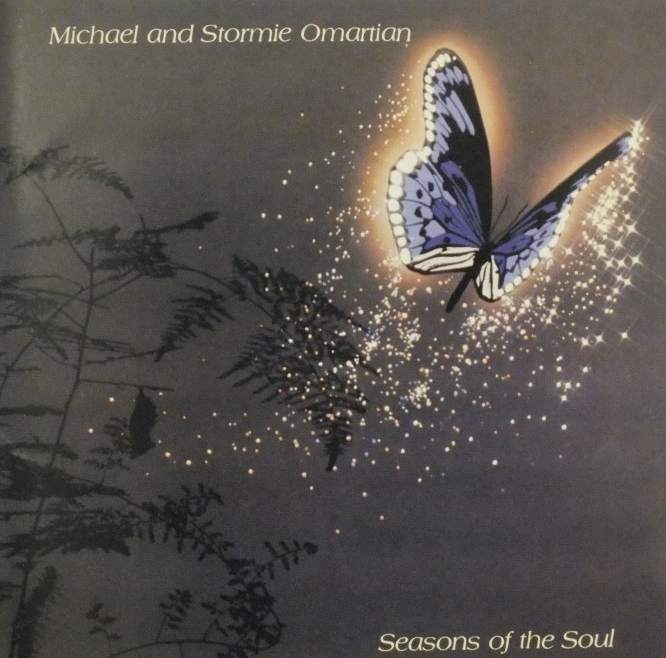
Actually, I should have known all this since Michael and Stormie Omartian warned me in song way back in 1978 . . .

Ms. Past
(click above to hear song)
Don’t look, don’t look back just let her go,
Lately, all she’s done is lay you low.
Don’t look, don’t look back just let her go,
Lately, all she’s done is lay you low.

Ms. Past, she’s such a wicked lady,
Ms. Past, she’s always there a waiting,
She’s the Devil’s favorite tool,
She’ll play you like a fool,
She’ll try until she rules.

Don’t look, don’t look back just let her go,
Lately, all she’s done is lay you low.
Don’t look, don’t look back just let her go,
Lately, all she’s done is lay you low.

Ms. Past, she’ll always try to feed you,
Ms. Past, she’ll say He never freed you.
But don’t fall for her disguise,
And look back in her eyes,
She wants you paralyzed, by all she knows.

Don’t look, don’t look back just let her go,
Lately, all she’s done is lay you low.
Don’t look, don’t look back just let her go,
Lately, all she’s done is lay you low.

Don’t look, don’t look back just let her go,
Lately, all she’s done is lay you low.
Don’t look, don’t look back just let her go,
Lately, all she’s done is lay you low.

And there’s certainly no doubt that I’ve been a “tool” allowing Ms. Past to constantly sting and restrain me with fiery darts of regret!

In the end, I most certainly want to learn from the past but I don’t want to be bound by it.  After all, as Larry Norman observed, “Your life’s a play you can’t rehearse.” And mistakes are actually a blessing in disguise since, if you learn from them, you can avoid making the same ones again, again, and again.

What’s more, human development experts (not to the mention the Bible) tell us that mistakes are one way (actually the main way) that humans grow and mature in a number of areas.  So, that means that occasionally we’ll pick up a regret or two in the process:

If you don’t, then you’re just not trying hard enough.
And if you do, don’t look back, just let it go.

SeasonsOfTheSoulAlbumCover(from the album “Seasons of the Soul”)
Lyrics by Stormie Omartian, Music by Michael Omartian
© 1978 “See This House” Music, Used by Permission, All Rights Reserved.

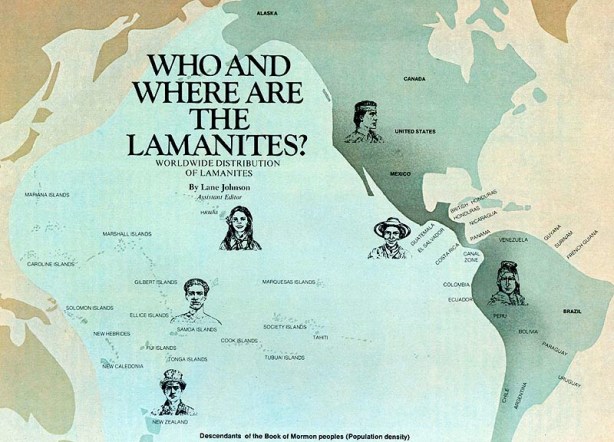
lamanites-official-lds-church-map

Illustration from Ensign magazine, December 1975 (an official, correlated LDS Church publication)

by Wesley Norris
When I began studying comparative religion back in 1991, one of my first interests was the matter of confirming whether or not the rumors I had heard about fake geography in the Book of Mormon (BoM) were true. Part of the process I used in investigating BoM geography was finding out what official position the Mormon Church had taken on this subject, not only from a theological concept but more specifically what was fundamentally taught on any kind of LDS academic level.

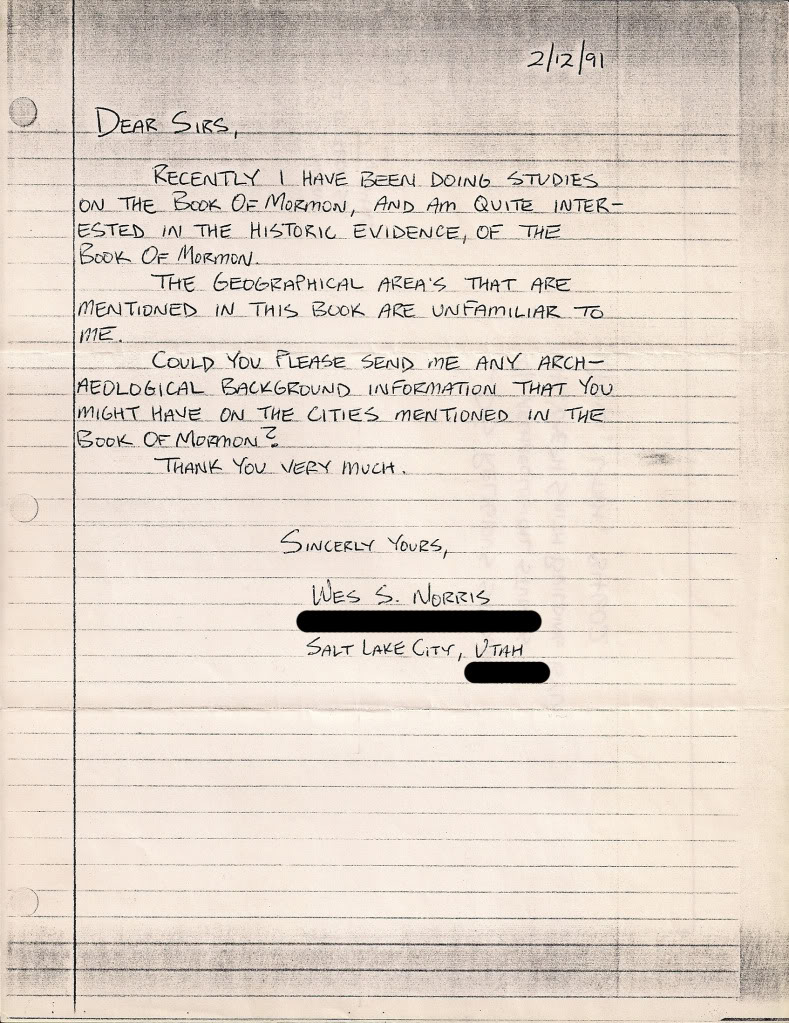
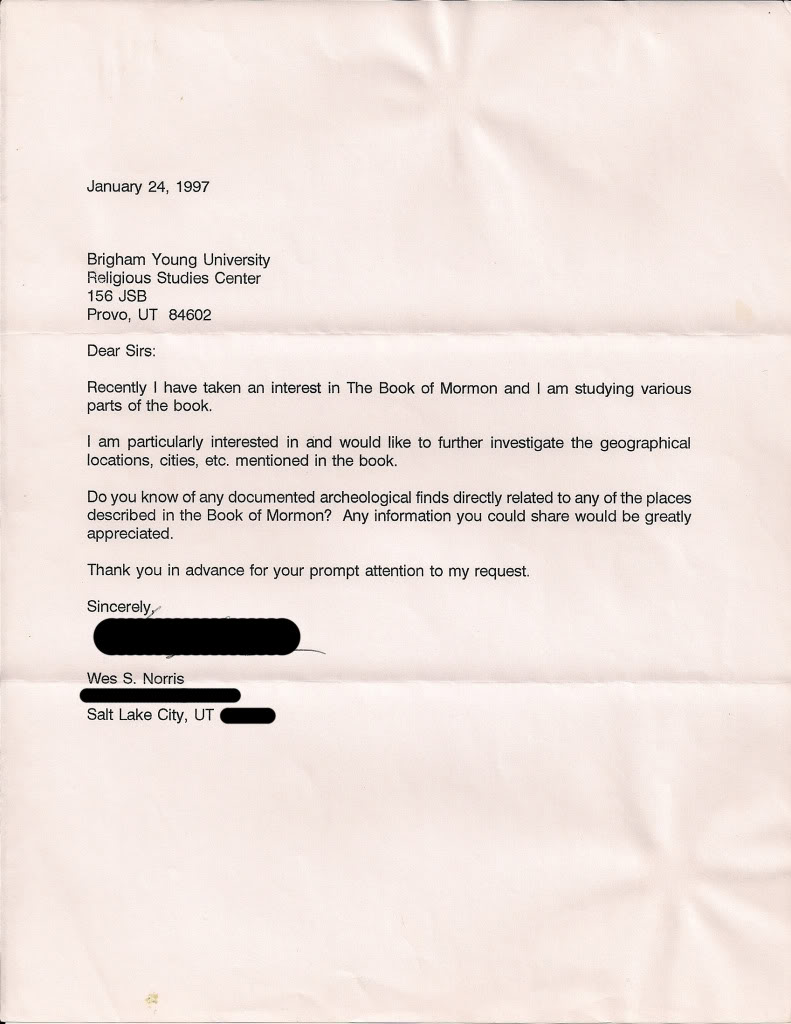
I began by sending a hand-written letter of inquiry to:
LDS Religious Studies
c/o Archaeological Studies
144 Joseph Smith Building
BYU, Provo, UT, 84602

Here is the letter:myletter21291

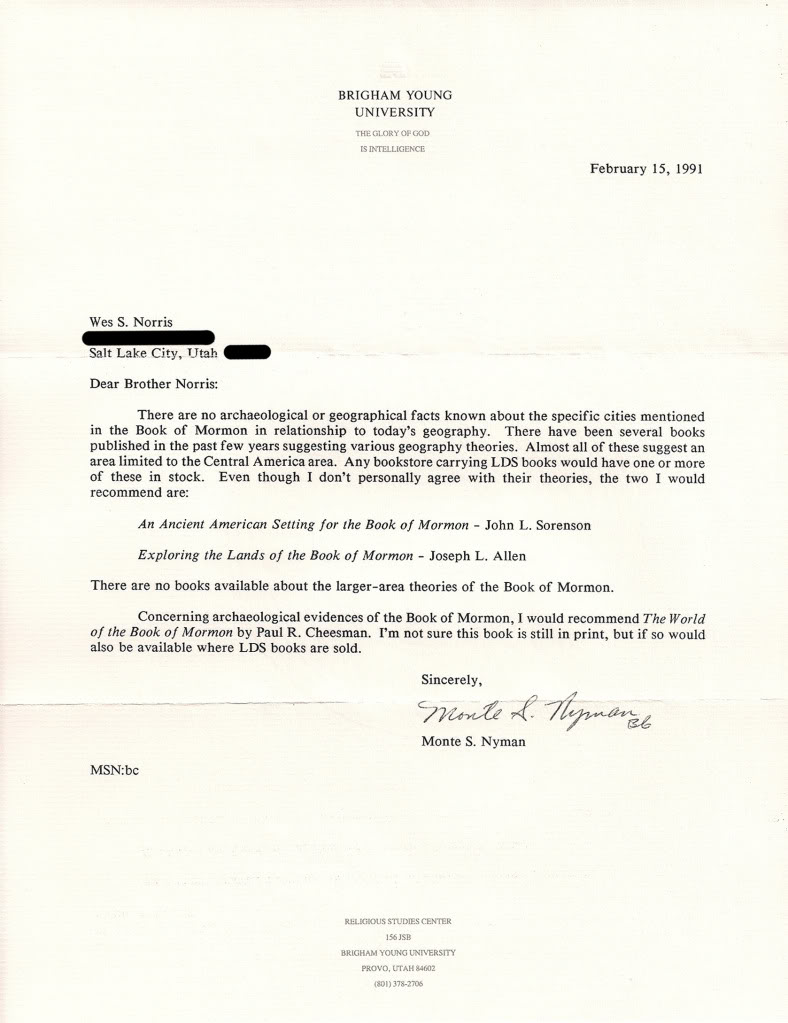
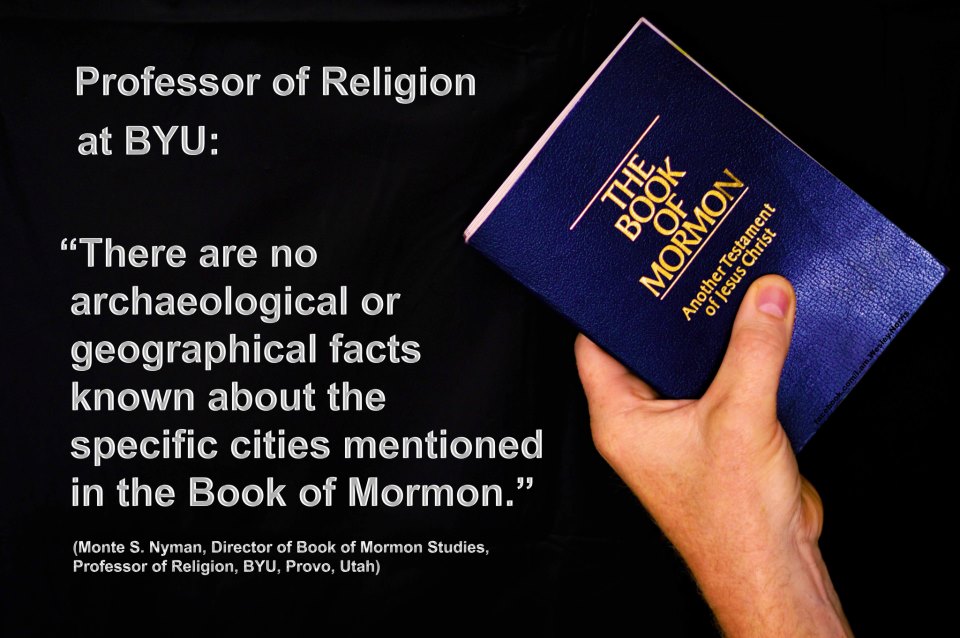
Within a few days, I received a reply from Professor Monte S. Nyman of the BYU Religious Studies Center. Here is that letter:

theirletter21591

This letter confirmed the rumors I had heard: There are no archaeological or geographical facts known about any of the cities mentioned in the Book of Mormon. This was definitely the beginning of answers from the academic level of the Mormon Church that I had hoped for.

In 1997, six years after my first letter to BYU, I sent another letter to the BYU Religious Studies Center asking about Book of Mormon geography and if there is any known corroborating archaeological support.

Here is that letter:myletter12497

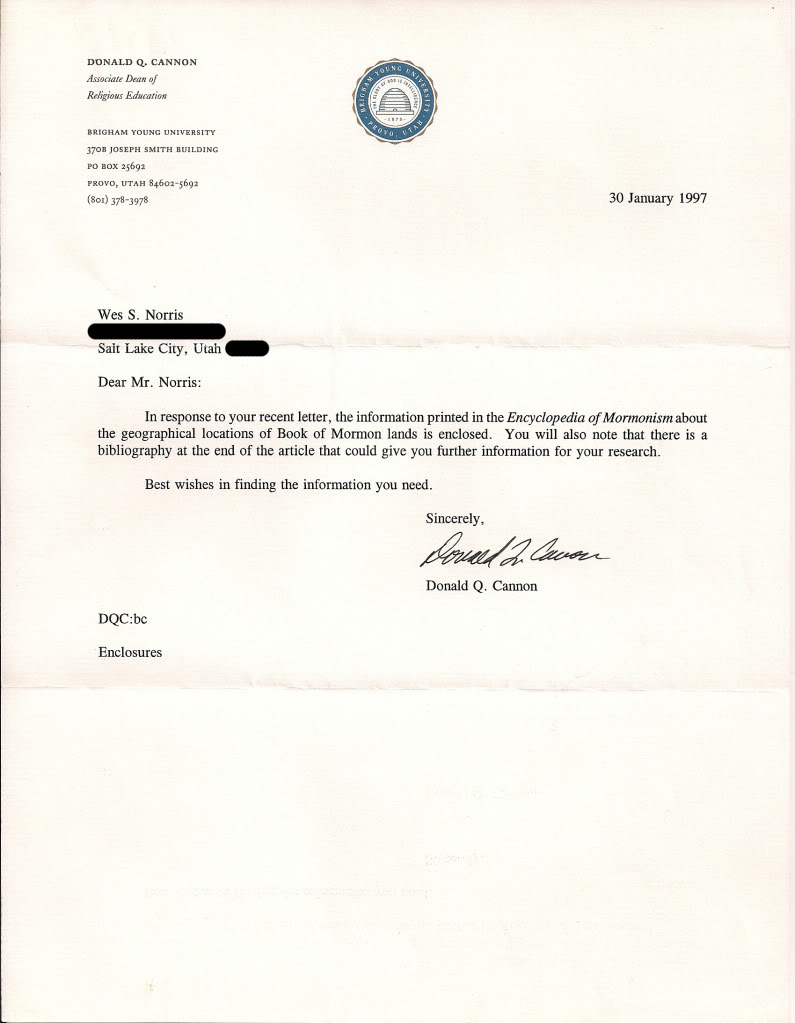
The reply that I received from Donald Q. Cannon, Associate Dean of Religious Education at BYU, was a bit different from the one I had received six years earlier, nonetheless, the answers were from LDS sources and were essentially the same as the previous letter. And once again, this official correspondence from BYU religious personnel confirmed to me that there are no geographical or archaeological facts known about any of the cities, people groups or the stories found within the pages of the BoM.

Here is the letter I received:
theirletter13097

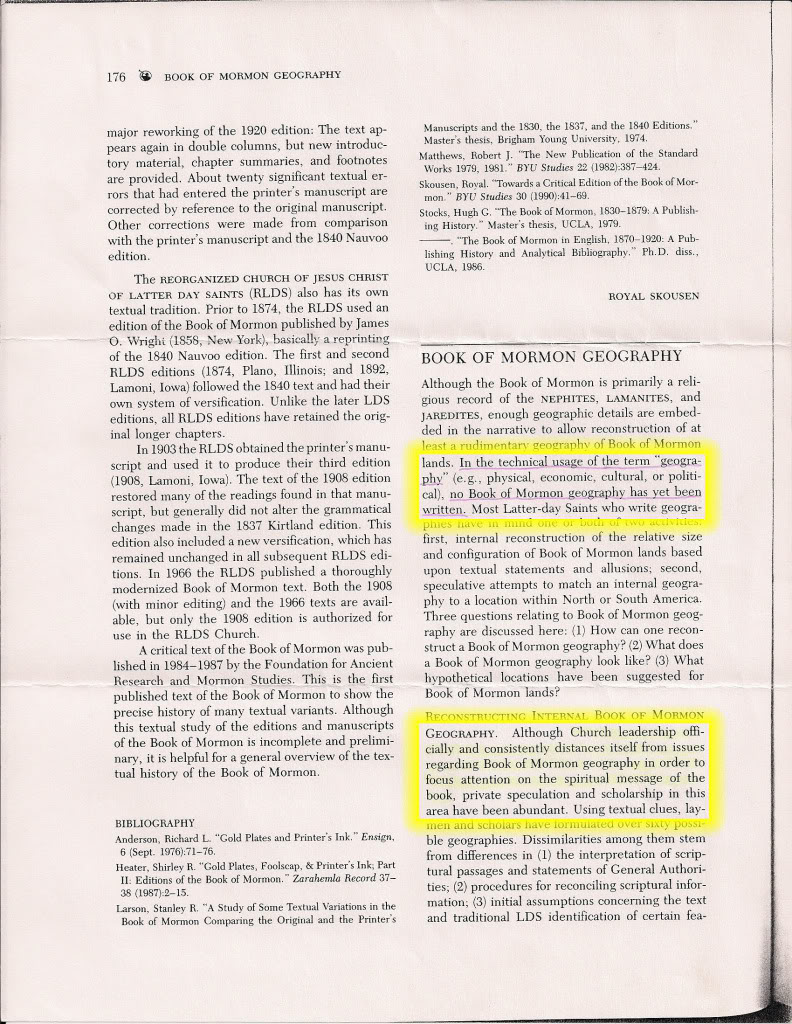
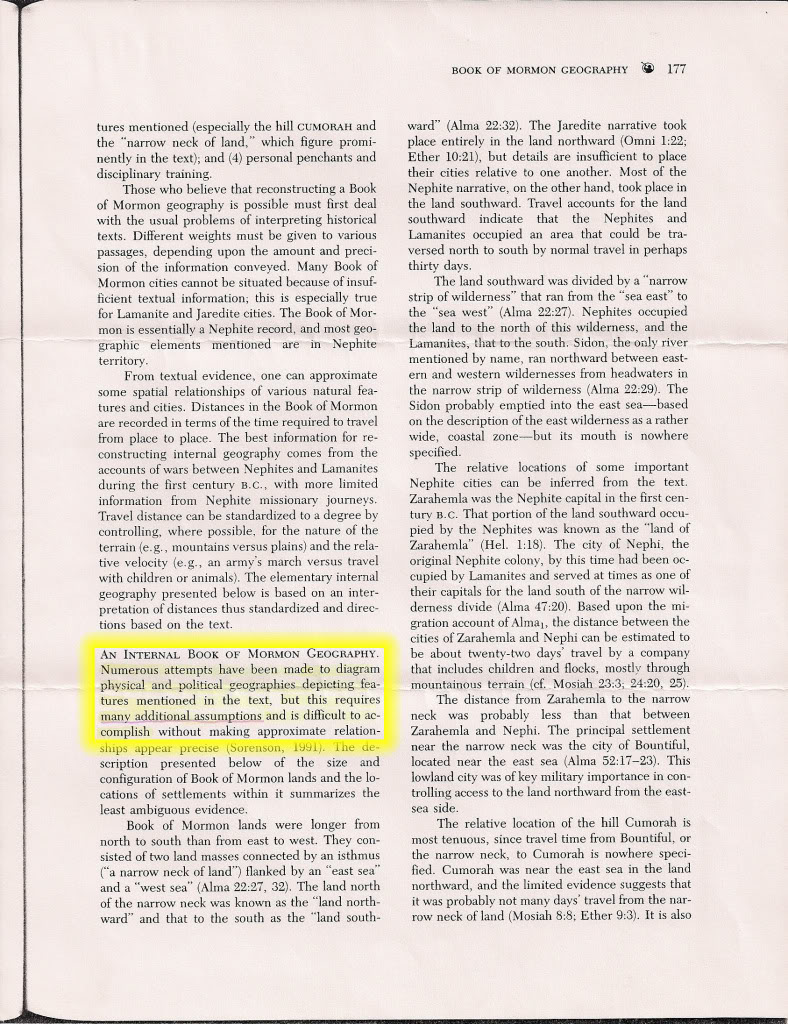
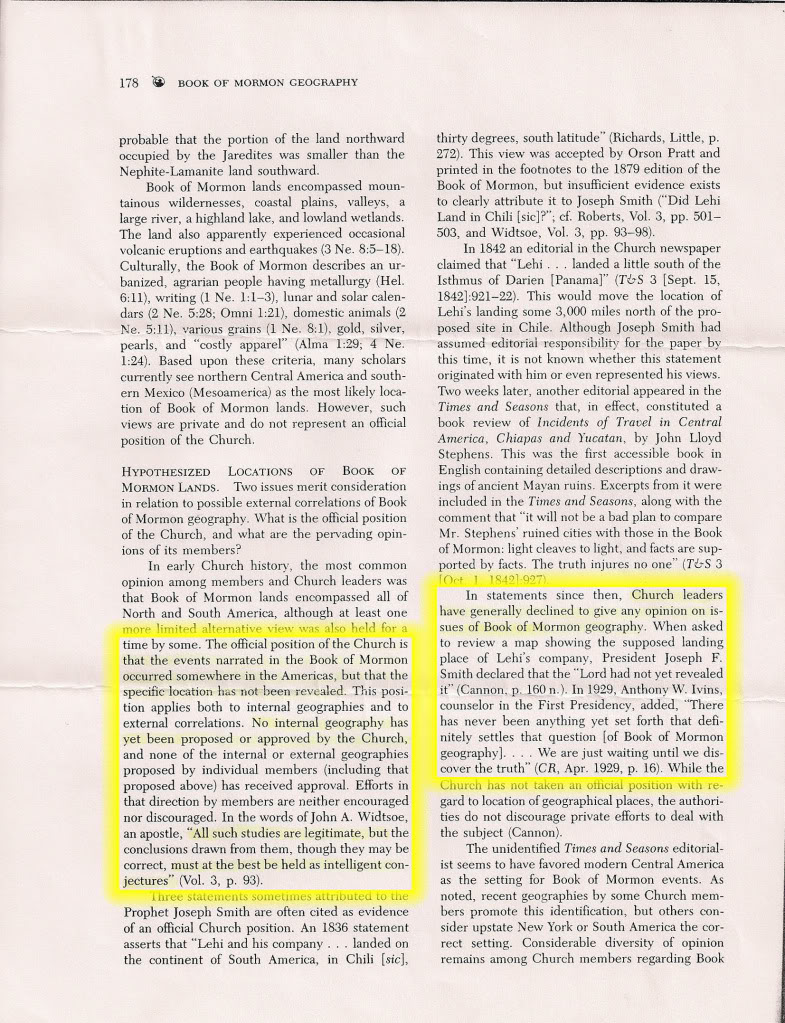
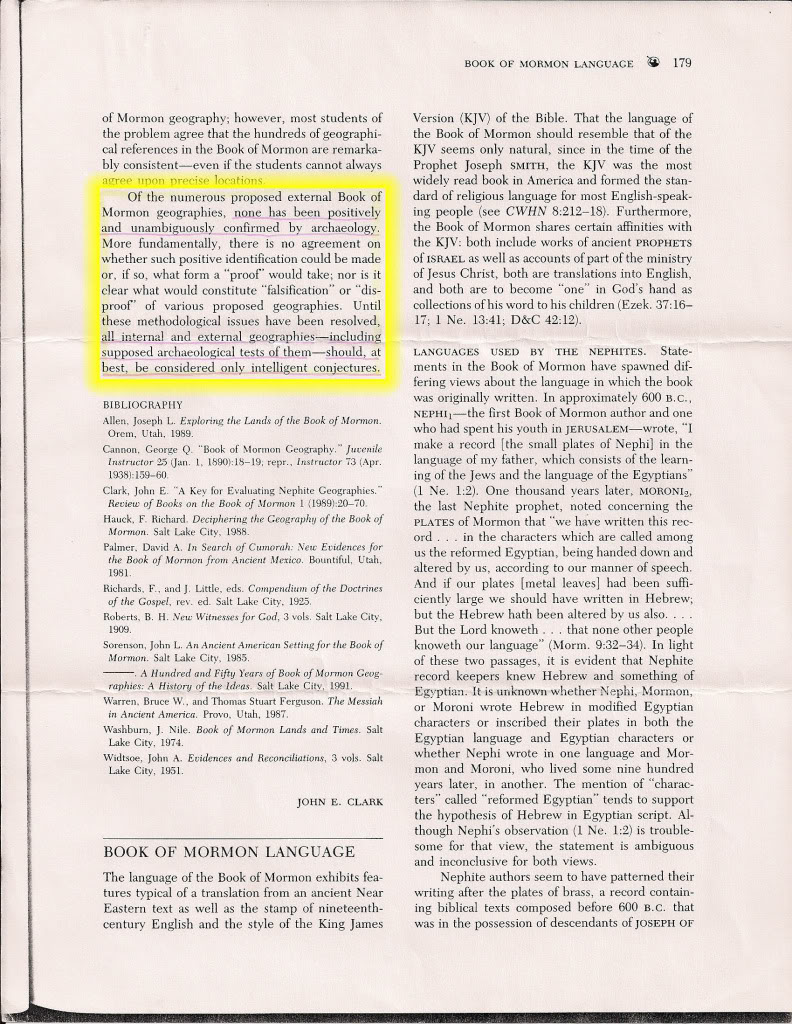
Enclosed with the letter were copies of pages from the Encyclopedia of Mormonism. These particular pages were laced with words like “assumptions,” “speculations,” “attempts have been made,” “locations unknown,” “conjectures,” “not yet revealed,” etc.

Here are the pages I received:
encyclopedia1

encyclopedia2

encyclopedia3

encyclopedia4

encyclopedia5

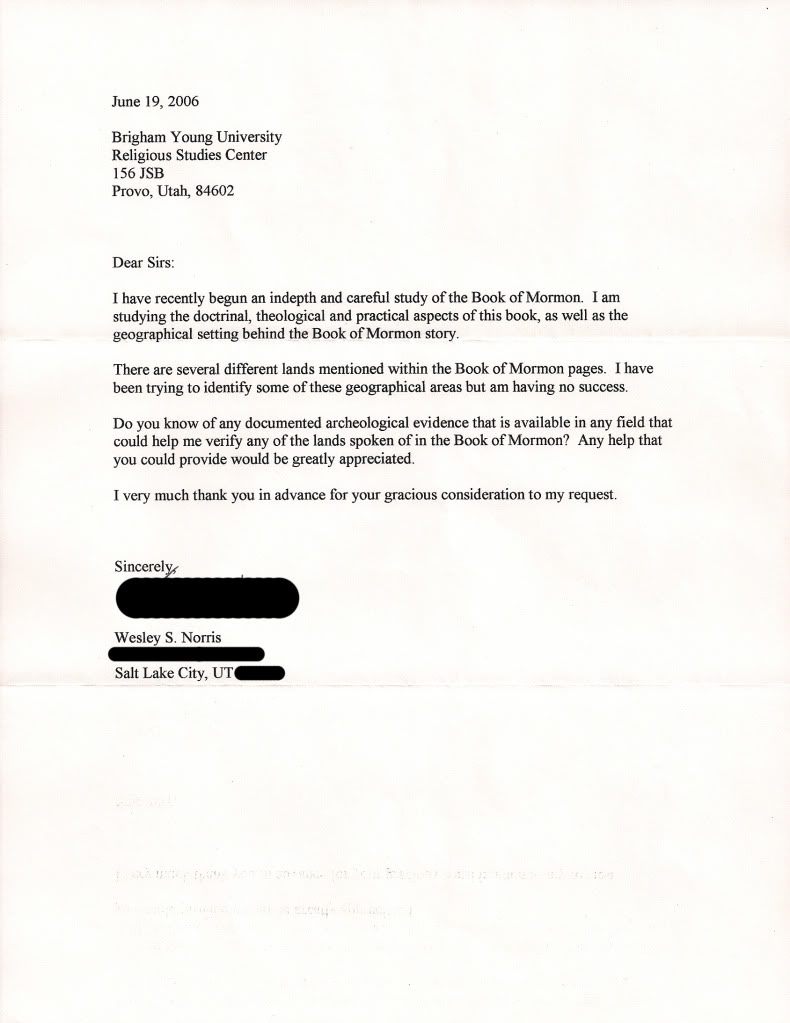
In 2006, nearly 10 years after my second letter to BYU, I sent yet another inquiry to BYU asking for any kind of evidence in any known field of study that would verify the lands spoken of in the BoM. This time I sent the letter to the Neal A. Maxwell Institute for Religious Scholarship at BYU.

Here is my letter:
myletter61906

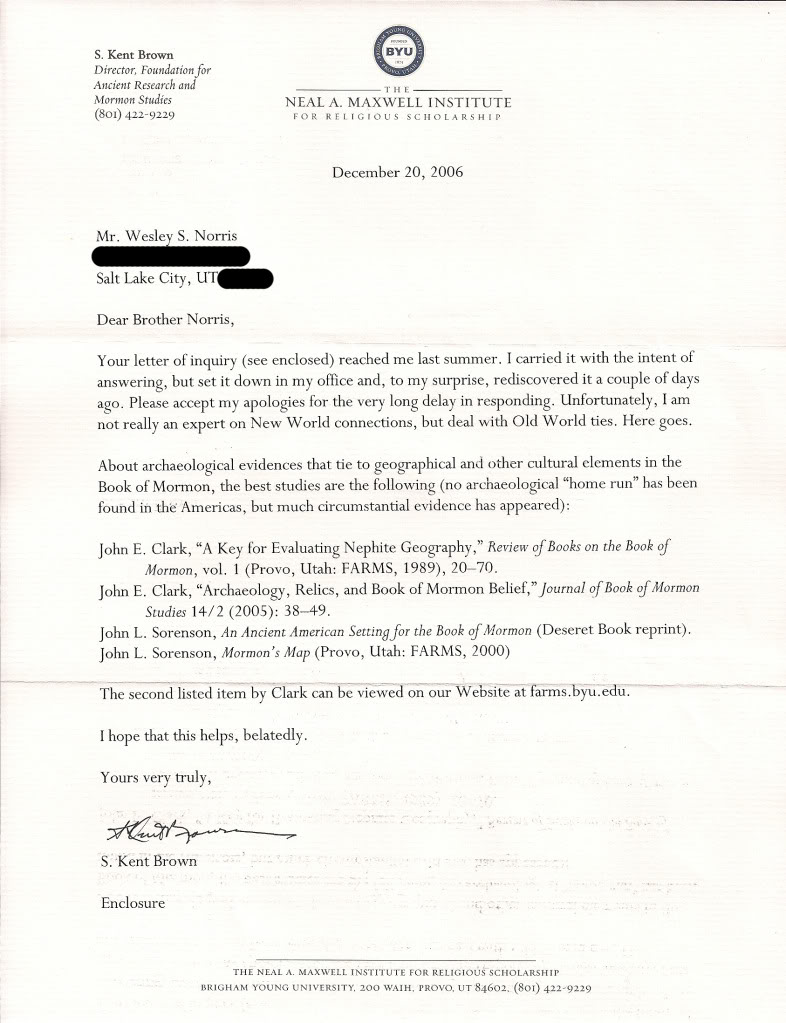
The response I received was a one-page reply from S. Kent Brown, Director of the Foundation for Ancient Research and Mormon Studies. His answer was that “no archaeological ‘home run’ has been found in the Americas, but much circumstantial evidence has appeared.” He then proceeded to cite four LDS references (two from John E. Clark and two from John L. Sorenson) in regard to evaluating Book of Mormon geography.

Here is his letter:
theirletter122006

The above correspondence between myself and BYU undeniably confirmed to me the academic position of the Mormon Church concerning geographical and archeological evidence for the Book of Mormon.

There is none. It is all speculation.

The only response BYU had to offer was by referring me to further LDS studies. It is noteworthy to add that BYU never referred me to anything outside of LDS academia; each reference was given toward circular LDS sources.

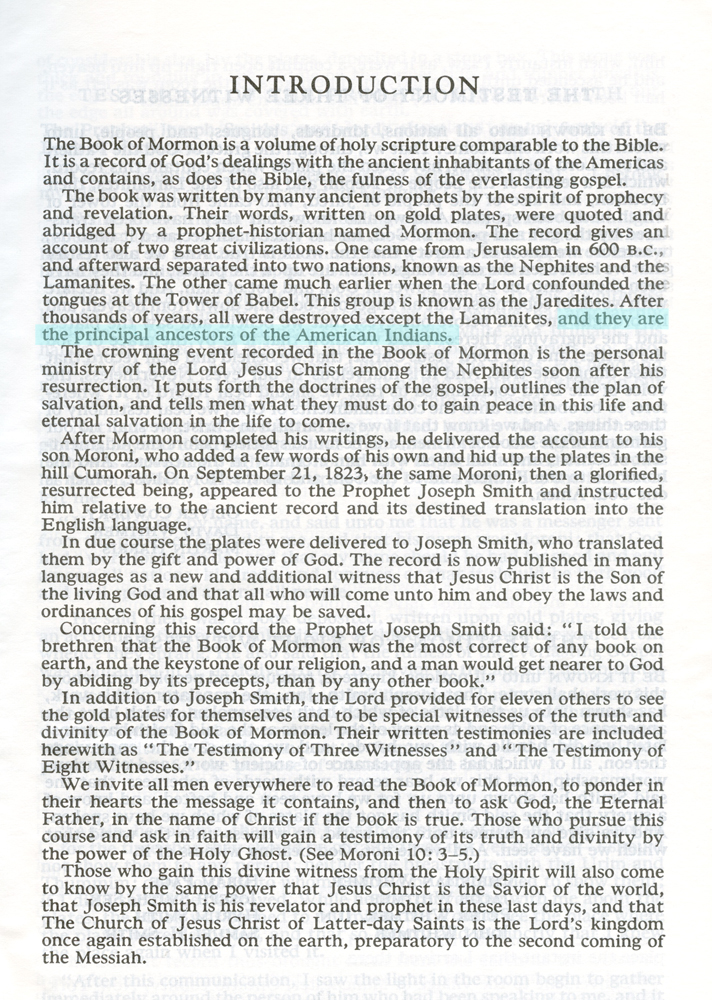
In the introductory page to the BoM the claim is made that it is a volume of scripture comparable to the Bible and that it is a history of the ancient inhabitants of the Americas. Joseph Smith has asserted through the BoM story that there were at least 38 major cities and places in the ancient Americas that must be part of history, yet to this day no geographic evidence of these areas have been found.

Introductory page from a 1981 edition of the Book of Mormon

Introductory page from an 1981 edition of the Book of Mormon

Likewise, Smith has asserted that there were tens of millions of Jewish people groups living in the ancient Americas from 2600 BC to 421 AD. These people would have created, used, and left behind specific-era items, yet no archeological evidence in support of any of these things or supposed people groups have been found.

Since Joseph Smith claimed the BoM was “the most correct of any book on earth” (November 28, 1841, History of the Church, vol. 4, pg. 461), what shall we do then, with the Book of Mormon? Where is truth to be found in the claims of Joseph Smith? Either the BoM is 100% true – as Smith bragged about in 1841 – and we can rely upon every word written in it, or if it is false in even one instance it must be considered fictitious and Joseph Smith must be regarded as a false prophet.

In conclusion, I believe that because of the advancement of knowledge in every known scientific field in this postmodern world – a world that Joseph Smith could not possibly foresee – it can easily be shown that Joseph Smith was a religious fraud and that the BoM is a historical and geographical ruse that was produced in order to deceive his followers and promote his self-interests.

Banner(originally published on the author’s  Facebook page on 2013-04-03)

As originally published by Christian Research & Counsel and based on “Evolution of the First Vision and Teaching on God in Early Mormonism” by Sandra Tanner. This edition is a reformat and expansion  of the original article by Fred W. Anson

INTRODUCTION
Concerning Joseph Smith’s “First Vision”, seeing God the Father and his Son, Jesus Christ together, Mormon prophet and  15th President of the LdS Church, Gordon B. Hinckley said:
“…this is the pivotal thing of our story. Every claim that we make concerning divine authority, every truth that we offer concerning the validity of this work, all finds its roots in the First Vision of the boy prophet. Without it we would not have anything much to say…

This becomes the hinge pin on which the whole cause turns. If the First Vision was true, if it actually happened, then the Book of Mormon is true. Then we have the priesthood. Then we have the Church organization and all of the other keys and blessings of authority which we say we have. If the First Vision did not occur, then we are involved in a great sham. It is that simple.”
(“Teachings of Gordon B. Hinckley“, p.227)

From the above quote, it is obvious that the history of Joseph Smith’s First Vision is of paramount importance.

For that reason the following documented accounts, beginning in the year 1820, have been compiled to enable the reader to determine how, and when, the First Vision actually came about.
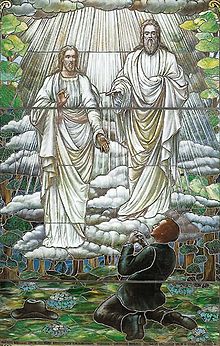
Stained glass depiction of the first vision of Joseph Smith, Jr., completed in 1913 by an unknown artist (Museum of Church History and Art).

Stained glass depiction of the first vision of Joseph Smith, Jr., completed in 1913 by an unknown artist (Museum of Church History and Art).

OVERVIEW TIMELINE
The Evolution of the First Vision story

1820-1838
For 18 years the First Vision was of “angels”

1838-1890
First Vision of “angels” persisted in spite of the change to a vision of “God the Father and his Son” in 1842.

1890 (approx.) – today
First Vision of “God the Father and his Son”

DETAILED TIMELINE
1820
There are no known references to the First Vision recorded in the year 1820. In fact, until the year 1838, there was no mention of Joseph having seen God the Father and his Son in any newspaper or contemporary writing, including Latter-day Saint (LdS) Church publications; not even in the diaries and journals of Joseph’s closest friends and church leaders, like Brigham Young, John Taylor, Wilford Woodruff, Heber C. Kimball, Orson Hyde, George A. Smith, George Q. Cannon and Oliver Cowdery.

Nor was there any mention of a vision of the Father and Son in the writings of any ofJoseph’s many enemies of the period between 1820 and 1840. There is also no evidence that Joseph Smith taught that God and Jesus were separate deities with bodies prior to 1838.

1827
Jun.
 Account of Joseph Smith, Sr., and Joseph Smith, Jr., given to Willard Chase, as related in his 1833 affidavit as published by Eber D. Howe in “Mormonism Unvailed”, 1834, pp.240-248. The value of this account, while from a non-Mormon source, is the early date and the parallels it contains to the Autumn 1827 account that follows which was given by Martin Harris. Both Chase and Harris were among the earliest people to hear the story from Joseph Smith and his family, and both place the discovery of a gold book within the context of money-digging.

Autumn
Account of Martin Harris given to the Rev. John A. Clark, as related in his 1842 book “Gleanings by the Way”, W.J. & J.K. Simon, pp. 222ff.  [Microfilm copy].

The value of this account also is its early date, being related to Clark while he was a pastor in Palmyra in 1827. It contains many similarities to Harris 1859 testimony, demonstrating that Harris was consistent in what he related about Mormon origins. Like other early accounts, this one ties the discovery of a Golden Bible to Joseph’s prior practice of money-digging .

1830
Mar.
The Book of Mormon is published teaching that the Father, Son and Holy Ghost are one God (i.e. 2 Nephi 31:21; Mormon 7:7; Mosiah 15:1-5; 3 Nephi 11:27) and that Father and Son are same person (i.e. Ether 3:14).   This is validated further reiterated by the title page which says:

“…to the convincing of the Jew and Gentile that Jesus is the Christ, the ETERNAL GOD, manifesting himself unto all nations.”

The Book of Mormon also teaches that God is a spirit (Alma 18:26-28; 22:8-11).  There is no teaching in the Book of  Mormon that Father has a physical body.

Essentially the Book of Mormon teaches Modalism (also known as “Sabellianism“): that is that there are three modes or expressions of one god.

Oct.
Interview of Joseph Smith by Peter Bauder, recounted by Bauder in his book “The Kingdom and the Gospel of Jesus Christ”, printed in 1834, pp. 36-38 (See “Early Mormon Documents, vol.1“, compiled by Dan Vogel, Signature Books, 1996, pp. 16-17). Joseph Smith could give Bauder no “christian experience”, ie. no conversion experience or manifestation of saving grace in his life

1832
In Joseph’s handwritten first draft of his history, only Jesus is mentioned as appearing.
(“The Personal Writings of Joseph Smith“, compiled by Dean Jessee, Deseret Book, 2002, pp. 10-11; also see The Joseph Smith Papers)

1832-34
The Evening and Morning Star periodical, a major LdS publication, contains no mention ofJoseph’s having seen the Father and the Son.
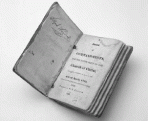
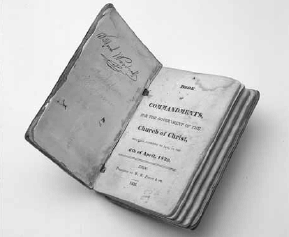
LdS President (March 1, 1807 – September 2, 1898) Wilford Woodruff's copy of The Book of Commandments

LdS President (March 1, 1807 – September 2, 1898) Wilford Woodruff’s copy of The Book of Commandments

1833
The Book of Commandments, a chronology of revelations from God to Joseph Smith was published. This would have been a natural place to include Joseph’s first revelation. But there is no mention of the First Vision.

1834-36
The Latter-day Saints Messenger and Advocate claimed that it would be “a full history of therise of the church” (Vol. 1, p.13) and on page 42 of the same volume we read that it would contain “a correct statement of events.”

In the February, 1835, issue, Oliver Cowdery told how Joseph Smith made his first contact with God. A “messenger” appeared to him in his bedroom. No mention of the Father and the Son.

1835
Aug. 17
Doctrine and Covenants, a revision of the Book of Commandments was first introduced to the church body in a general conference on August 17, 1835.  At the end of the conference, the church “by a unanimous vote” agreed to accept the compilation as “the doctrine and covenants of their faith” and to make arrangements for its printing. Later in 1835 the book was printed and published under the title “Doctrine and Covenants of the Church of the Latter Day Saints: Carefully Selected from the Revelations of God”.

Ironically, God the Father is portrayed, not as having a physical body but, as “being a personage of spirit” in contrast to the Son who was “a personage of tabernacle” (body). (D&C, 1835, p. 53) This, in spite of the official First Vision which depicts the Father as a physical being.

Nov. 9
Joseph related his first vision to a Jewish minister. When he went into the grove to pray, two personages appeared. The second one “testified unto me that Jesus Christ is the Son of God.” He “saw many angels in this vision.”
(“The Personal Writings of Joseph Smith“, pp.104-5; also see The Joseph Smith Papers)

Also in “An American Prophet’s Record”, p. 51. This account appeared in the serial printing of Smith’s history in the Millennial Star, Vol. 15, p. 396.This account has been deleted from the “History of the Church”, Vol. 2, p.304.

Nov. 14
Joseph told his story to Erastus Holmes:
“…I received the first visitation of Angels which was when I was about 14 years old…”
(“The Personal Writings of Joseph Smith“, p.113, Also in “An American Prophet’s Record”, p. 59)

This account has been changed in the “History of the Church”, Vol.2, p.312. It now reads “my first vision” instead of “visitation of angels.”

1837
Changes relating to the godhead were made in the second edition of the Book of Mormon. The phrase “the son of ” was added to several verses to distinguish between the Father and Son. (i.e. 1 Nephi 11:18, 21, 32 and 1 Nephi 13:40)
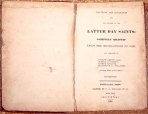
Title page from an open 1835 edition of Doctrine And Covenants

Title page from an open 1835 edition of Doctrine And Covenants

1838
Joseph Smith wrote that:
“I continued to pursue my vocation in life until the twenty-first of September one thousand eight hundred and twenty three [1820-1823. That’s three years since the First Vision, according to the official version.], all the time suffering severe persecution at the hands of all classes of men, both religious and irreligious, because I continued to affirm that I had seen a vision.”
(“Pearl of Great Price”, Joseph Smith History 1:27; also see Joseph Smith Papers [Draft 2] [Draft 3] [fair copy])

Yet, the LdS Messenger and Advocate, 1834-36, which was to be “a full history of the rise of the church,” was silent on Joseph’s having seen the Father and the Son in a vision.

1839
Joseph receives a revelation from God proclaiming “a time to come in the which nothing shall be withheld, whether there be one God or many gods they shall be manifest.” (D&C 121:28) In light of the official version of the First Vision, Joseph should have been aware of more than one God since 1820, making this an unnecessary revelation.

1840
Orson Pratt published a booklet titled, “An Interesting Account of Several Remarkable Visions”. He related that when Smith was “about fourteen or fifteen years old” he was praying in the woods when “two glorious personages” appeared. There was no indication that they were the Father and Son.
(also see Joseph Smith Papers)

1842
Mar. 1
In a letter from Joseph Smith to John Wentworth, “Two glorious personages” appeared and informed him that none of the churches “was acknowledged of God.” There was no indication that they were the Father and Son.
(Times and Seasons, Vol. 3, no.9, p.707; also see Joseph Smith Papers )

Mar. 15
Joseph’s 1838-39 version of the First Vision was published for the first time. Two personages appeared. One pointed to the other and said, “This is my beloved Son, hear him.”
(Times and Seasons, Vol. 3, no. 10, p. 748)

1843
Apr. 2
Smith dictated section 130 of the Doctrine and Covenants, which taught that God and Jesus both have bodies but not the Holy Ghost. If Joseph Smith had actually been teaching since 1820 that God had a body why did he need this revelation?

Jun. 11
Levi Richards, Journal, 11 June 1843. Following an 11 June 1843 public church meeting at which Joseph Smith spoke of his earliest vision, Levi Richards included an account of it in his diary.  The account doesn’t include most of the key elements of the official version and seems to be describing something more like a private prayer session than the ecstatic vision experience that most other accounts describe.

“Pres. J. Smith bore  testimony to the same— saying  that when he was a youth he  began to think about these  these things but could not find out  which of all the sects were right— he went into the grove  & enquired of the Lord which  of all the sects were right—  re received for answer that  none of them were right,  that they were all wrong, & that the Everlasting covena[n]t  was broken= he said he understoood the fulness of the Gospel  from beginning to end— & could  Teach it & also the order of  the priesthood in all its ram ifications= Earth & hell had opposed  him & tryed to destroy him— but  they had not done it= & they <never would>” [p. [16]]
(see Joseph Smith Papers)

Aug. 21
Interview, JS by David Nye White, Nauvoo, IL, 21 Aug. 1843; in David Nye White, “The Prairies, Joe Smith, the Temple, the Mormons, &c.,” Pittsburgh Weekly Gazette, 15 Sept. 1843, [3]. In August 1843, David Nye White, editor of the Pittsburgh Weekly Gazette, interviewed Joseph Smith in his home as part of a two-day stop in Nauvoo, Illinois. His news article included an account of Joseph Smith’s first vision. The key excerpt reads as follows:

“…Speaking of revelations, he stated that when he was in a “quandary,” he asked the Lord for a revelation, and when he could not get it, he “followed the dictates of his own judgment, which were as good as a revelation to him; but he never gave anything to his people as revelation, unless it was a revelation, and the Lord did reveal himself to him.” Running on in his valluble style, he said: “The world persecutes me, it has always persecuted me. The people at Carthage, in a public meeting lately, said, ‘as for Joe, he’s a fool, but he’s got Some smart men about him.’ I’m glad they give me so much credit. It is not every fool that has sense enough to get smart men about him. The Lord does reveal himself to me. I know it. He revealed himself first to me when I was about fourteen years old, a mere boy. I will tell you about it. There was a reformation among the different religious denominations in the neighborhood where I lived, and I became serious and was desirous to know what Church to join. While thinking of this matter, I opened the Testament promiscuously on these words, in James, ‘Ask of the Lord who giveth to all men liberally and upbraideth not [James 1:5].’ I just determined I’d ask him. I immediately went out into the woods where my father had a clearing, and went to the stump where I had stuck my axe when I had quit work, and I kneeled down, and prayed, saying, ‘0 Lord, what Church shall I join?’ Directly I saw a light, and then a glorious personage in the light, and then another personage, and first personage said to the second, “Behold my beloved Son, hear him.” I then, addressed this second person, saying, “0 Lord, what Church shall I join.” He replied, “don’t join any of them, they are all corrupt.” The vision then vanished and when I came to myself, I was sprawling on my back; and it was some time before my strength returned. When I went home and told the people that I had a revelation, and that all the churches were corrupt, they persecuted me, and they have persecuted me ever since. They thought to put me down, but they hav’nt succeeded, and they can’t do it…”
(Joseph Smith Jr. interviewed by David Nye White on August 29, 1843, originally published in “The Prairies, Nauvoo, Joe Smith, the Temple, the Mormons, etc.,” The Pittsburgh Weekly Gazette, Sept. 15, 1843; reprinted in The Papers of Joseph Smith, ed. Dean C. Jessee, 2 vols. [1989–92], 1:444.; reprinted in Early Mormon Documents, ed. Dan Vogel [1992], 1:181-182; also see Joseph Smith Papers)

1844
In an account in “An Original History of the Religious Denominations at Present Existing in the United States”, edited by Daniel Rupp. Joseph Smith wrote the chapter on Mormonism and included a First Vision narrative.  In this account:  He states that he began reflecting on the importance of being prepared for the future state, but upon inquiring found a great conflict of religious opinion; There is no mention of a revival;  His age is 14-years  – putting the event at 1820; He had a vision of two personages – unidentified;  He was told that all churches are wrong and that he was to join none of them, and; He was told that a future revelation would teach him of the fullness of the gospel.
(contained in, New Mormon Studies CD-ROM, Smith Research Associates)

May 24
Alexander Neibaur, Journal, 24 May 1844. On 24 May 1844, German immigrant and church member Alexander Neibaur visited Joseph Smith in his home and heard him relate the circumstances of his earliest visionary experience:

“Joseph tolt us the first call  he had a Revival Meeting his Mother & Br & Sister got Religion, he wanted to get Religion too wanted to feel & shout like the Rest but could feel nothing, opened his Bible the first Passage that struck him was if any man lack Wisdom let him ask of God who giveth to all Men liberallity & upbraidet not  went into the Wood to pray kneelt himself down his tongue was closet cleavet to his roof— could  utter not a word, felt easier after a while= saw  a fire towards heaven came near & nearer  saw a personage in the fire light complexion  blue eyes a piece of white cloth drawn over  his shoulders his right arm bear after a w[h]ile  a other person came to the side of the first  Mr Smith then asked must I join the Methodist  Church= No= they are not my People, th all  have gone astray there is none that doeth  good no not one, but this is my Beloved  son harken ye him, the fire drew nigher  Rested upon the tree enveloped him” [p. [23]]
(Joseph Smith Papers)

1845
In the first draft of her autobiography, Joseph’s mother, Lucy Smith, remembered Mormonism starting with a visit, in 1823, by “an angel” who told him “…there is not a true church on the Earth.” Later, in the published version, she said nothing about her own recollection of the vision but simply inserted Joseph’s account from Times and Seasons.
(First draft of Lucy Smith’s family history, p.46, Church Archives; “Early Mormon Documents”, Vol. 1, p.289-290)
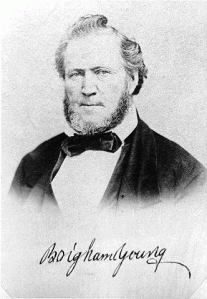
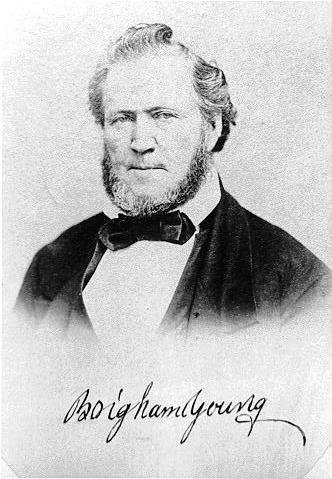
Brigham Young, Second LdS Church President

Brigham Young, Second LdS Church President

1852
On April 9th, 1852 Mormon Prophet Brigham Young muddies the nature of God – and thus the First Vision – waters even further by preaching his first Adam-God sermon.  This sermon is recorded in “The Journal of Discourses”, Vol. 1, pp.46-53. According to the doctrine, Adam was once a mortal man who became resurrected and exalted. From another plane, Adam brought Eve, one of his wives, with him to the earth, where they became mortal by eating the fruit of the Garden of Eden. After bearing mortal children and establishing the human race, they returned to their heavenly thrones where Adam serves as the god of this world. Later, as Young is generally understood to have taught, Adam returned to the earth to become the literal father of Jesus. Young held to this doctrine the rest of his life, dying in 1877. Some of the brethren continued to believe the Adam-God doctrine for years afterward.

Brigham Young never once mentioned the First Vision of God the Father and his Son in his 30 years of preaching as President of the Church.

1854
Speaking at the April Conference, Apostle Orson Hyde stated:
“Some one may say, ‘If this work of the last days be true, why did not the Saviour come himself to communicate this intelligence to the world?’ Because to the angels was committed the power of reaping the earth, and it was committed to none else.”
(“Journal of Discourses”, Vol. 6, p.335)

1855
Feb. 18
LdS President Brigham Young taught:
“…The Lord did not come with the armies of heaven…But He did send His angel to…Joseph Smith jun…and informed him that he should not join any of the religious sects of the day…”
(“Journal of Discourses”, Vol. 2, p.171)

Feb. 25
Apostle Wilford Woodruff preached:
“That same organization and Gospel that Christ died for…is again established in this generation. How did it come? By the ministering of an holy angel from God…The angel taught Joseph Smith those principles which are necessary for the salvation of the world…He told him the Gospel wasnot among men, and that there was not a true organization of His kingdom in the world…”
(“Journal of Discourses”, Vol. 2, pp.196-197)
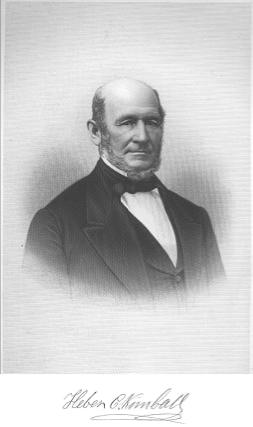
Heber Chase Kimball (June 14, 1801 – June 22, 1868) was a leader in the early Latter Day Saint movement. He served as one of the original twelve apostles in the early Mormon church, and as first counselor to Brigham Young in the First Presidency of The Church of Jesus Christ of Latter-day Saints from 1847 until his death

Heber Chase Kimball (June 14, 1801 – June 22, 1868) was a leader in the early Latter Day Saint movement. He served as one of the original twelve apostles in the early Mormon church, and as first counselor to Brigham Young in the First Presidency of The Church of Jesus Christ of Latter-day Saints from 1847 until his death

1857
Nov. 8
LdS Apostle Heber C. Kimball seemed to be oblivious to any vision where Joseph saw God and Christ:
“Do you suppose that God in person called upon Joseph Smith, our Prophet? God called upon him; but God did not come himself and call, but he sent Peter to do it. Do you not see? He sent Peter and sent Moroni to Joseph, and told him that he had got the plates.”
(“Journal of Discourses”, Vol. 6, p.29)

1859
Interview with Martin Harris, Tiffany’s Monthly, 1859, New York: Published by Joel Tiffany, vol. v.—12, pp. 163-170. This account is included because the source, Martin Harris, was a close associate of Joseph Smith during the translation of the Book of Mormon, and one of the earliest non-family members to be introduced to Joseph’s claims. His recollections are largely uninfluenced by later published accounts of Joseph Smith and therefore likely to reflect the earliest details provided to him by Joseph Smith and his family.

In this account: The plates were found in the context of money-digging; there’s no mention of a revival; Joseph Smith is 21-years old (placing the event at 1827); and Joseph Smith retrieves plates while out with his wife but hides them in the woods.  It’s also important to note that Joseph’s family corroborated this story to Martin Harris.

1860
John Hyde, a former Mormon, is a good example of the confusion regarding who appeared to Smith. In his book, “Mormonism: Its Leaders and Designs”, p. 199, he related:
“1820…April….He [Joseph] asserts that God the Father and Jesus Christ came to him from the heavens.” However, on p.240 he states “Joseph Smith, born in 1805, sees an angel in 1820, who tells him his sins are forgiven.”

1863
Mar. 1
Apostle John Taylor explained in a sermon:
“How did this state of things called Mormonism originate? We read that an angel came down and revealed himself to Joseph Smith and manifested unto him in vision the true position of the world…”
(“Journal of Discourses”, Vol. 10, p.127)

Nov. 15
LdS Apostle George A. Smith preached:
“When Joseph Smith was about fourteen or fifteen years old…the Lord answered his prayer, and revealed to Joseph, by the ministration of angels, the true condition of the religious world. When the holy angel appeared, Joseph inquired which of all these denominations was right and which he should join, and was told they were all wrong…”
(“Journal of Discourses”, Vol. 12, pp.333-334)

1864
Nov. 15
A year later, Apostle Smith seemed to be describing the vision in a more traditional way:
“When the Lord appeared to Joseph Smith…He [Joseph] thus describes the incident: ‘In the spring of 1820…I saw a pillar of light…I saw two personages…This is my beloved son, hear him.’”
(“Journal of Discourses”, Vol. 11, pp.1-2)

1869
Jun. 20
Apostle Smith again referred to Smith’s First Vision as being of a single angel:
“He sought the Lord by day and by night, and was enlightened by the vision of an holy angel. When this personage appeared to him, of his first inquiries was, ‘Which of the denominations of Christians in the vicinity was right?’“
(“Journal of Discourses”, Vol. 13, p.77-78)
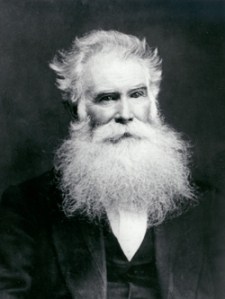
Orson Pratt was a leader in the Latter Day Saint movement and an original member of the Quorum of Twelve Apostles

Orson Pratt was a leader in the Latter Day Saint movement and an original member of the Quorum of Twelve Apostles

Dec. 19
Orson Pratt later teaches a narrative that conflates the prevailing single angel narrative with the two personage narrative he published in 1840:
“This was the condition of mankind before this Church arose, forty years ago. By and by an obscure individual, a young man, rose up, and, in the midst of all Christendom, proclaimed the startling news that God had sent an angel to him; that through his faith, prayers, and sincere repentance he had beheld a supernatural vision, that he had seen a pillar of fire descend from Heaven, and saw two glorious personages clothed upon with this pillar of fire, whose countenance shone like the sun at noonday; that he heard one of these personages say, pointing to the other, “This is my beloved Son, hear ye him.” This occurred before this young man was fifteen years of age; and it was a startling announcement to make in the midst of a generation so completely given up to the traditions of their fathers; and when this was proclaimed by this young, unlettered boy to the priests and the religious societies in the State of New York, they laughed him to scorn.”(“Journal of Discourses”, Vol.13, pp.65-66)

1871
Mar. 19
Orson Pratt reverts to the two personage narrative again:
“He went out to pray, being then a little over fourteen years of age…He saw in this light two glorious personages, one of whom spoke to him…saying, ‘This is my beloved Son, hear ye him.’”

(“Journal of Discourses”, Vol. 14, pp.140-141)

Dec. 10
Although, as noted previously, the two personages in Orson Pratt’s most recent sermons could be interpreted as either angels or God, his sermon on Dec. 10 of that same year he clearly identified the messenger as an angel (singular) in direct contradiction with the majority of his prior addresses and his own 1840 published account:
‘Here was Joseph Smith, a boy, his very youth ought to testify in his favor, for when the Lord first revealed himself to that little boy, he was only between fourteen and fifteen years of age. Now, can we imagine or suppose that a great impostor could be made out of a youth of that age, and one that could reveal the doctrine of Christ as he has revealed it to this generation? Would he stand forth and bear testimony that he had seen with his own eyes a messenger of light and glory, and that he heard the words of his mouth as they dropped from his lips and had received a message from the Most High, at that early age? And then, after having declared it, to have the finger of scorn pointed at him, with exclamations, “There goes the visionary boy! No visions in our day, no angels come in our day, no more revelation to be given in our day! Why he is deluded, he is a fanatic;” and to have this scorn and derision and still continue to testify, in the face and eyes of all this, while hated and derided by his neighbors, that God had sent his angel from heaven.’

(“Journal of Discourses”, Vol. 14, p.262-263)

1874
Jun. 23
President Brigham Young was still identifying the personages as messengers rather than God and Christ:
“Do we believe that the Lord sent his messengers to Joseph Smith, and commanded him to refrain from joining any Christian church…informing him that the Lord was about to establish his kingdom on the earth… Yes, this is all correct.”
(“Journal of Discourses”, Vol. 18, p.239)

Sept. 20
Orson Pratt, in contradiction to his December 19, 1871 address, reverts back to two personage version again, preaching:
“Joseph Smith…was a boy about fourteen years of age at the time the Lord first revealed himself…to him…he saw nothing excepting the light and two glorious personages…One of these personages, pointing to the other, said—’Behold my beloved Son, hear ye him.’

After this, power was given to Mr. Smith to speak, and…he said that he desired to know which was the true Church…immediately after receiving it, he began to relate it to some of his nearest friends, and he was told by some of the ministers who came to him to enquire about it, that there was no such thing as the visitation of heavenly messengers, that God gave no new revelation…he knew that he had seen this light, that he had beheld these two personages, and that he had heard the voice of one of them…and he continued to testify that God had made himself manifest to him…”
(“Journal of Discourses”, Vol. 17, pp.278-280)

1876
Dec. 31
Apostle John Taylor identifies the personages as the Father and the Son in the First Vision as follows:
“…the Father and the Son appeared to him, arrayed in glory… ‘This is my beloved Son, in whom I am well pleased…’”
(“Journal of Discourses,” Vol. 18, pp.325-326)

1879
Mar. 2
Yet John Taylor, 3-years later, reverts to the earlier narrative stating that they were angels:
“…Joseph asked the angel which of the sects was right…the angel merely told him to join none of them…”
(“Journal of Discourses”, Vol. 20, p.167)

However, later that same day, he declares that the Father and Son appeared to Joseph in direct contradiction to his earlier address:
”When the Father and the Son and Moroni and others came to Joseph Smith, he had a priesthood conferred upon him…”
(“Journal of Discourses”, Vol. 20, p.257)

Dec. 7
John Taylor declared:
“the Lord revealed himself to [Joseph] together with his Son Jesus, and, pointing to the latter, said: ‘This is my beloved Son, hear him.’”
(“Journal of Discourses”, Vol. 21, p.161; see also p.65 for a similar message)

1880
Jan. 4
A little less than a month after his Dec. 7, 1879 John Taylor seems to contradict himself again regarding God’s true nature preaching :
“…the Lord appeared unto Joseph Smith, both the Father and the Son, the Father pointing to the Son said, ‘this is my beloved Son…'”
(“Journal of Discourses”, Vol. 21, p. 65)

Sept. 18
Orson Pratt gave his most specific identification of the personages the Father and the Son:
“…in the spring of 1820…in answer to his prayers, there was the manifestation of two of the great personages in the heavens—not angels, not messengers, but two persons that hold the keys of authority over all the creations of the universe. Who were they? God the Eternal Father and his Son Jesus Christ…”
(“Journal of Discourses”, Vol. 21, p.308)

1882
Oct. 29
Apostle George Q. Cannon seemed to start Joseph’s call with the vision of Moroni. He did mention that Joseph saw Jesus and God but did not put those experiences in the framework of the first vision:
“He [Joseph] was visited constantly by angels; and the Son of God Himself condescended to come and minister unto him, the Father having also shown Himself unto him; and these various angels, the heads of dispensations, having also ministered unto him. Moroni, in the beginning, as you know, to prepare him for his mission, came and ministered and talked to him from time to time…”
(Journal of Discourses, Vol. 23, p.362)

1883
Former Apostle, William Smith, Joseph’s brother, remembered the vision as happening in 1823. He wrote that Joseph went into the woods to pray about which church to join:
“An angel then appeared to him…He told him that none of the sects were right…”
(“William Smith on Mormonism“, by William Smith, 1883, Herald Steam Book, Iowa, pp.5-10, as printed in New Mormon Studies CD-ROM)

1884
Jan. 13
Apostle George Teasdale understood the First Vision to be “a vision of the Father and the Son.”
(“Journal of Discourses”, Vol. 25, p.13 & 18)

Jan. 28
B.H. Roberts related:
“In the Spring of 1820, Joseph Smith…was praying in the woods to the Father. He saw a pillar of light descending from heaven…In the midst of this glorious light stood two personages… ‘This is my beloved son; hear yehim.’–…for the Father had revealed the Son to him.”
(“Journal of Discourses”, Vol. 25, p.138)
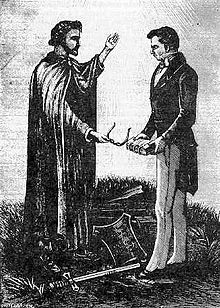
An 1893 engraving of Joseph Smith receiving the golden plates and other artifacts from the angel Moroni.

An 1893 engraving of Joseph Smith receiving the golden plates and other artifacts from the angel Moroni.

1888
LdS assistant Church Historian Andrew Jenson still had the understanding that the first vision was one of angels. He published an account of the First Vision in the paper “The Historical Record”, Jan. 1888, pp.353-357.

This account is taken from the Times and Seasons account with Jenson’s comments summarizing the experience, “The angel again forbade Joseph to join any of these churches…” Jenson then reverted Smith’s narrative, “Many other things did he (the angel) say unto me which I cannot write at this time.” Note that Jenson adds the clarifying words “the angel.” When Jenson’s paper was reprinted a couple of years later this account had been changed in two places. At the spots where he identified the being as an “angel” it was changed to “the Holy Being” and “the Christ.”

CONCLUSION
Thus we see that the details of the First Vision vary in the different accounts. Early LdS leaders usually thought of the vision as one of angels, not God. They did not appeal to the first vision to establish their teaching that God has a body.

These historical records of the First Vision leave us with more questions than answers:
• If Joseph Smith’s claim to a vision in 1820 had resulted in the kind of public persecution he described, why did the story go completely unnoticed by the public media, and remain absent from the official literature of the LdS Church for 22 years?

• Why is there no mention of the 1820 appearance of the Father and the Son in all of Brigham Young’s sermons?

• If Brigham Young believed Joseph’s revised First Vision of the Father and the Son, why wouldhe continue to tell the story of a First Vision wherein the Lord sent his angels to tell Joseph not to join any of the churches?

• Why did it take more than 50 years for the revised First Vision, adding the Father and the Son, to replace the original First Vision of angels as the church’s standard teaching?

• If President Hinkley’s statement is true — ”If the First Vision did not occur, then we are involved in a great sham. It is that simple.” — are we gambling with our family’s eternal destiny by not carefully examining the documented history of the First Vision story?

NOTES
The original version of this publication that this article has expanded on can be found here: http://crcmin.org/pdfs/brochures/FirstVisionE.pdf

Research and portions of text: 
Utah Lighthouse Ministry http://www.utlm.org/onlineresources/firstvision.htm
The Institute for Religious Research http://mit.irr.org/joseph-smiths-changing-first-vision-accounts
The Joseph Smith Papers http://josephsmithpapers.org/site/accounts-of-the-first-vision
by Fred W. Anson
Here’s a challenge: Read through the following and try to guess who wrote it.

When It’s Love
Hey, everybody’s lookin’ for somethin’
Somethin’ to fill in the holes
We think a lot but don’t talk much about it
’til things get out of control, oh

How do I know when it’s love?
I can’t tell you but it lasts forever
Oh, how does it feel when it’s love?
It’s just somethin’ you feel together
When it’s love

You look at every face in a crowd
Some shine and some keep you guessin’
Waiting for someone to come into focus
And teach you your final love lesson, oh

How do I know when it’s love?
I can’t tell you but it lasts forever
Oh, how does it feel when it’s love?
It’s just something you feel together

Oh, when it’s love
You can feel it, yeah
Nothin’s missin’, yeah

Yeah, you can feel it
Oh, when it’s love
When nothin’s missing

How do I know when it’s love?
I can’t tell you but it lasts forever

Ooh, how does it feel when it’s love?
It’s just something you feel together, hey

How do I know when it’s love?
I can’t tell you but it lasts forever

When it’s love
Ooh, when it’s love
Hey, it’ll last forever

When it’s love
Give it up
We’re gonna feel this thing
Together

When it’s love, ooh
When it’s love, baby
You can feel it, yeah

We’ll make it last forever
Ooh, when it’s love

a_hole_in_my_soul_by_Alx_GFX_Cropped

Who did you guess?  Perhaps it was Blaise Pascal who I quoted in my last recontextualization article as saying…
“There is a God-shaped vacuum in the heart of every person, and it can never be filled by any created thing. It can only be filled by God, made known through Jesus Christ.”
– from “Pensees”

… after all the poem starts with, “everybody’s lookin’ for somethin’, somethin’ to fill in the holes” in true Pascalian fashion. 

Or perhaps, you thought of St. Augustine who wrote…
“Thou hast formed us for Thyself, and our hearts are restless till they find rest in Thee”
— from “Confessions”

… when you considered the lines that said, “You look at every face in a crowd – some shine and some keep you guessin’. Waiting for someone to come into focus and teach you your final love lesson.” Isn’t that how Augustine might have put it had he written in the English vernacular of 20th Century America rather than in 4th Century Latin?

Or perhaps when you considered the words, “how does it feel when it’s love? It’s just something you feel together,” you thought of Jesus Christ who said of His covenant relationship with those who believe in and live for Him, “Abide in Me, and I in you” (John 15:4 NASB) – that would certainly explain and make the recurring line, “it lasts forever” even more poignant given the fact that Christ also said, “This is eternal life, that they may know You, the only true God, and Jesus Christ whom You have sent.” (John 17:3 NASB)

Yes, all these themes and ideas are certainly there – surprisingly there’s great depth in this simple yet powerful song.  I confess that I have listened to this song through tears on many an occasion since, for me, it echoes all these themes and resonates deeply within.  Here, try it for yourself:

Yes, folks believe it or not, this deep and beautiful song was written and performed by Eddie and Alex Van Halen, Sammy Haggar, and Michael Anthony – that is, to use the words of one reviewer, that “band of idiots” known to the world as Van Halen.

After all they’re not immune to the deeply seeded need that all humans have to know unconditional love and acceptance. Whether it’s a straight arrow, feet-on-the-ground world pastor  or a jelly brained, out-of-touch rock star we all feel this need – and clearly the guys in Van Halen do too.

Nor, apparently, is Van Halen any more immune to incorrectly diagnosing the “fix” as romantic love than anyone else is – as the video illustrates well. My hope and prayer for these guys that someday, somehow, the they “get” the wisdom of St. Augustine that  “our hearts are restless till they find rest in Thee.”  Perhaps on that day they’ll join us in singing this song through tears of fulfilled joy rather than longing, despair, and confusion.

Clonmacnoise, the burial place of the last High King of Ireland

Clonmacnoise, the burial place of the last High King of Ireland

by Fred W. Anson
Christian Researcher, Richard B. Stout, has done extensive research correlating the alleged “Reformed Egyptian” characters on the plates that the Book of Mormon were “translated” from to Ancient Irish. The following questions and supporting evidence explain and summarize his case:

Q: According to Mormon History were the Anthon Transcript characters copied from the alleged Golden Plates?
A: Yes. We have documented evidence from Martin Harris, David Whitmer, and Joseph Smith that they were.

Q: Can a correlation between the Anthon Transcript characters and Egyptian Hieroglyphs be established?
A: No. Anthon was not a qualified “expert” and modern Egyptologists can find no correlation.

Q: Can a correlation between the Anthon Transcript characters and the Detroit Manuscript characters be established?
A: Yes. There are character for character matches.

Q: Since it has been established that the Detroit Manuscript characters are ancient Irish (thus resulting in near-complete translation of the document) what are the Anthon Transcript characters?
A: Ancient Irish.

Thus the following question/challenge/problem remains for Mormon Scholars:
If you accept Martin Harris’s assertion that the characters on the Anthon Transcript were copied from the Golden Plates, then how you explain why the Golden Plates were written in Ancient Irish rather than ‘Reformed Egyptian’ as Joseph Smith claimed?”

Supporting Evidence
Please consider these links between the Detroit Manuscript and the Anthon Transcript are compelling. This is from Richard B. Stout’s article “A Singular Discovery”:

Richard B. Stout

Richard B. Stout

“According to Mormon history, Joseph Smith, Jr. discovered a hidden, religious work in 1823. Facsimiles of the “unknown characters” in which the Book of Mormon was written were later copied and taken to “the learned.” One of the opinions sought was that of Dr. Mitchell of New York City. Earlier, secular history had also recorded the discovery of a hidden, religious work in 1823.

Facsimile pages were made of this book’s “characters,” which were also said to be “unknown.” They too were taken to “the learned”-one of whom was Dr. Mitchell. However, Joseph Smith did not discover what became known in the national press as the Detroit Manuscript. That honor went to Col. Abraham Edwards, a business partner of Joseph’s uncle, Stephen Mack.

Especially because of this family connection, it would appear likely that Joseph Smith used the details surrounding the Detroit Manuscript as a template upon which to construct his story of the Book of Mormon’s “coming forth.” Further, there is evidence which proves that events, names, places, and even controversial animals which appear in the Book of Mormon could have been borrowed from the writings of the well-known scholar identified in both accounts as Dr. Mitchell. Perhaps most startling of all, paleographic research indicates that Joseph may have copied many of the characters he had Martin Harris take to Dr. Mitchell directly from the Detroit Manuscript.”
(“A Singular Discovery: The Curious Manuscript, Mitchill, and Mormonism Part 1” by Richard Stout, The Evangel, Oct 2001)

In addition, Stout’s research has established an interesting correlation between the characters on the Anthon Transcript (which Harris claimed were characters from the Golden Plates) and the Detroit Manuscript (which turned out to be ancient Irish characters). He then validated this Irish correlation by extending the character comparisons out to other ancient Irish manuscripts.

Here are the exhibits from the article. Exhibit “B” has been excluded as it is only clear and relevant within the context of the article’s main text.

exhib-a

Exhibit “A”
This small sample of early modern shorthand above is from Jeremiah Rich’s 1673 New Testament. The reader will find more than fifteen different characters here which are also found in the “Anthon transcript.”

exhib-c
Exhibit “C”
The ogham code symbol on the left is from page 311 of the 14th century Book of Ballymote (the vertical line is merely a divider). The three symbols on the right are from the “Anthon transcript.”

exhib-dExhibit “D”
The highlighted symbol (left) of four dots below a stem line is from page 312 of the Ballymote manuscript. The “Anthon transcript” symbol to its right is from line four of the transcript.

exhib-eExhibit “E”
Naithair fria fraech (“Serpent through the heather”) ogham code letter on left Book of Ballymote, p. 313. Two of several similar “Anthon transcript” symbols on right.

So, again, I suppose the question that Mormon Scholars must address at this point is this:
If you accept Martin Harris’s assertion that the characters on the Anthon Transcript were copied from the Golden Plates, then how you explain why the Golden Plates were written in Ancient Irish rather than ‘Reformed Egyptian’ as Joseph Smith claimed?”

Even if you’re not an Egyptologist, intuitively it’s hard to see how “Reformed Egyptian” which allegedly looks like this . . .

43anthontranscript

“Reformed Egyptian” sample given to Martin Harris. These characters were allegedly copied from the Golden Plates that the Book of Mormon was translated from

. . . in any way correlates to Egyptian Hieroglyphics which look like this:

egyptian_heiroglyphs

Egyptian Heiroglyphic Primer

And in their purest form like this:

Egyptian Hieroglyphs

Egyptian Hieroglyphs

And the research continues while this question remains to haunt us: Why was the Book of Mormon Written in Ancient Irish?

by Fred Anson
In a prior post, I introduced the idea of recontextualizing works of music pointing out not only how Martin Luther, Charles Wesley, and Fanny Crosby recontextualized the music of their day – some of it secular with no discernible religious roots – and turned them into songs of praise and worship, but how modern Christians have been doing the same thing with secular rock music.

I pressed this point further stating, “I confess a certain frustration when fellow Christians take diminish or take umbrage at the idea that unbelievers, with whom we share common life experiences not the least being “the human condition”, can find small echoes of divine truths within His fallen creation.”

Personally, I can think of no experience more common to the human condition than the deeply seeded need that all humans have to know unconditional love and acceptance.  Be it the silver spooned debutante or the beggar rummaging for his next meal in the trash we have all feel this need at some time, some place – perhaps you’re even feeling it now. I would go so far as to say that this may be the deepest most persistent need that human beings feel – and my observation is that it’s certainly the most common.

Now I suppose it will shock no one when I assert that most rock artists incorrectly diagnose the “fix” for this “hole in the soul” as romantic love.  However, as anyone who’s had their heart broken by a lover or spouse who left them will tell you, “That ain’t it!”

Nor can we find the fix in the love of parents for parents get old and die (as I type through my tears since both of mine have “passed”).  And I know from the 12-Step groups I’ve been in that a heartbreaking fact is that one of the things affected by the fall was the relationship between parent and child – as a result, some adult children are looking for healthy love from a broken parent that, sadly, may never come.

The fact of the matter is that human love simply won’t fill that hole in the human condition that it seems God has reserved for Himself.   As French mathematician, physicist, inventor, writer and Christian philosopher Blaise Pascal said well:

 “There is a God-shaped vacuum in the heart of every person, and it can never be filled by any created thing. It can only be filled by God, made known through Jesus Christ.”
– from “Pensees”

And though it was written from quite a different context[1] no song comes closer to expressing this crying need than this one . . .

Lover Reign O’er Me from the 1979 movie “Quadrophenia” 

Love Reign O’er Me
(Pete’s theme)
Only love
Can make it rain
The way the beach is kissed by the sea.
Only love
Can make it rain
Like the sweat of lovers’
Laying in the fields.

Love, reign o’er me.
Love, reign o’er me, rain on me.

Only love
Can bring the rain
That makes you yearn to the sky.
Only love
Can bring the rain
That falls like tears from on high.

Love Reign O’er me.

On the dry and dusty road
The nights we spend apart alone
I need to get back home to cool cool rain.
The nights are hot and black as ink
I can’t sleep and I lay and I think
Oh God, I need a drink of cool cool rain.

Love!

… and I’m continuing to hope and pray that the composer of this classic, perhaps even inspired, song may someday know the peace, serenity, and love of God that I, Blaise Pascal, and others have found for himself some day soon.

Ethan-Russell_04(“Love O’er Me” by Pete Townshend was originally released on the 1973 album “Quadrophenia” by The Who) 

NOTES:
[1]  As Pete Townshend, the song’s composer once explained:
(strong language alert for those of you with sensitive ears and eyes) 
“‘Love Reign O’er Me’ is similar to ‘Drowned’ [editor: another song on the Quadrophenia album] in meaning. This refers to Meher Baba’s one time comment that rain was a blessing from God; that thunder was God’s Voice. It’s another plea to drown, only this time in the rain. Jimmy goes through a suicide crisis. He surrenders to the inevitable, and you know, you know, when it’s over and he goes back to town he’ll be going through the same shit, being in the same terrible family situation and so on, but he’s moved up a level. He’s weak still, but there’s a strength in that weakness. He’s in danger of maturing.” 
(from http://www.thewho.net/linernotes/Quad.htm )

Click here or a more thorough analysis of Pete Townshend and his religious affiliation with Meher Baba.