Archive for the ‘Mormon Studies’ Category

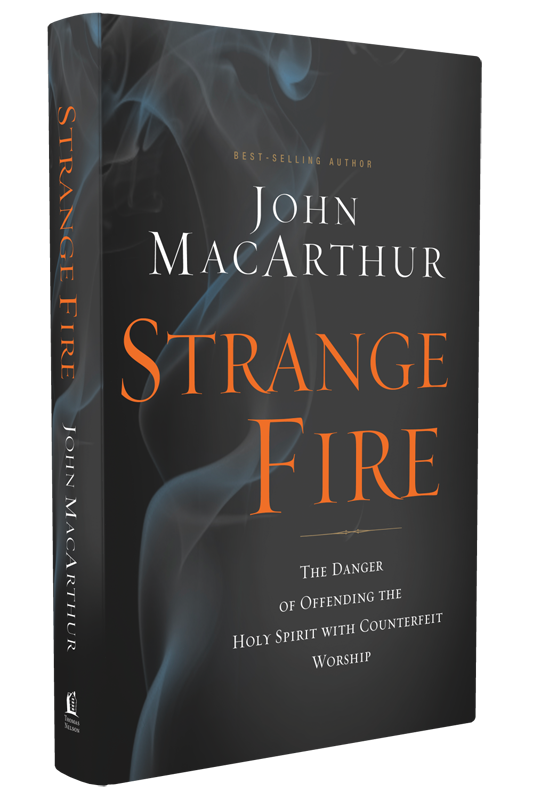
Strange Fire Front CoverReviewed by Fred W. Anson

Title: Strange Fire: The Danger of Offending the Holy Spirit with Counterfeit Worship
Author: John F. MacArthur
Publisher: Thomas Nelson
Genre: Non-fiction, Religion
Year Published: 2013
Length: 352 pages
Binding: Digital, Hardcover, Paperback, Audiobook
ISBN10: 1400205174
ISBN13: 978-1400205172
Price: $10.99 (Digital), $22.99 (Hardcover),  $6.99 (Paperback), $9.99 (Audiobook)

My pastor could have been speaking of John MacArthur when he said to me, “Your message is usually substantive and true but the way that you deliver it often leaves the other person so in reaction to the messenger that they can’t receive the message.” Yes, friends, I empathize with John MacArthur since I’m on of that those annoying “truth first, grace and mercy second, and let the pieces fall where they will third” guys too. And try as I may to not react to the messenger rather than the message in this review I will warn you in advance that I may not succeed.

The More Things Change . . . 
Anti-Charismatic books are nothing new to John MacArthur. In 1978 he published “The Charismatics: A Doctrinal Perspective” In 1992 it was “Charismatic Chaos” and in 2013, his latest offering, “Strange Fire: The Danger of Offending the Holy Spirit with Counterfeit Worship”. So three titles and thirty five years later and what has changed? Obviously, not a lot since the twenty one old words of Vineyard Pastor, Rich Nathan are just as applicable to “Strange Fire” as they were of “Charismatic Chaos”:

“Ultimately it is MacArthur’s rancorous, bombastic style that undermines his objectivity and any value this book may have had as a necessary corrective to excesses or errors in the charismatic, Pentecostal and Third Wave movements. Rabid anti-charismatics will love this book. It provides wonderful sermon illustrations for the already convinced. For those not so zealously anti-charismatic, this book serves only as a painful reminder of the lovelessness that characterizes too much of contemporary Christianity.”
(Rich Nathan, “Vineyard Position Paper #5: A Response to ‘Charismatic Chaos'”, April 1993, p.27)

And this is a pity because MacArthur has always done a very good job of indentifying and condemning the excesses in the Pentecostal and Charismatic Movements. In “Charismatic Chaos” it was the immature abuses of “out there” Vineyard churches (like the bizarre Holy Laughter of the Toronto Airport Vineyard and the insanity of the Kansas City Prophets), the zaniness of The Trinity Broadcasting Network, and the charlatanism of Benny Hinn – who has very appropriately returned as the favored punching bag and dart board target of Strange Fire. To all this, like so many other, mainstream, theologically cautious and conversative Charismatics, I can only stand, applaud, and yell, “Bravo!” These are things that we are in complete agreement with Mr. MacArthur on. In fact, these are things that we ourselves have publicly and repeatedly condemned and denounced ourselves. Bravo Mr. MacArthur, bravo!
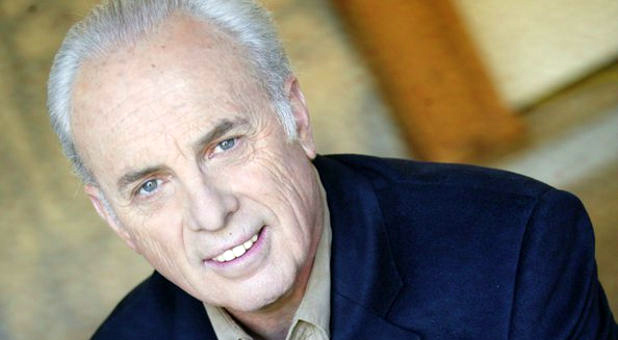
John MacArthur

John MacArthur

Broad Brush Polemics
However, MacArthur isn’t content with reprimanding just a few bad apples. It quickly becomes apparent that in his mind, if you’re a Charismatic, you’re a bad apple – period. Consider these excerpts:

“The Charismatic Movement began barely a hundred years ago, and its influence on evangelicalism can hardly be overstated. From its inception by Charles Fox Parham to its most ubiquitous modern representative in Benny Hinn, the entire movement is nothing more than a sham religion run by counterfeit ministers. True biblical interpretation, sound doctrine, and historical theology owes nothing to the movement— unless an influx of error and falsehood could be considered a contribution. Like any effective false system, charismatic theology incorporates enough of the truth to gain credibility. But in mixing the truth with deadly deceptions, it has concocted a cocktail of corruption and doctrinal poison— a lethal fabrication— with hearts and souls at stake.”
(John F. MacArthur, “Strange Fire”, p. 113)

“the gospel that is driving these surging numbers is not the true gospel, and the spirit behind them is not the Holy Spirit. What we are seeing is in reality the explosive growth of a false church, as dangerous as any cult or heresy that has ever assaulted Christianity. The Charismatic Movement was a farce and a scam from the outset; it has not changed into something good.”
(Ibid, p.xix)

As one commenter on The Pneuma Review website said well of such over the top polemics:

“There are excesses in the charismatic group that need to be addressed, but Strange Fire is devoid of any hint on J[ohn] M[cArthur]’s part to meet with these whom he feels are in error to try to make sure he understands them. In taking this to the extreme that he has, he has become an example of the extreme he is trying to point out in others.”
(Rick Collins, Aug 24, 2014 8:27pm comment, “John MacArthur’s Strange Fire, reviewed by Craig S. Keener”)

And again, Rich Nathan’s description of “Charismatic Chaos” yesterday is just as true of “Strange Fire” today:

“MacArthur doesn’t rebuke charismatics as a person would rebuke a member of one’s own family. The book reads like hostile fire shot by an outsider. The tone, as will be seen by the numerous pejorative adjectives that MacArthur uses to describe charismatics, is anything but familial or irenic. It is one thing to have your child spanked by your spouse. It is quite another thing to have your child spanked by a stranger. Charismatics understandably react to being spanked by someone who intentionally positions himself as a stranger and not as a “dear friend, fellow worker… and [brother]” (Philem. 1:1).”
(Op Cit, Rich Nathan, p.3)

Folks, I could stop right there and you would have an apt brief review of Strange Fire. Unfortunately, when the specifics are considered Strange Fire gets even worse.

Double Standards
Adding insult to injury is MacArthur’s use of Double Standards. He spends an entire chapter pounding away at the scandals in the continuationist camp while utterly ignoring his own shattered cessationist glass house. As Time Magazine observed:

“Anthea Butler, a professor of religion at the University of Rochester in New York believes Pentecostals are no more trouble-prone than other Protestants. “The same sort of thing is happening to Baptists and Presbyterians,” she says. “Except for one big thing. They are not media figures.”
(David Van Biema, “Are Mega-Preachers Scandal-Prone?”, Time magazine, Friday, Sept. 28, 2007)

One need go no further than the dedication page of MacArthur’s first Anti-Charismatic book (“The Charismatics: A Doctrinal Perspective”, circa 1978) to see MacArthur’s blind hypocrisy. It reads as follows:

“To Dave Hocking,
A true and beloved friend
with whom I share a common love
for the Word of Christ
and the purity of His church.”

Yet just fourteen year later, and just 6 months after MacArthur’s second Anti-Charismatic book (“Charismatic Chaos”, circa April 1992), fellow hard cessationist and Anti-Charismatic David (aka “Dave”) Hocking was involved in a scandal that involved not one, but two high profile Southern California churches:

“In Oct 1992, the elders of Calvary Church [Santa Ana, California] caught David Hocking in a major scandal involving marital infidelity. The elders of the church told Hocking that he would no longer be the Senior Pastor of Calvary Church and would have to undergo a three-year restoration process.

Refusing to accept the restoration plan of the elders at Calvary Church, Hocking’s long-time buddy Chuck Smith [the founding Pastor of Calvary Chapel and the Senior Pastor of Calvary Chapel Costa Mesa, California at the time] took him in. Reportedly, Smith said that this great man of God should not be wasted, and took in David Hocking as a Calvary Chapel of Costa Mesa staff member. Hocking was excommunicated by Calvary Church of Santa Ana after he refused to submit to the elders of the church in their restoration process…

This was a major point of contention between Calvary Chapel of Costa Mesa and other local churches in the community (particularly CCSA [Calvary Church Santa Ana]). This caused a major scandal here in Southern California where the results are still being felt.”
(“The Calvary Church of Santa Ana/David Hocking Incident”, Calvary Chapel Wiki website)  

And this is just the tip of the cessationist iceberg of scandals. We could also talk about Southern Baptist Charles Stanley’s divorce, R.C. Sproul, Jr.’s  (whose father R.C. Sproul, Sr. spoke at the Strange Fire Conference) “Ashley Madison indiscretion”, or the scandals of Baptists, Kent Hovind, Lonnie Latham, Coy Privette, or Joe Barron (see “List Of Christian Evangelist Scandals” for details).

Further, and speaking as someone in the same Reformed camp that MacArthur is in (yes, I’m one of those dreaded “Charismatic Calvinists” that Steve Lawson woodshedded at the Strange Fire conference) it pains me to admit that Frank Viola was largely correct when he observed:

“Using MacArthur’s logic and approach, one could easily write a book about the toxicity of the Reformed movement by painting all Reformed Christians as elitist, sectarian, divisive, arrogant, exclusive, and in love with “doctrine” more than with Christ.

And just as MacArthur holds up Benny Hinn, Todd Bentley, Pat Robertson, et al. to characterize the charismatic world, one can hold up R.J. Rushdoony, Herman Dooyeweerd, R.T. Kendall, or Patrick Edouard, et al. to characterize Reformed Christians. Or Peter Ruckman and Jack Hyles, et al. to characterize Fundamentalist Baptists. Or William R. Crews and L.R. Shelton Jr., et. al. to represent Reformed Baptists.

My point is that charismatic, Reformed, and Baptist people would strongly object to the idea that any of these gentleman could accurately represent their respective tribes as each of them have strong critics within their own movements. Even so, the game of burning down straw man city with a torch is nothing new.”
(Frank Viola, “Pouring Holy Water on Strange Fire” p.9; also cited in Michael L. Brown, “Authentic Fire: A Response to John MacArthur’s Strange Fire”, p.157)

But probably no one summed it up better than Rich Nathan when he said:

“Immorality is, tragically, a phenomenon that seems to know no denominational boundaries. Indeed, several very prominent dispensational and fundamentalist leaders have had to step down from radio ministries, para-church leadership, and pastorates because of sexual immorality. One might more realistically point to the sex-drenched culture of the modern western world, the cult of sexual self expression, and the absence of the practice of spiritual disciplines as more likely explanations for the fall of charismatic pastors than their experience of speaking in tongues.”
(Op Cit, Rich Nathan, p.8)

Treating the Extreme as the Norm
This treating extremes as the norm is the biggest problem with MacArthur’s approach to Pentecostalism in general and his Anti-Charismatic books in particular. Consider this example from Strange Fire:

“More moderate charismatics like to portray the prosperity preachers, faith healers, and televangelists as safely isolated on the extreme edge of the charismatic camp. Unfortunately, that is not the case. Thanks to the global reach and incessant proselytizing of religious television and charismatic mass media, the extreme has now become mainstream. For most of the watching world, flamboyant false teachers— with heresies as ridiculous as their hairdos— constitute the public face of Christianity. And they propagate their lies in the Holy Spirit’s name.”
(Op Cit, John F. MacArthur, “Strange Fire”, p. 13)

Again, writing of “Charismatic Chaos” Rich Nathan’s response is just as applicable:

“MacArthur rarely acknowledges a mainstream view within the charismatic or Pentecostal movements that’s balanced, Biblical, and mature. MacArthur, moreover, rarely admits that the Pentecostal/charismatic movement – now over 400 million strong – has borne tremendous fruit for the kingdom of God. He simply does not permit himself to acknowledge positive contributions by this enormous and varied movement.”
(Op Cit, Rich Nathan, p.2)

And as this review is being written, Pentecostals and Charismatics not only number over 500 million adherents but represent the fastest growing segment of the modern Christian Church. All this while mainline denominations are shrinking and cessationist numbers are flattening. No numbers and don’t equal veracity but, if nothing else, it bespeaks an ability to meet needs and bear fruit – something that John MacArthur sees as a net negative due to his antipathy toward continuationism in all forms. Such prejudice driven hard hardheartedness and blindness is heartbreaking.

Exaggeration, Data Manipulation, and Guilt by Association Fallacies
Equally concerning is how MacArthur repeatedly engages in gross exaggeration and “Guilty by Association” fallacies. Please consider this example:

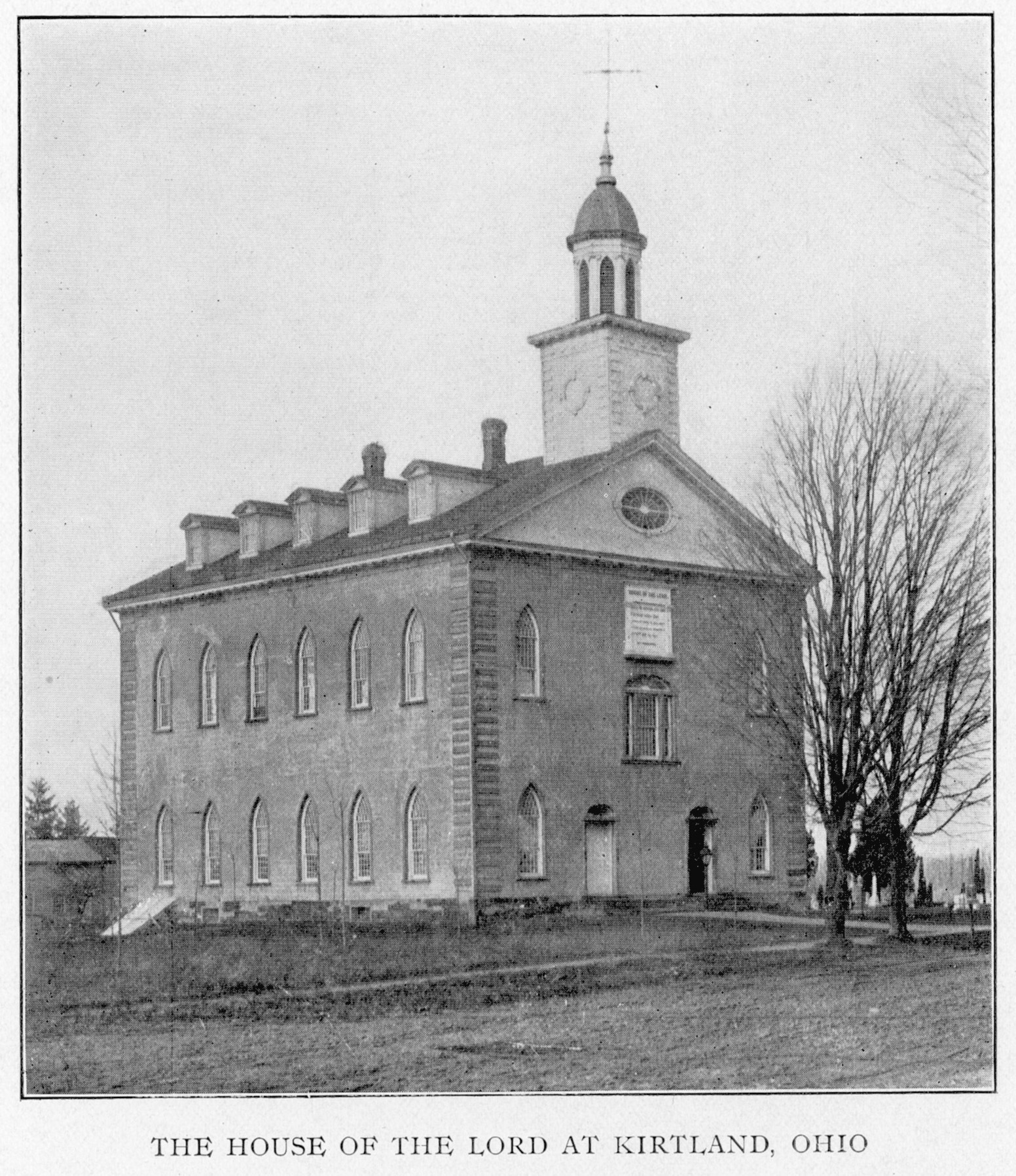
“[Joel] Osteen’s muddled comment about Latter-day Saints introduces an interesting point of discussion— especially since the founders of Mormonism claimed to experience the same supernatural phenomena that Pentecostals and charismatics experience today. At the dedication of the Kirtland Temple in 1836, Joseph Smith reported various types of charismatic phenomena— including tongues, prophecy, and miraculous visions. Other eyewitness accounts of that same event made similar claims: “There were great manifestations of power, such as speaking in tongues, seeing visions, administration of angels”; and, “There the Spirit of the Lord, as on the day of Pentecost, was profusely poured out. Hundreds of Elders spoke in tongues.” More than half a century before Charles Parham and the Pentecostals spoke in tongues, the Latter-day Saints reported similar outbursts, leading some historians to trace the roots of Pentecostalism back through Mormonism.”
(Op Cit, John F. MacArthur,”Strange Fire”, pp.51-52)

Well the “some historians” referenced in the footnote for that last sentence is exactly one historian, and one historical work (Hard Cessationist, Thomas R. Edgar’s Anti-Pentecostal treatise, “Satisfied by the Promise of the Spirit”, p.218 and p.108)

Further, speaking as a Mormon Studies Scholar, the fact is that the early Mormons were merely one of many tongues speaking groups in the Second Great Awakening. Joseph Smith and the earliest Mormons didn’t speak in tongues at all until Brigham Young and his tongues speaking brothers arrived on the scene along with their tongues speaking friend Heber C. Kimball. And, for the record, Young and his brothers were Restorationist Pentecostals (specifically tongues speaking Primitive Methodists in most cases) before joining the Mormon Church – so the phenomenon didn’t, I repeat, did not originate in Mormonism.

Rather, it’s generally conceded that the fountainhead for all this 19th Century, Second Great Awakening tongues speaking was the 1801 Cane Ridge Revival. So for a historian to claim that the roots of modern Pentecostalism can be traced back to early Mormonism isn’t just ludicrous, it’s hack scholarship.

But wait, MacArthur isn’t done yet, there’s more:

“Even today, similarities between the two groups have led some to seek for greater unity. In their book Building Bridges Between Spirit-Filled Christians and Latter-Day Saints, authors Rob and Kathy Datsko assert, “Although there is an incredible language and culture barrier between LDS [Latter-day Saints] and SFC [Spirit-filled Christians], often these two groups believe many of the same basic doctrines.” Though Pentecostalism has traditionally rejected the Latter-day Saints, comments like those made by Joel Osteen suggest that a new wave of ecumenical inclusivism may be on the horizon. It is hardly coincidental that Fuller Theological Seminary, the birthplace of the Third Wave Movement, is currently leading the campaign for greater unity between Mormons and evangelical Christians.”
(Op Cit, John F. MacArthur,”Strange Fire”, pp.51-52)

Regarding this passage, as I pointed out in my review of Rob and Kathy Datsko’s book, “Building Bridges Between Spirit-Filled Christians and Latter-Day Saints” MacArthur’s argument is based on data manipulation, flawed evidence, and good old fashioned exaggeration. Please consider the following questions I posed to Mr. MacArthur in this regard:

1) Why are the Datskos implicitly presented as Charismatic Christians in your (circa 2013) book when, in fact, they have been Mormons since 2003?
Folks as soon as these folks converted to Mormonism, they were no longer Charismatic Christians, they were Latter-day Saints who were following another Jesus and preaching another gospel.

2) Where are the rest of the Charismatic Christians that you declare, are seeking greater unity with Mormons?
Friends I’m a Mormon Studies scholar and I will tell you plainly: Any that have tried this (such as Lynn Ridenhour, Paul Richardson, and Cal Fullerton) are now considered, marginalized, lunatic fringe, Charismaniacs by mainstream Charismatics. They have no significant power or influence among us.

3) Why do you single out Charismatics when, in fact, it’s cessationists who are taken a far greater, more active role in seeking greater unity with Mormons?
I’ll name names: Craig Blomberg (Denver Theological Seminary), Christopher Hall (Episcopalian theologian), Gerald R. McDermott (Beeson Divinity School), and James E. Bradley (Fuller Theological Seminary). Oh, and let me add newcomer, Baptist Author and Educator, Roger E. Olson, to the list.

4) Where are all these Charismatic Latter-day Saints that you refer to on p.73 of Strange Fire?
That’s where you claim, “Today there are even charismatic Mormons. Regardless of what else they teach, if they have had that experience, they are in.” Footnote 53 for the passage on p.73 takes us to this: “See, for example, “Hi. I’m Kathy, I’m a born again, Spirit-filled, Charismatic Mormon” at Mormon.org, accessed March 2013” (p.290) and one clicks on the link that’s provided in the footnote and it takes us to (wait for it, wait for it, wait for it) Kathy Datsko’s Mormon testimony! Folks, no many how many times you count her Kathy Datsko is one, and only one, Charismatic Latter-day Saint. Add in her husband Rob and you now have not one but two Charismatic Mormons.

This is far from a trend or even a pattern people! In fact, other than these two I know of no other Charismatic Latter-day Saints. That’s because Latter-day Saints have absolutely no interest in Pentecostalism and stay as far away from it as possible – they treat it like kryptonite. So in the end Mr. MacArthur’s evidence that there’s a major trend involving mainstream Charismatics Christians are seeking closer ecumenical ties with Charismatic Mormons isn’t just exaggerated, it’s non-existent.

Confirmation Bias Driven Evidence Presentation
As continuationist Bible scholar Craig S. Keener notes:

“MacArthur’s selective approach to history is meant to substantiate his approach. Yet his appendix on church history, if intended to be representative, cherry-picks only statements that agree with him. Yes, cessationists existed; but not all orthodox believers have been cessationists. Irenaeus, Origen and Tertullian all claimed eyewitness accounts of healings and exorcisms. Historian Ramsay MacMullen shows that these sorts of experiences constituted the leading cause of Christian conversion in the third and fourth centuries.

MacArthur cites Augustine as an advocate of cessationism (252-53) without noting that he later changed his mind and reported numerous miracles, including raisings from the dead and some healings that he personally witnessed. John Wesley valued weighing prophecy rather than rejecting it, reports healings, and offers his own firsthand report of what he believed to be a raising from the dead. Late nineteenth-century evangelical leaders such as Baptist A. J. Gordon (for whom Gordon-Conwell Theological Seminary is named) and A. B. Simpson, founder of Christian and Missionary Alliance, were continuationists and recounted healing reports.”
(Craig S. Keener, “John MacArthur’s Strange Fire, reviewed by Craig S. Keener”, The Pneuma Review website)

And it’s not in the book but in the follow up video on to the book and conference that Mr. MacArthur did at The Master’s Seminary entitled, “What has happened after the ‘Strange Fire’ Conference” (it can be seen on YouTube) John MacArthur said of Chuck Smith and the Calvary Chapel movement that in 1967 “a bunch of Jesus freak people.. go to Calvary Chapel…and for the first time…that I know of in history, the church lets the very defined subculture dictate what it will be,” citing “the hippie culture, communal living…kids coming out of drugs and free sex, and all that” as displacing “all the normal and formal things,” and typifying the charismatic church, with the movement becoming Calvary Chapel. (video transcription from Wikipedia)

Well, I’ve got to tell you, I was at Calvary Chapel in the 1970’s during the height of Jesus Movement and what Mr. MacArthur has just said is nonsense! Chuck Smith’s friend and colleague Jacob Prasch has called it “false witness” and I agree with him. Folks, it simply isn’t true. Anyone who thinks that staid, culturally and theologically conservative Pastor Chuck wasn’t fully in control of things and wasn’t keeping a leash on the insanity that we hippies brought in tow with us simply wasn’t there! Case in point: Chuck Fromm (the founder of Maranatha! Music and Chuck Smith’s son in law) once told me that Pastor Chuck didn’t like the rock music that was on the label and was always trying to convince him to shut that side of the ministry down and focus on just worship music – which Fromm eventually did.

While we all loved and respected Pastor Chuck, we still thought that he was a bit of an establishment square, a stick in the mud, and even an encumbrance to all our “grooviness” at times. To suggest that we children were leading a strong willed, in command, personality, father figure, and leader like Pastor Chuck is just laughable! And if there’s any doubt on any of this please see watch the “Pastors Perspective 4/3/2014” video on the K-Wave Radio YouTube Channel and you can hear it straight from Brian Brodersen, Don Stewart, Steve Mays, and Ray Bentley who were there at a much higher level than I ever was.

Conclusion and Other Perspectives
Since the Strange Fire conference and publication of the book John MacArthur has stated that they were supposed to be “the catalyst for conversation” (see “John MacArthur on Making an Informed Response to Strange Fire” on YouTube). Well if that’s the case, given the harsh, polemic, condemning tone then this “conversation” started with all the charm and grace of an alley mugging by a bully.

Equally amusing is how in the aforementioned, “What has happened after the ‘Strange Fire’ Conference” video Mr. MacArthur complains about the ad-hominems leveled at him in the reviews on Amazon. This coming from a man who spends, pages, chapters, and even the greater part of a book engaging in personal attacks, character assassination, and some of the most derogatory and insulting slurs against fellow Christians imaginable. Mr. MacArthur that thing sticking out of your eye is what’s called a “beam”.

That said, I have one last piece of advice to my Charismatic friends: Read the Strange Fire book. Yes, read the book. I think it speaks for itself. Please don’t take my word for it, read the book and see for yourself if all the criticism that this book has garnered from myself and others is justified or not.

Finally, probably no one summed up the mindset, spirit, and content of “Strange Fire” better than the late, great, first editor of Christianity Today, Carl F.H. Henry who said in 1957:

“The real bankruptcy of fundamentalism has resulted not so much from a reactionary spirit – lamentable as this was – as from a harsh temperament, a spirit of lovelessness and strife contributed by much of its leadership in the recent past. One of the ironies of contemporary church history is that the more fundamentalists stress separation from apostasy as a theme in their churches, the more a spirit of lovelessness seems to prevail.

The theological conflict with liberalism deteriorated into an attack upon organizations and personalities. This condemnation, in turn, grew to include conservative churchmen and churches not ready to align with separatist movements. It widens still further, to abusive evangelicals unhappy with the spirit of independency in such groups as the American Council of Churches and the International Council of Christian Churches. Then came internal debate and division among separatist fundamentalism within the American Council. More recently, the evangelistic ministry of Billy Graham and [the] efforts of other evangelical leaders, whose disapproval of liberalism and advocacy of conservative Christianity are beyond dispute, have become the target of bitter volubility.

This character of fundamentalism as a temperament and not primarily fundamentalism as a theology, has brought the movement into contemporary discredit… Historically, fundamentalism was a theological position; only gradually did the movement come to signify a mood and disposition as well. In its early [years] leadership reflected ballast, and less of bombast and battle… If modernism stands discredited as a perversion of the scriptural theology, certainly fundamentalism in this contemporary expression stands discredited as a perversion of the Biblical spirit.”
(Carl F.H. Henry, Editor of “Christianity Today” magazine in 1957)

Appendix: Other Voices
Here are some other quotes on and about John MacArthur and Strange Fire that I thought the reader might find interesting:

“Within the worldwide charismatic movement, there are no doubt instances of weird, inappropriate, and outrageous phenomena, perhaps including some of the things MacArthur saw on TBN. Many Pentecostal leaders themselves acknowledge as much. But to discredit the entire charismatic movement as demon-inspired because of the frenzied excess into which some of its members have fallen is both myopic and irresponsible. It would be like condemning the entire Catholic Church because some of its priests are proven pedophiles, or like smearing all Baptist Christians because of the antics of the Westboro Baptist Church.

When told that his all-charismatics-are-outside-the-pale approach was damaging the Body of Christ because he was attacking his brothers and sisters in the Lord, MacArthur responded that he “wished he could affirm that.” This is a new version of extra ecclesiam nulla salus—except that the ecclesia here is not the one, holy, catholic, and apostolic church but rather an exclusively non-charismatic one.”
(Timothy George, “Strange Friendly Fire”, First Things, November 4, 2013)

“The problem I have is that, at least in my admittedly limited observation, some members or follow[er]s of the MacArthur circle suffer from Richard Dawkins syndrome. Dawkins has such contempt for Christianity that he can’t bring himself to take Christianity seriously even for the sake of argument.

And some members/followers of the MacArthur circle reflect the same mindset. They exhibit such unbridled contempt for charismatic theology that they can’t take it seriously even for the sake of argument. They demand evidence, yet they don’t make a good faith effort to be informed. So the objection is circular, given their studied ignorance.

There’s a word for that: prejudice.”
(Michael L. Brown, “Authentic Fire: A Response to John MacArthur’s Strange Fire”, p.8; Charisma House. Kindle Edition)

‘On each point, it is surely misguided to single out charismatics, says [Pastor John] Piper. “Charismatic doctrinal abuses, emotional abuses, discernment abuses, financial abuses, all have their mirror image in non-charismatic churches.” Of charismatics and non-charismatics alike, “we all stand under the word of God and we all need repentance.”

But those charismatic abuses remain. So how are these excesses best policed? How are Christians today protected from the abuses of the charismatic church? Is it through attack-centered books and conferences?

“I don’t go on a warpath against charismatics. I go on a crusade to spread truth. I am spreading gospel-centered, Christ-exalting, Bible-saturated, Calvinistic truth everywhere, and I am going to push it into the face of every charismatic I can find, because what I believe, if they embrace the biblical system of doctrine that is really there, it will bring all of their experiences into the right orbit around the sun of this truth.”’
(John Piper, “Piper Addresses Strange Fire and Charismatic Chaos”, Desiring God website)

“In his “Strange Fire” conference (that starts today), book (upcoming), and ensuing promotions, John MacArthur has, I believe, acted very irresponsibly and is doing incredible damage to the body of Christ.

It is no secret that John MacArthur pushes the polemic line and causes many of us to be uncomfortable. This is just who he is and I don’t really expect him to change. But this conference is an excessively eristic and unnecessarily divisive crusade against charismatics. And, to be frank, it is even over the top for him…

Because of all this, John MacArthur is losing his voice, and I don’t want him to. His reputation dismantles his platform to speak at just about any conference. He has worked himself into a corner where every time he writes a book or opens his mouth, many of us say, “Oh no!” before anything else. His radio program is called “Grace to You” and we are often left thinking “grace to who?”

John MacArthur says the charismatic movement “blasphemes the Holy Spirit” and “attributes to the Holy Spirit even the work of Satan.” Maybe he should think about who is actually attributing the work of the Spirit to Satan. I am not a charismatic, but such a statement really scares me. And because of this it would seem (even though the conference is sold out) that John MacArthur may be losing his voice.”
(C. Michael Patton, “Why John MacArthur May Be Losing His Voice”, Reclaiming the Mind website, October 15, 2013)

“I’m not just talking from the sidelines as a bystander but as someone who has had a lot of experience and education in both [the Charismatic and Reformed] traditions and still embraces a respect for each while feeling free to critique both.

As I watched the video [of John MacArthur’s opening address at the “Strange Fire Conference”] I felt a growing anger as well as a disgust for what MacArthur was saying and how he was saying it. His speech is as lofty as his demeanor. His criticism of charismatics is as old as the charismatic movement itself. So it’s nothing new. It is a familiar flame. What I found dismaying is his complete dismissal of the movement and all its adherents in a single one hour dignified gesture. With one speech he purged the rolls of salvation of over 500 million believers.

Basically his argument is that charismatics dishonor God. Since they are therefore not in Christ, their theology is demonic. So since they are serving Satan and promoting him, there is a hotter hell reserved for them. He claims that the charismatic movement has done nothing to advance sound doctrine or biblical theology but in fact has caused more damage than anything else ever has because it has only delivered confusion, distortion and error to the church. He questions the church: You have always defended God. You have always defended Jesus Christ. Why do you not defend the Holy Spirit? Instead, the church opens the gates to the charismatics and they have taken over the city of God and set up an idol in its center. He doesn’t understand why God doesn’t just strike all these people down. He sadly supposes his ways aren’t our ways…

I’m not just angry. I’m not just disappointed. I’m sad. After watching MacArthur I was tempted to throw in the towel. Even though many people would distance themselves from MacArthur and his position on charismatics, it’s still a sign that the church and its leaders may use anything at their disposal to elevate themselves above their brothers and sisters, even if it means separating themselves from them forever.

I thought we were better than this.”
(David Hayward, “John MacArthur Sends 500,000,000 Charismatics to Hell”; nakedpastor website, October 18, 2013

“MacArthur’s latest book does not represent an honest search for truth. It is obvious that his mind was already made up when he began his research for Strange Fire, and he found what he was looking for. He presents a circular argument, beginning with a faulty premise and proceeding with selective anecdotal evidence that determines the outcome. He begins with a commitment to cessationism, the belief that the miraculous gifts of the Holy Spirit were withdrawn from the church after the death of the twelve apostles and the completion of the writings of the New Testament. Since that is the case for him, that means modern expressions of Spiritual gifts must be false. He then utilizes the selective anecdotal evidence to buttress his presupposition, which leads him back to his starting point of cessation.

It seems that MacArthur wants to believe the worst about the movement of which he writes. At times I felt he was embellishing the bad to make it even worse. For example, Oral Roberts was not a Christian brother with whom he had profound differences but a heretic who did much damage to the body of Christ, “the first of the fraudulent healers to capture TV, paving the way for the parade of spiritual swindlers who have come after him” (p.155). Make no mistake about it, MacArthur is not out to bring correction to a sector of Christianity with which he disagrees; his goal is to destroy a movement he considers false, heretical and dangerous.”
(Eddie L. Hyatt, “John MacArthur’s Strange Fire, Reviewed by Eddie L. Hyatt”, The Pneuma Review website, October 23, 2013)

And while Pastor Jack Hayford didn’t call out John MacArthur (who by the way he’s close personal friends with) directly, for anyone who’s read the Strange Fire book or watched the conference videos there’s no mistaking what prompted the following response:

“It is essential to note: as with any sector of the church, at times ungodly and wholly unworthy leaders rise and gain a following. From local pastorates to notable media ministries one can find shameful violations of the Word and personalities lauded as ‘anointed’ who ignore biblical standards regarding morality, financial accountability, and biblical integrity. Pop culture themes that compromise the whole truth of God’s Word on subjects that lead to human, financial, lifestyle, and attitudinal shoddiness are often paraded in the name of ‘charismatic.’ This is a tragic miscarriage of a biblically rooted word (charismata) and shameless rejection of the charismatic lifestyle modeled by the apostles’ own first-century ministry—one lived without compromise of truth, character, behavior, or morality, and devoid of any self-serving ways.

May it be known and affirmed here: such biblically inconsistent leaders, be they men or women, who violate God’s Word—and any who follow them—are not and should not (no matter what ‘signs following’ are claimed) be seen or understood to be a valid definition of what charismatic or Pentecostal life or leadership is about.

It is grieving to all who seek to live and walk in humility and holiness as members of the Spirit-filled community of believers, when there is evidence of a leader’s doctrinal, ecclesiastical, moral, or financial compromise, and yet nothing of confrontation, discipline, or disapproval appear to be administered. However, truth is that this is not at all the case among the vast majority of those within the Pentecostal or charismatic community. For the most part, existing denominations and structured nondenominational networks do administer correction and discipline, as well as directing recovery and restoration programs where repentance is shown by the errant or fallen.

The most flagrant cases of violation and neglect of discipline occur in the glaring instances where independent, self-directed, self-ruled, and self-governed leaders move. The absence of structures requiring accountability to fellow leaders, or the ‘cronyism’ of some who unite, but do so forming small circles of equally errant ministers who ‘measure themselves by themselves’ (2 Cor. 10:12) and smugly exercise a self-affirming tolerance and grace that refuses the legalism of critics; these are of the nature of those the Epistle of Jude identifies as ‘dreamers’ who ‘defile the flesh, reject authority, and speak evil of dignitaries,’ and as having ‘gone in the way of Cain, run greedily in the error of Balaam for profit, and perished in the rebellion of Korah . . . for whom is reserved the blackness of darkness forever’ (Jude 4-13, NKJV).

Further, it is an egregious exercise in unkindness when categorical charges or institutional ‘blackballing tactics’ are leveled against charismatics as though all are given to indifference concerning Bible interpretation or moral recklessness. Even those differing theologically know full well that such broad brush treatment is a violation of facts—that the few characterize neither the values nor lifestyle of the many, i.e., charismatics who love, honor, and live for Christ, the Lord of us all—charismatic or otherwise. May God extinguish the foul incense from the ‘strange fire’ offered by voices among leaders at either group’s altars, and may His ‘holy fire’ baptize us all with a fresh baptism of His unifying love, whatever our doctrinal differences.”
(Jack Hayford’s foreword for R.T. Kendall, “Holy Fire: A Balanced, Biblical Look at the Holy Spirit’s Work in Our Lives”, Kindle Locations 3477-3504)

Recommended Reading
The following books have been written in response to “Strange Fire”. They offer a fuller, richer perspective on the book and address in greater detail MacArthur’s errors – up to and including his confirmation bias driven hard cessationist exegesis of scripture.

“Authentic Fire: A Response to John MacArthur’s Strange Fire” by Michael L. Brown
This book directly addresses the issues raised by the Strange Fire book, conference, and camp in a calm, even toned, and scholarly manner. (note: I have also reviewed this book)

“Holy Fire: A Balanced, Biblical Look at the Holy Spirit’s Work in Our Lives” by R.T. Kendall
A thoughtful scriptural exegetical response to MacArthur’s hard cessationist arguments from a theologian in the Reformed tradition who is Charismatic.

“The Essential Guide to the Power of the Holy Spirit: God’s Miraculous Gifts at Work Today” by Randy Clark
A combination defense of continuationism and practical, scriptural guidelines which, if followed, would eliminate would eliminate many of the abuses and excesses that MacArthur correctly criticizes in Strange Fire.

Christian Historian William De Arteaga’s short analysis of how John MacArthur abuses and misrepresents Church History in “Strange Fire” is very informative and enlightening.

William De Arteaga, “John MacArthur’s Strange Fire as Parody of Jonathan Edwards’ Theology”, The Pneuma Review website, November 8, 2013

And, finally, while I would like to believe that my review is pretty good, I’m not sure that these reviews of John MacArthur’s last two Anti-Charismatic books can be topped. I’ve cited from some of them above but I encourage a full read in order to fully appreciate them for yourself: 

Craig S. Keener, “John MacArthur’s Strange Fire, reviewed by Craig S. Keener”, The Pneuma Review website, November 15, 2013

Monte Lee Rice, “John MacArthur’s Strange Fire, reviewed by Monte Lee Rice”, The Pneuma Review website, December 26, 2013

Rich Nathan, “Vineyard Position Paper #5: A Response to ‘Charismatic Chaos'”, April 1993

(this review was previously published on Goodreads and Amazon)

BACK TO TOP

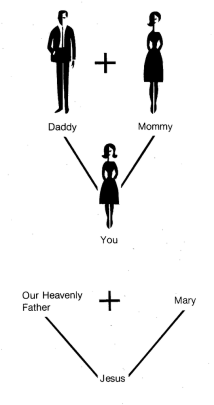
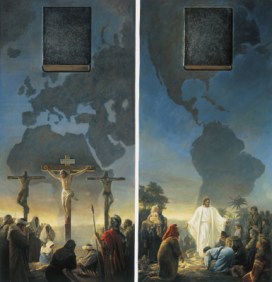
"The History of Redemption in Four Words" by David Arms

“The History of Redemption in Four Words” by David Arms (click to zoom)

by Michael Flournoy
I was born and raised in the Mormon church, served a mission in Anaheim California, and was married in the San Antonio Temple. In 2012 I began a “career” in LDS apologetics when I published a book entitled, “A Biblical Defense of Mormonism.” The book is no longer on the market, but to this day you can find old podcasts of me defending the Mormon church.1 In my mind, Mormonism was 100% true.

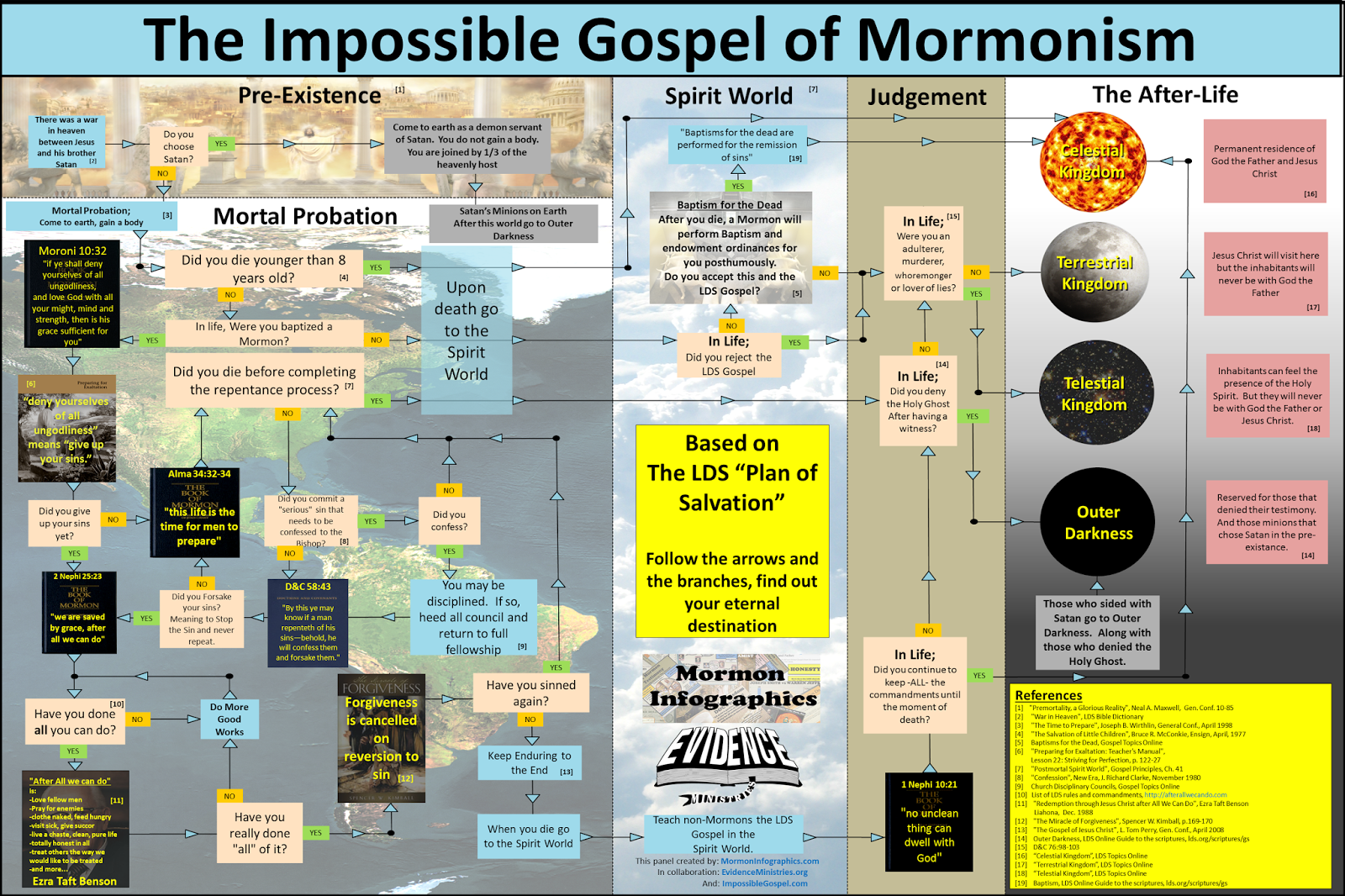
Then I heard the impossible gospel argument, which is based on the conditional statements in 2 Nephi 25:23 and Moroni 10:32.2

“For we labor diligently to write, to persuade our children, and also our brethren, to believe in Christ, and to be reconciled to God; for we know that it is by grace that we are saved, after all we can do.”
— 2 Nephi 25:23

“Yea, come unto Christ, and be perfected in him, and deny yourselves of all ungodliness; and if ye shall deny yourselves of all ungodliness, and love God with all your might, mind, and strength, then is his grace sufficient for you, that by his grace ye may be perfect in Christ; and if by the grace of God ye are perfect in Christ, ye can in nowise deny the power of God.”
— Moroni 10:32

 The impossible gospel argument says these verses teach that grace is only available after the beneficiary has extended every ounce of effort he can muster. According to the Moroni verse, all ungodliness has to be denied before grace becomes sufficient, therefore, according to Mormonism, grace is only for the perfect who don’t need it. The obvious dilemma is nobody’s perfect. I’m not perfect, and you’re not perfect. If you were, there would be no need to take the sacrament. The very act of taking it, is an admission that we have sinned and need to do better. Unfortunately, the Mormon church makes Christ’s admonition to be perfect seem like an attainable goal, when in reality 1 John 1:8 says: If we say that we have no sin, we deceive ourselves, and the truth is not in us.

The impossible gospel argument really got me thinking about how grace works. In Mormonism grace is an enabling power, that strengthens us to overcome our weaknesses little by little. In theory, we might start the week with sins A and B, and if we resolve problem B, we’ll only have A left, and we’ll be that much closer to perfection. Reality, however, is far different. What I noticed, is I might solve sin B, but by the next week I had committed sins C, D, and F. If I stepped back and looked at my life, it wasn’t the stairway to heaven that Mormonism promotes, but rather a roller coaster of highs and lows.

Not one person I knew had denied themselves of all ungodliness. Not one. And being particularly weak myself, I knew that I wasn’t going to be the first normal person to do it. Then something clicked. I stopped thinking “if, then”, and started thinking, “what if?” “What if” Christians are on to something with their doctrine of imputation, and “what if” The Book of Mormon supports it? Imputation, by the way, is the doctrine that during the atonement, our sins were attributed to Christ, and His righteousness was attributed to us. Suddenly I saw 2 Nephi 25:23 and Moroni 10:32 in a new light. Maybe being saved after all we could do didn’t mean keeping every commandment flawlessly. “What if” it simply meant doing the only thing we *could* do: which was throwing ourselves at the feet of Jesus and accepting his mercy?

2 Nephi 25:23 makes a very simple statement: …we are saved by grace… It doesn’t say we are saved by grace and all we can do, it says we are saved by grace after all we can do. So it’s not a question of whether we’re saved by grace alone, but when we’re saved by grace alone. In conjunction with this, the Moroni verse says to “…come unto Christ, and be perfected in him…” That sounds a lot like imputation to me. So “what if” denying yourself of all ungodliness is really just accepting Jesus’ gift of grace? According to the Christian doctrine of imputation, doing so makes us 100% righteous, or “perfected in him” as The Book of Mormon puts it.

The truth is the impossible gospel isn’t a uniquely Mormon problem, it’s the problem for all mankind. We’ve all sinned and accumulated a debt we have no hope of paying on our own. And Jesus’ grace is the only solution to the impossible gospel. I believe the Bible and The Book of Mormon present a unified message about the problem of sin, and its solution.

henk-small

The Problem: from the Bible and The Book of Mormon
The great dilemma we have as human beings is that God will accept nothing less than perfection for admittance into His kingdom, but we have inherited a sin nature from the fall that makes it impossible for us to obey God’s laws 100% of the time.

“Wherefore, if ye have sought to do wickedly in the days of your probation, then ye are found unclean before the judgment-seat of God; and no unclean thing can dwell with God; wherefore, ye must be cast off forever.”
— 1 Nephi 10:21

“Wherefore, all mankind were in a lost and in a fallen state, and ever would be save they should rely on this Redeemer.”
— 1 Nephi 10:6

Nephi, who supposedly wrote these verses, is a prime example of obedience in Mormonism. He is attributed as saying, “I know that the Lord giveth no commandments unto the children of men, save he shall prepare a way for them that they may accomplish the thing which he commandeth them” (1 Nephi 3:7). This verse near the beginning of The Book of Mormon has set the stage for the idea that man is capable of keeping every commandment God gives us, even the admonition to be perfect!

But even Nephi would later state, “O wretched man that I am! Yea, my heart sorroweth because of my flesh, my soul grieveth because of mine iniquities. I am encompassed about, because of the temptations and the sins which do so easily beset me. And when I desire to rejoice, my heart groaneth because of my sins; nevertheless, I know in whom I have trusted” (2 Nephi 4:17-19).

The apostle Paul also calls himself a wretched man after admitting that instead of doing the good things that he should be doing, he’s doing the evil things that he shouldn’t be doing (Romans 7:24). James 2:10 says: “For whosoever shall keep the whole law, and yet offend in one point, he is guilty of all.”

Our sins, whether great or small, are also the instruments of Christ’s death. Our hands are dripping with innocent blood, and our verdict is guilty.

The Answer from the Bible
The Bible makes it very clear that salvation is by the grace of Christ alone.

“For all have sinned, and come short of the glory of God.

Being justified freely by his grace (The Joseph Smith Translation renders it: only by his grace) through the redemption that is in Christ Jesus: whom God hath set forth to be a propitiation through faith in his blood, to declare his righteousness for the remission of sins that are past, through the forbearance of God; to declare, I say, at this time his righteousness: that he might be just, and the justifier of him which believeth in Jesus.

Where is boasting then? It is excluded. By what law? Of works? Nay: but by the law of faith. Therefore we conclude that a man is justified by faith without the deeds of the law.”
— Romans 3:23-28 KJV

“Now to him that worketh is the reward not reckoned of grace, but of debt. But to him that worketh not, but believeth on him that justifieth the ungodly, his faith is counted for righteousness.”
— Romans 4:4-5 KJV

“For by grace are ye saved through faith; and that not of yourselves: it is the gift of God.”
— Ephesians 2:8 KJV

“For he hath made him to be sin for us, who knew no sin; that we might be the righteousness of God in him.”
— 2 Corinthians 5:21 KJV

 Hebrews 10 contrasts the old covenant with the new covenant. In Old Testament times, God’s people were required to make a sin offering once a year. This continued to be necessary year after year, because they continued to sin. As a Mormon, this should sound familiar, as it parallels the practice of taking the sacrament once a week. Regarding the sacrifice of Christ, however, Hebrews 10:12-14 says:

“But this man, after he had offered one sacrifice for sins for ever, sat down on the right hand of God; from henceforth expecting till his enemies be made his footstool. For by one offering he hath perfected for ever them that are sanctified.”
— Hebrews 10:12-14 KJV

Because of his offering, recurring ordinances to wipe away our sins are not necessary.

billy-graham-its-impossible

 The Answer from The Book of Mormon
Surprisingly, The Book of Mormon also has passages that fall in line with this doctrine.

2 Nephi 2:4-7 for example, states:

“And thou hast beheld in thy youth his glory; wherefore, thou art blessed even as they unto whom he shall minister in the flesh; for the Spirit is the same, yesterday, today, and forever. And the way is prepared from the fall of man, and salvation is free. And men are instructed sufficiently that they may know good from evil. And the law is given unto men. And by the law no flesh is justified; or, by the law men are cut off. Yea, by the temporal law they were cut off; and also, by the spiritual law they perish from that which is good, and become miserable forever. Wherefore redemption cometh in and through the Holy Messiah; for he is full of grace and truth. Behold, he offereth himself a sacrifice for sin, to answer the ends of the law, unto all those who have a broken heart and a contrite spirit; and unto none else can the ends of the law be answered.”
— 2 Nephi 2:4-7

 Helaman 8:14-15 says:

“Yea, did he not bear record that the Son of God should come? And as he lifted up the brazen serpent in the wilderness, even so shall he be lifted up who should come. And as many as should look upon that serpent should live, even so as many as should look upon the Son of God with faith, having a contrite spirit, might live, even unto that life which is eternal.”
— Helaman 8:14-15

Alma 37:46 proclaims the ease of living the gospel:

“O my son, do not let us be slothful because of the easiness of the way; for so was it with our fathers; for so was it prepared for them, that if they would look they might live; even so it is with us. The way is prepared, and if we will look we may live forever. ”
— Alma 37:46

Helaman 8:14-15 and Alma 37:46 equate the gospel with looking, and being saved. By comparing salvation in Christ to looking at the brass serpent, salvation becomes an issue of trust and belief, rather than an issue of works and covenants. Also of note, is the conversion of Alma the Younger in Alma 36:16-20 where he says, “And now, for three days and for three nights I was racked, even with the pains of a damned soul. And it came to pass that as I was harrowed up by the memory of my many sins, behold, I remembered also to have heard my father prophesy unto the people concerning the coming of one Jesus Christ, a Son of God, to atone for the sins of the world. Now, as my mind caught hold upon this thought, I cried within my heart: O Jesus, thou Son of God, have mercy on me, who am in the gall of bitterness, and am encircled about by the everlasting chains of death. And now, behold, when I thought this, I could remember my pains no more; yea, I was harrowed up by the memory of my sins no more. And oh, what joy, and what marvelous light I did behold; yea, my soul was filled with joy as exceeding as my pain!”

This conversion story is filled with things we’ve been taught to avoid, like deathbed repentance, praying directly to Jesus, and “easy believism”. Most importantly of all, there’s no mention of a repentance process. The forgiveness and the salvation is instantaneous!

Concerning the doctrine of being born again, The Book of Mormon says in Mosiah 27:25-26:

“And the Lord said unto me: Marvel not that all mankind, yea, men and women, all nations, kindreds, tongues and people, must be born again; yea, born of God, changed from their carnal and fallen state, to a state of righteousness, being redeemed of God, becoming his sons and daughters; and thus they become new creatures; and unless they do this, they can in nowise inherit the kingdom of God.”
— Mosiah 27:25-26

our-impossible-dream-is

Why it’s Important
You may be thinking, “wow, The Book of Mormon really does support the Bible in promoting salvation by grace alone… that proves the Church is true”, but does it?

The truth is, these verses about grace in the Bible and The Book of Mormon deeply oppose the actual doctrines of the LDS Church. Doctrine and Covenants 130:20-21 says:

“There is a law, irrevocably decreed in heaven before the foundations of this world, upon which all blessings are predicated- and when we obtain any blessing from God, it is by obedience to that law upon which it is predicated.”
— D&C 130:20-21

According to this passage, all blessings must be earned. Contrast that with the God of the Bible, who sends rain on the just and the unjust!

Spencer W. Kimball wrote, “One of the most fallacious doctrines originated by Satan and propounded by man is that man is saved alone by the grace of God; that belief in Jesus Christ alone is all that is needed for salvation”
(The Miracle of Forgiveness, p.206).

Joseph Fielding Smith agreed when he said, “One of the most pernicious doctrines ever advocated by man, is the doctrine of ‘justification by faith alone’, which has entered into the hearts of millions since the days of the so-called ‘reformation’” (The Restoration of All Things, p.192).

Even the 3rd article of faith states: We believe that through the atonement of Christ, all mankind may be saved, by obedience to the laws and ordinances of the gospel.

There’s no denying that Mormon doctrine states that we must continuously repent, be baptized, receive the gift of the Holy Ghost, receive our endowments, be sealed for time and eternity, and keep the covenants we make in the temple to inherit the Celestial Kingdom.

Since The Book of Mormon contradicts LDS doctrine, we are left with only two possibilities. First, The Book of Mormon is false, even though it happens to have some Biblical truth, in which case the Church is also false. Or second, The Book of Mormon is true, and therefore the Church is in a state of apostasy. Either way though, if salvation is by grace alone, Mormonism is not necessary.

My Testimony
As I compared Christian doctrine to Mormon doctrine, one thing really began to eat at me. In the LDS Church I was taught that God ‘loves’ everyone. I was also taught that when we fall into sin, the Holy Ghost abandons us until we get our act together. However, in John 10:12-14 Christ says it’s actually the hireling who flees when he sees the wolf coming, because he doesn’t care about the sheep. Jesus, in contrast, is the good shepherd. In 1 Corinthians 13 we read that charity endures all things and never fails. So a god that cannot endure my shortcomings, and fails me when I’m caught in the very teeth of sin, is a god who doesn’t love me.

I for one, would choose the good shepherd over a hireling any day. After all, what power does a sheep have to defend itself when the wolf comes prowling? None.

When I was 16 I attended Especially for Youth, a week-long retreat for teenage Latter-day Saints. One night they showed us a video about Christ. In it, people testified that he had changed them. That night the Holy Spirit revealed Jesus to me for the 1st time. I found myself faced with his perfection and holiness, and as a natural byproduct I think, I was also made aware of my own imperfections, and by comparison, my filthiness.

Mentally I thought, I must be detestable to this Holy God, but simultaneously I was being showered in his love. I was shocked, because I knew I didn’t deserve it, and yet there it was, full and unrestrained, proof that my sins carried no weight when determining God’s love for me. At 16 years old, it was the first time I had ever experienced unconditional love.

There have been so many times I have fallen short of God’s standard, and each time, somewhere in the back of my mind I’ve thought: I’m going to put God on the shelf, just for a moment, and I’m going to choose this instead. But God has never placed me on the shelf. In fact, he placed his glory and his life on the shelf, and he chose me instead.

So how can I not love someone who puts me first, even when my heart is far from him? Someone who has suffered on all points what I have, and who, like me, still has some scars that have never healed? How can I not love someone who has forgiven me 7 times 70 million times? How can I not love someone who went as my proxy through mockery, through scourging, to death on the cross, and who vicariously on my behalf, descended below all things because I owed a debt I couldn’t pay?

I tried, really, really, really tried to find that kind of love, grace, and devotion to the Savior in the current teachings of the Church of Jesus Christ of Latter-day Saints but I couldn’t – I had to look elsewhere. I didn’t want to but I had to. Which is why today I can testify that under his banner there is no condemnation, but love unconditional and grace freely given. And I testify, that His grace is enough.

My name is Michael Flournoy, and I’m a former Latter-day Saint. Today I am a bond servant of Jesus, a humbled recipient of the gift of His possible gospel. I am now a Born Again Christian.

(click to zoom)

(click to zoom)

NOTES
1 See The Mind Renewed, “TMR 110 : Debate : Bobby Gilpin Vs Michael Flournoy : Mormonism & The Gospel”; Premier Christianity, “The Mormon: Why I believe in Jesus Christ Faith Explored”, and; Premier Christian Radio, “Is the Mormon gospel the Biblical gospel?”
2 See Bill McKeever and Eric Johnson, “The Mormon View of Salvation: A Gospel That Is Truly Impossible”, Christian Research Journal, volume 34, number 04 (2011). Also see YouTube Playlist of Videos on the Impossible Gospel of Mormonism (video play list)

BACK TO TOP

ministry_logo-01_EDITED_REDby Fred W. Anson and Jackie Davidson
She was a really nice lady and a wonderful friend. But she wouldn’t stop talking about her “ministry”. He was a really great guy, warm, friendly, outgoing and really, genuinely cared about people. But he couldn’t stop talking about his “ministry”. I could stop right now and you could give us names, places, and “ministries” couldn’t you? That’s right even if we’ve never met, even if we live in different states, go to different churches and are theologically at odds we could both tell each other stories about Christians we’ve known that fit the scenario that I’ve just described. Isn’t that interesting?

Or how about this one?

She had a dramatic, born again experience. Her life was dramatically changed and she became a different person it seemed, almost instantly. There was no doubt that God had intervened like a bolt of lightning and performed a miracle. That was a month or two ago and now she was telling me, “I’ve just got to find my ministry!”

Sound familiar?
Maybe it was you.
Maybe it’s you right now.

Modern American Christians (we can’t speak for other cultures, we don’t know them well enough) are obsessed with finding, having, and growing their “ministry”. The lady that we described in our opening couldn’t tell you if the Book of Hebrews was in the Old or New Testament, couldn’t tell you why the doctrine of the Trinity was important, and thought that Joel Osteen was a wonderful man of God and gifted Bible teacher – and for the record, he’s a heretic. Another lady that we knew was bouncing from one seminary to another trying to get her credential so she could have a public “ministry” and start preaching at churches. All this while divorced and the single mother of two kids who, we suspect, were feeling the neglect that comes from being sacrificed for “ministry”.

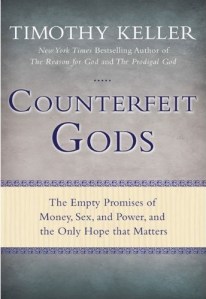
Fred Anson was one of those kids. His father was in many ways a wonderful man but everything and everyone got sacrificed for his “ministry”. As his mother used to say, “Why is he down at the church building repairing a pipe when our pipes are leaking here at home? Why is he over at the house of the co-worker doing a remodel so he can witness to him when our house is falling apart?” And Fred would add, “Why was he always off doing volunteer work for children’s charities rather than explaining to his own kids how to survive in this broken and fallen world?” Oh yes, friends, we know all too well what happens when “ministry” becomes the ultimate thing in a Christian’s life. As well known Presbyterian Pastor Timothy Keller notes:

What is an idol? It is anything more important to you than God, anything that absorbs your heart and imagination more than God, anything you seek to give you what only God can give. . . .

An idol is whatever you look at and say, in your heart of hearts, “If I have that, then I’ll feel my life has meaning, then I’ll know I have value, then I’ll feel significant and secure.” There are many ways to describe that kind of relationship to something, but perhaps the best one is worship.

A counterfeit god is anything so central and essential to your life that, should you lose it, your life would feel hardly worth living.1

"Counterfeit Gods" by Timothy Keller

“Counterfeit Gods” by Timothy Keller

Isn’t this really what’s so often happening with “ministry” these days in modern American Christian culture? We’ve turned a good thing into an ultimate thing – and by doing so have turned it into an idol. Thankfully Keller also gives the solution to the problem:

Idols cannot simply be removed. They must be replaced. If you only try to uproot them, they grow back; but they can be supplanted. By what? By God himself, of course. But by God we do not mean a general belief in his existence. Most people have that, yet their souls are riddled with idols. What we need is a living encounter with God.2

OK, the concept is good but how can we make this real? What worked for us was thinking through this whole “ministry” thing and coming to realize that the the word “ministry” simply means “to function in the office of a servant”. So if we’re “ministering” I’m really doing nothing more than serving – which is biblical, just as Bob Deffinbaugh explains:

The predominant word for ministry in the New Testament is diakoneo (the noun form of which is diakonia). From this root, the term, deacon, (in Greek, diakonos) is derived. One of many possible expressions, it most accurately conveys the New Testament function of ministry. Our Lord and the apostles employed diakoneo to invest ministry with a meaning to both the Jews, and the Greeks.

To the Greeks, there was no dignity in service. In the words of the Greek sophist:

“How can a man be happy when he has to serve someone?”

The only service deemed to be of high value was that rendered in behalf of the state.

How different was our Lord’s concept of the ministry:

“For even the Son of Man did not come to be served (passive form of diakoneo) but to serve (active form of diakoneo), and to give his life as a ransom for many” (Mark 10:45).

Jesus taught His followers that serving was a vital part of discipleship:

“If anyone wants to serve (diakoneo) me, he must follow me, and where I am, my servant (diakonos) will be too. If anyone serves (diakoneo) me, the Father will honor him” (John 12:26).

In the teaching of Jesus, greatness was to be measured in terms of service:

“Jesus called them and said to them, “You know that those who are recognized as rulers of the Gentiles lord it over them, and those in high positions use their authority over them. But it is not this way among you. Instead whoever wants to be great among you must be your servant (diakonos), and whoever wants to be first among you must be the slave of all” (Mark 10:42-44).

All of this invested New Testament ministry with a dignity unimagined by the Greeks of that day.3

So if one wants a “ministry” for any other reason other than out of an attitude of service something isn’t right. Further, the question is this, “service to who?” Trust us, we speak from hard experience when we say that it’s entirely possible to think that you’re serving others when you’re really just serving yourself. And we will state plainly that the praise and gratitude of those people that you help can be intoxicating! It can be easy to serve to get the high that comes from it. And yes, the recognition that one can get from “ministry” have you breathing rarefied air if you’re not careful – you might even start believing that you actually deserve the praise that you’re getting.

So tell me friend, who’s getting the glory there?

And here’s a question: Who gave you the talents that you’re now sharing with others? Remember this?

For the kingdom of heaven is like a man traveling to a far country, who called his own servants and delivered his goods to them. And to one he gave five talents, to another two, and to another one, to each according to his own ability; and immediately he went on a journey.
(Matthew 25:14-15 NKJV)

We are, of course, only speaking to ourselves since we know no one else has ever forgotten or taken for granted the fact that without the Master we would be nothing and have nothing. He owes us nothing, and we owe Him everything. So it’s only logical that when in service our attitude must always be, “He must increase, but I must decrease.” (John 3:30 NKJV) Friend, without Jesus we are nothing!

In the end the real question is this: Why do you need a “ministry” if you have a Master?

Dirck van Baburen, "Christ Washing the Apostles Feet" (c.1616)

Dirck van Baburen, “Christ Washing the Apostles Feet” (c.1616) Here Christian, is the Master’s ministry model.

The Way of The Master
Now here’s the thing about having a Master: He gets to tell you what to do when to do it, and how to do it. And, here’s the part that modern Christians don’t seem to like much, He can tell you when to stop or not do it all. Example, let’s consider the Apostle Paul.

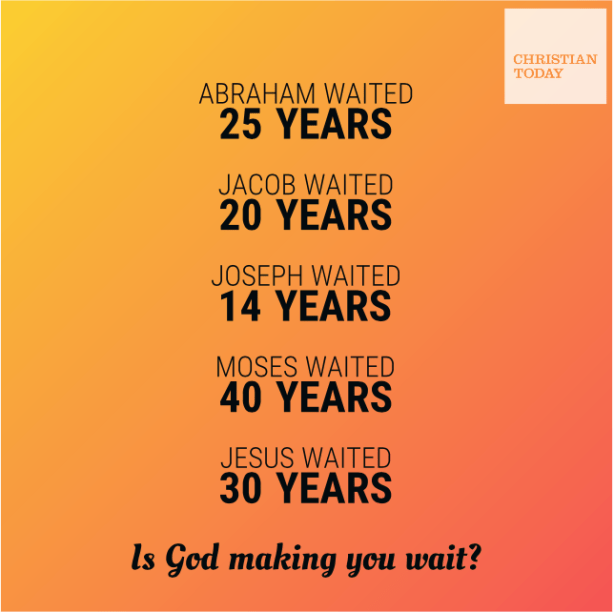
While the exact chronology and dating of the events in the Apostle Paul’s life are still a topic of dispute among biblical scholars,4 the fact remains that there was a significant gap between when Paul became a Christian and when he became a missionary. Remember the Book of Acts covers events that occurred between around 30-62AD.5 That puts Paul’s conversion (Acts 9:1-9) around 33AD and his first call to missions (Acts 13:2-3) at about 47AD. Folks that’s a 14-year gap!

Think about that! Here is a guy who was schooled by one of the most famous and respected Jewish Rabbis not just of his time but of all time, Gamaliel (see Acts 22:3). A man to whom Jesus Christ personally appeared to in a vision and whose life Christ completely overturned and transformed. This is a guy that today would be on the Christian talk show, church, and book circuits within a year or two of his conversion. Yet what was the Master’s bidding during that 14-year period? What “ministry” did he have? Apparently, it was the “ministry” of being trained, equipped, and prepared for what was to come because once the Master said, “Go!” he went – and he performed masterfully when he did.

Still not convinced? Then let’s talk about this guy called Moses who spent 40-years exiled in the wilderness until God called him to his “ministry”.6 Or how about Abraham who had to wait for 19-years from the promise of Isaac until his birth?7 Or, last but not least, how about Christ – God incarnate – who had to wait for 30-years for His “ministry” only to have it last 3-years? The way of the Master is not our way my friend – it’s far better!

Yes, it’s tempting for a new Christian to want to go into some sort of ministry. Baby Christians are on fire for the Lord. They want to spread their new found joy to everyone. And this is especially true for former Mormons or those who come from other works-based religions. Ex-Mormons are used to having their Bishop tell them what to do – and remember in Mormonism if you say no to a calling there will be hell to pay down the road. So when Ex-Mormons become Christian, if they’re asked they just say yes to everything. Their pastor loves it! However, a year later they end up with too many ministries, an overloaded plate, and none of it being done well. Plus they are not doctrinally trained enough to actually minister to others.

And we could talk about all those “zombie” Facebook groups that were started and then abandoned because someone who just had to have a “ministry” created the group on a whim. Then they discovered the hard way that they weren’t equipped to lead or sustain such an endeavor either practically or theologically. So there the group sits, doing nothing, going nowhere, benefiting no one, crickets chirping, existing but not alive. If there were dust, rust, and wood-rot in cyberspace it would be covered with it.8

Finally, since it’s so common, we want to warn our transitioning Mormon friends about well-meaning Christians who will try to turn them into weapons against Mormonism immediately after they leave the LdS Church. This isn’t idle speculation – expect it, it will happen. Simply put, don’t listen to them.

Consider this: Could Christ have had a better weapon than Paul against the apostate Judaism of his day? Or a better weapon than Moses, a former Prince, against pagan Egypt for that matter? Yet the Master waited until they were properly equipped and trained before He missioned them – think about that my friend. We know that it is so, so, so easy to pick up the sword against the LdS Church after you exit and even easier to swing it, but here’s a word of advice learned from hard experience: Don’t.9

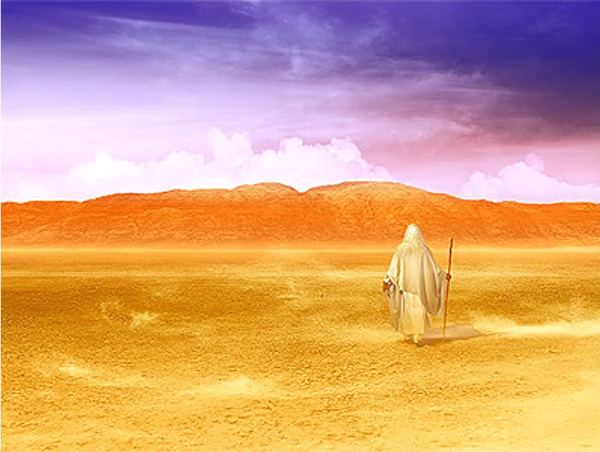
"Moses Flees" (unknown artist)

“Moses Flees” (unknown artist) Can anyone else relate to what Moses must have been feeling here?

Equipping the Saints (and Other Stuff That Everyone Seems to Want to Ignore)
We have seen a lot of harm come from Baby Christians (and sorry Ex-Mormon but after you exit you are a baby Christian no matter how long you were in the LdS Church and what your callings were) who have no firm theological foundation, don’t know their Bible, have no knowledge of proper hermeneutics, Christian Church history, historic Christian orthodoxy, modern Christian culture, or even proper Christian terminology, create a “ministry” for themselves. We have seen them destroy their own faith while they’re destroying the faith of others – usually taking themselves and their parishioners and into the morass of atheism. We have seen them alienate themselves from the community of saints due to their unteachable attitudes and recalcitrant behavior. We have even seen them end their own marriages because they were so driven to have a “ministry” that they ran over their spouse. We have seen them do exactly as Jesus said they would:

“They are blind leaders of the blind. And if the blind leads the blind, both will fall into a ditch.”
(Matthew 15:14 NKJV)

Ironically, even the infidels know better than to act with such folly! One of Fred’s mentors – an apostate, cultural Jew – once challenged him with this, “How do you know what to do about what’s going on until you know what’s going on?” And in a similar vein, a secular, materialist, agnostic mentor, counseled him to, “Do nothing for the first 90-days except watch, listen, and learn. That way you’ll know exactly what to do on day 91.” This, of course, is nothing more than an echo of the biblical wisdom which says:

“Fools think their own way is right,
but the wise listen to others.”
(Proverbs 12:15 NLT)

“A wise man doesn’t display his knowledge,
but a fool displays his foolishness.”
(Proverbs 12:23 TLB)

“Sensible people always think before they act,
but stupid people advertise their ignorance.”
(Proverbs 13:16 GNT)

“Become wise by walking with the wise;
hang out with fools and watch your life fall to pieces.”
(Proverbs 13:20 The Message)

“Fools have no interest in understanding;
they only want to air their own opinions.”
(Proverbs 18:2 NLT)

So you want a ministry? Here’s a tip, change the 90-days to 9-years from Fred’s secular mentor’s advice and wait patiently on the Lord while you’re doing it. And if you have any questions while you’re waiting just open up your Bible and start reading. But trust us, friend, while you’re waiting you will still have plenty to do – life happens!

"Christ Washing The Feet of His Disciples" (unknown artist) Mosiac, Basilica di San Marco, Venice

“Christ Washing The Feet of His Disciples” (unknown artist) Mosiac, Basilica di San Marco, Venice

Equipped But Not Called
It’s also common for mature Christians to try to make those that they haven’t really been called to, a target for “ministry”. They do so by not spending the time required to learn the worldview and theology of the people that they’re approaching. Instead, they just go out and act as if these people are clones of them self. As Nancy Pearcey observes:

What would you think of a missionary in a Muslim country who refused to learn about Muslim culture? He would not be very effective in communicating a biblical message. Cultivating a missional mind-set means being willing to learn both the language and the thought patterns of our mission field.

When Paul said, “I have become all things to all people” (1 Cor. 9:22), he did not mean dressing like the locals. Nor was he embracing cultural relativism. Instead he was taking the assumptions of his audience into consideration in his language and approach. He tried to see the world through their eyes so he could communicate more persuasively.10

The harm that this presumption causes is unbelievable. We have seen one transitioning Mormon after another driven into atheism due to well meaning but ignorant and culturally insensitive Christians disrespecting and offending them in this manner. They figure that if Christians can’t be bothered to learn about them then obviously Christianity doesn’t have anything to say to them. And frankly, we don’t blame them having once been on the receiving end of this closed-minded, myopic, and often bigoted, behavior ourselves. If you have any doubts about this just go up on just about any Mormon/Evangelical internet discussion board and you’ll see it. If that doesn’t do it then go on YouTube and watch the “Street Screechers” driving Mormons away from God and deeper into Mormonism on Temple Square.

Simply put dear mature Christian brother or sister, taking it upon yourself to go into “ministry” without the proper equipping, training, and divine calling is not only poor stewardship of your talents, it can actually harm the very people that you think you’re helping. Whether it’s people in Africa, the homeless, or well to do Ex-Mormons, they are precious souls to be loved and cared for. It is extremely important that the person who is shepherding these people be prepared to shepherd them in accordance with the Golden Rule. And if all this has made you realize that you need more time to prepare yourself for the mission field then just sit back and rest in the arms of the Lord while He prepares you like He did Paul.

Wait on the Lord;
Be of good courage,
And He shall strengthen your heart;
Wait, I say, on the Lord!
(Psalm 27:14 NKJV) 

Have you not known?
Have you not heard?
The everlasting God, the Lord,
The Creator of the ends of the earth,
Neither faints nor is weary.
His understanding is unsearchable.
He gives power to the weak,
And to those who have no might He increases strength.
Even the youths shall faint and be weary,
And the young men shall utterly fall,
But those who wait on the Lord
Shall renew their strength;
They shall mount up with wings like eagles,
They shall run and not be weary,
They shall walk and not faint.
(Isaiah 40:28-31 NKJV)

Further, the Bible tells us both plainly and repeatedly that we are to be under pastoral oversight not just in our ministry but in general.11 Be accountable, be teachable, be shepherded yourself. Never stop researching and pray for God’s guidance constantly. If and when the Master says “Go!” then go. If and when the Master says, “Stop” then stop. If He says, “Speak” then speak. And if He says, “Be quiet” then stop speaking and remain silent. After all, friend this really isn’t your “ministry” at all is it? It’s His, always has been, always will be. So say it with me, dear Christian:

“I have no ministry, I have the Master. And that’s enough.”

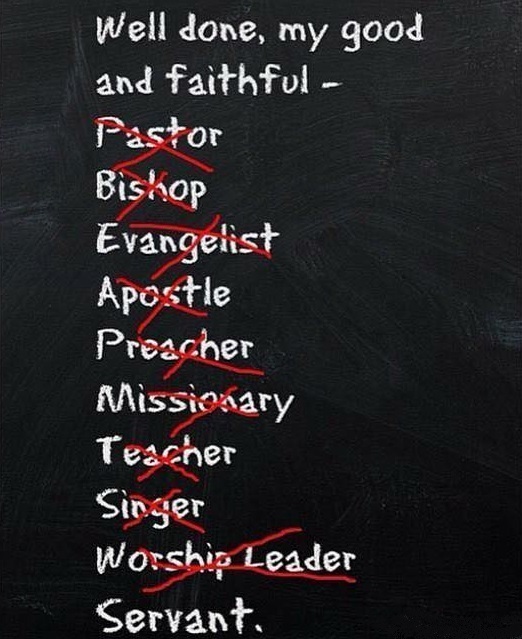
servant

NOTES
1 Timothy Keller, “Counterfeit Gods”, pp.xvii-xviii
2 Ibid, Chapter 7
3 Bob Deffinbaugh, “The Meaning of New Testament Ministry”
4 Timeline of the Apostle Paul
5 Chronology of Acts and the Epistles
6 Exodus Bible Timeline
7 Complete Bible Timeline
8 And by the way, before you start one yourself, speaking as people who have been administrating multiple Facebook groups over a number of years (and have the scars to prove it) please know there’s a reason why they call Internet administration, “feeding the beast” when it comes to providing content and “taming the beast” when it comes to monitoring and administrating it. It’s not for the fainthearted or ill-equipped!
9 Please see Fred W. Anson’s article, “On Taking Up The Sword” for a fuller explanation and caution on this. Want to guarantee that you will remain a Baby Christian forever our newly exited Ex-Mormon friend? No problem, just pick up that sword and start swinging it!
10 Nancy Pearcey, “Finding Truth: 5 Principles for Unmasking Atheism, Secularism, and Other God Substitutes”, p.250, Kindle Edition. In specific regard to Mormonism, the reader may also be interested in Fred Anson’s article, ‘Weak Arguments #9: “I don’t need to understand Mormon culture or learn how to speak like a Mormon…”’
11 Please consider the following:

“Obey your leaders and submit to them, for they are keeping watch over your souls, as those who will have to give an account. Let them do this with joy and not with groaning, for that would be of no advantage to you. Pray for us, for we are sure that we have a clear conscience, desiring to act honorably in all things. I urge you the more earnestly to do this in order that I may be restored to you the sooner. Now may the God of peace who brought again from the dead our Lord Jesus, the great shepherd of the sheep, by the blood of the eternal covenant, equip you with everything good that you may do his will, working in us that which is pleasing in his sight, through Jesus Christ, to whom be glory forever and ever. Amen.”
(Hebrews 13:17-21 ESV) 

“Iron sharpens iron, and one man sharpens another.”
(Proverbs 27:17 ESV)

“Brothers, if anyone is caught in any transgression, you who are spiritual should restore him in a spirit of gentleness. Keep watch on yourself, lest you too be tempted. Bear one another’s burdens, and so fulfill the law of Christ.”
(Galatians 6:1-2 ESV)

“If your brother sins against you, go and tell him his fault, between you and him alone. If he listens to you, you have gained your brother. But if he does not listen, take one or two others along with you, that every charge may be established by the evidence of two or three witnesses. If he refuses to listen to them, tell it to the church. And if he refuses to listen even to the church, let him be to you as a Gentile and a tax collector.”
(Matthew 18:15-17 ESV)

“Therefore, confess your sins to one another and pray for one another, that you may be healed. The prayer of a righteous person has great power as it is working.”
(James 5:16 ESV)

“Two are better than one, because they have a good reward for their toil. For if they fall, one will lift up his fellow. But woe to him who is alone when he falls and has not another to lift him up! Again, if two lie together, they keep warm, but how can one keep warm alone? And though a man might prevail against one who is alone, two will withstand him—a threefold cord is not quickly broken.”
(Ecclesiastes 4:9-12 ESV)

“My brothers, if anyone among you wanders from the truth and someone brings him back, let him know that whoever brings back a sinner from his wandering will save his soul from death and will cover a multitude of sins.”
(James 5:19-20 ESV)

“Therefore, having put away falsehood, let each one of you speak the truth with his neighbor, for we are members one of another.”
(Ephesians 4:25 ESV)

“For I say, through the grace given to me, to everyone who is among you, not to think of himself more highly than he ought to think, but to think soberly, as God has dealt to each one a measure of faith. For as we have many members in one body, but all the members do not have the same function, so we, being many, are one body in Christ, and individually members of one another. Having then gifts differing according to the grace that is given to us, let us use them: if prophecy, let us prophesy in proportion to our faith; or ministry, let us use it in our ministering; he who teaches, in teaching; he who exhorts, in exhortation; he who gives, with liberality; he who leads, with diligence; he who shows mercy, with cheerfulness.”
(Romans 12:3-8 NKJV)

Is God Making You Wait

BACK TO TOP

21-reasons-to-leave-the-mormon-church-03

by Michael Flournoy
Recently an article entitled “21 Reasons it Doesn’t Matter if the Church is True” came out of a popular Mormon website. It lists several reasons, regardless of the truth, that someone might want to be a member of The Church of Jesus Christ of Latter-day Saints. In my opinion, this is mind boggling. The primary reason to join the church, one would think, would be because it is true. While I was serving my mission in Anaheim, California I never told people they should join because we have great casseroles or a famous choir. You know why? Because if the LDS Church is false, none of those things matter! If Mormonism is not true, it is a fraudulent version of Christianity and an enormous sham.

So without further ado, here is my list of 21 reasons leaving the Mormon Church might be a great idea, even if it is true.

1) Formal Dress
It takes 20% longer to get ready for Mormon church…. maybe. Probably. Especially when you factor in all the kids. And really, who wants to be sitting in church with a tie that’s choking you to death the whole time and those starchy, formal clothes? Maybe God doesn’t care what we look like on the outside as much as he looks on the heart.

2) Formal Prayers
Who wants to be spoken to in thees and thous? Someone who’s not very personable, that’s who. In LDS Church literature about prayer, it is often explained that thees and thous are used in prayer because they used to be informal. Well, guess what people? Not anymore! Get with the times!

3) Formal Testimonies
Are you seeing a trend yet? LDS testimonies have so many restrictions on them, that they’ve lost all potency. No “storymonies”, no travelogues, no confessions, etc. This has been done to stop the crazies from going up to the pulpit and wasting hours of our time, but wouldn’t you know it, they go up anyways! And they ignore the restrictions! Last time I attended fast and testimony meeting, a crazy lady got up and shared story after story about nothing at all. The alternative, of course, is the standard, “I know the Church is true, I know Joseph was a prophet, that the Book of Mormon is true, and Jesus is the Christ.” If you think these were the testimonies that defeated the armies of Satan, you’re kidding yourself!

4) Praise to the Man
The very fact that they have a hymn praising Joseph Smith (that they sing on a semi-regular basis) is reason to leave. Especially when you consider that God (allegedly) said in Doctrine and Covenants 25:12 that the song of the righteous is a prayer to Him. Thus, the opening hymn is actually a prayer, and when we sing about Joseph Smith, the opportunity to pray to God is sacrificed.

dying-church-15) Three Hours of Church Services
You read that correctly, three hours of Church.

One …

Two …

Three …

By hour 2.5, are we really still getting spiritually fed? Really?

6) Meetings, Meetings, Everywhere
If you’re unlucky enough to be in leadership in the LDS church, you’re required to go to extra meetings aside from the three hours of church on Sunday. When I was a Ward Mission Leader, I had to attend Ward Council (at 6:30 am, I might add) and I had to conduct a missionary meeting on Thursday evenings. I’ve had meetings go for hours as well, and all this detracts from time with family, and God.

7) Kiss Saturdays Goodbye
I remember once trying to start a soccer league in the ward on Saturday mornings. For whatever reason, it never picked up steam. First, there was the week we had to go put mulch around the church building, then the next week there was that move, then the next week… well, you get the picture. It is physically impossible to do anything not churchy on Saturdays.

8) Judgment/Gossip
If there’s one overarching negative thing about Mormon culture, it’s judgment. Mormonism has a lot of rules, and so there’s a lot of room to judge people for breaking those rules. For example, if I go to church with a Dr. Pepper in my hand, I’ll be judged (by some LDS) for drinking caffeine. I’m also likely to be judged if my kid is dirty, if I come without my spouse, or if I don’t take the sacrament. In fact, this culture of nosiness and judgment causes folks to hide their sins and keep up a very good outward mask of righteousness.

9) The Book of Morm..zzzzz
The Boring of Mundane, oops… The Book of Mormon is the most uninspiring piece of literature on the planet. I’m sorry to say it, but it’s true. There’s a reason most members can’t make it past 2 Nephi. But sadly, Mormons have to pretend that they like it because it just so happens to be the keystone of their religion.

10) King James English
Everything in the Mormon Church is in King James English. The Bible, the Book of Mormon, and every prayer ever said. Unless you’re a huge fan of Shakespeare, this one will drive you nuts!

11) Home/Visiting Teaching
The men and women in the church are generally assigned 2-4 families that they are assigned to go visit once a month. Not only is this extremely awkward, it often doubles as a way for the bishop to spy on families in the ward.

12) Where does the Money Go?
The LDS Church requires members to pay 10% of their incomes and contribute a fast offering once a month. There is, however, no public record of what the church uses that money for.

13) Building Cleaning
One place the church does not use its money for is janitors. Members are required to “volunteer” to clean the church on assigned days. It’s never fun, because most families skip out, leaving the faithful to do an unfair portion of the work.

mormonsuv_edited

(click to zoom)

14) Too Many Children
I like children, I really do. But when there are 100 of them in the pews, with no child care provided, it can turn into quite the choir of loud cries and babbling. Mormons believe they have a duty to bring spirit children into righteous homes, and it can make church seem like a giant day care. Not only that but if you don’t have enough kids, it’s one of those things you could end up judged for.

15) Volunteer Opportunities are Chosen for You
In Mormonism, you don’t get to pick how you’re going to serve in the congregation, it’s chosen for you. You could be given the calling that you absolutely dread (like when I was placed over the ward’s thirty 2-year olds) and you have to do it anyway because it was “inspired”. If you’re bad at it, it’s just a sign that God wants you to grow in that area in your life. Right? Then when you finally get into leadership, you find out that people are chosen for callings out of necessity. What, we need a pianist? Okay, the next person who moves in who can tickle the ivories is our person!

16) Micromanagement
In the religion of agency, everything is chosen for you. You don’t have to think, because what the prophet says is law. You are told where to go to church and when. Even what underwear you put on is chosen for you. Sure, you get to choose between different “styles” of the same brand of underwear, and what seat you take in your required church time, but that’s just the illusion of agency!

17) Children of Gay Parents Cannot be Baptized
The 2nd Article of faith says, “We believe that a man will be punished for their own sins, and not for Adam’s transgression.” Yet the LDS church punishes children due to their parent’s choices, by not allowing them to be baptized, and gain a stronger relationship with God. By so doing, they claim they are protecting the children…. better than God, apparently.

18) Depression
Utah, home of the religion of happiness, has an extremely high suicide rate. Since the church has a no-nonsense stance on keeping the commandments and makes it seem like the easiest thing in the world, everyone who doesn’t measure up finds themselves questioning their self-worth and abilities.

19) BYU Football
Seriously, who wants to be a Mormon when you have such a lame team representing your faith? “B-Y-Lose! B-Y-Lose!”

20) The Word of Wisdom
The Word of Wisdom, according to Doctrine & Covenants 89:2 is not even a commandment, yet the LDS Church has made it a requirement for entering the temple, and therefore to enter heaven. However, Jesus said in Matthew 15:11 that what comes out of a man defiles him, not what goes in. Leaving Mormonism means the freedom to drink tea, caffeine, even a beer once in a while.

21) Jesus
I saved the best for last even though He should be the #1 reason. Jesus was not mentioned in the article that inspired this one, and that’s probably because in Mormon culture Jesus is often left out. I’ve been through entire Sunday worships were the only time Jesus is mentioned is at the close of a prayer! I’ve even seen investigators come to church and ask, “Why doesn’t your church talk about Jesus?” The truth is Jesus deserves to be emphasized, not hidden behind covenants and ordinances!

brooklyn_museum_-_jerusalem_jerusalem_jerusalem_jerusalem_-_james_tissot

“Jerusalem Jerusalem” by James Tissot (1836-1902)

About the Author
Michael Flournoy served a two-year mission for the LDS Church where he helped organize three Mormon/Evangelical dialogues and has participated in debate at the Southwestern Baptist Theological Seminary. Born into Mormonism, Mr. Flournoy converted to Evangelical Christianity in 2016.

BACK TO TOP

lP1aw
“You happily put up with whatever anyone tells you, even if they preach a different Jesus than the one we preach, or a different kind of Spirit than the one you received, or a different kind of gospel than the one you believed.”
— 2 Corinthians 11:4 (NLT) 

by Fred W. Anson
It’s the Christmas season. And like most Christmas seasons Mormon Critics will no doubt set online boards aflame with the accusation that Mormons preach and worship another Jesus. Unfortunately, since the allegation is so often made without any supporting evidence it all too often leaves Latter-day Saint scratching their head in wonder. After all, what other Jesus is there than the one that they’ve been taught and know? Thankfully, some Mormon Leaders have had the integrity to speak the truth:

“As a church we have critics, many of them. They say we do not believe in the traditional Christ of Christianity. There is some substance to what they say”
— Gordon Hinckley, “We look to Christ,” Ensign (Conference Edition), May 2002, p.90

“It is true that many of the Christian churches worship a different Jesus Christ than is worshiped by the Mormons or The Church of Jesus Christ of Latter-day Saints”
— Bernard P. Brockbank, “The Living Christ,” Ensign (Conference Edition), May 1977, p.26

That said, here’s a topical reference that will, hopefully, facilitate discussion between the two sides, give Mormon Critics a place to send their Mormon friends for evidence to support this oft used claim, and help Latter-day Saints understand why the Mormon Jesus isn’t the Jesus preached in the Bible. 

Mormon Jesus:  Is God’s first spirit child – that is, Jesus Christ has not always been God.
Where you’ll find it
Jesus Christ is the firstborn spirit son of God.”

(Doctrines of the Gospel Student Manual”, p.9, Official LdS Church manual)

The first spirit born to our heavenly parents was Jesus Christ.”
(Gospel Principles [1986 edition], p.9, Official LdS Church manual) 

“Among the spirit children of Elohim, the first-born was and is Jehovah, or Jesus Christ, to whom all others are juniors”
(Joseph F. Smith (Mormon President), Gospel Doctrine, p.70; also cited in “Doctrines of the Gospel Student Manual”, 9-10)

“As far as man is concerned, all things center in Christ. He is the Firstborn of the Father. By obedience and devotion to the truth he attained that pinnacle of intelligence which ranked him as a God, as the Lord Omnipotent, while yet in his pre-existent state. As such he became, under the Father, the Creator of this earth and of worlds without number; and he was then chosen to work out the infinite and eternal atonement, to come to this particular earth as the literal Son of the Father, and to put the whole plan of redemption, salvation, and exaltation in operation.”
(Bruce R. McConkie (Mormon Apostle), Mormon Doctrine, p.129; also cited in Doctrines of the Gospel Student Manual”, pp.9–10)

“There is no impropriety, therefore, in speaking of Jesus Christ as the Elder Brother of the rest of humankind. That He is by spiritual birth Brother to the rest of us is indicated in Hebrews: “Wherefore in all things it behoved him to be made like unto his brethren, that he might be a merciful and faithful high priest in things pertaining to God, to make reconciliation for the sins of the people” (Heb. 2:17). Let it not be forgotten, however, that He is essentially greater than any or all others, by reason (1) of His seniority as the oldest or firstborn; (2) of His unique status in the flesh as the offspring of a mortal mother and of an immortal, or resurrected and glorified, Father; (3) of His selection and foreordination as the one and only Redeemer and Savior of the race; and (4) of His transcendent sinlessness.

Jesus Christ is not the Father of the spirits who have taken or yet shall take bodies upon this earth, for He is one of them. He is The Son, as they are sons or daughters of Elohim. So far as the stages of eternal progression and attainment have been made known through divine revelation, we are to understand that only resurrected and glorified beings can become parents of spirit offspring. Only such exalted souls have reached maturity in the appointed course of eternal life; and the spirits born to them in the eternal worlds will pass in due sequence through the several stages or estates by which the glorified parents have attained exaltation.”
(“The Father and the Son: A Doctrinal Exposition by the First Presidency and the Quorum of the Twelve Apostles”, Improvement Era, August 1916; condensed edition reprinted in Ensign, April 2002)

“The Father of Jesus is our Father also. Jesus Himself taught this truth, when He instructed His disciples how to pray: ‘Our Father which art in heaven,’ etc. Jesus, however, is the firstborn among all the sons of God—the first begotten in the spirit, and the only begotten in the flesh. He is our elder brother, and we, like Him, are in the image of God”
(Joseph F. Smith, “Teachings of Presidents of the Church: Joseph F. Smith”, p. 335)

Biblical Jesus: Has always been God and always will be – that is, He had no beginning and has no end.
Where you’ll find it
“In the beginning was the Word, and the Word was with God, and the Word was God.”
(John 1:1, KJV)

“I am Alpha and Omega, the beginning and the ending, saith the Lord, which is, and which was, and which is to come, the Almighty.”
(Revelation 1:8, KJV)

Jesus Tempted In the Desert

Jesus tempted in the desert. According to current Mormon Doctrine these two are brothers. “The Temptation of Christ” by Ary Scheffer (c.1854)

Mormon Jesus: As God’s first spirit child, the Mormon Jesus is the “older brother” with all of God’s other spirit children – which includes you, me, all of humanity, and Lucifer (Satan).
Where you’ll find it
“In the grand council called to ratify the Father’s plan, a great difference arose. The majority, led by the First Born of the Father, our Elder Brother, Jesus the Christ, was ready to accept the plan with all its conditions. The minority, led by Lucifer, a ‘son of the morning,’ feared the isolation and the pains and ills of earth. For them Lucifer proposed that they should be sent to earth, but that provisions should be made by which they would suffer no pain and would not have to make any sacrifices. All of them would be returned with earthly bodies irrespective of their works on earth. This latter plan seemed desirable that one-third of those present favored it, in direct opposition of God’s plan. Lucifer and his followers were thrown out of the council, and as opponents of God’s plan, became the devil and his angels, who strive ever to tempt men to disobey the laws of God.”

(John A. Widtsoe (Mormon Apostle), “Joseph Smith – Seeker After Truth”, pp.156-157

“The importance of not accommodating temptation in the least degree is underlined by the Savior’s example. Did not he recognize the danger when he was on the mountain with his fallen brother, Lucifer, being sorely tempted by that master tempter? [see Matthew 4:1–11.] He could have opened the door and flirted with danger by saying, ‘All right, Satan, I’ll listen to your proposition. I need not succumb, I need not yield, I need not accept – but I’ll listen.’”
(“Pearl of Great Price Student Manual – Religion 327”, chapter entitled, “Moses 1:12 – 23 – Satan Commanded Moses to Worship Him”, Official LdS Church Education System Seminaries and Institute of Religion manual; also see “The Teachings of Spencer W. Kimball”, p.163;  and “Teachings of Presidents of the Church: Spencer W. Kimball”, pp.107-108, Official LdS Church manual)

“Our Father said, ‘Whom shall I send?’ (Abraham 3:27). Two of our brothers offered to help. Our oldest brother, Jesus Christ, who was then called Jehovah, said, ‘Here am I, send me’…”
(“Gospel Principles”, pp.17-18 [1997 edition], NOTE: this passage is missing from the current – that is, 2009 – edition, Official LdS Church manual)

“Satan, who was called Lucifer, also came, saying, ‘Behold, here am I, send me, I will be thy son, and I will redeem all mankind, that one soul shall not be lost, and surely I will do it; wherefore give me thine honor’ (Moses 4:1).” [1997 and 2009 editions]
(“Gospel Principles”, pp.17-18 [1997 and 2009 editions], Official LdS Church manual)

“After hearing both sons speak, Heavenly Father said, ‘I will send the first.’ (Abraham 3:27).”
(“Gospel Principles” p.15 [2009 edition], Official LdS Church manual)

“The appointment of Jesus to be the Savior of the world was contested by one of the other sons of God. He was called Lucifer, son of the morning. Haughty, ambitious, and covetous of power and glory, this spirit-brother of Jesus desperately tried to become the Savior of mankind.”
(Milton R. Hunter (Mormon Seventy), “The Gospel Through the Ages”, p.15

“According to our teachings, Satan and an army of supporters were cast down to earth from the premortal spirit world. They are spirit brothers of ours, and are real persons having spirit bodies.”
(Joseph F. Merrill (Mormon Apostle), “Conference Report”, April 1941, p.49)

Biblical Jesus:  Is the creator of all –  including you, me, all of humanity, and Lucifer (Satan).
Where you’ll find it
“All things were made by him; and without him was not any thing made that was made.”
(
John 1:3, KJV)

“For by him were all things created, that are in heaven, and that are in earth, visible and invisible, whether they be thrones, or dominions, or principalities, or powers: all things were created by him, and for him: And he is before all things, and by him all things consist.”
(Colossians 1:16-17, KJV

Mormon Jesus: Is the literal Son of God begotten by an immortal Father – this doctrine compromises the virgin birth.
Where you’ll find it

“Jesus Christ is the only begotten son of God in the flesh.”
(Doctrines of the Gospel Student Manual”, p.9, Official LdS Church manual)

“That Child to be born of Mary was begotten of Elohim, the Eternal Father, not in violation of natural law but in accordance with a higher manifestation thereof; and, the offspring from that association of supreme sanctity, celestial Sireship, and pure though mortal maternity, was of right to be called the ‘Son of the Highest.’”
(James E. Talmage (Mormon Apostle), Jesus the Christ, p.81; also cited in “Doctrines of the Gospel Student Manual”, pp.9–10)

“We believe absolutely that Jesus Christ is the Son of God, begotten of God, the first-born in the spirit and the only begotten in the flesh; that He is the Son of God just as much as you and I are the sons of our fathers”
(Heber J. Grant (Mormon Prophet), “Analysis of the Articles of Faith,” Millennial Star, January 5, 1922, p.2; also cited in “Doctrines of the Gospel Student Manual”, pp.9–10)

“Christ Not Begotten of Holy Ghost… Christ was begotten of God. He was not born without the aid of Man, and that Man was God!”
(Joseph Fielding Smith (Mormon Prophet), Doctrines of Salvation”, 1:18)

“I am bold to say to you… The Church of Jesus Christ of Latter-day Saints proclaims that Jesus Christ is the Son of God in the most literal sense. The body in which He performed His mission in the flesh was sired by that same Holy Being we worship as God, our Eternal Father. Jesus was not the son of Joseph, nor was He begotten by the Holy Ghost”
(Ezra Taft Benson (Mormon Prophet), “The Teachings of Ezra Taft Benson”, p. 7; “Come unto Christ”, p. 4; “Five Marks of the Divinity of Jesus Christ”, Ensign, Dec. 2001, p.8)

1972-family-home-evening

An official LDS Church manual (Family Home Evening Manual, 1972) carried the above illustration showing the figure of a man, woman, and child on page 126. LDS parents are told they should use this to explain to their children “how Jesus was the only begotten Son of God.” Daddy plus Mommy equals you; Heavenly Father plus Mary equals Jesus.

“You all know that your fathers are indeed your fathers and that your mothers are indeed your mothers you all know that don’t you? You cannot deny it. Now, we are told in scriptures that Jesus Christ is the only begotten Son of God in the flesh. Well, now for the benefit of the older ones, how are children begotten? I answer just as Jesus Christ was begotten of his father. The Christian denominations believe that Christ was begotten not of God but of the spirit that overshadowed his mother. This is nonsense. Why will not the world receive the truth? Why will they not believe the Father when he says that Jesus Christ is His only begotten Son? Why will they try to explain this truth away and make mystery of it? …

“Now, little boys and girls, when you are confronted by infidels in the world who know nothing of how Christ was begotten, you can say he was born just as the infidel was begotten and born, so was Christ begotten by his Father, who is also our Father—the Father of our spirits—and he was born of his mother Mary.

“The difference between Jesus Christ and other men is this: Our fathers in the flesh are mortal men, who are subject unto death; but the Father of Jesus Christ in the flesh is the God of Heaven. Therefore Jesus, as he declared, received the power of life from his Father and was never subject unto death but had life in himself as his father had life in himself. Because of this power he overcame death and the grave and became master of the resurrection and the means of salvation to us all.

“Shall we as Latter-day Saints deny the truth and then claim that God made man in his likeness in the beginning? Shall we come under the impression that God possesses the power of creation, and yet did not literally create? He is not without his companion any more than I am without my companion, the mother of my children…

“Now, by and by you will be able to understand this far better than you can today. Some of us grandparents find it difficult to conceive the truth we want to think of something marvelous. We want to try to make it appear that God does not do things in the right way, or that he has another way of doing things than what we know, we must come down to the simple fact that God Almighty was the Father of His Son Jesus Christ. Mary, the virgin girl, who had never known mortal man, was his mother. God by her begot His son Jesus Christ, and He was born into the world with power and intelligence like that of His Father…

“Now, my little friends, I will repeat again in words as simple as I can, and you talk to your parents about it, that God, the Eternal Father is literally the father of Jesus Christ.

“Mary was married to Joseph for time. No man could take her for eternity because she belonged to the Father of her divine Son. In the revelation that has come thru Joseph Smith, we learn that it is the eternal purpose of God that man and woman should be joined together by the power of God here on earth for time and eternity.”
(Joseph F. Smith (Mormon Prophet) at the Box Elder Stake conference of December 20, 1914, as recorded in the Box Elder News”, January 28, 1915; Hoyt W. Brewster, Jr., Doctrine and Covenants Encyclopedia”, p. 398; Messages of the First Presidency” 4:330)

Biblical Jesus: Was born of a virgin via a miraculous conception. Thus God the Son was incarnated, born, and lived as a human being through that miracle without compromising Mary’s virginity in any way.
Where you’ll find it
“Now the birth of Jesus Christ was on this wise: When as his mother Mary was espoused to Joseph, before they came together, she was found with child of the Holy Ghost…

Now all this was done, that it might be fulfilled which was spoken of the Lord by the prophet, saying, Behold, a virgin shall be with child, and shall bring forth a son, and they shall call his name Emmanuel, which being interpreted is, God with us.”
(Matthew 1:18,22-23, KJV)

Mormon Jesus: Is one of three Gods ruling the universe (among other Gods that also exist)
Where you’ll find it
“The Church’s first article of faith states, “We believe in God, the Eternal Father, and in His Son, Jesus Christ, and in the Holy Ghost.” These three beings make up the Godhead. They preside over this world and all other creations of our Father in Heaven… But where Latter-day Saints differ from other Christian religions is in their belief that God and Jesus Christ are glorified, physical beings and that each member of the Godhead is a separate being.”

(Gospel Topics article on “Godhead”, Official LdS Church website) 

“Latter-day Saints believe in God the Father; his Son, Jesus Christ; and the Holy Ghost (A of F 1). These three Gods form the Godhead, which holds the keys of power over the universe. Each member of the Godhead is an independent personage, separate and distinct from the other two, the three being in perfect unity and harmony with each other (AF, chap. 2).”
(The Encyclopedia of Mormonism, “Godhead” article, p.552)

“I have always declared God to be a distinct personage, Jesus Christ a separate and distinct personage from God the Father, and that the Holy Ghost was a distinct personage and a Spirit: and these three constitute three distinct personages and three Gods. If this is in accordance with the New Testament, lo and behold! we have three Gods anyhow, and they are plural: and who can contradict it!”
(“Teachings of the Prophet Joseph Smith”, p.372; also see History of the Church”, Vol. 6, p. 473) 

Trinity Triangle_edited

The Trinity Triangle: “We believe in the Triune God-Father, Son, and Holy Spirit. This window uses the Latin Pater, Filius, and Spiritus Sanctus to name the persons in the Trinity. One God and Three Persons is a great mystery of the Church. The window explains that the Persons are not each other, but each is God (Deus).”

Biblical Jesus: Is, and always has been, God eternal.
In Biblical Theology God is one, and only one, eternal, omnipotent, omniscient, omnipresent Being that consists of three co-omnipresent, co-omniscient, co-omnipresent persons: God the Father, God the Son, and God the Holy Spirit. As a form of theological short hand, the term “the Trinity” is used to describe His nature. Jesus Christ is the second person of the Trinity, God the Son. While it would require it’s own article to adequately document the biblical case for the doctrine of the Trinity, here are some key proof texts and expository points for it as a kind of appetizer. If you would like the full meal I recommend “The Biblical Basis of the Doctrine of the Trinity” by Rob Bowman. 

Where you’ll find it
“And God said, Let us make man in our image, after our likeness: and let them have dominion over the fish of the sea, and over the fowl of the air, and over the cattle, and over all the earth, and over every creeping thing that creepeth upon the earth.”

(Genesis 1:26, KJV

– Angels do not create.
– We are not made in the image of angels.
– There is no place in the Old Testament where a leader refers to himself with the term “us.”

“Hear, O Israel: The Lord our God is one Lord.
(Deuteronomy 6:4, KJV

– In Hebrew: “shmo ishral ieue alei·nu ieue achd”. And the last Hebrew word “achd” means “united one”.

“Thy throne, O God, is for ever and ever: the sceptre of thy kingdom is a right sceptre. Thou lovest righteousness, and hatest wickedness: therefore God, thy God, hath anointed thee with the oil of gladness above thy fellows.”
(Psalm 45:6-7, KJV

– This is quoted in Heb. 1:8, “But unto the Son he [God] saith, “Thy throne, O God, is forever and ever: a sceptre of righteousness is the sceptre of thy kingdom.”

“Also I heard the voice of the Lord, saying, Whom shall I send, and who will go for us? Then said I, Here am I; send me.”
(Isaiah 6:8, KJV

– Notice the juxtaposition of “Whom shall I send” and “who will go for us?” 

“Go ye therefore, and teach all nations, baptizing them in the name of the Father, and of the Son, and of the Holy Ghost”
(Matthew 28:19, KJV)

– Note that there is one name and three persons.

Jesus-Baptism-Cropped

Apparently John the Baptist was a Freemason (notice the “arm to the square”) and Jesus a modern Mormon (notice the modern baptism grip).

Mormon Jesus: Earned his own salvation.
Where you’ll find it

“Even Christ himself was not perfect at first; he received not a fulness at first, but he received grace for grace, and he continued to receive more and more until he received a fulness”
(Joseph F. Smith, Gospel Doctrine, p.68. See also Teachings of Presidents of the Church: Joseph F. Smith, p.153)

“God the Eternal Father, the Father of the Firstborn and of all the spirit hosts, as an exalted and glorified Being, having all power and dominion, possessing all knowledge and all truth, personifying and being the embodiment of all godly attributes, did, of his own will, ordain and establish the plan of salvation whereby Christ and all his other spirit children might have power to advance and progress and become like him.

(Bruce R. McConkie (Mormon Apostle), “Bruce R. McConkie: Highlights From His Life & Teachings. (Eborn Books Mormon Classics Series, Volume 6)”, p.354)

“These laws [of salvation], instituted by the father, constitute the gospel of God, which gospel is the plan by which all of his spirit children, Christ included, may gain eternal life.”
(Bruce R. McConkie (Mormon Apostle), “Doctrinal New Testament Commentary”, 2:215) 

“Jesus Christ is the Son of God… He came to earth to work out his own salvation.”
(Bruce R. McConkie (Mormon Apostle), “Doctrinal New Testament Commentary”, 3:238) 

Biblical Jesus: As God, Christ required no salvation.
Where you’ll find it
“And ye know that he was manifested to take away our sins; and in him is no sin.”
(
1 John 3:5, KJV)

“For we have not an high priest [that is, Christ] which cannot be touched with the feeling of our infirmities; but was in all points tempted like as we are, yet without sin.”
(
Hebrews 4:15, KJV)

“For he hath made him to be sin for us, who knew no sin; that we might be made the righteousness of God in him”
(2 Corinthians 5:21, KJV

Mormon Jesus:  Christ came to condemn and exact judgment.
Mormon Jesus: Returned to the earth to preach to the Book of Mormon people and start a separate church for them in America.
Where you’ll find it
In the Book of Mormon Jesus descends from the clouds exacting judgment on the cities that he’s condemned due to their unbelief and sin. He then delivers a sermon (comprised mainly of plagiarized text from Isaiah and Matthew’s Sermon on the Mount narrative) that establishes his church on the American continent before ascending to heaven again in anticipation of establishing his eternal kingdom on earth at the end of the age. 

3 Nephi 9:1-22, Book of Mormon
And it came to pass that there was a voice heard among all the inhabitants of the earth, upon all the face of this land, crying:

Wo, wo, wo unto this people; wo unto the inhabitants of the whole earth except they shall repent; for the devil laugheth, and his angels rejoice, because of the slain of the fair sons and daughters of my people; and it is because of their iniquity and abominations that they are fallen!

Behold, that great city Zarahemla have I burned with fire, and the inhabitants thereof.

And behold, that great city Moroni have I caused to be sunk in the depths of the sea, and the inhabitants thereof to be drowned.

And behold, that great city Moronihah have I covered with earth, and the inhabitants thereof, to hide their iniquities and their abominations from before my face, that the blood of the prophets and the saints shall not come any more unto me against them.

(credit: LDS Church)

Christ appears to the Nephites.

And behold, the city of Gilgal have I caused to be sunk, and the inhabitants thereof to be buried up in the depths of the earth;

Yea, and the city of Onihah and the inhabitants thereof, and the city of Mocum and the inhabitants thereof, and the city of Jerusalem and the inhabitants thereof; and waters have I caused to come up in the stead thereof, to hide their wickedness and abominations from before my face, that the blood of the prophets and the saints shall not come up any more unto me against them.

And behold, the city of Gadiandi, and the city of Gadiomnah, and the city of Jacob, and the city of Gimgimno, all these have I caused to be sunk, and made hills and valleys in the places thereof; and the inhabitants thereof have I buried up in the depths of the earth, to hide their wickedness and abominations from before my face, that the blood of the prophets and the saints should not come up any more unto me against them.

And behold, that great city Jacobugath, which was inhabited by the people of king Jacob, have I caused to be burned with fire because of their sins and their wickedness, which was above all the wickedness of the whole earth, because of their secret murders and combinations; for it was they that did destroy the peace of my people and the government of the land; therefore I did cause them to be burned, to destroy them from before my face, that the blood of the prophets and the saints should not come up unto me any more against them.

And behold, the city of Laman, and the city of Josh, and the city of Gad, and the city of Kishkumen, have I caused to be burned with fire, and the inhabitants thereof, because of their wickedness in casting out the prophets, and stoning those whom I did send to declare unto them concerning their wickedness and their abominations.

And because they did cast them all out, that there were none righteous among them, I did send down fire and destroy them, that their wickedness and abominations might be hid from before my face, that the blood of the prophets and the saints whom I sent among them might not cry unto me from the ground against them.

And many great destructions have I caused to come upon this land, and upon this people, because of their wickedness and their abominations.

O all ye that are spared because ye were more righteous than they, will ye not now return unto me, and repent of your sins, and be converted, that I may heal you?

Yea, verily I say unto you, if ye will come unto me ye shall have eternal life. Behold, mine arm of mercy is extended towards you, and whosoever will come, him will I receive; and blessed are those who come unto me.

Behold, I am Jesus Christ the Son of God. I created the heavens and the earth, and all things that in them are. I was with the Father from the beginning. I am in the Father, and the Father in me; and in me hath the Father glorified his name.”

I came unto my own, and my own received me not. And the scriptures concerning my coming are fulfilled.

And as many as have received me, to them have I given to become the sons of God; and even so will I to as many as shall believe on my name, for behold, by me redemption cometh, and in me is the law of Moses fulfilled.

thesecondcoming_2560x1600

The Mormon view of the second coming. This is separate and distinct from him coming to the Nephites in the Book of Mormon.

I am the light and the life of the world. I am Alpha and Omega, the beginning and the end.

And ye shall offer up unto me no more the shedding of blood; yea, your sacrifices and your burnt offerings shall be done away, for I will accept none of your sacrifices and your burnt offerings.

And ye shall offer for a sacrifice unto me a broken heart and a contrite spirit. And whoso cometh unto me with a broken heart and a contrite spirit, him will I baptize with fire and with the Holy Ghost, even as the Lamanites, because of their faith in me at the time of their conversion, were baptized with fire and with the Holy Ghost, and they knew it not.

Behold, I have come unto the world to bring redemption unto the world, to save the world from sin.

Therefore, whoso repenteth and cometh unto me as a little child, him will I receive, for of such is the kingdom of God. Behold, for such I have laid down my life, and have taken it up again; therefore repent, and come unto me ye ends of the earth, and be saved.”

Biblical Jesus: Came to save, not condemn the world.
Where you’ll find it
“For God so loved the world, that he gave his only begotten Son, that whosoever believeth in him should not perish, but have everlasting life. For God sent not his Son into the world to condemn the world; but that the world through him might be saved.”
(John 3:16-17, KJV)

Biblical Jesus: The physical return of Christ is still to come, there have been no physical returns since His ascension.
Where you’ll find it
“Which also said, Ye men of Galilee, why stand ye gazing up into heaven? this same Jesus, which is taken up from you into heaven, shall so come in like manner as ye have seen him go into heaven.”
(Acts 1:11, KJV

“Behold, he cometh with clouds; and every eye shall see him, and they also which pierced him: and all kindreds of the earth shall wail because of him. Even so, Amen.”
(Revelation 1:7, KJV

So Christ was once offered to bear the sins of many; and unto them that look for him shall he appear the second time without sin unto salvation.
(Hebrews 9:28, KJV)

When the Son of man shall come in his glory, and all the holy angels with him, then shall he sit upon the throne of his glory: And before him shall be gathered all nations: and he shall separate them one from another, as a shepherd divideth his sheep from the goats.
(Matthew 25:31-32, KJV

For the Lord himself shall descend from heaven with a shout, with the voice of the archangel, and with the trump of God: and the dead in Christ shall rise first: Then we which are alive and remain shall be caught up together with them in the clouds, to meet the Lord in the air: and so shall we ever be with the Lord.
(1 Thessalonians 4:16-17, KJV

“For the Son of man shall come in the glory of his Father with his angels; and then he shall reward every man according to his works.”
(Matthew 16:27, KJV

And then shall appear the sign of the Son of man in heaven: and then shall all the tribes of the earth mourn, and they shall see the Son of man coming in the clouds of heaven with power and great glory.
(Matthew 24:30, KJV

he-atoned-eng-large

The Latter-day Saint version of the atonement

Mormon Jesus: Accomplished the Atonement primarily in the garden of Gethsemane.
Where you’ll find it
“For behold, I, God, have suffered these things for all, that they might not suffer if they would repent; But if they would not repent they must suffer even as I; Which suffering caused myself, even God, the greatest of all, to tremble because of pain, and to bleed at every pore, and to suffer both body and spirit—and would that I might not drink the bitter cup, and shrink—Nevertheless, glory be to the Father, and I partook and finished my preparations unto the children of men.”
(Doctrine & Covenants 19:17-19

“And lo, he shall suffer temptations, and pain of body,hunger, thirst, and fatigue, even more than man can suffer, except it be unto death; for behold, blood cometh from every pore, so great shall be his anguish for the wickedness and the abominations of his people. And he shall be called Jesus Christ, the Son of God, the Father of heaven and earth, the Creator of all things from the beginning; and his mother shall be called Mary.”
(Mosiah 3:7-8)

“Where and under what circumstances was the atoning sacrifice of the Son of God made? Was it on the Cross of Calvary or in the Garden of Gethsemane? It is to the Cross of Christ that most Christians look when centering their attention upon the infinite and eternal atonement. And certainly the sacrifice of our Lord was completed when he was lifted up by men; also, that part of his life and suffering is more dramatic and, perhaps, more soul stirring. But in reality the pain and suffering, the triumph and grandeur, of the atonement took place primarily in Gethsemane”
(Bruce R. McConkie (Mormon Apostle), “Doctrinal New Testament Commentary” 1:774)

“Thankfully, Jesus Christ courageously fulfilled this sacrifice in ancient Jerusalem. There in the quiet isolation of the Garden of Gethsemane, He knelt among the gnarled olive trees, and in some incredible way that none of us can fully comprehend, the Savior took upon Himself the sins of the world”
(M. Russell Ballard (Mormon Apostle), “The Atonement and the Value of One Soul”, Ensign, May 2004, p.85)

“As terrible as Christ’s suffering on the cross was, perhaps it was not as great as His suffering in Gethsemane. When he sweat drops of blood as He bore the weight of all the sins of mankind, the great agony of the Atonement took place”
(Joseph C. Winther, “Because of His Love”, Ensign, April 2002, p.19)

El-Greco-Christ-on-the-cross-2

The biblical version of the atonement. “Christ on the Cross” by El Greco (c.1577 – 1579)

Biblical Jesus: Procured our atonement or redemption specifically by his death on the cross.
Where you’ll find it
“Even as the Son of man came not to be ministered unto, but to minister, and to give his life a ransom for many.”
(Matthew 20:28, KJV)

“For when we were yet without strength, in due time Christ died for the ungodly. For scarcely for a righteous man will one die: yet peradventure for a good man some would even dare to die.”
(Romans 5:6-10, KJV)

“For the preaching of the cross is to them that perish foolishness; but unto us which are saved it is the power of God.”
(1 Corinthians 1:18, KJV)

“For I determined not to know any thing among you,save Jesus Christ, and him crucified.”
(1 Corinthians 2:2, KJV)

“For I delivered unto you first of all that which I also received, how that Christ died for our sins according to the scriptures; And that he was buried, and that he rose again the third day according to the scriptures.”
(1 Corinthians 15:3-4, KJV)

“And that he might reconcile both unto God in one body by the cross, having slain the enmity thereby.”
(Ephesians 2:16, KJV)

“And, having made peace through the blood of his cross, by him to reconcile all things unto himself; by him, I say, whether they be things in earth, or things in heaven.”
(Colossians 1:20, KJV)

“Who his own self bare our sins in his own body on the tree, that we, being dead to sins, should live unto righteousness: by whose stripes ye were healed.”
(1 Peter 2:24, KJV)

Mormon Jesus: Is never supposed to be directly prayed to.
Where you’ll find it
There need not be any confusion in our minds regarding these important things. It is important that we should know something about the Being whom we worship—the Father, for it is the Father whom we worship. We do not pray to the Son nor to the Holy Ghost; we pray to the Father, in the name of Jesus Christ, the Son, under the influence and guidance of the Holy Ghost.”
(Charles W. Penrose (Mormon Apostle), General Conference, April 1915)

“The Lord Jesus Christ teaches us to pray and covenants that answers will be forthcoming. “Therefore ye must always pray unto the Father in my name,” He declares (3 Ne. 18:19). “Pray in your families unto the Father, always in my name, that your wives and your children may be blessed” (3 Ne. 18:21).”
(L. Edward Brown (Mormon Seventy) , “Pray unto the Father in My Name”, General Conference, April 1997)

Bloch Christ the Consoler

“Christ the Consoler” by Carl Heinrich Bloch (19th Century)

Biblical Jesus: Receives both worship and prayers.
Where you’ll find it
“For there is no difference between the Jew and the Greek: for the same Lord over all is rich unto all that call upon him. For whosoever shall call upon the name of the Lord shall be saved”
(Romans 10:12-13, KJV)

“If you ask me anything in my name, I will do it”
(John 14:14, ESV)

“These things have I written unto you that believe on the name of the Son of God; that ye may know that ye have eternal life, and that ye may believe on the name of the Son of God. And this is the confidence that we have in him, that, if we ask any thing according to his will, he heareth us: And if we know that he hear us, whatsoever we ask, we know that we have the petitions that we desired of him.
(1 John 5:13-15, KJV)

Mormon Jesus: Is only one of many Saviors.
Where you’ll find it
“We are not the only people that the Lord has created. We have brothers and sisters on other earths. They look like us because they, too, are the children of God and were created in his image, for they are also his offspring”

(Joseph Fielding Smith (Mormon President), “Doctrines of Salvation” 1:62)

“Sin is upon every earth that ever was created … Consequently every earth has its redeemer, and every earth has its tempter”
(Brigham Young (Mormon President), “Journal of Discourses Volume 14”, p.71)

Biblical Jesus: Is the one and only Savior.
Where you’ll find it
 Jesus saith unto him, I am the way, the truth, and the life: no man cometh unto the Father, but by me.”

(John 14:6, KJV)

“For there is one God, and one mediator between God and men, the man Christ Jesus.”
(1 Timothy 2:5, KJV)

“Neither is there salvation in any other: for there is none other name under heaven given among men, whereby we must be saved.”
(Acts 4:12, KJV)

The First Vision

Stained glass depiction of the first vision of Joseph Smith, Jr., completed in 1913 by an unknown artist (Museum of Church History and Art)

Mormon Jesus: Appeared to Joseph Smith, condemned all existing churches, and restored the only true church in what is known as “The First Vision”.
Where you’ll find it
“When the light rested upon me I saw two Personages, whose brightness and glory defy all description, standing above me in the air. One of them spake unto me, calling me by name and said, pointing to the other—This is My Beloved Son. Hear Him!

My object in going to inquire of the Lord was to know which of all the sects was right, that I might know which to join. No sooner, therefore, did I get possession of myself, so as to be able to speak, than I asked the Personages who stood above me in the light, which of all the sects was right (for at this time it had never entered into my heart that all were wrong)—and which I should join.

I was answered that I must join none of them, for they were all wrong; and the Personage who addressed me said that all their creeds were an abomination in his sight; that those professors were all corrupt; that: “they draw near to me with their lips, but their hearts are far from me, they teach for doctrines the commandments of men, having a form of godliness, but they deny the power thereof.”

He again forbade me to join with any of them; and many other things did he say unto me, which I cannot write at this time. When I came to myself again, I found myself lying on my back, looking up into heaven. When the light had departed, I had no strength; but soon recovering in some degree, I went home.”
(Joseph Smith – History 1:17-20, The Pearl of Great Price

Biblical Jesus: Stated that He alone was true and that the gates of hell would not prevail against His Church.
Ignoring the fact that not only is there no evidence that the First Vision ever happened; an abundance of evidence that it was contrived embellished by Joseph Smith over time (see “A Documented History of Joseph Smith’s First Vision”); and the fact that it contradicts the Book of Mormon and the Bible in regard to the nature of God (see “Joseph’s doctrine of the Godhead changed”), it also contradicts the Bible in the following ways:

  1. Christ said that He is true. He never claimed in the Bible that His Church was. He further claimed that the way to the Father was by Him not His Church.
    “Jesus saith unto him, I am the way, the truth, and the life: no man cometh unto the Father, but by me.”
    (John 14:6, KJV
  2. Christ said that the gates of hell would not prevail against His Church:
    “I will build my church; and the gates of hell shall not prevail against it.”
    (Matthew 16:18, KJV)
    This contradicts Christ’s words in the First Vision that, “they were all wrong”.
  3. Finally, the Book of Revelation shows Christ working to reform not replace errant churches (see Revelation 2:1-3:22, KJV). 
JST_EDITED

Room in Johnson home where Joseph Smith worked on The Joseph Smith Translation of the Bible

Mormon Jesus: Some of Jesus’ statements and acts in scripture must be revised according to Joseph Smith’s revelations.
Mormonism accepts the Gospels and their reports of Jesus’ sayings and miracles. However, Joseph Smith felt that the Bible had been corrupted and that its text was unreliable, so he produced his own version of the Bible (called the Joseph Smith Translation or “JST”). Most of his changes were additions to the text, but in some cases Joseph deleted words and even rewrote Jesus’ sayings and acts to fit his own theology. This was done despite any source, original language manuscript support to justify them. Here are some examples:

“God is spirit” (John 4:24, KJV)
“For unto such hath God promised his spirit” (John 4:26, JST)

“Woe unto you, lawyers! for ye have taken away the key of knowledge: ye entered not in yourselves, and them that were entering in ye hindered.” (Luke 11:52, KJV)

“Woe unto you, lawyers! for ye have taken away the key of knowledge, the fulness of the scriptures” (Luke 11:52, JST)

“for they shall be filled.” (Matthew 5:6, KJV)
“for they shall be filled with the Holy Ghost.” (Matthew 5:8, JST) 

“Ye are the salt of the earth” (Matthew 5:13, KJV) 
“I give unto you to be the salt of the earth” (Matthew 5:15, JST) 

“Ye are the light of the world” (Matthew 5:14, KJV) 
“I give unto you to be the light of the world” (Matthew 5:16, JST) 

“When Jesus heard it, he marvelled, and said to them that followed” (Matthew 8:10, KJV) 
“And when they that followed him, heard this, they marvelled” (Matthew 8:9, JST) 

“be ye therefore wise as serpents” (Matthew 10:16, KJV) 
“be ye therefore wise servants” (Matthew 10:14, JST) 

mormon-bible-book

“Scriptures” by Grant Heaton

“and forthwith they sprung up, because they had no deepness of earth: And when the sun was up, they were scorched” (Matthew 13:5–6, KJV)

“and forthwith they sprung up; and when the sun was up, they were scorched, because they had no deepness of earth” (Matthew 13:5, JST) 

“the which when a man hath found, he hideth” (Matthew 13:44, KJV) 
“And when a man hath found a treasure which is hid, he secureth it” (Matthew 13:46, JST) 

“teaching for doctrines the commandments of men.” (Matthew 15:9, KJV)
“teaching the doctrines and the commandments of men.” (Matthew 15:8, JST) 

“as touching any thing that they shall ask, it shall be done for them” (Matthew 18:19, KJV)
 “as touching any thing that they shall ask, that they may not ask amiss, it shall be done for them” (Matthew 18:19, JST) 

“Verily I say unto you, I know you not.” (Matthew 25:12, KJV)
“Verily I say unto you, Ye know me not.” (Matthew 25:11, JST) 

“For unto every one that hath shall be given, . . . but from him that hath not shall be taken away even that which he hath.” (Matthew 25:29, KJV) 

“For unto every one who hath obtained other talents, shall be given. . . . But from him that hath not obtained other talents, shall be taken away even that which he hath received.” (Matthew 25:29–30, JST) 

“and were all baptized of him” (Mark 1:5, KJV) 
“and many were baptized of him” (Mark 1:4, JST) 

“except they wash, they eat not.” (Mark 7:4, KJV) 
“except they wash their bodies, they eat not.” (Mark 7:4, JST) 

“There shall no sign be given unto this generation.” (Mark 8:12, KJV) 
“There shall no sign be given unto this generation, save the sign of the prophet Jonah” (Mark 8:12, JST) 

“And Peter answereth and saith unto him, Thou art the Christ.” (Mark 8:29, JST) 
“And Peter answered and said unto him, Thou art the Christ, the Son of the living God.” (Mark 8:31, JST) 

bible-book-of-mormon-39683-gallery

“The Bible and the Book of Mormon Testify of Christ” by Greg K. Olsen

“for whosoever hath, to him shall be given; and whosoever hath not” (Luke 8:18, KJV)

“for whosoever receiveth, to him shall be given; and whosoever receiveth not” (Luke 8:18, JST) 

“passed by on the other side.” (Luke 10:32, KJV)

“passed by on the other side of the way; for they desired in their hearts that it might not be known that they had seen him.” (Luke 10:33, JST) 

“we have done that which was our duty to do.” (Luke 17:10, KJV)
“We have done that which was no more than our duty to do.” (Luke 17:10, JST) 

“And ye shall be hated of all men for my name’s sake.” (Luke 21:17, KJV) 
“And ye shall be hated of all the world for my name’s sake.” (Luke 21:16, JST) 

“that he may sift you as wheat” (Luke 22:31, KJV) 
“that he may sift the children of the kingdom as wheat.” (Luke 22:31, JST) 

“and no man receiveth his testimony.” (John 3:32, KJV) 
“and but few men receive his testimony.” (John 3:32, JST) 

“If I bear witness of myself, my witness is not true.” (John 5:31, KJV) 
“Therefore if I bear witness of myself, yet my witness is true.” (John 5:32, JST) 

“which the Son of man shall give unto you” (John 6:27, KJV) 
“which the Son of Man hath power to give unto you” (John 6:27, JST) 

“Neither do I condemn thee: go, and sin no more.” (John 8:11, KJV)
“Neither do I condemn thee: go, and sin no more. And the woman glorified God from that hour, and believed on his name.” (John 8:11, KJV) 

“ye did not hear: wherefore would ye hear it again?” (John 9:27, KJV) 
“ye did not believe: wherefore would you believe if I should tell you again?” (John 9:27, JST) 

Biblical Jesus: Upheld and affirmed God’s revelation of Himself in scripture as divinely inspired, reliable, and authoritative.
The Bible is clear that claiming inspiration from God and speaking in His voice when God has not authorized it or given you the words to speak makes you are a False Prophet. The Bible gives several tests for a False Prophet that involve testing the content of claimed prophetic utterances against God’s existing revelation of Himself. If there’s a contradiction, then the person speaking isn’t speaking God’s words, or with God’s authority – their source is something other than God. While this principle can be found throughout the Bible, here are some key passages:

“Add thou not unto His words, lest He reprove thee, and thou be found a liar”
(Proverbs 30:6, KJV)

“If there arise among you a prophet, or a dreamer of dreams, and giveth thee a sign or a wonder, and the sign or the wonder come to pass, whereof he spake unto thee, saying, Let us go after other gods, which thou hast not known, and let us serve them; Thou shalt not hearken unto the words of that prophet, or that dreamer of dreams: for the Lord your God proveth you, to know whether ye love the Lord your God with all your heart and with all your soul. Ye shall walk after the Lord your God, and fear him, and keep his commandments, and obey his voice, and ye shall serve him, and cleave unto him.

And that prophet, or that dreamer of dreams, shall be put to death; because he hath spoken to turn you away from the Lord your God, which brought you out of the land of Egypt, and redeemed you out of the house of bondage, to thrust thee out of the way which the Lord thy God commanded thee to walk in. So shalt thou put the evil away from the midst of thee.” (Deuteronomy 13:1-5, KJV) 

But the prophet, which shall presume to speak a word in my name, which I have not commanded him to speak, or that shall speak in the name of other gods, even that prophet shall die.

And if thou say in thine heart, How shall we know the word which the Lord hath not spoken?

When a prophet speaketh in the name of the Lord, if the thing follow not, nor come to pass, that is the thing which the Lord hath not spoken, but the prophet hath spoken it presumptuously: thou shalt not be afraid of him.” (Deuteronomy 18:20-22, KJV) 

“You shall not add to the word which I command you, nor take anything from it” (Deuteronomy 4:2, KJV) 

“For I testify unto every man that heareth the words of the prophecy of this Book, If any man shall add unto these things, God shall add unto him the plagues that are written in this Book: And if any man shall take away from the words of the Book of this prophecy, God shall take away his part out of the Book of Life, and out of the holy city, and from the things which are written in this Book” (Revelation 22:18-19, KJV)

“All scripture is given by inspiration of God, and is profitable for doctrine, for reproof, for correction, for instruction in righteousness: That the man of God may be perfect, thoroughly furnished unto all good works.” (2 Timothy 3:16-17, KJV)

“The entirety of Your word is truth.” (Psalms 119:160, KJV)

“Every word of God is pure; he is a shield to those who put their trust in Him.” (Proverbs 30:5-6, KJV)

Jesus-1

Credits and bibliography:
Mormonism Research Ministry,
“Temple Square Visitor’s Guide”, p.4
Bill McKeever and Aaron Shafovaloff, Redefining the Virgin Birth: Mormonism on the Natural Conception of Jesus”
Grant Palmer, The Ancient Paths – 2nd Interview with Grant Palmer, Former LDS Institute Director”
Rob Bowman, “The Mormon View of Jesus Christ”
Matt Slick, “Verses showing the plurality of God in the Old and New Testaments”
Michael Davis, “References: Mormon vs Biblical Teachings about Jesus
Thomas E. Sherry and W. Jeffrey Marsh, “Precious Truths Restored: Joseph Smith Translation Changes Not Included in Our Bible”

BACK TO TOP

Lt General Joseph Smith

Lieutenant General Joseph Smith, Commander in Chief of the Nauvoo Legion.

by Bob Betts
One of the signature virtues of true Christians is loving our enemies. In Matthew 5:43-45 (KJV) Jesus taught His followers, “Ye have heard that it hath been said, Thou shalt love thy neighbour, and hate thine enemy. But I say unto you, Love your enemies, bless them that curse you, do good to them that hate you, and pray for them which despitefully use you, and persecute you; That ye may be the children of your Father which is in heaven.” No doubt, Joseph Smith had many enemies wherever he went, from local neighbors, to dissident Mormons, to the highest levels of state and federal governments. How did Joseph Smith respond? Did he love them? Did he bless them? Did he do good to them? Did he pray for them? Or, did he speak and act vengefully against them, and attempt to silence Mormon dissidents? In this article, I explore some of the reasons why Joseph Smith had so many enemies, but more about whether or not his treatment of them was in obedience to Christ’s command.

In the book “The 1838 Mormon War in Missouri”, Mormon author Stephen C. LeSueur explained the atmosphere and mood between both Mormon and Missourian vigilantes, “In Caldwell County [Missouri], Mormon leaders dominated local politics, while the Danites, a secret Mormon vigilante organization, enforced religious orthodoxy, thus reinforcing the Missourians’ perception of Mormonism as a fanatic and un-American religion. The Mormon army and the Danite band inspired a terrific fear among the non-Mormon settlers, who regarded the Mormon soldiers as ruthless cutthroats. Although Mormon military action was generally initiated in response to reports of violence, the Mormons tended to overreact and in some instances retaliate against innocent citizens. Their perception of themselves as the chosen people, their absolute confidence in their leaders, and their determination not to be driven out led Mormon soldiers to commit numerous crimes. The Mormons had many friends among the Missourians, but their military operations undercut their support in the non-Mormon communities. In the introduction to his book Mr. LeSueur observes:

“The degree of Joseph Smith’s complicity in the Mormon military activities has long been debated by historians. Evidence now available, however, demonstrates that he directed much of the plundering and burning committed by Mormon soldiers in Daviess County [Missouri]. He viewed these actions necessary for the defense of his people. In addition, Smith and other Mormon leaders knew and approved of the activities of the Danite organization, including the forcible expulsion of [Mormon] dissenters from the Mormon county of Caldwell. Mormon leaders justified the Danite actions with the claim that a republican people have the right to remove undesirable citizens from their communities– the same principle cited by the Missourians to expel the Mormons.” (Stephen C. LeSueur, “The 1838 Mormon War in Missouri”, p. 4) 

And just what was that Danite organization that Joseph Smith directed? Stephen C. LeSueur wrote, “A group of Mormons met secretly in Far West [Missouri] to discuss how to get rid of [Mormon] dissenters. The group adopted the name Daughters of Zion, which they later changed to Sons of Dan, or Danites” (page 38). On page 39, LeSueur continued, “The expulsion of these [Mormon dissenters] from Far West reflected a growing militant spirit among the Mormons, revealed a rigid intolerance for those who opposed their practices and teachings, and demonstrated their willingness to circumvent the law to protect their interests.”

In the third chapter, page 50, LeSueur records that Sidney Rigdon gave a speech on July 4, 1838, which “Joseph Smith and his counselors had carefully prepared…and afterward had it published and distributed to their people. (p. 51)” In that speech, enemies of the Church who would come against it were warned, “The man or the set of men, who attempts it, does it at the expense of their lives. And, that mob that comes on us to disturb us; it shall be between us and them a war of extermination, for we will follow them, till the last drop of their blood is spilled, or else they will have to exterminate us; for we will carry the seat of war to their own houses, and their own families, and one party or the other shall be utterly destroyed–Remember it then all Men.” Joseph Smith dictated an oration threatening a war of extermination. In it’s text, Joseph Smith promised to hunt down men in order to spill every last drop of their blood. Even to go after their families. These actions are a total violation of Christ’s command in Matthew 5.

General Joseph Smith with Sword

General Joseph Smith with Sword

Joseph Smith followed up with an article in the Elders’ Journal, page 54, “We are absolutely determined no longer to bear [persecution], come life or come death, for to be mobed (sic) any more without taking vengeance, we will not.” These are the documented words of Joseph Smith. Were these the words of a Christian man, who was obeying a fundamental command of Jesus Christ? Romans 12:19 (KJV) “Dearly beloved, avenge not yourselves, but rather give place unto wrath: for it is written, Vengeance is mine; I will repay, saith the Lord.”

Curiously, Stephen C. LeSueur wrote,

“The evidence suggests, however, that the Mormon leaders’ fear of violence was exaggerated, even unfounded, at that time. The journals and reminiscences of the Saints do not mention any trouble with non-Mormons prior to the Fourth of July oration. W. W. Phelps testified that throughout the summer and fall he received assurances from the citizens of Ray and Clay counties that no mobs were being raised against the Saints in the quarter. William Swartzell, a Mormon resident of Diahman, recorded that the Mormons were the only ones talking about mobs at this time–he had heard nothing from the Missourians. In later years, Mormon leaders such as Brigham Young, Wilford Woodruff [fourth LDS prophet], [LDS apostles] Orson Hyde and Jedediah M. Grant condemned Rigdon’s speech as a foolish and overly aggressive statement of Mormon rights that unnecessarily provoked anti-Mormon violence.” (Stephen C. LeSueur, “The 1838 Mormon War in Missouri”, p. 51)  

And, who wrote that speech? None other than Joseph Smith and his counselors.

In Matthew 5:38-39 (KJV), Jesus also taught, “You have heard that it was said, ‘Eye for eye, and tooth for tooth.’ But I tell you, Do not resist an evil person. If someone strikes you on the right cheek, turn to him the other also.”

But, Joseph Smith ignored that teaching of Jesus Christ, as well, admitting, “I am not so much a ‘Christian’ as many suppose I am. When a man undertakes to ride me for a horse, I feel disposed to kick him off, and ride him. David did so, and so did Joshua. My only weapon is my tongue.” (April 6, 1843, History of the Church, Vol. 5, p. 335)

First, whatever retaliation that Joseph Smith was alleging that David and Joshua committed, should he have been a follower of their examples, or obedient to Christ’s command to not resist an evil person, but to turn the other cheek?

Second, as you will see, Joseph Smith’s claim that his only weapon was his tongue, was far from the truth.

In the book “Conflict at Kirtland”, page 268, Mormon author Max Parkin quoted an original apostle, Luke Johnson, telling that Smith “boxed his [a minister’s] ears with both hands, and turning his face towards the door, kicked him into the street,…”

In another incident, “Smith then came up and knocked him [Calvin Stoddard] in the forehead with his flat hand – the blow knocked him down, when Smith repeated the blow four or five times, very hard – made him blind – that Smith afterwards came to him and asked his forgiveness…” (Ibid, p. 132)

Joseph Smith, himself, tells of some confrontations he had with his enemies, confirming his above boast, “When a man undertakes to ride me for a horse, I feel disposed to kick him off, and ride him,” but further refuting his claim that “My only weapon is my tongue.”:

“Josiah Butterfield came to my house and insulted me so outrageously that I kicked him out of the house, across the yard, and into the street.” March 28, 1843, (History of the Church, Vol. 5, p. 316)

“[Walter] Bagby called me a liar, and picked up a stone to throw at me, which so engaged me that I followed him a few steps, and struck him two or three times. Esquire Daniel H. Wells stepped between us and succeeded in separating us. I told the Esquire to assess the fine for the assault, and I was willing to pay it. He not doing it, I rode down to Alderman Whitney, stated the circumstances, and he imposed a fine which I paid, and then returned to the political meeting.” August 1, 1843, (History of the Church, Vol. 5, p. 524)

Kirtland Temple early 1900's

Kirtland Temple early 1900’s

“I met him [Walter Bagby], and he gave some abusive language, taking up a stone to throw at me: I seized him by the throat to choke him off.” Joseph Smith, August 13, 1843, (History of the Church, Vol. 5, p. 531)

Brigham Young knew Joseph Smith, and revealed, “Some may think that I am rather too severe; but if you had the Prophet Joseph to deal with, you would think that I am quite mild….He would not bear the usage I have borne, and would appear as though he would tear down all the houses in the city, and tear up trees by the roots, if men conducted to him in the way they have to me.” (October 6, 1860, Journal of Discourses, Vol. 8, pp. 317-318). Given Young’s hyperbole, his description confirms Smith’s own assessment of himself, “I am not so much a Christian.”

Joseph Smith was elected Mayer of Nauvoo, Illinois. “The (City) Council passed an ordinance declaring the Nauvoo Expositor a nuisance, and also issued an order to me to abate the said nuisance. I immediately ordered the Marshall to destroy it without delay,…

“About 8 p.m., the Marshall returned and reported that he had removed the press, type, printed paper, and fixtures into the street, and destroyed them.” Joseph Smith, June 10, 1844, (History of the Church, Vol. 6, p. 432)

“The Expositor allegations and the subsequent reaction triggered the immediate events leading to the death of Joseph Smith and his brother Hyrum….

“The publication of the Expositor put Smith in a dilemma. If he did not stop its publication, exposure of the secrets of polygamy and the political kingdom of God might well rend the church asunder…When Smith convinced his rubber-stamp city council, in a trial without lawyers, witnesses, or jury, that the paper should be declared a public nuisance,…he may not have been prepared to pay for such a course of action with his life; but there is no question that he was prepared to pay a high price for the preservation of the kingdom… “In destroying the press Smith had over-stepped both his authority and the bounds of propriety.” (Klaus J. Hansen, Quest for Empire, pp. 156,158-159)

NOTE: Then Illinois Governor Thomas Ford ordered the arrest of Joseph and Hyrum Smith. They were taken into custody in Carthage, Ill., about 7 miles southeast of Nauvoo and held in jail to await a hearing. The events of the afternoon of June 27, 1844 are told by John Taylor (the eventual third “prophet”) in volumes six and seven of History of the Church, edited to highlight the actions of Joseph Smith:

“Immediately there was a little rustling at the outer door of the jail, and a cry of surrender, and also a discharge of three or four firearms followed instantly. …Joseph sprang to his coat for his six-shooter, Hyrum for his single barrel,… Joseph reached around the door casing, and discharged his six shooter into the passage, some barrels missing fire.When Hyrum fell, Joseph exclaimed; ‘Oh dear, brother Hyrum!’ and opening the door a few inches he discharged his six-shooter in the stairway (as stated before), two or three barrels of which missed fire…. Joseph, seeing there was no safety in the room, and no doubt thinking that it would save the lives of his brethren in the room if he could get out, turned calmly from the door, dropped his pistol on the floor, and sprang into the window when two balls pierced him from the door, and one entered his right breast from without, and he fell outward into the hands of his murderers, exclaiming, ‘O Lord, my God.” (History of the Church, Vol. 6, pp. 617-618)

“…I afterwards understood that two or three were wounded by these discharges (from Joseph’s six-shooter), two of whom, I am informed died.” (History of the Church, Vol. 7, p. 103)

More history of Joseph Smith would further expose him as a false believer. And, I may add more history as time permits. For now, the evidence is overwhelming that Joseph Smith ignored Jesus’ teachings, and proved himself to not be a child of our heavenly Father. And, Mormonism stands or falls on Joseph Smith’s story.

With all of the above evidence about the real Joseph Smith, what does this say about the LDS leadership’s movie-portrayals, teaching-manual portrayals, and other write-ups and pictorials of Joseph Smith as a mild-mannered, gentle, kind, level-headed, peace-making, Christ-centered gentlemen?

The Mormons surrendering to end the 1838 Mormon War in Missouri.

The Mormons surrendering to end the 1838 Mormon War in Missouri.

About The Author
Robert “Bob” Betts received Jesus Christ as his Lord and Savior, in 1970, at the age of 18. After one year of Bible college (’72-’73), Bob was forced to discontinue that education due to a severe bout with valley fever. By 1974, the fever had dissipated, and in 1975, Bob met and married his wife, Patricia (Patty), and started a family. Bob and Patty have been married for 40 years as of 2015, with three children and seven grandchildren.

Bob Betss

Bob Betts

In the mid ‘90s, God developed within Bob, an interest in the study of the religion of Mormonism. The interest became a passion, and a compassion for the Mormon people. In the year 2000, Bob went into full time ministry to Mormons, and to any people directly affected by Mormonism’s outreach (families, friends, Christians, non-Christians, ex-Mormons, inactive Mormons, etc.). He oversaw a website “discussion board,” debating and challenging (and being challenged by) devout Mormons for over 10 years, and thousands of hours, seeing the fruit of salvation in a few, for which he readily gives God all the glory.

After 12 years, Bob left that ministry, but continues on social media to reach out to Mormons and ex-Mormons with the hope and truth of pure, biblical Christianity, honing the gift that God gave him to reasonably and logically dismantle the impossible gospel and theology of Mormonism.

fb_img_1480445927606

Joseph Smith made this statement at the conclusion of a speech in the public square at Far West, Missouri on October 14, 1838. This particular quote is documented in Fawn M. Brodie, No Man Knows My History, second edition, (New York: Alfred A. Knopf, 1971), pp.230–231.

BACK TO TOP

LDS Missionaries Bearing Their Testimony in the Hollywood, CA Ward

LDS Missionaries Bearing Their Testimony in the Hollywood, CA Ward
(click to watch video)

“Bearing testimony is ‘Declarationism’.
And ‘Declarationism’ is the last bastion of the unreasonable fanatic.”

— Lyndon Lamborn, ExMormon Foundation 2008 Conference Keynote

by Fred Anson
Mormon Testimony bearing is the cornerstone of Latter-day Saint (LdS) Theology, culture, and experience – it is the “lens” through which the world is perceived – the very core of LdS epistemology.  As composer, free-thinking Latter-day Saint, and cultural observer William Call explains:

“A Mormon’s ‘testimony’ feigns certainty via a supposed knowledge that negates real understanding. He who knows ‘beyond a shadow of a doubt’ has no need to comprehend, discern, or master . . . Both rank and file Mormons and their leaders are dependent on their testimonies. They cannot question what they already ‘know’ is true. And so it is that a Mormon testimony is more than a denial of life’s uncertainties; it is a denial that a critical evaluation of any kind is effective or necessary so far as discovering religious truth is concerned.”
(William Call, “The Cultural Revolution”; Freethinkers Press, 2000)

It is also the primary means of converting others according to The Encyclopedia of Mormonism:

“Spoken testimony is the foundation of faith and with written testimony becomes the essence of scripture…
Latter-day Saint missionaries, in particular, rely on testimony bearing, rather than on logic or artifice, to reach their listeners.”
(Encyclopedia of Mormonism, Testimony Bearing)

Thus Mormon Testimony Bearing does many things including:
1) The Mormon Testimony acts as a “trump card” that over rides logic, reason, even physical evidence. 
Which explains why so many non-Mormons have observed that when trying to reason with Mormons about their religion that any evidence – Biblical, historical, archaeological, scientific, psychological, or otherwise that contradicts their “testimony” gets trumped by it. Others have described trying to use reason and logic with True Believing Mormons as, “like talking to someone behind a wall of glass.” Jerry Benson, a Pastor involved in outreach to Mormons in Southern California describes the phenomenon like this:

“To the Mormon, the ultimate test for truth is an “INNER FEELING” or a “BURNING IN THE BOSOM” which tell him that every facet of Mormonism is true.”1

2) The Mormon Testimony acts as a metaphysical “panic room” that the Latter Day Saint can retreat to should anything get in that unsettles them or causes Cognitive Dissonance.
For those unfamiliar with the term or concept, Cognitive dissonance is an uncomfortable feeling or stress caused by holding two contradictory ideas simultaneously. The theory of cognitive dissonance proposes that people have a fundamental cognitive drive to reduce this dissonance by modifying an existing belief, or rejecting one of the contradictory ideas. Once the Mormon retreats to this “panic room” nothing gets in (like new disturbing evidence) and nothing gets out (like old comfortable beliefs) until the crisis has passed and/or Cognitive Dissonance has dissipated. Again, Jerry Benson:

“When the Mormon is confronted with scripture from the Bible that refutes the teachings of the Mormon Church, or when he is faced with documentation proving the unreliability of the Mormon books of scripture, or when you have shown him a dozen absolute contradictions from Mormon sources, you will probably be treated with ‘THE MORMON TESTIMONY.'”2

3) The Mormon Testimony acts as the active agent in converting others to the Mormon religion.
As President James E. Faust Second Counselor in the First Presidency stated in a March 1997 Ensign article:

“Perhaps we do not always remember that it is the power of the Spirit that carries our testimony into the hearts of others. Our testimony is our own. It cannot be challenged by someone else. It is personal and real to us. But it is the Holy Spirit that gives a similar witness to another.”
(James E. Faust, “First Presidency Message: The Importance of Bearing Testimony”; Ensign, March 1997)

quote-testimony-bearing-is-the-key-to-missionary-work-thomas-s-monson-68-92-05

However, Ex-Mormons – including Returned Missionaries and Stake Mission Presidents – have suggested that quite another force is at work here – human psychology. In fact, these Ex-Mormons assert that one of the LDS Missionary’s core tools – the so-called, “Book of Mormon Challenge” is nothing more than emotional and psychological manipulation. For those of you unfamiliar with “The Book of Mormon Challenge” (also, and often more commonly known as “The Moroni 10 Formula”) it’s as follows:

The Book of Mormon, Moroni 10:2-6: 
And I seal up these records, after I have spoken a few words by way of exhortation unto you.

Behold, I would exhort you that when ye shall read these things, if it be wisdom in God] that ye should read them, that ye would remember how merciful the Lord hath been unto the children of men, from the creation of Adam even down until the time that ye shall receive these things, and ponder it in your hearts.

And when ye shall receive these things, I would exhort you that ye would ask God, the Eternal Father, in the name of Christ, if these things are not true; and if ye shall ask with a sincere heart, with real intent, having faith in Christ, he will manifest the truth of it unto you, by the power of the Holy Ghost.

And by the power of the Holy Ghost ye may know the truth of all things.

And whatsoever thing is good is just and true; wherefore, nothing that is good denieth the Christ, but acknowledgeth that he is.

This formula is intermingled with Missionary Coaching as Jerry Benson points out:

“In the Mormon Missionary handbook in the mid 1980’s, “The Uniform System for Teaching Families,” instructions were given to the missionary on how to “bring the people you teach to a knowledge and conviction of the truth” effectively. (Page A-l) “Keep in mind how you want the family to FEEL… help them FEEL GOOD ABOUT THE GOSPEL.” (Page A-l, No. 4)

Further instructions encouraging this FEELING were given:
“As the Spirit confirms to you that those you are teaching are receiving a witness of the Spirit, pause in the discussion and say, ‘Mr. and Mrs. Brown, what you are FEELING right now is the Spirit of the Lord testifying to you that we are teaching you the truth. You are beginning to receive YOUR OWN TESTIMONY of the truthfulness of this message.” (Page A-3, No. 4)

NO LESS THAN 84 DIFFERENT TIMES in the series of missionary lessons given to “Mr. Brown,” the missionaries were instructed to “TESTIFY” of the truthfulness of their message. Over and over and over again, they reinforced virtually every point they make of a personal assurance that it is true–that the Book of Mormon is true, that God did speak to Joseph Smith, that the true church was restored, etc., etc.

Although modern missionary handbooks [editor’s note  “The Uniform System for Teaching Families” was replaced by “Preach My Gospel” in 2005] have removed these embarrassing statements, they are still encouraged to “bear witness” to the truthfulness of their message as they feel the spirits prompting.”3

Benson’s outsider’s voice is joined by a multitude of former Mormons who have analyzed deconstructed this approach to “revelation”.    Consider the cases of Bob McCue (a former Bishop and Stake Mission President, and now an agnostic) and Shawn McCraney (a former Born-into-the-Covenant Mormon, Returned Missionary, Temple Mormon, and now a Born Again Christian). Their methods and styles are as different as these ExMormon men are. McCue, a Canadian Tax Lawyer, has written a series of calm, even-toned articles on Mormonism. Excerpts from his most comprehensive article on the subject of Mormon Testimony Bearing that comprises a major part of this paper’s final section.

Shawn McCraney

Shawn McCraney

McCraney, on the other hand, hosts a popular Salt Lake City-based television program where he has been passionately – even aggressively – outspoken in his criticism of Mormon Testimonies. There was no better example of this than the August 26, 2008 show entitled “By Their Fruits – Part 3 – Revelation Unsupported by Scripture” where @13:01 into the program McCraney slowly and methodologically deconstructs not only how he developed his own Mormon Testimony but the techniques that he and his fellow Missionaries used to induce those investigating the LDS Church into developing a personal Testimony experience.

One of the keys to this proselytizing process, according to McCraney is that if an investigator’s testimony that doesn’t produce the desired result is simply rejected as either “false” or the investigator is told that they didn’t fully meet the requirements of The Moroni 10 Formula – such as praying with real intention or real faith. Therefore, and this can’t be emphasized enough, in Latter-day Saint culture only one result is valid when it comes to Mormon Testimonies!

This moved from the abstract to real for me when a Mormon on a now-defunct internet discussion board challenged me when I bore my Mormon Testimony which went like  this:

“I would like to bear my testimony.

I have diligently sought God regarding whether the Church of Jesus Christ of Latter Day Saints is true or not. To that end, I have read the Bible and prayed regularly for over 30-years. I have also studied, sought God and prayed about the veracity of the Book of Mormon, Doctrine and Covenants, The Pearl of Great Price, as well as many other official LDS Church documents. I have felt an intense “burning in my bosom” many, many, many times in my life — in fact, I carry it with me everyday of my life. And it is that which I feel when I testify to this:

I bear witness that the Church of Jesus Christ of Latter Day Saints is a man made religion synthesized by Joseph Smith, a false prophet. To that end I also bear witness that all the Mormon “living prophets” that followed Joseph Smith up and until today have been false prophets. Further, I bear witness that the Book of Mormon is a work of non-inspired 19th Century fiction. Finally, I testify that the Church of Jesus Christ of Latter Day Saints, as well as all it’s splinter groups are non-Christian cults.

Here I stand before God and before men. Thank you for letting me share what I know to be true.”

Ironically, I was only one of five board members who bore similar testimonies as a result of taking “The Book of Mormon Challenge”. Every single one was rejected as “invalid” by the Latter Day Saint thread participants. In the lightly edited board exchange that follows you’ll find my deconstruction of the psychological dynamics underlying the typical Mormon Testimony as well as the typical LDS reaction to it.

LdS:
“When you took the Book of Mormon challenge did you go in skeptical or did you think as I did, “How could this book come from anywhere but God?” That is what I asked myself, and that was the beginning of a revealed testimony that transcends the arguments of Man!”

My Response:
What you’re describing is what’s known as a “presupposition”:

pre-sup-pose
verb (used with object), -posed, -pos-ing.
1. to suppose or assume beforehand; take for granted in advance.
2. (of a thing, condition, or state of affairs) to require or imply as an antecedent condition: An effect presupposes a cause.
(Dictionary.com)

The problem that I see here is that when you took the “Moroni 10 Challenge” you didn’t read the Book of Mormon objectively simply reading and considering the words on the page you presupposed that it was from God and guess what – that’s exactly what you found!

Moroni's Grammatically Correct Promise

This is a known psychological phenomenon called a “gestalt closure” where your mind “closes the loop” with a known recognizable object, desired or predetermined conclusion. This is normal and natural – we all do it. It’s actually it’s an indicator that God is a God of order because He designed our minds to seek out order even in the midst of randomness or even chaos. Here’s an example:

GESTALT PRINCIPLE OF CLOSURE
The Gestalt principle of “closure” means that the mind is able to derive meaning from objects or pictures that are not perceived in full. For example:

I-m s-re th-t y-u w-ll be a-le to und-rst-nd th-s s-nt-nce

Most people are still able to read, “I am sure that you will be able to understand this sentence”, in the above sentence although nearly 25 percent of the letters have been omitted.

That’s because the mind is quite able to bridge the gaps that were left in the sentence. That’s due to Gestalt Closure. Here’s an example: In the figure above you should see an integrated figure thanks to Gestalt Closure:

Graphic_Closure_Cropped

An example of gestalt closure. The mind bridges the gap to fill in or complete the “white” figure in the middle.

Gestalt Closure and Snapping
However, Gestalt Closure also has a dark side. For example, in Mind Control Cults it’s used to guide the investigator to a “snapped” psychological state as their mind projects into, or brings to closure a predetermined conclusion that they conditioned to “presuppose” by the person in the cult guiding them to “snap”.

Such as, “If you will read the Book of Mormon with an open heart and open mind then I’m sure that you too will see – as we do – that an inspired book like this, revealed to an ignorant, uneducated farm boy, could have ONLY come from God!”

So you dutifully go off and start reading the same Book of Mormon and guess what, you’re sudden struck with the new “reality” is no ignorant, uneducated farm boy could write this great book of inspiration – it could have ONLY come from God!

Yet, others who just read the book without any Mormon preparation think that it’s (take your pick):

What’s the difference? One person reads the book with presuppositions and sees inspiration and another takes it at face value and doesn’t. Same book, completely different results.4

LdS:
“For the record (and good laugh) could you please explain, or give us a practical example of a ‘stereotypical Gestalt Closure/Cult Snapping experience?'”

My Response:
Sure let’s look at the infamous ‘Moroni 10 Formula’ that’s at the core of ‘The Book of Mormon Challenge’ shall we?

shutterstock_book_of_mormon-1280x960STEP 1: The “Moroni 10 Formula” is introduced to the Investigator/Born-Into-The-Covenant-Mormon (I/BIC).
Look at the language of the passage it’s quite interesting – note, in particular, the bolded words and especially the bolded and redded words.

Moroni 10
2 And I seal up these records, after I have spoken a few words by way of exhortation unto you.
3 Behold, I would exhort you that when ye shall read these things, if it be wisdom in God that ye should read them, that ye would remember how merciful the Lord hath been unto the children of men, from the creation of Adam even down until the time that ye shall receive these things, and ponder it in your hearts.
4 And when ye shall receive these things, I would exhort you that ye would ask God, the Eternal Father, in the name of Christ, if these things are not true; and if ye shall ask with a sincere heart, with real intent, having faith in Christ, he will manifest the truth of it unto you, by the power of the Holy Ghost.
5 And by the power of the Holy Ghost ye may know the truth of all things.
6 And whatsoever thing is good is just and true; wherefore, nothing that is good denieth the Christ, but acknowledgeth that he is.

STEP 2:
These instructions implant random patterns into the subconscious of the I/BIC:

This book will open me to “wisdom”. […if it be wisdom in God…]

This book will open my memory […ye would remember…]

This book will cause me to receive some things. […ye shall receive these things…]

This book will open my “heart” […and ponder it in your hearts.]

If I do the above I will receive something as it says, “And when ye shall receive these things”. Not“if” but “will” – an absolute emphatic.

Once I receive that “something” I must seek “spiritually”, (not intellectually) as it says, “I would exhort you that ye would ask God, the Eternal Father, in the name of Christ, if these things are not true;”

However, if I want to keep the things that I’ve received my “heart” must be sincere as it says, “. . . and if ye shall ask with a sincere heart . . “

And I have to be intentional or I’ll not only not receive but not keep what I receive, as it says, “. . . with real intent . . . “

So if I don’t receive anything it’s my fault – I wasn’t sincere or intentional enough in my heart.

Or I didn’t have enough “faith”. […having faith in Christ…]

But if I’m really sincere and really intentional and really have faith then I will have the truth revealed to me, [‘…he will manifest the truth of it unto you . . .

And it will be from God […by the power of the Holy Ghost…]

And if I’m “good” I will acknowledge this “truth”, if I’m “bad” I will “deny” it! [“…whatsoever thing is good is just and true…”]

And if I do deny it, I am denying Jesus Christ Himself! [‘…wherefore, nothing that is good denieth the Christ, but acknowledgeth that he is.’]

Again, these random prepositional parts and pieces are called “implants” – they create random but concrete forms so that Gestalt Closure can fill in the gaps via psychological projection.

More examples of how the mind engages in Gestalt Closure.

More examples of the mind gestalts to create a unified whole out of bits and pieces of information.

STEP 3:
So with these implants rolling around their subconscious, the I/BIC trots off to seek this transcendent experience.  And very often they find it . . .

STEP 4:
Then all these, loose, random, implanted patterns work until a recognized pattern merges and concertizes in the conscious mind and “BAM!” the I/BIC “Gestalts” the desired result: An emotional, non-intellectual, irrational witness that Joseph Smith is a true prophet and that the Book of Mormon is from God.

OPTIONAL LOOP BACK TO STEP 1:
AND if they don’t receive it, per the Moroni 10 Formula, the I/BIC knows to do it again until they “get it right” and do it with enough. . .

  • Sincerity
  • Intention, and
  • Faith

. . . to achieve Gestalt Closure.  And this step is often done repeatedly until the I/BIC “gets” a Mormon Testimony that they can bear. Even if the Moroni formula isn’t fully understood, or only partially understood, or not understood at all, the I/BIC still has the random implanted thought, “There MUST be something here! The Missionaries/My Parents/My Friend/The Internet/etc. told me that there’s something here so there MUST be!”

The Mormon preparatory technique is a fine example of how to create a situation where Gestalt closure has a high probability of success.

But probably the most telling evidence that The Mormon Testimony is a guided Gestalt event is the uniformity. Sit through the typical (3-hour) “Fast and Testimony” meeting at your local LDS Ward Meeting House and nearly all of the testimonies given will match the following template with only the slightest modification:

“I know that God is our Heavenly Father and He loves us. I know that His Son, Jesus Christ, is our Savior and Redeemer. I know that Joseph Smith is a prophet of God. He restored the gospel of Jesus Christ to the earth and translated the Book of Mormon by the power of God. I know that The Church of Jesus Christ of Latter-day Saints is the Lord’s Church on the earth today. I know that this Church is led by a living prophet who receives revelation.”
(“Testimony Glove”, Friend magazine, October 2008)

As Jerry Benson says plainly from years of working with Mormons, “Almost all Mormon testimonies are identical.”5

Were this truly a “personal” testimony rather than a “implanted” testimony based on a corporate template that has been reinforced by Gestalt closure wouldn’t it be reasonable to expect less uniformity and more originality? Just compare and contrast the heartfelt but often rambling, disorganized, fragmented, even confusing testimonies given in Churches, 12-Recovery Groups, even ExMormon groups to the equally heartfelt but neat, concise and formulaic Mormon Testimony and the contrived, induced nature of the latter becomes even more apparent.

LdS:
“You claim that when overwhelmed with evidence, logic, and reason, a Mormon will retreat into their testimony like someone retreating into ‘A Panic Room’. This ‘Panic Room’ concept is a crock and just show how truly ignorant and uninformed you really are!”

My Response:
Well, I’m not the only person who’s seen this behavior from Mormons – it’s nearly universal.

When the facts, evidence, and feelings of Cognitive Dissonance get too hard to process Mormons retreat into the “Panic Room” of their “Internal Witness/Testimony” until they feel safe and settled enough to come out again.

I’ve seen it so many times that I’ve lost count – so have many others.

Former LdS Bishop Bob McCue

Former LdS Bishop Bob McCue

From A Former Mormon Bishop
The insight and observations from former Latter-days have been remarkable. Bob McCue (a former Mormon Bishop and Mission Stake Mission President) had far more to say about how this works than I ever have. What follows are excerpts from a lengthy 128-page paper that he wrote on the subject which validates much of the above.

Nowhere is the “saying is believing” paradigm more visible in Mormon culture than in the Mormon custom of “bearing testimony”. Young people who were raised as Mormons but do not “have a testimony” are encouraged to “bear their testimony” until the find it. That is, they should publicly state that they believe Mormonism to be God’s one and only true religion, etc., or that they want to believe this, even if they do not. This is the one of the primary techniques used by missionaries and members of the Mormon Church to “strengthen the faith” of prospective members and young Mormons, including Mormon missionaries who do not yet believe. A large percentage of the Mormon missionaries who started their missionary service with me in 1977 fell into this category.

Mormon Apostle Russell Ballard referred to this practise by telling a story that dates to Brigham Young, near the beginning of Mormonism, that is fair to assume has been told many times since then. He told this story at a Mormon General Conference on October 3, 2004. It is important to note that anything said by a Mormon Apostle at a General Conference is more important than scripture from a Mormon point of view. That is, to the extent that it does not contradict scripture it is on par with it, and to the extent that it contradicts or “clarifies” scripture, the scripture is overridden. Ballard’s remarks were as follows:

My experience throughout the Church leads me to worry that too many of our members’ testimonies linger on “I am thankful” and “I love,” and too few are able to say with humble but sincere clarity, “I know.” As a result, our meetings sometimes lack the testimony-rich, spiritual underpinnings that stir the soul and have meaningful, positive impact on the lives of all those who hear them.

Many years ago Brigham Young told of an early missionary in the Church who was asked to share his testimony with a large group of people. According to President Young, this particular elder “never had been able to say that he knew Joseph [Smith] was a Prophet.” He would have preferred to just say a prayer and leave, but the circumstances made that impossible. So he started to speak, and “as soon as he got out ‘Joseph is a Prophet,’ his tongue was loosened, and he continued talking until near sun-down.”

President Young used this experience to teach that “the Lord pours out His Spirit upon a man, when he testifies that [which] the Lord gives him to testify of” (Millennial Star, supplement, 1853, 30).

The lesson, I believe, is clear: having a testimony alone is not enough. In fact, when we are truly converted, we cannot be restrained from testifying. And as it was with Apostles and faithful members of old, so is it also our privilege, our duty, and our solemn obligation to “declare the things which [we] know to be true”
(D&C 80:4).

Brothers and sisters, join together with the missionaries in sharing your precious testimony every day, witnessing at every opportunity the glorious message of the Restoration. The fire of your testimony is all that you need in order to introduce the gospel to many more of our Father’s children. Trust in the Lord, and never underestimate the impact your testimony can have upon the lives of others as you bear it with the power of the Spirit. Doubt and fear are tools of Satan. The time has come for all of us to overcome any fear and boldly take every opportunity to share our testimonies of the gospel.

So, Ballard is saying several things. First, Mormons have a duty to say they “know” the Mormon Church is true more often. Second, they should say that even if they don’t believe it is true. Third, they should ignore the feelings of fear and doubt that indicate they do not know the Mormon Church is what it claims to be. And fourth, the act of saying something is true will cause them to “know” that they did not previously know.

And most of all, Ballard is saying that the basic premises of Mormonism are sacred, and hence unquestionable, as far as Mormon leaders are concerned.

I recall being told that story, and others like it, when I was a young person and did not believe that Mormonism was “true”. However, my testimony did not spring from saying things I did not believe. Rather, the dynamics described by the short story “The Missionary” are closer to what I experienced. And so, I was never a fan of the “say it even though you don’t believe it” philosophy that is prevalent within Mormonism.

As noted above, when I served my mission a large percentage of the missionaries who entered Mormon missionary service do not have a “testimony”. It is commonly believed within the Mormon community that young men are sent into the mission field first and foremost for their own good ? that is, to get their own testimony and become firm in the faith. And, they are encouraged to find their testimony by bearing it. That Ballard would say this at a Mormon General conference is not surprising since he has been a key player in the formation of Mormon missionary strategies for decades and has consistently taught this principle in that context at least since I was a missionary in the late 1970s.

Think of how the principles Aronson outlined above would be likely to apply to one of the many Mormon missionaries who starts his missionary service without a testimony. He doesn’t yet have a testimony of his own, and many times each week for two years he stands in public wearing an authoritative looking suit and bears solemn testimony in God’s name with regard to the truthfulness of the Mormon Church. He is not paid to do this. In fact, he knows that he is sacrificing his and his family’s money and time in order to have the privilege of bearing this testimony. So, either what he says is true, or he is a liar (or fool) to have said it. Since few people like to admit that they have been fooled or are a liar, the easiest conclusion to reach is that the statements made must be true. He also knows he is encouraging the people who hear him to make a commitment that will absorb a huge percentage of their lives and will change the course of their lives in dramatic fashion. This situation is calculated to produce the maximum attitudinal change in those young missionaries.

Something similar happens when regular Mormon members bear testimony to their friends and neighbours, and it is intensified if any of those friends become Mormons as well. This is why Mormon leaders like Ballard are constantly after the members to do missionary work with the friends, and to bear their testimonies. That is not to say this is a conscious strategy on the part of Mormon leaders. Rather, there is a strong correlation between members who bear regular testimony and members who remain faithful, hence testimony bearing is encouraged. Cognitive dissonance theory and the principle of insufficient justification in particular provide a cogent explanation as to why this is the case, and it has nothing to do with the truth of Mormonism’s claims. Not surprisingly, a similar strategy works well for the Jehovah’s Witnesses and many other religious groups.

oaksMormon leaders justify the practise of encouraging people to say things that they don’t believe on the basis that those things are certain to be true, so even if the person saying them does not believe them to be true, she is still telling the truth. So, testimony bearing is a fundamental part of the Mormon culture. Each meeting, class, Mormon activity, etc., is opened with prayer. Most Mormon prayers are an implicit bearing of testimony; a certification that the Mormon Church is the Mormon Church’s God’s true Church. From the time they are able to speak their first words, little children are encouraged to utter such prayers. They do so at their meetings on Sunday, and at home on a daily basis with their families. Those occurs both in private, with Mom and Dad initially saying the words for the child, and in public before family members in the home each day and later in larger groups at Church. Formal testimony bearing is part of every lesson presented at Mormon Church or activity, and every speech (talks by Mormons) presented in Church services. Young people, again, begin to give these talks on a regular basis starting at age three or four. They are encouraged to bear their testimony each time they stand up and give a talk. Most adults have teaching responsibilities within the Mormon Church. They also bear their testimony each time they stand before the congregation to teach.

Mormon hymns are another form of testimony bearing. Starting at age 18 months, Mormon children are taught to mouth the words to songs that testify to the truth of the Mormon message. Each week these songs are sung at Mormon worship services for children, teenagers and adults. Mormon are encouraged to sing these songs in their homes during weekly Family Home Evenings and to have them playing in the background at other times.

Once a month, each Mormon congregation has a “fast and testimony” meeting. This is a meeting held at the end of a Sunday on which food and water are abstained from for a period of 24 hours by faithful Mormons. Toward the end of that period, the testimony meeting occurs. Going without food weakens body and the intellect, making it more susceptible to emotional experiences. These meetings are intended to provoke emotional experience. Feelings are shared with regard to the importance of family, community and a part of every testimony is a formula which has been laid down by Church leaders respecting belief that Joseph Smith was a prophet, that the current prophet (whoever he may be) is also God’s only prophet on Earth and that the Mormon Church is the one and only true Church of God on the Earth. No dissenting opinion is permitted. And a steady stream of members approach the pulpit to express their faith in public. It is thought “cute” to have small children to stand up before the congregation to utter the words “I know the Church is true; I know the Book of Mormon is true; etc.” Special, and highly charged testimony meetings are held for teenagers at “Youth Conferences” and other special youth meetings which for many young Mormons is where the first visible glimmers of testimony are felt, and magnified. The short story “The Missionary” explores this process.

The "Testimony Glove" a mnemonic device used in the LdS Church to teach Mormon children how to bear testimony.

The “Testimony Glove” a mnemonic device used in the LdS Church to teach Mormon children how to bear testimony.

A variety of other similar examples from within Mormon culture could be described. I do not accuse Mormons of consciously planning to brainwash their children and those who investigate the merits of the Mormon Church; however, the system just described could hardly be better designed for that purpose. Again, I do not accuse Mormons of dishonesty or deceit. There may be a few at the top that are guilty of this, but the vast majority are certainly not.

Other Mormon Behaviours Related to the Principle of Insufficient Justification
Mormon culture includes many other behaviours that are likely to bring the principle of insufficient justification to bear on the creation of belief in the key tenets of the Mormon Church. For example, Mormons go through odd temple rituals that require promises of faithfulness and obedience to be made in front of other members of the community of faith; Mormons act as lay leaders of their congregations and commit enormous amounts of time and effort to Mormonism in this way; Mormons spend two years as full time missionaries while bearing testimony daily and baptizing new members who look up to the missionaries as their literal saviours; Mormons hand out Books of Mormons to their friends and otherwise encourage their friends to join the Mormon Church because it is God?s one and only true Church; and Mormons engage in many other behaviours that are part of Mormon culture and that publicly commit them to the Mormon Church. In each of these cases, the principle of insufficient justification will kick in to make Mormons feel that the Church must be ?true? and otherwise more valuable that it should objectively or rationally seem in their lives. Were this not the case, they were either liars or fools to do and say the things they did, and it is hard for most humans to consider that as a viable alternative.

I engaged in many of the behaviours just indicted while I was a faithful Mormon. The principle of insufficient justification would predict that this behaviour on my part would have created a powerful cognitive dissonance barrier to any information that indicates that the Mormon Church is not “true”. This is because if the Church is not true, I have been either dishonest or foolish by virtue of having done what I did, and I “know” that I am neither dishonest nor foolish! And, as noted in greater detail below, the more important to me is my image as a smart person, the more effective that cognitive dissonance barrier will be.
(excerpted from “Do Smart Mormons Make Mormonism True? And Answers to Other “Tough Gospel Questions” in Reply to a Faithful Mormon Scholar’s Defence of Mormonism”; Bob McCue; June 20, 2004; Version 3)

Holy Bible_Edited

What Does The Bible Say About The Mormon Testimony?
For the Christian, Deuteronomy 13:1-4 (NIV) is as good a description of The Mormon Testimony as you could hope for. It says:

If a prophet, or one who foretells by dreams, appears among you and announces to you a miraculous sign or wonder, and if the sign or wonder of which he has spoken takes place, and he says, “Let us follow other gods” (gods you have not known) “and let us worship them,” you must not listen to the words of that prophet or dreamer. The LORD your God is testing you to find out whether you love him with all your heart and with all your soul. It is the LORD your God you must follow, and him you must revere. Keep his commands and obey him; serve him and hold fast to him.

Perhaps the most interesting phrase in this Bible passage is, “. . . if the sign or wonder of which he was spoken of takes place . . .” In other words, God, through the human instrument Moses, was saying, “There will be false prophets who can produce signs and wonders!” But then God goes on to explain how you can tell what criteria for veracity you’re to use when you’re confronted with one of these false but able to produce signs and wonders Prophets, “. . . and he says, ‘Let us follow other gods’ (gods you have not known) ‘and let us worship them,'” God says (paraphrasing), “Regardless of what signs and wonders the prophet produces you are to judge him by his behavior and on the content of his words. Specifically, does this prophet push you toward Me the true God of Israel or does he push you away from Me and toward other gods?” So at the end of the day, the issue with anyone who claims to be a divine prophet isn’t miracles or how the prophet makes you feel, it’s what he says and does – it’s it’s behavior and content not feelings, signs, or wonders!

So I have no doubt that Mormons and Investigators really do feel something when they apply The Moroni 10 Formula. I have no doubt that the infamous Mormon “burning in the bosom” is real. In fact, Christian Apologist and Ex-Mormon Timothy Oliver to this day says that the “burning in the bosom” that he felt as a Mormon was undeniably real! In fact, I have felt that same sensation myself and I know for a fact that it’s real! It is a legitimate sign I do not deny or denigrate that fact at all. It is indeed a legitimate wonder. However when we apply the Biblical test these very real, undeniable “signs and wonders” are irrelevant because Joseph Smith:

Folk art painting of Joseph Smith delivering The King Follett Discourse on April 7, 1844 at Spring General Conference.

Folk art painting of Joseph Smith delivering The King Follett Discourse on April 7, 1844 at Spring General Conference.

  1. Prophesied another God
  2. Prophesied another Jesus
  3. Prophesied another Gospel
  4. Prophesied using Biblical words but changed their meaning
  5. Prophesied new revelations that are not in the Bible and, in fact, are contrary to it

Nowhere was this call to “Let us follow other gods” (gods you have not known) “and let us worship them,” from Smith clearer than in the King Follett Discourse when he said:

I will prove that the world is wrong, by showing what God is. I am going to inquire after God; for I want you all to know Him, and to be familiar with Him; and if I am bringing you to a knowledge of Him, all persecutions against me ought to cease. You will then know that I am His servant; for I speak as one having authority.

I will go back to the beginning before the world was, to show what kind of a being God is. What sort of a being was God in the beginning? Open your ears and hear, all ye ends of the earth, for I am going to prove it to you by the Bible, and to tell you the designs of God in relation to the human race, and why He interferes with the affairs of man.

God himself was once as we are now, and is an exalted man, and sits enthroned in yonder heavens! That is the great secret. If the veil were rent today, and the great God who holds this world in its orbit, and who upholds all worlds and all things by His power, was to make himself visible—I say, if you were to see him today, you would see him like a man in form—like yourselves in all the person, image, and very form as a man; for Adam was created in the very fashion, image and likeness of God, and received instruction from, and walked, talked and conversed with Him, as one man talks and communes with another.
(“The King Follett Sermon”, Ensign, April 1971, italics added for emphasis)

Though I have had Mormon after Mormon deny it, the content of what Joseph the Prophet preached in the King Follett Discourse was clearly, “‘Let us follow other gods’ (gods you have not known).”6 As a result, he was clearly a False Prophet. Therefore, the church that he founded is based on false revelations from a False Prophet.  And we have been specifically commanded by God not to join an institution that holds to “other” gods. This is called “idolatry” – and dear reader, the Bible is clear what the consequences of following a false prophet into idolatry are dire both in this world and the next. If you have any questions, just see Revelation 21:7&8 which says:

“He that overcometh shall inherit all things; and I will be his God, and he shall be my son. But the fearful, and unbelieving, and the abominable, and murderers, and whoremongers, and sorcerers, and idolaters, and all liars shall have their part in the lake which burneth with fire and brimstone, which is the second death.”
(Joseph Smith Translation, italics added)

Conclusion
The Mormon Testimony experience is a real phenomenon. However, applying the Gestalt psychological model to it, the experience and sensations surrounding it are easily explainable. Further, and to review, the Biblical witness is that Joseph Smith was a false prophet. Therefore a Mormon Testimony event is ultimately an emotionally induced psychological experience accompanying a testimony to a false prophet and other gods whom God has commanded His people not to follow. To do so is to take your fate upon yourself.

proper-application-of-the-moroni-10-challengeNOTES:
1 Jerry Benson, “The Mormon Testimony: ‘I Testify to You…’.
2 Ibid.
3 Ibid.
4 My LdS Brother – who had been “prepped” by my Mormon Uncle – felt the infamous “burning in the bosom while my other brother – who had not been prepped by my Mormon Uncle – just picked it up and read it. He called it, “Like reading a book about a bunch of Jews on the Planet of the Apes.”
5 Op Cit, Jerry Benson.
6 And subsequent Mormon Leaders have further validated this by explicitly acknowledging that the Mormon Church follows another Jesus. Since the Bible is clear that Jesus Christ is God, this Mormon Jesus is also another God.

“In bearing testimony of Jesus Christ, President Hinckley spoke of those outside the Church who say Latter-day Saints ‘do not believe in the traditional Christ.’ ‘No, I don’t. The traditional Christ of whom they speak is not the Christ of whom I speak. For the Christ of whom I speak has been revealed in this the Dispensation of the Fulness of Times. He together with His Father, appeared to the boy Joseph Smith in the year 1820, and when Joseph left the grove that day, he knew more of the nature of God than all the learned ministers of the gospel of the ages’”
(Gordon B. Hinckley, 15th President of the LdS Church, “Crown of Gospel is Upon Our Heads”, Church News, June 20, 1998, p. 7)

“As a church we have critics, many of them. They say we do not believe in the traditional Christ of Christianity. There is some sub­stance to what they say”
(Gordon B. Hinckley, 15th President of the LdS Church, “We look to Christ,” Ensign (Conference Edition), May 2002, p. 90; )

“It is true that many of the Christian churches worship a different Jesus Christ than is worshipped by the Mormons or The Church of Jesus Christ of Latter-day Saints”
(Bernard P. Brockbank, LdS Seventy, “The Living Christ”, Ensign (Conference Edition), May 1977, p.26; )

MormonTestimonyBasedOnChurch

(This is the Second Edition of this article. The First Edition was originally published on September 26, 2008, on the now-defunct Concerned Christians discussion board)

BACK TO TOP

Luther Wittenberg Door_CroppedIntroduction:
Today is October 31st, “Reformation Day”. It was on this day that Martin Luther nailed the “Disputation of Doctor Martin Luther on the Power and Efficacy of Indulgences” (commonly known as “The Ninety-Five Theses”) unto the door of The Castle Church in Wittenberg, Germany. “The Ninety-Five Theses” is widely regarded as the primary catalyst for the Protestant Reformation. So it is with a hopeful spirit for reformation in our lifetime that we offer these Ninety-Five Theses to a modern church that is badly in need of it.

And while we offer these theses to the public in general for discussion, debate, and consideration, we offer them even more specifically to the LDS Church and its members in light of Joseph Smith’s challenge …

“. . . call upon them [Mormon Critics] to meet you both in public and in private; and inasmuch as ye are faithful their shame shall be made manifest. Wherefore, let them bring forth their strong reasons against”
(Doctrine & Covenants 71:7)

… and in agreement with Mormon Apostle Orson Pratt who said:

“. . . convince us of our errors of doctrine, if we have any, by reason, by logical arguments, or by the word of God, and we will be ever grateful for the information, and you will ever have the pleasing reflection that you have been instruments in the hands of God of redeeming your fellow beings from the darkness which you may see enveloping their minds.”
(Orson Pratt, “The Seer”, pp. 15-16)

So without further ado we present . . .
The Disputation of Ninety-Five Theses on the Power and Efficacy of the Church of Jesus Christ of Latter-day Saints: Ninety-Five Theses for consideration, discussion, and action regarding a modern church badly in need of reform
(aka “The 95 LDS Theses”)

Question: What’s wrong with the Church of Jesus Christ of Latter-day Saints?

Answer:
BEHAVIOR CONTROL ISSUES
1. LDS President Spencer W. Kimball said, “Brothers and sisters, pray for the critics of the Church” (“Remember the Mission of the Church”, Ensign, May 1982, p.4) but today’s LDS Church is quick to label and denounce internal and external critics as “enemies out to destroy” even when they’re simply speaking the truth, seeking to gain understanding, and/or trying to make the church a better place. [click here for supplemental evidence]

2. The LDS Church focuses on the needs and interests of the institution over the needs and interests of the members. For example, on January 29, 2013, the LDS Church announced that the Benemerito De Las Americas private school in Mexico would be closed and converted into a Missionary Training Center leaving its more than 2,000 LDS students to the mercy of the vastly inferior Mexican public education system. [click here for supplemental evidence]

3. D&C 121:39 says: “We have learned by sad experience that it is the nature and disposition of almost all men, as soon as they get a little authority, as they suppose, they will immediately begin to exercise unrighteous dominion.” Yet the modern LDS Church tolerates abuse of ecclesiastical power by LDS church leaders through various means from refusing to directly answer troubling questions from its members up to and including excommunication of members who speak truth to power. [click here for supporting evidence]

4. LDS President, John Taylor, said, “I for one want no association with things that cannot be talked about and will not bear investigation.” (Journal of Discourses, Vol. 20, p. 264) but today’s LDS leaders refuse to publicly address members concerns about difficult facts of Mormon History and suppresses loyal dissent from within its ranks via disciplinary action up to and including excommunication. [click here for supplemental evidence]

5. The LDS Church website says, “Those who are married should consider their union as their most cherished earthly relationship.” Never-the-less, due to the doctrine of Celestial Marriage members often feel pressured to choose between the potential to be exalted into the Celestial Kingdom and their apostate (or non-member in the case of a convert) spouse. Choosing the former all too often results in divorce. [click here for supplemental evidence]

6. LDS Church leaders denounce and scorn former members and encourage members to do the same. To cite one example, the chapter in the official church curriculum “Teachings of Presidents of the Church: Joseph Smith” entitled “Beware The Bitter Fruit of Apostasy” (pp. 315-326) is a demonstration of how church leaders do this. [click here for supplemental evidence]

7. It asserts in the strongest language that doctrinal differences, criticisms, or questions about LDS Church policies and/or leaders are sin, for the ‘prophet’ is always right. Those who engage in such behaviors – or refuse to comply with the status quo – are subject to discipline up to and including ex-communication. An example of this is the recent excommunication action taken against Denver Snuffer.
[click here for supplemental evidence]

8. It drives a wedge between member and non-member family members. Ex-Mormon family members in particular are to be avoided but the LDS Church also encourages members to steer clear of “Never Mormon” family members who are openly critical of the LDS Church. For example, one Temple Recommend Question asks, “Do you support, affiliate with, or agree with any group or individual whose teachings or practices are contrary to or oppose those accepted by the Church of Jesus Christ of Latter-day Saints?” The wording of this question strongly implies that temple worthiness requires eschewing those with beliefs opposing the LDS church. This often includes former members and/or family members critical of the church. [click here for supplemental evidence]

9. The LDS Church is the largest sponsor of Boy Scout units with over 30,000 units nationwide. Conversely, the Young Women’s Personal Progress Program receives significantly less funding and attention and demonstrates pronounced gender inequality. Why, for example, aren’t there an equal number of church sponsored Girl Scout units for girls? [click here for supplemental evidence]

10. The culture that results from LDS doctrine pressures members to marry too quickly often resulting in marriage between incompatible strangers. For example, 12th LDS President Spencer W. Kimball taught, “It was never intended by the Lord that a large portion of one’s life should be spent in the unmarried state… Long-delayed marriages are certainly not approved of the Lord.” (“The Marriage Decision”, Ensign, Feb. 1975) [click here for supplemental evidence]

11. The Lord, it is claimed, said, “Verily I say, men should be anxiously engaged in a good cause, and do many things of their own free will, and bring to pass much righteousness.” (D&C 58:27) But today LDS Leaders use the Temple Recommend process as a subtle, barely discernible means of manipulative coercion rather than allowing members to engage their free will. [click here for supplemental evidence]

12. It puts its untrained clergy in a position where they must give counsel on vital life issues that they are not qualified or equipped to competently address. The result, all too often, is ecclesiastical malpractice. [click here for supplemental evidence]

13. The LDS churches places an inordinate amount of emphasis on a commandment that enriches itself financially – the tithe. It is the only commandment that requires a yearly meeting with the bishop and must be paid without regard to a person’s personal welfare: “If paying tithing means that you can’t pay for water or electricity, pay tithing. If paying tithing means that you can’t pay your rent, pay tithing. Even if paying tithing means that you don’t have enough money to feed your family, pay tithing.” (“Sacred Transformations”, Ensign, Dec 2012. p.38) [click here for supplemental evidence]

14. The original 1835 D&C 101 said, “all marriages in this church of Christ of Latter Day Saints, should be solemnized in a public meeting” but today’s church drives a wedge between friends and family members by compelling Latter-day Saints to get married in private Temple services that exclude not only all non-members and their families, but even non-Temple Recommend holding LDS family members in addition to all children below a certain age – Mormon and non-Mormon alike. [click here for supplemental evidence]

15. The Apostle Paul wrote “there is neither male nor female: for you are all one in Christ Jesus” (Galatians 3:28). Yet the LDS Church gives men an exalted status over women; refuses them the Priesthood; denies that women are co-equals; and chooses instead to subordinate them to men. [click here for supplemental evidence]

16. LDS church leaders replace “ye are free; ye are permitted to act for yourselves” (Helaman 14:30) with obedience to trivial and arbitrary rules. Things like ear piercings, movies, tattoos, and clothing choices have nothing to do with salvation – therefore, these are areas where individual Free Agency and the leading of the Spirit should prevail. [click here for supplemental evidence]

17. It imposes vague, scientifically discredited 19th Century dietary regulations on members via the “Word of Wisdom” (Doctrine & Covenants section 89). This isn’t a trivial matter since a lack of compliance to these standards can result in the loss of one’s temple recommend – per the Temple Recommend Worthiness Interview question which directly asks, “Do you keep the Word of Wisdom?” [click here for supplemental evidence]

18. It quells and compromises good scholarship within its rank by demonizing, disfellowshipping and excommunicating members who produce scholarly works discussing Mormon History, Theology, or culture that have scholastic integrity. The classic example of this are The September Six – the six esteemed, respected, and in some cases award winning, Latter-day Saint scholars who were excommunicated in September 1993 for producing such work. [click here for supplemental evidence]

19. D&C 58:27 states “men should be anxiously engaged in a good cause, and do many things of their own free will, and bring to pass much righteousness” and Joseph Smith stated “I teach them correct principles, and they govern themselves.” (“The Organization of the Church”, Millennial Star, Nov. 15, 1851, p. 339). However, the church often does exactly the opposite: Such as rewarding Paul H. Dunn with a General Authority position for his compliant use of “faith promoting” lies, but excommunicating D. Michael Quinn for continuing to tell the authentic truth despite being told by Mormon leaders to stop. [click here for supplemental evidence]

20. By requiring a full tithing to participate in the temple endowment ceremony, and thereby achieve exaltation, the LDS church disregards Moroni’s censure: “Yea, it shall come in a day when there shall be churches built up that shall say: Come unto me, and for your money you shall be forgiven of your sins.”(Mormon 8:32[click here for supplemental evidence]

21. It uses employment in LDS Church and member owned institutions and businesses to coerce obedience to its dogma and leaders. An example of this is John P. Hatch being terminated from Deseret Book for simply expressing his opinion regarding, “the Church’s efforts to suppress access to honest history.” in a letter to the Salt Lake Tribune without warning or asking for clarification on the letter. [click here for supplemental evidence]

22. Its leaders and members use ad-hominems, insults, slurs, derogatories, labeling, and character assassination in their dealings with critics and apostates and then deny that they do so – often going so far as to claim that those who call them on this behavior are persecuting them. [click here for supplemental evidence]

23. It allows members to privately believe whatever they want – even if it’s atheistic or contradicts LDS orthodoxy – as long as they publicly “toe the party line” and continue to contribute their time and money to the LDS Church. [click here for supplemental evidence]

24. It privately judges and abandons members that have life problems rather than patiently, encouraging, undergirding, supporting, and attempting to restore them to a healthy, productive place. This while publicly declaring that the LDS Church treats all such cases with benevolent kindness.  For example, many prisoners are excommunicated in absentia once convicted of a crime. And while a small number of individual members may volunteer for a local prison-ministry in their area, there is currently no formal church sponsored outreach to prisoners.  The same can be said for those suffering from alcoholism, drug abuse, sexual addiction, gambling addiction, etc., etc., etc.  Further, many snared in these life situations simply experience church discipline in various forms and are told to repent – nothing more. [click here for supplemental evidence]

25. It tends to view any doubt, character flaw, or personal deficiency as “sin” rather than as a normal expression of the human condition and life experience. Thus it has created an implied and unstated expectation that members must always be perfect and/or “all together” or they’re in sin and unworthy of advancement within the organization. [click here for supplemental evidence]

26. It practices graceless, merciless, condemning, legalistic disciplinary extremes – far beyond Biblical standards – in regard to those who have engaged in sexual activity outside of marriage that, as has been reported by many, often leads to a “no-win” double-bind spiral into hopeless despair.  Seventh LDS President Heber J. Grant articulated this extremism well when he said, “There is no true Latter-day Saint who would not rather bury a son or a daughter than to have him or her lose his or her chastity – realizing that chastity is of more value than anything else in all the world.” (Heber J. Grant quoted in, Gospel Standards”, complied by G. Homer Durham, p. 55) [click here for supplemental evidence]

27. The Apostle Jude commanded “Be merciful to those who doubt” (Jude 1:22, NIV). Instead LDS leaders often demand blind compliance from those questioning and wavering. Failing at that they will expose, quarantine, isolate – and if necessary expel – doubters rather than encouraging, supporting, and protecting them while they work through their doubt. [click here for supplemental evidence]

28. It preaches extreme, legalistic, and arbitrary sexual standards regarding masturbation that are not scripturally or scientifically supportable. [click here for supplemental evidence]

29. Via the Priesthood Correlation Program it tries to turn everyone into a Utah Mormon and every Chapel, Ward, and Stake into a Utah Chapel, Ward, and Stake rather than encouraging – even celebrating – each culture’s unique distinctives. [click here for supporting evidence]

30. It has created a culture whereby fear of their family’s reaction puts pressure on disenchanted LDS Missionaries to continue with their missions whether they want to or not. [click here for supplemental evidence]

31. Women are inappropriately subordinate, not equals, with men in the LDS church. For example, in the Temple Endowment Ceremony women swear obedience to God and to her husband while the man swears obedience only to God. Additionally women may not act as a voice in prayer circles and instead must veil their faces[click here for supplemental evidence]

 32. It claims to be “pro-family” while simultaneously creating a culture that breaks up both Mormon and non-Mormon families via the aforementioned. [click here for supplemental evidence]

33. It has a double standard for treating non-members with charitable benevolence (as a means of proselytizing and public relations) while exacting, high, often unattainable standards that members must meet to receive the same levels of attention, aid, and assistance. [click here for supplemental evidence]

34. Despite the fact that The Book of Mormon says, “For behold, ye do love money, and your substance, and your fine apparel, and the adorning of your churches, more than ye love the poor and the needy, the sick and the afflicted.” (Moroni 8:37) the First Presidency choices to invest billions in building ornate malls and temples rather than using that money to show love to the poor and the needy, the sick and the afflicted.
[click here for supplemental evidence]

INFORMATION CONTROL ISSUES
35. Although the LDS church sates that “we believe in being honest” (13th Article of Faith), it regularly substitutes faith promoting “spin” to its members, the media, and investigators instead of telling the full truth regarding its history and theology. [click here for supplemental evidence]

36. The LDS Church has suppressed – and allegedly has even destroyed – church owned documents and artifacts that would expose the fact that it’s not telling the full truth regarding its history and theology. Examples of suppressed documents include: a) the contents of the First Presidency’s Vault; b) The Mark Hofmann forgeries that the church purchased from him, and; c) The Joseph Smith seer stones that were used to “translate” the Book of Mormon and receive many of the revelations in Doctrine & Covenants, and many others. [click here for supplemental evidence[click here for additional supplemental evidence]

37. Since 1959 it has suppressed its financial records in the United States and other countries where churches aren’t required to publicly disclose such records, thus eliminating full accountability in terms of how member contributions are used. [click here for supplemental evidence]

38. I Nephi 13:9 warns, “for the praise of the world do they destroy the saints of God, and bring them down into captivity,” yet the behavior of today’s LDS Church would suggest its core unifying principle seems to be “Image over truth always and in all things.” Could today’s Latter-day Saints be captives destroyed by their quest for the praise of the world rather than a peculiar people? [click here for supplemental evidence]

39. It contrives man-created “revelations” and claims that they are of divine origin. Two examples of this are Official Declarations 1 and 2 – one (OD-1) of which is essentially a policy statement in the form of a press release that addresses, “To whom it may concern” and the other (OD-2) which hints at a revelation but fails to produce it in any form within the actual declaration. [click here for supplemental evidence]

40. Hymn #292, “O My Father” acknowledges the LDS doctrine of a heavenly mother. Mormon leaders throughout history have confirmed this doctrine. However, Heavenly Mother is rarely discussed, is demonstrative of male bias within the LDS Church, and is illustrative of how the church deceives investigators and others. [click here for supplemental evidence]

41. It allows unsubstantiated “faith promoting” stories to run unchecked. Examples include Three Nephite sightings, attribution of magic protective power to temple garments, and falsely implying that all the apostles have been personally visited by Jesus. [click here for supplemental evidence]

42. It restricts distribution of the LDS “Church Handbook of Instruction Book 1: Stake Presidents and Bishops” (aka “Handbook 1”) to only the Bishopric level and higher. This eliminates transparent “bottom up” accountability enabling ecclesiastical abuse because lay members can’t confront local leaders and/or report policy violations to higher authorities for rectification. [click here for supplemental evidence]

43. Gospel Principles explains, “Whenever we lead people in any way to believe something that is not true, we are not being honest.” (see Chapter 31) yet LDS Church leaders mandate that Mormon History must always be presented to members (even privately) in a manner that’s uplifting and only presents the LDS Church in a favorable light – even if the resulting narrative is not true. [click here for supplemental evidence]

44. It deceptively claims to be “Christian” when in reality it has taken Christian words, terms and forms and then changed the underlying meaning and content to an extent that they’re no longer congruent with historic, mainstream, Christian orthodoxy. [click here for supplemental evidence]

45. When it claims, “No tithing dollars were used for this building or project – the funds came from for-profit, church-owned entities” it ignores and/or obfuscates the fact that the seed, start-up, or acquisition funds logically and ultimately came from member tithes – a fact which negates the original claim. [click here for supplemental evidence]

46. It wavers on whether its ultimate authority for doctrine is the Bible, Mormon scriptures, statements of former Mormon prophets, statements of living Mormon prophets, and individual “revelation” even though these sources are often mutually contradictory. [click here for supplemental evidence]

47. It refuses to acknowledge and apologize for the role of high ranking church leaders in the massacre of 120 innocent people in 1857 at Mountain Meadows[click here for supplemental evidence]

48. It makes extraordinary – even outrageous – truth claims that are easily discredited by science, history, and the Biblical record.  For example: The genomics project has a vast body of DNA evidence that conclusively demonstrates that the American aborigines were from Asia not the Middle East; Those aborigines had already migrated and were well established in the Americas thousands of years prior to the alleged arrival of the Book of Mormon people, and; The Bible plainly states that the gospel, with its inclusion of Gentiles, was not fully revealed until after Christ’s death (see Ephesians 3:3-7). [click here for supplemental evidence]

49. It excuses, rationalizes, justifies, and white washes the crimes of its founder, famous members, and past leaders.  To cite just one of many such examples, polygamy was never legal whenever and wherever it was practiced by Latter-day Saint leaders and members.
[click here for supplemental evidence]

50. On August 17, 1949, the First Presidency of the LDS Church stated: “The attitude of the Church with reference to Negroes remains as it has always stood. It is not a matter of the declaration of a policy but of direct commandment from the Lord” Yet the LDS Church refuses to acknowledge and apologize for the fact that until 1978 – as a point of official doctrine (not folklore, opinion, or speculative theology) and policy – the church taught racism and excluded blacks from the priesthood and temple. [click here for supplemental evidence]

51. It has used home teachers and the “Strengthening Church Members Committee” as a means of surveillance on and control of members. [click here for supplemental evidence]

52. It hypocritically claims that polygamy has no place in the contemporary LDS Church even though Joseph Smith’s revelation on polygamy (Doctrine & Covenants 132) is still canonized scripture and “Celestial Polygamy” (being eternally married to at least one more woman after being widowed or divorced) is practiced. Currently, three widowed Mormon Apostles (Dallin H. Oaks, L. Tom Perry, and Russell M. Nelson) are Celestial Polygamists. [click here for supplemental evidence]
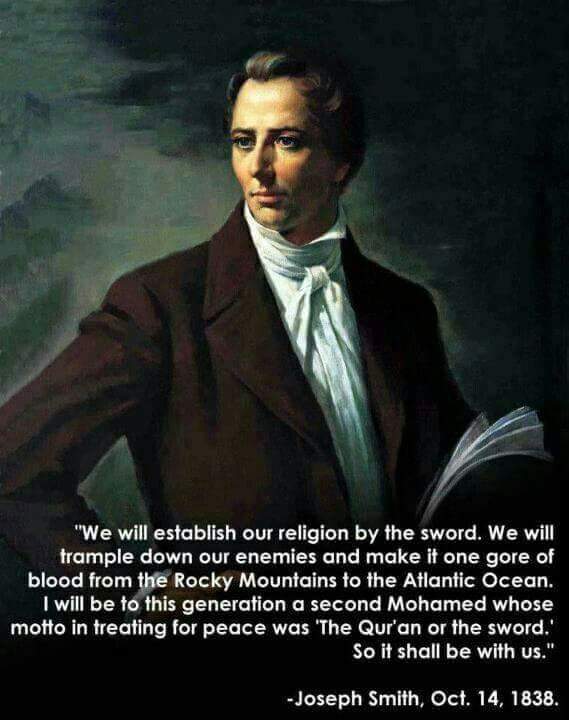
53. It claims that the LDS Church is patterned after the early church of Jesus’ apostles, but there are major differences. To cite just one of many examples, Christ only had 12-apostles but the LdS Church has 15. [click here for supplemental evidence]

54. It rationalizes and excuses the sin, bad behavior, errors of judgment, and disastrous decisions of its prophets. They are buried, ignored, or ‘spun’ as “well-meaning human error with no need for apology or confession”. [click here for supplemental evidence]

55. It rationalizes away the revelations – even those that were fully canonized – of present or past “Living Prophets” that contradict contemporary LDS Church teachings and culture. The no-longer-in-vogue revelations are buried, ignored, or recast as “opinion not divine”. The “He was speaking as a man not a prophet” apologetic is typically used as the rationalization in these cases. Hence the critic’s couplet: “As heresy is, Mormon doctrine once was. As Mormon doctrine is, heresy will it become.” [click here for supplemental evidence]

56. It tolerates the chronic practice of eisegesis (injecting words and ideas into the text that the author did not intend, use or mean) by LDS Church Leaders as their standard hermeneutic in interpreting the Biblical, historical, and scientific record. [click here for supplemental evidence]
57. It rationalizes the failed prophecies of future events by past “Living Prophets” by burying, ignoring, or spin doctoring them as “just his opinion”, or as requiring more time for fulfillment. [click here for supplemental evidence]

58. It undermines intellectual integrity when, by following the example learned from LDS Church Leaders and Church Educational System (CES) curriculum  members engage in eisegesis as a lifestyle in all areas of life – not just scriptural interpretation but just about anything, and everything. Well known LDS Apologist Hugh Nibley is one of many examples of how this works: “…Nibley often uses his secondary sources the same way he uses his primary sources–taking phrases out of context to establish points with which those whom he quotes would likely not agree. I asked myself frequently what some authors would think if they knew that someone was using their words the way Nibley does…”
(Kent P. Jackson, “Review of Hugh Nibley, Old Testament and Related Studies,” BYU Studies 28 no. 4 (1988), pp.115-17; also see http://lds-mormon.com/nibley1.shtml) [click here for supplemental evidence]

59. It uses the term “official doctrine” as a means of silencing critics and dissents even though there is no formal, codified definition for what constitutes “official doctrine”. [click here for supplemental evidence]

60. It tolerates an untenable situation whereby the canonization process isn’t officially defined or codified yet is used to deny past publications, prophetic revelations, and other utterances from past Mormon Leaders that are no longer in vogue. For example, despite the fact that the twenty-six volume “Journal of Discourses” contains General Conference addresses from 1854-1886 that were vetted and approved by the General Authorities at the time, they are soundly now rejected as “unofficial”. This despite Brigham Young’s assertion that, “I say now, when they [his discourses] are copied and approved by me they are as good Scripture as is couched in this Bible . . . “ (“Journal of Discourses”, vol. 13, p. 264; see also p. 95) [click here for supplemental evidence]

61. Alma 41:8 says, “Now, the decrees of God are unalterable; therefore, the way is prepared that whosoever will may walk therein and be saved.” yet the LDS Church keeps changing its scripture. Examples include the 1921 removal of the “Lectures on Faith”; the “Santa Biblia: Reina Valera 2009” which deviates wildly from both the source 1909 edition and the English LDS Edition of the Bible; the 2013 changes to all the English editions of The Standard Works; and the changes to the Book of Mormon that have been ongoing since 1830 – such as the 1981, post OD-2 change of “white and delightsome” to “pure and delightsome” in 2 Nephi 30:6. [click here for supplemental evidence]

62. It has failed to officially, publicly, and directly address the ever mounting discrepancies between the claims of The Book of Mormon and the archaeological, historical, theological, and scientific body of evidence. [click here for supplemental evidence]

63. It has failed to explain the incriminating consistency between the claims of The Book of Mormon and the empirical 19th Century, political, literary, cultural and theological record. For example, the Book of Mormon was so infused with 19th Century Campbellite doctrine and ideas that primitive Mormonism was referred to as “Campbellism Improved” by outsiders. [click here for supplemental evidence]

64. It has failed to provide an adequate, rational explanation for how Joseph Smith could “translate” the Book of Abraham from a set of Egyptian Book of Breathings papyri. [click here for supplemental evidence]

65. It has failed to reasonably explain how Joseph Smith could, via The Joseph Smith Translation of the Bible, append the Bible with “translations” of entire new books and chapters that have utterly no manuscripts backing them while simultaneously purging words, verses – even entire books – that are substantially supported by the extant manuscript base. [click here for supplemental evidence]

66. D&C 42:71-73 commands paid clergy: Saying in part, “they are to receive a just remuneration for all their services”. And while in actual fact the LDS Church compensates leaders via employment in church owned businesses, generous honoraria, stipends, grants, scholarships, gifts, company cars, free travel and lodging, housing and other non-cash contributions, in public it deceptively claims that “The LDS Church has no paid clergy”. [click here for supplemental evidence]

67. It hypocritically denounces those who claim to bring forth new scripture and revelations using the same methods and means that Joseph Smith did because they fail to conform to established LDS Church orthodoxy. This, while simultaneously criticizing the mainstream Christian Church for rejecting Mormonism because the revelations and scripture of its founder and subsequent “prophets” fail to conform to established Christian orthodoxy. One such example of this is Christopher Nemelka’s “The Sealed Portion”[click here for supplemental evidence]

68. It allows LDS Church leaders and the Church Educational System (CES), to distance themselves from the work of LDS Apologists so as – it is believed – to create a “plausible deniability” escape hatch should the work of said Apologists be discredited by more qualified, objective scholarship. Nevertheless, both cite from the work of LDS Apologists (albeit typically not credited) while allowing the LDS Church to quietly fund the work of said apologists through indirect cash flows. [click here for supplemental evidence]

69. It engages in political action via direct and indirect cash flows and privately exhorts members to organize and engage in particular causes and then publicly denies any involvement. California’s Propositions 22 (circa 2000) and 8 (circa 2008) are two cases in point. [click here for supplemental evidence]

70. It publicly (and loudly) trumpets its philanthropic work when compared to other churches its per capita outlay is less than what smaller, less wealthy, less organized religious organizations spend: A study co-written by Cragun and recently published in Free Inquiry estimates that the Mormon Church donates only about 0.7 percent of its annual income to charity; the United Methodist Church gives about 29 percent.
(Caroline Winter, “How The Mormons Make Money”, Business Week; July 18, 2012) [click here for supplemental evidence]

71. It has allowed LDS Church leaders to obfuscate, spin-doctor, and blatantly lie to the media rather than standing with integrity and bolding telling the world what the LDS Church really believes, teaches, and practices.  Such behavior should be denounced and condemned not tolerated, justified, or praised. One example of this Gordon B. Hinckley lying to journalists about the role and function of the Lorenzo Snow couplet within LDS Theology. [click here for supplemental evidence]

72. It fails to recognize the over sixty (60) active Latter Day Saint movement denominations (aka “splinter groups”) while hypocritically condemning the denominationalism of Christianity as a proof of apostasy and lack of divine legitimacy. This hypocrisy is even more pronounced when one considers that over the 180+ year history of the LDS movement there have been over 200 Latter Day Saint denominations in total with new ones forming at a rate will be eventually far exceed and outpace the total number of Christian denominations.  [click here for supplemental evidence]

THOUGHT CONTROL ISSUES
73. It teaches an irrational and subjective epistemological system while simultaneously belittling epistemology based on reason, objectivity, and empiricism. [click here for supplemental evidence]

74. It employs circular logic.  For example, consider its core truth claim: “The only true church is The Church of Jesus Christ of Latter-day Saints because The Church of Jesus Christ of Latter-day Saints says it’s the only true church.”  Another poignant example of circular logic is the infamous Doctrine & Covenants 9:8 “burning in the bosom” truth test that (in the vernacular) goes something like this:  “If you don’t get it, you did something wrong. If you do, that proves the church is true.” Further, when taking this test, you don’t ask God if the church is true, but rather to show you that it is true: “I will cause that your bosom shall burn within you; therefore, you shall feel that it is right.” [click here for supplemental evidence]

75. LDS Church Missionary training and policies employs Mind Control techniques and tactics. [click here for supplemental evidence]

76. It keeps members so busy with LDS Church related activities that they don’t have time for personal reflection and self-autonomy. This is especially true of men as the demands of lay leadership tend to deprive them of real, regular, authentic family time. [click here for supplemental evidence]

77. It erroneously asserts that former members didn’t leave the LDS Church for any thoughtful or legitimate reasons but rather that they were thin skinned reactive, malcontents who left the LDS Church because they wanted to sin with impunity, or because of a perceived offense. Stated plainly, this is a hypocritical double standard: It’s OK to be troubled by, doubt, criticize, and even leave other churches, but this one can’t be questioned or left. [click here for supplemental evidence]

78. It discourages intellectual self-autonomy and self-responsibility and encourages dependency on LDS Church Leaders. [click here for supplemental evidence]

79. It engages in Mind Control tactics and techniques in recruiting, indoctrinating, and retaining members. [click here for supplemental evidence]

80. The LDS Church denies being man centered or exalting – claiming that it only lifts up Heavenly Father and Jesus Christ as worthy of its worship. Yet its Hymnal contains songs of praise and adoration that exalts both dead (#27 “Praise to the Man”) and living men (#19 “We Thank Thee O God For A Prophet”).  [click here for supplemental evidence]

81. It requires members to remain in a “snapped” psychological state in order to remain believing members. For example, when members encounter troubling facts about Mormon History and/or doctrine they’re either told to pray about it or “put it on the shelf”. This is called “Thought Stopping” and it’s a technique that Mind Control Cults use to avoid the rigors of logic, reason, and uncomfortable realities. [click here for supplemental evidence]

82. The Book of Mormon warns, “Wo unto them that call evil good, and good evil” (2 Nephi 15:20) yet the LDS Church requires members to adhere to moral relativism, loose ethics, and intellectual dishonesty in support of a belief system that lacks ethical congruity, consistency, and integrity. Some of the most obvious examples of this are: The practice of polygamy and the rationalization of that past polygamy today; A failure to acknowledge and apologize for its pre-1978 institutionalized racism, and finally; The practice known as “Lying for the Lord” throughout Mormon History. [click here for supplemental evidence]

83. It hypocritically rails against sound logic and reason as “the hollow and vain philosophies of men, not God” and then hypocritically attempts to (albeit poorly and inconsistently) employ logic and reason in its arguments and rhetoric. [click here for supplemental evidence]

84. It poisons members who leave the LDS Church against all other Theistic religions. This is best illustrated by the cliché used by both members and former members that goes something like this, “If the Mormon Church isn’t true then nothing is true.” [click here for supplemental evidence]

EMOTIONAL CONTROL ISSUES
85. It damages member psychology via the use of manipulative fear and unachievable standards of “worthiness”. Sadly, this lament is all too common: “Of course I do [have a testimony]! That’s what’s so terrible. I know the gospel’s true. I just can’t do it. I’ve tried and I’ve tried, but I can’t do it all, all of the time.” (Stephen E. Robinson, “Believing Christ”; Ensign, April 1992) [click here for supplemental evidence]

86. Whereas, Mormon Prophet Brigham Young preached, “A good man, is a good man, whether in this church, or out of it.” (“The Lions of the Lord: A Tale of the Old West” by Harry Leon Wilson, chap XXVIII, par 2) the modern LDS Church engenders arrogance and self-righteousness in members by telling them that they’re more enlightened and morally superior relative to the general population – including other good people of faith. [click here for supplemental evidence]

87. It uses guilt as a means of controlling members. [click here for supplemental evidence]

88. It “love bombs” investigators and new converts as a means of drawing them in. [click here for supplemental evidence]

89. It uses arbitrary, capricious, and ever changing criteria for Temple Recommend “worthiness”. For example Brigham Young’s 1856 worthiness questions (also see this ByteLine article)  are almost completely different than the current set of Temple Recommend Interview questions[click here for supplemental evidence]

90. The Book of Mormon speaks of those who, “do walk in the pride of your hearts; and there are none save a few only who do not lift themselves up in the pride of their hearts …yea, even every one, have become polluted because of the pride of your hearts.” (Mormon 8: 36) Despite this the LDS Church culture engenders clannish, elitist, and pride in members via it a Temple, Priesthood, and oligarchical calling system that puffs member up rather than encouraging and rewarding humility. [click here for supplemental evidence]

91. It encourages arrogant, condescending pride in members at all levels by telling them that they “have the whole and restored truth” that “apostates” only have in part and “gentiles” lack entirely. [click here for supplemental evidence]

92. It teaches that a rape victim has “lost her chastity” and that a woman should fight off her attacker or be killed in the attempt.  For example, Apostle Spencer W. Kimball, in his book “The Miracle of Forgiveness” said, “far-reaching is the effect of loss of chastity. Once given or taken or stolen it can never be regained. Even in a forced contact such as rape or incest, the injured one is greatly outraged. If she has not cooperated and contributed to the foul deed, she is of course in a more favorable position. There is no condemnation when there is no voluntary participation. It is better to die in defending one’s virtue than to live having lost it without a struggle.” (p. 196)  Thus, young Mormon women are taught that their chastity is more valuable than their life. The result is that a Mormon woman who survives a rape is made to feel guilty, and is thus victimized again, this time by her church. [click here for supplemental evidence]

93. It bestows the title “Elder” onto adolescent men (typically 18-years old) with little to no real life experience, thus puffing them up with arrogance and deluding them with prideful ignorance. [click here for supplemental evidence]

LutherReformacion

Long live the Reformation!

94. It hypocritically defines polemic arguments as “persecution” and then engages in polemics with its critics and those of other faiths. For example, consider how it trains its missionaries to speak of other churches:

“Without the Apostles, over time the doctrines were corrupted, and unauthorized changes were made in Church organization and priesthood ordinances, such as baptism and conferring the gift of the Holy Ghost. Without revelation and priesthood authority, people relied on human wisdom to interpret the scriptures and the principles and ordinances of the gospel of Jesus Christ.

False ideas were taught as truth. Much of the knowledge of the true character and nature of God the Father, His Son Jesus Christ, and the Holy Ghost was lost. The doctrines of faith in Jesus Christ, repentance, baptism, and the gift of the Holy Ghost became distorted or forgotten. The priesthood authority given to Christ’s Apostles was no longer present on the earth. This apostasy eventually led to the emergence of many churches.”
(“Preach My Gospel: A Guide to Missionary Service”; Official LDS Church Missionary Training curriculum, p.35) [click here for supplemental evidence]

95. It creates undue demands as well as mental, emotional, and spiritual stress and strain on members via all the above. [click here for supplemental evidence]

BACK TO TOP

“I cannot and will not recant anything, for to go against conscience is neither right nor safe. Here I stand, I can do no other, so help me God. Amen.
— Martin Luther at the Diet of Worms

1521 THE DIET OF WORMS
by Eric W. Gritsch
A complex constellation of events and circumstances dominated Europe in the first two decades of the sixteenth century. The rediscovery and study of Christian and Roman culture, known as “renaissance” and “humanism,” called into question much of the contemporary Christian culture. Discovery and exploration of a new, nonEuropean world expanded trade and led to what was later called “capitalism.” The Holy Roman Empire, a symbiotic relationship between spiritual and temporal rulers—pope and emperor—was being threatened by a massive invasion of Muslims led by Turkish sultans. Moreover, the unity of Christendom was being imperiled by the fast-growing reform movement started by Martin Luther. In this turbulent era, the diet (assembly) held at Worms in 1521 was one attempt to preserve that unity.

Pressures for the Diet
Politics and religion had become strange bedfellows in Germany. The “Golden Bull” of 1356 had provided for the election of an emperor by majority vote of four secular and three ecclesiastical princes. Two years before the Diet of Worms, the elector Frederick “the Wise” cast the deciding vote in favor of Charles I of Spain to become Charles V, Holy Roman Emperor. Luther was Frederick’s subject; thus, when the papacy moved to silence him, Frederick insisted that his professor—a growing attraction at the University of Wittenberg, newly founded by Frederick—be heard on German soil and treated fairly.

As a result, Luther had a hearing before a cardinal in Augsburg in 1518, and he could debate the issue of papal authority at a well-publicized event at the University of Leipzig in 1519. He was also free, in 1520, to publish his ideas on church reform through bestselling treatises such as The Babylonian Captivity of the Church (a stinging critique of the hierarchical system of sacraments) and The Freedom of the Christian (the exposition of a Christian stance liberated from bondage to a church claiming to have an inerrant structure).

In 1520, Rome threatened to excommunicate Luther unless he recanted, but the Wittenberg professor refused to do so. The letter threatening excommunication was burned in a festive bonfire staged by faculty and students in December. Luther’s actual excommunication by papal bull in January 1521 only fueled the opposition to Rome. Under pressure from Elector Frederick and other princes, Emperor Charles V agreed to hear Luther at a German diet scheduled to meet in Worms in the spring of 1521.

Proceedings of the Diet
Rome hoped that the diet would reject Luther’s cause, thus easing the task of a general council of bishops, chaired by the pope, who would be dealing with the religious issues raised. Virtually all of Germany was supporting Luther. As the official papal representative to the diet, Jerome Meander, put it in his secret message to Rome, “Nine-tenths of the people are shouting ‘Luther!’ and the other tenth are crying ‘Death to the Roman Court!’ “

Luther appeared before the diet on April 17 at 4:00 P.M., after a triumphant journey from Wittenberg. Silence descended on the room where the diet was meeting. A representative of the emperor asked Luther to respond to two questions: Did he acknowledge the authorship of books that had been brought to the diet and bore his name? Would he stand by them or retract anything in them?

Luther asked for time to reflect before answering, and he was granted twenty-four hours. On April 18, 6:00 P.M., he gave his now-famous answer:

“Unless I am convinced by the testimony of Scripture or by clear reason (for I trust neither pope nor council alone, since it is well known that they have often erred and contradicted themselves), I am bound by the Scriptures I have cited, for my conscience is captive to the Word of God. I cannot and will not recant anything, since to act against one’s conscience is neither safe nor right. I cannot do otherwise. Here I stand, may God help me.”

The next day, the 19-year-old emperor called Luther “a notorious heretic” who would have to be silenced. A rump session of the diet approved a condemnation edict on May 26. The edict called Luther a criminal who had committed high treason; it demanded the capture of Luther and his disciples; and it condemned the “demon in the appearance of a man” as the leader of a notorious heresy that must be exterminated.

In short, Luther was condemned to death, albeit in absentia, for he had been persuaded to leave Worms earlier. Elector Frederick arranged a “kidnapping” of the homeward-bound Luther and hid him at Wartburg, his castle in Thuringia. Luther stayed there until March 1522 when unrest drove him to return to Wittenberg.

Practical Consequences of the Diet
The Diet of Worms revealed two radically differing world views: Charles V, armed with the powerful weapons of ecclesiastical ban and imperial edict, embodied institutional authority; Luther stood for the Word of God as revealed in Holy Scripture, which promised freedom from all human bondage, including death. Luther summarized his view in two seemingly contradictory propositions: “A Christian is a perfectly free lord of all, subject to none. A Christian is a perfectly dutiful servant of all, subject to all.” For Luther, faith in Christ frees humans from their human righteousness by binding them to the righteousness of Christ. Believers are subject to no human powers, although they are to serve neighbors in need as if they were slaves.

Luther’s dissent at Worms was a testimony to Christian freedom. Subsequent dissent has often been grounded in notions of human rights like freedom of speech. Luther might or might not have agreed with these notions. It is clear, however, that he clung to the ancient biblical mandate to honor no power other than the power of the Word of God.

Dr. Eric W. Gritsch is Maryland Synod Professor of Church History and director of the Institute for Luther Studies at Gettysburg Lutheran Seminary, Gettysburg, Pennsylvania.

Лютер_в_Вормсе

“Luther at the Diet of Worms” by Anton von Werner (1877)

(reprinted from Church History #28

BACK TO TOP

thoughts-are-things
by Fred W. Anson

Personally, I find it helpful to get the “Is the LdS Church a cult or not” discussion out of the arena of doctrine and theology. After all very often arguing doctrine with religionists ultimately always seems to come down to a “my opinion v. your opinion” stale mate.

So let’s see if we can put the question on a more objective, dispassionate plane.

Instead why don’t we choose to label “cults” based not on doctrine, but whether or not the group exercises the mental and sociological control elements common in cults and recognized by secular counter-cult experts.

There are many sociological aspects we can examine to determine if a group fits the criteria of a “cult,” but one of the easiest models to use in evaluating cult mind-control is given by Steven Hassan. In his book “Releasing the Bonds: Empowering People to Think for Themselves” Mr. Hassan calls his mind-control model, “BITE“, which stands for “Behavior, Information, Thoughts, and Emotions.” This diagnostic model was based primarily on Robert Lifton’s work but also draws from research from Margaret Singer, Leon Festinger and many others. It doesn’t target any group in particular and can be applied to any group be they religious, political, secular, etc. It just doesn’t matter. Here is the Steven Hassan BITE Model:1

“Releasing the Bonds: Empowering People to Think for Themselves” by Steven Hassan

“Releasing the Bonds: Empowering People to Think for Themselves” by Steven Hassan

BEHAVIOR CONTROL
• Regulation of individual’s physical reality
• Major time commitment required for indoctrination sessions and group rituals
• Need to ask permission for major decisions
• Need to report thoughts, feelings, and activities to superiors
• Rewards and punishments (behavior modification techniques positive and negative)
• Individualism discouraged; “group think” prevails
• Rigid rules and regulations
• Need for obedience and dependency

INFORMATION CONTROL
• Use of deception
• Access to non cult sources of information minimized or discouraged
• Compartmentalization of information; Outsider vs. Insider doctrines
• Extensive use of cult generated information and propaganda
• Spying on other members is encouraged
• Unethical use of confession

THOUGHT CONTROL
• Need to internalize the group’s doctrine as “Truth”
• Use of “loaded” language (for example, “thought terminating clichés”). Words are the tools we use to think with. These “special” words constrict rather than expand understanding, and can even stop thoughts altogether. They function to reduce complexities of experience into trite, platitudinous “buzz words.”
• Only “good” and “proper” thoughts are encouraged.
• Use of hypnotic techniques to induce altered mental states
• Manipulation of memories and implantation of false memories
• Use of thought stopping techniques, which shut down “reality testing” by stopping “negative” thoughts and allowing only “good” thoughts
• Rejection of rational analysis, critical thinking, constructive criticism. No critical questions about leader, doctrine, or policy seen as legitimate.
• No alternative belief systems viewed as legitimate, good, or useful

EMOTIONAL CONTROL
• Manipulate and narrow the range of a person’s feelings
• Make the person feel that if there are ever any problems, it is always their fault, never the leader’s or the group’s
• Excessive use of guilt
• Excessive use of fear
• Extremes of emotional highs and lows
• Ritual and often public confession of “sins”
• Phobia indoctrination: inculcating irrational fears about ever leaving the group or even questioning the leader’s authority. The person under mind control cannot visualize a positive, fulfilled future without being in the group.

Steven Hassan

Steven Hassan

BITE Anayses by Former Latter-day Saints
Mr. Hassan recommends that the BITE Model analysis be done by former members as they have the greatest insight into the group’s formal and informal behavior. Furthermore, since one aspect of Mind Control Cults is lying, deceit, misinformation, “spin” and other obfuscating techniques for hiding “insider” secrets, active members and official group resources (such as websites, tracts, and other public facing materials) typically only allow an investigator to see a false, friendly facade rather than true, harsh internal reality. So with that in mind, here are links to the BITE analyses that have been completed by former Mormons. I would politely suggest that these analyses answer this nagging question rather nicely – and I will leave it to the reader to decide the answer for them self what that answer is:

The BITE Model and Mormon Control
by Luna Lindsey (an ExMormon)
http://www.rationalrevelation.com/library/bite.html (retrieved 2012-09-25)

Ms. Lindsey’s fuller, more in-depth analysis in short book form
https://www.amazon.com/dp/B0105FLKZI/ (retrieved 2019-02-19)

The BITE model applied toward Momonism’s two-year missionary program as submitted by an ex-Mormon
https://web.archive.org/web/20150920220322/https://freedomofmind.com/Info/infoDet.php?id=372 (retrieved 2014-08-09)

The BITE model applied toward Mormonism as submitted by an ex-Mormon https://web.archive.org/web/20161022233957/https://freedomofmind.com//Info/infoDet.php?id=370 (retrieved 2014-08-09)

Assessing the Mormon Church Using Steven Hassan’s BITE Model for Cults done by John Dehlin’s Mormon Faith Crisis Team (John Dehlin, Margi Dehlin, and Natasha Helfer Parker)
https://www.mormonfaithcrisis.com/assessing-the-mormon-church-using-steven-hassans-bite-model-for-cults/ (retrieved 2019-02-19)

Also of Interest
Mormon Stories 938-939 Steven Hassan – What The Mormon Church Can Learn From Cult to Do/Be Better
https://www.mormonstories.org/podcast/steven-hassan/ (retrieved 2019-02-19)

Part One
http://traffic.libsyn.com/mormonstories/MormonStories-938-StevenHassanPt1.mp3 (audio)

Part Two
http://traffic.libsyn.com/mormonstories/MormonStories-939-StevenHassanPt2.mp3 (audio)

Steven Hassan speaking at the Ex-Mormon Foundation Conference in 2008

NOTES
1 Steven Hassan, “Releasing the Bonds: Empowering People to Think for Themselves”, Ch.2.  Also see http://www.freedomofmind.com/Info/BITE/bitemodel.php.

BACK TO TOP