Archive for the ‘Mormon Studies’ Category

LutherMovie-CROPPEDTHE 95 LDS THESES
Introduction:
Today is October 31st, “Reformation Day”, 2013. It was on this day 496 years ago that Martin Luther nailed the “Disputation of Doctor Martin Luther on the Power and Efficacy of Indulgences” (commonly known as “The Ninety-Five Theses”) unto the door of The Castle Church in Wittenberg, Germany. “The Ninety-Five Theses” is widely regarded as the primary catalyst for the Protestant Reformation. So it is with a hopeful spirit for reformation in our lifetime that we offer these Ninety-Five Theses to a modern church that is badly in need of it.

And while we offer these theses to the public in general for discussion, debate, and consideration, we offer them even more specifically to the LDS Church and its members in light of Joseph Smith’s challenge …

“. . . call upon them [Mormon Critics] to meet you both in public and in private; and inasmuch as ye are faithful their shame shall be made manifest. Wherefore, let them bring forth their strong reasons against”
(Doctrine & Covenants 71:7)

… and in agreement with Mormon Apostle Orson Pratt who said:

“. . . convince us of our errors of doctrine, if we have any, by reason, by logical arguments, or by the word of God, and we will be ever grateful for the information, and you will ever have the pleasing reflection that you have been instruments in the hands of God of redeeming your fellow beings from the darkness which you may see enveloping their minds.”
(Orson Pratt, “The Seer”, pp. 15-16)

So without further ado we present . . .
The Disputation of Ninety-Five Theses on the Power and Efficacy of the Church of Jesus Christ of Latter-day Saints: Ninety-Five Theses for consideration, discussion, and action regarding a modern church badly in need of reform
(aka “The 95 LDS Theses”)

Question: What’s wrong with the Church of Jesus Christ of Latter-day Saints?
Answer:

BEHAVIOR CONTROL ISSUES
1. LDS President Spencer W. Kimball said, “Brothers and sisters, pray for the critics of the Church” (“Remember the Mission of the Church”, Ensign, May 1982, p.4) but today’s LDS Church is quick to label and denounce internal and external critics as “enemies out to destroy” even when they’re simply speaking the truth, seeking to gain understanding, and/or trying to make the church a better place.

2. The LDS Church focuses on the needs and interests of the institution over the needs and interests of the members. For example, on January 29, 2013, the LDS Church announced that the Benemerito De Las Americas private school in Mexico would be closed and converted into a Missionary Training Center leaving its more than 2,000 LDS students to the mercy of the vastly inferior Mexican public education system.

3. D&C 121:39 says: “We have learned by sad experience that it is the nature and disposition of almost all men, as soon as they get a little authority, as they suppose, they will immediately begin to exercise unrighteous dominion.” Yet the modern LDS Church tolerates abuse of ecclesiastical power by LDS church leaders through various means from refusing to directly answer troubling questions from its members up to and including excommunication of members who speak truth to power.

4. LDS President, John Taylor, said, “I for one want no association with things that cannot be talked about and will not bear investigation.” (Journal of Discourses, Vol. 20, p. 264) but today’s LDS leaders refuse to publicly address members concerns about difficult facts of Mormon History and suppresses loyal dissent from within its ranks via disciplinary action up to and including excommunication.

5. The LDS Church website says, “Those who are married should consider their union as their most cherished earthly relationship.” Never-the-less, due to the doctrine of Celestial Marriage members often feel pressured to choose between the potential to be exalted into the Celestial Kingdom and their apostate (or non-member in the case of a convert) spouse. Choosing the former all too often results in divorce.

6. LDS Church leaders denounce and scorn former members and encourage members to do the same. To cite one example, the chapter in the official church curriculum “Teachings of Presidents of the Church: Joseph Smith” entitled “Beware The Bitter Fruit of Apostasy” (pp. 315-326) is a demonstration of how church leaders do this.

7. It asserts in the strongest language that doctrinal differences, criticisms, or questions about LDS Church policies and/or leaders are sin, for the ‘prophet’ is always right. Those who engage in such behaviors – or refuse to comply with the status quo – are subject to discipline up to and including ex-communication. An example of this is the recent excommunication action taken against Denver Snuffer.

8. It drives a wedge between member and non-member family members. Ex-Mormon family members in particular are to be avoided but the LDS Church also encourages members to steer clear of “Never Mormon” family members who are openly critical of the LDS Church. For example, one Temple Recommend Question asks, “Do you support, affiliate with, or agree with any group or individual whose teachings or practices are contrary to or oppose those accepted by the Church of Jesus Christ of Latter-day Saints?” The wording of this question strongly implies that temple worthiness requires eschewing those with beliefs opposing the LDS church. This often includes former members and/or family members critical of the church.

9. The LDS Church is the largest sponsor of Boy Scout units with over 30,000 units nationwide. Conversely, the Young Women’s Personal Progress Program receives significantly less funding and attention and demonstrates pronounced gender inequality. Why, for example, aren’t there an equal number of church sponsored Girl Scout units for girls?

10. The culture that results from LDS doctrine pressures members to marry too quickly often resulting in marriage between incompatible strangers. For example, 12th LDS President Spencer W. Kimball taught, “It was never intended by the Lord that a large portion of one’s life should be spent in the unmarried state… Long-delayed marriages are certainly not approved of the Lord.” (“The Marriage Decision”, Ensign, Feb. 1975)

11. The Lord, it is claimed, said, “Verily I say, men should be anxiously engaged in a good cause, and do many things of their own free will, and bring to pass much righteousness.” (D&C 58:27) But today LDS Leaders use the Temple Recommend process as a subtle, barely discernible means of manipulative coercion rather than allowing members to engage their free will.

12. It puts its untrained clergy in a position where they must give counsel on vital life issues that they are not qualified or equipped to competently address. The result, all too often, is ecclesiastical malpractice.

13. The LDS churches places an inordinate amount of emphasis on a commandment that enriches itself financially – the tithe. It is the only commandment that requires a yearly meeting with the bishop and must be paid without regard to a person’s personal welfare: “If paying tithing means that you can’t pay for water or electricity, pay tithing. If paying tithing means that you can’t pay your rent, pay tithing. Even if paying tithing means that you don’t have enough money to feed your family, pay tithing.” (“Sacred Transformations”, Ensign, Dec 2012. p.38)

14. The original 1835 D&C 101 said, “all marriages in this church of Christ of Latter Day Saints, should be solemnized in a public meeting” but today’s church drives a wedge between friends and family members by compelling Latter-day Saints to get married in private Temple services that exclude not only all non-members and their families, but even non-Temple Recommend holding LDS family members in addition to all children below a certain age – Mormon and non-Mormon alike.

15. The Apostle Paul wrote “there is neither male nor female: for you are all one in Christ Jesus” (Galatians 3:28). Yet the LDS Church gives men an exalted status over women; refuses them the Priesthood; denies that women are co-equals; and chooses instead to subordinate them to men.

16. LDS church leaders replace “ye are free; ye are permitted to act for yourselves” (Helaman 14:30) with obedience to trivial and arbitrary rules. Things like ear piercings, movies, tattoos, and clothing choices have nothing to do with salvation – therefore, these are areas where individual Free Agency and the leading of the Spirit should prevail.

17. It imposes vague, scientifically discredited 19th Century dietary regulations on members via the “Word of Wisdom” (Doctrine & Covenants section 89). This isn’t a trivial matter since a lack of compliance to these standards can result in the loss of one’s temple recommend – per the Temple Recommend Worthiness Interview question which directly asks, “Do you keep the Word of Wisdom?”

18. It quells and compromises good scholarship within its rank by demonizing, disfellowshipping and excommunicating members who produce scholarly works discussing Mormon History, Theology, or culture that have scholastic integrity. The classic example of this are The September Six – the six esteemed, respected, and in some cases award winning, Latter-day Saint scholars who were excommunicated in September 1993 for producing such work.

19. D&C 58:27 states “men should be anxiously engaged in a good cause, and do many things of their own free will, and bring to pass much righteousness” and Joseph Smith stated “I teach them correct principles, and they govern themselves.” (“The Organization of the Church”, Millennial Star, Nov. 15, 1851, p. 339). However, the church often does exactly the opposite: Such as rewarding Paul H. Dunn with a General Authority position for his compliant use of “faith promoting” lies, but excommunicating D. Michael Quinn for continuing to tell the authentic truth despite being told by Mormon leaders to stop.

20. By requiring a full tithing to participate in the temple endowment ceremony, and thereby achieve exaltation, the LDS church disregards Moroni’s censure: “Yea, it shall come in a day when there shall be churches built up that shall say: Come unto me, and for your money you shall be forgiven of your sins.”(Mormon 8:32)

21. It uses employment in LDS Church and member owned institutions and businesses to coerce obedience to its dogma and leaders. An example of this is John P. Hatch being terminated from Deseret Book for simply expressing his opinion regarding, “the Church’s efforts to suppress access to honest history.” in a letter to the Salt Lake Tribune without warning or asking for clarification on the letter.

22. Its leaders and members use ad-hominems, insults, slurs, derogatories, labeling, and character assassination in their dealings with critics and apostates and then deny that they do so – often going so far as to claim that those who call them on this behavior are persecuting them.

23. It allows members to privately believe whatever they want – even if it’s atheistic or contradicts LDS orthodoxy – as long as they publicly “toe the party line” and continue to contribute their time and money to the LDS Church.

24. It privately judges and abandons members that have life problems rather than patiently, encouraging, undergirding, supporting, and attempting to restore them to a healthy, productive place. This while publicly declaring that the LDS Church treats all such cases with benevolent kindness.  For example, many prisoners are excommunicated in absentia once convicted of a crime. And while a small number of individual members may volunteer for a local prison-ministry in their area, there is currently no formal church sponsored outreach to prisoners.  The same can be said for those suffering from alcoholism, drug abuse, sexual addiction, gambling addiction, etc., etc., etc.  Further, many snared in these life situations simply experience church discipline in various forms are and told to repent – nothing more.

25. It tends to view any doubt, character flaw, or personal deficiency as “sin” rather than as a normal expression of the human condition and life experience. Thus it has created an implied and unstated expectation that members must always be perfect and/or “all together” or they’re in sin and unworthy of advancement within the organization.

26. It practices graceless, merciless, condemning, legalistic disciplinary extremes – far beyond Biblical standards – in regard to those who have engaged in sexual activity outside of marriage that, as been reported by many, often leads to a “no-win” double-bind spiral into hopeless despair.  Seventh LDS President Heber J. Grant articulated this extremsim well when he said, “There is no true Latter-day Saint who would not rather bury a son or a daughter than to have him or her lose his or her chastity – realizing that chastity is of more value than anything else in all the world.” (Heber J. Grant quoted in, Gospel Standards”, complied by G. Homer Durham, p. 55)

27. The Apostle Jude commanded “Be merciful to those who doubt” (Jude 1:22, NIV). Instead LDS leaders often demand blind compliance from those questioning and wavering. Failing at that they will expose, quarantine, isolate – and if necessary expel – doubters rather encouraging, supporting, and protecting them while they work through their doubt.

28. It preaches extreme, legalistic, and arbitrary sexual standards regarding masturbation that are not scripturally or scientifically supportable.

29. Via the Priesthood Correlation Program it tries to turn everyone into a Utah Mormon and every Chapel, Ward, and Stake into a Utah Chapel, Ward, and Stake rather than encouraging – even celebrating – each culture’s unique distinctives.

30. It has created a culture whereby fear of their family’s reaction puts pressure on disenchanted LDS Missionaries to continue with their missions whether they want to or not.

31. Women are inappropriately subordinate, not equals, with men in the LDS church. For example, in the Temple Endowment Ceremony women swear obedience to God and to her husband while the man swears obedience only to God. Additionally women may not act as a voice in prayer circles and instead must veil their faces.

 32. It claims to be “pro-family” while simultaneously creating a culture that breaks up both Mormon and non-Mormon families via the aforementioned.

33. It has a double standard for treating non-members with charitable benevolence (as a means of proselytizing and public relations) while exacting, high, often unattainable standards that members must meet to receive the same levels of attention, aid, and assistance.

34. Despite the fact that The Book of Mormon says, “For behold, ye do love money, and your substance, and your fine apparel, and the adorning of your churches, more than ye love the poor and the needy, the sick and the afflicted.” (Moroni 8:37) the First Presidency choices to invest billions in building ornate malls and temples rather than using that money to show love to the poor and the needy, the sick and the afflicted.

INFORMATION CONTROL ISSUES
35. Although the LDS church sates that “we believe in being honest” (13th Article of Faith), it regularly substitutes faith promoting “spin” to its members, the media, and investigators instead of telling the full truth regarding its history and theology.

36. The LDS Church has suppressed – and allegedly has even destroyed – church owned documents and artifacts that would expose the fact that it’s not telling the full truth regarding its history and theology. Examples of suppressed documents include: a) the contents of the First Presidency’s Vault; b) The Mark Hofmann forgeries that the church purchased from him, and; c) The Joseph Smith seer stones that were used to “translate” the Book of Mormon and receive many of the revelations in Doctrine & Covenants, and many others.

37. Since 1959 it has suppressed its financial records in the United States and other countries where churches aren’t required to publicly disclose such records, thus eliminating full accountability in terms of how member contributions are used.

38. I Nephi 13:9 warns, “for the praise of the world do they destroy the saints of God, and bring them down into captivity,” yet the behavior of today’s LDS Church would suggest its core unifying principle seems to be “Image over truth always and in all things.” Could today’s Latter-day Saints be captives destroyed by their quest for the praise of the world rather than a peculiar people?

39. It contrives man-created “revelations” and claims that they are of divine origin. Two examples of this are Official Declarations 1 and 2 – one (OD-1) of which is essentially a policy statement in the form of a press release that addresses, “To whom it may concern” and the other (OD-2) which hints at a revelation but fails to produce it in any form within the actual declaration.

40. Hymn #292, “O My Father” acknowledges the LDS doctrine of a heavenly mother. Mormon leaders throughout history have confirmed this doctrine. However, Heavenly Mother is rarely discussed, is demonstrative of male bias within the LDS Church, and is illustrative of how the church deceives investigators and others.

41. It allows unsubstantiated “faith promoting” stories to run unchecked. Examples include Three Nephite sightings, attribution of magic protective power to temple garments, and falsely implying that all the apostles have been personally visited by Jesus.

42. It restricts distribution of the LDS “Church Handbook of Instruction Book 1: Stake Presidents and Bishops” (aka “Handbook 1”) to only the Bishopric level and higher. This eliminates transparent “bottom up” accountability enabling ecclesiastical abuse because lay members can’t confront local leaders and/or report policy violations to higher authorities for rectification.

43. Gospel Principles explains, “Whenever we lead people in any way to believe something that is not true, we are not being honest.” (see Chapter 31) yet LDS Church leaders mandate that Mormon History must always be presented to members (even privately) in a manner that’s uplifting and only presents the LDS Church in a favorable light – even if the resulting narrative is not true.

44. It deceptively claims to be “Christian” when in reality it has taken Christian words, terms and forms and then changed the underlying meaning and content to an extent that they’re no longer congruent with historic, mainstream, Christian orthodoxy.

45. When it claims, “No tithing dollars were used for this building or project – the funds came from for-profit, church-owned entities” it ignores and/or obfuscates the fact that the seed, start-up, or acquisition funds logically and ultimately came from member tithes – a fact which negates the original claim.

46. It wavers on whether its ultimate authority for doctrine is the Bible, Mormon scriptures, statements of former Mormon prophets, statements of living Mormon prophets, and individual “revelation” even though these sources are often mutually contradictory.

47. It refuses to acknowledge and apologize for the role of high ranking church leaders in the massacre of 120 innocent people in 1857 at Mountain Meadows.

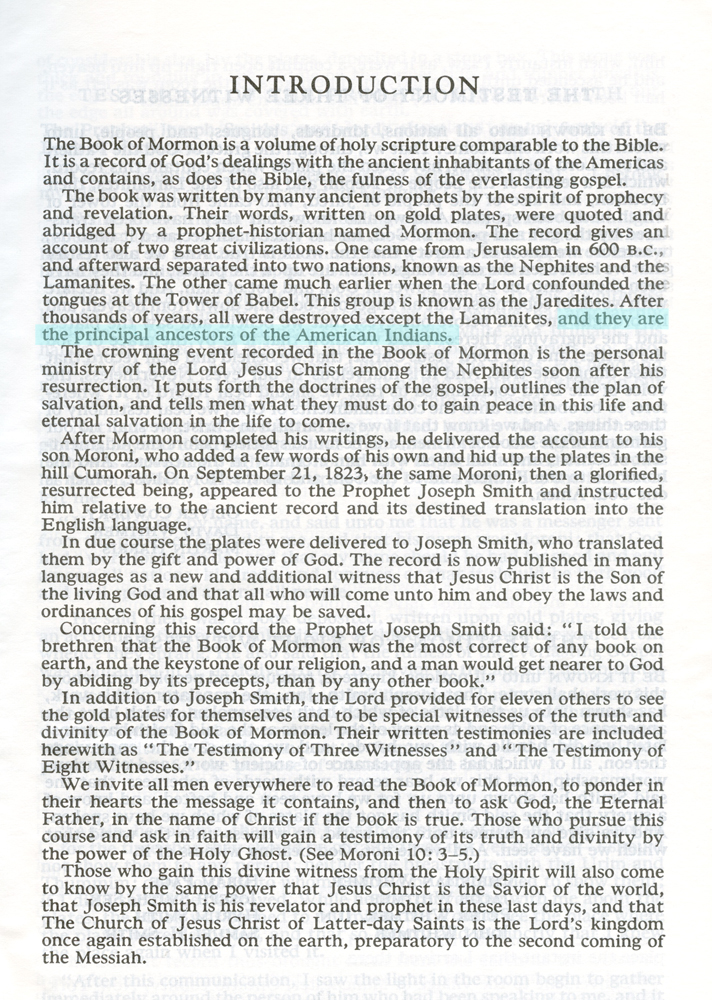
48. It makes extraordinary – even outrageous – truth claims that are easily discredited by science, history, and the Biblical record.  For example: The genomics project has a vast body of DNA evidence that conclusively demonstrates that the American aborigines were from Asia not the Middle East; Those aborigines had already migrated and were well established in the Americas thousands of years prior to the alleged arrival of the Book of Mormon people, and; The Bible plainly states that the gospel, with its inclusion of Gentiles, was not fully revealed until after Christ’s death (see Ephesians 3:3-7).

49. It excuses, rationalizes, justifies, and white washes the crimes of its founder, famous members, and past leaders.  To cite just one of many such examples, polygamy was never legal whenever and wherever it was practiced by Latter-day Saint leaders and members.

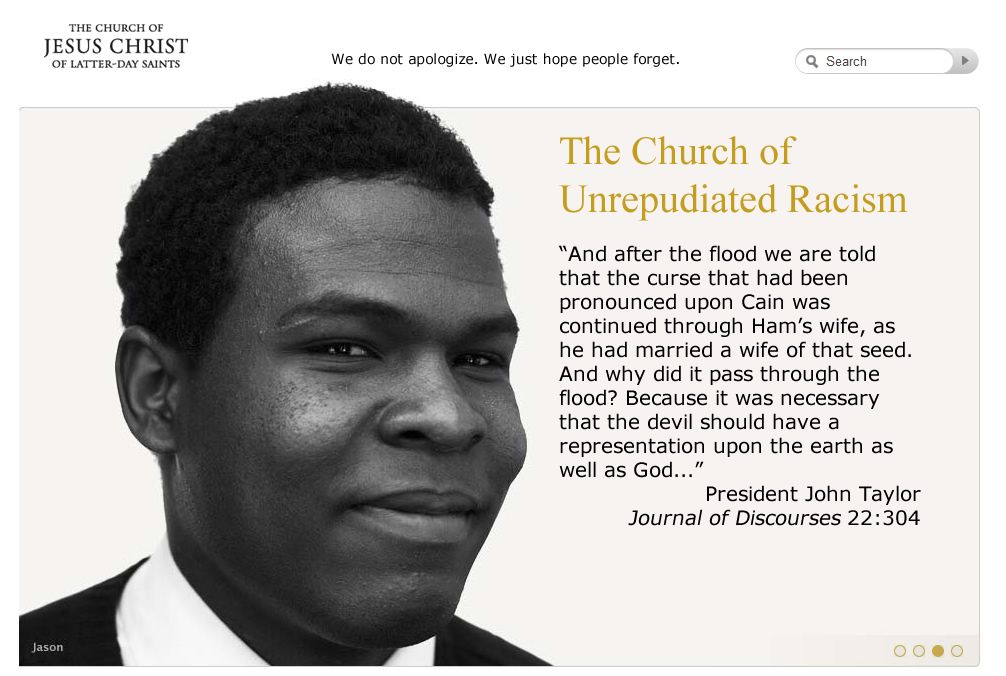
50. On August 17, 1949, the First Presidency of the LDS Church stated: “The attitude of the Church with reference to Negroes remains as it has always stood. It is not a matter of the declaration of a policy but of direct commandment from the Lord” Yet the LDS Church refuses to acknowledge and apologize for the fact that until 1978 – as a point of official doctrine (not folklore, opinion, or speculative theology) and policy – the church taught racism and excluded blacks from the priesthood and temple.

51. It has used home teachers and the “Strengthening Church Members Committee” as a means of surveillance on and control of members.

52. It hypocritically claims that polygamy has no place in the contemporary LDS Church even though Joseph Smith’s revelation on polygamy (Doctrine & Covenants 132) is still canonized scripture and “Celestial Polygamy” (being eternally married to at least one more woman after being widowed or divorced) is practiced. Currently, three widowed Mormon Apostles (Dallin H. Oaks, L. Tom Perry, and Russell M. Nelson) are Celestial Polygamists.

53. It claims that the LDS Church is patterned after the early church of Jesus’ apostles, but there are major differences. To cite just one of many examples, Christ only had 12-apostles but the LdS Church has 15.

54. It rationalizes and excuses the sin, bad behavior, errors of judgment, and disastrous decisions its prophets. They are buried, ignored, or ‘spun’ as “well-meaning human error with no need for apology or confession”.

55. It rationalizes away the revelations – even those that were fully canonized – of present or past “Living Prophets” that contradict contemporary LDS Church teachings and culture. The no-longer-in-vogue revelations are buried, ignored, or recast as “opinion not divine”. The “He was speaking as a man not a prophet” apologetic is typically used as the rationalization in these cases. Hence the critic’s couplet: “As heresy is, Mormon doctrine once was. As Mormon doctrine is, heresy will it become.”

56. It tolerates the chronic practice of eisegesis (injecting words and ideas into the text that the author did not intend, use or mean) by LDS Church Leaders as their standard hermeneutic in interpreting the Biblical, historical, and scientific record.

57. It rationalizes the failed prophecies of future events by past “Living Prophets” by burying, ignoring, or spin doctoring them as “just his opinion”, or as requiring more time for fulfillment.

58. It undermines intellectual integrity when, by following the example learned from LDS Church Leaders and Church Educational System (CES) curriculum  members engage in eisegesis as a lifestyle in all areas of life – not just scriptural interpretation but just about anything, and everything. Well known LDS Apologist Hugh Nibley is one of many examples of how this works: “…Nibley often uses his secondary sources the same way he uses his primary sources–taking phrases out of context to establish points with which those whom he quotes would likely not agree. I asked myself frequently what some authors would think if they knew that someone were using their words the way Nibley does…”
(Kent P. Jackson, “Review of Hugh Nibley, Old Testament and Related Studies,” BYU Studies 28 no. 4 (1988), pp.115-17; also see http://lds-mormon.com/nibley1.shtml)

59. It uses the term “official doctrine” as a means of silencing critics and dissents even though there is no formal, codified definition for what constitutes “official doctrine”.

60. It tolerates an untenable situation whereby the canonization process isn’t officially defined or codified yet is used to deny past publications, prophetic revelations, and other utterances from past Mormon Leaders that are no longer in vogue. For example, despite the fact that the twenty-six volume “Journal of Discourses” contains General Conference addresses from 1854-1886 that were vetted and approved by the General Authorities at the time, they are soundly now rejected as “unofficial”. This despite Brigham Young’s assertion that, “I say now, when they [his discourses] are copied and approved by me they are as good Scripture as is couched in this Bible . . . “ (“Journal of Discourses”, vol. 13, p. 264; see also p. 95)

61. Alma 41:8 says, “Now, the decrees of God are unalterable; therefore, the way is prepared that whosoever will may walk therein and be saved.” yet the LDS Church keeps changing its scripture. Examples include the 1921 removal of the “Lectures on Faith”; the “Santa Biblia: Reina Valera 2009” which deviates wildly from both the source 1909 edition and the English LDS Edition of the Bible; the 2013 changes to all the English editions of The Standard Works; and the changes to the Book of Mormon that have been ongoing since 1830 – such as the 1981, post OD-2 change of “white and delightsome” to “pure and delightsome” in 2 Nephi 30:6.

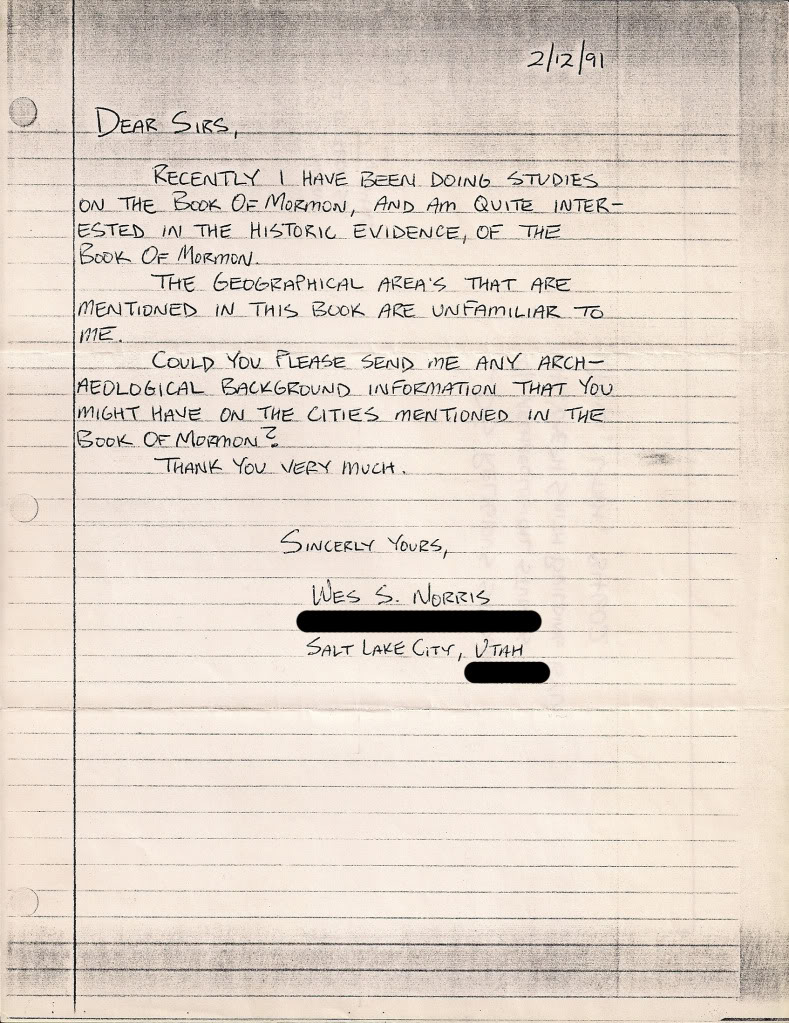
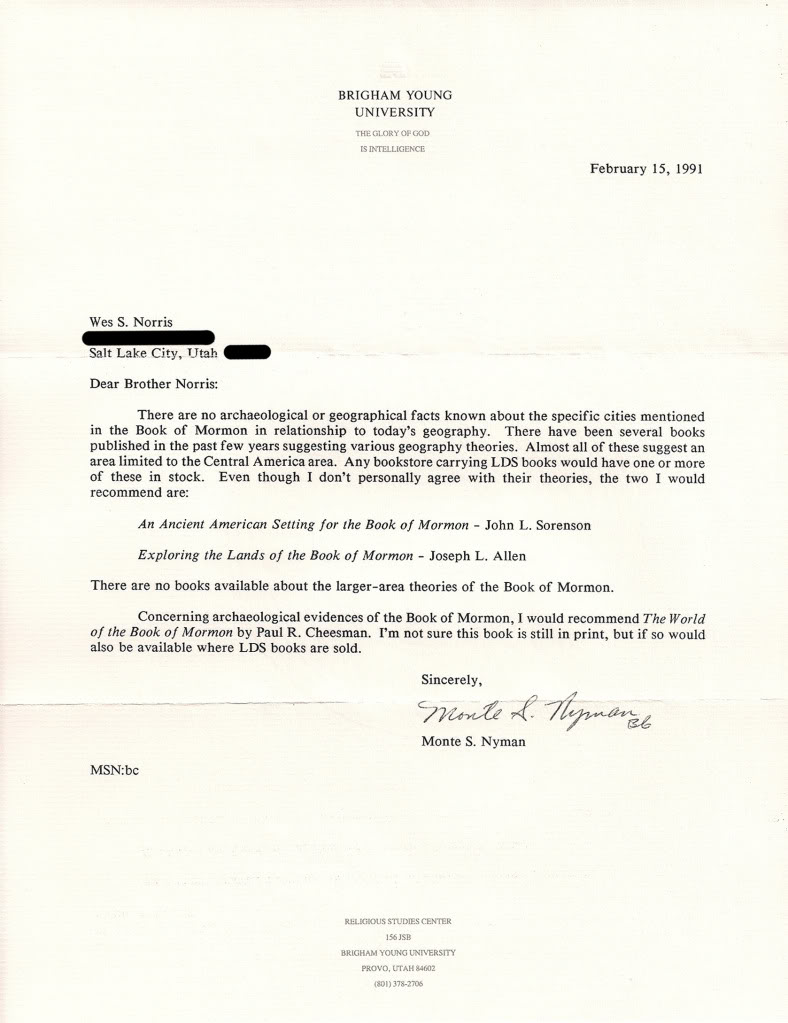
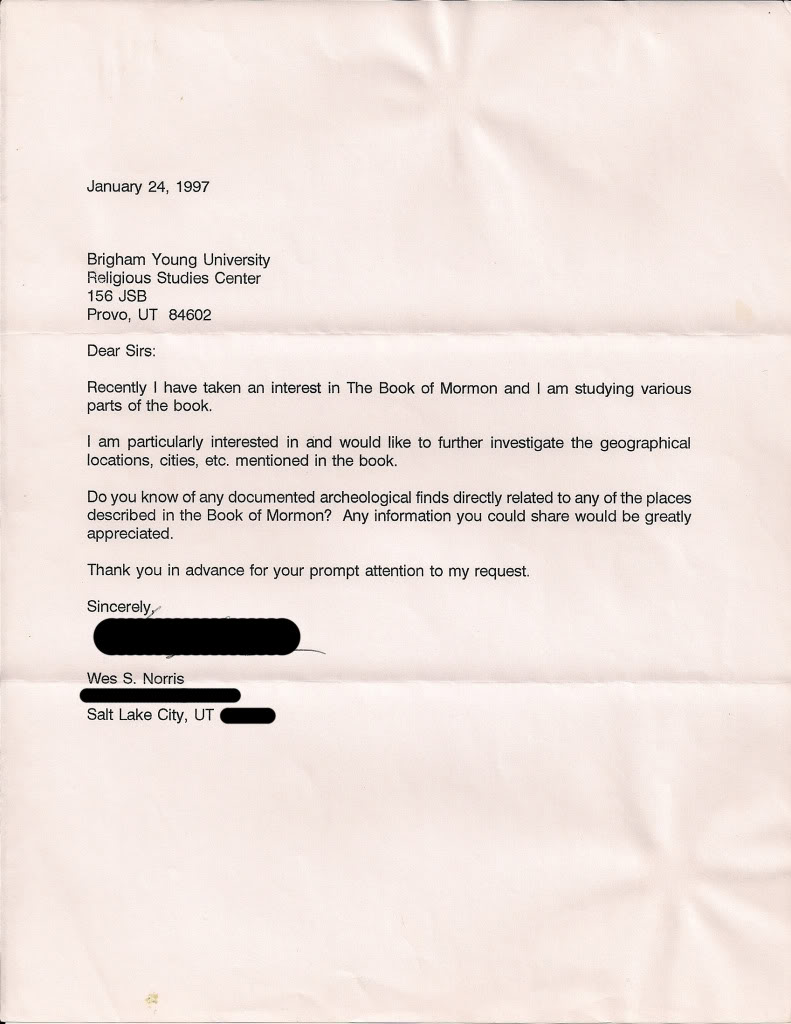
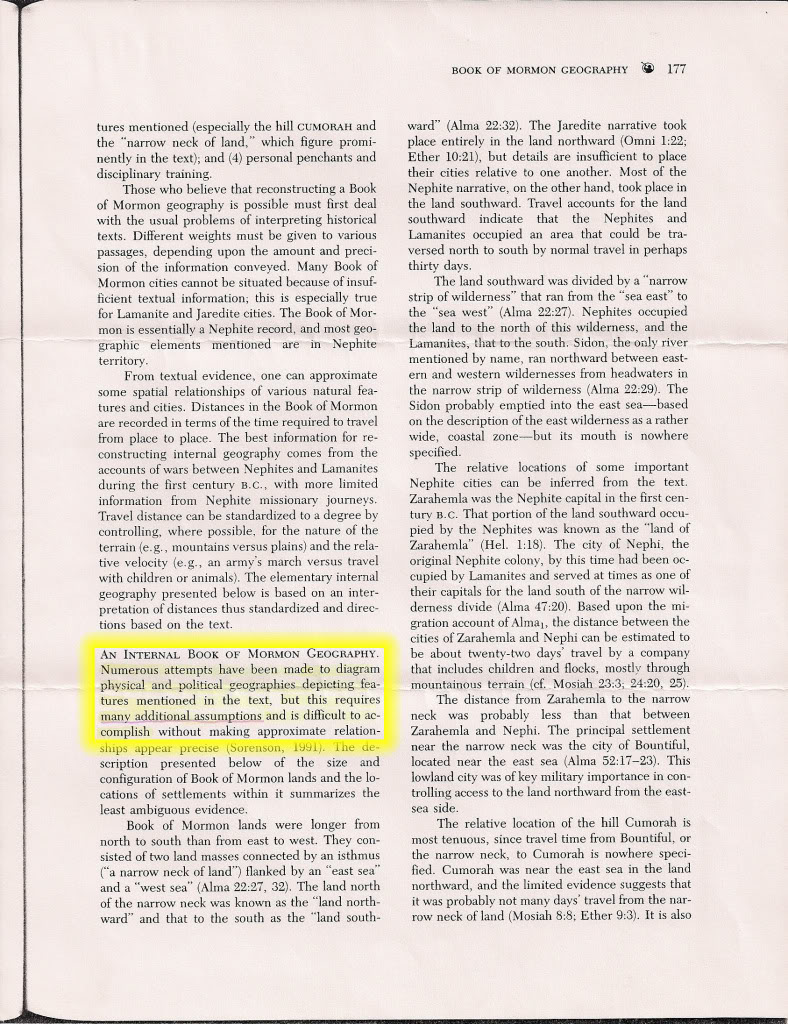
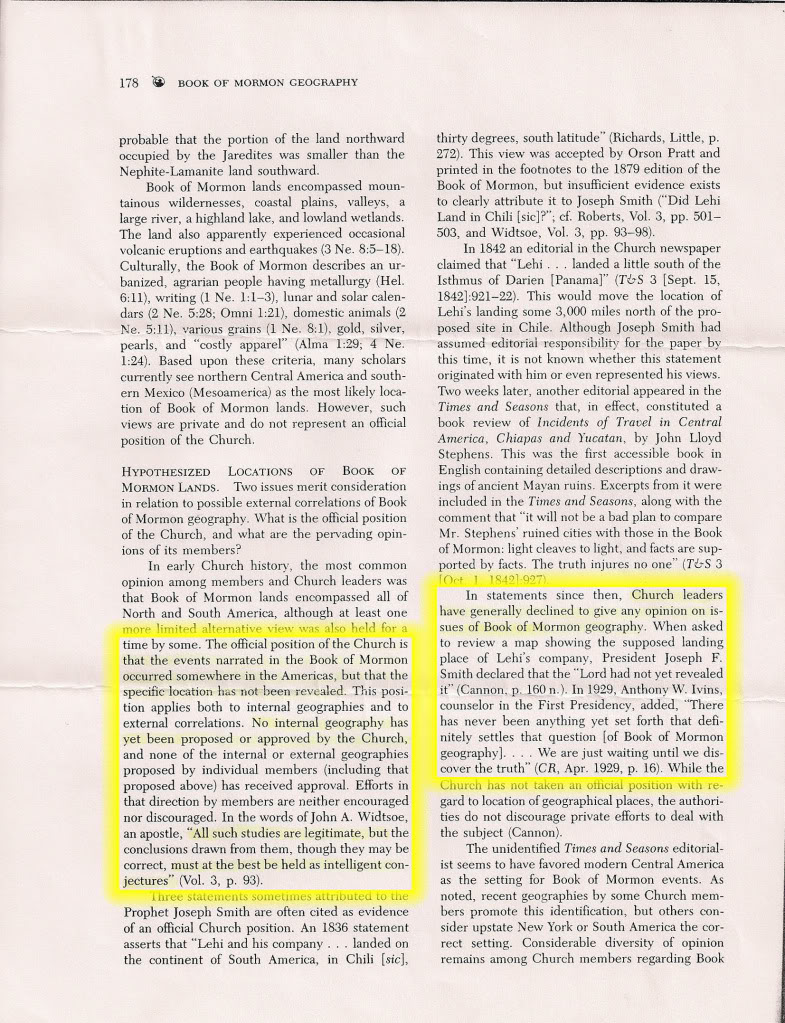
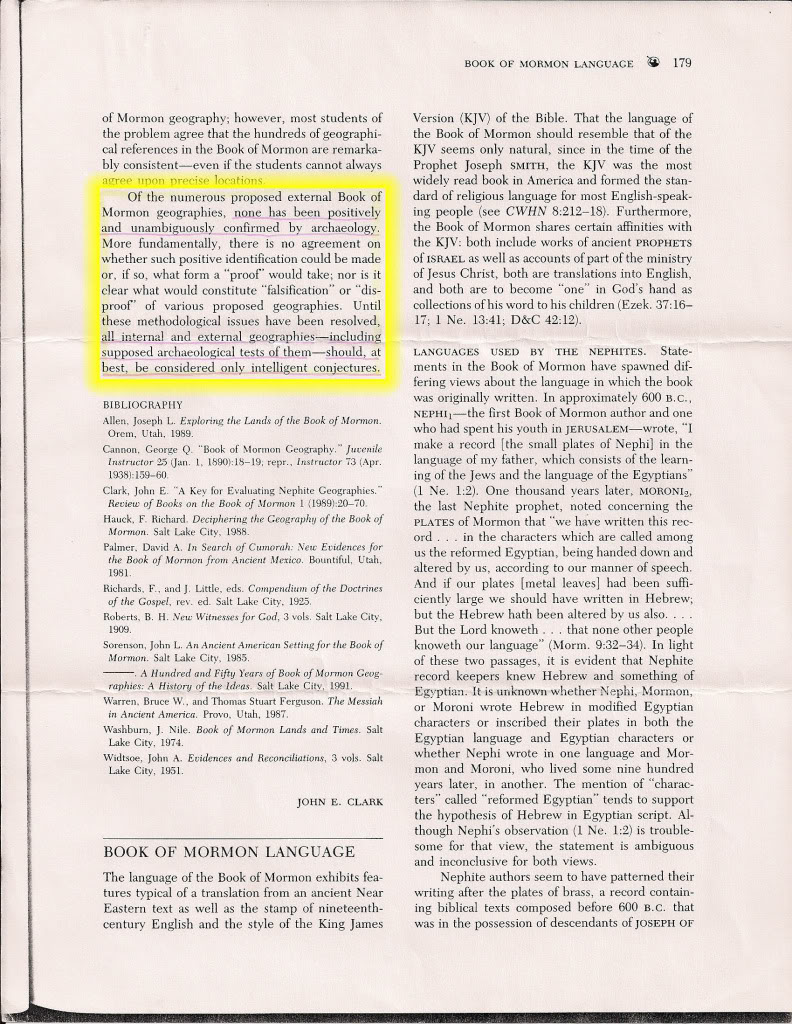
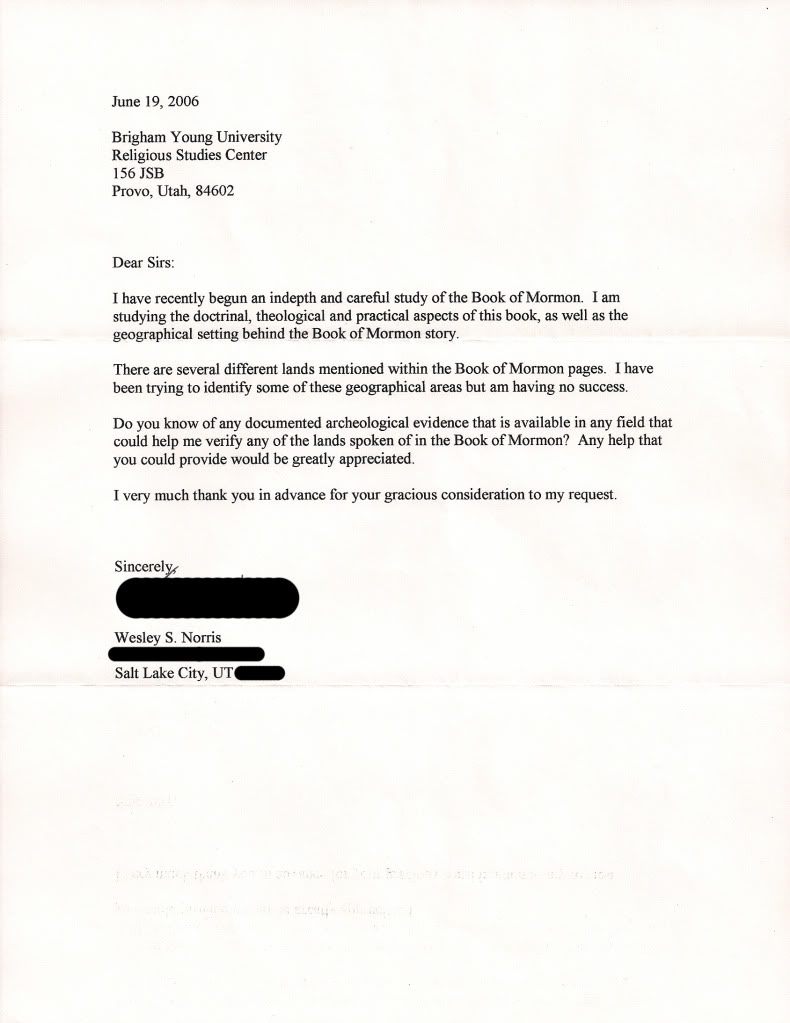
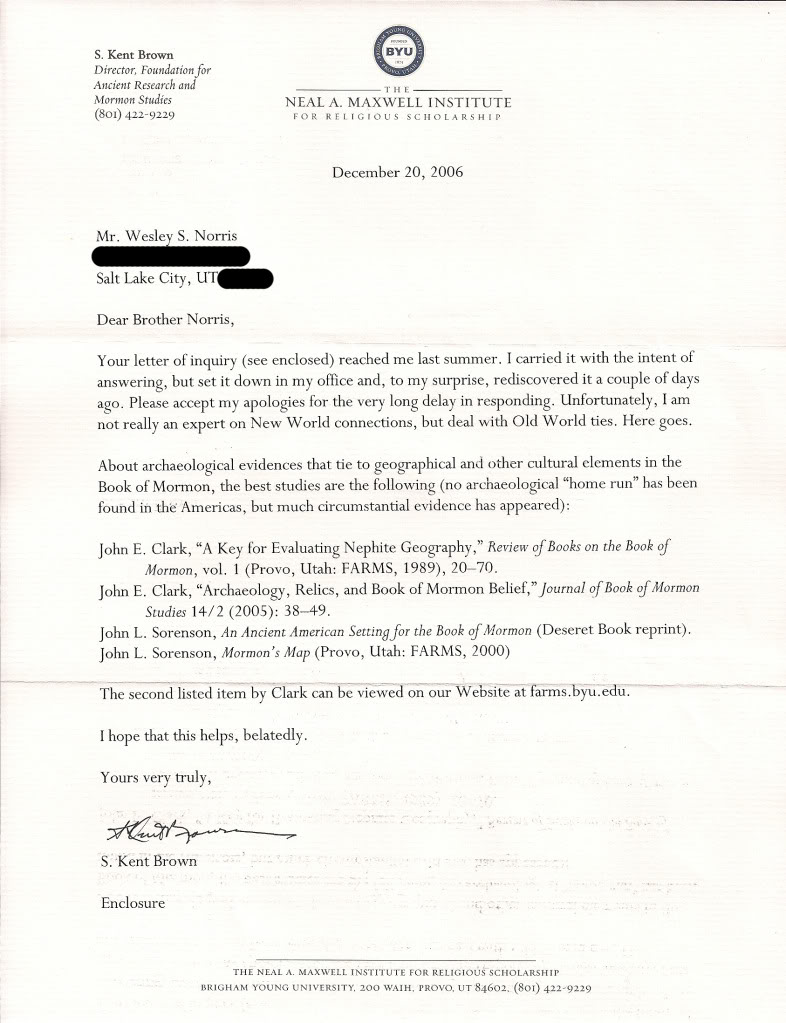
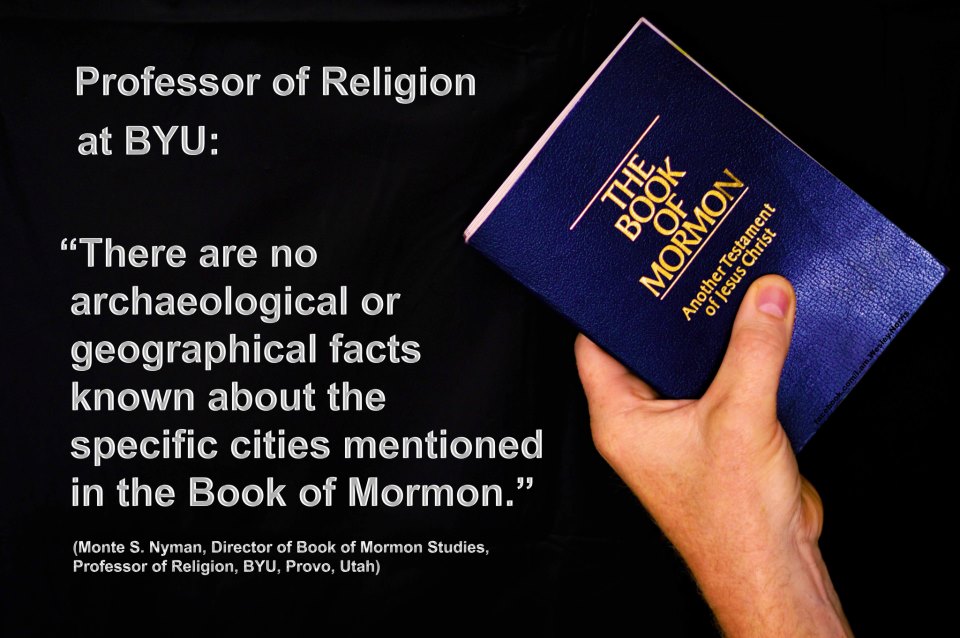
62. It has failed to officially, publicly, and directly address the ever mounting discrepancies between the claims of The Book of Mormon and the archaeological, historical, theological, and scientific body of evidence.

63. It has failed to explain the incriminating consistency between the claims of The Book of Mormon and the empirical 19th Century, political, literary, cultural and theological record. For example, the Book of Mormon was so infused with 19th Century Campbellite doctrine and ideas that primitive Mormonism was referred to as “Campbellism Improved” by outsiders.

64. It has failed to provide an adequate, rational explanation for how Joseph Smith could “translate” the Book of Abraham from a set of Egyptian Book of Breathings papyri.

65. It has failed to reasonably explain how Joseph Smith could, via The Joseph Smith Translation of the Bible, append the Bible with “translations” of entire new books and chapters that have utterly no manuscripts backing them while simultaneously purging words, verses – even entire books – that are substantially supported by the extant manuscript base.

66. D&C 42:71-73 commands paid clergy: Saying in part, “they are to receive a just remuneration for all their services”. And while in actual fact the LDS Church compensates leaders via employment in church owned businesses, generous honoraria, stipends, grants, scholarships, gifts, company cars, free travel and lodging, housing and other non-cash contributions, in public it deceptively claims that “The LDS Church has no paid clergy”.

67. It hypocritically denounces those who claim to bring forth new scripture and revelations using the same methods and means that Joseph Smith did because they fail to conform to established LDS Church orthodoxy. This, while simultaneously criticizing the mainstream Christian Church for rejecting Mormonism because the revelations and scripture of its founder and subsequent “prophets” fail to conform to established Christian orthodoxy. One such example of this is Christopher Nemelka’s “The Sealed Portion”.

68. It allows LDS Church leaders and the Church Educational System (CES), to distance themselves from the work of LDS Apologists so as – it is believed – to create a “plausible deniability” escape hatch should the work of said Apologists be discredited by more qualified, objective scholarship. Nevertheless, both cite from the work of LDS Apologists (albeit typically not credited) while allowing the LDS Church to quietly fund the work of said apologists through indirect cash flows.

69. It engages in political action via direct and indirect cash flows and privately exhorts members to organize and engage in particular causes and then publicly denies any involvement. California’s Propositions 22 (circa 2000) and 8 (circa 2008) are two cases in point.

70. It publicly (and loudly) trumpets its philanthropic work when compared to other churches its per capita outlay is less than what smaller, less wealthy, less organized religious organizations spend: A study co-written by Cragun and recently published in Free Inquiry estimates that the Mormon Church donates only about 0.7 percent of its annual income to charity; the United Methodist Church gives about 29 percent.
(Caroline Winter, “How The Mormons Make Money”, Business Week; July 18, 2012)

71. It has allowed LDS Church leaders to obfuscate, spin-doctor, and blatantly lie to the media rather than standing with integrity and bolding telling the world what the LDS Church really believes, teaches, and practices.  Such behavior should be denounced and condemned not tolerated, justified, or praised. One example of this Gordon B. Hinckley lying to journalists about the role and function of the Lorenzo Snow couplet within LDS Theology.

72. It fails to recognize the over sixty (60) active Latter Day Saint movement denominations (aka “splinter groups”) while hypocritically condemning the denominationalism of Christianity as a proof of apostasy and lack of divine legitimacy. This hypocrisy is even more pronounced when one considers that over the 180+ year history of the LDS movement there have been over 200 Latter Day Saint denominations in total with new ones forming at a rate will be eventually far exceed and outpace the total number of Christian denominations.

THOUGHT CONTROL ISSUES
73. It teaches an irrational and subjective epistemological system while simultaneously belittling epistemology based on reason, objectivity, and empiricism.

74. It employs circular logic.  For example, consider its core truth claim: “The only true church is The Church of Jesus Christ of Latter-day Saints because The Church of Jesus Christ of Latter-day Saints says it’s the only true church.”  Another poignant example of circular logic is the infamous Doctrine & Covenants 9:8 “burning in the bosom” truth test that (in the vernacular) goes something like this:  “If you don’t get it, you did something wrong. If you do, that proves the church is true.” Further, when taking this test, you don’t ask God if the church is true, but rather to show you that it is true: “I will cause that your bosom shall burn within you; therefore, you shall feel that it is right.”

75. LDS Church Missionary training and policies employs Mind Control techniques and tactics.

76. It keeps members so busy with LDS Church related activities that they don’t have time for personal reflection and self-autonomy. This is especially true of men as the demands of lay leadership tend to deprive them of real, regular, authentic family time.

77. It erroneously asserts that former members didn’t leave the LDS Church for any thoughtful or legitimate reasons but rather that they were thin skinned reactive, malcontents who left the LDS Church because they wanted to sin with impunity, or because of a perceived offense. Stated plainly, this is a hypocritical double standard: It’s OK to be troubled by, doubt, criticize, and even leave other churches, but this one can’t be questioned or left.

78. It discourages intellectual self-autonomy and self-responsibility and encourages dependency on LDS Church Leaders.

79. It engages in Mind Control tactics and techniques in recruiting, indoctrinating, and retaining members.

80. The LDS Church denies being man centered or exalting – claiming that it only lifts up Heavenly Father and Jesus Christ as worthy of its worship. Yet its Hymnal contains songs of praise and adoration that exalts both dead (#27 “Praise to the Man”) and living men (#19 “We Thank Thee O God For A Prophet”). 

81. It requires members to remain in a “snapped” psychological state in order to remain believing members. For example, when members encounter troubling facts about Mormon History and/or doctrine they’re either told to pray about it or “put it on the shelf”. This is called “Thought Stopping” and it’s a technique that Mind Control Cults use to avoid the rigors of logic, reason, and uncomfortable realities.

82. The Book of Mormon warns, “Wo unto them that call evil good, and good evil” (2 Nephi 15:20) yet the LDS Church requires members to adhere to moral relativism, loose ethics, and intellectual dishonesty in support of a belief system that lacks ethical congruity, consistency, and integrity. Some of the most obvious examples of this are: The practice of polygamy and the rationalization of that past polygamy today; A failure to acknowledge and apologize for its pre-1978 institutionalized racism, and finally; The practice known as “Lying for the Lord” throughout Mormon History.

83. It hypocritically rails against sound logic and reason as “the hollow and vain philosophies of men, not God” and then hypocritically attempts to (albeit poorly and inconsistently) employ logic and reason in its arguments and rhetoric.

84. It poisons members who leave the LDS Church against all other Theistic religions. This is best illustrated by the cliché used by both members and former members that goes something like this, “If the Mormon Church isn’t true then nothing is true.”

EMOTIONAL CONTROL ISSUES
85. It damages member psychology via the use of manipulative fear and unachievable standards of “worthiness”. Sadly, this lament is all too common: “Of course I do [have a testimony]! That’s what’s so terrible. I know the gospel’s true. I just can’t do it. I’ve tried and I’ve tried, but I can’t do it all, all of the time.” (Stephen E. Robinson, “Believing Christ”; Ensign, April 1992)

86. Whereas, Mormon Prophet Brigham Young preached, “A good man, is a good man, whether in this church, or out of it.” (“The Lions of the Lord: A Tale of the Old West” by Harry Leon Wilson, chap XXVIII, par 2) the modern LDS Church engenders arrogance and self-righteousness in members by telling them that they’re more enlightened and morally superior relative to the general population – including other good people of faith.

87. It uses guilt as a means of controlling members.

88. It “love bombs” investigators and new converts as a means of drawing them in.

89. It uses arbitrary, capricious, and ever changing criteria for Temple Recommend “worthiness”. For example Brigham Young’s 1856 worthiness questions (also see this ByteLine article)  are almost completely different than the current set of Temple Recommend Interview questions.

90. The Book of Mormon speaks of those who, “do walk in the pride of your hearts; and there are none save a few only who do not lift themselves up in the pride of their hearts …yea, even every one, have become polluted because of the pride of your hearts.” (Mormon 8: 36) Despite this the LDS Church culture engenders clannish, elitist, and pride in members via it a Temple, Priesthood, and oligarchical calling system that puffs member up rather encouraging and rewarding humility.

91. It encourages arrogant, condescending pride in members at all levels by telling them that they “have the whole and restored truth” that “apostates” only have in part and “gentiles” lack entirely.

92. It teaches that a rape victim has “lost her chastity” and that a woman should fight off her attacker or be killed in the attempt.  For example, Apostle Spencer W. Kimball, in his book “The Miracle of Forgiveness” said, “far-reaching is the effect of loss of chastity. Once given or taken or stolen it can never be regained. Even in a forced contact such as rape or incest, the injured one is greatly outraged. If she has not cooperated and contributed to the foul deed, she is of course in a more favorable position. There is no condemnation when there is no voluntary participation. It is better to die in defending one’s virtue than to live having lost it without a struggle.” (p. 196)  Thus, young Mormon women are taught that their chastity is more valuable than their life. The result is that a Mormon woman who survives a rape is made to feel guilty, and is thus victimized again, this time by her church.

93. It bestows the title “Elder” onto adolescent men (typically 18-years old) with little to no real life experience, thus puffing them up with arrogance and deluding them with prideful ignorance.

94. It hypocritically defines polemic arguments as “persecution” and then engages in polemics with its critics and those of other faiths. For example, consider how it trains its missionaries to speak of other churches:

“Without the Apostles, over time the doctrines were corrupted, and unauthorized changes were made in Church organization and priesthood ordinances, such as baptism and conferring the gift of the Holy Ghost. Without revelation and priesthood authority, people relied on human wisdom to interpret the scriptures and the principles and ordinances of the gospel of Jesus Christ.

False ideas were taught as truth. Much of the knowledge of the true character and nature of God the Father, His Son Jesus Christ, and the Holy Ghost was lost. The doctrines of faith in Jesus Christ, repentance, baptism, and the gift of the Holy Ghost became distorted or forgotten. The priesthood authority given to Christ’s Apostles was no longer present on the earth. This apostasy eventually led to the emergence of many churches.”
(“Preach My Gospel: A Guide to Missionary Service”; Official LDS Church Missionary Training curriculum, p.35)

95. It creates undue demands as well as mental, emotional, and spiritual stress and strain on members via all the above.


by “Enigma”
Introduction:
This article was originally posted on the ExMormon.org (aka “RfM) discussion board back in 2005 and quickly went viral. It’s the autobiographical account of a Born-in-the-Covenant Mormon who is forced to remain an active Mormon to maintain his marriage. This is an unfortunately common phenomenom – so common in fact, that the term that’s developed over time for Mormons in this situation is “Shadown Mormons”.   It is our hope that this article will impact and enlighten you in the same way that it has thousands of others to the pain and quiet despair that Shadow Mormons must endure. 

6a00e54f900c8e8833017d3bf4762a970c-800wi

ORIGINS
I was born into the church by parents whose lineage goes back to the founding of the LDS church. While they had their faults and mistakes, I was raised in a loving home with a very dedicated mother and father. They were wonderful examples to me of faith and endurance in trying circumstances and they tried every day to center their family’s life on the principles of the LDS Gospel.

I was born with a membrane disease in my lungs that nearly took my life at birth. My parents, extended family and several members of their local LDS congregation fasted and prayed many times on my behalf. My parents had already endured the devastation of losing their first-born son two days after his birth and they begged God not to take me. By virtue of the fact that I am writing this, I am there miracle baby. I was spared.

I went through all of the LDS Church rites of passage: Baptism at 8, priesthood at 12, president of my priesthood quorums, Seminary graduate/scripture mastery, mission at 19, and marriage at 23 and two beautiful daughters by the age of 28. By all accounts I was on the highway to heaven. I was the good son with the ideal family, budding successful career, faithful service in church callings, and extensive understanding of the LDS gospel.

SHOCK
In January of 1995 I prepare to go through the temple for the first time in preparation for my mission. I have been taught through the years that I would learn all that was necessary to gain my salvation by going through the temple. I believe it to be the pinnacle of true worship. I have expectations of learning great things through the covenants and true order of prayer as these parts of the temple have been quietly intimated to me through the years by my parents and teachers.

My parents, grandparents, various uncles and aunts and I meet at the Idaho Falls Idaho temple on a bright clear Saturday morning. I am a little nervous about the unknown but tremendously excited that I have reached this point in my life. I have one older sister who had made some serious mistakes and fallen away from the faith during her teen years. I am the first of my parents children to “make it” to the temple and it is the healing balm for their souls to see their oldest son “staying the course”.

“Let me take you now through my first experience in the temple”

I get my temple clothing packet from the rental counter. The first two whispering questions surface to my conscious mind…

“What is this clothing for?”

“Why are there moneychangers in the temple?”

“No matter” I rationalize, I am here to receive enlightenment and make covenants in the House of the Lord. I go with my father to a small room that serves as some kind of office. There, the temple president explains to me the sacred nature of the Garment and the need to wear it from this point on as a shield and a protection. I go through the Washing and Anointing and New Name ceremony without much concern. I accept these ordinances based on references in the bible regarding the washing and anointing of priests and the periodic assignment of new names to various biblical patriarchs in the Old Testament.

I proceeded to the waiting chapel to sit and meditate until the time of the next session. The time has arrived and the company of people assembled in the chapel is ushered into the creation room (the Idaho Falls Temple still has separate creation, garden, telestial and terrestrial rooms with the video and audio segments appropriate for those parts of the ceremony queued up in succession). I sit and wait.

washington-mormon-temple18The company is seated.

The lights grow dim.

I sit silently in the darkness…

This is the beginning of the end.

“You will be required to take upon yourselves sacred obligations, the violation of which will bring upon you the judgment of God. For God will not be mocked.”

I feel fear in the darkness.

“If any of you wish to withdraw rather than receive these covenants of your own free will and choice, you may now make it know by raising your hand.”

I look around in the darkness.

I see my family silhouetted in the darkness.

I feel fear in the darkness.

I remain seated in the darkness.

I witness the creation and go into the garden room. The fruit is eaten. The fall has commenced.

“Take some fig leaves and make you aprons. Father will see your nakedness. Quick! Hide!”

“Brothers and Sisters put on your aprons.”

I obey Satan.

I make my first covenant to obey God’s law and keep his commandments. I see the sisters bow their heads in submission to their husband’s. I am now ready to receive the first token of the Aaronic Priesthood with its accompanying name and sign.

What is a token?

What will I do with it?

I receive the first token: A secret handshake.

A secret handshake?

I make the sign. I make the covenant. “I, Jesse, solemnly covenant before God, Angels, and these witnesses at this altar, that I will never reveal the first token of the Aaronic Priesthood with its accompanying name and sign”

A secret combination?

All my life I have been taught from the Book of Mormon that secret signs, oaths and societies are from the devil. They are responsible for the destruction of civilizations and untold misery.

I have joined a secret society?

I am now a part of a secret combination?

I feel fear.

Adam and Eve are cast out of the garden. I go into the telestial room.

This is the entire Mormon Temple Endowment Ceremony (with movie) that is in every temple in the world except the Manti, Utah and Salt Lake City, Utah temples. (Those two temples have temple workers act out the endowment ceremony instead of showing a movie in those two temples.)

Michael Ballam playing Satan in the 1990 Temple Endowment Movie

Satan is looking at me.

“I have a word to say concerning these people. If they do not walk up to every covenant that they make at these altars in this temple today, the will be in my power”

I feel terror.

Satan is cast out. I receive more tokens and signs. I put on strange clothing.

I look at my father.

His face a mask of concentration, staring resolutely ahead.

I look at my mother.

Her face devoid of emotion, following by rote.

I look around at all the other patrons following en masse. All dressed in strange ceremonial clothing. All bow their heads and say yes.

I am in a cult.

My mind whispers quietly: “Please God no!”

“Each of you bow your head and say yes.”

The company chants in unison: “YES”

I am trapped.

My mind screams: “PLEASE DEAR GOD NO!”

“EACH OF YOU BOW YOUR HEAD AND SAY YES.”

I bow my head.

I say “Yes.”

“Raise both hands high above the head and while lowering the hands, repeating three times the words: O God, hear the words of my mouth”

Everyone raises their hands.

I raise my hands.

Everyone repeats the chant.

I repeat the chant.

The sound of many voices as one has a numbing effect.

I am no longer an individual.

The True order of prayer is introduced. I feel relief. Finally a prayer to sooth my tortured mind. We gather in a circle around the altar. This sisters veil their faces. We do not pray. We make the signs of all the tokens of the priesthood. We each take the hand of the sister to our left in the patriarchal grip, raise our left arms to the square, and rest them on the shoulder of the person to our left.

LDS_TempleThe officiator kneels.

He begins to pray.

“Those in the circle will repeat the words of the prayer”

We repeat the words of the officiator.

Our words are a monotone chant.

I am in a séance.

The sound of many voices as one has a numbing effect.

I am no longer an individual.

I feel my mind growing numb.

I obey.

I accept.

I pass through the veil after receiving the name of the second token of the Melchizedek Priesthood and go into the celestial room. Family congratulating me in hushed and reverent tones surrounds me. I sit for a moment to ponder.

I am in a cult.

Dear God what have I done?

I am in shock.

I have learned nothing.

I visit the temple repeatedly to gain more insight. None comes. I just accept it all as I have been taught to do and eventually the questions and doubts are silenced as the euphoria of accomplishment enshrouds me.

I made it.

I am one of the elite.

This is the beginning of the end.

UNANSWERED QUESTIONS
After my first time through the temple, I learn from my mother that the ordinances have been changed recently. I simply nod in acknowledgement of here statement, still too shocked to really respond to this revelation. Looking back, it was the perfect time to broach the subject, as I would not give it another thought for 10 years.

While on my mission I become aware of the existence of the Masonic order. I learn that Joseph Smith was a Mason. I learn of the similarities between the Masonic and Temple ceremonies. I learned that the temple endowment ceremony was introduced within two months of Joseph Smith’s induction into the Masonic Order. I learned that Joseph restored the endowment to its full purity from its ancient and corrupted Masonic origins. I am too indoctrinated as a missionary to even entertain a concern about the whole situation. I accept it all.

question-markIn my second year of college in 1999 a fellow student, upon learning that I was a Mormon confides in me that he used to be a Mormon but that he left because of the Book of Abraham. As I listen, he explains to me that is was nothing more than a common Egyptian funerary text and that Joseph Smith’s translation was completely false. He tells me how everybody told him to “read this or read that” writing written by various apologists to explain away the problem but none of it made any sense. He summarizes by saying that maybe he doesn’t have enough faith. He cannot reconcile the glaring inconsistency. My faith was unwavering. I feel pity for him.

By the end of 2004 I am a traditional believing married Mormon Father of two with a home in the northern Utah suburbs and a college degree completed. I am in the elder’s quorum presidency, working in my field of interest and life is good. Over the last few years, I have encountered and “resolved” to my satisfaction a multitude of evidences and questions that would shed doubt upon the divinity and authenticity of the church. I am a stalwart member. In October of 2004 I get a job offer within my company for a position at the corporate headquarters in Atlanta, Georgia. My wife and I prayerfully consider and accept the offer. This is the first big move for us. My wife’s father works at the Bountiful Utah temple and he and his wife are preparing to serve a mission. We sell our home during the Christmas season and move to a small suburb north of Atlanta in January 2005. We are now on our own.

Shortly after our move to Georgia, my wife relates to me a phone conversation she had with her parents (they call usually once a week) in which her father mentioned in passing that the Initiatory ordinance had been changed. The comment passes and the conversation continues. All is well.

All is not well.

Deep inside my mind, a thought emerges.

COLLAPSE
It keeps gnawing at me.

I can’t seem to shake it.

I’ll get over it.

I take the time one day to peruse the junk mail and run across an Oprah mail order book club list. I am browsing through the titles when I come across the title: “Leaving the Saints: How I Lost the Mormons and Found My Faith” by Martha Beck. I am intrigued and I read the brief description. I am always interested in why people leave the church if only to reinforce the various arguments I have constructed to bolster my faith. I do a search online at work and find that this is the daughter of Hugh Nibley, the most renowned church apologist. I read a few excerpts online”

There is a crack in the foundation of my fortress of faith.

The Book of Abraham is back.

For reasons I know not, I cannot ignore it this time.

I begin to read. I read stories online about why people leave the LDS church. I read for two months. I collect their stories. I laugh with them, cry with them, I sympathize with them.

I am now in violation of question number six in the temple recommend interview: “Do you affiliate with any group or individual whose teachings or practices are contrary to or oppose those accepted by The Church of Jesus Christ of Latter-day Saints, or do you sympathize with the precepts of any such group or individual?”

I bow my head and say yes.

HOPE
I begin to think.

I begin to question.

I begin to doubt.

I begin to learn.

I begin to awaken.

I spend every available break time at work reading on the Internet. I revisit all of my concerns with an objective point of view. The evidence is devastating. It has been here all along and I have refused to see it in the light of rational thought. I have forcefully refused to use the brain that God gave me for over 10 years. I drink from the fountains of knowledge like a man dying of thirst. I have never felt so liberated. I ask God if what I am doing is right. I feel an incredible sense of peace and love envelope me and I know in my heart and mind that what I am doing is right.

I am an individual!

I am alive!

I am free!

“Alone in a Crowd” by Dennis Wells

I am married to a devout Mormon woman and I have two daughters. I am in the elder’s quorum presidency. I am in a large Mormon family that, with only 2 exceptions, is all devout believers. I start to think again. We are on our own now. Family is thousands of miles away. I begin to hope. If I make the information passively available, my wife will listen to the voice of reason. I share my concern of the changing temple ordinances with her. She is shocked but tries to understand and agrees that I need to prayerfully study my concerns to get the answers that I am seeking. I bring “By His Own Hand Upon Papyrus” by Charles Larson home to casually read.

I am reading more and more each day. Finding a special thrill in entertaining serious questions and using my reason and intellect along with inspiration to find the truth. I am learning to love absolute truth without loyalty to any organization. It has truly set me free. I can question anything! I can reach my own carefully thought out conclusions! No information is off limits! I can truly exercise my mind! It is incredibly intoxicating.

I know the truth now.

The Mormon Church is a man-made institution.

It has no claim to exclusive authority.

I know.

I am so happy.

By this time I have stopped paying tithing. I am getting a better handle on the family finances as a result. I am cultivating a more tolerant and loving worldview. I am less judgmental. I no longer view life through the confining prism of Mormonism.

The freedom is intoxicating.

I don’t tell my wife.

This is my fatal mistake.

Thursday, July 28th, 2005: we come to an emotional confrontation that lasts until four o’clock in the morning. Because I now hold the church in suspect, my wife tells me that our marriage is based on a lie. She tells me that she wishes that our children had never been born. She tells me that she does not want her daughters raised in a home with an unbeliever.

I read the writing on the wall.

TRAPPED
Friday, July 29th, 2005: I come home from work and my wife tells me she has come to some conclusions. We sit and talk. She has read “By His Own Hand Upon Papyrus”. She tells me that the truth is anti-Mormon. She has thrown away the book. She tells me that Satan is tempting me with the facts. She tells me her testimony is unshakable. She tells me that in order for her to support me in my journey, I must do things her way. I must study only the scriptures and approved church scripture study guides alone and with her. She tells me I must put aside the facts and the truth for now. If at the end I still feel that the church is not true, she does not know what she will do. She may go into therapy. She may leave me. She may take my children away. She has called her parents and my parents while I am at work. They have all agreed to open their homes to her immediately if necessary. She tells me that my parents are prepared to come to my home this weekend and if necessary, she will go back with them. She has set an appointment with the bishop for Sunday morning.

I am trapped.

DECISION
Saturday, July 30, 2005 its midnight: I cannot sleep. I go to the downstairs living room. I lay on the couch. I talk with God. I know the truth now. I love my family more than life itself. I would rather die than lose my children.

Truth is irrelevant.

Truth must be ignored once again.

Facts must be buried once again.

Freedom must be surrendered once again.

dying-church-1I put on the blindfold.

I put on the shackles.

I am a voluntary prisoner in my own mind.

I commit intellectual suicide tonight.

I commit spiritual suicide tonight.

I do this willingly, fully aware of the consequences, for the rest of my life.

Freedom and reason are buried under the crushing weight of the foundation of my prison.

I cry tonight.

My soul dies tonight.

I go to the bishop Sunday morning. I say what is necessary. I will conform. I talk to my parents that night. I will conform. Because I love my family more than life itself I will conform. This is the legacy of Mormonism: conformity. I voluntarily submit myself to the horrifically comforting mental conditioning once again. I close forever the covers of enlightening literature. I will read and understand only what is approved.

It is so easy.

It is so simple.

Yes.

I understand.

I bow my head and say yes.

But…

Buried in the recesses of my conscience, there will always be a bright spark of pure truth.

Lingering.

I know.

REMEMBER US!
To those of you on the outside reading this, I beg you, please do not forget us. Please remember the hundreds of thousands of unique, special, beautiful individuals that are currently serving life sentences in the prison of Mormonism. Please do not cease to pray; to whatever God you serve, for our deliverance. Some of us have no hope for redemption or liberation. For the greater good, we willingly sacrifice our souls upon the altar of conformity and orthodoxy. Our pain is real. Our sentence is absolute.

I will always hold out hope that one day, perhaps within my lifetime though not likely, that pure truth will prevail. I hope someday that the desire to understand the truth at all costs will override the desire to maintain tradition and conformity. Until that day I will try to find some grain of happiness somewhere, anywhere, in the spiritual abyss that I have willingly entered into.

I bid farewell to progress.

I bid farewell to truth.

I bid farewell to reason.

I bid farewell to freedom.

photo credit: Talena Sanders http://talenasanders.com/home.htmlTo those of you on the outside, I thank you. I thank you for your courage. I thank you for your wisdom and insight. I thank you for your compassion and understanding. I thank you for your stories. I thank you for showing me the truth and allowing me to bask in its warmth, even if for a small moment. I love you all. I hope that truth will ultimately prevail. I hope that you and I will live to see it.

Until that time, I go, quietly, shackled and blinded once more into the prison that awaits me. I bid you all farewell.

Remember me.

Remember us.

I feel myself submerge once again into the group.

I feel the darkness close around my mind.

Strange.

It feels so comfortable.

So familiar.

It doesn’t hurt very much anymore.

I feel my identity slipping quietly away.

I am no longer and individual.

I bow my head and say yes.

Postscript: 
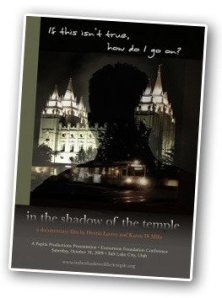
A few years after this article was published, an award winning documentary on the plight of Shadow Mormons entitled, “Under the Shadow of the Temple” was released.  This documentary acts as an excellent companion piece to this article.  We give it our highest recommendation. 

InTheShadowOfTheTemple

Click on image to see trailer

(NOTE: you can read Enigma’s original RfM post here: http://www.exmormon.org/mormon/mormon413.htm )

2508440493_8357bedeaf_z-CROPPED

On Thursday, October 31, 2013 between the hours of 12:00AM-11:59PM in their local timezone, active members of the Church of Jesus Christ of Latter-day Saints, as well as disaffected members and other supporters will be posting a copy of the most current 95 LDS Theses in across the internet  and onto the doors of their local LDS church buildings to protest the church’s refusal to address its covered-up history as well as it’s scripturally incongruent and often harmful behavior. 

The 95 LDS Theses (English)
Las 95 Tesis SUD (Spanish)

The project is organized by Mormon Reformation, a protest movement which aims to follow protestant reformer Martin Luther, who in 1517 posted a list of Ninety-Five Theses for consideration, discussion, and possible action on the door of the Castle Church of Wittenberg. Within two weeks, printed copies were distributed by the press throughout Germany, exposing the corruption of the Catholic Church, and starting what came to be known as the Protestant Reformation. Now, modern protesters claim, it is time for a new, Mormon Reformation.

Why Does Mormon Reformation Feel a Protest Is Necessary?
The protest is intended to be a peaceful, non-confrontational, and anonymous way to achieve the following two objectives:

1) Educating the membership of the church on controversial, revised, and hidden aspects of church doctrine, history, fundamental claims, and practices.

2) Influencing church leaders to officially address topics, behaviors and institutional issues that they have dodged, dismissed, and covered up for too long.

Some Key Issues
In particular, the 95 LDS Theses addresses the church’s whitewashing and suppression of documented Mormon History, such as:

Whatever your personal desires for the LDS Church . . . 
“To make this event successful, we are enlisting the help of a wide variety of people,” explains group spokesman Fred W. Anson. The group of protesters consists mainly of progressive, temple recommend-carrying members of the Church of Jesus Christ of Latter-day Saints, as well as less active members, some members who have left the church, and still others who have never been members but have Mormon friends and family members who are concerned about the modern Mormon Church.

There are now well over 1,000 discussion forums, podcasts, and blogs which vary in focus and style from gently discussing pertinent issues to openly satirizing covered-up Mormon beliefs, and the modern church’s inauthenticity, as well as it’s institutionalized behavioral, information, thought, and emotional control.

In January, 2012, a Reuters article announced a statement by church historian and recorder Marlin K. Jensen’s that the church has never experienced such a profound loss of its membership since the Kirtland, Ohio, banking scandal in 1837.

According to Mr. Anson, “Some people wish for nothing short of the complete destruction of the church. For them, our efforts don’t go far enough. Others just want to tweak a thing or two about the church. Whatever your personal desires for the church, we hope that we can count on your support to achieve the above two objectives by sharing these 95 LDS Theses and our event through social media and/or posting them on the door of your local LDS Church building.”

Event information and a printable copy of the 95 LDS Theses can be found on MormonReformationDay2013.org as well as its Facebook event and discussion pages.

About Mormon Reformation 
Mormon Reformation is a group of active and disaffected Mormons – as well as their non Latter-day Saint friends and family members – who seek to create change within the church by petitioning LDS leadership to openly address its covered-up history, dishonest claims, and harmful behavior. The movement has grown out of and coalesced from previous Reformation Day efforts in 2011 and 2012 as well as a non-Reformation Day event on February 16&17, 2013.  

IWasABornAgainMormon

I Was A Born-Again Mormon: Moving Toward Christian Authenticity
Written by Shawn McCraney
Printed by Alathea Press
Paperback
359 Pages
Available directly from the Born Again Mormon website

5-Stars for content
3-Stars for difficiencies

Review by Fred W. Anson
I am a supporter of Shawn McCraney and the Born Again Mormon movement. Both have great promise and tremendous new movement challenges all which are fully evident in this book. It’s my hope that by offering an honest, balanced, and relatively objective review of this book that I can play some small role in seeing those problems diminish and the potential fully emerge.

DESIGN DEFICIENCIES
First let me state that the book is, well written and I enjoyed reading it. I did NOT agree with everything that Shawn said but the author makes a compelling case and I learned a lot about Mormon Theology and Culture. Shawn McCraney writes and communicates well and every Mormon Studies Scholar would do well to consider adding this book to their book bag.

However the book is marred by many of the problems of self-published books. Let’s start with the interior layout and design – simply put, it’s ugly. The top and bottom margins are too large and the side and gutter margins are too small making the pages look and read erratically. The type is not top/bottom justified and often features hideous page break errors (see the bottom of page 123 where the italicized header for the body text that follows on page 124 has been orphaned – a mistake that a professional book designer would never have made!). Shawn is fond of long, verbose notes,  which means that they should be at the END of the chapter or book so as to not disrupt the flow of the main narrative – which they do as footnotes – constantly.

To make matters worse these short story length footnotes regularly trail across the bottom of multiple pages and occasionally consume entire narrative pages! The most extreme example can be found on pages 214 and 243 which are literally nothing BUT footnote!

The typesetting is just amateurish – using double spacing between paragraphs – as well as items in lists and tables. This is not only ugly but it unnecessarily adds pages to the book driving the unit cost up. Overall, this book has more the look of a college term paper than a retail product.

But that’s not all. There is no Table of Contents, no index, no glossary of terms, and most puzzling of all, no chapter breaks (he annoyingly refers to what others would call “sections”, “chapters” throughout the book). In fact, the reader might be surprised that the First Edition of this work didn’t even have page numbers! One can only hope that in the next edition the book is handled over to a book designer for a major rework.

In summary, in it’s current incarnation this book is ugly, it’s hard on the eyes, and often fragmented in flow by heavy, wordy footnoting.

EDITORIAL DEFICIENCIES
I also would hope that a professional editor or experienced publisher is engaged in the next edition to deal with the other deficiencies of this book. The most obvious poor editorial decision is that the book is too long! That’s because, in my opinion, three books were crammed into one a single imprint. Were I the editor I would suggest that the book be republished as the following three titles in a “Born Again Mormon” series of books:

1) “I Was a Born Again Mormon”
Shawn’s Exit Story from Mormonism and Born Again re-entry into Christianity. (pp. 1-117)

2) “The Born Again Mormon’s Guide to LDS Scripture”
Shawn’s analysis of the Joseph Smith story, The Book of Mormon, Doctrine & Covenants, and Pearl of Great Price from the Born Again perspective. (pp. 118-227)

3) “The Born Again Mormon’s Guide to Following Jesus”
Shawn’s guide to living daily as a Born Again Mormon. (pp. 228-359)

I believe that this decision would lead to three reasonably sized books (each around 120-pages) that are easily read and digested rather than a behemoth 3-course feast that overwhelms the reader’s mind and patience.

Further, with this format Shawn could expand on the “stickier” concepts in the book which might lead to a great understanding of his mission, calling, theology, and tactics. Perhaps this might result in diluting the criticism that the current incarnation of this work has garnered from well meaning Christians who use this book as their sole reference for the Born Again Mormon movement.

CONTENT OVERVIEW AND ISSUES
Those familiar with Shawn’s “Heart of the Matter” television show will be right at home with this book. Shawn writes pretty much as he speaks – but often with greater articulation and deeper thought. If you’ve digested all the archived shows from the web (well over 100-hours as this review was being written) you’ve already digested much of this book. However, you should probably still read the book because the “why’s” behind much of what Shawn says sand does on the TV show can be found here – and unlike the show they’re fully footnoted and source referenced too![1]

ShawnOnSet

Shawn McCraney on the set of his television show

I found value in the entire book but clearly the most powerful part of the book – and the one that I suspect is more memorable for most Mormon readers – is the first section “Born Again” which contains Shawn’s Exit Story from the LDS Church and Born Again testimony. Shawn’s story is moving AND, surprisingly, typical of many other ExMormon stories. This brings up a key point that must be made: A truer title for Shawn’s book and movement would be “Born Again New Order Mormon” because that’s REALLY what Shawn was – a New Order Mormon[2] – before he had his Born Again experience. This might seem too fine or nuanced a point for many of Shawn’s supporters and critics but it is the truth.

But this is an important, nuanced point given the fact that Shawn and the Born Again Mormon movement could be the solution to a BIG, BIG, BIG problem for (so-called) “Anti-Mormon” ministries. That problem is the fact that the majority of New Order Mormons – the most common estimate is 60% – become Agnostic or Atheist after leaving the LDS Church. By balancing II Corinthians 16:14-18[3] with I Corinthians 9:19-23[4] the Born Again Mormon approach appears to transition more ExMormons to a saving faith in Jesus Christ than traditional “Anti-Mormon” approaches have.

I know that the above statement will no doubt grate against those who prefer the traditional “Shock and Awe” approach to delivering Mormons from the jaws of the LDS Church[5] but we must be honest – Shawn is finding success in an area where our “Shock and Awe” techniques have not – a 60% FAILURE rate is nothing to be proud of! Clearly we have been doing something WRONG not RIGHT and we need to be humble enough to admit it. Shawn McCraney is onto something here and I believe that God is trying to show us something through Shawn as imperfect the message and messenger might be.

I also found Shawn’s deconstruction of the Book of Mormon through the 19th Century lens of Joseph Smith family history, as well as excellent context setting of the “Burned Over District” of the day, enlightening and a worthy addition to the ever growing body of Mormon History analysis and interpretation.

But easily the most controversial and most frequently criticized section of the book is the last section starting with “Practicum” and ending with the Appendices.

This is where Shawn presents the case that a Mormon can become Born Again and remain in the LDS Church until they feel lead by God to leave. This is where the natural tension between II Corinthians 16:14-18 and I Corinthians 9:19-23 is highest and where, in hindsight, Shawn would have wise to develop a fuller theological framework for the major paradigm shift that he has introduced to his widely mixed and diverse audience before he published a book, went on TV, and parachuted into the harsh religious battleground of the “Morridor”[6] with his bold, brash demeanor and provocative new ideas.[7]

Instead I found the theological foundation that he presented in this book theologically immature, theoretical, idealistic, and with the exception of his life story, not really fleshed in the real world over time and over a broad sampling of Mormons. In the end this section is problematic and, and it could have been predicted that it would become chum for criticism of Shawn and the movement.

In hindsight I wish that Shawn had slowed down and taken more time to fully develop the Born Again Mormon model and Theology before shooting it like a scud missile into the Morridor.

This was a situation where time was on his side! After all Shawn was voluntarily excommunicated from the LDS Church in 2003 yet after only two years he published a book and launched a Utah based television program. 5-years later he launched a Para-Church Bible Study and Fellowship. All this while juggling a secular “day job”, marriage, and family in Southern California!

Further, when we consider that Paul was prepared for 14-years from the Damascus road experience (Acts 9:1-31) until his first missionary journey (starting in Acts 13)[8], and Jesus was “prepared” for 30-years before he began His public ministry, the lack of wisdom of this “quick to market” ministry decision comes into focus.

Personally, after reading this book (as well as seeing some of Shawn’s lack of self-control on the TV Show) my biggest concern is that the ministry and movement may eventually implode, dissipate or be marred by some type of scandal. Again, this is just an outsider’s perspective based on nothing but observing the ministry over time and reading this book.

That’s why I regularly hope and pray that Shawn and his staff is accountable to older, wiser “battle proven” Morridor Christian Ministers and stays there! As it is, I consider the infant Born Again Mormon movement to be a rather fragile thing that could fracture at any time if it isn’t stewarded wisely and patiently. As this review is being written (October 2008) I feel that the movement is at a juncture and could go “bang” or “bust” depending on a great number of internal, external, known and unknown dynamics.

But either way watching the Born Again Mormon movement grow and mature is certainly proving to be a fascinating chapter of modern Church History. Were not so much at stake, I would even go so far as to say that it’s good “theater” or a wonderful case study for future ministries.

CLOSING THOUGHTS
As I said at the beginning of this review this book demonstrates both the potential and the problems of the Born Again Mormon movement. Shawn has been criticized for being strong willed and prone to not listen to wisdom and experience. The book’s poor design and editorial decision appear to be evidence of this. On the TV show when he explained that the title of the book had been changed to, “I WAS A Born Again Mormon”[9] and page numbers were added[10] his displeasure was evident even though BOTH choices made this latest edition a far better book than the first edition was!

Shawn McCraney

Shawn McCraney

The overwhelming size and content of the book is evidence of another – perhaps the biggest – problem that I see with the movement which is: Too much, too fast, too soon and far, far, far too aggressive.

Were I on the Born Again Mormon advisory board my biggest piece of advice would be this: SLOW DOWN! This is a ministry that got traction quickly, gained speed, and never slowed down. Well, in my opinion, it needs to.

That’s because I see symptoms that the movement has overwhelmed the slow moving, conservative, and resistant to change Morridor creating unnecessary friction, tension, and anger worldwide (when it comes to Mormonism if you threaten Salt Lake City you threaten the entire Mormon Principality – it’s like attacking the Queen Bee in a hive). In my opinion much of the criticism that this movement has suffered has been because in it’s haste it unintentionally runs over people and once they get up they act out their anger, hurt and frustration via very public, often unreasonably harsh and “over the top” criticism.

I think that if the movement would start moving in a slower, more deliberate, more organic, less forced manner these shrill voices will begin diminish over time AND the fruit will slowly mature as they start to RESPOND rather than REACT to the paradigm shift that Shawn and his movement have introduced. Yes, opportunity does indeed knock BUT if you’ve got something that it wants it will wait around or come back later!

In summary, my advice (for what it’s worth) is slow down, be patient, be strategic and think multi-generationally[11] rather than errantly unBiblically, tactically and impulsively. Resist the temptation (though it can be hard) to think, “If it’s to be or not to be, it’s up to me!” No, friends it’s up to God, it’s God’s work not ours. We’re stewards not owners.

The last problem and most important thing to address is ,of course, the theological sticking points that the Born Again Mormon movement has introduced. I’m sure that some would disagree with this but the biggest problem that I see with the Born Again Mormon movement is that the underlying theology wasn’t full formed before the book, TV show and movement was launched.

And, as hard I have pushed back on the critics who have Bible thumped Shawn with II Corinthians 6:14-18 I will also admit that they make a valid point – just not to the extreme, unBiblical way that they present it. And while I Corinthians 9:19-23 is a good starting point for developing a comprehensive theological framework for the movement, by itself it’s simply inadequate. In the end, both sides are right, both sides are wrong, and both sides need to work their differences out in private rather than continuing their public “Bible Thumping”.
(BTW, the True Believing Mormons love it when we publicly embarrass ourselves this way – we’re playing into their hand whenever we do!)

NOTE TO SHAWN’S CRITICS
However, I will address the critics directly when I say that your chronic disobedience relative to Matthew 18:15-17 discredits your case. Friends, by all means voice your concerns to Shawn but please do it Biblically (that means one-on-one and in private before going public) not carnally (that is, skipping the two “in private” steps and jumping straight to public denunciation and character assassination of Shawn). We will be far more inclined to listen to you if you act with integrity than if you don’t!

And finally I would remind you that just because you disagree with your Brother in Christ that doesn’t necessarily mean that they’re in sin – consider John Wesley and Jonathan Edwards for example, or better yet, Paul and Barnabas (see Acts 15:36-41). Sometimes men of mutual good will DO disagree – nothing more, nothing less. And when they do, publicly tearing into the other party not only hinders your witness to the world but makes you look the fool – in public. Adhere to Matthew 18:15-17 and you will avoid both parties this embarrassment.

CONCLUSION AND RECOMMENDATION
So in the end – and after many, many, many words – is this is a book that I recommend that you read? Sure, but if you can wait for the next edition and hope that it’s better (and A LOT shorter).

NOTES
[1] Another of my niggling complaints with the ministry are the cryptic and often inaccurate notes from the TV show that get posted on the web site but that kvetching is outside the scope of this review.

[2] The definition of a “New Order Mormon” according to the New Order Mormon website (http://www.newordermormon.org) is: “New Order Mormons are those who no longer believe some (or much) of the dogma or doctrines of the LDS Church, but who want to maintain membership for cultural, social, or even spiritual reasons . . . “

[3] Key II Corinthians 6:14-18 take away: “Therefore come out from them and be separate, says the Lord.”

[4] Key I Corinthians 9:19-23 takeaway  “I make myself a slave to everyone, to win as many as possible . . . I have become all things to all men so that by all possible means I might save some. I do all this for the sake of the gospel, that I may share in its blessings.”

[5] The “jaws” reference is a gloss of the following well known ExMormon quote:
“I cannot compare it to anything else than the reptile that enamors his prey, till it captivates it, paralyzes it, and it rushes into the jaws of death.”
–John D. Lee, March 8, 1877
(famous Mormon apostate, speaking of the Church on the day he was executed by the Mormons)

[6] “Morridor” is ExMormon slang for “Mormon Corridor” consisting (loosely) of the area of the Southwest United Stated which contains the most highly concentrated Mormon population in the world. Of if you prefer the “official” version from the PostMormon Wegsite: “Morridor – A fusion of the words “Mormon” and “Corridor”, referring to the Wasatch Front.”
(http://www.postmormon.org/exp_e/index.php/pomopedia/Glossary_of_Terms)

[7] These ideas and concepts really aren’t new at all. The Tanners remained in the LDS Church for at least 1-year after becoming Christians as did Ed Decker, James R. Spencer, Timothy Oliver and many other ExMormons who now minister to Mormons. Shawn simply attempted to build a formal, Theological framework around what is, in reality, very common. You could in fact say that all the above famous names were in fact “Born Again Mormons” during the time they remained in the LDS Church after having their Born Again experience.

[8] This long disciplining period is even more impacting when you consider that Paul was a disciple of one of the greatest Jewish Teachers of the day – Gamaliel (see Acts 5:33-39) before his conversion. However, he was STILL discipled for 14-years before being called to public ministry. Then think about Jesus’s 30-years of preparation and the wisdom of long term disciplining becomes even more apparent.

[9] The book title was changed due to pressure and theological challenges from other ministries working with Mormons who felt that the prior title, “Born Again Mormon” was creating Theological confusion within both Mormonism and Christianity.

[10] Page numbers were added due to pressure from book reviewers who almost universally complained about book numbers in their reviews. To this reviewer it boogles the mind that someone would object to page numbering in ANY book, let alone, a 359-page monster of a book!

[11] Thinking “Multi-Generationally” typically means setting 25-100 year goals and then developing strategies and tactics around them. Multi-Generation thinking indicates that we realize that our Movement is God’s not ours and, like Father Abraham, we may not see God’s promises fulfilled through our movement within our lifetime.

Originally published as a review on the Amazon website in 2008.
As of the date of publication the Amazon page for this book no longer exists.  

Introduction:
The “1978 Revelation on Priesthood” reversed a long-standing policy excluding men of black African descent from the priesthood. The following is the summary overview for that revelation (formally known as  Official Declaration 2 and informally as “OD-2”) as it currently appears in the LDS Scripture known as “Doctrine & Covenants“: 

“The Book of Mormon teaches that “all are alike unto God,” including “black and white, bond and free, male and female” (2 Nephi 26:33). Throughout the history of the Church, people of every race and ethnicity in many countries have been baptized and have lived as faithful members of the Church. During Joseph Smith’s lifetime, a few black male members of the Church were ordained to the priesthood. Early in its history, Church leaders stopped conferring the priesthood on black males of African descent. Church records offer no clear insights into the origins of this practice. Church leaders believed that a revelation from God was needed to alter this practice and prayerfully sought guidance. The revelation came to Church President Spencer W. Kimball and was affirmed to other Church leaders in the Salt Lake Temple on June 1, 1978. The revelation removed all restrictions with regard to race that once applied to the priesthood.”

In 2006 Jim Huston explored the historical context of Official Declaration 2 and offered the following summation and analysis. 

Hugh B. Brown

Hugh B. Brown

by Jim Huston
In 1969 Hugh B. Brown actively lobbied to allow blacks to receive the priesthood. This was supported by a majority of the apostles. They formed a “special committee was to report on the Negro situation”. The change was approved while Harold B. Lee was absent. Upon his return he rejected the decision and persuaded the quorum to rescind the vote. The reaffirmation of the restriction was a collaborative effort of Neal A. Maxwell, Gordon B. Hinckley and G. Homer Durham.
(see Michael D. Quinn – Mormon Hierarchy Extensions of Power p. 14)

Spencer W. Kimball and Official Declaration 2
For decades Spencer W. Kimball had been troubled about this race restriction. (ibid p. 15) . At the cornerstone-laying ceremony for the São Paulo Brazil Brazilian Temple on March 9th, 1977, Kimball privately told Brazilian General Authority Helvécio Martins to prepare himself to receive the priesthood. He pointedly asked if Martins “understood the implications of what President Kimball had said”.(ibid p.16)

On March 23rd, 1978 he began discussing the matter with his counselors. Kimball met privately with individual apostles who expressed their “individual thoughts” about his suggested end to the priesthood ban. (ibid)

After discussing this in several temple meetings and private discussions, Kimball wrote a statement…. And presented it to his counselors on May 30th, 1978. He then asked his counselors and apostles to “fast and pray”……at their temple meeting on 1 June. At the temple council that day “the feeling was unanimous”…. (ibid)

On June 7th, 1978 Kimball informed his counselors that “through inspiration he had decided to lift the restrictions on priesthood.” In the meantime he had asked three apostles (including Boyd K Packer) to prepare “suggested wording for the public announcement of the decision. (ibid)

LeGrand RIchards, left, Thomas S. Monson, center, and David Lawrence McKay, right in 1968

LeGrand RIchards, left, Thomas S. Monson, center, and David Lawrence McKay, right in 1968

A letter written to LeGrand Richards dated September 11th, 1978 corroborates this reason. Chris Vlachos wrote to LeGrand Richards to confirm the content of explanations he had been given in an August 16th, 1978 interview with him concerning the revelation. LeGrand Richards acknowledged the letter and in part said, “It wouldn’t please me if you were using the information I gave you when you were here in my office for public purposes. I gave it to you for your own information, and that is where I would like to see it remain.” (emphasis added)

Here is an excerpt from the letter LeGrand Richards was confirming:
“One of the most interesting items which you mentioned was that the whole situation was basically provoked by the Brazilian temple—that is, the Mormon Church has had a great difficulty obtaining Priesthood leadership among the South American membership; and now with this new temple, a large proportion of those who have contributed money and work to build it would not be able to use it unless the Church changed its stand with regard to giving the Priesthood to Blacks.

I believe that you also mentioned President Kimball as having called each of the Twelve Apostles individually into his office to hear their personal feelings with regard to this issue. While President Kimball was basically in favor of giving the Priesthood to Blacks, didn’t he ask each of you to prepare some references for and against the proposal as found in the scriptures? ”
(quotes taken from photostatic copies of the letters found in Sharon I. Banister’s “For Any Latter-day Saint…”; also see http://www.emfj.net/Interview%20With%20LeGrand%20Richards.pdf )

Spencer W. Kimball

Spencer W. Kimball

Money, politics and temples
The decision was monetary without a doubt. It was also very political. The Mormon Church could easily lose face. The Mormon Church had spent over 50 million dollars on a complex in what was one of the countries producing the most baptisms. It was the new South American distribution center for all materials. It was also the new regional church offices.

The Mormon Church views temples as profit centers. When a temple is built, they have an identifiable increase in all revenue from the area, and specifically tithing.
(see Richard and Joan Ostling,  “Mormon America”; Nook edition, position 1010.6/1200)

There were not enough people with verified ancestry to run the temple, let alone be patrons. Even with the change, missionaries were taken from the field and trained as temple officiators and veil workers to man the temple for the first month it was open.

As far as dates, the revelation was made June 1978 and the temple dedication was October 1978. Initial training of workers was held in September. Very tight time frames by LDS Church standards.

Then there is the issue of the tax exempt status. First you must understand that educational nonprofits are treated differently than religious nonprofits.

Here is an explanation of how religious nonprofits are treated
In the United States, the Internal Revenue Service (IRS) grants non-profit status to churches, synagogues, temples, mosques and other religious organizations. This is of tremendous financial benefit. Meanwhile, clergy and other employees are guaranteed free speech under the First Amendment to the U.S. Constitution. They are free to voice their opinions and beliefs, and advocate changes to legislation. They can attack women’s freedom to obtain an abortion. They can advocate that special rights be reserved for heterosexuals, and not extended to gays and lesbians, including the right to marry. Christian Identity, neo-Nazi groups, and everyone else are free to engage in hate speech against women, racial minorities, sexual minorities, immigrants, and other groups.

A pastor in Texas recently called on the U.S. Army to round up and execute area Wiccans with napalm. The tax exempt status of his church was not threatened. Religious groups can promote a stand on other similar “hot” religious topics, from spanking children to the death penalty and physician assisted suicide. They are even allowed by the IRS to contribute small amounts of money and resources to the fight for changes in legislation. In the words of the IRS regulations: “no substantial part of (church) activities (may consist of) carrying on propaganda, or otherwise attempting to influence legislation.” Unfortunately, the term “substantial” is not defined precisely in the service’s regulations.
(see http://www.religioustolerance.org/chu_poli.htm )

São Paulo Brazil LDS Temple

São Paulo Brazil LDS Temple

The IRS and racially discriminatory private schools
The IRS was putting pressure on private schools to stop discrimination via the precedents established in the  trials that were ultimately settled in the Bob Jones University vs. United States Supreme Court ruling. These rulings would directly affect Brigham Young University (aka “BYU”), Ricks College (now known as “Brigham Young University – Idaho), Church College of Hawaii (aka, “CCH”, now known as Brigham Young University – Hawaii) and other U.S. Mormon owned schools. These schools are organized under separate nonprofit corporations which are owned by the Corporation of the President of the Church of Jesus Christ of Latter Day Saints. As you can see from the following excerpts from case documents the Bob Jones University case was directed at educational nonprofits. This would have affected the LDS Church, but not the core corporation.

On January 12th, 1970, a three-judge District Court for the District of Columbia issued a preliminary injunction prohibiting the IRS from according tax-exempt status to private schools in Mississippi that discriminated as to admissions on the basis of race. Green v. Kennedy, 309 F. Supp. 1127, appeal dism’d sub nom. Cannon v. Green, 398 U.S. 956 (1970). Thereafter, in July 1970, the IRS concluded that it could “no longer legally justify allowing tax-exempt status [under 501(c)(3)] to private schools which practice racial discrimination.” IRS News Release, July 7th, 1970, reprinted in App. in No. 81-3, p. A235. At the same time, the IRS announced that it could not “treat gifts to such schools as charitable deductions for income tax purposes [under 170].” (ibid). By letter dated November 30, 1970, the IRS formally notified private schools, including those involved in this litigation, of this change in policy, “applicable to all private schools in the United States at all levels of education. (emphasis added) ” See id., at A232.

BYU, Ricks College and CCH probably received this letter.

martih1

Brazilian, Helvécio Martins, the first person of Black African descent to be called as an LDS general authority, with his wife Rudá.

How 1970’s tax law changes effected private schools
On June 30th, 1971, the three-judge District Court issued its opinion on the merits of the Mississippi challenge. Green v. Connally, 330 F. Supp. 1150, summarily aff’d sub nom. Coit v. Green, 404 U.S. 997 (1971). That court approved the IRS’s amended construction of the Tax Code. The court also held that racially discriminatory private schools were not entitled to exemption under 501(c)(3) and that donors were not entitled to deductions for contributions to such schools under 170. The court permanently enjoined the Commissioner of [461 U.S. 574, 579] Internal Revenue from approving tax-exempt status for any school in Mississippi that did not publicly maintain a policy of nondiscrimination.

The IRS’s 1970 interpretation of 501(c)(3) was correct. It would be wholly incompatible with the concepts underlying tax exemption to grant tax-exempt status to racially discriminatory private educational entities. Whatever may be the rationale for such private schools’ policies, racial discrimination in education is contrary to public policy. Racially discriminatory educational institutions cannot be viewed as conferring a public benefit within the above “charitable” concept or within the congressional intent underlying 501(c)(3). (pp. 592-596).

The Government’s fundamental, overriding interest in eradicating racial discrimination in education substantially outweighs whatever burden denial of tax benefits places on petitioners’ exercise of their religious beliefs. Petitioners’ asserted interests cannot be accommodated with that compelling governmental interest, and no less restrictive means are available to achieve the governmental interest (pp. 602-604).
(see http://caselaw.lp.findlaw.com/cgi-bin/getcase.pl?court=US&vol=461&invol=574 )

It’s interesting to note that the Latter-day Saint Solicitor General of the United States, Rex Lee recused himself from Bob Jones University vs. United States. When asked why he took himself off the case, Mr. Lee explained that previously when representing the Mormon Church in a similar case, he had argued that the Church should retain its tax-exempt status despite its racist policies and felt conflicted in arguing an opposing view in the Bob Jones case. He had also been the dean of the BYU Law School (from 1971-1975) which was one of the schools that would have been affected by the Bob Jones decision. That also would have been a reason to recuse himself.
(see Lincoln Caplan, “The Tenth Justice: The Solicitor General and the Rule of Law”, p. 51, note 2)[1]

Later in 1986-87 Rex Lee did argue for the Mormon Church in the Corporation of Presiding Bishop v. Amos 483 U.S. 327 (1987) case in which he asserted that discrimination based on religious belief should be permissible in certain cases and under certain circumstances. He did so while he was George Sutherland Chair of Law at Brigham Young University’s J. Reuben Clark Law School – apparently he did not feel this was a conflict.

The Corporation Sole
Corporate Sole
is the safest legal entity for a racist 501(c)(3) group to organize and register itself under. Here are a couple of groups that are registered Corporate Soles in the state of Washington and receiving federal tax exempt status. The Corporation of the President of the Church of Jesus Christ of Latter day Saints is a Corporate Sole.

Harrie A. Schmidt Jr., state chairman of the Populist Party, which is run nationally by Ku Klux Klan leader Kim Badynski.

Glen Stoll, a Populist Party member who also is involved in the Embassy of Heaven, an anti-government religious organization based in Sublimity, Ore. Stoll was the leader of the Liaison Group, which called for militia members across the Northwest to assist Whatcom County constitutionalist Donald Ellwanger in a 1995 standoff with the IRS.

Brigham Young University

Brigham Young University

Doyal Gudgel, also active in the Liaison Group, but best known for organizing events in Seattle for David Irving, a British man who denies the Holocaust happened.

Despite huge holes in the secretary of state’s database, Lunsford was able to spot about 50 corporation soles associated with white supremacists, militiamen, constitutionalists or people who deny the Holocaust. He discovered some supporters of the Christian Identity, anti-government group Posse Comitatus had set up “soles” as early as 1979.
(see http://www.skeptictank.org/corpsoul.htm )

These are nonprofits registered for religious purposes
The Creativity Movement (TCM) is a non-Christian, non-profit, religious organization, with their head office in Illinois. Creativity, based on the eternal laws of nature. Their prime objective is: “The survival, expansion and advancement of the white race.”

They regard themselves as being motivated by a love for the white race. This implies extreme hatred of non-white races. They are overwhelmingly hate-filled towards Jews, African-Americans, and other non-whites. They hate homosexual behavior. However their concern in this area appears to be muted in comparison to other white-supremacist organizations.

The Heritage Preservation Association (HPA) is a nonprofit membership group whose purpose is to “fight political correctness and cultural bigotry against the South.” To that end, the HPA declared “Total War” last January on those who allegedly attack Southern heritage, focusing especially on the NAACP and the Southern Christian Leadership Conference because of those groups’ opposition to the Confederate battle flag in South Carolina. Over the last three years, the HPA has worked closely with the white supremacist League of the South to stage pro-Confederate flag rallies and similar events, and in 1999 HPA President P. Charles Lunsford joined the League.

The NAAWP, like David Duke, has tried to hide its hate, but its racist and anti-Semitic views, like those of its founder, are evident. NAAWP News, the group’s newsletter, has regularly published articles with titles like “Anti-Semitism is normal for people seeking to control their own destiny”; “Jewish control of the media is the single most dangerous threat to Christianity,” and “Why most Negroes are criminals.”

Misleading half truths
Therefore,  the LDS Church’s insistence that Official Declaration-2 wasn’t due to a threat of losing it’s tax exempt status is true since a group can clearly be racist yet legally remain exempt from paying taxes. However, these denials are also consistent with its history of misleading the public with half truths.

An example of this occurred in March 2001 when Salt Lake City resident Kathy Erickson sent the following letter to The Salt Lake Tribune stating that the U.S. Government threatened to withdraw the Church’s tax-exempt status if it did not give the Priesthood to black males:
“What’s done is done. There no longer is any prejudice against blacks in the Mormon church, the power of money took care of that. Back in 1978 the federal government informed the LDS Church that unless it allowed blacks full membership (including the priesthood) they would have to cease calling themselves a non-profit organization and start paying income taxes. On $16.5 million a day in tithing alone that’s a lot of tax monies that could be better used in building up the Kingdom of God.

The church immediately saw the error of its ways and the brethren appealed to God for a revelation; it came quickly. God works in mysterious ways, His wonders to perform, and today The Church of Jesus Christ of Latter-day Saints has nothing but love for all races of people on Earth.”
(Kathy Erickson, “Gainful Revelation”, Salt Lake Tribune, March 11, 2001, p.AA2, Opinion Section

Brigham Young University - Hawaii

Brigham Young University – Hawaii

The April 5th response by LDS spokesman Bruce L. Olsen addressed the Church as a religious organization yet failed to acknowledge the related issue of how a failure to announce and implement Official Declaration 2 would have affected its church owned schools:
”It’s one thing to distort history, quite another to invent it. Kathy Erickson . . . claims that the federal government threatened the Church of Jesus Christ of Latter-day Saints with its tax-exempt status in 1978 because of the Church’s position regarding Blacks and the priesthood.

We state categorically that the federal government made no such threat in 1978 or at any other time. The decision to extend the blessings of the priesthood to all worthy males had nothing to do with federal tax policy or any other secular law.”
(Bruce L. Olsen, “Distorted History”, Salt Lake Tribuine, April 5, 2001, p.A24, Opinion Section; also see http://LDS-mormon.com/taxes_priesthood.shtml )

Summary and conclusion
Indeed, it’s true that the Church of Jesus Christ of Latter-day Saints was not directly threatened directly by the changes in tax law during the 1970’s but their wholly owned schools were. The financial ramifications in conjunction with the possible political embarrassment made for an untenable situation – one that I wonder if was engineered in part by Spencer W. Kimball. He was a supporter of the change in 1969. Building the temple in Brazil may have been his way of forcing the issue.

NOTES:
[1] From Lincoln Caplan’s book, “The Tenth Justice: The Solicitor General and the Rule of Law”
”Rex Lee . . . who had been sworn in as Solicitor General seven months before [the Bob Jones brief was filed in 1982, had once represented the Mormon Church when it faced a problem like Bob Jones’s and, to avoid the appearance of a conflict of interest, he had taken himself off the case.”
(p. 50)

“In 1970, the Internal Revenue Service ruled that Bob Jones no longer qualified for tax-exempt status because of [its] segregationist policy, so the school changed it. Blacks could be accepted if they were married to other Blacks, or if they promised not to date or marry outside their race . . .

By the time of the Supreme Court case, a decade later, the number of Blacks attending the school was less than a dozen, making the ratio of Whites to Blacks about 550 to one. From the vantage point of the Solicitor General’s office, the legal issue in the Bob Jones case was routine. It was a tax question.” 
(p. 53)

This article was originally published on the author’s website on April 29, 2006 and has reappeared on the internet and elsewhere in various forms and venues in the ensuing years. This edition of the article has been edited and expanded on by the editors of Beggar’s Bread in order to increase clarity for a broad, general audience.  Beggar’s Bread wishes to express its appreciation to the author for his hard work and generosity in making this important information available for this and all future generations in the interest of a full and complete historical record.

HerbertWArmstrong_edited

The eyes of Herbert W. Armstrong

by Fred W. Anson
Q: Can a Mind Control Cult reform itself?
It seems that just below the surface of every discussion of Mind Control Cults this question burns, simmers, and smokes like the proverbial ember seeking to spark into flame.

But can they?
Will they?

Thankfully, the answer (at least occasionally) is yes. Here are two case studies for your consideration.

THE SHEPHERDING MOVEMENT
The Shepherding Movement (the mind control cult that I was in) is one such group. Ron Enroth described how this happened in his classic book, “Churches that Abuse”:
“It is possible for authoritarian churches to change direction? There several fairly recent examples of leaders who have announced changes and confessed to error. One of the leaders of the discipleship/shepherding movement officially known as Christian Growth Ministries, Bob Mumford, made a dramatic about-face after issuing a public statement of repentance in November of 1989. Mumford, one of the “Ft. Lauderdale Five” (so named because of the five founders of Christian Growth Ministries of Ft. Lauderdale Don Basham, Ern Baxter, Bob Mumford, and Charles Simpson), acknowledged abuses that had occurred because of his teaching on submission. This emphasis resulted in ‘perverse and unbiblical odedience’ to leaders. He publicly repented with ‘with sorrow’ and asked for forgiveness. He also admitted that families had been severely disrupted and lives turned upside down.

“Churches That Abuse” by Ronald M. Enroth

In an interview with Christianity Today magazine, Mumford indicated that the abuse of spiritual authority lead to ‘injury, hurt, and in some cases, disaster.” Leaders, he said, were operating at a level where biblical limitations on their authority were not clear. ‘Part of the motivation of my public apology is realization that this wrong attitude is still present in hundreds of independent church groups who are answerable to no one.’[1]

S. David Moore, author of the definitive book on the movement[2] offered this perspective in a 2004 article:
“The Shepherding movement admittedly missed many of its ideals, and its extremes are well-known. In 1989, Bob Mumford offered a public apology to those hurt by the movement’s teachings and practices.

L to R: Bob Mumford, Don Basham, Charles Simpson, Derek Prince, Ern Baxter

L to R: Bob Mumford, Don Basham, Charles Simpson, Derek Prince, Ern Baxter

Charles Simpson, who leads a major segment of those who continue in the legacy of the movement, has said that human carnality won out all too often. While many were hurt as some leaders improperly exercised spiritual authority, mostly ignored are those who benefited from the movement and those who continue in its varied expressions today.

Both Mumford and Simpson believed they were catching and riding a wave of authentic spiritual renewal. Simpson commented that ‘the bigger the wave the more debris it can carry in.’
[3]

Today that ‘debris’ is largely gone. As S. David wrote in 2003:
“The Covenant movement’s leaders have dialogued extensively in recent years and seem to have ‘de-radicalized’ the earlier extremes. Dissent is now encouraged and idealism has given way to a chastened practicality, while the values of relationship, accountability, covenant, and pastoral care are still embraced.”[4]

THE WORLDWIDE CHURCH OF GOD
Another Mind Control Cult that reformed around the same time was the Worldwide Church of God (WCG).[5]

The 2004 documentary “Called To Be Free” summarized the change like this:
In the mid 1990s, the Worldwide Church of God, which began as a religious cult founded by Herbert W. Armstrong, underwent a massive upheaval. At great personal cost, but with an eye to even greater spiritual gain, they renounced their heretical teachings and embraced biblical, evangelical Christianity, and moved from the bondage of legalism to freedom in the grace of Jesus Christ.

Cover for the video documentary

Cover for the video documentary “Called To Be Free”

The leadership and the laypeople of the transformed Worldwide Church of God tell the incredible story in their own words.

Their moving narrative will bring deep encouragement to believers; and those in bondage to cults, legalism, and heretical movements will find hope and good news in this inspiring story.”[6]

Or if you prefer a more secular assessment, Wikipedia summarizes the group’s transformation like this:
“On January 16, 1986, Herbert Armstrong died in Pasadena, California. Shortly before his death, Armstrong named Joseph W. Tkach Sr. to succeed him as leader of the church.

As early as 1988, Joseph W. Tkach Sr. began to make doctrinal changes. Doctrinal revisions were made quietly and slowly at first, but then openly and radically in January 1995. They were presented as “new understandings” of Christmas and Easter, Babylon and the harlot, Anglo-Israelism, Saturday Sabbath, and other doctrines.

Herbert W. Armstrong

Herbert W. Armstrong

In general, Tkach Sr. directed the church theology towards mainstream evangelical Christian belief. This caused much disillusionment among the membership and another rise of splinter groups. During the tenure of Joseph Tkach Sr., the church’s membership declined by about 50 percent. His son, Joseph Tkach Jr., succeeded him after his death in 1995.

Eventually all of Herbert Armstrong’s writings were withdrawn from print by the Worldwide Church of God. In the 2004 video production Called To Be Free, Greg Albrecht, former dean of WCG’s Ambassador College, declared Herbert Armstrong to be both a false prophet (though Armstrong himself did not claim to be a prophet) and a heretic.”[7]

Today the group remains in transition: Some think that the organization has gone too far and have splintered and organized into groups that emulate the old WCG to varying degrees; still others don’t think that it’s gone far enough and have left for other churches, become inactive, or become atheist.[8]

In 2003 Cult Expert Rick Ross observed:
“It seems without its peculiar dogma that the religion lost its attraction. And many Worldwiders felt there was no longer much reason to belong and tithe to the church. Schisms and splintering have subsequently reduced Worldwide to about 60,000 adherents, though its annual revenue is still about $25 million dollars.

The modernization of Worldwide doesn’t seem to have included democratization and/or opened up the issue of meaningful financial accountability to the membership. A power elite still appears to run the organization without referendum and they recently decided to hold an auction.

Herbert W. Armstrong and Joseph W. Tkach Sr.

Herbert W. Armstrong and Joseph W. Tkach Sr.

In what can be seen as a symbolic liquidation they sold off some of the opulent residue that still remained from Armstrong’s glory days, reports The Pasadena Star News.

It appears that the ‘cult’ Herbert Armstrong built may gradually disappear without the man and idiosyncratic beliefs that made it so unique and compelling to its faithful.”[9]

So while the answer to the original question, “Can a Mind Control Cult reform itself?” may be yes, it is never easy, painless, or smooth – and there’s always fall out.

NOTES:
[1] Christianity Today, March 19, 1990 as cited in, “Churches That Abuse” by Ron M. Enroth; 1992; Zondervan Publishing House, Grand Rapids, Michigan

[2] S. David Moore, “The Shepherding Movement: Controversy and Charismatic Ecclessiology”; London: T & T Clark, 2003

[3] S. David Moore, “Cover Me”; Ministries Today, November/December 2004

[4] Op cit, Moore, “The Shepherding Movement: Controversy and Charismatic Ecclessiology”; p.188

[5] Of interest to those familiar with Mormonism may be the fact that the WCG believed that is was the God’s restored church and used this doctrine as a proselytizing point. Further, there are many other parallels as it appears that Armstrong borrowed some of his teachings from Mormonism. See “Between The Old Worldwide Church of God And The Latter-day Saints”;http://www.giveshare.org/churchhistory/mormons-worldwide-church-of-god.pdf

Some who have studied both organizations have even suggested that should the LdS Church ever reform it’s likely that it might follow a path similar to the WCG.

[6] Link to full video production on YouTube: http://www.youtube.com/watch?v=LWAtvE1xiRk

[7] “Death of Armstrong and doctrinal reform” from Wikipedia “Grace Communion International” article;http://en.wikipedia.org/wiki/Grace_Communion_International#Name_change_of_2009

[8] In addition to the aforementioned, “Called To Be Free” video which contains the stories of many who have stayed and seem to be genuinely pleased with and hopeful for the new church, Grace Communion International, many former members have posted their stories on the following websitehttp://www.exitsupportnetwork.com/recovery/testimony/testimon.htm and continue to speak out against Grace Communion International as well as the WCG splinter groups.

[9] Rick Ross, “Do cults collapse when leaders die and/or they give up the exclusive claims that define them?”; hhttp://www.cultnews.com/?p=1174

(Originally published on the Mormon Expression Blogs site where this article premiered on October 20, 2011)

by John Farkas
A DICTIONARY DEFINITION
Persecute1 to afflict or harass constantly so as to injure or distress; oppress cruelly. esp. for reasons of religion, politics, or race. 2 to trouble or annoy constantly…
(Webster’s New World Dictionary, Third College Edition, Prentice Hall, 1988, 1991, 1994)

First let me clearly say that the persecution (using the #1 definition) of anyone is sinful and evil (Lev. 19:18; Matt 5:43, 19:19, 22:39 to name a few).

It is also wrong and dishonest to claim persecution when calm, quite, factual and non-harassing honest disagreement is voiced. I do not condone nor support the persecution of any people or group.

INTRODUCTION
This article will touch on three points relative to persecution and the Mormon Church:
1) Many LDS claim that the Mormon Church has been persecuted almost from its beginning in 1830. Is this the case?
2) What is not usually addressed is the opposite situation? Have Mormons persecuted others?
3) Were there extenuating circumstances that motivated persecution by both Mormons and non-Mormons?

To the best of my knowledge no in depth study has been completed on these subjects as a whole. There have been many good books on some aspect of items 1-3, but not as an overall in depth study.

MormonWar

Mormons and Missourians in conflict during the 1838 Mormon War in Missouri.

POINTS TO CONSIDER
A hint of the complexity of this subject can be found in the so called persecution of Mormons that led to their communities leaving the Palmyra, New York area; Kirtland, Ohio area; Independence, Missouri area; Nauvoo, Illinois area and almost leaving their final settlement in the Salt Lake City area.

Can any thinking person not even be suspicious that perhaps there might be some other reason(s) than to say each and every one of the area the Mormons left had a large enough population of evil persecutors to force the move? How about the consideration of what the common denominator was in each of the geographical areas, a consideration of what each of the areas had in common – the population of Mormons?

Persecution in Kirtland, Ohio is usually mentioned but they fail to mention the illegal and fraudulent banking practices there and how the top leadership left the area and just escaped being arrested. Elder Dallin H. Oaks, of the Quorum of the Twelve Apostles, in speaking about the mistakes of Mormons said:
“Similarly, some mistaken decisions on Kirtland banking policies plagued the Saints for more than a decade. These financial difficulties were perhaps portended in the Lord’s warning to the Prophet Joseph Smith that ‘in temporal labors thou shalt not have strength, for this is not thy calling’ (D&C 24:9).”
( Ensign, “Sins and Mistakes”; October 1996, p. 63)

General Joseph Smith reviewing the Nauvoo Legion - which was larger than the Illinois State Militia.

General Joseph Smith reviewing the Nauvoo Legion – which was larger than the Illinois State Militia.

Mormons are quick to point to Missouri Governor Bogg’s Mormon “Extermination Order” but fail to consider Sydney Rigdon’s “Salt Sermon” about trampling and hanging dissenters, the role of slavery, the historical events that led to Bogg’s order and the latter attempt on his life. What most people miss is the correct definition of “extermination” in the 1835 time period.

Webster’s Dictionary of 1828 under “exterminate” has:
“Literally, to drive from within the limits or borders. Hence, 1. To destroy utterly; to drive away….”

They are quick to claim persecution in Nauvoo, Illinois but fail to recognize the help non-Mormons gave to the Mormons when they left Missouri and moved into the Nauvoo area, how Mormons stole from the non-Mormons, counterfeiting of money and the political and economic issues.

Probably few consider that what they call persecution was punishment from the Lord (Doctrine and Covenants 101:2-7; 103:1-4: 105:2-5) Overshadowing all of these is the way frontier societies handled serious conflict.

For many Mormons, without their even being aware of it, persecution has reached the status of a myth. Frequently the accusation of persecution is given emotionally, but with little or no factual basis. It is all emotion and frequently used as a response to any information that is con-Mormon (as in pro and con), whether it is really persecution or not. They are quick to claim persecution in the present day, but fail to consider:

1) The bad things their own scriptures say about non-Mormons and the Bible (1 Nephi 14:10 and 13:26-29 in the Book of Mormon; Joseph Smith – History 1:18-20 in the Pearl of Great Price. These scriptures are distributed by the millions every year.)

2) The bad things past Mormon leaders have said about non-Mormons and the Bible (Rays of Living Light – Divine Authority by C. W. Penrose, page 1; and Rays of Living Light – Apostasy, by C. W. Penrose, page 3; published by the Church of Jesus Christ of Latter-day Saints, no date given; Journal of Discourses, 16:175-176, by Apostle Orson Pratt; Mormon Doctrine, 1958 edition, by Apostle Bruce R. McConkie, page 314-315; The Seer by Orson Pratt, page 205, 255.)

These same Mormons fail to consider that the Bible in Jude 1:3, 2 Timothy 1:7-9, 4:2; Ephesians 6:19-20 and Hebrews 5:14 says all mature Christians should present and defend their faith in Jesus Christ. We have the Apostle Paul’s examples in Acts 17:1-2, 17, 22, 18:4.

There is more on this subject under “Why Do We Oppose Mormonism?” which can be linked to off our home page. They fail to consider that some of the problems they call persecution were/are from the Lord because of the disobedience and transgressions of the “Saints” (Doctrine & Covenants 101:2-7; 103:1-4; 105:2-6).

MY CONCLUSIONS
The best conclusion I have been able to arrive at so far is that both Mormons and non-Mormons were seriously guilty of persecution.

Persecution, to the best I can see, has on both sides been driven by economic power, political power, evil people, retaliation and the way the frontier society of the day handled problems. It is a complex issue that one cannot begin to understand without a great deal of study. I do not claim to fully understand it. I am just a student of the subject.

Have the Mormons been persecuted? Yes.
Have non-Mormons been persecuted by Mormons? Yes.
Have there been extenuating circumstances for both sides? Yes.
Is it a complex subject? Very much so.

It is a subject that must consider economic power, politics power, the way the then frontier society handled problems, evil people and retaliation by both sides.

The Mormons surrendering to end the 1838 Mormon War in Missouri.

The Mormons surrendering to end the 1838 Mormon War in Missouri.

SOURCES OF INFORMATION ON WHAT IS CALLED “PERSECUTION” OF MORMONS AND THE MORMON CHURCH IN NEW YORK, OHIO, MISSOURI AND ILLINOIS
1. Nauvoo – Kingdom On The Mississippi, by Robert Bruce Flanders; Un. of Ill. Press; 1975; p. 1-22.

2. Nightfall At Nauvoo, by Samuel W. Taylor; Avon; 1971; p. 388-399.

3. The 1838 Mormon War In Missouri, by Stephen C. LeSueur; Un. of Missouri Press, 1987, all of it.

4. Mormon Enigma: Emma Hale Smith, by Linda King Newell and Valeen Tippets Avery; Doubleday: 1994: p. 62-94

5. Article: “Multiple Factors Led To Woes In Missouri;” Church News (by Mormon Church); p. 14; July 31, 1993.

6. Mormon Scriptures:
Book of Mormon: 1 Nephi 14:10, 13:26-29
– Joseph Smith – History 1:18-20 (in the Pearl of Great Price)
Doctrine and Covenants 101:2-7; 103:1-4: 105:2-6.

7. Women of Mormondom, by Edward W. Tullidge; 1877, 1975 printing; p. 289f, 376, 381, 395, 404.

8. Joseph Smith and The Beginnings of Mormonism, by Richard L. Bushman; Un. of Ill. Press; 1984; p. 159f.

9. The Mormon Hierarchy, by D. Michael Quinn; Signature Books; 1994; p. 88-89, 92-103, 469f, 620, 636.

10. Address To All Believers In Christ, booklet by David Whitmer in Richmond, Missouri; 1887; p. 27-28, 54-55.

11. The example of what was done to David Whitmer and Oliver Cowdery by Mormons; p. 37-39 of item 3 above.
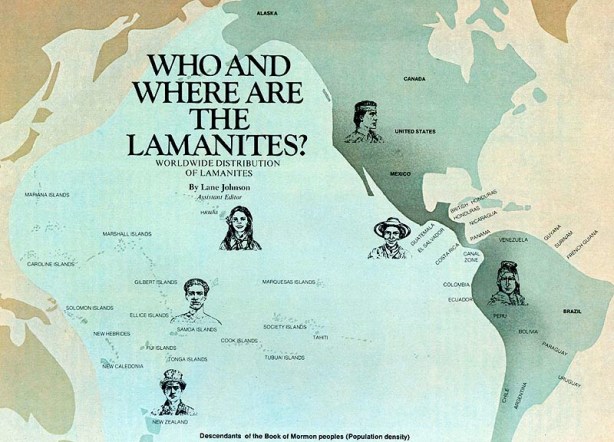
12. A Scarter Man Than One of Them Was I Never Saw, booklet by Stephen C. LeSueur; Mormon Miscellaneous, Sandy, UT.

13. Sidney Rigdon: A Portrait of Religious Excess, by Richard S. Van Wagoner; Signature Books; 1994; p. 143-145, 192-208, 213-241.

General Joseph Smith addressing the Nauvoo Legion.

General Joseph Smith addressing the Nauvoo Legion.

14. The Mountain Meadows Massacre, by Juanita Brooks; Un. of OK Press; 1950; p. 3-9, 13-19.

15The Journals of William E. McLellen; Ed. by Jan Shipps and John W. Welch; Un of Ill. Press; 1994; p. 9.

16. Salt Lake City Messenger (Tanner’s newsletter); Issue #88, May 1995; p. 6-10.

17. The Story of The Mormons, by William Alexander Linn; Macmillan Co.; 1902; p. vi, 122, 134-136, 154, 166-222, 258-261.

18. “Saints Given Relief”, Times and Seasons (LDS newspaper); by Joseph Smith; Jan. 15, 1841; Vol 2, p. 273-277.

19. Cultures In Conflict, by John E. Hallwas and Roger D. Launius; Utah State Un. Press; 1995; p. 1-165.

About the Author
John R. Farkas (1932-2011) was a convert to Mormonism in 1975 and served in several callings up to and including Elder’s Quoruom President of  the Rochester 1st Ward, New York Stake. In 1984 he left the LdS Church and became involved with Berean Christian Ministries where he served until his death. Mr. Farkas is the author of several books on Mormonism and other subjects which can be found on his Author’s page on Amazon. Beggar’s Bread is grateful that before he passed Mr. Farkas granted us the permission to republish the articles from his now defunct website. 

John Farkas is of one the giants on whose shoulders we stand and to whom we owe a debt that we simply can never repay!  We look forward to thanking him again in heaven for the example of his life and treasure of wisdom that he left behind for our benefit.

[Please note that while this article has been very lightly reformatted and re-paragraphed to improve overall legibility no content has been changed from Mr. Farkas’ original source article other than fixing a few typos and updating the names of a few books in the bibliography to more accurately reflect their full title of publication.  — Fred W. Anson, editor]

by Aaron Shafovaloff

EDITOR’S NOTE: Five years ago on this day Mormon Researcher Aaron Shafovaloff published the following article entitled, “Shame, Shame, Shame: Thirty Years Later And Still No Apology”.  Well it’s now been thirty five years since June 8, 1978 and we’re still waiting. So with no further adieu . . .

church_of_unrepudiated_racism

Still Repairing Brigham’s Mess
Mormon apologist Blake Ostler once said, “I personally believe that [Brigham Young’s] theology was a disaster for the most part” (>>). We have multiple reasons to concur with Blake (more than he would agree with), as Mormonism has spent much of its post-Brigham history picking up the pieces from the catastrophic mess of theology he left behind. The 1916 First Presidency statement on divine investiture and Elohim/Jehovah identitieswas largely driven by an effort to repair Brigham Young’s damaging Adam-God teaching. Contrary to the notion that it died with Brigham, it had carried well on into the 20th century. Some Mormons today are deeply embarrassed over Young’s teaching that Jesus was physically conceived by a natural union between Mary and the Father (who, for Brigham, of course, was Adam). Many Mormons have tragically settled for an “I don’t know” answer to the question of whether sexual intercourse was involved in the conception of Christ. Along with Adam-God, Brigham’s teaching that God still progresses in knowledge and power was condemned as a deadly, damning heresy by apostle Bruce McConkie. Then there’s individual blood atonementmen living on the Sun, participation in polygamy being absolutely necessary for Celestial exaltation, and on, and on. Many Mormons quietly write off Brigham Young as a crazy old uncle who has said very stupid, very irresponsible, very embarrassing, very damaging things. The problem is that he happened to say most of these things from the Tabernacle pulpit in a position of influential leadership and self-claimed prophetic authority. Mormons today try to laugh it off. Stephen Robinson even suggested that Adam-God might have been a joke. But at the end of the day Christians aren’t laughing. We have a higher standard for prophets than Mormonism allows. For us, becoming a Mormon would mean drastically lowering the bar for men who claim to be God’s living spokesmen on earth.

Reversing a “Direct Commandment of the Lord” Based Upon a “Doctrine of the Church”
On June 8, 1978, Mormonism attempted to reverse yet another one of Brigham’s embarrassing doctrines, the ban on blacks from holding the Mormon priesthood. The dominant historical explanation given for the ban was an appeal to pre-mortal decisions or indecisions. Negros were not as valiant in the pre-existence, and were cursed with the mark of Cain, black skin. This explanation was taught and expressed by LDS prophets and apostles, from Conference pulpits to a First Presidency statement:

“The attitude of the Church with reference to the Negroes remains as it has always stood. It is not a matter of the declaration of a policy but of direct commandment from the Lord, on which is founded the doctrine of the Church from the days of its organization, to the effect that Negroes may become members of the Church but that they are not entitled to the Priesthood at the present time. The prophets of the Lord have made several statements as to the operation of the principle. President Brigham Young said, ‘Why are so many of the inhabitants of the earth cursed with a skin of blackness? It comes in consequence of their father’s rejecting the power of the Holy Priesthood, and the law of God.’ They will go down to death. And when all the rest of the children have received their blessings in the Holy Priesthood, then that curse will be removed from the seed of Cain, and receive all the blessings we are entitled to.’ President Wilford Woodruff made the following statement: ‘The day will come when all that race will be redeemed and possess all the blessings which we now have.’ The position of the Church regarding the Negro may be understood when another doctrine of the church is kept in mind, namely, that the conduct of spirits in the pre-mortal existence has some determining effect upon the conditions and circumstances under which these spirits take on mortality, and that while the details of this principle have not been made known, the principle itself indicates that the coming to this earth and taking on mortality is a privilege that is given to those who maintained their first estate; and that the worth of the privilege is so great that spirits are willing to come to earth and take on bodies no matter what the handicap may be as to the kind of bodies they are to secure; and that among the handicaps, failure of the right to enjoy in mortality the blessings of the priesthood is a handicap which spirits are willing to assume in order that they might come to earth. Under this principle there is no injustice whatsoever involved in this deprivation as to the holding of the priesthood by the Negroes.”
(Official First Presidency statement, August 17, 1951 [some sources date this to 1949], cf. John Lewis Lund, The Church and the Negro, p.89).

Mere Folklore or Institutionalized Racism?
In spite of this, Mormon leaders today continue to say things like,

“When you think about it, that’s just what it is — folklore. It’s never really been official doctrine… We have to keep in mind that it’s folklore and not doctrine… It’s never been recorded as such”
(LDS General Authority Sheldon F. Child, quoted in “LDS marking 30-year milestone”, by Carrie A. Moore, Deseret News, June 7, 2008).

“This folklore is not part of and never was taught as doctrine by the church”
(LDS spokesman Mark Tuttle, quoted in “Mormon and Black”, by Peggy Fletcher Stack, Salt Lake Tribune, June 7, 2008)

This gives the impression that the teaching and belief had a mere bottom-dwelling existence, only kept alive by the culture in a way not initiated by or acquiesced to by the overarching institution. In the dictionary, “folklore” is defined as unwritten lore that is passed down through tradition or anecdote. Calling the “curse of Cain” teaching mere folklore obscures the fact that it was institutionally promoted and institutionally perpetuated—publicly and explicitly and in writing. It was rooted in the teachings of men considered to be prophets and apostles, the conduits of prophetic counsel and the stream of continuing revelation.

No One Needs the Mormon Priesthood Anyway
As a Christian I find the reversal on one level insignificant. The Aaronic priesthood is, according to Hebrews, “useless”, “weak”, and “obsolete”, a shadow of the Messiah to come who would serve as our sufficient sacrifice and priest. The “Aaronic priesthood” of Mormonism today doesn’t remotely follow the functions of the priesthood as described by the Old Testament. In the New Testament, Melchizedek is held up as an analogy for Christ’s unique priestly role and identity, but there is never described an ordained Melchizedek priesthood that flows from Christ to male followers. Mormonism simply reads Joseph Smith’s imaginary priesthood structure into the Bible. And I am not at all interested in obeying Satan when he tells people, “See, you are naked. Take some fig leaves and make you aprons. Father will see your nakedness.” Christians don’t feel like any non-Mormon Christian is missing out from Mormon temples. In Christ “are hidden all the treasures of wisdom and knowledge” (Colossians 2:3). Our intensified experiences with God and his people come through, among other things, reading his word, serving, singing, loving,suffering, praying, communing with our brotherhood in Christ, being swallowed up in the bigness of God’s creation. We don’t have to step inside a building to experience the Holy Spirit in a deeper way. Christians have the permanently indwelling Holy Spirit, immediately accessible, received at conversion in the same way we received justification and the forgiveness of sins: by grace through faith apart from personal works or merit or earning or worthiness. It is Mormons, white and black, who are missing out by being led astray from having a two-way personal relationship with Jesus Christ, based on the foundation of freely received eternal life.

Prevented From Being Complete Followers and Servants of Jesus?
In his book In the Lord’s Due Time, the first black to receive the Mormon priesthood after the 1978 reversal, Joseph Freeman, tells of hearing about the priesthood announcement. He writes,

“As I hung up the phone, little beads of perspiration broke out on my forehead, and my knees began to shake uncontrollably. It was true! It was really true! I could hold the priesthood! My lifetime dream of becoming a complete follower and servant of Jesus had come true.”

Did you catch that? Mormonism had deceived Freeman into thinking that, because he was black and because he couldn’t enter into a man-made temple, he could not yet be a complete follower and servant of Christ. Let that sink in.

Withholding blessings of the New Testament church (whatever one deems those blessings to be) from people based on skin-color or ethnicity reflects a fundamental misunderstanding of the gospel. The promise and assurance of the fullness of eternal life is not for the religious elite, but for the brokenhearted, coffee-drinking, cigarette-smoking, nose-pierced, foul-mouthed, rough-edged, self-despairing, barely spiritual, unworthy moral failures who come to Christ with the empty hand of faith, trusting him for the free promise of eternal life and the heart-changing indwelling of the Spirit. Scripture doesn’t take this lightly. Come to Christ with empty hands and you will have eternal joy. Put up the divisive, unscriptural barriers of moralism or ethnicity or skin-color or quasi-masonic or distinctively Jewish ordinances, and you incite what John Piper calls the “compassionate rage” of true apostles like Paul, who start calling down anathema (Galatians 1:6-9).

Institutional Integrity Demands an Apology and a Repudiation
Mormon apostle Jeffrey Holland seems to have at least a partial understanding of the institutional responsibility Mormonism has to make right the wrongs. In an interview associated with the PBS special, “The Mormons”, he said the following regarding actions the Mormon Church could take to make sure that the curse of Cain teaching isn’t perpetuated:

“I think we can be unequivocal and we can be declarative in our current literature, in books that we reproduce, in teachings that go forward, whatever, that from this time forward, from 1978 forward, we can make sure that nothing of that is declared. That may be where we still need to make sure that we’re absolutely dutiful, that we put [a] careful eye of scrutiny on anything from earlier writings and teachings, just [to] make sure that that’s not perpetuated in the present. That’s the least, I think, of our current responsibilities on that topic.” (>>)

The problem for Holland is that he has bought into a shallow, inadequate, and irresponsible way of dealing with false teachings and false beliefs once promoted by Mormon prophets and apostles. In a noteworthy Mormon blog post called, “How does Mormon doctrine die?“, Margaret Young is quoted as saying,

“Card-carrying Mormons do often believe that Blacks were fence sitters in the pre-existence and that polygamy is essential to eternal progression. Neither position has been formally repudiated by the powers that be. We have merely distanced ourselves from them.”

Kaimi Wenger, the author of the post, goes on to write:

“To the extent that they are not repeated and reinforced, unrepudiated ideas slowly fade from the community’s consciousness. This is in large degree because of the structure of Mormon belief. Mormon theology is unusually informal, vague and undefined. Because the church does not issue encyclicals or Summa Theologica, our theology is largely of the what-the-prophets-say-today variety… Our belief structure being what it is, [old ideas] cannot truly be killed — but neither are they really alive. “
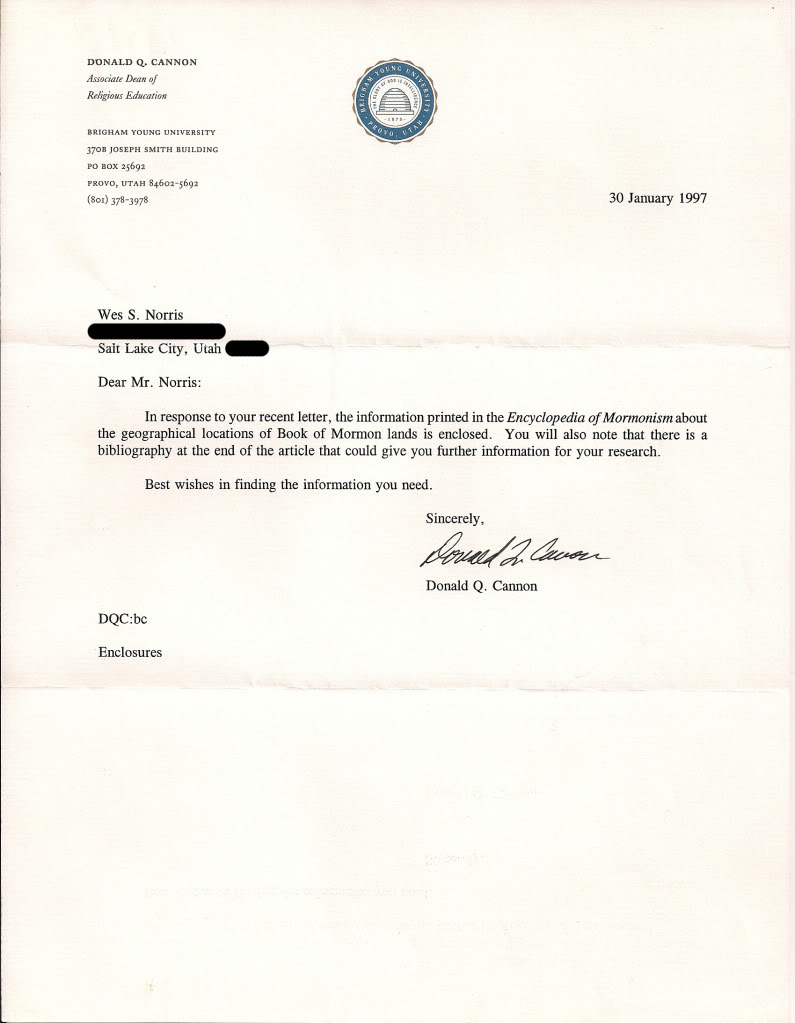
Mormon leaders depend on this. Formal repudiation is avoided by Mormon leaders, as it would highlight the fallibility of church leaders (particularly prophets and apostles) and potentially bring a sensitive, embarrassing issue to light, prompting many to investigate material from earlier Church leaders which isn’t faith-promoting. Explicit, formal repudiation of past teaching that names names and quotes quotes would set a dangerous precedent in a religion which fosters so much dependency on the reliability of the institution’s succession of leaders. To save face, Mormon leaders opt for a quiet way of distancing old ideas, allowing them to continue amongst the culture in part, but betting on the forgetfulness and historical ignorance of future generations.

Authentic repentance, integrity, and love for people would demand not only a distancing by a lack of repetition, but also a formal, official, explicit apology for and repudiation of the priesthood ban and the teachings historically used to theologically justify it. Mormonism’s institution arrogantly sees itself as above having to give an apology for things like this. In fact, Mormonism has fallen short of even admitting the priesthood ban was wrong or racist. Gordon B. Hinckley had the audacity to say of the ban, “I don’t think it was wrong.” Marcus Martins, a black Mormon and the chair of the department of religious education at BYU-Hawaii, has been warped into thinking “The [priesthood] ban itself was not racist“.

Aspects and echos of the principles behind the curse of Cain teaching continue still today. At a recent BYU devotional the dean of Religious Education, Terry Ball, said,

“Have you ever wondered why you were born where and when you were born? Why were you not born 500 years ago in some primitive aboriginal culture in some isolated corner of the world? Is the timing and placing of our birth capricious? For Latter-day Saints, the answer is no. Fundamental to our faith is the understanding that before we came to this earth we lived in a premortal existence with a loving Heavenly Father. We further understand that in that premortal state we had agency and that we grew and developed as we used that agency. Some, as Abraham learned, became noble and great ones. We believe that when it came time for us to experience mortality, a loving Heavenly Father, who knows each of us well, sent us to earth at the time and in the place and in circumstances that would best help us reach our divine potential and help Him maximize His harvest of redeemed souls”
(“To Confirm and Inform: A Blessing of Higher Education,” March 11, 2008, BYU Devotional).

Settling for Less than Full Dignity
In the DVD set, “Blacks in the Scriptures“, Marvin Perkins was asked if the Church should make a kind of “mea culpa”, an admission of guilt and an apology for past wrongdoings. He responded by saying that his mother has always taught him to eat his dinner before he could have his dessert, that he should be content with what is already available. With all due respect to my black brother in humanity who is equally created (not begotten) in the image of God, it seems Mr. Perkins is still saying, “Yes, master”, to the human institutional powers above him. Instead of appropriately demanding the full dignity that is due, and publicly heralding a call for an explicit repentance and apology and confession from Mormonism’s top leadership for the Mormon institution’s past wrongdoings, he has settled in some significant ways for a continued second-class treatment. That simply bewilders me. I write this to let people like him know that we haven’t forgotten the apology that is due to him. We take note that the Mormon Church decided to publicly schedule a general authority, not an apostle or prophet, to speak at the Sunday, June 8th commemorative event held at the Tabernacle. We take note that, as of this writing, the Mormon institution has no black general authorities. We take note that, as of this writing, the Mormon Church largely (but not absolutely) squelches what could be entirely appropriate black cultural expressions of spirituality in aspects of the Sunday-morning church experience, choosing instead to significantly force culturally homogenous liturgy and hymnody and homiletics.
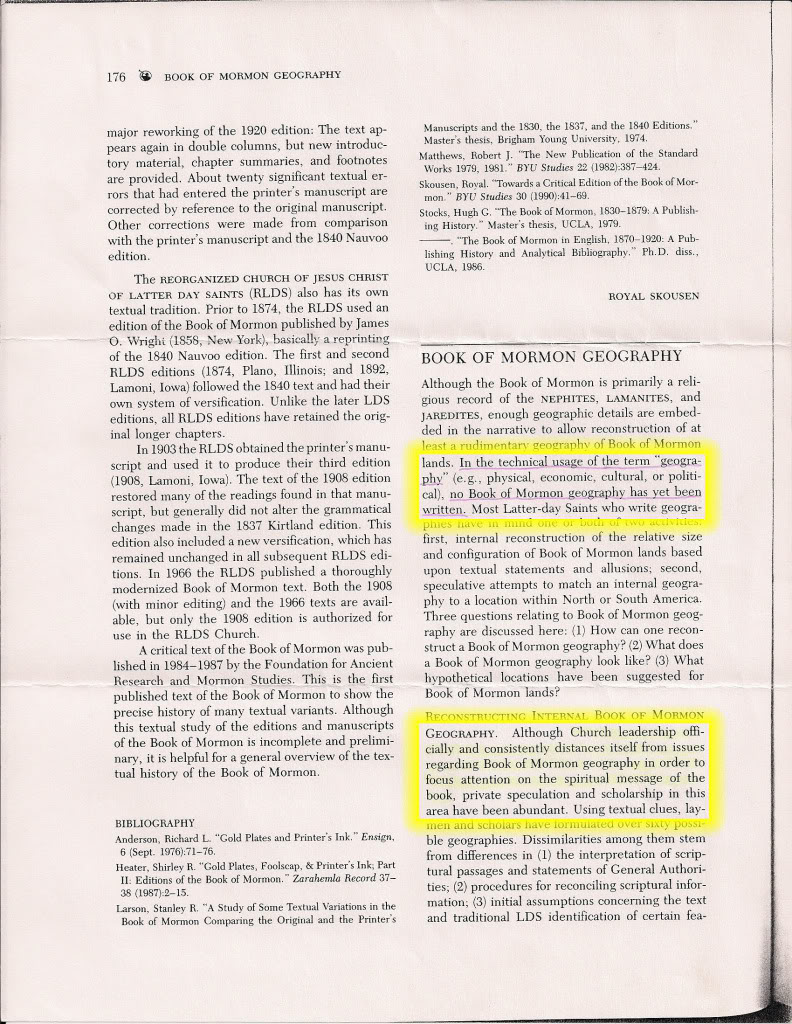
June 8 is a Day of Shame
As an evangelical, I cannot celebrate the half-baked, unfinished reversal of policy and doctrine that happened in 1978. It serves as a reminder of institutional arrogance, of unrepentance, and of a false gospel that puts undue power in man-controlled ordinances. Saving faith instead looks alone to the person of Jesus Christ, who offers the assurance of the full and complete benefits of the gospel to anyone who would receive them by faith as a gift.

As long as you arrogantly refuse to issue an apology and an explicit renunciation, shame, shame, shame on you, Mormon leaders. Let June 8th be a day of shame.

See Also

As originally published on the Mormon Research Ministry (MRM) website.
Used with  permission of the author.
MRM can be contacted at contact@mrm.org.

In April 2013, the leaders at the Evangelical Ministries to New Religions (EMNR) put together an offiical statement regarding Fuller Seminary President Richard Mouw. The statement is located here and printed below.

STATEMENT ON RICHARD MOUW AND EVANGELICAL COUNTERCULT MINISTRIES
Evangelical Ministries to New Religions, April 12, 2013
Evangelical Ministries to New Religions (EMNR) was formed in 1982 as “a consortium of Christians in North America, seeking to help people distinguish authentic from inauthentic Christianity and strengthen evangelical Christian ministries to new religionists and cultists.” It serves as an umbrella group for about three dozen such ministries and over a dozen additional individual scholars, researchers, and evangelists also working in this field. It does not claim to speak for all evangelicals engaged in such ministry, but seeks to coordinate efforts among like-minded evangelicals and to promote high standards of accountability, scholarship, and ethics in ministry to people of new religious movements. EMNR includes several organizations devoted largely or entirely to apologetic and evangelistic ministry to active and former members of the Church of Jesus Christ of Latter-day Saints, better known as the Mormons.

Over the past ten years or so Richard J. Mouw, the president of Fuller Theological Seminary and a respected evangelical theologian, has made a number of statements both explicitly and implicitly critical of evangelical ministries to Mormons. In remarks made at the Salt Lake Tabernacle on November 14, 2004, Dr. Mouw stated that “we evangelicals have often seriously misrepresented the beliefs and practices of the Mormon community.” When challenged later as to the nature of these misrepresentations, Dr. Mouw stated that one such misrepresentation was the claim that “Mormonism teaches that God was once a human being like us, and we can become Gods just like God is now.” He has recently repeated and expanded on this criticism in joint lectures with LDS scholar Robert L. Millet in 2012 and 2013. In these public lectures, Dr. Mouw characterized his “evangelical critics” as misrepresenting Mormon teaching with regard to Lorenzo Snow’s famous couplet, “What man now is,God once was; as God now is, man may be.” According to Dr. Mouw, the couplet is only “popular Mormonism” or “folk Mormonism,” has “never been endorsed” by the LDS Church, and “doesn’t have official status” or a “functional place today” in Mormon teaching. He similarly argues that the LDS Church is distancing itself from the theology of Joseph Smith’s King Follett Discourse, in which Joseph Smith taught that God was once a man like us and that human beings can and should progress to become Gods like him. Dr. Mouw suggests that Mormons today embrace a theology more like that of the Eastern Orthodox deification doctrine, or a theology in which the goal is simply to be become“more Christ-like.” Again, these comments were made in the context of upbraiding evangelicals who are supposedly guilty of misrepresenting Mormonism.

Richard J. Mouw

Richard J. Mouw

However, the evidence is voluminous that the LDS Church has been continuously teaching the doctrine of eternal progression, as it is commonly known, represented by the King Follett Discourse and the Lorenzo Snow couplet from 1844 right up to the present. Joseph Smith himself “endorsed” Snow’s couplet as a “revelation,” a point made in the LDS teaching manual Teachings of Presidents of the Church: Lorenzo Snow released in 2012. In 1982 the Ensign magazine published an article explaining that Snow’s couplet “is both acceptable and accepted doctrine in the Church today.” The 2004 manual Teaching Seminary Preservice Readings: Religion 370, 471, and 475 stated that “there are approved and inspired writings that are not in the standard works” that “also are true and should be used along with the scriptures themselves,” among the five most important of which it says are “the ‘King Follett Sermon’ and the ‘Sermon in the Grove.’” At least eleven teaching manuals currently available on LDS.org, the official website of the LDS Church, teach the King Follett Discourse, the Lorenzo Snow couplet, or (in most cases) both, including at least six manuals published since 2003.

The issue here is by no means peripheral. Joseph Smith claimed in the King Follett Discourse that understanding God to have been a man who progressed to Godhood was “the first principle of the gospel.” LDS Church President Gordon B. Hinckley taught that “the whole design of the gospel is to lead us onward and upward to greater achievement, even, eventually, to godhood,” and specifically cited both the King Follett Discourse and the Lorenzo Snow couplet in support (Ensign, Nov. 1994, 46). Thus, what Dr. Mouw claims is “folk Mormonism” wrongly treated as LDS doctrine by other evangelicals is actually central to the LDS conception of the gospel.

Evangelical Ministries to New Religions applauds Dr. Mouw for his salutary call for Christian civility and his thoughtful engagement in dialogue with Mormon scholars and leaders. At the same time, EMNR respectfully yet strongly disagrees with Dr. Mouw’s generalizations about evangelicals misrepresenting Mormon beliefs and practices, and specifically with his own misrepresentation of the standard LDS doctrine of eternal progression as “folk Mormonism” having no official or functioning place in Mormon belief today. We invite Dr. Mouw to engage evangelical ministries to Mormons in general, and those of us who are part of EMNR in particular, in the same kind of civil dialogue he has rightly championed between evangelicals and Mormons. Furthermore, we encourage Latter-day Saints to engage a wider circle of evangelicals in open and candid dialogue.
link to article as originally posted on the Mormonism Research Ministries website

lamanites-official-lds-church-map

Illustration from Ensign magazine, December 1975 (an official, correlated LDS Church publication)

by Wesley Norris
When I began studying comparative religion back in 1991, one of my first interests was the matter of confirming whether or not the rumors I had heard about fake geography in the Book of Mormon (BoM) were true. Part of the process I used in investigating BoM geography was finding out what official position the Mormon Church had taken on this subject, not only from a theological concept but more specifically what was fundamentally taught on any kind of LDS academic level.

I began by sending a hand-written letter of inquiry to:
LDS Religious Studies
c/o Archaeological Studies
144 Joseph Smith Building
BYU, Provo, UT, 84602

Here is the letter:myletter21291

Within a few days, I received a reply from Professor Monte S. Nyman of the BYU Religious Studies Center. Here is that letter:

theirletter21591

This letter confirmed the rumors I had heard: There are no archaeological or geographical facts known about any of the cities mentioned in the Book of Mormon. This was definitely the beginning of answers from the academic level of the Mormon Church that I had hoped for.

In 1997, six years after my first letter to BYU, I sent another letter to the BYU Religious Studies Center asking about Book of Mormon geography and if there is any known corroborating archaeological support.

Here is that letter:myletter12497

The reply that I received from Donald Q. Cannon, Associate Dean of Religious Education at BYU, was a bit different from the one I had received six years earlier, nonetheless, the answers were from LDS sources and were essentially the same as the previous letter. And once again, this official correspondence from BYU religious personnel confirmed to me that there are no geographical or archaeological facts known about any of the cities, people groups or the stories found within the pages of the BoM.

Here is the letter I received:
theirletter13097

Enclosed with the letter were copies of pages from the Encyclopedia of Mormonism. These particular pages were laced with words like “assumptions,” “speculations,” “attempts have been made,” “locations unknown,” “conjectures,” “not yet revealed,” etc.

Here are the pages I received:
encyclopedia1

encyclopedia2

encyclopedia3

encyclopedia4

encyclopedia5

In 2006, nearly 10 years after my second letter to BYU, I sent yet another inquiry to BYU asking for any kind of evidence in any known field of study that would verify the lands spoken of in the BoM. This time I sent the letter to the Neal A. Maxwell Institute for Religious Scholarship at BYU.

Here is my letter:
myletter61906

The response I received was a one-page reply from S. Kent Brown, Director of the Foundation for Ancient Research and Mormon Studies. His answer was that “no archaeological ‘home run’ has been found in the Americas, but much circumstantial evidence has appeared.” He then proceeded to cite four LDS references (two from John E. Clark and two from John L. Sorenson) in regard to evaluating Book of Mormon geography.

Here is his letter:
theirletter122006

The above correspondence between myself and BYU undeniably confirmed to me the academic position of the Mormon Church concerning geographical and archeological evidence for the Book of Mormon.

There is none. It is all speculation.

The only response BYU had to offer was by referring me to further LDS studies. It is noteworthy to add that BYU never referred me to anything outside of LDS academia; each reference was given toward circular LDS sources.

In the introductory page to the BoM the claim is made that it is a volume of scripture comparable to the Bible and that it is a history of the ancient inhabitants of the Americas. Joseph Smith has asserted through the BoM story that there were at least 38 major cities and places in the ancient Americas that must be part of history, yet to this day no geographic evidence of these areas have been found.

Introductory page from a 1981 edition of the Book of Mormon

Introductory page from an 1981 edition of the Book of Mormon

Likewise, Smith has asserted that there were tens of millions of Jewish people groups living in the ancient Americas from 2600 BC to 421 AD. These people would have created, used, and left behind specific-era items, yet no archeological evidence in support of any of these things or supposed people groups have been found.

Since Joseph Smith claimed the BoM was “the most correct of any book on earth” (November 28, 1841, History of the Church, vol. 4, pg. 461), what shall we do then, with the Book of Mormon? Where is truth to be found in the claims of Joseph Smith? Either the BoM is 100% true – as Smith bragged about in 1841 – and we can rely upon every word written in it, or if it is false in even one instance it must be considered fictitious and Joseph Smith must be regarded as a false prophet.

In conclusion, I believe that because of the advancement of knowledge in every known scientific field in this postmodern world – a world that Joseph Smith could not possibly foresee – it can easily be shown that Joseph Smith was a religious fraud and that the BoM is a historical and geographical ruse that was produced in order to deceive his followers and promote his self-interests.

Banner(originally published on the author’s  Facebook page on 2013-04-03)