Archive for the ‘Mormon Studies’ Category

Christopher Ralph posted the following on his “JourneyOfLoyalDissent” blog on late Saturday, April 6th and it has quickly gone viral.  And for good reason – if true, this is stunning, possibly even paradigm shifting information.  

As of this writing it has been validated from several reliable sources that Grant Palmer has acknowledged the authenticity of the memo – he was indeed the author, that much is known.  As for validation of the comments and claims of the two Mormon leaders (one a General Authority, the other a returned Mission President) we wait.  

At the risk of spreading Critic Promoting Rumors I repost it here for your thoughtful consideration and nothing more. 
— Fred W. Anson

 Three Meetings with an LDS General Authority, 2012/2013 by Grant H. Palmer

As originally published by Christian Research & Counsel and based on “Evolution of the First Vision and Teaching on God in Early Mormonism” by Sandra Tanner. This edition is a reformat and expansion  of the original article by Fred W. Anson

INTRODUCTION
Concerning Joseph Smith’s “First Vision”, seeing God the Father and his Son, Jesus Christ together, Mormon prophet and  15th President of the LdS Church, Gordon B. Hinckley said:
“…this is the pivotal thing of our story. Every claim that we make concerning divine authority, every truth that we offer concerning the validity of this work, all finds its roots in the First Vision of the boy prophet. Without it we would not have anything much to say…

This becomes the hinge pin on which the whole cause turns. If the First Vision was true, if it actually happened, then the Book of Mormon is true. Then we have the priesthood. Then we have the Church organization and all of the other keys and blessings of authority which we say we have. If the First Vision did not occur, then we are involved in a great sham. It is that simple.”
(“Teachings of Gordon B. Hinckley“, p.227)

From the above quote, it is obvious that the history of Joseph Smith’s First Vision is of paramount importance.

For that reason the following documented accounts, beginning in the year 1820, have been compiled to enable the reader to determine how, and when, the First Vision actually came about.

Stained glass depiction of the first vision of Joseph Smith, Jr., completed in 1913 by an unknown artist (Museum of Church History and Art).

Stained glass depiction of the first vision of Joseph Smith, Jr., completed in 1913 by an unknown artist (Museum of Church History and Art).

OVERVIEW TIMELINE
The Evolution of the First Vision story

1820-1838
For 18 years the First Vision was of “angels”

1838-1890
First Vision of “angels” persisted in spite of the change to a vision of “God the Father and his Son” in 1842.

1890 (approx.) – today
First Vision of “God the Father and his Son”

DETAILED TIMELINE
1820
There are no known references to the First Vision recorded in the year 1820. In fact, until the year 1838, there was no mention of Joseph having seen God the Father and his Son in any newspaper or contemporary writing, including Latter-day Saint (LdS) Church publications; not even in the diaries and journals of Joseph’s closest friends and church leaders, like Brigham Young, John Taylor, Wilford Woodruff, Heber C. Kimball, Orson Hyde, George A. Smith, George Q. Cannon and Oliver Cowdery.

Nor was there any mention of a vision of the Father and Son in the writings of any ofJoseph’s many enemies of the period between 1820 and 1840. There is also no evidence that Joseph Smith taught that God and Jesus were separate deities with bodies prior to 1838.

1827
Jun.
 Account of Joseph Smith, Sr., and Joseph Smith, Jr., given to Willard Chase, as related in his 1833 affidavit as published by Eber D. Howe in “Mormonism Unvailed”, 1834, pp.240-248. The value of this account, while from a non-Mormon source, is the early date and the parallels it contains to the Autumn 1827 account that follows which was given by Martin Harris. Both Chase and Harris were among the earliest people to hear the story from Joseph Smith and his family, and both place the discovery of a gold book within the context of money-digging.

Autumn
Account of Martin Harris given to the Rev. John A. Clark, as related in his 1842 book “Gleanings by the Way”, W.J. & J.K. Simon, pp. 222ff.  [Microfilm copy].

The value of this account also is its early date, being related to Clark while he was a pastor in Palmyra in 1827. It contains many similarities to Harris 1859 testimony, demonstrating that Harris was consistent in what he related about Mormon origins. Like other early accounts, this one ties the discovery of a Golden Bible to Joseph’s prior practice of money-digging .

1830
Mar.
The Book of Mormon is published teaching that the Father, Son and Holy Ghost are one God (i.e. 2 Nephi 31:21; Mormon 7:7; Mosiah 15:1-5; 3 Nephi 11:27) and that Father and Son are same person (i.e. Ether 3:14).   This is validated further reiterated by the title page which says:

“…to the convincing of the Jew and Gentile that Jesus is the Christ, the ETERNAL GOD, manifesting himself unto all nations.”

The Book of Mormon also teaches that God is a spirit (Alma 18:26-28; 22:8-11).  There is no teaching in the Book of  Mormon that Father has a physical body.

Essentially the Book of Mormon teaches Modalism (also known as “Sabellianism“): that is that there are three modes or expressions of one god.

Oct.
Interview of Joseph Smith by Peter Bauder, recounted by Bauder in his book “The Kingdom and the Gospel of Jesus Christ”, printed in 1834, pp. 36-38 (See “Early Mormon Documents, vol.1“, compiled by Dan Vogel, Signature Books, 1996, pp. 16-17). Joseph Smith could give Bauder no “christian experience”, ie. no conversion experience or manifestation of saving grace in his life

1832
In Joseph’s handwritten first draft of his history, only Jesus is mentioned as appearing.
(“The Personal Writings of Joseph Smith“, compiled by Dean Jessee, Deseret Book, 2002, pp. 10-11; also see The Joseph Smith Papers)

1832-34
The Evening and Morning Star periodical, a major LdS publication, contains no mention ofJoseph’s having seen the Father and the Son.

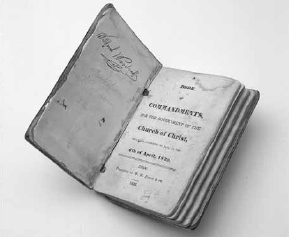
LdS President (March 1, 1807 – September 2, 1898) Wilford Woodruff's copy of The Book of Commandments

LdS President (March 1, 1807 – September 2, 1898) Wilford Woodruff’s copy of The Book of Commandments

1833
The Book of Commandments, a chronology of revelations from God to Joseph Smith was published. This would have been a natural place to include Joseph’s first revelation. But there is no mention of the First Vision.

1834-36
The Latter-day Saints Messenger and Advocate claimed that it would be “a full history of therise of the church” (Vol. 1, p.13) and on page 42 of the same volume we read that it would contain “a correct statement of events.”

In the February, 1835, issue, Oliver Cowdery told how Joseph Smith made his first contact with God. A “messenger” appeared to him in his bedroom. No mention of the Father and the Son.

1835
Aug. 17
Doctrine and Covenants, a revision of the Book of Commandments was first introduced to the church body in a general conference on August 17, 1835.  At the end of the conference, the church “by a unanimous vote” agreed to accept the compilation as “the doctrine and covenants of their faith” and to make arrangements for its printing. Later in 1835 the book was printed and published under the title “Doctrine and Covenants of the Church of the Latter Day Saints: Carefully Selected from the Revelations of God”.

Ironically, God the Father is portrayed, not as having a physical body but, as “being a personage of spirit” in contrast to the Son who was “a personage of tabernacle” (body). (D&C, 1835, p. 53) This, in spite of the official First Vision which depicts the Father as a physical being.

Nov. 9
Joseph related his first vision to a Jewish minister. When he went into the grove to pray, two personages appeared. The second one “testified unto me that Jesus Christ is the Son of God.” He “saw many angels in this vision.”
(“The Personal Writings of Joseph Smith“, pp.104-5; also see The Joseph Smith Papers)

Also in “An American Prophet’s Record”, p. 51. This account appeared in the serial printing of Smith’s history in the Millennial Star, Vol. 15, p. 396.This account has been deleted from the “History of the Church”, Vol. 2, p.304.

Nov. 14
Joseph told his story to Erastus Holmes:
“…I received the first visitation of Angels which was when I was about 14 years old…”
(“The Personal Writings of Joseph Smith“, p.113, Also in “An American Prophet’s Record”, p. 59)

This account has been changed in the “History of the Church”, Vol.2, p.312. It now reads “my first vision” instead of “visitation of angels.”

1837
Changes relating to the godhead were made in the second edition of the Book of Mormon. The phrase “the son of ” was added to several verses to distinguish between the Father and Son. (i.e. 1 Nephi 11:18, 21, 32 and 1 Nephi 13:40)

Title page from an open 1835 edition of Doctrine And Covenants

Title page from an open 1835 edition of Doctrine And Covenants

1838
Joseph Smith wrote that:
“I continued to pursue my vocation in life until the twenty-first of September one thousand eight hundred and twenty three [1820-1823. That’s three years since the First Vision, according to the official version.], all the time suffering severe persecution at the hands of all classes of men, both religious and irreligious, because I continued to affirm that I had seen a vision.”
(“Pearl of Great Price”, Joseph Smith History 1:27; also see Joseph Smith Papers [Draft 2] [Draft 3] [fair copy])

Yet, the LdS Messenger and Advocate, 1834-36, which was to be “a full history of the rise of the church,” was silent on Joseph’s having seen the Father and the Son in a vision.

1839
Joseph receives a revelation from God proclaiming “a time to come in the which nothing shall be withheld, whether there be one God or many gods they shall be manifest.” (D&C 121:28) In light of the official version of the First Vision, Joseph should have been aware of more than one God since 1820, making this an unnecessary revelation.

1840
Orson Pratt published a booklet titled, “An Interesting Account of Several Remarkable Visions”. He related that when Smith was “about fourteen or fifteen years old” he was praying in the woods when “two glorious personages” appeared. There was no indication that they were the Father and Son.
(also see Joseph Smith Papers)

1842
Mar. 1
In a letter from Joseph Smith to John Wentworth, “Two glorious personages” appeared and informed him that none of the churches “was acknowledged of God.” There was no indication that they were the Father and Son.
(Times and Seasons, Vol. 3, no.9, p.707; also see Joseph Smith Papers )

Mar. 15
Joseph’s 1838-39 version of the First Vision was published for the first time. Two personages appeared. One pointed to the other and said, “This is my beloved Son, hear him.”
(Times and Seasons, Vol. 3, no. 10, p. 748)

1843
Apr. 2
Smith dictated section 130 of the Doctrine and Covenants, which taught that God and Jesus both have bodies but not the Holy Ghost. If Joseph Smith had actually been teaching since 1820 that God had a body why did he need this revelation?

Jun. 11
Levi Richards, Journal, 11 June 1843. Following an 11 June 1843 public church meeting at which Joseph Smith spoke of his earliest vision, Levi Richards included an account of it in his diary.  The account doesn’t include most of the key elements of the official version and seems to be describing something more like a private prayer session than the ecstatic vision experience that most other accounts describe.

“Pres. J. Smith bore  testimony to the same— saying  that when he was a youth he  began to think about these  these things but could not find out  which of all the sects were right— he went into the grove  & enquired of the Lord which  of all the sects were right—  re received for answer that  none of them were right,  that they were all wrong, & that the Everlasting covena[n]t  was broken= he said he understoood the fulness of the Gospel  from beginning to end— & could  Teach it & also the order of  the priesthood in all its ram ifications= Earth & hell had opposed  him & tryed to destroy him— but  they had not done it= & they <never would>” [p. [16]]
(see Joseph Smith Papers)

Aug. 21
Interview, JS by David Nye White, Nauvoo, IL, 21 Aug. 1843; in David Nye White, “The Prairies, Joe Smith, the Temple, the Mormons, &c.,” Pittsburgh Weekly Gazette, 15 Sept. 1843, [3]. In August 1843, David Nye White, editor of the Pittsburgh Weekly Gazette, interviewed Joseph Smith in his home as part of a two-day stop in Nauvoo, Illinois. His news article included an account of Joseph Smith’s first vision. The key excerpt reads as follows:

“…Speaking of revelations, he stated that when he was in a “quandary,” he asked the Lord for a revelation, and when he could not get it, he “followed the dictates of his own judgment, which were as good as a revelation to him; but he never gave anything to his people as revelation, unless it was a revelation, and the Lord did reveal himself to him.” Running on in his valluble style, he said: “The world persecutes me, it has always persecuted me. The people at Carthage, in a public meeting lately, said, ‘as for Joe, he’s a fool, but he’s got Some smart men about him.’ I’m glad they give me so much credit. It is not every fool that has sense enough to get smart men about him. The Lord does reveal himself to me. I know it. He revealed himself first to me when I was about fourteen years old, a mere boy. I will tell you about it. There was a reformation among the different religious denominations in the neighborhood where I lived, and I became serious and was desirous to know what Church to join. While thinking of this matter, I opened the Testament promiscuously on these words, in James, ‘Ask of the Lord who giveth to all men liberally and upbraideth not [James 1:5].’ I just determined I’d ask him. I immediately went out into the woods where my father had a clearing, and went to the stump where I had stuck my axe when I had quit work, and I kneeled down, and prayed, saying, ‘0 Lord, what Church shall I join?’ Directly I saw a light, and then a glorious personage in the light, and then another personage, and first personage said to the second, “Behold my beloved Son, hear him.” I then, addressed this second person, saying, “0 Lord, what Church shall I join.” He replied, “don’t join any of them, they are all corrupt.” The vision then vanished and when I came to myself, I was sprawling on my back; and it was some time before my strength returned. When I went home and told the people that I had a revelation, and that all the churches were corrupt, they persecuted me, and they have persecuted me ever since. They thought to put me down, but they hav’nt succeeded, and they can’t do it…”
(Joseph Smith Jr. interviewed by David Nye White on August 29, 1843, originally published in “The Prairies, Nauvoo, Joe Smith, the Temple, the Mormons, etc.,” The Pittsburgh Weekly Gazette, Sept. 15, 1843; reprinted in The Papers of Joseph Smith, ed. Dean C. Jessee, 2 vols. [1989–92], 1:444.; reprinted in Early Mormon Documents, ed. Dan Vogel [1992], 1:181-182; also see Joseph Smith Papers)

1844
In an account in “An Original History of the Religious Denominations at Present Existing in the United States”, edited by Daniel Rupp. Joseph Smith wrote the chapter on Mormonism and included a First Vision narrative.  In this account:  He states that he began reflecting on the importance of being prepared for the future state, but upon inquiring found a great conflict of religious opinion; There is no mention of a revival;  His age is 14-years  – putting the event at 1820; He had a vision of two personages – unidentified;  He was told that all churches are wrong and that he was to join none of them, and; He was told that a future revelation would teach him of the fullness of the gospel.
(contained in, New Mormon Studies CD-ROM, Smith Research Associates)

May 24
Alexander Neibaur, Journal, 24 May 1844. On 24 May 1844, German immigrant and church member Alexander Neibaur visited Joseph Smith in his home and heard him relate the circumstances of his earliest visionary experience:

“Joseph tolt us the first call  he had a Revival Meeting his Mother & Br & Sister got Religion, he wanted to get Religion too wanted to feel & shout like the Rest but could feel nothing, opened his Bible the first Passage that struck him was if any man lack Wisdom let him ask of God who giveth to all Men liberallity & upbraidet not  went into the Wood to pray kneelt himself down his tongue was closet cleavet to his roof— could  utter not a word, felt easier after a while= saw  a fire towards heaven came near & nearer  saw a personage in the fire light complexion  blue eyes a piece of white cloth drawn over  his shoulders his right arm bear after a w[h]ile  a other person came to the side of the first  Mr Smith then asked must I join the Methodist  Church= No= they are not my People, th all  have gone astray there is none that doeth  good no not one, but this is my Beloved  son harken ye him, the fire drew nigher  Rested upon the tree enveloped him” [p. [23]]
(Joseph Smith Papers)

1845
In the first draft of her autobiography, Joseph’s mother, Lucy Smith, remembered Mormonism starting with a visit, in 1823, by “an angel” who told him “…there is not a true church on the Earth.” Later, in the published version, she said nothing about her own recollection of the vision but simply inserted Joseph’s account from Times and Seasons.
(First draft of Lucy Smith’s family history, p.46, Church Archives; “Early Mormon Documents”, Vol. 1, p.289-290)

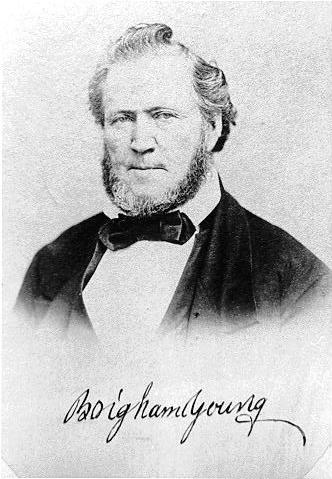
Brigham Young, Second LdS Church President

Brigham Young, Second LdS Church President

1852
On April 9th, 1852 Mormon Prophet Brigham Young muddies the nature of God – and thus the First Vision – waters even further by preaching his first Adam-God sermon.  This sermon is recorded in “The Journal of Discourses”, Vol. 1, pp.46-53. According to the doctrine, Adam was once a mortal man who became resurrected and exalted. From another plane, Adam brought Eve, one of his wives, with him to the earth, where they became mortal by eating the fruit of the Garden of Eden. After bearing mortal children and establishing the human race, they returned to their heavenly thrones where Adam serves as the god of this world. Later, as Young is generally understood to have taught, Adam returned to the earth to become the literal father of Jesus. Young held to this doctrine the rest of his life, dying in 1877. Some of the brethren continued to believe the Adam-God doctrine for years afterward.

Brigham Young never once mentioned the First Vision of God the Father and his Son in his 30 years of preaching as President of the Church.

1854
Speaking at the April Conference, Apostle Orson Hyde stated:
“Some one may say, ‘If this work of the last days be true, why did not the Saviour come himself to communicate this intelligence to the world?’ Because to the angels was committed the power of reaping the earth, and it was committed to none else.”
(“Journal of Discourses”, Vol. 6, p.335)

1855
Feb. 18
LdS President Brigham Young taught:
“…The Lord did not come with the armies of heaven…But He did send His angel to…Joseph Smith jun…and informed him that he should not join any of the religious sects of the day…”
(“Journal of Discourses”, Vol. 2, p.171)

Feb. 25
Apostle Wilford Woodruff preached:
“That same organization and Gospel that Christ died for…is again established in this generation. How did it come? By the ministering of an holy angel from God…The angel taught Joseph Smith those principles which are necessary for the salvation of the world…He told him the Gospel wasnot among men, and that there was not a true organization of His kingdom in the world…”
(“Journal of Discourses”, Vol. 2, pp.196-197)

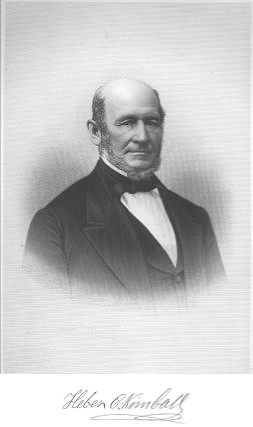
Heber Chase Kimball (June 14, 1801 – June 22, 1868) was a leader in the early Latter Day Saint movement. He served as one of the original twelve apostles in the early Mormon church, and as first counselor to Brigham Young in the First Presidency of The Church of Jesus Christ of Latter-day Saints from 1847 until his death

Heber Chase Kimball (June 14, 1801 – June 22, 1868) was a leader in the early Latter Day Saint movement. He served as one of the original twelve apostles in the early Mormon church, and as first counselor to Brigham Young in the First Presidency of The Church of Jesus Christ of Latter-day Saints from 1847 until his death

1857
Nov. 8
LdS Apostle Heber C. Kimball seemed to be oblivious to any vision where Joseph saw God and Christ:
“Do you suppose that God in person called upon Joseph Smith, our Prophet? God called upon him; but God did not come himself and call, but he sent Peter to do it. Do you not see? He sent Peter and sent Moroni to Joseph, and told him that he had got the plates.”
(“Journal of Discourses”, Vol. 6, p.29)

1859
Interview with Martin Harris, Tiffany’s Monthly, 1859, New York: Published by Joel Tiffany, vol. v.—12, pp. 163-170. This account is included because the source, Martin Harris, was a close associate of Joseph Smith during the translation of the Book of Mormon, and one of the earliest non-family members to be introduced to Joseph’s claims. His recollections are largely uninfluenced by later published accounts of Joseph Smith and therefore likely to reflect the earliest details provided to him by Joseph Smith and his family.

In this account: The plates were found in the context of money-digging; there’s no mention of a revival; Joseph Smith is 21-years old (placing the event at 1827); and Joseph Smith retrieves plates while out with his wife but hides them in the woods.  It’s also important to note that Joseph’s family corroborated this story to Martin Harris.

1860
John Hyde, a former Mormon, is a good example of the confusion regarding who appeared to Smith. In his book, “Mormonism: Its Leaders and Designs”, p. 199, he related:
“1820…April….He [Joseph] asserts that God the Father and Jesus Christ came to him from the heavens.” However, on p.240 he states “Joseph Smith, born in 1805, sees an angel in 1820, who tells him his sins are forgiven.”

1863
Mar. 1
Apostle John Taylor explained in a sermon:
“How did this state of things called Mormonism originate? We read that an angel came down and revealed himself to Joseph Smith and manifested unto him in vision the true position of the world…”
(“Journal of Discourses”, Vol. 10, p.127)

Nov. 15
LdS Apostle George A. Smith preached:
“When Joseph Smith was about fourteen or fifteen years old…the Lord answered his prayer, and revealed to Joseph, by the ministration of angels, the true condition of the religious world. When the holy angel appeared, Joseph inquired which of all these denominations was right and which he should join, and was told they were all wrong…”
(“Journal of Discourses”, Vol. 12, pp.333-334)

1864
Nov. 15
A year later, Apostle Smith seemed to be describing the vision in a more traditional way:
“When the Lord appeared to Joseph Smith…He [Joseph] thus describes the incident: ‘In the spring of 1820…I saw a pillar of light…I saw two personages…This is my beloved son, hear him.’”
(“Journal of Discourses”, Vol. 11, pp.1-2)

1869
Jun. 20
Apostle Smith again referred to Smith’s First Vision as being of a single angel:
“He sought the Lord by day and by night, and was enlightened by the vision of an holy angel. When this personage appeared to him, of his first inquiries was, ‘Which of the denominations of Christians in the vicinity was right?’“
(“Journal of Discourses”, Vol. 13, p.77-78)

Orson Pratt was a leader in the Latter Day Saint movement and an original member of the Quorum of Twelve Apostles

Orson Pratt was a leader in the Latter Day Saint movement and an original member of the Quorum of Twelve Apostles

Dec. 19
Orson Pratt later teaches a narrative that conflates the prevailing single angel narrative with the two personage narrative he published in 1840:
“This was the condition of mankind before this Church arose, forty years ago. By and by an obscure individual, a young man, rose up, and, in the midst of all Christendom, proclaimed the startling news that God had sent an angel to him; that through his faith, prayers, and sincere repentance he had beheld a supernatural vision, that he had seen a pillar of fire descend from Heaven, and saw two glorious personages clothed upon with this pillar of fire, whose countenance shone like the sun at noonday; that he heard one of these personages say, pointing to the other, “This is my beloved Son, hear ye him.” This occurred before this young man was fifteen years of age; and it was a startling announcement to make in the midst of a generation so completely given up to the traditions of their fathers; and when this was proclaimed by this young, unlettered boy to the priests and the religious societies in the State of New York, they laughed him to scorn.”(“Journal of Discourses”, Vol.13, pp.65-66)

1871
Mar. 19
Orson Pratt reverts to the two personage narrative again:
“He went out to pray, being then a little over fourteen years of age…He saw in this light two glorious personages, one of whom spoke to him…saying, ‘This is my beloved Son, hear ye him.’”

(“Journal of Discourses”, Vol. 14, pp.140-141)

Dec. 10
Although, as noted previously, the two personages in Orson Pratt’s most recent sermons could be interpreted as either angels or God, his sermon on Dec. 10 of that same year he clearly identified the messenger as an angel (singular) in direct contradiction with the majority of his prior addresses and his own 1840 published account:
‘Here was Joseph Smith, a boy, his very youth ought to testify in his favor, for when the Lord first revealed himself to that little boy, he was only between fourteen and fifteen years of age. Now, can we imagine or suppose that a great impostor could be made out of a youth of that age, and one that could reveal the doctrine of Christ as he has revealed it to this generation? Would he stand forth and bear testimony that he had seen with his own eyes a messenger of light and glory, and that he heard the words of his mouth as they dropped from his lips and had received a message from the Most High, at that early age? And then, after having declared it, to have the finger of scorn pointed at him, with exclamations, “There goes the visionary boy! No visions in our day, no angels come in our day, no more revelation to be given in our day! Why he is deluded, he is a fanatic;” and to have this scorn and derision and still continue to testify, in the face and eyes of all this, while hated and derided by his neighbors, that God had sent his angel from heaven.’

(“Journal of Discourses”, Vol. 14, p.262-263)

1874
Jun. 23
President Brigham Young was still identifying the personages as messengers rather than God and Christ:
“Do we believe that the Lord sent his messengers to Joseph Smith, and commanded him to refrain from joining any Christian church…informing him that the Lord was about to establish his kingdom on the earth… Yes, this is all correct.”
(“Journal of Discourses”, Vol. 18, p.239)

Sept. 20
Orson Pratt, in contradiction to his December 19, 1871 address, reverts back to two personage version again, preaching:
“Joseph Smith…was a boy about fourteen years of age at the time the Lord first revealed himself…to him…he saw nothing excepting the light and two glorious personages…One of these personages, pointing to the other, said—’Behold my beloved Son, hear ye him.’

After this, power was given to Mr. Smith to speak, and…he said that he desired to know which was the true Church…immediately after receiving it, he began to relate it to some of his nearest friends, and he was told by some of the ministers who came to him to enquire about it, that there was no such thing as the visitation of heavenly messengers, that God gave no new revelation…he knew that he had seen this light, that he had beheld these two personages, and that he had heard the voice of one of them…and he continued to testify that God had made himself manifest to him…”
(“Journal of Discourses”, Vol. 17, pp.278-280)

1876
Dec. 31
Apostle John Taylor identifies the personages as the Father and the Son in the First Vision as follows:
“…the Father and the Son appeared to him, arrayed in glory… ‘This is my beloved Son, in whom I am well pleased…’”
(“Journal of Discourses,” Vol. 18, pp.325-326)

1879
Mar. 2
Yet John Taylor, 3-years later, reverts to the earlier narrative stating that they were angels:
“…Joseph asked the angel which of the sects was right…the angel merely told him to join none of them…”
(“Journal of Discourses”, Vol. 20, p.167)

However, later that same day, he declares that the Father and Son appeared to Joseph in direct contradiction to his earlier address:
”When the Father and the Son and Moroni and others came to Joseph Smith, he had a priesthood conferred upon him…”
(“Journal of Discourses”, Vol. 20, p.257)

Dec. 7
John Taylor declared:
“the Lord revealed himself to [Joseph] together with his Son Jesus, and, pointing to the latter, said: ‘This is my beloved Son, hear him.’”
(“Journal of Discourses”, Vol. 21, p.161; see also p.65 for a similar message)

1880
Jan. 4
A little less than a month after his Dec. 7, 1879 John Taylor seems to contradict himself again regarding God’s true nature preaching :
“…the Lord appeared unto Joseph Smith, both the Father and the Son, the Father pointing to the Son said, ‘this is my beloved Son…'”
(“Journal of Discourses”, Vol. 21, p. 65)

Sept. 18
Orson Pratt gave his most specific identification of the personages the Father and the Son:
“…in the spring of 1820…in answer to his prayers, there was the manifestation of two of the great personages in the heavens—not angels, not messengers, but two persons that hold the keys of authority over all the creations of the universe. Who were they? God the Eternal Father and his Son Jesus Christ…”
(“Journal of Discourses”, Vol. 21, p.308)

1882
Oct. 29
Apostle George Q. Cannon seemed to start Joseph’s call with the vision of Moroni. He did mention that Joseph saw Jesus and God but did not put those experiences in the framework of the first vision:
“He [Joseph] was visited constantly by angels; and the Son of God Himself condescended to come and minister unto him, the Father having also shown Himself unto him; and these various angels, the heads of dispensations, having also ministered unto him. Moroni, in the beginning, as you know, to prepare him for his mission, came and ministered and talked to him from time to time…”
(Journal of Discourses, Vol. 23, p.362)

1883
Former Apostle, William Smith, Joseph’s brother, remembered the vision as happening in 1823. He wrote that Joseph went into the woods to pray about which church to join:
“An angel then appeared to him…He told him that none of the sects were right…”
(“William Smith on Mormonism“, by William Smith, 1883, Herald Steam Book, Iowa, pp.5-10, as printed in New Mormon Studies CD-ROM)

1884
Jan. 13
Apostle George Teasdale understood the First Vision to be “a vision of the Father and the Son.”
(“Journal of Discourses”, Vol. 25, p.13 & 18)

Jan. 28
B.H. Roberts related:
“In the Spring of 1820, Joseph Smith…was praying in the woods to the Father. He saw a pillar of light descending from heaven…In the midst of this glorious light stood two personages… ‘This is my beloved son; hear yehim.’–…for the Father had revealed the Son to him.”
(“Journal of Discourses”, Vol. 25, p.138)

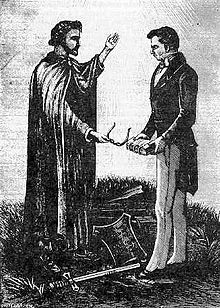
An 1893 engraving of Joseph Smith receiving the golden plates and other artifacts from the angel Moroni.

An 1893 engraving of Joseph Smith receiving the golden plates and other artifacts from the angel Moroni.

1888
LdS assistant Church Historian Andrew Jenson still had the understanding that the first vision was one of angels. He published an account of the First Vision in the paper “The Historical Record”, Jan. 1888, pp.353-357.

This account is taken from the Times and Seasons account with Jenson’s comments summarizing the experience, “The angel again forbade Joseph to join any of these churches…” Jenson then reverted Smith’s narrative, “Many other things did he (the angel) say unto me which I cannot write at this time.” Note that Jenson adds the clarifying words “the angel.” When Jenson’s paper was reprinted a couple of years later this account had been changed in two places. At the spots where he identified the being as an “angel” it was changed to “the Holy Being” and “the Christ.”

CONCLUSION
Thus we see that the details of the First Vision vary in the different accounts. Early LdS leaders usually thought of the vision as one of angels, not God. They did not appeal to the first vision to establish their teaching that God has a body.

These historical records of the First Vision leave us with more questions than answers:
• If Joseph Smith’s claim to a vision in 1820 had resulted in the kind of public persecution he described, why did the story go completely unnoticed by the public media, and remain absent from the official literature of the LdS Church for 22 years?

• Why is there no mention of the 1820 appearance of the Father and the Son in all of Brigham Young’s sermons?

• If Brigham Young believed Joseph’s revised First Vision of the Father and the Son, why wouldhe continue to tell the story of a First Vision wherein the Lord sent his angels to tell Joseph not to join any of the churches?

• Why did it take more than 50 years for the revised First Vision, adding the Father and the Son, to replace the original First Vision of angels as the church’s standard teaching?

• If President Hinkley’s statement is true — ”If the First Vision did not occur, then we are involved in a great sham. It is that simple.” — are we gambling with our family’s eternal destiny by not carefully examining the documented history of the First Vision story?

NOTES
The original version of this publication that this article has expanded on can be found here: http://crcmin.org/pdfs/brochures/FirstVisionE.pdf

Research and portions of text: 
Utah Lighthouse Ministry http://www.utlm.org/onlineresources/firstvision.htm
The Institute for Religious Research http://mit.irr.org/joseph-smiths-changing-first-vision-accounts
The Joseph Smith Papers http://josephsmithpapers.org/site/accounts-of-the-first-vision

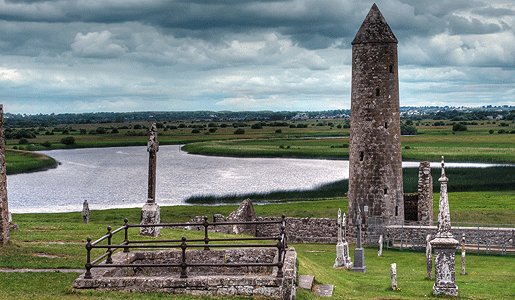
Clonmacnoise, the burial place of the last High King of Ireland

Clonmacnoise, the burial place of the last High King of Ireland

by Fred W. Anson
Christian Researcher, Richard B. Stout, has done extensive research correlating the alleged “Reformed Egyptian” characters on the plates that the Book of Mormon were “translated” from to Ancient Irish. The following questions and supporting evidence explain and summarize his case:

Q: According to Mormon History were the Anthon Transcript characters copied from the alleged Golden Plates?
A: Yes. We have documented evidence from Martin Harris, David Whitmer, and Joseph Smith that they were.

Q: Can a correlation between the Anthon Transcript characters and Egyptian Hieroglyphs be established?
A: No. Anthon was not a qualified “expert” and modern Egyptologists can find no correlation.

Q: Can a correlation between the Anthon Transcript characters and the Detroit Manuscript characters be established?
A: Yes. There are character for character matches.

Q: Since it has been established that the Detroit Manuscript characters are ancient Irish (thus resulting in near-complete translation of the document) what are the Anthon Transcript characters?
A: Ancient Irish.

Thus the following question/challenge/problem remains for Mormon Scholars:
If you accept Martin Harris’s assertion that the characters on the Anthon Transcript were copied from the Golden Plates, then how you explain why the Golden Plates were written in Ancient Irish rather than ‘Reformed Egyptian’ as Joseph Smith claimed?”

Supporting Evidence
Please consider these links between the Detroit Manuscript and the Anthon Transcript are compelling. This is from Richard B. Stout’s article “A Singular Discovery”:

Richard B. Stout

Richard B. Stout

“According to Mormon history, Joseph Smith, Jr. discovered a hidden, religious work in 1823. Facsimiles of the “unknown characters” in which the Book of Mormon was written were later copied and taken to “the learned.” One of the opinions sought was that of Dr. Mitchell of New York City. Earlier, secular history had also recorded the discovery of a hidden, religious work in 1823.

Facsimile pages were made of this book’s “characters,” which were also said to be “unknown.” They too were taken to “the learned”-one of whom was Dr. Mitchell. However, Joseph Smith did not discover what became known in the national press as the Detroit Manuscript. That honor went to Col. Abraham Edwards, a business partner of Joseph’s uncle, Stephen Mack.

Especially because of this family connection, it would appear likely that Joseph Smith used the details surrounding the Detroit Manuscript as a template upon which to construct his story of the Book of Mormon’s “coming forth.” Further, there is evidence which proves that events, names, places, and even controversial animals which appear in the Book of Mormon could have been borrowed from the writings of the well-known scholar identified in both accounts as Dr. Mitchell. Perhaps most startling of all, paleographic research indicates that Joseph may have copied many of the characters he had Martin Harris take to Dr. Mitchell directly from the Detroit Manuscript.”
(“A Singular Discovery: The Curious Manuscript, Mitchill, and Mormonism Part 1” by Richard Stout, The Evangel, Oct 2001)

In addition, Stout’s research has established an interesting correlation between the characters on the Anthon Transcript (which Harris claimed were characters from the Golden Plates) and the Detroit Manuscript (which turned out to be ancient Irish characters). He then validated this Irish correlation by extending the character comparisons out to other ancient Irish manuscripts.

Here are the exhibits from the article. Exhibit “B” has been excluded as it is only clear and relevant within the context of the article’s main text.

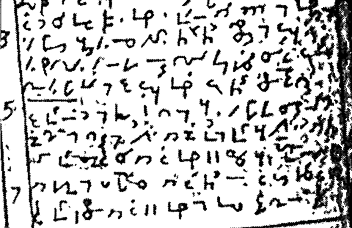
exhib-a

Exhibit “A”
This small sample of early modern shorthand above is from Jeremiah Rich’s 1673 New Testament. The reader will find more than fifteen different characters here which are also found in the “Anthon transcript.”

exhib-c
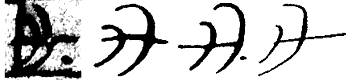
Exhibit “C”
The ogham code symbol on the left is from page 311 of the 14th century Book of Ballymote (the vertical line is merely a divider). The three symbols on the right are from the “Anthon transcript.”

exhib-dExhibit “D”
The highlighted symbol (left) of four dots below a stem line is from page 312 of the Ballymote manuscript. The “Anthon transcript” symbol to its right is from line four of the transcript.

exhib-eExhibit “E”
Naithair fria fraech (“Serpent through the heather”) ogham code letter on left Book of Ballymote, p. 313. Two of several similar “Anthon transcript” symbols on right.

So, again, I suppose the question that Mormon Scholars must address at this point is this:
If you accept Martin Harris’s assertion that the characters on the Anthon Transcript were copied from the Golden Plates, then how you explain why the Golden Plates were written in Ancient Irish rather than ‘Reformed Egyptian’ as Joseph Smith claimed?”

Even if you’re not an Egyptologist, intuitively it’s hard to see how “Reformed Egyptian” which allegedly looks like this . . .

43anthontranscript

“Reformed Egyptian” sample given to Martin Harris. These characters were allegedly copied from the Golden Plates that the Book of Mormon was translated from

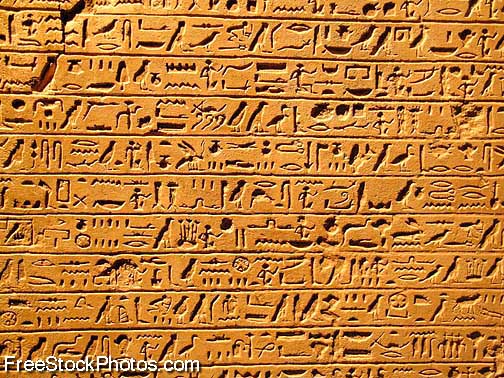
. . . in any way correlates to Egyptian Hieroglyphics which look like this:

egyptian_heiroglyphs

Egyptian Heiroglyphic Primer

And in their purest form like this:

Egyptian Hieroglyphs

Egyptian Hieroglyphs

And the research continues while this question remains to haunt us: Why was the Book of Mormon Written in Ancient Irish?

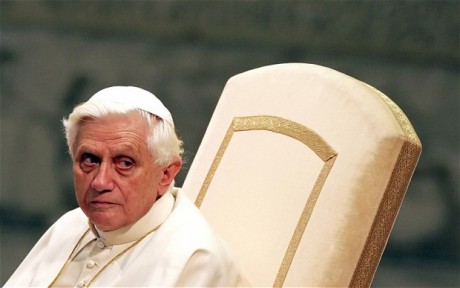
pope5-460x288

“You know . . . it’s good to be the Pope!”
(which, of course, is why I’m resigning!)

by Fred W. Anson
The recent February 16th Mormon Reformation Day coupled with the resignation of Pope Benedict XVI reminded me of  one of my old Mormon Expression blogs in which I made some pretty bold statements:

“…I see some good things in the LdS Church and I see even more in Mormon Culture. There’s also much – particularly in the former – that, in my opinion, is really, really bad and needs to change. Never-the-less I’m just crazy enough to believe that there must be a way to keep the good and jettison the bad…

However, to get there from here the Church of Jesus Christ of Latter-day Saints, from my perspective, must reform. And THAT, at least for me, is still a work in progress. That’s to say, it’s a work in progress for me because while I think I have an idea as to what end state might look like, I know that I’m not alone in this vision and I find the ideas and thoughts of others often more interesting than my own – hence the need for ongoing dialog.”

At this point you’re probably wondering, “Sounds interesting but exactly what kind of  ’reform’ are we talking about? And what kind of ‘end state’ do you have in mind Mr. Smarty Pants?”

Fair enough.

What follows is a bit “yesterday’s news” since I’ve already posted it on the Internet a few times[1],  but never-the-less to get that “ongoing dialog” started I offer to you, for your consideration, my answer to the following question:

Q: If you were suddenly called to be the leader of the Church of Jesus Christ of Latter-day Saints, what, if anything, would you change?

A: If I were “Mope” I would . . .
(that is, Mormon Pope – a la Stephen Colbert)

1) Boldly declare as a new key tenet of the church, “A group that claims to have the truth doesn’t lie!  From this point onward we will, without exception, be open and honest with everyone.”  To this end I would mandate that Gospel Principles Chapter 31: Honesty be strictly adhered to by all members of the LdS Church from the First Presidency on down – period.  That’s right folks, it ain’t just a public relations “front” or “escape hatch” for pushing back when people say that Mormons “Lie for the Lord” anymore more – it’s actually going to mean something!

2) Proclaim “Camelot II” and open up the Church Archives to all Scholars not just those who agree to write “Faithful” Mormon History.

3) Mission the Church Educational System with publishing truthful Mormon History rather than the white washed, spin doctored “Faithful” Mormon History that they currently publish.

4) I would offer to merge with the RLDS/Community of Christ[2] and as a result take the following actions:

* Declare Joseph Smith a remarkable man and charismatic leader but not a Prophet of God.

* Decanonize “The Pearl of Great Price” and admit that the papyri that the “Book of Abraham” was translated from are nothing more than copies of the “Egyptian Book of Breathings” that Joseph Smith used to retain leadership of the Early Saints and keep the movement going. In other words, he “lied for the Lord” for what he thought was a worthy cause.

* Decanonize both the LdS and RLDS versions of “Doctrine and Covenants” and reclassify them as historical records useful for better understanding Joseph Smith and the Early Church but nothing more than that.

* Declare the Holy Bible as the ultimate authority for the LDS Church and encourage members to use modern translations rather the inaccurate and antiquated 1611 King James Version of the Bible.

* Declare “The Book of Mormon” to be a fascinating work of 19th century fiction akin to, say “Pilgrim’s Progress” but not real history. This, of course, would decanonize it by implication.

* Declare that continuing revelation must be weighed against the absolutes of the Bible and rejected if there’s a contradiction and/or discrepancy – just as in done is today’s Pentecostal and Charismatic Churches.

* Declare Baptism for the Dead to be unBiblical and a colossal waste of time because it’s based on a corrupt interpretation of Paul’s tongue-in cheek parenthetical clause contained in I Corinthians 15:29.

* Declare the Aaronic and Melchizedek Priesthoods unBiblical as they directly contradict the Book of Hebrews (Chapters 5-7 in particular) and declare all such past and present endowments null and void .

* Release all endowed LdS from their Temple oaths and vows and encourage them to share their Temple experiences with the public so that all the silly rumors and speculations are dealt with once and for all. Oh, and whoever wishes to can feel free to remove their Temple Garments.

* Shut down the LdS Temple system since it was initiated primarily to cover up Joseph Smith’s secret polygamous marriages as well as a means of injecting Masonic teachings into Mormonism.

* Convert all LdS Temples to public meeting halls and wedding chapels. And declare that everyone is welcome at LdS Weddings regardless of sect, race, or creed. ALL are worthy!

* Apologize to people of color for the LdS Doctrine of, “The Curse of Cain” and state that the racist passages in the Book of Mormon are reflections of 19th Century race based Theology in general and the expansion of the “Curse of Cain” due to Brigham Young’s personal racism in particular.

* Acknowledge that according to the Apostles (see 1 Peter 2:9 in particular) all Christians are Priesthood holders. As a result the LdS Church will join the Community of Christ in treating women like co-equals, like co-heirs in Christ, and like partners in stewarding God’s Kingdom.  

* As a result of the aforementioned, it will be publicly announced that women can pray in General Conference (as well as all other church meetings and functions) and can run the Relief Society (including the Relief Society General Conference meeting) on their own. They can also give blessings just as they did in Joseph Smith’s day.   

* Make tithing as well as monthly Fast and  Testimony offerings voluntary and without repercussion should one choose not to give.

* Reverse all past excommunication and dis-fellowhship actions and apologize to all who suffered under this system.

* Restore the New Testament charismata (Spiritual Gifts) to the LdS Church making it Pentecostal as it originally was.

5) Mission the General Authorities with realigning LdS Theology with mainstream Biblical Christian Theology while still retaining the unique aspects of the legacy LdS Church that were Biblical, positive distinctives.  To this end I would suggest Todd Wood’s excellent “95-Theses for the LDS I-15 Corridor” as a guideline to this end.

6) Invite reputable Biblical Christian Theologians to aid and assist the General Authorities with the previous action (#5 above).

7) Remind LdS Missionaries and parents of Missionaries that such service should be completely voluntary and that should be no stigma for not serving a mission. I would also encourage any active Missionaries who felt like they were pressured, manipulated, or coerced into going on a Mission to return home – at Church expense.

8) Apologize to ExMormons and encourage them to try the “New, Improved and Biblically based” Mormonism.

9) Apologize to the entire Latter Day Saint movement (main Salt Lake City “Brighamites” and splinter groups alike) for the “false revelation” of Polygamy and the harmful fall out that has ensued since.

10) Lobby all Southwest State Attorney Generals to actively begin prosecuting Polygamists within their states.

11) Mission the Relief Society with developing the means and methods of helping the women and children who want to escape from Polygamist Communities to do so with LdS Church support – including financial support for a set period of time.

12) Liquidate LdS Church holdings in non-religious assets to back fill for reduced revenues due to a significantly smaller membership and tithing base.

13) I would go to the Mormon Tabernacle and publicly apologize for Richard J. Mouw and how he has mislead both Mormons and Christians through his naivete and bad scholarship from the very same pulpit where he started the embarrassing insanity that followed in the wave of his November 14, 2004 apology.

14) I would also relieve those Latter-day Saints who deceived and mislead Dr. Mouw of all their callings and positions within the LdS Church and within church owned institutions – like Bingham Young University. And as I do so,  I would say,  “Thank you, it’s been nice!” to them . . .  but then again, I wouldn’t want to violate #1 above.

The good news is that from now on these guys (and you know who you are fellas!) won’t be in a position to hurt anyone or embarrass the  LdS Church any more – we’ll see you liars, deceivers, and manipulators at Church on Sunday but that’s about all.  Hey, come to think of it a little Sunday School might do you guys some good!

15) Consolidate LdS meeting houses to accommodate the smaller attendance base and sell extraneous real estate to back fill for lost tithes and offerings.

16) And, oh yeah, in keeping with #1 I would join the Evangelical Council for Financial Accountability and comply with their “Seven Standards of Responsible Stewardship” which includes public, financial transparency among other things.   Those public financial statements will be a first for the LdS Church in the United States since 1959!

And if I managed to dodge all the neo-Danite Assassination attempts, the internal political coups,  as well as the stress from the angry public outcry and condemnation of splinter groups breaking off  and reorganizing in every which way (just like they did when the RLDS reformed) I might even live to see some or all of this fulfilled!

And I believe through these changes I that we would finally see a truly authentic Biblical Restoration of the LdS Church.

So that’s my list.

What would your list look like if you were “Mope”?

NOTES
[1] This “revisited” edition is more refined and polished than prior versions.  In addition I have annotated where I thought it appropriate, relevant to the discussion, and/or there’s been a “sticking point” in past discussions.  I hope that the extensive hyper-linking doesn’t distract too much from the overall narrative and I apologize in advance to those who feel that it does.

[2] My intention here is to enable the LdS Church to gain from the “lessons learned” by the RLDS/Community of Christ – which I feel is headed in a generally positive direction and ‘further up the road’ than the LdS Church. However, on this point RLDS/CoC Historian John Hamer has remarked:

“On the point about merging the LDS and Community of Christ churches, that’s really like asking Taiwan to “merge” with China. Both Taiwan and China are legitimately Chinese countries and heirs to the China that existed before WW2. However, like Taiwan, we’re a tiny democracy, and like China, they’re a giant authoritarian regime. Even if the bigger polity was supposedly going to be absorbed into the leadership structure of smaller, i.e., if the Chinese Communist Party and the LDS hierarchy were abolished and the merged groups were restructured under the leadership of the smaller party, the smaller groups (Taiwan and the Community of Christ) wouldn’t have anything near the capacity to reform or assimilate the larger group.

That said, I do think that the Community of Christ is being called to provide a spiritual home for liberal Mormon seekers who are disaffected from their church’s authoritarian leadership and its sexism.”
(from Concerned Christians discussion board circa 2010 – link now dead) 

(BTW, click on the picture of the Pope at the top to see a hidden “Easter Egg”.
See it how it pays to read to the end?) 

Mormon Reformation

Posted: February 16, 2013 in Mormon Studies
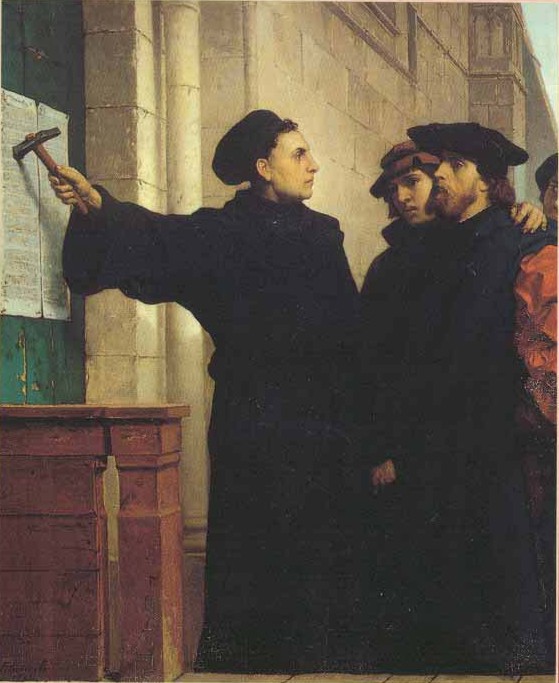
Luther posting the 95-Theses onto the door of Wittenberg Castle Chapel (circa 1517)

Luther posting the 95-Theses onto the door of Wittenberg Castle Chapel (circa 1517)

In 1517, Martin Luther posted a list of 95 Theses on his church’s doors. His actions exposed the corruption of the Catholic Church and started what came to be known as the Protestant Reformation.

Between the hours of 9 PM Saturday, February 16 and 9 AM Sunday, February 17, 2013, members of the Church of Jesus Christ of Latter-day Saints and others will post this list of 95 LDS Theses onto the doors of LDS churches around the world. 

PDF (English version)
PDF (Spanish version)

Join the event here – If you don’t use Facebook, you can still participate!

The purpose of this event is two-fold:
1. Educate the membership on hidden and revised aspects of Church doctrine and history.
2. Influence Church leaders to officially address topics that have long been dodged and dismissed.

Please share this site mormonreformation.blogspot.com and the event http://on.fb.me/SJEBtt on Facebook, Twitter, blogs, and any other social media!

Friend the event organizer on Facebook (Luther Day Saint)!

95 LDS THESES 

The Book of Mormon
1. The primary translation method occurred by Joseph Smith putting his face in a hat and reading a rock known as a seer stone. Despite this, the Church frequently misrepresents the method Joseph used to translate.

2. There is no archaeological evidence of the Book of Mormon, a fact that seriously undermines its authenticity claims.

3.  The Book of Mormon is filled with anachronisms that also damage credibility as a Divine record.

4. DNA evidence shows that Native Americans do not come from Middle Eastern heritage. Recently, the Church changed its claim that “the Lamanites are the principal ancestors of the American Indians” to the Lamanites “are among the ancestors of the American Indians”.

5. Many Book of Mormon names and places are strikingly similar to local name and places that Joseph Smith would have been familiar with. Such a resemblance is too close to be a coincidence.

6. The Book of Mormon teaches a Trinitarian view of the Godhead. Joseph Smith’s early theology also held this view.

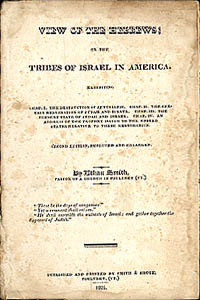
7. Rather than translating with Divine help, evidence supports that Joseph Smith plagiarized a significant portion of the Book of Mormon from the Bible, Ethan Smith’s View of the Hebrews and other books contemporary to Joseph’s time.

8. For a book Joseph Smith claimed to be “the most correct of any book on earth,” it is suspicious that the text has undergone nearly 4,000 changes. Most of the changes, apologists argue, are small grammatical or punctuation fixes. However, there have been significant doctrinal revisions as well.

9. The Book of Mormon includes Biblical passages that were later changed in Joseph Smith’s translation of the Bible. These Book of Mormon verses should match the inspired JST version instead of the KJV version that Joseph later revised.

10. The story of Laban in First Nephi illustrates that God’s command must invariably be followed, even if it means committing murder. This is a dangerous message that inspires religious extremism.

11. The Book of Mormon quotes Bible verses written after 600 B.C. In other words, these passages didn’t yet exist when Lehi left Jerusalem.

The Book of Abraham and Other Translation Issues
12. Despite Joseph’s claim that this record was written by Abraham “by his own hand upon papyrus”, scholars have found the original papyrus Joseph translated and have dated it in first century AD, nearly 2,000 years after Abraham could have written it.

13. Egyptologists have found the source material for the Book of Abraham to be nothing more than a common funerary text. Joseph was completely wrong in his translation.

14. The Church has denied that Joseph made Abrahamic claims about the papyrus, but still insists that “a testimony of the truthfulness of the book of Abraham is not found in an analysis of physical evidence nor historical background, but in prayerful consideration of its content and power.”

15. Joseph was fooled into thinking the Kinderhook plates were ancient records and even attempted to translate them. This demonstrates that he had no real gifts of translation or Divine revelation.

16. Joseph Smith showed his ineptitude for translation when he declared a Greek Psalter to be Egyptian hieroglyphics.

Polygamy and Polyandry
17. Joseph Smith illegally married at least 33 women, some of whom were as young as 14 years old. Some of Joseph’s marriages were secured by promising salvation or threatening damnation.

18. Joseph Smith married at least 8 to 11 women who were already married to other men . This practice is known as polyandry, for which no reference can be found on the Church’s web site. In some cases, Joseph married the wives of men whom he had sent away on missions.  Brigham Young also married other men’s wives.

19. It is known that Joseph Smith practiced polygamy, but it is also true that Joseph was accused of sexual impropriety multiple times in several states before the practice of polygamy was revealed and commanded.

20. Joseph Smith and a young woman named Fanny Alger engaged in what Oliver Cowdery called “a dirty, nasty, filthy affair”. Even if Joseph married Fanny as is claimed, he would have had no civil or spiritual authority to do so.

21. Leaders of the Church, starting with Joseph Smith, systematically lied about practicing polygamy. Even recent leadershave been deceptive about when and why polygamy was practiced.

22. Joseph Smith routinely lied to his wife Emma about his extra-monogamous activities, often making her feel alone, abused and foolish. Why would God reveal a commandment to His prophet that would require such deception?

23. In 1886, John Taylor received a revelation regarding the practice of plural marriage. In the revelation, the Lord told Taylor “I have not revoked this law, nor will I, for it is everlasting.” Four years later, Wilford Woodruff contradicted Taylor’s revelation by issuing the 1890 Manifesto.

24. The Church historically lied and presently still lies in telling the membership and outside media that polygamy ended in1890. In actuality, Church-sanctioned and performed plural marriages continued until 1904 and beyond.

25. Jacob 2:24 reads, “Behold, David and Solomon truly had many wives and concubines, which thing was abominable before me, saith the Lord.” D&C 132:38-39 reads, “David also received many wives and concubines, and also Solomon … and in nothing did they sin save in those things which they received not of me. David’s wives and concubines were given unto him of me.” This is one example of many scriptural inconsistencies in LDS canon.

26. The Church allowed an adulterer, Richard Lyman, to serve as an apostle for 18 years before excommunicating him. Although it appears that fellow members of the quorum did not know about Lyman’s adultery, these “prophets, seers, and revelators” should have had the spirit of discernment to know of Lyman’s unworthiness.

27. Doctrine & Covenants 121:36 teaches that “the rights of the priesthood are inseparably connected with the powers of heaven”, and can be “handled only upon the principles of righteousness.” Given this fact, ordinances performed unrighteously (such as those by Apostle Lyman for 18 years) should not be acceptable in the eyes of God or the Church. However, such ordinances are rarely, if ever, re-performed.

The Establishment of the Church
28. In defiance of God’s command to not join any churches, Joseph Smith tried to join the Methodist Church.

29. Joseph Smith told multiple different versions of the events surrounding the First Vision. He waffled on key details including when it happened and what he saw.

30. The First Vision was not taught in church until at least 12 years after it happened. Why would such a miraculous event not be shared at the outset?

31. Between the time of the First Vision and the translation of the Book of Mormon, Joseph Smith was convicted of fraud for taking clients’ money under false claims that he could detect the whereabouts of hidden treasure.

32. Several early accounts published by the Church claim that the angel who visited Joseph Smith was Nephi. This confusion calls into question the veracity of an actual angelic visit.

33. Given its dimensions and weight, the Gold Plates would have been quite difficult to transport. So the story of Josephescaping from attackers while carrying the plates is far-fetched.

34. The Church uses the testimony of the Three and Eight Witnesses to support the authenticity of the Gold Plates. But there are significant problems with these testimonies, including that one of the witnesses claimed to see the plates only with “spiritual eyes“.

35. Brigham Young claimed that there was a cave located at the Hill Cumorah containing “wagon loads” of ancient records “piled up in the corners and along the walls”. No such cave has ever been found.

36. Although the Priesthood is now taught to have been restored in 1829, Joseph Smith and Oliver Cowdery made no such claim until at least 1834. Why did it take five years for Joseph to tell members of the Church about the Priesthood?

37. The name of the restored Church was changed several times in the first few years after it was established. Why would a prophet receiving revelation have to revise the proper name of God’s Church so many times?

The Word of Wisdom
38. Joseph Smith smoked tobacco and drank tea, coffee, and alcohol long after he revealed the Word of Wisdom. In fact, Joseph Smith at one time had a bar in his house and also drank wine at Carthage shortly before he died.

39. Although apologists argue that the Word of Wisdom was initially a suggestion and not a commandment, Joseph Smith taught “that no official member in this Church is worthy to hold an office” if he neglects to obey the Word of Wisdom. By his own teaching, Joseph was not worthy to hold his calling of prophet.

40. Joseph Smith and other early leaders taught that because animals had spirits, they should only be eaten in times of “dire necessity”. Not only does the Church ignore this aspect of the Word of Wisdom, it also acts in direct defiance and hypocrisy by owning and operating the largest cattle ranch in the United States.

41. Brigham Young owned a distillery in Utah and sold whiskey to saints for Pioneer Day celebrations.

42. The official change of the Word of Wisdom from principle to requirement came with no claim of Divine instruction. On the contrary, the shift seems to have taken place for political reasons surrounding Prohibition and desire for mainstream Christian acceptance.

The Temple
43. Members are taught to believe that Joseph Smith received the endowment through revelation. However, much of the temple ceremony was copied directly from Masonry.

44. The Church requires an oath of commitment from temple participants before the participant knows to what he or she is committing.

45. Until 1990, the temple ceremony contained violent penalties requiring members to make symbolic gestures of slitting their own throats and bowels. Recent Church leaders have been dishonest about these penalties.

46. The removal of these penalties, among other changes, came not by revelation but as a result of a 1988 survey that found that many members were uncomfortable with the endowment.

47. As disturbing as the temple penalties are, the fact that the ceremony changed is also troublesome because Joseph Smith taught that “ordinances instituted in the heavens are not to be altered or changed.”

48. Leaders of the Church have allowed baptisms for dead Holocaust victims, despite promising not to do so.

The Death of Joseph Smith and Succession Crisis
49. The Church portrays Joseph Smith as a martyr jailed and killed for being a “lover of the cause of Christ”.  He was actuallykilled for destroying private property, trying to marry other men’s wives, sharing Masonic secrets, anointing himself King of the world, and other reasons.

50. Church leaders teach that Joseph Smith destroyed the Nauvoo Expositor because it told anti-Mormon lies. In actuality, the newspaper truthfully exposed the Prophets extra-monogamous relationships, among other clandestine behaviors.

51. Joseph Smith claimed that he was going to Carthage “like lamb to the slaughter”. What the Church doesn’t teach is that Joseph had a gun in jail and shot several of his attackers.

52. Joseph Smith set apart his son, Joseph III, to succeed him as prophet. Brigham Young admitted this, but ultimately refused to cede his own leadership to Joseph III.

Failed Prophecies, False Doctrine, and Modern Revelation
53. Joseph Smith taught that the moon is inhabited, and that its inhabitants are 6 feet tall and dressed like Quakers. Brigham Young also taught that the moon is inhabited, as well as the sun.

54. Through revelation, Joseph Smith assembled an army of saints to walk to Missouri to redeem Zion. Known as Zion’s camp, this march resulted in the death of 14 men and did not accomplish what it set out to do. However, the church still teaches that this chapter of church history was actually a test for future leaders and ultimately a success.

55. After Joseph Smith’s prophecy to sell the copyright to the Book of Mormon failed, he explained it away by saying thatsome prophecies come from the devil.

56. Joseph Smith made a number of other prophecies that never came to pass. Apologists use manipulative tactics to justify Joseph’s failures.

57. Brigham Young taught that Adam is our father and God, a teaching that later prophets have admitted as not true. More broadly, apostles have told us that the Lord permits false doctrine to be taught within the church.

58. Wilford Woodruff pronounced “the Lord will never permit me or any other man who stands as president of this Church to lead you astray.” Unfortunately, this promise has been proven to be untrue.

59. Members of the Church are taught that prophets talk to God and speak for God. But some modern-day prophets admitted that they had never seen, heard, or received revelations from God.

60. The Quorum of the Twelve and members of the First Presidency are sustained as “prophets, seers, and revelators”. Regardless, they haven’t prophesied, seen, or revealed much of anything over the last 100 years. 

Revising and Suppressing History
61. The Church has changed the dates of events in the D&C in order to make Joseph’s conflicting claims appear more plausible.

62. In the 1980’s Church leaders bought forged documents that they believed to be authentic, with the intention of suppressing them. Not only does this event discredit the notion that the Brethren have the spirit of discernment, it also shows the extent to which the Church will try to hide information that disproves the Church’s exclusive Truth claims.

63. The “Teachings of Brigham Young” manual dishonestly implies that Brigham was a monogamist by listing only two non-concurrent wives. Church editors have also changed all of Brigham’s mentions of “wives” to “wife”.

64. For years, Church leaders have told the untrue story that Thomas B. Marsh left the church over “milk strippings”. In truth, Marsh left in large part because he didn’t agree with the violent practices of the Danites.

65. Brigham Young said “I have never preached a sermon and sent it out to the children of men, that they may not call scripture.” Despite this prophetic utterance, later church leaders have dismissed as non-scriptural the Journal of Discourses, from which this quote and many other of Brigham’s teachings come.

66. Boyd K. Packer and other church leaders have openly advocated obscuring and editing history by teaching us that“some things that are true are not very useful.” 

67. The Church stifles honest scholarship of Mormonism, going as far as excommunicating people who find and publish history that contradicts the Church’s narrative.

Other Dishonest Practices
68. The Church reports inflated and inaccurate membership numbers.

69. The 12th article of Faith states that “we believe in obeying, honoring, and sustaining the law.” One way in which the Church ignores its own counsel is by baptizing illegal immigrants, and even giving them leadership callings.

70. The Church has knowingly allowed and at times encouraged unethical missionary recruiting practices including baseball baptisms in the U.K. and soccer baptisms in Latin America.

71. Leaders pursued plans to build a nine-story addition to the Missionary Training Center, despite having promised that no MTC building would ever exceed four stories.

72. Church leaders teach members to bear testimony in order to obtain one. This is a manipulative practice that leads toconfirmation bias.

73. When asked whether Mormons believe that God was once a man, Gordon B. Hinckley dishonestly said “I don’t know that we teach it. I don’t know that we emphasize it.”

Violent History
74. Brigham Young and other Church leaders taught that some sins were so serious that they were beyond the reach of Christ’s atonement. These sins, Young taught, could only be atoned for by literally spilling the blood of the sinner upon the earth.

75. In the past, the Church tried to deny Young’s violent teaching. Now, most leaders admit that it was taught but denounce it as a false doctrine.

76. The Church has never truthfully admitted to, or apologized for, its involvement in the Mountain Meadows Massacre, a tragedy in which 120 emigrants were brutally slaughtered by Mormons at the command of Church leadership.

77. Brigham Young wrote a letter to Bishop Warren Snow of Manti, approving of violent actions taken by Snow. The Bishop had castrated a young man who was courting a woman Snow wanted to take as his own plural wife.

Treatment of Blacks, Women, and Homosexuals
78. Even though Joseph Smith ordained a black man to the priesthood, the Church institutionally denied individuals of African descent full blessings of membership for over 100 years.

79. For many years, leaders of the Church taught that dark skin is a curse that is caused by inferiority and sub-par valiance in the pre-existence. Some leaders have even suggested that dark skinned “members of the Church are changing to whiteness and delightsomeness.”

80. Despite overwhelming evidence of racism in the early modern Church, leaders continue to claim that the reason for the priesthood ban is unknown. As such, the Church has never admitted error or apologized for excluding blacks from the priesthood.

81. For many years, Church leaders taught that African Americans could only enter the Celestial Kingdom as servants.

82. Unbeknownst to most members of the Church, early Latter-day Saint women were given a form of the priesthood, which they used to bless others by the laying on of hands. Despite this precedence, women in the Church today do not hold the priesthood.

83. The Church has a long history of discriminating against women and teaching that they are to be subordinate to men.

84. In campaigning against marriage equality on Prop 8 in 2008, the Church violated requirements of  tax exempt organizations. These actions contradict the charge to obey, honor, and sustain the law.

85. Many homosexual members feel guilt, depression, and shame as a result of the stiff anti-gay rhetoric taught by church leaders. Some have even been driven to suicide.

86. In the 1970’s, LDS-owned Brigham Young University conducted electroshock therapy on gay students to try to make them straight.

Finances and Commercial Ventures
87. The Church refuses to disclose its finances, even to its tithe-paying members. This fact is even more discouraging given President Hinckley saying that financial “information belongs to those who made the contribution”. 

88. In Kirtland, Joseph Smith set up an illegal bank that ultimately failed and caused many of the saints to lose their money. There is also evidence showing that Joseph intentionally misrepresented the solvency of his institution.

89. Despite being “lay clergy”, mission presidents receive a significant amount of financial benefits from the Church. What is more disturbing, however, is that these leaders are explicitly told not to disclose information on funds received, even to tax advisers or the government.

90. The Church spent billions of dollars for the recently completed City Creek Center. That the “only True and living Church on the face of the earth” would spend so much on a self-serving, for-profit venture is discouraging.

91. Even if no tithing funds were used for City Creek, as the Church claims, nearly all non-tithing funds in possession of the church are derived from tithing.

92. The Church, which preaches and expects modesty in dress and abstinence from alcohol, is hypocritical in its advertisingof the City Creek mall.

Defending the Faith
93. The Church relies on FAIR, FARMS and other apologists to defend the faith, but intentionally keeps some distance in order to maintain plausible deniability.

94. Church leaders often teach us that “warm feelings” are more valid in determining truth than actual, verifiable scholarship.

95. The Church ignores the issues and questions of sincere truth-seeking members of the Church. We earnestly petition the Church to provide official, honest, and complete responses to these issues.

(this page has been cross posted with the kind permission of mormonreformation.blogspot.com

Alexander Campbell (circa 1855)

Alexander Campbell
(circa 1855)

by Fred Anson
The following list summarizes Campbellite doctrines, and indicates where they can be found in The Book of Mormon:  

1. A Great Apostasy necessitating a Restoration of the doctrines and practices of New Testament Christianity.
Campbell referred to this as a restoration of the “Ancient Order of Things.” Early Mormon Leader Sidney Rigdon referred to it as a “restoration of all things.” References in The Book of Mormon include the following: 1 Ne 12:11; 13:26; 2 Ne 26:9-10, 20; Hel 13:5.

2. Restoration and Gathering of the Jews.
1 Ne 15:19-20; 2 Ne 29:43 Ne 29:1.

3. Imminent millennial reign of Christ.
1 Ne 21:26.

4. Campbell’s followers used the “Bethany dialect,” and especially what was referred to as the “word alone system.”
This is a belief that religious experience came from hearing the divine word alone. Alexander Campbell referred to this concept in his remarks on the Bible Dec. 1, 1828.
(see “Campbellism Examined” by Jeremiah Bell Jeter, Sheldon, Lamport, & Blakeman, 1855, p.161 and p.270 )

Mosiah 26:15-16 reads:
“Blessed art thou, Alma, and blessed are they who were baptized in the waters of Mormon. Thou art blessed because of thy exceeding faith in the words alone of my servant Abinadi. And blessed are they because of their exceeding faith in the words alone, which thou hast spoken unto them.”

5. Sacrament prayer and partaking of the sacrament bread and wine as a memorial rite in frequent gatherings.
Moroni 4:3, 5:2, 6:6.

6. Rejection of infant baptism and original sin.
Moroni 8:1-12, 14, 20, 22.
This doctrine is at odds with Methodism. This is relevant because of Smith’s documented attraction to Methodism, even during the translation process.

7. Adult immersion for the remission of sins as the central ordinance of the Gospel.
3 Ne 11:26.
This elevation of the importance of baptism happened at a time when practically no other group of Christians made baptism that important or so easy to obtain. Calvinist churches demanded proof of a spiritual conversion experience before acceptance into a congregation. Campbellites merely asked for a statement of belief, and baptism was possible at a moment’s notice. In Mormonism, acceptance of The Book of Mormon qualified a new convert for immediate baptism, quick confirmation, and speedy ordination of male converts. This was a useful strategy for rapidly acquiring new converts among those who had been turned down for membership in other faiths.

8. Missionaries of the church should provide their own support.
Mos. 18:24-26; Mos. 27:4-5; Alma 1:3, 26; Alma 30:31-32; 2 Nephi 26:31 — and the clergy as well — Alma 1:3. Alma 35:3, 1 Nephi 22:23.

9. Elders set apart by the laying on of hands.
Alma 6:1.

10. Speaking as if authorized by Jesus Christ.
— Words of Mormon 1:17; Mos. 13:6; Mos. 18:13; Alma 17:3; 3 Nephi 5:13; 3 Nephi 11:25; Moro. 7:2; Moro. 8:16.

11. Reference to “the Holy Spirit” as a kind of shared divine nature.
1 Nephi 2:17; 2 Nephi 2:28; Jar. 1:4; Mos. 3:19; Alma 5:46; 11:44; 13:28; 18:34; 31:35
Ideally, data on beliefs, such as the information on Campbellism summarized above, should be analyzed in the context of the major beliefs of each of the Christian sects in North America 1820-30. The relative uniqueness of each belief or practice could then be determined. However, in the absence of such data, it is reasonable to assume that those best qualified to compare Mormonism with the beliefs of other religions at the same time and place would be those living in that same time and place. Among them, Mormonism was quickly branded “Campbellism Improved.”
(see http://www.mormonthink.com/mormonstudiesrigdon.htm#16 ; retrieved 2011-03-28 )

Why is this significant?  For two reasons:
 1) It is evidence that The Book of Mormon echoes 19th Century Restorationist theology and religious controversies thus discrediting it’s claim to be an ancient Jewish text.
 As Alexander Campbell himself stated in his review of The Book of Mormon:

“This prophet Smith, through his stone spectacles, wrote on the plates of Nephi, in his book of Mormon, every error and almost every truth discussed in N. York for the last ten years. He decides all the great controversies – infant baptism, ordination, the trinity, regeneration, repentance, justification, the fall of man, the atonement, transubstantiation, fasting, penance, church government, religious experience, the call to the ministry, the general resurrection, eternal punishment, who may baptize, and even the question of freemasonry, republican government, and the rights of man. All these topics are repeatedly alluded to. How much more benevolent and intelligent this American Apostle, than were the holy twelve, and Paul to assist them!!! He prophesied of all these topics, and of the apostacy, and infallibly decided, by his authority, every question. How easy to prophecy of the past or of the present time!!But he is better skilled in the controversies in New York than in the geography or history of Judea. He makes John baptise in the village of Bethabara, (page 22) and says Jesus was born in Jerusalem, p. 240. Great must be the faith of the Mormonites.”
 (see “Delusions: An Analysis Of The Book of Mormon…” by Alexander Campbell, 1832)

2) Sidney Rigdon was a high ranking Campbellite Minister before he and his congregation (which included Parley Pratt who was an elder in Rigdon’s church) wholesale joined the Mormon Church in 1830.
 (see http://en.wikipedia.org/wiki/Sidney_Rigdon#Introduction_to_the_early_Church_of_Christ )

The Spaulding-Ridgon Theory asserts that the primary author of the Book of Mormon was Sidney Rigdon as the result of a secret conspiracy with Oliver Cowdrey and Joseph Smith which began sometime in 1827.  Advocates of this theory point to this internal evidence as a kind of “smoking gun” for Rigdon’s involvement.

FURTHER SUPPORTING EVIDENCE:
“Sidney Rigdon: Creating the Book of Mormon”
by Craig Criddle

Craig Criddle: Authorship – Who Really Wrote the Book of Mormon
(video presentation on the Spaulding-Rigdon Theory at the 2009 ExMormon Foundation Conference)

ADDITIONAL RESOURCES:
Wikipedia Article on the Stone-Campbell Restorationist Movement
Wikipedia Article on Alexander Campbell
Wikipedia Article on Sidney Rigdon

(Special thanks to “Uncle” Dale Broadhurst who did the original research on this subject. This piece is but a small expansion on top of the superb foundation that he laid)

Sidney Rigdon

Sidney Rigdon

by Fred Anson
Greg Stier is the President and Founder of Dare 2 Share. This open letter is in response to his January 26th, 2013 article, “Why Mormons Do Better Youth Ministry Than We Do” which was published on the Christian Post website. 

Greg Stier

Greg Stier

Dear Mr. Stier,

I am absolutely shocked and appalled that you have reposted this article!

As you will recall, when this article was originally posted 5-years ago I contacted you privately and asked you this simple question: “Doctrine and/or theology aside the LdS Church is (using sociological criteria alone) a Mind Control Cult. What’s the point of comparing our behavior with such a group – let alone holding up their practices as an example of things that we should/could be doing?”
(yes, I’m paraphrasing from memory – I don’t have the original correspondence)

In 2008 you reviewed the data that I provided to support these claims, agreed that I had a valid point and immediately took the article down. Yet, here we are 5-years later and here it is all over again – I’m utterly baffled by this Mr. Stiers, especially since not only has NOTHING changed in the LdS Church in this regard, things have actually gotten worse.

You see in October of 2012, the LdS Church dropped the age requirement for males missionaries to only 18-years old (down from 19-years old) and to 19-years old for female missionaries (down from 21-years old).
(see http://www.lds.org/church/news/church-leaders-share-more-information-on-missionary-age-requirement-change )

There has been great speculation as to why this decision was made but the general consensus is that is was because the LdS Church – whose retention rate is bad and getting worse (more on this later) – is losing too many young members after they’re exposed to the Internet and/or critical thinking in Universities after they graduate from High School.

A Missionary System For Future Atheists
In that vein, I must take issue with this statement:
“Maybe that’s why we don’t meet a lot of ex-Mormons, while there are hundreds of thousands of former church attendees in the true church of Jesus Christ (of everyday saints) who flee the church after graduating from high school.”

Mr. Stier, that’s because due to social pressure exerted on young people (young men in particular) to go on an LdS Mission many young people go into their missionary “without a testimony” (that’s Mormon-speak for, “an unbelieving Mormon”) hoping to get one.

I would ask you Mr. Stier, is this REALLY what we to see in our missionaries – unbelievers simply lip syncing dogma and the rhetoric that they learned during their Missionary Training and who don’t believe a word they’re saying?

In addition, your statement ignores the fact that a high percentage of LdS Missionaries (according to Mormon Historian and 34-year LdS Church Educational System teacher Grant Palmer the figure is now around 30%) leave the LdS Church within 5-years after their mission never to return.
(see http://www.youtube.com/watch?v=kHsvZooc4Bc for support for the Grant Palmer assertion)

And since, according to a recent Pew Trust Survey, around 50% of those who leave the LdS Church become atheist, I think it fair to infer that’s true of these Returned LdS Missionary apostates as well.
(see http://www.pewforum.org/mormons-in-america/ for the Pew Trust Poll results mentioned)

Further, if you haven’t met a lot of ex-Mormons it’s probably because you’re not looking in the right place. So let me recommend these:

PostMormon.org
http://www.postmormon.org

The ExMormon Foundation 
http://www.exmormonfoundation.org

I Am An ExMormon
http://www.iamanexmormon.com/

Life After Mormonism
http://www.lifeaftermormonism.net/

And, BTW, most of them are atheists – I have yet to find a religion that poisons it’s former members against all forms of theism like Mormonism does, it’s really quite amazing! Again, is this really what you want – a youth missionary system that drives people away from God into atheism?

Why It’s A Mind Control Cult
And as I explained to you 5-years ago, there are many sociological aspects we can examine to determine if a group fits the criteria of a “cult,” but one of the easiest models to use in evaluating cult mind-control is given by Steven Hassan in his book Releasing the Bonds: Empowering People to Think for Themselves, published in 2000 by Freedom of Mind Press, Somerville MA.

In chapter two, he gives four basic components of mind control, which form the acronym BITE. You can read more about the BITE Model here:
http://www.freedomofmind.com/Info/BITE/bitemodel.php (retrieved 2012-09-25)

This model was based primarily on Robert Lifton’s work but also draws from research from Margaret Singer and many others. It doesn’t target any group in particular and can be applied to ANY group be they religious, political, secular, etc. It just doesn’t matter.

Steven Hassan recommends that the BITE Model analysis be done by former members as they have the greatest insight into the group’s formal and informal behavior. Furthermore, since one aspect of Mind Control Cults is lying, deceit, misinformation, “spin” and other obfuscating techniques for hiding “insider” secrets, active members and official group resources (such as websites, tracts, and other public facing materials) typically only allow an investigator to see a false, friendly fascade rather than true, harsh internal reality. So with that in mind, here are links to the BITE analysis’s that have been completed by former Mormons.

I would politely suggest that these analysis’s answer this nagging question rather nicely – and I will leave it to the reader to decide the answer for them self what that answer is:

The BITE Model and Mormon Control
by Luna Flesher
(an ExMormon and now a credentialed Cult Exit Counselor)
http://www.rationalrevelation.com/library/bite.html
(retrieved 2012-09-25)

The BITE model applied toward Momonisms’s two-year missionary program
as submitted by an ex-Mormon
http://freedomofmind.com/Info/infoDet.php?id=372&title=Church_of_Jesus_Christ_of_Latter_Day_Saints_-_The_BITE_Model_Applied_Toward_Mormonism%C3%A2%C2%80%C2%99s_Two-Year_Missionary_Program (retrieved 2012-09-25)

The BITE model applied toward Mormonism
as submitted by an ex-Mormon
http://freedomofmind.com/Info/infoDet.php?id=370&title=Church_of_Jesus_Christ_of_Latter_Day_Saints_-_The_BITE_Model_Applied_Toward_Mormonism
(retrieved 2012-09-25)

ARE MORMONS (LDS OR LATTER-DAY SAINTS) A [Mind Control] CULT?
http://www.4witness.org/jehovahs_witness/jw_lds_cults.php
(retrieved 2012-09-25)

Finally Mr. Stiers, I must say that it pains me to have to make all this matter public. However, since it appears that nothing was learned in our private discussion 5-years ago I have no choice.

I would hope that this will be the end of this matter once and for all.

Thank you

Fred W. Anson

Grant Palmer discusses (among other things) the increasing apostasy of LdS Missionaries

(all web links retrieved date of post except where noted) 

by George S. Rasmussen
I post these two letters so others may glimpse what I and my family went through from 1978, when I found my grandfathers 1903 D&C and from its pages read for the first time ever the Lectures on Faith, to 1982 when Mr. Featherstone wrote and challenged us with his various arguments for not turning our backs on Mormonism.

Following is our response to Vaughn J. Featherstone’s letter
(which comprised Part 1 of this 2-Part series)

Tempe, Arizona where the author lives

Tempe, Arizona where the author lives

George S. Rasmussen
Tempe, AZ

July 21, 1982

Vaughn J. Featherstone
47 East South Temple Street
Salt Lake City, UT 84150

Dear Brother Featherstone:
Deon and I thank you for your letter of June 30. That you would take time from your busy schedule to dictate a letter and include under separate cover a copy of your book, “Charity Never Faileth,” is most sincerely appreciated.Your concern for our decision to part company with the LDS church was prompted apparently by information from a third party.

We recognize that the concern you express, reflecting that of your informant, is genuine and prompted by what you view as the highest of motives. We pray that our response to your letter may be received in the same spirit, and may convey to you some sense of our increased insight into the church we grew up in, the church we find we must now separate ourselves from. We invite your careful and prayerful consideration of our response and look forward to further dialogue if such should be your desire.

Our decision to leave the LDS church was not lightly arrived at I assure you. Your information seems to have it that our present argument with Mormon doctrine and practice somehow centers on the Lectures on Faith. Such is not the case.

While it is true that in early 1978 our introduction to the conflicts found in an in-depth study of Mormonism was by way of the discovery of my grandfather’s 1903 edition of the D.&C, and through the pages of that book our first encounter with the Lectures on Faith, it is also a fact that our search to discover the roots and the truth of Mormonism has taken us far beyond the pages of that single volume. It was the spark that set ablaze our desire to know the truth, but it was only the spark.

While you mentioned in passing that you have somehow “come to grips” with personal concerns you apparently once had with the conflicts in doctrine between the Lectures on Faith and present day LDS theology, you fail to say what your concerns were or how you managed to resolve them. Instead you suggest that we might somehow benefit by a rereading of the Book of Mormon.

I must admit, Brother Featherstone, that your suggestion seems a bit strange since the Lectures on Faith are not a part of the Book of Mormon. In addition, since the theology of God as found in the Lectures on Faith is in fact very much the same as that found in the Book of Mormon, and since these writings no longer agree with popular Mormon doctrine as to the nature and being of Deity, I’m a bit puzzled by how such a rereading of the Book of Mormon could possibly affect someone’s understanding of the Lectures on Faith in the manner you appear to suggest.

However I do want to return shortly to the subject of the Book of Mormon. I agree that it is a keystone element in the religion founded by Joseph Smith, the very symbol used by the Mormon church to “prove” Joseph a prophet, and as such requires our attention.

Title page from an open 1835 edition of Doctrine And Covenants

Title page from an open 1835 edition of Doctrine And Covenants (D&C). The “Lectures on Faith” comprised the “doctrine” part of D&C until it was removed starting with the 1921 edition.

Deon and I desire to share with you by way of this letter something of that which we have discovered in our studies, beginning in 1978 with the reading of my grandfather’s 1903 D&C. You may find some of our conclusions difficult to deal with from a personal standpoint, but we assure you that our intent in responding thusly to your letter is motivated by feelings of love and concern such as you have expressed to us, and we invite you to consider all we have to say before drawing any conclusions. It is in exactly this manner that we have approached your letter to us, and we now pray that the Holy Spirit will employ what we write to touch your heart.

It is true that I served a mission for the LDS church in Southern Brazil from late 1959 until early 1962. And it is also true that Deon and I were married in the Mesa, Arizona LDS Temple in 1963. These bare facts do not however reveal anything about our backgrounds or our experiences with life except on an extremely surface level. While I assure you that I have no intention of detailing our histories for you here and now, I believe you should know that we are two rather normal people for the most part. We have four children, three boys and a girl, and live in a 20 year old section of Tempe. Until some time after discovering grandfather’s old D.&.C., we maintained a rather ordinary family profile in the church. I was teaching a Blazer B class, Deon was instructing the Beehive girts, and our two older children were in the presidencies of their respective classes.

At the time we finally concluded that we could no longer continue attending the Mormon church, Deon and I held current Temple recommends. To say that our decision was without doubt the most trying that we have ever gone through would be to say too little.

Deon and I both were raised in the church, she by reason of multi-generation ties on both sides of her family, and I by reason of multi-generation ties on my mother’s side. Our religious experience and training until 1978 had consisted of current surface level LDS orthodoxy, and nowhere in this training had we been prepared to deal with controversy of substance except for the admonition that we not permit ourselves to be influenced by what “others” might say. We were never told that the real danger lay not in what “others” had to say about Mormonism, but in what lay concealed just beneath the surface of present day LDS practice and belief.

How we managed to stay so uninformed so long is now a puzzle to me! It seems that if people can be kept busy enough in an organization to insure that they have neither the time nor the inclination to seek to inform themselves in more depth than is “authorized” as to the true nature of the system, then control is rather easy. In our case I believe that had we failed to come across the 1903 D&C, that we would doubtless still be engaged in unquestioning local LDS doings. But I also believe that God intended that we discover the things we have about Mormonism, and that He saw to it that the circumstances of finding my grandfather’s old volume of LDS scripture were in place.
The Lectures On Faith today: Decanonized and a stand-alone book

The Lectures On Faith today: Decanonized and a stand-alone book

In early 1978 I uncovered grandfather’s D&C and the Lectures on Faith while looking through a number of old books that had belonged to him. Sitting with his book open in my lap as I finished reading Lecture on Faith #5, suddenly I recalled a verbal correction received at the intercession of my grandfather into a conversation I was having with a cousin one Sunday while visiting his home when I was 12 years of age. This memory came flooding back to me in such detail that it was as if I were momentarily reliving the event. I had heard that morning in Sunday School the story of Joseph Smith seeing the Father and the Son in the sacred grove and finding they had “bodies just like you and me,” as our teacher related it. As I entered the house excitedly relaying my newly acquired knowledge of the nature and being of Deity to my cousin, grandfather stopped me as I was parroting the phrase “…bodies just like you and me,” and loudly said, “NO CHILDREN, GOD IS SPIRIT!”

I had no way of knowing it at the time, and grandfather offered no further commentary on the subject, but I had been introduced all in the same day to the crux of the controversy that would ultimately provide the spark setting ablaze our desire to learn the truth about Mormonism. Even though I had not recalled that event from the day of its occurrence until I found and read grandfather’s book, when I discovered the source of his understanding and the door to that hidden memory was keyed open, it came forth so fresh and in such undisturbed condition that it was as if grandfather revisited me at that moment in order to repeat his instruction in the truth of God in a way that I would never again have cause to doubt. In a way wonderfully impossible to express I knew at that moment that God is Spirit.
The room in Newel K. Whitney's  Kirtland, Ohio home-based store where the seven lectures presented by Joseph Smith at the School of the Prophets were originally given.  They came to be published as the "Lectures on Faith".

The “School of the Prophets” room in Newel K. Whitney’s Kirtland, Ohio home-based store where seven lectures by Joseph Smith were given to the students. They were later published as the “Lectures on Faith” and included in Doctrine & Covenants.

Discovering the Lectures on Faith and having to deal with the questions they generated led us to approach a few people in our Ward whom we hoped might be able to help us resolve the conflict between early and later LDS doctrine as to the nature and being of God. After all, if eternal life depends upon a correct knowledge of God, allowing one to worship Him in spirit and in truth, then it was of the utmost importance that we come to grips with the problems we had inadvertently uncovered. Why had my grandfather, a Seventy and a well-respected missionary for the local church, been taught that “God is a Spirit,” if in fact Joseph Smith had learned that God is not a Spirit being but a “glorified man” many years before the Mormon church was founded? Why did the Lectures on Faith (which were employed to instruct the early LDS church in doctrine, and included in every edition of the D&C from their insertion in 1835 by vote of the conference of the church, to their removal in 1921 without a similar vote) say what they did about God if in fact Joseph Smith actually knew better years before they were first written and used to instruct in the Kirkland LDS School of the Prophets?

Such questions of course must have answers, and the truth of the matter is that for many months we trusted that the church would be able to provide answers allowing us to keep intact our desire to believe Joseph Smith really did see God the Father and Jesus the Son in 1820, just as we had been taught and deeply believed as ultimate, absolute truth. In discussions with those we hoped would be able to help, we sought answers that would allow us to continue believing what we had trusted all along to be true.

One day as I was reading and praying I found myself impressed in my spirit to go to The Carpenter’s Shop, a Christian book store not far from our home. Having never been in such a store I was unsure what to expect, but the Spirit’s prompting to go there was unmistakable. After looking through that bright and well appointed store, all the while quite sure that ­others were aware of how out of place I felt, I headed at last for the door thinking God somehow hadn’t been notified and what I’d been directed to had been moved out prior to my arrival. As I traversed that final aisle towards the door a book rack loomed in front of me. The label on that rack read “CULTS”, and prominently displayed were a number of books dealing with “Mormonism.” “What?,” I thought, “We’re no Cult!!”

Nevertheless I felt that God had led me to this place, so I spent time looking over the selections. Finally settling on Jerald and Sandra Tanner’s book, “The Changing World of Mormonism,” I purchased it and left for home, prayerful that it might provide answers to those questions that our LDS contacts could not honestly deal with.

After reading the book through twice in two weeks, saying little about what I was learning because I still wasn’t ready to admit to the impact it was having, I turned it over to my wife suggesting that she read it. I warned her that if she thought there were problems with the changing nature of the doctrine of God in LDS teachings, that she should “buckle her seat belt” because she was about to be utterly amazed as she discovered how little either of us really knew about problems in LDS history, practice and doctrine that face a person who decides to truly investigate. As she began to read that book, I returned to the store and bought the Tanner’s larger volume, “Mormonism – Shadow or Reality?” For the next three weeks we compared notes on things we were finding out about our church, things that on our own we never would have discovered, things that everyone should be aware of so informed choices respecting the church can be rightly made.
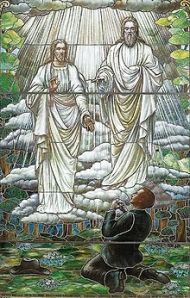
Stained glass depiction of the first vision of Joseph Smith, Jr., completed in 1913 by an unknown artist (Museum of Church History and Art).

Stained glass depiction of the first vision of Joseph Smith, Jr., completed in 1913 by an unknown artist (Museum of Church History and Art).

We found for example that Joseph Smith had given a number of accounts of the “first vision” prior to dictating the “official account” of 1838, which was first published in 1842. This alone amazed us. We had been taught that Joseph had given only one account of this key event, the one found in the Pearl of Great Price. We had no idea there were other earlier accounts which differed in critical detail from the 1838 “official account.” The earliest known account, which surprisingly proved to be the only one actually written by Joseph Smith himself, was dated 1831-32, some six to seven years nearer the event in question than the so called “official account” that Joseph caused to be written in 1838. And it says nothing about him seeing God the Father! In actual fact the 1831-32 account is so dissimilar to the 1838 “official” version that one would wonder upon reading the two accounts side by side if indeed they can by any stretch of the imagination be seen as describing the same supposed event.

Add to this the fact that there are yet other “first vision” accounts dictated by Joseph between 1831-32 and 1838, once again supposedly detailing this keystone Mormon event, each of which tells a story different in critical details to the others, and what do you have? The knowledge that Joseph Smith either wrote or caused to be written various versions of his supposed “first vision” between 1831 and 1838, each differing in such a manner from the others that one is hard pressed to tie them together – except in the sense that when put in order of production they show a definite evolutionary development of the story line now subscribed to in the “official account” – caused us to discredit the actuality of the 1838 “first vision” story as it is now dutifully taught as ultimate truth. These discoveries did however help us understand why the doctrine of God found in the Lectures on Faith is so contrary to current teachings, as later we studied the development of that doctrine in the early LDS church.

Our immediate desire upon reading the Tanner’s books was to find answers to these things from the church’s point of view. I had almost forgotten the promise God had given on directing me to the Carpenter’s Shop, that what He was leading me to contained the answers needed. I found myself driven by my sense of loyalty to the church, and also by a growing desire, fostered I suppose out of the sense of disorientation I felt and the panic I knew to be lying just beneath the surface of our still outwardly normal approach to life and living, to “prove” that in the face of all I had now examined the church was somehow still true. Deon shared my drive in this respect, and so began our long period of growing disaffection and disillusionment with the establishment which claims to intimately care for the membership of the church.

Our questions by this time were many and varied, as well as extremely detailed. We sought out some of those we had talked with when our questioning had been limited to the Lectures on Faith, as well as others we came to be aware of through our ongoing studies. Most of those we spoke with, wrote to, or telephoned admitted that what we had found was solid, factual, well documented material – and that the church had not been able to rebut the Tanner’s contentions. We still didn’t want to believe this to be true, but to that time we had avoided speaking our concerns directly to other than those we felt we could trust. We were still afraid to openly ask questions. After all, Mormons are not supposed to openly question the church, at least that’s what we thought at the time.
Jerald and Sandra Tanner.

Jerald and Sandra Tanner in front of their Salt Lake City store in the 1980’s. Jerald Tanner is now deceased.

We finally ventured to ask a few questions, limiting ourselves to things such as the Lectures on Faith, the “first-vision,” and the Book of Abraham, to local LDS authorities whom we felt might be able to point us towards the answers we sought. It was terribly frustrating to find in all this a general lack of feeling or understanding for our plight, and quite often hostile disregard for the questions we put forward, at least judging by certain reactions. Later we were to conclude that many of these had been more deeply impacted by what we related, as we laid out our questions and asked concerning church programs or materials to provide help or guidelines, than they let on at the time. However we continued to be rebuffed, told there was “no need” for the church to respond to the material the Tanners were publishing. All we had to do, according to these, was read the Book of Mormon and pray over it. That was how we would know Joseph Smith was a prophet, if we were “sincere.”

After a number of such experiences we made the mistake of asking the local Mission Office for assistance with our questions. I called, explaining what we were looking for, and was told by the young man who answered the phone that they knew of “a man in Mesa” who made it his task to help people such as ourselves, people who were honestly troubled with the charges the Tanners had made about the church and who were seeking honest answers. I was almost beside myself with joy, for I actually believed their intentions were honorable and above board.

For the next three weeks we waited anxiously to be called and told by Elder Simmons, our contact at the Mission Office, that my appointment with Brother Ron Brown was set. Then, quite by accident, I discovered that Brother Brown was a member of a committee headed up by Elder Mark E. Peterson, a committee whose task it is to ferret out supposed “enemies of the church” and make short shift of them. I did not in any way consider us to be enemies of the church. Instead we honestly sought answers to questions that we believed the church had to respond to intelligently if it hoped to maintain its claims in the field of religion. Nor do I now believe that we have become enemies of the Mormon people by virtue of our decision not to continue in support of what amounts to institutionalized untruth and half truth. Since when is one who seeks to make others aware of the truth called an “enemy”?

I want to spend a few minutes with you Brother Featherstone, exploring an issue you raised early on in your letter. You suggested that we might do well to go back and re-read the Book of Mormon, “pray and ponder over every page”, then ask ourselves, “Could Joseph Smith possibly have written this?” As I mentioned previously, I wasn’t sure how you tied this exercise into the concerns you felt we were still dealing with regarding to the Lectures on Faith. Nevertheless I feel your suggestion is valid if you are intending by use of the word “ponder” that one engage in a carefully considered study which employs the complete mental faculty of the student. The reason I hope your suggestion, thus understood, would appeal to many both in and outside the Mormon church, is that having uncovered the truth about the Book of Mormon in the process of such a study we desire that many discover for themselves what we have come to know.

While it is obvious that our suggestion would carry little weight with persons who desperately desire to believe the Book of Mormon is all the LDS church claims it to be (for such a study will unfailingly illustrate the fact that the book is not what the church claims it to be), there is a source within Mormonism itself to whom those who doubt us may be more willing to look for guidance in such a test, someone who cannot be accused of being an “enemy” of the church. That someone is none other than the one time President of the quorum you now are a part of. Of course I speak of former President Brigham H. Roberts of the First Quorum of The Seventy.
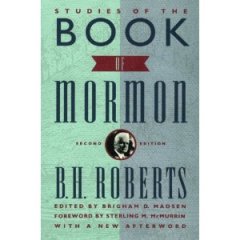
"Studies Of The Book of Mormon" by B.H. Roberts

“Studies Of The Book of Mormon” by B.H. Roberts

Ask yourself how someone who knows little or nothing about the realities of the pre-historic Americas, who is not familiar with the body of well developed “common knowledge” of Joseph Smith’s day respecting the native inhabitants of these continents, and who is ignorant of the fact that Ethan Smith produced two publishing’s of his “View of the Hebrews” during the eight years preceding the Book of Mormon (which publishing’s had considerable impact in Joseph’s locale, and which are shown by Brother Roberts to so closely parallel in so many suppositions and details the story line later written into the Book of Mormon), ..how anyone who is unaware of these vital background facts could possibly pick up the Book of Mormon as you suggest and “ponder” over it in the true sense of the word? And not being able to study it in a careful and considered manner for lack of the type of information that B. H. Roberts’ study would provide if they had it in hand, how do you propose that such a person can truly pray over such a critical matter?It is a shame that LDS leaders failed to make this incredibly valuable study available long ago, however it is clear they were concerned for the impact B. H. Roberts’ observations and conclusions would have on many within the church, persons who would willingly read what he had to say on the subject while continuing to faithfully avoid any such observations from outside sources. Nevertheless the fact is that with Roberts’ study in hand one is far better prepared to “ponder” whether Joseph Smith could have produced the Book of Mormon on his own.

LDS doctrine holds that issues in question are to be studied out by the questioner prior to going to the Lord to seek His confirmation or denial of conclusions reached. If however the church withholds vital information that would assist in reaching a truly studied conclusion, in this case B. H. Roberts’ manuscript Book of Mormon study, how then can it pretend that the unaware person seeking to know the truth about the Book of Mormon could possibly arrive at a pondered and carefully considered conclusion over which prayer may rightly be offered?
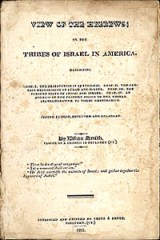
Title page for the 1825 edition of "View of The Hebrews" by Ethan Smith

Title page for the 1825 edition of “View of The Hebrews” by Ethan Smith

As you must certainly be aware, B. H. Roberts answered the question, “Could Joseph Smith possibly have written this (Book of Mormon)?”, in the affirmative. He said Joseph Smith could have produced the book on his own given his demonstrated native intelligence, his knack for storytelling, the access he had to the wealth of “common knowledge” surrounding the native inhabitants of these lands, and the doubtless access he had to Ethan Smith’s “View of the Hebrews,” the earlier volume that so closely parallels, in ways not attributable to mere chance, the Book of Mormon. Joseph Smith’s book is a product of the times and circumstances surrounding its production, and of Smith’s ability to utilize what he had at hand in the way of schematic materials. As such it is forever stamped a product of nineteenth century America, “Author…, Joseph Smith, Jr.,” as B. H. Roberts clearly demonstrates.

In addition to the claims he made for the Book of Mormon, Joseph Smith also laid claim to being a prophet of God. One desiring to test that claim would do well to lay aside personal prejudice and go directly to the one place where we find the only true test available, the Word of God. Deuteronomy 18:20-22 records God’s own statement regarding the test of a prophet. This test was as fitting in Joseph Smith’s or Brigham Young’s day, or is for that matter in our own day, as it was in the days of Moses. God says:

“But the prophet who shall speak a word presumptuously in My name which I have not commanded him to speak, or which he shall speak in the name of other gods, that prophet shall die.

“And you may say in your heart; ‘How shall we know the word which the LORD has not spoken?’ When a prophet speaks in the name of the LORD; if that thing does not come about or come true, that is the thing the LORD has not spoken. The prophet has spoken it presumptuously; you shall not be afraid of him.”

How anyone, after reading the test God has laid out by which we may know of a certainty the validity of the claims of anyone who professes to speak in the name of the Lord, could then fail to apply that test to Joseph Smith in light of the claims he made is beyond me. Yet I know many who simply look the other way when confronted with God’s Word in this matter, and refuse to submit Joseph’s claims to God’s test.

What could anyone possibly fear in such an examination? Could it be their confidence is just a bit shaken in the face of such a proof positive way of testing their “prophet”? Or are they so “system dependent” when it comes to the LDS church that they are blinded to the truth of God’s Word in this matter? Actually I suspect that anyone who refuses to put Joseph Smith to God’s test does so for reasons that are often hidden, even from themselves. This however does not impact upon the validity of calling him into account and critically examining that which he spoke “in the name of the Lord.”
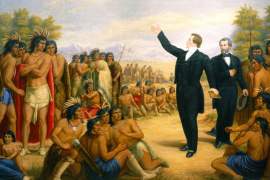
An 1890 oil painting of Joseph Smith preaching to the Indians. The painting was commissioned for the Salt Lake Temple and it hung there for over fifty years.

An 1890 oil painting of Joseph Smith preaching to the Indians. The painting was commissioned for the Salt Lake Temple and it hung there for over fifty years.

What did we find when we put Joseph Smith to the God’s test? We discovered first of all that he gave well over 60 prophecies “in the name of the Lord”, and that a study of these first 60 of shows that over 50 have failed to come to pass as he set them forward. Persons who have claimed far less elevated gifts of prophecy than Joseph Smith have compiled much better records of fulfillment in their predictions than he did. But that’s not the real point here. Joseph Smith claimed to be a “Prophet of God,” and in that capacity to speak “for the Lord.” The Word of God says however that just one failed prophecy issued in the name of the Lord forever brands the one who makes it a false and presumptuous prophet.

God’s word declares two things about such a deceiver, first: that he “shall die” – that he shall be removed or cut off from among the people. And in point of fact Joseph Smith was cut off – killed in the very prime of his life – even though he issued prophecy immediately preceding his death in which he has the Lord promising that he will live many additional years. Secondly, God commands that we are “not to be afraid” of such a false prophet.

Your letter proposes a list of 17 questions which you suggest we ask ourselves and the minister of the church we presently attend. As I have already explained, we have no intention of joining the Church of The Nazarene or any other church at this time, nevertheless I view the questions you ask as legitimate spring boards to worthwhile dialogue, and in that spirit will address myself to one or two of them at this point. Because my time is limited and the hour late, I will defer the others until another day and concentrate on what we could label “keystone issues” in any examination of Mormon claims.

Your first question, “Where does the Nazarene Church pastor receive his authority?,” leads us into what may be the heart and soul of the matter from the LDS point of view. I suggest however that your question should in reality be rephrased, for the real question is, Where do the LDS get their authority?

The question of authority is a favorite “hobby horse” of Mormon doctrine, and it would be of benefit to trace the LDS claim “all the way back to the beginning,” just as you have suggested. Since the doctrine of the “one true church” is part and parcel with the LDS claim to “priesthood authority,” such a review may allow us to bag two birds with one stone.
"The Great Apostasy" by James E. Talmage

“The Great Apostasy” by James E. Talmage

LDS author and General Authority James Talmage writes, in the preface to his book “The Great Apostasy,” that “the primitive Church lost its power, authority, and graces as a divine institution,” and that the “evidence of the decline and final extinction of the primitive Church among men is found in scriptural record and secular history.”

In an attempt to support the doctrine of “total apostasy” the LDS church quotes such scripture as Amos 8:11-12; Isaiah. 60:2; Acts 20:29-30; Gal. 1:6-9; etc., (LDS Topical Guide to the Scriptures). However an examination of these verses finds not one which says there is to be a complete or total apostasy. In fact, some of these verses do not even refer to the church.

The Bible teaches that apostasy had already begun in New Testament times, and that it would increase in the last days (see II Tim. 3 & 4). Nowhere does the Bible even infer that this apostasy would be total as Talmage and other Mormon teachers and leaders insist.

Speaking of the extended history of Christ’s True Church, the Apostle Paul wrote, “Unto Him (God) be glory in the Church by Jesus Christ throughout all ages, world without end” (Eph. 3:21). Clearly Paul’s Holy Spirit inspired declaration could not prove true if the “total apostasy” for several centuries that Mormonism leans on was historic truth.

Jesus spoke to the subject when He said, “Upon this Rock I will build my church; and the gates of hell shall not prevail against it” (Matt. 16:18).

Paul further writes, “other foundation can no man lay than that which is laid, which is Jesus Christ” (I Cor. 3:11).

With Jesus Christ as the foundation of the Church, pray tell how could that foundation possibly “collapse”? How could Christ lose “the church of God, which He hath purchased with His own blood”? (Acts 20:28)

Mormon scripture itself denies the very concept of “total apostasy.” In 3 Nephi 28, and D&C Section 7, we find the stories of John the Apostle and the three Nephites. These were to remain alive on the earth bringing souls to Jesus Christ until the second coming of the Lord. Even a conservative estimate of the numbers of persons such witnesses of the good news of Christ would have been able to bring to the Lord during the centuries of their ministry among men would have to be staggering to contemplate. And add to that the number converted to Christ by the testimonies of those who had been converted under the preaching of these special witnesses – well, you can see what I’m getting at. There is simply no way that the true Church of Christ, that body of believers who have been called out to Him in faith believing on His Name to salvation throughout all ages, can be said to have fallen into “total apostasy,” even from the context of Mormon scripture.

Joseph F. Smith, Jr. said the following in respect to the question of total apostasy. “As long as one Elder remains on earth today, he would have the priesthood and could organize the church even though all of the apostles and first presidency, etc., were killed off” (Latter Day Prophets Speak, p. 213).

Pray tell why would this be true for the LDS Church but not for the New Testament church after which the LDS Church claims to be patterned? If we look to Mormon scripture alone we find that there remained on earth throughout the centuries at least four men who can surely be said to hold the same level of authority that an Elder in the Mormon Church claims to hold. And the commission of these men is said to be that of bringing souls to Christ until He returns (adding these souls to the true Church). So there was no “total apostasy,” and true authority has never been lost from the earth, even from the standpoint of LDS scripture — not forgetting that the Bible itself does not support such a concept.

Although the Mormon Church cannot demonstrate a “total apostasy,” and consequently the need for a “restoration” like Mormonism claims is not in evidence, the claim is nevertheless loudly trumpeted that “priesthood authority” was indeed “restored” through Joseph Smith. Therefore the question you opened with Brother Featherstone is that which most occupies the minds of Mormons. “Where did you get your authority?”

How many times I’ve asked that of others in my lifetime I simply cannot know. I am forever grateful that in Jesus Christ alone is found the true joy of the power and authority of God’s priesthood of believers, that “royal” or “holy” priesthood and spiritual house in which all those in Christ are set as “living stones” (I Peter 2:1-10). No longer do I look to other than the Lord Jesus Christ as the Rock of True Authority in my life.
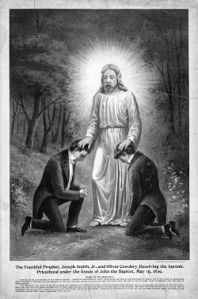
A 19th century depiction of John the Baptist conferring the Aaronic priesthood to Joseph Smith and Oliver Cowdery

A 19th century depiction of John the Baptist conferring the Aaronic priesthood to Joseph Smith and Oliver Cowdery

The LDS church claims that John the Baptist appeared to Joseph Smith and Oliver Cowdery, giving them the Aaronic priesthood. The Pearl of Great Price, Joseph Smith 2:68-73, says that John the Baptist appeared to Joseph and Oliver and conferred the Aaronic priesthood on them, even though they had not been baptized. The Mormon church teaches that baptism is essential to salvation (John the Baptist’s name clearly bespeaks his mission), so why do we not see John baptizing Joseph and Oliver prior to the confirmation of the Aaronic priesthood? Surely if the Spirit of the Lord could baptize Adam (see Pearl of Great Price, Moses 6:64-65), John the Baptist could have first baptized Smith and Cowdery.

The Mormon church teaches that baptism must precede the receipt of the priesthood, since baptism is said to be preceded only by faith and repentance in the life of a believer. Therefore Joseph and Oliver were not “washed of their sins” when John is said to have ordained them. Joseph and Oliver, with John the Baptist apparently only looking on, are then told to baptize one another. Strange when you think about it. These two are said to be in the presence of the one who baptized Jesus Christ, and yet they are told to baptize themselves. When they get through baptizing each other, then they “ordain” each other yet again with the same priesthood that John the Baptist is said to have already bestowed on them. I’m not trying to make light of this account, as you well know Brother Featherstone, it’s just the way it reads — I didn’t make it up. But the real questions are, is all this necessary – and did it actually happen?

Since the “total apostasy” Mormons depend on to demonstrate a need for such a “restoration” never took place, we find in that alone enough to refute the claim of “priesthood restoration.” But to those who will not believe that the true Church of Christ has since New Testament times been found on the face of the earth, who find themselves clinging to the false hope offered in the “restoration” story dutifully repeated by those who look to Joseph Smith for salvation, once again I say, “look to God’s Word.”

The basic work of the priesthood has always been that of mediator between God and men. Levitical Priests in the Old Testament were such mediators, and had to be of the tribe of Levi and of the sons of Aaron (Num. 3:6-12). Since Mormons generally claim to be of the tribe of Ephraim or Manasseh they are not qualified even by supposed lineage to hold the Levitical Priesthood. Furthermore LDS priests have never fulfilled the duties of the “priests” or the “high priests” in offering sacrifices (Ex. 29:38-44 & Heb. 5:1; 8:21). The Levitical priesthood cannot be separated from the sacrifices. Yet even if the LDS were to offer such Levitical sacrifices today, they would be of no value because the Levitical or Aaronic Priesthood was replaced or superseded in the Church by Jesus Christ, the Great Eternal High Priest. Christ is now the only Mediator (Priest) between God and men (I Tim. 2:5; Heb. 7:24-25; John 14:6).

Although Aaronic priests functioned until 70 AD, when God allowed the Roman Army to destroy the Jerusalem Temple, their priesthood actually ended at the time of Christ’s crucifixion when “the veil of the temple was rent in twain from top to bottom” (Matt. 27:50-51).
"And, behold, the veil of the temple was rent in twain from the top to the bottom"  (Matthew 27:51, KJV)

“And, behold, the veil of the temple was rent in twain from the top to the bottom” (Matthew 27:51, KJV)

Apparently the Aaronic priests didn’t get the message for they patched the heavy temple curtain separating the “Most Holy Place” from the “sanctuary” (Heb. 9:2-3) and went on offering sacrifices that were only figures of what Jesus Christ had already completed (Heb. 9:1-10:21). On the other hand true followers of Christ “enter the Most Holy Place by the blood of Jesus, through the veil, that is to say, His flesh” (Heb. 10:19-20). When Jesus died on the cross, God ripped the great temple veil, which was 60 feet high, from top to bottom exposing the “Most Holy Place,” thereby declaring that through Christ’s death believers have access directly to God.

In Old Testament days there was only one high priest on earth at a time. Once each year He went into the “Most Holy Place” to offer blood sacrifice for himself and for the sins of the people (Ex. 30:10; Heb. 9:7,19-22). However in the New Testament Church Jesus Christ is both the High Priest and the final sacrifice (Heb. 3:1; 9:11-12, 25-26). His body was offered once for all, and now there is no more sacrifice for sin (Heb. 7:26-27; 9:11,12,26; 10:10-14). Because that work is finished I there is no more need for a high priest on earth.

Hebrews 8:1-6 says that Christ, the only High Priest, is in heaven. The Book of Hebrews repeatedly declares Jesus Christ to be the only High Priest after the order (manner) of Melchizedek. His Priesthood is declared to be “unchangeable” (literally, “untransferable” or “passeth not from one to another” Heb. 7:24). Jesus never gave this Priesthood to anyone. It was His alone on the basis of the power of an indestructible life. He is consecrated forevermore (Heb. 7:25) after the manner of Melchizedek (Heb. 7:15-17), and lives forever as the believer’s One and Only High Priest. To those who put their faith and trust in Jesus there is no need for other high priests!

Mormons teach that Joseph Smith had to have the priesthood before he could establish the church. However the Bible never says that apostles, bishops, deacons, or any other New Testament office held either the Aaronic or Melchizedek priesthood. So why did Joseph Smith need it? Even the Book of Mormon is silent about the Aaronic priesthood, and it mentions the Melchizedek priesthood only once in a direct reference to the person of Melchizedek. If as Mormons claim the Book of Mormon contains “the fullness” of the everlasting gospel (D&C 20:9; 27:5; 42:12; and P. of G.P. Joseph Smith 2:34) and it doesn’t mention Aaronic or Melchizedek priesthood in the church, why insist on it now?

Every believer in Christ for life and salvation possesses the “holy” or “royal” priesthood (I Peter 2:1-10). However that priesthood is neither Aaronic nor Melchizedek, and it does not exclude women and children (see Gal. 3:18; Acts 10:34; Rom. 2:11; 10:12; Eph. 6:9). The Book of Mormon, in 2 Nephi 26:33 and Jacob 2:21, declares that God sees all mankind alike, whether they are black or white, male or female, bond or free. The exclusion of Negroes prior to 1978 and the continuing exclusion of women from the LDS priesthood says plainly enough that the Mormon view of mankind is not the same as God’s view.

Let’s get back to the claim of the “restoration” of the priesthood. Is it necessary to depend solely on the story told by Joseph Smith if one wants to examine the issue from the LDS viewpoint? Of course not. There are many Mormon sources from which to draw evidence weighing on the truthfulness of Joseph’s story. For example, the Mormon Church maintains mountains of records, but in these nearly countless volumes we search in vain for we find no record whatsoever of the restoration of the Melchizedek priesthood, explaining when and where Peter, James, and John were supposed to have visited Joseph Smith.

D.&C, 27:12, where the visit is mentioned, is dated August 1830. Mormons use this as historical evidence. However when we go back to the Book of Commandments, where the revelation was originally published in 1833, we find Peter, James and John nowhere mentioned in these original verses. Mention of them first appears in the D&C as published in 1835.

By comparing the original revelation as published in 1833 with the same revelation reprinted in 1835 we discover that 13 verses have been added, verses containing the names of Peter, James and John. This modification of the 1833 revelation, to make it appear when reprinted in 1835 that the “restoration” of the Melchizedek priesthood had been known prior to August 1830, casts a huge shadow over the scene even from the LDS standpoint.

Of tremendous interest in this whole thing is the account of David Whitmer, one of the three witnesses of the Book of Mormon and “third Elder” in the Church of Christ (the original name of the LDS church) as founded in 1830. David Whitmer writes that “priesthoods” and “high priests” were unknown to and not a part of the Church of Christ for almost two years following its establishment (An Address to All Believers in Christ, p. 64. — This is the same book the LDS church uses to show that Whitmer never denied his testimony of the Book of Mormon.)
David Whitmer "An Address To All Believers In Christ"

“An Address To All Believers In Christ” by Book of Mormon Witness David Whitmer

If, as Whitmer claims, the Church of Christ knew nothing about “priesthoods” for the first two years of its existence, and when it was introduced into the church it came as the brainchild of Sidney Rigdon through his influence with Joseph Smith, then we see that the Mormon claim of priesthood authority being restored prior to the founding of the LDS church is once again proven false.

D&C 20, which originally was chapter 24 of the 1833 “Book of Commandments,” mentions nothing about high priests in its original form, nor did it mention high priesthood. Only when it was reprinted in the 1835 as the “Doctrine & Covenants” do we find verses 65, 66 and 67 inserted, verses that bringing the subjects of high priesthoods and high priests into the picture for the first time — with no indication of a change. Joseph Smith himself recorded in June of 1831 that “the authority of the Melchizedek priesthood was manifested and conferred for the first time upon several of the elders” (D.H.C. vol. 1, pp. 175,176). In the Journal of Discourses, vol. 11, page 4, we learn that Ezra Booth, a Methodist minister, was present when the elders first received the High Priesthood in June, 1831. This is more than a year too late to support LDS claims since the Church of Christ was founded in April, 1830.

It’s not hard to boast about a “restored priesthood,” but quite impossible for the Mormon Church to demonstrate the validity of such claims from either the text of God’s Word or from critical examination of LDS scripture and history. In fact the record shows that Oliver Cowdery’s assessment of the situation is accurate, that the whole matter of priesthood was “gotten up” by Sidney Rigdon and Joseph Smith some time after their church was established, after Sidney “explained the old scriptures to Joseph in his own way”, causing Joseph to “ask of the Lord” concerning these things. Whitmer adds, “They received the answer just as they had it fixed in their hearts.”

Had Rigdon and Smith left well enough alone they would have been alright as far as history would have been concerned. After all they had a perfect right to call authority in their church “priesthood” if they wanted to. But by going back and changing the revelations in the 1833 Book of Commandments to make it appear, in 1835 when the D&C was first published, that their “priesthood restoration” had been accomplished prior to the 1830 founding of the church, they carried the ball a bit too far out of bounds, becoming their own worst witnesses in this whole matter.

Brother Featherstone, you say that you are a “special witness” that “Joseph Smith’s testimony is true.” You also declare that you bear a “sacred testimony” to this effect and would “do so with (your) life..” Believe me when I tell you that I know you are sincere in your testimony, and I do not in the least question your sincerity when I point out that sincerity has never been the final test of the truth or untruth a question. We can all name many “sincere” people that history records as being in the wrong.

In evaluating a subject as complex as Mormonism, we would do well to remember that the plumb line of the Word of God is in place to assure believers that our feet are planted on the Foundation Rock which is Jesus Christ. There is only one Lord and Savior, while there are many pretenders.

My special witness to you and to the world, Brother Featherstone, is that Jesus Christ alone is Savior and Lord, and I’ve come to know Him as I never did before, through the witness of God’s word and the testimony of the Holy Spirit of Truth. Opening my heart to the saving Truth of God’s word, I ask Christ into my life as Savior and Lord. Just as promised He came to dwell in me by God’s Holy Spirit, and has remained with me from that moment on.
The Bible His gentle knock at the doorway to my heart was heard one day as I witnessed, by the power of God’s word, the awesome majesty of His sinless life and His perfect sacrifice for the sins of all who believe God’s testimony. On that day, by the living Word of God, I watched my Savior die in my place, nailed to Calvary’s cross in agony, yet without resistance or complaint, accomplishing in the eyes of God what no one else ever can or will, sacrificing His body and spilling His blood to cleanse me from sin, loving me as no one else ever can or will. And I wept in anguish of soul as I saw myself for what I am, a sinner separated from God. From the depths of my soul I cried, “Lord Jesus, I’m wrong, I’m sorry, forgive me, take away my sin, be Savior and Lord in my life. Dwell with me and make of me what You will.”

Although my prayer was far from eloquent Christ knew my heart and touched me with the assurance of His holy presence. I experienced the perfect love and healing power of Jesus Christ in the deepest possible sense, with various “thorns in the flesh” that brought torment prior to coming to Christ swept aside as God’s Holy Spirit did His work in my life. I praise the Lord Jesus with all my heart and soul for His ongoing work in and through me. That I may be of service in leading hearts and souls to Him is my desire.

Early on in your letter you suggested, “Though argument does not change belief, the lack of it destroys belief.” Deon and I agree, and in that spirit we invite you to correspond further as you see fit. Even if you decide not to do so we want to say a sincere thank you for your evident caring heart, and prayerfully invite the Holy Spirit of God to touch you deeply and in a most unexpected way as you ponder and pray over His Biblical Word of Saving Truth.

George S. Rasmussen today

George S. Rasmussen today

To this greatest of all Truths I bear sacred testimony.

In the Love of Christ,

George S. Rasmussen

by George S. Rasmussen
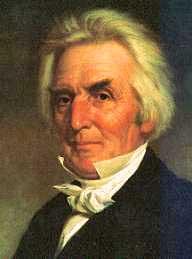
During the summer of 1982 my wife and I received the following unsolicited letter from Vaughn J. Featherstone, a member of the LDS First Quorum of the Seventy in Salt Lake City. In his letter Featherstone questioned us closely about a report he had received, apparently from a third party, expressing concern for our ongoing investigation of Mormon claims. I will post our reply to Mr. Featherstone’s letter as Part Two.

THE CHURCH OF JESUS CHRIST OF LATTER-DAY SAINTS
The First Quorum of the Seventy
47 East South Temple Street
Salt Lake City, Utah 84150

June 30,1982

Mr. and Mrs. George Rasmussen
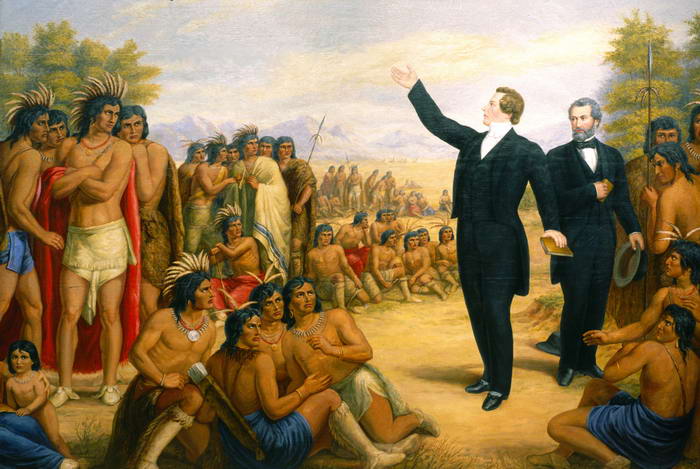
Tempe, AZ

Dear Brother and Sister Rasmussen:

Your decision to leave the “Mormon” Church and join another Christian church has come to my attention. Someone has said, “Though argument does not change belief, the lack of it destroys belief.” I understand that the removal of the Lectures on Faith from the Doctrine and Covenants was your major concern. Let me raise some questions, in love, that you should ask yourself before making this choice that has eternal consequences. Possibly you would want to be as thorough in your investigation of a new found “faith” as you were in your study that led you out of the Church.

It is my understanding, Brother Rasmussen, that you served a mission for the Church and that you were married in the temple. Lest what I write next seem too simplistic, please continue on. Your concern over the Lectures on Faith is one I have personally come to grips with. Those faced with such concerns have used the principle in Book of Mormon, Key to Conversion. That is, go back and again read the Book of Mormon, pray and ponder over every page, then ask, “Could Joseph Smith possibly have written this?” I am a special witness that Joseph Smith’s testimony is true. I bear a sacred testimony and would do so with my life, if necessary, that he was a prophet and that the Book of Mormon is true.

Vaughn Featherstone at the 1984 Minneapolis Regional Confernence

Vaughn Featherstone at the 1984 LdS Church Minneapolis Regional Conference

Now, to the possibly less simplistic questions I would ask myself if I were you:

1. Where does the Nazarene Church pastor receive his authority? Trace it all the way back to the beginning. Your normal thoroughness would dictate this.

2. Have the pastor explain and teach you the church’s concept of God, the Eternal Father, and His Son, Jesus Christ. Have them teach you their concept of the Holy Ghost.

3. Ask your minister about the doctrine of the Nazarene Church regarding the myriads of souls who lived in ages past that have died without ever hearing of the Nazarene Church, or even of Christ. Have him explain the interpretation of the scripture, “Else what shall they do which are baptized for the dead if the dead rise not at all?” Does this church practice baptism for the dead? Only one Church that I know of does and you understand why (I Corinthians 15). Ask your minister to explain the three degrees of glory talked about by Paul, again in I Corinthians 15.

4. Ask him if he would continue to be a pastor in the church if his salary were discontinued. As you know, we do not have a paid ministry.

5. Have the minister explain the term Melchizedek as mentioned in Hebrews 7:1-6, Hebrews 5:6,10, etc., etc.

6. Ask the minister if he pays a tithing. As you know, our stake presidents, bishops, and General Authorities do. Are the people in the church tithed?

7. What is his interpretation of Isaiah 58:6-9? Does his church have a fast and an offering?

8. You understand the Bible. In Ephesians 4:11-13, we are to have apostles and prophets in the Church till we all come in the unity of the faith. This has not happened yet. Also, all the other officers including evangelists (patriarchs).

10. Ask the minister if his church has “sealing” powers as mentioned in the 16th chapter of Matthew. I testify to you, in the name of Christ, that there is no other church on the earth that has sealing powers that can seal a man and woman together for time and all eternity.

11. Does the Nazarene Church have a missionary program to every nation, kindred, tongue, and people? It should if it is the only true and living church of Christ on the earth. (See Matthew 25 the last few verses).

12. What does Malachi mean by “turning the hearts of the fathers to their children and the hearts of the children to their fathers?” You know but the minister doesn’t. Over the years you have been taught the hidden treasures of knowledge-the Word of Wisdom, sealing powers, the plan of salvation, genealogy and temple work, etc. etc. These things are common to you, but not so with the minister.

13. Show me another church that even approaches the Church of Jesus Christ of Latter-day Saints’ welfare program. You know that we teach self reliance, thrift, and independence.

14. Ask him about temples in his church and what takes place there. Ask him to tell you about the “coat of skins” that clothed Adam and Eve.

15. Ask him to explain where his church received the baptismal prayer, the sacramental prayers, and determine how shallow or deep his understanding is of the sacrament.

16. What mode of baptism is used? “Buried with him in baptism,” as in Colossians 2:12?

17. Have your minister explain what you already know:
Daniel 2:28-35,44 The stone is this church

Ezekiel 37:15-19 Two records

Isaiah 2:2-3 You know where the mountain of the Lord’s house is. Does the
minister?

Genesis 49:22-26 Who is the seed of Joseph which will be “separate” from his
brethren “unto the utmost bound of the everlasting hills?”

You know, but the minister does not.

Isaiah 29:4 & 11-14 The Angel Moroni delivering the Book of Mormon.

Now, I could go on and on taking scriptures from the Bible that you both understand but the ministers do not. You have had the Pearl of Great Price all along. Don’t sell five generations of a birthright for a mess of pottage. Look into your souls. Have you faithfully lived the Word of Wisdom? Have you faithfully paid your tithing? Were you regularly attending meetings in the Mormon Church? Is your life free from transgression? Are you pure in your thinking? Were you faithfully holding quality family home evenings, family prayer, and personal prayers. Were you keeping every covenant you made in the temple? Only you can look deep in your hearts and make certain that there is not a “real” reason other than the “reason given” for leaving the Church.

President Heber J. Grant said, “If you get on a hobbyhorse it will ride you right out of the Church.” It doesn’t matter whether it is the Lectures on Faith, the Word of Wisdom, the Equal Rights Amendment, or any other hobby.

My friends, think back on the Book of Mormon. I can’t imagine what my life would be like without Nephi, Jacob, King Benjamin, Ammon, Alma, Samuel, Mormon, and Moroni. These and all the other prophets in the Book of Mormon were some of the greatest prophets who ever lived. What a tragedy it would be to remove the prophets and teachings of the Book of Mormon, the Doctrine and Covenants, and the Pearl of Great Price from my life or from yours. I know that these prophets lived and that the Book of Mormon is true.

It is my opinion, learning of your story, that your experiences with your faith in Christ are valid. No church on the earth believes in Christ, the literal, physical Son of God like the Church of Jesus Christ of Latter-day Saints. We know he was sired by God, our Heavenly Father, and that Mary was his mother.

Under separate cover, I am sending you a copy of a book I have written, Charity Never Faileth. Perhaps it will share with you my love and tender feelings for the Church.

Vaughn J. Featherstone (left) takes in a 2009 Young Men's address by LdS President Thomas S. Monson

Vaughn J. Featherstone (left) takes in a 2009 Young Men’s address by LdS President Thomas S. Monson

I remember hearing the story of a bishop who was released after six years of service. He felt lonely and unneeded. He said that Satan tempted him, saying, “Read the Doctrine and Covenants and I will prove to you that it is not true.” He said that Satan took him through the Doctrine and Covenants, page by page, and raised every question he could. When the bishop laid down the Doctrine and Covenants, he said his testimony hung in the balance and he was no longer absolutely certain that it was true. He knelt down in prayer and pled with the Lord to help him know whether or not it was true. He said, “I pled like I never had before in my life. Then I went back and read again the Doctrine and Covenants, only this time the Savior took me through it. Every page confirmed that it was divinely inspired and I had regained my testimony.” Then the Lord revealed to this bishop that a change was being made in the stake and he would be the new stake president. A few weeks later he was called as stake president.

Please, my wonderful Latter-day Saint friends, this is a test. Do not fail. All eternity is hanging in the balance.

I am sending a copy of this letter to your stake president so that someone can visit you and be available to respond to whatever questions you may have.

Sincerely and with great faith,

Vaughn J. Featherstone

– Go to Part 2 –

“This is loving your neighbour as ourselves; if he needs help, help him; and if he wants salvation and it is necessary to spill his blood on the earth in order that he may be saved, spill it.”
–    Prophet Brigham Young, Journal of Discourses, v. 4, p. 220

Jess_Groesbeck

C. Jess Groesbeck, M.D.

‘Blood Atonement, Capital Crimes and Mormon Murders’
a 1988 Sunstone Symposium Presentation by C. Jess Groesbeck M.D.
[with Owen E. Clark, M.D. responding]
(click above link to hear or download audio presentation)

Who was C. Jess Groesbeck, M.D.?
C. Jess Groesbeck (May 7, 1934 – October 26, 2009) was a physician, psychiatrist, and Jungian psychoanalyst. He was one of the Forensic Psychiatrists who examined Ron Lafferty after his arrest for the murder of his sister-in-law Brenda Wright Lafferty and her 15-month-old daughter, Erica. According to investigators, the killer claimed he had received a “removal revelation” from God that targeted four people, including Brenda and Erica. This crime was featured prominently in Jon Krakauer’s bestselling book ‘Under the Banner of Heaven: A Story of Violent Faith’. This case as well as the Mark Hofmann “White Salamander” Mormon Murders case are cited extensively as case studies in this superb presentation.

Owen E. Clark is a physician and frequent contributor to Dialog Journal, Sunstone Magazine as well as other Latter-day Saint publications.

Both men are (and in Dr. Groesbeck’s case ‘were’) lifelong practicing Latter-day Saints and this presentation is, in my opinion, profound enough, and thought provoking enough to merit special attention.

Poignant excerpts from Mr. Groebeck’s presentation
“One of the most dangerous traits and trends of any culture that claims, ‘to have the truth,’ is the tendency to not see it’s blind side and it’s capacity to project it’s own shadow onto others. And then identify with only what is light and good and right from God. And assume that all others that are different belong to the Devil.

This is, in my estimation, one of the most serious – if not THE most serious problem we face in collective Mormonism today. Our inability to acknowledge or see our own shadowy side.

How desperately do we need to hear, ‘. . . why beholdest thou the mote that is in thy brother’s eye, but considerest not the beam that is in thine own eye?’ (Matthew 7:3)”
[37:05 into the presentation]

“But when no one looks behind the scenes at the collective elements that fomented and set the stage for these kinds of individuals, then painful realities need to be acknowledged in this culture.

As Richard Howard, Historian for the Reorganized Church said to me, ‘When individuals are isolated and their own religious outlooks are not honored or given at least legitimate discussion, does this not produce the kind of isolation that breeds idiosyncrasy, anger, frustration, alienation and hence aggression toward others?’

The answer to that question would have to be a painful, ‘Yes!'”
[36:00 into the presentation]

An artist’s depiction of the Blood Atonement execution by firing squad of John D. Lee for his role in the Mountain Meadows massacre. Lee’s blood was shed on the ground where the massacre had taken place 20 years earlier; nevertheless, Brigham Young said that Lee “has not half atoned for his great crime” (Young 1877, p. 242)  This despite Lee’s faithful adherent to the Blood Atonement doctrine taught by Young.
[click on image to zoom]

BONUS LINKS
Wikipedia article on Mormonism and Violence
Wikipedia article on Blood Atonement
Two good overviews of the topic from a neutral source.

Mormon quotes on Blood Atonement
Original source, first person quotes from Mormon Leaders on Blood Atonement throughout Mormon History.

The LdS Church’s Statement on Blood Atonement
Published in the June 18, 2010 edition of the LdS Church owned “Deseret News”.

Jon Krakauer ‘Under the Banner of Heaven: A Story of Violent Faith’
This book was published in 2003, several years after Dr. Groesbeck’s 1988 presentation, and has become somewhat infamous in Mormon culture in particular and Mormon Studies in general as a provocative treatise on how Blood Atonement has been interpreted and practiced throughout Mormon History.

AUDIO: Sunstone Symposium: “Book Review Panel: Under the Banner of Heaven”
Dr. Groesbeck was a participant on this remarkably diverse 2003 panel. Many of the themes discussed in his presentation are repeated and explored within the context of Mr. Krakauer’s best selling book. The full panel roster is as follows: Robert A. Rees (Attorney), C. Jess Groesbeck (Psychiatrist), Anne Wilde (LDS Polygamist), Jana Bouck Remy (Author) and Nadine Hansen (Attorney)
AUDIO: Infants on Thrones Panel Discussion of Under the Banner of Heaven
Tom Perry (of Mormon Expression fame) hosts a 2012 panel discussion to review and discuss the book Under the Banner of Heaven by Jon Krakauer.  This presentation is unique in that it contains interesting period audio clips from the author and LdS leaders regarding the book.  It also includes short audio excerpts from the book itself.
Steven Naifeh & Gregory White Smith, “The Mormon Murders: A True Story of Greed. Forgery, Deceit, and Death
Link to the Amazon page for the 2005 book from two non-Mormon Pulitizer Prize winning authors documenting the 1985 Mark Hofmann “White Salamander” murders that are also mentioned in Dr. Groesbeck’s lecture.

Allen Dale Roberts and Linda Sillitoe, “Salamander: The Story of the Mormon Forgery Murders”
Link to the Amazon page for the 1990 book from two Mormon authors – Allen Dale Roberts, an Award-winning architect and Linda Sillitoe, a journalist.

mark-hoffmannews

Mark Hofmann with Mormon Leaders Eldon Tanner, Marion G. Romney, Boyd K. Packer, and Gordon B. Hinckley. This is from [LdS] Church News, May 3, 1980, p.3.
[click to zoom]

 eBOOK: Jerald Tanner, “Tracking The White Salamander”
A free online edition of Jerald Tanner‘s direct, first hand experience with Mark Hofmann and many other figures during the “White Salamander” chapter of Mormon History. Tanner’s perspective is interesting because Hofmann first approached him privately with the offer to sell him the White Salamander paper but Tanner refused believing that it was a forged document.  When Tanner voiced these suspicions publicly after the bogus manuscript was purchased by the LdS Church from Hofmann he was relentlessly criticized and condemned for being an obstinate fool – though he was eventually vindicated.
(NOTE: a free PDF edition of this online book can be downloaded from here

Martin R. Gardner, “The Blood Atonement Doctrine”
As published in the June 2010 issue of Dialogue Journal.

Garn LeBaron, Jr. “Mormon Fundamentalism and Violence: A Historical Analysis”
Reprint of Mr. LeBaron’s noted 1995 article.

Bill McKeever, “Blood Atonement – If It Was Never Taught, Why Do So Many Mormons Believe It?”
Analysis from a well known researcher and critic.

Will Bagley, ““Will You Love that Man or Woman Well Enough to Shed Their Blood?” Brigham Young’s Culture of Violence and the Murders at Mountain Meadows”
Mormon Historian Will Bagley’s watershed article on the culture of violence that Brigham Young created prior to the Mountain Meadows Massacre.

D. Michael Quinn, “The Culture of Violence in Joseph Smith’s Mormonism’s”
Mr. Quinn’s infamous Sunstone magazine article on the subject of the Mormon culture of violence created by Joseph Smith during his lifetime.

James Walker “Mind Control in Kirtland, Ohio: Attorney Ties Murders to Young’s ‘Blood Atonement
Online article regarding the crimes of former RLDS Church member Jeffrey Don Lundgren who came to believe in the LdS doctrine of Blood Atonement based solely on his personal study of LDS scripture supplemented by personal revelation. These crimes included murder. This case is unusual because the RLDS church (now know as “The Community of Christ”) has never accepted either polygamy or blood atonement as legitimate doctrine, claiming that they were inventions of Brigham Young alone – who they consider a false prophet. The Wikipedia article on Lundgren can be found here.

Vincent McCann, “Mormonism, the Sin of Murder, and Blood Atonement Does Christ’s Death Atone for the Sin of the Murderer?”
Evangelical analysis comparing and contrasting Blood Atonement doctrine to Biblical Theology.

(Note: this article was appended to and revised from the original by Fred W. Anson on September 11, 2014) 

BACK TO TOP