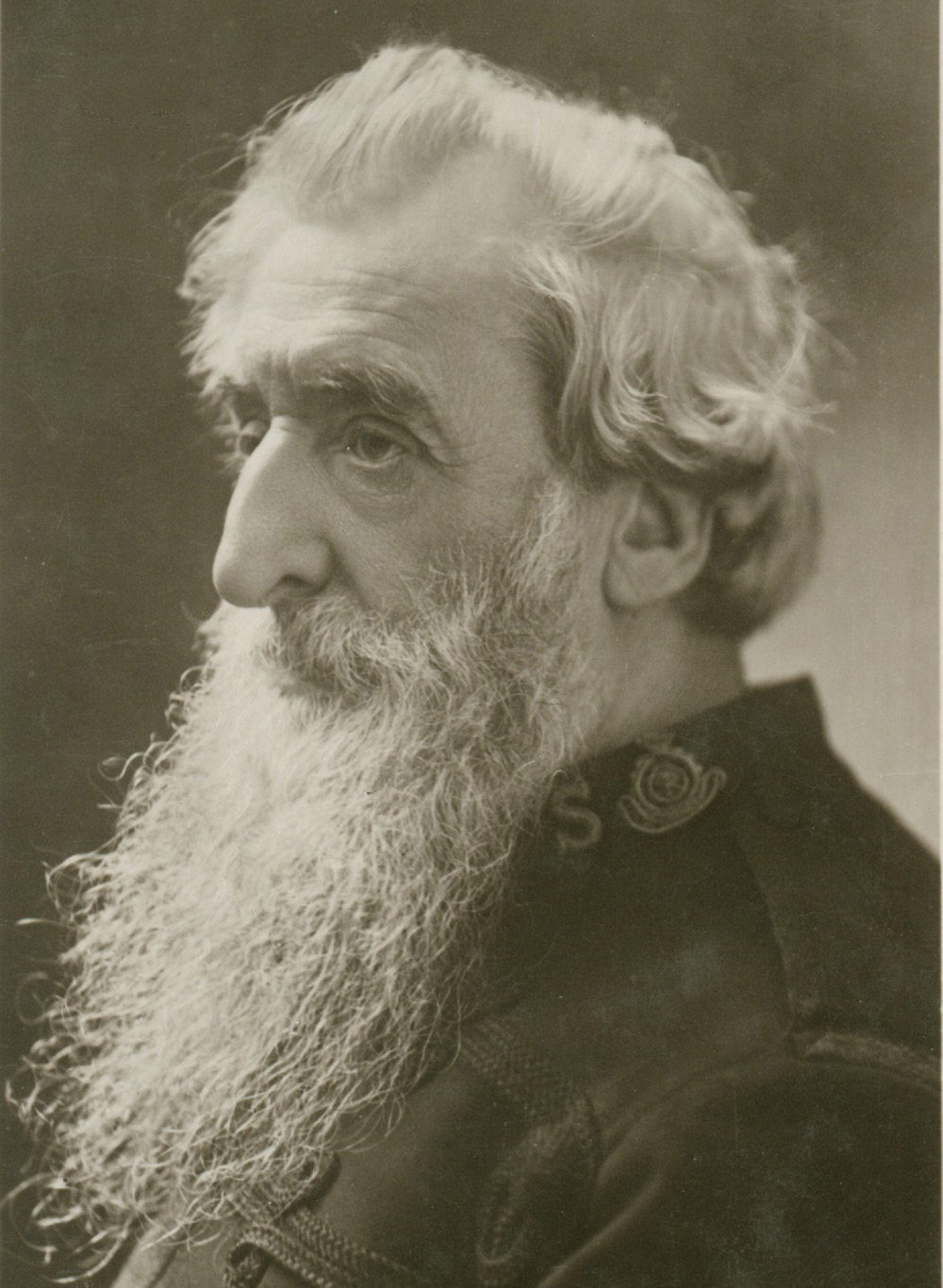
William Booth, founder of the Salvation Army published this hymn in the group’s “War Cry” hymnal in 1894. This song delivers a passionate cry for God to send the fire of the Holy Spirit into our lives that we might transform the world through devotion to Christ expressed through courageous, self-sacrificial Christian service.
William Booth (1829-1912)
Send The Fire O God of burning cleansing flame
Send the fire
Your blood-bought gift today we claim
Send the fire today
Look down and see this waiting host
And send the promised Holy Ghost
We need another Pentecost
Send the fire today
Send the fire today
God of Elijah hear our cry
Send the fire
And make us fit to live or die
Send the fire today
To burn up every trace of sin
To bring the light and glory in
The revolution now begin
Send the fire today
Send the fire today
It’s fire we want for fire we plead
Send the fire
The fire will meet our every need
Send the fire today
For strength to always do what’s right
For grace to conquer in the fight
For power to walk the world in white
Send the fire today
Send the fire today
To make our weak hearts strong and brave
Send the fire
To live a dying world to save
Send the fire today
Oh see us on Your altar lay
We give our lives to You today
So crown the offering now we pray
Send the fire today
Send the fire today
Send the fire today
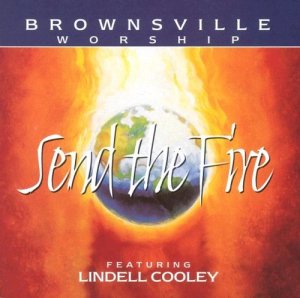
(Video performance by Lindell Cooley and the Brownsville Worship team from the album “Send the Fire”)
Word and Music by Martin Smith Is it true today that when people pray
Cloudless skies will break
Kings and queens will shake
Yes it’s true and I believe it
I’m living for you
Is it true today that when people pray
We’ll see dead men rise
And the blind set free
Yes it’s true and I believe it
I’m living for you
I’m gonna be a history maker in this land
I’m gonna be a speaker of truth to all mankind
I’m gonna stand, I’m gonna run
Into your arms, into your arms again
Into your arms, into your arms again
Well it’s true today that when people stand
With the fire of God, and the truth in hand
We’ll see miracles, we’ll see angels sing
We’ll see broken hearts making history
Yes it’s true and I believe it
We’re living for you
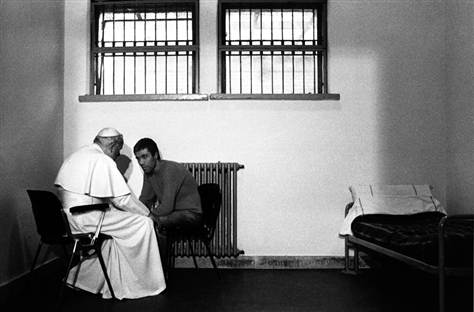
Introduction It all began with a simple magazine cover. I don’t recall ever being so moved by a photo as when I saw the image on the cover of Time Magazine of the Pope in a prison cell forgiving the man who tried to assassinate him. That single photo ended up being the inspiration for “To Forgive”.[1]
That one image really struck me, and it said so much to the world. It occurred to me that in many cases–I mean you’ve got this cycle of violence in Lebanon, in India, in northern Ireland, and when it comes down to it, the only possible solution for that is forgiveness, because otherwise the retribution and the cycle of revenge just keeps going. And here was a picture of the Pope shaking hands with a guy who tried to kill him. Regardless of who the Pope is–and some cynical people would say, you know, “well that’s his job” or something like that–it was a very, very powerful image.[2]
To Forgive
I saw a man
He was holding the hand
That had fired a gun at his heart
Oh, will we live
To forgive?
I saw the eyes
And the look of surprise
As he left an indelible mark
Oh, will we live
To forgive?
Come, find release
Go, make your peace
Follow his lead
Let the madness recede
When we shatter the cycle of pain
Oh, we will live
To forgive?
Come, find release
Go, make your peace
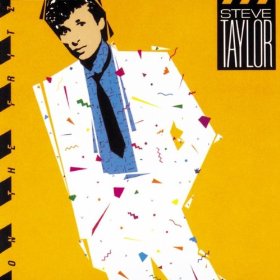
(The original version by Steve Taylor)
I saw a man
With a hole in His hand
Who could offer the miracle cure
Oh, He said live
I forgive
Oh, He said live
I forgive
(the cover by The Wayside that I prefer to the original version)
I saw a man
With a hole in His hand
Who could offer the miracle cure
Oh, He said live
I forgive
Oh, He said live
I forgive
Oh, He said live
I forgive
Oh, He said live
To forgive (words & music by Steve Taylor)
by Fred W. Anson
They say that if you don’t have any regrets then you’re probably not trying hard enough. If that’s true then I often wonder if I’m trying too much because I have a lot of regrets. In fact, after I joined the Facebook groups for my old High School and the Nazarene Church that I grew up in I spent the first couple of weeks apologizing to everyone.
Then a funny thing happened, I realized that most of the people that I thought I’d so offended back in the day either didn’t remember or didn’t care any more. So essentially I’d spent all those years needlessly beating myself up, avoiding others, and taking side streets shadowed in shame when all I needed to do was show up and be myself.
The truth of the matter is I’d been lied to and had squandered much of my life as a result of it.
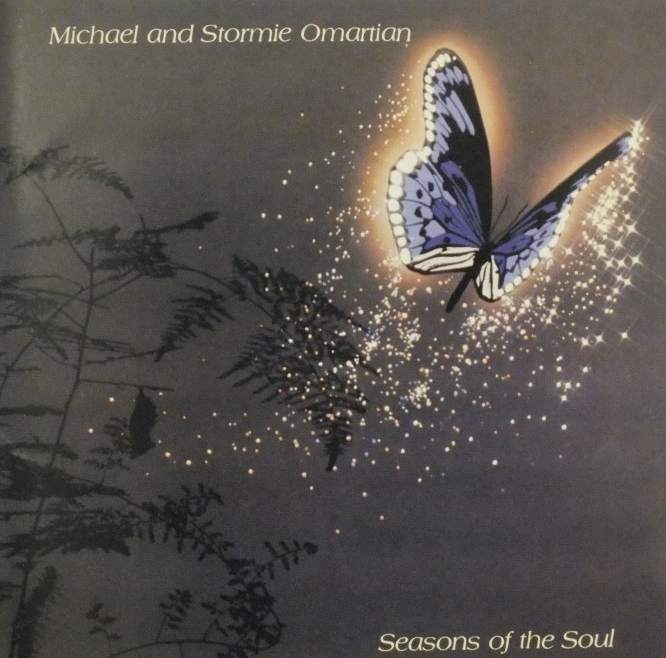
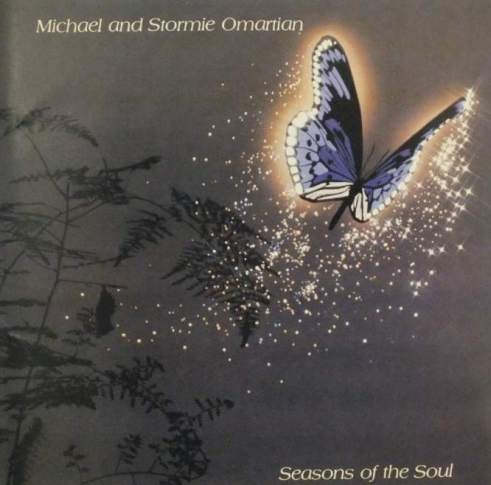
Actually, I should have known all this since Michael and Stormie Omartian warned me in song way back in 1978 . . .
Ms. Past (click above to hear song) Don’t look, don’t look back just let her go, Lately, all she’s done is lay you low. Don’t look, don’t look back just let her go, Lately, all she’s done is lay you low.
Ms. Past, she’s such a wicked lady, Ms. Past, she’s always there a waiting, She’s the Devil’s favorite tool, She’ll play you like a fool, She’ll try until she rules.
Don’t look, don’t look back just let her go, Lately, all she’s done is lay you low. Don’t look, don’t look back just let her go, Lately, all she’s done is lay you low.
Ms. Past, she’ll always try to feed you, Ms. Past, she’ll say He never freed you. But don’t fall for her disguise, And look back in her eyes, She wants you paralyzed, by all she knows.
Don’t look, don’t look back just let her go, Lately, all she’s done is lay you low. Don’t look, don’t look back just let her go, Lately, all she’s done is lay you low.
Don’t look, don’t look back just let her go, Lately, all she’s done is lay you low. Don’t look, don’t look back just let her go, Lately, all she’s done is lay you low.
And there’s certainly no doubt that I’ve been a “tool” allowing Ms. Past to constantly sting and restrain me with fiery darts of regret!
In the end, I most certainly want to learn from the past but I don’t want to be bound by it. After all, as Larry Norman observed, “Your life’s a play you can’t rehearse.” And mistakes are actually a blessing in disguise since, if you learn from them, you can avoid making the same ones again, again, and again.
What’s more, human development experts (not to the mention the Bible) tell us that mistakes are one way (actually the main way) that humans grow and mature in a number of areas. So, that means that occasionally we’ll pick up a regret or two in the process:
If you don’t, then you’re just not trying hard enough.
And if you do, don’t look back, just let it go.
by Fred W. Anson
Here’s a challenge: Read through the following and try to guess who wrote it.
When It’s Love Hey, everybody’s lookin’ for somethin’
Somethin’ to fill in the holes
We think a lot but don’t talk much about it
’til things get out of control, oh
How do I know when it’s love?
I can’t tell you but it lasts forever
Oh, how does it feel when it’s love?
It’s just somethin’ you feel together
When it’s love
You look at every face in a crowd
Some shine and some keep you guessin’
Waiting for someone to come into focus
And teach you your final love lesson, oh
How do I know when it’s love?
I can’t tell you but it lasts forever
Oh, how does it feel when it’s love?
It’s just something you feel together
Oh, when it’s love
You can feel it, yeah
Nothin’s missin’, yeah
Yeah, you can feel it
Oh, when it’s love
When nothin’s missing
How do I know when it’s love?
I can’t tell you but it lasts forever
Ooh, how does it feel when it’s love?
It’s just something you feel together, hey
How do I know when it’s love?
I can’t tell you but it lasts forever
When it’s love
Ooh, when it’s love
Hey, it’ll last forever
When it’s love
Give it up
We’re gonna feel this thing
Together
When it’s love, ooh
When it’s love, baby
You can feel it, yeah
We’ll make it last forever
Ooh, when it’s love
Who did you guess? Perhaps it was Blaise Pascal who I quoted in my last recontextualization article as saying… “There is a God-shaped vacuum in the heart of every person, and it can never be filled by any created thing. It can only be filled by God, made known through Jesus Christ.” – from “Pensees”
… after all the poem starts with, “everybody’s lookin’ for somethin’, somethin’ to fill in the holes” in true Pascalian fashion.
Or perhaps, you thought of St. Augustine who wrote… “Thou hast formed us for Thyself, and our hearts are restless till they find rest in Thee” — from “Confessions”
… when you considered the lines that said, “You look at every face in a crowd – some shine and some keep you guessin’. Waiting for someone to come into focus and teach you your final love lesson.” Isn’t that how Augustine might have put it had he written in the English vernacular of 20th Century America rather than in 4th Century Latin?
Or perhaps when you considered the words, “how does it feel when it’s love? It’s just something you feel together,” you thought of Jesus Christ who said of His covenant relationship with those who believe in and live for Him, “Abide in Me, and I in you”(John 15:4 NASB) – that would certainly explain and make the recurring line, “it lasts forever” even more poignant given the fact that Christ also said,“This is eternal life, that they may know You, the only true God, and Jesus Christ whom You have sent.” (John 17:3 NASB)
Yes, all these themes and ideas are certainly there – surprisingly there’s great depth in this simple yet powerful song. I confess that I have listened to this song through tears on many an occasion since, for me, it echoes all these themes and resonates deeply within. Here, try it for yourself:
Yes, folks believe it or not, this deep and beautiful song was written and performed by Eddie and Alex Van Halen, Sammy Haggar, and Michael Anthony – that is, to use the words of one reviewer, that “band of idiots” known to the world as Van Halen.
After all they’re not immune to the deeply seeded need that all humans have to know unconditional love and acceptance. Whether it’s a straight arrow, feet-on-the-ground world pastor or a jelly brained, out-of-touch rock star we all feel this need – and clearly the guys in Van Halen do too.
Nor, apparently, is Van Halen any more immune to incorrectly diagnosing the “fix” as romantic love than anyone else is – as the video illustrates well. My hope and prayer for these guys that someday, somehow, the they “get” the wisdom of St. Augustine that “our hearts are restless till they find rest in Thee.” Perhaps on that day they’ll join us in singing this song through tears of fulfilled joy rather than longing, despair, and confusion.
by Fred Anson In a prior post, I introduced the idea of recontextualizing works of music pointing out not only how Martin Luther, Charles Wesley, and Fanny Crosby recontextualized the music of their day – some of it secular with no discernible religious roots – and turned them into songs of praise and worship, but how modern Christians have been doing the same thing with secular rock music.
I pressed this point further stating, “I confess a certain frustration when fellow Christians take diminish or take umbrage at the idea that unbelievers, with whom we share common life experiences not the least being “the human condition”, can find small echoes of divine truths within His fallen creation.”
Personally, I can think of no experience more common to the human condition than the deeply seeded need that all humans have to know unconditional love and acceptance. Be it the silver spooned debutante or the beggar rummaging for his next meal in the trash we have all feel this need at some time, some place – perhaps you’re even feeling it now. I would go so far as to say that this may be the deepest most persistent need that human beings feel – and my observation is that it’s certainly the most common.
Now I suppose it will shock no one when I assert that most rock artists incorrectly diagnose the “fix” for this “hole in the soul” as romantic love. However, as anyone who’s had their heart broken by a lover or spouse who left them will tell you, “That ain’t it!”
Nor can we find the fix in the love of parents for parents get old and die (as I type through my tears since both of mine have “passed”). And I know from the 12-Step groups I’ve been in that a heartbreaking fact is that one of the things affected by the fall was the relationship between parent and child – as a result, some adult children are looking for healthy love from a broken parent that, sadly, may never come.
The fact of the matter is that human love simply won’t fill that hole in the human condition that it seems God has reserved for Himself. As French mathematician, physicist, inventor, writer and Christian philosopher Blaise Pascal said well:
“There is a God-shaped vacuum in the heart of every person, and it can never be filled by any created thing. It can only be filled by God, made known through Jesus Christ.”
– from “Pensees”
And though it was written from quite a different context[1] no song comes closer to expressing this crying need than this one . . .
Lover Reign O’er Me from the 1979 movie “Quadrophenia”
Love Reign O’er Me
(Pete’s theme) Only love Can make it rain The way the beach is kissed by the sea. Only love Can make it rain Like the sweat of lovers’ Laying in the fields.
Only love Can bring the rain That makes you yearn to the sky. Only love Can bring the rain That falls like tears from on high.
Love Reign O’er me.
On the dry and dusty road The nights we spend apart alone I need to get back home to cool cool rain. The nights are hot and black as ink I can’t sleep and I lay and I think Oh God, I need a drink of cool cool rain.
Love!
… and I’m continuing to hope and pray that the composer of this classic, perhaps even inspired, song may someday know the peace, serenity, and love of God that I, Blaise Pascal, and others have found for himself some day soon.
(“Love O’er Me” by Pete Townshend was originally released on the 1973 album “Quadrophenia” by The Who)
NOTES: [1] AsPete Townshend, the song’s composer once explained: (strong language alert for those of you with sensitive ears and eyes) “‘Love Reign O’er Me’ is similar to ‘Drowned’ [editor: another song on the Quadrophenia album] in meaning. This refers to Meher Baba’s one time comment that rain was a blessing from God; that thunder was God’s Voice. It’s another plea to drown, only this time in the rain. Jimmy goes through a suicide crisis. He surrenders to the inevitable, and you know, you know, when it’s over and he goes back to town he’ll be going through the same shit, being in the same terrible family situation and so on, but he’s moved up a level. He’s weak still, but there’s a strength in that weakness. He’s in danger of maturing.” (from http://www.thewho.net/linernotes/Quad.htm )
Click here or a more thorough analysis of Pete Townshend and his religious affiliation with Meher Baba.
Words and Music by Lindell Cooley and Lenny LeBlanc
Father I just want to be where You are
My life is filled with everything but You
Lord I really want to see Your glory
Let the fire of Heaven fall on me
Can You feel my passion
Can You see my hunger
Do You know how I long for You
No walls between us
Take away this darkness
Come break this heart of stone
Hear my cry open up the sky
Everywhere I go there is a feeling
That soon we’re gonna see Your kingdom come
Can You hear the sound of desperation
A prayer on the lips of every nation
Lord we really want to see Your glory
So let the fire of Heaven fall on me
Open up the sky
by Fred Anson
I always love it when a rock band gets one right. And why shouldn’t they for as the Apostle Paul explained:
Pete Townshend of The Who
“They know the truth about God because he has made it obvious to them.For ever since the world was created, people have seen the earth and sky. Through everything God made, they can clearly see his invisible qualities—his eternal power and divine nature. So they have no excuse for not knowing God.”[1]
Theologians refer to this as “General Revelation” which Wikipedia explains like this:
“General revelation is a term used by theologians which refers to a universal aspect of God, of God’s knowledge and of spiritual matters, discovered through natural means, such as observation of nature (the physical universe), philosophy and reasoning, human conscience or providence or providential history. Evangelical theologians use the term to describe knowledge of God, which they believe, is plainly available to all mankind. These aspects of general revelation are believed to pertain to outward temporal events that are experienced within the world or this physical universe.
Within this type of revelation, it is believed that God does not use specific words, or specific actions, but more general or encompassing events that occur in creation, conscience, and history.”[2]
So I confess a certain frustration when fellow Christians take diminish or take umbrage at the idea that unbelievers, with whom we share common life experiences not the least being “the human condition”, can find small echoes of divine truths within His fallen creation.
After all, in this life we all live and move within His shrouded presence – infidel and redeemed alike. C.S. Lewis spoke well of our current condition when he said:
“If there is a God, you are, in a sense, alone with Him. You cannot put Him off with speculations about your next-door neighbors or memories of what you have read in books. What will all that chatter and hearsay count when the anesthetic fog we call ‘nature’ or ‘the real world’ fades away and the Divine Presence in which you have always stood becomes palpable, immediate, and unavoidable?”[3]
Given these realities – not the least being the pervasive pull of sin within us all – is it any wonder that artists so often “get it right” in their but ultimately come to the wrong conclusion in their personal lives?
Consider, for example, the classic rock song “Bargain” written by Pete Townshend of The Who which was original released on the “Who’s Next” album. Here’s a recent performance:
The Who performing “Bargain” at the Royal Albert Hall in 2000
In case you missed it, those lyrics go like this:
I’d gladly lose me to find You I’d gladly give up all I have To find You, I’d suffer anything and be glad I’ll pay any price just to get You I’ll work all my life, yes, I will To win You, I’d stand naked, stoned and stabbed
I’ll call that a bargain, the best I ever had
I’ll gladly lose me to find You Gladly give up all I got To get You, I’m gonna run and never stop I’ll pay any price just to win You To find You, I’m gonna drown an unsung man
I call that a bargain, the best I ever had
I sit lookin’ round I look at my face in the mirror I know I’m worth nothing, without You In life one an’ one don’t make two One an’ one make one An’ I’m lookin’ for that free ride to me I’m lookin’ for You
The historical fact is that Pete Townshend wrote the song as a song of devotion to Mehr Baba, the spiritual guru that he began to follow in 1968.[4] Of course given the universal nature of human beings the song has been recontextualized in many ways. It has been sung as everything from a love song to a jingle for a television advertisement. Perhaps as you were listening to it or reading the lyrics you even recontextualized the piece as applying to whatever, well, whatever.
Speaking personally, in my days as a “merry” infidel atheist I would belt out the song to whatever my current devotion was at the time – from girlfriends, to politics, to rock music, to whatever – so for me it became a kind of secular praise and worship song to whatever my idol I happened to be worshiping at the moment.
So you can imagine my shock when, after becoming a Christian, an older, wiser Christian told me (a recent, three-time Bill Gothard[5] graduate no less) that “Bargain” was a powerful “Go for it!” song that reflected Bible passages like . . .
“Whoever finds his life will lose it, and whoever loses his life for my sake will find it.”
— Matthew 10:39 (ESV)
“He must increase, but I must decrease.”
— John 3:30 (KJV)
“…you cannot become my disciple without giving up everything you own.”
— Luke 14:33 (NLT)
. . . and many, many others. Gaining that realization, “Bargain” then went on to become a recontextualized “go for it”, song of confession for me as well. And why not, after all didn’t Martin Luther, Charles Wesley, and Fanny Crosby also recontextualize the music of their day – some of it secular with no discernible religious roots – into songs of praise and worship?[6]
And apparently, I wasn’t alone . . .
Resurrection Band (a Christian band) covering “Bargain” in Finland 1990
Now I think I know Resurrection Band well enough to know that they would tell you that the old cliche’ that, “God’s ways are not mans ways” is true and that one must move past general revelation to special revelation[7] – or even direct revelation[8] for that matter – in order to enter into a saving relationship with Jesus Christ. And, of course, I agree with them completely. So, one might even feel lead, as I have, to hope and pray that the composer of this classic song might someday make that move himself.
But still you’ve gotta admit, regardless how you contextualize it, this is a truly inspired song!
[3] C. S. Lewis, “Mere Christianity” (Macmillan, 1965 edition), p. 168.
[4] “Townshend showed no predilection for religious belief in the first years of The Who’s career. By the beginning of 1968, however, Townshend had begun to explore spiritual ideas. In January 1968, The Who recorded his song “Faith in Something Bigger” (Odds & Sods). Townshend’s art school friend Mike McInnerney gave him a copy of C. B. Purdom‘s book The God-Man, introducing him to the writings of the Indian “perfect master” Meher Baba, who blended elements of Vedantic, Sufi, and Mystic schools.
Townshend swiftly absorbed all of Baba’s writings that he could find; by April 1968, he announced himself Baba’s disciple. At about this time, Townshend, who had been searching the past two years for a basis for a rock opera, created a story inspired by the teachings of Baba and other Indian spiritualists that would ultimately become Tommy.” http://en.wikipedia.org/wiki/Pete_Townshend#Religion (retrieved 2012-11-18)
[5] “William W. (Bill) Gothard (born November 2, 1934) is an American Christian minister, speaker and writer, and the founder of theInstitute in Basic Life Principles (IBLP), notable for his conservative teachings. Among the several strong distinctives of his teaching have been encouragement of Bible memorization, large families, homeschooling, aversion to debt, respect for authority and extended principles related to identity, family, education, healthcare, music and finances.” — Wikipedia article on “Bill Gothard”, http://en.wikipedia.org/wiki/Bill_Gothard (retrieved 2012-11-22)
A good analysis of Bill Gothard’s fallacious and unBiblical view of Rock Music can be found here: http://www.recoveringgrace.org/2011/11/the-phony-consequences-of-rock-music/ (retrieved 2012-11-22) However, the short version goes like this: “… the Scriptures Gothard uses to make his case against rock music have absolutely nothing to do with music.”
[7] “Special revelation is a theological term used mainly by evangelical scientists and Christian theologians which refers to the belief that knowledge of God and of spiritual matters can be discovered through supernatural means, such as miracles or the scriptures, a disclosure of God’s truth through means other than through man’s reason. The distinction between Special and General revelation was first elucidated in-depth by the Catholic systematic theologian St. Thomas Aquinas in his discussion of Revelation. This distinction was only then more widely disseminated by evangelical writers who emphasized its scriptural support (e.g. Psalm 19).” (http://en.wikipedia.org/wiki/Special_revelation)
[8] “Direct revelation is a term used by some Christian churches to express their belief in a communication from God to a person, by words, impression, visions, dreams or actual appearance. Direct revelation is believed to be an open communication between God and man, or the Holy Spirit and man, without any other exterior (secondary) means.” (http://en.wikipedia.org/wiki/Direct_revelation)




 Beggar's Bread