Archive for the ‘Recovery from Mormonism’ Category

An Appeal to Never Mormon and Ex-Mormon Christians
Preaching

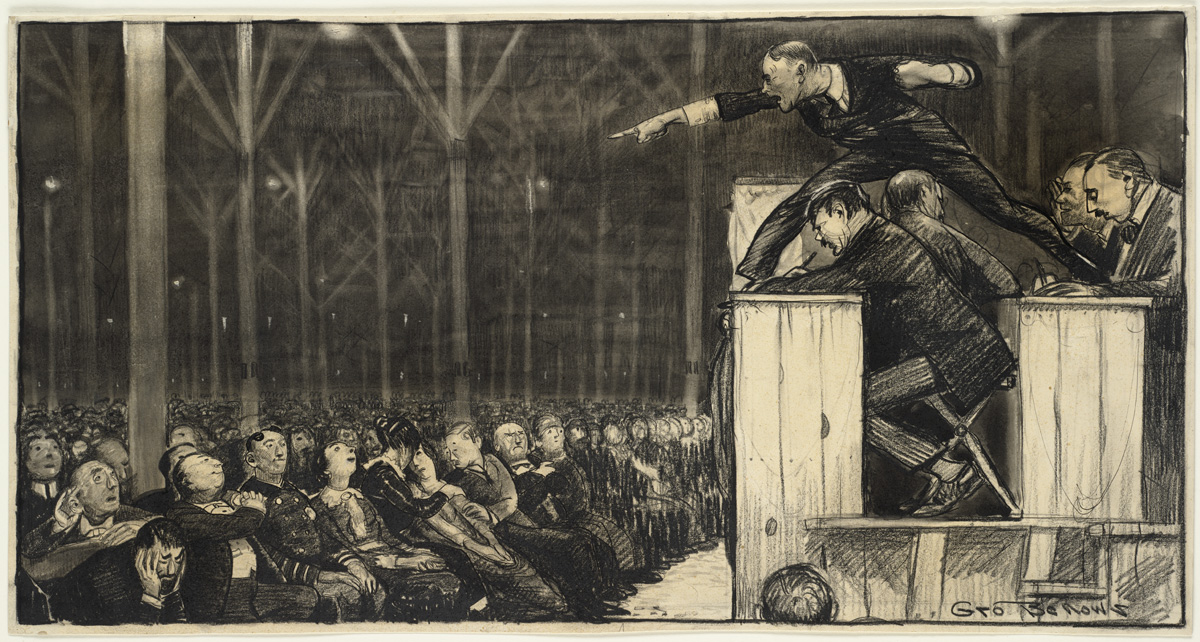
“Billy Sunday Preaching” by George Bellows (c.1915)

by Fred W. Anson and Jackie Davidson
Q: What’s the quickest way to drive a transitioning Mormon into atheism?
A: Christian infighting, dogmatism, and sectarianism.
This isn’t theory, Atheist Ex-Mormon discussion boards are filled with stories about former members of the LdS Church who gave up on Christianity on their way out of the Mormon Church when the Christians that they encountered were just as fanatically sectarian and absolutist as the Mormons that they knew were. Their conclusion? “They’re just two sides of the same fanatical coin.”

The Core Problem
It’s always good to remember what most Mormons think, and the LdS Church teaches: That all Christian churches other than theirs are a big ball of confusion. Consider this from the official LdS Church website:

During the Great Apostasy, people were without divine direction from living prophets. Many churches were established, but they did not have priesthood power to lead people to the true knowledge of God the Father and Jesus Christ.
(Official LdS Church website, “Apostasy”

This is a core doctrine in Mormonism. Public bickering on non-essential Christian doctrines in front of those who have ever been indoctrinated into Mormonism just validates and reinforces this stereotype and prejudice. And it doesn’t matter if that Mormon indoctrination took place last month or last century, the presumption of apostate corruption lingers on. So what does that have to do with Latter-day Saints becoming atheists due to Christian infighting, dogmatism, and sectarianism? Read on.

It Started On Facebook
Back in early 2015 we started an internet recovery group for Ex-Mormons who were trying to navigate the often difficult road into mainstream Christianity. We did this because we saw a crying need for such a group. At the time, while there were tons of  Atheist Ex-Mormon Internet support groups, they all seemed to lacked a positive sense of direction. As a result they had deteriorated into a quagmire of complaints, bitterness and anger. From what we could tell, the only shared value in the groups was a hatred of theism in general and the LdS Church in particular. In some cases there were some who had been out for years, even decades, but had become so eaten up by bitterness that they had become downright mean and nasty –  especially to Ex-Mormon Christians who wandered into their groups. We were sure that we could give these poor battered souls a safe and secure place to heal while they transitioned into mainstream Christianity. So we did.

Billy Sunday

However, it didn’t take very long for the Administrators of our group  to quickly became hyper-sensitive to sectarian infighting between mature Christians in the group. We were stunned at the incredible damage that it was having on those who were either new to the process or who still had wounds healing. The very people that we were trying to help were leaving the group because they were so confused and turned off by these well meaning but unbelievably insensitive and – it must be said – self absorbed, self interested, agenda driven, sectarian Christians. Every time Christians started dogmatically bickered over a non-essential doctrine we would lose a few more. It became quickly apparent that we couldn’t tolerate this behavior from our tribe and would have to take whatever action was required to eliminate it – up to and including a permanent ban on chronic violators.

The result was some of the most embarrassing drama queening that we’ve ever seen on the Internet – and that was on just giving simple warnings to these folks! It got so bad that at times we thought that some of those that got tossed or banned were going to petition their Pope, Patriarch, or Pastor to call us to Church councils so we could be properly anathematized. We were called and accused of some of the most unbelievable things imaginable. It was stunning. To hear some of these Christians tell it, you would think that the Devil and his minions (rather than a bunch of fellow believers and brother and sisters in Christ) were running this quiet little cyberspace community and damning all of its souls to hell!

You’re Kidding Right?
Now to  be fair, coming from mainstream Christian culture ourselves we understand that they were just doing what comes naturally. After all, after two thousand or so years of rough and tumble in house debate about every bit of doctrinal or theological minutiae imaginable – we’re used to this type of “hard ball” collegial exchange. We love it! We relish and luxuriate in it like a Parisian at a free cheese and wine tasting. So what’s the big deal, right?

The problem is that Mormonism is as much a culture as it is a religion – in some ways more so. Further, we mainstream Christians also, usually unknowingly, have a religion that’s heavily infused with our own cultural distinctives. One of them is a casual, easy going, even enthusiastic attitude about debate, discussion, and disagreement that’s generally missing in Mormon culture. As Utah Pastor and Ex-Mormon Ross Anderson explains:

The distinctives of Mormon culture and church life make it very challenging for former Latter-day Saints to become fully integrated into a Christian church. Like immigrants leaving their homeland behind to come to a new world, they must negotiate a confusing journey into a new cultural setting. To establish a new identity with a new church body, the ex-Mormon must develop a new worldview, new roots, new stories, new assumptions, new perspectives, new values and new symbols. On a practical level, he or she must adapt to a myriad of perplexing new customs and practices in the life of the local church.
(Ross Anderson, “Jesus Without Joseph: Following Christ After Leaving Mormonism”, Introduction) 

And a big part of the “country” that Ex-Mormons are immigrating from puts a high value on conflict avoidance. As Michael J. Stevens, a Latter-day Saint researcher and Professor of organizational behavior at Weber State University notes:

I often observe that mainstream LDS Church members along the Wasatch Front have a difficult time confronting any form of disagreement, even when they are clearly uncomfortable or unhappy with what’s being discussed or decided. It’s as if they were conflating all forms of disagreement or conflict with contention. This would be consistent with an overly simplistic reading of 3 Nephi 11:29:

For verily, verily I say unto you, he that hath the spirit of contention is not of me, but is of the devil, who is the father of contention, and he stirreth up the hearts of men to contend with anger, one with another.

If all conflict is viewed as the functional equivalent of having the “spirit of contention,” what options are left to a person who disagrees, or sees things differently, or who has goals and interests different from the rest of the community? How can one raise objections or question and challenge others, or raise unpleasant topics, if doing so is tantamount to being in league with Beelzebub? If one’s view of all conflict is that it must be avoided so as to avoid contention, then there is no direct, healthy, constructive strategy available for resolving conflicts and disagreements.
(Michael J. Stevens, “Passive-aggression among the Latter-day Saints”, Sunstone magazine, April 12, 2013) 

Therefore, Christians that insensitively engage in overtly aggressive dogmatism on secondary or non-essential doctrines are unknowingly and needlessly “culture shocking” an immigrant who’s not equipped to emotionally process or intellectually understand the tank of “evil contention” that they’ve suddenly been dropped into. It doesn’t just make them uncomfortable, it freaks them out – we’ve seen it happen over and over and over again.

Are You Sure You’re Talking to the Right People?
Now if you’re a long term, full transitioned Ex-Mormon you may be wondering, “Why are you including us in this rant? Never Mormon Christians seems logical because they may not be able to empathize with transitioning Mormons having never been one. But I, on the other hand, was a transitioning Mormon back in the day – I get it!”

Unfortunately, our experience tells us that while long term Ex-Mormons may think that they “get it” in a lot of cases they’ve forgotten what it’s like to be tender, hurting, bleeding, broken, bitter, angry and confused after being leaving the Mormon Church. They’ve forgotten what it’s like to be an immigrant right off the boat.

In fact, we were shocked in the early days of our board to find out that some long term transitioned Ex-Mormons had the least amount of empathy for transitioning Mormons – they were our first, biggest problem group! And, nope, I’m not making this up – it’s all true folks.

So my dear Christians friends, if you really, really, really want to turn your transitioning Ex-Mormon friends into atheists, just keep it up! Fight, bicker, and spat over the smallest bits of theological and doctrinal lint you can find. Better yet, make sure you get incensed and indignant whenever an Arminian challenges your Calvinism, or an Ammillenialist questions your Rapturism. Swing those “convictions” like a sword, and never mind the collateral damage – as you watch the transitioning Mormons that you bump into while you’re tussling, fall into the nearest atheist pit.

Billy Sunday preaching 2- Internet ArchiveThe Solution
The solution is actually pretty simple:

  1. Maintain unity on the essential doctrines of the Christian faith.
  2. Extend liberty and grace on non-essential doctrines.

Or put another way:

“In essentials, unity;
In non-essentials, liberty;
In all things, charity.”
(17th century Theologian Rupertus Meldenius)

In terms of what determines what the essential doctrines of the Christian faith are, theologian Matt Slick, explains:

The Bible itself reveals those doctrines that are essential to the Christian faith. They are 1) the Deity of Christ, 2) Salvation by Grace, 3) Resurrection of Christ, 4) the gospel, and 5) monotheism. These are the doctrines the Bible says are necessary. Though there are many other important doctrines, these five are the ones that are declared by Scripture to be essential.
(Matt Slick, “Essential Doctrines of Christianity”, CARM website)

Again, the essential Doctrines of the Christian Faith are as follows:

1) The Deity of Jesus Christ.
2) Salvation by grace.
3) The resurrection of Jesus Christ.
4) The gospel of Jesus Christ, and
5) Monotheism.

A sampling of the non-essentials is as follows:

  • Eschatology (how and when the end times will unfold, the rapture, the millenium, the role of Israel today, etc.)
  • Earth Age (young v. old earth creationism, etc.)
  • Bible translation preferences (King James v. modern translations, word-for-word v. thought-for-thought, etc.)
  • Ecclesiology (church government models, the roles of clergy and laity, are Apostles and Prophets for today, etc.)
  • Soteriological Systems (Arminianism v. Calvinism, etc.)
  • Demonology (can a Christian have a demon or not, teachings on various kinds of spiritual warfare, etc.)
  • Sacrament practices (wine v. grape juice, leavened v. unleavened bread, who can administer, etc.)
  • Modes of baptism (sprinkling v. full immersion, infant baptism, etc.)
  • Worship styles (liturgical v. contemporary, hymns v. choruses, choirs, drums v. organs, etc.)
  • The gifts of the Holy Spirit (tongues v. no tongues, cessationism v. continuationism, etc.)
  • Worship observances (Sabbatarianism v. Sunday worship, observance of special holy days, tithing, etc.)
  • Food and drink (consumption of alcohol v. abstinence, kosher v. non-kosher food, etc.)
  • Various do’s and don’ts (tobacco consumption, playing cards, dancing, makeup, “acceptable” dress, movies, etc.)
  • Etc., etc., etc. This is far from an exhaustive or comprehensive list of Christian non-essentials – it seems endless at times!

Billy SundayHow You Say it Matters
So when you’re in the presence of transitioning Ex-Mormons on the non-essentials of the faith qualify your words. In other words, use terms like, “In my opinion”, “Speaking as a Presbyterian/Methodist/Episcopalian/etc. we believe”, “From my perspective”, “As I see it in the Bible”, etc.

Further, on the non-essentials of the faith do not use absolutisms such as: “The Bible says”; “The truth is”; “Reality is”; “All orthodox Christians believe”, etc. Further, responding, “that’s not Biblical”, while perfectly fine in Christianese, will usually cause a visceral reaction because in Mormonese it means, “Take that back or I’ll beat you up with scripture!”

Additionally, words such as cult, brainwashing, deception, etc. should never be used. Even though the transitioning Mormon has come out of the LdS Church and come to Christ, these are “hot button fightin’ words.” To them, “cult” really is a four letter word. You might as well have said, “Yo’ Momma!” Want to see a person transitioning out of Mormonism flee your support group at full speed and never look back? Just use the “c-word” friend.

Finally, on the essentials of the Christian faith, absolutisms are perfectly acceptable – even encouraged. For example, if a Christian couldn’t sincerely say the following, I would have serious doubts if they’re a Christian at all: “The truth, in reality is, that the Bible says – and all orthodox Christians believe – that Jesus Christ died on the cross, was buried in a rich man’s grave, and rose from the dead on the third day.”

Next, allow others to disagree with you. Extend charity to them even if, in your mind, they’re dead wrong.

And finally, if you still feel like you absolutely, positively must straighten the other person out after that you have the following options:

a) Private Message the person via email, the Facebook messaging system, etc. Or better yet, set up a telephone call or a face to face meeting. Who knows, you may end up with a friend if you do this.

b) Take the discussion to one of the many, many, many good theological discussion and debate groups on Facebook and the Internet.

Overall the biggest guideline is this:

If what you’re about to say won’t help an Ex-Mormon who’s transitioning into Biblical Christianity, then don’t say it in their presence. And, stated plainly brothers and sisters, Christian infighting never helps transitioning Ex-Mormons.

Or put another way: “Curb your dogma”

Billy Sunday preaching 3- Internet ArchiveYeah, we get it. We really, really do! 
In closing, please understand that the authors most certainly realize that just because something isn’t essential doesn’t make it unimportant. However, we have found that we Protestants are far too quick to try to turn non-essentials into essentials and then fight to the death over them. For example, is eschatology really worth dying on a hill over? After all and in the end, isn’t God going to do what God is going to do regardless of what you or I think, feel, and are convinced from scripture is going to happen? As Francis Schaeffer said so well all those many years ago:

“Among many of the youth, prophecy, rather than being a part of a larger whole of theology, has become the integration point of whatever theology they have. Eschatology has been blown out of proportion. Concentration on the second coming of Christ is falsely made an excuse for not accepting Christian responsibility for reformation in the church and in society. I hold very definite views on eschatology, but eschatology is not the integration point of my theology.”
(Francis A. Schaeffer V, “The Complete Works of Francis A. Schaeffer: A Christian view of Spirituality”, “The New Super Spirituality”, c.1972, pp.395-396)

Regardless of what non-essential doctrine that you and the authors may hold to, many Transitioning Ex-Mormons simply aren’t ready for the kind of theological nuance and rough and tumble discussions that established Christians feel so comfortable moving through and around in. So brother or sister in Christ, whatever it is, if it ain’t in the list of essential doctrines of the Christian Faith then please let it go – hold it in your hand loosely!

Again, Remember the Immigrants
Also, please remember that transitioning Ex-Mormons are like immigrants, they may not know our culture or speak our language. As a result some of their questions may come across as naive, ignorant, abrasive, even rude. And they most certainly aren’t going to speak the “Christianese” that you and I so take for granted that we don’t even realize that we speak it any more. They may also be projecting their inner pain, anger, bitterness, and frustration into the question without realizing it – we all do this from time to time, don’t we? Ex-Mormon Janis Hutchinson in her book, “Out of the Cults and Into the Church” quotes from a former cultist describing how painful this “migration” process can be:

Even now, I sometimes defend the cult! When I give our pastor and his wife a trying time, I say to myself, Myra, you’re completely hopeless. You’re not going to make it in this church! “When I become dogmatic and headstrong, I get angry with myself – especially when I know the pastor and his wife are only trying to help. Much more of this, I keep saying , and I doubt I’ll survive. But I suppose those working with me probably wonder if they’ll survive! I’m sure they must be disgusted with me. If they are, I think it’s because they just expect too much too soon.
(Janis Hutchinson, “Out of the Cults and Into the Church”, Kindle Locations 459-465)

So when you encounter such a question, comment, post, push back, or whatever from a transitioning Ex-Mormon we would ask you to take a deep breath, pray for wisdom and guidance, calm down and then respond in an even, non-threatening tone. In other words, be kind, gracious, and understanding rather than reactionary.

Finally, we know that you probably already know these Bible verses but we want to bring them to your attention again:

“Opponents must be gently instructed, in the hope that God will grant them repentance leading them to a knowledge of the truth.”
— 2 Timothy 2:25 (NIV)

“Let your conversation be always full of grace, seasoned with salt, so that you may know how to answer everyone.”
— Colossians 4:6 (NIV)

“But in your hearts revere Christ as Lord. Always be prepared to give an answer to everyone who asks you to give the reason for the hope that you have. But do this with gentleness and respect.”
— 1 Peter 3:15 (NIV)

And, as always, may God guide our conversation as we try with love, humility, and the fear of the Lord to aid our transitioning Ex-Mormons friends in their journey out of Mormonism and into mainstream Biblical Christianity.
Walt Kelly

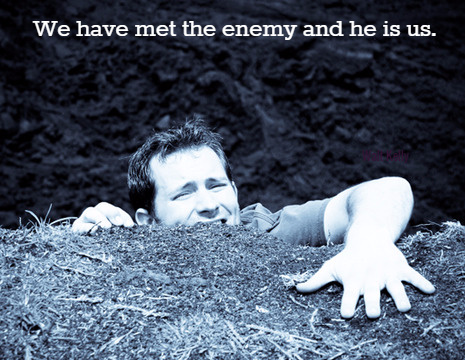
Q: How did the Mormon land the Atheist pit?
A: He was bumped while two Christians were bickering over non-essentials.

RECOMMENDED RESOURCES
For further clarification on the essentials and non-essentials of the Christian faith we recommend the following resources:

Matt Slick, “Essential Doctrines of Christianity”, CARM website.

While Mr. Slick’s article is an excellent short vernacular primer, C. Michael Patton’s “Essentials and Non-Essentials in a Nutshell” article is the better resource for those seeking a fuller, more nuanced understanding of the subject.

Finally for those who find Mr. Slick’s outline format a bit too cryptic and Mr. Patton’s article too long should consider this short but insightful “What are the essentials of the Christian faith?” article on the “Got Questions?” website instead.

“A Bruised Reed” by R.C. Sproul (click link to watch streaming video)
This sermon by offers a fantastic perspective on finding that oh so elusive balance between truth, love, integrity, and tolerance. Christian brothers and sisters you I both appeal to you to and challenge you to listen to this amazing sermon. Here’s the description from the Ligonier website:

We don’t have to look beyond our own churches to see Christians fighting amongst themselves over all kinds of issues. What is the proper way to respond to Christian brothers and sisters when we are in disagreement with them? Should we treat everyone in the church the same? In this message entitled “A Bruised Reed,” Dr. Sproul teaches us about the judgement of charity as we seek to maintain peace and unity within the church.

The authors are thankful for Wikipedia Commons and Internet Archive for the images of 20th early Century evangelist Billy Sunday preaching that appear throughout the first part of this article.

BACK TO TOP

A caution to transitioning Ex-Mormon Christians
MormonProtest1

“If your true motivation is not simply hatred of Mormonism… then our plea is simple.”

by Jason Wallace, Pastor, Christ Presbyterian Church, Magna, Utah
Former Mormons recognize that religion doesn’t make someone a Christian. Mormonism may say nice things about Jesus, produce a great deal of sincerity, emotion, and activity, but it is a fraud. Mormons may quote the Bible, but they are selective in their use of it, touting what fits their personal preferences, while ignoring the parts that contradict them.

What many former Mormons don’t seem to recognize is that, in leaving Mormonism, many have embraced a faith that is simply another counterfeit of Biblical Christianity. Their religion may also produce great sincerity, emotion, and activity, but it is often just as selective in its use of the Bible. The gospel gets reduced to Ephesians 2:8-9 and a “personal relationship” with Jesus, that is divorced from the rest of the Bible. Like the Mormons, they bitterly resent anyone pointing them to the parts of the Bible that don’t fit their system and demonize those who challenge them to test their religion from God’s Word.

If your true motivation is not simply hatred of Mormonism, but a real love of Jesus Christ and the truth, then our plea is simple – – hear Jesus and His apostles. Jesus said,

Not every one that saith unto me, Lord, Lord, shall enter into the kingdom of heaven; but he that doeth the will of my Father which is in heaven. Many will say to me in that day, Lord, Lord, have we not prophesied in thy name? and in thy name have cast out devils? and in thy name done many wonderful works? And then will I profess unto them, I never knew you: depart from me, ye that work iniquity.”
— Matthew 7:21-23, KJV

Many Mormons claim that James 2 contradicts Paul in Ephesians 2. They see Paul teaching a “cheap grace” of faith without works. Rather than correcting the Mormon’s view of Ephesians 2, many former Mormons have embraced it and simply ignore what James said.

True conversion involves more than forgiveness of sins; it also involves being given a new heart and the Holy Spirit (Ezekiel 36:36). We are not saved by our works (Ephesians 2:8-9), but the new birth manifests itself in new life (Romans 6) and in good works (Ephesians 2:10). We are not saved by our works, but they are the fruit of the Spirit within converted Christians.

Jesus is saying in the Sermon on the Mount that many will go to the day of judgment, trusting in their religion and thinking they are right with Jesus, only to discover their religion was a fraud with which they not only fooled others, but also themselves. The Apostle Paul warns,

“Know ye not that the unrighteous shall not inherit the kingdom of God? Be not deceived: neither fornicators, nor idolaters, nor adulterers, nor effeminate, nor abusers of themselves with mankind, nor thieves, nor covetous, nor drunkards, nor revilers, nor extortioners, shall inherit the kingdom of God. And such were some of you: but ye are washed, but ye are sanctified, but ye are justified in the name of the Lord Jesus, and by the Spirit of our God.”
— 1 Corinthians 6:9-11, KJV

"True conversion involves more than forgiveness of sins; it also involves being given a new heart ..."

“True conversion involves more than forgiveness of sins; it also involves being given a new heart …”

Many former Mormons love to quote Paul saying we are no longer under law, but under grace. They use this passage as a club to bludgeon anyone who points out the totality of what Paul said. Jesus said that He never knew those who call Him Lord, but practice iniquity. Just as someone can say they love God and hate their brother (1 John 2:9), people can say they love God and practice iniquity, but both are lies. The Apostle John writes,

“And hereby we do know that we know him, if we keep his commandments. He that saith, I know him, and keepeth not his commandments, is a liar, and the truth is not in him. But whoso keepeth his word, in him verily is the love of God perfected: hereby know we that we are in him.”
— 1 John 2:3-5, KJV

Over and over, Jesus makes clear that the new birth involves more than mouthing the words to a prayer.

“For if ye forgive men their trespasses, your heavenly Father will also forgive you: but if ye forgive not men their trespasses, neither will your Father forgive your trespasses.”
— Matthew 6:14-15, KJV

“But whosoever shall deny me before men, him will I also deny before my Father which is in heaven. Think not that I am come to send peace on earth: I came not to send peace, but a sword. For I am come to set a man at variance against his father, and the daughter against her mother, and the daughter in law against her mother in law. And a man’s foes shall be they of his own household. He that loveth father or mother more than me is not worthy of me: and he that loveth son or daughter more than me is not worthy of me. And he that taketh not his cross, and followeth after me, is not worthy of me. He that findeth his life shall lose it: and he that loseth his life for my sake shall find it.”
— Matthew 10:33-39, KJV

“Moreover if thy brother shall trespass against thee, go and tell him his fault between thee and him alone: if he shall hear thee, thou hast gained thy brother. But if he will not hear thee, then take with thee one or two more, that in the mouth of two or three witnesses every word may be established. And if he shall neglect to hear them, tell it unto the church: but if he neglect to hear the church, let him be unto thee as an heathen man and a publican.”
— Matthew 18:15-17, KJV

Mormons can weep as they relate the burning in their bosom and other spiritual experiences, but the Bible shows that they are deceived and worshiping a false god and proclaiming a false gospel. Anti-Mormons can gush as they relate their spiritual experiences, but unless they line up with God’s Word, they are just another fraud.

Having been burned with the legalism and organizational oppression of Mormonism, many former Mormons have embraced a cheap grace that requires them to hear no church anywhere. They do not have to seek reconciliation with other believers (Matthew 18:15-17), and they submit to no elders (Hebrews 13:17).

“Many former Mormons have embraced a cheap grace that requires them to hear no church anywhere.”
Exhibit A: Ex-Mormon Shawn McCraney’s “Christian Anarchist” teachings.

These are not optional matters. Believers in the first century were baptized into a visible church, with real elders (Titus 1). It can be hard to overcome past abuse, but we are not given the option. Jesus asks,

“And why call ye me, Lord, Lord, and do not the things which I say?”
— Luke 6:46, KJV

If you refuse to hear the church, Christians are commanded to treat you as an unbeliever; we are to pray for you and be kind to you, but we are to call you to repentance and true faith. Those who pick and choose what they like from the Bible are not Christians. The Apostle John said,

“If we say that we have fellowship with him, and walk in darkness, we lie, and do not the truth:”
— 1 John 1:6, KJV

You may have left Mormonism, with its tithing, temples, and rules, but unless you embrace the Biblical gospel, you’ve simply repackaged the same false gospel in a more palatable form. There is a gospel that involves more than mouthing the words to a prayer and living like the world. It is not a gospel of grace plus works, but a grace that transforms – – the Biblical gospel of a real new birth, with a new heart and the giving of the Holy Spirit. We call you to the gospel in which Jesus nails not only our sinful record, but our stony heart and poisonous life to the cross – – a gospel in which we have his perfect record, loving heart, and Holy Spirit given to sinners like us.

When King Josiah heard the Word of God that had been neglected, he rent his clothes and repented (2 Kings 22). The answer to Phariseeism is not becoming a Saducee, but a Christian. Is the real problem with Mormonism its idolatry or just how it treated you? Will you substitute the Jesus of Joseph Smith with the real Jesus of the Bible, or just a counterfeit of your own imagination? Will you come to Jesus on His terms, or will you hear on the day of judgment, “I never knew you: depart from me, ye that work iniquity”?

The-Lone-Ranger_EDITED

“Will you substitute the Jesus of Joseph Smith with the real Jesus of the Bible, or just a counterfeit of your own imagination?”

BACK TO TOP

loveguruHere’s another classic Luna Flesher Lindsey article for your enjoyment, edification, and enlightenment. If you like this article please consider getting a copy of Luna’s book “Recovering Agency: Lifting the Veil of Mormon Mind Control”

Mind Control 101: Myths of Brainwashing
by Luna Flesher Lindsey
I’ve studied a lot about mind control over the years. My interest piqued shortly after I left a rigorous and restrictive religion. I wanted to better understand how I had willingly allowed myself to be controlled, all the while believing and protesting loudly that I was free.

These methods are deceptive and unethical, tricking the mind rather than persuading through honesty and reason. Knowing this, I now have a very unique perspective on American politics. I can see these techniques used all the time, by politicians, media, and regular people.

This is not owing to a vast conspiracy. It doesn’t take an evil mastermind to notice certain approaches work better to persuade. These methods have always worked and will always continue to work, and so they perpetuate through society. Some who study memetics might even say they self-replicate.

This post is one in a series called “Mind Control 101″, which precedes its non-evil step-twin, “Logical Fallacies 101″.

Please do not use this as a How To! I address this topic not with the intent that you try to take over the world. In instead wish to make you better able to defend yourself when your mind comes under assault.

Let’s begin with the myths. The entire subject of brainwashing is “loaded”. Loading a word is itself, fittingly, a mind control technique that limits thought by giving you preconceived and highly incorrect notions. I’ll start “deprogramming” you by showing where your existing understanding of the topic is probably far from reality.

Mind catrol - ur doing it rong akshully

Remember this guy? Well, he’s STILL doing it wrong!

When I say these words, “Thought Control” or “Brainwashing”, you no doubt envision a wild-haired hypnotist swinging a silver watch, while a stern doctor injects your arm with a strange serum. In the background, hooded figures chant, and soon your eyes begin to glaze over. All the while you are helpless to resist because you are strapped to a chair.

This is all complete fantasy. The great secret is that while being brainwashed you feel in complete control of yourself. A much more accurate term is “coercive persuasion“, because you are persuaded to want the same thing the manipulator wants, to believe as he wants you to believe.

Those who have been thusly persuaded never know they have been brainwashed. Conversely if you think you’ve been brainwashed, you probably haven’t been.

So let’s dispel some myths, shall we?

Thought reform does not require physical restraint.
Scientists used to think this, back in the 1950s, when American POWs returned from Korea singing the praises of their captors. But coercive persuasion in our free society requires a little more skill. No force is required. All it takes is listening to someone who is talking. It also requires that you trust them, at least a little bit. If they do their job right, you will go willingly.

This picture is totally Photoshopped.

This picture is totally Photoshopped.

It does not involve hypnotic disks.
Hypnosis
is a broad word that means any varying state of consciousness other than the one you’re probably experiencing now. Various levels of hypnosis, trance, and meditation are sometimes used by cult groups, but this is never, ever a requirement.

No drugs, truth serums, elixirs, or magical incantations are used in brainwashing.
Other than a few 60′s cults that were using drugs anyway, I’ve never come across any thought reform involving chemicals. Nor does it have anything to do with Satan. No demonic possession, summoning of evil spirits, or worshiping pagan gods is required.

Brainwashed people are not glassy-eyed, drooling zombies.
Most actually appear quite normal. In fact, I would venture to say everyone ends up brainwashed to one degree or another, at some point in their lives. Our brains seem wired to accept manipulation and deception. It seems logical that humankind would have better survived those very dangerous first 100,000 years of pre-history by following a leader without question. Thought control merely capitalizes on those build-in survival skills we are all born with.

There is absolutely no way to know that you’ve been brainwashed.
That’s exactly the point. If you knew you were being controlled, you wouldn’t like it very much, and you wouldn’t stand for it. The manipulated fully believe they are making their own choices, that they are completely free to act in any way they choose.

A good deal of brainwashing involves setting up trigger thoughts, little tricks and traps that help you deflect any incoming facts, beliefs, thoughts, or feelings that would make you suddenly stop believing the lies you’ve been duped into. Part of this series is going to be identifying those traps, so you can avoid them in the first place.

(I could say “…and so you can escape if you’re already brainwashed.” But you see, if I were to accuse you of being controlled, you would immediately become defensive and protest, thinking, “There is no possible way!” That is exactly what I’m talking about.)

There is no “one size fits all” method of mind control.
To paraphrase Abraham Lincoln, you can control some of the people all of the time, or all the people some of the time, but you can’t control all the people all the time. Manipulators throw out a line with some bait to see what bites. Sometimes it’s you, but usually you will laugh at their crazy ideas. Everyone is ripe for being manipulated at some point in their lives. Someone has something to say that will appeal specifically to you. You will always be able to see how other people are being brainwashed, but you won’t necessarily notice when it’s happening to you, because you will like it.

There are a lot of mind control tricks, but not all are required.
There isn’t a checklist that says, “Must meet all 50 requirements to be considered mind control”. To control, you only need to do what works.

Brainwashing is not total.
It is possible to be partly brainwashed. You can be brainwashed about certain topics but not others. You can be brainwashed to the point of doing or believing almost everything the leader wants, but not quite. Victims of mind control can eventually be freed.

This is what all Mind Control practitioners look like... NOT!

This is what all Mind Control practitioners look like… NOT!

Brainwashers are not creepy, bizarre, crazy, mean-spirited men who ooze evil and darkness from every pore.
Images of cackling, sneering, British-accept-wielding villains were created for the drama of movie fiction, not to reflect reality.

If you’re going to be good at manipulation, you’ve got to be likable. To persuade, you must be charismatic. To convince, you must be, well… convincing. I listened to old recordings of Jim Jones recorded just before the infamous Jonestown kool-aid mass-suicides and he sounded sincere, kind, loving, and wise.

Furthermore, controlling groups or ideologies work best when believers are taught to use brainwashing techniques themselves. That’s right. In almost every case, the controlled end up controlling.

No one is immune from mind control.
Not even me, not even after all I’ve learned about it. I can build up defenses, but even then I will be susceptible to it at some point.

Conclusion.
Now you know what mind control is not, which gives you an advantage over most people.

Yeah . . . this kinda isn't how it works either. Pretty cool graphic though, eh?

Yeah . . . ain’t workin’ is it?

(As originally published on the Mormon Expression Blogs website on September 21, 2011)

BACK TO TOP

Confirmation driven apologetics.

Confirmation Bias driven apologetics.

by Fred W. Anson
In 2009 a local newspaper in Provo, Utah ran a series of articles written by local people who were trying to persuade members of the Church of Jesus Christ of Latter-Day Saints (commonly known as the “Mormon Church”) to leave their church. In response to these highly critical and spirited articles, a true believing member of the Mormon Church wrote this rebuttal which has been kicking around the Internet ever since:1

Editor:

I have been thinking of quitting the Mormon Church. Yes, if I can, I am going to get even with that church. As soon as I can find another church that teaches about the Gathering of the House of Israel; the return of the Ten Tribes and their mission; the return of the Jews to Palestine and why, and how they are going to build the temple; the building of temples and what to do with them; the mission of Elias, the prophet, as predicted by Malachi; the method for the salvation of the people that died at the time of Noah in the flood; the origin of the American Indian; the complete explanation of why Jesus of Nazareth had to have a mortal mother but not a mortal father; the explanation of the three degrees of glory (three heavens) as mentioned by Paul; the complete explanation of why Elias and Moses did not die but had to be translated (since they both lived before the resurrection was introduced by Christ); the restoration of the gospel by modern revelation as promised by Peter and Paul and Jesus himself; the belief in eternal marriage and the family, and the knowledge and the place to seal for eternity; that teaches abstinence from all harmful drugs and foods; and that sells the best fire insurance policy on earth, for the last days, for only a 10th of my income.

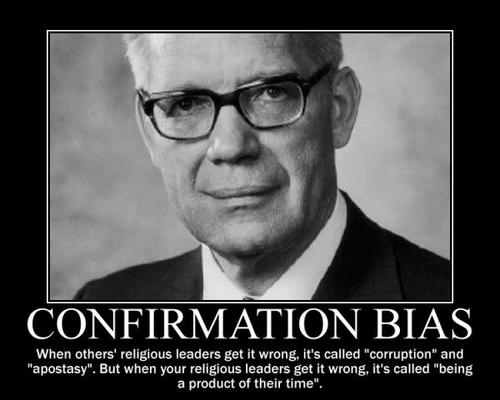
BRM_ConfirmationBias

(click to zoom)

Yes sir, as soon as I can find another church that teaches all that, or even half as much, I will say good-bye to this Mormon Church. The church that I am looking for must also be able to motivate 50,000+ youth, and adults, for the first, second or third time, to leave their homes for two years at their own expense and go to far-away places to teach and preach without salary. It must be able to call, on a frosty day, some 5 or 6 thousand professors, students, lawyers, doctors, judges, policemen, businessmen, housewives and children to go and pick apples at 6 am. It must be able to call meetings and get the attention for two hours of more than 150,000 men. Yes, it must also teach and show why salvation is assured for children who die before eight years of age.

Mr. Editor, could you help me find a church that teaches all that and more than hundreds of other doctrines and principles, which I have no room to mention here, and which brings solace and comfort to the soul; peace, hope, and salvation to mankind, and above all, that answers the key questions that all the great philosophers have asked; questions and answers that explain the meaning of life, the purpose of death, suffering and pain; the absolute need for a Redeemer and the marvelous plan conceived by our Father and executed by Jesus Christ the Savior? Yes, as soon as I find another church that teaches that, and also that has the organization and the powers to make that teaching effective, I am going to quit the Mormon Church. For I should not tolerate that “they” should change a few words in the Book of Mormon-even if those changes simply improve the grammar and the syntax of the verses-for, after all, don’t you think the Divine Church should employ angels as bookmakers, and clerks, to do all the chores on earth? Don’t you think, Mr. Editor that the Divine Church should also have prophets that don’t get sick and don’t get old and die, and certainly, that don’t make a goof here and there. No, sir! A Divine Church should be so divine that only perfect people should belong to it, and only perfect people should run it. As a matter of fact, the Church should be so perfect that it should not even be here on earth!

An example of the double standard – another form of confirmation bias.
(click to zoom)

So, I repeat, if any one of the kind readers of this imperfect letter knows about another church that teaches and does as much for mankind as the Mormon Church, please let me know. And please do it soon, because my turn to go to the cannery is coming up. Also, “they” want my last son (the fifth one) to go away for two years and again, I have to pay for all that. And I also know that they expect me to go to the farm to prune trees, and I have heard that our ward is going to be divided again, and it is our side that must build the new chapel. And also, someone the other day had the gall of suggesting that my wife and I get ready to go on a second mission, and when you come back, they said, you can volunteer as a temple worker.

Boy, these Mormons don’t leave you alone for a minute. And what do I get for all that, I asked? “Well,” they said, “for one, you can look forward to a funeral service at no charge!”… Do you think you can help me to find another church?

Thomas D. Clark

This letter is usually presented by True Believing Mormons as proof of the superiority and veracity of the LdS Church. They tend to think that this letter represents one of the strongest, most convincing arguments for their church available. But outsiders see a problem with this perspective.

Stated plainly, this letter is about as fine a collection of logic fallacies as one could hope to find! I could write a very long article, deconstructing this letter point by point and identifying them. However, you wouldn’t want to read it, and frankly, I don’t want to write it.2 Rather, let’s just focus on the core fallacy used here by both the author of the letter and those who present it as compelling evidence for the Mormon Church: Confirmation Bias.

Wikipedia defines confirmation bias as follows: “Confirmation bias… is the tendency to search for, interpret, favor, and recall information in a way that confirms one’s beliefs or hypotheses, while giving disproportionately less consideration to alternative possibilities… People display this bias when they gather or remember information selectively, or when they interpret it in a biased way. The effect is stronger for emotionally charged issues and for deeply entrenched beliefs.”3

A simpler, more vernacular way to define it is, “You only count the hits and ignore the misses for your predetermined, favored position.” To illustrate how this works in Mormonism I wrote an article using the analogy of a Military Tank to paint a picture of how confirmation bias surrounds, runs through, and permeates the culture of the Mormon Church. Stretching the analogy a bit, fanatical confirmation bias is the fuel that runs the Mormon Tank.

ByFacoMIcAA2roX.png large

To illustrate just how easy it is to create a confirmation bias driven equivalent to Thomas D. Clark’s arguments, here’s my version of his letter derived from my experiences, theology, ecclesiology, and preferred church culture.

Editor:

I have been thinking of quitting my church. Yes, if I can, I am going to get even with that church. As soon as I can find another church that teaches about the authority of scripture; the importance of the Reformation; the importance of confessing the creeds; spending money on people not things, that doesn’t teach that the gifts of the Spirit ceased with the death of the Apostles; that teaches that salvation is by grace alone through faith alone; that explains the human condition biblically; the complete explanation of why Jesus of Nazareth had to be sacrificed to atone for the sins of the elect; that has a fully formed theology of heaven; that still practices the gifts of the Holy Spirit as they appear in the Bible; that still believes in, acknowledges, and practices the 5-fold ministries that are taught in Ephesians 4:11; that is committed to strong marriages and families even over ministry, that teaches a Christianity that’s both head and heart not just one or the other; that helps captive addicts snared in bondage (like I was) get free; and that doesn’t demand at least a 10th of my income like authoritarian, legalistic churches do.

Yes sir, as soon as I can find another church that teaches all that, or even half as much, I will say good-bye to my church. The church that I am looking for must also be able to motivate youth, and adults, for the first, second or third time, to leave their homes for one or two years at their own expense and go to far-away places to teach and preach without salary – as so many in my church are doing and have done.

It must be able to call, on an inconvenient day, some 5 or 6 thousand professors, students, lawyers, doctors, judges, policemen, businessmen, housewives and children to volunteer and go serve their neighbors – whether that neighbor be next door or half way around the globe. It must be able to get the entire church to pitch in for a project as so often happens. It must be able to call meetings that get the attention of the men in the church and motivate them in love to be the best husbands, fathers, and Christians that they can be.

confirmation-bias-2Mr. Editor, could you help me find a church that teaches all that and more than hundreds of other doctrines and principles, which I have no room to mention here, and which brings solace and comfort to the soul; peace, hope, and salvation to mankind, and above all, that answers the key questions that all the great philosophers have asked; questions and answers that explain the meaning of life, the purpose of death, suffering and pain; the absolute need for a Redeemer and the marvelous gift of eternal life that we have through the atonement of Jesus Christ my Savior? Yes, as soon as I find another church that teaches that, and also that has the organization and the powers to make that teaching effective, I am going to quit my church.

Further, I should not tolerate that “they” should insist on using the King James Bible alone when better modern translations that use the better, older manuscripts that weren’t available in the 17th Century are available.

And don’t you think, Mr. Editor that the Divine Church should also have imperfect, in process, clergy and laity that God works and speaks through despite their flaws? Yes sir, a Divine Church should be so divine that God’s grace and agape love flows through it in such a way that despite the fact that common, ordinary, broken, imperfect people fill and run it, the gates of hell will not and have not prevailed against it.

As a matter of fact, the Divine Church should be so imperfect that that the song, “Come Just As You Are” is the constant call to both those on the outside and inside of the Church. And in the Divine Church, while Christlike holiness is still the ideal and goal, all are worthy – by grace alone, through faith alone, in Christ alone, right here, right now – aren’t they? The Divine Church is one where God in Christ is given all the glory through the weak made strong.  And through Christ’s glorious freedom church members can be 100% authentic 100% of the time – pretense is neither necessary or desirable in God’s true Church is it?

So, I repeat, if any one of the kind readers of this imperfect letter knows about another church that teaches and does as much for mankind as my Church, please let me know. So do you think you can help me to find another church?

Fred W. Anson

See how easy that was? All I did was copy Thomas D. Clark’s letter, take my own biases (the big one of course being to assume that my church is the only one that has these qualities), add a big scoop or two of how we do things in my church, and voilà: The perfect Church according to Fred W. Anson emerges. That was easy wasn’t it?

It was so easy in fact, that I would challenge you to go forth and do likewise: Post your own confirmation bias driven version of Thomas D. Clark’s great opus in the comments section. And when it’s all said and done what have you, I, and Thomas D. Clark proven? Answer: That we all know how to build “the perfect Church” in our own image from our own biases, preferences, self-inflicted blindness, and desires. In other words, we’ve proven nothing at all – except that we all can be closed minded, biased, and prone to use self validation as a means of smug self denial of reality, of course.

But enough of my yackin’ already! It’s time for you to get busy: Rev up that confirmation bias engine of yours and get started. I’m looking forward to seeing your version of Thomas D. Clark’s letter in the comments section soon!

Kierkegaard

NOTES:
1 I discovered this letter on the “My Life by Go Go Goff” blogsite. As a light homage to this source (and because I was feeling a little lazy when I wrote this article) I used some of his original prose in the introduction.

2 However, if you’re just dying to play “find the logical fallacy” on your own, here’s a good list of common logical fallacies (click here) that are used in public rhetoric. Just match the argument to the fallacy and have fun with it! By the way, pay special attention to “Circular reasoning” – for that one you’ll need a tally sheet Mr. Clark used it so often in his letter.

3 Wikipedia article on Confirmation Bias.

2014-05-30-Confirmation-Bias

BACK TO TOP

I have always found Luna Flesher Lindsey‘s work on Mind Control to be particularly good. She has written many fine articles on the subject and recently compiled her work into a book entitled, “Recovering Agency: Lifting the Veil of Mormon Mind Control”.  This article has been lightly modified from the original version for this new context. Bon appetit! — Fred W. Anson

Mind catrol - ur doing it rong akshully

Mind catrol – ur doing it rong akshully

Mind Control 101: The Basics
by Luna Flesher Lindsey
Cult Conversion Walkthrough (Storytime!)
No one is immune from mind control. And contrariwise, mind control doesn’t always work. It takes the right combination of factors; specifically trust, common ideals, and receptivity.

Cults are a good place to study mind control because the changes they effect on people’s lives are extremely obvious.

Pretend for a moment you are having a difficult time in your life: a recent tragedy or major transition. Maybe you’ve just gone through divorce, lost a loved one, you’ve moved to a new town, or have recently been fired. You’re feeling alone, scared, depressed, ashamed, or desperate.

One day you encounter someone who is nice to you. Either it’s a friend or associate, or even a complete stranger. Maybe it is someone handing out pamphlets, or speaking to a crowd. Who ever it is, he has kind eyes, and you feel a little better when you’re around him. He also seems to share your values. Maybe he wants to help the poor, or he talks about the power of love, or God, or protecting animals. Imagine your greatest value, and he also shares that value with a level of passion you admire.

He invites you to a meeting or a party. Once there, you find a room full of people who say nice things to you, lifting your spirits. They are involved in a cause you wholeheartedly endorse. They take care of the sick or collect food for the poor, or educate kids about capitalism, or share the message of God to the world.

Being around these people makes you feel good. You feel as if you belong. You quickly forget your personal problems and begin spending more time with this group, working towards making the world a better place.

They have won your trust.

A completely staged, totally unrealistic depiction of a typical brainwasher. (Note the evil eyebrows.)

A completely staged, totally unrealistic depiction of a typical brainwasher. (Note the evil eyebrows.)

Slowly, you are introduced to new ideas you may not have accepted at first. Over time, more is required of you. More money, more time, more sacrifices. Your behavior is slowly restricted. Maybe you are required to dress a special way, eat or not eat certain foods, show up at a certain number of meetings, be so busy you don’t get proper sleep or nutrition. Now you are fairly receptive to what the leader may tell you. He will use this time to win more of your trust and make you more receptive. If you’ve had niggling doubts about your new friends or their beliefs, they are easily explained away.

Now the grip tightens. The leader teaches you doctrines to instill phobias about the outside world. You learn that your group has many enemies to fear. Those enemies are not to be listened to because you will be unable to resist when they try to lead you away from the love of the group. You are given thought-terminating cliche’s, phrases or words that help you easily dismiss criticism. You are elite, one of the chosen to help save the world from political error, or one of the blessed of God. Your very language is altered, as your words become “loaded”. This prevents you from properly thinking about certain concepts, and from properly communicating with people outside the group. You have become dependent upon the group for your emotional well-being, and you are possibly even physically or financially dependent. You are isolated, if not physically, then mentally, because there are many sources of information you are taught to distrust.

When you think about the group and its teachings, you are filled with a sense of euphoria. Thinking about outsiders or criticisms makes you feel anger or confusion. The thought of leaving the group or “switching sides” makes you feel guilty, ashamed, or afraid. If something is not going as promised, you blame yourself, not the group. There are no gray areas left in your world view — things are either good or evil, left or right, pure or tainted, full of life or death.

You now automatically reject any criticism, no matter how valid it is. You reject any fact that goes contrary to your beliefs, because your beliefs have become more important than reality. Certain words are now triggers that cause you to reject specific ideas before you even have a chance to hear them out.

You feel yourself to be perfectly rational, far more enlightened or intelligent than those with opposing views. Yet instead, your brain has been crippled from the mind viruses you voluntarily made part of you.

Jim Jones seemed like a really nice guy... till he lead 900 people to voluntarily drink cyanide-laced Kool-Aid.

Jim Jones seemed like a really nice guy… till he lead 900 people to voluntarily drink cyanide-laced Kool-Aid.

What Just Happened?
Here is the process:

1. Win Trust
Sometimes people just seem really trustworthy because they are kind, charismatic, or because everyone else also trusts and loves them.

2. Appeal to ideals, goals, beliefs. Win Trust
Sometimes people just seem really trustworthy because they are kind, charismatic, or because everyone else also trusts and loves them.

You probably feel very passionate about your beliefs, so it’s easy to involve you on this level. It’s also another way to win trust.

3. Create a state of emotions and receptivity
Once your defenses are down, there are many techniques for turning off your critical mind and putting you in an emotional state. There you are more willing to believe anything. Emotions may include fear, anger, idealistic euphoria, camaraderie, love, or any other strong emotion.

4. Slowly introduce new ideas and restrictions on thoughts and/or behavior
These are ideas or restrictions that dehumanize opponents, instill fears of the enemy, introduce thought-terminating cliche’s, create loaded words, give you feelings of elitism or of being special, and so on. This is the point at which you become tangled in the lie and become a perpetuator of that lie using the same techniques used against you.

It’s How We’re Wired
You don’t have to be a full member of a suicide cult to be manipulated. Mind control techniques are used every day: in the news, in commercials, in political speeches, on billboards, on the radio, in forwarded emails, and in conversations. Even abusive relationships practice the same manipulative methods.

We are always being asked to trust someone who wants to tell us who to fear, when to shut down our brains, who’s side to never respect, which facts are skewed and which are true. We are asked to immediately reject everything we disagree with and accept everything we agree with without question.

There used to be a lot more bowing and scraping. Those prone to backtalk were usually beheaded.

There used to be a lot more bowing and scraping. Those prone to backtalk were usually beheaded.

This process seems to be the rule rather than the exception. Our society now values free-thought, intellectual honesty, and persuasion through facts and reason, but this has not always been so. For most of history, mankind has blindly followed authority. Arguably, civilization might not have survived this far without these traits. Certainly, rebellious, contrarian individuals in those cultures didn’t survive long. Our minds seem prone to accept deceptive persuasive processes that bypass critical thinking. The tendency towards free thought was literally bred out of us.

It’s actually hard work to employ honest persuasion. We have to risk the discomfort of cognitive dissonance, which seems ever present in the harsh light of honesty. Our very brain chemicals make us unhappy when we critically question cherished beliefs.This process seems to be the rule rather than the exception. Our society now values free-thought, intellectual honesty, and persuasion through facts and reason, but this has not always been so. For most of history, mankind has blindly followed authority. Arguably, civilization might not have survived this far without these traits. Certainly, rebellious, contrarian individuals in those cultures didn’t survive long. Our minds seem prone to accept deceptive persuasive processes that bypass critical thinking. The tendency towards free thought was literally bred out of us.

Conversely, coercive persuasion is a much more comfortable process, but it always involves deception. Typically such persuaders believe the lies they tell. Followers of these distortions are just repeating the program, including mind control methods, they have been taught.

Who Can I Trust?
Ironically, you are actually more likely to be brainwashed by those you least expect to be capable. These will be people you fully trust, people with similar values and goals as you, someone who is on your side.

You cannot be brainwashed by someone you distrust, unless you are physically held hostage by them. This means if you hate liberals, you can’t be brainwashed by liberals. If you hate Republicans, you can’t be brainwashed by Republicans. If you’re God-fearing, you can never be brainwashed by atheists.

Think about that for a moment. The groups you might suspect most capable of mystically infecting your mind with deceit are actually the most incapable. Those you believe to be benevolent are those most capable of deceiving you, if they so choose.

There are members of every camp, every ideology, every school of thought who have used the powers of deceptive thought reform. Out there, somewhere, is a controlling group or belief system that is likely to appeal to you, that has the power to hook you and reel you in. It’s even possible, likely in fact, that it’s already happened to you to one degree or another.

When we’re born, we are about as helpless and dependent as we ever will be. We start out being programmed by our parents. In most ways, this is a good thing, because this is how we learn basic survival, how to behave in society, and how we gain culture and language. We learn useful values and principles. But we also come to blindly accept many untruths and thought patterns that keep us from critically thinking or asking questions when maybe we should.

I know it's true. I saw it on TV.

I know it’s true. I saw it on TV.

We also become susceptible when the world itself becomes terrifying. There are many things to fear: War, terrorism, disease, crime, violence, immorality, anarchy, socialism, racism, tyranny, oppression, and so on. Many will stand on podiums or behind TV screens and amplify those fears, and then promise to ease them if we but trust them. This isn’t much different from when a cult targets someone who has had a recent loss in their lives.

I have been brainwashed about some things. I still am, to some degree, even though I am aware of these techniques and do everything I can to spot them. But when someone is “on my side”, saying things I already tend to agree with, I’m just a little susceptible. And so are you.

Ultimately, you can only trust yourself. That is why questioning and critical thinking are so important. If you can become comfortable with cognitive dissonance and ok with being wrong, your mind becomes agile. If you learn good research techniques, you make yourself the ultimate authority. If you teach yourself rational habits and learn about the difference between good logic and fallacy, you can give yourself a built-in “baloney detector”. If you study mind control techniques, you shield yourself with awareness to disarm the lies. Trust yourself and become the guardian of your own mind.

And, hopefully, armed with this knowledge, you can be that much more immune to mind control. Because no one else can do it for you.

(As originally published on the Mormon Expression Blogs website on September 5, 2011)

BACK TO TOP

A caution to transitioning Ex-Mormon Christians
00-0628c2

“Cosmic Conflict” by Lars Justinen

by Fred W. Anson
Without question the loss of community is one of the things most quickly, and often most painfully, felt by Mormons transitioning out of the Church of Jesus Christ of Latter-day Saints. That’s why I believe that former Mormons can and should find encouragement and support by joining with others like themselves as soon as possible after exiting the Mormon Church. The stories of those who don’t are, all too often, heartbreaking.

However, sometimes the stories who do are even worse. That’s because all too often, Ex-Mormon support groups, that lack a positive sense of direction can deteriorate into a quagmire of complaints, bitterness and anger. As a result many former Latter-day Saints stay stuck in a negative attitude for the rest of their life after leaving the Mormon Church. And we all have stories of those who have gotten downright mean and nasty.

This need not be!

While I understand that most people in the healing process need a gracious place where those feelings can be vented I always encourage my Christian Ex-Mormon friends to press past the quagmire of angry bitterness and into health and happiness through a restored relationship with the God of the Bible and His covenant people.

This is possible but requires belief and trust that God’s word is true when it says:

‘God opposes the proud
but shows favor to the humble.’

Submit yourselves, then, to God. Resist the devil, and he will flee from you. Come near to God and he will come near to you. Wash your hands, you sinners, and purify your hearts, you double-minded. Grieve, mourn and wail. Change your laughter to mourning and your joy to gloom. Humble yourselves before the Lord, and he will lift you up.
James 4:6-10 (NIV)

Simply put, I have found that all too often transitioning Mormons cut their own healing short and fail to gain the hard won wisdom that God is trying to impart to them by choosing to attack Mormonism rather than staying in the humble, reflective, broken place of learning spoken of in this passage. All too often it seems that they are trying to resurrect and exalt themselves by trying to kill and destroy their “Judas” rather than waiting for God to avenge, resurrect and lift them up as Christ did. As one Pastor said well of such God-given (but rarely welcome) lessons:

As soon as you pick up the sword the lesson ends.
Pastor Kevin Davenport, Saddleback Covenant Church (Mission Viejo, CA)

Yes, transitioning Ex-Mormon, an injustice has been done: You have been betrayed – and now your betrayers are out to crucify you! We acknowledge and validate that fact. However, there will be time enough for the sword later. The Mormon Church isn’t going anywhere, and we know where to find it because it’s a stronghold. But as Jesus said of strongholds:

No one can enter a strong man’s house and plunder his goods, unless he first binds the strong man. And then he will plunder his house.
Mark 3:37 (NKJV)

Binding the strong man and then plundering his house is going to take God given strength, wisdom and persistence! That’s why I encourage you to stay humble, submitted, and attentive to God’s lessons. You’ve been broken: Stay here for awhile, let others bind up your wounds then wait for them to heal. Be Christ not Peter. And always remember the words of Christ who not only said but also modeled:

Whoever exalts himself will be humbled, and he who humbles himself will be exalted.
Matthew 23:12 (NKJV)

Gain strength and acquire wisdom. then, once you’re whole, strong, wise, and endowed with power from on high, you may1 hear this call: “Go forth and conquer in My Name!” If so, then pick up your sword and we’ll storm the gates of the LdS Church together!2

Amen?

1-the-civil-war-wounded-soldiers-in-ward-everett

Suffice to say, these folks probably shouldn’t be storming the gates of hell for a while.

NOTES
1 And you may not hear that call – which is absolutely fine too. Many Ex-Mormons after they’re whole, strong, wise, and endowed with God’s power simply close the chapter of their life called, “The Mormon Church” and walk the other direction never looking back. God calls who He will to what He will and not all are called to storm gates.

2 See Matthew 16:18 (NKJV) which says:

“And I also say to you that you are Peter, and on this rock I will build My church, and the gates of Hades shall not prevail against it.”

Credits and Acknowledgments
The core principles introduced in this article are expounded and expanded on more fully in Gene Edwards’ classic book, “A Tale of three Kings: A Study in Brokenness”. This book has been of great aid and comfortable to recovering ex-cultists for over three decades. It’s a riveting tale that can easily be read in one or two sittings (it’s only 105 pages long). You will find the Amazon page for Mr. Edward’s book here. I simply can NOT recommend this book highly enough. I know that’s it’s a cliche but this book truly is a lifechanger and a must read!

Portions of the above text are from the introduction of Ross Anderson’s, “Jesus Without Joseph”. Once again, this is another resource for Ex-Mormons that I can’t recommend highly enough.

frigid temple

“The Mormon Church isn’t going anywhere, and we know where to find it because it’s a stronghold.”

“The Lord will fight for you. You just keep still.”
Exodus 14:14 (CEB)

BACK TO TOP