Two Mormon Missionaries pray over Latter-day Saint scripture in their shared room.
An ongoing series of articles on some common and recurring weak arguments that Christians make against Mormonism.
by Clinton Wilcox The Argument: “I testify that Mormonism is false and Joseph Smith was a false prophet.”
Why It’s Weak:
In short, it’s a weak argument because it is subjective and inconclusive. It doesn’t give any actual reasons for why Mormonism is false and orthodox Christianity is true. It’s a bad argument against Mormonism because it’s a bad argument, period – which makes it a bad argument even when the Mormon uses it.
1) Testimonies are subjective
The Mormon testimony usually goes something like this: “I know that the Church of Jesus Christ of Latter-Day Saints is the true church. I know that it is Christ’s church…that Joseph Smith was a prophet of God and that he saw our Heavenly Father and our Savior Jesus Christ…”[1]
Testimonies are not inherently bad things. Testimonies are used in a court of law as evidence. But testimonies are given regarding a certain event that somebody witnessed. You can’t rely on your own subjective experiences to convince somebody else of the truth of your beliefs. The major problem is that in the Mormon’s testimony, they don’t give us any reason to believe Mormonism is true. A subjective experience may give you a reason to believe but it doesn’t give anyone else a reason to accept your beliefs as true. Arguing that it is the correct church doesn’t help. I need to know why it is the correct church.
2) This testimony is inconclusive
A related point, that this testimony doesn’t give us any reason to believe in the truth value of Mormonism. Eyewitness testimony was important for the Disciples because they actually witnessed Christ’s resurrection. A Mormon testifying to you that Joseph Smith is a true prophet, or you testifying to the Mormon that he was a false prophet, is not very compelling since neither one of you were there, nor did either of you know Joseph Smith, personally. This means that your testimony regarding Joseph Smith is inadmissible. We have reasons to believe that Joseph Smith was a false prophet, but a testimony regarding Joseph Smith is not one of them.
A young Mormon woman bearing her testimony
3) Giving the testimony as an argument rests on a bad interpretation of Scipture
Mormons often rely on Moroni 10 as a grounding for giving their testimony. Moroni 10:4, specifically, reads: “And when ye shall receive these things, I would exhort you that ye would ask God, the Eternal Father, in the name of Christ, if these things are not true; and if ye shall ask with a sincere heart, with real intent, having faith in Christ, he will manifest the truth of it unto you, by the power of the Holy Ghost.” This is, of course, a passage that an orthodox Christian wouldn’t accept. So they also use as justification (James 1:5), which reads: “But if any of you lacks wisdom, let him ask of God, who gives to all generously and without reproach, and it will be given to him.” (NASB)
But this is a bad interpretation of James 1:5. If we take the verse in the greater context of the surrounding passage, we’ll see that James was writing to the 12 tribes of Israel, so he was writing to Jewish believers (probably before 50 AD) in the context of encountering various trials. As Matt Slick wrote, “The context is about gaining wisdom through difficult trials and the testing of one’s faith – not about praying to see if a book is true.”[2]
4) The testimony can be turned right back around
Finally, this testimony can be turned right back around on the Mormon (or on you). You can just reply with, “I know that the Church of Jesus Christ of Latter-Day Saints is a false church. I know that Joseph Smith was a false prophet,” etc. Then you’re left with the dilemma of whose testimony is correct, or even which is the more powerful testimony? This can be rhetorically effective, but it offers no grounding for the claim that your respective beliefs are true.
The Stronger Arguments:
There are certain testimonial arguments that can raise the truth claims of Christianity. For example, the Disciples’ eyewitness testimony to the risen Christ, or a modern person’s witnessing of a legitimate miracle. Instead, we should be focusing on the reasons for our faith, not the fact that we have it.
I only have one “stronger argument,” because really, all of the stronger arguments against Mormonism are contained under the umbrella of this point:
Give reasons, not testimony.
We do not have to pray to test truth claims. We have the Scriptures given to us so that if we come across a particular idea, we can test it against Scripture to see if it holds up (1 Thessalonians 5:21). All over Scripture we are told to use our faculties of reason. If Mormonism is false, it stands or falls on its teachings, not on whether or not I believe it to be true. And more generally, Christianity, itself, is a religion that is based on evidence, not “blind faith,” as atheists tend to allege. We are told to “love the Lord your God with…all your mind” (Matthew 22:37, NASB). God told the Israelites “Come, let us reason together” (Isaiah 1:18, ESV, emphasis mine). And as C.S. Lewis, in his book Mere Christianity, has observed, “God is no fonder of intellectual slackers than he is of any other slackers.”[3] The Christian life is one marked by reason and reflection. It is not based on feelings or emotion, which are not accurate guides for determining truth. We read in Scripture that “the heart is more deceitful than all else and is desperately sick. Who can understand it?” (Jeremiah 17:9, NASB).
If you believe the Mormon church to be false, you need to point out which doctrines are false and explain why they are false. If you believe Joseph Smith to be a false prophet, point out reasons why you believe so. Show some prophecies which have failed to take place (the Bible in Deuteronomy 18:22 says that if even one prediction fails, that person is not a prophet of the Lord). The bottom line is, if you want to be able to convince a Mormon of the truth of orthodox Christianity, you need to give arguments for it.
Summary and Conclusion All things taken into consideration, we are never exhorted in Scripture to “ask God” whether or not a various belief is true. God has given us minds to reason. If we encounter any view or belief, we don’t have to ask God whether or not it is true. We can compare it to Scripture to test whether or not it is true. Whether coming from the lips of a Mormon missionary or an orthodox Christian, this argument just doesn’t do the work of supporting any truth claim that we make.
NOTES [1] I have personally heard this testimony when I spent a few months in conversations with two Mormon missionaries. I found a transcript of the archetypical Mormon testimony at the Mormon411 website in the article entitled, “An Actual Mormon Testimony”.
An ongoing series of articles on some common and recurring weak arguments that Christians make against Mormonism.
by Fred W. Anson The Argument: “The Book of Mormon doesn’t have a trace of orthodox, mainstream Biblical Christianity in it.”
Why It’s Weak:
As previous articles in this series have pointed out, this argument is weak because it’s untrue.[1]
1) The Book of Mormon is largely orthodox To segue off of the the last article in this series, from a theological perspective, the biggest problem with the Book of Mormon isn’t the content as much as the origin story and how it’s used by Mormonism – that is, as Joseph Smith’s prophetic credential. If you strip away the baggage of Joseph Smith and the Book of Mormon origin story you’re left with a piece of Christian literature that’s more akin to “Pilgrim’s Progress” or “The Screwtape Letters” than “Dianetics”. In fact, the following mainstream protestant doctrine can be found in the Book of Mormon:[2]
The Book of Mormon teaches that Jesus is Eternal God. And as such, Christ was neither created or procreated.
The Book of Mormon says that God is eternal and unchanging.
The Book of Mormon states that God is a Spirit.
The Book of Mormon states plainly that there is only one God.
The Book of Mormon states plainly that the One God consists of the Father, Son and Holy Spirit – that is, the Book of Mormon teaches the doctrine of the Trinity (albeit with a strong modalistic skew).
The Book of Mormon states that God created via nothing but His word – that is, “ex-nihilo” (out of nothing).
The Book of Mormon condemns Polygamy.
The Book of Mormon states that there is only heaven and hell.
The Book of Mormon denounces universalism as a “false doctrine”.
The Book of Mormon denies that there is a second chance to repent and receive the gospel in the next life.
The Book of Mormon states that baptism isn’t an absolute requirement for salvation.
The Book of Mormon states that man was created by the power of God’s word not procreated by spirit parents.
The Book of Mormon makes a clear distinction between men and angels.
The Book of Mormon states clearly that Jesus Christ atoned for the sins of the world on the cross.
2) The Golden Bible’s “Campbellism Improved”
So, ironically, the Book of Mormon, if properly understood and applied, can actually be of great benefit in arguing against the truth claims, doctrine, and theology of modern Mormonism. That’s because it contains so much 19th Century American Protestantism – “Campbellism” for example.
Campbellism refers to the form of Christian Primitivism developed and taught by Alexander Campbell during the 19th Century Second Great Awakening in America. Essentially the movement claimed that the Christian Church after the death of the Apostles fell into apostasy and needed to be restored to it’s pure, New Testament roots. According to the “Faith Defenders” website other key other Campbellite doctrines include:[3]
Alexander Campbell (circa 1855)
The Christian Church disappeared in the first century. The “true” Gospel was lost at that time.
The Roman Catholic Church and all Protestant Churches are apostate organizations, and are not to be viewed as “Christian” churches.
All the historic creeds and confessions are worthless and should be ignored.
God raised up Alexander Campbell to “restore” the “true” Gospel and to re-establish the Christian Church. He restored the pure “Apostolic” Church.
The Millennium was going to be ushered in during their lifetime by the “Restoration” Movement.
The “true” Gospel teaches that “baptism unto remission of sins” is essential for salvation. The “Restorers” spoke of this as “baptismal regeneration.”
The “baptism” given by all other churches is not saving. You have to be re-baptized in accordance with the Campbellite doctrine of baptism to be saved.
Only Bible names should be used in the name of a church. It is wrong to use such names as Baptist, Catholic, Presbyterian, etc. Even though they first called themselves “Reformed Baptists,” they later took up such names as “Disciples of Christ,” “the Churches of Christ” and “The Christian Church.”
By the way, on that last one, the original name of the Mormon Church was “The Church of Christ”. And isn’t it interesting that the current name still adheres to this Campellite doctrine as well? Further, did you notice what happens with number four if you substitute “Joseph Smith” for “Alexander Campbell” in it? What are you left with? Answer: Mormonism.
This is nothing new, the fact that Campellism can be found throughout the Book of Mormon is a well established fact. My article “Campbellite Doctrine in The Book of Mormon” briefly discusses where many of the above doctrines can be found in the Book of Mormon. On the other extreme, Mormon Anthropologist Daymon Smith has written an entire series of books on the subject. The more interesting question is how did so many of Alexander Campbell’s teachings get in there to begin with? Some, particularly proponents of the Spaulding-Rigdon Theory, argue that Campbellite doctrine entered the Book of Mormon through Early Mormon leader and high ranking Campbellite minister, Sidney Rigdon. As Mormon scholar Scott G. Kenney notes:
Both [both Mormons and Rigdon’s Campbellite Church] were restorationist and taught the formula of faith, repentance, baptism, and the Holy Ghost. Faith was considered to be an intellectual exercise. Both called on believers to come forward and have their sins immediately washed away. The similarities were so striking that one newspaper article carried the headline, “The Golden Bible, or, Campbellism Improved.”
There were differences, to be sure, but they tended to occur at points where Mormons agreed with the Rigdonite critique of Campbellitism. Both Rigdon and Smith believed in a literal and far-ranging restoration that would include prophecy, priesthood authority, and gifts of the Spirit. Smith too believed that the ancient patriarchs and prophets were Christians who were called to prepare the way for Jesus, that the current age was a short preparatory period to prepare for Christ’s millennial reign.[4]
Speculation aside, exactly how the “Golden Bible” (aka The Book of Mormon) became to be equated with “Campbellism” (let alone, the “improved” version) isn’t as important as the fact that it did. And while a lot of Christians don’t think much of Campbellism even to this day, the fact remains that Book of Mormon and Early Mormon teachings were more aligned with the established Christian orthodoxy of Joseph Smith’s day than unaligned.[5]
3) As well as a 19th Century Kitchen Sink The Book of Mormon also contains parts and pieces of other 19th Century Protestant sources. As Mormon Historian, Grant Palmer notes, “Seventy-five percent of the content of the book [the Book of Mormon] is accounted for by Joseph Smith’s use of six, nineteenth-century sources of which he was very familiar. Twenty-five percent came from the Bible and another twenty-five percent came from the Methodist religion. The remaining twenty-five percent came from three other sources.”[6] For example, let’s consider Mr. Palmer’s analysis of how King Benjamin’s farewell speech parallels one by period Methodist leader Bishop William McKendree.
Methodist camp meeting (1819 engraving) Jacques Gérard Milbert (1766-1840)
We have not taken Joseph Smith seriously enough when he stated that he had an “intimate acquaintance” with evangelical religion and that he was “ somewhat partial” to the Methodists. Protestant concepts appear to abound in his [Joseph Smith’s] discourses and experiences. For example, a Methodist camp meeting was held one mile from Palmyra, New York, on 7 June 1826 – a pivotal time in Joseph’s life. Preparations for a camp meeting included leasing and consecrating the ground. Thus the “ground within the circle of the tents is considered sacred to the worship of God, and is our chapel.” The Methodists referred to these “consecrated grounds” as their “House of God” or temple. The Palmyra camp meeting reportedly attracted over 10,000 people. Families came from all parts of the 100-mile conference district and pitched their tents facing the raised “stand” where the preachers were seated, including one named Benjamin G. Paddock. This large crowd heard the “valedictory” or farewell speech of their beloved “Bishop M’Kendree [who] made his appearance among us for the last time.” He was the Methodist leader who “had presided” over the area for many years. The people had such reverence for this “sainted” man “that all were melted, and … awed in his presence.” In his emaciated and “feeble” condition, he spoke of his love for the people and then delivered a powerful message that covered “the whole process of personal salvation.” Tremendous unity prevailed among the crowd, and “nearly every unconverted person on the ground” committed oneself to Christ. At the close of the meeting, the blessings and newly appointed “Stations of the Preachers” were made for the Ontario district.
This is reminiscent of King Benjamin’s speech to the Zarahemlans in the Book of Mormon, whose chronicler describes the setting:
The people gathered themselves together throughout all the land, that they might go up to the temple to hear the [last] words which [their beloved] king Benjamin should speak unto them … [T]hey pitched their tents round about, every man according to his family … every man having his tent with the door thereof towards the temple … the multitude being so great that king Benjamin … caused a tower to be erected … [And he said from the platform,] I am about to go down to my grave … I can no longer be your teacher … For even at this time my whole frame doth tremble exceedingly while attempting to speak unto you. (Mosiah 2: 1, 5-7, 28-30).[7]
So given The Book of Mormon’s pedigree of cobbled together and plagiarized 19th Century Protestant sources, it’s only natural that it would be filled with at least some orthodox, mainstream Biblical Christianity isn’t it? In actual fact, it’s filled with a lot. Therefore, to say that it’s devoid of any, as the weak argument presented here does, is simply wrong.
The Stronger Arguments: All of the stronger arguments are basically a variation on just one: “So the Book of Mormon’s got Protestant doctrine in it, so what? Modern Mormonism still can’t be found in it.” Let’s consider the following case study to see how this works tactically:
1) Dr. Ridenhour is right . . . Dr. Lynn Ridenhour is a former Liberty University professor and an ordained Southern Baptist Minister who, despite the fact he has never been baptized into any Latter Day Saint church, has a Mormon-style testimony of the Book of Mormon and Joseph Smith. He has been warmly embraced by both Brighamite (that is members of the LdS Church) and Josephite (that is members of the RLDS/Community of Christ church and it’s splinter groups) Mormons as, “a witness of the Restoration”. Consider this excerpt from a BYU article on Dr. Ridenhour:
Shortly thereafter, his new neighbor handed him a copy of the Book of Mormon. Lynn [Ridenhour] retorted, “Sir, that’s a Book of Mormon—I thought this was a Christian community.” Undeterred, the neighbor left the book, and Lynn decided to read it as a courtesy and with the intent of lifting his neighbor out of darkness. Lynn described what happened next: “I opened that precious book of the stick of Joseph, and I did not get out of the first page. When I read, ‘I, Nephi, having been born of goodly parents,’ I knew! From then on, I knew I was reading the divine word of God, I really did. That was in May of 1985, and I haven’t stopped. I tell my Baptist friends I have been born again—again!”[8]
Dr. Lynn Ridenhour bears testimony in a BYU TV interview (click to view video)
Every so often Dr. Ridenhour gets rediscovered by Latter-day Saints. They get excited and start touting him as living proof of the veracity of Mormonism as well as the epitome of what a truly honest, spirit-led, and enlightened Protestant/Evangelical Christian looks like.[9] Recently, this was the case when some Mormons rediscovered Dr. Ridenhour’s (circa 2001) article, “The Baptist Version of The Book of Mormon: Protestant Doctrines within the Book of Mormon” in which he outlines the following Baptist doctrines found in the Book of Mormon: Born Again Experience, Plan of Salvation, Plan of Redemption, Salvation, The Lord Jesus Christ, Repentance, Faith, and Grace. Suddenly social media was flooded with posts from Mormons about this exciting new and enlightened Baptist minister who “gets it, really gets it!” And, indeed, the Book of Mormon proof texts that Dr. Ridenhour cites in support of his thesis, if taken strictly at face value, do indeed reflect modern mainstream Protestant doctrine. So Dr. Ridenhour is largely correct when he concludes:
The two go hand in hand, really–Protestant doctrine and the Book of Mormon. They’re not at odds. The Book of Mormon is filled with Protestant cardinal doctrines, believe it or not. In fact, I discovered, the Book of Mormon is more “Baptist” than the Baptist hymnal in places. I know that’s hard to believe, but it’s so. I read the Book from cover to cover and found as a Baptist minister, there is absolutely nothing in it that contradicts the Bible.
For example, the book uplifts the blood of Christ (Mosiah 1:118), declares that salvation is only by God’s grace (2 Nephi 7:42), defends the grand theme of salvation (Mosiah 1:108), and proclaims that salvation comes only through faith on the Lord Jesus Christ (Mosiah 3:8,9). Other themes such as repentance, atonement by Christ’s blood, redemption, and forgiveness run like a scarlet thread through the book as well (Alma 3:86, Helaman 2:71, Alma 13:13, Mosiah 2:3,4). Thus, our “tongue ‘n’ cheek” title, The Baptist Version of the Book of Mormon. I’m telling you, the grand themes of Protestantism are found recorded through and through. From cover to cover.[10]
But does he really “get it” folks? Answer: No.
… but so what? Dr. Ridenhour’s evidence is sound, however, his “leap of faith” conclusion that the book was divinely inspired and testifies of Joseph Smith’s legitimacy as a true prophet of God isn’t. After all isn’t this abundance of 19th Century Protestantism exactly what we would expect to find in the Book of Mormon given the sources that Joseph Smith synthesized, compiled, and plagiarized it from? Why is any of this astounding, surprising, or deserving of over-the-top hyperbolic gushing like . . .
What a book!
Perhaps the late [Mormon educator and writer] John Henry Evans(1872-1947) said it best when he penned an overview of the Prophet’s life with typical nineteenth century eloquence:
“…Here is a man,” says Evan, “who was born in the stark hills of Vermont; who was reared in the backwoods of New York; who never looked inside a college or high school; who lived in six States, no one of which would own him during his lifetime; who spent months in the vile prisons of the period; who, even when he has his freedom, was hounded like a fugitive; who was covered once with a coat of tar and feathers, and left for dead; who, with his following, was driven by irate neighbors from New York to Ohio, from Ohio to Missouri, and from Missouri to Illinois; and who, at the unripe age of thirty-eight, was shot to death by a mob with painted faces.
Yet this man became mayor of the biggest town in Illinois and the state’s most prominent citizen, the commander of the largest body of trained soldiers in the nation outside the Federal army, the founder of cities and of a university, and aspired to become President of the United States.
He wrote a book which has baffled the literary critics for a hundred years and which is today more widely read than any other volume save the Bible…”
—Joseph Smith, An American Prophet, 1933 preface
Joseph Smith “…wrote a book which has baffled the literary critics…” So true.[11]
Literary Critic, Harold Bloom
Really? Well, I don’t know of any scholars who are “baffled” by the Book of Mormon. I have no idea where John Henry Evans and Lynn Ridenhour are getting this from. For example, literary critic Harold Bloom (who devoted an entire chapter to Smith entitled, “The Religion-Making Imagination of Joseph Smith” in his book, “The American Religion”) certainly wasn’t baffled when he stated plainly:
With the Book of Mormon, we arrive at the center of Joseph Smith’s prophetic mission, but hardly at any center of Mormonism, because of Smith’s extraordinary capacity for speculative development in the fourteen years that remained to him after its publication. The Book of Mormon was not only his first work; it is the portrait of a self-educated, powerful mind at the untried age of twenty-four. It has bravura, but beyond question it is wholly tendentious and frequently tedious. If one compares it closely to Smith’s imaginings in the Pearl of Great Price and Doctrine and Covenants, it seems the work of some other writer, and I don’t mean Mormon or Moroni[12]
So how and why would one conclude that because Joseph Smith was able to put together a 19th Century work of fiction (and one that’s merely a reflection of the Christianity of his time) that he was a prophet of God? Should we declare John Bunyan a prophet for writing “Pilgrim’s Progress”, or C.S. Lewis for writing “The Chronicles of Narnia”, “The Screwtape Letters”, or “The Space Trilogy”? After all, many moderns sense the same spark of the divine in those books that Mormons do in the Book of Mormon. So if the Book of Mormon is a legitimate prophetic credential for Joseph Smith why aren’t these works for these authors? With all due respect to Dr. Ridenhour, this is beyond an irrational leap of faith – it’s patently absurd!
Using Dr. Ridenhour’s criteria for Joseph Smith isn’t C.S. Lewis a prophet too?
This is especially true when one considers what Smith followed the Book of Mormon with. The Book of Moses, The Book of Commandments, Doctrine & Covenants, The Book of Abraham are filled with heresy of the type that any qualified ordained Southern Baptist minister would and could never endorse – let alone bear witness to someone who as a true prophet of God! Oh, and by the way, the Book of Mormon does indeed contradict the Bible repeatedly – on that point Dr. Ridenhour is simply wrong.[13] OK, but that said, even if I’m generous and go along with his premise that, “the grand themes of Protestantism are found recorded through and through from cover to cover” in the Book of Mormon . . .
So what? Modern Mormonism still can’t be found in it.
Second Suggested Strong Argument: There has to be a Morning After
As noted previously, the other works that Joseph Smith produced both during after the Book of Mormon’s “translation”[14] and publication process were full of heresy. Therefore, after you’re done saying, “So what?” to the Protestantism in the Book of Mormon you can simply focus on the heresies of those later works instead. We’re talking about things like:[15]
God the Father was once a man, on another world (Kolob), and progressed to godhood by following perfectly the commands and precepts of his Father God.
God the Father is a person with a body of flesh and bones.
The Father, Son and Holy Ghost are separate gods, “one in purpose” only but not one in being.
There are a plurality of gods but we only worship the God of this world, God the Father (aka “Heavenly Father”)
God the Father, Jesus Christ, Joseph Smith and other sons of the Father did not create the universe and earth out of nothing, but “organized” them from eternally existing matter that pre-existed God the Father.
The Most faithful and worthy Mormons can progress to godhood in the highest degree of the Celestial Kingdom, where they can obtain their own world and with their wife (or wives) procreate spirit children for eternity.
The “new and everlasting covenant” of polygamy is necessary for exaltation to godhood.
Mormons who are unmarried in this life and do not marry in the next life, cannot be exalted, but will become servant ministering angels to exalted Mormons in the next life.
Every human being will find a place in one of the three degrees of glory (or “heaven” in plain English).
Temples and temple ordinances pertaining to endowments are necessary in order to pass through the veil and enter the presence of God the Father, and consist of temple marriage, new names, secret key words and handshakes that will be used as an identification of the person in the next life.
Baptisms for the dead must be performed by proxy in this life for those who did not accept the gospel in this life, so that their sins can be forgiven and they can enter the Celestial Kingdom after they accept the Mormon gospel message in the next life.
Heavenly Father and Heavenly Mother procreated the spirits of every human being that has lived, is now living or will ever live on this earth.
The spirits procreated by Heavenly Father and Heavenly Mother lived with their father on his world as angels in the “pre-existence” before being sent to earth to inhabit human bodies.
Jesus Christ is the brother of Lucifer (Satan), every human being past and present, and the angels.
Jesus Christ made atonement for sins in the Garden of Gethsemane.
Third Suggested Strong Argument: That was Then This is Now
Finally, since the 19th Century Protestant doctrine in the Book of Mormon discredits much modern 21st Century Mormon Doctrine you can make the Book of Mormon your biggest ally. I won’t go into further detail on this here since the prior article in this series contains several tactics and tips on how to do this in the “Stronger Arguments” section. Finally, specific passages from the Book of Mormon that can be used in support of this effort can be found in the article, “The Book of Mormon v. Mormon Doctrine”.
Summary and Conclusion:
This argument is weak because it simply isn’t true: The Book of Mormon contains a lot of orthodox, mainstream Biblical Christian doctrine. However, it’s still irrelevant: You still can’t find modern 21st Century Mormonism in the Book of Mormon – in fact the Book of Mormon discredits the Mormonism of today. Once this is realized, the Book of Mormon can actually become your most potent weapon against the heresies of the modern LdS Church. So don’t despise the Book of Mormon, use it!
This can be your most potent weapon against the heresies of the modern Church of Jesus Christ of Latter-day Saints!
[2] This list of orthodox Protestant doctrine in the Book of Mormon was originally extrapolated from the article, “The Book of Mormon v. Mormon Doctine”. A fuller explanation of each of these points – including scripture references – can be found there or by using the embedded links I’ve included in the list on key points in the list.
2) Mr. Ridenhour has never been baptized into ANY Mormon church – be the LdS Church, the RLDS/CoC, or any other Mormon denomination. He has a small following with the RLDS/CoC folks but that’s about it. He is neither RLDS or LdS, he’s cobbled together his own form of Mormonism – much of which I suspect you would disagree with strongly. (see http://www.greaterthings.com/Ridenhour/Bio/baptized.htm )
3) One reason why Mr. Ridenhour has never been baptized into any Mormon group is because he (like us) has real concerns, issues, and differences with some of the things that Joseph Smith taught after the Book ok Mormon. To my knowledge Mr. Ridenhour has never published anything in this regard but he has told several people (in one-on-one settings, never in a group) this verbally.
Therefore, Mr. Ridenhour is more aligned with the RLDS/CoC stance that at some point Joseph Smith became a fallen prophet rather than the LdS stance that Smith was faithful and true to the end.
I’ve found that most Brighamite Mormons who spend some “quality time” time on Mr. Ridenhour’s websites find their enthusiasm for this “witness of the restoration” waning since he’s not really as aligned with the LdS Church as they had originally thought. Here are the links to those websites:
And for future reference here’s a link to the start of the Lynn Ridenhour section of this article: http://wp.me/p25Eco-1jG/#LynnRidenhour (Tip: You might want to keep this link handy for the next time Dr. Ridenhour gets rediscovered by Mormons.)
[14] “Translation” in quotes because a book produced using a seer stone in a hat with source documents nowhere in sight (a folk magic process called “scrying”) can hardly be called “translating” can it? See the LdS Church’s “Book of Mormon Translation” Gospel Topics essay for the faithful perspective and MormonThink.com’s “Translation of the Book of Mormon” essay for a more neutral perspective on this.
An 1890 oil painting of Joseph Smith preaching to the Indians. The painting was commissioned for the Salt Lake Temple and it hung there for over fifty years.
An ongoing series of articles on some common and recurring weak arguments that Christians make against Mormonism.
by Fred W. Anson The Argument: “Mormon doctrine was heretical from the very beginning.”
Why It’s Weak:
Exaggeration erodes credibility. Overstatement turns strong arguments into weak ones. This argument is weak because it’s both an exaggeration and an overstatement. It turns early Mormonism into an inaccurate, and untrue, caricature of itself. In actual fact, the historical record shows that what Mormon Church originally believed and taught until around the 1834 pre-Book of Abraham, Kirtland era was largely orthodox and was consistent with what other 19th Century Protestant churches, in general, and Restorationist churches of that time, in particular, were teaching at the time. The heresy came later.
1) The church originally founded by Joseph Smith was largely orthodox. Like most cults, the church originally founded by Joseph Smith believed and taught the essentials of the Christian faith – albeit with error on non-essential doctrines mixed in. As Mormon Historian Thomas G. Alexander notes:
Early critics primarily attacked Mormons for receiving new revelations and scripture, and for claiming authority, but not for Mormon doctrines, which were quite Protestant… before about 1835, the LDS doctrines on God and man were quite close to those of contemporary Protestant denominations.
The doctrines of God and man revealed in these sources [the “Book of Commandments” and the “Lectures on Faith”] were not greatly different from those of some of the religious denominations of the time. Marvin Hill has argued that the Mormon doctrine of man in New York contained elements of both Calvinism and Arminianism, though tending toward the latter…
As aforementioned Religious Historian Timothy L. Smith, a Nazarene scholar, summarized:
The persuasive power of both the new scriptures and of the missionaries who proclaimed and expounded them lay in their confident testimony to beliefs that were central to the biblical culture of the evangelical Protestant sects in both Jacksonian America and early Victorian England. These beliefs seem in the early years, at least, to have also dominated the thought and devotion of the Saints themselves, even when debates with outsiders revolved around their special doctrines of continuing revelation, the gathering of Jews and Saints in the two Jerusalems, and the material nature of all reality, whether human or divine.[2]
In fact, one of the best period evidences of how closely aligned early Mormon doctrine was with the Protestant Christianity is Alexander Campbell’s pointed review of the Book of Mormon in which he notes:
This prophet Smith, through his stone spectacles, wrote on the plates of Nephi, in his book of Mormon, every error and almost every truth discussed in N. York for the last ten years. He decides all the great controversies – infant baptism, ordination, the trinity, regeneration, repentance, justification, the fall of man, the atonement, transubstantiation, fasting, penance, church government, religious experience, the call to the ministry, the general resurrection, eternal punishment, who may baptize, and even the question of freemasonry, republican government, and the rights of man. All these topics are repeatedly alluded to. How much more benevolent and intelligent this American Apostle, than were the holy twelve, and Paul to assist them!!![3]
The reader will note how Campbell attacks the Book of Mormon not on it’s content but, rather, on the author’s pretension to be the ultimate authority deciding for all Christians what’s right and what’s wrong on all these issues through his allegedly divinely inspired book. In fact, Campbell would have been a fool to attack the content itself since so much of his own Campbellite doctrine could be found in the Book of Mormon.[4] As Thomas G. Alexander summarizes well:
Campbell and others before 1835 objected principally to Mormonism’s claims of authority, modern revelation, miracles, and communitarianism but not to its doctrines of God and man.[5]
2) Error and heresy slowly overwhelmed Early Mormon’s adherence to historic Christian orthodoxy.
This point was best articulated by Timothy L. Smith who observed:
Several scholars have noted that many doctrines peculiar to the Latter-day Saints, particularly in the years since their settlement in Utah, rest not upon the Book of Mormon but upon the revelations to Joseph Smith which took place after the publication of that volume. Accounts by believers, apostates, and outsiders during the first decade or so of the church’s witness in America and England convince me that the movement would never have gotten off the ground if these unique teachings had constituted its major appeal. [6]
In 1887 this drift was confirmed by Book of Mormon witnessDavid Whitmer who, in denouncing the doctrine LdS Church of his day, squarely placed the blame on Joseph Smith for taking it into error:
We do not indorse the teachings of any of the so-called Mormons or Latter Day Saints, which are in conflict with the gospel of our Lord and Saviour Jesus Christ, as taught in the New Testament and the Book of Mormon. They have departed in a great measure from the faith of the CHURCH OF CHRIST [the name of the Mormon Church until 1834] from as it was first established, by heeding revelations given through Joseph Smith, who, after being called of God to translate his sacred word — the Book of Mormon — drifted into many errors and gave many revelations to introduce doctrines, ordinances and offices in the church, which are in conflict with Christ’s teachings.[7]
3) The LdS Church’s dirty little secret: The Book of Mormon discredits modern Mormon Doctrine.
Now that you have an understanding what really happened in Early Mormonism you’re ready for the LdS Church’s dirty little secret: The Book of Mormon not only doesn’t teach Mormon doctrine, it discredits much of it – as Mormon Researcher Aaron Shafovaloff explains in the following video.
In fact, and as previously noted, the Book of Mormon primarily teaches 19th Century American Restorationism in a way that’s for the most part aligned with historic mainstream Protestant Christian orthodoxy.[8] For example:
The Book of Mormon teaches that Jesus is Eternal God. And as such, Christ was neither created or procreated.
The Book of Mormon says that God is eternal and unchanging.
The Book of Mormon states that God is a Spirit.
The Book of Mormon states plainly that there is only one God.
The Book of Mormon states plainly that the One God consists of the Father, Son and Holy Spirit – that is, the Book of Mormon teaches the doctrine of the Trinity (albeit with a strong modalistic skew).
The Book of Mormon states that God created via nothing but His word – that is, “ex-nihilo” (out of nothing).
The Book of Mormon condemns Polygamy.
The Book of Mormon states that there is only heaven and hell.
The Book of Mormon denounces universalism as a “false doctrine”.
The Book of Mormon repeatedly condemns the type of secret oaths and combinations that are found in the Latter-day Saint Temple Endowment ceremony in the strongest terms.
The Book of Mormon denies that there is a second chance to repent and receive the gospel in the next life.
The Book of Mormon states that baptism isn’t an absolute requirement for salvation.
The Book of Mormon states that man was created by the power of God’s word not procreated by spirit parents.
The Book of Mormon makes a clear distinction between men and angels.
The Book of Mormon states clearly that Jesus Christ atoned for the sins of the world on the cross.
The Book of Mormon discredits key points of the First Vision.
So if you strip away the baggage of Joseph Smith and the Book of Mormon origin story you’re left with a piece of Christian literature that’s more akin to “Pilgrim’s Progress” or “The Screwtape Letters” than “Dianetics”. In the end it’s very much as Shawn McCraney described it when he said, “[We] recognize the Book of Mormon as a piece of 19th century literary fiction aimed at teaching Jesus Christ. We reject the story of its origins.”[9]
Why the First Vision isn’t relevant here
Finally, please note that the First Vision isn’t in the Book of Mormon and didn’t make it’s first public appearance until 1838. Further it wasn’t a major factor in Mormon doctrine until it was canonized in 1880. This is well past the 1834-35 date when Mormon doctrine transitioned from being largely orthodox to being heretical. I mention this because many modern Christians erroneously point to the First Vision as proof that early Mormonism was heretical from the beginning when in fact it had no significant role in Mormon thought or theology until much, much, much later – about fifty years later to be precise.[10]
The Stronger Arguments:
By now you may, be wondering, “Well, that all that Mormon History is certainly all very interesting but does it have any practical application?” Yes, indeed it does – this inside knowledge helps us make make powerful, credibility enhancing arguments that’s supported by a large body of verifiable evidence from Mormon friendly sources.
First Suggested Strong Argument: Don’t despise the Book of Mormon use it
You knew this was coming didn’t you? Simply put one of the quickest ways to erode your credibility as a Christian critic of Mormonism is to say that the Book of Mormon is filled with nothing but heresies. Strategically it’s the equivalent of taking out your sidearm, emptying of all it’s bullets and then throwing it away before you hit the front lines. Now please don’t get me wrong, the Book of Mormon still contains a lot of error so one has to proceed with caution and handle it with care – therefore, it should be holstered with the safety on most of the time. But that said, and given the right situation and set of circumstances, it can be a most powerful weapon against modern Mormon error.
For those special situations my article “The Book of Mormon v. Mormon Doctrine” goes into fuller detail on what modern Latter-day Saint doctrines are discredited by the Book of Mormon and cites passages – with live links to official LdS Church sources to boot. I would also encourage you to consider using my article entitled, “Mormon Doctrine Not Found in the Book of Mormon” for a list of modern LdS Church doctrines that are conspicuous in their absence from the Book of Mormon – the bulk of which comprise the many errors and many revelations that David Whitmer said Joseph Smith, “used to introduce doctrines, ordinances and offices in the church, which are in conflict with Christ’s teachings”
Another thing to consider in this regard would be to consider participating in “We Agree with Moroni 8:18” day which occurs on August 18th of each year. Participation is easy: On August 18th just post the event video (see below or click here) on social media, blogs, etc. along with something along the lines of, “I agree with Moroni 8:18 – why doesn’t the Mormon Church?” Click here to view the “We agree with Moroni 8:18” webpage for more details.
Second Suggested Strong Argument: “You’re following a false prophet with bogus credentials!” This should come as no surprise the modern reader since Smith’s prophetic qualifications and credentials have always been the key issues in Early Mormonism. And let’s make no mistake about it, since The Book of Mormon was Smith’s original prophetic credential it too is still a legitimate target for criticism. The key issue here is how the Book of Mormon is used rather than what it actually says. What if, for example, C.S. Lewis had claimed that the Screwtape Letters, The Chronicles of Narnia, and The Space Trilogy were historically based, divinely inspired scripture and proof of his prophetic credentials and authority to restore the Christian church to it’s original primitive glory? If he had I suspect that the Christian response to Lewis and his work in the 20th century would have been, I suspect, quite similar to the response Smith received in the 19th Century. This is despite the fact that Lewis’ works, like the Book of Mormon, are largely doctrinally sound.
Simply put, if Smith’s original prophetic credential (and the one that Mormon Missionaries still use today) falls, so does Smith. And if Smith falls, so does Mormonism. Even Mormon leaders agree on this point, for example, the tenth president of the LdS Church, Joseph Fielding Smith said:
Mormonism, as it is called, must stand or fall on the story of Joseph Smith. He was either a prophet of God, divinely called, properly appointed and commissioned, or he was one of the biggest frauds this world has ever seen. There is no middle ground.(bolding added)[11]
The twin issues of Smith’s character and the Book of Mormon were the primary arguments that were made against Mormonism back in the early 1830’s when Mormon doctrine was still largely orthodox. For example, consider how Alexander Campbell opens his scathing 1831 critique of Joseph Smith and the Book of Mormon…
“Delusions: An Analysis of The Book of Mormon…” by Alexander Campbell circa 1832
EVERY age of the world has produced imposters and delusions. Jannes and Jambres withstood Moses, and were followed by Pharaoh, his court, and clergy. They for some time supported their pretensions, much to the annoyance of the cause of the Israelites and their leader Moses.
To say nothing of the false prophets of the Jewish age, the diviners, soothsayers, magicians, and all the ministry of idols among the Gentiles, by which the nations were so often deceived, the imposters which have appeared since the Christian era would fill volumes of the most lamentable details ever read.[12]
… and how he closes it:
If there was any thing plausible about Smith, I would say to those who believe him to be a prophet, hear the question which Moses put into the mouth of the Jews, and his answer to it – ‘And if thou say in thine heart, HOW SHALL WE KNOW THE WORD WHICH THE LORD HATH NOT SPOKEN?’ – Does he answer, ‘ASK THE LORD AND HE WILL TELL YOU?’ – Does he say ‘Wait till the day of judgment and you will know?’ Nay, indeed; but – ‘When a prophet speaketh in the name of the Lord, if the thing follow not nor come to pass, that is the thing which the Lord hath not spoken; the prophet hath spoken it presumptuously: THOU SHALT NOT BE AFRAID OF HIM.’ Deut.xviii.8. Smith has failed in every instance to verify one of his own sayings.[13]
As Thomas G. Alexander summarizes Campbell’s critique:
Campbell, in his Delusions, An Analysis of the Book of Mormon, lumped Joseph Smith with the false Christs because of his claims to authority and revelation from God, and he objected to some doctrines. He also attacked the sweeping and authoritative nature of the Book of Mormon with the comment that Joseph Smith conveniently “decides all the great controversies-infant baptism, ordination, the trinity, regeneration, repentance, justification, eternal punishment, [and] who may baptize.” Nevertheless, he recognized, if somewhat backhandedly, that the Book of Mormon spoke to contemporary Christians: “the Nephites, like their fathers for many generations, were good Christians, believers in the doctrines of the Calvinists and Methodists.” Campbell and others before 1835 objected principally to Mormonism’s claims of authority, modern revelation, miracles, and communitarianism but not to its doctrines of God and man.[14]
Even the criticisms of a period ExMormon followed the same pattern:
Ezra Booth, a Methodist both before and after what he called his months of “delusion” as a Mormon convert, criticized at length Joseph Smith’s materialism, his autocratic rule and his claims to miraculous gifts, and noted what he thought was the failure of some of the prophet’s revelations to fit the subsequent facts. But Booth had no complaint at all of Smith’s doctrine of radical obedience to biblical commandments.[15]
“Mormonism Unvailed” by E.D. Howe
And in 1834 E.D. Howe in what’s widely regarded as the first Anti-Mormon book, “Mormonism Unvailed”, consumed 290 pages with essentially the same themes. Howe even went so far as to obtain and publish affidavits from those who knew Smith and his family prior to the his rise as a prophet so as to expose his lack of qualifications as true prophet and reveal the character flaws (the “bad fruit”, if you will, in accordance with Matthew 7:15-23) that qualified him as a false one. Howe had a vested interest in the matter of Joseph Smith and Mormonism: He had lost his wife, sister and niece to them.
And as LdS Historian Marvin S. Hill notes, even in the late 1830’s these were still the dominant criticisms of Mormonism even though by then it had drifted from general orthodoxy and was preaching full blown heresy:
The earliest pamphlets by those opposed to Mormonism s spread in England [which started in 1837] criticized their claims to authority, the Book of Mormon, Joseph Smith s reputation, and the [1838] Mormon war in Missouri but not doctrinal mysteries.[16]
Throughout history, these issues have anyways been the most common and strongest arguments against Mormonism. Nothing has changed.
Third Suggested Strong Argument: Consider adopting a “reformation not destruction” stance in regard to the LdS Church Let me ask you something: How inclined would you be to listen to someone whose goal is the destruction of your church? If you’re like most people the honest answer is, “Not very, if that!” In fact, a Christian needn’t go further than an atheist discussion board to find out how “receptive” this attitude makes one to listening to anything that someone with such an agenda has to say.
On the other hand, what if the person’s goal is to reform your church so that it’s a better church? While you may still be skeptical of their intentions and motives you would at least be willing to listen. In this case it would only be the closed minded die-hard defenders of the status quo – be it right or be it wrong – who would tend to take umbrage at such a stance right?[17] But even in those cases even the die-hards would be more inclined to listen to someone who’s trying to be constructive rather than someone who’s destructive right?
So here’s the irony: Relative to the largely orthodox Mormonism taught in early Mormonism the modern LdS Church is in a state of apostasy. In fact, and even more ironically, just a few years after the formation of the church Joseph Smith had managed to lead his followers into blatant heresy and error. This is clearly what a former member of the First Presidency and his associates stated in the Nauvoo Expositor:
The June 7, 1844 of the Nauvoo Expositor. This was the one and only edition of the paper before Mayor Joseph Smith had the printing press and all remaining copies destroyed.
As for our acquaintance with the Church of Jesus Christ of Latter Day Saints, we know, no man or set of men can be more thoroughly acquainted with its rise, its organization, and its history, than we have every reason to believe we are. We all verily believe, and many of us know of a surety, that the religion of the Latter Day Saints, as originally taught by Joseph Smith, which is contained in the Old and New Testaments, Book of Covenants [that is the original 1835 Doctrine & Covenants], and Book of Mormon, is verily true; and that the pure principles set forth in those books, are the immutable and eternal principles of Heaven, and speaks a language which, when spoken in truth and virtue, sinks deep into the heart of every honest man…We are earnestly seeking to explode the vicious principles of Joseph Smith, and those who practice the same abominations and whoredoms; which we verily know are not accordant and consonant with the principles of Jesus Christ and the Apostles; and for that purpose, and with that end in view, with an eye single to the glory of God, we have dared to gird on the armor, and with god at our head, we most solemnly and sincerely declare that the sword of truth shall not depart from the thigh, nor the buckler from the arm, until we can enjoy those glorious privileges which nature’s God and our country’s laws have guarantied to us–freedom of speech, the liberty of the press, and the right to worship God as seemeth us good.[18]
As tempting as it might be to chuckle at the amusing irony of a church that claims that all other other churches (other than theirs of course) need to be restored to their pure, primitive state, actually needs to be restored to it’s pure, primitive state itself, it’s still a fact. Mormons like D. Michael Quinn, Rock Waterman, Denver Snuffer, and many others see this clearly and have been lobbying for it for years – though I don’t think that many mainstream Christians would completely agree with their vision of what a truly reformed Mormon Church would or should look like.[19]
And while I know that the idea of a “Reformation not destruction” stance isn’t popular among Christian critics of Mormonism – a fact I found out quickly when I asked for feedback on the concept on social media and promptly got thrown back about a mile by the explosive “Destruction not reformation!” outcries – I would ask the reader to still give the idea some thought and consideration despite how incredible it may sound to you now. And as you consider the question, I would point you to the precedence of the Quakers, The Shepherding Movement, and the World Wide Church of God churches as examples of full reformations and the Reorganized Church of Jesus Christ of Latter Day Saints (aka “RLDS”) as an example of partial reformation.[20]
And to those who are still reluctant to consider a “Reformation not destruction” stance I would ask you to consider a few things:
Some at BYU have already taken baby steps toward reform distancing themselves from some Mormonism’s most blasphemous doctrines. They’re also putting a greater emphasis on grace. No, it’s not perfect, and yes, there are still a lot of problems – there is both reason for hope and cause for concern at this point. However, if this trend continues (and if they don’t get excommunicated) this could possibly lead to even greater reform over time;
There are reformers aplenty in the LdS Church right now. I’ve only mentioned three, there are more. And the engine of internal reformation just seems to be gathering steam. It’s been said that Mormonism is not only emptying out, it’s hollowing out and that, combined with the Neo-Orthodoxy movement within Mormonism, is any indication it looks like we’re in for quite a ride!
If the LdS Church were to fully reform it would be a completely different organization than it is today. Spoken plainly it would cease to exist just as the World Wide Church of God ceased to exist after it became Grace Communion International. So in a sense one could say that “Reformation of the LdS Church = Destruction of the LdS Church”. So if you’re really, really, really committed to the destruction of the LdS Church as we know it today perhaps one of the best things you could do to advance your agenda would be to push for reform!
The more things change . . . For Christians new to Mormon Studies the idea that Mormon doctrine began largely orthodox and then drifted into greater and greater error tends to come as a shock. I understand completely, it was for me too. Like those first 19th Century Anti-Mormons I was so focused on the character flaws and foibles of the charismatic false prophet Joseph Smith (who in my opinion, Mormon Historian Dan Vogel – who is an ExMormon – has correctly labeled a “pious fraud”) to even consider such a possibility. After all, how could such a flamboyant, self-serving scoundrel have possibly ever taught anything remotely orthodox, right?
The answer is both simple and complex: Most Christians cults start out with at the very least a veneer of orthodoxy and slowly drift into greater and greater error. As cult expert Ron Enroth explains:
Most sects [throughout American history have] offered variety rather than aberration, but a few could be categorized as extreme. As with their modern counterparts, they often began with noble aspirations and biblical foundations, but were led astray through human frailty.[21]
People who have been in close contact over a period of years with some of the pastoral leaders we have discussed have told me that their ministry was far more benign and subdued at the beginning. Gradually, as the pastors became aware of the influence they could exert and the power they could wield, they and their ministries began to change. Consciously or unconsciously, they took advantage of vulnerable people, and convinced them that God had given them, the shepherds, the right to exercise authority over the flock.[22]
And of course, that “authority” typically also includes mandatory new revelations for the flock that depart radically from mainstream, historic, Christian orthodoxy.
(click to zoom)
… the more they stay the same Ironically, none of this should come as a surprise to today’s 21th Century Christians in Mormon Studies since we have been watching this very scenario unfold before our very eyes with Shawn McCraney. I won’t belabor this since I’ve written an entire series documenting the descent of Mr. McCraney and his CAMPUS sect into heresy.[23] However, the short version goes like this:
From March 2006 through December 2013 Shawn McCraney, with the exception of a few cringe worthy wrinkle your brow and wonder moments, was aligned with mainstream Christian orthodoxy.
From January 2013 to January 2014 he attacked the modern Christian Church on non-essential doctrines (often using uncharitable, inflammatory language) but remained largely aligned with mainstream Christian orthodoxy. The cringes and wrinkled brows turn into crossed arms, thoughts of deep concern, and some angry frowns.
In February 4th 2014 Shawn McCraney renounces all forms of ecclesiastical accountability except in regard to finances. He then proceeds to renounce the essential doctrine of the Trinity calling it, among other things, “garbage”. The first cries of “Heretic!” begin while Christian leaders in the spirit of Matthew 18:15-17 privately and publicly attempt to confront and reason Shawn out of his error.
Since then, and despite everyone’s efforts, yet more heresy has followed in the wake of McCraney’s rejection of the Trinity. This is not limited to but includes the heresies of modalism, and full preterism. At times it has seemed as if Mr. McCraney has yet to meet a heresy that he doesn’t love![24]
As the saying goes, “The more things change, the more they stay the same”. Or, if you prefer, “Here we go again!” Or, if you really prefer, “Those who don’t study history are doomed to repeat it. Yet those who do study history are doomed to stand by helplessly while everyone else repeats it.”
Summary and Conclusion Consider this, what if 117-years from now you were still alive and heard critics of Shawn McCraney and McCraneyism giving, “Shawnite doctrine was heretical from the very beginning!” as an argument against it? It wouldn’t be true would it? It would be an exaggeration wouldn’t it? It would be overstating things wouldn’t it? You would have serious doubts about the credibility of the person making that argument wouldn’t you? A knowledgeable Shawnite could shoot the argument down by simply presenting evidence from the historical record couldn’t they? In fact, you, yourself as a living witness could discredit those critics by simply saying, “I was there and that’s not true – it just wasn’t that simple, it was far more complex and nuanced than that!” couldn’t you? Maybe, you would even say something like this:
“Exaggeration erodes credibility. Overstatement turns strong arguments into weak ones. This argument is weak because it’s both an exaggeration and an overstatement. It turns early McCraneyism into an inaccurate, and untrue, caricature of itself. In actual fact, the historical record shows that what Shawn McCraney and those who attended CAMPUS originally believed and taught until around January 2014 was largely orthodox and was consistent with what other 21st Century Protestant churches were teaching at the time. The heresy came later.”
As it is with McCraneyism so it is with Mormonism: Keep your strong arguments strong – don’t exaggerate and don’t overstate. Rather, just speak the truth in love (Ephesians 4:15) and with gentleness and respect (1 Peter 3:15).
[8]The list that follows was extrapolated from my article, “The Book of Mormon v. Mormon Doctine”. A fuller explanation of each of these points can be found there or by using the embedded links I’ve included in the list on key points.
[17] One need only consider Pope Leo X‘s reaction to Martin Luther in this regard. Luther’s letter to Pope Leo should, in my opinion, be an example to all reformers of how to respond to the harsh reaction of status quo die-hards.
Finally, I think it’s good to remember that Christians aren’t the only ones pushing for reform in the LdS Church – we have competition. I’ve already mentioned a few Latter-day Saints who are pushing for reform and, as stated, I seriously doubt that many mainstream Christians would agree with what their view of a reformed LdS Church should look like. This is even more true of Mormon polygamist leader Ogden Kraut who originally published his 95 Theses back 1975 (click here) and has updated it several times now. Therefore, this author is of the opinion that rather than abdicating or abandoning the Mormon Reformation space we should occupy it (see Luke 19:13, KJV) or at the very least have a distinct presence.
And to clarify, while I’m pleased that the RLDS has made substantial strides toward mainstream orthodoxy I am hoping and praying that somehow, someday they go further and become fully orthodox. A good step in that direction, in this author’s opinion, would be a denunciation of Joseph Smith as a false prophet and a full decanonization of the Book of Mormon, Doctrine & Covenants, and Joseph Smith Translation of the Bible.
Also related (written during Shawn’s still orthodox but “cringe worthy wrinkle your brow and wonder” period)
Fred W. Anson, Book Review: “I Was A Born Again Mormon”
An ongoing series of articles on some common and recurring weak arguments that Christians make against Mormonism.
by Fred W. Anson The Argument: “The Bible says that my sectarian, partisan, non-essential doctrine is the only true truth!”
First A Little Background:
A few years ago I was listening to the audio recordings from a conference that was held in Utah to educate Christians on the differences between Mormonism and Evangelical Christianity. The vast majority of the presentations were given in a non-partisan manner that any Christian – even non-Evangelical Christians – could agree with. That’s because they focused solely on the essential doctrines of the Christian faith or simply on the actual text of the Bible itself.
But then there was this one . . .
While the conference was non-denominational and featured speakers from a number of groups, it was held at a Calvary Chapel. One of the speakers (the wife in a husband and wife team who were members of the host church) gave a presentation that, frankly, had me grinding my teeth. That’s because she would first give the Mormon position on something, then say, “But the Bible says . . . ” and proceed to spew pure Calvary Chapel dogma and jargon (most notably on eschatology and demonology) as if it were absolutely and universally held to by all Christians in the way that she was articulating it.
By the end of the presentation, I was so frustrated by such overt “in yer face” bias that whenever she said, “But the Bible says . . . ” I would just talk over her voice on the recording with my own, “But Calvary Chapel says . . . ”
Now on the essential doctrines of the Christian faith there’s clearly no “wiggle room”. In their case, please dear reader, by all means, say “The Bible says” all you like – I do. However, on the non-essentials isn’t it better to preface our statements with a more gracious and qualified, “As I understand it the Bible says” or “To me the Bible says”? If that dear but sincerely misguided sister had done so, I would have had no issues with her presentation and wouldn’t be using it as an illustration of how not to do it.
Why It’s Weak: 1) It needlessly buries the essential doctrines of Christianity underneath a pile of non-essentials. Here’s a question for my fellow Christian readers: Do you know what the essential doctrines of the Christian faith are? Do you know what the non-essentials are? If you were asked to do so could you list them? Please don’t feel embarrassed or ashamed if the answer to any or all of these questions is no – I didn’t have a good grasp on them when I entered Mormon Studies. But boy, oh boy, did I learn them, and learn them fast – I had to in order to survive in this rough and tumble world where acrimony too often reigns supreme!
What was most helpful to me was Theologian Matt Slick’s primer on the subject where he explains:
The Bible itself reveals those doctrines that are essential to the Christian faith. They are 1) the Deity of Christ, 2) Salvation by Grace, 3) Resurrection of Christ, 4) the gospel, and 5) monotheism. These are the doctrines the Bible says are necessary. Though there are many other important doctrines, these five are the ones that are declared by Scripture to be essential. [1]
Figure A: The Different Types of Essentials and Non-Essentials by C. Michael Patton (click on chart to enlarge)
Once again for emphasis, the essential doctrines of the Christian faith are as follows:
The Essential Doctrines of the Christian Faith 1) The Deity of Jesus Christ. 2) Salvation by Grace. 3) The resurrection of Jesus Christ. 4) The gospel of Jesus Christ, and 5) Monotheism.
On these issues there is – and always has been – unity among Christians. Simply put if you’re not aligned with these Biblical essentials you and/or your group isn’t aligned with orthodox, mainstream, Biblical Christianity. As Mr. Slick goes on to explain, “A non-regenerate person (i.e., Mormon or Jehovah’s Witness, atheist, Muslim), will deny one or more of these essential doctrines. Please note that there are other derivative doctrines of scripture that become necessary also and the Trinity being one.”[2]
Everything else is non-essential. As theologian C. Michael Patton’s chart illustrates (see Figure A above) that’s not to say that the non-essentials are unimportant, it’s just to say that the Bible is silent, ambiguous, or unclear on them – or that they’re not essential for salvation. Therefore, there’s “wiggle room” on them. We’re talking about things like:
Eschatology (how and when the end times will unfold, the rapture, the millennium, the role of Israel today, etc.)
Earth Age (young v. old earth creationism, etc.)
Bible translation preferences (King James v. modern translations, word-for-word v. thought-for-thought, etc.)
Ecclesiology (church government models, the roles of clergy and laity, are Apostles and Prophets for today, etc.)
Soteriological Systems (Arminianism v. Calvinism, etc.)
Demonology (can a Christian have a demon or not, teachings on various kinds of spiritual warfare, etc.)
Sacrament practices (wine v. grape juice, leavened v. unleavened bread, who can administer, etc.)
Modes of baptism (sprinkling v. full immersion, infant baptism, etc.)
Worship styles (liturgical v. contemporary, hymns v. choruses, choirs, drums v. organs, etc.)
The gifts of the Holy Spirit (tongues v. no tongues, cessationism v. continuationism, etc.)
Worship observances (Sabbatarianism v. Sunday worship, observance of special holy days, tithing, etc.)
Food and drink (consumption of alcohol v. abstinence, kosher v. non-kosher food, etc.)
Various do’s and don’ts (tobacco consumption, playing cards, dancing, makeup, “acceptable” dress, movies, etc.)
Etc., etc., etc. This is far from an exhaustive or comprehensive list of Christian non-essentials – it seems endless at times!
On these issues there’s liberty. Christians can and will have legitimate differences of opinion and beliefs on them. Thus for modern Christians, the words of 17th-century Theologian Rupertus Meldenius still ring true today:
“In essentials, unity;
In non-essentials, liberty;
In all things, charity“
Or as Christian Theologian C. Michael Patton explains, “I often tell people that there are some things which I believe that I would die for; there are some things which I believe that I would lose an arm for; there are some things which I believe that I would lose a finger for; and then there are some things which I believe that I would not even get a manicure for.”[3]
2) It takes the focus off of the essentials. Mormon Researcher Bill McKeever has a great saying, “The gospel is offensive enough – let’s make sure we offend Mormons with what really matters!” Arguing from dogma, preferences, and non-essential doctrine dilutes the message to Mormons that really matters, specifically:
1) Mormonism teaches another Jesus. Jesus Christ wasn’t the procreated son of God. He’s not an exalted man who achieved deification. He is, and always has been, God eternal. (The Deity of Jesus Christ)
2) Mormonism teaches another salvation – specifically that additional works (baptism into a church, temple ordinances, temple marriage, etc.) are all required for full salvation. Rather, the Bible teaches repeatedly that we are saved by grace through faith in the atoning work of Christ on the cross, plus nothing. (Salvation by Grace)
3) Mormonism gets Christ’s resurrection mostly right but is still wrong. Thank you our Mormon friends for getting the resurrection of Jesus Christ mostly right! However, the teaching that Jesus by his resurrection assures immortality in some heavenly kingdom for virtually everyone isn’t biblical, it’s universalist heresy. (The resurrection of Jesus Christ)[4]
4) Mormonism teaches another gospel. Paul told us plainly what the gospel is: “Now, brothers, I want to remind you of the gospel I preached to you, which you received and on which you have taken your stand. By this gospel, you are saved, if you hold firmly to the word I preached to you. Otherwise, you have believed in vain. For what I received I passed on to you as of first importance: that Christ died for our sins according to the Scriptures, that he was buried, that he was raised on the third day according to the Scriptures,”[5] Mormonism requires works in addition to Christ’s atonement (by making observance of laws and ordinances a salvific issue) thus nullifying God’s grace and putting Mormons back under the law. (The gospel of Jesus Christ)
5) Mormonism teaches a form of henotheistic idolatry. The Bible is clear from cover-to-cover that there is one – and only one – eternal being known as God who consists of three co-equal, co-eternal persons. The Bible does not teach that there is a plurality of gods, be they exalted, deified men or otherwise. In fact, the Bible repeatedly denounces such teaching. (Monotheism)
6) Mormonism follows a false prophet. And of course, since all the errant, unbiblical, and heretical doctrines above were introduced to the world by Joseph Smith, the Christian message to Mormonism has also first and foremost always been: You’re following a false prophet! While that’s not directly tied to the essentials of the Christian faith it’s still an important Biblical distinctive[6] and has always been at the core of Christian arguments against Mormonism.
3) Making non-essentials essential is a very Mormon thing to do. Stop for a moment and consider this: Mormonism specializes in making molehills into mountains and non-essentials into essentials. There’s a reason for this: Because systematic theology is impossible in Mormonism, it’s also impossible to distinguish essential doctrines from non-essential doctrines.[7]
To cite just one of many examples let’s consider baptism. Mormonism is absolute in its belief that getting baptized in the right way, with the right words, by the right person, into the right church is essential for salvation. Consider this from the official LdS Church website:
Baptism by immersion in water by one having authority is the first saving ordinance of the gospel and is necessary for an individual to become a member of The Church of Jesus Christ of Latter-day Saints and to receive eternal salvation. All who seek eternal life must follow the example of the Savior by being baptized and receiving the gift of the Holy Ghost.[8]
In fact, baptism is so critically important in Mormon soteriology that Latter-day Saints make proxy baptism for dead folks (that is, the ones who got it “wrong” while they were alive) a major focus and priority. They consume countless hours and expend untold resources in this effort. Just notice how in the following excerpt from the LdS Church website the criticality of proper baptism for the dead is dogmatically stressed:
Jesus Christ taught that baptism is essential to the salvation of all who have lived on earth (see John 3:5). Many people, however, have died without being baptized. Others were baptized without proper authority. Because God is merciful, He has prepared a way for all people to receive the blessings of baptism. By performing proxy baptisms in behalf of those who have died, Church members offer these blessings to deceased ancestors. Individuals can then choose to accept or reject what has been done in their behalf.[9]
Yet, when one considers the Biblical record, baptism isn’t nearly as cut and dry – or even as vital – as Mormon doctrine makes it:
Requiring anything in addition to faith in Jesus Christ for salvation is a works-based salvation. To add anything to the gospel is to say that Jesus’ death on the cross was not sufficient to purchase our salvation. To say that baptism is necessary for salvation is to say we must add our own good works and obedience to Christ’s death in order to make it sufficient for salvation. Jesus’ death alone paid for our sins (Romans 5:8; 2 Corinthians 5:21). Jesus’ payment for our sins is appropriated to our “account” by faith alone (John 3:16; Acts 16:31; Ephesians 2:8-9). Therefore, baptism is an important step of obedience after salvation but cannot be a requirement for salvation.
Yes, there are some verses that seem to indicate baptism as a requirement for salvation. However, since the Bible so clearly tells us that salvation is received by faith alone (John 3:16; Ephesians 2:8-9; Titus 3:5), there must be a different interpretation of those verses. Scripture does not contradict Scripture. In Bible times, a person who converted from one religion to another was often baptized to identify conversion. Baptism was the means of making a decision public. Those who refused to be baptized were saying they did not truly believe. So, in the minds of the apostles and early disciples, the idea of an un-baptized believer was unheard of. When a person claimed to believe in Christ, yet was ashamed to proclaim his faith in public, it indicated that he did not have true faith.[10]
Trust me, I have very strong opinions on baptism – how it should be done, when it should be done, etc. – and I’m pretty darn certain in my little mind that they’re utterly biblical and totally legitimate. However, I still qualify them as my opinion as such when dealing with Mormons because I understand that other Christians can have equally biblical, equally legitimate positions on baptism. After all, I would much rather have them focus on what really matters rather than whether someone should be dunked, sprinkled, or doused after they’ve accepted the gospel and made the decision to follow Jesus – wouldn’t you?
4) The argument unravels when and if it’s challenged by Christians who hold to equally valid positions. This has happened to us all hasn’t it? On more than one occasion when presenting an argument to a Mormon I’ve glossed poetic giving the logic, reason, and language of my church’s views on a particular non-essential of the faith. I’ve uttered the very words that gets the congregation nodding their heads in agreement and giving a hardy “Amen!” in our church. I’ve been articulate. I’ve been clever. I’ve been witty. I’ve been wise. And I’ve rested my case and sat back down smug and self-satisfied only to have some “loser” from another church or group say, “Really? Well what about . . . ?” and then proceed to present evidence that demonstrates that’s there’s more than one valid view on the matter. And so there I’ll sit, frowning with egg on my face while I watch while my beautiful and glorious “watertight” argument springs a leak right before my eyes (not to mention a worldwide audience). Yes folks, if humbling experiences build character then I must have a lot of character by now!
In the end, and to paraphrase and abuse an oft-quoted Mormon colloquialism, “When your pastor has spoken all the thinking hasn’t been done!” I know you love your pastor – I love mine too; I know you love your church – I love mine too, and; I know you think you’re absolutely, positively right in your theology – so do I. But the fact remains that on the non-essentials there are a lot of good, thoughtful, valid positions out there. Getting too dogmatic on them will only get you in trouble in the marketplace of ideas and make you unpleasant to be around. If you do it too much, you’ll simply be ignored. And like I said, that egg on the face thing has happened to us all hasn’t it? So, perhaps when it comes to the non-essentials we would all do well to “curb our dogma”.
5) It reinforces the Mormon Great Apostasy dogma. Most Mormons think, and the LdS Church teaches, that all Christian churches other than theirs are a big ball of confusion. Consider this from the official LdS Church website:
During the Great Apostasy, people were without divine direction from living prophets. Many churches were established, but they did not have priesthood power to lead people to the true knowledge of God the Father and Jesus Christ.[11]
Public bickering in front of Mormons on non-essentials just validates and reinforces this stereotype and prejudice.
Further, watching Christians do their “in house” debating over non-essentials on Mormon discussion boards is what some (manipulative) Mormons live for. I’m an administrator on several Mormon themed discussion boards and I have seen more than one Mormon deliberately bait the Calvinists to get them arguing with the Arminians (or vice versa) simply so they can sit back and watch the Christian fur flying and get the heat off of the errors of Mormonism. They love it because the spatting, hair pulling, caterwauling cat fight the Christians are giving to a worldwide audience is something that they can point to and (incorrectly) say, “See what I mean? Mormons never bicker like this! We have a living prophet to guide us! We have unity, peace, and serenity in our church! We’re homogenized and boring – and we love it that way!”
The Stronger Arguments: Normally at this point in the articles in this series, we provide a series of suggested arguments to use instead of the weak argument that was originally presented. However, this article is really more of an introduction to an overall problem that we see in weak arguments that Christians regularly make – just go onto a Mormon themed discussion board on Facebook after you’re done reading this and within minutes you’ll see what I mean.
Coming articles will echo this article in that we will present some common weak arguments that we’ve seen regularly that fall into the general category of arguing dogmatically over non-essentials.
That said, it should also be said that strong arguments against Mormonism are always rooted and grounded firmly in the essentials of the Christian faith. Specifically, strong arguments will always be some variation on the themes we introduced earlier in this article:
1) Mormonism teaches another Jesus. 2) Mormonism teaches another salvation. 3) Mormonism gets Christ’s resurrection mostly right but is still wrong.
4) Mormonism teaches another gospel. 5) Mormonism teaches polytheism. 6) Mormonism follows a false prophet.
Like the notes in a musical theme, these six points can be woven into a seemingly endless array of strong, persuasive arguments. Use them skillfully and creatively and your arguments against Mormonism will be as moving as a Mozart symphony. But if you deviate too far from them, we’re talking Spike Jones.
NOTES [1] Matt Slick, “Essential Doctrines of Christianity”, CARM website. While Mr. Slick’s article is an excellent short vernacular primer, C. Michael Patton’s “Essentials and Non-Essentials in a Nutshell” article is the better resource for those seeking a fuller, more nuanced understanding of the subject. Finally for those who find Mr. Slick’s outline format a bit too cryptic and Mr. Patton’s article too long should consider the short but insightful “What are the essentials of the Christian faith?” article on the “Got Questions?” website instead.
[4] Yes, Mormonism gets this one mostly right – let’s give some credit where credit is due. Never-the-less, Theologian Rob Bowman of the Institute for Religious Research (IRR) explains how and why Mormonism still manages to get the resurrection of Christ wrong:
According to the LDS Church, Jesus’ death and resurrection guarantees resurrection to immortal life for practically everybody—Christian or not, moral or not—in one of three heavenly kingdoms. (The only exception are the “sons of perdition,” incorrigibly evil people that include some ex-Mormons.) We cannot discuss the three Mormon heavenly kingdoms here, but the Bible is clear that the wicked will be resurrected only to face, in their bodies, their condemnation to eternal punishment (Dan. 12:2; Matt. 10:28; 25:46; John 5:28-29; Acts 24:15). They derive no benefit from Christ’s atoning death. Only the righteous “in Christ”—those who belong to Christ—will be made alive and given immortality (1 Cor. 15:22-23, 53-54).
Finally, although the LDS Church affirms that Jesus ascended bodily into Heaven and will return bodily to the earth one day, it wrongly claims that Jesus has visited the earth bodily on other occasions between his ascension and second coming. The Book of Mormon claims that Jesus visited the Nephites in the Americas several separate times, destroyed whole cities of the wicked, preached to the righteous, and formed a church for them. In the First Vision story, Joseph Smith claimed that Jesus (and God the Father!) appeared personally to him to instruct him to join none of the existing churches. These LDS claims may seem innocent enough, but their significance is that they call into question the sufficiency and, ultimately, the reliability of the New Testament revelations of Jesus Christ.
(Rob Bowman, “The Mormon View of Jesus Christ: The Bottom-Line Guide to Mormonism, Part 5”, IRR website article)
If there arises among you a prophet or a dreamer of dreams, and he gives you a sign or a wonder, and the sign or the wonder comes to pass, of which he spoke to you, saying, ‘Let us go after other gods’—which you have not known—‘and let us serve them,’ you shall not listen to the words of that prophet or that dreamer of dreams, for the Lord your God is testing you to know whether you love the Lord your God with all your heart and with all your soul. You shall walk after the Lord your God and fear Him, and keep His commandments and obey His voice; you shall serve Him and hold fast to Him. But that prophet or that dreamer of dreams shall be put to death, because he has spoken in order to turn you away from the Lord your God, who brought you out of the land of Egypt and redeemed you from the house of bondage, to entice you from the way in which the Lord your God commanded you to walk. So you shall put away the evil from your midst. (New King James Version)
[7] Systematic Theology is impossible in Mormonism because any established theological system or doctrine within that system can be overturned at any time via a new revelation from the current “Living Prophet”. The latest example of this is Official Declaration 2 which overturned long standing doctrine which banned Negroes from holding the Mormon Priesthood. Due to the Mormon doctrine that new continuing revelation from the Mormon god can contradict his past revelation(s) no Mormon doctrine is safe from such potential action. Mormon history is rife with examples which BYU Professor Charles Harrell has done a masterful job of documenting in his two-volume, “This Is My Doctrine” book series. (link to Amazon pages for these titles: Volume 1; Volume 2)
Hence the saying: “As heresy is, Mormon doctrine once was. As Mormon doctrine is, heresy will it become.”
An ongoing series of articles on some common and recurring weak arguments that Christians make against Mormonism.
by Bobby Gilpin The Argument: “I know what you believe, because Brigham Young, Bruce R. McConkie or some other general authority said…..”
Why It’s Weak: In making this argument you are assuming the beliefs of an individual you have likely only just met. This is never a good thing to do. If you’re an LDS member with any experience of speaking with Evangelicals, or any other critics of Mormonism before, you have likely had a discussion like this before.
Scenario One Critic You deny the virgin birth don’t you? LDSNo, as a matter of fact I don’t, please let me explain to you my belief on this. Critic I don’t need to hear it, I have a great quote from Brigham Young when He says the birth of Christ was as natural as anyone else’s.[1]I know what you guys believe. LDSAs I said that is not my view, would you please let me explain my view on this?
This far from only applies to Brigham Young quotes. Lets try another – one that I have personally experienced and learned from by my mistakes:
Scenario Two CriticAh, so you’re a Mormon. Well I think it’s totally heretical that you believe God was once a man. LDSAs a matter of fact I don’t believe that either. As Moroni 8:18 and Psalm 90:2 say, God has always been God. CriticI ‘m sorry but I think you’re just being dishonest, Joseph Smith taught this in the King Follett Discourse, so you must believe it. LDSThere are some renderings of Joseph Smith’s sermons that seem to suggest this. I’m not too persuaded by them as these are not scripture. Would you please let me explain what I believe.
Joseph Smith delivering The King Follett Discourse on April 7, 1844 at Spring General Conference.
1) Point One.
We as evangelicals often have this notion that Mormons are all brainwashed and are in some big mind controlling cult, where they all believe the exact same thing – that they would never dream of questioning anything that their leadership says. This is not the case, there is a mass diversity of views within the LDS Church, some people take everything the general authorities say literally, some do not.
It’s always worth bearing this in mind when conversing with LDS people. Some are of the view that if it’s not in the Standard works, then it’s not binding; some may take a lot from the likes of Bruce R. Mcconkie and his book, “Mormon Doctrine”; some may look to James E. Talmage and his writings; some may take closer stock of Gordon B. Hinckley. It often depends on when they grew up or developed their faith.
2) Point Two.
This does not, for a second, take away the validity of your arguments against the teaching of Mormon leaders. What it does mean is that you need to word your argument a little differently. Rather than saying, “I already know what you believe Mr./Ms. Mormon”, instead say: “Here is what your leaders have taught, can we talk about it?”
3) Point Three.
You will inevitably come across the issue of what is official doctrine in the LDS Church. This is a question that no one really has an answer too, LDS or not. And can be a bit of a red herring in discussions. I could not possibly put forward a response to this that’s better than what Keith Walker from Evidence Ministries has done here – this is well worth a watch.
The Stronger Arguments: First Suggested Strong Argument: So with all this in mind lets try that first scenario again.
CriticDo you believe that Jesus was born of a virgin? LDSNo, as a matter of fact, I don’t. I affirm what the Bible says that Jesus was born without an earthly parent. CriticCould you explain what you mean by an earthly parent? LDSAs a latter-day Saint I do not accept the idea that the Holy Ghost somehow “overshadowed” Mary then making her parent – no child is ever born this way. I believe that Jesus was a literal son of His Heavenly Father, and thus in the way that we would usually understand a birth to occur, Jesus was in fact born of a virgin. Bruce R. McConkie said this:
“For our present purposes, suffice it to say that our Lord was born of a virgin, which is fitting and proper, and also natural, since the Father of the Child was an Immortal Being”
(Bruce R. McConkie, The Promised Messiah: The First Coming of Christ, pg. 466)
This sums it up well for me. Critic Thank you for explaining this. This to me still very much sounds like Jesus was not actually born of a virgin if you are saying that Heavenly Father impregnated Mary naturally. LDS I guess we define virgin birth differently then, but this is my belief.
(Quick disclaimer:I know this last paragraph does not represent all LDS people – however it will some. It’s more the style of conversation than the content that I am attempting to model here.)
Do you see the difference? Rather than presuming what the Mormon believes, you ask, and then in the ensuing process you get them to tell you their view so you can discuss it from there. More often than not you will still have plenty of places to go with that based what the LDS person says. And sometimes you will even speak with a Mormon who is very “Evangelical savvy” and will give answers that sound identical to your view. That’s where the second stronger argument comes in.
Second Suggested Strong Argument: While it is not good to make the assumption that Mormons believe something on the basis of a Mormon leader saying it, there is still a lot of ground for discussion on the back of what Mormon leaders have said. Lets try my scenario two again.
CriticAh so you’re a Mormon, well I think it’s totally heretical that Joseph Smith taught that God was once a man, what is your view on this? LDSAs a matter of fact I don’t believe that. As Moroni 8:18 and Psalm 90:2 say, God has always been God. CriticI appreciate your response, its good to know that LDS people can look past some of these statements and hold onto the truth about God. But is it not then an issue to you that people who are modern-day Prophets and Apostles are clearly teaching falsehoods about God? LDSI don’t see LDS leaders as infallible, they are men and sometimes speak as such. Critic That does not seem to measure up with the teachings of your church. For instance the 2013 LDS Manual, Teachings of Lorenzo Snow, said this:
President Snow later recalled, “the Spirit of the Lord rested mightily upon me—the eyes of my understanding were opened, and I saw as clear as the sun at noonday, with wonder and astonishment, the pathway of God and man. I formed the following couplet which expresses the revelation, as it was shown me. …
“As man now is, God once was:
“As God now is, man may be.”
Feeling that he had received “a sacred communication” that he should guard carefully, Lorenzo Snow did not teach the doctrine publicly until he knew that the Prophet Joseph Smith had taught it. Once he knew the doctrine was public knowledge, he testified of it frequently. [2]
Critic It seems that one of your Prophets saw that as a sacred communication, if he is the one with the authority to speak for your church, and this was reprinted in 2013 by your church, where is your authority to say that this is wrong? LDSI guess I have no authority to say that this is wrong, I just don’t believe it. CriticOk I respect your view, however this seems to be what your church teaches, can we please focus on that as I see some massive issues there.
LDS Apostle Dallin H. Oaks’ tweet of September 26, 2014 regarding the upcoming Fall General Conference. (click to zoom)
Again not all LDS people will respond this way. Many LDS people will simply affirm that God was once a man, stop there and go no further. It’s more in LDS apologetic circles today where it’s being completely denied that it ever was or still is doctrine. But the point here is that while an LDS member may not believe what their leaders have taught on an issue, that does not change the massive issue that their leaders have actually taught it or that it’s still taught in current church manuals.
LDS Missionaries all over the world are knocking on doors talking about how amazing it is that they have a Prophet in their church that brings revelation today. So it’s not sufficient for LDS members to simply shrug off their Prophet’s statements past and present in discussion.
The fact is that those prophets have taught so many problematic things – such as Adam being God, black skin being a curse, and so many more issues – that there’s massive ground for discussion. Don’t just assume that the person you are speaking too holds this view, whatever it may be.
In fact, just this week Dallin Oaks of the Quorum of the Twelve Apostles “tweeted” that they only say what the Spirit directs them to say at general conference, that’s well worth noting for these discussions.
So in conclusion there is massive ground for discussion with LDS members. There are so, so many areas that you can discuss with them, challenge them on, and help them to know who Jesus really is and what His grace really means. Just don’t assume because you may have read a book about Mormonism, or read some quotes somewhere that you know where any given Mormon comes from on that issue. Ask where they are coming from and then take it from there.
NOTES [1] “The birth of the Saviour was as natural as are the births of our children; it was the result of natural action. He partook of flesh and blood – was begotten of his Father, as we were of our fathers” (Brigham Young, July 8, 1860, Journal of Discourses 8:115).
This article originally appeared on the Mormonism Investigated UK website. Beggar’s Bread wishes to express it’s appreciation to the author and this website for allowing us to republish it here.
An ongoing series of articles on some common and recurring weak arguments that Christians make against Mormonism.
by Fred W. Anson The Argument: “None of the eleven Book of Mormon witnesses ever signed their testimonies.”
Why It’s Weak:
Based on the body of available evidence we don’t really know if the eleven Book of Mormon witnesses ever signed their testimony or not.
Yes, it is true that the signatures on the extant manuscript page that we have for the testimony of the eight and three witnesses were done by Oliver Cowdery. However, that manuscript was “P”, the Printer’s Manuscript, not “O”, the Original Manuscript, which P was copied from. O was water damaged and almost nearly completely destroyed after being placed in the cornerstone of the Nauvoo House – Joseph Smith’s divinely mandated (see D&C 124:56-83) but never completed boarding house. As Book of Mormon manuscript expert Royal Skousen explains:
The printed versions of the Book of Mormon derive from two manuscripts. The first, called the original manuscript (O), was written by at least three scribes as Joseph Smith translated and dictated. The most important scribe was Oliver Cowdery. This manuscript was begun no later than April 1829 and finished in June 1829.
A copy of the original was then made by Oliver Cowdery and two other scribes. This copy is called the printer’s manuscript (P), since it was the one normally used to set the type for the first (1830) edition of the Book of Mormon. It was begun in July 1829 and finished early in 1830.
Exhibit A: Testimony of Eight Witnesses, Palmyra, NY, late June 1829; in Book of Mormon Printer’s Manuscript, p. 464; handwriting of Oliver Cowdery; (credit: Joseph Smith Papers Project)
The printer’s manuscript is not an exact copy of the original manuscript. There are on the average three changes per original manuscript page. These changes appear to be natural scribal errors; there is little or no evidence of conscious editing. Most of the changes are minor, and about one in five produce a discernible difference in meaning. Because they were all relatively minor, most of the errors thus introduced into the text have remained in the printed editions of the Book of Mormon and have not been detected and corrected except by reference to the original manuscript. About twenty of these errors were corrected in the 1981 edition.
The compositor for the 1830 edition added punctuation, paragraphing, and other printing marks to about one-third of the pages of the printer’s manuscript. These same marks appear on one fragment of the original, indicating that it was used at least once in typesetting the 1830 edition.
In preparation for the second (1837) edition, hundreds of grammatical changes and a few textual emendations were made in P. After the publication of this edition, P was retained by Oliver Cowdery. After his death in 1850, his brother-in-law, David Whitmer, kept P until his death in 1888. In 1903 Whitmer’s grandson sold P to the Reorganized Church of Jesus Christ of Latter-day Saints, which owns it today. It is wholly extant except for two lines at the bottom of the first leaf.
The original manuscript was not consulted for the editing of the 1837 edition. However, in producing the 1840 edition, Joseph Smith used O to restore some of its original readings. In October 1841, Joseph Smith placed O in the cornerstone of the Nauvoo House. Over forty years later, Lewis Bidamon, Emma Smith’s second husband, opened the cornerstone and found that water seepage had destroyed most of O. The surviving pages were handed out to various individuals during the 1880s.
Today approximately 25 percent of the text of O survives: 1 Nephi 2 through 2 Nephi 1, with gaps; Alma 22 through Helaman 3, with gaps; and a few other fragments. All but one of the authentic pages and fragments of O are housed in the archives of the LDS Historical Department; one-half of a sheet (from 1 Nephi 14) is owned by the University of Utah.[1]
Again, and to summarize, P was copied from O by Oliver Cowdery and two other scribes to prepare it for the typesetting process. Therefore, it’s only logical and reasonable that the dominant handwriting be his. Further, the portions of O that were destroyed were the first outside and last outside pages (water saturation works from the outside in on books – just like it does on a dry sponge) which included the page (or possibly pages) with the testimonies of the witnesses on it.
Therefore, it’s impossible to know for if the witnesses autographed their respective testimonies on O or not. Hard conclusions either way – no matter how dogmatically or emphatically stated – are nothing more than speculation.
Where Did This Weak Argument Come From?
This argument was practically non-existent until a photograph of the page from the P manuscript with the signatures in Oliver Cowdery’s handwriting was published as a part of the Joseph Smith Papers Project (see Exhibit A above). At that point some Mormon Critics who were unfamiliar with the history of the Book of Manuscripts drew wrong conclusions from the photograph based on the presumption that it was the only Book of Mormon manuscript ever created by Joseph Smith and his colleagues. They then went on to make uninformed, absolutist statements publicly which served only to spread ignorant inference as fact to a worldwide audience.
Further exacerbating the problem was Jeremy T. Runnells’ “Letter to a CES Director” in which he used the following as an argument against the Book of Mormon:
The closest thing we have in existence to an original document of the testimonies of the witnesses is a printer’s manuscript written by Oliver Cowdery. Every witness name on that document is not signed; they are written in Oliver’s own handwriting. Further, there is no testimony from any of the witnesses directly attesting to the direct wording and claims of the manuscript or statements in the Book of Mormon.[2]
Exhibit B: MormonInfographics meme with the questionable “Book of Mormon ‘Witnesses’ didn’t even sign their names” headline.
Mr. Runnells’ argument is, at it’s core and presented in it’s entirety, for the most part sound. But again, his point can easily be misunderstood by those who don’t have a full understanding of the manuscript history of the Book of Mormon thus leading to misstatement and wrong conclusions.
For example, after the “Letter to a CES Director” was published a graphic (see Exhibit B) appeared on the MormonInfographics website with the words, “Book of Mormon ‘Witnesses’ didn’t even sign their names” as the headline – that is, as if their missing signatures on the original testimonies were an established and verified fact rather than speculation based on the absence of evidence.
The MormonInfographics meme quickly went viral on social media further disseminating this weak argument. Further, weakening the argument was the fact that Mr. Runnells overstated his case since Oliver Cowdery’s signature as a Book of Mormon witness on the page is legitimate. This oversight was later corrected in the revised 2014 edition of his “Letter to a CES Director”.[3]
And, as they say, the rest is history – this argument continues to be used by critics despite it’s fragility.
The Stronger Arguments: When it comes to the Book of Mormon witnesses it often seems like there’s no end to strong, compelling, cogent, persuasive arguments against them and their testimonies to choose from. MormonThink has pages of them (click here) as does the aforementioned “Letter to a CES Director” (click here). And if that’s not enough the “Letter to a CES Director” companion piece “Debunking FAIR’s Debunking” (click here) has yet more. That said, we offer a small sampling of those arguments for your consideration.
First Suggested Stronger Argument:
Use the fully formed and nuanced argument that Jeremy Runnells uses in “Letter to a CES Director” and “Debunking FAIR’s Debunking” in it’s entirety rather than anything short or cryptic:
From a legal perspective, the statements of the testimonies of the Three and Eight witnesses hold no credibility or weight in a court of law as there are a) no signatures, b) no specific dates, c) no specific locations, and d) most of the witnesses made statements after the fact that contradict and cast doubt on the specific claims made in the statements contained in the preface of the Book of Mormon. (page 61, revised edition)
In discussing the witnesses, we should not overlook the primary accounts of the events they testified to. The official statements published in the Book of Mormon are not dated, signed (we have no record with their signatures), nor is a specific location given for where the events occurred. These are not eleven legally sworn affidavits but rather simple statements pre-written by Joseph Smith with claims of having been signed by three men and another by eight. (page 62, revised edition)
[LdS Apologist group] FAIR again misses the point, which is that no original, signed document of the witnesses’ testimonies exists.
We do not have an actual document of actual signatures of the Book of Mormon witnesses. We just have a document, in Oliver’s own handwriting, of the names of the Witnesses. We have a claim that there was a document of actual signatures and a claim that this document was “placed in the cornerstone of the Nauvoo House” and that it was “destroyed by water damage” years later.
We’re asked to put faith in a claim as opposed to being able to observe and analyze actual individual signatures written by actual individual witnesses. Without the original document, of course, there is no way of knowing with certainty whether the witnesses actually signed it. And, as explained below, subsequent accounts of two of the witnesses (Martin Harris and David Whitmer) conflict with key details of the account given in the Book of Mormon. (link to source)
Second Suggested Stronger Argument:
Instead of using this argument argue that the body of evidence that strongly suggests that the witnesses never physically or tangibly saw or handled the golden plates. Mormon Researcher Bill McKeever explains:
Several LDS sources give the eleven men who bore their testimony to the authenticity of the Book of Mormon the special title of eyewitness; however, it appears doubtful that any of them actually saw the plates apart from a supernatural and subjective experience. While they all claimed to have handled what they were told were ancient plates, they did so while the plates were covered up and not visible. That being case, how is their experience any different from others who also claimed to handle the plates? Such persons include Joseph Smith’s mother, Lucy Mack Smith. Lucy admitted she never saw the plates, but she claimed to have handled what she was told were plates of “pure gold.” As mentioned earlier, Joseph Smith’s wife Emma also claimed that she handled the plates when she moved them to “do her work” in the Smith home, though she insisted that she never uncovered them.
I maintain that if the eleven are called eyewitnesses, why not Lucy and Emma as well? After all, their experiences with what they thought were gold plates are really not much different than that of the eleven. Mormons might find this conclusion troubling since it tends to take away some of the mysterious sensation associated with the accepted folklore, but it is a consistent conclusion when it comes to comparing the experiences of those involved. If Mormons want to insist that a person can’t be considered an eyewitness to the authenticity of the gold plates unless they actually saw them, then there were no eyewitnesses to Joseph Smith’s gold plates.[4]
Third Suggested Stronger Argument:
Compare and contrast how credible testimony should be done versus how it was done in the case of the Book of Mormon Witnesses. Here’s an example of how to present this argument from MormonThink:[5]
If someone was going to have witnesses to some earth-shattering event, and they wanted people to believe them, they would have done it very differently than Joseph did. The whole witnesses’ portion of the BOM would have been much better served if the following things had been done:
None of the witnesses should have been related to Joseph or each other.
Most of the witnesses were either related or good friends. Having unrelated people as witnesses would be far more effective than using your brothers and father.
The witnesses should not have already been eager believers.
There should have been some skeptics.
There should have been no financial motive.
Martin Harris mortgaged his farm and invested at least $3,000 of his own money into printing the Book of Mormon, so of course he had incentive to ‘promote’ the book.
Each of the witnesses should each have written their own testimony instead of merely signing a prepared statement written by Joseph.
If the prepared document wasn’t 100% accurate many people would simply sign it anyway as it would be too much of a hassle to have it completely rewritten by hand – especially in the 1800s.
The witnesses should have been much more detailed about this amazing event.
What did the angel look like? What exactly did he say? How did he speak? There are almost no details provided which can be analyzed and compared. If each witness had simply written their own account and provided significant details then their individual testimonies could corroborate each other.
The witnesses should have been interviewed independently immediately after going public.
They should have been interviewed the same way police do with witnesses to crimes or that investigators do with UFO cases. Ask questions to see if their stories match; How was the angel dressed? How tall was he? How did he speak?, etc.
The witnesses should not have used subjective language and say strange things like comparing seeing the plates with seeing a city through a mountain or using spiritual eyes instead of their natural eyes to view physical plates.
The witnesses should not have been gullible people that believed in things like ‘second sight’, divining rods, finding treasure by placing a rock in a hat, etc.
That the Three Witnesses were a gullible sort is illustrated by an incident in July, 1837. Joseph had left on a five-week missionary tour to Canada, only to find on his return that all three of the Witnesses had joined a faction opposing him. This faction rallied around a young girl who claimed to be a seeress by virtue of a black stone in which she read the future. David Whitmer, Martin Harris, and Oliver Cowdery all pledged her their loyalty, and Frederick G. Williams, formerly Joseph’s First Counselor, became her scribe. The girl seeress would dance herself into a state of exhaustion, fall to the floor, and burst forth with revelations. (See Lucy Smith: Biographical Sketches, pp. 211-213).
All of the witness should have been much more vocal and been interviewed much more often. There are very few interviews done with the witnesses that provide any additional information or corroboration of their statements. You would think that these people, after seeing such a magnificent sight, would spend their time testifying to the world about their experience instead of largely just signing a prepared statement and avoiding interviews by the media. Only three of the eight witnesses made separate statements that they had handled the plates. They were Joseph’s two brothers, Hyrum and Samuel, and John Whitmer.
And of course it would have helped had all the witnesses remained loyal to the Church for the rest of their lives instead of having most of them abandon it later on.
It doesn’t make much sense to leave the one, true Church of God if you have really received an indisputable witness that it was true. Why would these people risk being cast in Outer Darkness for all eternity for denying what they KNEW to be true unless they maybe had some doubts? (link to source)
The “three witnesses” to the Book of Mormon: Oliver Cowdrey, David Whitmer, and Martin Harris
An ongoing series of articles on some common and recurring weak arguments that Christians make against Mormonism.
by Fred W. Anson The Argument: “Everyone knows that the Biblical canon is closed – it says so at the very end of the Bible in Revelation 22:18 which says:
I testify unto every man that heareth the words of the prophecy of this book, If any man shall add unto these things, God shall add unto him the plagues that are written in this book
So Joseph Smith willfully defied God’s Word by adding new scripture to a canon of scripture that God said was complete and forever closed!”
Why it’s weak: 1) It’s a misinterpretation of the passage. As Bill McKeever of Mormon Research Ministry explains:
Revelation 22:18 read in context and carefully is referring solely to itself – not the Bible in it’s entirety and not to any other book of the Bible. This is clearer when the verse is considered in it’s full context:
I Jesus have sent mine angel to testify unto you these things in the churches. I am the root and the offspring of David, and the bright and morning star.
And the Spirit and the bride say, Come. And let him that heareth say, Come. And let him that is athirst come. And whosoever will, let him take the water of life freely.
For I testify unto every man that heareth the words of the prophecy of this book, If any man shall add unto these things, God shall add unto him the plagues that are written in this book:
And if any man shall take away from the words of the book of this prophecy, God shall take away his part out of the book of life, and out of the holy city, and from the things which are written in this book.
He which testifieth these things saith, Surely I come quickly. Amen. Even so, come, Lord Jesus.
The grace of our Lord Jesus Christ be with you all. Amen. – Revelation 22:16-21 (KJV)
Notice the use of the terms, ” the words of the prophecy of this book” and “the words of the book of this prophecy” limiting the conditions exclusively to “this book” and “this prophecy”. The language of the text itself limits the scope of these conditions to this book of prophecy – that is, the book that we now know as “The Book of Revelation”.
2) It’s location at the close of the Biblical canon isn’t relevant.
The reasoning behind the order of the books of the New Testament is no mystery: In the ancient world works of literature were bound by category, author, and then finally by length from longest to shortest. [1] As John MacArthur’s Grace to You website explains:
The books in the English Bible follow a subject arrangement and are not in the order they were written. The arrangement mirrors that of the Septuagint, a Greek translation of the Old Testament made a few hundred years before Christ…
The New Testament order is also based on subject categories. First come the historical books–the gospels and Acts. Then come the epistles–first those from Paul, then those written by the other writers. Revelation comes at the end.
The early church always grouped the gospels with Matthew first, followed by Mark or Luke, then the gospel of John. It also arranged the Pauline epistles in two categories–first the epistles to the churches, then the personal letters. It typically arranged those epistles according to size or length. The personal letters and general epistles (non-Pauline writings) appear to follow that arrangement–Hebrews first, followed by the writings of James, Peter, John, and Jude. [2]
So, just as the Old Testament Septuagint had the prophetic books at the end, so does the New Testament – it just so happened that there was only one prophetic book. Sure, one can argue that the order of the books were divinely inspired but it too is a weak argument given all the other evidence that contradicts what essentially amounts to nothing more than confirmation bias laden speculation.
3) Using this same tactic, it also be argued that the New Testament is likewise condemned in the Old Testament.
If one applies this same kind of (sloppy, out of context) exegesis consistently then the New Testament is condemned by similar, earlier passages in the Bible:
Ye shall not add unto the word which I command you, neither shall ye diminish ought from it, that ye may keep the commandments of the Lord your God which I command you.
–Deuteronomy 4:2 (KJV)
What thing soever I command you, observe to do it: thou shalt not add thereto, nor diminish from it. – Deuteronomy 12:32 (KJV)
Yet, many many books and commandments were added to the Biblical canon afterwards – including most the of the Old, all of the New Testament, and Christ’s new commandments in the gospels. And like Revelation 22:18 one need only read these verses in context to see why this isn’t a problem – again, these words applied only to the portion of scripture that they were contained in, not the entirety of the Bible.
4) This argument condemns the Apostle John too. If Revelation 22:18 is applied to the other canonized writings of the Apostle John (the author of the Book of Revelation) then he’s just as guilty as Joseph Smith is. That’s because the body of evidence demonstrates that the Book of Revelation was the probably first book that John wrote with his gospel and epistles coming later. The approximate timeline is as follows:
The Book of Revelation – circa 68
The Gospel of John – circa 85
The Epistles of John – circa 90-95 [3]
This is because internal evidence in the Book of Revelation would seem to indicate that it was written before 70AD because the Temple in Jerusalem was still standing when it was written:
Revelation 1-11 alludes frequently to the fall of Jerusalem. John is called to measure the temple, without any suggestion that it is destroyed (11:1). Jesus told His disciples that within their generation, not one stone of the temple would be left on top another (Mt. 24:2). The temple was destroyed in A.D. 70 and never rebuilt. Thus, it is evident that Revelation was written before that judgment. [4]
Further, John’s epistles assume that the reader is familiar with material that’s unique to both the Book of Revelation and his gospel narrative:
Many of these themes in 1-3 John are also present in the Gospel of John. The subject of truth and the idea of a commandment of love is prominent in both books, along with the idea that God is light. “Eternal life” is a phrase that occurs with disproportionate frequency in John and 1 John. Common between the Gospel of John and Revelation are the ideas of Christ as the Lamb and the water of life. Christ is described by the Greek word “logos”, meaning “word”, in John 1:1, 14; 1 John 1:1, and Rev 19:13, but nowhere else in the Bible. Only Rev 1:7 and John 19:34 say Jesus was “pierced.” The picture of Christ as a lamb is also prominent in both books. Finally, Rev 1:1-2, “…John, who bore record of the word of God and the testimony of Jesus Christ, and of all things that he saw”, could be read as saying that the author of this book previously wrote the gospel as well. [5]
So if Revelation 22:18 applies to any and all additional scripture after the Book of Revelation was written then the Apostle John is just as condemned by it as Joseph Smith is.
The Stronger Arguments: There are actually not one, but two stronger Biblical arguments that can be made for rejecting Joseph Smith’s prophetic claims as well as his alleged new scripture.
First Suggested Strong Argument:
Limit the scope of your argument to the Book of Revelation pointing out that in the Joseph Smith Translation of the Bible (JST) Joseph Smith both took away from and added to the Book of Revelation thus blatantly and willfully violating Revelation 22:18.
Remarkably, the LdS Church not only doesn’t deny this fact, it boasts about it:
Acting by the spirit of prophecy and revelation, Joseph Smith corrected portions, but not all, of what is amiss in the King James Version of the Bible. In the book of Revelation corrections, for instance, the angels of the various earthly churches become the servants (presiding officers) of those units. The lamb with seven horns and seven eyes becomes a lamb with 12 eyes and 12 horns, thus perfecting the symbolism to identify Christ and his apostles. Chapter 12 is so revised as to identify the woman as the church of God and the child that she brought forth as the kingdom of our God and of his Christ. And so forth. – LdS Apostle Bruce R. McConkie, “Understanding the Book of Revelation”[6]
Appendix A contains a list of the changes that Joseph Smith made to the Book of Revelation in the Joseph Smith Translation.
Second Suggested Strong Argument: Use other Bible passages instead of Revelation 22:18 and reframe the argument. Mormon Researcher Bill McKeever explains:
…the Bible contains other warnings regarding those who would attempt to put words in God’s mouth. These include Deuteronomy 4:2; “Ye shall not add unto the word which I command you, neither shall ye diminish ought from it, that ye may keep the commandments of the LORD your God which I command you.” And Proverbs 30:6 states “Add thou not unto his words, lest he reprove thee, and thou be found a liar.”
If both passages were strictly speaking to the problem of adding scripture to the canon, it could be argued that nothing should have been written (or accepted) after Moses penned Deuteronomy since it contains the first of such admonitions. In both cases these passages address the temptation for anyone to presumptuously speak for God. God does not take lightly those who would pretend to speak for Him when they were not authorized to do so. In fact, to be found guilty of speaking for God when God did not speak warranted the death penalty according to Deuteronomy 18:20, “But the prophet, which shall presume to speak a word in my name, which I have not commanded him to speak, or that shall speak in the name of other gods, even that prophet shall die.
The real issue lies in whether or not Joseph Smith was really acting as a mouthpiece for the Almighty. Did he truly reflect the mind and will of God by his teachings? Or did he inject his own views into what is today referred to as the “restored gospel”? Since it is obvious that his teachings conflict in many respects with those of the Bible, we must choose the latter. – Bill McKeever, “Does Revelation 22:18 Condemn the Book of Mormon?”
Another Bible passage that I use in this regard is Deuteronomy 13:1-4 – which I like to cite from the Joseph Smith Translation because: a) It’s identical to the King James Version, and; b) using the Joseph Smith Translation eliminates getting the “it’s not translated correctly” objection from Mormons:
If there arise among you a prophet, or a dreamer of dreams, and giveth thee a sign or a wonder,
And the sign or the wonder come to pass, whereof he spake unto thee, saying, Let us go after other gods, which thou hast not known, and let us serve them;
Thou shalt not hearken unto the words of that prophet, or that dreamer of dreams; for the Lord your God proveth you, to know whether ye love the Lord your God with all your heart and with all your soul.
Ye shall walk after the Lord your God, and fear him, and keep his commandments, and obey his voice, and ye shall serve him, and cleave unto him. – Deuteronomy 13:1-4 (JST)
And not only did Joseph Smith say, “Let us go after other gods, which thou hast not known, and let us serve them” he actually boasted about it while doing so:
I will prove that the world is wrong, by showing what God is…God himself was once as we are now and is an exalted man, and sits enthroned in yonder heavens! That is the great secret…I am going to tell you how God came to be God. We have imagined and supposed that God was God from all eternity. I will refute that idea, and take away the veil, so that you may see. – Joseph Smith, “The King Follett Sermon”[7]
I hope that the reader can see that these are much stronger arguments against Joseph Smith’s claim that he was a true prophet of God. And if you’ve been using the weak argument that has been presented here you’ll consider using these instead.
“Landscape with St John the Evangelist at Patmos” by Gillis Coignet (c. 1542–1599) from the Hermitage Museum
NOTES [1] This system of arranging literature was called “Stichometry”.
[5] Craig Davis, “Dating the New Testament”, The Gospel of John, the Letters of 1, 2 and 3 John, and Revelation. Note: While Mr. Davis presumes that the Gospel of John was written prior to the Book of Revelation, this isn’t entirely clear from the text of either book. However, what is clear from the internal evidence is that John’s epistles were written last – after both John’s gospel and the Book of Revelation.
[6] Bruce R. McConkie, “Understanding the Book of Revelation”, Ensign, September 1975. What Mr. McConkie failed to mention here is that Joseph Smith had absolutely no manuscript support – or verifiable support of any kind for that matter – for his changes while the King James translators remained faithful to the source manuscripts they translated from. A fuller explanation and analysis of Joseph Smith’s translation of the Bible can be found on the Mormon Think (click here) and Mormon Research Ministry (click here) websites.
Rev 1:1-8 John received a revelation from Jesus Christ and delivered it to the leaders over the seven churches in Asia rather than the book being a revelation of Jesus Christ.
JST
1 The Revelation of John, a servant of God, which was given unto him of Jesus Christ, to show unto his servants things which must shortly come to pass, that he sent and signified by his angel unto his servant John,
2 Who bore record of the word of God, and of the testimony of Jesus Christ, and of all things that he saw.
3 Blessed are they who read, and they who hear and understand the words of this prophecy, and keep those things which are written therein, for the time of the coming of the Lord draweth nigh.
4 Now this is the testimony of John to the seven servants who are overthe seven churches in Asia. Grace unto you, and peace from him who is, and who was, and who is to come; who hath sent forth his angel frombefore his throne, to testify unto those who are the seven servants over the seven churches.
5 Therefore, I, John, the faithful witness, bear record of the things which were delivered me of the angel, and from Jesus Christ the first begotten of the dead, and the Prince of the kings of the earth.
6 And unto him who loved us, be glory; who washed us from our sins in his own blood, and hath made us kings and priests unto God, his Father. To him be glory and dominion, forever and ever. Amen.
7 For behold, he cometh in the clouds with ten thousands of his saints in the kingdom, clothed with the glory of his Father. And every eye shall see him; and they who pierced him, and all kindreds of the earth shall wail because of him. Even so, Amen.
8 For he saith, I am Alpha and Omega, the beginning and the ending, the Lord, who is, and who was, and who is to come, the Almighty.
KJV 1 The Revelation of Jesus Christ, which God gave unto him, to shew unto his servants things which must shortly come to pass; and he sent and signified it by his angel unto his servant John:
2 Who bare record of the word of God, and of the testimony of Jesus Christ, and of all things that he saw.
3 Blessed is he that readeth, and they that hear the words of this prophecy, and keep those things which are written therein: for the time is at hand.
4 John to the seven churches which are in Asia: Grace be unto you, and peace, from him which is, and which was, and which is to come; and from the seven Spirits which are before his throne;
5 And from Jesus Christ, who is the faithful witness, and the first begotten of the dead, and the prince of the kings of the earth. Unto him that loved us, and washed us from our sins in his own blood,
6 And hath made us kings and priests unto God and his Father; to him be glory and dominion for ever and ever. Amen.
7 Behold, he cometh with clouds; and every eye shall see him, and they also which pierced him: and all kindreds of the earth shall wail because of him. Even so, Amen.
8 I am Alpha and Omega, the beginning and the ending, saith the Lord, which is, and which was, and which is to come, the Almighty.
Rev. 1:16, 20 The seven stars in the Savior’s hand are actually leaders of the seven churches rather than their angels.
JST
16 And he had in his right hand seven stars; and out of his mouth went a sharp two-edged sword; and his countenance was as the sun shining in his strength.
20 This is the mystery of the seven stars which thou sawest in my right hand, and the seven golden candlesticks. The seven stars are the servants of the seven churches; and the seven candlesticks which thou sawest are the seven churches.
KJV 16 And he had in his right hand seven stars: and out of his mouth went a sharp twoedged sword: and his countenance was as the sun shineth in his strength.
20 The mystery of the seven stars which thou sawest in my right hand, and the seven golden candlesticks. The seven stars are the angels of the seven churches: and the seven candlesticks which thou sawest are the seven churches.
Rev. 2: 22 Jezebel and the wicked will be cast into hell rather than into a bed.
JST
22 Behold, I will cast her into hell, and them that commit adultery with her into great tribulation, except they repent of their deeds.
KJV 22 Behold, I will cast her into a bed, and them that commit adultery with her into great tribulation, except they repent of their deeds.
Rev. 2:26–27 Several changes and additions made
JST 26 And to him who overcometh, and keepeth my commandments unto the end, will I give power over many kingdoms;
27 And he shall rule them with the word of God; and they shall be in his hands as the vessels of clay in the hands of a potter; and he shall govern them by faith, with equity and justice, even as I received of my Father.
KJV 26 And he that overcometh, and keepeth my works unto the end, to him will I give power over the nations:
27 And he shall rule them with a rod of iron; as the vessels of a potter shall they be broken to shivers: even as I received of my Father.
Rev. 5:6 Twelve servants of God are sent to all the earth rather than seven Spirits of God.
JST
6 And I beheld, and, lo, in the midst of the throne and of the four beasts, and in the midst of the elders, stood a Lamb as it had been slain, having twelve horns and twelve eyes, which are the twelve servants of God, sent forth into all the earth.
KJV 6 And I beheld, and, lo, in the midst of the throne and of the four beasts, and in the midst of the elders, stood a Lamb as it had been slain, having seven horns and seven eyes, which are the seven Spirits of God sent forth into all the earth.
Rev. 12:1—17 Several changes and additions, including a reordering of verses. The woman and the man represent the kingdom of God and the Church of Jesus Christ.
JST 1 And there appeared a great sign in heaven, in the likeness of things on the earth; a woman clothed with the sun, and the moon under her feet, and upon her head a crown of twelve stars.
2 And the woman being with child, cried, travailing in birth, and pained to be delivered.
3 And she brought forth a man child, who was to rule all nations with a rod of iron; and her child was caught up unto God and his throne.
4 And there appeared another sign in heaven; and behold, a great red dragon, having seven heads and ten horns, and seven crowns upon his heads. And his tail drew the third part of the stars of heaven, and did cast them to the earth. And the dragon stood before the woman which was delivered, ready to devour her child after it was born.
5 And the woman fled into the wilderness, where she had a place prepared of God, that they should feed her there a thousand two hundred and threescore years.
6 And there was war in heaven; Michael and his angels fought against the dragon; and the dragon and his angels fought against Michael;
7 And the dragon prevailed not against Michael, neither the child, nor the woman which was the church of God, who had been delivered of her pains, and brought forth the kingdom of our God and his Christ.
8 Neither was there place found in heaven for the great dragon, who was cast out; that old serpent called the devil, and also called Satan, which deceiveth the whole world; he was cast out into the earth; and his angels were cast out with him.
9 And I heard a loud voice saying in heaven, Now is come salvation, and strength, and the kingdom of our God, and the power of his Christ;
10 For the accuser of our brethren is cast down, which accused them before our God day and night.
11 For they have overcome him by the blood of the Lamb, and by the word of their testimony; for they loved not their own lives, but kept the testimony even unto death. Therefore, rejoice O heavens, and ye that dwell in them.
12 And after these things I heard another voice saying, Woe to the inhabiters of the earth, yea, and they who dwell upon the islands of the sea! for the devil is come down unto you, having great wrath, because he knoweth that he hath but a short time.
13 For when the dragon saw that he was cast unto the earth, he persecuted the woman which brought forth the man-child.
14 Therefore, to the woman were given two wings of a great eagle, that she might flee into the wilderness, into her place, where she is nourished for a time, and times, and half a time, from the face of the serpent.
15 And the serpent casteth out of his mouth water as a flood after the woman, that he might cause her to be carried away of the flood.
16 And the earth helpeth the woman, and the earth openeth her mouth, and swalloweth up the flood which the dragon casteth out of his mouth.
17 Therefore, the dragon was wroth with the woman, and went to make war with the remnant of her seed, which keep the commandments of God, and have the testimony of Jesus Christ.
KJV 1 And there appeared a great wonder in heaven; a woman clothed with the sun, and the moon under her feet, and upon her head a crown of twelve stars:
2 And she being with child cried, travailing in birth, and pained to be delivered.
3 And there appeared another wonder in heaven; and behold a great red dragon, having seven heads and ten horns, and seven crowns upon his heads.
4 And his tail drew the third part of the stars of heaven, and did cast them to the earth: and the dragon stood before the woman which was ready to be delivered, for to devour her child as soon as it was born.
5 And she brought forth a man child, who was to rule all nations with a rod of iron: and her child was caught up unto God, and to his throne.
6 And the woman fled into the wilderness, where she hath a place prepared of God, that they should feed her there a thousand two hundred and threescore days.
7 And there was war in heaven: Michael and his angels fought against the dragon; and the dragon fought and his angels,
8 And prevailed not; neither was their place found any more in heaven.
9 And the great dragon was cast out, that old serpent, called the Devil, and Satan, which deceiveth the whole world: he was cast out into the earth, and his angels were cast out with him.
10 And I heard a loud voice saying in heaven, Now is come salvation, and strength, and the kingdom of our God, and the power of his Christ: for the accuser of our brethren is cast down, which accused them before our God day and night.
11 And they overcame him by the blood of the Lamb, and by the word of their testimony; and they loved not their lives unto the death.
12 Therefore rejoice, ye heavens, and ye that dwell in them. Woe to the inhabiters of the earth and of the sea! for the devil is come down unto you, having great wrath, because he knoweth that he hath but a short time.
13 And when the dragon saw that he was cast unto the earth, he persecuted the woman which brought forth the man child.
14 And to the woman were given two wings of a great eagle, that she might fly into the wilderness, into her place, where she is nourished for a time, and times, and half a time, from the face of the serpent.
15 And the serpent cast out of his mouth water as a flood after the woman, that he might cause her to be carried away of the flood.
16 And the earth helped the woman, and the earth opened her mouth, and swallowed up the flood which the dragon cast out of his mouth.
17 And the dragon was wroth with the woman, and went to make war with the remnant of her seed, which keep the commandments of God, and have the testimony of Jesus Christ.
Rev. 13:1 The beast of Revelation 13 is in “the likeness of the kingdoms of the earth.”
JST
1 And I saw another sign, in the likeness of the kingdoms of the earth; a beast rise up out of the sea, and he stood upon the sand of the sea, having seven heads and ten horns; and upon his horns ten crowns; and upon his heads the name of blasphemy.
KJV
1 And I stood upon the sand of the sea, and saw a beast rise up out of the sea, having seven heads and ten horns, and upon his horns ten crowns, and upon his heads the name of blasphemy.
Rev. 19: 15, 21 God uses the word of Christ rather than a sword to smite the nations.
JST
15 And out of his mouth proceedeth the word of god, and with it he will smite the nations; and he will rule them with the word of his mouth; and he treadeth the winepress in the fierceness and wrath of Almighty God.
21 And the remnant were slain with the word of him that sat upon the horse, which word proceeded out of his mouth; and all the fowls were filled with their flesh.
KJV 15 And out of his mouth goeth a sharp sword, that with it he should smite the nations: and he shall rule them with a rod of iron: and he treadeth the winepress of the fierceness and wrath of Almighty God.
21 And the remnant were slain with the sword of him that sat upon the horse, which sword proceeded out of his mouth: and all the fowls were filled with their flesh.
Additions in Doctrine & Covenants
And, finally, Doctrine & Covenants 77 is a wholesale addition to the Book of Revelation by claiming to be a divinely inspired interpretation of the book directly from God Himself. For example, the woman [the Church], the child [the kingdom of God], the rod of iron [the word of God], the dragon [Satan], and Michael are explained. The war in heaven is continued on the earth.
Doctrine &Covenants 77 1 Q. What is the sea of glass spoken of by John, 4th chapter, and 6th verse of the Revelation?
A. It is the earth, in its sanctified, immortal, and eternal state.
2 Q. What are we to understand by the four beasts, spoken of in the same verse?
A. They are figurative expressions, used by the Revelator, John, in describing heaven, the paradise of God, the happiness of man, and of beasts, and of creeping things, and of the fowls of the air; that which is spiritual being in the likeness of that which is temporal; and that which is temporal in the likeness of that which is spiritual; the spirit of man in the likeness of his person, as also the spirit of the beast, and every other creature which God has created.
3 Q. Are the four beasts limited to individual beasts, or do they represent classes or orders?
A. They are limited to four individual beasts, which were shown to John, to represent the glory of the classes of beings in their destined order or sphere of creation, in the enjoyment of their eternal felicity.
4 Q. What are we to understand by the eyes and wings, which the beasts had?
A. Their eyes are a representation of light and knowledge, that is, they are full of knowledge; and their wings are a representation of power, to move, to act, etc.
5 Q. What are we to understand by the four and twenty elders, spoken of by John?
A. We are to understand that these elders whom John saw, were elders who had been faithful in the work of the ministry and were dead; who belonged to the seven churches, and were then in the paradise of God.
6 Q. What are we to understand by the book which John saw, which was sealed on the back with seven seals?
A. We are to understand that it contains the revealed will,mysteries, and the works of God; the hidden things of his economy concerning this earth during the seven thousand years of its continuance, or its temporal existence.
7 Q. What are we to understand by the seven seals with which it was sealed?
A. We are to understand that the first seal contains the things of the first thousand years, and the second also of the second thousand years, and so on until the seventh.
8 Q. What are we to understand by the four angels, spoken of in the 7th chapter and 1st verse of Revelation?
A. We are to understand that they are four angels sent forth from God, to whom is given power over the four parts of the earth, to save life and to destroy; these are they who have the everlasting gospel to commit to every nation, kindred, tongue, and people; having power to shut up the heavens, to seal up unto life, or to cast down to the regions of darkness.
9 Q. What are we to understand by the angel ascending from the east, Revelation 7th chapter and 2nd verse?
A. We are to understand that the angel ascending from the east is he to whom is given the seal of the living God over the twelve tribes of Israel; wherefore, he crieth unto the four angels having the everlasting gospel, saying: Hurt not the earth, neither the sea, nor the trees, till we have sealed the servants of our God in their foreheads. And, if you will receive it, this is Elias which was to come to gather together the tribes of Israel and restore all things.
10 Q. What time are the things spoken of in this chapter to be accomplished?
A. They are to be accomplished in the sixth thousand years, or the opening of the sixth seal.
11 Q. What are we to understand by sealing the one hundred and forty-four thousand, out of all the tribes of Israel—twelve thousand out of every tribe?
A. We are to understand that those who are sealed are high priests, ordained unto the holy order of God, to administer the everlasting gospel; for they are they who are ordained out of every nation, kindred, tongue, and people, by the angels to whom is given power over the nations of the earth, to bring as many as will come to the church of the Firstborn.
12 Q. What are we to understand by the sounding of the trumpets, mentioned in the 8th chapter of Revelation?
A. We are to understand that as God made the world in six days, and on the seventh day he finished his work, and sanctified it, and also formed man out of the dust of the earth, even so, in the beginning of the seventh thousand years will the Lord God sanctifythe earth, and complete the salvation of man, and judge all things, and shall redeem all things, except that which he hath not put into his power, when he shall have sealed all things, unto the end of all things; and the sounding of the trumpets of the seven angels are the preparing and finishing of his work, in the beginning of the seventh thousand years—the preparing of the way before the time of his coming.
13 Q. When are the things to be accomplished, which are written in the 9th chapter of Revelation?A. They are to be accomplished after the opening of the seventh seal, before the coming of Christ.
14 Q. What are we to understand by the little book which was eaten by John, as mentioned in the 10th chapter of Revelation?
A. We are to understand that it was a mission, and an ordinance, for him to gather the tribes of Israel; behold, this is Elias, who, as it is written, must come and restore all things.
15 Q. What is to be understood by the two witnesses, in the eleventh chapter of Revelation?
A. They are two prophets that are to be raised up to the Jewish nation in the last days, at the time of the restoration, and to prophesy to the Jews after they are gathered and have built the city of Jerusalem in the land of their fathers.

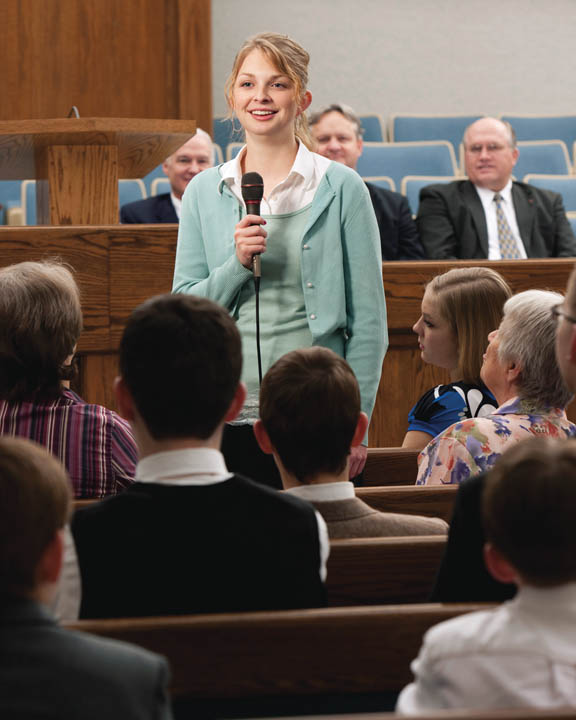
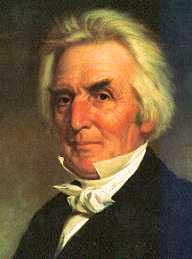
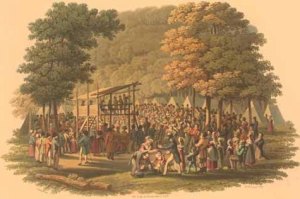
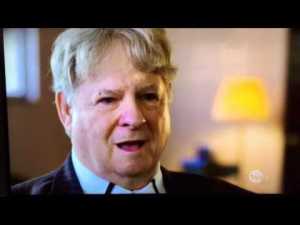
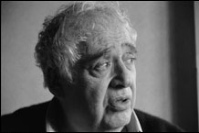
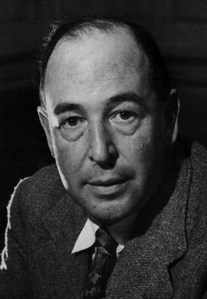

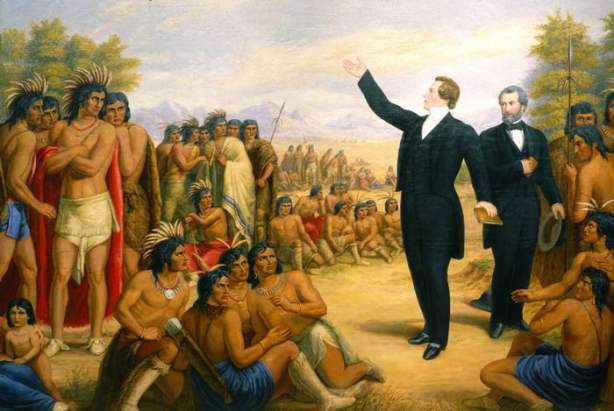
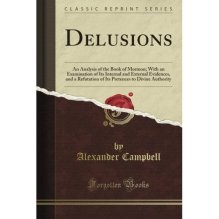
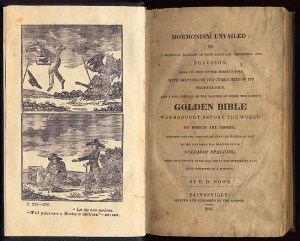
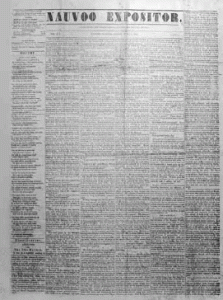
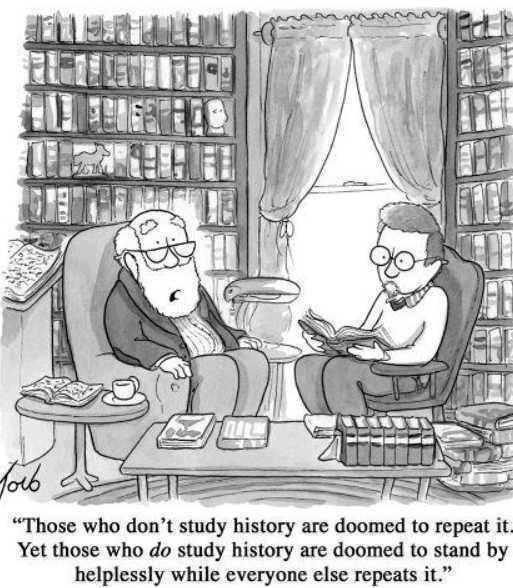
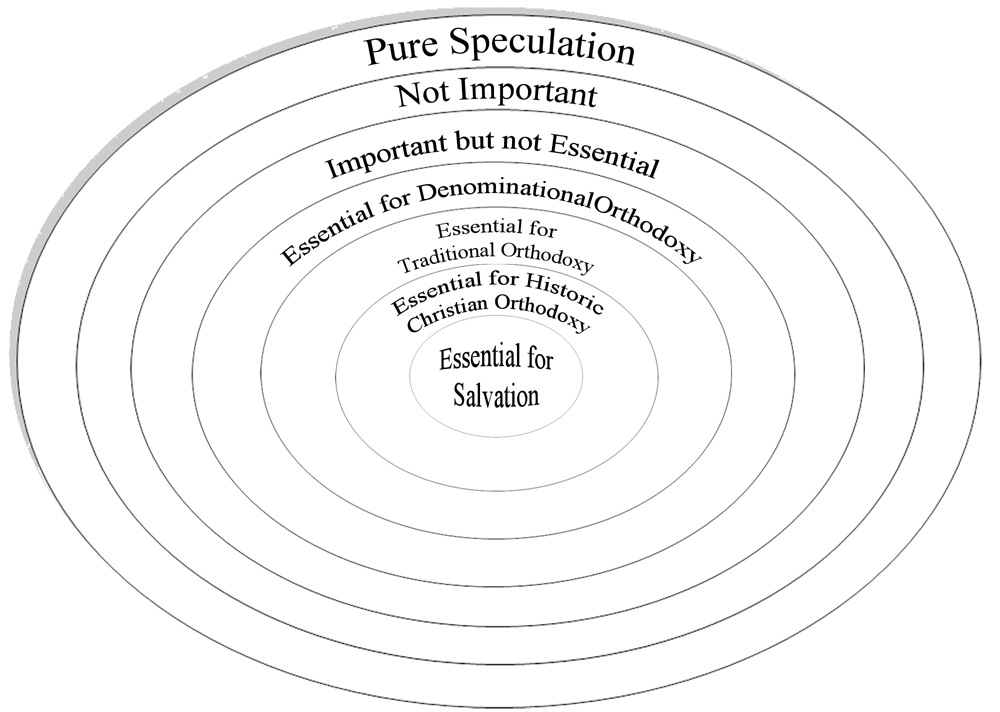


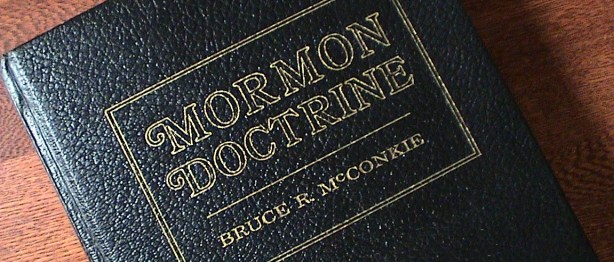

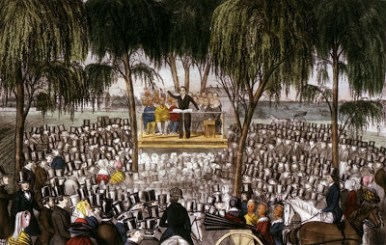
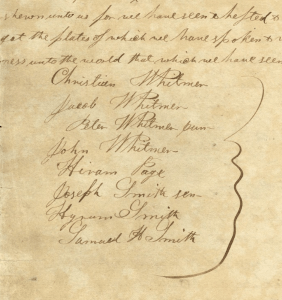
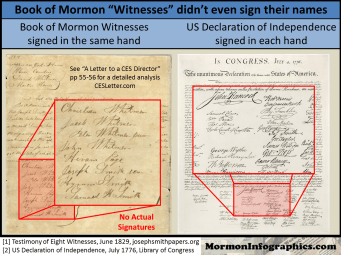


 Beggar's Bread