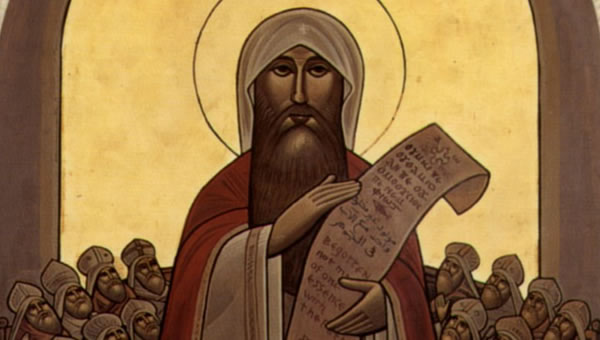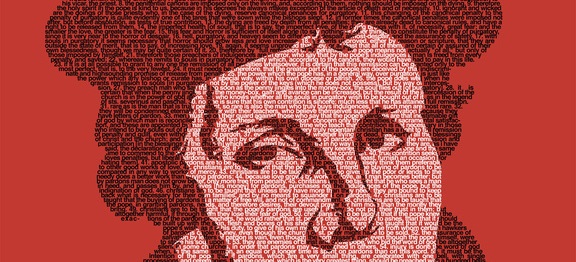
Athanasius (circa 293-373AD)

Athanasius (circa 293-373AD)

Introduction: The greatest exposition of the doctrine of the Trinity is the Athanasian Creed. Unfortunately, many modern readers often feel overwhelmed and confused by it. Perhaps this is due to the fact that good modern translations of the creed can be hard to find. The translation below is both modern and breaks the creed into paragraphs by theme – thereby making it more legible and easier to digest. If you will read it slowly, considering each line and paragraph before proceeding to the next one, we suspect that you will find it not only easy to comprehend but will come away with a fuller, richer understanding of the Trinity. Finally, please note that the term “catholic faith” in this translation is correct meaning, “on the whole, according to the whole or in general”, or more simply, “universal”. It is not referring to the Roman Catholic Church – which didn’t appear for hundreds of years, that is, long after this creed was written. — Editor

Whoever desires to be saved should above all hold to the catholic faith.
Anyone who does not keep it whole and unbroken will doubtless perish eternally.
Now this is the catholic faith:

That we worship one God in trinity and the trinity in unity,
neither blending their persons
nor dividing their essence.
For the person of the Father is a distinct person,
the person of the Son is another,
and that of the Holy Spirit still another.
But the divinity of the Father, Son, and Holy Spirit is one,
their glory equal, their majesty coeternal.

What quality the Father has, the Son has, and the Holy Spirit has.
The Father is uncreated,
the Son is uncreated,
the Holy Spirit is uncreated.

The Father is immeasurable,
the Son is immeasurable,
the Holy Spirit is immeasurable.

The Father is eternal,
the Son is eternal,
the Holy Spirit is eternal.

And yet there are not three eternal beings;
there is but one eternal being.
So too there are not three uncreated or immeasurable beings;
there is but one uncreated and immeasurable being.

Similarly, the Father is almighty,
the Son is almighty,
the Holy Spirit is almighty.
Yet there are not three almighty beings;
there is but one almighty being.

Thus the Father is God,
the Son is God,
the Holy Spirit is God.
Yet there are not three gods;
there is but one God.

Thus the Father is Lord,
the Son is Lord,
the Holy Spirit is Lord.
Yet there are not three lords;
there is but one Lord.

Just as Christian truth compels us
to confess each person individually
as both God and Lord,
so catholic religion forbids us
to say that there are three gods or lords.

The Father was neither made nor created nor begotten from anyone.
The Son was neither made nor created;
he was begotten from the Father alone.
The Holy Spirit was neither made nor created nor begotten;
he proceeds from the Father and the Son.

Accordingly there is one Father, not three fathers;
there is one Son, not three sons;
there is one Holy Spirit, not three holy spirits.

Nothing in this trinity is before or after,
nothing is greater or smaller;
in their entirety the three persons
are coeternal and coequal with each other.

So in everything, as was said earlier,
we must worship their trinity in their unity
and their unity in their trinity.

Anyone then who desires to be saved
should think thus about the trinity.

But it is necessary for eternal salvation
that one also believe in the incarnation
of our Lord Jesus Christ faithfully.

Now this is the true faith:

That we believe and confess
that our Lord Jesus Christ, God’s Son,
is both God and human, equally.

He is God from the essence of the Father,
begotten before time;
and he is human from the essence of his mother,
born in time;
completely God, completely human,
with a rational soul and human flesh;
equal to the Father as regards divinity,
less than the Father as regards humanity.

Although he is God and human,
yet Christ is not two, but one.
He is one, however,
not by his divinity being turned into flesh,
but by God’s taking humanity to himself.
He is one,
certainly not by the blending of his essence,
but by the unity of his person.
For just as one human is both rational soul and flesh,
so too the one Christ is both God and human.

He suffered for our salvation;
he descended to hell;
he arose from the dead;
he ascended to heaven;
he is seated at the Father’s right hand;
from there he will come to judge the living and the dead.

At his coming all people will arise bodily
and give an accounting of their own deeds.
Those who have done good will enter eternal life,
and those who have done evil will enter eternal fire.

This is the catholic faith:
one cannot be saved without believing it firmly and faithfully.

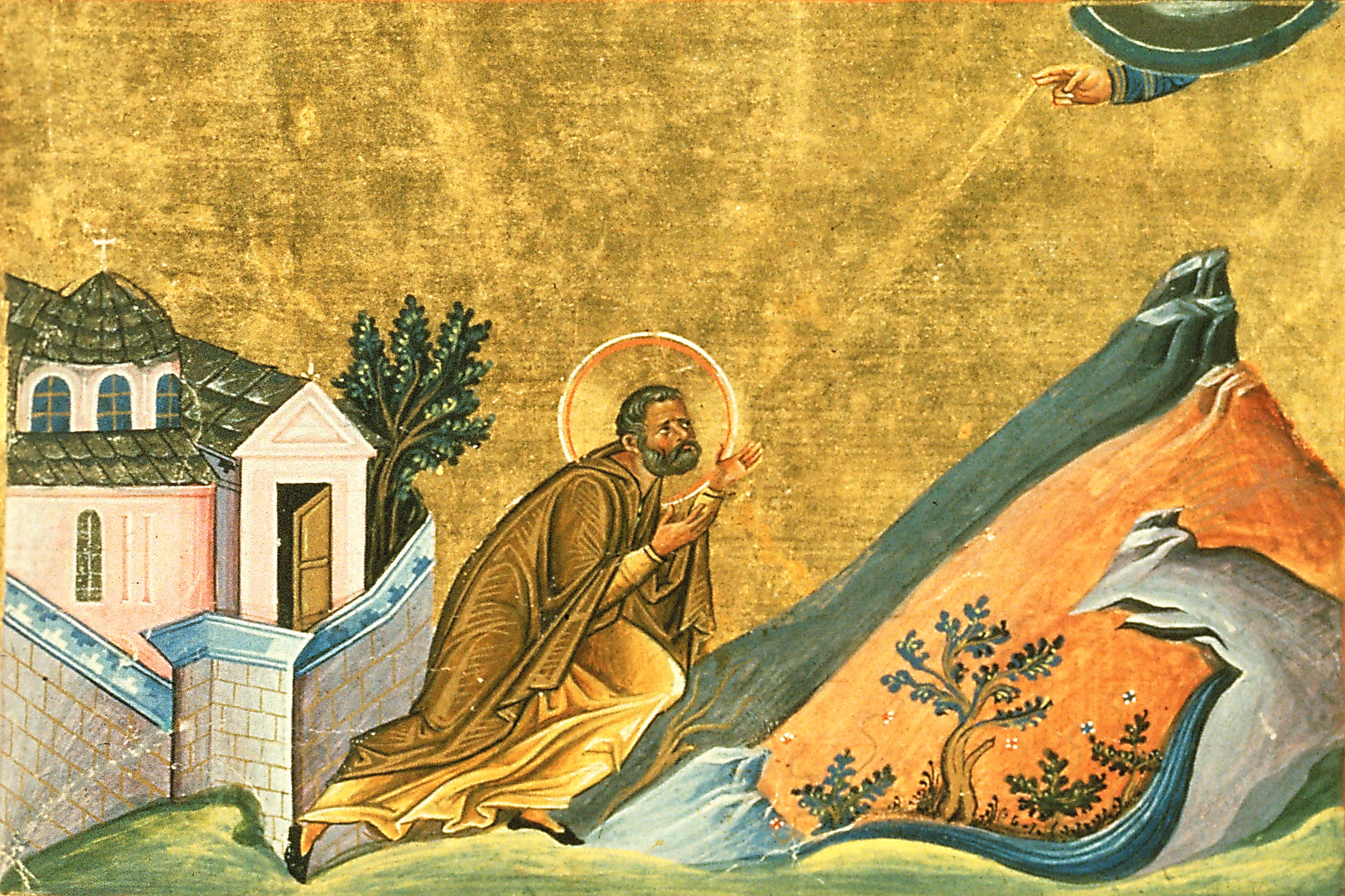
Athanasius_the_Confessor_of_Constantinople_(Menologion_of_Basil_II)

Athanasius the Confessor of Constantinople
(from Menologion of Basileiou an 11th century illuminated byzantine manuscript with 430 miniatures, now in the Vatican library)

BACKGROUND
This creed is named after Athanasius (A.D. 293-373), the champion of orthodoxy against Arian attacks on the doctrine of the trinity. Although Athanasius did not write this creed and it is improperly named after him, the name persists because until the seventeenth century it was commonly ascribed to him. It is not from Greek (Eastern), but from Latin (Western) origin, and is not recognized by the Eastern Orthodox Church today. Apart from the opening and closing sentences, this creed consists of two parts, the first setting forth the orthodox doctrine of the trinity, and the second dealing chiefly with the incarnation and the two-natures doctrine. The translation above was adopted by the CRC Synod of 1988. 

© 1987, CRC Publications, Grand Rapids MI. www.crcna.org. Reprinted with permission.

A caution to transitioning Ex-Mormon Christians
00-0628c2

“Cosmic Conflict” by Lars Justinen

by Fred W. Anson
Without question the loss of community is one of the things most quickly, and often most painfully, felt by Mormons transitioning out of the Church of Jesus Christ of Latter-day Saints. That’s why I believe that former Mormons can and should find encouragement and support by joining with others like themselves as soon as possible after exiting the Mormon Church. The stories of those who don’t are, all too often, heartbreaking.

However, sometimes the stories who do are even worse. That’s because all too often, Ex-Mormon support groups, that lack a positive sense of direction can deteriorate into a quagmire of complaints, bitterness and anger. As a result many former Latter-day Saints stay stuck in a negative attitude for the rest of their life after leaving the Mormon Church. And we all have stories of those who have gotten downright mean and nasty.

This need not be!

While I understand that most people in the healing process need a gracious place where those feelings can be vented I always encourage my Christian Ex-Mormon friends to press past the quagmire of angry bitterness and into health and happiness through a restored relationship with the God of the Bible and His covenant people.

This is possible but requires belief and trust that God’s word is true when it says:

‘God opposes the proud
but shows favor to the humble.’

Submit yourselves, then, to God. Resist the devil, and he will flee from you. Come near to God and he will come near to you. Wash your hands, you sinners, and purify your hearts, you double-minded. Grieve, mourn and wail. Change your laughter to mourning and your joy to gloom. Humble yourselves before the Lord, and he will lift you up.
James 4:6-10 (NIV)

Simply put, I have found that all too often transitioning Mormons cut their own healing short and fail to gain the hard won wisdom that God is trying to impart to them by choosing to attack Mormonism rather than staying in the humble, reflective, broken place of learning spoken of in this passage. All too often it seems that they are trying to resurrect and exalt themselves by trying to kill and destroy their “Judas” rather than waiting for God to avenge, resurrect and lift them up as Christ did. As one Pastor said well of such God-given (but rarely welcome) lessons:

As soon as you pick up the sword the lesson ends.
Pastor Kevin Davenport, Saddleback Covenant Church (Mission Viejo, CA)

Yes, transitioning Ex-Mormon, an injustice has been done: You have been betrayed – and now your betrayers are out to crucify you! We acknowledge and validate that fact. However, there will be time enough for the sword later. The Mormon Church isn’t going anywhere, and we know where to find it because it’s a stronghold. But as Jesus said of strongholds:

No one can enter a strong man’s house and plunder his goods, unless he first binds the strong man. And then he will plunder his house.
Mark 3:37 (NKJV)

Binding the strong man and then plundering his house is going to take God given strength, wisdom and persistence! That’s why I encourage you to stay humble, submitted, and attentive to God’s lessons. You’ve been broken: Stay here for awhile, let others bind up your wounds then wait for them to heal. Be Christ not Peter. And always remember the words of Christ who not only said but also modeled:

Whoever exalts himself will be humbled, and he who humbles himself will be exalted.
Matthew 23:12 (NKJV)

Gain strength and acquire wisdom. then, once you’re whole, strong, wise, and endowed with power from on high, you may1 hear this call: “Go forth and conquer in My Name!” If so, then pick up your sword and we’ll storm the gates of the LdS Church together!2

Amen?

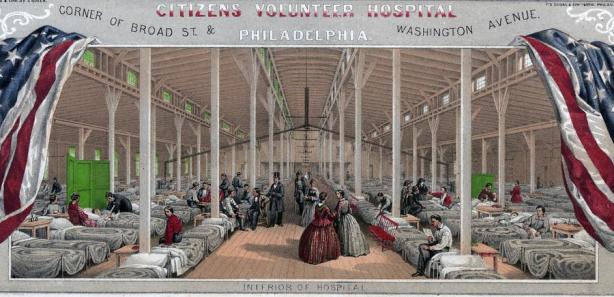
1-the-civil-war-wounded-soldiers-in-ward-everett

Suffice to say, these folks probably shouldn’t be storming the gates of hell for a while.

NOTES
1 And you may not hear that call – which is absolutely fine too. Many Ex-Mormons after they’re whole, strong, wise, and endowed with God’s power simply close the chapter of their life called, “The Mormon Church” and walk the other direction never looking back. God calls who He will to what He will and not all are called to storm gates.

2 See Matthew 16:18 (NKJV) which says:

“And I also say to you that you are Peter, and on this rock I will build My church, and the gates of Hades shall not prevail against it.”

Credits and Acknowledgments
The core principles introduced in this article are expounded and expanded on more fully in Gene Edwards’ classic book, “A Tale of three Kings: A Study in Brokenness”. This book has been of great aid and comfortable to recovering ex-cultists for over three decades. It’s a riveting tale that can easily be read in one or two sittings (it’s only 105 pages long). You will find the Amazon page for Mr. Edward’s book here. I simply can NOT recommend this book highly enough. I know that’s it’s a cliche but this book truly is a lifechanger and a must read!

Portions of the above text are from the introduction of Ross Anderson’s, “Jesus Without Joseph”. Once again, this is another resource for Ex-Mormons that I can’t recommend highly enough.

frigid temple

“The Mormon Church isn’t going anywhere, and we know where to find it because it’s a stronghold.”

“The Lord will fight for you. You just keep still.”
Exodus 14:14 (CEB)

BACK TO TOP

modernism_header-EDITEDIntroduction When the “I’m A Mormon” ad campaign hit the shores of Australia in 2011, frequent Mormon Expression board commentator Martin Jacobs was prompted to consider it’s message in light of trends he saw emerging in the Church of Jesus Christ of Latter-day Saints at that time.  What’s striking is how fresh and relevant his analysis still is today. — Editor

Hi, I’m Zelph and I’m a Modernist
by Martin Jacobs
The tag line “I’m [insert name here], and I’m a Mormon” superbly clinches the current advertising campaign by the Mormons. However, I suggest that the message that it projects is not the gospel of Jesus Christ, it’s not even the gospel of Mormonism’s founder, Joseph Smith; it’s modernism.

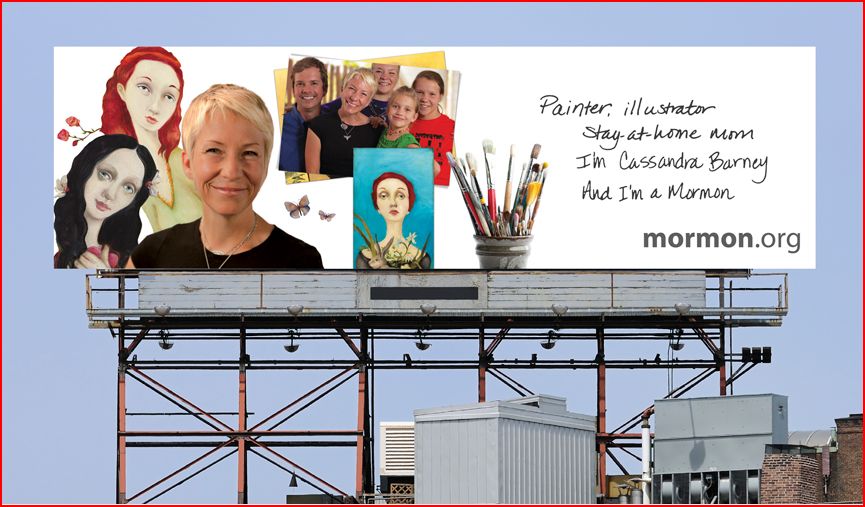
“I’m A Mormon” ads in a New York Subway Car

It’s a smart campaign. It aims at normalizing the religion by overcoming perceived stereotypes through the faces of ordinary, likable Mormons. It’s exactly what well-paid and successful PR companies would advise, with good reason; it’s a tried and tested formula for raising the profile of the brand. Put simply, it works.

My objection is not with the delivery, nor even with its modernist message (which has merits of its own within its own frame of reference). My objection is that the gospel of Jesus of Nazareth and his immediate followers, which Mormonism claims to have restored, was not modernist.

I don’t think I have the definitive angle on modernism, or on the species of modernism presented in the “I’m a Mormon” campaign, or even on Christianity, for that matter. However, I do see some profound differences in these competing perspectives, and contrasting them is not simply instructive, it deeply challenges our inherited, modernist sense of self-identity.

In a nutshell, the modernist sees himself as the author of his own story, and it’s a story that starts with his own advent. The ancients, by contrast saw their story as part of a continuum of history stretching back to the creation of the Cosmos, and forward to the end of this age. Both see their lives as a vindication of the respective authors of these stories. To the modernist, that author is himself, but to the ancient Christian, the ultimate author is God.

An

An “I’m A Mormon” billboard in Colorado Springs, Colorado

To contrast the ancient Christian perspective with the modernism that we are so familiar with, consider a curious part of the gospel that was taught by one of Jesus’ immediate followers;

This is how you can recognize the Spirit of God: Every spirit that acknowledges that Jesus Christ has come in the flesh is from God (1 John 4:2)

My first observation is that if you find the Bible hard to read, it’s probably because you’re a modernist.

Discovering that you’re a modernist might be something of a revelation to you. You didn’t choose modernism, you didn’t convert to modernism, and you didn’t apostatize from anti-modernism (whatever that may be). Yet, you are a modernist, nonetheless.

Another revelation to you might be that modernism has a history. You probably think that people all through the ages think just like you. However, that’s actually not the case, and the fact that you have assumed it is a tell-tale sign that you are a modernist. Professors of the History of Philosophy put the genesis of modernism around the time of the French Revolution. From there, it took a grip on the Western World, and its fruit is found in you, whether you willed it or not.

Modernism is not simply an optimistic view of what lies ahead. It insists that nobody really knew anything until we arrived on the scene (and by “we” I really mean “I”) and started to call things what they really are.

You've read the article, now read the book.

You’ve read the article, now read the book. (click for details)

The downside of presuming that you are the author of your own story is that it gives you license to re-write the book according to your own agenda, without the inconvenience of checking what happened “in the flesh”, as John puts it.

Hence, the winsome characters in the “I’m a Mormon” campaign appeal to us with the sub-text of “I am Mormonism”. Not what others may have seen as those loony “old school”, ignorant polygamists in the Utah desert, nor those simpletons from a by-gone age following those “old school” prophets bearing revelations that have drifted down from heaven, but me, because I get to determine what Mormonism is, and I am the nice, modern, informed, more evolved guy (or girl) from next door who makes up their own mind as to what and what isn’t Mormonism.

This is most evident in the fact that the “I’m a Mormon” campaign has little time for Joseph Smith, the most important character in the Mormon story. Why? Joseph Smith set the agenda for Mormonism, and Mormonism is stuck with it until it becomes something that is not Mormonism. It appears that those who are driving the campaign want to re-write the book according to the nice guy next door, which is a distinctively modernist thing to do.

An excellent primer on modernity can be found in an interview with Thomas Oden in 1990, who described modernism as the “idolatry of the new”. It is reproduced in a Christianity Today on-line article here. I am particularly struck by the second characteristic of modernism that Oden defines; autonomous individualism, which assumes that moral authority comes essentially from within.

An

An “I’m A Mormon” Billboard in London

It describes “us” more accurately than we’d like to think. How many Disney movies have taught our kids to “trust their heart”? What does contemporary Mormonism teach (along with a plethora of other religions)? If I read John rightly, this make-it-up-according-to-the-dictates-of-your-own-prejudices grates against his warning to base your sense of reality according to what has happened “in the flesh” in history, and it leads us into dangerous territory.

Please hear me carefully here. I’m not arguing that a person’s individual experiences and agenda are unimportant, uninteresting or irrelevant. It would be the height of churlishness and ignorance to dismiss the real stories behind the “I’m a Mormon” campaign as meaningless. They are not, thank God. (No, really, thank God that no human life is worthless and meaningless, even the ones that you and I might not particularly admire).

The problem I have is that the modernist-believer looks inward for signs of God. These signs are consigned to, and validated in the internal world of the believer’s internal psyche. There, they can be manipulated, unlike the signs “in the flesh” of John’s enigmatic diagnostic.

John’s strange comment is not the only Biblical text that tells us to look beyond our own lives and into the “flesh” of God’s public, historic and auditable acts. The Ten Commandments open with a statement of God’s redemption of Israel (Exodus 20:2). Jesus constantly validated what he was doing by appealing to “what was written” (Matthew 4:4 etc). Paul, who was probably the most didactic of New Testament authors, never got round to telling us how we should live our lives without framing it in the context of the history of the Old Testament, and the observed life of Christ (Philippians 2:5-11, for example).

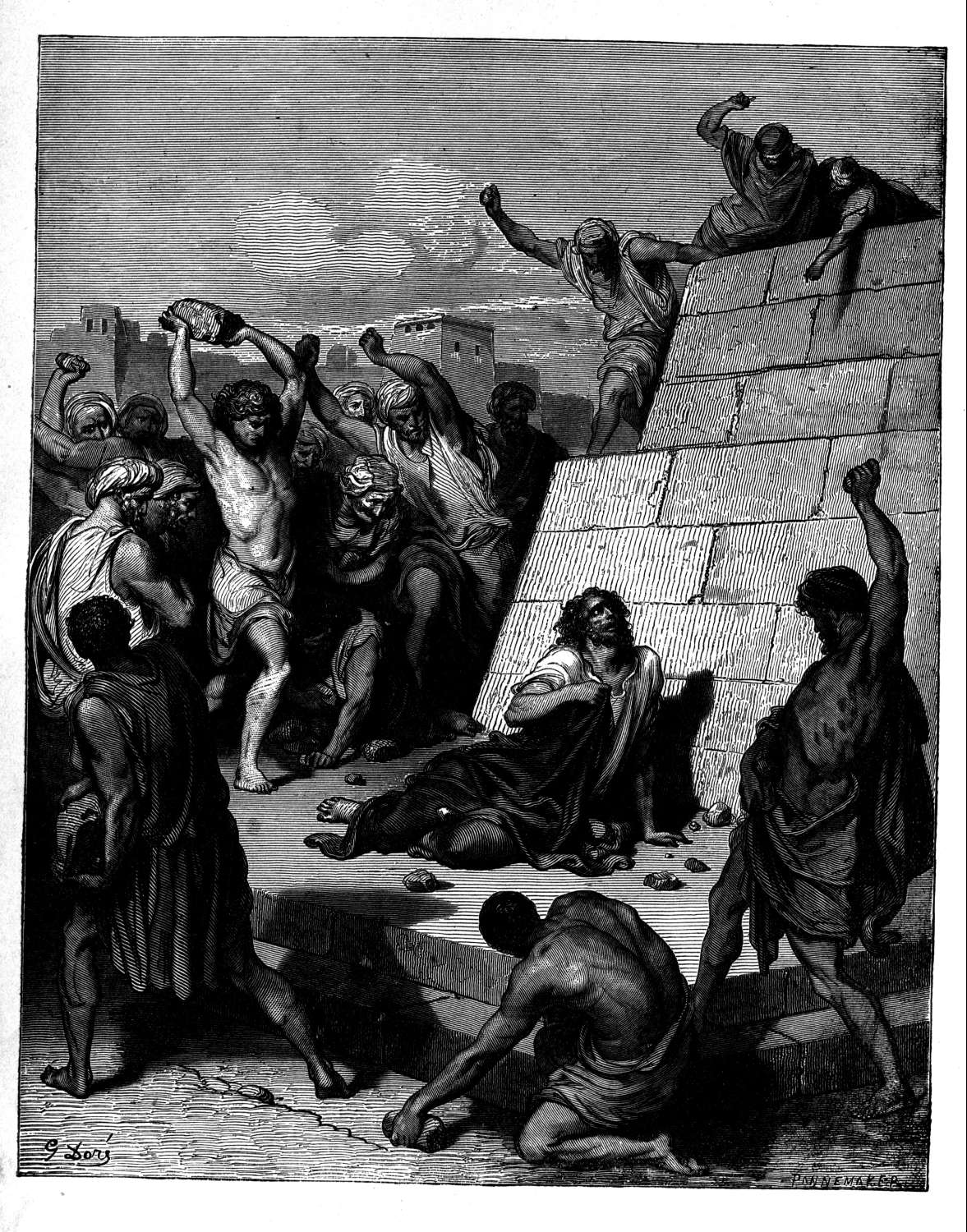
“The Stoning of Stephen” by Gustave Dore’ (1832-1883)

Consider Stephen’s testimony in Acts Chapter 7. He’s on trial, and the words he chooses next will determine if he lives or dies. Does he say something like “I asked Jesus to come into my life, and he made me into a better person”? No. Stephen gives a history lecture to the people holding the rocks. It’s only when the stones are going to fly that Stephen finally tells them what it means to him.

Stephen, like the first Christians and authors of the New Testament, did not evaluate the Gospel of Christ by what it meant to him, but by what God had already done “in the flesh”. It only meant something to him on a personal level because he saw himself as a small, but important component of that history. It was this history that called both him and his interrogators to account.

They didn’t feel comfortable with Stephen’s message of accountability, like modern modernists, and they had more freedom to express their emotional perturbation than us, which they did by killing him. Their moral authority was based firmly on what they saw within themselves, and not on what God had done “in the flesh”, as Stephen forcefully testified.

Contrast this scenario with the “I’m a Mormon” campaign, and it’s focus on the believer. The message of the New Testament, which reliably sets out the important and distinctive ethos and teachings of the first Christians, consistently looks beyond the self of the believer to Jesus Christ, and what he did “in the flesh”. It even does so to the detriment of the believers, who made up its authors and most of its principal players.

If we were serious about “restoring” the ancient Christian Faith, we ought to be mindful of the dominant voices of modernism in our environment that could derail our venture. We ought to be very wary of our (modernist) tendency to validate our chosen religion by the feelings that we experience within our hearts.

Screen shot from the

Screen shot from the “I’m A Mormon” website

The ancient Christian Faith had an entirely different frame of reference. The first Christians validated themselves by what they saw God doing “in the flesh”. Central to their vision was the life, death and resurrection of Jesus Christ, whom they regarded above all else as the tangible, definitive expression of God (see John 1:14, Colossians 1:10, Hebrews 1:1-4).

This expression of God in Christ then set the agenda for their lives (see Philippians 2:5-11) in a way that revolutionized the world. The rest, as they say, is history, and it’s well worth exploring if we want to understand why we are where we are today.

If we were to restore this ancient Christian faith, we would come to a place where we can no longer say “I believe in an [imaginary] Jesus because he has appeared in my heart”, but a place where we affirm that he has appeared “in the flesh”, as John says. Crucially, Christianity looks beyond the self of the believer and this is Good News because Christians have a redeemer who is not dependent on their efforts to make Him “true”.

Nothing you or I will do, say or feel will change this Jesus of the Flesh, contrary to the ‘gospel’ of modernism. God forgive us for ever believing otherwise.

(As originally published on the Mormon Expression Blogs website on November 14, 2011)

BACK TO TOP

mormonby Fred W. Anson
I grew up in Southern California and had Mormon friends and family members all my life.

But the big event was when a close family member converted in 1970. That was a watershed event the ripples of which are still resonating through my family.

I was Born Again in 1976 and lightly studied Mormonism starting around 1978 – mainly the Tanner’s material and Walter Martin. I dared not touch anything from the other side of the divide lest I get “contaminated” (typical ’70’s Jesus Movement ‘antiseptic Christian’ thinking no doubt).

Fast forward to the passing of Gordon B. Hinckley . . .

A Mormon family relative sent out a mass email praising Gordon B. Hinckley using “Fast and Testimony” language and expounding on the time that he met him and shook his hand. The “hook” that got me was when my normally rational, logical relative said, “When I looked into his eyes it was if I was he and I were the only people in the room – it was if I were looking into the eyes of Christ.”

That was wake up call #1.

Then a few months later Mitt Romney drops out of the Presidential race on the same week that the Wall Street Journal publishes an article revealing that most Americas consider Mormons “weird” and thus would have second thoughts about having one as President of the nation.

Apparently the Mormon General Authorities sent out some type of communique to the Wards about this article and Romney’s departure because that Sunday that same Mormon family member sent out another weepy “Fast and Testimony” email about how Mormons are just normal people and how we non-Mormons shouldn’t persecute them for their faith.

That was bad.

What was worse when someone else in my family (who’s not Mormon) immediately replied with words of comfort ending with, “… after all we all worship the same Christ.”

I sat there stunned and realized that I wasn’t equipped to reply intelligently to either of these bright, intelligent, well read family members.

So I dove into Mormon Studies with heart, mind and soul and to my shock and surprise discovered that: a) I love it! and; b) I’m pretty good at it.

I’m hooked.

My favorite Mormon Studies quote – and the one the epitomizes my Mormon Studies philosophy and experience – comes from LdS Scholar Kathleen Flake who said:

Superficially, one thinks of revealed religions as providing answers, and Smith provides as many questions as he does answers. Nobody is exempt from struggling with who he is. Whether you’re an insider or an outsider, thinking about Smith causes you to struggle, and that struggle brings as much of you into the question as it does Smith himself. He’s a bit of a religious Rorschach test.
Kathleen Flake, Historian
(from the PBS Series “The Mormons”)

That quote matches my experience to a T! I have grown deeper and wider in my own faith by studying Joseph Smith than I ever thought possible – that was unexpected. Further, I seem to be helping others through my own involvement on Internet discussion boards (Concerned Christians and AnswerBag).

I have been labeled, “An enemy of the only true Church” and “A Child of the Devil” by Mormons which I take as feedback that I’m doing something right and I’m effective to some small degree.

Oh, and I’m ready for either of my relatives and their families should the door ever open there.

(As originally published on Facebook on May 10, 2010) 

BACK TO TOP

fric-et-foi

Dr. Gene “God’s Angry Man” Scott

“I appeal to you, brothers, to watch out for those who cause divisions and create obstacles contrary to the doctrine that you have been taught; avoid them.”
– Romans 16:17 (ESV)

by Lowell Johnson
Up to 2014 I had watched almost every episode of Heart of the Matter show. I had enjoyed host Shawn McCraney’s ability to reach Mormons through his boisterous and challenging personality. At times, he reminded me of the late Dr. Gene Scott (1929 – 2005) who was labeled “God’s Angry Man”. Dr. Scott was a cigar chomping profane television preacher who disdained modern Christianity and arrogantly would point out perceived flaws. He was a Stanford educated man who seemed to be theologically sound when he was a young pastor. However, when he began TV preaching and rerunning his shows 24/7 on several UHF stations, many heresies were taught. Those who are too young to have see Dr. Scott on broadcast television can still find him on YouTube and featured in Werner Herzog‘s 1981 documentary film “God’s Angry Man”.

Sadly, starting in early 2014 Shawn began showing signs of becoming the next Dr. Gene Scott. Like Dr. Scott, Shawn had cussed on the air and yelled at the callers while looking directly at the television camera. However, it was Shawn’s evolution into a heresy embracing TV preacher that reminded me more and more of Dr. Scott of whom the Christian Research Institute said in 1994:

During the last few years, Scott has become more and more outrageous and offensive. His appearance, increasingly unkempt and outlandish, deliberately offends societal standards of propriety (compare Paul’s lifestyle 1 Corinthians 9:19-23). His language is crude, abusive, and profane, clearly violating God’s standards for Christians (Ephesians 4:29-31; 5:4; Colossians 3:8)…

he also dabbles in pyramidology and seems to promote a variation of the erroneous Anglo-Israelism doctrine. (CRI has information on both of these aberrational teachings.) In any case, a Christian ministry must be evaluated on the basis of both doctrine and practice; in the area of practice, Scott’s ministry cannot, in our opinion, be considered acceptably Christian.
— CRI Statement on Gene Scott, 1994

I had always found Shawn to be a fairly intelligent and entertaining individual, so the last time I was in Utah in 2012 for the Manti Temple Pageant (two years before all this) I was able to spend a Sunday worshiping with and listening to his teaching at his teaching fellowship known as C.A.M.P.U.S. During that time I found Shawn’s teaching from the Bible to be orthodox. I left the gathering feeling refreshed and ready to share Jesus with the lost in Manti, Utah.

Much has changed since that Sunday in June of 2012. On the February 11th, 2014 episode 381 of Heart of The Matter, Shawn spent the majority of the show attacking the Trinity. He said his study of God’s Word brought him to this conclusion. However, he also used several outside sources to justify why he has had a change of heart – including some sources from heretical groups like Oneness Pentecostals. Several people immediately took to the phone, to email, and to the internet to express concerns (see the Beggar’s Bread Position and Policy Statement on McCraneyism for links).

I was one of them. Before any of this happened, and because of comments he made on the previous show on February 4th, 2014 (episode 380), I had sent an email to Shawn asking if he was rejecting the Trinity Shawn graciously sent me a reply telling me to keep watching the shows and offered to send me his notes with book references when he was done. He did not really answer my questions, but I thought that I could wait to see where he was heading. So I was deeply saddened when he spent the majority of the next show (the episode 381 that I mentioned before) attacking the Trinity using arguments that could have just as easily been made by a Jehovah’s Witness (see Jehovah’s Witnesses and the Trinity: A Christian Perspective by Patrick Zukeran).

He even suggested that one reason the Trinity wasn’t valid because the word “Trinity” could not be found in the Bible. This is true, but it doesn’t mean that the Bible doesn’t teach the Trinity. The word “Bible” isn’t in the Bible, but it doesn’t stop us from calling it the Bible (see The word Trinity is not found in the Bible by Matt Slick). Essentially Shawn was teaching the ancient heresy of modalism which teaches that the Father, the Son, and the Holy Spirit are three different modes or aspects of one person, God, who is perceived by as three different “personas” or “modes” to the believer, rather than being one being, God, consisting of three distinct persons within the Godhead. As Shawn put it (starting at 25:48) in that broadcast:

One God. Always only and forever only one God. A monotheist God. He has manifested Himself in all sorts of means and ways to man.

He has appeared as fire.
Spoken as a still small voice.
As clouds, and mist, and wind, and an assortment of other ways.

Were they all God? Yes. Manifestations of One God Were they manifestations of more than one God? No.

One monotheistic God.

Did this God manifest Himself in spirit?

Yes. The second verse in the first chapter of Genesis says:

“And the earth was without form, and void; and darkness was upon the face of the deep. And the Spirit of God moved upon the face of the waters.”

Hey, listen up – this single monotheistic God also manifested Himself in . . . flesh.

That’s all. Not a new second or third “person” of the singular God co equal with the other persons. Just another manifestation of the single God.

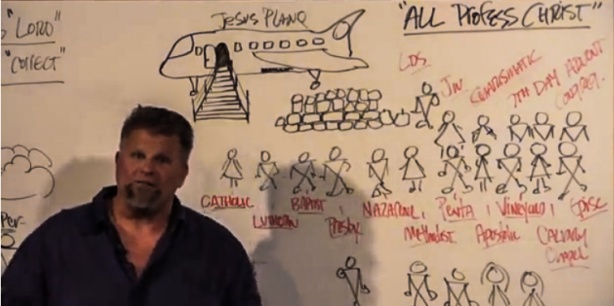
Episode 393 White Board_edited

In true Gene Scott tradition, Shawn McCraney has shown a fondness for busy marker boards.

Jesus said it plainly to Philip:

“If you have seen me, you’ve seen the father.”

The Greek word for see in this passage is Horao and is better understood as Jesus saying:

“If you have discerned me, Philip, and not literally seen (which is the Greek word blepo).

That’s all I’m saying. The Spirit – God. One with God. From God, of God, and just God. Jesus – God. One with God. From God, of God – God. Holy Spirit God.

The only deal about God being “a or the Father” is in relation to Him having a Son in flesh.

He was not a Father until He manifested Himself as the Son.

It’s all really no more complicated than this:

“God is one who manifests Himself in a bunch of different ways. If the manifestation is from God, then the manifestation is God, and is sent by the One God to teach us of Him.”

So where did all this stuff about three persons, co-equal, co-eternal, comprising the one true God come from?

Stupid men who want formulae, who love control.”
(the above transcription is from the official Heart of the Matter website)

Simply put, that’s modalism. No matter how much you deny, spin, or try to talk your way around it, that’s just the way it is. Sure, it may be Openess Pentecostal style non-sequential modalism, but it’s still modalism all the same. As they say, “If it looks like a duck, has duck feathers, and walks like a duck, it’s a duck” – insisting that it’s not, no matter how many times you say it, doesn’t change that fact!

Now, in the past Shawn had played pranks on his show (see Shawn Becomes A Mormon Again). However, his teachings on the nature of God didn’t give any indication that he was cleverly pranking his audience in order to further strengthen their acceptance of the Trinity. Rather, he seemed, much like the late Dr. Gene Scott, to passionately believe everything that he was teaching. Still, maybe, just maybe, I thought at the time, it was all just a well really executed, poker faced, “gotcha!”

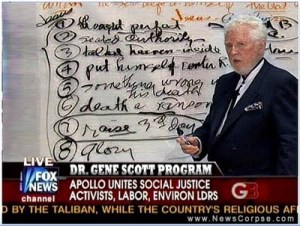
DrGeneScottWhiteboard

A classic busy Gene Scott marker board.

And I was persuaded that Shawn wasn’t the next Dr. Gene Scott, or that he had actually become a modalist, when on February 25th, 2014 (episode 383) he had Rob Bowman from the Institute for Religious Research on the show. Shawn was very humble on the show and admitted he could have been clearer on his points in the previous shows. I even apologized to Shawn via private email for doubting him and then publicly apologized for doing so on my blogsite. Shawn accepted my apology, I thought that my prayers had been answered, and I moved on – content that all was right with the world once again.

And I was wrong, dead wrong!

After Rob Bowman left town Shawn not only continued to teach the heresy of modalism (while all the time denying that he was) but went on to embrace and teach even more heretical doctrines. So on March 18th, 2014, just after episode 386 aired and just a few weeks after his appearance on Heart on the Matter, Rob Bowman had no choice but to finally publicly declare Shawn’s teachings heretical:

Shawn asserted that he doesn’t like the term Trinity and doesn’t like saying there were three persons before creation. Apparently saying there are three persons now is fine (at one point Shawn said this himself). If so, then the term “person” is not itself the problem; the problem is substantive, not merely semantic. But if God was once not three persons and now he is three persons, then the fundamental nature of God has changed. That implication creates all sorts of theological mischief. This is not comparable to God becoming a man, in which God’s nature remains the same but he assumes human nature (the union of two natures in the one person); Shawn’s idea amounts to God changing the divine nature.

I was hoping that Shawn would move closer to the position he continues to cite in his defense, the “eternal Word” form of Trinitarianism espoused by Walter Martin. That at least would still be orthodox. Instead, in my estimation he has if anything moved further away from it, though he continues to make statements that do not fit neatly into the monarchian or modalist system. Without making any judgment about Shawn as a believer or Christian, and with the hope that he may still change or correct what he has been teaching, I regretfully think that at present what he is articulating about the doctrine of God is heresy.

This isn’t the only problem. At the end, in response to another caller, Shawn affirmed universal reconciliation, a doctrine that is really a form of universalism under a different name. Although Shawn claimed this wasn’t universal salvation, he referred the caller to the website tentmaker.org, which clearly teaches universal salvation. “The Bible, correctly translated teaches Jesus Christ, the Chosen One of our heavenly Father will save the whole world.” The website also appears to endorse the idea that the devil and his fallen angels will also eventually be saved, but apparently not in this age. Shawn seemingly didn’t agree with that view, but he wasn’t completely clear on the issue. In any case, universal salvation is also heresy.”
(click to read source)

Yet despite all attempts at private and public correction of his heretical teachings, Shawn continued this attack on the Trinity. Again, his initial attack started with the previously mentioned February 4th, 2014 episode 380 and continued in some form or fashion in subsequent broadcasts all the way up to episode 392 on April 29th 2014. Further, he regularly affirmed his rejection of the Trinity on other shows (particularly in the Q&A segments) and in his ministry newsletters.

And if his rejection of the doctrine of the Trinity wasn’t enough, later in 2014 (see Heart of the Matter episodes 419-425) Shawn validated Rob Bowman’s March 18th, 2014 concerns that he was holding to a form of  universal salvation when he taught that there is a possibility that Eternal Damnation and hell may not be as eternal as we think. Shawn claimed that he wasn’t teaching universalism because he doesn’t believe all roads lead to Heaven. However, he still seemed to be suggesting that everyone seems to get some kind of glory through Jesus, even those in hell. Ironically, this view is very similar in some ways to the Latter-day Saint “three degrees of glory” doctrine. But whether it is or not, it’s still heretical as Mr. Bowman stated clearly in his earlier public statement.

But all this was just the prequel to the bomb that dropped on the October 6th, 2015 Heart of the Matter broadcast (episode 466 starting at 28:46) in which Shawn McCraney publicly announced that he was a “committed modalist”. Here’s the video and official HOTM transcript of that announcement:

At this point I will publicly admit that I am a committed modalist but refuse the Trinitarians pejorative that claims I err by “confounding the persons.”

I would reply they err by creating “three persons deserving worship” rather than the one true and living God deserving it alone.

In Smith’s life modalism was a popular alternative to trinitarianism but the differences are not easily observed by most Christians then or even today.

I can’t tell you how many people who are devout followers of Christ who cannot articulate the fundamentals of creedal trinitarianism and who typically, when asked to define their beliefs on the subject describe modalist thinking instead.

Anyway, the main difference between modalists and Trinitarians is Trinitarians label Father, Son and Holy Spirit “persons” and modalists label them all expressions or manifestations of the One God.

In reality, modalists do not deny three in one – they simply do not see the three as individual entities entirely separate from each other.

Also, there are differences between sabellian modalism – which says that the Father became the son and the son became the Holy Spirit and plain modalism which asserts that God manifested Himself in and through the Son and in and through the Holy Spirit.

I am certainly of the later form.

But Love and I had the wit to win, and

We drew a circle that took him in.
(Episode 466: Ontology of God – Part 1, from the official HOTM transcription; bolding and redding added for emphasis)

So it’s now clear that Shawn McCraney has gone from being a church pastor to being a cult leader. Pray for Shawn and all the Shawnites in his fledgling McCraneyism movement because they are proudly (even militantly) turning from the biblical Jesus and embracing heresy. You see, I don’t believe that Shawn has to end up, like the late Dr. Gene Scott did – the butt of jokes and a precautionary tale of what could have been for the Kingdom of God. My God answers prayers.

hqdefault

Tearing a page from the Dr. Gene Scott playbook, Shawn McCraney rails from the pulpit against American Evangelicalism at the April 22, 2013 Concerned Christians conference.
(click to watch video)

About the Author
Lowell Johnson
Lowell Johnson was an active Mormon for almost 12 years before realizing, while teaching a Mormon history class for the Oklahoma University LDS Institute, that Mormon history and doctrine was ever evolving. At this time he withdrew from his calling as the Elder’s Quorum President and returned his temple recommend. After investigating other religions, mainly SGI Buddhism, he gave his life to the Jesus of the Bible. He hasn’t regretted his decision ever since. He is a flawed Christian whose head gets in the way of his heart at times, but knows that Jesus is the only way to Eternal Salvation. Thus he is now a soundly saved Ex-Mormon.

This article was originally published on the “The Reflections & Ruminations Of A Soundly Saved Ex-Mormon” website on February 13th, 2014. This updated and expanded edition has been published here with the permission of the author.

Corrections:
As originally published, this article stated that “Like Dr. Scott, Shawn had… exhibited frustrations with the crew when technical difficulties would arise.” Shawn McCraney contacted the author and explained that he uses only technical difficulties for comedic fodder and only mock berates his staff when they arise. The author agrees with this explanation. Therefore, this claim has been deleted from the article. Our apologies to Mr. McCraney for any misunderstanding that it’s original inclusion may have caused. — Editor (2015-12-04)  

BACK TO TOP

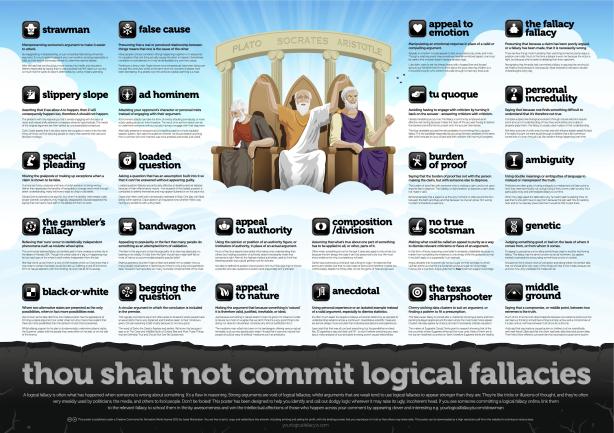
An article on some common and recurring weak argument and debating tactics that Latter-day Saints use in their defense of Mormonism that result in weak arguments.
by Fred W. Anson

“Caïn venant de tuer son frère Abel” by Henry Vidal in Tuileries Garden in Paris, France

“”The non-LDS world has a history of perpetuating criticism, caricature, othering, antagonism and shaming of Mormons. This leads to a reaction on the part of the Latter-day Saints: retrenchment, militancy, withdrawal from civic conversation, and a dynamic I call ‘undergrounding,’ something that happens a lot in our political history where we tell the outside world one story in order to protect our inside story.”
Joanna Brooks, “Violence, Mormonism, and the Sobering Lessons of History”,
Sunstone Magazine, Summer 2015, p.50

Introduction:
The last article in this series created quite a stir. It was “grass catcher” list of weak arguments and debate tactics that mainstream Christians regularly use that undermine their engagements with Latter-day Saints. And while the article was warmly, often even enthusiastically, received on both sides of the Evangelical-Mormon divide, a common response was, “OK, where’s the equivalent list for Mormons?” Well, the wait is over, here it is.

How to Make Weak Arguments for Mormonism:

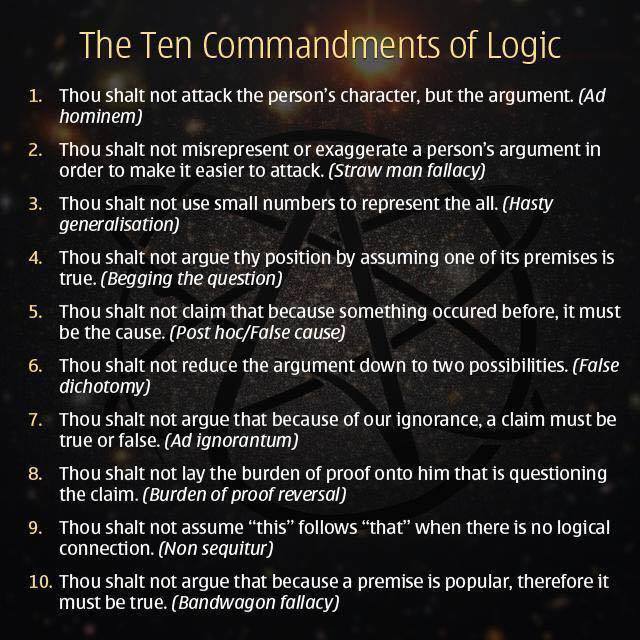
  1. Attack your debating opponent instead of their evidence or arguments. Use ad-hominem arguments.
  2. Misrepresent or exaggerate your debating opponent’s arguments so they’re easier to overcome. Use straw man arguments.
  3. Misquote and abuse 3 Nephi 11:29.  That is, rail against your debating opponent with a bold “Contention is of the devil” denunciation while you’re contending for the Mormon faith. Oh and, since you’re already playing the “beam in your eye” hypocrite before an amused audience, make sure that you completely ignore the passages in scripture that blatantly advocate (such as Jude 1:3, I Thessalonians 2:2) and model (like most of the Book of Mormon for example) righteous contention. Compromised integrity and duplicity is always so persuasive isn’t it? (NOT!)
  4. Over generalize! If you’re the only Mormon who believes something say that all Mormons do. If an uncorrelated, progressive, or Neo-Orthodox Mormon (like Terryl or Fiona Givens for example) makes an unorthodox claim then point to it as the norm. Claim that a “one off” address by a modern Mormon Leader represents what Mormonism has always taught throughout it’s history. You know, do things like point to Brad Wilcox’s 2011 BYU devotional, “His Grace Is Sufficient” or President Uchtdorf’s, Spring General Conference 2015 address “The Gift of Grace” and claim that they accurately represent official current and historic LDS soteriology.[1]
  5. In a similar vein, stereotype! For example, identify a mainstream Christian who has behaved badly (Jim Bakker, Jimmy Swaggert, Ted Haggard, etc.) and treated God’s grace and mercy as a license to sin, and then claim that all mainstream Christians behave this way. After all, Mormons never do that (think John D. LeePaul H. Dunn, Porter Rockwell, Wild Bill Hickman, John C. Bennett, Sidney Rigdon) do they?
  6. Use your conclusion as evidence for your argument. Engage in circular logic – you know something like, “I know that the only true church is The Church of Jesus Christ of Latter-day Saints because I have an inner witness that it’s the only true church.” I mean, really, who can argue with logic like that?
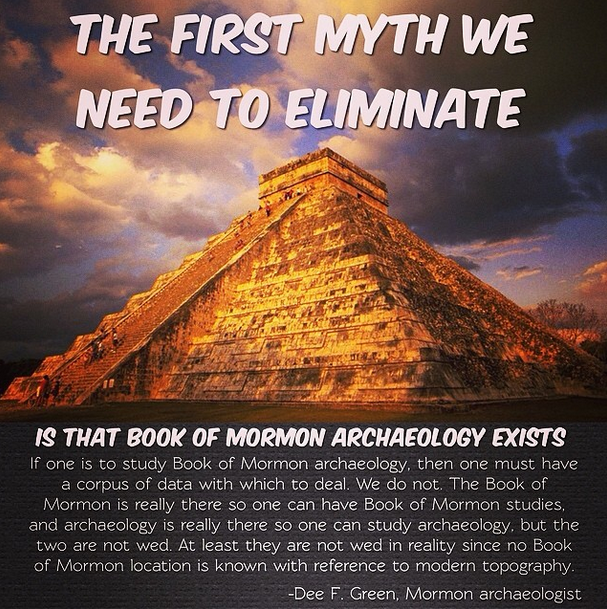
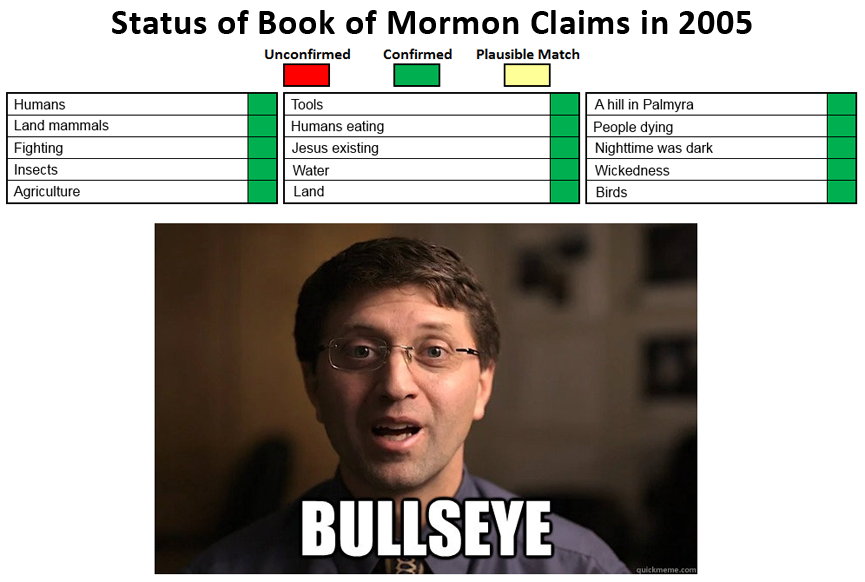
  7. Present speculation and conjecture with no supporting evidence to back them as fact. Argue from silence. For example, argue that the lack of archaeological evidence for the Book of Mormon proves nothing. Even better, argue that the lack of such evidence actually proves that it’s true because God is using it to test our faith.[2]

    book-of-mormon-archaeology-myth

    (click to zoom)

  8. Bifurcate rather than nuance. Claim that there is only black or white, good or evil, on or off. Create false dichotomies.
  9. Argue that because you don’t know or understand something it must be false. Or better yet, to claim that something must be true! Use your ignorance as irrefutable proof that your debating opponent is wrong. When in doubt appeal to ignorance – I mean, sure, it makes you look like an uninformed fool, but what the hey!
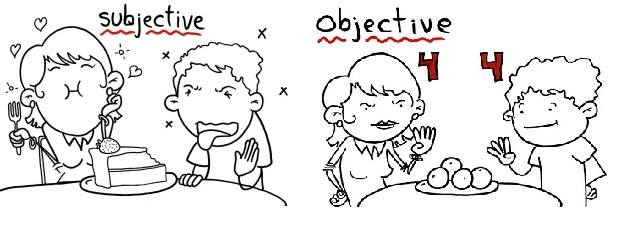
  10. Don’t support your arguments with any evidence (let alone objective evidence). And if challenged, act indignant and offended that you should be required to produce any evidence at all! I mean, after all, isn’t the burden of proof on the person not arguing your position? You know, just like it’s the prosecuting attorney’s job to produce evidence for the defense in a criminal case – yeah, it’s like that.[3]
  11. Assert that something is true simply because you’ve said it is. After all, your word is good enough, right? I mean, come on, you’re Mormon, and therefore, you know everything about Mormonism by virtue of that fact – that should be enough, right? Appeal to yourself as authority – use yourself as indisputable, absolutely authoritative, irrefutable evidence! Why does anyone need to research anything when the best, most reliable source is right there in front of them telling them the way it is?
  12. Use testimony bearing or “the witness of the Spirit” as evidence. Argue from feelings, promptings, and impressions and other appeals to emotion.[4]
  13. Assert that your debate opponent “doesn’t get it” and “can’t get it” because they don’t have the Holy Ghost and, therefore, can’t hear His voice. And when you do make sure that you’re as condescending and arrogant as possible in using this variation on the ad-hominem fallacy so they can fully understand and feel the great depth of their state of blindness.
  14. Argue that because something is popular it must be true. Drive that bandwagon fallacy right over your debating opponent! For example, argue that Mormonism must be true or it wouldn’t be growing so fast worldwide. Uh, by the way, about that “growing so fast” claim . . .[5]
  15. Don’t acknowledge when your debating opponent makes a valid point. Never surrender, never give in! After all this war right?

    Subjective v. Objective Evidence. One can proved by means of search, like analysis, measurement, and observation and one can't. One is valid and unchanging regardless of one's feelings, and one isn't.

    Subjective v. Objective Evidence. One can proved by means of search, like analysis, measurement, and observation and one can’t. One is valid and unchanging regardless of one’s feelings, and one isn’t.

  16. Suddenly and without warning disappear from the debate. Let chirping Mormon crickets argue for you instead. If there were a name for this it might be called the “Cop Out” or “Argue with my Back!” Fallacy. And some Mormons seem to like it a lot – especially when they’re issued a “OK, show me where I’m wrong” challenge.[6]
  17. Cyber stalk or conspire against your debating opponents behind the scenes. After all this is war – so sabotage is just par for the course. Of course, it’s just a form of the type of walking in spiritual darkness that’s consistently condemned in scripture but what the hey, it’s so cool to be a modern Gadianton robber ain’t it? (By the way, this is sociopathological behavior – I just thought that you’d like to know)
  18. Don’t give your debating opponent’s evidence any serious consideration. Better yet, just ignore it and act like it doesn’t exist. For example, even though mainstream Christians repeatedly tell you that they believe in, “Salvation by grace alone through faith alone,” continue to argue that they believe in “Salvation by grace alone” and pound away on that straw man argument.
  19. Ditto for challenging questions. Ignore them. Socratic Method is so stupid!
  20. Don’t become familiar with your debating opponent’s culture and language. After all, if they have anything of value to say they can say and do like we do it in Mormon culture! After all we’re better than they are, aren’t we?
  21. Be condescending because, frankly, we really are better than they are – especially all those lousy, despicable “Anti’s” out there who hate and only want to destroy God’s only true and living Church.[7]

    (click to zoom)

    (click to zoom)

  22. Speaking of “Anti’s”, always label. After all labeling is a wonderful defense mechanism since once it’s done you can stereotype and thus deceive yourself into feeling like you have power over them.  And if you use negative labels you can condescend to those below you – even better! And have we recommended arrogant condescension yet? Oh, we did? Well you can never emphasize that one too much can you? It’s a good one – it puts those “Anti’s” right in their place!
  23. Use special pleading fallacies. Argue that rules, laws, evidences and realities that apply everywhere else don’t apply to Mormonism. I mean, come on, why should DNA evidence apply to the Book of Mormon people anyhow? Really people, really?
  24. Assert your Priesthood Authority whenever possible. I mean, it means absolutely nothing to anyone or carries any weight outside of Mormonism but why not? And I assert this in the name of the Royal Priesthood![8]
  25. Use lots and lots of insults and personal attacks! Oh, did we already mention this one? Oh yeah, that was kinda included in the very first one by implication wasn’t it? Well, since this is one the most common weak arguments used by Latter-day Saints, it probably bears repeating doesn’t it?
  26. Troll. Throw out provocative, incendiary arguments of little real substance but high emotional impact with the deliberate intent of provoking readers into an emotional response or of otherwise disrupting normal on-topic discussion. (and thank you Wikipedia for that excellent definition)
  27. Appeal to authority from sources that Mormons would never preach from or use in their services since they attack and undermine the fundamental truth claims that undergird Judaism, Mormonism and/or mainstream Christianity. This includes, but isn’t limited to: John Shelby Spong, The Jesus SeminarRobert Price, Margaret Barker, James Tabor, Richard Dawkins, and Bart Ehrman. Yeah, it’s kind of like drinking your own poison or shooting yourself in the foot but it’s better to be hospitalized or lose a foot if it protects Joseph Smith and modern Mormon dogma ain’t it? Besides it’s fun to argue like an atheist!
  28. Cite from unofficial, uncorrelated Latter-day Saint sources as if they’re official voices of the Church. First and foremost do so with with your own personal opinion – state it as if it’s being delivered by the President of the LDS Church at General Conference himself. After that move onto Mormon Apologist websites like FAIRMormon or Lightplanet. Not official? Who cares – after all a rock can be a fork if it gets the job done, right? unofficial-mormon-apologist
  29. Cite from partisan Mormon Apologists but then object strenuously when your debating opponent cites from Mormon Critics. Sure it’s a hypocritical double standard but weak and inexperienced debaters may not catch or call you on it – so go for it. For example, cite from Sorenson’s “Mormon’s Codex” but then throw a hissy fit when someone cites from the Tanner’s “Mormonism Shadow or Reality?”.
  30. Which brings us to another Latter-day Saint rhetorical favorite: Use double standards. For example: First, demand that your debating opponent produce a single verse from the Bible that explicitly proves the Trinity rather than building a case from several verses throughout the Bible; Then claim that they’re making a ridiculous and unfair demand on you when they demand the same “single verse as the standard of proof” for Celestial Marriage.
  31. Use Latter-day Saint scripture (other than the Bible) as if it’s authoritative for your non-Mormon opponent as it is for you. Nothing will silence them as quickly as, “As the Book of Mormon tells us . . . ” will it? (hint: It won’t) Better yet give them quotes from General Conference – surely they’ll listen to and respect the authority of Living Prophets won’t they? (hint: They won’t)
  32. Ignore the rules of sound text interpretation and hermeneutics.[9]  For example, use lots and lots of eisegesis – inserting meaning that the author didn’t intend and content into the text that the author didn’t say. Sound text interpretation and hermeneutics are based on exegesis – drawing meaning and content directly from the text – but that’s another subject for another day (probably an entire article in fact).
  33. Be inconsistent. For example, bear your testimony as evidence that you have the witness of God that Mormonism is right and true. But when your debating opponent bears their testimony that they have the witness of God that Mormonism isn’t right or true, refuse to accept it claiming that it’s from a source other than God.[10]
  34. Be confirmation bias driven. For example, argue that Mormon must be truth because Mormons are good, warm, loving, sincere, well intentioned people genuinely tiring to always be their best and do the right thing.In other words, use the “inspect the fruit” argument while ignoring the fact that most people are good, warm, loving, sincere, well intentioned people who are genuinely trying to always be their best and do the right thing. The only way that one can be blind to the fact that Mormons are hardly unique in this is to put those confirmation bias blinders on!

    Confirmation driven apologetics.

    Confirmation Bias driven apologetics.

  35. Engage in Drama Queening. To continue from the previous example, get really indignant and offended when your debating opponent points out that one can be a good, warm, loving, sincere, well intentioned person and still be dead wrong. Better yet, threaten to withdraw from this place of persecution filled with haters! And if you do leave, make sure you cyber bomb social media about how you’ve been unjustly wounded, hounded, and wronged by these modern Korihors. Bleed over everything and everybody – let it flow like a river! Guilt manipulate baby, it works like a Jedi mind trick!
  36. Use Postmodern relativism as a defense. Say something like, “Well if what you believe works for you and what I believe works for me then who’s to say that the other person is wrong?” If that’s the case then all the Mormon Missionaries need to be called in from the field and the program shut down since what all those folks already believe is working for them, right? Who’s to say that they’re wrong, right?
  37. Instead of directly engaging your debating opponent’s arguments try to parry with a, “Well, what about when you and you guys? You do and say such and such!” Tu Quoque fallacy ’em to heck! I mean it’s really a non-argument because the moral character or past actions of the opponent are generally irrelevant to the logic of the argument. But what the hey, if they’re stupid enough to “bite” why not try it if it gets Joseph Smith and Mormonism off the hook? Then again, a trained logician will call you on and you’ll just look foolish . . . oh well!
  38. Use aliases and sock puppet accounts to hide your true identity so you can behave badly online. Yes, it’s yet more sociopathological behavior but, hey man, if you used your real identity you’ve have to behave better in public or your reputation would be ruined wouldn’t it? And we can’t have that!
  39. Lie for the Lord. After all if Muslims can do it and since past Mormon Leaders have done it, why not?
  40. Dismiss an statement as ridiculous or absurd without giving proof or reasoned arguments for why. In other words, engage in an “Appeal to the Stone” fallacy. For example, when a debating opponent produces evidence that Official Declarations 1 and 2 were born out of political, social, and financial expediency rather than anything divine (as evidenced by the fact that they refer to revelations but don’t actually give them) claim that the whole argument is, “Just ridiculous! Utterly absurd!” without offering any countering evidence for your rebuttal. Better yet, combine it with an, “And you’re just a cynical, hate filled ‘Anti’ for saying that!” ad-hominem to make it ridiculous and absurd.
    ME_262_HowToWinAnArgument
  41. Engage in Psychological Projection: Project your behavior onto your debating opponent rather than acknowledging and owning it. For example, if you’re engaging in arrogant condescension accuse your debating opponent of looking down at you and having a superior air about them. If you’re angry, upset, and out of control accuse them of being angry, upset, and out of control. This is a wonderful defense mechanism, use it often! Yeah, it’s a form of self deception that keeps you in denial, but… whatever!
  42. Say things like, “The ends justify the means” to rationalize your bad arguments and behavior. Sure, it’s not scriptural, but why be picky when the defense of your testimony is on the line?
  43. Move the goalposts. For example, insist that your debating opponent only use official Church sources like the official church website. When they do insist that they didn’t interpret the content properly. When they then cite Mormon Leaders who share exactly the same interpretation from the official church website, then pull out #13 and tell them that they can’t possibly truly understand Mormon Leaders or Latter-day Saint Doctrine because they’re not a member and, therefore, don’t have the Holy Ghost giving them the true enlightenment that you possess. And if they overcome that then pick up that goalpost yet again and, “Push ’em back! Push ’em back! Push ’em way back!” Eventually they’ll either call you on this fallacy or give up.
  44. Ignore or refuse to publicly challenge the bad behavior and/or bad arguments that you see fellow Mormons making. After all this is war and who wants to be a traitor to the cause right? Besides “Anti’s” deserve every bit of condescension and disrespect that we can muster don’t they? Hang the Golden Rule!
  45. Make sure that you use a lot of snark and sarcasm! Everyone loves being condescended to by obnoxious smart alecks with bad attitudes. By the way, I hope you’re loving reading this article as much as I am writing it. If not, you’re just a loser who just doesn’t “get it!”[11]

    “Use double standards” (click to zoom)

  46. Use the bad arguments and behavior of mainstream Christians to rationalize, compensate for, and justify any or all of the above.
  47. Assume that any constructive criticism from others on how to better engage outsiders (especially if it’s from “Anti’s”) is meant for everyone else.
  48. Assume that lists like this apply to every other Latter-day Saint but you.

Summary and Conclusion:
If that seemed like a sarcasm filled lesson in logic and rhetoric that’s probably because it was. Stated plainly, that’s what the majority of bad arguments that I’ve seen Latter-day Saints make in public discourse always seem to come down to: Flawed logic and rhetoric combined with incivility and paranoia driven defensiveness. From my experience, I would have to say that award winning Journalists Richard and Joan Ostling were correct when they observed:

Mormon scriptural scholarship functions almost entirely within an enclosed, intramural world… Mormon Bible scholars face serious problems.
— Richard N. and Joan K. Ostling, “Mormon America (Revised and Updated Edition”, p.299

This seems odd to me since, generally speaking, Mormons are better educated and higher degreed than the general population.[12] Doesn’t all that good education require some training in logic, critical thinking, and civil rhetoric? If so, you would never know if from the sloppy, adolescent, rude rhetoric that many Latter-day Saints engage in public. Therefore, the first thing that Latter-day Saints could do to improve their public discourse would be to learn and stick to the rules of logic and rhetoric that most assuredly must have been a part of their secular education.

Another contributing factor seems to be the infamous “Mormon Persecution Complex” which has been endlessly discussed in Mormon Studies and elsewhere. As the aforementioned Ostlings said well:

The thin-skinned and image-conscious Mormon can display immature, isolationist, and defensive reactions to outsiders, perhaps because there is no substantive debate and no “loyal opposition” within their kingdom. With some, it almost seems that the wilderness is still untamed, the federal “polyg” police are on the prowl, and the Illinois lynch mob is still oiling muskets and preparing to raid Carthage Jail. All too often Saints use the label “anti-Mormon” as a tactic to forestall serious discussion.
— Richard N. and Joan K. Ostling, “Mormon America (Revised and Updated Edition”, p. 115

Read through the list of bad arguments again asking yourself this question, “Would Mormons be more or less likely to engage in this behavior if they didn’t presume that the world in general and their debating opponent in particular was against them?” I dare say that at least half – perhaps as much as three quarters of the list – would disappear were the Mormon Persecution Complex mindset were set aside. Stated plainly, Many Mormons are far too quick to play the victim, or over react in inappropriately aggressive, and unduly defensive ways simply because they’re perceiving an attack or persecution by their debating opponent when there simply isn’t one.

defaultIn fact, due to this dynamic, and linking it with the logic and rhetoric issue previously discussed, all too often Mormons will play the “victim card” when all their debating opponent has done is expose the holes, gaps, problems, and fallacies in the argument that they’ve just presented. The wounded howls of these self-perceived Mormon victims can be found on just about every inter-faith discussion board (some Mormons lead with it as their opening argument) and the greatest tragedy is that it need not be.

So I challenge you my Latter-day Saint friends, whenever you’re tempted to play that victim card, first take a deep breath, revisit both your arguments and the arguments of your debating opponent, and ask yourself these questions:

  1. Where and how can my argument be improved?
  2. What valid points has my debating opponent made?
  3. What countering evidence can I present, along with stronger logic and reason, to overcome their points?
  4. Viewing that evidence through their point of view rather than my own, what countering arguments can I expect from my debating opponent after I respond?
  5. How can I word this so that it’s clear that I’m responding rather than reacting to my debating opponent?

I think if you’ll do that rather than assuming that you’re being picked on or attacked and reacting defensively (as opposed to responding productively) you’ll end up making better, more convincing arguments in defense of Mormonism. This isn’t to deny that many outsiders, as the Joanna Brooks epigraph to this article stated, love to Mormon Bash – it’s a fact, many do. However, Mormon friends this isn’t true of all outsiders. And my dear Latter-day  Saint friend you instantly erode your credibility just as soon as you play that card. So here’s the easy solution to the problem: Don’t play the victim card – ever.

Finally, a question must be asked: Why wasn’t this article written by a Latter-day Saint? I know that Latter-day Saints are aware of the issues that I’ve raised above because privately they complain to me about them. In fact, when the last article in this series came out and woodshedded mainstream Christians for their weak arguments against Mormonism I was told, again privately, by several Latter-day Saints that many, if not most, of the items in the list were true of many Latter-day Saints too.

However, publicly most Mormons will draw their Mormon Persecution Complex around them like a quilt, close ranks, and rail at “those nasty Anti’s!” Even worse, they will applaud the efforts of Mormon Apologists who regularly engage in polemics, pejoratives, bullying, and many of the items noted in the list above.[13]

So instead the task falls to the guy who has not only never been Mormon but is known primarily as a critic of Mormonism. In fact, I couldn’t even get a Mormon to co-author this piece with me – I tried!  So here’s the deal Mormons: If you don’t like either the tone or content this article then publish a better one – I challenge you to.

Finally, let me give you a tip: The wrong way to respond to this article is to write protest articles about how unfair I was to Mormons, or how I singled them out for persecution, or how little I understand about what it’s really like to be a Mormon being endlessly picked on by outsiders, or that I’m just a stupid, biased, blind “Anti” and we all know how they are! If you do any of that you’ll just be proving many of the points made in this article.

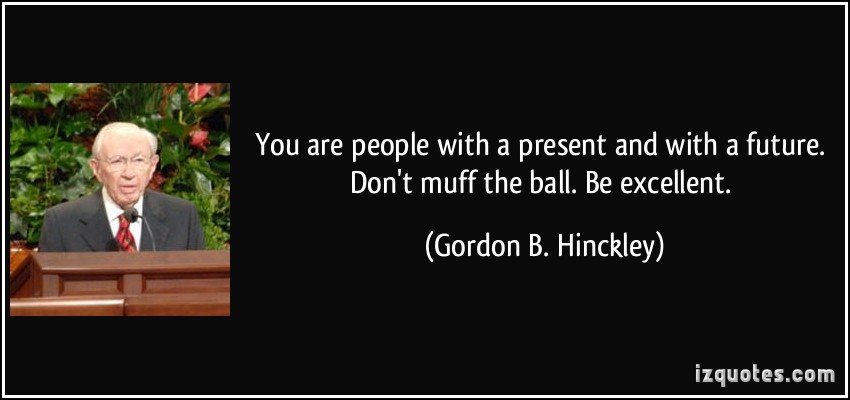
Further, since I’ve just published fourteen (14) such articles publicly woodshedding the bad arguments of my fellow mainstream Christians I think that it’s fair to say that I’m more than willing to do with my “tribe” what Latter-day Saints refuse to do with theirs: Challenge it to be excellent and not “muff the ball”. So Latter-day Saints, I challenge you to go and do the same!

quote-you-are-people-with-a-present-and-with-a-future-don-t-muff-the-ball-be-excellent-gordon-b-hinckley-237507

NOTES
[1] The fact that these “one off” addresses are like loose spikes sticking up along the rails of historic Mormon orthodoxy can easily be seen by listening to the other addresses by other speakers before and after Mr. Uchtdorf’s at the very same General Conference or reading the articles immediately before and after Mr. Wilcox’s in Ensign magazine. They both contradict and undermine them.

And the problem is even more glaring when compared to other official LDS Church sources and the historic record. As Mormon Researcher Bill McKeever notes:

“The Mormon who believes that Uchtdorf is abandoning all former teaching is making an assumption that is just not verified in this talk.  While his language is certainly ambiguous, it’s hard to believe that this general authority is suggesting that the other leaders and decades of teaching are to be abandoned.”
— Bill McKeever, “Does Mormonism Really Offer a “Gift of Grace”? A Review of Dieter F. Uchtdorf’s Talk on Easter Sunday 2015″

The same applies to Brad Wilcox’s BYU address – which was so far askew from historic Latter-day Saint soteriology that it had to be redacted and abridged for publication in the LDS Church’s official publication, Ensign magazine. As Mormon Studies scholar Rob Bowman notes:

“It may seem strange to ask how the doctrine of a popular speech given by a BYU professor and member of the Sunday School General Board compares with other teachings of the LDS Church. However, as a statement by LDS Church spokesman Michael Purdy reminds us, “BYU faculty members do not speak for the church.” The question, then, is not necessarily illegitimate. On the other hand, the publication of Wilcox’s speech in Ensign indicates that it is representative of Mormon doctrine—at least in the version published there. That qualification turns out to be at least potentially significant, since the Ensign article omits elements of the speech that appear to have been out of sync with the LDS Church’s general teaching over the years. The significance of such omissions must be considered with some caution, since omissions may have been simply the result of producing a shorter, more concise article for publication in the popular-level church-wide magazine. Nevertheless, the excisions of material appear to have been strategically performed to bring the article into line with the standard Mormon doctrinal paradigm concerning salvation and grace.”
— Rob Bowman, “Mormonism and the Sufficiency of Grace: Brad Wilcox’s Speech ‘His Grace Is Sufficient'”

[2] “What can be asserted without evidence can be dismissed without evidence.” (Hitchen’s Razor)

[3] Simply put, it’s the responsibly of the person making an assertion to prove it. It’s not their debating opponent’s role or responsibility. This is just common sense folks! This is the laziest form of scholarship imaginable – if you can even call it “scholarship.”

[4] As Clinton Wilcox noted in “Weak Arguments #8: ‘I testify that Mormonism is false and Joseph Smith was a false prophet'”

“[Testimony bearing is] a bad argument against Mormonism because it’s a bad argument, period – which makes it a bad argument even when the Mormon uses it…

You can’t rely on your own subjective experiences to convince somebody else of the truth of your beliefs. The major problem is that in the Mormon’s testimony, they don’t give us any reason to believe Mormonism is true. A subjective experience may give you a reason to believe but it doesn’t give anyone else a reason to accept your beliefs as true. Arguing that it is the correct church doesn’t help. I need to know why it is the correct church.”

And as a Latter-day Saint peer reviewer of this article noted well in his feedback on this point:

“The witness of the spirit while not great evidence for convincing others is a fine answer to: Why do you believe this? Also it is a good lead in to, ‘And you can receive the same witness.’

Mormons need to keep in mind however that a personal witness is not meant for convincing others, its personal and should be kept out of debate except in answer to the above question or proceeding the invitation. It should also be kept in mind that inviting someone to seek their own witness from God does not win the argument, as some Mormons seem to believe.”

[5] It should be noted that the rapid growth argument for Mormonism has been problematic since 1990 when growth flattened and activity rates began to decline. Reliable figures and analysis (derived from official Spring General Conference Reports) can be found here.

[6] To be clear here, temporarily excusing yourself from the conversation due to the rigors of life outside of the debate is one thing (that is unless you overuse this excuse to the point that you’re just using as it as nothing more than an escape hatch) but doing a permanent disappearing act whenever the going gets rough is something else. If you do temporarily excuse yourself due to life’s demands then make a point of returning and continuing the discussion when you can.

However, if you really want to set yourself apart as a civil and accomplished debater, when your debating opponent is presenting arguments and evidence that is so strong and compelling that it’s hard to overcome, then simply acknowledge it and tell them that they’ve given you a lot to consider. This isn’t “throwing in the towel” it’s simply being honest and humble – and people respect honest humility. A simple way to do this is to just say, “Point taken.”

Oh, and by the way, does it really need to be said that putting an Internet block or ban on your debating opponents – and thereby making it impossible for them to engage you or you them online – is the ultimate form of this bad argument? Yes, since this tactic is so commonly used (or put more accurately “abused”) by Mormon debaters on the Internet I think that it probably does!

[7] This tendency by many Mormons so concerned former LDS Church President Gordon B. Hinckley that he publicly addressed it several times:

“We must not only be tolerant, but we must cultivate a spirit of affirmative gratitude for those who do not see things as we see them. We do not in any way have to compromise our theology . . . We can offer our own witness of the truth, quietly, sincerely, honestly, but never in a manner that will give offense to others.”
(President Hinckley, LDS General Conference, April 2005).

“[There] should never be any cause for self-righteousness, for arrogance, for denigration of others for looking down upon others. All mankind is our neighbor. . . . Regardless of the color of our skin, or the shape of our eyes, of the language we speak, we all are sons and daughters of God and must reach out to one another with love and concern.”
(President Hinckley, LDS General Conference, April 2005, Ensign May 2005, 102).

“As we recognize our place and our goal, we cannot become arrogant. We cannot become self-righteous. We cannot become smug or egotistical. We must reach out to all mankind. They are all sons and daughters of God our Eternal Father . . . . And as we go forward, may we bless humanity with an outreach to all, lifting those who are downtrodden and oppressed, feeding and clothing the hungry and the needy, extending love and neighborliness to those about us who may not be part of this Church.”
(President Hinckley, LDS General Conference, October 2001)

“As I have said before, we must not be clannish. We must never adopt a holier-than-thou attitude. We must not be self-righteous. We must be magnanimous, and open, and friendly. We can keep our faith. We can practice our religion. We can cherish our method of worship without being offensive to others. I take this occasion to plead for a spirit of tolerance and neighborliness, of friendship and love toward those of other faiths.”
(President Hinckley, Pioneer Day Commemoration, July 2001)

“But we shall go forward, returning good for evil, being helpful and kind and generous. I remind you of the teachings of our Lord concerning these matters. You are all acquainted with them. Let us be good people. Let us be friendly people. Let us be neighborly people.”
(President Hinckley, LDS General Conference, April 2001)

“Let us as Latter-day Saints reach out to others not of our faith. Let us never act in a spirit of arrogance or with a holier-than-thou attitude. Rather, may we show love and respect and helpfulness toward them. We are greatly misunderstood, and I fear that much of it is of our own making. We can be more tolerant, more neighborly, more friendly, more of an example than we have been in the past. Let us teach our children to treat others with friendship, respect, love, and admiration. That will yield a far better result than will an attitude of egotism and arrogance.”
(President Hinckley, LDS General Conference, April 2000; Ensign, May 2000, p.87)

[8] For an explanation of that Royal Priesthood reference see “Weak Arguments #12: ‘There is no priesthood anymore.’” And, yeah, since authority can only be given not taken, Mormon Priesthood Authority claims kinda fall flat if the other person doesn’t recognize or acknowledge it doesn’t it? For example, admit it, you kinda yawned or snickered at that “Royal Priesthood” thing when you read it didn’t you my Mormon friend? See my point?

[9] The Eight Rules of Interpretation used by legal experts for more than 2500 years are as follows:

1) Rule of Definition.
Define the term or words being considered and then adhere to the defined meanings.

2) Rule of Usage.
Don’t add meaning to established words and terms. What was the common usage in the cultural and time period when the passage was written?

3) Rule of Context.
Avoid using words out of context. Context must define terms and how words are used.

4) Rule of Historical background.
Don’t separate interpretation and historical investigation.

5) Rule of Logic.
Be certain that words as interpreted agree with the overall premise.

6) Rule of Precedent.
Use the known and commonly accepted meanings of words, not obscure meanings for which their is no precedent.

7) Rule of Unity.
Even though many documents may be used there must be a general unity among them.

8) Rule of Inference.
Base conclusions on what is already known and proven or can be reasonably implied from all known facts.
(source = http://www.apologeticsindex.org/b11.html)

[10] As noted in footnote 4, using testimony bearing as an argument or evidence is just a bad argument. Period.

[11] And before the “You’re a hypocrite – just look at the tone and content of your article!” phone calls, and letters start pouring in, this article was written in a tongue in cheek style that’s intended to mirror the same condescension, disrespect, snark, and sarcasm that are so prevalent in the weak arguments and tactics that are being addressed. If you’re offended by it then please consider how such behavior feels to others when it’s directed at them.

[12]  “Mormons are significantly more likely than the population overall to have some college education. Six-in-ten Mormons (61%) have at least some college education, compared with half of the overall population. However, the proportion of Mormons who graduate from college (18%) or receive postgraduate education (10%) is similar to the population as a whole (16% and 11%, respectively).”
— Pew Research Center, “A Portrait of Mormons in the U.S.”, Education and Income

[13]   For example, please consider this polemic and pejorative laden inflammatory prose from Mormon Apologist Russell McGregor of FAIRMormon (which the reader can also consider supporting evidence for many of the points above – #21, 22, 44, and 47 in particular):

“It is not the LDS Christians, but their critics, who need to be concerned about their Christian credentials. This may seem, at first glance, to be a rather odd thing to say; the anti-Mormon movement has defined the debate in such a way that their Christianity is not open to question. Many of them are (or profess to be) clergymen, while most of them are conservative Evangelical Protestants of one sort or another. And yet the question remains and continues to be asked: is anti-Mormonism truly a Christian activity? The answer, both in the general case and in the particulars, is a clear and resounding no…

So we return to the question with which we began this survey: are anti-Mormons Christian? The answer: of course not. They were never even in the hunt. Their clerical collars and pious platitudes are simply a smokescreen to hide the ugly reality that anti-Mormonism is one of the clear manifestations of the darkest side of human nature; the side that made possible the death camps and burning crosses, the massacre of the Hutus and the wholesale slaughter of the Native Americans. Just as vicious and repressive dictatorships like to give themselves grandiose and liberal-sounding titles like “The People’s Democratic Socialist Republic of Such-and-such”, so these nasty religious haters appropriate the label of “Christian” in order to claim for themselves a specious respectability that their deeds and attitudes do not merit.”
— Russell McGregor, “Are Anti-Mormons Christians?”; FAIRMormon website

(click to zoom)

(click to zoom)

BACK TO TOP

736354_8983324_lz_CroppedIntroduction:
Today is October 31st, “Reformation Day”. It was on this day that Martin Luther nailed the “Disputation of Doctor Martin Luther on the Power and Efficacy of Indulgences” (commonly known as “The Ninety-Five Theses”) unto the door of The Castle Church in Wittenberg, Germany. “The Ninety-Five Theses” is widely regarded as the primary catalyst for the Protestant Reformation. So it is with a hopeful spirit for reformation in our lifetime that we offer these Ninety-Five Theses to a modern church that is badly in need of it.

And while we offer these theses to the public in general for discussion, debate, and consideration, we offer them even more specifically to the LDS Church and its members in light of Joseph Smith’s challenge …

“. . . call upon them [Mormon Critics] to meet you both in public and in private; and inasmuch as ye are faithful their shame shall be made manifest. Wherefore, let them bring forth their strong reasons against”
(Doctrine & Covenants 71:7)

… and in agreement with Mormon Apostle Orson Pratt who said:

“. . . convince us of our errors of doctrine, if we have any, by reason, by logical arguments, or by the word of God, and we will be ever grateful for the information, and you will ever have the pleasing reflection that you have been instruments in the hands of God of redeeming your fellow beings from the darkness which you may see enveloping their minds.”
(Orson Pratt, “The Seer”, pp. 15-16)

So without further ado we present . . .
The Disputation of Ninety-Five Theses on the Power and Efficacy of the Church of Jesus Christ of Latter-day Saints: Ninety-Five Theses for consideration, discussion, and action regarding a modern church badly in need of reform
(aka “The 95 LDS Theses”)

Question: What’s wrong with the Church of Jesus Christ of Latter-day Saints?

Answer:
BEHAVIOR CONTROL ISSUES
1. LDS President Spencer W. Kimball said, “Brothers and sisters, pray for the critics of the Church” (“Remember the Mission of the Church”, Ensign, May 1982, p.4) but today’s LDS Church is quick to label and denounce internal and external critics as “enemies out to destroy” even when they’re simply speaking the truth, seeking to gain understanding, and/or trying to make the church a better place. [click here for supplemental evidence]

2. The LDS Church focuses on the needs and interests of the institution over the needs and interests of the members. For example, on January 29, 2013, the LDS Church announced that the Benemerito De Las Americas private school in Mexico would be closed and converted into a Missionary Training Center leaving its more than 2,000 LDS students to the mercy of the vastly inferior Mexican public education system. [click here for supplemental evidence]

3. D&C 121:39 says: “We have learned by sad experience that it is the nature and disposition of almost all men, as soon as they get a little authority, as they suppose, they will immediately begin to exercise unrighteous dominion.” Yet the modern LDS Church tolerates abuse of ecclesiastical power by LDS church leaders through various means from refusing to directly answer troubling questions from its members up to and including excommunication of members who speak truth to power. [click here for supporting evidence]

4. LDS President, John Taylor, said, “I for one want no association with things that cannot be talked about and will not bear investigation.” (Journal of Discourses, Vol. 20, p. 264) but today’s LDS leaders refuse to publicly address members concerns about difficult facts of Mormon History and suppresses loyal dissent from within its ranks via disciplinary action up to and including excommunication. [click here for supplemental evidence]

5. The LDS Church website says, “Those who are married should consider their union as their most cherished earthly relationship.” Never-the-less, due to the doctrine of Celestial Marriage members often feel pressured to choose between the potential to be exalted into the Celestial Kingdom and their apostate (or non-member in the case of a convert) spouse. Choosing the former all too often results in divorce. [click here for supplemental evidence]

6. LDS Church leaders denounce and scorn former members and encourage members to do the same. To cite one example, the chapter in the official church curriculum “Teachings of Presidents of the Church: Joseph Smith” entitled “Beware The Bitter Fruit of Apostasy” (pp. 315-326) is a demonstration of how church leaders do this. [click here for supplemental evidence]

7. It asserts in the strongest language that doctrinal differences, criticisms, or questions about LDS Church policies and/or leaders are sin, for the ‘prophet’ is always right. Those who engage in such behaviors – or refuse to comply with the status quo – are subject to discipline up to and including ex-communication. An example of this is the recent excommunication action taken against Denver Snuffer.
[click here for supplemental evidence]

8. It drives a wedge between member and non-member family members. Ex-Mormon family members in particular are to be avoided but the LDS Church also encourages members to steer clear of “Never Mormon” family members who are openly critical of the LDS Church. For example, one Temple Recommend Question asks, “Do you support, affiliate with, or agree with any group or individual whose teachings or practices are contrary to or oppose those accepted by the Church of Jesus Christ of Latter-day Saints?” The wording of this question strongly implies that temple worthiness requires eschewing those with beliefs opposing the LDS church. This often includes former members and/or family members critical of the church. [click here for supplemental evidence]

9. The LDS Church is the largest sponsor of Boy Scout units with over 30,000 units nationwide. Conversely, the Young Women’s Personal Progress Program receives significantly less funding and attention and demonstrates pronounced gender inequality. Why, for example, aren’t there an equal number of church sponsored Girl Scout units for girls? [click here for supplemental evidence]

10. The culture that results from LDS doctrine pressures members to marry too quickly often resulting in marriage between incompatible strangers. For example, 12th LDS President Spencer W. Kimball taught, “It was never intended by the Lord that a large portion of one’s life should be spent in the unmarried state… Long-delayed marriages are certainly not approved of the Lord.” (“The Marriage Decision”, Ensign, Feb. 1975) [click here for supplemental evidence]

11. The Lord, it is claimed, said, “Verily I say, men should be anxiously engaged in a good cause, and do many things of their own free will, and bring to pass much righteousness.” (D&C 58:27) But today LDS Leaders use the Temple Recommend process as a subtle, barely discernible means of manipulative coercion rather than allowing members to engage their free will. [click here for supplemental evidence]

12. It puts its untrained clergy in a position where they must give counsel on vital life issues that they are not qualified or equipped to competently address. The result, all too often, is ecclesiastical malpractice. [click here for supplemental evidence]

13. The LDS churches places an inordinate amount of emphasis on a commandment that enriches itself financially – the tithe. It is the only commandment that requires a yearly meeting with the bishop and must be paid without regard to a person’s personal welfare: “If paying tithing means that you can’t pay for water or electricity, pay tithing. If paying tithing means that you can’t pay your rent, pay tithing. Even if paying tithing means that you don’t have enough money to feed your family, pay tithing.” (“Sacred Transformations”, Ensign, Dec 2012. p.38) [click here for supplemental evidence]

14. The original 1835 D&C 101 said, “all marriages in this church of Christ of Latter Day Saints, should be solemnized in a public meeting” but today’s church drives a wedge between friends and family members by compelling Latter-day Saints to get married in private Temple services that exclude not only all non-members and their families, but even non-Temple Recommend holding LDS family members in addition to all children below a certain age – Mormon and non-Mormon alike. [click here for supplemental evidence]

15. The Apostle Paul wrote “there is neither male nor female: for you are all one in Christ Jesus” (Galatians 3:28). Yet the LDS Church gives men an exalted status over women; refuses them the Priesthood; denies that women are co-equals; and chooses instead to subordinate them to men. [click here for supplemental evidence]

16. LDS church leaders replace “ye are free; ye are permitted to act for yourselves” (Helaman 14:30) with obedience to trivial and arbitrary rules. Things like ear piercings, movies, tattoos, and clothing choices have nothing to do with salvation – therefore, these are areas where individual Free Agency and the leading of the Spirit should prevail. [click here for supplemental evidence]

17. It imposes vague, scientifically discredited 19th Century dietary regulations on members via the “Word of Wisdom” (Doctrine & Covenants section 89). This isn’t a trivial matter since a lack of compliance to these standards can result in the loss of one’s temple recommend – per the Temple Recommend Worthiness Interview question which directly asks, “Do you keep the Word of Wisdom?” [click here for supplemental evidence]

18. It quells and compromises good scholarship within its rank by demonizing, disfellowshipping and excommunicating members who produce scholarly works discussing Mormon History, Theology, or culture that have scholastic integrity. The classic example of this are The September Six – the six esteemed, respected, and in some cases award winning, Latter-day Saint scholars who were excommunicated in September 1993 for producing such work. [click here for supplemental evidence]

19. D&C 58:27 states “men should be anxiously engaged in a good cause, and do many things of their own free will, and bring to pass much righteousness” and Joseph Smith stated “I teach them correct principles, and they govern themselves.” (“The Organization of the Church”, Millennial Star, Nov. 15, 1851, p. 339). However, the church often does exactly the opposite: Such as rewarding Paul H. Dunn with a General Authority position for his compliant use of “faith promoting” lies, but excommunicating D. Michael Quinn for continuing to tell the authentic truth despite being told by Mormon leaders to stop. [click here for supplemental evidence]

20. By requiring a full tithing to participate in the temple endowment ceremony, and thereby achieve exaltation, the LDS church disregards Moroni’s censure: “Yea, it shall come in a day when there shall be churches built up that shall say: Come unto me, and for your money you shall be forgiven of your sins.”(Mormon 8:32[click here for supplemental evidence]

21. It uses employment in LDS Church and member owned institutions and businesses to coerce obedience to its dogma and leaders. An example of this is John P. Hatch being terminated from Deseret Book for simply expressing his opinion regarding, “the Church’s efforts to suppress access to honest history.” in a letter to the Salt Lake Tribune without warning or asking for clarification on the letter. [click here for supplemental evidence]

22. Its leaders and members use ad-hominems, insults, slurs, derogatories, labeling, and character assassination in their dealings with critics and apostates and then deny that they do so – often going so far as to claim that those who call them on this behavior are persecuting them. [click here for supplemental evidence]

23. It allows members to privately believe whatever they want – even if it’s atheistic or contradicts LDS orthodoxy – as long as they publicly “toe the party line” and continue to contribute their time and money to the LDS Church. [click here for supplemental evidence]

24. It privately judges and abandons members that have life problems rather than patiently, encouraging, undergirding, supporting, and attempting to restore them to a healthy, productive place. This while publicly declaring that the LDS Church treats all such cases with benevolent kindness.  For example, many prisoners are excommunicated in absentia once convicted of a crime. And while a small number of individual members may volunteer for a local prison-ministry in their area, there is currently no formal church sponsored outreach to prisoners.  The same can be said for those suffering from alcoholism, drug abuse, sexual addiction, gambling addiction, etc., etc., etc.  Further, many snared in these life situations simply experience church discipline in various forms and are told to repent – nothing more. [click here for supplemental evidence]

25. It tends to view any doubt, character flaw, or personal deficiency as “sin” rather than as a normal expression of the human condition and life experience. Thus it has created an implied and unstated expectation that members must always be perfect and/or “all together” or they’re in sin and unworthy of advancement within the organization. [click here for supplemental evidence]

26. It practices graceless, merciless, condemning, legalistic disciplinary extremes – far beyond Biblical standards – in regard to those who have engaged in sexual activity outside of marriage that, as has been reported by many, often leads to a “no-win” double-bind spiral into hopeless despair.  Seventh LDS President Heber J. Grant articulated this extremism well when he said, “There is no true Latter-day Saint who would not rather bury a son or a daughter than to have him or her lose his or her chastity – realizing that chastity is of more value than anything else in all the world.” (Heber J. Grant quoted in, Gospel Standards”, complied by G. Homer Durham, p. 55) [click here for supplemental evidence]

27. The Apostle Jude commanded “Be merciful to those who doubt” (Jude 1:22, NIV). Instead LDS leaders often demand blind compliance from those questioning and wavering. Failing at that they will expose, quarantine, isolate – and if necessary expel – doubters rather than encouraging, supporting, and protecting them while they work through their doubt. [click here for supplemental evidence]

28. It preaches extreme, legalistic, and arbitrary sexual standards regarding masturbation that are not scripturally or scientifically supportable. [click here for supplemental evidence]

29. Via the Priesthood Correlation Program it tries to turn everyone into a Utah Mormon and every Chapel, Ward, and Stake into a Utah Chapel, Ward, and Stake rather than encouraging – even celebrating – each culture’s unique distinctives. [click here for supporting evidence]

30. It has created a culture whereby fear of their family’s reaction puts pressure on disenchanted LDS Missionaries to continue with their missions whether they want to or not. [click here for supplemental evidence]

31. Women are inappropriately subordinate, not equals, with men in the LDS church. For example, in the Temple Endowment Ceremony women swear obedience to God and to her husband while the man swears obedience only to God. Additionally women may not act as a voice in prayer circles and instead must veil their faces[click here for supplemental evidence]

 32. It claims to be “pro-family” while simultaneously creating a culture that breaks up both Mormon and non-Mormon families via the aforementioned. [click here for supplemental evidence]

33. It has a double standard for treating non-members with charitable benevolence (as a means of proselytizing and public relations) while exacting, high, often unattainable standards that members must meet to receive the same levels of attention, aid, and assistance. [click here for supplemental evidence]

34. Despite the fact that The Book of Mormon says, “For behold, ye do love money, and your substance, and your fine apparel, and the adorning of your churches, more than ye love the poor and the needy, the sick and the afflicted.” (Moroni 8:37) the First Presidency choices to invest billions in building ornate malls and temples rather than using that money to show love to the poor and the needy, the sick and the afflicted.
[click here for supplemental evidence]

INFORMATION CONTROL ISSUES
35. Although the LDS church sates that “we believe in being honest” (13th Article of Faith), it regularly substitutes faith promoting “spin” to its members, the media, and investigators instead of telling the full truth regarding its history and theology. [click here for supplemental evidence]

36. The LDS Church has suppressed – and allegedly has even destroyed – church owned documents and artifacts that would expose the fact that it’s not telling the full truth regarding its history and theology. Examples of suppressed documents include: a) the contents of the First Presidency’s Vault; b) The Mark Hofmann forgeries that the church purchased from him, and; c) The Joseph Smith seer stones that were used to “translate” the Book of Mormon and receive many of the revelations in Doctrine & Covenants, and many others. [click here for supplemental evidence[click here for additional supplemental evidence]

37. Since 1959 it has suppressed its financial records in the United States and other countries where churches aren’t required to publicly disclose such records, thus eliminating full accountability in terms of how member contributions are used. [click here for supplemental evidence]

38. I Nephi 13:9 warns, “for the praise of the world do they destroy the saints of God, and bring them down into captivity,” yet the behavior of today’s LDS Church would suggest its core unifying principle seems to be “Image over truth always and in all things.” Could today’s Latter-day Saints be captives destroyed by their quest for the praise of the world rather than a peculiar people? [click here for supplemental evidence]

39. It contrives man-created “revelations” and claims that they are of divine origin. Two examples of this are Official Declarations 1 and 2 – one (OD-1) of which is essentially a policy statement in the form of a press release that addresses, “To whom it may concern” and the other (OD-2) which hints at a revelation but fails to produce it in any form within the actual declaration. [click here for supplemental evidence]

40. Hymn #292, “O My Father” acknowledges the LDS doctrine of a heavenly mother. Mormon leaders throughout history have confirmed this doctrine. However, Heavenly Mother is rarely discussed, is demonstrative of male bias within the LDS Church, and is illustrative of how the church deceives investigators and others. [click here for supplemental evidence]

41. It allows unsubstantiated “faith promoting” stories to run unchecked. Examples include Three Nephite sightings, attribution of magic protective power to temple garments, and falsely implying that all the apostles have been personally visited by Jesus. [click here for supplemental evidence]

42. It restricts distribution of the LDS “Church Handbook of Instruction Book 1: Stake Presidents and Bishops” (aka “Handbook 1”) to only the Bishopric level and higher. This eliminates transparent “bottom up” accountability enabling ecclesiastical abuse because lay members can’t confront local leaders and/or report policy violations to higher authorities for rectification. [click here for supplemental evidence]

43. Gospel Principles explains, “Whenever we lead people in any way to believe something that is not true, we are not being honest.” (see Chapter 31) yet LDS Church leaders mandate that Mormon History must always be presented to members (even privately) in a manner that’s uplifting and only presents the LDS Church in a favorable light – even if the resulting narrative is not true. [click here for supplemental evidence]

44. It deceptively claims to be “Christian” when in reality it has taken Christian words, terms and forms and then changed the underlying meaning and content to an extent that they’re no longer congruent with historic, mainstream, Christian orthodoxy. [click here for supplemental evidence]

45. When it claims, “No tithing dollars were used for this building or project – the funds came from for-profit, church-owned entities” it ignores and/or obfuscates the fact that the seed, start-up, or acquisition funds logically and ultimately came from member tithes – a fact which negates the original claim. [click here for supplemental evidence]

46. It wavers on whether its ultimate authority for doctrine is the Bible, Mormon scriptures, statements of former Mormon prophets, statements of living Mormon prophets, and individual “revelation” even though these sources are often mutually contradictory. [click here for supplemental evidence]

47. It refuses to acknowledge and apologize for the role of high ranking church leaders in the massacre of 120 innocent people in 1857 at Mountain Meadows[click here for supplemental evidence]

48. It makes extraordinary – even outrageous – truth claims that are easily discredited by science, history, and the Biblical record.  For example: The genomics project has a vast body of DNA evidence that conclusively demonstrates that the American aborigines were from Asia not the Middle East; Those aborigines had already migrated and were well established in the Americas thousands of years prior to the alleged arrival of the Book of Mormon people, and; The Bible plainly states that the gospel, with its inclusion of Gentiles, was not fully revealed until after Christ’s death (see Ephesians 3:3-7). [click here for supplemental evidence]

49. It excuses, rationalizes, justifies, and white washes the crimes of its founder, famous members, and past leaders.  To cite just one of many such examples, polygamy was never legal whenever and wherever it was practiced by Latter-day Saint leaders and members.
[click here for supplemental evidence]

50. On August 17, 1949, the First Presidency of the LDS Church stated: “The attitude of the Church with reference to Negroes remains as it has always stood. It is not a matter of the declaration of a policy but of direct commandment from the Lord” Yet the LDS Church refuses to acknowledge and apologize for the fact that until 1978 – as a point of official doctrine (not folklore, opinion, or speculative theology) and policy – the church taught racism and excluded blacks from the priesthood and temple. [click here for supplemental evidence]

51. It has used home teachers and the “Strengthening Church Members Committee” as a means of surveillance on and control of members. [click here for supplemental evidence]

52. It hypocritically claims that polygamy has no place in the contemporary LDS Church even though Joseph Smith’s revelation on polygamy (Doctrine & Covenants 132) is still canonized scripture and “Celestial Polygamy” (being eternally married to at least one more woman after being widowed or divorced) is practiced. Currently, three widowed Mormon Apostles (Dallin H. Oaks, L. Tom Perry, and Russell M. Nelson) are Celestial Polygamists. [click here for supplemental evidence]

53. It claims that the LDS Church is patterned after the early church of Jesus’ apostles, but there are major differences. To cite just one of many examples, Christ only had 12-apostles but the LdS Church has 15. [click here for supplemental evidence]

54. It rationalizes and excuses the sin, bad behavior, errors of judgment, and disastrous decisions of its prophets. They are buried, ignored, or ‘spun’ as “well-meaning human error with no need for apology or confession”. [click here for supplemental evidence]

55. It rationalizes away the revelations – even those that were fully canonized – of present or past “Living Prophets” that contradict contemporary LDS Church teachings and culture. The no-longer-in-vogue revelations are buried, ignored, or recast as “opinion not divine”. The “He was speaking as a man not a prophet” apologetic is typically used as the rationalization in these cases. Hence the critic’s couplet: “As heresy is, Mormon doctrine once was. As Mormon doctrine is, heresy will it become.” [click here for supplemental evidence]

56. It tolerates the chronic practice of eisegesis (injecting words and ideas into the text that the author did not intend, use or mean) by LDS Church Leaders as their standard hermeneutic in interpreting the Biblical, historical, and scientific record. [click here for supplemental evidence]

57. It rationalizes the failed prophecies of future events by past “Living Prophets” by burying, ignoring, or spin doctoring them as “just his opinion”, or as requiring more time for fulfillment. [click here for supplemental evidence]

58. It undermines intellectual integrity when, by following the example learned from LDS Church Leaders and Church Educational System (CES) curriculum  members engage in eisegesis as a lifestyle in all areas of life – not just scriptural interpretation but just about anything, and everything. Well known LDS Apologist Hugh Nibley is one of many examples of how this works: “…Nibley often uses his secondary sources the same way he uses his primary sources–taking phrases out of context to establish points with which those whom he quotes would likely not agree. I asked myself frequently what some authors would think if they knew that someone was using their words the way Nibley does…”
(Kent P. Jackson, “Review of Hugh Nibley, Old Testament and Related Studies,” BYU Studies 28 no. 4 (1988), pp.115-17; also see http://lds-mormon.com/nibley1.shtml) [click here for supplemental evidence]

59. It uses the term “official doctrine” as a means of silencing critics and dissents even though there is no formal, codified definition for what constitutes “official doctrine”. [click here for supplemental evidence]

60. It tolerates an untenable situation whereby the canonization process isn’t officially defined or codified yet is used to deny past publications, prophetic revelations, and other utterances from past Mormon Leaders that are no longer in vogue. For example, despite the fact that the twenty-six volume “Journal of Discourses” contains General Conference addresses from 1854-1886 that were vetted and approved by the General Authorities at the time, they are soundly now rejected as “unofficial”. This despite Brigham Young’s assertion that, “I say now, when they [his discourses] are copied and approved by me they are as good Scripture as is couched in this Bible . . . “ (“Journal of Discourses”, vol. 13, p. 264; see also p. 95) [click here for supplemental evidence]

61. Alma 41:8 says, “Now, the decrees of God are unalterable; therefore, the way is prepared that whosoever will may walk therein and be saved.” yet the LDS Church keeps changing its scripture. Examples include the 1921 removal of the “Lectures on Faith”; the “Santa Biblia: Reina Valera 2009” which deviates wildly from both the source 1909 edition and the English LDS Edition of the Bible; the 2013 changes to all the English editions of The Standard Works; and the changes to the Book of Mormon that have been ongoing since 1830 – such as the 1981, post OD-2 change of “white and delightsome” to “pure and delightsome” in 2 Nephi 30:6. [click here for supplemental evidence]

62. It has failed to officially, publicly, and directly address the ever mounting discrepancies between the claims of The Book of Mormon and the archaeological, historical, theological, and scientific body of evidence. [click here for supplemental evidence]

63. It has failed to explain the incriminating consistency between the claims of The Book of Mormon and the empirical 19th Century, political, literary, cultural and theological record. For example, the Book of Mormon was so infused with 19th Century Campbellite doctrine and ideas that primitive Mormonism was referred to as “Campbellism Improved” by outsiders. [click here for supplemental evidence]

64. It has failed to provide an adequate, rational explanation for how Joseph Smith could “translate” the Book of Abraham from a set of Egyptian Book of Breathings papyri. [click here for supplemental evidence]

65. It has failed to reasonably explain how Joseph Smith could, via The Joseph Smith Translation of the Bible, append the Bible with “translations” of entire new books and chapters that have utterly no manuscripts backing them while simultaneously purging words, verses – even entire books – that are substantially supported by the extant manuscript base. [click here for supplemental evidence]

66. D&C 42:71-73 commands paid clergy: Saying in part, “they are to receive a just remuneration for all their services”. And while in actual fact the LDS Church compensates leaders via employment in church owned businesses, generous honoraria, stipends, grants, scholarships, gifts, company cars, free travel and lodging, housing and other non-cash contributions, in public it deceptively claims that “The LDS Church has no paid clergy”. [click here for supplemental evidence]

67. It hypocritically denounces those who claim to bring forth new scripture and revelations using the same methods and means that Joseph Smith did because they fail to conform to established LDS Church orthodoxy. This, while simultaneously criticizing the mainstream Christian Church for rejecting Mormonism because the revelations and scripture of its founder and subsequent “prophets” fail to conform to established Christian orthodoxy. One such example of this is Christopher Nemelka’s “The Sealed Portion”[click here for supplemental evidence]

68. It allows LDS Church leaders and the Church Educational System (CES), to distance themselves from the work of LDS Apologists so as – it is believed – to create a “plausible deniability” escape hatch should the work of said Apologists be discredited by more qualified, objective scholarship. Nevertheless, both cite from the work of LDS Apologists (albeit typically not credited) while allowing the LDS Church to quietly fund the work of said apologists through indirect cash flows. [click here for supplemental evidence]

69. It engages in political action via direct and indirect cash flows and privately exhorts members to organize and engage in particular causes and then publicly denies any involvement. California’s Propositions 22 (circa 2000) and 8 (circa 2008) are two cases in point. [click here for supplemental evidence]

70. It publicly (and loudly) trumpets its philanthropic work when compared to other churches its per capita outlay is less than what smaller, less wealthy, less organized religious organizations spend: A study co-written by Cragun and recently published in Free Inquiry estimates that the Mormon Church donates only about 0.7 percent of its annual income to charity; the United Methodist Church gives about 29 percent.
(Caroline Winter, “How The Mormons Make Money”, Business Week; July 18, 2012) [click here for supplemental evidence]

71. It has allowed LDS Church leaders to obfuscate, spin-doctor, and blatantly lie to the media rather than standing with integrity and bolding telling the world what the LDS Church really believes, teaches, and practices.  Such behavior should be denounced and condemned not tolerated, justified, or praised. One example of this Gordon B. Hinckley lying to journalists about the role and function of the Lorenzo Snow couplet within LDS Theology. [click here for supplemental evidence]

72. It fails to recognize the over sixty (60) active Latter Day Saint movement denominations (aka “splinter groups”) while hypocritically condemning the denominationalism of Christianity as a proof of apostasy and lack of divine legitimacy. This hypocrisy is even more pronounced when one considers that over the 180+ year history of the LDS movement there have been over 200 Latter Day Saint denominations in total with new ones forming at a rate will be eventually far exceed and outpace the total number of Christian denominations.  [click here for supplemental evidence]

THOUGHT CONTROL ISSUES
73. It teaches an irrational and subjective epistemological system while simultaneously belittling epistemology based on reason, objectivity, and empiricism. [click here for supplemental evidence]

74. It employs circular logic.  For example, consider its core truth claim: “The only true church is The Church of Jesus Christ of Latter-day Saints because The Church of Jesus Christ of Latter-day Saints says it’s the only true church.”  Another poignant example of circular logic is the infamous Doctrine & Covenants 9:8 “burning in the bosom” truth test that (in the vernacular) goes something like this:  “If you don’t get it, you did something wrong. If you do, that proves the church is true.” Further, when taking this test, you don’t ask God if the church is true, but rather to show you that it is true: “I will cause that your bosom shall burn within you; therefore, you shall feel that it is right.” [click here for supplemental evidence]

75. LDS Church Missionary training and policies employs Mind Control techniques and tactics. [click here for supplemental evidence]

76. It keeps members so busy with LDS Church related activities that they don’t have time for personal reflection and self-autonomy. This is especially true of men as the demands of lay leadership tend to deprive them of real, regular, authentic family time. [click here for supplemental evidence]

77. It erroneously asserts that former members didn’t leave the LDS Church for any thoughtful or legitimate reasons but rather that they were thin skinned reactive, malcontents who left the LDS Church because they wanted to sin with impunity, or because of a perceived offense. Stated plainly, this is a hypocritical double standard: It’s OK to be troubled by, doubt, criticize, and even leave other churches, but this one can’t be questioned or left. [click here for supplemental evidence]

78. It discourages intellectual self-autonomy and self-responsibility and encourages dependency on LDS Church Leaders. [click here for supplemental evidence]

79. It engages in Mind Control tactics and techniques in recruiting, indoctrinating, and retaining members. [click here for supplemental evidence]

80. The LDS Church denies being man centered or exalting – claiming that it only lifts up Heavenly Father and Jesus Christ as worthy of its worship. Yet its Hymnal contains songs of praise and adoration that exalts both dead (#27 “Praise to the Man”) and living men (#19 “We Thank Thee O God For A Prophet”).  [click here for supplemental evidence]

81. It requires members to remain in a “snapped” psychological state in order to remain believing members. For example, when members encounter troubling facts about Mormon History and/or doctrine they’re either told to pray about it or “put it on the shelf”. This is called “Thought Stopping” and it’s a technique that Mind Control Cults use to avoid the rigors of logic, reason, and uncomfortable realities. [click here for supplemental evidence]

82. The Book of Mormon warns, “Wo unto them that call evil good, and good evil” (2 Nephi 15:20) yet the LDS Church requires members to adhere to moral relativism, loose ethics, and intellectual dishonesty in support of a belief system that lacks ethical congruity, consistency, and integrity. Some of the most obvious examples of this are: The practice of polygamy and the rationalization of that past polygamy today; A failure to acknowledge and apologize for its pre-1978 institutionalized racism, and finally; The practice known as “Lying for the Lord” throughout Mormon History. [click here for supplemental evidence]

83. It hypocritically rails against sound logic and reason as “the hollow and vain philosophies of men, not God” and then hypocritically attempts to (albeit poorly and inconsistently) employ logic and reason in its arguments and rhetoric. [click here for supplemental evidence]

84. It poisons members who leave the LDS Church against all other Theistic religions. This is best illustrated by the cliché used by both members and former members that goes something like this, “If the Mormon Church isn’t true then nothing is true.” [click here for supplemental evidence]

EMOTIONAL CONTROL ISSUES
85. It damages member psychology via the use of manipulative fear and unachievable standards of “worthiness”. Sadly, this lament is all too common: “Of course I do [have a testimony]! That’s what’s so terrible. I know the gospel’s true. I just can’t do it. I’ve tried and I’ve tried, but I can’t do it all, all of the time.” (Stephen E. Robinson, “Believing Christ”; Ensign, April 1992) [click here for supplemental evidence]

86. Whereas, Mormon Prophet Brigham Young preached, “A good man, is a good man, whether in this church, or out of it.” (“The Lions of the Lord: A Tale of the Old West” by Harry Leon Wilson, chap XXVIII, par 2) the modern LDS Church engenders arrogance and self-righteousness in members by telling them that they’re more enlightened and morally superior relative to the general population – including other good people of faith. [click here for supplemental evidence]

87. It uses guilt as a means of controlling members. [click here for supplemental evidence]

88. It “love bombs” investigators and new converts as a means of drawing them in. [click here for supplemental evidence]

89. It uses arbitrary, capricious, and ever changing criteria for Temple Recommend “worthiness”. For example Brigham Young’s 1856 worthiness questions (also see this ByteLine article)  are almost completely different than the current set of Temple Recommend Interview questions[click here for supplemental evidence]

90. The Book of Mormon speaks of those who, “do walk in the pride of your hearts; and there are none save a few only who do not lift themselves up in the pride of their hearts …yea, even every one, have become polluted because of the pride of your hearts.” (Mormon 8: 36) Despite this the LDS Church culture engenders clannish, elitist, and pride in members via it a Temple, Priesthood, and oligarchical calling system that puffs member up rather than encouraging and rewarding humility. [click here for supplemental evidence]

91. It encourages arrogant, condescending pride in members at all levels by telling them that they “have the whole and restored truth” that “apostates” only have in part and “gentiles” lack entirely. [click here for supplemental evidence]

92. It teaches that a rape victim has “lost her chastity” and that a woman should fight off her attacker or be killed in the attempt.  For example, Apostle Spencer W. Kimball, in his book “The Miracle of Forgiveness” said, “far-reaching is the effect of loss of chastity. Once given or taken or stolen it can never be regained. Even in a forced contact such as rape or incest, the injured one is greatly outraged. If she has not cooperated and contributed to the foul deed, she is of course in a more favorable position. There is no condemnation when there is no voluntary participation. It is better to die in defending one’s virtue than to live having lost it without a struggle.” (p. 196)  Thus, young Mormon women are taught that their chastity is more valuable than their life. The result is that a Mormon woman who survives a rape is made to feel guilty, and is thus victimized again, this time by her church. [click here for supplemental evidence]

93. It bestows the title “Elder” onto adolescent men (typically 18-years old) with little to no real life experience, thus puffing them up with arrogance and deluding them with prideful ignorance. [click here for supplemental evidence]

94. It hypocritically defines polemic arguments as “persecution” and then engages in polemics with its critics and those of other faiths. For example, consider how it trains its missionaries to speak of other churches:

“Without the Apostles, over time the doctrines were corrupted, and unauthorized changes were made in Church organization and priesthood ordinances, such as baptism and conferring the gift of the Holy Ghost. Without revelation and priesthood authority, people relied on human wisdom to interpret the scriptures and the principles and ordinances of the gospel of Jesus Christ.

False ideas were taught as truth. Much of the knowledge of the true character and nature of God the Father, His Son Jesus Christ, and the Holy Ghost was lost. The doctrines of faith in Jesus Christ, repentance, baptism, and the gift of the Holy Ghost became distorted or forgotten. The priesthood authority given to Christ’s Apostles was no longer present on the earth. This apostasy eventually led to the emergence of many churches.”
(“Preach My Gospel: A Guide to Missionary Service”; Official LDS Church Missionary Training curriculum, p.35) [click here for supplemental evidence]

95. It creates undue demands as well as mental, emotional, and spiritual stress and strain on members via all the above. [click here for supplemental evidence]

Luther Wittenberg Door_CroppedBACK TO TOP

On April 17th 1521, left with only twenty four hours to either recant his body of work or face Church discipline as a heretic – a sentence that meant certain death – Martin Luther found himself looking to God as he stood at the precipice of the greatest transformative movement that the church has seen in the last one thousand years. This was his prayer:

Martin Luther at the Diet of Worms (scene from the 2003 movie

Martin Luther at the Diet of Worms (scene from the movie “Luther”)

Almighty, eternal God! How dreadful is the world! Behold how its mouth opens to swallow me up, and how small is my faith in You!

O the weakness of the flesh and the power of Satan! If I am to depend upon any strength from this world, all is lost. O my God! Help me against all the wisdom of this world. Do this, I beg You.

The work is not mine, but Yours. I have no business here. I have nothing to contend for with these great men of the world! I would gladly pass my days in happiness and peace. But the cause is Yours, my Lord; and it is righteous and everlasting! Stand by me! O faithful and unchangeable God! I lean not upon man. It would be vain!

You have chosen me for this work. I know it! Therefore, O God, accomplish Your own will! Stand by me in the name of Jesus Christ, who will be my shelter and my shield, yes, my mighty fortress, through the might and strengthening of the Holy Spirit.

I am ready, even to lay down my life for this cause, patient as a little lamb. For the cause is holy. It is Your own. Though this world be filled with devils, and though my body, originally the work and creation of Your hands, go to destruction in this cause — yes, though it be shattered into pieces — Your Word and Your Spirit they are good to me still! It concerns only the body. The soul is Yours. It belongs to You and will also remain with You forever. God help me.

Amen.

Grant That I May Not Pray Alone With the Mouth - Martin Luther

by Fred W. Anson
In the response to the infamous Mormon, “if you want to know about Fords, then you don’t ask a Chevrolet dealer,” argument I offer the following:

The callow chestnut of Mormonism that says if you want to know about Fords, then you don’t ask a Chevrolet dealer, and if you want to know about Mormonism, then don’t ask a non-Mormon, is both wrong and lacks critical judgment. Groups like Consumer Reports prove their maxim false. Some of the best information comes from outside investigation (like Ford’s exploding Pinto gas tank), which outside information can be life-saving.
— Kurt Van Gorden, (as cited in “The Mormon Mirage” by Latayne Scott, p.19)

The promise.

The Ford dealer’s version of the truth.

The Ford Pinto fuel tank controversy is really old news now but at the time it was a hot topic – I know I was 17-years old at the time and remember it well. It was common knowledge at the time that Ford and Ford dealers were mum about the problem and would deny it outright if customers asked about it. From the Wikipedia article on the subject:

Controversy followed the Pinto after 1977 allegations that the Pinto’s structural design allowed its fuel tank filler neck to break off and the fuel tank to be punctured in a rear-end collision, resulting in deadly fires from spilled fuel.

Critics alleged that the vehicle’s lack of reinforcing structure between the rear panel and the fuel tank meant the tank would be pushed forward and punctured by the protruding bolts of the differential — making the car less safe than its contemporaries.

According to a 1977 Mother Jones article by Mark Dowie, Ford allegedly was aware of the design flaw, refused to pay for a redesign, and decided it would be cheaper to pay off possible lawsuits. The magazine obtained a cost-benefit analysis that it said Ford had used to compare the cost of repairs (Ford estimated the cost to be $11 per car) against the cost of settlements for deaths, injuries, and vehicle burnouts . The document became known as the Ford Pinto Memo.

An example of a Pinto rear-end accident that led to a lawsuit was the 1972 accident resulted in the court case Grimshaw v. Ford Motor Co., in which the California Court of Appeal for the Fourth Appellate District upheld compensatory damages of $2.5 million and punitive damages of $3.5 million against Ford, partially because Ford had been aware of the design defects before production but had decided against changing the design.

The reality.

The Chevrolet dealer’s version of the truth. (click to see video of a Ford Pinto crash test)

The National Highway Traffic Safety Administration (NHTSA) ultimately directed Ford to recall the Pinto. Initially, the NHTSA did not feel there was sufficient evidence to demand a recall due to incidents of fire. 27 deaths were attributed to Pinto fires (the same number of deaths attributed to a Pinto transmission problem) and in 1974 the NHTSA ruled that the Pinto had no “recallable” problem.

In 1978, Ford initiated a recall providing a plastic protective shield to be dealer-installed between the fuel tank and the differential bolts, another to deflect contact with the right-rear shock absorber, and a new fuel-tank filler neck that extended deeper into the tank and was more resistant to breaking off in a rear-end collision.
(“Ford Pinto Fuel Tank Controversy” Wikipedia article) 

The bottom line is this if you want to know about anything you need to consult outside sources as well as inside sources. And absolutely the best sources are former insiders that are now outsiders. That’s because they know the inside secrets and will share rather than hide them. That’s why in my article, “The Problem of the Mormon Tank (Revisited)”  I stressed this key point:

Internal evidence that hasn’t been validated against external evidence can’t be completely trusted!

And what’s true of cars is true of churches too: If you’re going to make a decision where the stakes are high you would be wise to take your time, talk to insiders, outsiders, and former insiders – consider as much evidence as possible. The wise person always gathers facts and does their research before they make any major decision. And in the case of the Ford Pinto, it looks like this lady would have been a good source of information!

I'm Explosive

The Consumer Reports version of the truth.

“The Price of Nice” by John Bradshaw

Reviewed by Fred W. Anson

Title: Recovering Agency: The Price of Nice
Author: John Bradshaw
Publisher: John Bradshaw Media Group
Genre: Non-fiction, psychology
Year Published: 2008
Length: 100 minutes
Binding: Audio CD
ISBN10: 1573882259
ISBN13: 978-1573882255
Price: $70.00

Many of us remember John Bradshaw through his two PBS televised series on the family and “Inner Child” therapy (entitled “Bradshaw on the Family” and “Homecoming” respectively) with fondness. Some of us had an epiphany, others had fodder for new jokes, and still others had both. I was in the last category. At first I found in Bradshaw an endless mine for jokes (“My family was so out of control you could have used it for a wind chime”, “My inner child punched your inner child in the nose”, etc.)  but many years and several family traumas later found it to be a rich well of wisdom . . . and some really silly “out there” New Agey junk.  With Bradshaw one has to have one’s discernment filters up to separate the wheat from the chaff. Thankfully the audiobook being reviewed here is, in this reviewer’s estimation, mostly wheat.

Those familiar with those earlier Bradshaw works will remember that he repeatedly introduced the concept of the price of nice in them both. However, he didn’t go into much detail on it, nor did he give the antidote for the problem. “Problem?” the reader may be asking at this point, “How can being nice be a problem?” As the product description from Mr. Bradshaw’s website explains:

“The price is of nice is about your own life, and not really being connected with others,” says noted New York Times Best Selling Author John Bradshaw“Nice people often finish last in many ways.”

In this powerful lecture, THE PRICE OF NICE, psychologist and Emmy nominated talk show host John Bradshaw, exposes the hidden and frequently destructive forces behind the façade of being the “nice guy”, a people pleaser and co-dependent. This lecture is for people who use “nice” as a disguise to cover shame. John Bradshaw uncovers the dishonestly, selfishness, and resentments that builds as a result. He explains how to heal from co-dependency.

From our earliest years, we learn that we are rewarded with acceptance for being “nice” at the expense of being denied the expression of our true feelings or being who we really are. Ultimately, we become the actor in a role of being the nice guy or sweetheart. John Bradshaw explains how such behavior can destroy relationships and intimacy by never being honestly connected with others. It creates an intimacy vacuum where the victim is the nice person

In its ultimate destructive form, it erupts into rage or spontaneous acts of violence or it can be internalized in the form of emotional or physical illness. John Bradshaw offers practical insights into how we can learn to be kind but firmly direct about how we feel and find that place in our lives where we can be who we are. This series provides excellent resources and will help the listener understand how toxic, and potentially dangerous, a person who is, on most levels, “too nice,” can be. Ministers, counselors, therapists and anyone in helping professions could gain much understanding from the material found in this series. The problem with being overly nice is that it is a mask for stored internal rage and it is at the same time rage producing.

And as he explains in the lecture, nice behavior eventually has a price for both the nice person and the people involved with him/her. It is alienating, indirectly hostile, and self destructive because:

1. The nice person tends to create an atmosphere such that others avoid giving honest, genuine feedback. This blocks emotional growth.

2. Nice behavior will ultimately be distrusted by others. That is,it generates a sense of uncertainty and lack of safety in others who can never be sure if they be supported by the nice person in a crisis situation that requires an aggressive confrontation with others.

3. Nice people stifle growth of others. They avoid giving others genuine feedback,and deprive others of a real person to assert against. This tends to force others in the relationship to turn their aggression against themselves. It also tends to generate guilt and depressed feelings in others who are intimately involved and dependent on them.

4. Because of chronic niceness others can never be certain if the relationship with a nice person can endure a conflict or sustain an angry confrontation. If it did occur spontaneously, This places great limits on the potential extent of intimacy in the relationship by placing others constantly on their guard.

5. Nice behavior is not reliable. Periodically the nice person explodes in unexpected rage and those involved are shocked and unprepared to cope with it.

6. The nice person by holding aggression in, may pay a physiological price in the form of psychosomatic problems and a psychological price in the form of alienation.

7. Nice behavior is emotionally unreal behavior. It puts severe limitations on all relationships and the ultimate victim is the nice person him/her self.

Mr. Bradshaw explains in the lecture that the antidote for nice behavior isn’t being mean, it’s being authentic. This can be a scary proposition for those of us who have become accustomed to using “nice” as a defense or coping mechanism. In particular, those recovering from a religious addiction may come to find that the “Be ye nice!” 11th Commandment of far too many of our faith communities has become so embedded in their theology and religious worldview that it’s painful to knead it slowly out of the tangled up knot that they’ve created. Very often from these individuals, we will hear the protest that to not be “nice” isn’t Christlike (or whatever religious terminology that’s used to justify using niceness as a hiding place and aggression suppressant). To those folks I offer this:

800px-El_Greco_016_edited

El Greco, “Christ Driving the Money Changers from the Temple” (circa 1600)

Jesus wasn’t Christ-like
Jesus was incredulous.
He was exasperated.
He was furious.
He insulted.
He ridiculed.
He told of coming judgment.
He exorcised demons.
He said he was God.
He said he had final authority given to him to judge the living and the dead.
He said he had power over life and death.
He scared people.
He confused people.
He repulsed people.
He wouldn’t answer questions asked by the local authorities.
He stayed away three days knowing Lazarus would die, and then wept when he showed up to his tomb.
He supplied the party wine.
He preached fire and brimstone.
He used satire and mockery.
He frustrated his mother.
He told his apostles they had new names when he met them.
He used frustratingly vague metaphors and parables to purposefully judge a stubborn people (fulfilling Isaiah), and then later told the hidden meanings to the apostles.
He chose a forerunner who looked and smelled like a crazy hobo, and who badgered the local mayor over sexual and marital ethics.
He healed people on the Sabbath just to tweak the religious elite.
He monitored financial giving and gave live commentary on it.
He said the world hated him and his followers.
He told people to eat his flesh and drink his blood and let them walk away misinterpreting.
He had incredibly awkward and blunt conversations about spiritual things 15 seconds into meeting a stranger.
He let a presumably sensual woman wipe his feet with her hair.
He told a female stranger that she had five husbands.
He went out to eat with creepy guys who preyed on families via financial extortion.
He went to the most significant religious structure local to him and said he would destroy and rebuild it, speaking of his own body and predicting the destruction to come.
He said he existed before Abraham.
What is “Christ-like” about any of that?[1]

Based on the example of Christ alone I would suggest that Bradshaw is onto something: Christ was always authentic even though He wasn’t always “nice”. I would propose to my fellow recovering religious addicts that it’s far better to be authentically genuine than inauthentically nice. Perhaps being truly Christlike, simply means being yourself – that is the new creation spoken of in 2 Corinthians 5:17 under the guidance and direction of the Holy Spirit. I can’t help but wonder if that was what Paul was really describing in Romans 8 and Galatians 5 when he wrote about “walking in the Spirit”. The incarnated Christ exemplified “walking in the Spirit” and showed the full range of human emotion and behavior – including aggression and directness in that walk.[2] Simply put, the price of nice is too high if it means compromising truly Christlike behavior isn’t it?

In the end, I found “The Price of Nice” to be an enlightening and liberating audiobook – and one with significant biblical support to boot.[3] I suspect that you will too.

John Bradshaw

John Bradshaw

NOTES:
[1] Aaron Shafovaloff, “Jesus wasn’t Christ-like” And for those wondering this isn’t in the Bradshaw lecture, I’ve added it here to support my point.

[2] I tackled the subject of the biblical case for aggression in my review of Andy Stanley’s book “Enemies of the Heart: Breaking Free from the Four Emotions That Control You” entitled, “Three Hits and a ‘Whiff'”.

[3] For those who are unaware, John Bradshaw was raised Roman Catholic and has a Bachelor’s Degree in Sacred Theology. Due to the rather overt New Age and Post Modern nature of some of his teachings I’m uncertain what where he stands theologically today – though in my opinion, he seems to be leaning toward the old heresy of Christian Pantheism – though I could be wrong.

As I said in the introduction, one must always have one’s discernment filters up to separate the wheat from the chaff when it comes to Bradshaw. I always find an abundant of gems in his work but sometimes I have to push aside some pockets of New Age rubbish to get to it.

BACK TO TOP