Archive for the ‘Fred Anson’ Category

by Fred Anson
I always love it when a rock band gets one right. And why shouldn’t they for as the Apostle Paul explained:

Pete Townshend of The Who

Pete Townshend of The Who

“They know the truth about God because he has made it obvious to them. For ever since the world was created, people have seen the earth and sky. Through everything God made, they can clearly see his invisible qualities—his eternal power and divine nature. So they have no excuse for not knowing God.”[1]

Theologians refer to this as “General Revelation” which Wikipedia explains like this: 

General revelation is a term used by theologians which refers to a universal aspect of God, of God’s knowledge and of spiritual matters, discovered through natural means, such as observation of nature (the physical universe), philosophy and reasoning, human conscience or providence or providential history. Evangelical theologians use the term to describe knowledge of God, which they believe, is plainly available to all mankind. These aspects of general revelation are believed to pertain to outward temporal events that are experienced within the world or this physical universe.

Within this type of revelation, it is believed that God does not use specific words, or specific actions, but more general or encompassing events that occur in creationconscience, and history.”[2]

So I confess a certain frustration when fellow Christians take diminish or take umbrage at the idea that unbelievers, with whom we share common life experiences not the least being “the human condition”, can find small echoes of divine truths within His fallen creation.

After all, in this life we all live and move within His shrouded presence – infidel and redeemed alike. C.S. Lewis spoke well of our current condition when he said:

“If there is a God, you are, in a sense, alone with Him. You cannot put Him off with speculations about your next-door neighbors or memories of what you have read in books. What will all that chatter and hearsay count when the anesthetic fog we call ‘nature’ or ‘the real world’ fades away and the Divine Presence in which you have always stood becomes palpable, immediate, and unavoidable?”[3]

Given these realities – not the least being the pervasive pull of sin within us all – is it any wonder that artists so often “get it right” in their but ultimately come to the wrong conclusion in their personal lives?

Consider, for example, the classic rock song “Bargain” written by Pete Townshend of The Who which was original released on the “Who’s Next” album.  Here’s a recent performance:

The Who performing “Bargain” at the Royal Albert Hall in 2000

In case you missed it, those lyrics go like this:

I’d gladly lose me to find You
I’d gladly give up all I have
To find You, I’d suffer anything and be glad
I’ll pay any price just to get You
I’ll work all my life, yes, I will
To win You, I’d stand naked, stoned and stabbed

I’ll call that a bargain, the best I ever had

I’ll gladly lose me to find You
Gladly give up all I got
To get You, I’m gonna run and never stop
I’ll pay any price just to win You
To find You, I’m gonna drown an unsung man

I call that a bargain, the best I ever had

I sit lookin’ round
I look at my face in the mirror
I know I’m worth nothing, without You
In life one an’ one don’t make two
One an’ one make one
An’ I’m lookin’ for that free ride to me
I’m lookin’ for You

The historical fact is that Pete Townshend wrote the song as a song of devotion to Mehr Baba, the spiritual guru that he began to follow in 1968.[4] Of course given the universal nature of human beings the song has been recontextualized in many ways.  It has been sung as everything from a love song to a jingle for a television advertisement.  Perhaps as you were listening to it or reading the lyrics you even recontextualized the piece as applying to whatever, well, whatever.

Speaking personally, in my days as a “merry” infidel atheist I would belt out the song to whatever my current devotion was at the time – from girlfriends, to politics, to rock music, to whatever – so for me it became a kind of secular praise and worship song to whatever my idol I happened to be worshiping at the moment.

So you can imagine my shock when, after becoming a Christian, an older, wiser Christian told me (a recent, three-time Bill Gothard[5] graduate no less) that “Bargain” was a powerful “Go for it!” song that reflected Bible passages like . . .

“Whoever finds his life will lose it, and whoever loses his life for my sake will find it.”
— Matthew 10:39 (ESV)

“He must increase, but I must decrease.”
— John 3:30 (KJV)

“…you cannot become my disciple without giving up everything you own.”
— Luke 14:33 (NLT)

. . . and many, many others.  Gaining that realization, “Bargain” then went on to become a recontextualized “go for it”, song of confession for me as well. And why not, after all didn’t Martin Luther, Charles Wesley, and Fanny Crosby also recontextualize the music of their day – some of it secular with no discernible religious roots – into songs of praise and worship?[6]

And apparently, I wasn’t alone . . .

Resurrection Band (a Christian band) covering “Bargain” in Finland 1990

Now I think I know Resurrection Band well enough to know that they would tell you that the old cliche’ that, “God’s ways are not mans ways”  is true and that one must move past general revelation to special revelation[7] – or even direct revelation[8]  for that matter – in order to enter into a saving relationship with Jesus Christ.  And, of course, I agree with them completely.  So, one might even feel lead, as I have, to hope and pray that the composer of this classic song might someday make that move himself.

But still you’ve gotta admit, regardless how you contextualize it, this is a truly inspired song!
 

NOTES
[1] Romans 1:19&20, New Living Translation

[2]Wikipedia article on “General Revelation”, http://en.wikipedia.org/wiki/General_revelation (retrieved 2012-11-18)

[3] C. S. Lewis, “Mere Christianity” (Macmillan, 1965 edition), p. 168.

[4] “Townshend showed no predilection for religious belief in the first years of The Who’s career. By the beginning of 1968, however, Townshend had begun to explore spiritual ideas. In January 1968, The Who recorded his song “Faith in Something Bigger” (Odds & Sods). Townshend’s art school friend Mike McInnerney gave him a copy of C. B. Purdom‘s book The God-Man, introducing him to the writings of the Indian “perfect master” Meher Baba, who blended elements of VedanticSufi, and Mystic schools.

Townshend swiftly absorbed all of Baba’s writings that he could find; by April 1968, he announced himself Baba’s disciple. At about this time, Townshend, who had been searching the past two years for a basis for a rock opera, created a story inspired by the teachings of Baba and other Indian spiritualists that would ultimately become Tommy.”
http://en.wikipedia.org/wiki/Pete_Townshend#Religion (retrieved 2012-11-18)

[5] “William W. (Bill) Gothard (born November 2, 1934) is an American Christian minister, speaker and writer, and the founder of theInstitute in Basic Life Principles (IBLP), notable for his conservative teachings. Among the several strong distinctives of his teaching have been encouragement of Bible memorization, large families, homeschooling, aversion to debtrespect for authority and extended principles related to identity, family, education, healthcare, music and finances.”
— Wikipedia article on “Bill Gothard”, http://en.wikipedia.org/wiki/Bill_Gothard (retrieved 2012-11-22)

A good analysis of  Bill Gothard’s fallacious and unBiblical view of Rock Music can be found here:
http://www.recoveringgrace.org/2011/11/the-phony-consequences-of-rock-music/ (retrieved 2012-11-22)  However, the short version goes like this: “… the Scriptures Gothard uses to make his case against rock music have absolutely nothing to do with music.”

[6] See “Did Martin Luther Really Use Tavern Tunes In Church?”
http://www.elca.org/Growing-In-Faith/Worship/Learning-Center/FAQs/Tavern-Tunes.aspx (retrieved 2012-11-22); Also “Are Some Hymns Just Rewritten Bar Songs?”
http://www.apologetix.com/faq/faq-detail.php?faq_q_id=89 (retrieved 2012-11-22)

[7] Special revelation is a theological term used mainly by evangelical scientists and Christian theologians which refers to the belief that knowledge of God and of spiritual matters can be discovered through supernatural means, such as miracles or the scriptures, a disclosure of God’s truth through means other than through man’s reason. The distinction between Special and General revelation was first elucidated in-depth by the Catholic systematic theologian St. Thomas Aquinas in his discussion of Revelation. This distinction was only then more widely disseminated by evangelical writers who emphasized its scriptural support (e.g. Psalm 19).”
(http://en.wikipedia.org/wiki/Special_revelation)

[8] Direct revelation is a term used by some Christian churches to express their belief in a communication from God to a person, by words, impression, visions, dreams or actual appearance. Direct revelation is believed to be an open communication between God and man, or the Holy Spirit and man, without any other exterior (secondary) means.”
(http://en.wikipedia.org/wiki/Direct_revelation)

by Fred Anson
Greg Stier is the President and Founder of Dare 2 Share. This open letter is in response to his January 26th, 2013 article, “Why Mormons Do Better Youth Ministry Than We Do” which was published on the Christian Post website. 

Greg Stier

Greg Stier

Dear Mr. Stier,

I am absolutely shocked and appalled that you have reposted this article!

As you will recall, when this article was originally posted 5-years ago I contacted you privately and asked you this simple question: “Doctrine and/or theology aside the LdS Church is (using sociological criteria alone) a Mind Control Cult. What’s the point of comparing our behavior with such a group – let alone holding up their practices as an example of things that we should/could be doing?”
(yes, I’m paraphrasing from memory – I don’t have the original correspondence)

In 2008 you reviewed the data that I provided to support these claims, agreed that I had a valid point and immediately took the article down. Yet, here we are 5-years later and here it is all over again – I’m utterly baffled by this Mr. Stiers, especially since not only has NOTHING changed in the LdS Church in this regard, things have actually gotten worse.

You see in October of 2012, the LdS Church dropped the age requirement for males missionaries to only 18-years old (down from 19-years old) and to 19-years old for female missionaries (down from 21-years old).
(see http://www.lds.org/church/news/church-leaders-share-more-information-on-missionary-age-requirement-change )

There has been great speculation as to why this decision was made but the general consensus is that is was because the LdS Church – whose retention rate is bad and getting worse (more on this later) – is losing too many young members after they’re exposed to the Internet and/or critical thinking in Universities after they graduate from High School.

A Missionary System For Future Atheists
In that vein, I must take issue with this statement:
“Maybe that’s why we don’t meet a lot of ex-Mormons, while there are hundreds of thousands of former church attendees in the true church of Jesus Christ (of everyday saints) who flee the church after graduating from high school.”

Mr. Stier, that’s because due to social pressure exerted on young people (young men in particular) to go on an LdS Mission many young people go into their missionary “without a testimony” (that’s Mormon-speak for, “an unbelieving Mormon”) hoping to get one.

I would ask you Mr. Stier, is this REALLY what we to see in our missionaries – unbelievers simply lip syncing dogma and the rhetoric that they learned during their Missionary Training and who don’t believe a word they’re saying?

In addition, your statement ignores the fact that a high percentage of LdS Missionaries (according to Mormon Historian and 34-year LdS Church Educational System teacher Grant Palmer the figure is now around 30%) leave the LdS Church within 5-years after their mission never to return.
(see http://www.youtube.com/watch?v=kHsvZooc4Bc for support for the Grant Palmer assertion)

And since, according to a recent Pew Trust Survey, around 50% of those who leave the LdS Church become atheist, I think it fair to infer that’s true of these Returned LdS Missionary apostates as well.
(see http://www.pewforum.org/mormons-in-america/ for the Pew Trust Poll results mentioned)

Further, if you haven’t met a lot of ex-Mormons it’s probably because you’re not looking in the right place. So let me recommend these:

PostMormon.org
http://www.postmormon.org

The ExMormon Foundation 
http://www.exmormonfoundation.org

I Am An ExMormon
http://www.iamanexmormon.com/

Life After Mormonism
http://www.lifeaftermormonism.net/

And, BTW, most of them are atheists – I have yet to find a religion that poisons it’s former members against all forms of theism like Mormonism does, it’s really quite amazing! Again, is this really what you want – a youth missionary system that drives people away from God into atheism?

Why It’s A Mind Control Cult
And as I explained to you 5-years ago, there are many sociological aspects we can examine to determine if a group fits the criteria of a “cult,” but one of the easiest models to use in evaluating cult mind-control is given by Steven Hassan in his book Releasing the Bonds: Empowering People to Think for Themselves, published in 2000 by Freedom of Mind Press, Somerville MA.

In chapter two, he gives four basic components of mind control, which form the acronym BITE. You can read more about the BITE Model here:
http://www.freedomofmind.com/Info/BITE/bitemodel.php (retrieved 2012-09-25)

This model was based primarily on Robert Lifton’s work but also draws from research from Margaret Singer and many others. It doesn’t target any group in particular and can be applied to ANY group be they religious, political, secular, etc. It just doesn’t matter.

Steven Hassan recommends that the BITE Model analysis be done by former members as they have the greatest insight into the group’s formal and informal behavior. Furthermore, since one aspect of Mind Control Cults is lying, deceit, misinformation, “spin” and other obfuscating techniques for hiding “insider” secrets, active members and official group resources (such as websites, tracts, and other public facing materials) typically only allow an investigator to see a false, friendly fascade rather than true, harsh internal reality. So with that in mind, here are links to the BITE analysis’s that have been completed by former Mormons.

I would politely suggest that these analysis’s answer this nagging question rather nicely – and I will leave it to the reader to decide the answer for them self what that answer is:

The BITE Model and Mormon Control
by Luna Flesher
(an ExMormon and now a credentialed Cult Exit Counselor)
http://www.rationalrevelation.com/library/bite.html
(retrieved 2012-09-25)

The BITE model applied toward Momonisms’s two-year missionary program
as submitted by an ex-Mormon
http://freedomofmind.com/Info/infoDet.php?id=372&title=Church_of_Jesus_Christ_of_Latter_Day_Saints_-_The_BITE_Model_Applied_Toward_Mormonism%C3%A2%C2%80%C2%99s_Two-Year_Missionary_Program (retrieved 2012-09-25)

The BITE model applied toward Mormonism
as submitted by an ex-Mormon
http://freedomofmind.com/Info/infoDet.php?id=370&title=Church_of_Jesus_Christ_of_Latter_Day_Saints_-_The_BITE_Model_Applied_Toward_Mormonism
(retrieved 2012-09-25)

ARE MORMONS (LDS OR LATTER-DAY SAINTS) A [Mind Control] CULT?
http://www.4witness.org/jehovahs_witness/jw_lds_cults.php
(retrieved 2012-09-25)

Finally Mr. Stiers, I must say that it pains me to have to make all this matter public. However, since it appears that nothing was learned in our private discussion 5-years ago I have no choice.

I would hope that this will be the end of this matter once and for all.

Thank you

Fred W. Anson

Grant Palmer discusses (among other things) the increasing apostasy of LdS Missionaries

(all web links retrieved date of post except where noted) 

by Fred W. Anson

“Even when you lose you’re still the winner
At least you’ve got the makin’s of a song”
Waylon Jennings & Willy Nelson
[1]

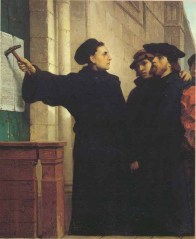
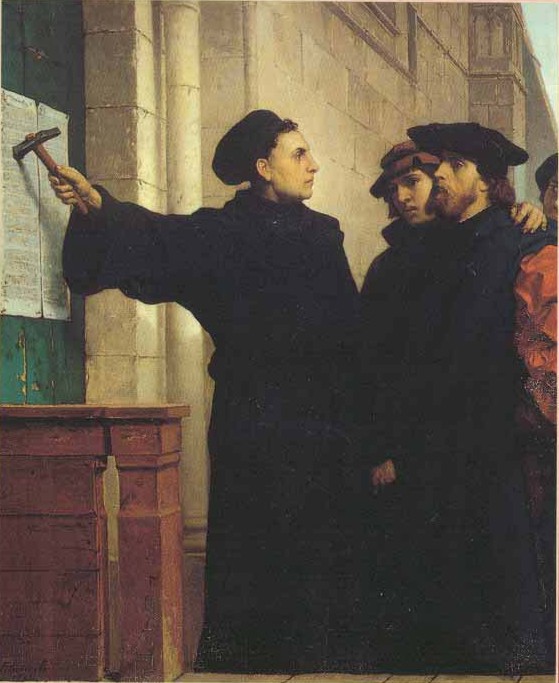
Luther posting the 95-Theses onto the door of Wittenberg Castle Chapel (circa 1517)

Sit back, relax, and let me tell you a little story . . .
THE STORY
On the last two Reformation Days[2] I have released a list of 95-Theses very loosely based on Martin Luther’s which offers some concerns and grievances that I and a random collection of active Mormons, inactive Mormons, former Mormons, and never Mormons see in the current Church of Jesus Christ of Latter-day Saints (LdS Church). This began as and has always been a group effort, it has never been a solo act. Rather, it’s the result of many, many, many kind and generous collaborators (many whom are, no doubt, reading this article) however, inevitably – and no matter how much I stress this fact – both the praise and the blame for the published piece tends to be directed solely at me.   Please don’t understand me, there’s no harm, no foul here – after all I did willingly, and deliberately sign up for this gig!

The response to this list is always been interesting but this year it was particularly so, leaving me with the fine “makin’s of a song,” or more precisely, a mighty fine Mormon Studies case study.

Generally speaking, this year the feedback was positive and affirming with very little “push back” from faithful Mormons or suggestions for improvement from disaffected and former Mormons – which was the case last year.  So there’s not much to report there except that it was unexpected.

Rather, the big surprise came in the closed “Mormon Stories” Facebook group the day after I posted the standard promotional blurb (“With hope and prayer that we will see true reform by this time next year . . .”) with a link to the article. Again, for the most part the responses there were pretty much in line with what I was seeing elsewhere with the exception of a clarification on why I use the term “LdS Church” rather than “LDS Church”[3] and a lengthy discussion with one group member on how Mormon leaders and members tend to engage in eisegesis[4] when they interpret holy writ, history, science, and life in general. It’s a complex subject, and I think an interesting one, so I was happy to try to satisfy her interest in the subject.

Then, the next day, I received this private Facebook message from Mormon Stories founder and board administrator John Dehlin:[5]
“Fred – I’m getting lots of complaints about your participation on the MS board. I don’t mean to offend, but I feel like it might not be a good fit. It feels to many like your intent really is to lead people out of the church (whether that is your intent or not…that’s how it comes across). And that’s just not what this forum is about. Do you mind if we part ways? There are LOTS of forums out there….I feel like your engagement in this forum is driving away many of the people that I’m trying to include/reach.

Now, before I go any further I should probably explain that I’ve always felt I had a good understanding of the Mormon Stories mission. After all, it’s clearly outlined on their website starting with this summary statement, “Mormon Stories is a nonprofit organization that seeks to create online and in-person environments that allow for authentic self-expression and the open discussion of Mormonism.” It then proceeds to expand and describe in further detail the purpose and intention of the organization in some detail including, “… we endeavor to ensure that the projects we undertake 1) support individuals in Mormon-related faith crises, 2) save marriages, 3) heal families, and 4) celebrate, challenge, and advance Mormon culture in healthy ways.”[6]

Some thoughts immediately occur at this point:
1) Nowhere in their mission statement was I able to find a clause about how a tenet of the Mormon Stories mission is to help people stay in the LdS Church.

2) The declaration read before the August 12th, 2011 Mormon Stories event honoring D. Michael Quinn[7] explicitly affirmed the right to self identify as “Mormon” regardless of one’s state of membership in the LdS Church, again affirming the idea that Mormon Stories isn’t a membership retention organization.

3) I have always been sensitive to the fine line that John Dehlin walks in trying to help Mormons come to grips with true Mormon History and the issues in the LdS Church in a productive way. He takes “hits” from all sides that, frankly, I have frequently thought unjust, unfair, and unduly harsh.

4) Based on the rhetoric that John Dehlin has regularly used publicly, I had always thought that the Mormon Stories agenda included lobbying internally and externally for reform in the LdS Church. Personally, I had always thought of John Dehlin as an ally not an adversary.

4) The article in question was, to my way of thinking, very much presented and aligned with Mormon Stories stated intention to “challenge, and advance Mormon culture in healthy ways.”

So I immediately responded with the following, “Sorry about that is there something I can do to rectify the situation?”

I then attempted to enter the Facebook Mormon Stories discussion board only to find that my membership in the group had been revoked – in the vernacular, I had been banned. I then received notification from a friend who was still a member of the group that the following had been newly posted at the tail end of the aforementioned thread discussing the Reformation Day article:

Ms. D
“By the way, folks, I just want to point out to you that Fred W. Anston (sic) is NOT , and never has been a Mormon-LDS, LdS, or anything like that. You might want to keeep (sic) that in mind when considering his comments, his motives, his empathy and friendship. He does NOT know what it is like to be LDS, just so you know that, in case it makes a difference to you.”

So I contacted John Dehlin and asked him to remove the comment – which he did. My request to John was worded as follows:
“This is, quite simply, an ad-hominem AND a not too subtle attempt at character assassination.

I think that you and I can agree that this is inappropriate. Frankly, whether I’ve ever been LdS or not is irrelevant. Further, Ms. D doesn’t know my full background, my motives, or anything else about me. If she bumped into me at the supermarket tomorrow she might not even know it was me.

This is, quite simply, inappropriate.”

I was then contacted again, by a friend who was still in the group. That person provided me with the following discussion which immediately followed after John Dehlin deleted the aforementioned Ms. D’s comment:
Mr. P
“You can still have a Mormon Story without having been a member.”

Ms. H
“how?”

Ms. D
“So, as I was saying, Fred W. Anson is not, nor has he ever been a Mormon or LDS, or LdS or anything like that. You might want to keep that in mind when you read his comments, about how much he empathizes with you, understands you, is your friend, etc. He does NOT understand what it is like to be a member because he never has been one. He takes great care to conceal that fact–have you ever seen him reveal his status here? No, of course not. Not only that, but he avoids answering the direction question put to him in this thread above. Not only that, but he deleted my earlier, briefer comment in which I said that Fred W. Anson is not and never was Mormon. Let’s see if he takes this one down, too.[8]

Fred Ason (sic) is totally agenda driven , and his agenda is to fight against the Mormon Church and to dissuade people from the CHurch (sic). He takes umbridge (sic) at being called anti Mormon, and calls himself a scholar. Yet he does not act like a scholar. An example of a non Mormon scholar on Mormonism is Jan Shipps, a professor, and former president of the Mormon History Association. I don’t recall her tearing down the CHurch.(sic) Scholars STUDY things, they don’t wage war on things.”[9]

Ms. H
“thank you Ms. D…lets see how long before your comment disapears (sic) again.”

Mr. MH
“Another interesting conversation! Wow! I think Ms. D, Fred said NeverMO. I think that means he’s not a Mormon? He talks like a person who studies religion not a person who is religious. I think there is much difference. I read all of these posts and him and Ms. M, and he studies a lot, and posts a lot, but he does not have the spirit of Mormonism. Just sayin’…”

Ms. D
“OK, I went back and read everything more carefully, and I see where he mentions the Never Mo. my bad; missed it the first time. He is very cagey about what he reveals and when he reveals it. He studies a lot, yes, but with only one purpose in mind, to bolster his claims about what is wrong with the Mormon Church. That is not the way a scholar operates; a scholar studies to understand, and is objective and not emotional about the subject.

Fred uses a lot of fawning comments to garner trust. He uses false modesty and flattery. But his writing give me the impression of someone who is not what he says he is, but rather someone who is a narcissistic syncophant (sic).”

So I contacted John Dehlin via private message again and the following conversation ensued:

Fred W. Anson
“John, if you would please deal with the continuing vitriol from Ms. D I would appreciate it. But, of course I only say this because I am apparently a brown nosing, self-absorbed, self-loving Narcissistic Sycophant. Well now I know – my self awareness has chinked [up] a notch!

And, of course, the person who deleted her prior litany of ad-hominems wasn’t I – if you would clear that up I would appreciate that too.”

John Dehlin
“Thanks, Fred. Sorry things didn’t work out.”

Fred W. Anson
“Me too John. I really loved your group. Be well.”

And that was that. In the end , it just left me wonderin’, to paraphrase from one of my Country Western music heroes, “Did ol’ Luther really do it thisa way?”

FROM STORY TO CASE STUDY …
There’s a lot here isn’t there? In the end, this story makes a fascinating case study – it is, to use a tired cliche, quite revealing.

For a start, could someone explain to me why someone who’s just compiled and published a paper lobbying for internal reform of the LdS Church would being trying to push everyone out of it? If we assume that’s my goal and “hidden agenda” then it’s flawed because in the end there won’t be anyone left in the organization to reform it. I’d like to believe that I’m just not that stupid.

Rather, I would suggest, there seems to be a perception within Mormon Culture that criticism – and it seems ANY criticism – is a cry for an exodus from the organization.  To me, this mindset belies the deeply seeded propensity within Mormon Culture to bifurcate: That is, either you’re good or you’re evil; either you’re faithful or you’re an “Anti”; either you’re all in you’re all out. Though, thankfully there are exceptions, it seems like the typical Latter-day simply can not fathom the concept of a nuanced stance, loyal opposition, a full, free talk, and/or good willed investigation and criticism by outsiders. As journalists Richard J. and Joan Ostling observe:

“Such [scrutiny, analysis, commentary, and criticism by outsiders] is the give-and-take of a free and freewheeling society. The thin-skinned and image-conscious Mormons can still display immature, isolationist, and defensive reactions to outsiders, perhaps because there is no substantive debate and no “loyal opposition” within their kingdom. With some, it almost seems that the wilderness is yet untamed, the federal “polyg” police are on the prowl, and the Illinois lynch mob is oiling muskets and preparing to raid Carthage Jail. All too often Saints use the label “anti-Mormon” as a tactic to forestall serious discussion.

Nor are the Mormons alone in facing cultural despisers. Catholics put up with continual insults without complaint (except from the Catholic League). And the Protestant Evangelicals, who are not organized enough to create their own anti-defamation league, have had to endure the Scopes trial and Inherit the Wind, Sinclair Lewis’s Elmer Gantry, a recent onslaught of books claiming they seek to destroy American democracy in favor of “theocracy,” and the crude stereotypes in the latest made-for-TV movie.”[11]

And this author found it curious that Ms. D claims to be familiar with my work yet shows such incredible ignorance of it. For example, I have publicly and clearly stated my stance in regard to the Mormon Church on numerous occasions in my work – simply put it’s “Reformation not Destruction”. Or if you prefer the long version:

“I see some good things in the LdS Church and I see even more in Mormon Culture. There’s also much – particularly in the former – that, in my opinion, is really, really bad and needs to change. Never-the-less I’m just crazy enough to believe that there must be a way to keep the good and jettison the bad. After all isn’t that what happened to the Worldwide Church of God?

However, to get there from here the Church of Jesus Christ of Latter-day Saints, from my perspective, must reform. And THAT, at least for me, is still a work in progress. That’s to say, it’s a work in progress for me because while I think I have an idea as to what end state might look like, I know that I’m not alone in this vision and I’m find the ideas and thoughts of others often more interesting than my own – hence the need for ongoing dialog.”[12]

Further, another interesting irony is that Ms. D both demonstrated and validated several of the grievances that were made in the offending document in question. Specifically:

#3) It [the LdS Church] villainizes critics – even constructive critics – both within and without its ranks.

#37) Its leaders and members use ad-hominems, insults, slurs, derogatories, labeling, and character assassination in their dealings with critics and apostates and then deny that they do so – often going so far as to claim that those who call them on this behavior are persecuting them.

#87) It hypocritically defines polemic arguments as “persecution” and then engages in polemics with its critics.[13]

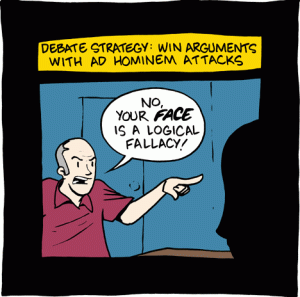
What seems to be lost on most Mormons is that even if you successfully discredit  the messenger it still doesn’t discredit either their message or the evidence presented in support of that message.  Ultimately ad-hominem arguments in any form are logically fallacious because they relate to the opponent’s person and/or character – neither of which have  anything to do with the logical merit of the opponent’s argument.[14] That is, even if 100% of the claims about your debating opponent’s person and/or character are true, in the end logic, reason, and evidence is what produces rational, cogent argument not personality, credentials, or character.

For example, Secretary of State, Henry Kissinger‘s labeling of Daniel Ellsberg, “The most dangerous man in America” as well as President Richard Nixon‘s labeling him a traitor didn’t make the Pentagon Papers any less true. In fact, they still would have been just as true if the Nixon Administration had successfully produced evidence that Ellsberg was mentally unstable – or even completely insane.  In the end such ad-hominem attacks said more about Mr. Nixon and his staff than they did about Mr. Ellsberg didn’t they?

In a similar vein, to assert that someone is a Narcissistic Sycophant and launching into a campaign of character assassination while utterly ignoring their evidence and arguments says far more about the ad-hominemer than the ad-hominee doesn’t it?

Please don’t misunderstand me – I would be the last to deny some narcissistic tendencies, I’m human and some degree of narcissism is normal and healthy. However, I would hope that mine is in the healthy range and not a clinical “disorder” such as Narcissism Personality Disorder (aka “NPD”).[15] But better safe than sorry so I “reality checked” with my accountability partners, (which includes a credentialed Mental Health Professional), and was assured that if narcissism were electricity I might power a light bulb (in the healthy range) but I wouldn’t power a marque (definitely not in the healthy range).

Further, and you can trust me on this one folks, if you want to have your ego kicked around and run over like a can in the street just get into Mormon Studies – it’s guaranteed to keep you humble!  Most of the Mormon Studies Scholars I know are humble, down-to-earth, folks not pathologists with an inner NPD fire underscoring their work.

As for the equally telling assertion that I engage in sycophancy[16] in support of my alleged pathological narcissism.  In response, I would simply point to my body of work: Tell me, does a sycophant compile a body of work that agitates, provokes, and challenges the status quo? Rather, my mentors have consistently encouraged me to use more tact as well as a kinder, gentler approach with those I’m trying to reach.  I am painfully aware that my default style is to shoot first and ask questions later. Therefore, I’m doing my best to listen more, talk less, and when I do talk be kinder and gentler in my demeanor and choice of words. Perhaps it’s this conscious – probably clumsy – effort to be a better man that she mistakenly perceived as sycophancy.

And if more evidence is required for my defense, when I reality checked this with my wife she howled with laughter – nearly fell out of bed in fact – because she’s seen me “in action” both online and in person (it came  at the end of a hard day  for her so she’d like to thank my accuser for the good laugh by the way – it was sorely needed)

Narcissistic Sycophant? Sorry, but my case apparently the answer is, “No.”

And adding to the growing list of comedic ironies is that very behavior she’s accusing me of is the diagnosis that Latter Day Saint forensic health professionals (Robert Anderson, C. Jess Groesbeck, and William Morain, M.D.) and historians (Fawn Brodie topping the long list) have stamped on Joseph Smith, Jr.’s file.[17] Further, there’s a difference between being civil, kind and respectful, as I believe I was on the Mormon Stories discussion board – and manipulating people through, as the ad-hominemer put it so well, “fawning comments to garner trust … false modesty and flattery” which the historical record demonstrates Joseph Smith did so adroitly throughout his life.

So I would suspect that the dynamic that’s really in play here is psychological projection.[18] Indeed, she has the right diagnosis but the wrong patient.

… TO PRACTICAL APPLICATION
In the end this story really makes me wonder just what is going with Mormon Stories. As previously stated, I’ve always had the utmost respect for John Dehlin’s work. I have always felt that he’s reasonable and has a sense of justice and equity.

However, by first banning me from the group and then leaving a litany of derogatory, inflammatory personal attacks on me, my motives, and my character (after I’d specifically asked for their removal no less) was the cyber-equivalent of handcuffing me and then walking away while I was beat up. This isn’t just “bad form” it’s unjust and unfair.

This is even more telling when you consider that Ms. D didn’t post in the thread before Mr. Dehlin banned me from the Mormon Stories Facebook group – her sole purpose in posting, therefore, was clearly to character assassinate me thereby, in her mind, discrediting my work simply because she disagreed with it.  This is hardly a mature, rational approach to public disagreement but sadly these days it’s common.

Further, I find Mr. Dehlin’s behavior particularly puzzling given what transpired earlier this year in June:
“In 1998, FARMS was brought into BYU under the umbrella of the Maxwell Institute, and the Mormon Studies Review came with it. Review writers responded to critics’ allegations by dissecting their arguments — and motives — sometimes writing scathing and often personal attacks on those who challenged LDS origins. It was, they believed, the essence of apologetics.
The tipping point against that approach may have been a 100-page article about John Dehlin, a church member in Logan who launched Mormon Stories, which welcomes those who question aspects of LDS history, practice and theology. Dehlin’s group has published articles about reasons Mormons leave the fold and research on gay members, among other topics.

After hearing about the piece, Dehlin called an LDS general authority who was a personal friend. Eventually, Maxwell Institute Director Gerald Bradford pulled the article from the journal, leaving a giant hole and putting it behind in its publishing schedule.

‘I have had enough conversations with general authorities to know,” Dehlin said this week, “that they don’t view ad hominem attacks as a constructive way to do apologetics.'”[19]

So is it reasonable to now conclude that while Mr. Dehlin feels that ad-hominem attacks aren’t appropriate or constructive when he’s the target of such attacks, that’s not the case for others?

Cases in point:  In June Daniel C. Peterson was terminated from his position at Maxwell amidst a chorus of ad-hominems from the Mormon Stories community.  Then in November I was terminated from the Mormon Stories Facebook group as ad-hominems flowed. In both cases some hand wringing and regret was expressed by Mr. Dehlin but the end result was the same – as they say, “Actions speak louder than words.”

Further, a consensus is building that the tone, nature, and content of Mormon Stories after the Daniel C. Peterson firing became noticeably less critical and more and more an advocate for the LdS Church. More and more critical voices it seems are being pruned from all things Mormon Stories and being replaced with those who skew toward a conciliatory, occasionally even apologetic stance. Nothing has been said but this trend has been noted by many.  Simply put, Mormon Stories “ain’t what it used to be” and even seems to drifting further and further away from it’s mission statement.

For me, this is disappointing. Like so many others I have trusted, liked, and respected the Mormon Stories founder, and I have supported Mormon Stories to the best of my ability (including financially I might add), and defended both against critics from all sides. Now I find that I must reconsider that stance as I have discovered the hard way that perhaps my trust and support was misguided.

For myself and others who watched this story unfold the final take away seems to be: “Well now we know what we’re really dealing with”

Further, and in a similar vein, the final lesson learned here seems to be just how incredibly elitist and exclusive Mormon Culture can be. Let’s consider a few more of the statements that were made in the thread:

“Fred W. Anston (sic) is NOT , and never has been a Mormon-LDS, LdS, or anything like that. You might want to keeep (sic) that in mind when considering his comments, his motives, his empathy and friendship.”

Depersonalizing that and taking it at face value, I take that to mean that someone who’s never been a Latter-day Saint can’t possibly be knowledgeable about and/or trusted to have a legitimate perspective about Mormon Culture. The contemporary LdS mindset still seems to be, as the Ostlings said so well in Mormon America, “the wilderness is yet untamed, the federal “polyg” police are on the prowl, and the Illinois lynch mob is oiling muskets and preparing to raid Carthage Jail.”  The idea that outsiders could be watching, hoping, praying, and lobbying for positive reform in the LdS Church seems to be lost on some Mormons.

Further, I’ve seen similar but even more vitriolic language used by true believing Mormons to describe both former and active members that publicly express their criticism of the institution – so it seems to be that having a reasonable understanding of the LdS Church and it’s resulting culture isn’t the real issue here.[20] Rather, I think, that what’s being demonstrated here is Anson’s long held view of how many Mormons practically define “Anti-Mormon,” which is: “I’m upset because I don’t like what you’re saying so you MUST be an Anti-Mormon!”[21]

The next assertion is even more telling: “He does NOT know what it is like to be LDS.” Though Mormons don’t like hearing it the former members of other Mind Control Cults who educate themselves on the LdS Church typically react with an, “I can’t believe it – the Mormon Church is just like only with different words, leaders, and sacred books!”[22] In fact, every cultist is utterly and completely convinced that there has never – in the entire history of the world – been a group like theirs, never will be, and only insiders can truly understand and appreciate that fact. However, this type of exclusivist, insular, myopic thinking, we’re told by experts is one of the biggest indicators that a group is cult.

And this was certainly true in my case. I was a member of a Mind Control Cult from 1976-1989[23] and to this day it stuns me how much like the LdS Church we were. And the more Mormon History I read, the more similarities I see in the developmental paths of our group and the LdS Church – it is simply amazing. And yes, I thought that both my group and my experience in that group was utterly and completely unique in world history. So in the end, no, I can’t say that I know EXACTLY what it’s like to be a Latter-day Saint, but yes, I can certainly empathize and relate based on my experience in a group that was so similar that at times it seems like I was really in the LdS Church by another name.

And I’m reminded of how when I was exiting my group in I frequently used the defense mechanism know as “Ugly Sister Syndrome” in which I critiqued, criticized, condemned, even mocked my “ugly sister” but if you – someone who had never been a member – did I would do a “18o” come to her defense, and attack you instead.  Perhaps that was one of the dynamics in play here – after all some of the critical commentary by current and former Latter-day Saints in the closed Mormon Stories Facebook group that I saw while I was still a member was absolutely brutal – far, far, far more extreme than any rhetoric that I’ve ever used.

Perhaps this explains the commonly observed phenomenon of Jack, Ex, New Order, and Atheist LdS Church members who will passionately and bluntly criticize LdS leaders, the organization, policies, culture – even their own families – endlessly but turn around and defend them with the same level of passion if an “outsider” does.

Further, and in support of my case, I would ask those in Mormon Culture to consider what one Ex-Mormon observed: “Mr. IT [my alias on PostMormon.org] did something even more remarkable. He is a nevermo with Mo relatives. He went directly from unaffiliated to apostate without experiencing all the pain and surreal experience of being a member.”[24] And since I’m nothing special I would suggest that what’s true for me may be true of other “NeverMo’s” too.

That’s why I find the objection that someone who has never been a member of the Mormon Church couldn’t possibly have a “Mormon Story” closed minded and elitist to the extreme. The final comment in the thread (as of the time of writing that is) said it so well that I will simply echo and endorse it as, in a nutshell, it describes my Mormon Story:

Mr. P
Ms. H, Nevermos have Mormon Stories too. They may have family or close friends that are Mormon and it can affect their lives deeply. Others may have investigated with a close encounter to baptism.

Yes friends it’s true, NeverMo’s have their own Mormon Stories and if you doubt me just start at the top of this article and read to the bottom. And, yep, in the end and yessiree, I reckon ol’ Luther really did do it thisa way!
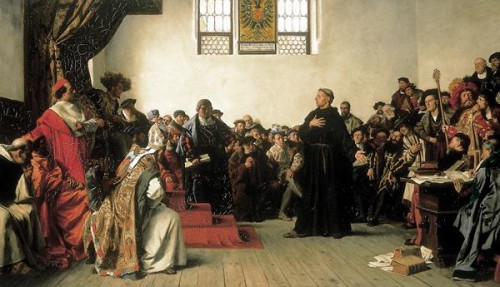
Martin Luther at The Diet of Worms (circa 1521)

NOTES
[1] Lyrics from the chorus of “The Makin’s of a Song” by Jennings, Seals, Barnes, Nelson as recorded on the album “Clean Shirt” by Waylon Jennings & Willy Nelson.

[2] Reformation Day is October 31st of each year. See http://en.wikipedia.org/wiki/Reformation_Day

[3] The Church of Jesus Christ of Latter Day Saints (aka, “LDS Church”) is the name of the Strangite Church (see http://www.strangite.org ). The Church of Jesus Christ of Latter-day Saints (aka “LdS Church”) is the official name of the Brighamite church (see http://en.wikipedia.org/wiki/The_Church_of_Jesus_Christ_of_Latter-day_Saints ) that was being addressed in the article. To not honor this distinction would have been a incongruent contraction with #93 on the list which says:

“93) It fails to recognize the over sixty (60) active Latter Day Saint movement denominations (aka “splinter groups”) while hypocritically condemning the denominationalism of Christianity as a proof of apostasy and lack of divine legitimacy. This hypocrisy is even more pronounced when one considers that over the 180+ year history of the LDS movement there have been over 200 Latter Day Saint denominations in total with new ones forming at a rate will be eventually far exceed and out pace the total number of Christian denominations.”

[4] “Eisegesis (from Greek εἰς “into” as opposed to exegesis from ἐξηγεῖσθαι “to lead out”) is the process of interpreting a text or portion of text in such a way that it introduces one’s own presuppositions, agendas, and/or biases into and onto the text. The act is often used to “prove” a pre-held point of concern to the reader and to provide him or her with confirmation bias in accordance with his or her pre-held agenda.”
http://en.wikipedia.org/wiki/Eisegesis (retrieved 2012-11-05)

[5] Should anyone object to the disclosing of private messages in response to public ad-hominems I would simply point to John Dehlin’s disclosure of private messages in response to the threat of public ad-hominems that were to be published in a The Maxwell Institute publication:

Grindael, “Of Mice And Egos”, Mormon Musings, July 20, 2012
http://mormonitemusings.com/tag/john-dehlin/ (retrieved 2012-11-05)

MormonStories, “Greg Smith, Dan Peterson, John Dehlin, & Lou”, Mormon Dialogue, thread started May 10, 2012; private emails are disclosed by John Dehlin and others throughout the entire 29 page discussion thread.
http://www.mormondialogue.org/topic/57768-greg-smith-dan-peterson-john-dehlin-lou/page__st__40 (retrieved 2012-11-05)

[6] Mormon Stories Podcast About page: http://mormonstories.org/about (retreived 2012-11-03)

[7] John Dehlin, “285-287: D. Michael Quinn – 21st Century Mormon Enigma”; Mormon Stories Podcast, September 17, 2011
http://mormonstories.org/register-now-an-evening-with-d-michael-quinn-august-12th-2011 (retreived 2012-11-03)

[8] She is, of course, referring to the post that John Dehlin deleted at my request. Since I wasn’t a Administrator of the group I couldn’t have deleted her post. I find this projection of a  power onto me that I have never possessed – and never will possess – to be telling.

[9] By the way, I addressed this argument in “Falsely Accused: My Life As An ‘Anti’”, Mormon Expression Blogs, July 11, 2011; http://mormonexpression.com/blogs/2011/07/11/falsely-accused-my-life-as-an-anti (retrieved 2012-11-04)

[10] Here’s an example of Ms. D’s continuing character assassination campaign that was posted on November 6th in another discussion thread in the closed Mormon Stories Facebook page:
“Yeah, here in Oklahoma people like to tell us what we believe. It’s the southern Baptist/Evangelical thing–their preacher preaches against Mormons in Church and tell them what Mormons believe, what the Book of Mormon is about, etc. They even have some people who specialize in “Mormonism” who do it like full-tme (sic) (like that Fred Anson guy–I never understood what he gets out of “studying” Mormonism all the time and trying to convince people to get out of the church. I don’t miss him one bit). Anyway, my kids grew up with this all the time in school. But yeah, you can sometimes see where they actually have some stuff “right”, but usually a bit distorted or out of context, so it sounds even wierder. (sic)”

I found this particularly amusing since: a) I’ve never been Baptist – and if I have a choice in the matter I never will be; b) Like most in Mormon Studies, I don’t do it full time – it’s solely an avocation; c) My objective isn’t, and never has been, “to convince people to get out of the [LdS] church.”  I have made very clear in my body of work – more on this later.

And, to this author, it’s amusing that Ms. D starts her argument complaining about those who “shoot first and ask questions later” while she is in fact engaging in the very behavior that she’s so incensed about. I have advised many a ranting Mormon flamer to “ask not tell” but I’ve noticed common sense and practical wisdom tend to fall on deaf ears once someone has been labeled an “Anti” by a Mormon – after all, sociologists tell us that facts, respect, and civility are secondary once the other party is psychologically labeled “enemy”.

[11] Richard and Joan Ostling, “Mormon America, Revised Edition”, position 310.7/1158 Kindle edition

[12] Op Cit, Fred W. Anson, “Falsely Accused: My Life As An ‘Anti’”

[13] “What’s Wrong With The Mormon Church?” (2012 edition)
https://beggarsbread.org/2012/10/31/whats-wrong-with-the-mormon-church-2012-edition
(retrieved 2012-11-07)

[14] “Abusive ad hominem (also called personal abuse or personal attacks) usually involves insulting or belittling one’s opponents in order to attack their claims or invalidate their arguments, but can also involve pointing out true character flaws or actions that are irrelevant to the opponent’s argument. This is logically fallacious because it relates to the opponent’s personal character, which has nothing to do with the logical merit of the opponent’s argument, whereas mere verbal abuse in the absence of an argument is not ad hominem nor any kind of logical fallacy.”
http://en.wikipedia.org/wiki/Ad_hominem (retrieved 2012-11-16)

[15] For a primer on Narcissist Personality Disorder please see the following U.S. National Library of Medicine  article: http://www.ncbi.nlm.nih.gov/pubmedhealth/PMH0001930  (retrieved 2012-11-07)

[16]  The definition of “sycophant” or “sycophancy” with links to other resources regarding sycophantic behavior can be found here: http://dictionary.reference.com/browse/sycophant  (retrieved 2012-11-07)

In this context Ms. D is referring to sycophancy as a psychological supply system for narcissism.  The relationship between the behaviors is discussed here:  http://en.wikipedia.org/wiki/Narcissistic_supply (retrieved 2012-11-23)

[17] Those interested in a short primer on the case for Joseph Smith’s NPD should consider Appendix A  below.

[18] Psychological projection or projection bias (including Freudian Projection) is the unconscious act of denial of a person’s own attributes, thoughts, and emotions, which are then ascribed to the outside world, such as to the weather, a tool, or to other people. Thus, it involves imagining or projecting that others have those feelings.

Projection is considered one of the most profound and subtle of human psychological processes, and extremely difficult to work with, because by its nature it is hidden. It is the fundamental mechanism by which we keep ourselves uninformed about ourselves. Humor has great value in any attempt to work with projection, because humor presents a forgiving posture and thereby removes the threatening nature of any inquiry into the truth.”
http://en.wikipedia.org/wiki/Psychological_projection  (retrieved 2012-11-07)

[19] Peggy Fletcher-Stack, “Shake-up hits BYU’s Mormon studies institute”, The Salt Lake City Tribune, June 26, 2012; http://www.sltrib.com/sltrib/utes/54358137-78/mormon-institute-peterson-studies.html.csp (retrieved 2012-11-04)

[20] Op Cit, Fred W. Anson, “Falsely Accused: My Life As An ‘Anti’”; the list of “Anti-Mormons” so described even includes former LdS President, Gordon B. Hinckley – believe it or not!

[21] Ibid. Please note that I expanded on this further in my article, “Can A Mind Control Cult Reform Itself?” ( http://mormonexpression.com/blogs/2011/10/20/can-a-mind-control-cult-reform-itself )

[22] Please consider the following:

Anonymous, “Scientology-Lite”; Mormon Expression, February 19, 2011
http://mormonexpression.com/blogs/2011/02/19/scientology-lite (retrieved 2012-11-05)

John Larsen and “Joe”; “Episode 80: Leaving the Jehovah’s Witnesses”, September 14, 2010
http://mormonexpression.com/2010/09/14/80-leaving-jehovah-witnesses (retrieved 2012-11-05)

“Teddy”, “My Former Cult (World Wide Church of God)”, Sam Harris Forum, May 25, 2007
http://www.samharris.org/forum/viewthread/6839 (retrieved 2012-11-05)

[23] I’ve written two articles that reference my experiences in the Mind Control Cult known as “The Shepherding Movement” thus far:

Fred W. Anson, “My Life as a Mind Control Cultist Part 1”, Mormon Expression, August 22, 2011
http://mormonexpression.com/blogs/2011/08/22/my-life-as-a-mind-control-cultist-part-1 (retrieved 2012-11-05)

Fred W. Anson, “Can A Mind Control Cult Reform Itself?”, October 20, 2011
http://mormonexpression.com/blogs/2011/10/20/can-a-mind-control-cult-reform-itself (retrieved 2012-11-05)

[24] “HikerR” Posting on PostMormon.org 2007-11-26; link now dead – this quote was captured at the time. And. yes, I am rather proud of it.

APPENDIX A: THE NARCISSISM AND SYCOPHANCY OF JOSEPH SMITH, JR.
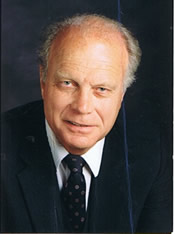
C. Jess Groesbeck, M.D.

The subject of Joseph Smith Narcissistic Sycophancy is one that this author feels is best covered in Robert Anderson’s book, “Inside The Mind of Joseph Smith” and William D. Morain’s book, “The Sword of Laban“. While both of these books, in my opinion are watershed, Jungian Psychiatrist, C. Jess Groesbeck also compiled an impressive supporting body of work on the subject via his Sunstone lectures and articles prior to his death in 2009. Let the reader note that all of these men are Latter Day Saints – two (Anderson and Groesbeck) are Latter-day Saints and the third (Morain) is a member of the Community of Christ. What now follows is a brief, far from comprehensive, overview and primer on the subject that I hope will spur the reader to consider the aforementioned esteemed works in it’s wake.
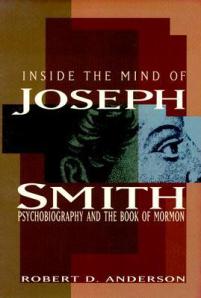
“[‘Inside the Mind of Joseph Smith’ author Robert] Anderson theorizes that Joseph Smith suffered from the narcissistic personality disorder. He points out that there is a danger in attempting to explain human behavior through psychodynamic theory. Accepting such theory as fact can cause damage. A few decades ago psychiatrists speculated that some serious mental illnesses were caused by the influence of the mother or of the environment. Now we know that chemical treatments such as lithium can effectively treat some of these illnesses. It is possible that in the future narcissistic personalities may respond favorably to specific medications. The fact is that the cause and source of the narcissistic personality are not known. However, the psychodynamic setting provides an unusual laboratory for studying this emotional problem, and some individuals do seem to respond to prolonged intensive psychotherapy.

In his analysis of Joseph Smith, Anderson draws upon the body of literature, especially the Book of Mormon, produced by observation, experiment, theory, and psychiatric experience in his attempt to understand the founder of Mormonism. He says that splitting, a fundamental of personality weakness, is a major psychological defense demonstrated by the prophet. Its most obvious manifestations are:

1) the division of the world into polar opposites and
2) the lack of integration of the various parts of the patient’s psyche.

The individual may oscillate between two opposite positions. This behavior can be seen in the polarized opposites of the Nephite and Lamanite people depicted in the Book of Mormon, as well as in Smith’s ability to present one face in public (such as denying polygamy) while simultaneously converting associates and new plural wives to the principle in private.
The individual may also exhibit psychological reversal of attitudes toward particular persons, by switching instantly from compliments to vilification, or of oscillation in moral positions, yet not be troubled in the contradiction. Examples are the instantaneous conversions of Alma, Jr., Zeezrom and the whole Lamanite population in 30 BCE in the Book of Mormon. Another example was Smith’s strong opposition to Masonry as a young man, followed by his later becoming a Mason himself and drawing on Masonic ritual for temple ceremonies.”
(Robert Layton, “Discussion Group Report: Inside the Mind of Joseph Smith”; retrieved 2012-11-03)

And Smith’s tendencies in this regard are well documented in the historical record. For example, in 1843 Charlotte Haven wrote some letters from Nauvoo which contain some candid observations about Joseph Smith:

“Joseph Smith … is evidently a great egotist and boaster, for he frequently remarked that at every place he stopped going to and from Springfield people crowded around him, and expressed surprise that he was so ‘handsome and good looking'”
(Overland Monthly, December 1890, p.621).

“He talked incessantly about himself, what he had done and could do more than other mortals, and remarked that he was “a giant, physically and mentally.” In fact, he seemed to forget that he was a man…. They say he is very kindhearted, and always ready to give shelter and help to the needy. We may hope so, for a kind heart in this place can always be active.”
(p.623).
I rushed out with the umbrella to shield Mrs. Smith, the others followed…. Mrs. Smith was pleasant and social, more so than we had ever seen her before…. while her husband is the greatest egotist I ever met.”
(p.631)

And for evidence of Joseph Smith’s sycophantic tendencies one need only refer to passages like this in Doctrine & Covenants:

“Verily, verily, I say unto thee, blessed art thou [Oliver Cowdery] for what thou hast done; for thou hast inquired of me, and behold, as often as thou hast inquired thou hast received instruction of my Spirit. If it had not been so, thou wouldst not have come to the place where thou art at this time.

Behold, thou knowest that thou hast inquired of me and I did enlighten thy mind; and now I tell thee these things that thou mayest know that thou hast been benlightened by the Spirit of truth;

Yea, I tell thee, that thou mayest know that there is none else save God that knowest thy thoughts and the intents of thy heart.

I tell thee these things as a witness unto thee—that the words or the work which thou hast been writing are true.

Therefore be diligent; astand by my servant Joseph, faithfully, in whatsoever difficult circumstances he may be for the word’s sake.”
(Doctrine & Covenants 6:14-18 ; http://www.lds.org/scriptures/dc-testament/dc/6.14-18?lang=eng#13 )

Now if this revelation wasn’t divinely inspired then it’s about as fine an example of narcissistic sycophancy as one could hope for. Further, this is just one of many such examples of Smith’s use of sycophantic language (albeit using the voice of God) in Doctrine & Covenants.  If this thesis is correct then the following resources can be used to read through other examples of how Smith used sycophancy to manipulate his followers:

Doctrine and Covenants and Church History Seminary Student Study Guide
“People and Terms in the Doctrine and Covenant”
https://www.ldsces.org/manuals/doctrine-and-covenants-and-church-history-seminary-student-study-guide/dc-ssg-8-people.asp

Susan Easton Black, “Who’s Who in the Doctrine and Covenants” [Kindle Edition]
http://www.amazon.com/Whos-Who-Doctrine-Covenants-ebook/dp/B004BDOZEY

Again, this appendix is intended to be a short primer and overview.  If the reader is interested in further study of this complex and nuanced issue, the books, articles, and lectures mentioned at the start of this short primer are recommended.

by Fred W. Anson
Introduction
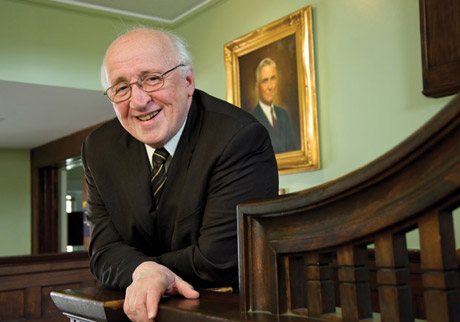
Eight years ago today on November 14, 2004 for the first time in 105 years, non-Latter-day Saint “gentiles” stood at the pulpit of the Mormon Tabernacle in Salt Lake City, Utah. The focus of the event was to be an address by Christian Apologist and Philosopher Ravi Zacharias entitled, “The Exclusivity and Sufficiency of Jesus Christ”. However, Mr. Zacharias’ superb address was eclipsed by a short, slightly less than seven-minute address by Fuller Theological Seminary president Richard J. Mouw.

Richard J. Mouw Apologizing in the MormonTabernacle

Dr. Mouw, in what the Deseret News referred to as “stunningly candid” comments, apologized to Mormons on behalf of evangelicals for what he sees as less than Christian treatment of Latter-day Saints and the LdS Church throughout Mormon History. His language, in this writer’s opinion, was overly broad, general, universal, and lacking nuance. The royal “we” was used extensively and qualifying terms like “some”, “a few”, or their equivalent were conspicuous in their absence.

Essentially all evangelicals (with the exception of Dr. Mouw and his associates, who were praised directly or indirectly) were thrown under the bus creating the impression among Mormons that their worst fears about Evangelicals that challenge and confront Mormonism are true after all: Specifically, that they are bigoted liars who are driven by deeply seeded animosity toward Mormons. This, in most cases, is not only unfair but untrue.

In reality, regardless his thoughts and intentions, Dr. Mouw has made relations between Mormons and Evangelicals worse not better. In this author’s opinion he has done both sides a disservice and created a volatile and confused environment that didn’t exist prior to his apology. Dr. Mouw’s poor choice of words and bad judgment created this unfortunate situation and I, for one, think it high time that someone did something about it.

Now since Dr. Mouw seems to think it perfectly acceptable and appropriate to apologize for others without their permission, consent, or foreknowledge, I’ll simply borrow a page from his play book and, using the template that he created and precedent that he established, set the record straight:

The Apology
It is difficult for me to find adequate words to express how thrilled I am to be in Mormon Studies in this ‘Mormon Moment’! Here we are, evangelical Protestants and members of the Church of Jesus Christ of Latter-day Saints, gathered together on the Internet and elsewhere dialoguing, discussing, debating – it’s an exciting time to be alive!

So I am not being melodramatic when I say that this is surely an historic period. To be sure, there have long been friendships between evangelicals and Latter-day Saints but they generally haven’t appeared on the public radar screen. Often the public relations between our two communities have been, to put it mildly, decidedly strained. This is hardly surprising given the mutually contradictory belief systems and theological world views that we hold to.

From the very beginning, when Joseph Smith organized his church in 1830, my evangelical forebearers very correctly and rightly confronted he and his followers with the incongruity between their beliefs and practices relative to the absolute standard of the Bible. This is a practice that continues from most quarters of mainstream Christianity even into this present day. And I think it is fair to say that most Mormons haven’t always “appreciated” these efforts no matter how well intended. As a result, friendship with each other has not always come easily for our two communities – but, never-the-less and thankfully, it has come.
In recent times things have begun to change both for the better and for the worse. The good news is that evangelicals and Mormons have continued to work together on important matters of public morality and policy. However, the bad news that some evangelicals have mistakenly believed that such interaction requires compromise with and pandering to Mormonism. For example in Utah, the Standing Together ministry seems to have chosen a path of appeasement and accommodation with the LdS Church. Further it has embraced Mormons who seem to make manipulation and deception their stock-in-trade. That has only not been inappropriate it has created needless confusion on both sides of the divide and with the public.

Thankfully like the town squares of old we can all gather via the gracious hospitality of the internet and hold these errant, counter-productive groups and people accountable for their folly. When appropriate there’s been a loud evangelical outcry on those occasions when groups like Standing Together accommodate LdS Church error.  And I’ve noticed that a ground swell of Mormon voices is slowly building regarding how the LdS Church (as well as some of it’s members) present itself, its history and its teachings to both it’s membership and the public. This is encouraging!

On a personal level, over the past half-dozen years I have been a member of a group of evangelical scholars who have been engaged in lengthy public discussions about spiritual and theological matters with Latter-day Saints. We have not been afraid to argue strenuously with each other, but our arguments have been conducted in a sincere desire genuinely to understand each other-and in the process some deep bonds of friendship have been formed in the midst our disagreements.

I know that I have learned much in this continuing dialogue, and I am a far better person today as a result of it. And I am now convinced that despite the fact that some evangelicals have often seriously misrepresented the beliefs and practices of the Mormon community the majority have not. And, personally, whenever I’ve encountered that small minority I have been as direct and to the point as I have been with those Mormons who misrepresent the beliefs and practices of the evangelical community.

On that note, and to get specific regarding observed behavior on our side of the divide  I’ve watched in stunned disbelief as the President of Fuller Theological Seminary, Richard J. Mouw has seriously, publicly, and repeatedly misrepresented the beliefs and practices of both the evangelical and Mormon communities. Indeed, let me state it bluntly to the evangelicals and Mormons reading this: Richard J. Mouw has sinned against you. The God of the Scriptures makes it clear that it is a terrible thing to bear false witness against our neighbors, and he has been guilty of that sort of transgression in things he has said about all of us – evangelical and Mormon alike.

The body of evidence indicates that He has accepted the personal opinions, spin doctored and “milk before meat” version about what the Lds Church believes from honesty challenged Mormons without making a sincere effort to fact check what he’s been told against official, correlated LdS Church sources.

Further, while he has recognized that we evangelicals have made much of the need to provide Mormons with a strong defense of traditional Christian convictions, regularly quoting the Apostle Peter’s mandate that we present them a reasoned account of the hope that lies with in us, Dr. Mouw hasn’t been careful to also recognize how most evangelicals throughout the ages have always endeavored to follow the Apostolic counsel that immediately follows that mandate, when Peter tells us that we must always make our case with “gentleness and reverence” toward those with whom we are speaking.[1]

Further, and most distressingly, he has demonized those evangelicals who have confronted the Mormon teachings that the Bible condemns as false. He has even woven bizarre conspiracy theories that suggest that those in the Christian Counter Cult community are “really” motivated by and trafficking in covert bigotry, exaggeration and lies. This also is simply not true, therefore and in my opinion, Mr. Mouw needs to repent of bearing false witness against his brothers and sisters in Christ.

In fact, most in the Counter Cult community are committed to speaking the truth in love. By doing so over the years they have formed some wonderful friendships with both Mormons and ExMormons. These friendships have helped us to see the ways in which Mr. Mouw has misinterpreted and misrepresented the true perception and impact of these evangelicals in Mormon Culture. To be sure, as a result of those conversations we also remained convinced that there are very real issues of disagreement between us-and that some of these issues are matters of eternal significance. But we can continue to discuss these topics as friends and fellow seekers of the truth – and the Internet has been a Godsend in this regard. God be praised!

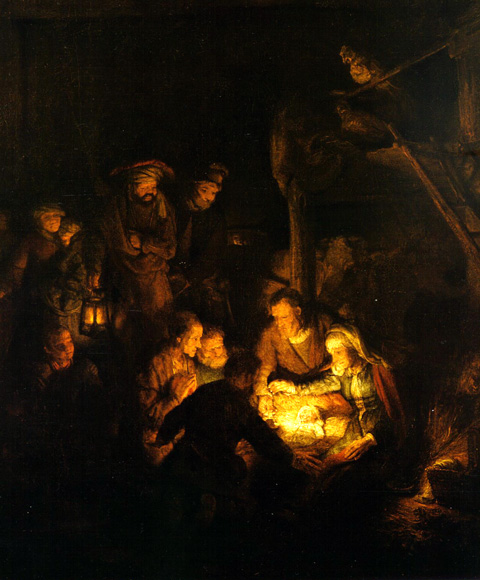
Next month will mark the 207th anniversary of the birth of Joseph Smith. We know and understand that Mormon culture typically uses the month as an occasion to pay special attention to Joseph’s life and teachings. However, please hear my heart when I tell you that we evangelicals are praying and long for the day when the month will be far, far, far less about Joseph Smith for our Mormon friends, but all about the One whose incarnation Christians celebrate each year instead. This is the One about whose birth we sing and whom we exalt above all. I should add, that there is nothing more that we long for more than our Mormon friends to join us with swelled hearts and spiritual eyes solely fixed on that One when we sing -“the hopes and fears of all the years are met in thee tonight.”

What a wonderful thing it is that we can meet together to talk about the Lord Jesus and about who he is and what he has done on behalf of all who have accepted His free gift of salvation through faith by grace plus nothing and can thus now know with complete certainty that they will spend eternity securely and completely in the presence of God. There is much here to talk about for we pray for the day when our Latter-day friends and family members will receive this free gift without believing that it must be paid for with good works.

I personally take great encouragement for hope of a Great Restoration in the LdS Church – for in the words of LdS Scholar Thomas G. Alexander, “…before about 1835 the LDS doctrines on God and man were quite close to those of contemporary Protestant denominations.”[2] And I’m reminded of the words that Joseph Smith uttered on the occasion of the founding of the Church of Jesus Christ of Latter-day Saints in April of 1830 when he said: “…we know,that all men must repent and believe on the name of Jesus Christ, and worship the Father in his name, and endure in faith on his name to the end, or they cannot be saved in the kingdom of God.”[3] He then added: “And we know that justification through the grace of our Lord and Savior Jesus Christ is just and true, and we know also that sanctification through the grace of our Lord and Savior Jesus Christ is just and true, to all those who love and serve God with all their mights, minds, and strength.”[4] Thus, it is my prayer that Mormonism will be restored to true, historic Christian, Biblical orthodoxy within my lifetime.

Thus I greet you in that spirit-as one who wants more than anything else to love and serve God with all my might, mind and strength, in the power made available by the amazing grace that sent the Lord Jesus first to Bethlehem’s manger and then ultimately to the Cross of Calvary, where he shed his blood and sacrificed himself to fully pay the debt of my sin and yours -a debt that we can never, never pay on our own.

This is the spirit in which the Holy Spirit speaks to us all -the spirit of devotion to the One whose name is above every name, the One who alone is mighty to save, and before whom someday every knee will bow and every tongue will confess that he is Lord to the glory of the Father. May our continuing dialog and conversations point us all to that great day.

Thank you and God bless you.

NOTES
[1] 
“… sanctify Christ as Lord in your hearts, always being ready to make a defense to everyone who asks you to give an account for the hope that is in you, yet with gentleness and reverence; and keep a good conscience so that in the thing in which you are slandered, those who revile your good behavior in Christ will be put to shame.”
1 Peter 3:15&16; New American Standard Bible (NASB)
[2] Thomas G. Alexander, “The Reconstruction of Mormon Doctrine: From Joseph Smith to Progressive Theology”; Sunstone Magazine, July-August 1980,  p.24
[3] Joseph Smith, Jr., “Doctrine & Covenants”, Section 20, verse 29; April 1830
[4] Joseph Smith, Jr., “Doctrine & Covenants”, Section 20, verse 30&31: April 1830

Further Reading
– A transcript of Dr. Muow’s original November 14, 2004 Mormon Tabernacle apology can be read here.  
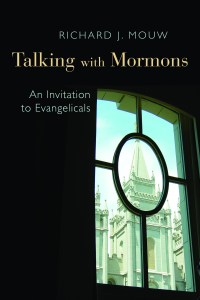
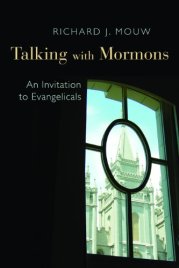
– The Beggar’s Bread review of Richard J. Mouw’s book, “Talking With Mormons” can be read here.
– A critical analysis and editorial on Dr. Muow’s methods and mean cans can be read here.

(all links retrieved 2012-11-12) 

by Fred W. Anson
(Second Edition to original June 2009 edition published on “Concerned Christians”)
Tongues speaking, vision seeing, holy rolling Mormons? For many the fact that primitive Mormonism was as Pentecostal as their local Foursquare or Assemblies of God Church may come as a shock but it’s a historical fact.

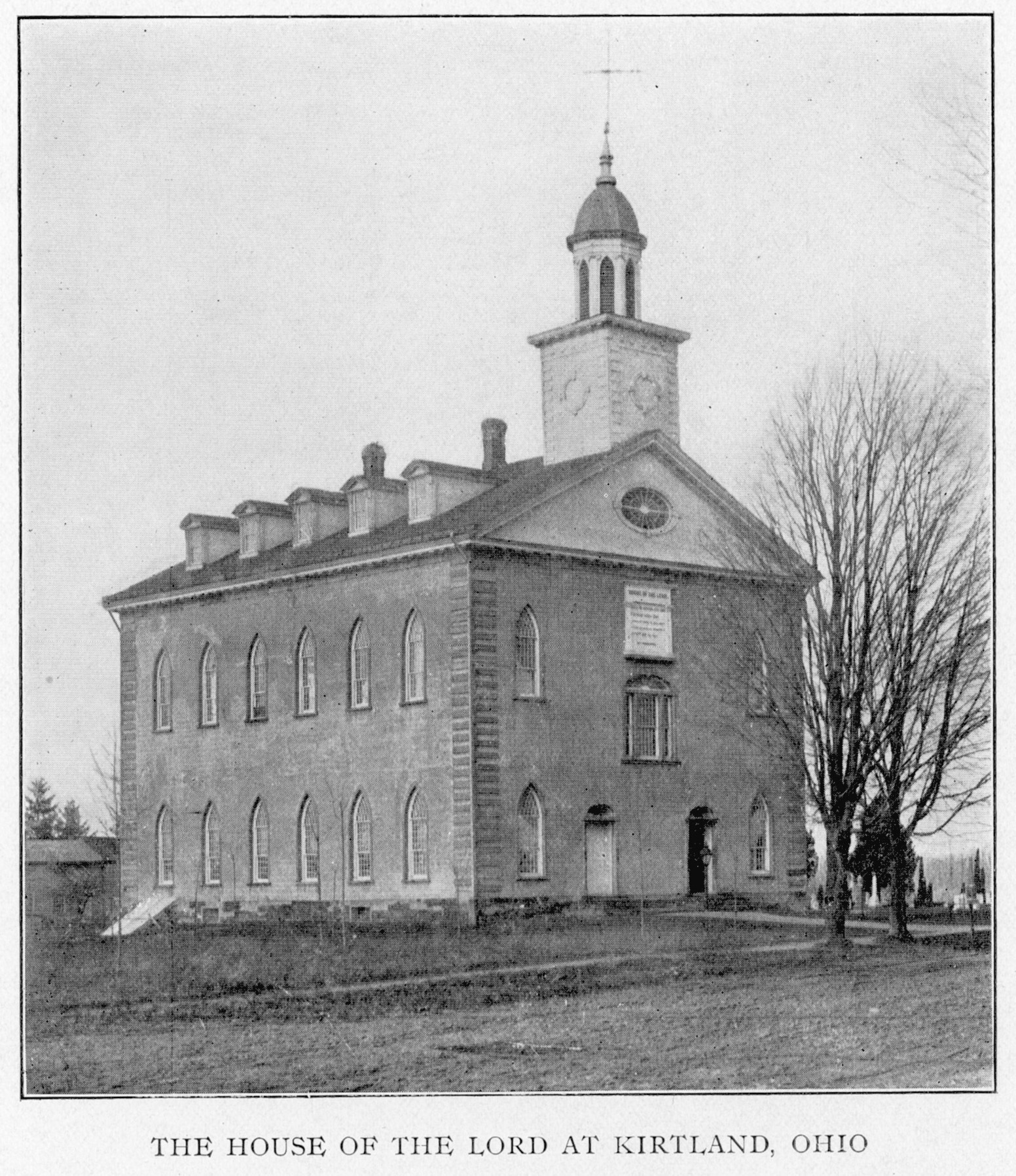
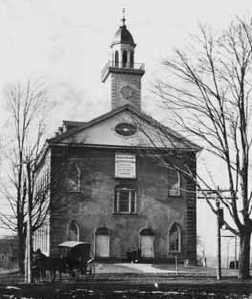
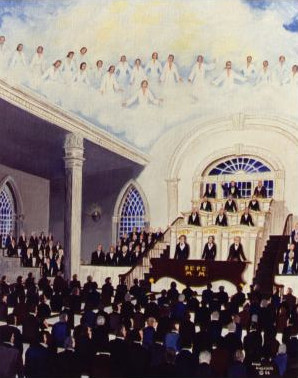
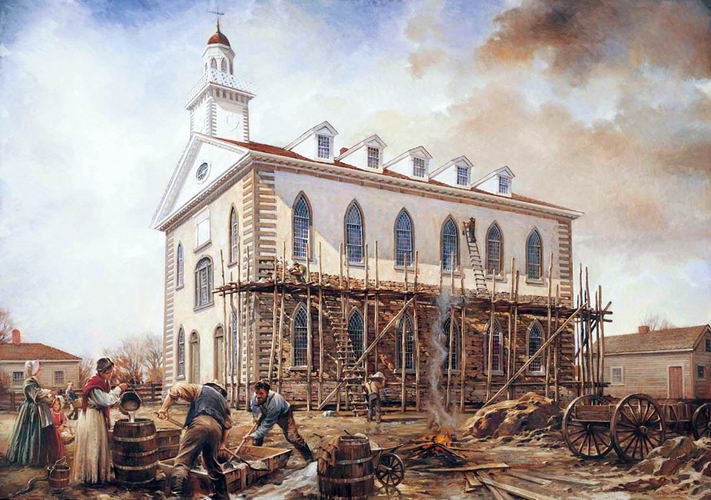
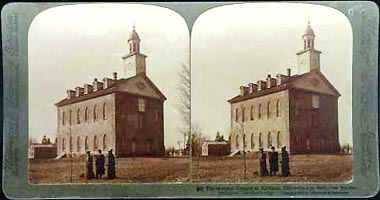
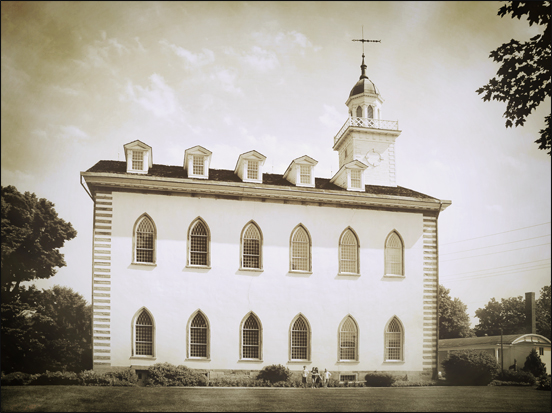
And could there be any greater evidence of the Pentecostalism of early Mormonism than the Dedication of the Kirtland Temple? Maybe, but it’s pretty hard to top – especially since we have such a rich trove of first hand reports to choose from.  A few of these accounts follow this brief introduction.

And since this author comes from a Pentecostal/Charismatic tradition I think it important to note that I’m not saying that these experiences would be considered legitimate by Christians of any ilk either then or now. Thankfully, the test for orthodoxy then, as it is now, rests on Biblical authority as well as reasonable empiricism and common sense (well, at least for the most part on the last one). Consider, for example, this empirical commentary from a modern Mormon Studies Scholar who suggests that something more than a move of the Spirit was a factor in Early Mormon practice of the Gifts of the Holy Spirit (aka “Charismata”):

Oh, there was prophesying, testifying, speaking in tongues, blessing and cursing, visions, angels, appearances by all kinds of characters including Elijah, Jesus, Adam, and Abraham.

But the Mormon church conveniently never discusses the fact that everyone arrived fasted – starving and thirsty. And how did they break the fast? With the Lord’s Supper, of course: bread and wine. Lots of wine.[1]

Yet despite any challenges to the causality, legitimacy or orthodoxy of any particular charismatic expression  Early Mormonism was unquestionably rooted in the burgeoning Pentecostalism of it’s day. Further, you can still see evidences and echoes of that legacy in the modern LdS Church – though today it’s only a shadow-like (actually more like a zombie-like, that is, animated but dead) aberration of what it once was.

 First Hand Accounts of the Dedication of the Kirtland Temple:
Joseph Smith, Jr.
“Brother George A. Smith arose and began to prophesy, when a noise was heard like the sound of a rushing mighty wind, which filled the Temple, and all the congregation simultaneously arose, being moved upon by an invisible power; many began to speak in tongues and prophesy; others saw glorious visions; and I beheld the Temple was filled with angels, which fact I declared to the congregation. The people of the neighborhood came running together (hearing an unusual sound within, and seeing a bright light like a pillar of fire resting upon the Temple), and were astonished at what was taking place.”[2]

Oliver Cowdery
“Sunday, the 27th attended on the dedication of the Lord’s house. For the particulars of this great event see my account written by myself, and printed in the March No. of The Messenger and Advocate, signed C. In the evening I met with the officers of the church in the Lord’s house. The Spirit was poured out–I saw the glory of God, like a great cloud, come down and rest upon the house, and fill the same like a mighty rushing wind. I also saw cloven tongues, like as of fire rest upon many, (for there were 316 present,) while they spake with other tongues and prophesied.”[3]

Heber C. Kimball
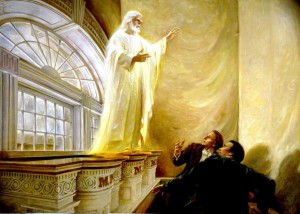
“During the ceremonies of the dedication, an angel appeared and sat near President Joseph Smith, Sen., and Frederick G. Williams, so that they had a fair view of his person. He was a very tall personage, black eyes, white hair, and stoop shouldered; his garment was whole, extending to near his ankles; on his feet he had sandals. He was sent as a messenger to accept of the dedication…While these things were being attended to the beloved disciple John was seen in our midst by the Prophet Joseph, Oliver Cowdery and others.”[4]

George A. Smith
“There were great manifestations of power, such as speaking in tongues, seeing visions, administration of angels. Many individuals bore testimony that they saw angels, and David Whitmer bore testimony that he saw three angels passing up the south aisle, and there came a shock on the house like the sound of a mighty rushing wind, and almost every man in the house arose, and hundreds of them were speaking in tongues, prophecying or declaring visions, almost with one voice.”[5]

Eliza R. Snow
“One striking feature of the ceremonies, was the grand shout of hosanna, which was given by the whole assembly, in standing position, with uplifted hands. The form of the shout is as follows: ‘Hosanna-hosanna-hosanna-to God and the Lamb-amen-amen, and amen.’ The foregoing was deliberately and emphatically pronounced, and three times repeated, and with such power as seemed almost sufficient to raise the roof from the building.

A singular incident in connection with this shout may be discredited by some, but it is verily true. A notice had been circulated that children in arms would not be admitted at the dedication of the temple. A sister who had come a long distance with her babe, six weeks old, having, on her arrival, heard of the above requisition, went to the patriarch Joseph Smith, Sr., in great distress, saying that she knew no one with whom she could leave her infant; and to be deprived of the privilege of attending the dedication seemed more than she could endure. The ever generous and kind-hearted father volunteered to take the responsibility on himself, and told her to take her child, at the same time giving the mother a promise that her babe should make no disturbance; and the promise was verified. But when the congregation shouted hosanna, that babe joined in the shout. As marvelous as that incident may appear to many, it is not more so than other occurrences on that occasion

The ceremonies of that dedication may be rehearsed, but no mortal language can describe the heavenly manifestations of that memorable day. Angels appeared to some, while a sense of divine presence was realized by all present, and each heart was filled with ‘joy inexpressible and full of glory.'”[6]

Benjamin Brown
“There the Spirit of the Lord, as on the day of Pentecost, was profusely poured out. Hundreds of Elders spoke in tongues. We had a most glorious and never-to-be-forgotten time. Angels were seen by numbers present. It was also at this time that Elijah the Prophet appeared, and conferred upon Joseph the keys of turning the hearts of the fathers to the children, previous to the re-institution of the ordinance of baptism for the dead.”[7]

Truman Angell
“When about midway during the prayer, there was a glorious sensation passed through the house [Kirtland Temple]; and we, having our heads bowed in prayer, felt a sensation very elevating to the soul. At the close of the prayer, F. [Frederick] G. Williams being in the upper east stand- -Joseph being in the speaking stand next below–rose and testified that midway during the prayer an holy angel came and seated himself in the stand. When the afternoon meeting assembled, Joseph, feeling very much elated, arose the first thing and said the personage who had appeared in the morning was the Angel Peter come to accept the dedication.”[8]
NOTES
[1] Shamdango, “Alcohol & Mormon Temples: Getting Crunk in the House of the Lord”; (http://www.whymormons.net/2008/04/alcohol-mormon-temples.html ; retrieved 2009-06; link now dead but full text follows in Appendix A)
[2] Joseph Smith, “History of The Church of Jesus Christ of Latter-day Saints”, 7 vols., introduction and notes by B. H. Roberts (Salt Lake City: The Church of Jesus Christ of Latter-day Saints, 1932-1951), Volume 2, p.428.
[3] Leonard J. Arrington, “Oliver Cowdery’s Kirtland Ohio ‘Sketch Book,'” BYU Studies, Volume 12, (Summer 1972), 426.
[4] Journal of Discourses, 26 vols. (London: Latter-day Saints’ Book Depot, 1854-1886), Volume 9, p.376
[5] Ibid, Volume 11, p.10.
[6] Edward W. Tullidge, “The Women of Mormondom” (New York: Tullidge & Crandall, 1877), p.95
[7] Benjamin Brown, “Testimony for the Truth,” Gems for the Young Folks (Salt Lake City: Juvenile Instructor Office, 1881), p.65
[8] Truman Angell, Autobiography, Our Pioneer Heritage, Writings of Early Latter-day Saints, p.198.

APPENDIX A:
Alcohol & Mormon Temples: Getting Crunk in the House of the Lord

by “Shamdango” (author’s pen name)
To “get crunk”: (verb) The act of getting crazy drunk.

The Church of Jesus Christ of Latter-day Saints is quick to tell fascinating tales of spiritual manifestations about its temples.

Some fantastic tales are the remarkable events that transpired in 1836 before and during the dedication of the Kirtland temple.

Oh, there was prophesying, testifying, speaking in tongues, blessing and cursing, visions, angels, appearances by all kinds of characters including Elijah, Jesus, Adam, and Abraham.

But the Mormon church conveniently never discusses the fact that everyone arrived fasted – starving and thirsty. And how did they break the fast? With the Lord’s Supper, of course: bread and wine. Lots of wine.

Speaking of the endowment event, William Harris gives us this account: “In the evening, they met for the endowment. The fast was then broken by eating light wheat bread, and drinking as much wine as they saw proper. Smith knew well how to infuse the spirit which they expected to receive; so he encouraged the brethren to drink freely, telling them that the wine was consecrated, and would not make them drunk…..they began to prophecy, pronounce blessings upon their friends, and curses on their enemies. If I should be so unhappy as to go to the regions of the damned, I would never expect to hear language more awful, or more becoming the infernal pit, than was uttered that night.”

Some years later, a brother Milo Andress “spoke of blessings and power of God manifested in the Kirtland Temple. Said he once asked the Prophet why he (Milo) did not feel the power that was spoken of as the power that was felt on the day of the Pentecost?….when we had fasted for 24 hours and partaken of the Lord’s supper, namely a piece of bread as big as your double fist and a half pint of wine in the Temple. I was there and saw the Holy Ghost descend upon the heads of those present like cloven tongues of fire.” – Diary of Charles L. Walker 1855-1902, excerpts typed 1969, page 35.

Mrs. Alfred Morley made this comment: “I have heard many Mormons who attended the dedication, or endowment of the Temple say that very many became drunk….The Mormon leaders would stand up to prophesy and were so drunk they said they could not get it out and would call for another drink. Over a barrel of liquor was used at the service.”

Isaac Aldrich stated: “My brother, Hazen Aldrich, who as president of the Seventies, told me when the Temple was dedicated a barrel of wine was used and they had a drunken pow-wow.”

Stephen H. Hart gave this information: “Mr McWhithey, who was a Mormon…said he attended a service which lasted from 10 AM until 4 PM, and there was another service in the evening. The Lord’s Supper was celebrated and they passed the wine in pails several times to the audience, and each person drank as much as he chose from a cup. He said it was mixed liquor and he believed the Mormon leaders intended to get the audience under the influence of the mixed liquor, so they would believe it was the Lord’s doings….When the liquor was repassed, Mr McWhithey told them he had endowment enough, and said he wanted to get out of the Temple, which was densely crowded.”

“The great heavenly ‘visitation,’ which was alleged to have taken place in the temple at Kirtland, was a grand fizzle. The elders were assembled on the appointed day, which was promised would be a veritable day of Pentecost, but there was no visitation. No Peter, James and John; no Moses and Elias, put in an appearance. ‘I was in my seat on that occasion,’ says Mr. Whitmer, ‘and I know that the story sensationally circulated, and which is now on the records of the Utah Mormons as an actual happening, was nothing but a trumped up yarn…”

High Priest David Whitmer, one of the Three Witnesses, The Des Moines Daily News, Oct. 16, 1886;

The statement by Mormon Apostle George A. Smith would also lead a person to believe that wine was used to excess: “… after the people had fasted all day, they sent out and got wine and bread…. they ate and drank…. some of the High Counsel of Missouri stepped into the stand, and, as righteous Noah did when he awoke from his wine, commenced to curse their enemies (Journal of Discourses, vol. 2, p.216).

Yes, wine was pouring that day and everyone was “drunk” with the spirit, from having drunk too many spirits.

It seems that the majority of the time, you can hardly find Joseph Smith having any of his historical visions and visitations without having the Lord’s Supper somewhere around the event – lots of wine.

It wasn’t until July 5, 1906 that the First Presidency and Quorum of the Twelve Apostles officially abandoned the practice of drinking wine in their weekly temple sacrament meetings.

The early initiatory ordinances also included bathing naked in strong perfumed “spirits” (e.g. whiskey) You can learn more about that here.

It’s apparent that the early saints were much more liberal with the wine at Joseph Smith’s request. Have you ever noticed that the outpouring of the spiritual manifestations and pentecostal gifts seemed to fade once Joseph Smith was gone?

BACK TO TOP

BOOK REVIEW: “Talking with Mormons: An Invitation To Evangelicals” by Richard J. Mouw
Reviewed by Fred W. Anson

Scolasticus Consummati
Richard J. Mouw’s book “Talking with Mormons: An Invitation to Evangelicals” represents his maiden voyage into the vast sea of Mormon Studies books.  As such, anticipation of a valuable  and timely message was high given his bio:

Richard J. Mouw

“Richard J. Mouw has served as president of Fuller Theological Seminary since 1993, after having served the seminary for four years as provost and senior vice president. A philosopher, scholar, and author, Mouw joined the faculty of Fuller Theological Seminary as professor of Christian philosophy and ethics in 1985. Before coming to Fuller he served for 17 years as professor of philosophy at Calvin College in Grand Rapids, Michigan. He has also served as a visiting professor at the Free University in Amsterdam.

A graduate of Houghton College, Mouw studied at Western Theological Seminary and earned a master’s degree in philosophy at the University of Alberta. His PhD in philosophy is from the University of Chicago.

Mouw has a broad record of publication. He has been an editor of the Reformed Journal and has served on many editorial boards, including currently Books and Culture. He is the author of 19 books…”[1]

Indeed, Dr. Mouw has had a long and distinguished career and many of his books, particularly those on Reformed, Creedal Theology are recommended reading.

Out Of His League
Of course, given such an impressive resume, there’s an expectation that this book should be well written, and it is. Dr. Mouw writes in a tight, succinct, engaging style and his arguments are logical, clear, and understandable. Dr. Mouw is a craftsman of style and rhetoric, however the substance of his argument fails to satisfactorily address those issues with Mormonism that present the greatest challenges to Evangelicals and others with years of experience in the field. Ultimately this new entry into the arena is clumsy and counter-productive. It’s quickly apparent that Dr. Mouw has exceeded the limits of his competency.

For a start, Dr. Mouw is talking to the wrong Mormons. “College Professor” and/or “Scholar” has no place in the hierarchy of the LdS Church.[2]  They don’t interpret official doctrine, they don’t define LdS orthodoxy, they don’t dictate LdS Church policy and they have exactly no “Priesthood Authority” over those who do. Thirteenth President Ezra Taft Benson made this quite clear when he said:

“Doctrinal interpretation is the province of the First Presidency. The Lord has given that stewardship to them by revelation. No teacher has the right to interpret doctrine for the members of the Church. If Church members would remember that, we could do away with a number of books which have troubled some of our people”[3]

In expecting the learned lay person to have any influence on the theology, doctrines and practice of the LdS Church, Dr. Mouw appears to have psychologically projected his own Evangelical tradition onto the Mormon movement. He doesn’t appear to grasp that Mormonism is, and always has been governed magisterially by its First Presidency. It is a “top down” institution that simply does not answer to the professors in its private university.[4]

To illustrate this point, it should be noted that of all the myriad changes to LdS theology that have been enacted in Salt Lake City (home of the Church Office Building for the Church of Jesus Christ of Latter-day Saints)[5], I can think of none that have originated in Provo (home of Brigham Young University).[6]

A Fine Example Of … What Exactly?  
This isn’t to say that Dr. Mouw limits himself exclusively to leading LdS academics. He also relates his interaction with Elder Jeffrey Holland, who is a member of the “Quorum of the Twelve Apostles” and occupies one of the top positions in the Mormon hierarchy:[7]

‘Elder Jeffrey Holland, one of the LDS General Authorities, not only has talked privately with some of us about the ways in which LDS leaders are placing a much stronger emphasis these days on the “finished work” of the atoning sacrifice of Jesus Christ on the Cross of Calvary, as well as the need for fallen sinners to rely completely on the grace of God for salvation; he and his colleagues have also publicly preached that kind of message in unambiguous terms to tens of thousands of Mormons in their addresses in recent years at the annual General Conferences. The evidence is available to anyone who has access to YouTube!’[8]

However, there’s an incongruity between what Dr. Mouw claims and the supporting evidence he produces to support it.[9]

Specifically, the address that Dr. Mouw presents as “a fine example” of this new trend in Mormonism was the 2009 General Conference Easter Message.[10]  If you watch the video, Holland doesn’t present the mainstream Christian view of “the ‘finished work’ of the atoning sacrifice of Jesus Christ on the Cross of Calvary, as well as the need for fallen sinners to rely completely on the grace of God for salvation”, instead what he gave was the  type of generic LdS Easter Message that’s been given at Annual General Conference sessions for decades.

And in accordance with LdS Theology, the main emphasis (please note the graphics in the video in particular) is on the Garden of Gethsemane where – in direct contradiction to what’s taught in the New Testament – LdS General Authorities have always taught that the atonement took place.[11] Further, the message that Mouw claims is clearly presented here is hardly “unambiguous” – Holland’s words can be interpreted to refer to either Gethsemane or Golgotha depending on your presuppositions.

And notice that Holland doesn’t mention, or reference grace in this address at all!  Nor, is the atonement presented as all sufficient and final.  Rather, when Holland uses the word, “finished” it’s given in the context of Christ finally ending the suffering.[12] So, Jeffrey Holland simply does not use the type of orthodox, mainstream Christian language that Mouw credits him with in the address.

And though the difference between Gethsemane and Golgotha might appear to be a trivial technicality, it underscores the vast differences between orthodox Evangelical Christianity and Mormonism. By situating it at Golgotha, Evangelicals locate the atonement in the sacrifice of Christ; by situating it in Gethsemane, Mormons locate the atonement in the obedience of the believer.

It’s the difference between grace and works. On the one hand, there is the truly finished work that the believer looks to in faith; and on the other there is the completed demonstration that the believer aspires to recreate (albeit metaphorically). In the latter, Christ might show the way, but he stops short of becoming the way, thus the believer is thrust back on his own efforts to secure the goal. As one recent commentator noted, Mormonism is more about attainment than atonement,[13] but such a focus denies the redemption narrative that is so highly valued by Evangelicals.

And oddly, the fact that Holland’s address doesn’t mention or refer to grace at all doesn’t seem to trouble Dr. Mouw in the least. Rather he seems to prefer to detect a “shift” towards the Reformed Christian understanding of grace somewhere between the lines in a place, apparently, where no one else can see it.

Nothing New to See Here!
Given this propensity, one might suggest that he ought to listen more closely to the 2011 Easter message given by Thomas S Monson, the ultimate authority in the LdS Church, in which he states that: “He it was who died on the cross to atone for our sins. He became the firstfruits of the Resurrection. Because He died, all shall live again.” [14]  Could this be what Dr. Mouw is looking for?

But again and alas, this is nothing new, the LdS Church has always taught that Christ died and extended unconditional grace to the world so that ALL human would be resurrected and judged. This is often referred to as “General Salvation” in LdS Theology, as opposed to “Individual Salvation” which is only for a select few (that is faithful, righteous, endowed, commandment keeping Mormons) who earn eternal life in the presence of God via their good works.[15] Thus, when considered in context and in total, every single one of the references to the atoning work of the cross in these Conference Addresses is referring to General Salvation rather than Individual Salvation – this is a distinction that continues to land Mormonism in the theological cult category.[16]

So, ultimately, Elder Holland’s so-called ‘fine example’ combined with all the other General Conferences addresses, the continued teaching of LdS Leaders and the body of official, correlated[17] Church Educational System manuals[18] discredit Mouw’s assertions. There’s just nothing new here – nothing has changed! So why is Dr. Mouw getting so excited?

Now About Your Choice of Friends…
Further, Dr. Mouw ought to be more discerning in seeking authoritative voices within Mormonism. Elder Jeffrey Holland has demonstrated the greatest pattern of manipulation both within and without the LdS Church.

For example, his infamous “Safety for the Soul” address from the Fall 2009 General Conference [19] is now held up by many Mormon Studies Scholars as a modern example of the Mormon practice of rhetorical manipulation as well as “Lying for the Lord”.[20] And I found it ironic that the “Safety For The Soul” address was given in the Fall General Conference a mere 6-months after the Spring Easter Message that Dr. Mouw presents as ‘Exhibit A’ of alleged movement toward mainstream Christian orthodoxy by The Brethren.[21]

Another example of Holland blatantly lying is his videotaped interview with BBC journalist John Sweeney about whether Mitt Romney took blood oaths when he went through the Temple. Mitt Romney took these oaths before becoming a missionary for the LDS Church in 1966. The Temple penalties were removed in 1990, well after Mitt Romney took them.[22]

BYU Professor, Robert Millet, who is featured prominently throughout the book, has regularly been “caught in the act”. Numerous examples could be cited for Mr. Millet but probably the most dramatic example was his presentation to a group of LdS Missionaries preparing for their 2-year mission in which he coaches them on “how to handle anti-Mormon criticism”[23]

Robert Millet
(click to view referenced video)

In this video Millet speaks about how to handle the tough “anti-Mormon” questions missionaries may face while on their missions (or afterward) using tactics like:  “We never provide meat when milk will do”, in other words obfuscation; “We seek to answer any serious question by finding the most direct route to the Sacred Grove”, in other words redirection; “Don’t answer the question they ask, answer the question they should have asked”, in other words deflection.  And while we’re not privy to the private sessions between Mouw and Millet’s “teams” it seems reasonable to expect that the Millet team engages in such tactics.

Regarding that team, concern has also been expressed about BYU Professor J. Spencer Fluhman of whom Mouw writes:

“Spencer Fluhman is a young Mormon scholar who recently earned his Ph.D. and is now a history professor at Brigham Young University. A participant in our Mormon-evangelical dialogue, Spencer converses easily with evangelicals, showing a willingness to entertain new – and old! – questions in a self-critical spirit. There’s no question about his fidelity to his Mormon faith, but he also clearly wants to link his Mormon convictions to what he sees as the deep concern in the Christian tradition to acknowledge the supremacy of Jesus Christ as Lord and Savior.” [24]

Based on that analysis, wouldn’t you think that Mouw is right to have great hope for future change in Mormonism given the presence of open-minded young men like this?  Perhaps we should consider what Mr. Fluhman had to say about Evangelicals in a recent New York Times article before we draw any hard conclusions:

“Anti-Mormon attacks by evangelicals have betrayed anxiety over the divisions in their movement and their slipping cultural authority as arbiters of religious authenticity. Some big-hearted evangelicals have recently reached out to Mormons with genuine understanding, but they must now fend off charges of getting too cozy with Satan’s minions. Because evangelicals are hard pressed for unity to begin with, and because they have defined themselves less and less in terms of historic Christian creeds, their objections to Mormonism might carry less and less cultural weight.” [25]

Based on that one, is tempted to ask, “Dr. Mouw, while it appears that this young Mormon scholar seems to be ‘impressed’ with your hearts, he seems to be somewhat less than impressed with your heads (not to mention Evangelical heads in general). It would seem that Mr. Fluhman is of the opinion that the LdS Church has Evangelicalism on the ropes, that we’re fading fast and that we don’t really have much of value to add to society relative to Mormonism – now one can only wonder where he got these ideas from Dr. Mouw!”

“Peace for our time”

Adding it all up, Dr. Mouw’s uncritical acceptance of what these rather notorious Mormon figures say in their private discussions, combined with how he appears to use “reading between the lines” as definitive evidence of a major shift taking place in the LdS Church one could easily lead one to conclude that he is ignorant, naive, and lacks good judgment as well as discernment.  One need only recall the picture of Neville Chamberlain declaring “Peace for our time” as a tutorial as to where having such deficiencies in an Ambassador can lead.[26]

For The Sake Of Brevity (really!)  
It’s an important subject, but for the sake of brevity I haven’t broached on how Dr. Mouw insists on publicly misrepresenting, slandering and libeling fellow Evangelicals.  The late Walter Martin who died in 1989 seems to be a favorite target for the wheels of Mouw’s bus but there are others. This pattern of behavior had already gotten him labeled everything from a “Pandering Slanderer” to “the LdS Church’s best Apologist” so I expect this book will simply add fuel to the fire. Suffice to say, Dr. Mouw’s infamous November 4th, 2004 Tabernacle apology to Mormons sounds hypocritical given how thoroughly and repeatedly he’s borne false witness of his own people!

Another complaint I have with this book is how Dr. Mouw is constantly lamenting Christians for not really understanding official LdS Theology, then filling page after page with misinformation derived solely from the unofficial, private, uncorrelated, personal opinions of LdS intellectuals while ignoring the vast body of approved, public, correlated LdS materials (books, magazines, manuals, etc.) — the latter being the material that defines what constitutes official LdS doctrine and theology and that contradicts what he’s hearing in those private meetings.

So tell me, who would you advise Dr. Mouw to listen to: A bunch of BYU Professors sequestered away and privately arguing over their personal opinions out in Provo, or the LdS Church First Presidency publicly dictating official Church dogma and doctrine to the membership in Salt Lake City?

If It Walks Like A Duck 
Finally, it’s hard to take Dr. Mouw seriously when he uses criteria like this to conclude that Mormonism isn’t a cult:

“In fact, even the label ‘cult’ seems inappropriate for describing the Mormonism that we’ve seen up close. Jehovah’s Witnesses – they’re a cult. They stick to a party line. You don’t find them arguing among themselves – at least in a way the rest of us can see and hear. If someone does insist on raising questions from within about Jehovah’s Witness teachings, they’re quickly expelled from the group. And the very idea of a world-class Jehovah’s Witness university is a hard one to entertain.

Mormonism is a different story altogether. Brigham Young University is world class. It has an excellent faculty, with doctorates from some of the best graduate programs in the world. Some devout Mormons are well-known scholars at major secular schools.” [27]

Ambassador College

What about the Worldwide Church of God?  They had a respected and accredited University too, but they were still a cult.[28] And let’s not forget “The September Six” (all academics and most BYU Professors) who were excommunicated on September 1993 for not sticking to the Mormon party line.[29]

Then there’s the recent Excommunication of Lyndon Lamborn on August 19, 2007 for “raising questions from within” about official church accounts of Mormon History that didn’t reconcile with reality – what about that?[30]

If the LdS Church isn’t a cult, then why has 13th LdS Church President Ezra Taft Benson’s “Fourteen Fundamentals in Following the Prophet” been quoted from at least once in every recent General Conference and continues to be cited and reprinted regularly in official, correlated LdS Church books, periodicals, and manuals? [31] Dr. Mouw, if President Benson’s pervasive and highly influential address isn’t a formula for mind control, I don’t know what is!

And let’s not forget the countless Mormons who have had their Temple Recommends pulled – or have even been excommunicated – because they gained a testimony of Jesus Christ but lost their testimony of Joseph Smith. Why is belief in and loyalty to a human being (the founder) so paramount if the Mormon Church isn’t a cult?

Finally we have the BITE Model[32] and other Sociological models for Mind Control Cults that we can “use as a plumb line” against.  Mormonism has consistently met the criteria when evaluated against such tests.[33]

michael-jordan-white-sox-si-cover-baseball

The Peter Principle circa 1994

Michael Jordan Shouldn’t Play Baseball . . .
Much more could be said about just how flawed and misguided the substance of this book is – Mouw exposes his naiveté and ignorance on virtually every page. It’s hard for this reviewer to see a scholar of Dr. Mouw’s stature embarrass himself so thoroughly by stumbling and bumbling around in an arena where he’s so obviously so unqualified.  Dr. Mouw appears to be in very deep denial on a great many things – not the least being his qualifications to work in an area that’s outside of his area of accomplishment, training, expertise and skills.

Or put another way, just as Michael Jordan shouldn’t play baseball, Richard J. Mouw shouldn’t talk with Mormons.

So despite my respect for many of Dr. Mouw’s other accomplishments, in the end I simply cannot recommend this book. However, I have a book recommendation for Dr. Mouw:  Please read “The Peter Principle”[34] because, to me it explains what’s really going on when you’re talking with Mormons.

NOTES:
[1] See http://www.fuller.edu/president/
(retrieved 2012-08-10)

[2] For a more complete description – including a superb graphical representation – of the hierarchy of the LdS Church see http://www.mormonwiki.org/LDS_Hierarchy
(retrieved 2012-08-07)

[3] “Teachings of Ezra Taft Benson“, p.317; “The Gospel Teacher and His Message”, also cited in “Charge to Religious Educators”, p.14, and; The LdS Church manual, “Teachings of the Living Prophets”, pp.51-52;
(retrieved 2015-09-19)

[4] A case in point is how the LdS Church treated BYU Professor Randy Bott’s Washington Post comments on race in February 2012 (see http://www.mormonnewsroom.org/article/racial-remarks-in-washington-post-article ; retrieved 2012-08-12)  In their church statement, the LdS Church clearly stated, “BYU faculty members do not speak for the Church.”

[5] See Wikipedia “Church Office Building” http://en.wikipedia.org/wiki/Church_Office_Building (retrieved 2012-08-10)

[6] See Wikipedia “Brigham Young University” http://en.wikipedia.org/wiki/Brigham_Young_University (retrieved 2012-08-10)

[7] Richard J. Mouw. “Talking with Mormons: An Invitation to Evangelicals”, Kindle Locations 873-877

[8] See Wikipedia, “Jeffrey R. Holland: LDS Church Leadership”
http://en.wikipedia.org/wiki/Jeffrey_R._Holland#LDS_Church_leadership
(retrieved 2012-08-08)

[9] The accompanying endnote then references the YouTube video http://www.youtube.com/watch?v=yr6Un5XpFZU ; Op Cit, Holland, “Talking with Mormons”, Kindle Location 961

[10] “None Were With Him” by Jeffrey R. Holland
http://www.lds.org/general-conference/2009/04/none-were-with-him
(retrieved 2012-08-07)

[11] “[It was in the Garden of Gethsemane that Christ] “suffered as only as God would suffer, bearing our griefs, carrying our sorrows, being wounded for our transgressions, voluntarily submitting Himself to the iniquity of us all, just as Isaiah prophesied.

It was in Gethsemane that Jesus took on Himself the sins of the world, in Gethsemane that His pain was equivalent to the cumulative burden of all men, in Gethsemane that He descended below all things so that all could repent and come to Him”
(Ezra Taft Benson, “The Teachings of Ezra Taft Benson”, pp.14&15; http://www.amazon.com/Teachings-Ezra-Taft-Benson/dp/0884946398 )
(retrieved 2012-8-08)

[12] “But Jesus held on. He pressed on. The goodness in Him allowed faith to triumph even in a state of complete anguish. The trust He lived by told Him in spite of His feelings that divine compassion is never absent, that God is always faithful, that He never flees nor fails us. When the uttermost farthing had then been paid, when Christ’s determination to be faithful was as obvious as it was utterly invincible, finally and mercifully, it was ‘finished.’”
(Op cit, Holland, “None Were With Him”)

[13] Adam Gopnik, “I, Nephi: Mormonism and its meanings”; The New Yorker, August 13, 2012; http://www.newyorker.com/arts/critics/atlarge/2012/08/13/120813crat_atlarge_gopnik?currentPage=all
(retrieved 2012-08-12)

[14] “At Parting” by Thomas S. Monson
http://www.lds.org/general-conference/2011/04/at-parting
(retrieved 2012-08-07)

[15] For a good overview of Mormon Soteriology see “Salvation According to Mormonism” by Mormon Research Ministry; http://www.mrm.org/salvation
(retrieved 2012-08-07)

Here’s a salient excerpt:
“Mormonism teaches of a general salvation and an individual salvation. General salvation refers to the unconditional, universal gift of resurrection to all. Individual salvation refers to the process one must go through to receive exaltation in the highest heavenly kingdom of the afterlife, the Celestial Kingdom, where one may eternally enjoy family and become a God over his own spirit children. While Mormonism teaches that this process is made possible by the necessary merits of Christ and blessings of his atonement, and that gracious guidance, encouragement, and strengthening is granted throughout the journey, it nevertheless teaches that the decisive factor which determines one’s final destination is one’s personal, meritorious righteousness and worthiness.”

Also see,  Marvin W. Cowan, “Mormon Claims Answered”, Chapter 8
http://utlm.org/onlinebooks/mclaims8.htm
(retrieved 2012-08-08)

[16] See Alan W. Gomes, “Unmasking The Cults”;  Kindle Locations 103-106
Mr. Gomes is a graduate of Dr. Mouw’s University (Fuller Seminary) who teaches at Talbot Seminary and Biola  University.  He defines a cult as, “… is a group of people who claim to be Christian, yet embrace a particular doctrinal system taught by an individual leader, group of leaders, or organization, which (system) denies (either explicitly or implicitly) one or more of the central doctrines of the Christian faith as taught in the sixty-six books of the Bible.”

[17] See “Priesthood Correlation Program”
http://en.wikipedia.org/wiki/Priesthood_Correlation_Program
(retrieved 2012-08-07)

[18] These are the manuals used in Sunday School, LdS Seminary, and all other church related instruction see http://en.wikipedia.org/wiki/Church_Educational_System
(retrieved 2012-08-07)

[19] See http://www.youtube.com/watch?v=TMWK20vZFwQ for the address as it was given.

Some good deconstructions, analyses and critiques of the address can be found at:
“An LDS Gem Elder Holland’s Opus”
http://equalitysblog.typepad.com/equality_time/2009/10/an-lds-gem-elder-hollands-opus.html

“Examing Holland’s Talk” (Part 1 of 5)
http://www.youtube.com/watch?v=O57HTriXrIY&feature=PlayList&p=49F9B9EB968F55B0&playnext_from=PL&index=0&playnext=1

“Understanding Elder Holland’s Address The Book of Mormon”
http://gdteacherpnw.blogspot.com/2009/10/understanding-elder-hollands-address-on.html
(all above links retrieved 2012-08-07)

The official transcript of the address can be found here:
http://www.lds.org/general-conference/2009/10/safety-for-the-soul?lang=eng
(retrieved 2012-08-10)

[20] See “Lying for the Lord” MormonWiki Article
http://www.mormonwiki.org/Lying_for_the_Lord
(retrieved 2012-08-07)

[21] Op Cit, Richard J. Mouw. “Talking with Mormons: An Invitation to Evangelicals”, Kindle Locations 314-318; also see Kindle Location 961 for relevant endnote

[22] This video can be viewed at http://www.youtube.com/watch?v=4jyU97I12AQ
(retrieved 2012-08-10)

[23] This video can be viewed at http://newnewsnet.byu.edu/flv/overcomingobjections.html
(retrieved 2012-08-07)

[24] Op Cit, Richard J. Mouw, “Talking with Mormons: An Invitation to Evangelicals”; Kindle Locations 892-895

[25] J. Spencer Fluhman, “Why We Fear Mormons”; The New York Times, June 3, 2012; http://www.nytimes.com/2012/06/04/opinion/anti-mormonism-past-and-present.html
(retrieved 2012-08-08)

Elsewhere in this article Mr. Fluhman exposes one of his underlying presuppositions with this astounding statement, “… evangelical hatred has been the driving force behind national anti-Mormonism.”

To that assertion I would first respond, “Disagreement is disagreement, not hatred.” Further, I would echo in agreement the words of Richard and Joan Ostling in when they observed:

“The thin-skinned and image-conscious Mormon can display immature, isolationist, and defensive reactions to outsiders, perhaps because there is no substantive debate and no “loyal opposition” within their kingdom. With some, it almost seems that the wilderness is still untamed, the federal ‘polyg’ police are on the prowl, and the Illinois lynch mob is still oiling muskets and preparing to raid Carthage Jail. All too often Saints use the label “anti-Mormon” as a tactic to forestall serious discussion.”
(Richard N. and Joan K. Ostling, “Mormon America: The Power and the Promise (2007 Edition)”; p. 115; http://www.amazon.com/Mormon-America-Revised-Updated-Edition/dp/0061432954/ref=sr_1_1?ie=UTF8
(retrieved 2012-08-10)

And I would remind those that use it that “Anti-Mormon” is the Mormon “N-word” – it’s the equivalent of an Evangelical calling a Mormon an “Anti-Evangelical”.  If you really want to demonstrate that you are a person of good intent and good will (not to mention not prejudiced or bigoted) please refrain from name calling and replace it with the far more accurate terms, “Mormon Critic” or “Critic of Mormonism.”

Finally, I would point out again to the reader that this is the type of up-and-coming-Mormon that Dr. Mouw places hope for a bright future in. One is tempted to ask Dr. Mouw, “Exactly WHAT are you seeing in a person that we, members your people group, fellow Christians and allies for the Reformed faith are missing? Candidly he seems to be too contentious for respectful dialog!”

[26] See “Peace for our time” Wikipedia article
http://en.wikipedia.org/wiki/Peace_for_our_time
(retrieved 2012-08-12)

[27] Richard J. Mouw. Talking with Mormons: An Invitation to Evangelicals; Kindle Locations 314-318

[28] See “Ambassador College” Wikipedia article
http://en.wikipedia.org/wiki/Ambassador_College ; (retrieved 2012-08-10)

[29] See “September Six” Wikipedia article
http://en.wikipedia.org/wiki/September_Six
(retrieved 2012-08-09)

[30] See the Lyndon Lamborn webpage on Mormon Think
http://www.mormonthink.com/lyndonlamborn.htm
(retrieved 2012-08-09)

Or read Mr. Lamborn’s book, “Standing For Something More: The Excommunication of Lyndon Lamborn” http://www.amazon.com/Standing-For-Something-More-Excommunication/dp/1438947437/ref=sr_1_1?ie=UTF8&qid=1344568153&sr=8-1
(retrieved 2012-08-09)

[31] Ezra Taft Benson, “Fourteen Fundamentals in Following the Prophet”, Liahona, June 1981; http://www.lds.org/liahona/1981/06/fourteen-fundamentals-in-following-the-prophet
(retrieved 2012-08-09)

[32] There are many sociological aspects we can examine to determine if a group fits the criteria of a “cult,” but one of the easiest models to use in evaluating cult mind-control is given by Steven Hassan in his book Releasing the Bonds: Empowering People to Think for Themselves, published in 2000 by Freedom of Mind Press, Somerville MA.  (see http://www.amazon.com/Releasing-Bonds-Empowering-People-Themselves/dp/0967068800 )
(retrieved 2012-08-10)

In chapter two, he gives four basic components of mind control, which form the acronym BITE. You can read more about the BITE Model here:
http://freedomofmind.com/resourcecenter/articles/bite/
(retrieved 2012-08-09)

This model was based primarily on Robert Lifton’s work but also draws from research from Margaret Singer and many others. It doesn’t target any group in particular and can be applied to ANY group be they religious, political, secular, etc. It just doesn’t matter.

[33] Steven Hassan recommends that the BITE Model analysis be done by former members as they have the greatest insight into the group’s formal and informal behavior. So with that in mind, here are links to the BITE analysis’s that have been completed by former Mormons.

I would politely suggest that these analyses answer this nagging question rather nicely – and I will leave it to the reader to decide the answer for them self what that answer is:

The BITE Model and Mormon Control
by Luna Flesher
(an ExMormon and a Cult Exit Counselor at the time this analysis was completed)
http://www.rationalrevelation.com/library/bite.html
(retrieved 2012-08-09)

The BITE model applied toward Mormonism’s two-year missionary program as submitted by an ex-Mormon
http://www.freedomofmind.com/resourcecenter/groups/m/mormon/BITE-missionary.htm
(retrieved 2012-08-09)

The BITE model applied toward Mormonism as submitted by an ex-Mormon
http://www.freedomofmind.com/resourcecenter/groups/m/mormon/BITE-Mormonism.htm
(retrieved 2012-08-09)

Are Mormons (LDS or Latter-day Saints) A Cult?
http://www.4witness.org/jehovahs_witness/jw_lds_cults.php
(retrieved 2012-08-09)

[34] Laurence J. Peter & Raymond Hull, “The Peter Principle”
http://www.amazon.com/Peter-Principle-Things-Always-Wrong/dp/0062092065/ref=sr_1_1?s=books&ie=UTF8&qid=1344564389
(retrieved 2012-08-09)

From the Amazon product description:
“The Peter Principle, the eponymous law Dr. Laurence J. Peter coined, explains that everyone in a hierarchy—from the office intern to the CEO, from the low-level civil servant to a nation’s president—will inevitably rise to his or her level of incompetence.”

Also see: Wikipedia Article, “Peter Principle”
http://en.wikipedia.org/wiki/Peter_Principle
(retrieved 2012-08-10)

(And last but not least, while taking full responsibility for this article’s content, the author would like express his sincere appreciation to his editors and peer reviewers for making it far, far, far better, they are:  Martin Jacobs and Keith Walker) 

(A response to “Mormons! The Least You Should Know” by By Gregory J. Krieg)
by Fred W. Anson 

Yes, the ABC News article (covered in Part 1 of this series) was bad, however, what followed was even worse: The comments were heavily moderated and skewed in the favor of those who are content to let this white washed and spin-doctored PR Department version Mormonism stand unchallenged.

I know this because it was only after I complained to the editors of the site that my comments and those of others (including several of my Mormon Studies colleagues) that contained countering evidence to the article’s factual inaccuracies weren’t posting that they got posted. After that small accommodation they reverted back to only posting comments that favored and supported the article. I know this because my responses to those who had taken issue with my aforementioned posts remain on the cutting room floor of ABC to this day – unseen and unheard.

So to even the score and bring some sense of balance and equity to the situation what follows is a point-by-point deconstruction of the article relative to Mormon Studies reality. And while some may be somewhat of a “rerun” of comments that managed to post I have added additional “bonus” material here that I hope will illuminate beyond anything that you may have already read on any given topic.

ABC NEWS: IT’S NOT LDS DOCTRINE THAT JESUS AND THE DEVIL ARE BROTHERS
“Mike Huckabee was talking to a New York Times reporter for a magazine piece during that year’s primary season when, after conceding he didn’t know much about the religion, reportedly asked: “Don’t Mormons believe that Jesus and the devil are brothers?”

The answer is no; Mormons do not believe that, nor does Mormonism teach it. There is no such thing written in any of The Church of Jesus Christ of Latter-day Saints (LDS) doctrine. Huckabee would later apologize to Romney, insisting it was an honest question he never thought would be published.”

The cover of the official LdS Church Education System Seminaries and Institute of Religion manual, “Pearl of Great Price Student Manual – Religion 327”

FACT: IT INDEED IS LDS DOCTRINE
From the chapter entitled, “Moses 1:12 – 23 – Satan Commanded Moses to Worship Him” in the official LdS Church Education System Seminaries and Institute of Religion manual, “Pearl of Great Price Student Manual – Religion 327” which is currently in use in the Mormon Church [bold underlining added for emphasis]:

“The importance of not accommodating temptation in the least degree is underlined by the Savior’s example. Did not he recognize the danger when he was on the mountain with his fallen brother, Lucifer, being sorely tempted by that master tempter? [see Matthew 4:1–11 .] He could have opened the door and flirted with danger by saying, ‘All right, Satan, I’ll listen to your proposition. I need not succumb, I need not yield, I need not accept—but I’ll listen.’”[1]

And as a commenter noted in his response to the ABC News article’s error:
“This official Mormon Church teaching manual clearly states that Jesus and Lucifer are brothers and equates Lucifer with Satan. It also quotes Matthew 4:1-11 which refers” the devil” four times. There is no wiggle room here and any Mormon who denies that Mormonism teaches that Jesus and the devil are brothers is either uninformed or is lying to you.”

And if further proof is needed, it’s readily available. For example Brigham Young taught that Lucifer is God the Father’s second son, to Christ his elder son in this discourse on the great spiritual war in heaven that was waged resulting in Lucifer’s fall:

“[God the Father speaking] ‘Who will redeem the earth, who will go forth and make the sacrifice for the earth and all things it contains?’ The Eldest Son [Jesus Christ] said: ‘Here am I’; and then he added, ‘Send me.’ But the second one, which was “Lucifer, Son of the Morning,” said, ‘Lord, here am I, send me, I will redeem every son and daughter of Adam and Eve that lives on the earth, or that ever goes on the earth.'[2]

And Mormon Prophets and leaders have echoed and reinforced that teaching throughout Mormon History:
Jesus is Gods firstborn son Lucifer is the second born on down to you and I and Jesus is our elder brother.”[3]

And, finally, regarding the Huckabee apology, it was clearly an act of political expediency not an admission of error. The body of evidence clearly demonstrates that Mr. Huckabee had the truth on his side, however, when it comes to politics very often truth is the first casualty. It seems odd that a professional journalist was unable to discern this!

According to LdS Doctrine these two are our pre-existent, spiritual brothers.
(“Jesus Tempted” by Carl Heinrich Bloch)

ABC NEWS: MORMONS ARE CHRISTIANS
“Are Mormons Christians? Or put it this way: ”Do they worship Jesus Christ?” Answer: Yes. Mormon doctrine goes in lockstep with the Christian creation myth, including and especially Christ’s crucifixion and subsequent rising (it veers away later, in the Book of Mormon, where it is written that Jesus took a trip to America, post-Resurrection).”

FACT: MORMONISM IS NOT CHRISTIAN, IT IS IT’S OWN UNIQUE NON-CHRISTIAN RELIGION
This is a complex subject, one that I covered extensively in a prior article, and one that ink and pixels continue to be spilled over from all quarters. However, to me, the the late Catholic Scholar, Richard John Neuhaus‘ analysis cuts through the fog and brings clarity:

“…Mormonism is inexplicable apart from Christianity and the peculiar permutations of Protestant Christianity in nineteenth-century America. It may in this sense be viewed as a Christian derivative. It might be called a Christian heresy, except heresy is typically a deviation within the story of the Great Tradition that Mormonism rejects tout court.” 

Continuing, Neuhaus goes on to explain, “For missionary and public relations purposes, the LDS may present Mormonism as an ‘add-on,’ a kind of Christianity-plus, but that is not the official narrative and doctrine.

A closer parallel might be with Islam. Islam is a derivative of Judaism, and Christianity. Like Joseph Smith, Muhammad in the seventh century claimed new revelations and produced in the Quran a ‘corrected’ version of the Jewish and Christian scriptures, presumably by divine dictation. Few dispute that Islam is a new and another religion, and Muslims do not claim to be Christian, although they profess a deep devotion to Jesus. Like Joseph Smith and his followers, they do claim to be the true children of Abraham. Christians in dialogue with Islam understand it to be an interreligious, not an ecumenical, dialogue. Ecumenical dialogue is dialogue between Christians. Dialogue with Mormons who represent official LDS teaching is interreligious dialogue.”[4]

Richard John Neuhaus

So perhaps Richard Land, of the Southern Baptist Convention spoke well when he observed, “I think the fairest and most charitable way to define Mormonism would be to call it the fourth Abrahamic religion – Judaism being the first, Christianity being the second, Islam being the third, and Mormonism being the fourth. And Joseph Smith would play the same character in Mormonism that Muhammad plays in Islam.”[5]

All this merely punctuates a key point made by Religious Journalists, Richard and Joan Ostling in their watershed book “Mormon America“, “…it is surely wrong to see Mormonism as a Christian derivative in the way that Christianity is a Jewish derivative, because the LDS faith is in radical discontinuity with historic Christianity.”[6]

Further, the idea that, “Mormon doctrine goes in lockstep with the Christian creation myth,” comes unhinged in the light of the aforementioned fact that the Mormon Christ was God the Father’s procreated “spirit child” rather than God Eternal and the Creator as clearly stated in The Gospel of John, chapter 1, verses 1-3: “In the beginning was the Word [referring to Jesus Christ], and the Word was with God, and the Word was God. He was in the beginning with God. All things were made through him, and without him was not any thing made that was made.” [7]

Further, the cruxification is de-emphasized in Mormonism with the atonement taking place in the Garden of Gethsename rather than on the cross. From 13th LdS President, Ezra Taft Benson:

“[It was in the Garden of Gethsemane that Christ] suffered as only as God would suffer, bearing our griefs, carrying our sorrows, being wounded for our transgressions, voluntarily submitting Himself to the iniquity of us all, just as Isaiah prophesied.

It was in Gethsemane that Jesus took on Himself the sins of the world, in Gethsemane that His pain was equivalent to the cumulative burden of all men, in Gethsemane that He descended below all things so that all could repent and come to Him”

A new Christian Church buidling in Beijing, China.
Please notice the prominent use of the cross in the exterior architecture. The cross is also featured prominently in the interior space of this church building.

Yet the emphasis on the cross in the New Testament and throughout Christian Church History is apparent as anyone who has been in, or even driven by a Christian Church building will tell you.

As one Mormon Researcher noted well, “Perhaps it is for these reasons [the de-emphasis of the cross and teaching that the atonement occurred in the Garden of Gethsemane] that you will not find crosses on Mormon buildings. Certainly in the mind of the Latter-day Saint its significance is not equal to that of the Bible-believing Christian. We who hold the Bible dear have no choice but to concur with the Apostle Paul and declare without reservation, ‘That the preaching of the cross (not the garden) is to them that perish foolishness; but unto us which are saved it is the power of God'” (1 Corinthians 1:18)’ [9]

The final point that I make to those who insist that Mormonism is Christian is this: The most basic, fundamental tenet of Judeo-Christianity as well as Islam is monotheism – the belief in one, and only one, universal God.  Therefore, because Mormonism is henotheistic – believing that the god of this planet, while the only god of this planet, is still only one in a unknown hierarchy of gods, possibly even an infinite number of gods – it can be neither Jewish, Christian, or Islamic.

In summary and conclusion, Mormonism is it’s own, unique, one-of-a-kind, non-Jewish, non-Christian, non-Islamic religion.

A typical Mormon Chapel
Conspicuous in it’s absence, any sign of a cross. In fact, crosses are not used in any form or fashion in Mormon architecture or culture.

ABC NEWS: POLYGAMY IS NO LONGER PART OF THE LDS CHURCH
“Big Love” died in 1890. Polygamy was banned by then-church president Wilford Woodruff in his “Manifesto.” Any plural marriage that takes place now does so against the laws of the LDS Church.”

FACT: POLYGAMY IS A VITAL PART OF LDS CHURCH DOCTRINE
Doctrine & Covenants (D&C) is a collection of revelations given primarily to Joseph Smith with a few others sprinkled in. It is current, canonized Mormon scripture.

Section 132 of D&C is the revelation in which Joseph Smith claimed to receive from God on polygamy. It was canonized in 1876 and has remained in the LdS Church’s D&C continuously since even though other sections (including the original Section 101 – which condemned polygamy and which was removed to make way for Section 132)[10] have been decanonized and removed.

The Wilford Woodruff Manifesto that the author of the ABC News article refers to is also in D&C as “Official Declaration 1” (OD-1). And yes, OD-1 was indeed very publicly canonized in 1890 – and then promptly ignored in private. It wasn’t until the Reed Smoot hearings of 1904-1907 in which the public became aware that the LdS Church was still secretly engaging in polygamy that a full and final ban was put in place via a “Second Manifesto” which was issued by then LdS President, Joseph F. Smith in 1904.[11]

The 6th LdS Church President (1901-1917) and practicing polygamist Joseph F. Smith with his family and five of his six wives (one being deceased). Joseph F. Smith issued the “Second Manifesto” in 1904

Further, OD-1, which is directed outwardly to “To Whom It May Concern” rather than specifically inward to the LdS Church is clear that this ban is only temporary due to the new, prevailing laws against polygamy of the time (such as the Edmund-Tucker Act of 1887) which had recently been enacted:

“Inasmuch as laws have been enacted by Congress forbidding plural marriages, which laws have been pronounced constitutional by the court of last resort, I hereby declare my intention to submit to those laws, and to use my influence with the members of the Church over which I preside to have them do likewise.

There is nothing in my teachings to the Church or in those of my associates, during the time specified, which can be reasonably construed to inculcate or encourage polygamy; and when any Elder of the Church has used language which appeared to convey any such teaching, he has been promptly reproved. And I now publicly declare that my advice to the Latter-day Saints is to refrain from contracting any marriage forbidden by the law of the land.”[12]

In fact, the Mormon Church of 1890 had already established polygamous colonies in both Mexico and Canada and polygamy was openly practiced until the governments there cracked down on it as well. So OD-1 was (and is) intended to be a public relations gesture to get the United States Government (which was about to seize it’s assets due to it’s illegal activity) off the back of the LdS Church.[13]

Today, “Big Love” does in fact continue very quietly and very privately in a “Don’t Ask, Don’t Tell” manner – if you’re discovered, in accordance with the Second Manifesto, you’re excommunicated – period. However, at that point there are any number of polygamous LDS denominations that will happily accept you and your wives as members. It remains to be seen what the LdS Church will do if polygamy is ever decriminalized or legalized in the United States.

Further, because D&C 132 remains LdS Scripture it’s believed that a man widowed by women to whom he was sealed to in an LdS Temple who then remarries via a subsequent “Temple Sealing” is polygamously married to all these sealed women when he reaches the highest Mormon Heaven known as “The Celestial Kingdom” mentioned in D&C 132. This type of Celestial Marriage currently applies to three living LdS Apostles: Dallin H. Oaks, L. Tom Perry, and Russell M. Nelson – all three men are widowers, and all three men have been “sealed” to a second wife – they are, therefore, known in some Mormon Studies circles as “Celestial Polygamists“.

The LdS “Quorum of Twelve Apostles”
The Celestial Polygamists: Dallin H. Oaks, front row, third from right; L. Tom Perry, front row, second from left; Russell M. Nelson, front row, third from left

Finally, care to guess what the infamous, “Families Are Forever” Mormon mantra and doctrine is based on?  If you guessed, D&C 132 you would be right.   So polygamy is still a vital part of Mormonism – albeit in a much different, less concrete form than how it was practiced prior to the Second Manifesto.

ABC NEWS: LDS TEMPLE GARMENTS ARE BORING AND COMMON
“Ah yes, The Magic Underwear, so easy to make fun of until you consider their actual meaning, which is really kind of boring. Little more than purposefully designed cotton shirts and knickers, they’re meant to be worn day and night (by those who choose to wear them) and symbolize a holy covenant with the church, along with protection from evil spirits. Most major religions have some form of equivalent dress; Mormons, in this case and with lots of other “weird” traditions, are only mocked because they started do it more recently.”

RESPONSE: BORING? COMMON? NOT! 
But, hey, don’t take my word for it, let’s go to the source for all things “Temple Garment”: The LdS Temple Endowment Ceremony!

What follows are excerpts from a transcript of the LdS Temple Endowment Ceremony.  Please note that the portions of the endowment that are immaterial and irrelevant relative to LdS Temple Garment have been omitted (if you would like to read the entire Endowment Ceremony just use the links in the “Notes” section below).

However, if you would prefer to simply watch a full re-enactment of the LdS Temple Endowment Ceremony you can do so here:

Video of an Ex-Mormon Re-enactment of the LdS Temple Endowment Ceremony

EXCERPTS FROM THE LDS TEMPLE ENDOWMENT REGARDING MORMON TEMPLE GARMENTS
From the “Initatory” portion of the Endowment Ceremony [14]
THE GARMENT
[An officiator clothes the initiate in the garment. The officiator then pronounces the following words]

Brother/Sister _________, having authority, I place this garment upon you, which you must wear throughout your life. It represents the garment given to Adam when he was found naked in the garden of Eden and is called the garment of the holy priesthood.

Inasmuch as you do not defile it, but are true and faithful to your covenants, it will be a shield and a protection to you against the power of the destroyer until you have finished your work on the earth.

THE NEW NAME
With this garment, I give you a new name, which you should always remember and which you must keep sacred and never reveal, except at a certain place that will be shown you hereafter.

The name is _________.

Simulated LdS Temple scene inside the LdS Temple “Celestial Room”. This shot includes good front and back views of LdS Temple Garments.
(from the HBO television show “Big Love”)

From the “Endowment Proper” portion of the Endowment Ceremony [15]
WELCOME
[Initiates assemble in silence in the chapel. When all is ready, they are ushered into the Creation Room. Here and throughout the ceremony, men sit on one side of the room, women on the other.]

FIRST LECTURER: Brethren and sisters, we welcome you to the temple and hope you will find joy in serving in the house of the Lord this day.

Those of you who are here to receive your own endowment should have been washed, anointed, and clothed in the garment of the holy priesthood. The ordinances of washing, anointing, and clothing in the garment of the holy priesthood, together with the ordaining on behalf of deceased brethren, were performed previously for those deceased persons whom you are representing.

Each of you should have received a new name in connection with this company. If any of you have forgotten the new name or have not received these ordinances as explained, please stand.

[Pause. If someone has forgotten the new name, a temple worker draws the person aside briefly to repeat the portion of the intiatory in which the new name is bestowed]

You have had a garment placed upon you, which you were informed represents the garment given to Adam when he was found naked in the garden of Eden, and which is called the garment of the holy priesthood. This you were instructed to wear throughout your life. You were informed that it will be a shield and a protection to you if you are true and faithful to your covenants.

You have had a new name given unto you, which you were told never to divulge, nor forget. This new name is a keyword which you will be required to give at a certain place in the temple today.

The endowment is to prepare you for exaltation in the celestial kingdom. If you proceed and receive your full endowment, you will be required to take upon yourselves sacred obligations, the violation of which will bring upon you the judgments of God, for God will not be mocked.

Pen and Ink illustration of a Mormon male in LdS Temple Garments making the hand gestures that accompanied the blood oaths that were a part of the LdS Endowment Ceremony until 1990

From the “Veil” portion of the Endowment Ceremony [16]
THE MARKS ON THE VEIL
[Temple Worker voicing SAINT] PETER: Brethren and sisters, I will now explain the marks on the veil.

These four marks are the marks of the holy priesthood, and corresponding marks are found in your individual garment.

This one on the right is the mark of the square. It is placed in the garment over the right breast, suggesting to the mind exactness and honor in keeping the covenants entered into this day.

This one on the left is the mark of the compass. It is placed in the garment over the left breast, suggesting to the mind an undeviating course leading to eternal life; a constant reminder that desires, appetites, and passions are to be kept within the bounds the Lord has set; and that all truth may be circumscribed into one great whole.

This is the navel mark. It is placed in the garment over the navel, suggesting to the mind the need of constant nourishment to body and spirit.

This is the knee mark. It is placed in the right leg of the garment so as to be over the kneecap, suggesting that every knee shall bow and every tongue shall confess that Jesus is the Christ.

These other three marks are for convenience in working at the veil. Through this one, the person representing the Lord puts forth his right hand to test our knowledge of the tokens of the holy priesthood. Through the one on our right, he asks us certain questions; through the one on the left, we give our answers.

The Evolution of LdS Temple Garments over the years
(notice the marks that are explained in the endowment ceremony)

Well that seems pretty interesting to me! In fact, it seems to that reading through (or watching) the Temple Endowment Ceremony may just be the single most enlightening thing that someone studying Mormonism can do since it’s there that some of the most poignant and vital aspects of Mormon Theology and the LdS Worldview are revealed. You may not agree with what goes inside Mormon Temples but understanding the LdS Temple Endowment Ceremony certainly helps you understand your Mormon friends and family members beliefs better!

Now for the author of the ABC News article’s claim that, “Most major religions have some form of equivalent dress” I can only ask, “Really? Who and what are you talking about?”   I don’t know of any and, frankly, I suspect that he doesn’t either. In fact, the only thing that I can think of that comes close are the Freemason initiatory garments from the Masonic Endowment Ceremonies that Joseph Smith plagiarized from in developing the Nauvoo Temple Endowments in 1842 – however those garments are removed at the end of the ceremony and not worn outside of Masonic ceremonies – they don’t have “magic underwear”. [17]

Pen and Ink illustration of a Freemason male with Masonic Apron making the hand gestures that accompany the blood oaths that are still a part of some Masonic Endowments

Finally, his statement that, ‘Mormons, in this case and with lots of other “weird” traditions, are only mocked because they started do it more recently.’ I would point to the fact that the LdS Temple Endowments date back to 1842 – that’s 170-years as of when this article was written.  One hundred and seventy years of rich history, tradition, and cultural distinctives is “recent”?  Over a century and a half and nearly two-centuries of history, trandition, and cultural development is “recent”? Really?  Frankly, I don’t think so and I don’t think that any reasonable person would.

So I hope by now the reader can see just how errant, misguided, inaccurate and superficial the ABC News article was.  Unfortunately, since we’re currently in a “Mormon Moment” due to the Presidential Campaign of Mormon Mitt Romney I suspect that we’re going to be flooded with many, many poorly researched and inaccurate articles on Mormonism in the coming months.  And while I certainly appreciate the attention that Mormon Studies is receiving at the moment I would hope that newcomers like the author of the ABC News article will do a better job of fact checking and source vetting going forward.

And if they don’t, I and other Mormon Studies scholars will be ready, willing, and able to set the record straight.  And that, really is, the least you should know!

NOTES:
[1] LdS Church Education System Seminaries and Institute of Religion manual, “Pearl of Great Price Student Manual – Religion 327” Chapter entitled, “Moses 1:12–23 Satan Commanded Moses to Worship Him”

[2The Discourses of Brigham Young; pp.53-54; The Journal of Discourses, Volume 13, p.282
(bolding and bracketing added for emphasis and clarity)

[3] Spencer W. Kimball, “The Teachings of Spencer W. Kimball”; p.33
(note: Mr. Kimball was the 12th LdS Church President)

Also see, Bruce R. McConkie, “Mormon Doctrine“; pp.163
(note: Mr. McConkie was an LdS Apostle and the son-in-law of Joseph Fielding Smith, the 10th President of the LdS Church)

(Bolding added to cited text for emphasis)

[4Richard John Neuhaus, “Is Mormonism Christian? A Respected Advocate for Interreligious Cooperation Responds”; “First Things”, March 2000

[5David Van Biema, “What Is Mormonism? A Baptist Answer”; Time Magazine, Wednesday, Oct. 24, 2007

[6Richard Ostling and Joan K. Ostling, “Mormon America”, p. 324

[7] The Gospel of John, Chapter 1, Verses 1-3; English Standard Version translation of the Bible;
(bolding and underlining added for emphasis)

[8] Ezra Taft Benson, “Teachings of Ezra Taft Benson”, p.15 in paper edition; p. 18 in linked eBook edition
(Again, as noted in the body of the article, Mr. Benson was the 13th President of the LdS Church)

[9]  Mormon Research Ministry, “Calvary or Gethsemane? The Atonement According to Mormonism”

[10] “In 1876, Section 101 from the 1835 Edition (and subsequent printings) was removed. Section 101 was a Statement on Marriage as adopted by a conference of the church, and contained the following text:

‘Inasmuch as this Church of Christ has been reproached with the crime of fornication and polygamy, we declare that we believe that one man should have one wife, and one woman but one husband, except in the case of death, when either is at liberty to marry again.”
(source  http://en.wikipedia.org/wiki/Doctrine_and_Covenants#Portions_removed_from_the_LDS_edition )

[11] See B. Carmon Hardy, “Lying for the Lord: An Essay” Appendix I, “Solemn Covenant: The Mormon Polygamous Passage” p. 363

[12] Doctrine & Covenants, Official Declaration-1

[13] An excellent overview and panel discussion of the history of Mormon Polygamy before, during, and after OD-1 was released can be found here:
Episode 118a: Polygamy Manifesto for Dummies Part 1
Episode 118b: Polygamy Manifesto for Dummies Part 2

[14] LDS Endowmenet: The Initatory

[15]  LDS Endowment: Endowment Proper

[16]  LDS Endowment: The Veil

[17] See Wikipedia, “Mormonism and Freemasonry”; also see An Introduction to Mormons and Freemasonry” by Nicholas S. Literski and MormonThink The Mormon Temple/Freemasonry

(A response to “Mormons! The Least You Should Know” by By Gregory J. Krieg)
by Fred W. Anson 

I’m not one to complain about so-called “media bias and manipulation”. After all, I live in a county where the natives regularly state that Fox News is ‘the only fair and balanced news source’ and I work in yet another county where Fox News is derisively mocked while they explain that only CNN and MSNBC can be trusted to tell the truth about “what’s really goin’ on!” So candidly, I tend to take all such claims with a grain of salt. However, recently I experienced what I can only describe as “media bias and manipulation” and found it both unsettling and infuriating.

Now first, please understand that unlike a lot of Evangelical Christians I have absolutely no problem with the fact that Mitt Romney is a Latter-day Saint. My stance has always been that, barring complicating factors, if someone is qualified for public office and can competently serve all their constituents fairly and justly then their religion really isn’t all that relevant. And as well known Mormon Studies Scholars Sandra Tanner and Bill McKeever (both residents of Utah and known critics of the LdS Church) have pointed out if it’s wrong for Christians to vote for Mormons then the Christians in Utah wouldn’t be able to vote at all because that’s all that’s on the ballots in their state.

So let’s table the politics shall we – this article ain’t about politics folks!

Now, if the media is reporting on a religion – be it mine, yours, or someone else’s – they should get their facts straight, agreed? And what if they’re publishing is presented as a fact/reality check, or a trustworthy primer on the religion for the public this is doubly true, agreed again?

And ABC News reporter Gregory J. Krieg seems to agree too, for in his May 25th  article entitled, “Mormons! The Least You Should Know” he boldly states, “Ignorance creates a vacuum and vacuums, especially in politics, abhor decency. So, in the interest of adding some factual bits to the nonsensical debates sure to follow, here is the least you should know about Mormonism.”  Wow! Awesome! Finally a reporter from mainstream media who “gets it!”

50 E North Temple Street, Salt Lake City, Utah: The LdS Church Office Building

However, speaking as someone who is actively engaged in Mormon Studies, what followed was factual only if you’re willing to accept the “outsider” or “public” version of Mormonism espoused by the LdS Church’s public relations department and ignore what it actually teaches, practices, and believes.  As someone  said well in the comments section, ‘“I find it ironic that you title your article, ‘Mormons! The Least You Should Know,’ end the article with, a edict to do thorough research, yet fail to answer your own question correctly. Perhaps you did not follow your own advice and you believed the first source you checked. Regardless of what your first source was, it is in error at best and dishonest at worst.”   Those words echo my feelings on the article precisely!

Simply put this article, despite it’s noble purpose and grand claims, in the end appears to have been written by someone whose sole source was the LdS Church.  Now that wouldn’t be a bad thing were it not for Mormonism’s well documented practice of “Lying for the Lord”:

“Lying for the Lord refers to the practice of lying to protect the image of and belief in the Mormon religion, a practice which Mormonism itself fosters in various ways. From Joseph Smith’s denial of having more than one wife, to polygamous Mormon missionaries telling European investigators that reports about polygamy in Utah were lies put out by “anti-Mormons” and disgruntled ex-members, to Gordon B. Hinckley’s dishonest equivocation on national television over Mormon doctrine, Mormonism’s history seems replete with examples of lying. Common members see such examples as situations where lying is justified. For the Mormon, loyalty and the welfare of the church are more important than the principle of honesty, and plausible denials and deception by omission are warranted by an opportunity to have the Mormon organization seen in the best possible light. This is part of the larger package of things that lead many to describe Mormonism as a cult. “Lying for the lord” is part of Mormonism’s larger deceptive mainstreaming tactics, and conversion numbers would drastically lower if important Mormon beliefs were fully disclosed to investigators.”
(source http://www.mormonwiki.org/Lying_for_the_Lord )

Given this dynamic it’s stunning that the author – or his editors for that matter – didn’t seem to find it necessary to cross check and verify the “facts” given to him by, it seems to me, the very institution that he was investigating.  And he seems to confirm this suspicion with a stock, “don’t believe everything you read on the Internet”  sweep of his journalist hand after directing his readers  to Mormon.org as a “user-friendly” website that can be trusted. This is telling  because those of us engaged in Mormon Studies and culture know that website is nothing more than a proselytizing tool for the Mormon Church that presents the public with a scrubbed and polished “for public consumption” version of Mormonism rather than a true, honest, and forthright view of the institution.

And while readily acknowledging that the Internet can be filled with misinformation this cavalier dismissal of opposing points of view by a implied “voice of reason” is especially troubling. That’s because there are some remarkably reliable and  objective Mormon Studies websites out there that just lay it out for all to see and let the pieces fall where they will.  For example,  please consider MormonThink.com – a website whose home page purpose statement speaks volumes:

“Mormonthink.com is a site produced largely by members of the Church of Jesus Christ of Latter-day Saints who are interested in the historical accuracy of our church and how it is being taught to its members and portrayed in the media.

We invite scholarly debate by critics, true-believers and anyone interested in Mormon history.

There is a lot of misinformation on the LDS church that is presented by both critics and defenders of the faith – particularly on the Internet. We present both sides fairly and let the reader decide.”
(source http://www.mormonthink.com/ bolding and underlining added for emphasis)

So knowledgeable members of the LdS Church know that their institution “lies for the Lord” – former members and Mormon Studies scholars know it too. Perhaps if Mr. Krieg had done a better job of vetting  (or if his editors had cross and fact checked his article before publishing it) he would have realized that he was being “played” by the LdS church.  Personally, I would preferred that he had reported on that rather than willingly or unknowingly playing the role of pawn publisher and “patsy” in regurgitating institutional propaganda via a known, established, and respected, mainstream media source like ABC News – it’s, frankly, a better, more interesting, and more honest story!

– Go to Part 2 –

by Fred W. Anson
A recovery parable
The story is told of an accused man whose guilt or innocence was difficult to determine.

In this culture they had a strange form of justice for such cases. Near the town there was a subterranean cave that the accused was lowered into via a rope. After the prisoner was there a week’s worth of food and water was also lowered down in a basket and the rope pulled back up. The accused was then left to contemplate these words, “There is a way of escape from this prison.  Should you indeed escape you will be welcomed back into society and given a full pardon. However, we will not return for you, check on you or help you in any way. Your future is before you and your fate is in your hands – life or death, guilt or redemption. In this way, and this way only will our justice be served.” And with those words they left.

After his eyes adjusted to the darkness – for the cave was very deep – the prisoner noted that the hole in the ceiling that he had been lowered through was too high to reach.  Further the walls were rough and probably impossible to climb. Yet the only world he knew was outside that hole so he knew he must reach it somehow and pull himself through to freedom, redemption, and justice!  His heart yearned for justice and home.

In the ensuing days dirt was piled high, so were rocks. But there simply wasn’t enough dirt and rocks to reach the hole. When he tried to scale the cave walls after great exertion and pain he would merely get as high as the smooth, slick, unyielding ceiling before falling hard onto the floor. This progressively caused more and more pain and injury with each failed attempt. All the while the sheen of the sun, the chirping of birds and the song of wind above the hole at first teased him then tortured him with thoughts of what a new life of freedom could be “out there!”

He jumped. He yelled. He cried. He sobbed. But no one came to his aid. He raged and stormed at the hole. Still no rescue came. He was alone with only pain and regret as his constant companions.

Then his food and water began to get low. “Rationing and time! Surely, that’s the answer – this is a test of wills I will simply wait them out. They will see my determined resolve, my regret, repentance, and humble state if just enough time passes. In the end they will surely have mercy and come back and save me!” So he carefully measured and extended his supplies well beyond the one week period. But to his shock and horror, still no help appeared. He was alone. And though he barely had the energy to do so, he wept again.

Finally, weak from hunger, thirst and fatigue the prisoner succumbed to the inevitability of a slow, lingering, pain filled death. In his final moments as he lay staring at the hole he quietly whispered, “They lied! The whole world is a lie! Life is a lie! There is no escape from this hell – the hole mocks me while this cold, dark, empty cave consumes me! I am lost.” And with those words he died.

A few days later from the back of the cave in the deep, deep darkness came the quiet sound of crawling men. They squeezed through a hole in the back of the cave just large enough for a man to get through. Finding the body they pulled it through the hole, which lead to another even darker, colder cave that led to a tunnel which lead to a large dimly lit cave which opened to a vast, open forest. It was there where the road back home could be seen past a thick thicket of ripe berry bushes and a rippling creek. Ironically had the prisoner been less fixated on returning by the same means that he had come in he might have found the way out (though hard, complex, and difficult) was there all along.

The former prisoners of that very same cave who now carried this lifeless body had ultimately discovered the answer that others had who died slow painful deaths desperately tried to find. For both the living and the dead the answer was the same: The way out is through.

. . . And so dear reader should you ever find yourself in that dark cave please remember these words, “The way out is through!”

(Adapted with profound thanks and appreciation from “Healing the Shame that Binds You” by John Bradshaw)

by Fred W. Anson
It was a simple question that was posted on Yahoo Answers . . .

Q: What’s your experience with The Church of Jesus Christ of Latter Day Saints? (good or bad)?
My question is what is your experience with The Church of Jesus Christ of Latter Day Saints, its followers (also known as Mormons) and if you could get one message through to Mormons and/or non Mormons, what would it be?

… and, even though most of it got chopped off, here was how I answered in full:

Q: What’s your experience with The Church of Jesus Christ of Latter Day Saints? (good or bad)?
A: I’ve never been Mormon but I have a lifetime of Mormon friends and family members and I’ve had direct experience with the LdS Church.

THE GOOD
First, I’ll say that my direct “face-to-face” experience with Mormons has been overwhelmingly positive.

Here’s how I described my face-to-face experience with Mormons in a Facebook article:
“Mormons are members of The Church of Jesus Christ of Latter-day Saints. Collectively they represent a rich, colorful, tapestry of personalities, talents, giftings, callings, and, yes, even beliefs. Or put another way, I find MUCH good in the Mormon people and Mormon Culture which I applaud, celebrate, revel in and strive to protect. … Mormons are our family members, our friends, our colleagues and our neighbors I do NOT dislike them – in fact, I love Mormons.”[1]

In face-to-face settings Latter-day Saints have always opened their hearts and homes to me and my family even though many of them know that in my role as a Mormon Studies scholar I am generally critical of the of the LdS Church, it’s leaders, Mormon Doctrine, and many aspects of Mormon Culture.

Second, I would also have to say that my direct experience with the LdS Church in Mormon Chapel meetings, Sunday School classes and, sadly, the funeral of a family member, has been equally positive. Their meetings are generally uplifting, inoffensive, include many bits of useful bits of “sage wisdom”. I generally leave feeling better than when you went in – I would liken them to what I experienced in Dale Carnegie classes, Self Help, and/or 12-Step meetings only with Joseph Smith sitting in Dale Carnegie, Zig Ziglar, Denis Waitley, Dr. Bob Smith, or Bill Wilson’s chair respectively.

THE BAD
Without question the worst “face-to-face” experience that I had in a Mormon Chapel meeting was when we attended a 3-hour “Fast & Testimony” meeting.

For those of you who are unfamiliar with these meetings, here’s how they’re described in The Encyclopedia of Mormonism:
“An LDS fast and testimony meeting is normally held on the first Sunday of each month, where faithful members of the Church are invited to bear a verbal witness of their feelings of the gospel of Jesus Christ. The meeting usually follows a fast by the members, usually from at least two consecutive meals and from liquids also. The fast is officially broken by partaking of the Sacrament of the Lord’s Supper. In modern scripture, fasting is described as “rejoicing and prayer” (D&C 59:14), which implies that it is more than just abstaining from food. That tone of devotion is also the feeling associated with contributing fast offerings, giving the equivalent cost of the meals, or more, to be used for the poor. The fast and testimony meeting becomes the locus of spiritual sensitivity and contrition, of concentration on the things of God.”[2]

That’s all true but what it fails to mention is that the testimonies tend to be overtly formulaic following this template:
“I TESTIFY TO YOU, I KNOW THE BOOK OF MORMON IS TRUE. I KNOW JOSEPH SMITH WAS A PROPHET OF GOD. I KNOW THE MORMON CHURCH IS TRUE.”[3] And sometimes an, “I love my family/husband/wife/mother/father/etc.”  got thrown as would an “I also testify that (fill in name of current LdS President) is a true prophet of God” and usually ending with an, “In the name of Jesus Christ, amen.”

However, by the end of the 3-hour session, I found that so many of the testimonies were almost word-for-word identical that it was a bit creepy.

But the most unsettling thing of all was when a parent would hold a far-too-young-to-fully-understand child up to the mic and have them parrot the formulaic testimony that they whispered in their ear. This occurred several times, resulting in dabbed eyes from the audience, and tears of joy from family members of the child.

Frankly, it was beyond weird, it was extremely unsettlingly and garnered a, “What the heck is going here? What’s wrong with these people? What’s wrong with this church?” from this author.

In fact, someone captured the audio one of these incidents on YouTube, listen to it for yourself, don’t take my word for it.[4]

THE UGLY
But without question, the worst experiences that I’ve had with Mormons has been on the Internet. The Internet brings out the bad side of everyone but Mormons seem to really, really, really go from “Jekyl” to “Hyde” there.

image credit “Flame Warrior” by Mike Reed

It seems that unless one is glowingly positive about the LdS Church and/or Mormon Culture on the Internet one is quickly labeled an “Anti-Mormon” and subjected to a litany of relentless personal and ad-hominem attacks that, frankly, I was shocked and surprised at given how I’d been treated in all my direct face-to-face Mormon experiences.[5]

I think that Richard and Joan Ostling described this well in their book on Mormonism when they said:
“The thin-skinned and image-conscious Mormon can display immature, isolationist, and defensive reactions to outsiders, perhaps because there is no substantive debate and no “loyal opposition” within their kingdom. With some, it almost seems that the wilderness is still untamed, the federal ‘polyg’ police are on the prowl, and the Illinois lynch mob is still oiling muskets and preparing to raid Carthage Jail. All too often Saints use the label “anti-Mormon” as a tactic to forestall serious discussion.”
(“Mormon America: The Power and the Promise (2007 Edition)”; Richard N. and Joan K. Ostling; p. 115)[6]

BUT AT THE END OF THE DAY
So, in the end, my feelings about the LdS Church and the Mormon people goes something like this:

Dislike? Hardly!
Contend with? Gladly!
Expose? Regularly!
Oppose? If necessary.
But through it all, and at the end of the day,
I LOVE Mormons!

Q: If you could get one message through to Mormons and/or non-Mormons, what would it be?
A: To Mormons, my one message would be two questions:
1) “How important is it to you that the truth claims of the LdS Church are in reality true?”
and
2) “Why do you stay in a group that it’s been documented engages in Mind Control tactics and behaviors?”[7]

And to non-Mormons it would be two statements:
1) “If a Church – any church, including the one that I may be in – claims to have the truth it’s probably a good idea to find out if it’s lying to you first.”
and
2) “The best place to find out about a religious group – any religious group, including the one that I may be in – is from former members.”

I hope that this helps.

NOTES
[1]
Fred Anson, “Through it all, and at the end of the day, I LOVE Mormons!”  
[2] Mary Jolley, “Fast and Testimony Meeting”; The Encyclopedia of Mormonism 
[3] The Mormon Testimony “I Testify to You…”‘
[4] “Mormon Parent Coerces Testimony From Child”
[5] In fact, I wrote a Mormon Expression blog on this subject:  ‘Falsely Accused: My Life As An ‘Anti’’ 
[6] Link to “Mormon America” page on Amazon
[7] The assertion that the leadership of the LdS Church and it’s membership engages in Mind Control tactics and behavior isn’t given lightly and/or without empirical support. It is a long standing and widely held view backed by a growing body of evidence:
“The BITE Model and Mormon Control”
“Is Mormonism a Cult? – A Rebuttal”
“The BITE Model Applied Toward Mormonism’s Two-Year Missionary Program”
“The BITE Model Applied Toward Mormonism”