Introduction:
The “1978 Revelation on Priesthood” reversed a long-standing policy excluding men of black African descent from the priesthood. The following is the summary overview for that revelation (formally known as  Official Declaration 2 and informally as “OD-2”) as it currently appears in the LDS Scripture known as “Doctrine & Covenants“: 

“The Book of Mormon teaches that “all are alike unto God,” including “black and white, bond and free, male and female” (2 Nephi 26:33). Throughout the history of the Church, people of every race and ethnicity in many countries have been baptized and have lived as faithful members of the Church. During Joseph Smith’s lifetime, a few black male members of the Church were ordained to the priesthood. Early in its history, Church leaders stopped conferring the priesthood on black males of African descent. Church records offer no clear insights into the origins of this practice. Church leaders believed that a revelation from God was needed to alter this practice and prayerfully sought guidance. The revelation came to Church President Spencer W. Kimball and was affirmed to other Church leaders in the Salt Lake Temple on June 1, 1978. The revelation removed all restrictions with regard to race that once applied to the priesthood.”

In 2006 Jim Huston explored the historical context of Official Declaration 2 and offered the following summation and analysis. 

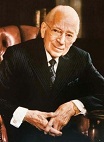
Hugh B. Brown

Hugh B. Brown

by Jim Huston
In 1969 Hugh B. Brown actively lobbied to allow blacks to receive the priesthood. This was supported by a majority of the apostles. They formed a “special committee was to report on the Negro situation”. The change was approved while Harold B. Lee was absent. Upon his return he rejected the decision and persuaded the quorum to rescind the vote. The reaffirmation of the restriction was a collaborative effort of Neal A. Maxwell, Gordon B. Hinckley and G. Homer Durham.
(see Michael D. Quinn – Mormon Hierarchy Extensions of Power p. 14)

Spencer W. Kimball and Official Declaration 2
For decades Spencer W. Kimball had been troubled about this race restriction. (ibid p. 15) . At the cornerstone-laying ceremony for the São Paulo Brazil Brazilian Temple on March 9th, 1977, Kimball privately told Brazilian General Authority Helvécio Martins to prepare himself to receive the priesthood. He pointedly asked if Martins “understood the implications of what President Kimball had said”.(ibid p.16)

On March 23rd, 1978 he began discussing the matter with his counselors. Kimball met privately with individual apostles who expressed their “individual thoughts” about his suggested end to the priesthood ban. (ibid)

After discussing this in several temple meetings and private discussions, Kimball wrote a statement…. And presented it to his counselors on May 30th, 1978. He then asked his counselors and apostles to “fast and pray”……at their temple meeting on 1 June. At the temple council that day “the feeling was unanimous”…. (ibid)

On June 7th, 1978 Kimball informed his counselors that “through inspiration he had decided to lift the restrictions on priesthood.” In the meantime he had asked three apostles (including Boyd K Packer) to prepare “suggested wording for the public announcement of the decision. (ibid)
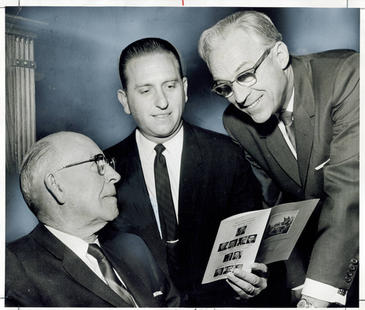
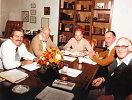
LeGrand RIchards, left, Thomas S. Monson, center, and David Lawrence McKay, right in 1968

LeGrand RIchards, left, Thomas S. Monson, center, and David Lawrence McKay, right in 1968

A letter written to LeGrand Richards dated September 11th, 1978 corroborates this reason. Chris Vlachos wrote to LeGrand Richards to confirm the content of explanations he had been given in an August 16th, 1978 interview with him concerning the revelation. LeGrand Richards acknowledged the letter and in part said, “It wouldn’t please me if you were using the information I gave you when you were here in my office for public purposes. I gave it to you for your own information, and that is where I would like to see it remain.” (emphasis added)

Here is an excerpt from the letter LeGrand Richards was confirming:
“One of the most interesting items which you mentioned was that the whole situation was basically provoked by the Brazilian temple—that is, the Mormon Church has had a great difficulty obtaining Priesthood leadership among the South American membership; and now with this new temple, a large proportion of those who have contributed money and work to build it would not be able to use it unless the Church changed its stand with regard to giving the Priesthood to Blacks.

I believe that you also mentioned President Kimball as having called each of the Twelve Apostles individually into his office to hear their personal feelings with regard to this issue. While President Kimball was basically in favor of giving the Priesthood to Blacks, didn’t he ask each of you to prepare some references for and against the proposal as found in the scriptures? ”
(quotes taken from photostatic copies of the letters found in Sharon I. Banister’s “For Any Latter-day Saint…”; also see http://www.emfj.net/Interview%20With%20LeGrand%20Richards.pdf )

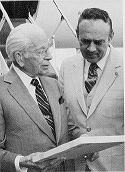
Spencer W. Kimball

Spencer W. Kimball

Money, politics and temples
The decision was monetary without a doubt. It was also very political. The Mormon Church could easily lose face. The Mormon Church had spent over 50 million dollars on a complex in what was one of the countries producing the most baptisms. It was the new South American distribution center for all materials. It was also the new regional church offices.

The Mormon Church views temples as profit centers. When a temple is built, they have an identifiable increase in all revenue from the area, and specifically tithing.
(see Richard and Joan Ostling,  “Mormon America”; Nook edition, position 1010.6/1200)

There were not enough people with verified ancestry to run the temple, let alone be patrons. Even with the change, missionaries were taken from the field and trained as temple officiators and veil workers to man the temple for the first month it was open.

As far as dates, the revelation was made June 1978 and the temple dedication was October 1978. Initial training of workers was held in September. Very tight time frames by LDS Church standards.

Then there is the issue of the tax exempt status. First you must understand that educational nonprofits are treated differently than religious nonprofits.

Here is an explanation of how religious nonprofits are treated
In the United States, the Internal Revenue Service (IRS) grants non-profit status to churches, synagogues, temples, mosques and other religious organizations. This is of tremendous financial benefit. Meanwhile, clergy and other employees are guaranteed free speech under the First Amendment to the U.S. Constitution. They are free to voice their opinions and beliefs, and advocate changes to legislation. They can attack women’s freedom to obtain an abortion. They can advocate that special rights be reserved for heterosexuals, and not extended to gays and lesbians, including the right to marry. Christian Identity, neo-Nazi groups, and everyone else are free to engage in hate speech against women, racial minorities, sexual minorities, immigrants, and other groups.

A pastor in Texas recently called on the U.S. Army to round up and execute area Wiccans with napalm. The tax exempt status of his church was not threatened. Religious groups can promote a stand on other similar “hot” religious topics, from spanking children to the death penalty and physician assisted suicide. They are even allowed by the IRS to contribute small amounts of money and resources to the fight for changes in legislation. In the words of the IRS regulations: “no substantial part of (church) activities (may consist of) carrying on propaganda, or otherwise attempting to influence legislation.” Unfortunately, the term “substantial” is not defined precisely in the service’s regulations.
(see http://www.religioustolerance.org/chu_poli.htm )

São Paulo Brazil LDS Temple

São Paulo Brazil LDS Temple

The IRS and racially discriminatory private schools
The IRS was putting pressure on private schools to stop discrimination via the precedents established in the  trials that were ultimately settled in the Bob Jones University vs. United States Supreme Court ruling. These rulings would directly affect Brigham Young University (aka “BYU”), Ricks College (now known as “Brigham Young University – Idaho), Church College of Hawaii (aka, “CCH”, now known as Brigham Young University – Hawaii) and other U.S. Mormon owned schools. These schools are organized under separate nonprofit corporations which are owned by the Corporation of the President of the Church of Jesus Christ of Latter Day Saints. As you can see from the following excerpts from case documents the Bob Jones University case was directed at educational nonprofits. This would have affected the LDS Church, but not the core corporation.

On January 12th, 1970, a three-judge District Court for the District of Columbia issued a preliminary injunction prohibiting the IRS from according tax-exempt status to private schools in Mississippi that discriminated as to admissions on the basis of race. Green v. Kennedy, 309 F. Supp. 1127, appeal dism’d sub nom. Cannon v. Green, 398 U.S. 956 (1970). Thereafter, in July 1970, the IRS concluded that it could “no longer legally justify allowing tax-exempt status [under 501(c)(3)] to private schools which practice racial discrimination.” IRS News Release, July 7th, 1970, reprinted in App. in No. 81-3, p. A235. At the same time, the IRS announced that it could not “treat gifts to such schools as charitable deductions for income tax purposes [under 170].” (ibid). By letter dated November 30, 1970, the IRS formally notified private schools, including those involved in this litigation, of this change in policy, “applicable to all private schools in the United States at all levels of education. (emphasis added) ” See id., at A232.

BYU, Ricks College and CCH probably received this letter.

martih1

Brazilian, Helvécio Martins, the first person of Black African descent to be called as an LDS general authority, with his wife Rudá.

How 1970’s tax law changes effected private schools
On June 30th, 1971, the three-judge District Court issued its opinion on the merits of the Mississippi challenge. Green v. Connally, 330 F. Supp. 1150, summarily aff’d sub nom. Coit v. Green, 404 U.S. 997 (1971). That court approved the IRS’s amended construction of the Tax Code. The court also held that racially discriminatory private schools were not entitled to exemption under 501(c)(3) and that donors were not entitled to deductions for contributions to such schools under 170. The court permanently enjoined the Commissioner of [461 U.S. 574, 579] Internal Revenue from approving tax-exempt status for any school in Mississippi that did not publicly maintain a policy of nondiscrimination.

The IRS’s 1970 interpretation of 501(c)(3) was correct. It would be wholly incompatible with the concepts underlying tax exemption to grant tax-exempt status to racially discriminatory private educational entities. Whatever may be the rationale for such private schools’ policies, racial discrimination in education is contrary to public policy. Racially discriminatory educational institutions cannot be viewed as conferring a public benefit within the above “charitable” concept or within the congressional intent underlying 501(c)(3). (pp. 592-596).

The Government’s fundamental, overriding interest in eradicating racial discrimination in education substantially outweighs whatever burden denial of tax benefits places on petitioners’ exercise of their religious beliefs. Petitioners’ asserted interests cannot be accommodated with that compelling governmental interest, and no less restrictive means are available to achieve the governmental interest (pp. 602-604).
(see http://caselaw.lp.findlaw.com/cgi-bin/getcase.pl?court=US&vol=461&invol=574 )

It’s interesting to note that the Latter-day Saint Solicitor General of the United States, Rex Lee recused himself from Bob Jones University vs. United States. When asked why he took himself off the case, Mr. Lee explained that previously when representing the Mormon Church in a similar case, he had argued that the Church should retain its tax-exempt status despite its racist policies and felt conflicted in arguing an opposing view in the Bob Jones case. He had also been the dean of the BYU Law School (from 1971-1975) which was one of the schools that would have been affected by the Bob Jones decision. That also would have been a reason to recuse himself.
(see Lincoln Caplan, “The Tenth Justice: The Solicitor General and the Rule of Law”, p. 51, note 2)[1]

Later in 1986-87 Rex Lee did argue for the Mormon Church in the Corporation of Presiding Bishop v. Amos 483 U.S. 327 (1987) case in which he asserted that discrimination based on religious belief should be permissible in certain cases and under certain circumstances. He did so while he was George Sutherland Chair of Law at Brigham Young University’s J. Reuben Clark Law School – apparently he did not feel this was a conflict.

The Corporation Sole
Corporate Sole
is the safest legal entity for a racist 501(c)(3) group to organize and register itself under. Here are a couple of groups that are registered Corporate Soles in the state of Washington and receiving federal tax exempt status. The Corporation of the President of the Church of Jesus Christ of Latter day Saints is a Corporate Sole.

Harrie A. Schmidt Jr., state chairman of the Populist Party, which is run nationally by Ku Klux Klan leader Kim Badynski.

Glen Stoll, a Populist Party member who also is involved in the Embassy of Heaven, an anti-government religious organization based in Sublimity, Ore. Stoll was the leader of the Liaison Group, which called for militia members across the Northwest to assist Whatcom County constitutionalist Donald Ellwanger in a 1995 standoff with the IRS.

Brigham Young University

Brigham Young University

Doyal Gudgel, also active in the Liaison Group, but best known for organizing events in Seattle for David Irving, a British man who denies the Holocaust happened.

Despite huge holes in the secretary of state’s database, Lunsford was able to spot about 50 corporation soles associated with white supremacists, militiamen, constitutionalists or people who deny the Holocaust. He discovered some supporters of the Christian Identity, anti-government group Posse Comitatus had set up “soles” as early as 1979.
(see http://www.skeptictank.org/corpsoul.htm )

These are nonprofits registered for religious purposes
The Creativity Movement (TCM) is a non-Christian, non-profit, religious organization, with their head office in Illinois. Creativity, based on the eternal laws of nature. Their prime objective is: “The survival, expansion and advancement of the white race.”

They regard themselves as being motivated by a love for the white race. This implies extreme hatred of non-white races. They are overwhelmingly hate-filled towards Jews, African-Americans, and other non-whites. They hate homosexual behavior. However their concern in this area appears to be muted in comparison to other white-supremacist organizations.

The Heritage Preservation Association (HPA) is a nonprofit membership group whose purpose is to “fight political correctness and cultural bigotry against the South.” To that end, the HPA declared “Total War” last January on those who allegedly attack Southern heritage, focusing especially on the NAACP and the Southern Christian Leadership Conference because of those groups’ opposition to the Confederate battle flag in South Carolina. Over the last three years, the HPA has worked closely with the white supremacist League of the South to stage pro-Confederate flag rallies and similar events, and in 1999 HPA President P. Charles Lunsford joined the League.

The NAAWP, like David Duke, has tried to hide its hate, but its racist and anti-Semitic views, like those of its founder, are evident. NAAWP News, the group’s newsletter, has regularly published articles with titles like “Anti-Semitism is normal for people seeking to control their own destiny”; “Jewish control of the media is the single most dangerous threat to Christianity,” and “Why most Negroes are criminals.”

Misleading half truths
Therefore,  the LDS Church’s insistence that Official Declaration-2 wasn’t due to a threat of losing it’s tax exempt status is true since a group can clearly be racist yet legally remain exempt from paying taxes. However, these denials are also consistent with its history of misleading the public with half truths.

An example of this occurred in March 2001 when Salt Lake City resident Kathy Erickson sent the following letter to The Salt Lake Tribune stating that the U.S. Government threatened to withdraw the Church’s tax-exempt status if it did not give the Priesthood to black males:
“What’s done is done. There no longer is any prejudice against blacks in the Mormon church, the power of money took care of that. Back in 1978 the federal government informed the LDS Church that unless it allowed blacks full membership (including the priesthood) they would have to cease calling themselves a non-profit organization and start paying income taxes. On $16.5 million a day in tithing alone that’s a lot of tax monies that could be better used in building up the Kingdom of God.

The church immediately saw the error of its ways and the brethren appealed to God for a revelation; it came quickly. God works in mysterious ways, His wonders to perform, and today The Church of Jesus Christ of Latter-day Saints has nothing but love for all races of people on Earth.”
(Kathy Erickson, “Gainful Revelation”, Salt Lake Tribune, March 11, 2001, p.AA2, Opinion Section

Brigham Young University - Hawaii

Brigham Young University – Hawaii

The April 5th response by LDS spokesman Bruce L. Olsen addressed the Church as a religious organization yet failed to acknowledge the related issue of how a failure to announce and implement Official Declaration 2 would have affected its church owned schools:
”It’s one thing to distort history, quite another to invent it. Kathy Erickson . . . claims that the federal government threatened the Church of Jesus Christ of Latter-day Saints with its tax-exempt status in 1978 because of the Church’s position regarding Blacks and the priesthood.

We state categorically that the federal government made no such threat in 1978 or at any other time. The decision to extend the blessings of the priesthood to all worthy males had nothing to do with federal tax policy or any other secular law.”
(Bruce L. Olsen, “Distorted History”, Salt Lake Tribuine, April 5, 2001, p.A24, Opinion Section; also see http://LDS-mormon.com/taxes_priesthood.shtml )

Summary and conclusion
Indeed, it’s true that the Church of Jesus Christ of Latter-day Saints was not directly threatened directly by the changes in tax law during the 1970’s but their wholly owned schools were. The financial ramifications in conjunction with the possible political embarrassment made for an untenable situation – one that I wonder if was engineered in part by Spencer W. Kimball. He was a supporter of the change in 1969. Building the temple in Brazil may have been his way of forcing the issue.

NOTES:
[1] From Lincoln Caplan’s book, “The Tenth Justice: The Solicitor General and the Rule of Law”
”Rex Lee . . . who had been sworn in as Solicitor General seven months before [the Bob Jones brief was filed in 1982, had once represented the Mormon Church when it faced a problem like Bob Jones’s and, to avoid the appearance of a conflict of interest, he had taken himself off the case.”
(p. 50)

“In 1970, the Internal Revenue Service ruled that Bob Jones no longer qualified for tax-exempt status because of [its] segregationist policy, so the school changed it. Blacks could be accepted if they were married to other Blacks, or if they promised not to date or marry outside their race . . .

By the time of the Supreme Court case, a decade later, the number of Blacks attending the school was less than a dozen, making the ratio of Whites to Blacks about 550 to one. From the vantage point of the Solicitor General’s office, the legal issue in the Bob Jones case was routine. It was a tax question.” 
(p. 53)

This article was originally published on the author’s website on April 29, 2006 and has reappeared on the internet and elsewhere in various forms and venues in the ensuing years. This edition of the article has been edited and expanded on by the editors of Beggar’s Bread in order to increase clarity for a broad, general audience.  Beggar’s Bread wishes to express its appreciation to the author for his hard work and generosity in making this important information available for this and all future generations in the interest of a full and complete historical record.
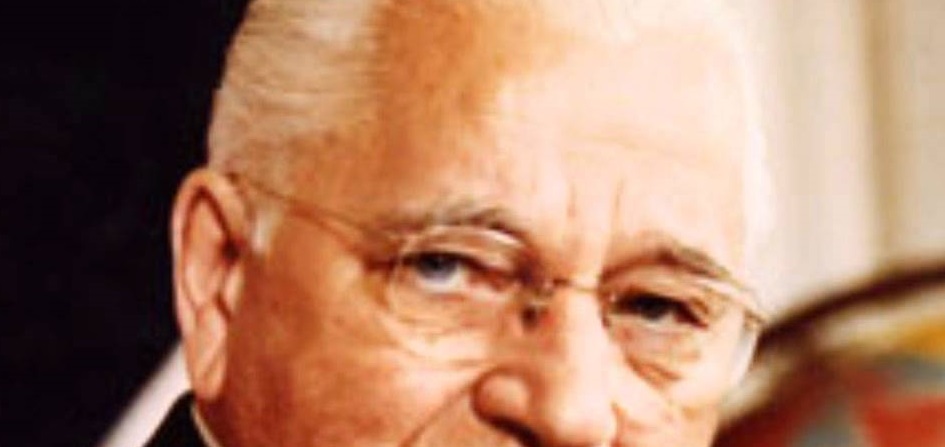
HerbertWArmstrong_edited

The eyes of Herbert W. Armstrong

by Fred W. Anson
Q: Can a Mind Control Cult reform itself?
It seems that just below the surface of every discussion of Mind Control Cults this question burns, simmers, and smokes like the proverbial ember seeking to spark into flame.

But can they?
Will they?

Thankfully, the answer (at least occasionally) is yes. Here are two case studies for your consideration.

THE SHEPHERDING MOVEMENT
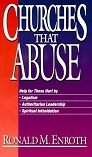
The Shepherding Movement (the mind control cult that I was in) is one such group. Ron Enroth described how this happened in his classic book, “Churches that Abuse”:
“It is possible for authoritarian churches to change direction? There several fairly recent examples of leaders who have announced changes and confessed to error. One of the leaders of the discipleship/shepherding movement officially known as Christian Growth Ministries, Bob Mumford, made a dramatic about-face after issuing a public statement of repentance in November of 1989. Mumford, one of the “Ft. Lauderdale Five” (so named because of the five founders of Christian Growth Ministries of Ft. Lauderdale Don Basham, Ern Baxter, Bob Mumford, and Charles Simpson), acknowledged abuses that had occurred because of his teaching on submission. This emphasis resulted in ‘perverse and unbiblical odedience’ to leaders. He publicly repented with ‘with sorrow’ and asked for forgiveness. He also admitted that families had been severely disrupted and lives turned upside down.

“Churches That Abuse” by Ronald M. Enroth

In an interview with Christianity Today magazine, Mumford indicated that the abuse of spiritual authority lead to ‘injury, hurt, and in some cases, disaster.” Leaders, he said, were operating at a level where biblical limitations on their authority were not clear. ‘Part of the motivation of my public apology is realization that this wrong attitude is still present in hundreds of independent church groups who are answerable to no one.’[1]

S. David Moore, author of the definitive book on the movement[2] offered this perspective in a 2004 article:
“The Shepherding movement admittedly missed many of its ideals, and its extremes are well-known. In 1989, Bob Mumford offered a public apology to those hurt by the movement’s teachings and practices.

L to R: Bob Mumford, Don Basham, Charles Simpson, Derek Prince, Ern Baxter

L to R: Bob Mumford, Don Basham, Charles Simpson, Derek Prince, Ern Baxter

Charles Simpson, who leads a major segment of those who continue in the legacy of the movement, has said that human carnality won out all too often. While many were hurt as some leaders improperly exercised spiritual authority, mostly ignored are those who benefited from the movement and those who continue in its varied expressions today.

Both Mumford and Simpson believed they were catching and riding a wave of authentic spiritual renewal. Simpson commented that ‘the bigger the wave the more debris it can carry in.’
[3]

Today that ‘debris’ is largely gone. As S. David wrote in 2003:
“The Covenant movement’s leaders have dialogued extensively in recent years and seem to have ‘de-radicalized’ the earlier extremes. Dissent is now encouraged and idealism has given way to a chastened practicality, while the values of relationship, accountability, covenant, and pastoral care are still embraced.”[4]

THE WORLDWIDE CHURCH OF GOD
Another Mind Control Cult that reformed around the same time was the Worldwide Church of God (WCG).[5]

The 2004 documentary “Called To Be Free” summarized the change like this:
In the mid 1990s, the Worldwide Church of God, which began as a religious cult founded by Herbert W. Armstrong, underwent a massive upheaval. At great personal cost, but with an eye to even greater spiritual gain, they renounced their heretical teachings and embraced biblical, evangelical Christianity, and moved from the bondage of legalism to freedom in the grace of Jesus Christ.

Cover for the video documentary

Cover for the video documentary “Called To Be Free”

The leadership and the laypeople of the transformed Worldwide Church of God tell the incredible story in their own words.

Their moving narrative will bring deep encouragement to believers; and those in bondage to cults, legalism, and heretical movements will find hope and good news in this inspiring story.”[6]

Or if you prefer a more secular assessment, Wikipedia summarizes the group’s transformation like this:
“On January 16, 1986, Herbert Armstrong died in Pasadena, California. Shortly before his death, Armstrong named Joseph W. Tkach Sr. to succeed him as leader of the church.

As early as 1988, Joseph W. Tkach Sr. began to make doctrinal changes. Doctrinal revisions were made quietly and slowly at first, but then openly and radically in January 1995. They were presented as “new understandings” of Christmas and Easter, Babylon and the harlot, Anglo-Israelism, Saturday Sabbath, and other doctrines.

Herbert W. Armstrong

Herbert W. Armstrong

In general, Tkach Sr. directed the church theology towards mainstream evangelical Christian belief. This caused much disillusionment among the membership and another rise of splinter groups. During the tenure of Joseph Tkach Sr., the church’s membership declined by about 50 percent. His son, Joseph Tkach Jr., succeeded him after his death in 1995.

Eventually all of Herbert Armstrong’s writings were withdrawn from print by the Worldwide Church of God. In the 2004 video production Called To Be Free, Greg Albrecht, former dean of WCG’s Ambassador College, declared Herbert Armstrong to be both a false prophet (though Armstrong himself did not claim to be a prophet) and a heretic.”[7]

Today the group remains in transition: Some think that the organization has gone too far and have splintered and organized into groups that emulate the old WCG to varying degrees; still others don’t think that it’s gone far enough and have left for other churches, become inactive, or become atheist.[8]

In 2003 Cult Expert Rick Ross observed:
“It seems without its peculiar dogma that the religion lost its attraction. And many Worldwiders felt there was no longer much reason to belong and tithe to the church. Schisms and splintering have subsequently reduced Worldwide to about 60,000 adherents, though its annual revenue is still about $25 million dollars.

The modernization of Worldwide doesn’t seem to have included democratization and/or opened up the issue of meaningful financial accountability to the membership. A power elite still appears to run the organization without referendum and they recently decided to hold an auction.

Herbert W. Armstrong and Joseph W. Tkach Sr.

Herbert W. Armstrong and Joseph W. Tkach Sr.

In what can be seen as a symbolic liquidation they sold off some of the opulent residue that still remained from Armstrong’s glory days, reports The Pasadena Star News.

It appears that the ‘cult’ Herbert Armstrong built may gradually disappear without the man and idiosyncratic beliefs that made it so unique and compelling to its faithful.”[9]

So while the answer to the original question, “Can a Mind Control Cult reform itself?” may be yes, it is never easy, painless, or smooth – and there’s always fall out.

NOTES:
[1] Christianity Today, March 19, 1990 as cited in, “Churches That Abuse” by Ron M. Enroth; 1992; Zondervan Publishing House, Grand Rapids, Michigan

[2] S. David Moore, “The Shepherding Movement: Controversy and Charismatic Ecclessiology”; London: T & T Clark, 2003

[3] S. David Moore, “Cover Me”; Ministries Today, November/December 2004

[4] Op cit, Moore, “The Shepherding Movement: Controversy and Charismatic Ecclessiology”; p.188

[5] Of interest to those familiar with Mormonism may be the fact that the WCG believed that is was the God’s restored church and used this doctrine as a proselytizing point. Further, there are many other parallels as it appears that Armstrong borrowed some of his teachings from Mormonism. See “Between The Old Worldwide Church of God And The Latter-day Saints”;http://www.giveshare.org/churchhistory/mormons-worldwide-church-of-god.pdf

Some who have studied both organizations have even suggested that should the LdS Church ever reform it’s likely that it might follow a path similar to the WCG.

[6] Link to full video production on YouTube: http://www.youtube.com/watch?v=LWAtvE1xiRk

[7] “Death of Armstrong and doctrinal reform” from Wikipedia “Grace Communion International” article;http://en.wikipedia.org/wiki/Grace_Communion_International#Name_change_of_2009

[8] In addition to the aforementioned, “Called To Be Free” video which contains the stories of many who have stayed and seem to be genuinely pleased with and hopeful for the new church, Grace Communion International, many former members have posted their stories on the following websitehttp://www.exitsupportnetwork.com/recovery/testimony/testimon.htm and continue to speak out against Grace Communion International as well as the WCG splinter groups.

[9] Rick Ross, “Do cults collapse when leaders die and/or they give up the exclusive claims that define them?”; hhttp://www.cultnews.com/?p=1174

(Originally published on the Mormon Expression Blogs site where this article premiered on October 20, 2011)

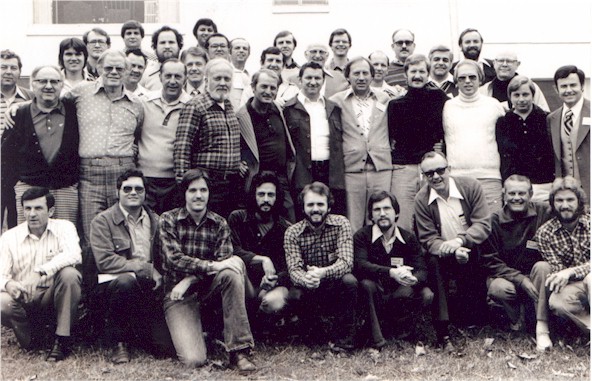
Shepherding Movement Leadership Conference (circa 1975-1976)

Shepherding Movement Leadership Conference (circa 1975-1976)

by Fred W. Anson
Since none of you have never been in a Mind Control Cult, and I have been, I thought it might be instructive to help you all understand what it’s like.

Now I know what some of you may be thinking so let me set the record straight right now:
Contrary to popular rumor, I am not now, nor have I ever been a member of The Church of Jesus Christ of Latter-day Saints.

Further, as Richard Packham said so well in his (very tongue in cheek) introduction of Cult Expert Steven Hassan at the 2008 ExMormon Foundation Conference

“Steve Hassan is a Cult Counselor and Mind Control Expert, a Nationally Certified Counselor and licensed Mental Health Counselor. He has a break through approach to helping loved ones to get their loved ones out of cult mind control.

Now by asking Steve to speak to us we’re not necessarily implying that Mormonism is a cult!

Steve Hassan

Cult Expert Steve Hassan

I mean, you ask any Mormon and they will tell you that the church isnot a cult. They recognize that the FLDS IS a cult, but not the LdS Church. President Monson would not run a cult. He is a Prophet of God. Other so-called Prophets run cults but not President Monson.

So we have cleared that up! . . . it’s now my great pleasure to introduce to you Steven Hassan.”[1]

Thank you Mr. Packham.  So for those of you that might have been thinking “those” thoughts . . . well now, you can just relax, take a deep breath, and “simmer down” can’t you? You see, though I was never a Mormon, I was a member of what has come to be known as The Shepherding Movement for 11-years (from 1978-1989).

Here’s how the overview reads in the Wikipedia article for our group:

“The Shepherding Movement (sometimes called the “Discipleship Movement”) was an influential and controversial movement within some British and American charismatic churches, emerging in the 1970s and early 1980s. The doctrine of the movement emphasized the “one another” passages of the New Testament, and the mentoring relationship described in 2 Timothy.

The movement gained a reputation for controlling and abusive behaviour, with a great deal of emphasis placed upon the importance of obedience to one’s own shepherd. In many cases, disobeying one’s shepherd was tantamount to disobeying God. A few of these criticisms were exaggerated, but many lives were damaged.”
[2]

Before I joined the Shepherding Movement I was pretty much your typical 1970′s anti-establishment “Jesus Freak” with long hair, a head band, and a belief in a Jesus that was pretty much a hippy just like me. I was flakey, irresponsible, politically liberal, a registered Democrat (an obvious sin if there ever was one!), and with a theology that was far more reflective of hippy culture than anything aligned with Biblical Christianity.

However, despite that self-admitted immature, theologically compromised mess I did have one thing going for me: I could think for myself – maybe not so well, but I could think independently none-the-less. After joining the group this all slowly began to change.

Of course, like the name implies Mind Control Cults are defined by tactics and techniques – be they intentional or not – that control the thinking of their adherents. For those of us who have come out of Mind Control Cults this can all be perplexing and painful to figure out. For years I beat myself up with questions like, “How could I am been so stupid?” and “How could I have not seen what was so obvious to those who were on the outside?”

That’s why when I discovered Steven Hassan’s BITE model (via the aforementioned ExMormon Foundation Conference address) I felt like the clouds had parted, the sun had finally broken through, and the fog had finally cleared.  I finally “got it”.

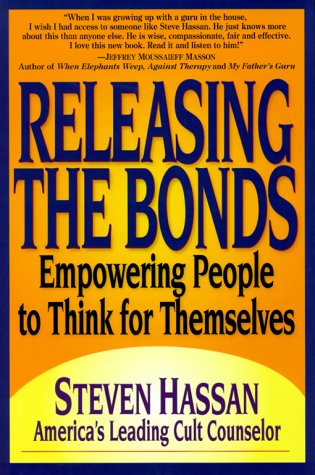
ReleasingTheBondsHassan introduced the BITE model in his book “Releasing the Bonds: Empowering People to Think for Themselves” , “BITE” stands for “Behavior, Information, Thought, and Emotional Control. The model is based on the Cult and Mind Control research of Clinical Psychologist Margaret Singer, the Thought Reform/Brain Washing research of Robert Lifton, the Cognitive Dissonance and Social Comparison theories of Leon Festinger, and Hassan’s own research and personal experience in Reverend Sun Myung Moon’s Unification Church.

Because the model is based on scientific empiricism it can be used to assess any group entity or social institution be it religious, business, political, or otherwise to determine if it’s behaving like a Mind Control Cult or not.  Further, it is non-sectarian as well as doctrinally and theologically neutral.

The components of the BITE model are:[3]

Behavior Control
o Regulation of individual’s physical reality
o Major time commitment required for indoctrination sessions and group rituals
o Need to ask permission for major decisions
o Need to report thoughts, feelings, and activities to superiors
o Rewards and punishments (behavior modification techniques positive and negative)
o Individualism discouraged; “group think” prevails
o Rigid rules and regulations
o Need for obedience and dependency

Information Control
o Use of deception
o Access to non cult sources of information minimized or discouraged
o Compartmentalization of information; Outsider vs. Insider doctrines
o Extensive use of cult generated information and propaganda
o Spying on other members is encouraged
o Unethical use of confession

Thought Control
o Need to internalize the group’s doctrine as “Truth”
o Use of “loaded” language (for example, “thought terminating clichés”). Words are the tools we use to think with. These “special” words constrict rather than expand understanding, and can even stop thoughts altogether. They function to reduce complexities of experience into trite, platitudinous “buzz words.”
o Only “good” and “proper” thoughts are encouraged.
o Use of hypnotic techniques to induce altered mental states
o Manipulation of memories and implantation of false memories
o Use of thought stopping techniques, which shut down “reality testing” by stopping “negative” thoughts and allowing only “good” thoughts
o Rejection of rational analysis, critical thinking, constructive criticism. No critical questions about leader, doctrine, or policy seen as legitimate.
o No alternative belief systems viewed as legitimate, good, or useful

Emotional Control
o Manipulate and narrow the range of a person’s feelings
o Make the person feel that if there are ever any problems, it is always their fault, never the leader’s or the group’s
o Excessive use of guilt
o Excessive use of fear
o Extremes of emotional highs and lows
o Ritual and often public confession of “sins”
o Phobia indoctrination: inculcating irrational fears about ever leaving the group or even questioning the leader’s authority. The person under mind control cannot visualize a positive, fulfilled future without being in the group.

And with that “milk” foundation now laid, in Part 2 I would like to use the BITE Model as a framework for walking you through the “meat” of what I and others experienced via the Mind Control tactics and techniques employed in The Shepherding Movement.

My hope is that by “putting myself out there”  like this you will come to understand how groups that use Mind Control tactics and techniques acquire, retain, and control their members so that, maybe, just maybe, you will never suffer the fate of becoming a mind control cultist like I once did.

NOTES
[1] Link to YouTube Video Playlist for Steve Hassan ‘Releasing The Bonds: Empowering People To Think For Themselves Link to portal page for AUDIO/VIDEO: Steve Hassan ‘Releasing The Bonds: Empowering People To Think For Themselves’
(Keynote Address from the 2008 ExMormon Foundation General Conference)

[2] Wikipedia article on the Shepherding Movement; retrieved 2011-06-25

[3] Sources: “Releasing the Bonds: Empowering People to Think for Themselves” by Steven Hassan; Ch. 2, Aitan Publishing Company, 2000 and Freedom of Mind Webpage on the BITE Model

(Originally published on the Mormon Expression Blogs site where this article premiered on August 22nd, 2011)

by John Farkas
A DICTIONARY DEFINITION
Persecute1 to afflict or harass constantly so as to injure or distress; oppress cruelly. esp. for reasons of religion, politics, or race. 2 to trouble or annoy constantly…
(Webster’s New World Dictionary, Third College Edition, Prentice Hall, 1988, 1991, 1994)

First let me clearly say that the persecution (using the #1 definition) of anyone is sinful and evil (Lev. 19:18; Matt 5:43, 19:19, 22:39 to name a few).

It is also wrong and dishonest to claim persecution when calm, quite, factual and non-harassing honest disagreement is voiced. I do not condone nor support the persecution of any people or group.

INTRODUCTION
This article will touch on three points relative to persecution and the Mormon Church:
1) Many LDS claim that the Mormon Church has been persecuted almost from its beginning in 1830. Is this the case?
2) What is not usually addressed is the opposite situation? Have Mormons persecuted others?
3) Were there extenuating circumstances that motivated persecution by both Mormons and non-Mormons?

To the best of my knowledge no in depth study has been completed on these subjects as a whole. There have been many good books on some aspect of items 1-3, but not as an overall in depth study.

MormonWar

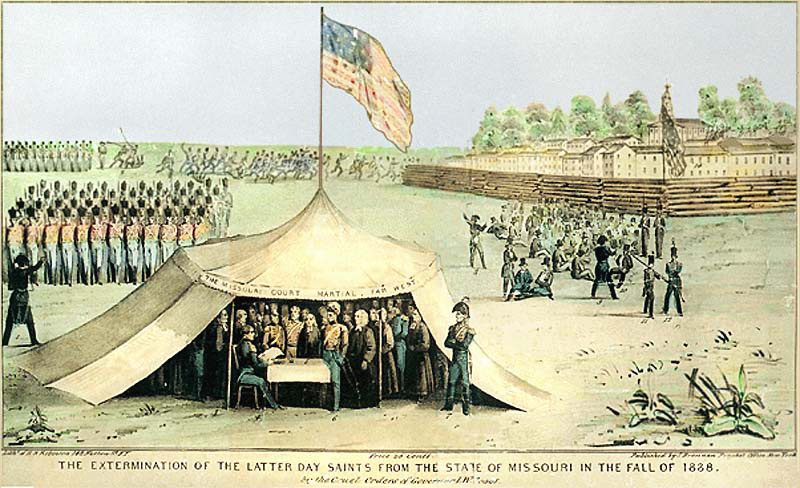
Mormons and Missourians in conflict during the 1838 Mormon War in Missouri.

POINTS TO CONSIDER
A hint of the complexity of this subject can be found in the so called persecution of Mormons that led to their communities leaving the Palmyra, New York area; Kirtland, Ohio area; Independence, Missouri area; Nauvoo, Illinois area and almost leaving their final settlement in the Salt Lake City area.

Can any thinking person not even be suspicious that perhaps there might be some other reason(s) than to say each and every one of the area the Mormons left had a large enough population of evil persecutors to force the move? How about the consideration of what the common denominator was in each of the geographical areas, a consideration of what each of the areas had in common – the population of Mormons?

Persecution in Kirtland, Ohio is usually mentioned but they fail to mention the illegal and fraudulent banking practices there and how the top leadership left the area and just escaped being arrested. Elder Dallin H. Oaks, of the Quorum of the Twelve Apostles, in speaking about the mistakes of Mormons said:
“Similarly, some mistaken decisions on Kirtland banking policies plagued the Saints for more than a decade. These financial difficulties were perhaps portended in the Lord’s warning to the Prophet Joseph Smith that ‘in temporal labors thou shalt not have strength, for this is not thy calling’ (D&C 24:9).”
( Ensign, “Sins and Mistakes”; October 1996, p. 63)

General Joseph Smith reviewing the Nauvoo Legion - which was larger than the Illinois State Militia.

General Joseph Smith reviewing the Nauvoo Legion – which was larger than the Illinois State Militia.

Mormons are quick to point to Missouri Governor Bogg’s Mormon “Extermination Order” but fail to consider Sydney Rigdon’s “Salt Sermon” about trampling and hanging dissenters, the role of slavery, the historical events that led to Bogg’s order and the latter attempt on his life. What most people miss is the correct definition of “extermination” in the 1835 time period.

Webster’s Dictionary of 1828 under “exterminate” has:
“Literally, to drive from within the limits or borders. Hence, 1. To destroy utterly; to drive away….”

They are quick to claim persecution in Nauvoo, Illinois but fail to recognize the help non-Mormons gave to the Mormons when they left Missouri and moved into the Nauvoo area, how Mormons stole from the non-Mormons, counterfeiting of money and the political and economic issues.

Probably few consider that what they call persecution was punishment from the Lord (Doctrine and Covenants 101:2-7; 103:1-4: 105:2-5) Overshadowing all of these is the way frontier societies handled serious conflict.

For many Mormons, without their even being aware of it, persecution has reached the status of a myth. Frequently the accusation of persecution is given emotionally, but with little or no factual basis. It is all emotion and frequently used as a response to any information that is con-Mormon (as in pro and con), whether it is really persecution or not. They are quick to claim persecution in the present day, but fail to consider:

1) The bad things their own scriptures say about non-Mormons and the Bible (1 Nephi 14:10 and 13:26-29 in the Book of Mormon; Joseph Smith – History 1:18-20 in the Pearl of Great Price. These scriptures are distributed by the millions every year.)

2) The bad things past Mormon leaders have said about non-Mormons and the Bible (Rays of Living Light – Divine Authority by C. W. Penrose, page 1; and Rays of Living Light – Apostasy, by C. W. Penrose, page 3; published by the Church of Jesus Christ of Latter-day Saints, no date given; Journal of Discourses, 16:175-176, by Apostle Orson Pratt; Mormon Doctrine, 1958 edition, by Apostle Bruce R. McConkie, page 314-315; The Seer by Orson Pratt, page 205, 255.)

These same Mormons fail to consider that the Bible in Jude 1:3, 2 Timothy 1:7-9, 4:2; Ephesians 6:19-20 and Hebrews 5:14 says all mature Christians should present and defend their faith in Jesus Christ. We have the Apostle Paul’s examples in Acts 17:1-2, 17, 22, 18:4.

There is more on this subject under “Why Do We Oppose Mormonism?” which can be linked to off our home page. They fail to consider that some of the problems they call persecution were/are from the Lord because of the disobedience and transgressions of the “Saints” (Doctrine & Covenants 101:2-7; 103:1-4; 105:2-6).

MY CONCLUSIONS
The best conclusion I have been able to arrive at so far is that both Mormons and non-Mormons were seriously guilty of persecution.

Persecution, to the best I can see, has on both sides been driven by economic power, political power, evil people, retaliation and the way the frontier society of the day handled problems. It is a complex issue that one cannot begin to understand without a great deal of study. I do not claim to fully understand it. I am just a student of the subject.

Have the Mormons been persecuted? Yes.
Have non-Mormons been persecuted by Mormons? Yes.
Have there been extenuating circumstances for both sides? Yes.
Is it a complex subject? Very much so.

It is a subject that must consider economic power, politics power, the way the then frontier society handled problems, evil people and retaliation by both sides.

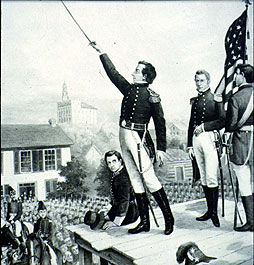
The Mormons surrendering to end the 1838 Mormon War in Missouri.

The Mormons surrendering to end the 1838 Mormon War in Missouri.

SOURCES OF INFORMATION ON WHAT IS CALLED “PERSECUTION” OF MORMONS AND THE MORMON CHURCH IN NEW YORK, OHIO, MISSOURI AND ILLINOIS
1. Nauvoo – Kingdom On The Mississippi, by Robert Bruce Flanders; Un. of Ill. Press; 1975; p. 1-22.

2. Nightfall At Nauvoo, by Samuel W. Taylor; Avon; 1971; p. 388-399.

3. The 1838 Mormon War In Missouri, by Stephen C. LeSueur; Un. of Missouri Press, 1987, all of it.

4. Mormon Enigma: Emma Hale Smith, by Linda King Newell and Valeen Tippets Avery; Doubleday: 1994: p. 62-94

5. Article: “Multiple Factors Led To Woes In Missouri;” Church News (by Mormon Church); p. 14; July 31, 1993.

6. Mormon Scriptures:
Book of Mormon: 1 Nephi 14:10, 13:26-29
– Joseph Smith – History 1:18-20 (in the Pearl of Great Price)
Doctrine and Covenants 101:2-7; 103:1-4: 105:2-6.

7. Women of Mormondom, by Edward W. Tullidge; 1877, 1975 printing; p. 289f, 376, 381, 395, 404.

8. Joseph Smith and The Beginnings of Mormonism, by Richard L. Bushman; Un. of Ill. Press; 1984; p. 159f.

9. The Mormon Hierarchy, by D. Michael Quinn; Signature Books; 1994; p. 88-89, 92-103, 469f, 620, 636.

10. Address To All Believers In Christ, booklet by David Whitmer in Richmond, Missouri; 1887; p. 27-28, 54-55.

11. The example of what was done to David Whitmer and Oliver Cowdery by Mormons; p. 37-39 of item 3 above.

12. A Scarter Man Than One of Them Was I Never Saw, booklet by Stephen C. LeSueur; Mormon Miscellaneous, Sandy, UT.

13. Sidney Rigdon: A Portrait of Religious Excess, by Richard S. Van Wagoner; Signature Books; 1994; p. 143-145, 192-208, 213-241.

General Joseph Smith addressing the Nauvoo Legion.

General Joseph Smith addressing the Nauvoo Legion.

14. The Mountain Meadows Massacre, by Juanita Brooks; Un. of OK Press; 1950; p. 3-9, 13-19.

15The Journals of William E. McLellen; Ed. by Jan Shipps and John W. Welch; Un of Ill. Press; 1994; p. 9.

16. Salt Lake City Messenger (Tanner’s newsletter); Issue #88, May 1995; p. 6-10.

17. The Story of The Mormons, by William Alexander Linn; Macmillan Co.; 1902; p. vi, 122, 134-136, 154, 166-222, 258-261.

18. “Saints Given Relief”, Times and Seasons (LDS newspaper); by Joseph Smith; Jan. 15, 1841; Vol 2, p. 273-277.

19. Cultures In Conflict, by John E. Hallwas and Roger D. Launius; Utah State Un. Press; 1995; p. 1-165.

About the Author
John R. Farkas (1932-2011) was a convert to Mormonism in 1975 and served in several callings up to and including Elder’s Quoruom President of  the Rochester 1st Ward, New York Stake. In 1984 he left the LdS Church and became involved with Berean Christian Ministries where he served until his death. Mr. Farkas is the author of several books on Mormonism and other subjects which can be found on his Author’s page on Amazon. Beggar’s Bread is grateful that before he passed Mr. Farkas granted us the permission to republish the articles from his now defunct website. 

John Farkas is of one the giants on whose shoulders we stand and to whom we owe a debt that we simply can never repay!  We look forward to thanking him again in heaven for the example of his life and treasure of wisdom that he left behind for our benefit.

[Please note that while this article has been very lightly reformatted and re-paragraphed to improve overall legibility no content has been changed from Mr. Farkas’ original source article other than fixing a few typos and updating the names of a few books in the bibliography to more accurately reflect their full title of publication.  — Fred W. Anson, editor]

Almighty God,

I am loved with everlasting love,
clothed in eternal righteousness,
my peace flowing like a river,
my comforts many and large,
my joy and triumph unutterable,
my soul lively with a knowledge of salvation,
my sense of justification unclouded.

I have scarce anything to pray for;
Jesus smiles upon my soul as a ray of heaven
and my supplications are swallowed up in praise.

How sweet is the glorious doctrine of election
when based upon thy Word
and wrought inwardly within the soul!

LockedDoorWithLight

I bless thee that thou wilt keep the sinner
thou hast loved,
and hast engaged that he will not forsake thee,
else I would never get to heaven.

I wrong the work of grace in my heart
if I deny my new nature and my eternal life.

If Jesus were not my righteousness and redemption,
I would sink into nethermost hell
by my misdoings, shortcomings, unbelief, unlove;

If Jesus were not by the power of his Spirit
my sanctification,
there is no sin I should not commit.

O when shall I have his mind!
when shall I be conformed to his image?

All the good things of life are less than nothing
when compared with his love,
and with one glimpse of thy electing favour.

All the treasures of a million worlds could not
make me richer, happier, more contented,
for his unsearchable riches are mine.

One moment of communion with him, one view
of his grace,
is ineffable, inestimable.

But O God, I could not long after thy presence
if I did not know the sweetness of it;

And such I could not know except by thy Spirit
in my heart, nor love thee at all unless thou didst
elect me,
call me,
adopt me,
save me.

I bless thee for the covenant of grace.

(from “The Valley of Vision” devotional)

by Aaron Shafovaloff

EDITOR’S NOTE: Five years ago on this day Mormon Researcher Aaron Shafovaloff published the following article entitled, “Shame, Shame, Shame: Thirty Years Later And Still No Apology”.  Well it’s now been thirty five years since June 8, 1978 and we’re still waiting. So with no further adieu . . .

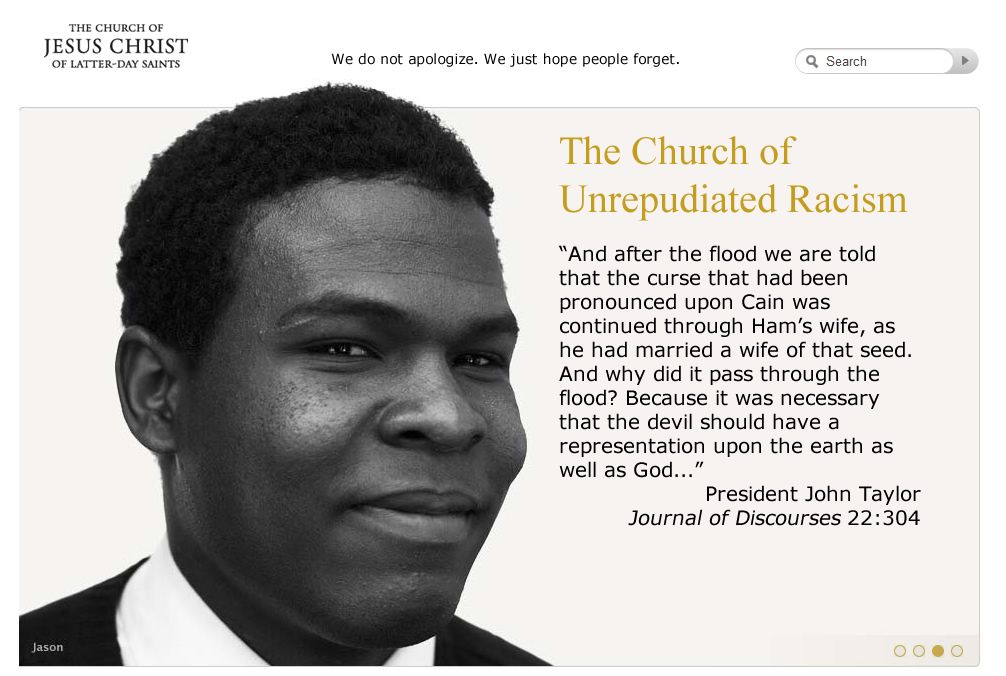
church_of_unrepudiated_racism

Still Repairing Brigham’s Mess
Mormon apologist Blake Ostler once said, “I personally believe that [Brigham Young’s] theology was a disaster for the most part” (>>). We have multiple reasons to concur with Blake (more than he would agree with), as Mormonism has spent much of its post-Brigham history picking up the pieces from the catastrophic mess of theology he left behind. The 1916 First Presidency statement on divine investiture and Elohim/Jehovah identitieswas largely driven by an effort to repair Brigham Young’s damaging Adam-God teaching. Contrary to the notion that it died with Brigham, it had carried well on into the 20th century. Some Mormons today are deeply embarrassed over Young’s teaching that Jesus was physically conceived by a natural union between Mary and the Father (who, for Brigham, of course, was Adam). Many Mormons have tragically settled for an “I don’t know” answer to the question of whether sexual intercourse was involved in the conception of Christ. Along with Adam-God, Brigham’s teaching that God still progresses in knowledge and power was condemned as a deadly, damning heresy by apostle Bruce McConkie. Then there’s individual blood atonementmen living on the Sun, participation in polygamy being absolutely necessary for Celestial exaltation, and on, and on. Many Mormons quietly write off Brigham Young as a crazy old uncle who has said very stupid, very irresponsible, very embarrassing, very damaging things. The problem is that he happened to say most of these things from the Tabernacle pulpit in a position of influential leadership and self-claimed prophetic authority. Mormons today try to laugh it off. Stephen Robinson even suggested that Adam-God might have been a joke. But at the end of the day Christians aren’t laughing. We have a higher standard for prophets than Mormonism allows. For us, becoming a Mormon would mean drastically lowering the bar for men who claim to be God’s living spokesmen on earth.

Reversing a “Direct Commandment of the Lord” Based Upon a “Doctrine of the Church”
On June 8, 1978, Mormonism attempted to reverse yet another one of Brigham’s embarrassing doctrines, the ban on blacks from holding the Mormon priesthood. The dominant historical explanation given for the ban was an appeal to pre-mortal decisions or indecisions. Negros were not as valiant in the pre-existence, and were cursed with the mark of Cain, black skin. This explanation was taught and expressed by LDS prophets and apostles, from Conference pulpits to a First Presidency statement:

“The attitude of the Church with reference to the Negroes remains as it has always stood. It is not a matter of the declaration of a policy but of direct commandment from the Lord, on which is founded the doctrine of the Church from the days of its organization, to the effect that Negroes may become members of the Church but that they are not entitled to the Priesthood at the present time. The prophets of the Lord have made several statements as to the operation of the principle. President Brigham Young said, ‘Why are so many of the inhabitants of the earth cursed with a skin of blackness? It comes in consequence of their father’s rejecting the power of the Holy Priesthood, and the law of God.’ They will go down to death. And when all the rest of the children have received their blessings in the Holy Priesthood, then that curse will be removed from the seed of Cain, and receive all the blessings we are entitled to.’ President Wilford Woodruff made the following statement: ‘The day will come when all that race will be redeemed and possess all the blessings which we now have.’ The position of the Church regarding the Negro may be understood when another doctrine of the church is kept in mind, namely, that the conduct of spirits in the pre-mortal existence has some determining effect upon the conditions and circumstances under which these spirits take on mortality, and that while the details of this principle have not been made known, the principle itself indicates that the coming to this earth and taking on mortality is a privilege that is given to those who maintained their first estate; and that the worth of the privilege is so great that spirits are willing to come to earth and take on bodies no matter what the handicap may be as to the kind of bodies they are to secure; and that among the handicaps, failure of the right to enjoy in mortality the blessings of the priesthood is a handicap which spirits are willing to assume in order that they might come to earth. Under this principle there is no injustice whatsoever involved in this deprivation as to the holding of the priesthood by the Negroes.”
(Official First Presidency statement, August 17, 1951 [some sources date this to 1949], cf. John Lewis Lund, The Church and the Negro, p.89).

Mere Folklore or Institutionalized Racism?
In spite of this, Mormon leaders today continue to say things like,

“When you think about it, that’s just what it is — folklore. It’s never really been official doctrine… We have to keep in mind that it’s folklore and not doctrine… It’s never been recorded as such”
(LDS General Authority Sheldon F. Child, quoted in “LDS marking 30-year milestone”, by Carrie A. Moore, Deseret News, June 7, 2008).

“This folklore is not part of and never was taught as doctrine by the church”
(LDS spokesman Mark Tuttle, quoted in “Mormon and Black”, by Peggy Fletcher Stack, Salt Lake Tribune, June 7, 2008)

This gives the impression that the teaching and belief had a mere bottom-dwelling existence, only kept alive by the culture in a way not initiated by or acquiesced to by the overarching institution. In the dictionary, “folklore” is defined as unwritten lore that is passed down through tradition or anecdote. Calling the “curse of Cain” teaching mere folklore obscures the fact that it was institutionally promoted and institutionally perpetuated—publicly and explicitly and in writing. It was rooted in the teachings of men considered to be prophets and apostles, the conduits of prophetic counsel and the stream of continuing revelation.

No One Needs the Mormon Priesthood Anyway
As a Christian I find the reversal on one level insignificant. The Aaronic priesthood is, according to Hebrews, “useless”, “weak”, and “obsolete”, a shadow of the Messiah to come who would serve as our sufficient sacrifice and priest. The “Aaronic priesthood” of Mormonism today doesn’t remotely follow the functions of the priesthood as described by the Old Testament. In the New Testament, Melchizedek is held up as an analogy for Christ’s unique priestly role and identity, but there is never described an ordained Melchizedek priesthood that flows from Christ to male followers. Mormonism simply reads Joseph Smith’s imaginary priesthood structure into the Bible. And I am not at all interested in obeying Satan when he tells people, “See, you are naked. Take some fig leaves and make you aprons. Father will see your nakedness.” Christians don’t feel like any non-Mormon Christian is missing out from Mormon temples. In Christ “are hidden all the treasures of wisdom and knowledge” (Colossians 2:3). Our intensified experiences with God and his people come through, among other things, reading his word, serving, singing, loving,suffering, praying, communing with our brotherhood in Christ, being swallowed up in the bigness of God’s creation. We don’t have to step inside a building to experience the Holy Spirit in a deeper way. Christians have the permanently indwelling Holy Spirit, immediately accessible, received at conversion in the same way we received justification and the forgiveness of sins: by grace through faith apart from personal works or merit or earning or worthiness. It is Mormons, white and black, who are missing out by being led astray from having a two-way personal relationship with Jesus Christ, based on the foundation of freely received eternal life.

Prevented From Being Complete Followers and Servants of Jesus?
In his book In the Lord’s Due Time, the first black to receive the Mormon priesthood after the 1978 reversal, Joseph Freeman, tells of hearing about the priesthood announcement. He writes,

“As I hung up the phone, little beads of perspiration broke out on my forehead, and my knees began to shake uncontrollably. It was true! It was really true! I could hold the priesthood! My lifetime dream of becoming a complete follower and servant of Jesus had come true.”

Did you catch that? Mormonism had deceived Freeman into thinking that, because he was black and because he couldn’t enter into a man-made temple, he could not yet be a complete follower and servant of Christ. Let that sink in.

Withholding blessings of the New Testament church (whatever one deems those blessings to be) from people based on skin-color or ethnicity reflects a fundamental misunderstanding of the gospel. The promise and assurance of the fullness of eternal life is not for the religious elite, but for the brokenhearted, coffee-drinking, cigarette-smoking, nose-pierced, foul-mouthed, rough-edged, self-despairing, barely spiritual, unworthy moral failures who come to Christ with the empty hand of faith, trusting him for the free promise of eternal life and the heart-changing indwelling of the Spirit. Scripture doesn’t take this lightly. Come to Christ with empty hands and you will have eternal joy. Put up the divisive, unscriptural barriers of moralism or ethnicity or skin-color or quasi-masonic or distinctively Jewish ordinances, and you incite what John Piper calls the “compassionate rage” of true apostles like Paul, who start calling down anathema (Galatians 1:6-9).

Institutional Integrity Demands an Apology and a Repudiation
Mormon apostle Jeffrey Holland seems to have at least a partial understanding of the institutional responsibility Mormonism has to make right the wrongs. In an interview associated with the PBS special, “The Mormons”, he said the following regarding actions the Mormon Church could take to make sure that the curse of Cain teaching isn’t perpetuated:

“I think we can be unequivocal and we can be declarative in our current literature, in books that we reproduce, in teachings that go forward, whatever, that from this time forward, from 1978 forward, we can make sure that nothing of that is declared. That may be where we still need to make sure that we’re absolutely dutiful, that we put [a] careful eye of scrutiny on anything from earlier writings and teachings, just [to] make sure that that’s not perpetuated in the present. That’s the least, I think, of our current responsibilities on that topic.” (>>)

The problem for Holland is that he has bought into a shallow, inadequate, and irresponsible way of dealing with false teachings and false beliefs once promoted by Mormon prophets and apostles. In a noteworthy Mormon blog post called, “How does Mormon doctrine die?“, Margaret Young is quoted as saying,

“Card-carrying Mormons do often believe that Blacks were fence sitters in the pre-existence and that polygamy is essential to eternal progression. Neither position has been formally repudiated by the powers that be. We have merely distanced ourselves from them.”

Kaimi Wenger, the author of the post, goes on to write:

“To the extent that they are not repeated and reinforced, unrepudiated ideas slowly fade from the community’s consciousness. This is in large degree because of the structure of Mormon belief. Mormon theology is unusually informal, vague and undefined. Because the church does not issue encyclicals or Summa Theologica, our theology is largely of the what-the-prophets-say-today variety… Our belief structure being what it is, [old ideas] cannot truly be killed — but neither are they really alive. “

Mormon leaders depend on this. Formal repudiation is avoided by Mormon leaders, as it would highlight the fallibility of church leaders (particularly prophets and apostles) and potentially bring a sensitive, embarrassing issue to light, prompting many to investigate material from earlier Church leaders which isn’t faith-promoting. Explicit, formal repudiation of past teaching that names names and quotes quotes would set a dangerous precedent in a religion which fosters so much dependency on the reliability of the institution’s succession of leaders. To save face, Mormon leaders opt for a quiet way of distancing old ideas, allowing them to continue amongst the culture in part, but betting on the forgetfulness and historical ignorance of future generations.

Authentic repentance, integrity, and love for people would demand not only a distancing by a lack of repetition, but also a formal, official, explicit apology for and repudiation of the priesthood ban and the teachings historically used to theologically justify it. Mormonism’s institution arrogantly sees itself as above having to give an apology for things like this. In fact, Mormonism has fallen short of even admitting the priesthood ban was wrong or racist. Gordon B. Hinckley had the audacity to say of the ban, “I don’t think it was wrong.” Marcus Martins, a black Mormon and the chair of the department of religious education at BYU-Hawaii, has been warped into thinking “The [priesthood] ban itself was not racist“.

Aspects and echos of the principles behind the curse of Cain teaching continue still today. At a recent BYU devotional the dean of Religious Education, Terry Ball, said,

“Have you ever wondered why you were born where and when you were born? Why were you not born 500 years ago in some primitive aboriginal culture in some isolated corner of the world? Is the timing and placing of our birth capricious? For Latter-day Saints, the answer is no. Fundamental to our faith is the understanding that before we came to this earth we lived in a premortal existence with a loving Heavenly Father. We further understand that in that premortal state we had agency and that we grew and developed as we used that agency. Some, as Abraham learned, became noble and great ones. We believe that when it came time for us to experience mortality, a loving Heavenly Father, who knows each of us well, sent us to earth at the time and in the place and in circumstances that would best help us reach our divine potential and help Him maximize His harvest of redeemed souls”
(“To Confirm and Inform: A Blessing of Higher Education,” March 11, 2008, BYU Devotional).

Settling for Less than Full Dignity
In the DVD set, “Blacks in the Scriptures“, Marvin Perkins was asked if the Church should make a kind of “mea culpa”, an admission of guilt and an apology for past wrongdoings. He responded by saying that his mother has always taught him to eat his dinner before he could have his dessert, that he should be content with what is already available. With all due respect to my black brother in humanity who is equally created (not begotten) in the image of God, it seems Mr. Perkins is still saying, “Yes, master”, to the human institutional powers above him. Instead of appropriately demanding the full dignity that is due, and publicly heralding a call for an explicit repentance and apology and confession from Mormonism’s top leadership for the Mormon institution’s past wrongdoings, he has settled in some significant ways for a continued second-class treatment. That simply bewilders me. I write this to let people like him know that we haven’t forgotten the apology that is due to him. We take note that the Mormon Church decided to publicly schedule a general authority, not an apostle or prophet, to speak at the Sunday, June 8th commemorative event held at the Tabernacle. We take note that, as of this writing, the Mormon institution has no black general authorities. We take note that, as of this writing, the Mormon Church largely (but not absolutely) squelches what could be entirely appropriate black cultural expressions of spirituality in aspects of the Sunday-morning church experience, choosing instead to significantly force culturally homogenous liturgy and hymnody and homiletics.

June 8 is a Day of Shame
As an evangelical, I cannot celebrate the half-baked, unfinished reversal of policy and doctrine that happened in 1978. It serves as a reminder of institutional arrogance, of unrepentance, and of a false gospel that puts undue power in man-controlled ordinances. Saving faith instead looks alone to the person of Jesus Christ, who offers the assurance of the full and complete benefits of the gospel to anyone who would receive them by faith as a gift.

As long as you arrogantly refuse to issue an apology and an explicit renunciation, shame, shame, shame on you, Mormon leaders. Let June 8th be a day of shame.

See Also

As originally published on the Mormon Research Ministry (MRM) website.
Used with  permission of the author.
MRM can be contacted at contact@mrm.org.

by Fred W. Anson
A review of Andy Stanley’s
“Enemies of the Heart: Breaking Free from the Four Emotions That Control You”

Andy Stanley is the senior pastor of North Point Community Church and son of Dr. Charles F. Stanley, who is the senior pastor of the First Baptist Church of Atlanta.  Andy is also the author of several books including “How Good Is Good Enough?” which I read several years ago and, I thought, a solid vernacular treatise on grace versus works. He has an engaging, approachable style and his theology is sound – which, I suppose it could be said, is hardly a surprise given his pedigree, training, and life experience.

enemies-of-the-heart-andy-stanley-i10“Enemies of the Heart: Breaking Free from the Four Emotions That Control You” was published in 2011 so this review is admittedly late to the game. Never-the-less I found that prior reviews had missed an important – but blatant – weakness in this book that this reviewer felt worthy of consideration.

The four “enemies” are guilt, anger, greed, and jealousy which Stanley unpacks like this:
Guilt = “I owe you”
Anger = “You owe me”
Greed = “I owe myself”, and
Jealousy = “God owes me”

The book is short, concise, engaging, thought provoking, easy to read and practical. There’s much sage wisdom here grounded solidly in Biblical truth.

What’s missing – though it’s admittedly a minor irritation – is balance. While the author lightly, and it seemed to me somewhat grudgingly, acknowledges that transitive guilt, greed, and jealously in some contexts and in moderation can be good, even healthy, I could find no admission in the book that this is equally true of anger. Rather, the author seems to have bought into the false modern Christian doctrine that anger is always sin. If so, may I introduce you to Sinner #1, His name is God Almighty:

God’s anger was kindled [against Balaam] because he went, and the angel of the Lord took his stand in the way as his adversary.”
— Numbers 22:22, ESV

“Then my [God’s] anger will be kindled against them in that day [that God’s people worship other gods], and I will forsake them and hide my face from them, and they will be devoured.”
— Deuteronomy 31:17, ESV

“They have made me [God] jealous with what is no god; they have provoked me to anger with their idols.”
— Deuteronomy 32:21, ESV

“But because our fathers had angered the God of heaven, he gave them into the hand of Nebuchadnezzar king of Babylon”
— Ezra 5:12, ESV

“In the temple he [Christ] found those who were selling oxen and sheep and pigeons, and the money-changers sitting there. And making a whip of cords, he drove them all out of the temple, with the sheep and oxen. And he poured out the coins of the money-changers and overturned their tables. And he told those who sold the pigeons, “Take these things away; do not make my Father’s house a house of trade.”’
— John 2:14-16, ESV

I will spare the reader any more proof texting but suffice to say the Bible is full of references to God’s anger. Simply put, God gets angry, yet doesn’t sin, and even speaks openly of His anger as if it’s a good, normal, and healthy thing.

Further, and some of you might want to sit down for this one, no where – again, no where – in the Bible is anger defined as sin. In fact, Ephesians 4:26-27 (which Stanley cites in the book) states plainly, “Be angry and do not sin; do not let the sun go down on your anger, and give no opportunity to the devil.” Did you catch that – the Apostle Paul states plainly “be angry”. That’s mind blowing stuff if you, like me, were raised to believe the false doctrine that anger is a sin. Think about it: If anger is in fact sin, then Paul is giving the Ephesians flawed, even reprobate, counsel.

Rather, the Bible is clear that anger, like guilt, greed, and jealousy can lead to sin if it’s not processed in a righteous manner. What God models for us in the Bible is that anger is normal and healthy when something of value is threatened or requires protection. That’s why we see God getting angry with Israel over their idol worship in the Old Testament and why we see God the Son getting angry over His holy temple being transformed from a sacred space into a common strip mall in the New Testament.

Andy Stanley

Andy Stanley

Put another way, would you be sinning for getting angry if a bully starts beating up your child on the playground for no reason? Or at a pickpocket trying to take your wallet? Or at a vandal spraying graffiti on the side of your house? Or at your spouse flirting with another person in front of you? Or, or, or . . . see my point?

So it’s clear that when expressed in healthy, transitive ways anger is normal, productive, and even godly. It’s only when it becomes chronic, permanent, or gets expressed in sinful ways that the problems begin.

I saw this first hand when I was a DivorceCare counselor at a local church. On one hand, many of the Christians there (including me, I confess) would have benefited greatly from this book because they were holding onto and expressing their anger in ways that were unproductive: Needlessly extending legal action out of spite, drawing their divorcing spouses into conflict, damaging community property, making a “scene” in public, using the children as weapons in their war with the other party, choosing to hate and distrust all men/women, etc., etc., etc. Their anger fueled sin was easy to see, easy to understand  and easy to identify. Yet believe it or not, they were actually the easy ones to counsel to a place of balance.

Far harder were the Christians who had been told that anger was a sin and, as a result, they refused to fight for their marriage, their children, their property, or even their basic, inherent rights as a person created in the image of God. These poor souls would simply let their aggressive divorcing spouses roll over them like a steamroller and do nothing. In some cases they had marriages worth fighting for yet they wouldn’t fight! And no amount of logic, reason, or prayer would convince them that there is, “a time to tear, and a time to sew; a time to keep silence, and a time to speak; a time to love, and a time to hate; a time for war, and a time for peace.” (Ecclesiastes 3:7&8, ESV) In their mind tearing was sin, speaking was sin, hate was sin, and war was sin because they all involved anger.

And this is the nuance that Andy Stanley “whiffs” on badly in this book. In his quest to make his point it seemed to me that the author got it right in three cases and struck out on one – normal, protective, transitive, even godly, anger. In fact, had he made this distinction I would have no complaints with the book.

Never-the-less, and regardless this flaw, this is a book that I heartily recommend with this suggestion: Whenever the author uses the words, “guilt”, “anger”, “greed” or “jealousy” simply insert the clarifying adjective “chronic” in front of each of them.

In April 2013, the leaders at the Evangelical Ministries to New Religions (EMNR) put together an offiical statement regarding Fuller Seminary President Richard Mouw. The statement is located here and printed below.

STATEMENT ON RICHARD MOUW AND EVANGELICAL COUNTERCULT MINISTRIES
Evangelical Ministries to New Religions, April 12, 2013
Evangelical Ministries to New Religions (EMNR) was formed in 1982 as “a consortium of Christians in North America, seeking to help people distinguish authentic from inauthentic Christianity and strengthen evangelical Christian ministries to new religionists and cultists.” It serves as an umbrella group for about three dozen such ministries and over a dozen additional individual scholars, researchers, and evangelists also working in this field. It does not claim to speak for all evangelicals engaged in such ministry, but seeks to coordinate efforts among like-minded evangelicals and to promote high standards of accountability, scholarship, and ethics in ministry to people of new religious movements. EMNR includes several organizations devoted largely or entirely to apologetic and evangelistic ministry to active and former members of the Church of Jesus Christ of Latter-day Saints, better known as the Mormons.

Over the past ten years or so Richard J. Mouw, the president of Fuller Theological Seminary and a respected evangelical theologian, has made a number of statements both explicitly and implicitly critical of evangelical ministries to Mormons. In remarks made at the Salt Lake Tabernacle on November 14, 2004, Dr. Mouw stated that “we evangelicals have often seriously misrepresented the beliefs and practices of the Mormon community.” When challenged later as to the nature of these misrepresentations, Dr. Mouw stated that one such misrepresentation was the claim that “Mormonism teaches that God was once a human being like us, and we can become Gods just like God is now.” He has recently repeated and expanded on this criticism in joint lectures with LDS scholar Robert L. Millet in 2012 and 2013. In these public lectures, Dr. Mouw characterized his “evangelical critics” as misrepresenting Mormon teaching with regard to Lorenzo Snow’s famous couplet, “What man now is,God once was; as God now is, man may be.” According to Dr. Mouw, the couplet is only “popular Mormonism” or “folk Mormonism,” has “never been endorsed” by the LDS Church, and “doesn’t have official status” or a “functional place today” in Mormon teaching. He similarly argues that the LDS Church is distancing itself from the theology of Joseph Smith’s King Follett Discourse, in which Joseph Smith taught that God was once a man like us and that human beings can and should progress to become Gods like him. Dr. Mouw suggests that Mormons today embrace a theology more like that of the Eastern Orthodox deification doctrine, or a theology in which the goal is simply to be become“more Christ-like.” Again, these comments were made in the context of upbraiding evangelicals who are supposedly guilty of misrepresenting Mormonism.

Richard J. Mouw

Richard J. Mouw

However, the evidence is voluminous that the LDS Church has been continuously teaching the doctrine of eternal progression, as it is commonly known, represented by the King Follett Discourse and the Lorenzo Snow couplet from 1844 right up to the present. Joseph Smith himself “endorsed” Snow’s couplet as a “revelation,” a point made in the LDS teaching manual Teachings of Presidents of the Church: Lorenzo Snow released in 2012. In 1982 the Ensign magazine published an article explaining that Snow’s couplet “is both acceptable and accepted doctrine in the Church today.” The 2004 manual Teaching Seminary Preservice Readings: Religion 370, 471, and 475 stated that “there are approved and inspired writings that are not in the standard works” that “also are true and should be used along with the scriptures themselves,” among the five most important of which it says are “the ‘King Follett Sermon’ and the ‘Sermon in the Grove.’” At least eleven teaching manuals currently available on LDS.org, the official website of the LDS Church, teach the King Follett Discourse, the Lorenzo Snow couplet, or (in most cases) both, including at least six manuals published since 2003.

The issue here is by no means peripheral. Joseph Smith claimed in the King Follett Discourse that understanding God to have been a man who progressed to Godhood was “the first principle of the gospel.” LDS Church President Gordon B. Hinckley taught that “the whole design of the gospel is to lead us onward and upward to greater achievement, even, eventually, to godhood,” and specifically cited both the King Follett Discourse and the Lorenzo Snow couplet in support (Ensign, Nov. 1994, 46). Thus, what Dr. Mouw claims is “folk Mormonism” wrongly treated as LDS doctrine by other evangelicals is actually central to the LDS conception of the gospel.

Evangelical Ministries to New Religions applauds Dr. Mouw for his salutary call for Christian civility and his thoughtful engagement in dialogue with Mormon scholars and leaders. At the same time, EMNR respectfully yet strongly disagrees with Dr. Mouw’s generalizations about evangelicals misrepresenting Mormon beliefs and practices, and specifically with his own misrepresentation of the standard LDS doctrine of eternal progression as “folk Mormonism” having no official or functioning place in Mormon belief today. We invite Dr. Mouw to engage evangelical ministries to Mormons in general, and those of us who are part of EMNR in particular, in the same kind of civil dialogue he has rightly championed between evangelicals and Mormons. Furthermore, we encourage Latter-day Saints to engage a wider circle of evangelicals in open and candid dialogue.
link to article as originally posted on the Mormonism Research Ministries website

HeresToThePast

by Fred W. Anson
They say that if you don’t have any regrets then you’re probably not trying hard enough. If that’s true then I often wonder if I’m trying too much because I have a lot of regrets. In fact, after I joined the Facebook groups for my old High School and the Nazarene Church that I grew up in I spent the first couple of weeks apologizing to everyone.

Then a funny thing happened, I realized that most of the people that I thought I’d so offended back in the day either didn’t remember or didn’t care any more. So essentially I’d spent all those years needlessly beating myself up, avoiding others, and taking side streets shadowed in shame when all I needed to do was show up and be myself.

The truth of the matter is I’d been lied to and had squandered much of my life as a result of it.

Actually, I should have known all this since Michael and Stormie Omartian warned me in song way back in 1978 . . .

Ms. Past
(click above to hear song)
Don’t look, don’t look back just let her go,
Lately, all she’s done is lay you low.
Don’t look, don’t look back just let her go,
Lately, all she’s done is lay you low.

Ms. Past, she’s such a wicked lady,
Ms. Past, she’s always there a waiting,
She’s the Devil’s favorite tool,
She’ll play you like a fool,
She’ll try until she rules.

Don’t look, don’t look back just let her go,
Lately, all she’s done is lay you low.
Don’t look, don’t look back just let her go,
Lately, all she’s done is lay you low.

Ms. Past, she’ll always try to feed you,
Ms. Past, she’ll say He never freed you.
But don’t fall for her disguise,
And look back in her eyes,
She wants you paralyzed, by all she knows.

Don’t look, don’t look back just let her go,
Lately, all she’s done is lay you low.
Don’t look, don’t look back just let her go,
Lately, all she’s done is lay you low.

Don’t look, don’t look back just let her go,
Lately, all she’s done is lay you low.
Don’t look, don’t look back just let her go,
Lately, all she’s done is lay you low.

And there’s certainly no doubt that I’ve been a “tool” allowing Ms. Past to constantly sting and restrain me with fiery darts of regret!

In the end, I most certainly want to learn from the past but I don’t want to be bound by it.  After all, as Larry Norman observed, “Your life’s a play you can’t rehearse.” And mistakes are actually a blessing in disguise since, if you learn from them, you can avoid making the same ones again, again, and again.

What’s more, human development experts (not to the mention the Bible) tell us that mistakes are one way (actually the main way) that humans grow and mature in a number of areas.  So, that means that occasionally we’ll pick up a regret or two in the process:

If you don’t, then you’re just not trying hard enough.
And if you do, don’t look back, just let it go.

SeasonsOfTheSoulAlbumCover(from the album “Seasons of the Soul”)
Lyrics by Stormie Omartian, Music by Michael Omartian
© 1978 “See This House” Music, Used by Permission, All Rights Reserved.

lamanites-official-lds-church-map

Illustration from Ensign magazine, December 1975 (an official, correlated LDS Church publication)

by Wesley Norris
When I began studying comparative religion back in 1991, one of my first interests was the matter of confirming whether or not the rumors I had heard about fake geography in the Book of Mormon (BoM) were true. Part of the process I used in investigating BoM geography was finding out what official position the Mormon Church had taken on this subject, not only from a theological concept but more specifically what was fundamentally taught on any kind of LDS academic level.

I began by sending a hand-written letter of inquiry to:
LDS Religious Studies
c/o Archaeological Studies
144 Joseph Smith Building
BYU, Provo, UT, 84602

Here is the letter:myletter21291

Within a few days, I received a reply from Professor Monte S. Nyman of the BYU Religious Studies Center. Here is that letter:

theirletter21591

This letter confirmed the rumors I had heard: There are no archaeological or geographical facts known about any of the cities mentioned in the Book of Mormon. This was definitely the beginning of answers from the academic level of the Mormon Church that I had hoped for.

In 1997, six years after my first letter to BYU, I sent another letter to the BYU Religious Studies Center asking about Book of Mormon geography and if there is any known corroborating archaeological support.

Here is that letter:myletter12497

The reply that I received from Donald Q. Cannon, Associate Dean of Religious Education at BYU, was a bit different from the one I had received six years earlier, nonetheless, the answers were from LDS sources and were essentially the same as the previous letter. And once again, this official correspondence from BYU religious personnel confirmed to me that there are no geographical or archaeological facts known about any of the cities, people groups or the stories found within the pages of the BoM.

Here is the letter I received:
theirletter13097

Enclosed with the letter were copies of pages from the Encyclopedia of Mormonism. These particular pages were laced with words like “assumptions,” “speculations,” “attempts have been made,” “locations unknown,” “conjectures,” “not yet revealed,” etc.

Here are the pages I received:
encyclopedia1

encyclopedia2

encyclopedia3

encyclopedia4

encyclopedia5

In 2006, nearly 10 years after my second letter to BYU, I sent yet another inquiry to BYU asking for any kind of evidence in any known field of study that would verify the lands spoken of in the BoM. This time I sent the letter to the Neal A. Maxwell Institute for Religious Scholarship at BYU.

Here is my letter:
myletter61906

The response I received was a one-page reply from S. Kent Brown, Director of the Foundation for Ancient Research and Mormon Studies. His answer was that “no archaeological ‘home run’ has been found in the Americas, but much circumstantial evidence has appeared.” He then proceeded to cite four LDS references (two from John E. Clark and two from John L. Sorenson) in regard to evaluating Book of Mormon geography.

Here is his letter:
theirletter122006

The above correspondence between myself and BYU undeniably confirmed to me the academic position of the Mormon Church concerning geographical and archeological evidence for the Book of Mormon.

There is none. It is all speculation.

The only response BYU had to offer was by referring me to further LDS studies. It is noteworthy to add that BYU never referred me to anything outside of LDS academia; each reference was given toward circular LDS sources.

In the introductory page to the BoM the claim is made that it is a volume of scripture comparable to the Bible and that it is a history of the ancient inhabitants of the Americas. Joseph Smith has asserted through the BoM story that there were at least 38 major cities and places in the ancient Americas that must be part of history, yet to this day no geographic evidence of these areas have been found.

Introductory page from a 1981 edition of the Book of Mormon

Introductory page from an 1981 edition of the Book of Mormon

Likewise, Smith has asserted that there were tens of millions of Jewish people groups living in the ancient Americas from 2600 BC to 421 AD. These people would have created, used, and left behind specific-era items, yet no archeological evidence in support of any of these things or supposed people groups have been found.

Since Joseph Smith claimed the BoM was “the most correct of any book on earth” (November 28, 1841, History of the Church, vol. 4, pg. 461), what shall we do then, with the Book of Mormon? Where is truth to be found in the claims of Joseph Smith? Either the BoM is 100% true – as Smith bragged about in 1841 – and we can rely upon every word written in it, or if it is false in even one instance it must be considered fictitious and Joseph Smith must be regarded as a false prophet.

In conclusion, I believe that because of the advancement of knowledge in every known scientific field in this postmodern world – a world that Joseph Smith could not possibly foresee – it can easily be shown that Joseph Smith was a religious fraud and that the BoM is a historical and geographical ruse that was produced in order to deceive his followers and promote his self-interests.

Banner(originally published on the author’s  Facebook page on 2013-04-03)