Introduction While I was preparing the prior Beggar Bread article, “Mormons: Pentecostals Gone Bad!” I was fortunate enough to find an email address for the webmaster of the now (and I hope temporarily) defunct WhyMormons.net website that contained important articles that I had sourced when I originally researched and wrote my piece back in 2009.
Recontact in this case was important because two articles from that much missed resource are cited in both editions of my piece. Further, I make every attempt to be diligent in providing not only justification for the evidence that I present and conclusions that I draw but in creating an audit and research trail for future researchers should they wish to validate or build on my work as I have on the work of others. Fortunately, in this case, I had had the foresight in 2009 to capture one of the articles in it’s entirety (Shamdango’s “Alcohol & Mormon Temples: Getting Crunk in the House of the Lord” – see Appendix A of “Mormons: Pentecostals Gone Bad!”) in my research archives. However, one article was still Missing In Action (MIA).
That MIA article, I felt, was especially critical because it contained rare and unique summations of early Latter-day Saint initiatory ordinances – including the unusual practice of washing in perfumed whiskey – as well as some important historical transcripts of that ordinance. So you can imagine my delight and surprise today when I not only received a response to my email from the WhyMormons.net webmaster but the entire text of that MIA article as well!
So it’s with delight and pleasure that I present that same said article as both Appendix B to “Mormons: Pentecostals Gone!” and as it’s own stand-alone article: APPENDIX B: The Kirtland (Spiritual Endowment): An Early Template for the Initiatory by “Shamdango” (author’s pen name) The early Kirtland initiatory ordinances were for “worthy brethren” who were,“invited to participate in certain purifying ordinances preparatory to receiving a spiritual endowment of power. These ordinances consisted of washing ‘head to foot’ in soap and water, washing in clear water and perfumed whiskey, having one’s head anointed with consecrated oil and receiving a blessing by the spirit of prophesy, having the anointing blessing sealed with uplifted hands (solemn prayer, a sealing prayer, and the hosanna shout), and washing of faces and feet and partaking of the Lord’s Supper.” (Backman & Cook eds. “Kirtland Elders’ Quorum Record” (1985), p.25-26)
Artist’s depiction of the Kirtland Temple
In summary, the Kirtland Endowment & Initiatory Ceremony included:
Washing with soap and water;
Washing with water and perfumed whiskey
(Using whiskey for washing is supported by Doctrine and Covenants 89:7);
Consecration with oil and receiving blessing
(solemn prayer, sealing prayer, and hosanna shout);
Blessing sealed;
Washing of faces and feet and partaking of the Lord’s Supper;
The men participating in these Spiritual Endowments were informed that they should fast during the day that they attended to these ordinances.
The men would become completely naked and bathe themselves completely in soap and water.
“After attending to the duties above spoken I repaired to a room in Company with Elder Meeks & Priest J Turpin to attend to our first washing. After washing our bodies from head to foot in soap & watter we then washed ourselves in clear watter next in perfumed spirits [whiskey].”
(“Wilford Woodruff’s Journal”, edited by Scott G. Kenny)
Upon breaking the fast to partake of the Lord’s supper…
“The fast was then broken by eating light wheat bread, and drinking as much wine as they saw proper. Smith knew well how to infuse the spirit which they expected to receive; so he encouraged the brethren to drink freely, telling them that the wine was consecrated, and would not make them drunk. As may be supposed, they drank to the purpose. After this, they began to prophesy, pronouncing blessings upon their friends, and curses upon their enemies.” (William Harris, “Mormonism Portrayed”)
These washings and anointings would later be incorporated into the Nauvoo temple ceremony and became known as the “initiatory ordinance” or “preparatory ordinances” to the secret and sacred endowment created for Joseph Smith’s closest inner-circle of polygamy-practicing friends.
The earliest account that we have of the Nauvoo initiatory ordinance is given to us in Heber C. Kimball’s journal in 1845. He says:
“. . . John D Lee and others have been fitting up stoves in the two west rooms [of the temple]. As they will be devoted to washing and Anointing and to heet water. We have two Large traves [troughs]. . . . Three men can wash in either of them at the same time”
Men and women’s washings and anointings were performed in separate areas of the temple by members of the same gender (males performing the ritual on males and females performing the ritual for females)
The earliest accounts of the initiatory washings indicate a literal Old Testament model of actual bathing. Large tubs of water are specified in the separate men’s and women’s rooms. The anointing was performed by liberally pouring consecrated oil from a horn over the head and allowing it to run over the whole body.
As late as 1931, the Salt Lake Temple had full-sized bathtubs for the washing ceremony. Men and women were still expected to become completely nude and “wash” themselves according to the ordinance.
On the right is a photo of one of the ten washing and anointing rooms in the Salt Lake Temple as it appeared in 1912.
Sometime after 1931, the ordinance for the initiatory washings and anointings was modified to become a much less intimate procedure – one requiring a simple and symbolic touching of the patron’s naked body in certain places with oil and water.
This ordinance continued to evolve into the patron wearing a white pancho-looking cloth called a “shield” with the sides completely open allowing the officiator to touch the patron’s naked body in the places that were being symbolically washed and anointed.
While the initiatory & endowment work is now done for both the living and the dead within Mormon temples, these secret rituals and ceremonies weren’t performed for the dead within Mormon temples until 1877.
“The first recorded endowments for the dead were performed in St. George on 11 January 1877, according to temple president David H. Cannon. Shortly thereafter Wilford Woodruff, the new temple president, received a revelation about endowments and sealings for his dead, which he recorded in his journal . . . Accordingly on 1 March 1877 Woodruff spent his seventieth birthday in the St. George temple with 154 women performing proxy endowments for deceased women who had been or were being sealed to Woodruff.” (David J. Beurger, “The Mysteries of Godliness: A History of Mormon Temple Worship” pp.108-9)
Cross section view of the Kirtland Temple
The Initiatory Ordinance (Pre-2005) What Follows is the actual wording of the initiatory. (parenthesis indicates my own description of the actions) Words in red represent wording & actions from the initiatory pre-2005
(Each initiate is presented individually to the washing rooms. Throughout the initiatory, women officiate for women, and men for men.)
Washing (An officiator places water on the initiate’s head while pronouncing the following words)
Brother _________, having authority, I wash you preparatory to your receiving your anointings [for and in behalf of _________, who is dead], that you may become clean from the blood and sins of this generation.
(While pronouncing the blessings which follow, the officiator touches each part of the body as it is named)
I wash your head, that your brain and your intellect may be clear and active;
your ears, that you may hear the word of the Lord;
your eyes, that you may see clearly and discern between truth and error;
your nose, that you may smell;
your lips, that you may never speak guile;
your neck, that it may bear up your head properly;
your shoulders, that they may bear the burdens that shall be placed thereon;
your back, that there may be marrow in the bones and in the spine;
your breast, that it may be the receptacle of pure and virtuous principles;
your vitals and bowels, that they may be healthy and perform their proper functions;
your arms and hands, that they may be strong and wield the sword of justice in defense of truth and virtue;
your loins, that you may be fruitful and multiply and replenish the earth, that you might have joy in your posterity;
your legs and feet, that you might run and not be weary, and walk and not faint.
(A second officiator enters. Both officiators place their hands on the initiate’s head, and the second officiator seals the washing as follows.)
Brother _________, having authority, we lay our hands upon your head [for and in behalf of _________, who is dead] and seal upon you this washing, that you may become clean from the blood and sins of this generation through your faithfulness; in the name of Jesus Christ. Amen.
Anointing (An officiator places oil on the initiate’s head while pronouncing the following words.)
Brother _________, having authority, I pour this holy anointing oil upon your head [for and in behalf of _________, who is dead] and anoint you preparatory to your becoming a king and a priest unto the most high God, hereafter to rule and reign in the house of Israel forever.
(While pronouncing the blessings which follow, the officiator touches each part of the body as it is named)
I anoint your head, that your brain and your intellect may be clear and active;
your ears, that you may hear the word of the Lord;
your eyes, that you may see clearly and discern between truth and error;
your nose, that you may smell;
your lips, that you may never speak guile;
your neck, that it may bear up your head properly;
your shoulders, that they may bear the burdens that shall be placed thereon;
your back, that there may be marrow in the bones and in the spine;
your breast, that it may be the receptacle of pure and virtuous principles;
your vitals and bowels, that they may be healthy and perform their proper functions;
your arms and hands, that they may be strong and wield the sword of justice in defense of truth and virtue;
your loins, that you may be fruitful and multiply and replenish the earth, that you might have joy in your posterity;
your legs and feet, that you might run and not be weary, and walk and not faint.
(A second officiator enters. Both officiators place their hands on the initiate’s head, and the second officiator confirms the anointing as follows.)
Brother _________, having authority, we lay our hands upon your head [for and in behalf of _________, who is dead] and confirm upon you this anointing, wherewith you have been anointed in the temple of our God preparatory to becoming a king and a priest unto the most high God, hereafter to rule and reign in the house of Israel forever, and seal upon you all the blessings hereunto appertaining, through your faithfulness; in the name of Jesus Christ. Amen.
The Garment Click here [note: link now dead] for the history of the garment (An officiator clothes the initiate in the garment. The officiator then pronounces the following words.)
Brother _________, having authority, I place this garment upon you [for and in behalf of _________, who is dead], which you must wear throughout your life. It represents the garment given to Adam when he was found naked in the garden of Eden and is called the garment of the holy priesthood.
Inasmuch as you do not defile it, but are true and faithful to your covenants, it will be a shield and a protection to you against the power of the destroyer until you have finished your work here on earth.
The New Name (In the case of a living endowment, the officiator who clothed the initiate in the garment continues as follows.)
With this garment, I give you a new name, which you should always remember and which you must keep sacred and never reveal, except at a certain place that will be shown you hereafter.
The name is _________.
Temple Square, Salt Lake City 1891
The 2005 Changes to the Initiatory In January 2005, the initiatory ordinance was once again changed. This time the patron arrives already wearing the garment and the pancho-looking shield zips up on the sides. The patron is no longer naked or touched on any parts of their body other than their head. Words in red represent the new verbiage & changes Everything else about the verbiage is exactly the same as the pre-2005 ordinance verbiage.
(The initiate dons the garment and the shield before being presented individually to the washing rooms. Throughout the initiatory, women officiate for women, and men for men.)
PREFACE Brother _________, the temple washing, anointing, and clothing ordinances were given anciently, as recorded in the book of Exodus: “And thou shalt bring Aaron and his sons unto the door of the tabernacle of the congregation, and wash them with water. And thou shalt put upon Aaron the holy garments, and anoint him, and sanctify him.”
We likewise administer these ordinances in our day, but you are washed and anointed only symbolically, as follows.
Washing Changes (While pronouncing the blessings, the officiator lays hands on the initiate’s head only.)
Anointing Changes (While pronouncing the blessings, the officiator lays hands on the initiate’s head only.)
Garment Verbiage Changes Brother _________, under proper authority, the garment placed upon you is now authorized [for and in behalf of _________, who is dead], and is to be worn throughout your life. It represents the garment given to Adam when he was found naked in the garden of Eden and is called the garment of the holy priesthood.
Everything else about the verbiage is exactly the same as pre-2005.
New Name (In the case of a living endowment, the officiator who authorized the initiate’s garment continues as follows.)
by Fred W. Anson
(Second Edition to original June 2009 edition published on “Concerned Christians”) Tongues speaking, vision seeing, holy rolling Mormons? For many the fact that primitive Mormonism was as Pentecostal as their local Foursquare or Assemblies of God Church may come as a shock but it’s a historical fact.
And could there be any greater evidence of the Pentecostalism of early Mormonism than the Dedication of the Kirtland Temple? Maybe, but it’s pretty hard to top – especially since we have such a rich trove of first hand reports to choose from. A few of these accounts follow this brief introduction.
And since this author comes from a Pentecostal/Charismatic tradition I think it important to note that I’m not saying that these experiences would be considered legitimate by Christians of any ilk either then or now. Thankfully, the test for orthodoxy then, as it is now, rests on Biblical authority as well as reasonable empiricism and common sense (well, at least for the most part on the last one). Consider, for example, this empirical commentary from a modern Mormon Studies Scholar who suggests that something more than a move of the Spirit was a factor in Early Mormon practice of the Gifts of the Holy Spirit (aka “Charismata”):
Oh, there was prophesying, testifying, speaking in tongues, blessing and cursing, visions, angels, appearances by all kinds of characters including Elijah, Jesus, Adam, and Abraham.
But the Mormon church conveniently never discusses the fact that everyone arrived fasted – starving and thirsty. And how did they break the fast? With the Lord’s Supper, of course: bread and wine. Lots of wine.[1]
Yet despite any challenges to the causality, legitimacy or orthodoxy of any particular charismatic expression Early Mormonism was unquestionably rooted in the burgeoning Pentecostalism of it’s day. Further, you can still see evidences and echoes of that legacy in the modern LdS Church – though today it’s only a shadow-like (actually more like a zombie-like, that is, animated but dead) aberration of what it once was.
First Hand Accounts of the Dedication of the Kirtland Temple: Joseph Smith, Jr. “Brother George A. Smith arose and began to prophesy, when a noise was heard like the sound of a rushing mighty wind, which filled the Temple, and all the congregation simultaneously arose, being moved upon by an invisible power; many began to speak in tongues and prophesy; others saw glorious visions; and I beheld the Temple was filled with angels, which fact I declared to the congregation. The people of the neighborhood came running together (hearing an unusual sound within, and seeing a bright light like a pillar of fire resting upon the Temple), and were astonished at what was taking place.”[2]
Oliver Cowdery “Sunday, the 27th attended on the dedication of the Lord’s house. For the particulars of this great event see my account written by myself, and printed in the March No. of The Messenger and Advocate, signed C. In the evening I met with the officers of the church in the Lord’s house. The Spirit was poured out–I saw the glory of God, like a great cloud, come down and rest upon the house, and fill the same like a mighty rushing wind. I also saw cloven tongues, like as of fire rest upon many, (for there were 316 present,) while they spake with other tongues and prophesied.”[3]
Heber C. Kimball “During the ceremonies of the dedication, an angel appeared and sat near President Joseph Smith, Sen., and Frederick G. Williams, so that they had a fair view of his person. He was a very tall personage, black eyes, white hair, and stoop shouldered; his garment was whole, extending to near his ankles; on his feet he had sandals. He was sent as a messenger to accept of the dedication…While these things were being attended to the beloved disciple John was seen in our midst by the Prophet Joseph, Oliver Cowdery and others.”[4]
George A. Smith “There were great manifestations of power, such as speaking in tongues, seeing visions, administration of angels. Many individuals bore testimony that they saw angels, and David Whitmer bore testimony that he saw three angels passing up the south aisle, and there came a shock on the house like the sound of a mighty rushing wind, and almost every man in the house arose, and hundreds of them were speaking in tongues, prophecying or declaring visions, almost with one voice.”[5]
Eliza R. Snow “One striking feature of the ceremonies, was the grand shout of hosanna, which was given by the whole assembly, in standing position, with uplifted hands. The form of the shout is as follows: ‘Hosanna-hosanna-hosanna-to God and the Lamb-amen-amen, and amen.’ The foregoing was deliberately and emphatically pronounced, and three times repeated, and with such power as seemed almost sufficient to raise the roof from the building.
A singular incident in connection with this shout may be discredited by some, but it is verily true. A notice had been circulated that children in arms would not be admitted at the dedication of the temple. A sister who had come a long distance with her babe, six weeks old, having, on her arrival, heard of the above requisition, went to the patriarch Joseph Smith, Sr., in great distress, saying that she knew no one with whom she could leave her infant; and to be deprived of the privilege of attending the dedication seemed more than she could endure. The ever generous and kind-hearted father volunteered to take the responsibility on himself, and told her to take her child, at the same time giving the mother a promise that her babe should make no disturbance; and the promise was verified. But when the congregation shouted hosanna, that babe joined in the shout. As marvelous as that incident may appear to many, it is not more so than other occurrences on that occasion
The ceremonies of that dedication may be rehearsed, but no mortal language can describe the heavenly manifestations of that memorable day. Angels appeared to some, while a sense of divine presence was realized by all present, and each heart was filled with ‘joy inexpressible and full of glory.'”[6]
Benjamin Brown “There the Spirit of the Lord, as on the day of Pentecost, was profusely poured out. Hundreds of Elders spoke in tongues. We had a most glorious and never-to-be-forgotten time. Angels were seen by numbers present. It was also at this time that Elijah the Prophet appeared, and conferred upon Joseph the keys of turning the hearts of the fathers to the children, previous to the re-institution of the ordinance of baptism for the dead.”[7]
Truman Angell “When about midway during the prayer, there was a glorious sensation passed through the house [Kirtland Temple]; and we, having our heads bowed in prayer, felt a sensation very elevating to the soul. At the close of the prayer, F. [Frederick] G. Williams being in the upper east stand- -Joseph being in the speaking stand next below–rose and testified that midway during the prayer an holy angel came and seated himself in the stand. When the afternoon meeting assembled, Joseph, feeling very much elated, arose the first thing and said the personage who had appeared in the morning was the Angel Peter come to accept the dedication.”[8]
NOTES [1]Shamdango, “Alcohol & Mormon Temples: Getting Crunk in the House of the Lord”; (http://www.whymormons.net/2008/04/alcohol-mormon-temples.html ; retrieved 2009-06; link now dead but full text follows in Appendix A) [2] Joseph Smith, “History of The Church of Jesus Christ of Latter-day Saints”, 7 vols., introduction and notes by B. H. Roberts (Salt Lake City: The Church of Jesus Christ of Latter-day Saints, 1932-1951), Volume 2, p.428. [3] Leonard J. Arrington, “Oliver Cowdery’s Kirtland Ohio ‘Sketch Book,'” BYU Studies, Volume 12, (Summer 1972), 426. [4] Journal of Discourses, 26 vols. (London: Latter-day Saints’ Book Depot, 1854-1886), Volume 9, p.376 [5] Ibid, Volume 11, p.10. [6] Edward W. Tullidge, “The Women of Mormondom” (New York: Tullidge & Crandall, 1877), p.95 [7] Benjamin Brown, “Testimony for the Truth,” Gems for the Young Folks (Salt Lake City: Juvenile Instructor Office, 1881), p.65 [8] Truman Angell, Autobiography, Our Pioneer Heritage, Writings of Early Latter-day Saints, p.198.
APPENDIX A:
Alcohol & Mormon Temples: Getting Crunk in the House of the Lord by “Shamdango” (author’s pen name) To “get crunk”: (verb) The act of getting crazy drunk.
The Church of Jesus Christ of Latter-day Saints is quick to tell fascinating tales of spiritual manifestations about its temples.
Some fantastic tales are the remarkable events that transpired in 1836 before and during the dedication of the Kirtland temple.
Oh, there was prophesying, testifying, speaking in tongues, blessing and cursing, visions, angels, appearances by all kinds of characters including Elijah, Jesus, Adam, and Abraham.
But the Mormon church conveniently never discusses the fact that everyone arrived fasted – starving and thirsty. And how did they break the fast? With the Lord’s Supper, of course: bread and wine. Lots of wine.
Speaking of the endowment event, William Harris gives us this account: “In the evening, they met for the endowment. The fast was then broken by eating light wheat bread, and drinking as much wine as they saw proper. Smith knew well how to infuse the spirit which they expected to receive; so he encouraged the brethren to drink freely, telling them that the wine was consecrated, and would not make them drunk…..they began to prophecy, pronounce blessings upon their friends, and curses on their enemies. If I should be so unhappy as to go to the regions of the damned, I would never expect to hear language more awful, or more becoming the infernal pit, than was uttered that night.”
Some years later, a brother Milo Andress “spoke of blessings and power of God manifested in the Kirtland Temple. Said he once asked the Prophet why he (Milo) did not feel the power that was spoken of as the power that was felt on the day of the Pentecost?….when we had fasted for 24 hours and partaken of the Lord’s supper, namely a piece of bread as big as your double fist and a half pint of wine in the Temple. I was there and saw the Holy Ghost descend upon the heads of those present like cloven tongues of fire.” – Diary of Charles L. Walker 1855-1902, excerpts typed 1969, page 35.
Mrs. Alfred Morley made this comment: “I have heard many Mormons who attended the dedication, or endowment of the Temple say that very many became drunk….The Mormon leaders would stand up to prophesy and were so drunk they said they could not get it out and would call for another drink. Over a barrel of liquor was used at the service.”
Isaac Aldrich stated: “My brother, Hazen Aldrich, who as president of the Seventies, told me when the Temple was dedicated a barrel of wine was used and they had a drunken pow-wow.”
Stephen H. Hart gave this information: “Mr McWhithey, who was a Mormon…said he attended a service which lasted from 10 AM until 4 PM, and there was another service in the evening. The Lord’s Supper was celebrated and they passed the wine in pails several times to the audience, and each person drank as much as he chose from a cup. He said it was mixed liquor and he believed the Mormon leaders intended to get the audience under the influence of the mixed liquor, so they would believe it was the Lord’s doings….When the liquor was repassed, Mr McWhithey told them he had endowment enough, and said he wanted to get out of the Temple, which was densely crowded.”
“The great heavenly ‘visitation,’ which was alleged to have taken place in the temple at Kirtland, was a grand fizzle. The elders were assembled on the appointed day, which was promised would be a veritable day of Pentecost, but there was no visitation. No Peter, James and John; no Moses and Elias, put in an appearance. ‘I was in my seat on that occasion,’ says Mr. Whitmer, ‘and I know that the story sensationally circulated, and which is now on the records of the Utah Mormons as an actual happening, was nothing but a trumped up yarn…”
High Priest David Whitmer, one of the Three Witnesses, The Des Moines Daily News, Oct. 16, 1886;
The statement by Mormon Apostle George A. Smith would also lead a person to believe that wine was used to excess: “… after the people had fasted all day, they sent out and got wine and bread…. they ate and drank…. some of the High Counsel of Missouri stepped into the stand, and, as righteous Noah did when he awoke from his wine, commenced to curse their enemies (Journal of Discourses, vol. 2, p.216).
Yes, wine was pouring that day and everyone was “drunk” with the spirit, from having drunk too many spirits.
It seems that the majority of the time, you can hardly find Joseph Smith having any of his historical visions and visitations without having the Lord’s Supper somewhere around the event – lots of wine.
It wasn’t until July 5, 1906 that the First Presidency and Quorum of the Twelve Apostles officially abandoned the practice of drinking wine in their weekly temple sacrament meetings.
The early initiatory ordinances also included bathing naked in strong perfumed “spirits” (e.g. whiskey) You can learn more about that here.
It’s apparent that the early saints were much more liberal with the wine at Joseph Smith’s request. Have you ever noticed that the outpouring of the spiritual manifestations and pentecostal gifts seemed to fade once Joseph Smith was gone?
O God Most High, Most Glorious,
The thought of thine infinite serenity cheers me,
For I am toiling and moiling, troubled and distressed,
but thou art for ever at perfect peace.
Thy designs cause thee no fear or care of unfulfilment,
they stand fast as the eternal hills.
Thy power knows no bond, thy goodness no stint.
Thou bringest order out of confusion,
and my defeats are thy victories:
The Lord God omnipotent reigneth.
I come to thee as a sinner with cares and sorrows,
to leave every concern entirely to thee,
every sin calling for Christ’s precious blood;
Revive deep spirituality in my heart;
Let me live near to the great Shepherd,
hear his voice, know its tones, follow its calls.
Keep me from deception by causing me to abide in the truth,
from harm by helping me to walk in the power of the Spirit.
Give me intenser faith in the eternal verities,
burning into me by experience the things I know;
Let me never be ashamed of the truth of the gospel,
that I may bear its reproach,
vindicate it,
see Jesus as its essence,
know in it the power of the Spirit.
Lord, help me, for I am often lukewarm and chill;
unbelief mars my confidence,
sin makes me forget thee.
Let the weeds that grow in my soul be cut at their roots;
Grant me to know that I truly live only when I live to thee,
that all else is trifling.
Thy presence alone can make me holy, devout,
strong and happy.
Richard J. Mouw Apologizing in the MormonTabernacle
“I am now convinced that we evangelicals have often seriously misrepresented the beliefs and practices of the Mormon community. Indeed, let me state it bluntly to the LDS folks here this evening: we have sinned against you. The God of the Scriptures makes it clear that it is a terrible thing to bear false witness against our neighbors, and we have been guilty of that sort of transgression in things we have said about you. We have told you what you believe without making a sincere effort first of all to ask you what you believe.”
The first question that springs to mind is who gave Professor Mouw the right to speak for Evangelicals? Mormons make great play of the fact that they “do not speak for the church.” On every blog and website, in every book, periodical and article you will find a version of this disclaimer.
Given the Mormons’ history of leaving hostages to fortune, from the self-aggrandising pronouncements of Joseph Smith and Brigham Young to the scandalous statements of Bruce R McConkie in his Mormon Doctrine and the shocking prevarications and obfuscations of Gordon B Hinckley, you can understand this. Of course, such disclaimers are now ubiquitous leaving us wondering if anyone actually speaks for the Mormon Church.
But Richard Mouw apologising on behalf of Evangelicals makes about as much sense as Hans Kung apologising on behalf of Catholics, or Mitt Romney on behalf of Mormons. The connection of one with the other is tenuous at best.
Fuller Seminary is the seed bed of the Church Growth Movement in which pragmatism trumps truth and spirituality trumps spiritual integrity. It promotes the Emerging Church Movement and celebrates the questionable teachings of Rob Bell and others. How can Mouw say such a thing?
Buying the Mormon Idiom This is a classic example of someone parroting the Mormon line instead of critically examining the facts. Mormonism didn’t start when, in 1820, Joseph Smith claimed he had a vision. The first reliable mention of the Book of Mormon outside Smith’s immediate circle was June 11th 1829 when he obtained a copyright for it at the US District Court. Before that time all we have are fables, unsubstantiated claims, all of which came to light after the establishment of the church.
It was only later that he told the story of the vision because he had to have some account of how he obtained the book. Yet we all too easily do the Mormons’ work for them by telling the story of Mormonism the way they tell it, even as we criticise and challenge Mormon beliefs. This is what Richard Mouw does here.
BYU Professor Robert Millet
Richard Mouw has said, “For the past dozen years, I’ve been co-chairing, with Professor Robert Millet of Brigham Young University – the respected Mormon school – a behind-closed-doors dialogue between about a dozen evangelicals and an equal number of our Mormon counterparts.”
He tells the story of persecuted and misrepresented Mormonism because that’s the way Mormons tell it and he has spent so much time with them he has simply gone native. Ironically, in making his apology he demonstrates eloquently why Mormons engage in these exercises, i.e. not to find truth together but, as Jude 16 tells it, to win over respectable names to their cause.
Mormons have not been misrepresented and there is very little misunderstanding of Mormonism. If Mormons wish to claim that critics don’t understand Mormonism I would issue a counter challenge and say that Mormons cannot honestly and reasonably answer Mormonism’s critics!
So, to answer the question posed by the title of this short series, Mormonism is a cult in terms established and understood by sociologists, by Christian leaders and academics alike. “Cult” is not a pejorative but a description. The only “Christians” saying otherwise are liberals who would rather be branded with hot irons than define a doctrine, identify an orthodoxy or draw a line in the sand.
The full video of the November 14, 2004 Mormon Tabernacle event.
(note, the uncredited gentleman at the podium in the opening scene is Greg Johnson of “Standing Together”)
About the Author:
Mike Thomas was a convert to Mormonism but eventually left it. As he describes this process: “I was a member of the Mormon Church for 14 years, and find myself frequently disappointing people when I tell them that I enjoyed being a Latter-day Saint. You will understand that people expect to hear a little scandal with my kind of testimony, but I have none to offer. My wife was a member for 18 years in all, and we left together in August of 1986. Our time in the church was mostly happy. We started a family there and have much for which to be thankful, and very many happy memories. The church was good to us, being supportive through some very difficult times.
Mormons sometimes ask me, ‘Why did you turn your back on the church?’ I always reply, ‘I didn’t turn my back on the Mormon Church. I turned my face to Christ and found the Mormon Church behind me.’ “
(note the full story can be read by clicking here)
Today, he describes himself like this: “A son not a dog (Rev.21:7,8;22:15), ‘Sanctification is the progressive restoration of a man’s rationality so that he become a man’ (J I Packer). Mormonism because I was a Mormon. Christian Apologetics because I am a Christian who dares to think. Tea for the cheer and conviviality.”
This article was reprinted with the kind permission of Mr. Thomas.
NOTES: – This article was Part 4 of Mr. Thomas’ series, “Is Mormonism a Cult?” which can be read on his Mormon Chapbook blog.
– The Beggar’s Bread review of Richard J. Mouw’s book, “Talking With Mormons” can be read here.
Lord Jesus,
I am blind, be thou my light,
ignorant, be thou my wisdom,
self-willed, be thou my mind.
Open my ear to grasp quickly thy Spirit’s voice,
and delightfully run after his beckoning hand;
Melt my conscience that no hardness remain,
make it alive to evil’s slightest touch;
When Satan approaches may I flee to thy wounds,
and there cease to tremble at all alarms.
Be my good shepherd to lead me into
the green pastures of thy Word,
and cause me to lie down beside the rivers
of its comforts.
Fill me with peace, that no disquieting worldly gales
may ruffle the calm surface of my soul.
Thy cross was upraised to be my refuge,
Thy blood streamed forth to wash me clean,
Thy death occurred to give me a surety,
Thy name is my property to save me,
By thee all heaven is poured into my heart,
but it is too narrow to comprehend thy love.
I was a stranger, an outcast, a slave, a rebel,
but thy cross has brought me near,
has softened my heart,
has made me thy Father’s child,
has admitted me to thy family,
has made me joint-heir with thyself.
O that I may love thee as thou lovest me,
that I may walk worthy of thee, my Lord,
that I may reflect the image of heaven’s first-born.
May I always see thy beauty with the clear eye of faith,
and feel the power of thy Spirit in my heart,
for unless he move mightily in me
no inward fire will be kindled.
Scolasticus Consummati Richard J. Mouw’s book “Talking with Mormons: An Invitation to Evangelicals” represents his maiden voyage into the vast sea of Mormon Studies books. As such, anticipation of a valuable and timely message was high given his bio:
Richard J. Mouw
“Richard J. Mouw has served as president of Fuller Theological Seminary since 1993, after having served the seminary for four years as provost and senior vice president. A philosopher, scholar, and author, Mouw joined the faculty of Fuller Theological Seminary as professor of Christian philosophy and ethics in 1985. Before coming to Fuller he served for 17 years as professor of philosophy at Calvin College in Grand Rapids, Michigan. He has also served as a visiting professor at the Free University in Amsterdam.
A graduate of Houghton College, Mouw studied at Western Theological Seminary and earned a master’s degree in philosophy at the University of Alberta. His PhD in philosophy is from the University of Chicago.
Mouw has a broad record of publication. He has been an editor of the Reformed Journal and has served on many editorial boards, including currently Books and Culture. He is the author of 19 books…”[1]
Indeed, Dr. Mouw has had a long and distinguished career and many of his books, particularly those on Reformed, Creedal Theology are recommended reading.
Out Of His League Of course, given such an impressive resume, there’s an expectation that this book should be well written, and it is. Dr. Mouw writes in a tight, succinct, engaging style and his arguments are logical, clear, and understandable. Dr. Mouw is a craftsman of style and rhetoric, however the substance of his argument fails to satisfactorily address those issues with Mormonism that present the greatest challenges to Evangelicals and others with years of experience in the field. Ultimately this new entry into the arena is clumsy and counter-productive. It’s quickly apparent that Dr. Mouw has exceeded the limits of his competency.
For a start, Dr. Mouw is talking to the wrong Mormons. “College Professor” and/or “Scholar” has no place in the hierarchy of the LdS Church.[2] They don’t interpret official doctrine, they don’t define LdS orthodoxy, they don’t dictate LdS Church policy and they have exactly no “Priesthood Authority” over those who do. Thirteenth President Ezra Taft Benson made this quite clear when he said:
“Doctrinal interpretation is the province of the First Presidency. The Lord has given that stewardship to them by revelation. No teacher has the right to interpret doctrine for the members of the Church. If Church members would remember that, we could do away with a number of books which have troubled some of our people”[3]
In expecting the learned lay person to have any influence on the theology, doctrines and practice of the LdS Church, Dr. Mouw appears to have psychologically projected his own Evangelical tradition onto the Mormon movement. He doesn’t appear to grasp that Mormonism is, and always has been governed magisterially by its First Presidency. It is a “top down” institution that simply does not answer to the professors in its private university.[4]
To illustrate this point, it should be noted that of all the myriad changes to LdS theology that have been enacted in Salt Lake City (home of the Church Office Building for the Church of Jesus Christ of Latter-day Saints)[5], I can think of none that have originated in Provo (home of Brigham Young University).[6]
A Fine Example Of … What Exactly?
This isn’t to say that Dr. Mouw limits himself exclusively to leading LdS academics. He also relates his interaction with Elder Jeffrey Holland, who is a member of the “Quorum of the Twelve Apostles” and occupies one of the top positions in the Mormon hierarchy:[7]
‘Elder Jeffrey Holland, one of the LDS General Authorities, not only has talked privately with some of us about the ways in which LDS leaders are placing a much stronger emphasis these days on the “finished work” of the atoning sacrifice of Jesus Christ on the Cross of Calvary, as well as the need for fallen sinners to rely completely on the grace of God for salvation; he and his colleagues have also publicly preached that kind of message in unambiguous terms to tens of thousands of Mormons in their addresses in recent years at the annual General Conferences. The evidence is available to anyone who has access to YouTube!’[8]
However, there’s an incongruity between what Dr. Mouw claims and the supporting evidence he produces to support it.[9]
Specifically, the address that Dr. Mouw presents as “a fine example” of this new trend in Mormonism was the 2009 General Conference Easter Message.[10] If you watch the video, Holland doesn’t present the mainstream Christian view of “the ‘finished work’ of the atoning sacrifice of Jesus Christ on the Cross of Calvary, as well as the need for fallen sinners to rely completely on the grace of God for salvation”, instead what he gave was the type of generic LdS Easter Message that’s been given at Annual General Conference sessions for decades.
And in accordance with LdS Theology, the main emphasis (please note the graphics in the video in particular) is on the Garden of Gethsemane where – in direct contradiction to what’s taught in the New Testament – LdS General Authorities have always taught that the atonement took place.[11] Further, the message that Mouw claims is clearly presented here is hardly “unambiguous” – Holland’s words can be interpreted to refer to either Gethsemane or Golgotha depending on your presuppositions.
And notice that Holland doesn’t mention, or reference grace in this address at all! Nor, is the atonement presented as all sufficient and final. Rather, when Holland uses the word, “finished” it’s given in the context of Christ finally ending the suffering.[12] So, Jeffrey Holland simply does not use the type of orthodox, mainstream Christian language that Mouw credits him with in the address.
And though the difference between Gethsemane and Golgotha might appear to be a trivial technicality, it underscores the vast differences between orthodox Evangelical Christianity and Mormonism. By situating it at Golgotha, Evangelicals locate the atonement in the sacrifice of Christ; by situating it in Gethsemane, Mormons locate the atonement in the obedience of the believer.
It’s the difference between grace and works. On the one hand, there is the truly finished work that the believer looks to in faith; and on the other there is the completed demonstration that the believer aspires to recreate (albeit metaphorically). In the latter, Christ might show the way, but he stops short of becoming the way, thus the believer is thrust back on his own efforts to secure the goal. As one recent commentator noted, Mormonism is more about attainment than atonement,[13] but such a focus denies the redemption narrative that is so highly valued by Evangelicals.
And oddly, the fact that Holland’s address doesn’t mention or refer to grace at all doesn’t seem to trouble Dr. Mouw in the least. Rather he seems to prefer to detect a “shift” towards the Reformed Christian understanding of grace somewhere between the lines in a place, apparently, where no one else can see it.
Nothing New to See Here! Given this propensity, one might suggest that he ought to listen more closely to the 2011 Easter message given by Thomas S Monson, the ultimate authority in the LdS Church, in which he states that: “He it was who died on the cross to atone for our sins. He became the firstfruits of the Resurrection. Because He died, all shall live again.” [14] Could this be what Dr. Mouw is looking for?
But again and alas, this is nothing new, the LdS Church has always taught that Christ died and extended unconditional grace to the world so that ALL human would be resurrected and judged. This is often referred to as “General Salvation” in LdS Theology, as opposed to “Individual Salvation” which is only for a select few (that is faithful, righteous, endowed, commandment keeping Mormons) who earn eternal life in the presence of God via their good works.[15] Thus, when considered in context and in total, every single one of the references to the atoning work of the cross in these Conference Addresses is referring to General Salvation rather than Individual Salvation – this is a distinction that continues to land Mormonism in the theological cult category.[16]
So, ultimately, Elder Holland’s so-called ‘fine example’ combined with all the other General Conferences addresses, the continued teaching of LdS Leaders and the body of official, correlated[17] Church Educational System manuals[18] discredit Mouw’s assertions. There’s just nothing new here – nothing has changed! So why is Dr. Mouw getting so excited?
Now About Your Choice of Friends… Further, Dr. Mouw ought to be more discerning in seeking authoritative voices within Mormonism. Elder Jeffrey Holland has demonstrated the greatest pattern of manipulation both within and without the LdS Church.
For example, his infamous “Safety for the Soul” address from the Fall 2009 General Conference [19] is now held up by many Mormon Studies Scholars as a modern example of the Mormon practice of rhetorical manipulation as well as “Lying for the Lord”.[20] And I found it ironic that the “Safety For The Soul” address was given in the Fall General Conference a mere 6-months after the Spring Easter Message that Dr. Mouw presents as ‘Exhibit A’ of alleged movement toward mainstream Christian orthodoxy by The Brethren.[21]
Another example of Holland blatantly lying is his videotaped interview with BBC journalist John Sweeney about whether Mitt Romney took blood oaths when he went through the Temple. Mitt Romney took these oaths before becoming a missionary for the LDS Church in 1966. The Temple penalties were removed in 1990, well after Mitt Romney took them.[22]
BYU Professor, Robert Millet, who is featured prominently throughout the book, has regularly been “caught in the act”. Numerous examples could be cited for Mr. Millet but probably the most dramatic example was his presentation to a group of LdS Missionaries preparing for their 2-year mission in which he coaches them on “how to handle anti-Mormon criticism”[23]
Robert Millet (click to view referenced video)
In this video Millet speaks about how to handle the tough “anti-Mormon” questions missionaries may face while on their missions (or afterward) using tactics like: “We never provide meat when milk will do”, in other words obfuscation; “We seek to answer any serious question by finding the most direct route to the Sacred Grove”, in other words redirection; “Don’t answer the question they ask, answer the question they should have asked”, in other words deflection. And while we’re not privy to the private sessions between Mouw and Millet’s “teams” it seems reasonable to expect that the Millet team engages in such tactics.
Regarding that team, concern has also been expressed about BYU Professor J. Spencer Fluhman of whom Mouw writes:
“Spencer Fluhman is a young Mormon scholar who recently earned his Ph.D. and is now a history professor at Brigham Young University. A participant in our Mormon-evangelical dialogue, Spencer converses easily with evangelicals, showing a willingness to entertain new – and old! – questions in a self-critical spirit. There’s no question about his fidelity to his Mormon faith, but he also clearly wants to link his Mormon convictions to what he sees as the deep concern in the Christian tradition to acknowledge the supremacy of Jesus Christ as Lord and Savior.” [24]
Based on that analysis, wouldn’t you think that Mouw is right to have great hope for future change in Mormonism given the presence of open-minded young men like this? Perhaps we should consider what Mr. Fluhman had to say about Evangelicals in a recent New York Times article before we draw any hard conclusions:
“Anti-Mormon attacks by evangelicals have betrayed anxiety over the divisions in their movement and their slipping cultural authority as arbiters of religious authenticity. Some big-hearted evangelicals have recently reached out to Mormons with genuine understanding, but they must now fend off charges of getting too cozy with Satan’s minions. Because evangelicals are hard pressed for unity to begin with, and because they have defined themselves less and less in terms of historic Christian creeds, their objections to Mormonism might carry less and less cultural weight.”[25]
Based on that one, is tempted to ask, “Dr. Mouw, while it appears that this young Mormon scholar seems to be ‘impressed’ with your hearts, he seems to be somewhat less than impressed with your heads (not to mention Evangelical heads in general). It would seem that Mr. Fluhman is of the opinion that the LdS Church has Evangelicalism on the ropes, that we’re fading fast and that we don’t really have much of value to add to society relative to Mormonism – now one can only wonder where he got these ideas from Dr. Mouw!”
“Peace for our time”
Adding it all up, Dr. Mouw’s uncritical acceptance of what these rather notorious Mormon figures say in their private discussions, combined with how he appears to use “reading between the lines” as definitive evidence of a major shift taking place in the LdS Church one could easily lead one to conclude that he is ignorant, naive, and lacks good judgment as well as discernment. One need only recall the picture of Neville Chamberlain declaring “Peace for our time” as a tutorial as to where having such deficiencies in an Ambassador can lead.[26]
For The Sake Of Brevity (really!)
It’s an important subject, but for the sake of brevity I haven’t broached on how Dr. Mouw insists on publicly misrepresenting, slandering and libeling fellow Evangelicals. The late Walter Martin who died in 1989 seems to be a favorite target for the wheels of Mouw’s bus but there are others. This pattern of behavior had already gotten him labeled everything from a “Pandering Slanderer” to “the LdS Church’s best Apologist” so I expect this book will simply add fuel to the fire. Suffice to say, Dr. Mouw’s infamous November 4th, 2004 Tabernacle apology to Mormons sounds hypocritical given how thoroughly and repeatedly he’s borne false witness of his own people!
Another complaint I have with this book is how Dr. Mouw is constantly lamenting Christians for not really understanding official LdS Theology, then filling page after page with misinformation derived solely from the unofficial, private, uncorrelated, personal opinions of LdS intellectuals while ignoring the vast body of approved, public, correlated LdS materials (books, magazines, manuals, etc.) — the latter being the material that defines what constitutes official LdS doctrine and theology and that contradicts what he’s hearing in those private meetings.
So tell me, who would you advise Dr. Mouw to listen to: A bunch of BYU Professors sequestered away and privately arguing over their personal opinions out in Provo, or the LdS Church First Presidency publicly dictating official Church dogma and doctrine to the membership in Salt Lake City?
If It Walks Like A Duck
Finally, it’s hard to take Dr. Mouw seriously when he uses criteria like this to conclude that Mormonism isn’t a cult:
“In fact, even the label ‘cult’ seems inappropriate for describing the Mormonism that we’ve seen up close. Jehovah’s Witnesses – they’re a cult. They stick to a party line. You don’t find them arguing among themselves – at least in a way the rest of us can see and hear. If someone does insist on raising questions from within about Jehovah’s Witness teachings, they’re quickly expelled from the group. And the very idea of a world-class Jehovah’s Witness university is a hard one to entertain.
Mormonism is a different story altogether. Brigham Young University is world class. It has an excellent faculty, with doctorates from some of the best graduate programs in the world. Some devout Mormons are well-known scholars at major secular schools.” [27]
Ambassador College
What about the Worldwide Church of God? They had a respected and accredited University too, but they were still a cult.[28] And let’s not forget “The September Six” (all academics and most BYU Professors) who were excommunicated on September 1993 for not sticking to the Mormon party line.[29]
Then there’s the recent Excommunication of Lyndon Lamborn on August 19, 2007 for “raising questions from within” about official church accounts of Mormon History that didn’t reconcile with reality – what about that?[30]
If the LdS Church isn’t a cult, then why has 13th LdS Church President Ezra Taft Benson’s “Fourteen Fundamentals in Following the Prophet” been quoted from at least once in every recent General Conference and continues to be cited and reprinted regularly in official, correlated LdS Church books, periodicals, and manuals? [31] Dr. Mouw, if President Benson’s pervasive and highly influential address isn’t a formula for mind control, I don’t know what is!
And let’s not forget the countless Mormons who have had their Temple Recommends pulled – or have even been excommunicated – because they gained a testimony of Jesus Christ but lost their testimony of Joseph Smith. Why is belief in and loyalty to a human being (the founder) so paramount if the Mormon Church isn’t a cult?
Finally we have the BITE Model[32] and other Sociological models for Mind Control Cults that we can “use as a plumb line” against. Mormonism has consistently met the criteria when evaluated against such tests.[33]
The Peter Principle circa 1994
Michael Jordan Shouldn’t Play Baseball . . . Much more could be said about just how flawed and misguided the substance of this book is – Mouw exposes his naiveté and ignorance on virtually every page. It’s hard for this reviewer to see a scholar of Dr. Mouw’s stature embarrass himself so thoroughly by stumbling and bumbling around in an arena where he’s so obviously so unqualified. Dr. Mouw appears to be in very deep denial on a great many things – not the least being his qualifications to work in an area that’s outside of his area of accomplishment, training, expertise and skills.
Or put another way, just as Michael Jordan shouldn’t play baseball, Richard J. Mouw shouldn’t talk with Mormons.
So despite my respect for many of Dr. Mouw’s other accomplishments, in the end I simply cannot recommend this book. However, I have a book recommendation for Dr. Mouw: Please read “The Peter Principle”[34] because, to me it explains what’s really going on when you’re talking with Mormons.
[2] For a more complete description – including a superb graphical representation – of the hierarchy of the LdS Church see http://www.mormonwiki.org/LDS_Hierarchy
(retrieved 2012-08-07)
[4] A case in point is how the LdS Church treated BYU Professor Randy Bott’s Washington Post comments on race in February 2012 (see http://www.mormonnewsroom.org/article/racial-remarks-in-washington-post-article ; retrieved 2012-08-12) In their church statement, the LdS Church clearly stated, “BYU faculty members do not speak for the Church.”
[9] The accompanying endnote then references the YouTube video http://www.youtube.com/watch?v=yr6Un5XpFZU ; Op Cit, Holland, “Talking with Mormons”, Kindle Location 961
[11]“[It was in the Garden of Gethsemane that Christ] “suffered as only as God would suffer, bearing our griefs, carrying our sorrows, being wounded for our transgressions, voluntarily submitting Himself to the iniquity of us all, just as Isaiah prophesied.
…
It was in Gethsemane that Jesus took on Himself the sins of the world, in Gethsemane that His pain was equivalent to the cumulative burden of all men, in Gethsemane that He descended below all things so that all could repent and come to Him” (Ezra Taft Benson, “The Teachings of Ezra Taft Benson”, pp.14&15; http://www.amazon.com/Teachings-Ezra-Taft-Benson/dp/0884946398 )
(retrieved 2012-8-08)
[12] “But Jesus held on. He pressed on. The goodness in Him allowed faith to triumph even in a state of complete anguish. The trust He lived by told Him in spite of His feelings that divine compassion is never absent, that God is always faithful, that He never flees nor fails us. When the uttermost farthing had then been paid, when Christ’s determination to be faithful was as obvious as it was utterly invincible, finally and mercifully, it was ‘finished.’”
(Op cit, Holland, “None Were With Him”)
[15] For a good overview of Mormon Soteriology see “Salvation According to Mormonism” by Mormon Research Ministry; http://www.mrm.org/salvation
(retrieved 2012-08-07)
Here’s a salient excerpt: “Mormonism teaches of a general salvation and an individual salvation. General salvation refers to the unconditional, universal gift of resurrection to all. Individual salvation refers to the process one must go through to receive exaltation in the highest heavenly kingdom of the afterlife, the Celestial Kingdom, where one may eternally enjoy family and become a God over his own spirit children. While Mormonism teaches that this process is made possible by the necessary merits of Christ and blessings of his atonement, and that gracious guidance, encouragement, and strengthening is granted throughout the journey, it nevertheless teaches that the decisive factor which determines one’s final destination is one’s personal, meritorious righteousness and worthiness.”
[16] See Alan W. Gomes, “Unmasking The Cults”; Kindle Locations 103-106
Mr. Gomes is a graduate of Dr. Mouw’s University (Fuller Seminary) who teaches at Talbot Seminary and Biola University. He defines a cult as, “… is a group of people who claim to be Christian, yet embrace a particular doctrinal system taught by an individual leader, group of leaders, or organization, which (system) denies (either explicitly or implicitly) one or more of the central doctrines of the Christian faith as taught in the sixty-six books of the Bible.”
[21] Op Cit, Richard J. Mouw. “Talking with Mormons: An Invitation to Evangelicals”, Kindle Locations 314-318; also see Kindle Location 961 for relevant endnote
Elsewhere in this article Mr. Fluhman exposes one of his underlying presuppositions with this astounding statement, “… evangelical hatred has been the driving force behind national anti-Mormonism.”
To that assertion I would first respond, “Disagreement is disagreement, not hatred.” Further, I would echo in agreement the words of Richard and Joan Ostling in when they observed:
“The thin-skinned and image-conscious Mormon can display immature, isolationist, and defensive reactions to outsiders, perhaps because there is no substantive debate and no “loyal opposition” within their kingdom. With some, it almost seems that the wilderness is still untamed, the federal ‘polyg’ police are on the prowl, and the Illinois lynch mob is still oiling muskets and preparing to raid Carthage Jail. All too often Saints use the label “anti-Mormon” as a tactic to forestall serious discussion.” (Richard N. and Joan K. Ostling, “Mormon America: The Power and the Promise (2007 Edition)”; p. 115; http://www.amazon.com/Mormon-America-Revised-Updated-Edition/dp/0061432954/ref=sr_1_1?ie=UTF8
(retrieved 2012-08-10)
And I would remind those that use it that “Anti-Mormon” is the Mormon “N-word” – it’s the equivalent of an Evangelical calling a Mormon an “Anti-Evangelical”. If you really want to demonstrate that you are a person of good intent and good will (not to mention not prejudiced or bigoted) please refrain from name calling and replace it with the far more accurate terms, “Mormon Critic” or “Critic of Mormonism.”
Finally, I would point out again to the reader that this is the type of up-and-coming-Mormon that Dr. Mouw places hope for a bright future in. One is tempted to ask Dr. Mouw, “Exactly WHAT are you seeing in a person that we, members your people group, fellow Christians and allies for the Reformed faith are missing? Candidly he seems to be too contentious for respectful dialog!”
[32] There are many sociological aspects we can examine to determine if a group fits the criteria of a “cult,” but one of the easiest models to use in evaluating cult mind-control is given by Steven Hassan in his book Releasing the Bonds: Empowering People to Think for Themselves, published in 2000 by Freedom of Mind Press, Somerville MA. (see http://www.amazon.com/Releasing-Bonds-Empowering-People-Themselves/dp/0967068800 )
(retrieved 2012-08-10)
This model was based primarily on Robert Lifton’s work but also draws from research from Margaret Singer and many others. It doesn’t target any group in particular and can be applied to ANY group be they religious, political, secular, etc. It just doesn’t matter.
[33] Steven Hassan recommends that the BITE Model analysis be done by former members as they have the greatest insight into the group’s formal and informal behavior. So with that in mind, here are links to the BITE analysis’s that have been completed by former Mormons.
I would politely suggest that these analyses answer this nagging question rather nicely – and I will leave it to the reader to decide the answer for them self what that answer is:
The BITE Model and Mormon Control
by Luna Flesher
(an ExMormon and a Cult Exit Counselor at the time this analysis was completed) http://www.rationalrevelation.com/library/bite.html
(retrieved 2012-08-09)
From the Amazon product description: “The Peter Principle, the eponymous law Dr. Laurence J. Peter coined, explains that everyone in a hierarchy—from the office intern to the CEO, from the low-level civil servant to a nation’s president—will inevitably rise to his or her level of incompetence.”
(And last but not least, while taking full responsibility for this article’s content, the author would like express his sincere appreciation to his editors and peer reviewers for making it far, far, far better, they are: Martin Jacobs and Keith Walker)
Whatever you do, work at it with all your heart,
as working for the Lord, not for men. Colossians 3:23 (NIV)
Lord Jesus,
as I enter this workplace,
I bring Your Presence with me.
I speak Your peace,
Your grace and Your perfect order
into the atmosphere of this workplace.
I acknowledge Your Lordship over all
that will be spoken, thought, decided and accomplished
within these walls.
Lord Jesus, I thank You for the gifts
You have deposited in me.
I do not take them lightly,
but commit to using them
responsibly and well.
Give me a fresh supply of faith
on which to draw as I do my job.
Anoint my creativity, my ideas, my energy
so that even my smallest task
may bring you honour.
Lord, when I’m confused, guide me;
when I’m weary energize me;
when I’m burned out,
infuse me with the light
of Your Holy Spirit.
May the work I do
and the way I do it
bring hope, life, and courage
to all that I come in contact with today.
And Oh Lord,
even in this day’s most
stressful moments,
may I rest in You.
In the name of my Lord
and Savior
Jesus Christ I pray. ~Unknown
Yes, the ABC News article (covered in Part 1 of this series) was bad, however, what followed was even worse: The comments were heavily moderated and skewed in the favor of those who are content to let this white washed and spin-doctored PR Department version Mormonism stand unchallenged.
I know this because it was only after I complained to the editors of the site that my comments and those of others (including several of my Mormon Studies colleagues) that contained countering evidence to the article’s factual inaccuracies weren’t posting that they got posted. After that small accommodation they reverted back to only posting comments that favored and supported the article. I know this because my responses to those who had taken issue with my aforementioned posts remain on the cutting room floor of ABC to this day – unseen and unheard.
So to even the score and bring some sense of balance and equity to the situation what follows is a point-by-point deconstruction of the article relative to Mormon Studies reality. And while some may be somewhat of a “rerun” of comments that managed to post I have added additional “bonus” material here that I hope will illuminate beyond anything that you may have already read on any given topic.
ABC NEWS: IT’S NOT LDS DOCTRINE THAT JESUS AND THE DEVIL ARE BROTHERS “Mike Huckabee was talking to a New York Times reporter for a magazine piece during that year’s primary season when, after conceding he didn’t know much about the religion, reportedly asked: “Don’t Mormons believe that Jesus and the devil are brothers?”
The answer is no; Mormons do not believe that, nor does Mormonism teach it. There is no such thing written in any of The Church of Jesus Christ of Latter-day Saints (LDS) doctrine. Huckabee would later apologize to Romney, insisting it was an honest question he never thought would be published.”
The cover of the official LdS Church Education System Seminaries and Institute of Religion manual, “Pearl of Great Price Student Manual – Religion 327”
“The importance of not accommodating temptation in the least degree is underlined by the Savior’s example. Did not he recognize the danger when he was on the mountain with his fallen brother, Lucifer, being sorely tempted by that master tempter? [see Matthew 4:1–11 .] He could have opened the door and flirted with danger by saying, ‘All right, Satan, I’ll listen to your proposition. I need not succumb, I need not yield, I need not accept—but I’ll listen.’”[1]
And as a commenter noted in his response to the ABC News article’s error: “This official Mormon Church teaching manual clearly states that Jesus and Lucifer are brothers and equates Lucifer with Satan. It also quotes Matthew 4:1-11 which refers” the devil” four times. There is no wiggle room here and any Mormon who denies that Mormonism teaches that Jesus and the devil are brothers is either uninformed or is lying to you.”
And if further proof is needed, it’s readily available. For example Brigham Young taught that Lucifer is God the Father’s second son, to Christ his elder son in this discourse on the great spiritual war in heaven that was waged resulting in Lucifer’s fall:
“[God the Father speaking] ‘Who will redeem the earth, who will go forth and make the sacrifice for the earth and all things it contains?’ The Eldest Son [Jesus Christ] said: ‘Here am I’; and then he added, ‘Send me.’ But the second one, which was “Lucifer, Son of the Morning,” said, ‘Lord, here am I, send me, I will redeem every son and daughter of Adam and Eve that lives on the earth, or that ever goes on the earth.'[2]
And Mormon Prophets and leaders have echoed and reinforced that teaching throughout Mormon History: “Jesus is Gods firstborn son Lucifer is the second born on down to you and I and Jesus is our elder brother.”[3]
And, finally, regarding the Huckabee apology, it was clearly an act of political expediency not an admission of error. The body of evidence clearly demonstrates that Mr. Huckabee had the truth on his side, however, when it comes to politics very often truth is the first casualty. It seems odd that a professional journalist was unable to discern this!
According to LdS Doctrine these two are our pre-existent, spiritual brothers. (“Jesus Tempted” by Carl Heinrich Bloch)
ABC NEWS: MORMONS ARE CHRISTIANS “Are Mormons Christians? Or put it this way: ”Do they worship Jesus Christ?” Answer: Yes. Mormon doctrine goes in lockstep with the Christian creation myth, including and especially Christ’s crucifixion and subsequent rising (it veers away later, in the Book of Mormon, where it is written that Jesus took a trip to America, post-Resurrection).”
FACT: MORMONISM IS NOT CHRISTIAN, IT IS IT’S OWN UNIQUE NON-CHRISTIAN RELIGION
This is a complex subject, one that I covered extensively in a prior article, and one that ink and pixels continue to be spilled over from all quarters. However, to me, the the late Catholic Scholar, Richard John Neuhaus‘ analysis cuts through the fog and brings clarity:
“…Mormonism is inexplicable apart from Christianity and the peculiar permutations of Protestant Christianity in nineteenth-century America. It may in this sense be viewed as a Christian derivative. It might be called a Christian heresy, except heresy is typically a deviation within the story of the Great Tradition that Mormonism rejects tout court.”
Continuing, Neuhaus goes on to explain, “For missionary and public relations purposes, the LDS may present Mormonism as an ‘add-on,’ a kind of Christianity-plus, but that is not the official narrative and doctrine.
A closer parallel might be with Islam. Islam is a derivative of Judaism, and Christianity. Like Joseph Smith, Muhammad in the seventh century claimed new revelations and produced in the Quran a ‘corrected’ version of the Jewish and Christian scriptures, presumably by divine dictation. Few dispute that Islam is a new and another religion, and Muslims do not claim to be Christian, although they profess a deep devotion to Jesus. Like Joseph Smith and his followers, they do claim to be the true children of Abraham. Christians in dialogue with Islam understand it to be an interreligious, not an ecumenical, dialogue. Ecumenical dialogue is dialogue between Christians. Dialogue with Mormons who represent official LDS teaching is interreligious dialogue.”[4]
Richard John Neuhaus
So perhaps Richard Land, of the Southern Baptist Convention spoke well when he observed, “I think the fairest and most charitable way to define Mormonism would be to call it the fourth Abrahamic religion – Judaism being the first, Christianity being the second, Islam being the third, and Mormonism being the fourth. And Joseph Smith would play the same character in Mormonism that Muhammad plays in Islam.”[5]
All this merely punctuates a key point made by Religious Journalists, Richard and Joan Ostling in their watershed book “Mormon America“, “…it is surely wrong to see Mormonism as a Christian derivative in the way that Christianity is a Jewish derivative, because the LDS faith is in radical discontinuity with historic Christianity.”[6]
Further, the idea that, “Mormon doctrine goes in lockstep with the Christian creation myth,” comes unhinged in the light of the aforementioned fact that the Mormon Christ was God the Father’s procreated “spirit child” rather than God Eternal and the Creator as clearly stated in The Gospel of John, chapter 1, verses 1-3: “In the beginning was the Word [referring to Jesus Christ], and the Word was with God, and the Word was God. He was in the beginning with God. All things were made through him, and without him was not any thing made that was made.” [7]
Further, the cruxification is de-emphasized in Mormonism with the atonement taking place in the Garden of Gethsename rather than on the cross. From 13th LdS President, Ezra Taft Benson:
“[It was in the Garden of Gethsemane that Christ] suffered as only as God would suffer, bearing our griefs, carrying our sorrows, being wounded for our transgressions, voluntarily submitting Himself to the iniquity of us all, just as Isaiah prophesied. … It was in Gethsemane that Jesus took on Himself the sins of the world, in Gethsemane that His pain was equivalent to the cumulative burden of all men, in Gethsemane that He descended below all things so that all could repent and come to Him”
A new Christian Church buidling in Beijing, China. Please notice the prominent use of the cross in the exterior architecture. The cross is also featured prominently in the interior space of this church building.
Yet the emphasis on the cross in the New Testament and throughout Christian Church History is apparent as anyone who has been in, or even driven by a Christian Church building will tell you.
As one Mormon Researcher noted well, “Perhaps it is for these reasons [the de-emphasis of the cross and teaching that the atonement occurred in the Garden of Gethsemane] that you will not find crosses on Mormon buildings. Certainly in the mind of the Latter-day Saint its significance is not equal to that of the Bible-believing Christian. We who hold the Bible dear have no choice but to concur with the Apostle Paul and declare without reservation, ‘That the preaching of the cross (not the garden) is to them that perish foolishness; but unto us which are saved it is the power of God'” (1 Corinthians 1:18)’ [9]
The final point that I make to those who insist that Mormonism is Christian is this: The most basic, fundamental tenet of Judeo-Christianity as well as Islam is monotheism – the belief in one, and only one, universal God. Therefore, because Mormonism is henotheistic – believing that the god of this planet, while the only god of this planet, is still only one in a unknown hierarchy of gods, possibly even an infinite number of gods – it can be neither Jewish, Christian, or Islamic.
In summary and conclusion, Mormonism is it’s own, unique, one-of-a-kind, non-Jewish, non-Christian, non-Islamic religion.
A typical Mormon Chapel Conspicuous in it’s absence, any sign of a cross. In fact, crosses are not used in any form or fashion in Mormon architecture or culture.
ABC NEWS: POLYGAMY IS NO LONGER PART OF THE LDS CHURCH “Big Love” died in 1890. Polygamy was banned by then-church president Wilford Woodruff in his “Manifesto.” Any plural marriage that takes place now does so against the laws of the LDS Church.”
FACT: POLYGAMY IS A VITAL PART OF LDS CHURCH DOCTRINE
Doctrine & Covenants (D&C) is a collection of revelations given primarily to Joseph Smith with a few others sprinkled in. It is current, canonized Mormon scripture.
Section 132 of D&C is the revelation in which Joseph Smith claimed to receive from God on polygamy. It was canonized in 1876 and has remained in the LdS Church’s D&C continuously since even though other sections (including the original Section 101 – which condemned polygamy and which was removed to make way for Section 132)[10] have been decanonized and removed.
The Wilford Woodruff Manifesto that the author of the ABC News article refers to is also in D&C as “Official Declaration 1” (OD-1). And yes, OD-1 was indeed very publicly canonized in 1890 – and then promptly ignored in private. It wasn’t until the Reed Smoot hearings of 1904-1907 in which the public became aware that the LdS Church was still secretly engaging in polygamy that a full and final ban was put in place via a “Second Manifesto” which was issued by then LdS President, Joseph F. Smith in 1904.[11]
The 6th LdS Church President (1901-1917) and practicing polygamist Joseph F. Smith with his family and five of his six wives (one being deceased). Joseph F. Smith issued the “Second Manifesto” in 1904
Further, OD-1, which is directed outwardly to “To Whom It May Concern” rather than specifically inward to the LdS Church is clear that this ban is only temporary due to the new, prevailing laws against polygamy of the time (such as the Edmund-Tucker Act of 1887) which had recently been enacted:
“Inasmuch as laws have been enacted by Congress forbidding plural marriages, which laws have been pronounced constitutional by the court of last resort, I hereby declare my intention to submit to those laws, and to use my influence with the members of the Church over which I preside to have them do likewise.
There is nothing in my teachings to the Church or in those of my associates, during the time specified, which can be reasonably construed to inculcate or encourage polygamy; and when any Elder of the Church has used language which appeared to convey any such teaching, he has been promptly reproved. And I now publicly declare that my advice to the Latter-day Saints is to refrain from contracting any marriage forbidden by the law of the land.”[12]
In fact, the Mormon Church of 1890 had already established polygamous colonies in both Mexico and Canada and polygamy was openly practiced until the governments there cracked down on it as well. So OD-1 was (and is) intended to be a public relations gesture to get the United States Government (which was about to seize it’s assets due to it’s illegal activity) off the back of the LdS Church.[13]
Today, “Big Love” does in fact continue very quietly and very privately in a “Don’t Ask, Don’t Tell” manner – if you’re discovered, in accordance with the Second Manifesto, you’re excommunicated – period. However, at that point there are any number of polygamous LDS denominations that will happily accept you and your wives as members. It remains to be seen what the LdS Church will do if polygamy is ever decriminalized or legalized in the United States.
Further, because D&C 132 remains LdS Scripture it’s believed that a man widowed by women to whom he was sealed to in an LdS Temple who then remarries via a subsequent “Temple Sealing” is polygamously married to all these sealed women when he reaches the highest Mormon Heaven known as “The Celestial Kingdom” mentioned in D&C 132. This type of Celestial Marriage currently applies to three living LdS Apostles: Dallin H. Oaks, L. Tom Perry, and Russell M. Nelson – all three men are widowers, and all three men have been “sealed” to a second wife – they are, therefore, known in some Mormon Studies circles as “Celestial Polygamists“.
The LdS “Quorum of Twelve Apostles” The Celestial Polygamists: Dallin H. Oaks, front row, third from right; L. Tom Perry, front row, second from left; Russell M. Nelson, front row, third from left
Finally, care to guess what the infamous, “Families Are Forever” Mormon mantra and doctrine is based on? If you guessed, D&C 132 you would be right. So polygamy is still a vital part of Mormonism – albeit in a much different, less concrete form than how it was practiced prior to the Second Manifesto.
ABC NEWS: LDS TEMPLE GARMENTS ARE BORING AND COMMON “Ah yes, The Magic Underwear, so easy to make fun of until you consider their actual meaning, which is really kind of boring. Little more than purposefully designed cotton shirts and knickers, they’re meant to be worn day and night (by those who choose to wear them) and symbolize a holy covenant with the church, along with protection from evil spirits. Most major religions have some form of equivalent dress; Mormons, in this case and with lots of other “weird” traditions, are only mocked because they started do it more recently.”
RESPONSE: BORING? COMMON? NOT!
But, hey, don’t take my word for it, let’s go to the source for all things “Temple Garment”: The LdS Temple Endowment Ceremony!
What follows are excerpts from a transcript of the LdS Temple Endowment Ceremony. Please note that the portions of the endowment that are immaterial and irrelevant relative to LdS Temple Garment have been omitted (if you would like to read the entire Endowment Ceremony just use the links in the “Notes” section below).
However, if you would prefer to simply watch a full re-enactment of the LdS Temple Endowment Ceremony you can do so here:
Video of an Ex-Mormon Re-enactment of the LdS Temple Endowment Ceremony
EXCERPTS FROM THE LDS TEMPLE ENDOWMENT REGARDING MORMON TEMPLE GARMENTS From the “Initatory” portion of the Endowment Ceremony [14] THE GARMENT [An officiator clothes the initiate in the garment. The officiator then pronounces the following words]
Brother/Sister _________, having authority, I place this garment upon you, which you must wear throughout your life. It represents the garment given to Adam when he was found naked in the garden of Eden and is called the garment of the holy priesthood.
Inasmuch as you do not defile it, but are true and faithful to your covenants, it will be a shield and a protection to you against the power of the destroyer until you have finished your work on the earth.
THE NEW NAME With this garment, I give you a new name, which you should always remember and which you must keep sacred and never reveal, except at a certain place that will be shown you hereafter.
The name is _________.
Simulated LdS Temple scene inside the LdS Temple “Celestial Room”. This shot includes good front and back views of LdS Temple Garments. (from the HBO television show “Big Love”)
From the “Endowment Proper” portion of the Endowment Ceremony [15] WELCOME [Initiates assemble in silence in the chapel. When all is ready, they are ushered into the Creation Room. Here and throughout the ceremony, men sit on one side of the room, women on the other.]
FIRST LECTURER: Brethren and sisters, we welcome you to the temple and hope you will find joy in serving in the house of the Lord this day.
Those of you who are here to receive your own endowment should have been washed, anointed, and clothed in the garment of the holy priesthood. The ordinances of washing, anointing, and clothing in the garment of the holy priesthood, together with the ordaining on behalf of deceased brethren, were performed previously for those deceased persons whom you are representing.
Each of you should have received a new name in connection with this company. If any of you have forgotten the new name or have not received these ordinances as explained, please stand.
[Pause. If someone has forgotten the new name, a temple worker draws the person aside briefly to repeat the portion of the intiatory in which the new name is bestowed]
You have had a garment placed upon you, which you were informed represents the garment given to Adam when he was found naked in the garden of Eden, and which is called the garment of the holy priesthood. This you were instructed to wear throughout your life. You were informed that it will be a shield and a protection to you if you are true and faithful to your covenants.
You have had a new name given unto you, which you were told never to divulge, nor forget. This new name is a keyword which you will be required to give at a certain place in the temple today.
The endowment is to prepare you for exaltation in the celestial kingdom. If you proceed and receive your full endowment, you will be required to take upon yourselves sacred obligations, the violation of which will bring upon you the judgments of God, for God will not be mocked.
Pen and Ink illustration of a Mormon male in LdS Temple Garments making the hand gestures that accompanied the blood oaths that were a part of the LdS Endowment Ceremony until 1990
From the “Veil” portion of the Endowment Ceremony [16] THE MARKS ON THE VEIL [Temple Worker voicing SAINT] PETER: Brethren and sisters, I will now explain the marks on the veil.
These four marks are the marks of the holy priesthood, and corresponding marks are found in your individual garment.
This one on the right is the mark of the square. It is placed in the garment over the right breast, suggesting to the mind exactness and honor in keeping the covenants entered into this day.
This one on the left is the mark of the compass. It is placed in the garment over the left breast, suggesting to the mind an undeviating course leading to eternal life; a constant reminder that desires, appetites, and passions are to be kept within the bounds the Lord has set; and that all truth may be circumscribed into one great whole.
This is the navel mark. It is placed in the garment over the navel, suggesting to the mind the need of constant nourishment to body and spirit.
This is the knee mark. It is placed in the right leg of the garment so as to be over the kneecap, suggesting that every knee shall bow and every tongue shall confess that Jesus is the Christ.
These other three marks are for convenience in working at the veil. Through this one, the person representing the Lord puts forth his right hand to test our knowledge of the tokens of the holy priesthood. Through the one on our right, he asks us certain questions; through the one on the left, we give our answers.
The Evolution of LdS Temple Garments over the years (notice the marks that are explained in the endowment ceremony)
Well that seems pretty interesting to me! In fact, it seems to that reading through (or watching) the Temple Endowment Ceremony may just be the single most enlightening thing that someone studying Mormonism can do since it’s there that some of the most poignant and vital aspects of Mormon Theology and the LdS Worldview are revealed. You may not agree with what goes inside Mormon Temples but understanding the LdS Temple Endowment Ceremony certainly helps you understand your Mormon friends and family members beliefs better!
Now for the author of the ABC News article’s claim that, “Most major religions have some form of equivalent dress” I can only ask, “Really? Who and what are you talking about?” I don’t know of any and, frankly, I suspect that he doesn’t either. In fact, the only thing that I can think of that comes close are the Freemason initiatory garments from the Masonic Endowment Ceremonies that Joseph Smith plagiarized from in developing the Nauvoo Temple Endowments in 1842 – however those garments are removed at the end of the ceremony and not worn outside of Masonic ceremonies – they don’t have “magic underwear”. [17]
Pen and Ink illustration of a Freemason male with Masonic Apron making the hand gestures that accompany the blood oaths that are still a part of some Masonic Endowments
Finally, his statement that, ‘Mormons, in this case and with lots of other “weird” traditions, are only mocked because they started do it more recently.’ I would point to the fact that the LdS Temple Endowments date back to 1842 – that’s 170-years as of when this article was written. One hundred and seventy years of rich history, tradition, and cultural distinctives is “recent”? Over a century and a half and nearly two-centuries of history, trandition, and cultural development is “recent”? Really? Frankly, I don’t think so and I don’t think that any reasonable person would.
So I hope by now the reader can see just how errant, misguided, inaccurate and superficial the ABC News article was. Unfortunately, since we’re currently in a “Mormon Moment” due to the Presidential Campaign of Mormon Mitt Romney I suspect that we’re going to be flooded with many, many poorly researched and inaccurate articles on Mormonism in the coming months. And while I certainly appreciate the attention that Mormon Studies is receiving at the moment I would hope that newcomers like the author of the ABC News article will do a better job of fact checking and source vetting going forward.
And if they don’t, I and other Mormon Studies scholars will be ready, willing, and able to set the record straight. And that, really is, the least you should know!
Also see, Bruce R. McConkie, “Mormon Doctrine“; pp.163
(note: Mr. McConkie was an LdS Apostle and the son-in-law of Joseph Fielding Smith, the 10th President of the LdS Church)
[8] Ezra Taft Benson, “Teachings of Ezra Taft Benson”, p.15 in paper edition; p. 18 in linked eBook edition
(Again, as noted in the body of the article, Mr. Benson was the 13th President of the LdS Church)
[10] “In 1876, Section 101 from the 1835 Edition (and subsequent printings) was removed. Section 101 was a Statement on Marriage as adopted by a conference of the church, and contained the following text:
‘Inasmuch as this Church of Christ has been reproached with the crime of fornication and polygamy, we declare that we believe that one man should have one wife, and one woman but one husband, except in the case of death, when either is at liberty to marry again.”
(source http://en.wikipedia.org/wiki/Doctrine_and_Covenants#Portions_removed_from_the_LDS_edition )
God of the Publican,
be merciful to me a sinner;
this I am by nature and practice,
this thy Word proclaims me to be,
this I hope I feel myself to be;
Yet thou hast not left me to despair,
for there is no ‘peradventure’ in thy grace;
I have all the assurance I need
that with thee is plenteous redemption.
In spite of the number and heinousness of my sins
thou hast given me a token for good;
The golden sceptre is held out,
and thou hast said ‘Touch it and live’.
May I encourage myself by a sense of thy all-sufficiency,
by faith in thy promises,
by views of the experience of others.
To that dear refuge in which so many have sheltered
from every storm
may I repair,
In that fountain always freely open for sin
may I be cleansed from every defilement.
Sin is that abominable thing which thy soul hates,
and this alone separates thee and me.
Thou canst not contradict the essential perfections
of thy nature;
Thou canst not make me happy with thyself,
till thou hast made me holy like thyself.
O holy God, make me such a creature as thou canst take pleasure in,
and such a being that I can take pleasure in thee.
May I consent to and delight in thy law after the inner man,
never complain over the strictness of thy demands,
but mourn over my want of conformity to them;
never question thy commandments,
but esteem them to be right.
By thy Spirit within me
may my practice spring from principle, and
my dispositions be conformable with duty.
I’m not one to complain about so-called “media bias and manipulation”. After all, I live in a county where the natives regularly state that Fox News is ‘the only fair and balanced news source’ and I work in yet another county where Fox News is derisively mocked while they explain that only CNN and MSNBC can be trusted to tell the truth about “what’s really goin’ on!” So candidly, I tend to take all such claims with a grain of salt. However, recently I experienced what I can only describe as “media bias and manipulation” and found it both unsettling and infuriating.
Now first, please understand that unlike a lot of Evangelical Christians I have absolutely no problem with the fact that Mitt Romney is a Latter-day Saint. My stance has always been that, barring complicating factors, if someone is qualified for public office and can competently serve all their constituents fairly and justly then their religion really isn’t all that relevant. And as well known Mormon Studies Scholars Sandra Tanner and Bill McKeever (both residents of Utah and known critics of the LdS Church) have pointed out if it’s wrong for Christians to vote for Mormons then the Christians in Utah wouldn’t be able to vote at all because that’s all that’s on the ballots in their state.
So let’s table the politics shall we – this article ain’t about politics folks!
Now, if the media is reporting on a religion – be it mine, yours, or someone else’s – they should get their facts straight, agreed? And what if they’re publishing is presented as a fact/reality check, or a trustworthy primer on the religion for the public this is doubly true, agreed again?
And ABC News reporter Gregory J. Krieg seems to agree too, for in his May 25th article entitled, “Mormons! The Least You Should Know” he boldly states, “Ignorance creates a vacuum and vacuums, especially in politics, abhor decency. So, in the interest of adding some factual bits to the nonsensical debates sure to follow, here is the least you should know about Mormonism.” Wow! Awesome! Finally a reporter from mainstream media who “gets it!”
50 E North Temple Street, Salt Lake City, Utah: The LdS Church Office Building
However, speaking as someone who is actively engaged in Mormon Studies, what followed was factual only if you’re willing to accept the “outsider” or “public” version of Mormonism espoused by the LdS Church’s public relations department and ignore what it actually teaches, practices, and believes. As someone said well in the comments section, ‘“I find it ironic that you title your article, ‘Mormons! The Least You Should Know,’ end the article with, a edict to do thorough research, yet fail to answer your own question correctly. Perhaps you did not follow your own advice and you believed the first source you checked. Regardless of what your first source was, it is in error at best and dishonest at worst.” Those words echo my feelings on the article precisely!
Simply put this article, despite it’s noble purpose and grand claims, in the end appears to have been written by someone whose sole source was the LdS Church. Now that wouldn’t be a bad thing were it not for Mormonism’s well documented practice of “Lying for the Lord”:
“Lying for the Lord refers to the practice of lying to protect the image of and belief in the Mormon religion, a practice which Mormonism itself fosters in various ways. From Joseph Smith’s denial of having more than one wife, to polygamous Mormon missionaries telling European investigators that reports about polygamy in Utah were lies put out by “anti-Mormons” and disgruntled ex-members, to Gordon B. Hinckley’s dishonest equivocation on national television over Mormon doctrine, Mormonism’s history seems replete with examples of lying. Common members see such examples as situations where lying is justified. For the Mormon, loyalty and the welfare of the church are more important than the principle of honesty, and plausible denials and deception by omission are warranted by an opportunity to have the Mormon organization seen in the best possible light. This is part of the larger package of things that lead many to describe Mormonism as a cult. “Lying for the lord” is part of Mormonism’s larger deceptive mainstreaming tactics, and conversion numbers would drastically lower if important Mormon beliefs were fully disclosed to investigators.”
(source http://www.mormonwiki.org/Lying_for_the_Lord )
Given this dynamic it’s stunning that the author – or his editors for that matter – didn’t seem to find it necessary to cross check and verify the “facts” given to him by, it seems to me, the very institution that he was investigating. And he seems to confirm this suspicion with a stock, “don’t believe everything you read on the Internet” sweep of his journalist hand after directing his readers to Mormon.org as a “user-friendly” website that can be trusted. This is telling because those of us engaged in Mormon Studies and culture know that website is nothing more than a proselytizing tool for the Mormon Church that presents the public with a scrubbed and polished “for public consumption” version of Mormonism rather than a true, honest, and forthright view of the institution.
And while readily acknowledging that the Internet can be filled with misinformation this cavalier dismissal of opposing points of view by a implied “voice of reason” is especially troubling. That’s because there are some remarkably reliable and objective Mormon Studies websites out there that just lay it out for all to see and let the pieces fall where they will. For example, please consider MormonThink.com – a website whose home page purpose statement speaks volumes:
“Mormonthink.com is a site produced largely by members of the Church of Jesus Christ of Latter-day Saints who are interested in the historical accuracy of our church and how it is being taught to its members and portrayed in the media.
We invite scholarly debate by critics, true-believers and anyone interested in Mormon history.
There is a lot of misinformation on the LDS church that is presented by both critics and defenders of the faith – particularly on the Internet. We present both sides fairly and let the reader decide.”
(source http://www.mormonthink.com/ bolding and underlining added for emphasis)
So knowledgeable members of the LdS Church know that their institution “lies for the Lord” – former members and Mormon Studies scholars know it too. Perhaps if Mr. Krieg had done a better job of vetting (or if his editors had cross and fact checked his article before publishing it) he would have realized that he was being “played” by the LdS church. Personally, I would preferred that he had reported on that rather than willingly or unknowingly playing the role of pawn publisher and “patsy” in regurgitating institutional propaganda via a known, established, and respected, mainstream media source like ABC News – it’s, frankly, a better, more interesting, and more honest story!
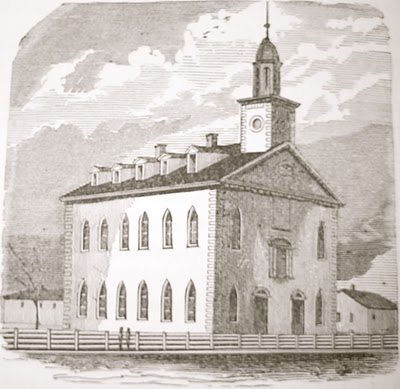
 On the right is a photo of one of the ten washing and anointing rooms in the Salt Lake Temple as it appeared in 1912.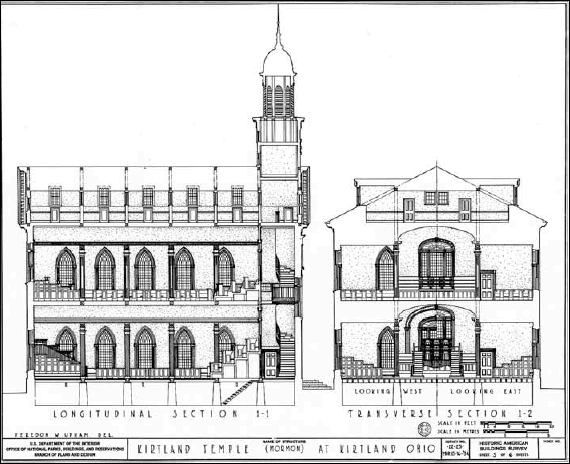
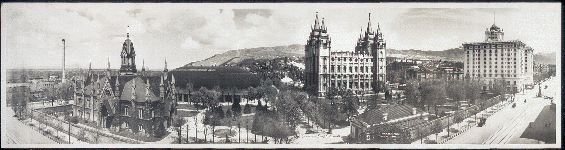
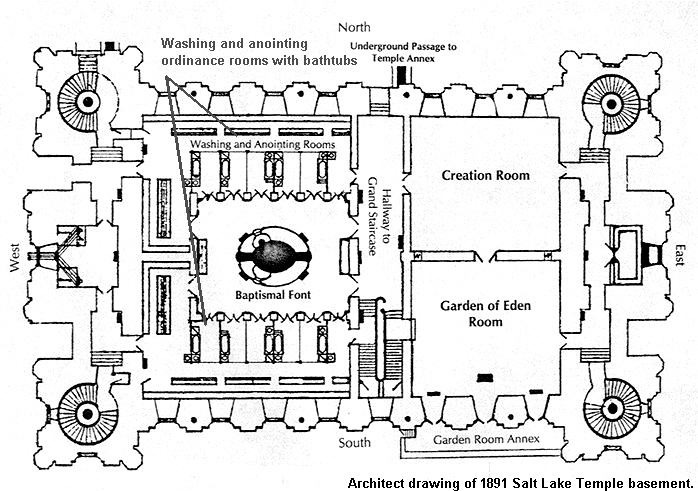
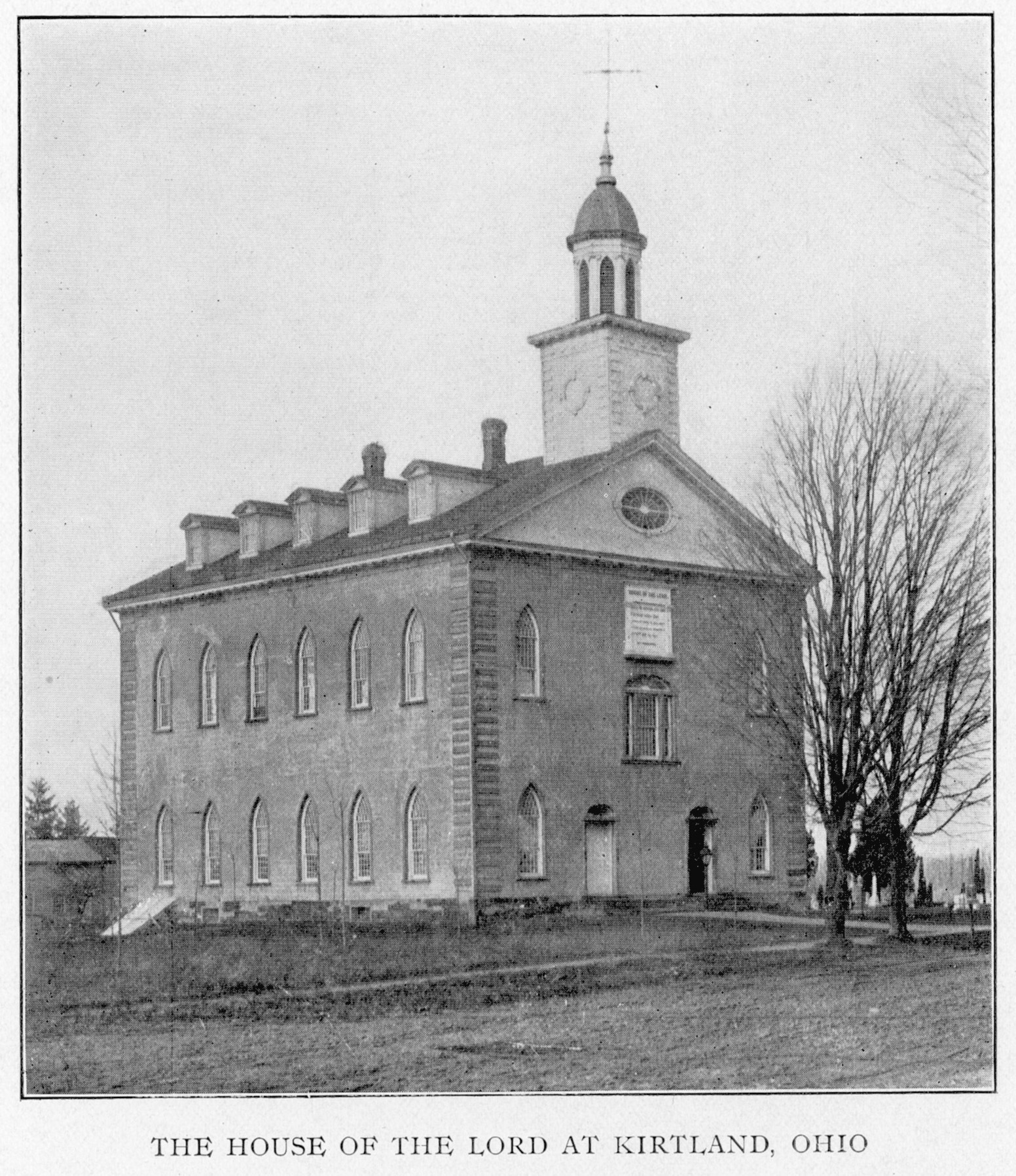
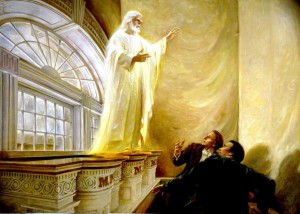
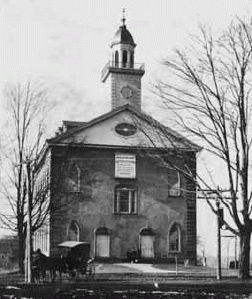
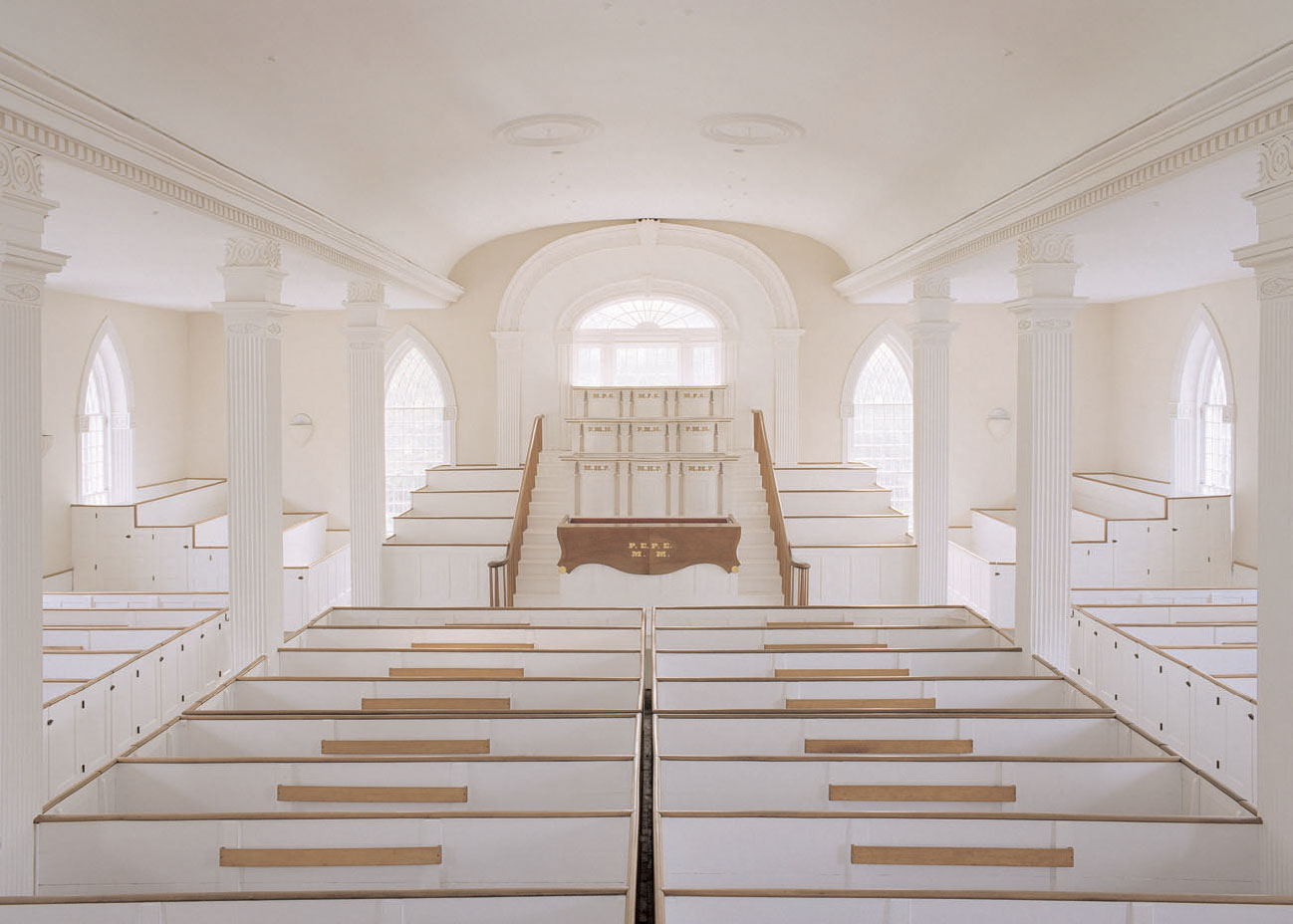
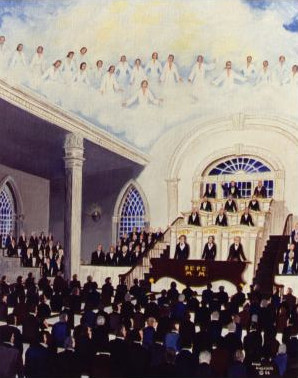
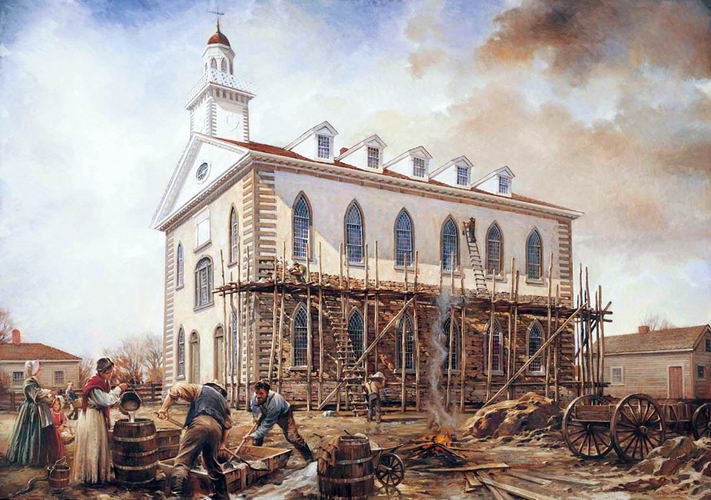
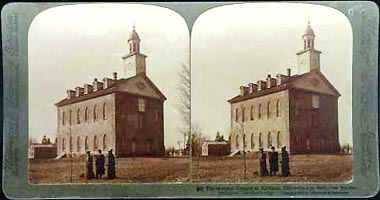
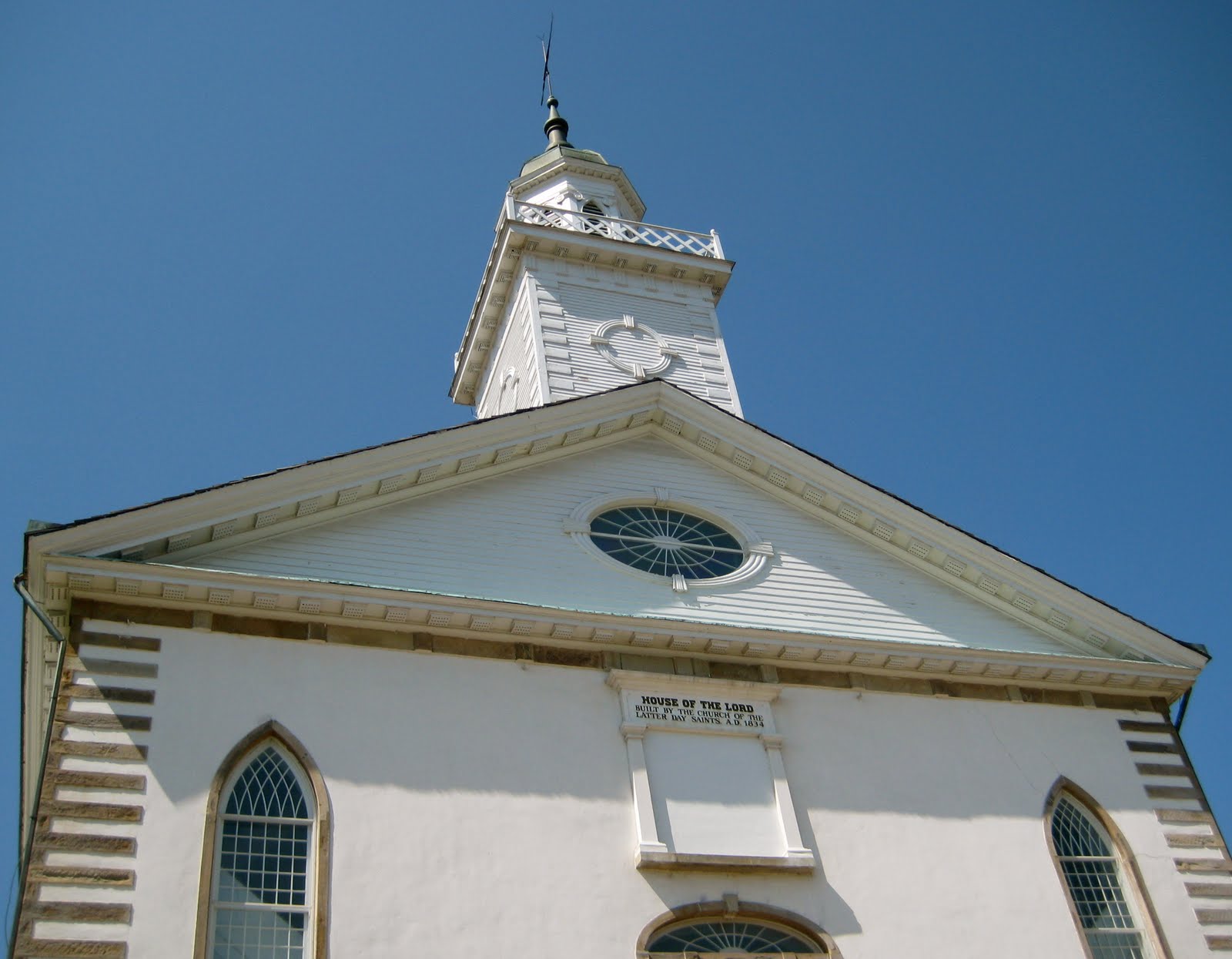
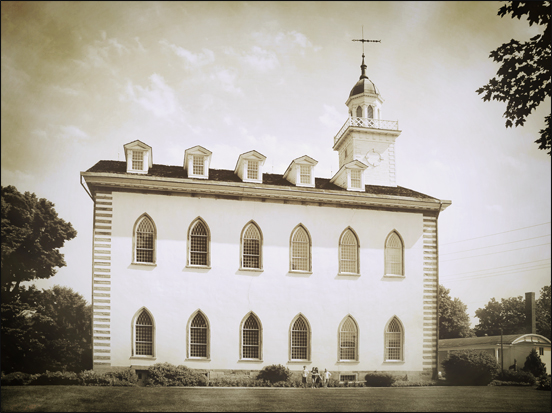
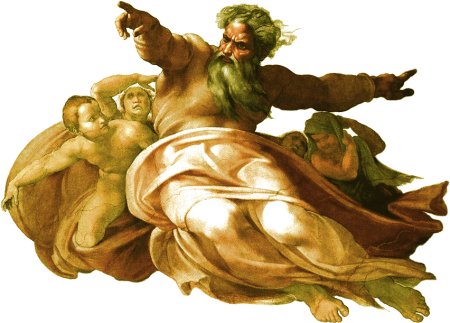


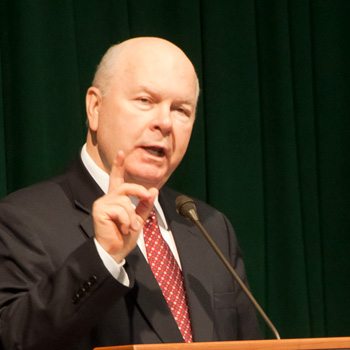
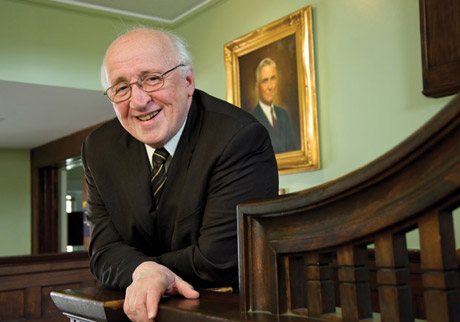
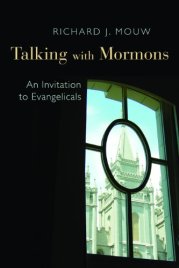
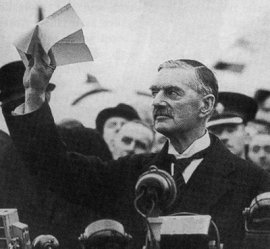


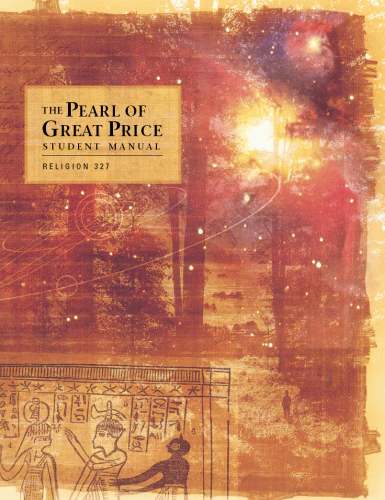




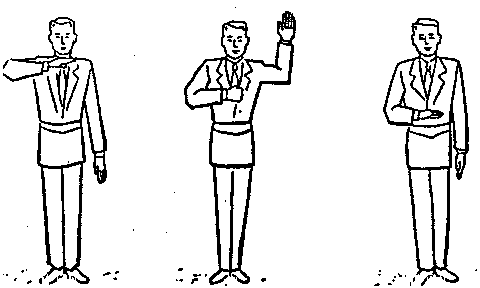



 Beggar's Bread