Muhammad receiving his first revelation from the angel Gabriel. Miniature illustration on vellum from the book Jami’ al-Tawarikh (literally “Compendium of Chronicles” but often referred to as The Universal History or History of the World), by Rashid al-Din, published in Tabriz, Persia, (c.1307 CE)
by Fred W. Anson In the wild world of Mormon Studies “parallel-mania” probably no subject has received more scrutiny and scorn than the parallels between Mormonism and Islam. A lot of ink has been spilled over it and there will, no doubt, be a lot more. I have been as guilty as anyone else in this regard. For example, in a previous article I pointed to the following similarities in support of my thesis that Mormonism is in fact more akin to Islam than Christianity and therefore should drop the pretense that it’s Christian and simply assume it’s place as the Fourth, distinct and unique, Abrahamic Religion:
– Both Muhammad and Joseph Smith were reportedly inspired to start their movements by angelic visits.
The Archangel Jibreel (Gabriel) in the case of Muhammad, and the Angel Moroni for Joseph Smith (following a visit Smith claimed to have received from God and Jesus Christ three years earlier). In each event, the angel in question helped to prepare the prophet to receive a series of revelations from God.[1]
– Both Muhammad and Joseph Smith left behind authorized books they claimed to be direct revelations from God, books that their followers accept as Scripture.[2]
The Koran in the case of Muhammad and the Book of Mormon, Doctrine & Covenants in the case of Joseph Smith. The Brighamite followers of Joseph Smith (which is represented by today’s Salt Lake City denomination of Mormonism) later added The Pearl of Great Price which is a compilation of various and sundry revelations and scripture generated by Smith during his ministry.
– Both Muhammad and Joseph Smith were persecuted by hostile locals and later forced to relocate during the formative periods of their careers.[3]
Muhammad from Mecca to Medina, and Joseph Smith from Missouri to Illinois.
– Both Muhammad and Joseph Smith established theocratic city-states during their respective ministries. Muhammad was invited to take the rule of Medina turning it into a Theocracy, while Joseph Smith would found Nauvoo, Illinois and assumed absolute power as God’s prophet.[4]
– Both Muhammad and Joseph Smith had humble beginnings.
Neither had formal religious connections or upbringing, and both were relatively uneducated. Yet both founded new religions by creating their own scriptures. In fact, followers of both prophets claim these scriptures are miracles since their authors were the most simple and uneducated of men.[5]
– Both Muhammad and Joseph Smith created new scripture which borrowed heavily from the Bible while simultaneously deviating from it.
In his Koran, Muhammad appropriates a number of Biblical themes and characters—but he changes the complete sense of many passages, claiming to “correct” the Bible. In so doing he changes many doctrines, introducing his own in their place. In like manner, Joseph Smith created the Book of Mormon, much of which is plagiarized directly from the King James Bible. Interestingly, the Book of Mormon claims that this same Bible has been substantially corrupted and is therefore unreliable. In addition, Joseph Smith went so far as to actually create his own version of the Bible itself, the Joseph Smith Translation (aka “Inspired Version”) in which he both adds and deletes significant portions of text, claiming he is “correcting” it. In so doing he also changes many doctrines, introducing his own in their place.[6]
– Both Muhammad and Joseph Smith saw themselves as prophesied in scripture, and both saw themselves as a continuation of a long line of Biblical prophets.
Muhammad saw himself as a continuation of the ministry of Moses and Jesus.[7] Joseph Smith saw himself as a successor to Enoch, Melchizedek, Joseph and Moses.[8] Joseph Smith actually wrote himself into his own version of the Bible—by name.[9]
– Both Muhammad and Joseph Smith held up their own scripture as superior to the Bible.
Muhammad claimed that the Koran was a perfect copy of the original which was in heaven. The Koran is therefore held to be absolutely perfect, far superior to the Bible and superceding it. In like manner, Joseph Smith also made the following claim: “I told the Brethren that the Book of Mormon was the most correct of any book on earth, and the keystone of our religion, and a man would get nearer to God by abiding its precepts, than by any other book.”[10]
– Both Muhammad and Joseph Smith, despite their claim that the Bible was corrupt, admonished their followers to adhere to its teachings.
An obvious contradiction, this led to selective acceptance of some portions and wholesale rejection of others. As a result, the Bible is accepted by both groups of followers only to the extent that it agrees with their prophet’s own superior revelation.[11]
– Both Muhammad and Joseph Smith claimed superiority over Jesus Christ.
Muhammad taught that Jesus was just another of a long line of human prophets, of which he was the last. He taught that he was superior to Christ and superseded Him.[12]
In comparison, Joseph Smith also made the following claim: “I have more to boast of than ever any man had. I am the only man that has ever been able to keep a whole church together since the days of Adam. A large majority of the whole have stood by me. Neither Paul, John, Peter, nor Jesus ever did it. I boast that no man ever did such a work as I. The followers of Jesus ran away from Him, but the Latter-day Saints never ran away from me yet.”[13]
Other similarities between Islam and Mormonism – Belief that good deeds are required for salvation just as much as faith.[15]
– Belief that the text of the Bible, as presently constituted, has been adulterated from its original form.[16]
– Belief that their faith represents the genuine, original religion of Adam, and of all true prophets thereafter.[17]
– Belief that one’s marriage can potentially continue into the next life, if one is faithful to the religion.[18]
– Belief that there are multiple degrees or spiritual levels in heaven.[19]
– Both engage in institutionalized testimony bearing. The Shahada in the case of Islam and the formulaic 5-point Mormon Testimony in Mormonism.
– Lying to outsiders in order to protect the religion is considered acceptable – even virtuous: The Taqiyya in the case of Islam and “Lying for the Lord” in the case of Mormonism.
– Belief that a believer’s family, if appropriately faithful to the religion, can join them in the next world, only if they are equally faithful.[20]
– Assertions that modern Christianity does not conform to the original religion taught by Jesus Christ.[21]
– Rejection of the Christian doctrines of Original Sin and the Trinity.[22]
– Absolute prohibition of alcoholic beverages,and gambling.[23]
– Incorporation of a sacred ritual of ablution, though each religion’s rite differs in form, frequency and purpose.[24]
– A “top down” clerical hierarchy that is drawn from the laity and placed into leadership roles, without any requirements for completing collegiate or theological training first.[25]
– Special reverence for, though not worship of, their founding prophet.[26]
– A continuing history of sects, or splinter groups, who claim to be following the “original doctrine” of the founding leaders and whose practices include violence against dissenters and critics, as well as polygamy. [27]
While these parallels are rather broad and general, Lutheran Pastor Hans Fiene found some surgically piercing parallels from Islamic and Mormon sources, bundled them up, and presented them in an amusing video:
Since they flash by so quickly on the screen during the video, here are those references:[28]
Reestablishing the one true religion Islam “Abraham was not a Jew, nor yet a Christian; but he was an upright man who had surrendered (to Allah), and he was not of the idolaters.” – Surah 3:67
“There is no reproach for the Prophet in that which Allah maketh his due. That was Allah’s way with those who passed away of old – and the commandment of Allah is certain destiny – Who delivered the messages of Allah and feared Him, and feared none save Allah. Allah keepeth good account. Muhammad is not the father of any man among you, but he is the messenger of Allah and the Seal of the Prophets; and Allah is ever aware of all things.”
– Surah 33:38-40
Mormonism
“My object in going to inquire of the Lord was to know which of all the sects was right, that I might know which to join. No sooner, therefore, did I get possession of myself, so as to be able to speak, than I asked the Personages who stood above me in the light, which of all the sects was right (for at this time it had never entered into my heart that all were wrong)—and which I should join. I was answered that I must join none of them, for they were all wrong; and the Personage who addressed me said that all their creeds were an abomination in his sight; that those professors were all corrupt; that: ‘they draw near to me with their lips, but their hearts are far from me, they teach for doctrines the commandments of men, having a form of godliness, but they deny the power thereof.’”
– Pearl of Great Price, Joseph Smith-History, 1:18-19, Joseph Smith
Christians changed the Bible Islam “And because of their saying: We slew the Messiah, Jesus, son of Mary, Allah’s messenger – they slew him not nor crucified him, but it appeared so unto them; and lo! those who disagree concerning it are in doubt thereof; they have no knowledge thereof save pursuit of a conjecture; they slew him not for certain.” – Surah 4:157
Joseph Smith John 1:1(Joseph Smith Translation)
“In the beginning was the gospel preached through the Son. And the gospel was the word, and the word was with the Son, and the Son was with God, and the Son was of God.” (Meaning: Jesus is not God) – versus- John 1:1(KJV)
“In the beginning was the Word, and the Word was with God, and the Word was God.” (Meaning: Jesus is God)
Rejection of the the Trinity Islam “And when Allah saith: O Jesus, son of Mary! Didst thou say unto mankind: Take me and my mother for two gods beside Allah? He saith: Be glorified! It was not mine to utter that to which I had no right.” – Surah 5:116
Mormonism “I will preach on the plurality of Gods… I have always declared God to be a distinct personage, Jesus Christ a separate and distinct personage from God the Father, and that the Holy Ghost was a distinct personage and a Spirit: and these three constitute three distinct personages and three Gods.”
– “Sermon in the Grove”; History of the Church 6:474, Joseph Smith
“We declare it is self-evident from the scriptures that the Father, the Son, and the Holy Ghost are separate persons.”
– “The Only True God and Jesus Christ Whom He Hath Sent” Jeffery R. Holland (LDS Apostle June 23, 1994-present), General Conference, Fall 2007
“where Latter-day Saints differ from other Christian religions is in their belief that God and Jesus Christ are glorified, physical beings and that each member of the Godhead is a separate being.”
– “Godhead”, official LDS Church website
Rejection of justification by grace through faith Islam “They surely disbelieve who say: Lo! Allah is the Messiah, son of Mary. The Messiah (himself) said: O Children of Israel, worship Allah, my Lord and your Lord. Lo! whoso ascribeth partners unto Allah, for him Allah hath forbidden paradise. His abode is the Fire.”
– Surah 5:72
Joseph Smith
“The sectarian dogma of justification by faith alone has exercised an influence for evil.”
– “The Articles of Faith”, James Talmage, (LDS Apostle, 1911-33), pg. 432
Good Works Required for Salvation Islam “To those who believe and do deeds of righteousness hath Allah promised forgiveness and a great reward.” – Surah 5:9
Multiple Levels of Heaven Islam Seven Levels: Firdaus, ‘Adn, Na’iim, Na’wa, Darussalaam, Daarul Muaqaamah, Al-Muqqamul, Amin, Khuldi
(click here for supporting evidence from an Islamic source)
Mormonism
Three Degrees of Glory: Celestial, Terrestrial, Telestial
(click here for supporting evidence from an official Mormon source)
Higher levels of heaven based on perfect obedience Islam “Those who spend (benevolently) in ease as well as in straightness, and those who restrain (their) anger and pardon men; and Allah loves the doers of good (to others). And those who when they commit an indecency or do injustice to their souls remember Allah and ask forgiveness for their faults– and who forgives the faults but Allah, and (who) do not knowingly persist in what they have done. (As for) these– their reward is forgiveness from their Lord, and gardens beneath which rivers flow, to abide in them, and excellent is the reward of the laborers.” – Surah 3:134-136
Mormonism
“They are they who received the testimony of Jesus, and believed on his name and were baptized after the manner of his burial, being buried in the water in his name, and this according to the commandment which he has given—That by keeping the commandments they might be washed and cleansed from all their sins, and receive the Holy Spirit by the laying on of the hands of him who is ordained and sealed unto this power; And who overcome by faith, and are sealed by the Holy Spirit of promise, which the Father sheds forth upon all those who are just and true. They are they who are the church of the Firstborn…These are they whose bodies are celestial, whose glory is that of the sun, even the glory of God, the highest of all, whose glory the sun of the firmament is written of as being typical.”
– Doctrines & Covenants 76:51-54, 70
Pro-polygamy Islam “And if ye fear that ye will not deal fairly by the orphans, marry of the women, who seem good to you, two or three or four.” –Surah 4:3
Mormonism
“And again, as pertaining to the law of the priesthood if any man espouse a virgin, and desire to espouse another, and the first give her consent, and if he espouse the second, and they are virgins, and have vowed to no other man, then is he justified; he cannot commit adultery for they are given unto him; for he cannot commit adultery with that that belongeth unto him and to no one else.”
– Doctrines & Covenants 132:61
Change in theology based on political environment Islam When politically weak in Mecca: Let’s be friends, Christians and Jews! “And do not argue with the People of the Scripture except in a way that is best, except for those who commit injustice among them, and say, We believe in that which has been revealed to us and revealed to you. And our God and your God is one; and we are Muslims [in submission] to Him.'” – Surah 29:46
When politically strong in Medina: Die, Christians and Jews, die!
“And kill them wherever you overtake them and expel them from wherever they have expelled you, and fitnah is worse than killing. And do not fight them at al-Masjid al- Haram until they fight you there. But if they fight you, then kill them. Such is the recompense of the disbelievers.”
– Surah 2:191
Mormonism Before wanting statehood for Utah: God says we must practice polygamy! “I reveal unto you a new and an everlasting covenant [polygamy]; and if ye abide not that covenant, then are ye damned; for no one can reject this covenant and be permitted to enter into my glory.”
– Doctrine & Covenants 132:3, Joseph Smith (July 12, 1843)
“It is the word of the Lord, and I wish to say to you, and all the world, that if you desire with all your hearts to obtain the blessings which Abraham obtained, you will be polygamists at least in your faith, or you will come short of enjoying the salvation and the glory which Abraham has obtained. This is as true as that God lives. You who wish that there were no such thing in existence, if you have in your hearts to say: “We will pass along in the Church without obeying or submitting to it in our faith or believing this order, because, for aught that we know, this community may be broken up yet, and we may have lucrative offices offered to us; we will not, therefore, be polygamists lest we should fail in obtaining some earthly honor, character and office, etc,”—the man that has that in his heart, and will continue to persist in pursuing that policy, will come short of dwelling in the presence of the Father and the Son, in celestial glory. The only men who become Gods, even the Sons of God, are those who enter into polygamy. Others attain unto a glory and may even be permitted to come into the presence of the Father and the Son; but they cannot reign as kings in glory, because they had blessings offered unto them, and they refused to accept them.”
– Journal of Discourses 11:268-269, Brigham Young, “Remarks by President Brigham Young, in the Bowery, in G.S.L. City,” (August 19, 1866), bolding added for emphasis
After wanting statehood for Utah: God says we can’t practice polygamy! “The Lord showed me by vision and revelation exactly what would take place if we did not stop this practice. If we had not stopped it, you would have had no use for … any of the men in this temple at Logan; for all ordinances would be stopped throughout the land of Zion. Confusion would reign throughout Israel, and many men would be made prisoners. This trouble would have come upon the whole Church, and we should have been compelled to stop the practice.”
– “Cache Stake Conference, Logan, Utah, Sunday, November 1, 1891”, Wilford Woodruff (4th LDS President), Reported in Deseret Weekly, November 14, 1891
“Inasmuch as laws have been enacted by Congress forbidding plural marriages, which laws have been pronounced constitutional by the court of last resort, I hereby declare my intention to submit to those laws, and to use my influence with the members of the Church over which I preside to have them do likewise.”
– Doctrine & Covenants, Official Declaration-1, Wilford Woodruff (4th LDS President), October 6, 1890 (date of canonization into LDS Scripture)
The pre-existence of souls Islam “And when your Lord brought forth from the children of Adam, from their backs, their descendants, and made them bear witness against their own souls: Am I not your Lord? They said: Yes! we bear witness. Lest you should say on the day of resurrection: Surely we were heedless of this.” –Surah 7:172
Mormonism
“And God saw these souls that they were good, and he stood in the midst of them, and he said: These I will make my rulers; for he stood among those that were spirits, and he saw that they were good; and he said unto me: Abraham, thou art one of them; thou wast chosen before thou wast born. And there stood one among them that was like unto God, and he said unto those who were with him: We will go down, for there is space there, and we will take of these materials, and we will make an earth whereon these may dwell; And we will prove them herewith, to see if they will do all things whatsoever the Lord their God shall command them; And they who keep their first estate shall be added upon; and they who keep not their first estate shall not have glory in the same kingdom with those who keep their first estate; and they who keep their second estate shall have glory added upon their heads forever and ever.”
– The Pearl of Great Price, Book of Abraham 4:23-26
Mormonism’s explanation for why some people are black, based on the pre-existence:
“There is a reason why one man is born black and with other disadvantages, while another is born white with great advantages. The reason is that we once had an estate before we came here, and were obedient; more or less, to the laws that were given us there. Those who were faithful in all things there [pre-existence] received greater blessings here, and those who were not faithful received less. . . . There were no neutrals in the war in Heaven. All took sides either with Christ or with Satan. Every man had his agency there, and men receive rewards here based upon their actions there, just as they will receive rewards hereafter for deeds done in the body. The Negro, evidently, is receiving the reward he merits.”
– “Doctrines of Salvation”, Joseph Fielding Smith (10th LDS President) 1:61, 65-66
Summary and Conclusion
It’s been said that Satan isn’t very original or creative and his best ideas are stolen. And based on the stunning parallels between Islam and Mormonism alone there seems to be some truth to it. In the late 19th and early 20th Centuries Mormonism was often referred to as “The Islam of America” and now you know why.
Joseph Smith receiving the golden plates from the angel Moroni. “The Restoration” by L.A. Ramsey (1873-1941)
[7] John Ankerberg & John Weldon, “The Facts on Islam”; Eugene, OR: Harvest House Publishers, 1998; pp.8–9. Also see Eric Johnson, “Joseph Smith & Muhammad”; El Cajon, CA: Mormonism Research Ministry, 1998; pp.6–7.
“I find myself too often saying about a lot of Christians, ‘I agree with everything you say, but I disagree with the way you’re saying it. There’s a way of saying things that is redemptive and loving and there’s a way saying things that’s not redemptive and loving.’” Dr. Richard Land
Public spokesperson for the Southern Baptist Convention in “Us and Them”
Introduction: While we were preparing for this series we took careful note of the weak arguments, bad behavior, and counter productive debating tactics we saw some Christians using in their public engagement with Mormons. Those deserving of deep analysis became full articles, the rest went onto a special “grass catcher” list which I now present to you for your consideration:
How to Make Weak Arguments Against Mormonism:
Be condescending and disrespectful. These people are obviously blind fools, make sure that they and the whole world knows it by talking down to and sneering at them. After all wasn’t the Apostle Peter just offering a suggestion rather than a mandate when he said: “But in your hearts revere Christ as Lord. Always be prepared to give an answer to everyone who asks you to give the reason for the hope that you have. But do this with gentleness and respect,” (1 Peter 3:15 NIV italics added)[1]
Don’t back up your arguments with easily verifiable evidence. After all, everyone should just change their beliefs based on just some stranger’s claims and opinions alone, right? Wouldn’t you? Who needs supporting evidence?[2]
“Link bomb” them. That is, copy and paste just the links to evidence rather than carefully selecting and citing the relevant content from those sources and then providing the link so it can be verified. In other words, make ’em work hard to disabuse themselves of their wrongheaded beliefs! After all, isn’t it their job to prove your point for you by digging, mining and sifting through the mountain of words that you’ve so generously brought to their attention? Let them find their own gold like you did – it’s in there somewhere, right? Besides, reading, listening, watching, transcribing, and citing is just such hard, time comsuming work – link bombing is so much easier! Doubt me? Boom! http://newyork.cbslocal.com/2013/08/01/survey-finds-internet-makes-people-rude-new-yorkers-agree/ You’re been link bombed! (That was easy)
Speak in absolute and authoritative tones on subjects that you’re ignorant or uninformed on. Better yet do it on the Internet so that a worldwide audience can benefit from (or be entertained by) your “insight!” As the ancient proverb says so well, “Fools have no interest in understanding; they only want to air their own opinions.” (Proverbs 18:2 NLT)
Tell Mormons to “look it up!” rather than serving them by providing the relevant information for your argument. Yes, that’s right, don’t provide a web link, a citation or any other verifiable evidence – why should you? They have eyes, don’t they! They have brains, don’t they? Of course, they’ll rush right out and do it – right? Isn’t that what you do when other people do this to you? Hey man, 99.9% of those surveyed do! It’s true! Look it up.[3]
Just get right up on that Christian soapbox and set ’em straight! Preach Christian preach! After all, all you should need to do is speak the truth, right? So give to ’em with both barrels with all the best Christianese you know! Why do you need to learn anything about them or their heretical beliefs first? Just declaring God’s good truth should be enough shouldn’t it? In fact, wouldn’t taking an interest in and learning their heresies just validate them and keep them in error? Don’t lower yourself to the level of heretics and blind men – rather, preach Christian preach! Your fellow Christians will slap you on the back and praise you while all the befuddled Mormons are slowly walking away shaking their head wondering all that incomprehensible shouting was about. Mormons are just so blind and deceived aren’t they?[4]
Only cite from Mormon Critics rather than Mormon friendly sources. After all, if it’s “Mormon Friendly” it must be enemy propaganda, right? All Mormons know how to do is lie and deceive anyhow, right?[5]
Assume that the underlying meaning of the terms that you and Mormons use are the same. And whaddaya know! We use the same words, we must both be Born Again Christians! Who knew?[6]
Give citations without providing the source so it can be verified for accuracy. Oh, and never make it easy by providing a web link to the source! Just throw it out – your word alone should be sufficient, right? By the way, did you know that the Eustace Scrubb character in C.S. Lewis’ “The Chronicles of Narnia” was Mormon? Yep, it’s true![7]
Frame your arguments in outsider Christian language rather than insider Mormon language. So what if it’s like speaking in a foreign tongue to them? Hey, just yell that Christianese LOUDER, slower, and longer like a tourist on vacation in a foreign land. They’ll get it eventually! After all, they can always watch your hand signals right? Oh yeah, about that that hand signals thing when it comes to the internet . . . [8]
Make sure that you never, ever enter a Mormon building like a Ward Building, Chapel, Stake Building, Temple tour, or Church Museum – you might get Mormon cooties or become demon possessed! After all, you can learn everything you need to know by talking to your Mormon neighbor over the backyard fence – they’re all experts on their faith and always represent their theology and practices as accurately as today’s Christians do theirs.[9]
Never attend a Mormon Service or meeting (especially a Fast & Testimony meeting) lest you experience their culture first hand. Empathy is of the devil! Stay in dark ignorance regarding what really happens inside Mormon services so you can get it all wrong whenever you talk about those services. After all, you love it when Mormons make incorrect statements about what goes on in our services don’t you?[10]
Treat antiquated Mormon sources as if they have as much weight and authority as modern official sources. Make sure you regularly quote from “The Journal of Discourses” and McConkie’s “Mormon Doctrine” as if they’re equivalent to today’s correlated manuals and literature. And if they object, they’re just uninformed about what their church really believes and teaches aren’t they?[11]
Never concede well made arguments and credible evidence from Mormons. You must never, never, never yield an inch! After all this is war! Never give in and never surrender![12]
Use derogatory, insulting terms like MORmON, Joseph’Smyth, Profit (instead of “Prophet”), TSCC (The So Called Church), Jo$eph $mith, Bring’em Young, Breed’em Young, Thoma$ Mon$oon, etc. Or go back in time and use the old 19th Anti-Mormon prejorative terms like “Joe Smith”, “Mormonites”, “Golden Bible”, etc. Conversely, you can merge current popular culture with Mormonism and invent new perjovatives like, “Morg” (Star Trek reference that blends “Mormon” with “Borg”), “Joseph Sith” (Star War reference that suggests that Joseph Smith was an evil Sith), “Darth Monson” (another Star Wars reference there), etc. The more condescending, offensive, and degrading the better – that way it’s clear whose side you’re really on, and of course, that true believing Mormons are stupid idiots who all deserve just what they’re going to get at the great judgment![13]
An Internet meme designed to make Mormons look stupid – and this is one of the kinder ones.
Create and use insulting Internet memes and graphics. Everyone loves getting insulted – be the Don Rickles of Mormon Studies, they’ll love you for it. After all, don’t you just love those angry atheist memes that insult and belittle Christians? They just make you want to run out and become an atheist in the worst way, don’t they?
Mock the LdS Temple Endowment ceremony. After all it’s sacred and stupid right? After all one can surely have meaningful conversation with someone’s back as they’re walking away, right? The fact that the endowment ceremony is an off-limits, “nuclear” subject in Mormon Culture is their problem not ours!
Refer to Temple Garments as “Magic Mormon Underwear.” Let ’em them know how stupid and silly they really are! Better yet, wear them in public while donned in a gorilla’s mask, burn them, deface them, stomp and spit on them if you can.[14] After all, Christians never get upset when outsiders do that to clerical vestments, choir robes, or crosses do they?
Show no empathy or understanding for the incredibly high price Mormons must pay for leaving the LdS Church. Hey man, it’s as easy as changing churches right? What’s the big deal? I mean Presbyterian to Baptist to Charismatic to Catholic to Lutheran and then back again – easy, peasy, there’s never much of a price to pay is there? Oh you lost your wife and family when you left the Mormon Church? And your job too? And you’re being shunned by your own family? Now that’s just downright weird isn’t it?[15]
Use a lot of cliches, platitudes, and Christian folklore rather than anything of substance. In other words, use exactly the same kind of thought and emotional control tactics that Mormons use when engaging outsiders. It will really bless them, so they feel the anointing on you when you get out your “sword” and give them the word. Or, better yet, tell them about that angel encounter or Near Death Experience (NDE) that you heard about on Christian TV last week. Get right or be left man, because inch by inch life is a cinch, yard by yard life is hard – it’s in the Book!
Appeal to feelings rather than intellect – after all, it worked so well in getting and keeping them in Mormonism? Maybe lightning will strike twice, so have them read the Bible and pray about if it’s true or not . . .[16]
Hyper-spiritualize everything. For example, rather than using even toned language and verifiable evidence against Mormonism make statements like: “Mormonism is a demonic religious system which has led millions to hell”, or “Mormons are all demon possessed, under the influence of deceiving spirits”, or “The Lord showed me that Mormons will be key leaders in the Antichrist’s one world government – Mitt Romney is just the beginning”, etc. Of course since none of this can be objectively proved or verified it really just pits two competing belief systems, religious cultures, and value systems each other. To transitioning Mormons this just demonstrates (beyond a shadow of a doubt they very often think) that mainstream Christianity is just as fanatical and subjective as Mormonism. Yes, they’ll thank you as they just pass right on by on their way to atheism muttering a dismissive, “There’s no difference between the two, they’re both the same!”[17]
Use double standards. For example, make a big deal over the fact that God the Father isn’t explicitly identified as the personage who says, “This is My Beloved Son. Hear Him!” (Joseph Smith History 1:17) in Joseph Smith’s First Vision but ignore the fact that neither is He explicitly identified in Matthew 3:17 as the voice from heaven that says, “This is my beloved Son, in whom I am well pleased.” Why be fair? The ends justify the means, right?
Argue that just one of Joseph Smith’s failed predictions of the future qualify him as a False Prophet per Deuteronomy 18:20-22, but ignore the fact that applying the same criteria in the same way that’s applied to Smith also makes Hal Lindsey, Chuck Smith, Harold Camping and other respected Christian leaders with failed predictions of the future False Prophets too. Again, why be objective and fair?[18]
Engage in what Christian Apologists call a “Scorched Earth Tactics“. That is, win at all costs rather than adhering to the golden rule of Christian apologetics, which is, “Always treat your debating opponent’s evidence and arguments the way that you would want to have your evidence and arguments treated” Nothing drives ’em away or drives them into atheism like going “Scorched Earth” on ’em does – go for it! Win at all costs Christian, win!
Criticize, condemn, or praise authors, books, and articles that you haven’t read. And do the same for films, videos, and audio (like podcasts, lectures, and sermons) that you haven’t experienced first hand. Everyone knows that hearsay and innuendo is just as good as direct experience. Better yet, throw in some unfounded bigotry and prejudice! You know say things like, “D. Michael Quinn‘s popularity just baffles me. Not only is he a believing excommunicated Mormon but he’s gay to boot! With that combination you really can’t expect too much can you?”; or, “What’s up with Richard Bushman? ‘Rough Stone Rolling’ should have been published by FAIRMormon it’s so filled with apologetics instead of real honest to goodness history!”; or how about, “Alex Beam‘s ‘American Crucifixion’ disrespects crucifixion in it’s title! Doesn’t he know that Joseph Smith had a gun at Carthage Jail? Who carries a gun to a crucifixion?”; and last but not least, “I’ve heard that that ‘September Dawn’ is the closest thing to an accurate documentary on the Mountain Meadows massacre that we’ll ever get.” You get the idea.[19]
Be just as fanatically Christian as they are fanatically Mormon. Since religious fanaticism is the fuel driving the Mormon belief system your behavior will be like filling up their tank without them even needing to get out of the driver’s seat! Oh, and this has the added “benefit” of driving them right into atheism should they leave since it makes it look like Christianity is just the opposite side of the same fanatical religious coin that Mormonism is on.
In mixed company act like there are no Mormons present. Say things like, “Can you believe how pompous, self-righteous and arrogant Mormons are?”, “Mormons are like lemmings – if the Prophet told them to jump off a bridge they would do it!”, “Those ignorant Mormons, I know more about their religion that they do!” And of course, when the Mormons say, “Uh, I’m right here, I can hear everything you’re saying” and object to such crass prejudice and bigotry don’t apologize and don’t back down – in fact, up the ante, say even more outlandish things about those stupid Mormons right to their face!
Paint with the broadest brush possible. Use wild, spectacular, over-generalizations delivered using the most absolute tone and words possible. You know, things like: “All Mormons lie in their Temple Recommend Interview”, “You’ve gotta know that every Mormon man is secretly addicted to pornography – Utah’s porn statistics are off the chart!”, “All dating BYU couples do the ‘Provo push!'”, “All Mormon women are treated like chattel by their priesthood holding husbands – it’s a holdover of 19th Century polygamy!” etc., etc., etc. The broader the better and the more spectacular is it the more people will be inclined to believe you – so go big, don’t hold back.
Exaggerate and twist. Take something with a modicum of truth in it and expand, embellish, and massage it to the point where even the modicum disappears under an avalanche of hyperbole. For example, say something like “Mormonism replaces the cross with the pentagram!”[20] Or say, “Mormons shun the blood of Christ by using water in their communion service!”[21] Vetting, verifying, and refining your assertions so that they’re accurate and true is just so much work! Plus balance and precision doesn’t pack the same emotional punch as exaggerated hype – so why bother?
Insist that Latter-day Saints should leave Mormonism over a single problem. For example, over the fact that the Book of Mormon anachronistically has the French word “adieu” in it (see Jacob 7:27) or that it incorrectly states that Christ was born in Jerusalem (see Alma 7:10).[22]
Make sure that you use a lot of snark and sarcasm! Everyone loves being condescended to by obnoxious smart alecks with bad attitudes. By the way, I hope you’re loving reading this article as much as I am writing it. If not, you’re just a loser who just doesn’t “get it!”[23]
Say things like, “The ends justify the means” to rationalize your bad arguments and behavior. Sure, it’s not biblical, but why be picky when souls are at stake here?
Use the bad arguments and behavior of Mormons to justify any or all of the above.
Assume that any constructive criticism from fellow Christians on how to better engage Mormons is meant for everyone else but you.
Summary and Conclusion: Now I confess that in my early days in Mormon Studies I engaged some of these weak arguments – and on my bad days, sometimes I still do. But the fact remains that as Christians we have a higher calling. I would ask the reader to consider the following, knowing full well that while I may be preaching to others I am preaching to myself first and foremost.
First, this form of engagement is unbiblical. Here’s how the Bible instructs us to behave toward those who disagree with us:
Opponents must be gently instructed, in the hope that God will grant them repentance leading them to a knowledge of the truth, (2 Timothy 2:25 NIV)
Let your conversation be always full of grace, seasoned with salt, so that you may know how to answer everyone. (Colossians 4:6 NIV)
But in your hearts revere Christ as Lord. Always be prepared to give an answer to everyone who asks you to give the reason for the hope that you have. But do this with gentleness and respect, (1 Peter 3:15 NIV)
Second, it’s just common sense that these tactics are more inclined to drive people away from Christ than draw them near. If and when the roles are reversed I’ve noticed that Christians react the same way that Mormons do: They walk away wanting to have nothing to do with the person, their stance, or their beliefs.
Jackson Pollock “Lucifer” (1947). What Christian-Mormon dialog looks like when the above tactics are used by either side.
Third, it violates both the Golden Rule which says…
Therefore, whatever you want men to do to you, do also to them, for this is the Law and the Prophets. (Matthew 7:12 NKJV)
… and the Golden Rule of Apologetics which says:
“Always treat your debating opponent’s evidence and arguments the way that you would want to have your evidence and arguments treated“
Simply put, there’s just no excuse for Christians to be chronically using the type of tactics and arguments that I’ve listed in this article. And I say this knowing full well that Jesus, the Old Testament prophets, and the Apostles used sarcasm – and even some very harsh and pointed words – in their arguments. After all, I’ve followed their lead by using such tactics in this article haven’t I? However, I would suggest to the reader that these tactics were reserved for hard cases and as a kind of last resort, in no case did Christ or any of the other Biblical figures lead with these tactics or use them in every encounter. So if you find yourself doing so I would ask you to stop, consider the mind of Christ, and change direction. As Paul said so well:
Let nothing be done through selfish ambition or conceit, but in lowliness of mind let each esteem others better than himself. Let each of you look out not only for his own interests, but also for the interests of others.
Let this mind be in you which was also in Christ Jesus, who, being in the form of God, did not consider it robbery to be equal with God, but made Himself of no reputation, taking the form of a bondservant, and coming in the likeness of men. And being found in appearance as a man, He humbled Himself and became obedient to the point of death, even the death of the cross. Therefore God also has highly exalted Him and given Him the name which is above every name, that at the name of Jesus every knee should bow, of those in heaven, and of those on earth, and of those under the earth,and that every tongue should confess that Jesus Christ is Lord, to the glory of God the Father. (Phillipians 2:3-11 NKJV)
So I pray that that mind will be in us as engage with our Mormon friends and family members as we navigate through the dangerous land of Mormon Studies – a land where animosity and acrimony rule the day every day. I pray that we would be a healing balm and a exit route to truth rather than fuel on the fire and scorched earth. Maybe we would all do well to remember the ancient prayer that says:[24]
Lord, make me an instrument of Your peace;
Where there is hatred, let me sow love;
Where there is injury, pardon;
Where there is discord, harmony;
Where there is error, truth;
Where there is doubt, faith;
Where there is despair, hope;
Where there is darkness, light;
And where there is sadness, joy.
O Divine Master, Grant that I may not so much seek
To be consoled as to console;
To be understood as to understand;
To be loved as to love.
For it is in giving that we receive;
It is in pardoning that we are pardoned;
And it is in dying that we are born to eternal life. (St. Francis of Assisi)
NOTES [1] And before the “You’re a hypocrite – just look at the tone and content of your article!” phone calls, and letters start pouring in, the first part of this article was written in a tongue in cheek style that’s intended to mirror the same condescension, disrespect, snark, and sarcasm that are so prevalent in the weak arguments and tactics that are being addressed. If you’re offended by it then please consider how such behavior feels to our Mormon friends and family members when it’s directed at them.
[2]“What can be asserted without evidence can be dismissed without evidence.” (Hitchen’s Razor)
[3] NOT! Nobody does this. It’s the responsibility of the person making an assertion to prove it. It’s not their debating opponent’s role or responsibility. This is just common sense folks! This is the laziest form of scholarship imaginable – if you can even call it “scholarship.”
Also, as a point of clarification, please understand that public soapboxing does have a place and can be effective if it’s done biblically and appropriately. After all Christ did a lot of soapboxing – but it was always tailored and targeted for the audience that He was addressing. I would encourage you to consider how His tone, methods, and demeanor changed when His audience was the Jewish downtrodden (Matthew 11:25-30), versus the hard hearted (Matthew 11:20-24), versus the Jewish privileged (Luke 11:45-54). Then consider how it changed again when His audience wasn’t Jewish (John 4; Matthew 8:5-13; Matthew 15:21-28). Then when we look at the Apostles Paul’s writings and message are very different than, say, the public soapboxing we see in his Mars Hill address in Acts 17.
The basic problem here is a lack of social and cultural sensitivity, discernment and respect. If you truly love someone you will speak to them in a way that they understand and can receive your message. Christians who are “one trick ponies” on soapboxes – that is, that only have one approach and one message regardless of the audience – aren’t doing anyone any favors.
[6] Suffice to say, Mormonism takes Christian words and forms and changes their underlying meaning. For a good primer of the terminology differences see “Terminology Differences” by Sandra Tanner. For a more in depth study and analysis of the subject see “Words We Share” by Sharon Taylor and Gerald Van Iwaarden.
[7] Of course, I’m demonstrating how Christians do this in a very tongue in cheek fashion here. And by the way, the speculation about Eustace Scrubb being Mormon is probably wrong. See Michael De Groote, “What C.S. Lewis thought about Mormons” Deseret New/Mormon Times, June 5, 2009. And since it annoyed me to not to be able to include the reference links for Eustace Scrubb and “The Chronicles of Narnia” in the main article (to do so wouldn’t have accurately reflected the behavior I was illustrating) I’ll do so here instead. Whew, I feel better now! Thanks!
[8] Just like no one can hear you scream in space, no one can see your hands in cyberspace – I just thought that you’d like to know.
Some church opponents have used public occasions, like the biannual church conferences, to publicly mock and parody the wearing of temple garments. During the October 2003 LDS Church General Conference, some anti-Mormon demonstrators outside the LDS Conference Center reportedly spat and stomped on garments in view of those attending the conference. One protestor blew his nose into a garment he wore around his neck. A scuffle broke out between a protester and two members of the church who attempted to take the garments from him. To avoid a repeat of the conflict, the municipality of Salt Lake City planned stronger enforcement of fighting words and hate speech laws for the April 2004 conference in Salt Lake City with new protest buffer zones.
(Wikipedia, “Temple Garment Use in Protests”)
[15]Please read, “The Death of Reason and Freedom” by Enigma. I believe that it will help even the most hard hearted Christian understand the dilemma that unbelieving “Shadow Mormons” too often fall into. The highest recommended is also given to Azra Evans’ classic essay, “Families Held Hostage”.
[17] Again, none of these are made up. They’re all comments that the author has seen posted on the internet by welling meaning but misguided Christians.
[18] And, yes, Mormons use exactly the same apologetic rationalization for Joseph Smith that Christians often use for the Christians named here. Please consider the FAIRMormon portal page, “Joseph Smith/Alleged false prophecies” The arguments that FAIRMormon uses for Smith are similar, and in many cases identical, to the arguments use for those on our side of the divide who have failed predictions of the future. My point here is simple: We can’t apply one standard to those in our group and another to those outside of our group. We must be consistent and be consistent or we’re not credible and lack integrity.
For those unfamiliar with the failed prophetic predictions of Evangelical Christian preachers Hal Lindsey, Chuck Smith, and Harold Camping need only click on their names. Gary DeMar has also written a good summary article on their failed predictions. Click here to read this article.
[19]Things to consider in response to these examples:
D. Michael Quinn, is widely regarded as the one of the top Mormon Historians of his day by both Mormons and non-Mormons alike. The consensus is that his work largely reflects a lack of bias despite his belief in and testimony of Joseph Smith and the Mormon Church. The exception to this consensus position typically comes from Mormon Apologetic groups. And I have never understood why some people think that Quinn’s homosexuality would impact his intellectual integrity or professional objectivity but it seems to get flung out a lot by Mormons and Christians alike. I would ask the reader to just read some Quinn and see if they can see overt bias in it. I don’t. For example, here’s a transcript of the infamous “Plural Marriages After the 1890 Manifesto” paper (aka “The Buffdale Speech”) that many people think was a key factor in him getting excommunicated in 1993.
Richard Bushman has admitted repeatedly in interviews that while he makes every effort to be objective he may tend to give Joseph Smith the benefit of the doubt in his work due to his faith (click here for one such example). And candidly, his bias does occasionally leak through in his work – Peter Mary does a superb job of demonstrating this in his review of the book (click here). Never-the-less his work is remarkable for it’s level of candor and true Mormon history given his status as a faithful Mormon in good standing with the LdS Church. “Rough Stone Rolling” is always the first book that I recommend to Mormons who express a desire to know the truth from a faithful source and I don’t see that changing anytime soon.
Alex Beam is a faithful and practicing Episcopalian and his book “American Crucifixion” has garnered praise for the depth of detail it goes into regarding the circumstances and events surrounding the death of Joseph Smith – including the smuggled guns that Smith and his associates carried and shot at Carthage Jail which wounded several of their attackers. The last thing that Alex Beam intended was to disrespect or degrade anyone or anything, least of all Christ’s crucifixion, with the title. He has explained that the title was intended to be provocative and reflective of the strong feelings and historical impact that Smith’s death generated (click here and then fast forward to 34:10 to hear Mr. Beam’s explanation for yourself). He was also drawing attention to the parallels with Christ’s passion that Smith articulated himself regarding his circumstances during the last days of his life. Joseph Smith was notorious for such over the top hyperbole – much to the delight of his faithful and the scorn of his critics.
“September Dawn” is a Hollywood film that was intended more to entertain than educate. The film contains some historical errors (click here to read Bill McKeever’s excellent analysis and review of the film) and even more unsupportable, speculative embellishment. It’s not a bad film but it’s certainly not a good documentary. In this author’s opinion, the best Mountain Meadows massacre documentary to date is Brian Patrick‘s award winning “Burying the Past”. It isn’t as entertaining as September Dawn but it’s certainly more enlightening – and it’s historically accurate.
[20] Regarding the use of the Pentagram in Mormon architecture: a) The meaning of the inverted 5-pointed star changed in the late 19th Century; b) Other Mormon denominations (like the RLDS/Community of Christ) use the cross in their architecture; c) Pentagrams aren’t used in modern LdS Church architecture. The exception being when a modern structure is being built that’s based on a historic design. For example, the 2002 Nauvoo Temple still retained the pentagrams from the original design but also used upright 5-pointed stars for the new, modern design elements.
The 2002 Nauvoo Temple. (click to zoom)
For example, notice that the stars in the exterior fence in the following photo – which is a new, modern element – are upright but the stars in the upper windows which were in the original 1836 design are inverted.
Mr. Reed’s explanation of the use of pentagrams in Mormon architecture can be found here. If the reader prefers a Christian analysis of the subject, Bill McKeever’s article on the subject can be found here.
[21] Regarding the use of water instead of wine or grape juice in the Mormon sacrament: a) Wine was originally used in Latter Day Saint communion services; b) Due to an unfounded rumor that Anti-Mormons were trying to poison the sacramental wine in 1830 and then due to the Word of Wisdom they switched to water; c) The use of water a hold over from the 19th Century temperance movement that got institutionalized and concretized by the Salt Lake City Brighamite Mormon denomination; d) Other Mormon denominations use grape juice rather than water in their services; e) Prior to Dr. Welch (a temperate Methodist) discovering a way to stop the fermentation in grape juice many temperate churches used water instead of grape juice in their services – were they “shunning the blood of Christ” by doing so? Glass house meet rock.
“Should Christians declare the entire Bible discredited because of it [a single biblical contradiction]? Even Atheist critics and Muslims don’t suggest such a response because it’s so ‘over the top’. Yet, many Christians would demand exactly that of Mormons over Alma 7:10. To me, such a demand on Mormons reveals an extreme bias on the part of some Christians and the type of unjust, uncharitable treatment that can drive Mormons deeper into the LdS Church if they stay, or right past Christianity and straight into atheism if they leave…
Most ExMormons tell us that there wasn’t just one thing that convinced them that the truth claims of the LdS Church don’t add up, it was a culmination of a lot of little things. They say it’s like a bunch of pebbles being tucked away on a shelf in a deep, dark corner – that is until the shelf finally collapses under the weight of them all.”
Simply put, expecting anyone to leave their faith over a single problem or argument is pretty silly and naive. Politely and respectfully building a case takes longer and requires more effort but it’s ultimately how and why most people are disabused of closely held and comforting error and self-deception.
An ongoing series of articles on some common and recurring weak arguments that Christians make against Mormonism.
by Fred W. Anson The Argument: “There’s nothing in Mormonism that’s true – it’s all wrong and nothing but a pack of lies!”
Why It’s Weak:
As stated a number of times throughout this series, exaggeration erodes credibility and overstatement turns strong arguments into weak ones. This is an example of both: The fact of the matter is that there is some good and some truth in Mormonism despite the preponderance of errors and lies. This is just as pioneering cult researcher and lecturer Walter Martin said so well:
Within the theological structure of the cults there is considerable truth, all of which, it might be added, is drawn from biblical sources, but so diluted with human error as to be more deadly than complete falsehood.[1]
And as Bible teacher Don Basham noted, “All cults are at least 10% truth and 90% lie. If they didn’t contain some truth then no one would believe the lies – no one would join them.”[2] And I would add, based on my own experience in a cult, that if they didn’t meet some kind of a need no one would stay. So it shouldn’t surprise us to find some truth and some good in all cults – and the Mormon Church is no exception. Therefore, acknowledging what’s true and what’s good – without underestimating or discounting what isn’t – is simply a matter of common sense. And giving credit where credit is due is a matter of integrity.
1) Point One: There is some truth in the Mormon Church Focusing exclusively on Christology, here’s what the Mormon Church gets right:
Warner Sallman, “The Head of Christ” (circa 1941)
They believe that Jesus preexisted in Heaven before becoming a man.
They believe that Jesus is Jehovah, the God of Israel.
They believe that we are to pray to God the Father in the name of Jesus.
They believe that Joseph was not Jesus’ biological father.
They believe that Jesus was the Messiah, lived a sinless life, and did the miracles reported in the Gospels.
They believe that Jesus suffered and died on a cross.
They believe that Jesus rose physically, bodily from the grave.
They believe that Jesus ascended bodily into Heaven.
They believe that Jesus will return physically to the earth.[3]
2) Point Two: It’s not all wrong It tends to get downplayed in the heat of battle but in the area of values, morality, and social issues, the Mormon Church is spot on in a number of areas. Mormon Researcher Eric Johnson, an Evangelical Christian who is generally critical of Mormonism, has gone so far as to identify ten areas (in David Letterman countdown fashion) that the LdS Church excels at and that he believes we can learn from:
10. Dedication to the heritage and the faith.
From a young age, Mormon children are taught about their heritage and the struggles that the early LDS pioneers faced when it came to living their faith. On the other hand, most of us Bible-believing Christians have very little knowledge of our history, including the conflicts and persecutions of the early Christian church. As a result, we do not benefit from the examples of our own past…
9. Overall morality.
While Mormons struggle with sin just like everyone else, they are generally well known for keeping a high moral codes and abstaining from a secular lifestyle. Faithful members are not to partake in drugs, alcohol, or tobacco. Remaining chaste, personal modesty, and being honest (along with the other commandments) are important virtues in the LDS lifestyle…
8. Politics and religion mix.
The Mormon Church is willing to put its money where its mouth is when political issues warrant a moral response. Certainly not every member may like the conservative stance that the LDS Church takes. But it is admirable how the Church is willing to support those things it strongly believes in…
7. Organization in its leadership.
The LDS Church is a well-oiled machine when it comes to organization, from the top down to the bottom…
6. Positive peer pressure towards missions.
Many Mormon young people look with anticipation for the day when they can leave on a church mission… Wouldn’t it be wonderful if every Christian young person were encouraged to spend two years of his or her life on the mission field? Perhaps many more career missionaries would be a result if short-term missions became a Christian priority…
5. Respecting Sundays as sacred.
Sundays in the Mormon Church are treated as a quiet day, a time to reflect and be with the family after attending the morning service at the local ward. Recreational and sporting activities as well as retail excursions are discouraged… We should not forget that the day of rest was created for the benefit of man…
4. Religious education for the youth.
The LDS Church is very concerned about educating its young people in the ways of its faith… Later, when the college years come and the young adult is challenged in his faith, he will have some possible answers to help him remain faithful to his religion…
3. Helping to supply the needs of the membership.
Mormons are known for being generous, even going out of their way to help their fellow members…
2. Preventing members from falling through the cracks.
When a Mormon fails to attend the services of his designated local ward for several weeks, he is sure to be missed… While I am not suggesting that Christian churches should become legalistic nags in order to force its membership to attend meetings and volunteer for projects, perhaps the general idea of following up on those who all of a sudden are no longer there would fulfill the shepherd role that the church is supposed to have…
1. The importance of families.
And the number-one thing we can learn from the Mormons is (drum roll, please) the priority the Mormon Church places on family life. Certainly many Christian families are very successful. Yet few churches emphasize the importance of the family like the Mormons do; they even set aside every Monday evening for Family Home Evenings to play games, talk, do devotions, etc…[4]
And Mr. Johnson isn’t alone, Christian Commentator Nick Asolas has developed his own list:
The Church Office Building of the Church of Jesus Christ of Latter-day Saints
1. Public Relations
If Christianity had a PR firm, it should have been fired decades ago. The fact that we don’t is so painfully obvious that preaching against our past failures has almost replaced the Gospel itself…
2. Staffing Issues
In the average Christian church, the largest budget section is the salary of the staff. We have managed to take a couple curious verses in the New Testament and turn them into a mandate for creating medium-sized corporations complete with corporate perks and parking spaces. I am not going to make a case against paid staff in this post, but it is possible…
3. Engaging the Community
I think this is because as church leaders, we know what we need to do (talk to our neighbors, etc) but we don’t know how to do it. The Mormons are great at this. Granted, their strategy is simple and hasn’t changed for decades, but they have conditioned their community now to know who they are and what they are about based on looks alone…
4. Social Media
The LDS Church is excellent at talking with people across their social media sites. There are several Facebook pages for the different sections and interests and multiple Twitter feeds users can follow for church news, devotions etc. The official LDS Facebook page is updated daily with videos, polls and conversations and has almost half a million users…
5. Unity
This is the biggest and most important. While there are varying sects of the LDS religion, for the most part, they are one unified body that offers a consistent experience across all regions and wards. The statement of faith for all communities is the exact same and there is no competition among branches…[5]
Now I have been extremely critical of Greg Stier the president and founder of “Dare 2 Share” in the past for his uncritical and discernment impaired “Mormon Envy” of Mormon youth programs[6] but I will acknowledge that in pointing to the finer aspects of those programs he made some good points, including this one:
We need to push our teens. We need to turn them into active activists. We need to build consistent opportunities for service, outreach and training. We need to equip them to share their faith and then go with them, leading the way. After all, we are youth leaders.[7]
By intentionally reinforcing the significance of Mormonism’s particular God-story, by immersing young people in a community of belonging, by preparing them for a vocation and by modeling a forward-looking hope, Mormons intentionally and consistently create the conditions for consequential faith—so much so that Mormon teenagers are more likely than teenagers from any other group to fall in the category of young people the NSYR [National Studies of Youth and Religion] called highly devoted.[8]
In addition to everything that been said above, I would add my own “Mormon Envy” item to the list: Community. It was hinted at in the lists above but I would like to state it plainly: The LdS Church does a great job of creating a faith-based community of belonging that meets members social needs. Further, Mormon culture includes an element that’s missing from far too many of our churches: Good clean, fun. To be exact, they have fun for fun’s sake and nothing else.
When I was a kid I used to secretly hope that my parents would convert to Mormonism because the social events at the Ward Halls of Mormon friends and family members were always so darn fun! My Mormon cousins did Boy Scouting and they regularly had awesome, memory building, family outings. On the other hand my dreary, church meeting addicted, Nazarene parents seemed to think that fun was a sin and boredom a virtue. Their church’s idea of “fun” in my mind was, “Hey, I’ve got it! Let’s have another revival/potluck/prayer/testimony meeting!” Now you boring old religious people might love those things but they’re not exactly a good memory building, family bonding, experience if you’re a kid who’s still undecided about this whole Christianity thing – sorry folks, but there it is!
Even today, decades later, I have to ask: Why are so many of our churches so darn boring? Why can’t we just have some good clean fun every once in a while? Why can’t we just get together and have a good time? Why does everything have to be some form of religious utilitarianism? I’m sorry fellow mainstream Biblical Christians but on the community thing, in comparison to the Mormon Church, we’re losing badly. This is an area where we can do a lot better in my opinion. I mean, come on, in the Old Testament God commanded the Jews to have seven festivals per year.[9] Yes, that’s right He commanded them! And since God seems to love a party shouldn’t we, His covenant people, love them too?
In fact, I’ve found that the rich community of Mormonism is the one thing that will keep members in the LdS Church long after they stopped believing in Joseph Smith, Mormon doctrine, or even God. Mormon culture is so rich and need fulfilling that it can be hard to leave when you’ve decided that its beliefs are hooey. If we did better in this area we would probably see far more Mormons leave the LdS Church and far less transition into atheism when they do.
The bottom line is this: The Church of Jesus Christ of Latter-day Saints doesn’t get everything wrong and they get quite a few things right. In fact, in terms of operations, maintaining a family first philosophy, very intentionally and deliberately engaging the surrounding cultural, creating a community of purpose and belonging, and caring for their membership they do some things better than many mainstream Christian churches do.
3) Point Three: It’s not all lies Well now, okay, okay, okay, yes, there is a lot of deceit that goes on in the LdS Church! I’ve said it, I feel better now. Most egregious of all is how it chronically, even habitually, lies to its own members. Never-the-less, as stated above, since it still contains at least 10% truth, there is some truth in Mormonism.
Further, Mormon Leaders don’t lie all the time. And official church literature doesn’t lie all the time – but when you do lie they do “go big!” So the problem that I have with the “it’s nothing but a pack of lies!” portion of the weak argument isn’t that it’s not more true than false but that it’s hyperbole.
The Stronger Arguments:
Building a stronger argument in this area involves two things: 1) Not engaging in over-the-top hyperbolic rhetoric, and; 2) Presenting your argument in a way that’s fair and balanced rather than obviously biased.
First Suggested Strong Argument: Present a balanced rather than biased argument
To illustrate how one does this, let’s consider the list of things that Mormonism gets right in the Christology that was presented above. Rather than arguing that, “There’s nothing in Mormon Christology that’s true!” (which is so extreme that it’s like announcing, “I’m biased, my mind is closed, and I’m unwilling to consider the full body of evidence!”) a more balanced argument would look something like this:
Unknown Artist, “Mormon Corporate Jesus”
“Well the LdS Church does get some things right in it’s Christology – including the two most important things, His divinity and His bodily resurrection from the dead. However, it also gets far more wrong, specifically:
Jesus is one of billions of spirits who preexisted in Heaven before becoming human.
Jesus is one of three Gods ruling the universe (among other Gods that also exist).
We are never supposed to pray directly to Jesus.
God is Jesus’ “literal” father in the flesh—compromising the truth that Mary was a virgin.
Some of Jesus’ statements must be revised according to Joseph Smith’s revelations.
Jesus accomplished the Atonement primarily in the garden of Gethsemane.
Jesus by his resurrection assures immortality in some heavenly kingdom for virtually everyone.
Jesus returned to the earth to preach to the Nephites and start a separate church for them.
Jesus appeared to Joseph Smith, condemned all existing churches, and restored the true church.[10]
Unfortunately, due to what it gets wrong, the Mormon Jesus isn’t the Christ of the bible – he is the type of ‘another Jesus’ that Paul warned us against in 2 Corinthians 11:4.”
Second Suggested Strong Argument: Present both sides of the coin
Closely aligned with the first strong argument is simply giving both sides of the coin. For example, even though the last section presented only the positive side of the coin, an argument regarding the both sides of the LdS Church’s Mormon Missionary program coin might look like this:
“Christian Youth Ministry experts like Greg Stier and Kenda Creasy Dean have praised your missionary program. Even Eric Johnson, who’s a critic of the Mormon Church, has said that it creates ‘positive peer pressure’ within your youth groups and culture. However, it has a dark side too, specifically:
It has created a culture whereby fear of their family’s reaction puts pressure on disenchanted LDS Missionaries to continue with their missions whether they want to or not. [click here for supporting evidence]
The LDS Church focuses on the needs and interests of the institution over the needs and interests of the members. For example, on January 29, 2013, the LDS Church announced that the Benemerito De Las Americas private school in Mexico would be closed and converted into a Missionary Training Center leaving its more than 2,000 LDS students to the mercy of the vastly inferior Mexican public education system.[11]
So while I and other Christians applaud the good impact that your missionary programs have on Mormon young people, at the same time we often wonder if they and others get hurt more often than they get helped by it. After all, isn’t 18-years old awfully young to be taking on a role in life that requires some degree of maturity and life experience? Sometimes I wonder if the price for being a Mormon Missionary is simply too high.”
Another example might go like this:
“One thing that I love about the LdS Church is how it does such a great job of creating a faith-based community of belonging that meets member social needs. As kid I loved how you all know how to have good clean fun for fun’s sake and nothing else. I mean, for goodness sake, even after they’ve left Ex-Mormons still try to find ways to stay engage in Mormon Culture – that says something!
However, what seems to be missing from LdS community is real authenticity and vulnerability. The community relations are social but not intimate. The perfectionist expectations create a culture of “looking good” – where you don’t admit that you aren’t measuring up or that you are struggling in some way. As former Mormon composer J.A.C. Redford once said, “You get a casserole if you’re sick, but not if you’re doubting.” To be sure, evangelical churches can suffer from the same problem, but from what I’ve seen in the LdS Church it’s both extreme and chronic. Candidly, I think if I’d had to deal with my drug and alcohol addictions as a Mormon I’d still secretly be drunk and using! Have you ever thought about any of this?”
And you can trust me when I say this: They probably have. I know this because I’ve had Mormons talk to me about this when we were in private and they feel safe enough to open up. They can’t talk about this stuff to insiders but they will to outsiders that they feel safe with.
Third Suggested Strong Argument: “So what?”
Now I would imagine that some Mormons reading this article might be tempted to point to the positive things that have been said in this article and crow, “This only proves that we are indeed the only true and living Church!” This isn’t speculation, Mormon are prone to use the good works and positive aspects of their institution as proof of its veracity. How many times have we heard a Latter-day Saint say, “Just inspect the fruit – it’s good!” as evidence of the truthfulness of Mormonism? However, as thesis #70 of the 95 LDS Theses points out:
70. It [the LdS Church] publicly (and loudly) trumpets its philanthropic work, when compared to other churches its per capita outlay is less than what smaller, less wealthy, less organized religious organizations spend: “A study co-written by Cragun and recently published in Free Inquiry estimates that the Mormon Church donates only about 0.7 percent of its annual income to charity; the United Methodist Church gives about 29 percent.”
(Caroline Winter, “How The Mormons Make Money”, Business Week; July 18, 2012) [click here for supplemental evidence]
In the end, this argument proves nothing – it’s just a bad argument. There are a lot of groups that not only do good works but do far more of it than the LdS Church both per capita and in total. To cite one example, let’s talk about WalMart which in 2012 gave 1.7% of its pre-tax profits to charity.[12] Does that make WalMart the only true and living store?
Further, there are many other groups getting similar positive results from their members and in their communities. And this isn’t limited to religious groups, we could point to groups like the Red Cross, the United Way, the Shriners, the Kiwanis, Alcoholics Anonymous, and other institutions that give and do far more than the LdS Church does. And in terms of religious groups the Roman Catholic Church absolutely buries the LdS Church in terms of giving, good works – and some would add, demonstrably positive outcomes – with its membership. So I guess the Roman Catholic Church is really the only true and living church, right?
LDS Hospital, Salt Lake City, which was sold off to Intermountain Healthcare in 1975. The Mormon Church now owns no hospitals. period.
Finally, whenever, a Mormon uses this argument with me I always ask this question: “Where are the Mormon Church owned hospitals and orphanages?” Between where I live and work (a 51-mile stretch) there are seven Catholic hospitals and several Catholic orphanages. And I haven’t even added in the hospitals and orphanages that are owned by Protestant churches in the same area. So how many Mormon equivalents are there? Answer: Zero. The LdS Church doesn’t even have any church owned hospitals – it sold them all off years ago.[13] And while the Mormon Church offers adoption as part of its family services portfolio it doesn’t own a single orphanage and has even outsourced its adoption agency.[14] In this area the LdS Church is conspicuous in its absence. Thus, its “good works” bravado is most certainly more heat than light – while it may sound good at first, it simply doesn’t hold up under scrutiny.
Finally, always remember the Golden Rule of Apologetics The Golden Rule of Apologetics is:[15]
“Always treat your debating opponent’s evidence and arguments the way that you would want to have your evidence and arguments treated“
All too often I see Christians engaging in the exact opposite of this, in something that apologists call “Scorched Earth Tactics”. This is a tactic whereby one is determined to win the debate no matter what the cost. It’s like dropping napalm or salting the ground after each advance so nothing can grow in your wake. The end result is that all too often you win the debate but lose your debating opponent – forever.
This is a formula for failure since it can take Mormon years, even decades to shake off the mind control of the LdS Church, to unsnap psychologically, and to start considering the body of evidence through clear eyes rather than Mormon sunglasses. And then there are typically several years more after that before they transition out due to family, professional, and cultural entanglements. Therefore, it’s always best to strive to maintain a good relationship even if you’re at loggerheads as debating opponents. Think long, not short term, and always, always, always consider how to maintain the relationship without compromising your message or yourself.
That sounds so easy doesn’t it? It’s not. It can be so hard to keep one’s passions, ego, and pride in check when engaging Mormons. And if you really like the person it can be hard not to soften your message to maintain the relationship. It’s a balancing act. Which is why we so desperately need the mind of Christ and the power of the Holy Spirit guiding us rather than our fallen human nature. So for those moments when you feel your adrenaline beginning to pump, your palms beginning to sweat, and your eyes beginning to bulge I would encourage you to remember (or better yet, memorize) what God has said to us through His word:
Opponents must be gently instructed, in the hope that God will grant them repentance leading them to a knowledge of the truth, (2 Timothy 2:25 NIV)
Let your conversation be always full of grace, seasoned with salt, so that you may know how to answer everyone. (Colossians 4:6 NIV)
But in your hearts revere Christ as Lord. Always be prepared to give an answer to everyone who asks you to give the reason for the hope that you have. But do this with gentleness and respect, (1 Peter 3:15 NIV)
For as my wiser older sister once said so well, “The church is a mess and always has been. If it wasn’t for Jesus none of us would be Christians!” And that’s the best news of all – nothing depends entirely on you or me!
Summary and Conclusion:
Again, exaggeration erodes credibility and overstatement turns strong arguments into weak ones. The weak argument as presented here is an example of both. As I have shown here there is some good and some truth in Mormonism despite the mountain of lies and errors in the LdS Church. There is not only no shame in giving credit where credit is due, but doing so builds credibility. And not only do fair, full arguments demonstrate integrity, they also build trust so that honest relationships can form. And above all they demonstrate that you’re committed to the truth above all else.
Do these things and your arguments will always be strong and have impact. It’s all about balance.
“Truth without love is too hard. Love without truth is too soft” — Jim Spencer, Idaho Pastor and former Mormon
[2]Don Basham, “Spiritual Warfare”, lecture at Santa Ana High School 1980, taken from author’s personal notes from the event.
[3] Adapted from Rob Bowman, “The Mormon View of Jesus Christ”, Institute for Religious Research website. I would encourage the reader to read this article in its entirety as it also discusses in full detail how Mormon Christology is both right and wrong in each of these areas.
[4]Abridged from Eric Johnson, “10 Things Christians Can Learn from the Mormons”, Mormon Research Ministry website. Again, I would encourage the reader to read this article in its entirety as it also discusses the LdS Church’s imbalances and flaws in regard to each of these items.
Current Services Offered by LDS Family Services We have made changes to the way we provide services to single expectant parents and prospective adoptive families. As of August 1, 2014, we no longer function as a full-service adoption agency and instead outsource most adoption functions. However, we continue to provide consultation for adoptive couples, screening and registration on an adoption matching website, and counseling for single expectant parents. (retrieved January 7, 2015)
“Each and every one of you who place their trust in Christ is a Priest…”
An ongoing series of articles on some common and recurring weak arguments that Christians make against Mormonism.
by Fred W. Anson The Argument:
“There is no priesthood anymore.”
Why It’s Weak:
This argument is weak because it’s untrue. The Bible tells us that anyone who places their trust in Christ and receives His free gift of eternal life by faith through grace is a member of the Royal Priesthood.
1) What’s in a word?
Let’s start at the beginning: What exactly is meant by the biblical word, “priesthood?” Bible commentator, Wayne Jackson explains:
A priest, in effect, is a mediator who stands between God and man. He offers sacrifice to God on behalf of man and administers other worship obligations that people feel unworthy to offer personally. The nearest thing to a definition found in the Scriptures is probably Hebrews 5:1.
“For every high priest, being taken from among men, is appointed for men in things pertaining to God, that he may offer both gifts and sacrifices for sins.”[1]
And William Smith explains how and why a priesthood is required:
The idea of a priesthood connects itself in all its forms, pure or corrupted, with the consciousness, more or less distinct of sin. Men feel that they have broken a law . The power above them is holier than they are, and they dare not approach it. They crave for the intervention of some one of whom they can think as likely to be more acceptable than themselves. He must offer up their prayers, thanksgivings, sacrifices. He becomes their representative in “things pertaining unto God.” He may become also (though this does not always follow) the representative of God to man.[2]
In a sense, after the fall, without a priest to mediate between God and man and offer sacrifices there was no forgiveness of sins and thus no reconciliation with God. Thus immediately after the fall of man we see mankind offering sacrifices to God (see Genesis 4:2-6) and assuming a priestly role. Matthew George Easton offers this quick summation and overview of the priesthood in his well known Bible dictionary:
Paul Gustave Dore’, “Cain and Abel Offering Their Sacrifices” (19th Century) (click to zoom)
At first every man was his own priest, and presented his own sacrifices before God. Afterwards that office devolved on the head of the family, as in the cases of Noah (Gen. 8:20), Abraham (12:7; 13:4), Isaac (26:25), Jacob (31:54), and Job (Job 1:5).
The name first occurs as applied to Melchizedek (Gen. 14:18). Under the Levitical arrangements the office of the priesthood was limited to the tribe of Levi, and to only one family of that tribe, the family of Aaron. Certain laws respecting the qualifications of priests are given in Lev. 21:16-23. There are ordinances also regarding the priests’ dress (Ex. 28:40-43) and the manner of their consecration to the office (29:1-37).
Their duties were manifold (Ex. 27:20, 21; 29:38-44; Lev. 6:12; 10:11; 24:8; Num. 10:1-10; Deut. 17:8-13; 33:10; Mal. 2:7). They represented the people before God, and offered the various sacrifices prescribed in the law.
…
The whole priestly system of the Jews was typical. It was a shadow of which the body is Christ. The priests all prefigured the great Priest who offered “one sacrifice for sins” “once for all” (Heb. 10:10, 12). There is now no human priesthood. (See Epistle to the Hebrews throughout.)[3]
2) Sorry Mr. Easton, but no!
On that last point Mr. Easton, who was most likely over reacting to Catholic priesthood claims, is both correct and incorrect: The Bible is clear that there is a priesthood however, it’s neither the Melchizedek or the Aaronic priesthood. After all, the Levitical system of sacerdotalism that formed the basis for the Aaronic priesthood was fulfilled by Christ’s atonement, and the Melchizedek priesthood only contains one member, Jesus Christ.[4] Never the less, there are priests in what the Apostle Peter refers to as the “Royal Priesthood” in 1 Peter 2:9 (NKJV):
But you are a chosen generation, a royal priesthood, a holy nation, His own special people, that you may proclaim the praises of Him who called you out of darkness into His marvelous light; (bolding added)
And it is this priesthood of kings that the Apostle John refers to in Revelation 1:5-6 and 5:10 (NKJV):
To Him who loved us and washed us from our sins in His own blood,and has made us kings and priests to His God and Father, to Him be glory and dominion forever and ever. Amen. (bolding added)
You [the Lamb of God] were slain, And have redeemed us to God by Your blood Out of every tribe and tongue and people and nation, And have made us kings and priests to our God; And we shall reign on the earth. (bolding added)
Thus Martin Luther very correctly asserted that our calling as royal priests is divine and not a matter of human ordination:
As for the unction by a pope or a bishop, tonsure, ordination, consecration, clothes differing from those of laymen–all this may make a hypocrite or an anointed puppet, but never a Christian, or a spiritual man. Thus we are all consecrated as priests by baptism, as St. Peter says: “Ye are a royal priesthood, a holy nation” (1 Peter 2:9); and in the book of Revelation: “and hast made us unto our God, kings and priests.” (Rev. 5:10) (bolding added)[5]
According to Luther and the Bible, these Christians are all priests.
How if they were compelled to admit that we all, so many as have been baptized, are equally priests? We are so in fact, and it is only a ministry which has been entrusted to them, and that with our consent. They would then know that they have no right to exercise command over us, except so far as we voluntarily allow of it. Thus it is said: “Ye are a chosen generation, a royal priesthood, a holy nation.” (1 Pet. 2:9.) Thus all we who are Christians are priests; (bolding added)[6]
Thus as Presbyterian Pastor Brett Swanson notes well of the little girl admiring the statues of Martin Luther in this article’s main photograph:
Each and every one of you who place their trust in Christ is a Priest, a Minister. When that little girl from our photo gets a little older and begins to understand God’s transformative love and the grace that sustains her, she too will be called into the Priesthood of All Believers, her baptism her ordination, and her first church will be the world around her, depending on her to spread the hope that comes in Christ’s love to the next generation. That is what Priests do. They live faithfully today, and invest in what God is doing for tomorrow.[7]
So is there a priesthood today? The biblical answer is an emphatic, “Yes!” However, it is no longer physical, it’s spiritual, and it’s no long sacerdotal – that is, except for the sacrifice of praise and offering of thanksgiving (see Hebrews 13:15) that we bring. As British Pastor David H.J. Gay notes well:
It is in the new covenant that God through Christ has formed his people into a priesthood for the very purpose of satisfying his demand and desire for true spiritual worship from true spiritual worshippers (John 4: 23-24). In Christ, he has established a body of priests who truly worship him in spirit, and offer true spiritual sacrifices… It is we – believers under the new covenant – it is we who are the true people of God, the true Israel, who truly and spiritually worship God! In short, the newest believer approaches God with greater glory than Aaron himself ever did.[8]
But perhaps, in the end, no one summed up the doctrine of the priesthood of all believers better, succintly, and beautifully than John Newton in his well known hymn:
Fra Angelico, “The Forerunners of Christ with Saints and Martyrs” (circa 1423-24)
Blest inhabitants of Zion,
Washed in the Redeemer’s blood!
Jesus, whom their souls rely on,
Makes them kings and priests to God.
’Tis his love his people raises,
Over self to reign as kings,
And as priests, his solemn praises
Each for a thank-offering brings. — John Newton, “Glorious Things of Thee are Spoken”
The Stronger Arguments:
If this article has seemed like a theology lesson to you so far, you would be right. I believe that this weak argument comes out of two things: First, a lack of a fully formed theology of the priesthood of all believers,[9] and; Second, an over reaction to Latter-day Saint priesthood dogma.
First Suggested Strong Argument: This ain’t about authority!
At core of Latter-day Saint priesthood doctrine is the issue of authority – as in Mormon priesthood holders have it and no one else does. On one official church website they explicitly state:
Artist’s depiction of Joseph Smith and Oliver Cowdery receiving the Aaronic Priesthood.
The priesthood is the authority to act in God’s name. The same priesthood authority that existed in the original Church established by Jesus Christ exists in The Church of Jesus Christ of Latter-day Saints today. The Church is directed and led through this authority.
All male members of the Church who are prepared receive the priesthood in order to help lead the Church and serve Heavenly Father’s children. A man with the priesthood might serve in some of the following ways:
Leading congregations of the Church
Performing the ordinances of the Church, such as baptism
Blessing those who are sick
God expects those who hold this sacred priesthood authority to follow the example of Jesus Christ and serve with love, gentleness, and kindness.[10]
But such an assertion is only true if that authority comes directly from God himself. On this matter, Wayne Jackson comes right to the point:
The Mormon priesthood dogma has no authority higher than that of Joseph Smith, Jr., who claims to have “restored” the ancient order of priests on May 15, 1829. The error in this is all too obvious to anyone with a more-than-minimum acquaintance with the New Testament.
First of all, the Melchizedek priesthood was to belong to Christ, and to none other, until the end of time. The writer of Hebrews says concerning Jesus that: “. . . he, because he abides for ever, has his priesthood unchangable” (7:24). The key word is “unchangable” (aparabatos), which suggests that the Lord’s priesthood is imperishable. Some suggest that the meaning of the Greek term is simply “permanent, unchangable” (F.W. Danker, et al., A Greek-English Lexicon of the New Testament, Chicago: University of Chicago, 2000, p. 97), which, of itself, would eliminate the Mormon idea. But even more to the point is the proposed meaning “non-transferable” (C. Spiqu, Theological Lexicon of the New Testament, Peabody, MA: Hendrickson, 1994, 1.143-44). That would specifically deny that it could pass to other persons.
Second, the Aaronic priesthood cannot be operative today because it was an integral part of the law of Moses, which law was abolished by Christ (Eph. 2:15), being, in a manner of speaking, nailed to his cross (Col. 2:14). Moreover, the verb rendered “hath taken away” in this latter passage is a perfect tense form, which argues for the permanent abolition of that law. There is no biblical indication that the law was to be, or ever will be, restored. Too, one could not restore the Aaronic priesthood without “of necessity” resurrecting the entire Mosaic law (Heb. 7:12).[11]
In other words there is no authority backing LdS Priesthood claims – biblically, they’re just wrong. Therefore, the entire system rests on Joseph Smith’s say-so that he received a divine mandate that somehow over rode biblical authority when he and Oliver Cowdery received first the Aaronic Priesthood from John the Baptist, and then the Melchizedek Priesthood from Peter, James, and John. And Smith’s claims in this regard are problematic.
Second Suggested Strong Argument: Now Mr. Smith about that Priesthood thing…
According to the canonized history of Mormonism Joseph Smith and Oliver Cowdery received the Aaronic Priesthood on May 15, 1829 and the Melchizedek Priesthood shortly thereafter on some unknown date:
Contemporary painting of Joseph Smith and Oliver Cowdery receiving the Melchizedek Priesthood
The Prophet Joseph Smith and Oliver Cowdery received the Aaronic Priesthood, with its authority to baptize, on 15 May 1829. The Melchizedek Priesthood was restored next, bringing to earth all the power and authority necessary to organize and direct the Church of Jesus Christ and to perform additional saving priesthood ordinances. While the Prophet and his associate, Oliver, did not record the date that they received the Melchizedek Priesthood, historical records and the testimony of witnesses indicate that it occurred between the day after the Aaronic Priesthood restoration and 28 May 1829. Both the scriptures and the testimony of contemporaries attest that the brethren on whom the Lord had bestowed the keys of the Melchizedek Priesthood—the Prophet Joseph Smith and Oliver Cowdery—acted in the authority of those keys as they organized the Church on 6 April 1830.[12]
However, the historical record discredits these claims as this MormonThink.com summary explains:
Researchers who have closely examined the D&C and primary source accounts found that the official narrative of priesthood restoration contains numerous gaps, inconsistencies, and contradictions. Scholars also raise important questions that expose potential weaknesses in Smith and Cowdery’s story of their miraculous ordinations. For example, if Joseph and Oliver had experienced events as remarkable and life-altering as divine visitations by John the Baptist and three of Christ’s apostles, why would they not tell others? These miraculous ordinations were not publicly revealed or documented until five years after they supposedly occurred. Moreover, if the restoration of the priesthood is a fundamental tenet of the LDS Church, why was this revelation excluded from the Book of Commandments when it was originally published in 1833, only revealed in the revised and re-named Doctrine and Covenants in 1835?[13]
The specific problems in the story of the Restoration of the Priesthood:
Joseph Smith and Oliver Cowdery failed to testify to the members nor record anything about the appearances of “John the Baptist” and “Peter, James, and John” in any publications prior to 1834 (five years after the events purportedly took place)—nor did they teach that men ordained to offices in the church were receiving “priesthood authority”.
Nobody in or out of the church knows the exact date of the restoration of the Melchizedek Priesthood, and Oliver Cowdery was inconsistent in describing which heavenly being(s) had come to confer that authority.
Joseph Smith and other early members stated that the first conferral of the Melchizedek priesthood happened in June 1831 in Ohio at a conference of Elders, and that Joseph himself was ordained to the high priesthood by church elder Lyman Wight at that time.
Joseph Smith and Oliver Cowdery changed the wording of earlier revelations when they compiled the 1835 D&C [Doctrine & Covenants], adding verses about the appearances of John the Baptist and Peter, James, and John AS IF those appearances were mentioned in the earlier revelations, which they weren’t. The Book of Commandments, which later became the D&C says nothing about these appearances.[14]
Simply put, if Joseph Smith’s Priesthood Restoration didn’t occur as he claimed, then the Mormon Priesthood is a hollow shell of nothing – it’s a sham and a fraud.
Third Suggested Strong Argument: In Judeo-Christianity the authority to act in God’s name has never been derived from the priesthood – any priesthood.Step back to the start of this article and reread the priesthood definitions. In the Bible the Priesthood is an office, a function, and a duty. And any authority that came with the office was limited strictly to performing those very specific functions and duties. Throughout the biblical narrative “the authority to act in God’s name” came directly from God and His call on your life irrespective of your office, status or position in life. Anyone who was called was authorized – it was that simple.
Artist’s speculative depiction of Jesus Christ acting as High Priest in heaven
Consider, for example, the man Jesus Christ. It was impossible for Him to have “Priesthood Authority” because he wasn’t a priest. Christ was from the tribe of Judah, not Levi and, therefore, immediately disqualified from the Aaronic priesthood. Further, the book of Hebrews is clear that the resurrected Christ became our High Priest forever according to the order of Melchizedek through His atonement:
Therefore, if perfection were through the Levitical priesthood (for under it the people received the law), what further need was there that another priest should rise according to the order of Melchizedek, and not be called according to the order of Aaron? For the priesthood being changed, of necessity there is also a change of the law. For He of whom these things are spoken belongs to another tribe, from which no man has officiated at the altar.
For it is evident that our Lord arose from Judah, of which tribe Moses spoke nothing concerning priesthood. And it is yet far more evident if, in the likeness of Melchizedek, there arises another priest who has come, not according to the law of a fleshly commandment, but according to the power of an endless life. For He testifies:
“You are a priest forever According to the order of Melchizedek.” … Christ came as High Priest of the good things to come, with the greater and more perfect tabernacle not made with hands, that is, not of this creation.Not with the blood of goats and calves, but with His own blood He entered the Most Holy Place once for all, having obtained eternal redemption. For if the blood of bulls and goats and the ashes of a heifer, sprinkling the unclean, sanctifies for the purifying of the flesh, how much more shall the blood of Christ, who through the eternal Spirit offered Himself without spot to God, cleanse your conscience from dead works to serve the living God? And for this reason He is the Mediator of the new covenant, by means of death, for the redemption of the transgressions under the first covenant, that those who are called may receive the promise of the eternal inheritance. — Hebrew 7:11-17; 9:11-15 (NKJV)
So according to Latter-day Saint priesthood doctrine Jesus Christ was acting without authority during His ministry and incarnation since He wasn’t a priesthood holder. Further, we could also talk about Paul who was from tribe of Benjamin (Acts 13:21, Romans 11:1, Philippians 3:5) and the 12 disciples (with the possible exception of Matthew who may have been a Levite) and their lack of priesthood authority. Suffice to say, according to Latter-day Saint priesthood dogma none of them had the the authority to act in God’s name, to lead congregations, to perform ordinances such as baptism, to bless those who are sick, etc., etc., etc. Yet in stark contrast to that dogma, the Bible is filled from cover-to-cover with men and women who had the required authority to act in God’s name simply by virtue of the fact that God had called them. For example consider, the prophet Isaiah who, like Christ, was from the tribe of Judah:
Michelangelo’s “Isaiah” (from the Sistine Chapel Ceiling)
I [Isaiah] heard the voice of the Lord, saying:
“Whom shall I send, And who will go for Us?” Then I said, “Here am I! Send me.”
And He said, “Go, and tell this people:
‘Keep on hearing, but do not understand; Keep on seeing, but do not perceive.’
“Make the heart of this people dull, And their ears heavy, And shut their eyes; Lest they see with their eyes, And hear with their ears, And understand with their heart, And return and be healed.” — Isaiah 6:8-10 (NKJV)
Simply put our authority to act in God’s name comes from His call on our lives as the chosen elect of God. Therefore, the so-called “priesthood authority” that He gives came upon us when each and every one of us when we placed our trust in Christ and received His free gift of eternal life by faith through grace. We are the royal and legitimate priests of God through Christ, His atoning work, His call on our lives and nothing else.
Summary and Conclusion:
Sandra Tanner summed up the whole problem of the LdS priesthood claims nicely when she wrote:
LDS teach that Joseph Smith had to have the priesthood before he could establish the Church. But the Bible says nothing about apostles, bishops, deacons, or any other New Testament office holding either the Aaronic or Melchizedek Priesthood. Why did Joseph Smith need it if Mormonism is a restoration of the New Testament church? The Bible does not teach that the church or priesthood will be lost or restored.[15]
And Hal Hougey very correctly points us to the true biblical model observing:
In 2 Kings 22 we find Israel in apostasy. One day an apostate priest found the Law of the Lord where it had been lost and forgotten in the temple. It was read to the people and obeyed. Thus, a restoration was brought about. It did not require a visitation by angels to restore authority.
A restoration can be brought about today in the same way by reading and obeying the teachings of Christ and his apostles as taught in the Bible. The Bible is the word of God; when it teaches something we have authority from God to obey it without having to receive authority from angels or men. If you learn you should be honest, do you have to go to some church official for the authority to be honest? Certainly not. Likewise, when the Lord in His word teaches us to be baptized and to baptize others, we have the authority to do so, from the word itself.[16]
And the folks at the Got Questions? website summarize our priesthood as Christians nicely when they say:
In summary, believers are called “kings and priests” and a “royal priesthood” as a reflection of their privileged status as heirs to the kingdom of the Almighty God and of the Lamb. Because of this privileged closeness with God, no other earthly mediator is necessary. Second, believers are called priests because salvation is not merely “fire insurance,” escape from hell. Rather, believers are called by God to serve Him by offering up spiritual sacrifices, i.e., being a people zealous for good works. As priests of the living God, we are all to give praise to the One who has given us the great gift of His Son’s sacrifice on our behalf, and in response, to share this wonderful grace with others.[17]
So the next time a Mormon asks you where you get your authority simply say, “Through my calling into the Royal Priesthood through the atonement of Jesus Christ by faith through grace and nothing more – the Bible tells me so!”
[4] This statement follows the teaching of John Calvin and others that the Melchizedek figure in Genesis 14:18-20 is a Christophany (an Old Testament physical manifestation of Christ). This follows logically when the text interpreted in light of Hebrews 7:1-3 which says:
For this Melchizedek, king of Salem, priest of the Most High God, who met Abraham returning from the slaughter of the kings and blessed him,to whom also Abraham gave a tenth part of all, first being translated “king of righteousness,” and then also king of Salem, meaning “king of peace,”without father, without mother, without genealogy, having neither beginning of days nor end of life, but made like the Son of God, remains a priest continually. (NKJV)
Thus since only one human meets (or has ever met) that criteria it’s fair to conclude that the Genesis 14 Melchizedek is in fact Jesus Christ. This is just one of several valid interpretations. However, it’s clear that at the very least Melchizedek is a type of Christ. As the GotQuestions.org website summarizes well:
Are Melchizedek and Jesus the same person? A case can be made either way. At the very least, Melchizedek is a type of Christ, prefiguring the Lord’s ministry. But it is also possible that Abraham, after his weary battle, met and gave honor to the Lord Jesus Himself.
(Uncredited, “Who was Melchizedek?” GotQuestions.org website)
[9] A condition that I would be a fool to think I could remedy with this short article. Please see the suggested reading section at the end if you’re interested in developing a more fully formed theology of the priesthood of all believers.
SUGGESTED RESOURCES: I was surprised at the dearth of resources regarding the biblical doctrine of the Priesthood of All Believers when I started to research this article. It’s clearly a subject that the modern Christian Church is neglecting. So to save the reader some time and effort, and to preserve the good resources that I found, I offer this bibliography.
Suggested resources on the Priesthood of All Believers: David H.J.Gay, “The Priesthood of All Believers: Slogan or Substance?” This is the most exhaustive treatise on the subject that I found. The author is as ponderous and verbose as a 19th Century preacher but leaves no doubt that his arguments are substantive and fully grounded in scripture. [click here for the Kindle Edition][click here for the FREE audio Edition]
Wikipedia, “Universal Priesthood” This is the one you’ll want if you want the short, cryptic treatment of the subject. A good historical overview but that’s about all.
Wayne Jackson, “Exploring the Concept of Priesthood” This is the best short summary of the subject that I’ve found. It’s also useful in that it addresses the issue of how Catholics and Latter-day Saints have corrupted the biblical priesthood system.
Got Questions? website, “Is the priesthood of all believers biblical?” Another good, short primer that limits itself to biblical text. If you’re looking for the short, concise biblical case for the Priesthood of all believers this is the article you’re looking for.
Suggested resources on the LdS Priesthood: While there’s a dearth of good resources on Priesthood on the Christian side, there’s a glut on the Mormon side. Here’s are some of the better resources among many that I found in preparing this article that didn’t make it into the main article:
The debate moderator (who is supposed to maintain neutral during the proceedings), gives a supportive hug to Shawn McCraney’s wife immediately after she has ripped into Jason Wallace during the February 3, 2015 debate.
by Fred W. Anson
“Listening to Shawn McCraney it’s hard to even recognize any more any meaningful element of Christian truth left in his theology. It’s just sad to watch. It really is.” James White, February 5th, 2015 [1]
“Warn a quarrelsome person once or twice, but then be done with him. It’s obvious that such a person is out of line, rebellious against God. By persisting in divisiveness he cuts himself off.” Titus 3:10-11 (The Message)
Parts one and four of this series provide a timeline of Shawn McCraney’s descent from biblical orthodoxy into heresy. Parts two and three provide brief summaries of the issues in a Q&A format. Such summaries are necessary because the issues are complex and the vast amount of information contained in the timelines can be overwhelming. So with that brief introduction, let’s consider some of the more common questions that have arisen recently regarding Shawn McCraney, his teachings, and McCraneyism in general.
Q: Is Shawn McCraney teaching that Jesus returned in 70AD? A: Yes. Starting on August 5th, 2014 in “Episode 406: Has Jesus Returned? – Part 1” Mr. McCraney taught a thirteen part series in which he took position that Christ’s second coming occurred in 70AD via a “spiritual” return. This is known as “Full Preterism”.
A brief overview of Full Preterism is as follows;
Preterism denies the future prophetic quality of the book of Revelation. The preterist movement essentially teaches that all the end-times prophecies of the New Testament were fulfilled in AD 70 when the Romans attacked and destroyed Jerusalem. Preterism teaches that every event normally associated with the end times—Christ’s second coming, the tribulation, the resurrection of the dead, the final judgment—has already happened. (In the case of the final judgment, it still in the process of being fulfilled.) Jesus’ return to earth was a “spiritual” return, not a physical one.[2]
Now, please consider these excerpts from what Mr. McCraney taught during this series:
At this we have to ask if all the prophesy of the Old Testament have been fulfilled? In Luke 21:22 Jesus, in describing the end of Jerusalem says: “For these be the days of vengeance, that all things which are written may be fulfilled.”
If all was fulfilled, then we can say that prophesies of the restitution of all things were fulfilled too. And since Jesus would return when the restitution of all things would occur we can say that His return was at the destruction of Jerusalem in 70 AD.
(Episode 417: Has Jesus Returned? – Part 12, from the official HOTM transcription)
(click to zoom)
I would suggest in 70 AD, when Jesus returned in the clouds with judgment that at this time all who were in the prison part of hell stood before the Great White Throne of God to determine if their names were written in the Lamb’s book of Life, and those whose names were not included were cast into the lake of fire.
That was the state of all who died before Christ and went to the prison part of sheol.
As an aside, I would suggest that with everything being wrapped up with the house of Israel in 70 AD – including God dealing with those in prison, that now all people individually process through a similar system after life.
Believers go straight to paradise by His grace through faith. And those who die without faith go to hell (for a period of time) they are released and judged by the Lamb’s book of life and some escape experiencing the Lake of Fire but others do not, and again, this all occurs on a case by case basis. (Episode 416: Has Jesus Returned? – Part 11, from the official HOTM transcription)
And there is no doubt that Shawn McCraney is teaching Full Preterism, he acknowledged it publicly at the end of the series:
So there it is – my estimation of when the Bible says Jesus would return.
Thirteen segments. I want to thank all the brave preterist’s who have endured countless attacks and dismissals for their work in this area.
These people include my brothers Don Preston, Glenn Hill, all who contribute to the preterist archives online, my dear brother Mark Payzant, the support of my wife and family who too have had to challenge many of their long held notions to clearly see the forest for the trees.
(Episode 418: Has Jesus Returned? – Part 13, from the official HOTM transcription)
Q: Is Shawn McCraney teaching that hell isn’t eternal and that those who are unbelievers in this life can be reconciled to God after death? A: Yes. Immediately following the series on Full Preterism, starting on November 11, 2014 with “Episode 419: Eternal Punishment – Part 1” Mr. McCraney taught a six part series in which he taught what he is calling “Total Reconciliation”.
Here are some key excerpts from these shows:
The idea that once a person dies the hope, and chance, the ability to change is lost and that people are forever relegated to an eternity of punishment has never made sense to me relative to how the Bible describes God and the love that He is.
As a human Dad, a weak evil father of three daughters, I comprehend punishment and discipline, I understand allowing troubled children to run their course and to leave them to their own devices. I get letting my children make a mess of things in order to let them learn and turn and grow and change.
But the idea of ever turning from a child completely is totally foreign to my thinking. And if I am able and/or willing (by God’s grace) to forgive and receive all people no matter what they have said or done or believes wouldn’t God almighty be infinitely more willing and capable?
(Episode 423: Eternal Punishment – Part 4, from the official HOTM transcription)
Rogier van der Weyden (1399/1400–1464), “The Last Judgment”, Polyptych (click to zoom)
Could it be that reprobate believers, at death, enter the smelly bottomless pit as a means to purge or teach or help them reflect upon their lives? To wonder of their fate? To cause them to cry out to Jesus as I’m sure Jonah cried out to God to be delivered out of the belly of the great fish?
And can we imagine the joy such failed believers would experience after coming out of the pit and then standing before the great white throne to hear that their name HAS, in fact, always been included in the Lamb’s book of life?
I cannot figure out any other reason for who has been in hell to have their name written in the Lamb’s book of life other than they had at one time truly believed on the Lamb . . . unless unbelievers names who call out to Jesus while in hell are added to the Lambs book of life – which in the end support my argument for Total Reconciliation even more.
In either case I would suggest that we are witnessing God reconciling people after this life by having some who have experienced hell being saved from the Lake of Fire.
(Episode 424: Eternal Punishment – Part 5, from the official HOTM transcription)
Q: OK, so what’s the big deal? Neither of these seem so bad to me. A: Both Universalism and Full Preterism contradict the bible and can lead to other error. Universalism is heretical if it teaches that that there’s another way to be saved other than by faith and trust in Jesus Christ and His atoning work on the cross. To be clear this isn’t what Shawn McCraney isn’t teaching but it has been asserted by some that the form of universalism that he’s teaching is leaning precariously close to such a stance.
Universalism is deterministic. If salvation is universal and automatic, then ultimately there is no free will. Your eternity is “determined” whether you like it or not. (It’s no accident that Eastern religions that teach there is no hell, also teach that there is no free will.) Thus, universalism violates individual free will. C.S. Lewis said, “There are only two kinds of people in the end: those who say to God, ‘Thy will be done,’ And those to whom God says, in the end, ‘Thy will be done’ All that are in Hell, choose it.” If hell is for those who choose it, then by saving everyone God violates our free will. And, there are many other problems with universalism as former pastor and Christian author Mike Duran notes:
Universalism is not Just. If evil is not judged, then how is Justice served? If someone does not want to go to heaven, is it just to make them? Do Satan, Adolf Hitler and Mother Theresa deserve the same future? Or do Universalists deny Justice?
Universalism violates individual free will. C.S. Lewis said, “There are only two kinds of people in the end: those who say to God, ‘Thy will be done,’ And those to whom God says, in the end, ‘Thy will be done’ All that are in Hell, choose it.” If hell is for those who choose it, then by saving everyone God violates our free will.
Universalism soft pedals, reinterprets, and/or denies the basic teachings of Jesus about hell. Jesus spoke about hell more than any other figure in the Bible. Example: “…so it will be at the end of the age. The Son of Man will send out his angels, and they will weed out of his kingdom everything that causes sin and all who do evil. They will throw them into the blazing furnace, where there will be weeping and gnashing of teeth” (Matt. 12:40-42 NIV). Or, “Then he (the Son of Man) will say to those on his left, ‘Depart from me, you who are cursed, into the eternal fire prepared for the devil and his angels’” (Matt. 25:41 NIV). And many other verses.
Universalism soft pedals, reinterprets, and/or denies the basic teachings of Scripture about hell. Debate usually targets words and concepts employed in Hebrew and in Greek. Nevertheless, the New Testament is adamant about a Final Judgment where “the dead were judged according to what they had done” (Rev. 20:12) and some are thrown into a “lake of fire” where “they will be tormented day and night for ever and ever” (vs. 10). (See The Importance of Hell by Tim Keller for a good summary of these last two points.)
Universalism eliminates the need to accept Christ. Even though Jesus cited the need for people to believe in Him, if everyone gets saved, why bother? Universalists ultimately believe there is no need for a person to follow Christ. Even blasphemy cannot damn someone, so why bow to the Nazarene?
Universalism is deterministic. If salvation is universal and automatic, then ultimately there is no free will. Your eternity is “determined” whether you like it or not. (It’s no accident that Eastern religions that teach there is no hell, also teach that there is no free will.)
Universalism distorts the love of God. Love without justice is not true love, it is permissiveness. Peter Kreeft writes, “Hell is due more to love than justice. Love created free persons who could choose hell… The fires of hell are made of the love of God.”
Universalism strips the Gospel of its power. If everyone goes to heaven, exactly what is the Good News of the Gospel and why do people need it? Better News (at least from the Universalist’s perspective) is that you don’t need the Good News to be saved.
Universalism can give someone a false sense of security. If you’re going to be saved no matter what, there is no need for accountability, repentance, faith, or moral effort of any sort. You are eternally untouchable and have nothing to fear. Love wins, so why worry?
Universalism can have eternal, irreversible ramifications for its adherents if it is not true. Similar to Pascal’s Wager, I am better off living as if Universalism WAS NOT true and being proved wrong, than living as if Universalism WAS true, and being proved wrong. In the first count I will still be saved, in the second count I will not.
Universalism leads to religious and moral indifference. If everyone gets saved no matter how they act, then why act morally, why perform good deeds, why strive to be just or compassionate? The Universalist’s motto could be, “Do what thou wilt.”
Universalism undermines the uniqueness of Christianity. If everyone goes to heaven, then the road is NOT narrow, like Christ taught (Matt. 7:13-14). Buddhists, Hindus, Muslims, Scientologists, Satanists, even Atheists, will all be saved. So what compelling reason is there for Christianity?
Universalism eliminates the need for evangelism. If everyone goes to heaven, then Christians should apologize to the world and bring all our missionaries home. What is the purpose of turning someone from paganism, mysticism, satanism, or cannibalism, if love wins?[3]
“Universalism” by David Duarte (click to zoom)
And, no, the irony of an ExMormon teaching that the dead can get a second chance after they’ve died hasn’t been lost on many of Shawn’s critics. Some have even joked on social media that he’ll be teaching proxy baptism for the dead next. As discussed in last year’s “Dear Michelle” article, Mr. McCraney’s theology is looking more and more like nothing more than a recycled form of Mormonism.
And Full Preterism has been weighed in the balance of Christian History and found wanting as well:
The problems with [full] preterism are many. For one thing, God’s covenant with Israel is everlasting (Jeremiah 31:33–36), and there will be a future restoration of Israel (Isaiah 11:12). The apostle Paul warned against those who, like Hymenaeus and Philetus, teach falsely “that the resurrection has already taken place, and they destroy the faith of some” (2 Timothy 2:17–18). And Jesus’ mention of “this generation” should be taken to mean the generation that is alive to see the beginning of the events described in Matthew 24.
Eschatology is a complex subject, and the Bible’s use of apocalyptic imagery to relate many prophecies has led to a variety of interpretations of end-time events. There is room for some disagreement within Christianity regarding these things. However, full preterism has some serious flaws in that it denies the physical reality of Christ’s second coming and downplays the dreadful nature of the tribulation by restricting that event to the fall of Jerusalem.[4]
Q: You said that those teachings “can lead to other error”. What do you mean? A: The Full Preterist tendency to hyper-spiritualize things, I believe, has lead Shawn McCraney into the heresy of gnosticism. To anyone who has watched Mr. McCraney on Heart of the Matter lately this will sound familiar:
Gnosticism is based on a mystical, intuitive, subjective, inward, emotional approach to truth which is not new at all. It is very old, going back in some form to the Garden of Eden, where Satan questioned God and the words He spoke and convinced Adam and Eve to reject them and accept a lie. He does the same thing today as he “prowls around like a roaring lion looking for someone to devour” (1 Peter 5:8). He still calls God and the Bible into question and catches in his web those who are either naïve and scripturally uninformed or who are seeking some personal revelation to make them feel special, unique, and superior to others. (bolding added for emphasis) [5]
Now, consider that in light of this excerpt from Mr. McCraney’s recent teachings:
God primarily related to the Nation of Israel, and then through the promised Messiah, and then His chosen apostles physically and that once Jesus came [in 70AD] and heaped judgment on Jerusalem (while saving the Church in that day) that God now relates to the world spiritually.
In other words, today Christ’s kingdom is spiritual and it is known and perceived by the Spirit – and not the things of the flesh.
When viewed in this manner we begin to see how the baptisms that John the baptist performed were so utterly inferior to the baptism of the Spirit (and of fire that Jesus would bring) that it caused the baptist to admit that he wasn’t worthy to even tie the man’s shoes.
The Bible, pure and simple, is a history of this physical economy but sprinkled through the New Testament narrative are passages that directly speak to this ultimate end of the Kingdom of God living and abiding in the heart of the individual and not in brick and mortar edifices under flesh and blood authority.
(Episode 430: The Bible – Part 3, from the official HOTM transcription. Bolding in original, brackets added for context clarification)
And if the reader has any lingering doubt that Mr. McCraney is teaching pure, unadulterated gnosticism, I would refer them to the series on the Bible starting with the January 13th, 2015 “Episode 428: The Bible – Part 1” broadcast. Just compare what he’s teaching in that series with the description above and see if they match.
Q: Aren’t Christians supposed to love everyone? So why are critics criticizing Jed (who is a member of Shawn’s church) for asking Pastor Jason Wallace if he loved him? A: Because it was clearly an agenda driven, pot stirring setup. This event occurred @1:28:41 in the February 3rd, 2015 debate between Pastor Jason Wallace and Shawn McCraney. Before proceeding please watch it for yourself by clicking here.
First, there’s nothing new here
As both the moderator Mark Payzant and Shawn McCraney stated well before he took the mic, Jed is trouble. He is a known pot stirrer, instigator, and provocateur. Further, both the question and the behavior was inappropriate given the setting and context. This was a formal debate not a soapbox for Jed the Shawnite to advance his personal agenda before a worldwide audience on. You will notice, for example, how Jed first rallied public opinion via show of hands demagoguery and then turned on Jason whipping those sympathetic to his agenda into a frenzy. In other words, Jed got exactly what he wanted.
If any further evidence of a personal agenda is needed, please consider the fact that he didn’t also ask the moderator Mark Payzant why he didn’t raise his hand or if he also loved him. After all, like Jason Wallace, Mr. Payzant didn’t raise his hand to any of Jed’s questions. This type of biased, agenda driven manipulative grandstanding is typical for Jed – he has a long history of engaging in it. For example, in the February 20, 2014 “Inquisition 2014” (@1:41:56) you find him stirring the pot in a similar fashion:
And going back even further, on January 29, 2014 he called into Jason Wallace’s Ancient Paths TV Show[6] and presented a idyllic picture of the group of “Christian Anarchists” that he belongs to. That group is, of course, Shawn McCraney’s pseudo Church, cum Bible Study cum Christian Club, cum “whatever”, known as “CAMPUS” (Christian Anarchists Meeting to Prayerfully Understand Scripture). This call was in response to Jason Wallace’s previous public challenges regarding Shawn McCraney’s lack of accountability as a pastor and bible teacher. That exchange can be seen here:
Simply put, there’s a pattern with Jed’s public behavior and that pattern goes something like this:
“Fools have no interest in understanding; they only want to air their own opinions.” — Proverbs 18:2 (NLT)
Second, Jed’s question was overly simplistic Let’s define what the bible means by “love”: When boiled down and condensed, the biblical definition is essentially, “Putting the interests of another person before your own”. This is most clearly stated in this passage:
“Greater love has no one than this: to lay down one’s life for one’s friends.” — John 15:13 (NKJV)
But it can also be seen throughout the New Testament – like in 1 Corinthians 13:1-13 (NKJV) for example:
Though I speak with the tongues of men and of angels, but have not love, I have become sounding brass or a clanging cymbal. And though I have the gift of prophecy, and understand all mysteries and all knowledge, and though I have all faith, so that I could remove mountains, but have not love, I am nothing. And though I bestow all my goods to feed the poor, and though I give my body to be burned, but have not love, it profits me nothing.
Love suffers long and is kind; love does not envy; love does not parade itself, is not puffed up; does not behave rudely, does not seek its own, is not provoked, thinks no evil; does not rejoice in iniquity, but rejoices in the truth; bears all things, believes all things, hopes all things, endures all things.
Love never fails. But whether there are prophecies, they will fail; whether there are tongues, they will cease; whether there is knowledge, it will vanish away. For we know in part and we prophesy in part. But when that which is perfect has come, then that which is in part will be done away.
When I was a child, I spoke as a child, I understood as a child, I thought as a child; but when I became a man, I put away childish things. For now we see in a mirror, dimly, but then face to face. Now I know in part, but then I shall know just as I also am known.
And now abide faith, hope, love, these three; but the greatest of these is love.
Further, in the original Greek that the New Testament is written in there are four kinds of love:
Storge – familial love (the love of a parent towards offspring or between siblings)
Agape – divine, unconditional love (the love of God for man and of man for God)
And, yes, from the human perspective, the first three require a knowledge of the person in order to love them. The fourth, “agape” does not. The Greek word for love of in 1 Corinthians 13 is “agape”. To illustrate the contrast between the various kinds of love further, there’s an interesting use of two of the Greek words for love in John 21:15-17 (NKJV) that goes like this:
So when they had eaten breakfast, Jesus said to Simon Peter, “Simon, son of Jonah, do you love (agape) Me more than these?”
He said to Him, “Yes, Lord; You know that I love (phileo) You.”
He said to him, “Feed My lambs.”
He said to him again a second time, “Simon, son of Jonah, do you love (agape) Me?”
He said to Him, “Yes, Lord; You know that I love (phileo) You.”
He said to him, “Tend My sheep.”
He said to him the third time, “Simon, son of Jonah, do you love (phileo) Me?” Peter was grieved because He said to him the third time, “Do you love (phileo) Me?”
And he said to Him, “Lord, You know all things; You know that I love (phileo) You.”
Jesus said to him, “Feed My sheep.
(Greek words added in parentheses)
Christ was willing to accept what Peter was willing to give because it was sincere and not hypocritical. Yet Jed and the rest of the Shawnites in the room were demanding something of Jason Wallace that even Christ didn’t demand of His own chief Apostle.
Further, please consider this bible verse: “I loved Jacob and hated Esau.” (Malachi 1:2-3, The Message) The person speaking is God. What kind of “Christian” are we to make of Him? After all, aren’t Christians supposed to love everyone? If Esau had been asking the question to God instead of Jed to Jason and gotten the response that God gives in Malachi would the Shawnites have jumped on God the way that they jumped on Jason?
So Mr. Wallace spoke biblically when he said (@1:32:00), “Do I have a general love for Christians? Yes. But when the question is asked, ‘Do you love me?’ And I don’t even know the person (I’ve talked to Jed for a total of maybe 3-4 minutes in my life) I’m supposed to feel guilty if I don’t have the same love for someone I don’t know as someone I do know?” And Cassidy McCraney, spoke naively when she demanded (@1:32:52), “What do you need to know in order to say that you love him?”
Does Jason Wallace have Jed’s best interests at heart? Yes, I believe he does or he wouldn’t have taken the time and effort to show up at Shawn’s studio and debate him. And what he did was warn Jed and the other Shawnites in attendance and watching worldwide via the internet that they’re following a false teacher and that they’re in a cult. So, yes, in that sense he showed that he loves Jed by his actions. However, does he have “phileo” love for Jed? No, I doubt it because, as he said, he hardly knows him.
Shawnite Jed soapboxing and stirring the pot at Inquisition 2014. (click to view video)
Therefore, Jason Wallace’s behavior and answer was fully congruent with how Christ said Christians are to practice “agape” love with those that they may not have “storge” or “phileo” love for:[7]
But if you love those who love you, what credit is that to you? For even sinners love those who love them.And if you do good to those who do good to you, what credit is that to you? For even sinners do the same.And if you lend to those from whom you hope to receive back, what credit is that to you? For even sinners lend to sinners to receive as much back.But love your enemies, do good, and lend, hoping for nothing in return; and your reward will be great, and you will be sons of the Most High. For He is kind to the unthankful and evil. Luke 6:32-35 (NKJV)
The most unloving thing that Jason Wallace (or any of the critics of Shawn McCraney and McCraneyism) could do would be to let Shawn and his followers continue in heresy and error and say nothing. It’s no different than the love that Christians show Mormons by speaking up against the errors of Joseph Smith and Mormonism.
In my opinion
That’s Jason Wallace, now I’ll speak for myself. Yes, I love Jed with “agape” love in that I have his best interests at heart. This is true of everyone – Christian and non-Christian alike. However, no I don’t have “phileo” love for Jed. First, I don’t know him personally. Second, from what I’ve seen of Jed he’s a hard to (“phileo”) love loose cannon on the deck that fits the description of Titus 3:10 to a “T”:
“Warn a divisive person once, and then warn them a second time. After that, have nothing to do with them.” Titus 3:10 (NIV)
If the folks at CAMPUS really loved Jed, in my opinion, they would confront him about his public behavior rather than praising him for it. They would challenge him to stop his childish and immature pot stirring – like calling Jason Wallace’s show and picking fights and grandstanding in front of the cameras. In my opinion, if they truly loved Jed they would have talked to him immediately his public antics at first Inquisition 2014 and then again after the recent debate show. And if he didn’t listen then the second half of Titus 3:10 would apply. But no, instead, they continue to give him a soapbox and then praise him when he engages in socially inappropriate – even downright embarrassing – public behavior.
So in the end, and in my opinion, Exhibit A for how little love Shawn and the folks at CAMPUS really have for fellow Christians is Jed. If they truly loved him they would care enough to confront him and challenge him to grow and mature.
CAMPUS member Jed on his soapbox and stirring the pot at the February 3, 2015 debate. (click to view video)
In the Bible’s opinion
Biblical support for this “care enough to confront” model can be found in 1 Corinthians where Paul reprimands the Corinthian church for failing to judge, confront, and disciple a sexually immoral person. 1 Corinthians 5 (after Paul reprimands them in some pretty harsh terms) ends like this:
“Are you not to judge those inside? God will judge those outside. ‘Expel the wicked person from among you.’” — 1 Corinthians 5:12-13 (NKJV)
Was that harsh? Yes, I think that by today’s standards and the spirit of the age today many would say, “Yes!” However was in the person’s best long term interests wasn’t it? For we see in 2 Corinthians 2:4-8 (NKJV) that the person had repented and was in the process of being restored:
For out of much affliction and anguish of heart I wrote to you, with many tears, not that you should be grieved, but that you might know the love which I have so abundantly for you.
But if anyone has caused grief, he has not grieved me, but all of you to some extent—not to be too severe. This punishment which was inflicted by the majority is sufficient for such a man, so that, on the contrary, you ought rather to forgive and comfort him, lest perhaps such a one be swallowed up with too much sorrow. Therefore I urge you to reaffirm your love to him. For to this end I also wrote, that I might put you to the test, whether you are obedient in all things. Now whom you forgive anything, I also forgive. For if indeed I have forgiven anything, I have forgiven that one for your sakes in the presence of Christ, lest Satan should take advantage of us; for we are not ignorant of his devices.
So tell me, was Paul unloving here? Was he a “hater” for reprimanding the leadership in the Corinthian church and pressing them to confront the man who was ensnared in sin – or for demanding that they intervene in a public embarrassment for the Corinthian church? What about Christ who said this in Matthew 18:15-17 (NKJV):
If your brother or sister sins, go and point out their fault, just between the two of you. If they listen to you, you have won them over. But if they will not listen, take one or two others along, so that ‘every matter may be established by the testimony of two or three witnesses.’ If they still refuse to listen, tell it to the church; and if they refuse to listen even to the church, treat them as you would a pagan or a tax collector.
Again for emphasis: “If they still refuse to listen, tell it to the church; and if they refuse to listen even to the church, treat them as you would a pagan or a tax collector.” Essentially Christ is saying that the person should be treated like an unregenerate sinner who’s not a Christian. Is that harsh? However, such treatment is in the person’s best long term interests isn’t it? So tell me, was Christ teaching something that’s unloving? Was He telling His disciples to be “haters”? And I can keep going, this is just a sampling of what the bible says about church discipline and order. Simply put what Shawn McCraney is teaching and what CAMPUS is practicing simply isn’t biblical.
Further, I can speak from experience about how this is supposed to work since I am a recovered alcoholic, drug addict, and the beneficiary of godly church government who cared enough to confront. I am clean and sober today because fellow Christians (including several church leaders) loved me enough to confront me about my addictions. Would it have been more “loving” for them to leave me in self deceit and sin? Would they have been loving me if they’d let me continue to abuse the bible to justify my sinful behavior? Would it have been “agape” to let me drink and smoke myself into an early grave? Would it have been “agape” to let me continue to spew insane rationalizations (some of which were public) as to why I was doing nothing wrong and they were the problem?
The answer is no. That wouldn’t have been “agape” at all! Thankfully I had Christian brothers and sisters who loved me enough to confront me with the truth so I could get “unstuck” and move higher up and higher into God and His Kingdom.
I just wish Jed did.
“St. Paul Preaching to the Jews in the Synagogue at Damascus,” from Scenes from the Life of St. Paul (mosaic), Byzantine School, 12th century. Duomo, Monreale, Sicily, Italy (click to zoom)
[6] Jason Wallace, “The Ancient Paths – The Importance of the Visible Church”; currently not internet posted
[7] The Greek word used throughout Luke 6:32-35 for “love” is “agapate” a derivative of “agape” that means “to love”. (see Strong’s Greek 25)
NOTE: if you have a question about Shawn McCraney’s slide into heresy that wasn’t answered here, please look through parts two and three of this series, it’s very possible that it may be answered there.
Collage of official Mormon Church 2012 Sunday Curriculum
An ongoing series of articles on some common and recurring weak arguments that Christians make against Mormonism.
by Fred W. Anson The Argument: “I will never, ever use official Mormon Church sources like church manuals, LdS Scripture, or the official church website. It’s all just spin doctored, faith promoting propaganda!”
Why It’s Weak:
One of the hardest things for many Christians in Mormon Studies seems to be the ability to view things from the Latter-day Saint point of view. However, for your arguments to be truly effective you have to be willing to leave your side of the divide and stand next to the guy who disagrees with you so you can see things through his eyes.
For example, while Christianity is a religion drenched in and driven by an adherence to orthodoxy defined by 2,000-years of systematic theology, Mormonism – a young religion by comparison – is a “cafeteria religion.” By this I mean that the LdS Church gives it’s members a smorgasbord of doctrine and theology to choose from and then doesn’t seem to get too upset when they take what they want and leave the rest. One reason for this is that in Mormonism orthopraxy carries more weigh than orthodoxy. As one Mormon Studies scholar observed:
Mormonism lacks a solid, systematic theology by which a serious scholar could pinpoint beliefs. Those of you who have been in many debates with Mormons no doubt have run into this frustration. How many times has a Mormon claimed something you thought to be a central piece of Mormon theology to not be ‘official doctrine’? It’s happened to me often, even when I pull that doctrine in question right out of officially published manuals used to teach Sunday school. Ultimately this confusion stems from the fact that the LDS leadership is uneducated in religion or philosophy, generally, and therefore avoids clarifying rather important doctrines, leaving individual Mormons interested in the topic to their own devices.[1]
Due to this phenomenon, what Mormons believe in practice may or may not be aligned with they’re supposed to believe according to the LdS Church. This can be frustrating and baffling for someone coming from the historical Christian perspective. Talk to ten Mormons and you may find ten different belief systems. Very often in dialog with a particular Mormon you might even find that belief system shifting based on the ebb and flow of the arguments and evidence that’s being presented. Never-the-less as the same Mormon Studies scholar notes:
A young Mormon woman bearing her testimony
Here’s the problem though, Mormonism is very interested in orthodoxy, at least as much as orthopraxy. Go to any fast and testimony meeting and one thing you’ll hear from almost all participants who speak is something akin to “I know this church is true, I know that Joseph Smith is a prophet of God, I know that Jesus is the Christ,” and so on. “I know” is rather strong phrasing of a statement of Mormon orthodoxy. Or, how about meet with some Mormon missionaries and allow them to run through the standard missionary discussions. One of the first things they will do is teach you how to ‘recognize the witness of the Spirit’ which consists of associating good feelings with statements that they argue are true. From the very beginning the potential convert is encouraged to form an orthodoxy grounded in an epistemology consisting of the formula “good feelings about things which authorities claim to be true= witness of the Spirit of the truthfulness of the said claims”. In order to be baptized, you have to agree to a set of belief claims, not just promises to obey the Word of Wisdom, the law of chastity and the law of tithing. Likewise, to go through the temple the Mormon must affirm core doctrines which in practice constitute a sort of Mormon creed. I argue the only reason this isn’t systematized, is as I said before, due to the Mormon aversion to theological learning, but that doesn’t mean that Mormonism isn’t a religion obsessed with orthodoxy. It surely is. It’s just a sloppy theology, which does have the affect of allowing the few to take their belief system in unique directions but remain Mormons in good standing.[2]
So the question is, “How does one cut through the non-systematized theology of the typical Mormon so meaningful discussion can ensue?” And the answer, to paraphrase Obi-Wan Kenobi is, “Use the manuals Christian, use the manuals.”
1) Yes, it’s spin doctored, faith promoting propaganda… I will affirm, validate, and agree with at least a portion the second part of this weak argument: LdS Church manuals and the church website are indeed spin doctored propaganda. Some examples:
The “Teachings of Presidents of the Church: Brigham Young” manual (circa 1997) only mentions his first two monogamous legal wives (he remarried after being widowed), never mentions his illegal plural wives (fifty-three that we know of), and never uses the word “polygamy”, “plural wives”, or any derivation thereof anywhere therein. Further, the biggest scandal of his presidency, the Mountain Meadows Massacre, is never mentioned despite it’s profound historical and social significance.[3]
In a similar manner the “Teachings of Presidents of the Church: Joseph Smith” manual (circa 2011) limits the subject of plural marriage in the introductory notes to the teacher. Throughout the rest of the manual only his marriage to Emma Hale Smith is mentioned and polygamy is conveniently (and as explained in the introduction, deliberately) avoided. Consider for example, this: “Although their marriage would be tested by the deaths of children, financial difficulties, and Joseph’s frequent absences from home in fulfillment of his duties, Joseph and Emma always loved one another deeply.”[4] The biggest test of their marriage was, no doubt, Joseph Smith’s polygamy yet it isn’t mentioned at all.[5]
The front cover of the “Church History In The Fullness of Times” manual
Finally, the manual, “Church History in the Fulness of Times” (circa 2014) is a cornucopia of skewed, white washed, historical revisionism. For example, the section entitled, “Missouri Persecutions and Expulsion”[6] goes into great detail about the atrocities and horrors inflicted on Mormons by their Missouri neighbors but fails to mentions the atrocities and horrors inflicted on the Missourians by Mormons during the 1838 Mormon War in Missouri.[7] And the section on the the Kirtland Safety Society[8] absolves Joseph Smith of all culpability concluding with this “masterpiece” of spin doctored white washing:
Joseph Smith’s losses from the failure of the company were greater than anyone else’s. While seeking to achieve success with the bank and, at the same time, to purchase land in Kirtland and goods for his store, he accumulated debts amounting to approximately one hundred thousand dollars. Although he had assets in land and goods that were of greater value in some respects than his debts, he was unable to immediately transform these assets into a form that could be used to pay his creditors. The Prophet endured seventeen lawsuits during 1837 in Geauga County for debts involving claims of more than thirty thousand dollars. Unfortunately, few people correctly understood the causes of their economic difficulties. Many Saints spoke against the Prophet and accused him of being responsible for all of their problems.[9]
To compare and contrast, consider this account from the neutral source, Wikipedia:
Regardless of the reasons for the Kirtland Safety Society Anti-Banking Company’s (KSSABC) failure, much of the blame was laid upon Smith. Half of The Quorum of Twelve Apostles accused Smith of improprieties in the banking scandal, and LDS Apostle Heber C. Kimball later said that the bank’s failure was so shattering that afterwards “there were not twenty persons on earth that would declare that Joseph Smith was a prophet of God.” Woodruff records that Smith had an alleged revelation on the topic, but declined to share it, saying only that “if we would give heed to the commandments the Lord had given this morning all would be well.” Then Woodruff expresses his own hopes that the KSSABC will “become the greatest of all institutions on EARTH.”
A Two Dollar Bill from the Kirtland Safety Society Anti-Bank (click to zoom)
On January 12, 1838, faced with a warrant for his arrest on a charge of illegal banking, Smith fled with Rigdon to Clay County, Missouri just ahead of an armed group out to capture and hold Smith for trial. Smith and Rigdon were both acquainted with not only conflict and violent mobbing they experienced together in Pennsylvania and New York, but with fleeing from the law. According to Smith, they left “to escape mob violence, which was about to burst upon us under the color of legal process to cover the hellish designs of our enemies.” Brigham Young left Kirtland for Missouri weeks earlier on December 22 to avoid the dissidents who were angry with Young and threatened him because of his persistent public defense of Smith’s innocence. Most of those who remained committed to the church moved to join the main body of the LDS in Missouri.[10]
2) …but it’s official spin doctored, faith promoting propaganda. But despite any deficiencies, the fact remains that these official church resources define what the Mormon should believe. They are as close to systematized theology as one is going to get in Mormonism. For example, the next time a Mormon tells you that the Lorenzo Snow couplet (“As man is, God once was; as God is, man may become.”) no longer has any meaningful or relevant place in Mormon doctrine or theology, you can say: “Then why does page 83 of the official LdS Church manual, ‘Teachings of the Presidents of the Church: Lorenzo Snow’ contain the couplet and go on to say this: ‘Because we have divinity within us, we can become like our Father in Heaven’? Why don’t you believe what your church says you should believe?”[11]
Or the next time a Latter-day Saint tells you that in Mormonism salvation is by grace alone you can say, “Then why in the official Church Education System ‘Book of Mormon Student Study Guide’ on page 53 does it say: ‘We are saved by the power of the Atonement of Jesus Christ. We must, however, come unto Christ on His terms in order to obtain all the blessings that He freely offers us. We come unto Christ by doing “all we can do” to remember Him, keep our covenants with Him, and obey His commandments.’[12]
‘And what is ‘all we can do’? It surely includes repentance (see Alma 24:11) and baptism, keeping the commandments, and enduring to the end. Moroni pleaded, ‘Yea, come unto Christ, and be perfected in him, and deny yourselves of all ungodliness; and if ye shall deny yourselves of all ungodliness, and love God with all your might, mind and strength, then is his grace sufficient for you, that by his grace ye may be perfect in Christ’ (Moroni. 10:32).’[13]
While defining Mormon doctrine may be like nailing Jello to a wall…
How is it ‘grace alone’ if covenant keeping, self denial, and obedience to commandments are requirements or prerequisites? And, by the way, why is it that you don’t believe what your church says you should believe?”
See how this works? While defining Mormon doctrine may be like nailing Jello to a wall at least official LdS Church sources provide a mold that the Jello is supposed to stay in. And if determining what individual Mormons may believe may be like herding cats but at least working with official LdS Church sources give you a net and cat carrier to work with.
3) Stay on safe ground A common problem that everyone in Mormon Studies struggles with is the issue of exactly what official Mormon Doctrine is. As Mormon Researcher Aaron Shafovaloff notes:
Christians who attempt to engage in meaningful dialog with their Mormon friends are often frustrated by the way teachings and beliefs can be obfuscated and downplayed. When a question is posed by a Christian they are many times told that a particular teaching “is not official.” Behind this are the assumptions that Mormonism is immune to any fatal criticism if it involves anything outside the scope of officiality, and that evangelical engagement should be limited to that which is binding upon Mormon members.
One problem with this is that the Mormon Church has no binding and official position on what constitutes a binding and official position. Mormon leaders and thinkers have proposed a variety of approaches to defining what constitutes official doctrine, not one being settled upon. (bolding added)[14]
This led Mormon Critic, Keith Walker of Evidence Ministries, to make this poignant but humorous statement about the absurdity of the conundrum and how Mormons abuse it:
So while it appears that Mormonism from the First President to the Ward Janitor both is blessed and cursed with the need for a plausible deniability escape hatch, it seems incredulous to argue that current, correlated, officially vetted and published church materials don’t establish a standard of belief that good Mormons are beholden to. As Mormon Apostle Carlos Asay explained in General Conference:
“Church publications (the Ensign, the New Era, the Friend, and the International Magazines) are referred to as the voices of the Church and the official line of communication from the First Presidency and the Council of the Twelve to the members of the Church. Each month a First Presidency message appears in the Ensign. Home teachers are expected to discuss this article with all assigned families. Quite obviously, the curriculum would become stagnant and lose its relevance if we failed to hear the voices of living prophets. One of the most significant of all Church publications is the conference edition of the Ensign magazine. This important issue carries the current written messages of the Brethren conveying the mind and will of the Lord.”[15]
And the importance of staying faithful to church manuals and not deviating from them is emphasized again, again, and again on the official church website. For example, consider this excerpt of a General Conference address from Mormon Apostle M. Russell Ballard…
Teachers would be well advised to study carefully the scriptures and their manuals before reaching out for supplemental materials. Far too many teachers seem to stray from the approved curriculum materials without fully reviewing them. If teachers feel a need to use some good supplemental resources beyond the scriptures and manuals in presenting a lesson, they should first consider the use of the Church magazines.
Teachers can stay on safe ground when they use the standard works, the approved manuals, and the writings of the General Authorities.[16]
So, to paraphrase Elder Ballard, Mormon Critics can stay on safe ground when they use the standard works, the approved manuals, and the writings of the General Authorities.
Summary and Conclusion My observation in dialoging with Mormons over a number of years is that when they’re confronted with hard or uncomfortable evidence they start looking for an escape hatch to wiggle out of. Using official LdS Church resources won’t eliminate this but it reduces their options. Further, there’s great power in asking Mormons why they don’t believe what they’re supposed to. After all, if it’s in their standard works and approved manuals, they’re supposed to believe it are they not? I mean aren’t you, dear Christian, supposed to believe what’s in your church’s scripture and church approved manuals? And if the answer is, “No!” then I would ask you the same question that I would ask a Latter-day Saint: “Then why are you in a church whose beliefs you don’t share?”
Finally, I would ask to consider this: If you scroll through this article, including the footnotes, you may notice something – the majority of my sources and arguments in this article were derived from what? Answer: Official LdS Church materials. And I would suggest that if you found them persuasive, even though you’re not beholden to them, how much more so will your Mormon friend, who is?
[4] LdS Church, “Teachings of Presidents of the Church: Joseph Smith” (Kindle Locations 480-482). Kindle Edition. The statement about why polygamy was deliberately avoided in this manual can be found at Kindle Location 204 in the Kindle Edition where it says:
“This book deals with teachings of the Prophet Joseph Smith that have application to our day. For example, this book does not discuss such topics as the Prophet’s teachings regarding the law of consecration as applied to stewardship of property. The Lord withdrew this law from the Church because the Saints were not prepared to live it (see D& C 119, section heading). This book also does not discuss plural marriage. The doctrines and principles relating to plural marriage were revealed to Joseph Smith as early as 1831. The Prophet taught the doctrine of plural marriage, and a number of such marriages were performed during his lifetime. Over the next several decades, under the direction of the Church Presidents who succeeded Joseph Smith, a significant number of Church members entered into plural marriages. In 1890, President Wilford Woodruff issued the Manifesto, which discontinued plural marriage in the Church (see Official Declaration 1 ). The Church of Jesus Christ of Latter-day Saints no longer practices plural marriage.” (bolding added for emphasis)
The above statement can also be found on the LdS Church website by clicking on this link.
[5]There’s ample evidence of the conflict and turmoil that polygamy created in Joseph and Emma Smith’s marriage but probably none more dramatic than this famous incident:
“A door opposite opened and dainty, little, dark-haired Eliza R. Snow (she was “heavy with child”) came out . . . Joseph then walked on to the stairway, where he tenderly kissed Eliza, and then came on down stairs toward Brother Rich. Just as he reached the bottom step, there was a commotion on the stairway, and both Joseph and Brother Rich turned quickly to see Eliza come tumbling down the stairs. Emma had pushed her, in a fit of rage and jealousy; she stood at the top of the stairs, glowering, her countenance a picture of hell. Joseph quickly picked up the little lady, and with her in his arms, he turned and looked up at Emma, who then burst into tears and ran to her room. Joseph carried the hurt and bruised Eliza up the stairs and to her room. ‘Her hip was injured and that is why she always afterward favored that leg,’ said Charles C. Rich. ‘She lost the unborn babe.’”
(Maureen U. Beecher, Linda K. Newell, and Valeen T. Avery, “Emma, Eliza, and the Stairs: An Investigation”, BYU Studies 22 (Winter 1982), pp.86-94)
“The [non-Mormon] Gentiles, who numbered but 36 men, were completely routed and driven from the field in a few minutes. They fought bravely and effectively, but could not withstand the sudden and impetuous attack which was made upon them, and Capt. Bogart led them off in the direction of Elkhorn, but finally fell back to the southern part of the county. The Mormons did not pursue, owing chiefly to the fall of their leader, whose death had a demoralizing effect upon them, chiefly because they had deemed him invincible, as he had repeatedly declared that he could not be killed.
In this engagement the Mormons lost Capt. Patton and two men named Patrick O’Banion and Gideon Carter killed, and James Holbrook and another man wounded. In the dark the latter fought by mistake, and cut up one another with their corn knives, or ” swords,” as they called them, very severely. Capt. Bogart’s Gentiles lost Moses Rowland killed and Thos. H. Loyd, Edwin Odell, James Lockard, Martin Dunnaway, Samuel Tarwater, and Wyatt Craven wounded.
Two Mormons attacked Tarwater with corn knives and nearly cut him to pieces. He received a terrible gash in the skull, through which his brain was plainly visible, one terrible blow across the face severed the jaw bone and destroyed all the upper teeth, and there was an ugly gash made in his neck. He kept his bed six months and his wounds considerably affected his speech and his memory, Mr. Tarwater is yet alive, and resides near Orrick, Ray county. Since 1840 he has drawn a pension from the State of Missouri of $100 per year, for the wounds and disability he received in the Crooked river fight. Wyatt Craven lives near Crab Orchard, Ray county. He was taken prisoner early in the fight, and the Mormons started with him to Far West, but after traveling some distance they released him and told him to go home. He started off and was walking away pretty briskly, when Parley P. Pratt, a very prominent and noted Mormon and one of the ” Twelve Apostles,” laid his gun against a tree, took deliberate aim, fired and shot him down. Then, believing he was dead, the Mormons went off and left him.”
(Ora Merle Hawk Pease, “History of Caldwell and Livingston Counties, Missouri”, pp.130-131)
And as Mormon researcher Bill McKeever notes regarding the Mormon white washing of the 1838 Mormon War in Missouri:
“When speaking of Mormon persecution, the tragedy at Haun’s Mill is rarely overlooked. The film spoke of a Mormon who was “hacked to death by a corn-cutter.” The brevity of this episode in the film fails to mention that the atrocities at Haun’s Mill stemmed in part from an incident a week earlier at what has come to be called “the Battle of Crooked River.” Former Mormon historian D. Michael Quinn explained on page 100 of his book, A Mormon Hierarchy: Origins of Power:
“A generally unacknowledged dimension of both the extermination order and the Haun’s Mill massacre, however, is that they resulted from Mormon actions in the Battle of Crooked River. Knowingly or not, Mormons had attacked state troops, and this had a cascade effect… upon receiving news of the injuries and death of state troops at Crooked River, Governor Boggs immediately drafted his extermination order on 27 October 1838 because the Mormons ‘have made war upon the people of this state.’ Worse, the killing of one Missourian and mutilation of another while he was defenseless at Crooked River led to the mad-dog revenge by Missourians in the slaughter at Haun’s Mill” (Origins of Power, p.100)
The mutilated Missourian was Samuel Tarwater who was left for dead by the fleeing state militia. Quinn noted how enraged Mormons mutilated the unconscious Tarwater “with their swords, striking him lengthwise in the mouth, cutting off his under teeth, and breaking his lower jaw; cutting off his cheeks…and leaving him [for] dead” (p.99). Tarwater survived to press charges.”
(“Part One of ‘The Mormons’ on PBS” reviewed by Bill McKeever. Mormonism Research Ministry website)
[9] Ibid, (Kindle Locations 5436-5443). You can also click on this link to see the referenced content on the LdS Church website.
[10] Wikipedia, “Kirtland Safety Society”, “Response in the LDS community”; Also see “Kirtland Safety Society Anti-Banking Company” on the MormonThink.com website for a good collection of citations from non-neutral sources. There’s just no denying that the example citation from the church manual is spin doctored, white washed, revisionism. Joseph Smith, along with his First Counselor Sidney Rigdon, legitimately bore a heavy fiduciary burden for the failure of the bank.
RECOMMENDED READING Mormon Doctrine: What’s Official, And What Isn’t?, by Donald L. Ashton. Mr. Ashton is a member of StayLDS.com which is a, “We don’t believe anymore but still stay LDS,” New Order Mormon style group. I would have loved to cite several times from this fascinating article but the author has tightened up the use rights to the point of making that impractical. Apparently he doesn’t want it to get into the hands of all those nasty Mormon critics out there – and for good reason, there’s a lot to work with here if you’re a critic!
In the end this article expends a lot of time and effort to essentially say, “There is no official Mormon doctrine. The truth is what you make it.” (These are my words not the author’s) In other words, it advocates a form of relativist post modernism. Never-the-less, it still contains some good lists of official LdS Church sources and quotes from Mormon leaders on the subject of what constitutes official Mormon doctrine and what doesn’t. If nothing else, this article defines the problem well even if it’s solution is “squishy” and, at least to this author’s way of thinking, unsatisfying.
“What is Official Doctrine?”, by Stephen E. Robinson and Joseph Fielding Smith. BYU Professor (cum Mormon Apologist) Stephen Robinson’s glowing treatise in support of the kind of circular logic and appeal to authority fallacies that were noted in the main article above. If nothing else this article is worth reading to see the lengths that Mormons will go to protect their “Not official!” escape hatch.
My favorite line is this wonder of circular logic: “the only valid judgments of whether or not LDS doctrine is Christian must be based on the official doctrines of the Church, interpreted as the Latter-day Saints interpret them.” In other words, outside objective evidence is irrelevant to Mormonism’s closed system – a phenomenon I wrote about in my article, “The Problem of the Mormon Tank (Revisited)”. Robinson also tacks on an excerpt from Joseph Fielding Smith’s, “Answers to Gospel Questions”, that proves that Mormon Prophets can be just as irrational, circular, and fallacious as BYU Professors.
“Approaching Mormon Doctrine”, LDS Newsroom. An official LdS Church source that explicitly states that feelings alone aren’t a sufficient means of discerning truth. I use this one a lot with Mormons who insist that the “witness of the Spirit” alone is sufficient for discerning truth and that objective evidence is irrelevant:
“Individual members are encouraged to independently strive to receive their own spiritual confirmation of the truthfulness of Church doctrine. Moreover, the Church exhorts all people to approach the gospel not only intellectually but with the intellect and the spirit, a process in which reason and faith work together.” (bolding added for emphasis)
by Fred W. Anson
A funny thing happened on the way to this blog when I wrote it back in August 2011. I was actually planning to publish – and was working on – brand new, original material when several of the Mormon Expression Podcast and Blog discussion boards “lit up” with interesting dialog. I feel that that the content of this previously published article is relevant to several of them. So with no further adieu – and with a nod, a wink, and a grin to Eric’s blog (from back then) – I offer for your consideration, “The Problem of The Mormon Tank (Revisited)”.
Artist’s depiction of the crew in a Sherman Tank.
Here’s the problem
If you’re in an Army Tank and pull out a compass the needle will point toward magnetic north. However, the compass is only validated if when you get outside that Tank and it’s still pointing in the exact same direction.Then, it’s only truly validated if it’s compared to yet another “known good” compass while outside the tank and they both point in the same direction. That is, the one point of internal reference and two points of external reference are all calibrated. The reason for this is simple: The magnetic field created by the iron armor of the Tank interferes with the compass’s operating integrity. You could consult a thousand compasses inside the Tank, and still get the same compromised and errant result every time.
A Stanley Pocket Compass and a map. You will notice that the compass is pointing true magnetic North and will always do so anywhere on earth regardless of the level of the user’s faith, diligence, or the orientation of the map. The only exception is if it’s ability to integrate itself with true North is compromised or blocked by an magnetic field other than the earth’s.
A million compasses?
14-million?
A billion?
Same result time after time.
Thus it’s only when one eliminates the corrupting influence of the Tank that the compass will give a proper and accurate reading. However, even then one must validate the integrity of the compass itself by validating it against a compass that is known to have full integrity – that is, you have confirmed that the dynamic guidance system for the internal system (the compass) is fully integrated with fixed external reality (the earth’s magnetic field).
Validating An Internal System
Thus an internal system is only validated if the trustworthiness of it’s operation has been established – that is, it is consistent and calibrated against a set of objective, dispassionate, unchanging, absolute external standards. A system that’s not tested and that’s only internally consistent with and calibrated against itself is prone to corruption and, therefore, is not trustworthy.
Short version: Internal evidence that hasn’t been validated against external evidence can’t be completely trusted!
And practically speaking, this is important stuff because if you’re trying to get from Los Angeles to San Francisco with the corrupted compass readings inside the Tank you just might end up in the Nevada Desert instead!
An artist’s recreation of the “Liahona” – the Book of Mormon ‘compass’ that only worked “according to the faith and diligence” (1 Nephi 16:28) with which the user heeded its direction.
The Mormon Tank
Mormonism is like a tank – the “compass” may appear to be “true” while you’re inside – after all it “feels right” and everything seems to nicely integrated, correlated, unified, logical, rational and “working” – but all the while the Mormon Tank is corrupting the end result. It’s not only not externally integrated with true “north” – it hasn’t really been established that the “compass” itself is working properly!
Which, of course, is why it seems to me that the LdS Church Leadership instructs and directs members to ignore external, objective evidence. For to do so is like taking a compass outside of a tank and discovering that the thick iron walls of the tank were skewing how both the compass reported “truth” and, thus, how you discerned “truth” while you were hunkered down inside it.
And I think that’s why my experience has been that that when one attempts to calibrate the internal Mormon system against external reality it simply does not validate.
Was Christ born “in Bethlehem” or “at Jerusalem”? And does it matter?
An ongoing series of articles on some common and recurring weak arguments that Christians make against Mormonism.
by Fred W. Anson The Argument:
“The entire Book of Mormon was discredited just as soon as it said that Christ was born in Jerusalem.”
Why It’s Weak:
This argument is a molehill not a mountain. This is a valid contradiction with the Bible, however, on it’s own, it discredits this verse but not the entire Book of Mormon.
1) This molehill was turned into a mountain by Mormon Apologists This argument arises from the fact that Alma 7:10 in the Book of Mormon says:
And behold, he [Christ] shall be born of Mary, at Jerusalem which is the land of our forefathers, she being a virgin, a precious and chosen vessel, who shall be overshadowed and conceive by the power of the Holy Ghost, and bring forth a son, yea, even the Son of God.
The first Christian Mormon critic I know of that used this argument was Alexander Campbell who in his 1831 review of the Book of Mormon polemically observed:
But he is better skilled in the controversies in New York than in the geography or history of Judea. He makes John baptise in the village of Bethabara, (page 22) and says Jesus was born in Jerusalem, p. 240. Great must be the faith of the Mormonites in this new Bible!!![1]
And, of course, he has a point since the Bible states plainly, not once, not twice, but eight times that Christ was born in Bethlehem. This is a clear contradiction with the Bible. And since Mormon critics are of the opinion that the Book of Mormon is just a piece of contrived 19th Century historical fiction, as far as we’re concerned, it’s the kind of thing that one would expect were that the case. There are no just surprises here!
However, Mormon Apologists just can’t seem to leave it alone. As Mormon Researcher Bill McKeever notes:
It is obvious that this is a very sensitive issue with these [Apologist] Mormons. According to them, Alma was referring to the surrounding area of Jerusalem and not the city itself. They insist that Alma was a real person, so to credit him with saying that Christ would someday be born in Jerusalem and not in Bethlehem would be a serious faux pas. To say otherwise casts doubt upon the historicity of Mormonism’s sacred Book of Mormon.
We do not hide the fact that we do not believe the Book of Mormon is an ancient text. Because we believe Alma is a fictitious character, we naturally wouldn’t credit him with such a gaffe. We are not implying that Joseph Smith was ignorant as to where Jesus was born. Instead, we believe that this was a simple slip of the pen. Joseph Smith may have mistaken the better-known Jerusalem for the lesser Bethlehem.[2]
And if one suspends disbelieve and presumes that Alma the Younger was in fact a historical figure, such a gaffe is still really no big deal – people get excited and misspeak like this all the time. For example, do you remember the last time that Grandma and Grandpa retold the same story and spent half the time correcting each other’s bad memory rather than actually telling the story? I rest my case.
After all, if the Book of Mormon is true history then Alma would certainly would have known the location of the Messiah’s birthplace wouldn’t he? That’s because the Book of Mormon tells us that he had the plates of brass (see Alma 37) which is said to have contained the Biblical record up until the time of Jeremiah’s prophesies. If that was the case, then Alma would have had Micah’s prophecy, since Micah prophesied more than a hundred years before Lehi left Jerusalem. And that prophesy states clearly:
But thou, Bethlehem Ephratah, though thou be little among the thousands of Judah, yet out of thee shall he come forth unto me that is to be ruler in Israel; whose goings forth have been from of old, from everlasting. (Micah 5:2, bold italics added for emphasis)[3]
A slip of the pen, in a work of fiction? An over zealous speaker with a bad memory? No big deal right? Well, according to Mormon Apologists, no – this is a big deal!
View of Bethlehem from South Jerusalem. Bethlehem is only 6-miles away. (click to zoom)
2) What’s 6-miles between friends? So, rather than simply acknowledging that this is a contradiction with the Bible, Mormon Apologists go to great lengths to convince the world that the word “Jerusalem” in Alma 7:10 really means, “the land of Jerusalem”. This argument is based on the fact that Bethlehem is a suburb of Jerusalem that’s only 6-miles away. OK, I can kind of see that. I was born in Anaheim, California which is a suburb of Los Angeles. Therefore, for those who are unfamiliar with the city (which includes a Major League Baseball team and an itsy bitsy amusement park called “Disneyland”) I tell them that I’m from the Los Angeles area. However, in actual fact, downtown Los Angeles is 24-miles from where I was born. And if anyone pressed me (which hasn’t happened yet) I would simply say, “Well, to be precise I was born in Anaheim which is where Disneyland is, where Angel Stadium is, and where the Los Angeles Angels play baseball.” In other words, I would clarify and things tighten up a bit. I just don’t think that this, in and of itself, is a big deal. Do you?
Thus, Mormon Apologists argue:
Google Earth satellite photo of Jerusalem and Bethlehem. (click to zoom)
The town of Bethlehem is in the “land of Jerusalem.” In fact, Bethlehem is only 5 miles south of Jerusalem: definitely “in the land,” especially from the perspective of Alma, a continent away. Even locals considered Hebron, twenty five miles from Bethlehem, to be in the “land of Jerusalem. This is, in reality, another literary evidence for the Book of Mormon. While a forger would likely overlook this detail and include Bethlehem as the commonly-understood birthplace of Jesus, the ancient authors of the Book of Mormon use an authentic term to describe the Savior’s birthplace—thereby providing another point of authenticity for the Book of Mormon.[4]
But the problem passage doesn’t use the term “land of Jerusalem” it says, “at Jerusalem”:
Dr. Peterson argues, “The most reliable way to determine what a given phrase means in the Book of Mormon, therefore, is to look at the Book of Mormon” ([FARMS] Review of Books on the Book of Mormon 5:73). This is a reasonable point. The problem is that Peterson and his colleagues ignore this guidance and instead go to great lengths to defend a phrase that is not included in the text. While much has been written to defend the notion that Jesus was born in the land of Jerusalem, the fact of the matter is that this phrase is not used in this passage. We repeat, the phrase land of Jerusalem is not used in Alma 7:10.[5]
Furthermore, the other eighteen times the term “at Jerusalem” is used in the Book of Mormon it always means “in the city of Jerusalem”. Thus, as Bill McKeever and Eric Johnson very correctly observe, “if a phrase is used 19 times, and in 18 of those times it can be demonstrated that it means the actual city of Jerusalem, it is both inconsistent and tenuous to interpret Alma 7:10 otherwise.”[6]
3) Straining at gnats, swallowing Camels…
On the Mormon side of the divide the problem is that Mormon Apologists make this a hill to die on. Why? So Joseph Smith had a slip of the pen when he was writing the Book of Mormon – so what? So Alma had a memory lapse or simply misquoted Micah 5:2 in his prophetic zeal – so what? By straining at this “gnat” of a problem Mormon Apologists are merely bringing attention to the “camel” of their over the top apologetic tactics. Why not just acknowledge the contradiction and move on to more pressing Book of Mormon issues?
On the Christian side of the divide the problem is that some critics overstate their case in exaggerating the importance of this contradiction. While it’s true that the Mormon apologetic on this point is strained and inconsistent, it’s not completely unreasonable. And while this contradiction most certainly discredits this verse it’s a stretch to say that it discredits the entire Book of Mormon. Rather, the overall case that discredits the Book of Mormon is a culmination of contradictions, problems, and issues not just a single contradiction, problem, or issue.
Further, standing on the Mormon side of the divide I don’t see Christians abandoning the entire Bible and calling it “discredited” over just a single Biblical contradiction. I don’t see Protestants denouncing Catholic and Orthodox Bibles as fully discredited simply because they contain the Apocrypha. Nor do I hear Catholics and Orthodox Christians denouncing us because our Bibles don’t. Why then do some Christians expect Mormons to abandon the entire Book of Mormon based on solely one problem text?
4) …and showing obvious bias
I think that the underlying problem here is many Christians seem to employ a double standard when it comes to Mormonism. These Christians tend to judge all things Mormons much harsher than they do all things Christian. After all, the Bible isn’t without contradictions too. Here’s an example:
Matthew 27:5 (NKJV) Then he [Judas Iscariot] threw down the pieces of silver in the temple and departed, and went and hanged himself.
Acts 1:18 (NKJV) Now this man [Judas Iscariot] purchased a field with the wages of iniquity; and falling headlong he burst open in the middle and all his entrails gushed out.
Even if we harmonize this as the hanging rope breaking and Judas’ entrails gushing out after his corpse hit the ground, the fact remains, that when taken at face value this is a contradiction. Should Christians declare the entire Bible discredited because of it? Even Atheist critics and Muslims[7] don’t suggest such a response because it’s so “over the top”. Yet, many Christians would demand exactly that of Mormons over Alma 7:10. To me, such a demand on Mormons reveals an extreme bias on the part of some Christians and the type of unjust, uncharitable treatment that can drive Mormons deeper into the LdS Church if they stay, or right past Christianity and straight into atheism if they leave. This need not be, there is a better way.
The Stronger Arguments: While it’s clear that while Alma 7:10 used in isolation isn’t a strong argument, it can be used as part of one or more stronger arguments. Let’s look at them.
First Suggested Strong Argument: “Alma 7:10 is just one of many pebbles breaking the shelf.”
Most ExMormons tell us that there wasn’t just one thing that convinced them that the truth claims of the LdS Church don’t add up, it was a culmination of a lot of little things. They say it’s like a bunch of pebbles being tucked away on a shelf in a deep, dark corner – that is until the shelf finally collapses under the weight of them all. That said, here’s a sampling of some other pebbles[8]to add to the pile in addition to the Alma 7:10 Jerusalem pebble:
“Scriptures” by Grant Heaton (click to zoom)
Book of Mormon: The Book of Mormon people built temples in the Americas and performed sacrifices. (Alma 16:13) Bible: Jerusalem was explicitly chosen by God as the one and only place for the one and only temple and the only legitimate place for sacrifices. (1 Kings 8:44-48, Deut. 12:5-6)
Book of Mormon: The priesthood did not need to be Levitical. The Book of Mormon people were from the tribes of Joseph (1 Nephi 5:16-17) or Manasseh (Alma 10:3) not Levi. Nephi, who consecrated the first priests, was from the tribe of Joseph (2 Nephi 5:26) as were they. Bible: The priesthood could only be through the lineage of Aaron, a Levite. (Numbers 3:9-10)
Book of Mormon: At Christ’s crucifixion, there was three days of darkness. (Helaman 14:27) Bible: At Christ’s crucifixion, there were three hours of darkness. (Luke 23:44)
Book of Mormon: At the tower of Babel the Jaredites had a separate language which was spared the confusion of languages. (Ether 1:34-35) Bible: At the tower of Babel there was one language, which was then confused by God. (Genesis 11:1)
Book of Mormon: The Gospel, the Church, and Christianity existed prior to Christ’s incarnation. (2 Nephi 26:12) Bible: The Gospel, the Church, and Christianity were proclaimed during Christ’s ministry and came to exist after Christ’s resurrection and ascension. (Matthew 16:18)
Book of Mormon: One son of King Zedekiah escaped destruction and came to the Americas. (Helaman 6:10; 8:21) Bible: All of King Zedekiah’s sons were killed. (Jeremiah 39:6)
Book of Mormon: The Book of Mormon people people received the gift of the Holy Ghost as early as 545 BC (2 Nephi 31:12-13) Bible: The Holy Ghost was bestowed on the Christians at the time of Pentecost in 1 AD. (Luke 24:49; Acts 2:1-4)
Second Suggested Strong Argument: “Why are those Jews acting like goyim?” “Goyim” is the Hebrew word for “nations” that in Jewish vernacular has come to mean “gentiles”. The Book of Mormon claims to be an ancient record of Jews who left the Middle East around 600 BC. However, these alleged Jews don’t act like 7th Century BC Jews, they act like 19th Century AD Protestant Christians. As Alexander Campbell notes in his review of the Book of Mormon:
[Joseph] Smith makes Nephi express every truth found in the writings of the Apostles concerning the calling and blessing of the Gentiles, and even quotes the 11th chapter of Romans, and many other passages before he had a son grown in the wilderness able to aim an arrow at a deer. Paul says these things were secrets and unknown until his time; but Smith makes Nephi say the same things 600 years before Paul was converted! One of the two is a false prophet. Mormonites, take your choice!
This prophet Smith, through his stone spectacles, wrote on the plates of Nephi, in his book of Mormon, every error and almost every truth discussed in N. York for the last ten years. He decides all the great controversies – infant baptism, ordination, the trinity, regeneration, repentance, justification, the fall of man, the atonement, transubstantiation, fasting, penance, church government, religious experience, the call to the ministry, the general resurrection, eternal punishment, who may baptize, and even the question of freemasonry, republican government, and the rights of man. All these topics are repeatedly alluded to. How much more benevolent and intelligent this American Apostle, than were the holy twelve, and Paul to assist them!!! He prophesied of all these topics, and of the apostacy, and infallibly decided, by his authority, every question. How easy to prophecy of the past or of the present time!!
…
He represents the christian institution as practised among his Israelites before Jesus was born. And his Jews are called christians while keeping the law of Moses, the holy sabbath, and worshipping in their temple at their altars, and by their high priests.[9]
Further, as Mormon Studies Scholar Luke P. Wilson notes:
The most common biblical terms used to describe the Old Testament priesthood, temple and appointed feasts, are entirely missing from the Book of Mormon. Here are 10 examples of such biblical terms with their frequencies, that never appear once in the Book of Mormon:
“laver” (13 times in Bible)
“incense” (121 times in Bible)
“ark of the covenant” (48 times in Bible)
“sons of Aaron” (97 times in Bible)
“mercy seat” (23 in Bible)
“day of atonement” (21 times in Bible)
“feast of tabernacles” (17 times in Bible)
“passover” (59 times in Bible)
“house of the LORD” (627 in Bible)
“Aaron” – this name appears 48 times in the Book of Mormon, but never in reference to the biblical Aaron or the Aaronic priesthood.[10]
Finally, and not insignificantly, as one Mormon Researcher has observed:
2 Nephi 25:24 says, “we keep the law of Moses”. During the time this was written (about 559–545 B.C.) the Nephites were claiming to be orthodox Jews. Having the law of Moses, they would have said the shema (Duet 6:4) and they would have followed the Mosaic law strictly. In fact, the phrase “we keep the law of Moses” appears in the Book of Mormon four times (2 Nephi 25:24, 2 Nephi 5:10, Jacob 4:5, and 1 Nephi 17:22), it is a recurring theme throughout the book.
According to Mormon dogma Nephi and Lehi followed the Mosaic law without error. Yet even after all they allegedly knew concerning God and His law why did they still break his commandments? There’s just no excuse for this if the Book of Mormon is true. Further, why are the Nephites blessed by God despite their disobedience of His law, while at the same time God is calling down judgment on the Jews in Israeli for violating it? This makes no sense!
Further, the Nephites were from the northern kingdom (the tribe of Manasseh), so they would have known their heritage. They would have surely known the story of Jeroboam and all he did to put Israel into such a state of apostasy that it merited the Assryian exile of 722 BC. The orthodoxy and legitimacy of these Book of Mormon Jews needs to be seriously questioned![11]
Simply put, shouldn’t a book written about Jews, by Jews, for Jews be . . . well . . Jewish? Shouldn’t such a book accurately reflect Jewish history, values, attitudes, and customs? Well the Book of Mormon ain’t Jewish folks – it’s goy through and through!
Summary and Conclusion: These arguments are just a small sample of the vast array of better, stronger arguments to choose from. Simply put, the Book of Mormon discredits itself in so many other, better, more persuasive ways that the begging question is this: Why use this weak argument at all? It’s a molehill not a mountain.
It doesn’t get much more Jewish than this does it – especially the “Jewish” Temple in the background. (click to zoom)
[3] And, I should add that Micah 5:2 not only says “Bethlehem” clearly but redundantly. “Ephratah” is the ancient name for Bethlehem. A variant of the name first appears in the Bible in Genesis 35:
“Then they journeyed from Bethel. And when there was but a little distance to go to Ephrath, Rachel labored in childbirth, and she had hard labor.” (Genesis 35:16, NKJV)
“So Rachel died and was buried on the way to Ephrath (that is, Bethlehem). And Jacob set a pillar on her grave, which is the pillar of Rachel’s grave to this day.” (Genesis 35:19-20, NKJV)
This is also reiterated elsewhere in the Bible (click here).
[11] Adapted from a Facebook comment made by Brian Roberts on December 19, 2014 in the B.C. & L.D.S. (Biblical Christians and Latter Day Saints) discussion group. Mr. Roberts has also written extensively on the theme of Book of Mormon inconsistencies on his “Sinners and Saints” website.
“Jesus Teaches a Samaritan Woman” The Mormon Channel video (LDS Church, circa 2012). Click to watch.
An ongoing series of articles on some common and recurring weak arguments that Christians make against Mormonism.
by Fred W. Anson The Argument: “I don’t need to understand Mormon culture or learn how to speak like a Mormon! I won’t stoop to the level of heretics – after all, Jesus and the Apostles never did!”
Why It’s Weak:
This stance is impossible to defend since Jesus and the Apostles did learn other cultures and related to them where they were in order to reach them with the gospel – and this included heretics.
Meet the Samaritans Who does this sound like?
They’re heretics yet they claim that they are the only true and living church.
They claim that all other churches are apostate.
The founding of their religion was strongly opposed, criticized and denounced by the established church at that time.
Many members claim to be from the House of Joseph – descendants of the tribes of Ephraim and Manasseh.
They have a a view of God that differs from the larger mainstream orthodox church’s view.
They believe in pre-existence.
They claim that the current church’s scripture is corrupt – deliberately infused with an apostate agenda. That is, it’s truth intermingled with the vain philosophies of men not God.
They claim to be the sole possessors of the original, pure and uncorrupted Bible – a bible which discards books in the established church’s canon, and that is very different on key points of doctrine relative to that canon.
They have additional sacred texts which, while not formally canonized, maintain a quasi-canonical status.
Critics claim that portions of their theology is syncretistic, incorporating outside cultures and religions.
They have their own priesthood system.
They have a temple system that deviates strongly from the Levitical system given in the bible.
They claim that their temple, rather than the Jewish temple in Jerusalem, is the correct place set apart by God for special ceremonies and worship.
Outside critics and scholars throughout history have disputed the veracity and historicity claims of their scripture as well as their origin story.
They, of course, are the Samaritans of Christ’s day – who did you think I was talking about? But joking aside, it’s not hard to see how much the Samaritanism of Christ’s day parallels today’s Mormonism.[1] Thus whenever I hear someone rhetorically ask, “I wonder how Christ would have engaged Mormonism had it been around in His day?” I say, “We already know!”
Scene of the meeting of Christ with the Samaritan woman at the well from a fresco in the side wall of the refectory in the Monastery Ambramowickiego, Przypusta, Poland
That said, here’s a short debriefing on the Samatarians:
The Samaritans occupied the country formerly belonging to the tribe of Ephraim and the half-tribe of Manasseh. The capital of the country was Samaria, formerly a large and splendid city. When the ten tribes were carried away into captivity to Assyria, the king of Assyria sent people from Cutha, Ava, Hamath, and Sepharvaim to inhabit Samaria (2 Kings 17:24;Ezra 4:2-11). These foreigners intermarried with the Israelite population that was still in and around Samaria. These “Samaritans” at first worshipped the idols of their own nations, but being troubled with lions, they supposed it was because they had not honored the God of that territory. A Jewish priest was therefore sent to them from Assyria to instruct them in the Jewish religion. They were instructed from the books of Moses, but still retained many of their idolatrous customs. The Samaritans embraced a religion that was a mixture of Judaism and idolatry (2 Kings 17:26-28). Because the Israelite inhabitants of Samaria had intermarried with the foreigners and adopted their idolatrous religion, Samaritans were generally considered “half-breeds” and were universally despised by the Jews.[2]
And in addition to these racial and theological issues, the Jews had plenty of other good reasons to stay in hardhearted, ignorant, bigotry toward the Samaritans:
1. The Jews, after their return from Babylon, began rebuilding their temple. While Nehemiah was engaged in building the walls of Jerusalem, the Samaritans vigorously attempted to halt the undertaking (Nehemiah 6:1-14).
2. The Samaritans built a temple for themselves on “Mount Gerizim,” which the Samaritans insisted was designated by Moses as the place where the nation should worship. Sanballat, the leader of the Samaritans, established his son-in-law, Manasses, as high priest. The idolatrous religion of the Samaritans thus became perpetuated.
3. Samaria became a place of refuge for all the outlaws of Judea (Joshua 20:7;21:21). The Samaritans willingly received Jewish criminals and refugees from justice. The violators of the Jewish laws, and those who had been excommunicated, found safety for themselves in Samaria, greatly increasing the hatred which existed between the two nations.
4. The Samaritans received only the five books of Moses and rejected the writings of the prophets and all the Jewish traditions.[3]
“The Woman at the Well” by Diego Rivera (Mexican, 1886-1957)
To see how deeply seated the Jewish animosity, prejudice, and bigotry was toward the Samaritans, we need look no further than Christ’s “before Abraham was, I AM” debate with the Jews (John 8:37-59). The Jews felt that they can do no worse than fling a “Do we not say rightly that You are a Samaritan and have a demon?” insult at Jesus. And as Jewish convert to Christianity Alfred Edersheim notes, the Jewish view of the Samaritans continued to degrade in the ensuing years:
Later authorities [such as Rabbi Jehuda the Holy a 3rd Century Rabbi] again reproach them [the Samaritans] with falsification of the Pentateuch, charge them with worshipping a dove, and even when, on further inquiry, they absolve them from this accusation, ascribe their excessive veneration for Mount Gerizim to the circumstance that they worshipped the idols which Jacob had buried under the oak at Shechem. To the same hatred, caused by national persecution, we must impute such expressions as that he, whose hospitality receives a foreigner, has himself to blame if his children have to go into captivity.
The expression, ‘the Jews have no dealings with the Samaritans,’ finds its exact counterpart in this: ‘May I never set eyes on a Samaritan;’ or else, ‘May I never be thrown into company with him!’ A Rabbi in Cæsarea explains, as the cause of these changes of opinion, that formerly the Samaritans had been observant of the Law, which they no longer were; a statement repeated in another form to the effect, that their observance of it lasted as long as they were in their own cities. Matters proceeded so far, that they were entirely excluded from fellowship. The extreme limit of this direction, if, indeed, the statement applies to the Samaritans, is marked by the declaration, that to partake of their bread was like eating swine’s flesh. This is further improved upon in a later Rabbinic work, which gives a detailed story of how the Samaritans had conspired against Ezra and Nehemiah, and the ban been laid upon them, so that now not only was all intercourse with them forbidden, but their bread declared like swine’s flesh; proselytes were not to be received from them; nor would they have part in the Resurrection of the dead.[4]
Got the picture yet or should I keep going? And I’m sure that if you and I compared “war stories” we could find plenty of similar reasons to find fault with Mormons. And the same thing is true on their side of the divide – many Mormons have no love lost toward critics and give as good as they get. It didn’t take too many steps into Mormon Studies before I realized that it’s a land where animosity and acrimony rule the day – every day! It’s Israel and Samaria all over again.
Passing through…
Christ certainly wasn’t unaware of the intense Jewish animosity and bigotry toward the Samaritans. He knew his Samaritan history well and was well versed in the Jewish cultural norms that one was to engage in in regard to the Samaritans. This is reflected in the gospels where it states, “But he had to pass through Samaria.” (John 4:4 bolding added) As Kenneth Boa notes:
Now there were other ways in which one could go. You could take the coast or more often Jews would bypass Samaria by going into Perea or perhaps going all the way through Jericho and up along the Jordan River on the extreme west, just next to the river and then cutting across bypassing the whole province of Samaria. The most direct and quickest route would be to go through Samaria. Typically Jews would avoid it because of the hostility that was there.[5]
“Woman at the Well” by Rick Griffin (American, 1944-1981)
So Christ had options, He could have avoided Samaria entirely – after all that’s what was expected. And by doing so He would have reinforced the bitter animosity of the Jews – which included His own disciples toward the Samaritans. After all, if the Samaritans wanted the truth that He carried they could always come to him, right? It’s not like it was any secret where He was! Yet the bible tells us that He had to pass through Samaria. And I think that Dr. Boa has it right in his continuing commentary on this story:
He [Christ] went there [Samaria] because it was the shortest route and also there are appointments that take place. God has divine appointments. He didn’t necessarily leave Judea with any fixed intention of ministering in Samaria, He just planned to pass through but the Spirit will always blow wherever He wishes. True messengers of God are never subject to fixed programs and to prejudices.[6]
The key thing here is that, prejudices aside, Christ went to the Samaritans, He didn’t wait for them to come to Him. Yes, He went to them just like when He “passed through” to save us:
Let this mind be in you which was also in Christ Jesus, who, being in the form of God, did not consider it robbery to be equal with God, but made Himself of no reputation, taking the form of a bondservant, and coming in the likeness of men. And being found in appearance as a man, He humbled Himself and became obedient to the point of death, even the death of the cross. (Philippians 2:5-8, NKJV)
… speakin’ the lingo…
Christ’s conversation with the Samaritan woman at the well reveals how well He understood Samaritanism. His words to the woman masterfully target and address key Samartian dogmas and doctrines. In other words, He spoke her lingo:
The woman said to him, “Sir, I see that you are a prophet. Our fathers worshiped on this mountain, and you people say that the place where people must worship is in Jerusalem.” Jesus said to her, “Believe me, woman, a time is coming when you will worship the Father neither on this mountain nor in Jerusalem.” (John 4:19-21, NET Bible)
“Jesus and the Samaritan Woman” Unknown Japanese Artist
The key point of division between the Jews and Samaritans was where the proper place for temple worship was located. The Samaritans asserted that Mount Gerizim was the original Holy Place of Israel from the time that Joshua conquered Israel and the ten tribes originally settled the land.
According to the Bible, the story of Mount Gerizim takes us back to the story of the time when Moses ordered Joshua to take the Twelve Tribes of Israel to the mountains by Shechem and place half of the tribes, six in number, on the top of Mount Gerizim (Mount of the Blessing), and the other half in Mount Ebal (Mount of the Curse). The two mountains were used to symbolize the significance of the commandments and serve as a warning to whoever disobeyed them. The quasi-canonical Samaritan Chronicle Adler (aka “New Chronicle”, aka “Book of Joshua”) summarizes the Samaritan position as follows:
And the children of Israel in his [Joshua’s] days divided into three groups. One did according to the abominations of the Gentiles and served other Gods; another followed [Jewish Priest] Eli the son of Yafni, although many of them turned away from him after he had revealed his intentions; and a third remained with the [Samaritan] High Priest Uzzi ben Bukki, the chosen place, Mount Gerizim Bethel, in the holy city of Shechem.[7]
Therefore, the Jewish temple in Jerusalem, according to the Samaritans, was an illegitimate temple sitting on an illegitimate place of worship. To all this Christ tells the woman (paraphrasing), “This is a non-issue, a time is coming when you will worship the Father neither on this mountain nor in Jerusalem.” Then He goes on to explain:
You people worship what you do not know. We worship what we know, because salvation is from the Jews. But a time is coming—and now is here—when the true worshipers will worship the Father in spirit and truth, for the Father seeks such people to be his worshipers. God is spirit, and the people who worship him must worship in spirit and truth. (John 4:22-24, NET Bible)
In other words, He tells her directly that Samaritanism doesn’t have the truth and doesn’t save: “You people worship what you do not know. We worship what we know, because salvation is from the Jews.” (bolding added) But He then goes on to reinforce and validates a key tenet of Samaritanism: The spiritual, non-corporeal nature of God, “God is spirit, and the people who worship him must worship in spirit and truth.” To Samaritan ears this would sound like validation of their view of God and would resonate deeply. As James A. Montgomery explains:
“[In Samaritan Theology] God’s essence is pure spirit. Contrary to much Old Testament phraseology, and especially to apocalyptic Judaism, which located God in the highest, — the third or seventh heaven, — the Samaritan generally can find no local place for him. This spiritual notion receives noble expression in a verse published by Gesenius: “The abode which I shall have is the place of thy power; no ocean is there, nor sea [cf. Rev. 21,1], nor the very heavens themselves.” In his relation to creation, God ” fills the world.” Most particularly does the Samaritan theology dwell upon the incorporeality and impassibility of God, surpassing Judaism in this respect. The earliest evidence of this tendency is the Samaritan Pentateuch with its Targum, which latter exceeds even the Jewish Targumists in the avoidance of original anthropomorphisms.”[8]
Of course this extreme incorporeality of God is just as imbalanced, in error, and unbiblical as Mormonism’s extreme corporeality of God is. Hence, Christ ends with “and truth” because that’s where He’s about to lead this woman now that He’s confronted her error.
The woman said to him, “I know that Messiah is coming” (the one called Christ); “whenever he comes, he will tell us everything.” Jesus said to her, “I, the one speaking to you, am he.” (John 4:25-26, NET Bible)
“Jesus and the Samaritan Woman” Unknown African artist
So there stands God incarnate – that is, God in corporeal form – before this woman.[9] The irony is stunning. Even more stunning is the fact that the first person that Jesus explicitly tells that He is the Messiah is not only a Gentile, but a hated Samaritan Gentile to boot! And, even worse, not just a hated Samaritan Gentile, but a lowly, looked down upon, outcast Samaritan Gentile woman! Further he, again, validates Samaritan doctrine – in this case, their Messiah doctrine. Now to fully understand the Samartian mindset on the Messiah first requires an understanding of the central figure in Samaritan theology , that is, Moses:
In the Samaritan sect Moses takes a place parallel to that enjoyed by Mohammed in Islam : ” Moses is the Prophet of God,” and there is none other like him. But the Samaritan doctrine even surpasses Islam in reverence for its prophet. For while Muslim orthodoxy thinks of the Arabian prophet with rational soberness, the Samaritan advances the great Lawgiver to a position where he becomes an object of faith. He is rather like the Christ of Christianity, one whose origin is often held to be mysterious, who now lives to make intercession for his brethren, who will appear effectually for the saints at the last day; the Messiah himself will be but an inferior replica of that absolute Prophet…
Moreover the doctrine approaches that of a real pre-existence; he is ” the man in whom the Spirit of God was established since creation; the eyes of God were upon him with the generations of the days and years.” Further, the connection between the pre-existent state and that in the flesh was mediated by a species of metempsychosis, the sacred germ of divine light being transmitted through his forbears until it fully incarnated itself in the prophet.[10]
Sound familiar? Specifically, doesn’t this sound a bit like the veneration that Mormonism gives to Joseph Smith? Consider this:
“It was decreed in the councils of eternity, long before the foundations of the earth were laid, that [Joseph Smith] should be the man, in the last dispensation of this world, to bring forth the word of God to the people and receive the fullness of the keys and power of the Priesthood of the Son of God. The Lord had his eye upon him, and upon his father, and upon his father’s father, and upon their progenitors clear back to Abraham, and from Abraham to the flood, from the flood to Enoch and from Enoch to Adam. He has watched that family and that blood as it has circulated from its fountain to the birth of that man. [Joseph Smith] was foreordained in eternity to preside over this last dispensation.” (Brigham Young, Deseret News, Oct. 26, 1859, p. 266)
“Samaritan Woman at the Well” by He Qi (Chinese, 20th/21st Century)
So ironically, with both Mormonism and Samaritanism a human prophet must be displaced so that the Messiah can assume His proper place.
A prophet after the manner of Moses (Dt. 18) was what the Samaritans desired in their Messiah; this notion accordingly limited the Samaritan ideas. He was to be a Revealer of hidden or lost truths like the one the Samaritan woman had in mind, and inasmuch as there could be no greater prophet than Moses nor one equal to him, the Messiah is an entirely inferior personage. Accordingly, in contrast with the developed Jewish doctrine of the Messiah, such as was abroad since the Danielic prophecy of the Son of Man, the Samaritan Messiah never attains the character of a divine personality. He always remains human and the thought concerning him moves in a prosaic plane.[11]
And, like the Jews, the Samaritans were expecting the advent of the latter days to coincide with the appearance of the Messiah:
It is thus the chief function of the Taeb [the Samaritan term for the Messiah meaning “He who returns” or” He who restores”] to introduce the Millennium, which, as our Midrash proceeds to relate, is to be disturbed by the grand final conflict between God and the forces of evil. Here we have the replica of the Jewish and Christian notions of Gog and Magog and of Antichrist. The happy condition above described shall last for many days. But at last God’s wrath will wax hot against the Gentiles, for the earth will again corrupt itself, as in the days of the Flood. Then will come the Day of Vengeance, the Great Day, accompanied with cosmic cataclysms…
Thus [4th Century CE Samaritan theologian] Marka makes the advent of the Messiah a time of woe to the Gentiles, and regards his coming as contemporaneous with the resurrection. We also note in correspondence with the assertion of Jn. 4, 42 concerning the Samaritan expectation of the Taeb as the Saviour of the world, that an Epistle teaches that all peoples will make submission to the Prophet of the Last Days and believe in him.[12]
So Christ has quite a job here doesn’t He? Not only does He have to overcome misplaced priorities and over (one might even say “extreme”) adulation of Moses, He also has to deal with the same type of wrong headed Messiah dogma and eschatology[13] that his own Jewish disciples are burdened with. And what is His solution to this sticky wicket? Answer: Relationship.
Then the woman left her water jar, went off into the town and said to the people, “Come, see a man who told me everything I ever did. Surely he can’t be the Messiah, can he?” So they left the town and began coming to him.
Now many Samaritans from that town believed in him because of the report of the woman who testified, “He told me everything I ever did.” So when the Samaritans came to him, they began asking him to stay with them. He stayed there two days, and because of his word many more believed. They said to the woman, “No longer do we believe because of your words, for we have heard for ourselves, and we know that this one really is the Savior of the world.” (John 4:28-30; 39-42, NET Bible, bolding added)
“Woman at the Well ii” by Hyatt Moore (American, 20th/21st Century)
The bible doesn’t tell us exactly what happened in those two days but something profound did: Christ went from prophet, to Messiah, to Savior of the world. Now, I would speculate that this was much as it is when one has a house guest for a few days – one gets to know them well enough to know what they’re really all about. So, I suspect, this was how it was for the Samaritans with Christ. I’ve seen a lot of bad theology and doctrine get dealt with without a word by good relationship, and I suspect that was the case here. Spend enough time with Jesus and things change – this is a recurring pattern in the gospels.
… and breaking bad My observation is that for many modern Christians given a choice, between taking or leaving Mormons they would be just fine with the latter – it’s Christ’s disciples all over again:
Now at that very moment his disciples came back. They were shocked because he was speaking with a woman. However, no one said, “What do you want?” or “Why are you speaking with her?” (John 4:27, NET Bible)
Actually, we should give them credit for holding back for given the period’s bigotry against Samaritans in general and Samaritan women in particular:
Jews do not use (utensils) with Samaritans. This was built into a regulation in A.D. 65 or 66: “The daughters of the Samaritans are (deemed unclean as) menstruants from their cradle” (Mishnah, Nidd. 4:1); in other words, they are all regarded as ceremonially unclean.[14]
And Jewish attitudes toward even their own women weren’t much better:
The rabbis regarded women as inferior to men in every way. A very ancient prayer (still found in the Jewish prayer book) runs, “Blessed art thou, Ο Lord . . . who hast not made me a woman.” The corresponding prayer for a woman was “Blessed art thou, Ο Lord, who hast fashioned me according to thy will.”[15]
“St. Photine” Russian Icon
But here was Jesus breaking bad[16] and turning all this on it’s ear: He’s talking to a woman, in public – and a Samaritan woman no less! And here He is asking to drink water from her well – which would require sharing the same drawing and drinking utensils with this morally compromised outcast. This outcast who is so despised by her own people that she has to draw water mid-day – when it was so hot that all the “good and normal” people stayed safely sheltered away.
Yet by passing through this dreaded land and seeking out this sinful misfit Christ found a harvest and a feast where others could only scrape together a road side snack on the highway named, “anywhere but here”:
Meanwhile the disciples were urging him, “Rabbi, eat something.” But he said to them, “I have food to eat that you know nothing about.” So the disciples began to say to one another, “No one brought him anything to eat, did they?”Jesus said to them, “My food is to do the will of the one who sent me and to complete his work.Don’t you say, ‘There are four more months and then comes the harvest?’ I tell you, look up and see that the fields are already white for harvest! The one who reaps receives pay and gathers fruit for eternal life, so that the one who sows and the one who reaps can rejoice together. For in this instance the saying is true, ‘One sows and another reaps.’ I sent you to reap what you did not work for; others have labored and you have entered into their labor.” (John 4:31-38, NET Bible)
S.D. Gordon has a suggestive comment : “The disciples had just been down to the town — they who knew the Master much longer and better. They brought back some loaves. That was all. The woman went down; she brought back some men” (The Sychar Revival [London, n.d.], p. 25).
[John] Calvin sees a hint “at how much more careful men’s minds are for earthly things than for heavenly. For they are so consumed with looking for harvest that they carefully count up the months and days. But it is surprising how lazy they are in reaping the wheat of heaven.”[17]
Suffice to say our prejudice and bigotry can blind us to what really matters can’t it? And if that woman at the well thing wasn’t enough of a throw down on smug, self-righteous, religious bigotry Jesus also had to go and introduce us to this guy:
“Le bon Samaritain” by Aimé Morot (French, 1850-1913)
The Parable of the Good Samaritan
Now an expert in religious law stood up to test Jesus, saying, “Teacher, what must I do to inherit eternal life?” He said to him, “What is written in the law? How do you understand it?” The expert answered, “Love the Lord your God with all your heart, with all your soul, with all your strength, and with all your mind, and love your neighbor as yourself.” Jesus said to him, “You have answered correctly; do this, and you will live.”
But the expert, wanting to justify himself, said to Jesus, “And who is my neighbor?” Jesus replied, “A man was going down from Jerusalem to Jericho, and fell into the hands of robbers, who stripped him, beat him up, and went off, leaving him half dead. Now by chance a priest was going down that road, but when he saw the injured man he passed by on the other side. So too a Levite, when he came up to the place and saw him, passed by on the other side. But a Samaritan who was traveling came to where the injured man was, and when he saw him, he felt compassion for him. He went up to him and bandaged his wounds, pouring oil and wine on them. Then he put him on his own animal, brought him to an inn, and took care of him. The next day he took out two silver coins and gave them to the innkeeper, saying, ‘Take care of him, and whatever else you spend, I will repay you when I come back this way.’ Which of these three do you think became a neighbor to the man who fell into the hands of the robbers?” The expert in religious law said, “The one who showed mercy to him.” So Jesus said to him, “Go and do the same.” (Luke 10:25-37, NET Bible)
So not only did Jesus understand Samaritan culture, speak like a Samaritan, and “break bad” by very deliberately, and intentionally invading Samaritan space (and taking other good Jewish boys with Him too) with the gospel, He actually chose to challenge the bigotry of His day by holding one of these cultists up an example of Christian mercy, charity, integrity, and compassion! Were He alive today would He challenge us in the same way by telling the story as “The Good Mormon”? One can only wonder.[18]
Christ’s Rx for Bigotry: The Samaritans In summary, it’s been my observation that the weak argument being addressed in this article tends to be rooted in at least one of the following four things: 1) Ignorance, 2) Hardheartedness, 3) Bigotry, 4) Amnesia regarding the universal inclusiveness of Christ’s gospel. In the gospels Christ kept prescribing the same thing over and over whenever He found any or all of those four bullies loitering: The Samaritans. As Church Historian Phillip Schapp notes:
“The Samaritan Woman at the Well” by Annibale Carracci (Italian, 1560-1609)
For three years he mingled freely with his countrymen . Occasionally he met and healed Gentiles also, who were numerous in Galilee; he praised their faith the like of which he had not found in Israel, and prophesied that many shall come from the east and the west and shall sit down with Abraham, Isaac and Jacob in the kingdom of heaven, while the children of the kingdom shall be cast out into outer darkness. He conversed with a woman of Samaria, to the surprise of his disciples, on the sublimest theme, and rebuked the national prejudice of the Jews by holding up a good Samaritan as a model for imitation…
It is the Gospel of universal humanity. It breathes the genuine spirit of charity, liberty, equality, which emanate from the Saviour of mankind, but are so often counterfeited by his great antagonist, the devil. It touches the tenderest chords of human sympathy. It delights in recording Christ’s love and compassion for the sick, the lowly, the despised, even the harlot and the prodigal. It mentions the beatitudes pronounced on the poor and the hungry, his invitation to the maimed, the halt, and the blind, his prayer on the cross for pardon of the wicked murderers, his promise to the dying robber. It rebukes the spirit of bigotry and intolerance of the Jews against Samaritans, in the parable of the good Samaritan. It reminds the Sons of Thunder when they were about to call fire from heaven upon a Samaritan village that He came not to destroy but to save. (bolding added)[19]
And I would also add to the list that in response to the aforementioned, “Do we not say rightly that You are a Samaritan and have a demon?” Jewish insult, He didn’t disassociate or distance Himself from identifying with the Samaritans in His response (“I do not have a demon; but I honor My Father, and you dishonor Me.” see John 8:48&49) Rather, that part of the insult was simply ignored.
We also see this same anti-bigotry prescription applied to Peter’s prejudice toward the Gentiles (see Acts 10) when God says to him, “What God has made clean, you must not consider ritually unclean!” (Acts 10:15). And we see Christ’s Samaritan evangelistic approach applied by Paul with the Greeks on Mars Hill (see Acts 17:16-34) when he proclaimed, “what you worship without knowing it, this I proclaim to you. The God who made the world and everything in it, who is Lord of heaven and earth, does not live in temples made by human hands.” (Acts 17:23&24). We even see Phillip returning to Samaria (see Acts 8:4-25), reapplying Christ’s methods and starting such an overwhelming revival that Peter and John had to help him bring in this second Samaritan harvest.
The Stronger Arguments: (Well, no so much arguments as strategies and tactics and a general change of attitude in this case) Brothers and sisters, the fields are white. In Mormonism we have one of the largest mission fields on earth literally sitting in our own backyards just like the Jews did with the Samaritans. And in my opinion, it all too often it gets ignored (which is bad), napalmed, (which is worse), or catered to (which is a disaster and an embarrassment) by Christians depending their level of indifference, animosity, or ignorance. The template that Christ gave us with the “Mormons” of His day, offers us a balanced and biblical “higher calling” for evangelizing the Mormons of ours. Let’s take a good look at that template.
Pass through…
Just as Christ made a conscious decision to enter Samaritan space shouldn’t we too enter Mormon space? However, before doing so I recommend becoming familiar with the basics of Mormon culture. Thankfully, a Pastor in Utah, Ross Anderson (who just so happens to be a former Mormon) has provided us with a wonderful resource: A short little 144-page book on Latter-day Saint culture entitled, “Understanding Your Mormon Neighbor” that can easily be read in a couple of hours. Here’s an excerpt:
A Mormon Fast and Testimony meeting in Africa.
On the first Sunday of each month, [the normal weekly] Sacrament Meeting takes a different twist. This Sunday is set aside as a day of fasting and prayer. Members typically go without two meals and donate the money they would have spent on food to the Church to help the poor . Sacrament Meeting becomes “Fast and Testimony Meeting.” On this Sunday , babies are blessed and newly baptized members are confirmed. In place of the regular Sacrament Meeting talks, members bear their testimonies. One at a time, they spontaneously go to the podium to give thanks for personal blessings, talk about faith-promoting experiences, and affirm their confidence in the truth of Mormon claims.
Members declare that they know the LDS Church is true, that Joseph Smith was a prophet of God, that the current Church president is a prophet, that the Book of Mormon is true, or similar affirmations about the core principles of the Restoration. These monthly testimonies reinforce the speaker’s identification with the history and beliefs of the group while bolstering the confidence of those listening. Often testimony bearing is an emotional experience, accompanied by faltering voice and tears.
While Fast and Testimony Meeting can be a moving experience, Sacrament Meeting in general lacks the sense of transcendence that most traditional Christians associate with worship. In the biblical Christian worldview, God is infinitely above and distinct from his creation, but the LDS worldview collapses the distance between God and human beings. One LDS scholar, commenting on the implications for artists of a God who is the same kind of being as us, writes: If God is shorn of ineffability and transcendence , or is construed in human terms, how does one find the reverential awe that moves one to true worshipfulness? If Jesus is our “big brother,” how can he be our Lord and God? Reverence before the Almighty must be freshly conceptualized in such a reconfigured heaven and earth. But the dilemmas for the artist are especially vexing: in a universe devoid of transcendence and sacred distance (at least as conventionally constructed), how can wonder flourish?[20]
And I would recommend that you also read Mr. Anderson’s other excellent little book (only 116-pages this time) “Understanding the Book of Mormon” which will give you a quick overview of that book and a bit more insight into the Mormon mind and culture. That way if you decide to a meeting at the local Mormon Church you’ll have at some basic knowledge of that book and it’s role in Mormonism.
And, yes, you read that last paragraph correctly, if we are truly going to pass through Mormonism like Christ passed through Samaria it is incumbent on us to go just as He went. After all, if Christ could sit on the edge of a well and talk to Samaritan woman I think that we can somehow manage to stand by the water fountain in a Mormon Ward building and chat with Mormons can’t we?
In fact, I would recommend that if you’ve never been to a Mormon Church service before that you jump right into the deep end and attend an aforementioned Fast & Testimony meeting. Not only will you come away with a better understanding of Mormonism you’ll also be inoculated against two things: 1) Ever wanting to join the Mormon Church because F&T’s (to use Mormon slang for them) are probably one of the boring things you’ll ever experience in this or any other lifetime – they even make the uptight Nazarene church that I grew up in seem lively, and; 2) Ever wondering if Mormonism is a cult or not. All it will take for the latter is one of these:
In my opinion, until one has attended a Mormon Chapel service I don’t think it’s possible to fully grasp Mormon culture. In fact, if you can, I would recommend that you also attend a Mormon Sunday School class (by the way, they’re usually not boring), a regular (that is non-Fast and Testimony) Chapel meeting, and watch at least one General Conference Address (which you can do after reading this article by clicking here). Do all that and you’ll have a rather nice immersion into Latter-day Saint church culture.
…speak the lingo… To paraphrase from George Bernard Shaw, just as Israel and Samaria were two countries separated by a common language, so too are Christianity and Mormonism. As Sandra Tanner explains:
Whenever an evangelical Christian and a Latter-day Saint engage in a doctrinal discussion they encounter the problem of terminology. LDS leaders use the standard vocabulary of Christianity but with radically different definitions. A Christian should never take for granted that his/her LDS friend understands common Christian terms in the biblical way.[21]
For example, and to cite from Ms. Tanner’s article, let’s consider the differences between how Jesus Christ is defined in both Latter-day Saint and Christian theology:
LDS: He is literally our elder brother, born to Heavenly Parents in the pre-existence. Jesus, Lucifer, angels and humans are all the same species and are brothers and sisters.
Christian: Jesus is fully God, not a subordinate deity. He eternally exists as God and is our creator.
Folks, this is not the same Christ![22] And like Christ, whose understanding was so great that He was both strategic and tactical in how He deconstructed and corrected the errors in Samaritan theology, a good understanding of the “language differences” between the two groups are essential so we can do the same.
However, a word of warning: I’ve seen Christians overdo it on on this point too. Notice how in His conversation with the woman at the well Christ didn’t insist on correcting her bad theology into the minutiae right then and there. Rather, He seemed to be content to leave things “loose” in order to build a common foundation for relationship. This is typical with Mormons too – all too often you have to leave some loose ends dangling with the hope that you’ve planted enough seeds that they’ve yield fruit later. It can take Mormons years, even decades, and multiple contacts with different Christians over that time frame to transition out of Mormonism since the personal price they pay they pay for leaving can be so high.
So a big part of “passing through” and “speaking the lingo” means being empathetic to the fact that for many Mormons the price for leaving can include divorce, being shunned by friends and family members, loss of income, loss of employment, feeling lost and alienated in the new non-Mormon culture that they’re suddenly thrust out into, and a whole host of other issues. As former BYU Professor Arza Evans‘ classic white paper “Families Held Hostage” explains:
A man or a woman who comes to the conclusion that Mormonism is based upon deception and who then decides to leave the LDS Church must also be willing to give up his or her family. It may turn out that the doubter is able to persuade some family members to change their minds about Mormonism, but the odds are against this happening. Instead, a person usually learns that family members have been so thoroughly indoctrinated that their highest loyalty is to the Church, not to a husband, wife, son, daughter, or even to the truth. And a Church member who associates or sympathizes with an “apostate” risks failing his or her temple worthiness interview. (This is one of the questions.)[23]
This leads to the phenomenon known as “Shadow Mormonism” – members of the LdS Church who secretly no longer believe that all of it is true but are held hostage to Mormonism due to family, social, and vocational ties. Here’s how one such Mormon described his plight:
To those of you on the outside reading this, I beg you, please do not forget us. Please remember the hundreds of thousands of unique, special, beautiful individuals that are currently serving life sentences in the prison of Mormonism. Please do not cease to pray; to whatever God you serve, for our deliverance. Some of us have no hope for redemption or liberation. For the greater good, we willingly sacrifice our souls upon the altar of conformity and orthodoxy. Our pain is real. Our sentence is absolute…
To those of you on the outside, I thank you. I thank you for your courage. I thank you for your wisdom and insight. I thank you for your compassion and understanding. I thank you for your stories. I thank you for showing me the truth and allowing me to bask in its warmth, even if for a small moment. I love you all. I hope that truth will ultimately prevail. I hope that you and I will live to see it.[24]
… and break bad. Perhaps I’m wrong but it seems to me that the woman at the well might have also felt like a hostage to Samaritanism. She was clearly an outcast or she wouldn’t have been drawing water in the heat of the day. And her multiple “marriages” seem to be a misguided attempt to fill some kind of existential void to me. But where could she go? She was trapped.
So when I read that Shadow Mormon plea I think of the “Mormons at the well” who must be suffering in like manner. I think of all the true believing Mormons who think that by oppressing and keeping them captive that they’re serving God. I think of the blindness of those all those Mormons – believing and unbelieving – who are in sinking sand but don’t know it because they can’t see it. And I think of how they’re too often treated by well meaning but misguided Christians.
“Woman at the Well” by Sieger Köder (German Catholic Priest, 1925-)
Sadly, the most common form of engagement by many Christians with Mormons – especially those new to Mormon Studies – tends to be one of three things: 1) Mormon bashing; 2) Soapboxing, and; 3) Placating. Bashing doesn’t require much of an explanation, just visit any internet page where Mormons and Christians are dialoging and you’ll both groups gleefully punching each other in the nose – all in the name God and with the love of Christ of course! You’ll also see both groups getting up on their soapboxes and spewing the dogma of their respective group in their native tongue. There they’ll be Christians spewing Christianese, Mormons spewing Mormonese while those in their group smile and nod – and while those in the other group either glare angrily at such insensitive folly, or look bemused at the blizzard of meaningless words whizzing over their heads and splatting unproductively against the wall behind them.
But the most damaging of them all are the placators who “mangle Mormonese” (that is take everything at face value without realizing that while the words are the same, the underlying meaning is different) and then smile and gleefully declare, “Well whaddya know! You guys are pretty much just like us!” Richard Mouw comes to mind here.
Christ’s “Samaritan Template” offers us a better way: Break out of the unbiblical social conventions of Evangelical Christianity and be different if that’s what it takes to reach Mormons with the gospel. In other words, “break bad!” Now be forewarned that this may get you in trouble with Christians who misunderstand what you’re doing – and some Mormons may like it even less.
I’m speaking from experience. Occasionally Christians who first encounter me online think that I’m Mormon because I speak Mormonese and I don’t bash. And some Mormons think the same thing. Further, I break bad whenever I tug at the sleeve of Christian soapboxers and say (in effect), “You do realize that they’re not ‘getting’ a single word you’re saying, right? Have you ever thought about learning their culture and learning their native tongue first?” Finally, I have the even more annoying habit of standing between Christians who are bashing Mormons and their targets and saying, “Why are you hitting that blind man?” (by the way, sometimes they’ll just hit you instead when you do this). And, yes, I’ve learned how to recognize all these behaviors because, to my shame, I’ve done all these things in abundance – and on bad days I still do.
“Christ and Woman at the Well” Byzatine Icon
It is to such zealotry that Heavenly Father (through the Apostle Paul) says:
“God’s servant must not be argumentative, but a gentle listener and a teacher who keeps cool, working firmly but patiently with those who refuse to obey. You never know how or when God might sober them up with a change of heart and a turning to the truth, enabling them to escape the Devil’s trap, where they are caught and held captive, forced to run his errands.”
(2 Timothy 2:24-26, The Message)
And the Holy Spirit (through the Apostle Peter) says:
Always be prepared to give an answer to everyone who asks you to give the reason for the hope that you have. But do this with gentleness and respect.
(1 Peter 3:15, NIV)
Thus, it is to all the well meaning but misguided zealots like myself that the Master beckons saying, “Follow Me! If you speak the lingo, know the culture, and if will ‘break bad’ by humbling yourself as I, did then come with Me – there are some Latter-day Saint captives waiting to be freed.”
Summary and Conclusion:
Clearly the weak argument presented at the beginning of this article is unbiblical. We do need to understand Mormon culture. We do need to speak their language. And if we’re to have the mind of Christ hadn’t we must be willing to get out of the Christian ghetto and walk into “Zion” as boldly as Christ walked into Samaria – or more pointedly as He was willing to humble Himself for a planet full of sinners that included you and I.
Shouldn’t we have the good sense to understand their culture and language well enough to preach the gospel in a way that really, really reaches them rather than just doing things make us feel good about ourselves but doesn’t bear fruit? Shouldn’t we go against the social conventions and biases of our own culture if they’re getting the way of reaching the lost that God loves so much with the gospel? Shouldn’t we model ourselves after the Apostle who said so well:
Even though I am free of the demands and expectations of everyone, I have voluntarily become a servant to any and all in order to reach a wide range of people: religious, nonreligious, meticulous moralists, loose-living immoralists, the defeated, the demoralized—whoever. I didn’t take on their way of life. I kept my bearings in Christ—but I entered their world and tried to experience things from their point of view. I’ve become just about every sort of servant there is in my attempts to lead those I meet into a God-saved life. I did all this because of the Message. I didn’t just want to talk about it; I wanted to be in on it!
(1 Corinthians 9:20-23, The Message, bolding added)
What I hope to see is revival in “Zion” due to an occupying army of Christians who speak the native tongue and love Mormons enough to move with comfort and ease within their culture while still keeping their bearings in Christ. I long to see the captives in “Zion” set free – and I hope that you do too. After all, Christ has already showed us how to do it – it all started at a well.
“Christ and the Samaritan Woman” (1890) by Henryk Siemiradzkizki (Polish, 1843-1902)
“Never worry about numbers. Help one person at a time, and always start with the person nearest you.” — Mother Teresa
NOTES [1] Some rhetorical liberties were taken here. For example, the use of the term “church” to describe pre-Christian era Samaritanism is presentist spin. As is true with most “parallel-mania” type comparisons, reality is far more complex and nuanced than the cryptic shorthand version given here. This is a big, complex topic so I would refer the interested reader to the following bibliography (from most relevant to least) from which this list derived:
[9]Here’s a quick explanation of this phenomenon from Wikipedia:
Christianity takes exception to a strict adherence to belief in God’s incorporeality when it comes to the Incarnation. According to traditional Christianity, in the Incarnation, the second member of the Trinity… became infleshed (the Latin meaning of incarnatus) and thus, in a sense, came to be “with body.” While this pivotal claim about the union of God and man at the heart of Christianity marks a dramatic departure from a radical transcendent theology of God according to which any such union is metaphysically impossible, it does not commit Christians to denying God’s immateriality. In traditional Christianity, God the Father, God the Holy Spirit, and God the Son (apart from the Incarnation) are clearly understood as lacking material structure and composition. (Wikipedia article on “Incorporeality” bolding added)
There is no reason for thinking that Samaritan ideas of the Messiah were with out nationalistic aspects. But the Taheb was primarily a teacher, a restorer of true worship, a priest. Macdonald says, “no king was looked for and no royal prerogatives” (The Theology of the Samaritans, p. 362). Clearly to accept the title “Messiah” in Samaritan surroundings in a discussion with a woman about worship was a very different matter from accepting the title among Jews. Leon Morris, “The Gospel According to John” (The New International Commentary on the New Testament)” (Kindle Locations 6770-6773). Eerdmans Publishing Co – A. Kindle Edition.
[16] “Breaking bad” comes from the American Southwest slang phrase “to break bad,” meaning to challenge conventions, to defy authority and to skirt the edges of the law. Example: “What, you just decided to break bad one day?”
(source: Urban Dictionary)
[17] Op Cit, Leon Morris, Kindle Locations 6808-6810 and 6837-6840
[18] I understand well those who might take umbrage to the idea that Christ might tell the parable of “The Good Mormon” were He to tell it today. Despite the similarities, there are some substantial differences as well. For example, unlike modern Mormonism, the Samaritans didn’t insist in trumpeting and promoting their charities and other good works every chance they get. Further, I doubt (though I don’t know with certainty) that they used charity as a means of coercion like the LdS Church has throughout it’s history has. I thought that we summarized both of these points well in The 95 LDS Theses (circa 2013) when we said:
70. It [the LDS Church] publicly (and loudly) trumpets its philanthropic work when compared to other churches its per capita outlay is less than what smaller, less wealthy, less organized religious organizations spend: “A study co-written by Cragun and recently published in Free Inquiry estimates that the Mormon Church donates only about 0.7 percent of its annual income to charity; the United Methodist Church gives about 29 percent.”
(Caroline Winter, “How The Mormons Make Money”, Business Week; July 18, 2012) [click here for supplemental evidence]
33. It [the LDS Church] has a double standard for treating non-members with charitable benevolence (as a means of proselytizing and public relations) while exacting, high, often unattainable standards that members must meet to receive the same levels of attention, aid, and assistance.
So while my rhetorical stance in this article may have put too positive a spin on Mormonism on this point I’m not naive – I really do realize how complex the issues here really are.
[22] For an even more granular analysis of the differences between the Mormon and Biblical Jesus see, “Mormonism and Jesus Christ” by Rob Bowman.
[23] Arza Evans, “Families Held Hostage”, p.2; Mr. Evans has a unique insider’s view as he’s one of the best connected ExMormons that I know of. As Richard Packham explains in the introduction for this article that he has on his website, “Mr. Evans is a retired college professor who grew up thoroughly indoctrinated with Mormonism. He went on a full-time mission for the Mormon church, served in several bishoprics, and was also a temple worker. About age forty he began some serious research into early Mormon history that led to traumatic but liberating changes in his life. His article (written 2004).” This biography fails to mention that Mr. Evan’s father was the President of the Temple System for the LdS Church during the 1970’s and part of the 1980’s and that Mormon General Authorities, and Presidents were, and in some cases still are, family friends and neighbors of Mr. Evans.
This article is dedicated to my dear friend Martin Jacobs without whom I never would seen any connection between the Samaritans and the Mormons. Thank you mate!
An ongoing series of articles on some common and recurring weak arguments that Christians make against Mormonism.
by Fred W. Anson The Argument: “The Book of Mormon doesn’t have a trace of orthodox, mainstream Biblical Christianity in it.”
Why It’s Weak:
As previous articles in this series have pointed out, this argument is weak because it’s untrue.[1]
1) The Book of Mormon is largely orthodox To segue off of the the last article in this series, from a theological perspective, the biggest problem with the Book of Mormon isn’t the content as much as the origin story and how it’s used by Mormonism – that is, as Joseph Smith’s prophetic credential. If you strip away the baggage of Joseph Smith and the Book of Mormon origin story you’re left with a piece of Christian literature that’s more akin to “Pilgrim’s Progress” or “The Screwtape Letters” than “Dianetics”. In fact, the following mainstream protestant doctrine can be found in the Book of Mormon:[2]
The Book of Mormon teaches that Jesus is Eternal God. And as such, Christ was neither created or procreated.
The Book of Mormon says that God is eternal and unchanging.
The Book of Mormon states that God is a Spirit.
The Book of Mormon states plainly that there is only one God.
The Book of Mormon states plainly that the One God consists of the Father, Son and Holy Spirit – that is, the Book of Mormon teaches the doctrine of the Trinity (albeit with a strong modalistic skew).
The Book of Mormon states that God created via nothing but His word – that is, “ex-nihilo” (out of nothing).
The Book of Mormon condemns Polygamy.
The Book of Mormon states that there is only heaven and hell.
The Book of Mormon denounces universalism as a “false doctrine”.
The Book of Mormon denies that there is a second chance to repent and receive the gospel in the next life.
The Book of Mormon states that baptism isn’t an absolute requirement for salvation.
The Book of Mormon states that man was created by the power of God’s word not procreated by spirit parents.
The Book of Mormon makes a clear distinction between men and angels.
The Book of Mormon states clearly that Jesus Christ atoned for the sins of the world on the cross.
2) The Golden Bible’s “Campbellism Improved”
So, ironically, the Book of Mormon, if properly understood and applied, can actually be of great benefit in arguing against the truth claims, doctrine, and theology of modern Mormonism. That’s because it contains so much 19th Century American Protestantism – “Campbellism” for example.
Campbellism refers to the form of Christian Primitivism developed and taught by Alexander Campbell during the 19th Century Second Great Awakening in America. Essentially the movement claimed that the Christian Church after the death of the Apostles fell into apostasy and needed to be restored to it’s pure, New Testament roots. According to the “Faith Defenders” website other key other Campbellite doctrines include:[3]
Alexander Campbell (circa 1855)
The Christian Church disappeared in the first century. The “true” Gospel was lost at that time.
The Roman Catholic Church and all Protestant Churches are apostate organizations, and are not to be viewed as “Christian” churches.
All the historic creeds and confessions are worthless and should be ignored.
God raised up Alexander Campbell to “restore” the “true” Gospel and to re-establish the Christian Church. He restored the pure “Apostolic” Church.
The Millennium was going to be ushered in during their lifetime by the “Restoration” Movement.
The “true” Gospel teaches that “baptism unto remission of sins” is essential for salvation. The “Restorers” spoke of this as “baptismal regeneration.”
The “baptism” given by all other churches is not saving. You have to be re-baptized in accordance with the Campbellite doctrine of baptism to be saved.
Only Bible names should be used in the name of a church. It is wrong to use such names as Baptist, Catholic, Presbyterian, etc. Even though they first called themselves “Reformed Baptists,” they later took up such names as “Disciples of Christ,” “the Churches of Christ” and “The Christian Church.”
By the way, on that last one, the original name of the Mormon Church was “The Church of Christ”. And isn’t it interesting that the current name still adheres to this Campellite doctrine as well? Further, did you notice what happens with number four if you substitute “Joseph Smith” for “Alexander Campbell” in it? What are you left with? Answer: Mormonism.
This is nothing new, the fact that Campellism can be found throughout the Book of Mormon is a well established fact. My article “Campbellite Doctrine in The Book of Mormon” briefly discusses where many of the above doctrines can be found in the Book of Mormon. On the other extreme, Mormon Anthropologist Daymon Smith has written an entire series of books on the subject. The more interesting question is how did so many of Alexander Campbell’s teachings get in there to begin with? Some, particularly proponents of the Spaulding-Rigdon Theory, argue that Campbellite doctrine entered the Book of Mormon through Early Mormon leader and high ranking Campbellite minister, Sidney Rigdon. As Mormon scholar Scott G. Kenney notes:
Both [both Mormons and Rigdon’s Campbellite Church] were restorationist and taught the formula of faith, repentance, baptism, and the Holy Ghost. Faith was considered to be an intellectual exercise. Both called on believers to come forward and have their sins immediately washed away. The similarities were so striking that one newspaper article carried the headline, “The Golden Bible, or, Campbellism Improved.”
There were differences, to be sure, but they tended to occur at points where Mormons agreed with the Rigdonite critique of Campbellitism. Both Rigdon and Smith believed in a literal and far-ranging restoration that would include prophecy, priesthood authority, and gifts of the Spirit. Smith too believed that the ancient patriarchs and prophets were Christians who were called to prepare the way for Jesus, that the current age was a short preparatory period to prepare for Christ’s millennial reign.[4]
Speculation aside, exactly how the “Golden Bible” (aka The Book of Mormon) became to be equated with “Campbellism” (let alone, the “improved” version) isn’t as important as the fact that it did. And while a lot of Christians don’t think much of Campbellism even to this day, the fact remains that Book of Mormon and Early Mormon teachings were more aligned with the established Christian orthodoxy of Joseph Smith’s day than unaligned.[5]
3) As well as a 19th Century Kitchen Sink The Book of Mormon also contains parts and pieces of other 19th Century Protestant sources. As Mormon Historian, Grant Palmer notes, “Seventy-five percent of the content of the book [the Book of Mormon] is accounted for by Joseph Smith’s use of six, nineteenth-century sources of which he was very familiar. Twenty-five percent came from the Bible and another twenty-five percent came from the Methodist religion. The remaining twenty-five percent came from three other sources.”[6] For example, let’s consider Mr. Palmer’s analysis of how King Benjamin’s farewell speech parallels one by period Methodist leader Bishop William McKendree.
Methodist camp meeting (1819 engraving) Jacques Gérard Milbert (1766-1840)
We have not taken Joseph Smith seriously enough when he stated that he had an “intimate acquaintance” with evangelical religion and that he was “ somewhat partial” to the Methodists. Protestant concepts appear to abound in his [Joseph Smith’s] discourses and experiences. For example, a Methodist camp meeting was held one mile from Palmyra, New York, on 7 June 1826 – a pivotal time in Joseph’s life. Preparations for a camp meeting included leasing and consecrating the ground. Thus the “ground within the circle of the tents is considered sacred to the worship of God, and is our chapel.” The Methodists referred to these “consecrated grounds” as their “House of God” or temple. The Palmyra camp meeting reportedly attracted over 10,000 people. Families came from all parts of the 100-mile conference district and pitched their tents facing the raised “stand” where the preachers were seated, including one named Benjamin G. Paddock. This large crowd heard the “valedictory” or farewell speech of their beloved “Bishop M’Kendree [who] made his appearance among us for the last time.” He was the Methodist leader who “had presided” over the area for many years. The people had such reverence for this “sainted” man “that all were melted, and … awed in his presence.” In his emaciated and “feeble” condition, he spoke of his love for the people and then delivered a powerful message that covered “the whole process of personal salvation.” Tremendous unity prevailed among the crowd, and “nearly every unconverted person on the ground” committed oneself to Christ. At the close of the meeting, the blessings and newly appointed “Stations of the Preachers” were made for the Ontario district.
This is reminiscent of King Benjamin’s speech to the Zarahemlans in the Book of Mormon, whose chronicler describes the setting:
The people gathered themselves together throughout all the land, that they might go up to the temple to hear the [last] words which [their beloved] king Benjamin should speak unto them … [T]hey pitched their tents round about, every man according to his family … every man having his tent with the door thereof towards the temple … the multitude being so great that king Benjamin … caused a tower to be erected … [And he said from the platform,] I am about to go down to my grave … I can no longer be your teacher … For even at this time my whole frame doth tremble exceedingly while attempting to speak unto you. (Mosiah 2: 1, 5-7, 28-30).[7]
So given The Book of Mormon’s pedigree of cobbled together and plagiarized 19th Century Protestant sources, it’s only natural that it would be filled with at least some orthodox, mainstream Biblical Christianity isn’t it? In actual fact, it’s filled with a lot. Therefore, to say that it’s devoid of any, as the weak argument presented here does, is simply wrong.
The Stronger Arguments: All of the stronger arguments are basically a variation on just one: “So the Book of Mormon’s got Protestant doctrine in it, so what? Modern Mormonism still can’t be found in it.” Let’s consider the following case study to see how this works tactically:
1) Dr. Ridenhour is right . . . Dr. Lynn Ridenhour is a former Liberty University professor and an ordained Southern Baptist Minister who, despite the fact he has never been baptized into any Latter Day Saint church, has a Mormon-style testimony of the Book of Mormon and Joseph Smith. He has been warmly embraced by both Brighamite (that is members of the LdS Church) and Josephite (that is members of the RLDS/Community of Christ church and it’s splinter groups) Mormons as, “a witness of the Restoration”. Consider this excerpt from a BYU article on Dr. Ridenhour:
Shortly thereafter, his new neighbor handed him a copy of the Book of Mormon. Lynn [Ridenhour] retorted, “Sir, that’s a Book of Mormon—I thought this was a Christian community.” Undeterred, the neighbor left the book, and Lynn decided to read it as a courtesy and with the intent of lifting his neighbor out of darkness. Lynn described what happened next: “I opened that precious book of the stick of Joseph, and I did not get out of the first page. When I read, ‘I, Nephi, having been born of goodly parents,’ I knew! From then on, I knew I was reading the divine word of God, I really did. That was in May of 1985, and I haven’t stopped. I tell my Baptist friends I have been born again—again!”[8]
Dr. Lynn Ridenhour bears testimony in a BYU TV interview (click to view video)
Every so often Dr. Ridenhour gets rediscovered by Latter-day Saints. They get excited and start touting him as living proof of the veracity of Mormonism as well as the epitome of what a truly honest, spirit-led, and enlightened Protestant/Evangelical Christian looks like.[9] Recently, this was the case when some Mormons rediscovered Dr. Ridenhour’s (circa 2001) article, “The Baptist Version of The Book of Mormon: Protestant Doctrines within the Book of Mormon” in which he outlines the following Baptist doctrines found in the Book of Mormon: Born Again Experience, Plan of Salvation, Plan of Redemption, Salvation, The Lord Jesus Christ, Repentance, Faith, and Grace. Suddenly social media was flooded with posts from Mormons about this exciting new and enlightened Baptist minister who “gets it, really gets it!” And, indeed, the Book of Mormon proof texts that Dr. Ridenhour cites in support of his thesis, if taken strictly at face value, do indeed reflect modern mainstream Protestant doctrine. So Dr. Ridenhour is largely correct when he concludes:
The two go hand in hand, really–Protestant doctrine and the Book of Mormon. They’re not at odds. The Book of Mormon is filled with Protestant cardinal doctrines, believe it or not. In fact, I discovered, the Book of Mormon is more “Baptist” than the Baptist hymnal in places. I know that’s hard to believe, but it’s so. I read the Book from cover to cover and found as a Baptist minister, there is absolutely nothing in it that contradicts the Bible.
For example, the book uplifts the blood of Christ (Mosiah 1:118), declares that salvation is only by God’s grace (2 Nephi 7:42), defends the grand theme of salvation (Mosiah 1:108), and proclaims that salvation comes only through faith on the Lord Jesus Christ (Mosiah 3:8,9). Other themes such as repentance, atonement by Christ’s blood, redemption, and forgiveness run like a scarlet thread through the book as well (Alma 3:86, Helaman 2:71, Alma 13:13, Mosiah 2:3,4). Thus, our “tongue ‘n’ cheek” title, The Baptist Version of the Book of Mormon. I’m telling you, the grand themes of Protestantism are found recorded through and through. From cover to cover.[10]
But does he really “get it” folks? Answer: No.
… but so what? Dr. Ridenhour’s evidence is sound, however, his “leap of faith” conclusion that the book was divinely inspired and testifies of Joseph Smith’s legitimacy as a true prophet of God isn’t. After all isn’t this abundance of 19th Century Protestantism exactly what we would expect to find in the Book of Mormon given the sources that Joseph Smith synthesized, compiled, and plagiarized it from? Why is any of this astounding, surprising, or deserving of over-the-top hyperbolic gushing like . . .
What a book!
Perhaps the late [Mormon educator and writer] John Henry Evans(1872-1947) said it best when he penned an overview of the Prophet’s life with typical nineteenth century eloquence:
“…Here is a man,” says Evan, “who was born in the stark hills of Vermont; who was reared in the backwoods of New York; who never looked inside a college or high school; who lived in six States, no one of which would own him during his lifetime; who spent months in the vile prisons of the period; who, even when he has his freedom, was hounded like a fugitive; who was covered once with a coat of tar and feathers, and left for dead; who, with his following, was driven by irate neighbors from New York to Ohio, from Ohio to Missouri, and from Missouri to Illinois; and who, at the unripe age of thirty-eight, was shot to death by a mob with painted faces.
Yet this man became mayor of the biggest town in Illinois and the state’s most prominent citizen, the commander of the largest body of trained soldiers in the nation outside the Federal army, the founder of cities and of a university, and aspired to become President of the United States.
He wrote a book which has baffled the literary critics for a hundred years and which is today more widely read than any other volume save the Bible…”
—Joseph Smith, An American Prophet, 1933 preface
Joseph Smith “…wrote a book which has baffled the literary critics…” So true.[11]
Literary Critic, Harold Bloom
Really? Well, I don’t know of any scholars who are “baffled” by the Book of Mormon. I have no idea where John Henry Evans and Lynn Ridenhour are getting this from. For example, literary critic Harold Bloom (who devoted an entire chapter to Smith entitled, “The Religion-Making Imagination of Joseph Smith” in his book, “The American Religion”) certainly wasn’t baffled when he stated plainly:
With the Book of Mormon, we arrive at the center of Joseph Smith’s prophetic mission, but hardly at any center of Mormonism, because of Smith’s extraordinary capacity for speculative development in the fourteen years that remained to him after its publication. The Book of Mormon was not only his first work; it is the portrait of a self-educated, powerful mind at the untried age of twenty-four. It has bravura, but beyond question it is wholly tendentious and frequently tedious. If one compares it closely to Smith’s imaginings in the Pearl of Great Price and Doctrine and Covenants, it seems the work of some other writer, and I don’t mean Mormon or Moroni[12]
So how and why would one conclude that because Joseph Smith was able to put together a 19th Century work of fiction (and one that’s merely a reflection of the Christianity of his time) that he was a prophet of God? Should we declare John Bunyan a prophet for writing “Pilgrim’s Progress”, or C.S. Lewis for writing “The Chronicles of Narnia”, “The Screwtape Letters”, or “The Space Trilogy”? After all, many moderns sense the same spark of the divine in those books that Mormons do in the Book of Mormon. So if the Book of Mormon is a legitimate prophetic credential for Joseph Smith why aren’t these works for these authors? With all due respect to Dr. Ridenhour, this is beyond an irrational leap of faith – it’s patently absurd!
Using Dr. Ridenhour’s criteria for Joseph Smith isn’t C.S. Lewis a prophet too?
This is especially true when one considers what Smith followed the Book of Mormon with. The Book of Moses, The Book of Commandments, Doctrine & Covenants, The Book of Abraham are filled with heresy of the type that any qualified ordained Southern Baptist minister would and could never endorse – let alone bear witness to someone who as a true prophet of God! Oh, and by the way, the Book of Mormon does indeed contradict the Bible repeatedly – on that point Dr. Ridenhour is simply wrong.[13] OK, but that said, even if I’m generous and go along with his premise that, “the grand themes of Protestantism are found recorded through and through from cover to cover” in the Book of Mormon . . .
So what? Modern Mormonism still can’t be found in it.
Second Suggested Strong Argument: There has to be a Morning After
As noted previously, the other works that Joseph Smith produced both during after the Book of Mormon’s “translation”[14] and publication process were full of heresy. Therefore, after you’re done saying, “So what?” to the Protestantism in the Book of Mormon you can simply focus on the heresies of those later works instead. We’re talking about things like:[15]
God the Father was once a man, on another world (Kolob), and progressed to godhood by following perfectly the commands and precepts of his Father God.
God the Father is a person with a body of flesh and bones.
The Father, Son and Holy Ghost are separate gods, “one in purpose” only but not one in being.
There are a plurality of gods but we only worship the God of this world, God the Father (aka “Heavenly Father”)
God the Father, Jesus Christ, Joseph Smith and other sons of the Father did not create the universe and earth out of nothing, but “organized” them from eternally existing matter that pre-existed God the Father.
The Most faithful and worthy Mormons can progress to godhood in the highest degree of the Celestial Kingdom, where they can obtain their own world and with their wife (or wives) procreate spirit children for eternity.
The “new and everlasting covenant” of polygamy is necessary for exaltation to godhood.
Mormons who are unmarried in this life and do not marry in the next life, cannot be exalted, but will become servant ministering angels to exalted Mormons in the next life.
Every human being will find a place in one of the three degrees of glory (or “heaven” in plain English).
Temples and temple ordinances pertaining to endowments are necessary in order to pass through the veil and enter the presence of God the Father, and consist of temple marriage, new names, secret key words and handshakes that will be used as an identification of the person in the next life.
Baptisms for the dead must be performed by proxy in this life for those who did not accept the gospel in this life, so that their sins can be forgiven and they can enter the Celestial Kingdom after they accept the Mormon gospel message in the next life.
Heavenly Father and Heavenly Mother procreated the spirits of every human being that has lived, is now living or will ever live on this earth.
The spirits procreated by Heavenly Father and Heavenly Mother lived with their father on his world as angels in the “pre-existence” before being sent to earth to inhabit human bodies.
Jesus Christ is the brother of Lucifer (Satan), every human being past and present, and the angels.
Jesus Christ made atonement for sins in the Garden of Gethsemane.
Third Suggested Strong Argument: That was Then This is Now
Finally, since the 19th Century Protestant doctrine in the Book of Mormon discredits much modern 21st Century Mormon Doctrine you can make the Book of Mormon your biggest ally. I won’t go into further detail on this here since the prior article in this series contains several tactics and tips on how to do this in the “Stronger Arguments” section. Finally, specific passages from the Book of Mormon that can be used in support of this effort can be found in the article, “The Book of Mormon v. Mormon Doctrine”.
Summary and Conclusion:
This argument is weak because it simply isn’t true: The Book of Mormon contains a lot of orthodox, mainstream Biblical Christian doctrine. However, it’s still irrelevant: You still can’t find modern 21st Century Mormonism in the Book of Mormon – in fact the Book of Mormon discredits the Mormonism of today. Once this is realized, the Book of Mormon can actually become your most potent weapon against the heresies of the modern LdS Church. So don’t despise the Book of Mormon, use it!
This can be your most potent weapon against the heresies of the modern Church of Jesus Christ of Latter-day Saints!
[2] This list of orthodox Protestant doctrine in the Book of Mormon was originally extrapolated from the article, “The Book of Mormon v. Mormon Doctine”. A fuller explanation of each of these points – including scripture references – can be found there or by using the embedded links I’ve included in the list on key points in the list.
2) Mr. Ridenhour has never been baptized into ANY Mormon church – be the LdS Church, the RLDS/CoC, or any other Mormon denomination. He has a small following with the RLDS/CoC folks but that’s about it. He is neither RLDS or LdS, he’s cobbled together his own form of Mormonism – much of which I suspect you would disagree with strongly. (see http://www.greaterthings.com/Ridenhour/Bio/baptized.htm )
3) One reason why Mr. Ridenhour has never been baptized into any Mormon group is because he (like us) has real concerns, issues, and differences with some of the things that Joseph Smith taught after the Book ok Mormon. To my knowledge Mr. Ridenhour has never published anything in this regard but he has told several people (in one-on-one settings, never in a group) this verbally.
Therefore, Mr. Ridenhour is more aligned with the RLDS/CoC stance that at some point Joseph Smith became a fallen prophet rather than the LdS stance that Smith was faithful and true to the end.
I’ve found that most Brighamite Mormons who spend some “quality time” time on Mr. Ridenhour’s websites find their enthusiasm for this “witness of the restoration” waning since he’s not really as aligned with the LdS Church as they had originally thought. Here are the links to those websites:
And for future reference here’s a link to the start of the Lynn Ridenhour section of this article: http://wp.me/p25Eco-1jG/#LynnRidenhour (Tip: You might want to keep this link handy for the next time Dr. Ridenhour gets rediscovered by Mormons.)
[14] “Translation” in quotes because a book produced using a seer stone in a hat with source documents nowhere in sight (a folk magic process called “scrying”) can hardly be called “translating” can it? See the LdS Church’s “Book of Mormon Translation” Gospel Topics essay for the faithful perspective and MormonThink.com’s “Translation of the Book of Mormon” essay for a more neutral perspective on this.
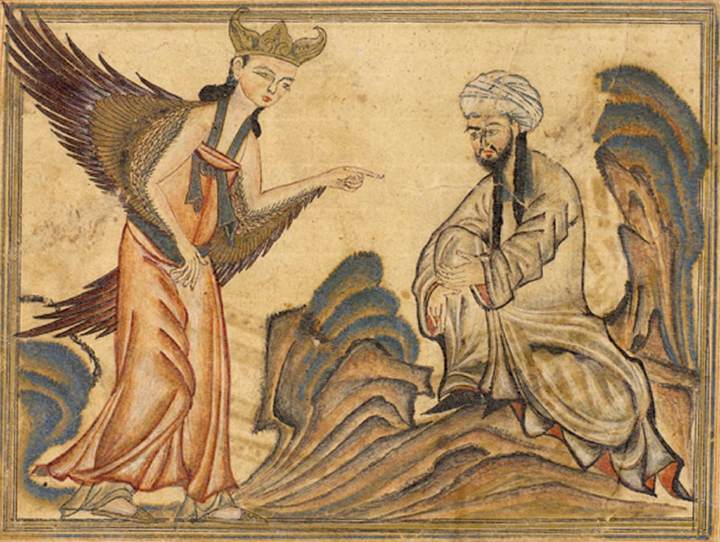
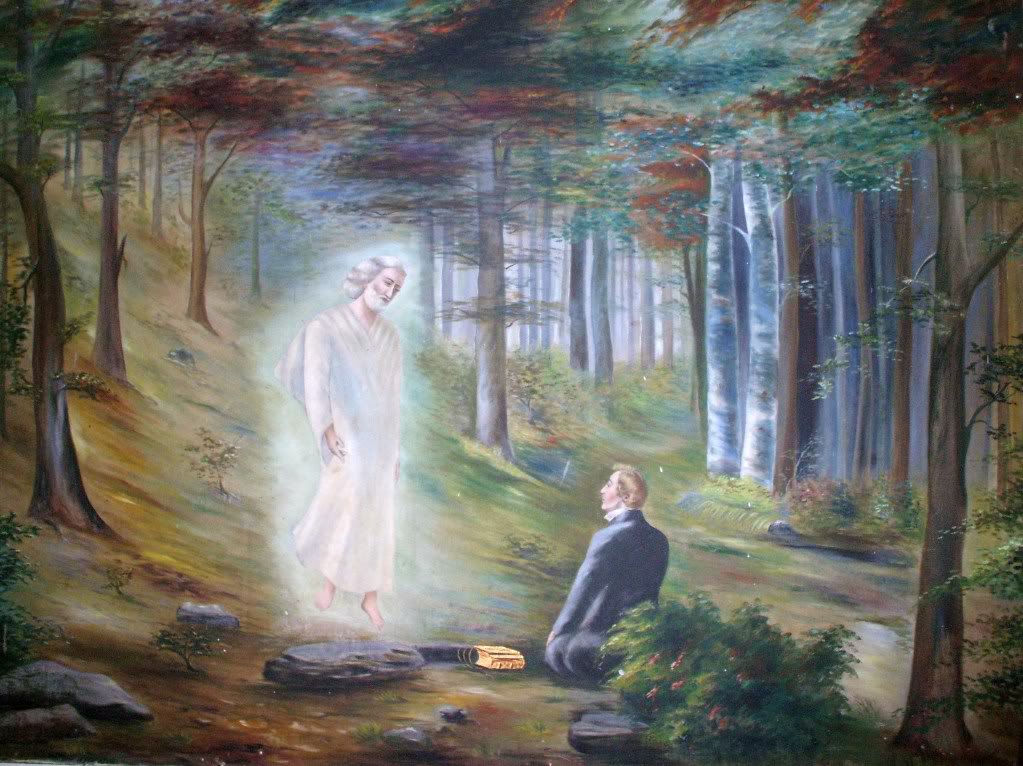
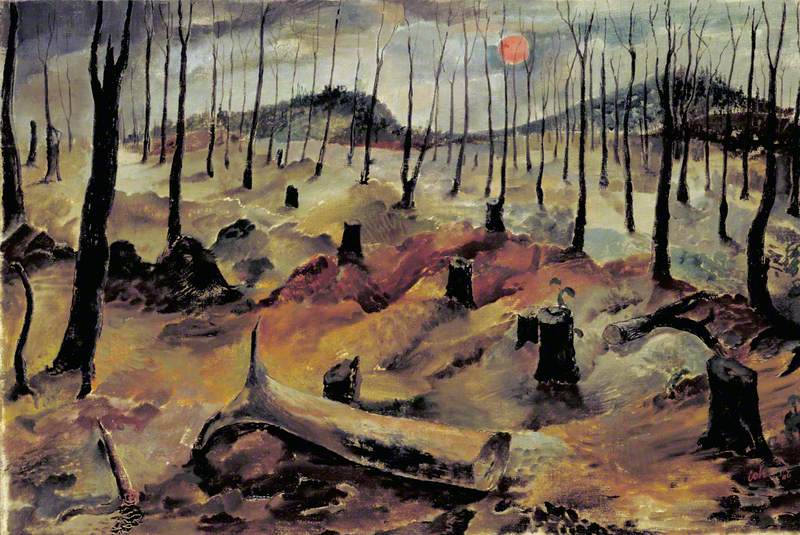

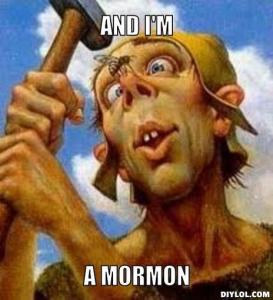





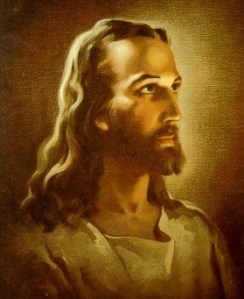
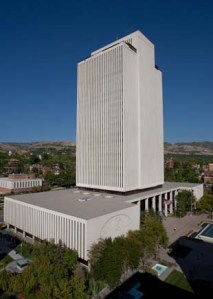



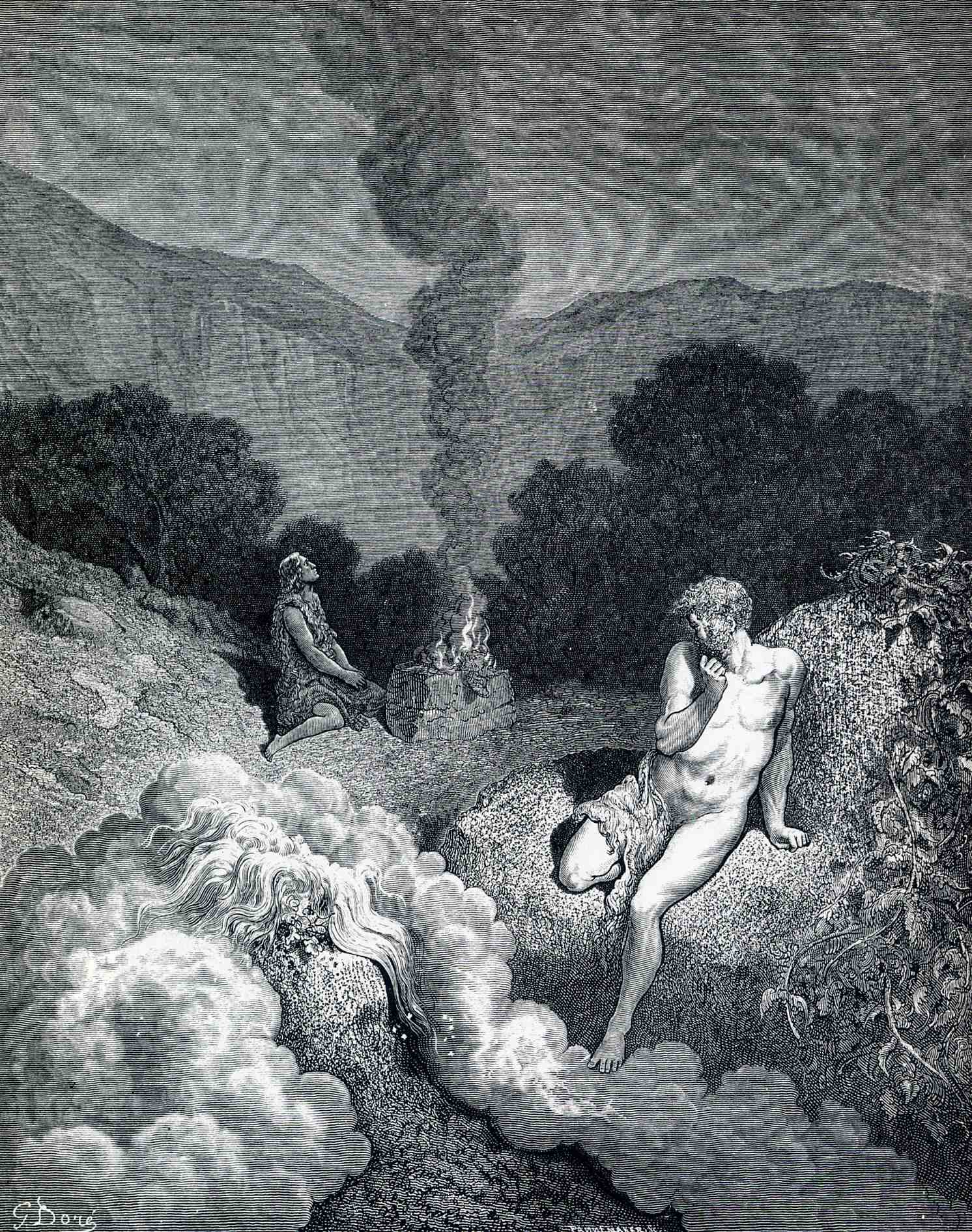

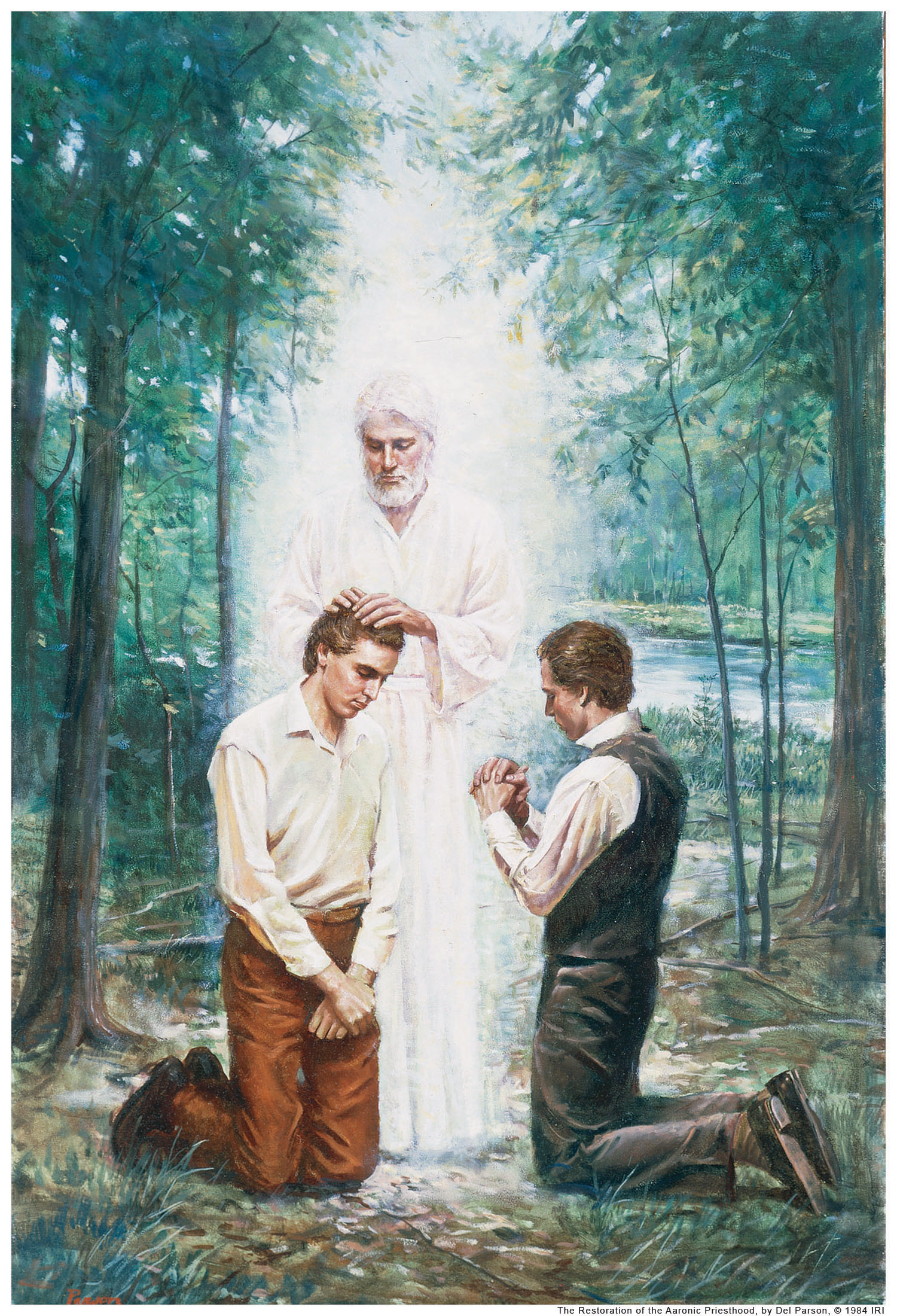
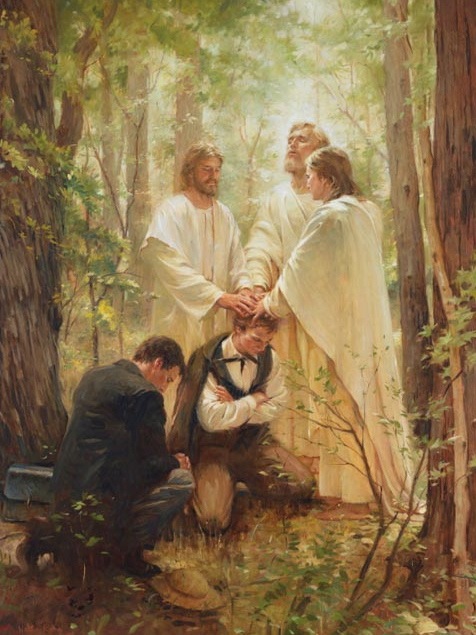

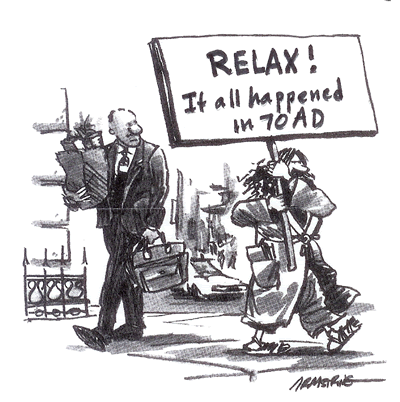

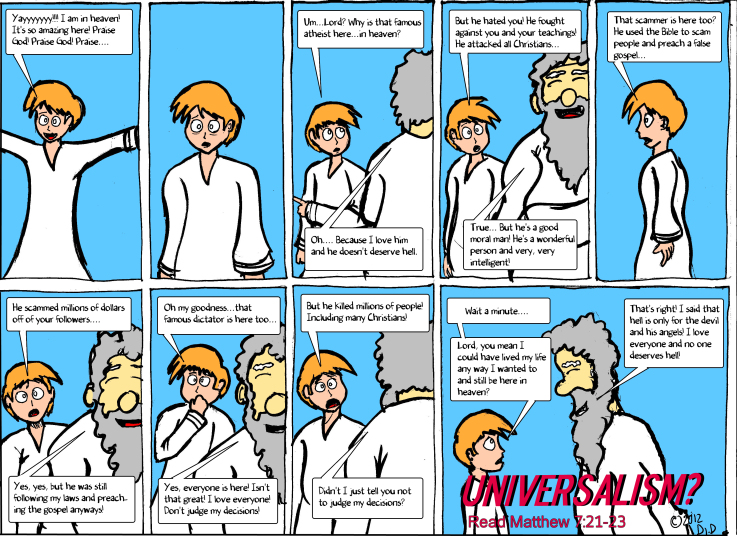

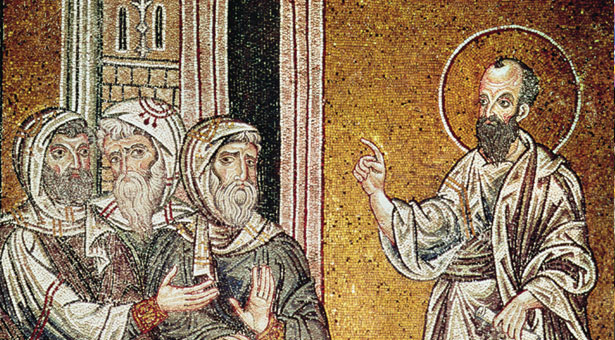




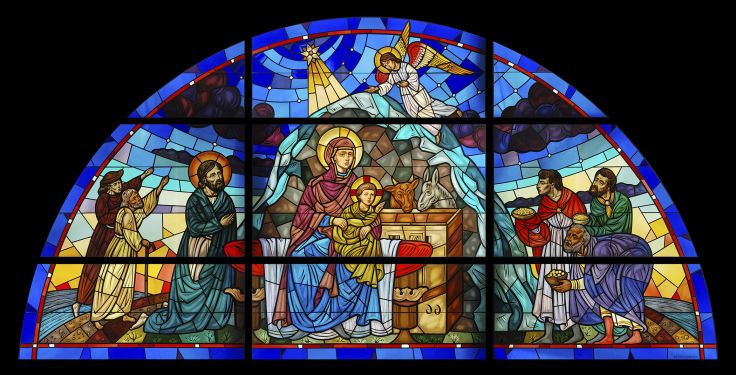


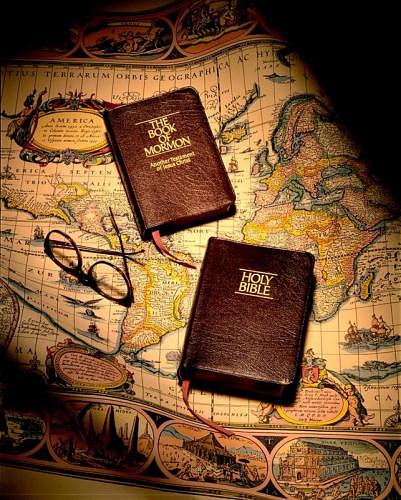





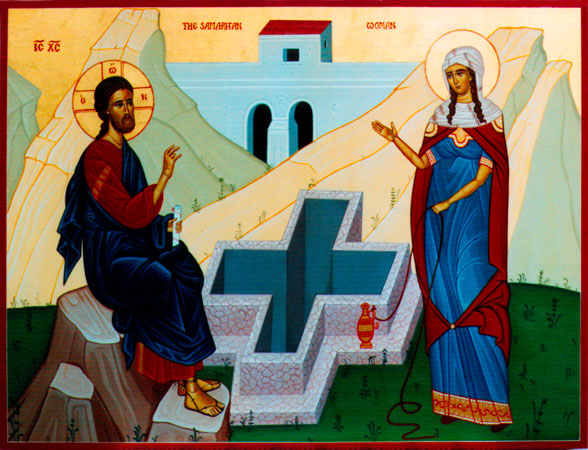
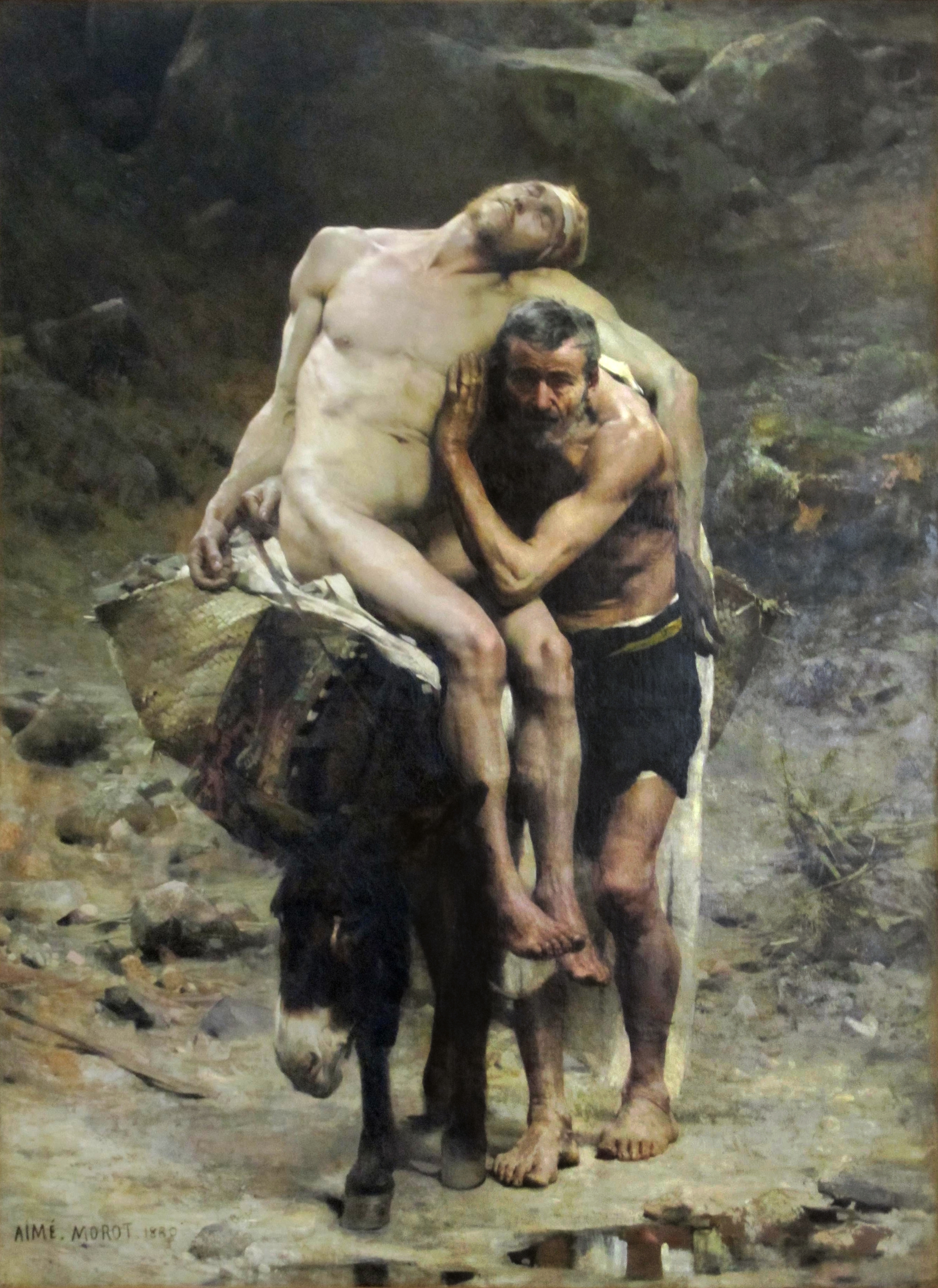

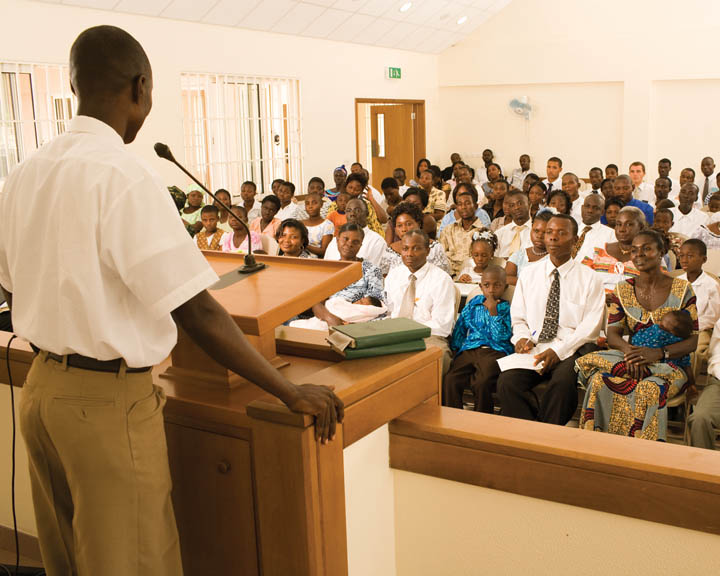
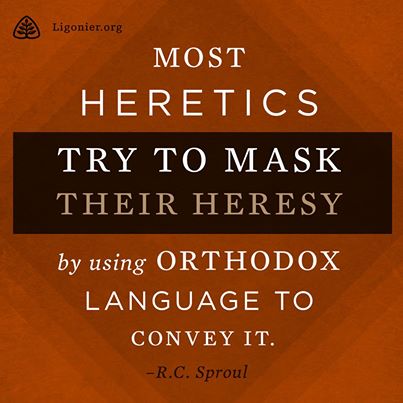





 Beggar's Bread